
In situ observations of methane dynamics in an active cold seep of the Formosa Ridge, the South China Sea
-
GRAPHICAL ABSTRACT
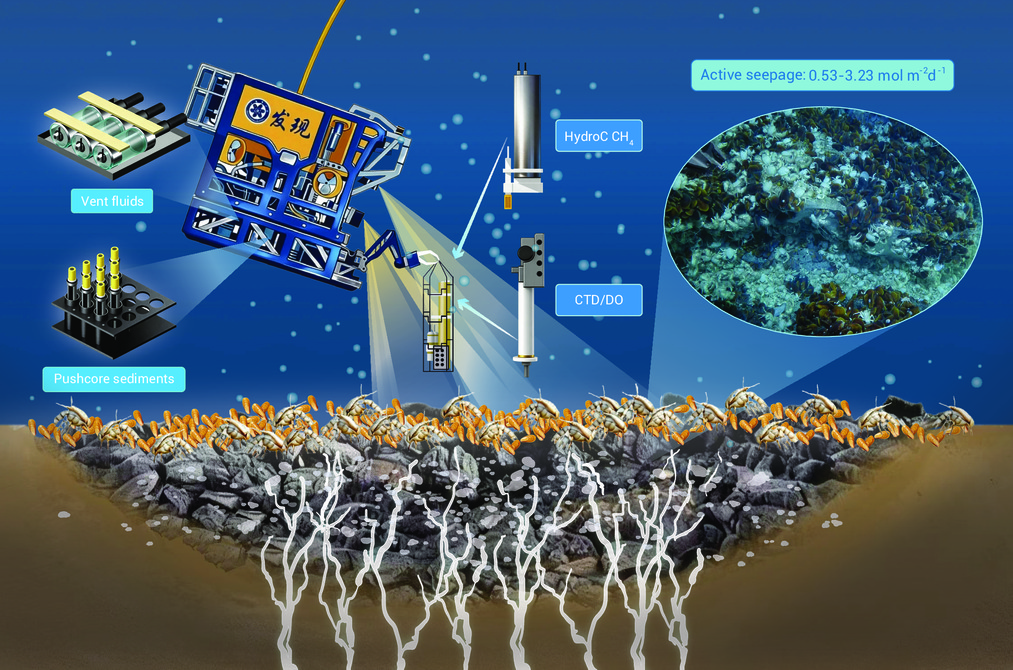
 DownLoad:
Full size image
DownLoad:
Full size image
-
PUBLIC SUMMARY
-
Methane released by cold seep profoundly affects the marine environment and contributes to climate change.
In situ observations coupled with steady-state model are employed to quantify methane fluxes from cold seep.
Horizontal advection is the primary migration mechanism for released methane in the active cold seep.
The contribution of methane from deep sea cold seeps to the global methane budget have been underestimated.
-
-
ABSTRACT
Methane eruptions from active cold seeps profoundly impacts the marine environment and contributes to climate change. However, in situ measurements available to constrain the efflux of methane from active seeps are scarce. In this study, in situ observations coupled with steady-state model were initially used to evaluate the flux and fate of methane released into the hydrosphere at the cold seep site F. Findings from three years of data indicated that horizontal advection is the primary migration and removal mechanism for released methane, followed by vertical diffusion and microbial oxidation. Methane flux in the active seepage (0.53-3.23 mol m-2 d-1) estimated by the in-situ approach was several orders of magnitude greater than that from the sediment-water interface. This would result in 0.70 - 4.22 Gmol yr-1 methane being released into the South China Sea (SCS) continental margins. Methane flux estimated based on the in situ observation here was significantly higher than that in the previously studied seeps. The regional methane fluxes from cold seeps in the SCS further suggest that dissolved methane discharge substantially contributes to the oceanic methane budget. Extrapolating the methane flux to active seeps worldwide would result in approximately 126 Tg C emitted into the hydrosphere annually as dissolved methane, indicating that the contribution of methane from deep-sea cold seeps to the global methane budget might have been underestimated. Our study emphasizes the deep-sea cold seeps as a significant methane source to the ocean and provides valuable insights into the quantitative assessment of the oceanic methane budget.-
Keywords:
- Cold seep /
- Overlying water /
- In situ observation /
- Dissolved methane /
- Methane flux
-

-
REFERENCES
[1] Suess E. (2014). Marine cold seeps and their manifestations: Geological control, biogeochemical criteria and environmental conditions. Int. J. Earth. Sci. 103:1889−1916. DOI:10.1007/s00531-014-1010-0 [2] Judd A. G. (2003). The global importance and context of methane escape from the seabed. Geo-Mar. Lett. 23:147−154. DOI:10.1007/s00367-003-0136-z [3] Reeburgh W. S. (2007). Oceanic methane biogeochemistry. Chem. Rev. 107:486−513. DOI:10.1021/cr050362v [4] Romer M., Sahling H., Pape T., et al. (2012). Quantification of gas bubble emissions from submarine hydrocarbon seeps at the Makran continental margin (offshore Pakistan). J. Geophys. Res-Oceans. 117:1−19. DOI:10.1029/2011jc007424 [5] de Beer D., Sauter E., Niemann H., et al. (2006). In situ fluxes and zonation of microbial activity in surface sediments of the Hakon Mosby Mud Volcano. Limnol. Oceanogr. 51:1315−1331. DOI:10.4319/lo.2006.51.3.1315 [6] Sommer S., Linke P., Pfannkuche O., et al. (2010). Benthic respiration in a seep habitat dominated by dense beds of ampharetid polychaetes at the Hikurangi Margin (New Zealand). Mar. Geol. 272:223−232. DOI:10.1016/j.margeo.2009.06.003 [7] Philip B. T., Denny A. R., Solomon E. A., et al. (2016). Time-series measurements of bubble plume variability and water column methane distribution above Southern Hydrate Ridge, Oregon. Geochem. Geophy. Geosy. 17:1182−1196. DOI:10.1002/2016gc006250 [8] Sahling H., Roemer M., Pape T., et al. (2014). Gas emissions at the continental margin west of Svalbard: Mapping, sampling, and quantification. Biogeosciences. 11:6029−6046. DOI:10.5194/bg-11-6029-2014 [9] Skarke A., Ruppel C., Kodis M. et al. (2014). Widespread methane leakage from the sea floor on the northern US Atlantic margin. Nat. Geosci. 7:657−661. DOI:10.1038/ngeo2232 [10] Weber T. C., Mayer L., Jerram K., et al. (2014). Acoustic estimates of methane gas flux from the seabed in a 6000 km2 region in the Northern Gulf of Mexico. Geochem. Geophys. Geosy. 15:1911−1925. DOI:10.1002/2014GC005271 [11] Fischer D., Sahling H., Noethen K., et al. (2012). Interaction between hydrocarbon seepage, chemosynthetic communities, and bottom water redox at cold seeps of the Makran accretionary prism: Insights from habitat-specific pore water sampling and modeling. Biogeosciences. 9:2013−2031. DOI:10.5194/bg-9-2013-2012 [12] Bergquist D. C., Fleckenstein C., Szalai E. B., et al. (2004). Environment drives physiological variability in the cold seep mussel Bathymodiolus childressi. Limnol. Oceanogr. 49:706−715. DOI:10.4319/lo.2004.49.3.0706 [13] Du Z. F., Zhang X., Luan Z. D., et al. (2018). In situ raman quantitative detection of the cold seep vents and fluids in the chemosynthetic communities in the South China sea. Geochem. Geophy. Geosy. 19:2049−2061. DOI:10.1029/2018gc007496 [14] Lin S., Lim Y., Liu C. S., et al. (2007). Formosa Ridge, a cold seep with densely populated chemosynthetic community in the passive margin, southwest of Taiwan. Geochim. Cosmochim. Ac. 71:A582−A582. [15] Zhao Y., Xu T., Law Y. S., et al. (2020). Ecological characterization of cold-seep epifauna in the South China sea. Deep-Sea. Res. Pt I. 163:103361. DOI:10.1016/j.dsr.2020.103361 [16] Kunath P., Crutchley G., Chi W.C., et al. (2022). Episodic venting of a submarine gas Seep on geological time scales: Formosa ridge, Northern South China sea. J. Geophys. Res-Sol. Ea. 127:e2022JB024668. DOI:10.1029/2022jb024668 [17] Berndt C., Crutchley G., Klaucke I., et al. (2014). Geological controls on the gas hydrate system of Formosa Ridge, South China sea. OCEANS 2014 - TAIPEI. pp:1-4. DOI:10.1109/OCEANS-TAIPEI.2014.6964481 [18] Chuang P. C., Yang T. F., Hong W. L., et al. (2010). Estimation of methane flux offshore SW Taiwan and the influence of tectonics on gas hydrate accumulation. Geofluids. 10:497−510. DOI:10.1111/j.1468-8123.2010.00313.x [19] Tong H., Feng D., Cheng H., et al. (2013). Authigenic carbonates from seeps on the northern continental slope of the South China Sea: New insights into fluid sources and geochronology. Mar. Petrol. Geol. 43:260−271. DOI:10.1016/j.marpetgeo.2013.01.011 [20] Han X., Suess E., Liebetrau V., et al. (2014). Past methane release events and environmental conditions at the upper continental slope of the South China sea: Constraints by seep carbonates. Int. J. Earth. Sci. 103:1873−1887. DOI:10.1007/s00531-014-10185 [21] Feng D. and Chen D. (2015). Authigenic carbonates from an active cold seep of the northern South China sea: New insights into fluid sources and past seepage activity. Deep-Sea. Res. Pt II. 122:74−83. DOI:10.1016/j.dsr2.2015.02.003 [22] Zhang X., Du Z. F., Luan Z. D., et al. (2017). In Situ Raman Detection of Gas Hydrates Exposed on the Seafloor of the South China sea. Geochem. Geophy. Geosy. 18:3700−3713. DOI:10.1002/2017gc006987 [23] Wang B., Du Z., Luan Z., et al. (2021). Seabed features associated with cold seep activity at the Formosa Ridge, South China sea: Integrated application of high-resolution acoustic data and photomosaic images. Deep-Sea. Res. Pt I. 177:103622. DOI:10.1016/j.dsr.2021.103622 [24] Guan H., Feng D., Wu N., et al. (2016). Methane seepage intensities traced by biomarker patterns in authigenic carbonates from the South China Sea. Org. Geochem. 91:109−119. DOI:10.1016/j.orggeochem.2015.11.007 [25] Liang Q., Hu Y., Feng D., et al. (2017). Authigenic carbonates from newly discovered active cold seeps on the northwestern slope of the South China Sea: Constraints on fluid sources, formation environments, and seepage dynamics. Deep-Sea. Res. Pt I. 124:31−41. DOI:10.1016/j.dsr.2017.04.015 [26] Graves C. A., Steinle L., Rehder G., et al. (2015). Fluxes and fate of dissolved methane released at the seafloor at the landward limit of the gas hydrate stability zone offshore western Svalbard. J. Geophys. Res-Oceans. 120:6185−6201. DOI:10.1002/2015jc011084 [27] Weinstein A., Navarrete L., Ruppel C., et al. (2016). Determining the flux of methane into Hudson Canyon at the edge of methane clathrate hydrate stability. Geochem. Geophy. Geosy. 17:3882−3892. DOI:10.1002/2016gc006421 [28] Yang Q., Zhao W., Liang X., et al. (2016). Three-dimensional distribution of turbulent mixing in the South China sea. J. Phys. Oceanogr. 46:769−788. DOI:10.1175/jpo-d-14-0220.1 [29] Mau S., Tu T.-H., Becker M., et al. (2020). Methane seeps and independent methane plumes in the South China sea offshore Taiwan. Front. Mar. Sci. 7:543. DOI:10.3389/fmars.2020.00543 [30] Boudreau B. P., Luo Y., Meysman F. J. R., et al. (2015). Gas hydrate dissociation prolongs acidification of the Anthropocene oceans. Geophys. Res. Lett. 42:9337−9344. DOI:10.1002/2015gl065779 [31] Iversen N. and Jorgensen B. B. (1993). Diffussion-coefficient of sulfate and methane in marine-sediments-influence of porosity. Geochim. Cosmochim. Ac. 57:571−578. DOI:10.1016/0016-7037(93)90368-7 [32] Paulmier A., Ruiz-Pino D. (2009). Oxygen minimum zones (OMZs) in the modern ocean. Prog. Oceanogr. 80:113−128. DOI:10.1016/j.pocean.2008.08.001 [33] Sommer S., Tuerk M., Kriwanek S., et al. (2008). Gas exchange system for extended in situ benthic chamber flux measurements under controlled oxygen conditions: First application-sea bed methane emission measurements at Captain Arutyunov mud volcano. Limnol. Oceanogr-Meth. 6:23−33. DOI:10.4319/lom.2008.6.23 [34] Ma J., Li X., Song J., et al. (2023). Relationship and stratification of multiple marine ecological indicators: A case study in the M2 seamount area of the Western Pacific Ocean. Ecol. Indic. 146:109804. DOI:10.1016/j.ecolind.2022.109804 [35] Sun Q.-l., Xu K., Cao L., et al. (2023). Nitrogen and sulfur cycling driven by Campylobacterota in the sediment-water interface of deep-sea cold seep: A case in the South China sea. Mbio. 14:1−17. DOI:10.1128/mbio.00117-23 [36] Levin L. A., Baco A. R., Bowden D. A., et al. (2016). Hydrothermal Vents and Methane Seeps: Rethinking the Sphere of Influence. Front. Mar. Sci. 3:72. DOI:10.3389/fmars.2016.00072 [37] Wang H., Wang X., Cao L.,et al. (2023). Macrofauna community of the cold seep area at Site F, South China Sea. Front. Mar. Sci. 10:1068916. DOI:10.3389/fmars.2023.1068916 [38] Sun Y., Wang M. X., Li L. L., et al. (2017). Molecular identification of methane monooxygenase and quantitative analysis of methanotrophic endosymbionts under laboratory maintenance in Bathymodiolus platifrons from the South China Sea. Peerj. 5:e3565. DOI:10.7717/peerj.3565 [39] Watsuji T. O., Yamamoto A., Takaki Y., et al. (2014). Diversity and methane oxidation of active epibiotic methanotrophs on live Shinkaia crosnieri. Isme. J. 8:1020−1031. DOI:10.1038/ismej.2013.226 [40] Berndt C., Chi W. C., Jegen M., et al. (2019). Tectonic controls on gas hydrate distribution off SW Taiwan. J. Geophys. Res-Sol. Ea. 124:1164−1184. DOI:10.1029/2018jb016213 [41] Liu Y., Zhang H., Cao L., et al. (2025). Methane filtration and metabolic cooperation of microbial communities in cold seep water columns from south china sea. Commun. Biol. 8:1052. DOI:10.1038/s42003-025-08471-4 [42] Steinle L., Graves C. A., Treude T., et al. (2015). Water column methanotrophy controlled by a rapid oceanographic switch. Nat. Geosci. 8:378−382. DOI:10.1038/ngeo2420 [43] Damm E. and Budéus G. (2003). Fate of vent-derived methane in seawater above the Hakon Mosby mud volcano (Norwegian Sea). Mar. Chem. 82:1−11. DOI:10.1016/s0304-4203(03)00031-8 [44] Martens C. S. and Valklump J. (1980). Biogeochemical cycling in an organic-rich coastal marine basin.1. Methane sediment-water exchange processes. Geochim. Cosmochim. Ac. 44:471-490. DOI:10.1016/0016-7037(80)90045-9. [45] Torres M. E., McManus J., Hammond D. E., et al. (2002). Fluid and chemical fluxes in and out of sediments hosting methane hydrate deposits on Hydrate Ridge, OR, I: Hydrological provinces. Earth. Planet. Sc. Lett. 201:525−540. DOI:10.1016/s0012-821x(02)00733-1 [46] Tryon M. D., Brown K. M. and Torres M. E. (2002). Fluid and chemical flux in and out of sediments hosting methane hydrate deposits on Hydrate Ridge, OR, II: Hydrological processes. Earth. Planet. Sc. Lett. 201:541−557. DOI:10.1016/s0012-821x(02)00732-x [47] Ke Z., Li R., Chen Y., et al. (2022). A preliminary study of macrofaunal communities and their carbon and nitrogen stable isotopes in the Haima cold seeps, South China Sea. Deep-Sea. Res. Pt I. 184:103774. DOI:10.1016/j.dsr.2022.103774 [48] Boetius A. and Wenzhofer F. (2013). Seafloor oxygen consumption fuelled by methane from cold seeps. Nat. Geosci. 6:725−734. DOI:10.1038/Ngeo1926 [49] Egger M., Riedinger N., Mogollon J. M., et al. (2018). Global diffusive fluxes of methane in marine sediments. Nat. Geosci. 11:421−425. DOI:10.1038/s41561-018-0122-8 [50] Hovland M., Judd A. G. and Burke R. A. (1993). The global flux of methane from shallow submarine sediments. Chemosphere. 26:559−578. DOI:10.1016/0045-6535(93)90442-8 [51] Milkov A. V., Sassen R., Apanasovich T. V., et al. (2003). Global gas flux from mud volcanoes: A significant source of fossil methane in the atmosphere and the ocean. Geophys. Res. Lett. 30:1037. DOI:10.1029/2002gl016358 [52] Felden J., Wenzhoefer F., Feseker T., et al. (2010). Transport and consumption of oxygen and methane in different habitats of the Hakon Mosby Mud Volcano (HMMV). Limnol. Oceanogr. 55:2366−2380. DOI:10.4319/lo.2010.55.6.2366 -
ABOUT THIS ARTICLE
Cite this article:
Cao L., Lian C., Ran X., et al. (2026). In situ observations of methane dynamics in an active cold seep of the Formosa Ridge, the South China Sea. The Innovation Geoscience 4:100192. https://doi.org/10.59717/j.xinn-geo.2026.100192
Welcome!
To request copyright permission to republish or share portions of our works, please visit Copyright Clearance Center's (CCC) Marketplace website at marketplace.copyright.com.
Article Metrics
Relative Articles
Cited by
Export File
Citation
Cao L., Lian C., Ran X., et al. (2026). In situ observations of methane dynamics in an active cold seep of the Formosa Ridge, the South China Sea. The Innovation Geoscience 4:100192. https://doi.org/10.59717/j.xinn-geo.2026.100192

Format
Content


-
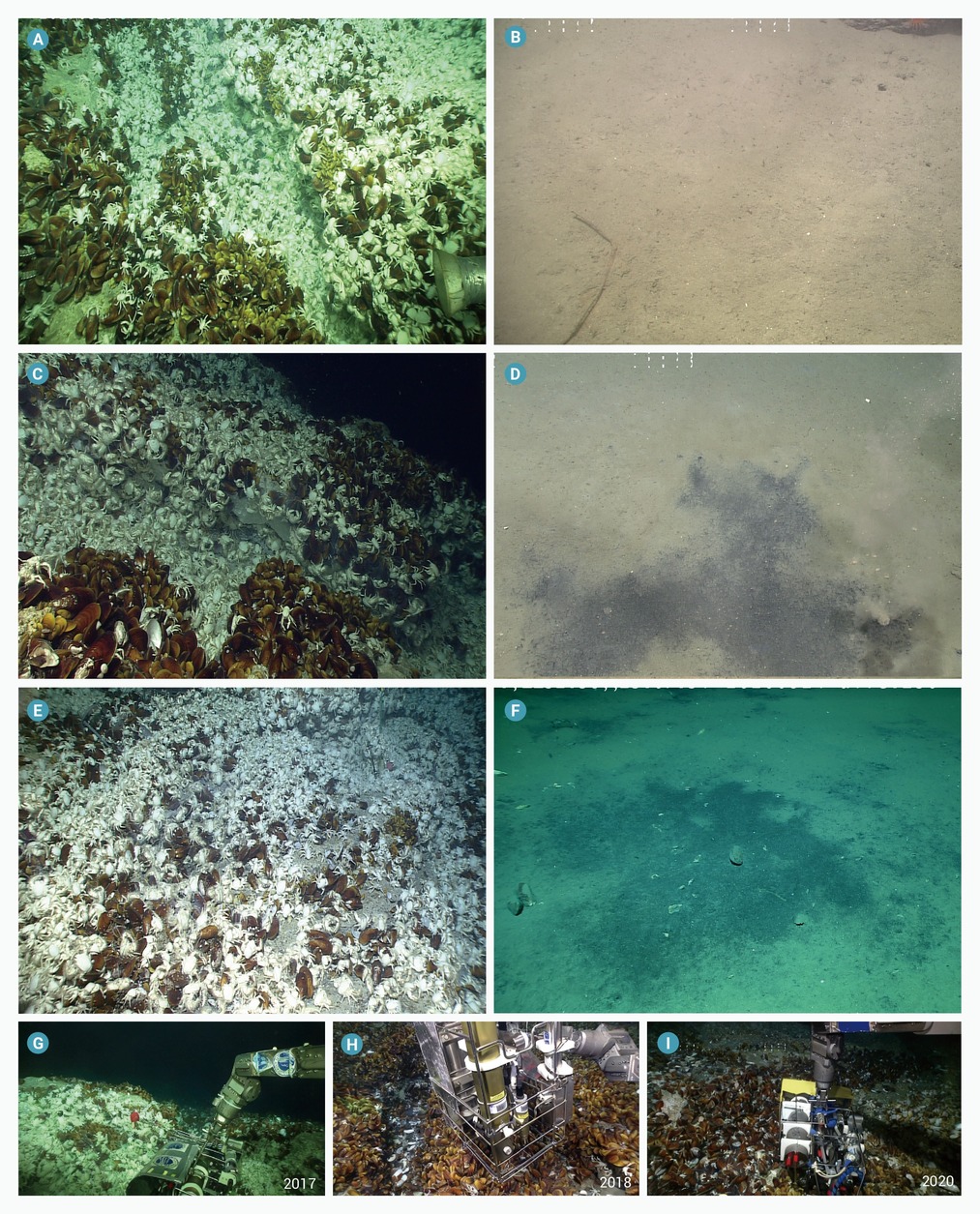
Figure 1.
Images of different seafloor habitats and in situ detection of the cold seep during three years
-
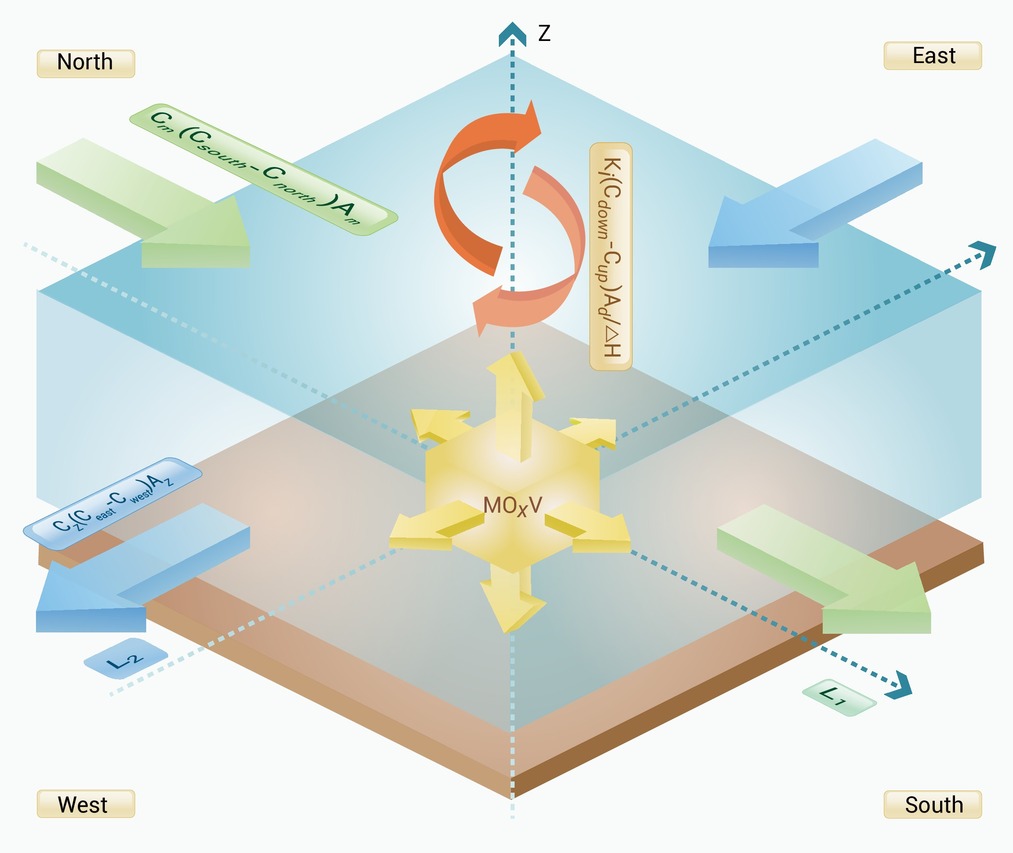
Figure 2.
Illustration of the geochemical box model including the sinks of CH4.
-
Figure 3.
Synchronously acquired environmental parameters through in situ measurements across the cold seep
-
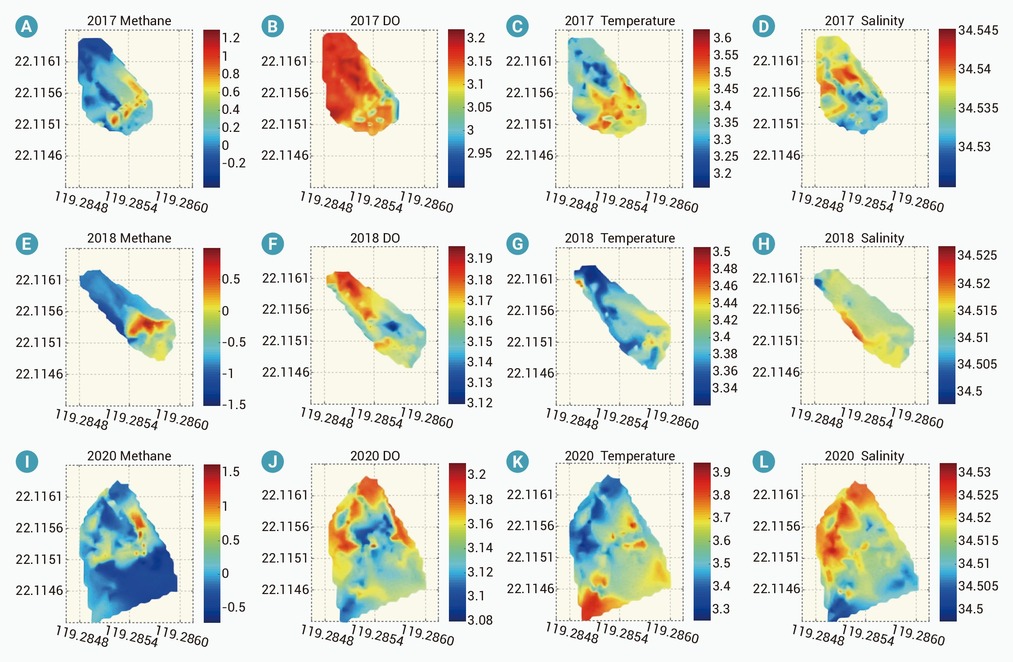
Figure 4.
Spatiotemporal variation of environmental parameters in the bottom water of the cold seep
-
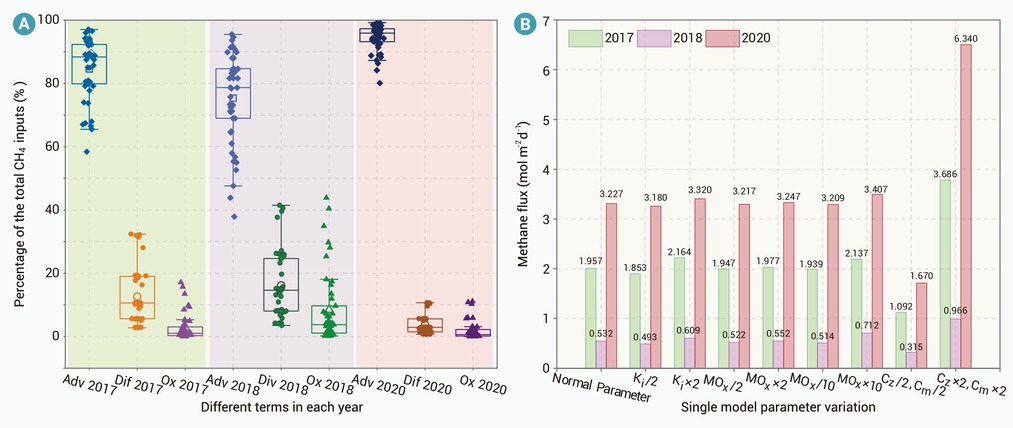
Figure 5.
Model results and sensitivity analysis
-
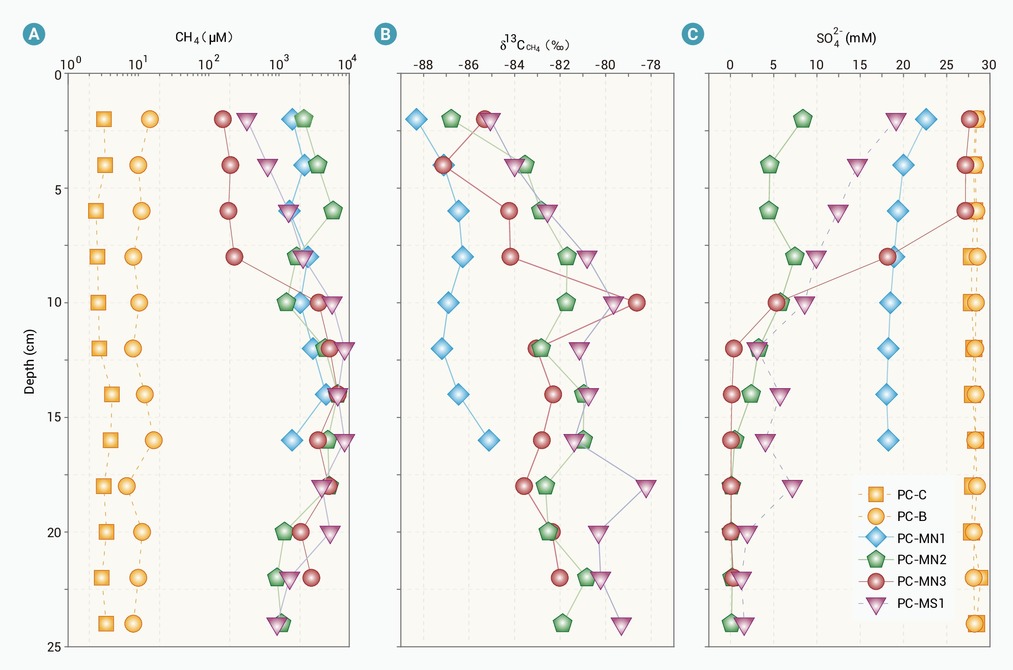
Figure 6.
Depth concentration profiles of the methane, the carbon isotope of the methane and sulfate in the cold seep sediments
-
Figure 7.
Methane flux at different habitats of the cold seep site F.
-
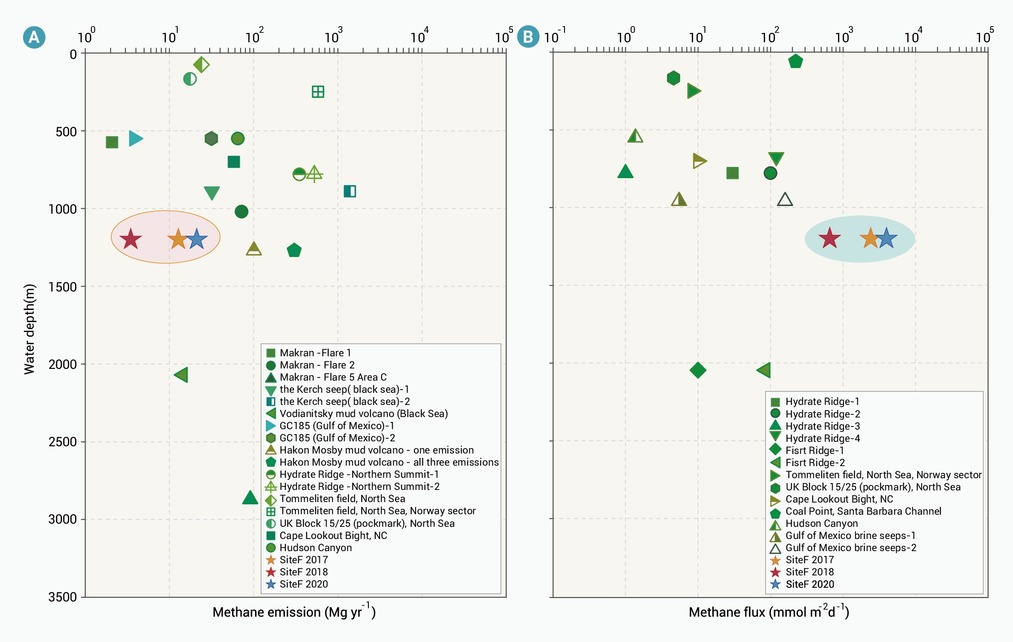
Figure 8.
Comparison of methane emission and flux at site F with those from other cold seeps
