
Auroral activity observed from unusual latitudes in China and its underlying significance
-
GRAPHICAL ABSTRACT
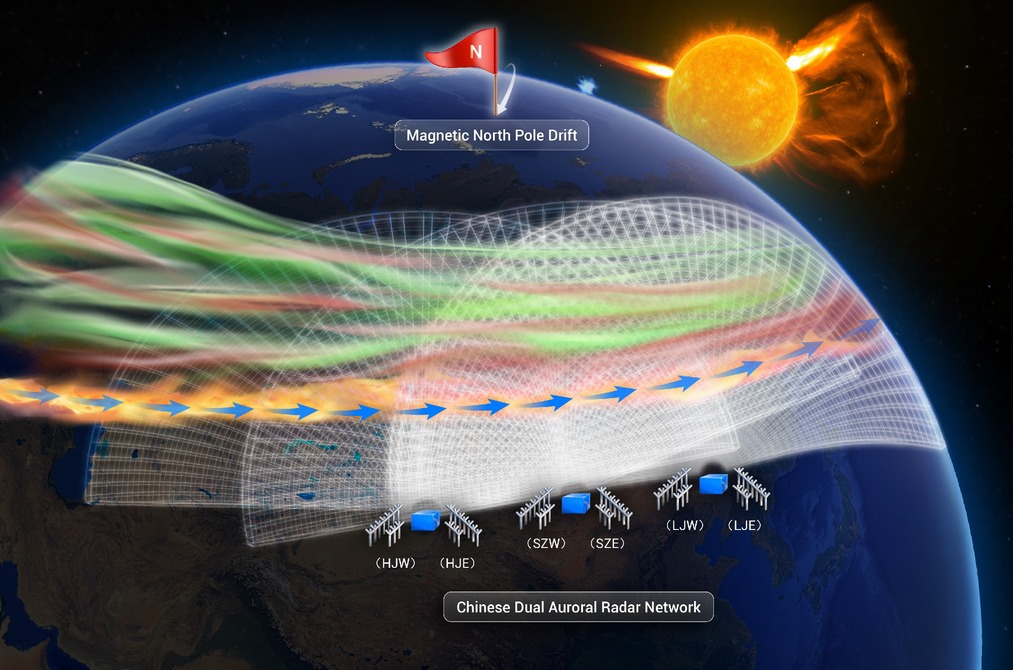
 DownLoad:
Full size image
DownLoad:
Full size image
-
PUBLIC SUMMARY
-
Spectacular auroras were spotted at unusual latitudes in China during a severe geomagnetic storm.
CN-DARN reveals the link of auroral intensification to dawnside subauroral polarization (SAPS) streams.
CN-DARN observed high-speed ionospheric irregularities driven by dawnside SAPS invading China’s airspace.
-
-
ABSTRACT
Auroras have been observed at unusual latitudes of China over the past couple of years, which may be a direct result of the north magnetic pole’s drift and intense solar activity. However, the specific impact on the Asian space environment remains unknown. Here, we present auroral activities recorded in southern Inner Mongolia (~37.2° N in magnetic latitude) and the resulting ionospheric environmental changes detected by the Chinese Dual Auroral Radar Network (CN-DARN) during a recent severe geomagnetic storm. Leveraging the wide spatial coverage and continuous high time resolution monitoring capabilities of the CN-DARN, comprehensive analysis of ground-based and space-based multi-source data reveals that CN-DARN has captured the spatiotemporal evolution characteristics of dawnside subauroral polarization streams (SAPS). The study identifies a direct link between auroral intensification and dawnside SAPS acceleration for the first time, establishing a mechanistic connection between auroral activity and ionospheric convection dynamics in subauroral region. Moreover, the observations show that the ionospheric irregularities with high velocity of 1,000 m/s induced by the dawnside SAPS have propagated to Mohe (~ 48.6° N in magnetic latitude), the northernmost region of China. The research also reveals that intense auroral particle precipitation caused severe degradation of high-frequency (HF) communications in the Asian region. This study represents the first comprehensive investigation of auroral activity observed at unusual latitudes of China, unraveling the impact of auroral activities on the ionospheric environment of Asian mid-to-high latitudes. It also showcases the critical capabilities of the Chinese Meridian Project in addressing space environmental challenges of Asia.-
Keywords:
- auroral activity /
- unusual latitude /
- ionospheric disturbance
-

-
REFERENCES
[1] Akasofu S.I. (1966). The auroral oval, the auroral substorm, and their relations with the internal structure of the magnetosphere. Planet. Space Sci. 14:587−595. DOI:10.1016/0032-0633(66)90043-2 [2] Kataoka R., Reddy S.A., Nakano S., et al. (2024). Extended magenta aurora as revealed by citizen science. Sci. Rep. 14:25849. DOI:10.1038/s41598-024-75184-9 [3] Livermore P.W., Finlay C.C. and Bayliff M (2020). Recent north magnetic pole acceleration towards Siberia caused by flux lobe elongation. Nat. Geosci. 13:387-391. DOI: 10.1038/s41561-020-0570-9 [4] Ross, J.C. (1834). On the position of the North Magnetic Pole. Phil. Trans. R. Soc. 124:47−52. DOI:10.1098/rspl.1830.0139 [5] Barraclough D.R., and Malin S.R.C. (1981). 150 years of the North Magnetic Pole. Nature 291:377−377. DOI:10.1038/291377a0 [6] Chulliat A., Brown W., Alken P., et al. (2020). The US/UK world magnetic model for 2020-2025 : Tech. Rep. DOI: 10.25923/ytk1-yx35 [7] Tsyganenko N.A. (2019). Secular drift of the Auroral ovals: How fast do they actually move. Geophys. Res. Lett. 46:3017−3023. DOI:10.1029/2019GL082159 [8] Zhang J., Lan A., Yan J., et al. (2024). Development of the Chinese Dual Auroral Radar Network and preliminary results. Space Weather 22:e2024SW004131. DOI:10.1029/2024SW004131 [9] Wang C., Xu J., Chen Z., et al. (2024). China's ground-based space environment monitoring network—Chinese Meridian Project (CMP). Space Weather 22:e2024SW003972. DOI:10.1029/2024SW003972 [10] Chisham G., Lester M., Milan S.E., et al. (2007). A decade of the Super Dual Auroral Radar Network (SuperDARN): scientific achievements, new techniques and future directions. Surv. Geophys. 28:33−109. DOI:10.1007/s10712-007-9017-8 [11] Nishitani N., Ruohoniemi J.M., Lester M., et al. (2019). Review of the accomplishments of mid-latitude Super Dual Auroral Radar Network (SuperDARN) HF radars. Prog. Earth Planet. Sci. 6:27. DOI:10.1186/s40645-019-0270-5 [12] Greenwald R.A., Baker K.B., Hutchins R.A., et al. (1985). An HF phased-array radar for studying small-scale structure in the high-latitude ionosphere. Radio Science 20:63−79. DOI:10.1029/RS020i001p00063 [13] Shepherd S.G. (2014). Altitude‐adjusted corrected geomagnetic coordinates: Definition and functional approximations. J. Geophys. Res. 119:7501−7521. DOI:10.1002/2014JA020264 [14] Jonkers A.R.T., Jackson A., and Murray A. (2003). Four centuries of geomagnetic data from historical records. Rev. Geophys. 41. DOI: 10.1029/2002RG000115 [15] Sotirelis T., Korth H., Hsieh S.-Y., et al. (2013). Empirical relationship between electron precipitation and far-ultraviolet auroral emissions from DMSP observations. J. Geophys. Res. 118:1203−1209. DOI:10.1002/jgra.50157 [16] Wang X., Zhang X., Wang J., et al. (2023). Plasma analyzer for the Chinese FY-3E satellite: In-orbit performance and ground calibration. Atmosphere 14:1665. DOI:10.3390/atmos14111665 [17] Ruohoniemi J., and Baker K. (1998). Large‐scale imaging of high‐latitude convection with Super Dual Auroral Radar Network HF radar observations. J. Geophys. Res. 103:20797−20811. DOI:10.1029/98JA01288 [18] Zhang J.J., Wang W., Wang C., et al. (2020). First observation of ionospheric convection from the Jiamusi HF radar during a strong geomagnetic storm. Earth Space Sci. 7:e2019EA000911. DOI:10.1029/2019ea000911 [19] Wanliss J.A., and Showalter K.M. (2006). High-resolution global storm index: Dst versus SYM-H. J. Geophys. Res. 111:A02202. DOI: 10.1029/2005ja011034 [20] Matzka J., Stolle C., Yamazaki Y., et al. (2021). The geomagnetic Kp index and derived indices of geomagnetic activity. Space Weather 19:e2020SW002641. DOI:10.1029/2020SW002641 [21] Kataoka R., Miyoshi Y., Shiokawa K., et al. (2024). Magnetic storm-time red aurora as seen from Hokkaido, Japan on 1 December 2023 associated with high-density solar wind. Geophys. Res. Lett. 51:e2024GL108778. DOI:10.1029/2024GL108778 [22] Shiokaw K., Meng C.-I., Reeves G.D., et al. (1997). A multievent study of broadband electrons observed by the DMSP satellites and their relation to red aurora observed at midlatitude stations. J. Geophys. Res. 102:14237−14253. DOI:10.1029/97JA00741 [23] Foster J.C., Erickson P.J., Nishimura Y., et al. (2024). Imaging the May 2024 extreme aurora with ionospheric total electron content. Geophys. Res. Lett. 51:e2024GL111981. DOI:10.1029/2024GL111981 [24] Foster J.C., and Vo H.B. (2002). Average characteristics and activity dependence of the subauroral polarization stream. J. Geophys. Res. 107:1475. DOI: 10.1029/2002ja009409 [25] Anderson P.C., Hanson W.B., Heelis R.A., et al. (1993). A proposed production model of rapid subauroral ion drifts and their relationship to substorm evolution. J. Geophys. Res. 98:6069−6078. DOI:10.1029/92JA01975 [26] Califf S., Li X., Wolf R.A., et al. (2016). Large-amplitude electric fields in the inner magnetosphere: Van Allen Probes observations of subauroral polarization streams. J. Geophys. Res. 121:5294−5306. DOI:10.1002/2015JA022252 [27] Horvath I., and Lovell B.C. (2022). Newly formed dawnside, duskside, and nightside subauroral flows developed during magnetically active times. J. Geophys. Res. 127:e2021JA030215. DOI:10.1029/2021JA030215 [28] Lin D., Wang W., Merkin V.G., et al. (2022). Origin of dawnside subauroral polarization streams during major geomagnetic storms. AGU Adv. 3:e2022AV000708. DOI:10.1029/2022AV000708 [29] Vasyliunas V.M. (1970). Mathematical models of magnetospheric convection and its coupling to the ionosphere. In B.M. McCormac (ed). Particles and Fields in the Magnetosphere. Dordrecht. DOI:10.1007/978-94-010-3284-1_6 [30] Thomas E.G., and Shepherd S.G. (2018). Statistical patterns of ionospheric convection derived from mid-latitude, high-latitude, and polar SuperDARN HF radar observations. J. Geophys. Res. 123:3196−3216. DOI:10.1002/2018JA025280 [31] Nielsen E., and Axford W.I. (1977). Small scale auroral absorption events associated with substorms. Nature 267:502−504. DOI:10.1038/267502a0 [32] Mishin E., and Streltsov A. (2021). Mesoscale and small-scale structure of the subauroral geospace. In Ionosphere Dynamics and Applications, pp:139-158. DOI: 10.1002/9781119815617.ch8 -
ABOUT THIS ARTICLE
Cite this article:
Zhang J., Deng X., Xu J., et al. (2026). Auroral activity observed from unusual latitudes in China and its underlying significance. The Innovation Geoscience 4:100197. https://doi.org/10.59717/j.xinn-geo.2026.100197
Welcome!
To request copyright permission to republish or share portions of our works, please visit Copyright Clearance Center's (CCC) Marketplace website at marketplace.copyright.com.
Supplementary Information
-
download_supplementary
Movie(S1& S2)
Article Metrics
Relative Articles
Cited by
Export File
Citation
Zhang J., Deng X., Xu J., et al. (2026). Auroral activity observed from unusual latitudes in China and its underlying significance. The Innovation Geoscience 4:100197. https://doi.org/10.59717/j.xinn-geo.2026.100197

Format
Content
-
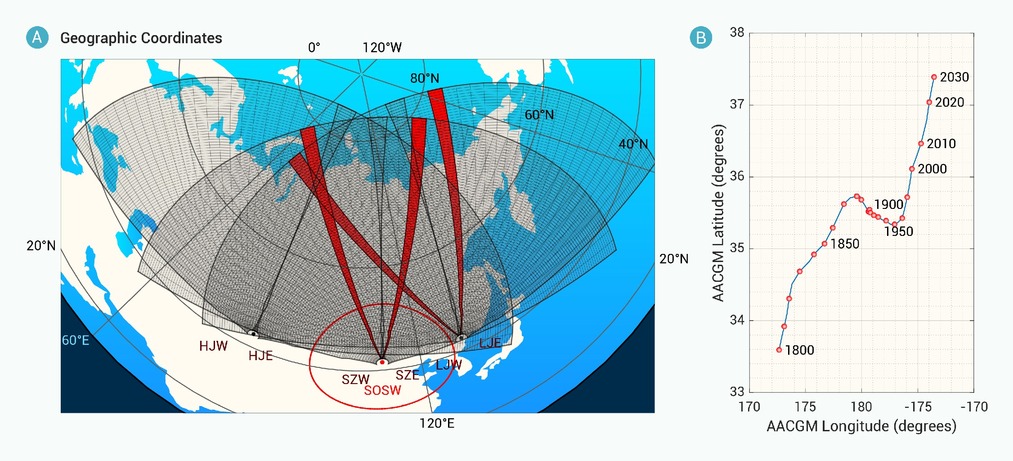
Figure 1.
The fields-of-view (FOVs) of the six CN-DARN radars and the variation of the geomagnetic coordinates for the Siziwang Observatory of Space Weather (SOSW)
-
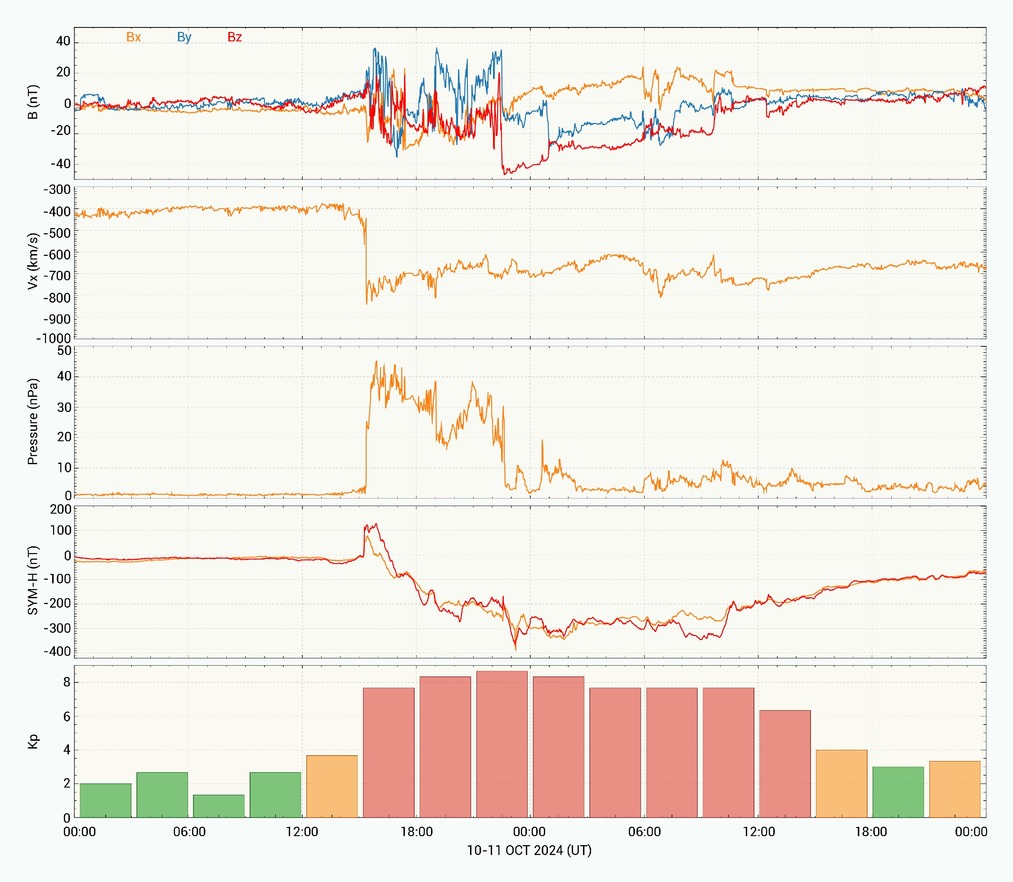
Figure 2.
Solar wind conditions and geomagnetic indices during 10-11 October 2024
-
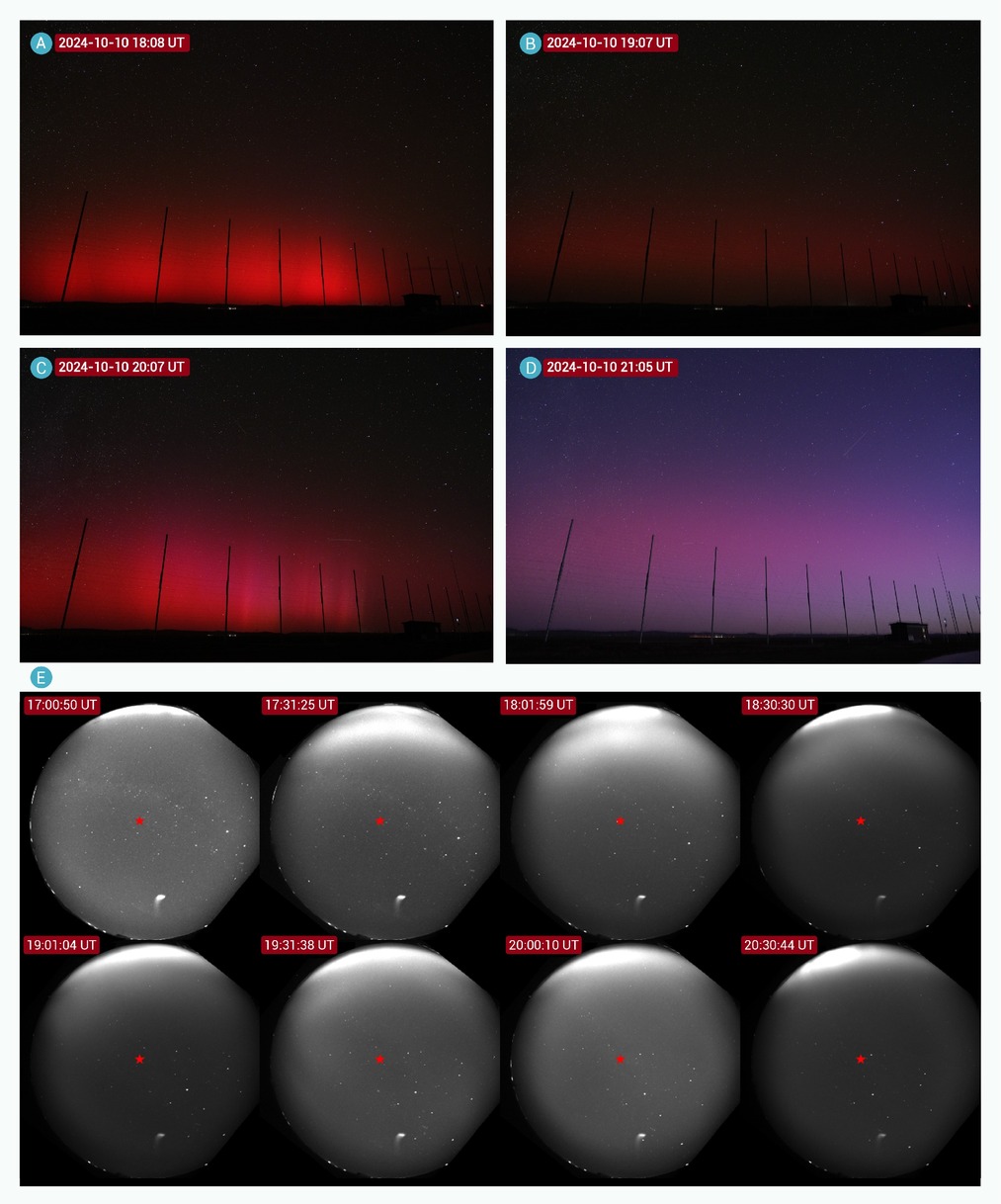
Figure 3.
The auroral images captured from the Siziwang Observatory of Space Weather in Inner Mongolia, China
-
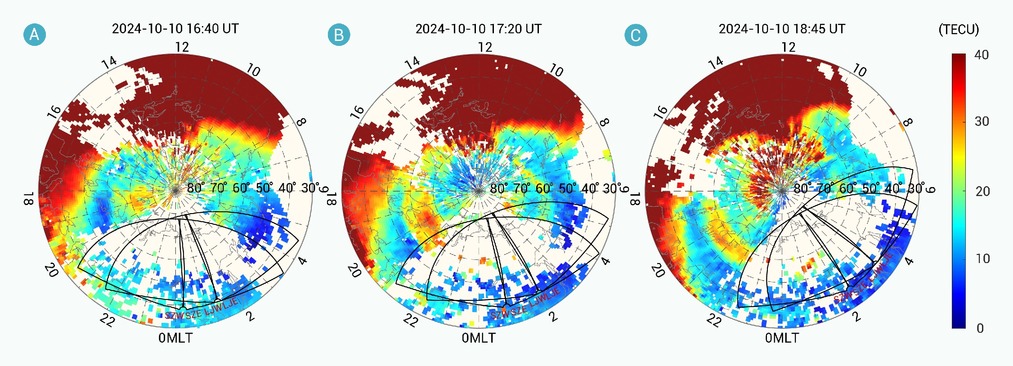
Figure 4.
Ionospheric total electron content (TEC) retrieved from global GNSS receivers at (A)
1640 UT, (B)1720 UT, and (C) 1845 UT -
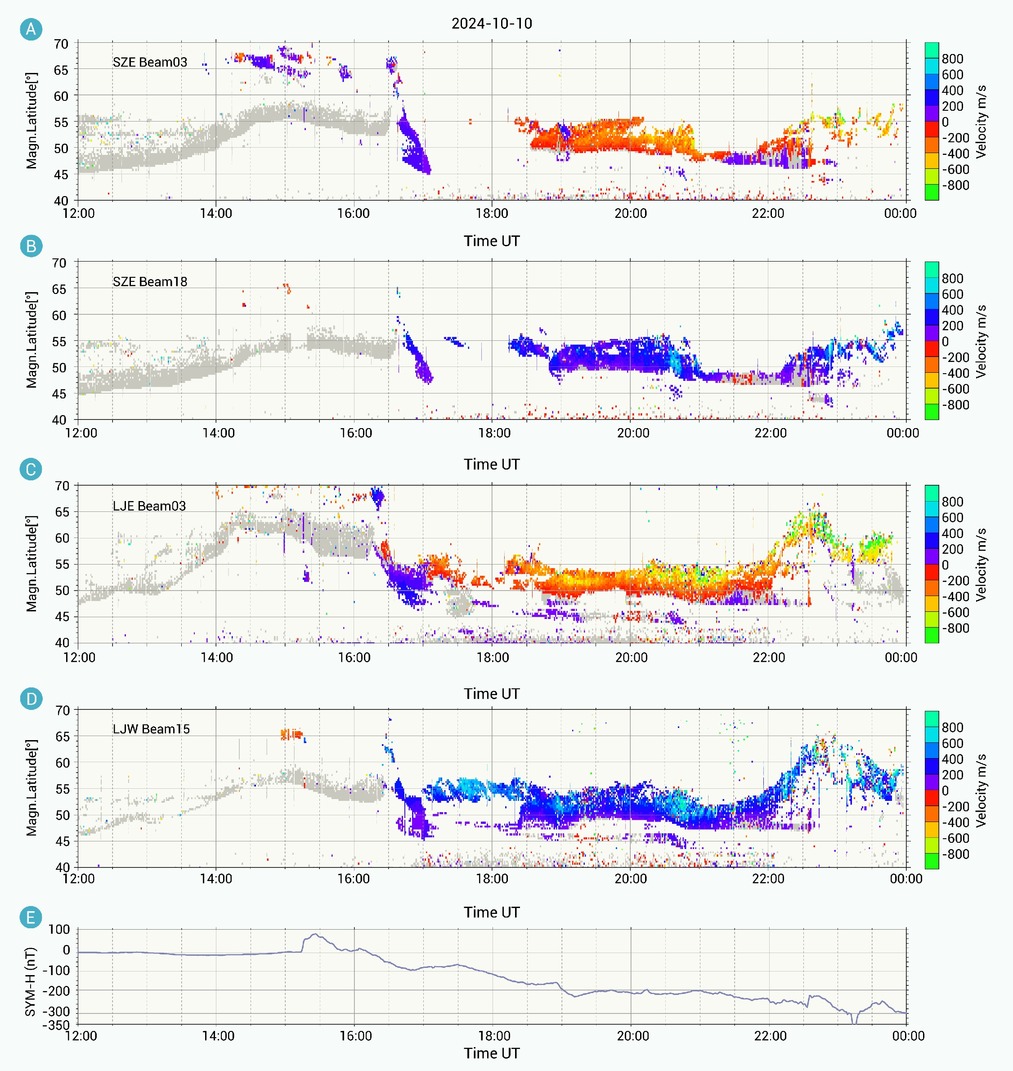
Figure 5.
Range-time-intensity (RTI) plots of the ionospheric irregularities LOS velocity observed from CN-DARN radars
-
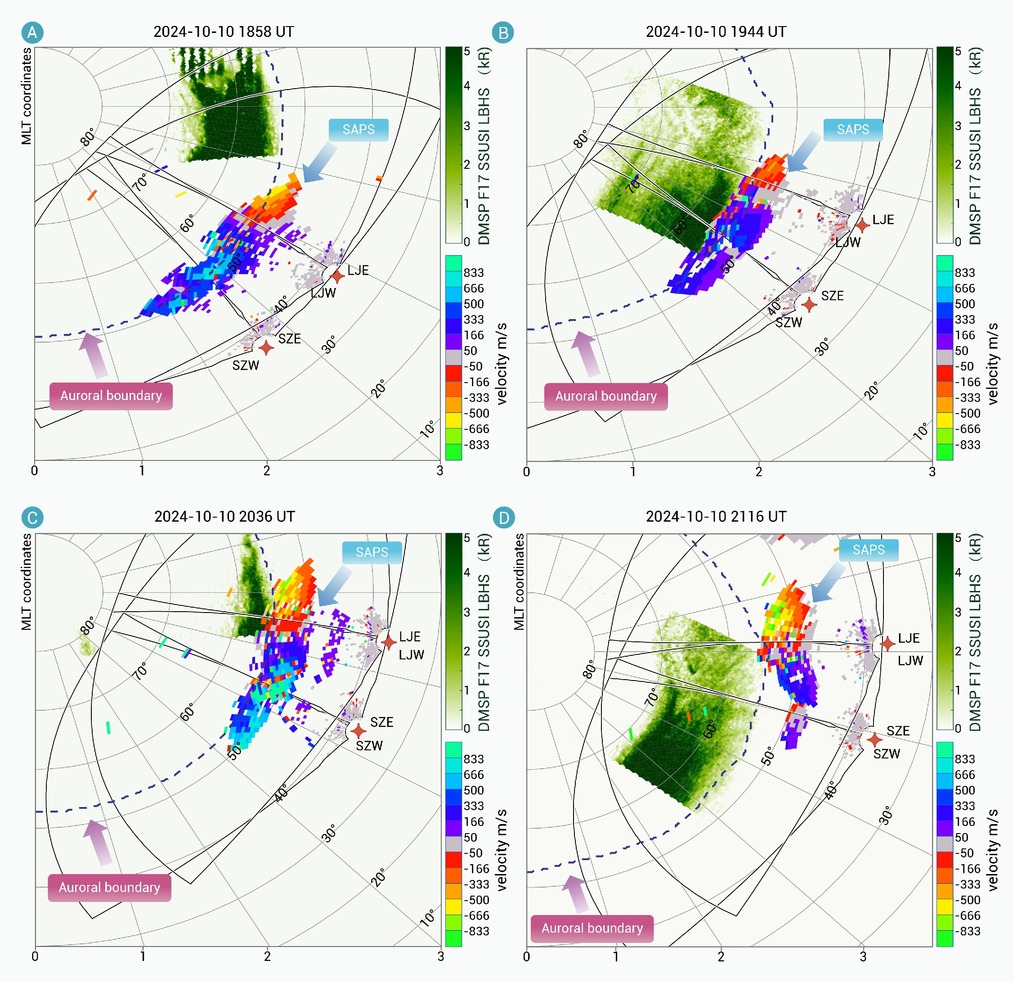
Figure 6.
One-minute plots of the LOS velocity of ionospheric irregularities observed by four CN-DARN radars versus magnetic latitude and magnetic local time for (A) 1858 UT, (B) 1944 UT, (C) 2036 UT, and (D)
2116 UT. -
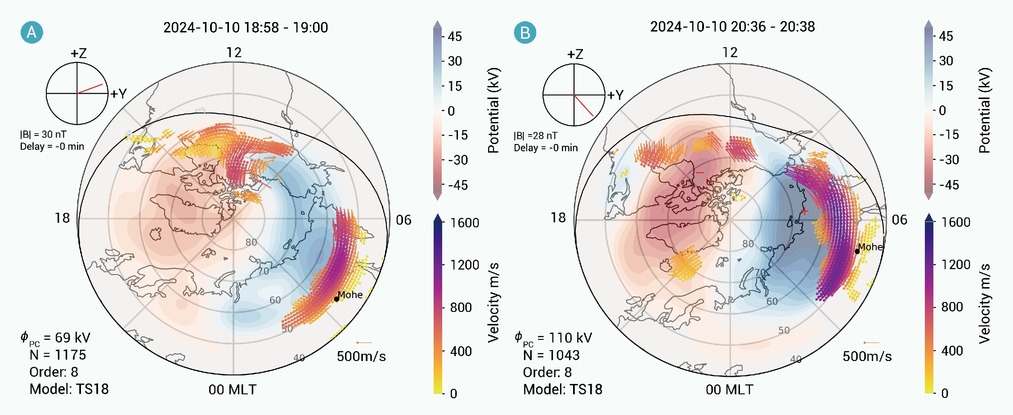
Figure 7.
Two snapshots of the Northern Hemisphere ionospheric convection maps on October 10, 2024
-
Figure 8.
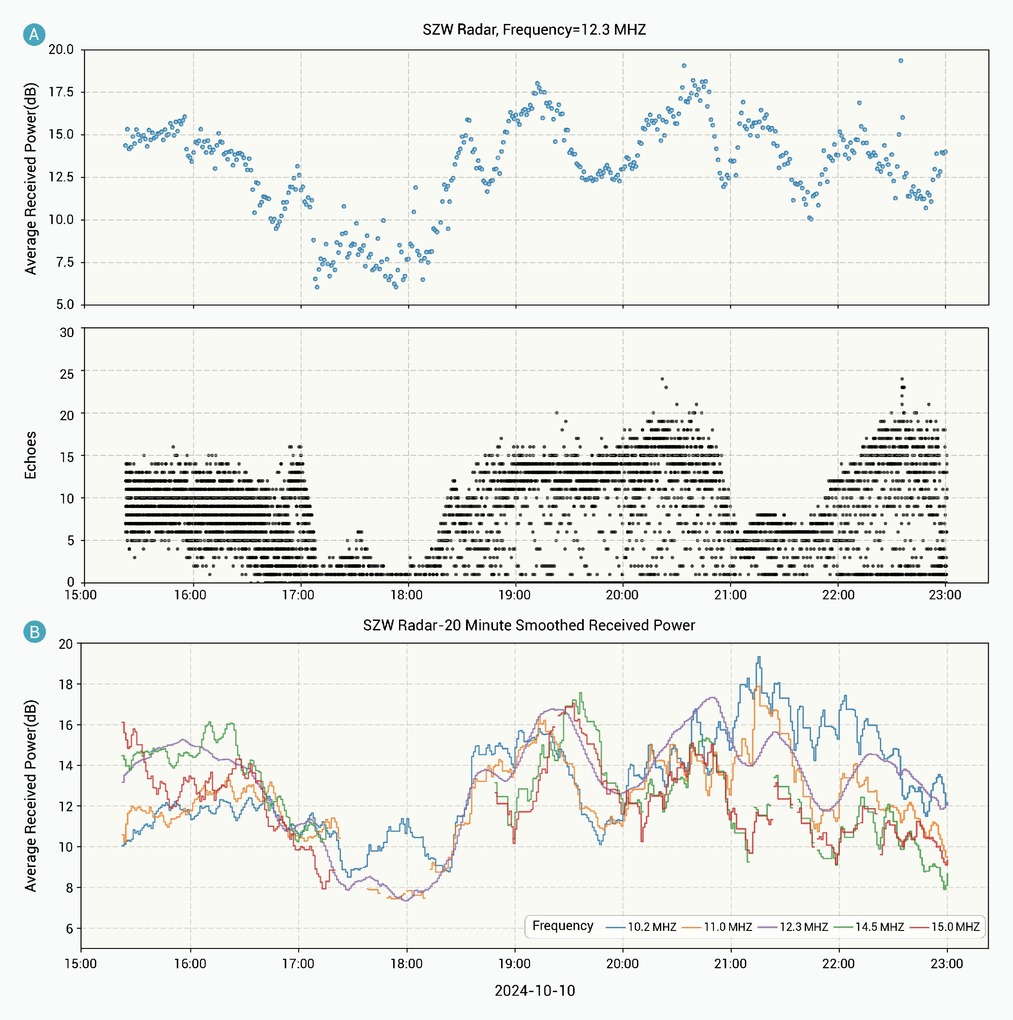
Auroral radio absorption detected by Siziwang West radar on October 10, 2024
