
Saturated decomposition of calcium carbonate at high pressure and implication for deep carbon cycle
-
GRAPHICAL ABSTRACT
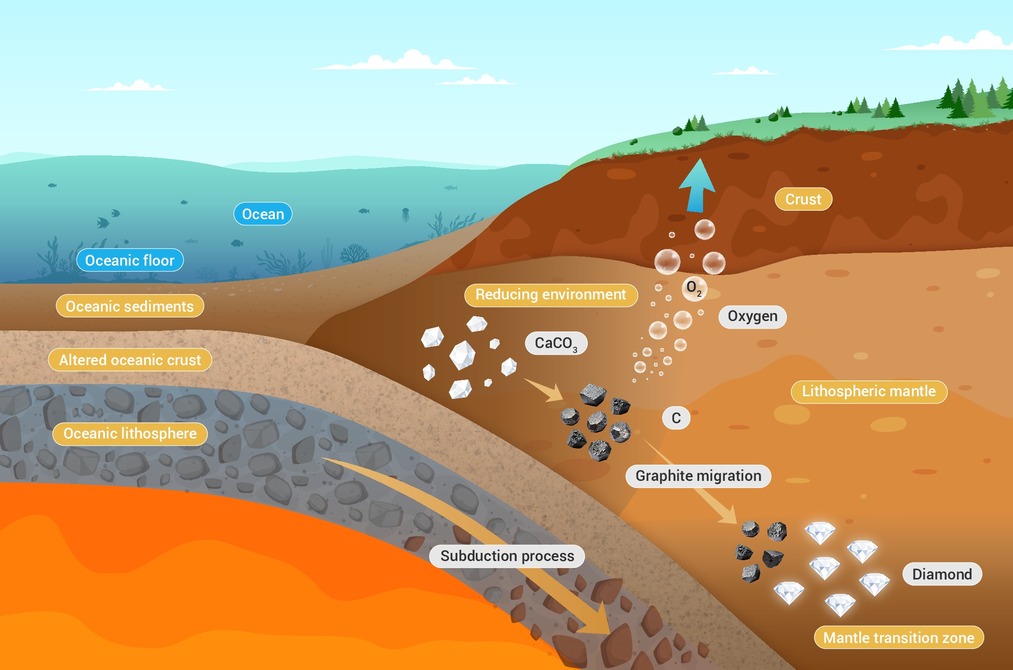
 DownLoad:
Full size image
DownLoad:
Full size image
-
PUBLIC SUMMARY
-
Effects of crystal structure and pressure on CaCO3 decomposition are investigated under reducing conditions.
Graphite formation out of CaCO3 is instantaneous nucleation at 2.5 GPa and 950°C.
Deep carbonate may undergo saturated decomposition under reducing conditions of the upper mantle.
-
-
ABSTRACT
The evolution of calcium carbonate at subduction zones can significantly influence the Earth's long-term climate dynamics and planetary habitability. Here we report the effects of high pressure on carbonate decomposition kinetics for the first time. The oxygen fugacity-controlled experiments on CaCO3 were carried out at 1.0-3.0 GPa and 650-1,050 °C using a large volume cubic press. CaCO3 is stable at 1.0 GPa, 800°C and relatively reducing conditions, but it decomposes to produce graphite with increasing pressure to 2.5-3.0 GPa at high temperature. The graphite formation via carbonate decomposition was initially controlled by instantaneous nucleation with diffusion-controlled growth according to the classical Avrami model. The nano-sized graphite encapsulated residual samples and then precluded further decomposition of calcium carbonate. This result suggests the unexpected evolution of the graphitization and saturated decomposition of calcium carbonate at 2.5-3.0 GPa under relatively reducing conditions relevant to the Earth's upper mantle. -

-
REFERENCES
[1] Plank T. and Manning C. (2019). Subducting carbon. Nature 574:343−352. DOI:10.1038/s41586-019-1643-z [2] Facq S., Daniel I., Montagnac G., et al. (2016). Carbon speciation in saline solutions in equilibrium with aragonite at high pressure. Chem. Geol. 431:44−53. DOI:10.1016/j.chemgeo.2016.03.021 [3] Farsang S., Louvel M., Zhao C., et al. (2021). Deep carbon cycle constrained by carbonate solubility. Nat. Commun. 12:4311. DOI:10.1038/s41467-021-24533-7 [4] Dasgupta R. and Hirschmann M. M. (2010). The deep carbon cycle and melting in Earth's interior. Earth Planet. Sci. Lett. 298:1−13. DOI:10.1016/j.jpgl.2010.06.039 [5] Kelemen P. B. and Manning C. E. (2015). Reevaluating carbon fluxes in subduction zones, what goes down, mostly comes up. Proc. Natl. Acad. Sci. USA 112:E3997−4006. DOI:10.1073/pnas.1507889112 [6] Gui W., Shen K. and Liu J. (2023). Phase stability and reactions of subducting CaCO3 under upper mantle conditions. Acta Geol. Sin-Engl. 97:309−315. DOI:10.1111/1755-6724.15040 [7] Xu Y.-G., Huang X., Wang Q., et al. (2024). Earth’s habitability driven by deep processes. Chin. Sci. Bull. 69:169−183. DOI:10.1360/TB-2023-0816 [8] Liu J. and Mao H.-K. (2021). Yi-Gang Xu: The Earth's deep interior holds the key to habitability. Natl. Sci. Rev. 8:nwab018. DOI:10.1093/nsr/nwab018 [9] Alt J., Schwarzenbach E., Früh-Green G., et al. (2013). The role of serpentinites in cycling of carbon and sulfur: Seafloor serpentinization and subduction metamorphism. Lithos. 178:40−54. DOI:10.1016/j.lithos.2012.12.006 [10] Dutkiewicz A., Müller D., Cannon J., et al. (2018). Sequestration and subduction of deep-sea carbonate in the global ocean since the Early Cretaceous. Geology. 47:91−94. DOI:10.1021/jacs.8b08298 [11] Li K., Li L., Pearson G., et al. (2019). Diamond isotope compositions indicate altered igneous oceanic crust dominates deep carbon recycling. Earth Planet. Sci. Lett. 516:190−201. DOI:10.1016/j.jpgl.2019.03.041 [12] Liu J., Caracas R., Fan D., et al. (2016). High-pressure compressibility and vibrational properties of (Ca,Mn)CO3. Am. Mineral. 101:2723−2730. DOI:10.2138/am-2016-5742 [13] Santos S. M., Marcondes M. L., Justo J. F., et al. (2019). Stability of calcium and magnesium carbonates at Earth's lower mantle thermodynamic conditions. Earth Planet. Sci. Lett. 506:1−7. DOI:10.1016/j.jpgl.2018.10.030 [14] Merlini M., Hanfland M. and Crichton W. A. (2012). CaCO3-III and CaCO3-VI, high-pressure polymorphs of calcite: Possible host structures for carbon in the Earth's mantle. Earth Planet. Sci. Lett. 333:265−271. DOI:10.1016/j.jpgl.2012.04.036 [15] Pippinger T., Miletich R., Merlini M., et al. (2014). Puzzling calcite-III dimorphism: Crystallography, high-pressure behavior, and pathway of single-crystal transitions. Phys. Chem. Minerals. 42:29−43. DOI:10.1007/s00269-014-0696-7 [16] Ishizawa N., Setoguchi H. and Yanagisawa K. (2013). Structural evolution of calcite at high temperatures: Phase V unveiled. Sci. Rep. 3:2832. DOI:10.1038/srep02832 [17] Hou M., Zhang Q., Tao R., et al. (2019). Temperature-induced amorphization in CaCO3 at high pressure and implications for recycled CaCO3 in subduction zones. Nat. Commun. 10:1963. DOI:10.1038/s41467-019-09742-5 [18] Suito K., Namba J., Horikawa T., et al. (2001). Phase relations of CaCO3 at high pressure and high temperature. Am. Mineral. 86:997−1002. DOI:10.2138/am-2001-8-906 [19] Giuntoli F., Vitale Brovarone A. and Menegon L. (2020). Feedback between high-pressure genesis of abiotic methane and strain localization in subducted carbonate rocks. Sci. Rep. 10:9848. DOI:10.1038/s41598-020-66640-3 [20] Malvoisin B., Chopin C., Brunet F., et al. (2012). Low-temperature wollastonite formed by carbonate reduction: A marker of serpentinite redox conditions. J. Petrol. 53:159−176. DOI:10.1016/j.jpgl.2011.10.040 [21] Galvez M. E., Beyssac O., Martinez I., et al. (2013). Graphite formation by carbonate reduction during subduction. Nat. Geosci. 6:473−477. DOI:10.1038/ngeo1827 [22] Schrenk M. O., Brazelton W. J. and Lang S. Q. (2013). Serpentinization, carbon, and deep life. Rev. Mineral. Geochem. 75:575−606. DOI:10.2138/rmg.2013.75.18 [23] Wendlandt R. F., Huebner J. S. and Harrison W. J. (1982). The redox potential of boron nitride and implications for its use as a crucible material in experimental petrology. Am. Mineral. 67:170−174. https://pubs.geoscienceworld.org/msa/ammin/article-abstract/67/1-2/170/104771/The-redox-potential-of-boron-nitride-and [24] Ferrari A. C. and Robertson J. (2004). Raman spectroscopy of amorphous, nanostructured, diamond-like carbon, and nanodiamond. Philos. Trans. A Math. Phys. Eng. Sci. 362:2477−2512. DOI:10.1098/rsta.2004.1452 [25] Tuinstra F. and Koenig J. L. (1970). Raman spectrum of graphite. J. Chem. Phys. 53:1126−1130. DOI:10.1063/1.1674108 [26] Avrami M. (1939). Kinetics of Phase Change. I General Theory. J. Chem. Phys. 7:1103−1112. DOI:10.1063/1.1750380 [27] Liu C., Han K. and Wang D. (2022). An in situ decarbonation kinetic study of calcite using synchrotron radiation XRD. Can. Mineral. 60:687−698. DOI:10.3749/canmin.2100063 [28] Brounce M., Kelley K. A., Cottrell E., et al. (2015). Temporal evolution of mantle wedge oxygen fugacity during subduction initiation. Geology. 43:775−778. DOI:10.1130/G36742.1 [29] Liu Y., Santos M., Yuan T., et al. (2016). Reduction of buried oxidized oceanic crust during subduction. Gondwana. Res. 32:11−23. DOI:10.1016/j.gr.2015.02.014 [30] Chowdhury P., Dasgupta R., Phelps P. R., et al. (2022). Oxygen fugacity range of subducting crust inferred from fractionation of trace elements during fluid-present slab melting in the presence of anhydrite versus sulfide. Geochim. Cosmochim. Acta. 325:214−231. DOI:10.1016/j.gca.2022.02.030 [31] Schrenk M. O., Brazelton W. J. and Lang S. Q. (2013). Serpentinization, carbon, and deep life. Rev. Mineral. Geochem. 75:575−606. DOI:10.2138/rmg.2013.75.18 [32] Sun W.-d., Hawkesworth C., Yao C., et al. (2018). Carbonated mantle domains at the base of the Earth's transition zone. Chem. Geol. 478:69−75. DOI:10.1016/j.chemgeo.2017.08.001 [33] Rohrbach A. and Schmidt M. W. (2011). Redox freezing and melting in the Earth’s deep mantle resulting from carbon–iron redox coupling. Nature 472:209−212. DOI:10.1038/nature09899 [34] Taylor W. R. and Green D. H. (1988). Measurement of reduced peridotite-C-O-H solidus and implications for redox melting of the mantle. Nature 332:349−352. DOI:10.1038/332349a0 [35] Wood B. J. and Virgo D. (1989). Upper mantle oxidation state: Ferric iron contents of Iherzolite spinels by 57Fe Mössbauer spectroscopy and resultant oxygen fugacities. Geochim. Cosmochim. Acta. 53:1277−1291. DOI:10.1016/0016-7037(89)90062-8 [36] Parkinson I. and Arculus R. (1999). The redox state of subduction zones: Insights from arc-peridotites. Chem. Geol. 160:409−423. DOI:10.1016/S0009-2541(99)00110-2 [37] Frost D. J. and McCammon C. A. (2008). The redox state of Earth's mantle. Annu. Rev. Earth Planet. Sci. 36:389−420. DOI:10.1146/annurev.earth.36.031207.124322 [38] Eguchi J., Seales J. and Dasgupta R. (2020). Great Oxidation and Lomagundi events linked by deep cycling and enhanced degassing of carbon. Nat. Geosci. 13:71−76. DOI:10.1038/s41561-019-0492-6 [39] Duncan M. S. and Dasgupta R. (2017). Rise of Earth’s atmospheric oxygen controlled by efficient subduction of organic carbon. Nat. Geosci. 10:387−392. DOI:10.1038/ngeo2939 [40] Canfield D. E. (2005). The early history of atmospheric oxygen: Homage to Robert M. Garrels. Annu. Rev. Earth Planet. Sci. 33:1−36. DOI:10.1146/annurev.earth.33.092203.122711 [41] Papineau D., Mojzsis S. J. and Schmitt A. K. (2007). Multiple sulfur isotopes from Paleoproterozoic Huronian interglacial sediments and the rise of atmospheric oxygen. Earth Planet. Sci. Lett. 255:188−212. DOI:10.1016/j.jpgl.2006.12.015 [42] Clift P. (2016). A revised budget for cenozoic sedimentary carbon subduction: Cenozoic carbon subduction. Rev. Geophys. 55:97−125. DOI:10.1002/2016RG000531 [43] Frost B. R. (1979). Mineral equilibria involving mixed-volatiles in a C-O-H fluid phase; the stabilities of graphite and siderite. Am. J. Sci. 279:1033−1059. DOI:10.2475/ajs.279.9.1033 [44] Lan C., Tao R., Huang F., et al. (2023). High-pressure experimental and thermodynamic constraints on the solubility of carbonates in subduction zone fluids. Earth Planet. Sci. Lett. 603: DOI:10.1016/j.jpgl.2023.117989 [45] Cook-Kollars J., Bebout G. E., Collins N. C., et al. (2014). Subduction zone metamorphic pathway for deep carbon cycling: I. Evidence from HP/UHP metasedimentary rocks, Italian Alps. Chem. Geol. 386:31−48. DOI:10.1016/j.chemgeo.2014.07.013 [46] Frezzotti M. L., Selverstone J., Sharp Z. D., et al. (2011). Carbonate dissolution during subduction revealed by diamond-bearing rocks from the Alps. Nat. Geosci. 4:703−706. DOI:10.1038/ngeo1246 [47] Zhu J., Zhang L., Tao R. et al. (2020). The formation of graphite-rich eclogite vein in S.W. Tianshan (China) and its implication for deep carbon cycling in subduction zone. Chem. Geol. 533:119430. DOI:10.1016/j.chemgeo.2019.119430 [48] Toffolo L., Tumiati S., Villa A., et al. (2023). Experimental dissolution of carbonaceous materials in water at 1 GPa and 550°C: Assessing the role of carbon forms and redox state on COH fluid production and composition during forearc subduction of organic matter. Front. Earth Sci. 11. DOI:10.3389/feart.2023.1013014 -
ABOUT THIS ARTICLE
Cite this article:
Hu J., Lv C., Deng A., et al. (2026). Saturated decomposition of calcium carbonate at high pressure and implication for deep carbon cycle. The Innovation Geoscience 4:100201. https://doi.org/10.59717/j.xinn-geo.2026.100201
Welcome!
To request copyright permission to republish or share portions of our works, please visit Copyright Clearance Center's (CCC) Marketplace website at marketplace.copyright.com.
Export File
Citation
Hu J., Lv C., Deng A., et al. (2026). Saturated decomposition of calcium carbonate at high pressure and implication for deep carbon cycle. The Innovation Geoscience 4:100201. https://doi.org/10.59717/j.xinn-geo.2026.100201

Format
Content
-
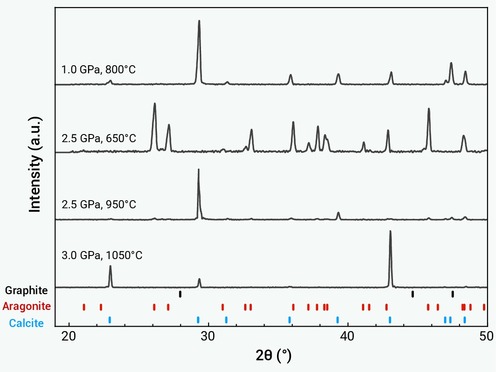
Figure 3.
Representative x-ray diffraction patterns of the recovered samples from high P-T experiments
-
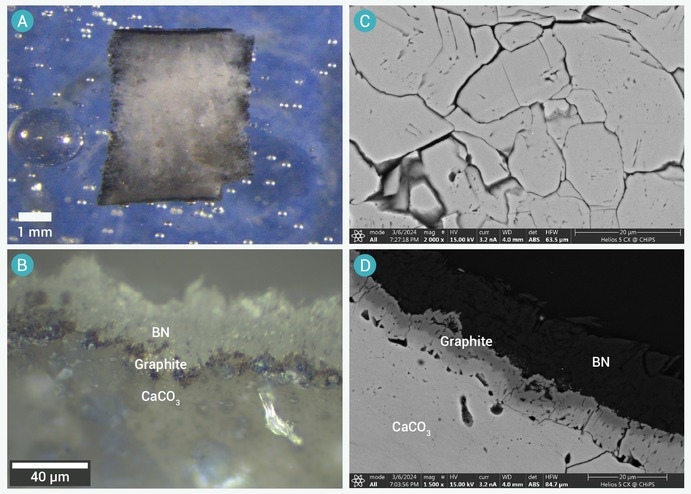
Figure 1.
Representative optical and SEM images of the samples recovered from high P-T experiments at 2.5 GPa and 950°C
-
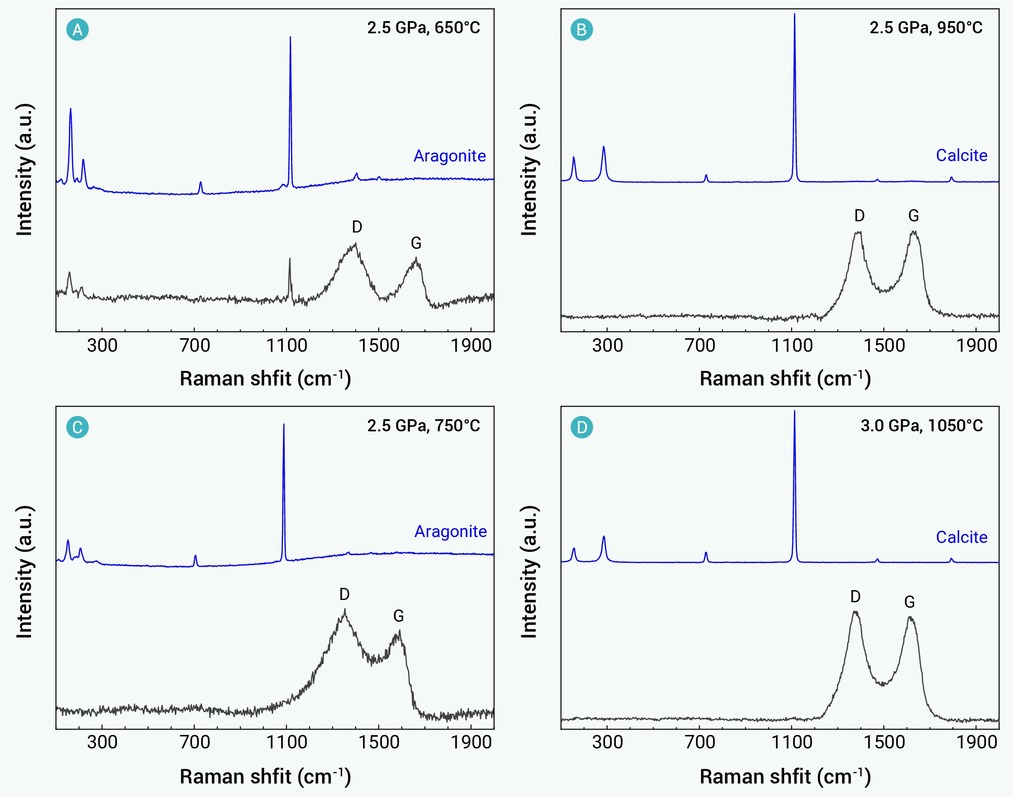
Figure 2.
Representative Raman spectra of the recovered samples from high P-T experiments
-
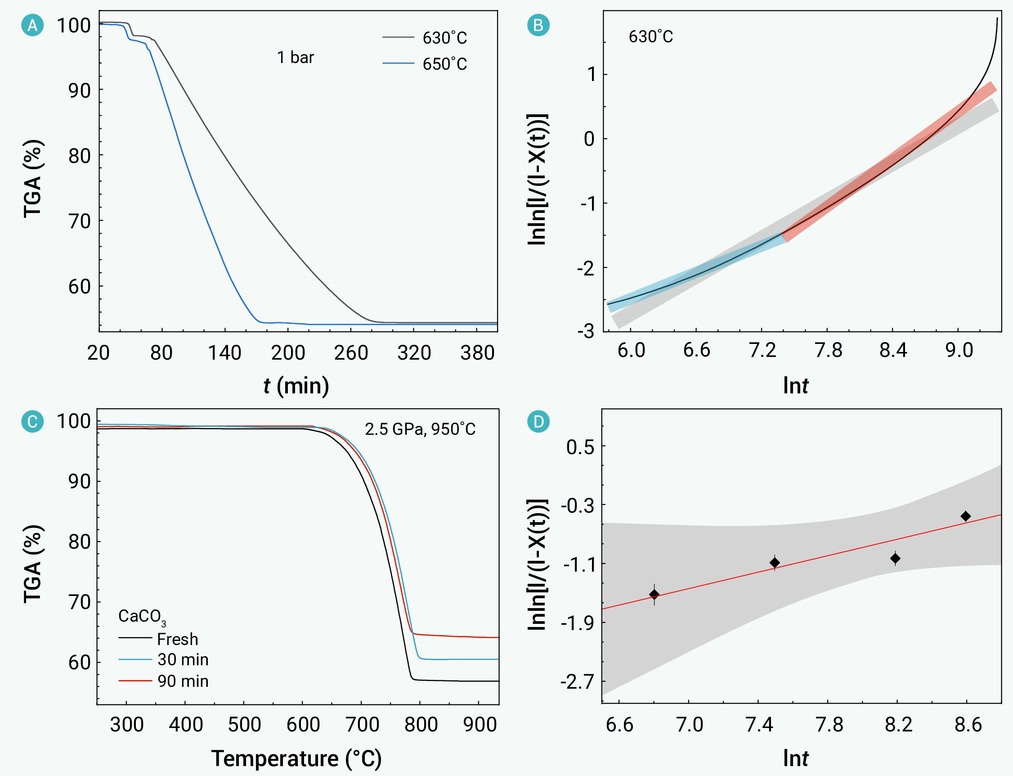
Figure 4.
Representative weight loss curves from TGA measurements on
-
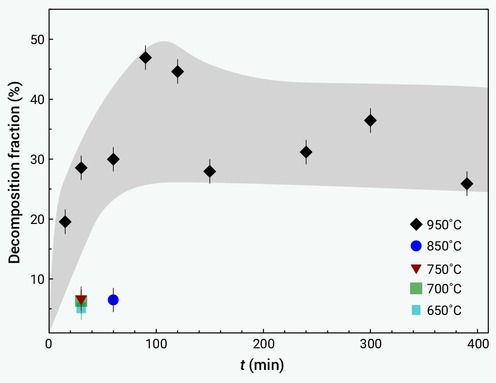
Figure 5.
The evolution of decomposition fraction of calcium carbonate with time at 2.5 GPa and reducing conditions
