
Temperature shapes spatial-temporal patterns of global soil carbon accumulation
-
GRAPHICAL ABSTRACT
 DownLoad:
Full size image
DownLoad:
Full size image
-
PUBLIC SUMMARY
-
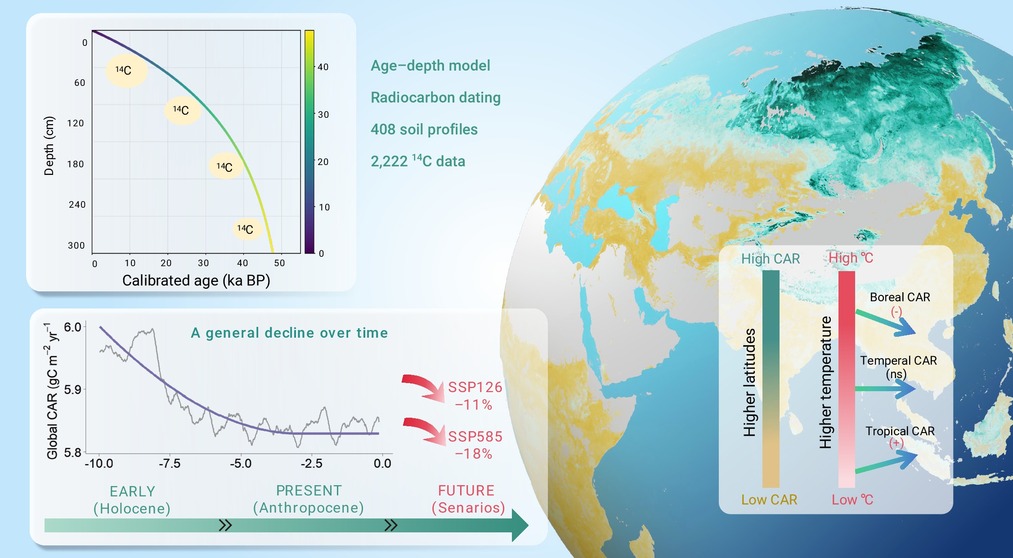
Global carbon accumulation rate (CAR) is reconstructed from 2,222 radiocarbon dates across 408 soil profiles.
CAR trajectory is non-linear and biome-specific over millennia.
Temperature dominates global CAR patterns, with higher spatial than temporal temperature sensitivity.
High-latitude regions show the highest historical CAR but are most vulnerable to climate change.
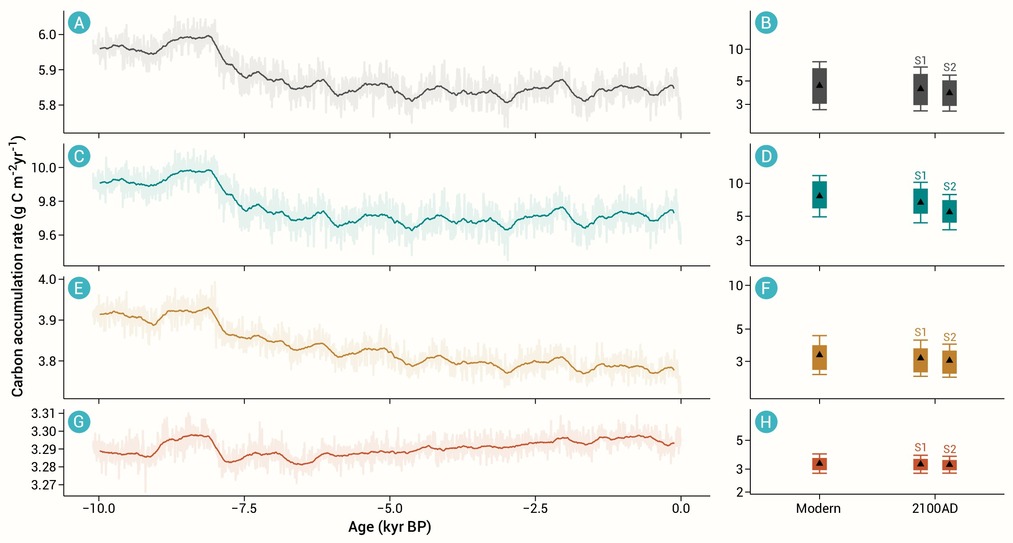
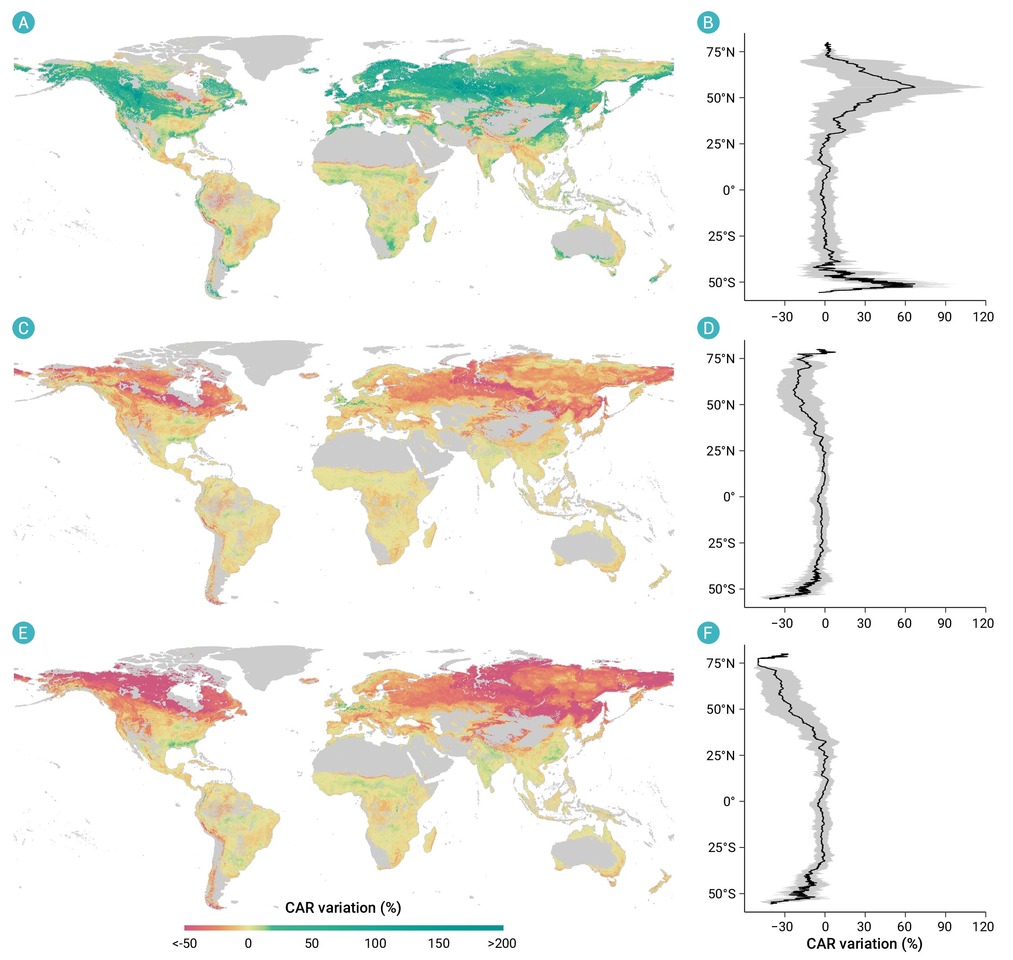
CAR has declined since the early Holocene and is projected to decline further (−11% SSP126; −18% SSP585).
-
-
ABSTRACT
Mitigation of climate change and maintenance of ecosystem functions highlight the great importance of carbon sequestration in soil, which is a long-term process ongoing over decades, centuries, and even millennia. Here we compiled 2,222 radiocarbon (14C) measurements of soil organic matter from 408 soil profiles spanning all major biomes and coupled radiocarbon-based chronology with a chronosequence framework to reconstruct soil carbon accumulation since the early Holocene. This millennial-scale reconstruction captures long-term, non-linear trajectories and biome-dependent patterns over the Holocene. Our findings indicate that temperature was the dominant factor shaping the global spatial and temporal patterns of the carbon accumulation rate (CAR). Notably, the spatial sensitivity of CAR to temperature was nearly twofold greater than the within-profile temporal sensitivity, indicating that spatial gradients alone do not fully represent the magnitude of long-term temperature responses. Globally, CAR declines from the early Holocene to the present (Anthropocene) and is projected to decrease further by 11% under the SSP126 scenario and by 18% under the SSP585 scenario. High-latitude permafrost and wetland soils show the highest historical CAR but also the largest projected declines, whereas tropical soils exhibit a positive CAR–temperature relationship, which may reflect warming-associated increases in plant and root carbon inputs over long timescales. This radiocarbon-constrained CAR reconstruction provides an observation-based benchmark for evaluating Earth system models and highlights the increasing vulnerability of high-latitude soil carbon reservoirs under ongoing warming. -

-
REFERENCES
[1] Crowther T. W., Todd-Brown K. E. O., Rowe C. W., et al. (2016). Quantifying global soil carbon losses in response to warming. Nature 540:104−108. DOI:10.1038/nature20150 [2] Lal R. (2018). Digging deeper: A holistic perspective of factors affecting soil organic carbon sequestration in agroecosystems. Glob. Chang. Biol. 24:3285−3301. DOI:10.1111/gcb.14054 [3] Bradford M. A., Wieder W. R., Bonan G. B., et al. (2016). Managing uncertainty in soil carbon feedbacks to climate change. Nat. Clim. Chang. 6:751−758. DOI:10.1038/nclimate3071 [4] Bol R., Bolger T., Cully R., et al. (2003). Recalcitrant soil organic materials mineralize more efficiently at higher temperatures. J. Plant Nutr. Soil Sci. 166:300−307. DOI:10.1002/jpln.200390047 [5] Walker T. W. N., Kaiser C., Strasser F., et al. (2018). Microbial temperature sensitivity and biomass change explain soil carbon loss with warming. Nat. Clim. Chang. 8:885−889. DOI:10.1038/s41558-018-0259-x [6] Gallego-Sala A., Charman D. J., Brewer S., et al. (2018). Latitudinal limits to the predicted increase of the peatland carbon sink with warming. Nat. Clim. Chang. 8:907−913. DOI:10.1038/s41558-018-0271-1 [7] Dungait J. A. J., Hopkins D. W., Gregory A. S., et al. (2012). Soil organic matter turnover is governed by accessibility not recalcitrance. Glob. Chang. Biol. 18:1781−1796. DOI:10.1111/j.1365-2486.2012.02665.x [8] Piao S., Liu Q., Chen A., et al. (2019) Plant phenology and global climate change: Current progresses and challenges. Glob. Chang. Biol. 25:1922–1940. DOI: 10.1111/gcb.14619 [9] Nottingham A. T., Meir P., Velasquez E., et al. (2020). Soil carbon loss by experimental warming in a tropical forest. Nature 584:234−237. DOI:10.1038/s41586-020-2566-4 [10] Schiedung M., Don A., Beare M. H., et al. (2023). Soil carbon losses due to priming moderated by adaptation and legacy effects. Nat. Geosci. 16:909−914. DOI:10.1038/s41561-023-01275-3 [11] Todd-Brown K. E. O., Randerson J. T., Hopkins F., et al. (2014). Changes in soil organic carbon storage predicted by Earth system models during the 21st century. Biogeosciences 11:2341−2356. DOI:10.5194/bg-11-2341-2014 [12] Wang M., Guo X., Zhang S., et al. (2022). Global soil profiles indicate depth-dependent soil carbon losses under a warmer climate. Nat. Commun. 13:5514. DOI:10.1038/s41467-022-33278-w [13] Soldatova E., Krasilnikov S. and Kuzyakov Y. (2024). Soil organic matter turnover: Global implications from δ13C and δ15N signatures. Sci. Total Environ. 912:169423. DOI:10.1016/j.scitotenv.2023.169423 [14] Sanderman J. (2018). Climate legacies drive global soil carbon stocks in terrestrial ecosystems. Sci. Adv. 4:1−7. DOI:10.1126/sciadv.1701482 [15] Fontaine S., Barot S., Barré P., et al. (2007). Stability of organic carbon in deep soil layers controlled by fresh carbon supply. Nature 450:277−280. DOI:10.1038/nature06275 [16] Shi Z., Allison S. D., He Y., et al. (2020). The age distribution of global soil carbon inferred from radiocarbon measurements. Nat. Geosci. 13:555−559. DOI:10.1038/s41561-020-0596-z [17] Luo Z., Wang E., Sun O. J., et al. (2011). Modeling long-term soil carbon dynamics and sequestration potential in semi-arid agro-ecosystems. Agric. For. Meteorol. 151:1529−1544. DOI:10.1016/j.agrformet.2011.06.011 [18] Ren S., Wang T., Guenet B., et al., (2024). Projected soil carbon loss with warming in constrained Earth system models. Nat. Commun. 15:1–10. DOI: 10.1038/s41467-023-44433-2 [19] Ribeiro K., Pacheco F. S., Ferreira H. W., et al. (2021). Tropical peatlands and their contribution to the global carbon cycle and climate change. Glob. Chang. Biol. 27:489−505. DOI:10.1111/gcb.15408 [20] Saito K., Machiya H., Iwahana G., et al. (2021). Numerical model to simulate long-term soil organic carbon and ground ice budget with permafrost and ice sheets ( SOC-ICE-v1.0). 14:521–542. DOI: 10.5194/gmd-14-521-2021 [21] Gao Y. and Couwenberg J. (2015). Carbon accumulation in a permafrost polygon peatland: Steady long-term rates in spite of shifts between dry and wet conditions. Glob. Chang. Biol. 21:803−815. DOI:10.1111/gcb.12742 [22] Piilo S. R., Zhang H., Garneau M., et al. (2019). Recent peat and carbon accumulation following the Little Ice Age in northwestern Québec, Canada. Environ. Res. Lett. 14:075002. DOI:10.1088/1748-9326/ab11ec [23] Yu Z., Loisel J., Brosseau D. P., et al. (2010). Global peatland dynamics since the Last Glacial Maximum. Geophys. Res. Lett. 37:L13402. DOI:10.1029/2010GL043584 [24] Todd-Brown K. E. O., Randerson J. T., Post W. M., et al. (2013). Causes of variation in soil carbon simulations from CMIP5 Earth system models and comparison with observations. Biogeosciences 10:1717–1736. DOI: 10.5194/bg-10-1717-2013 [25] Wieder W. R., Bonan G. B. and Allison S. D. (2013) Global soil carbon projections are improved by modelling microbial processes. Nat. Clim. Chang. 3:909–912. DOI: 10.1038/nclimate1951 [26] He Y., Trumbore S. E., Torn M. S., et al. (2016). Radiocarbon constraints imply reduced carbon uptake by soils during the 21st century. Science 353:1419−1424. DOI:10.1126/science.aad4273 [27] Li J., Yang S., Smith P., Li J., et al. (2025). Peak accumulation of soil organic carbon in the early Holocene. Sci. Bull. 70:2691−2700. DOI:10.1016/j.scib.2025.05.046 [28] Lawrence C., Beem-Miller J., Hoyt A., et al. (2020). An open-source database for the synthesis of soil radiocarbon data: International soil radiocarbon database (ISRaD) version 1.0. Earth Syst. Sci. Data. 12:61–76. DOI: 10.5194/essd-12-61-2020 [29] Kuneš P., Svobodová-Svitavská H., Kolář J., et al. (2015). The origin of grasslands in the temperate forest zone of east-central Europe: Long-term legacy of climate and human impact. Quat. Sci. Rev. 116:15−27. DOI:10.1016/j.quascirev.2015.03.014 [30] Wang Y., Goring S. J. and McGuire J. L. (2019). Bayesian ages for pollen records since the last glaciation in North America. Sci. Data 6:1−8. DOI:10.1038/s41597-019-0182-7 [31] Fick S. E. and Hijmans R. J. (2017). WorldClim 2: New 1-km spatial resolution climate surfaces for global land areas. Int. J. Climatol. 37:4302−4315. DOI:10.1002/joc.5086 [32] Fordham D. A., Saltré F., Haythorne S., et al. (2017). PaleoView: A tool for generating continuous climate projections spanning the last 21 000 years at regional and global scales. Ecography (Cop.). 40:1348−1358. DOI:10.1111/ecog.03031 [33] Tang W., Qin J., Yang K., et al. (2022). Mapping long-term and high-resolution global gridded photosynthetically active radiation using the ISCCP H-series cloud product and reanalysis data. Earth Syst. Sci. Data 14:2007−2019. DOI:10.5194/essd-14-2007-2022 [34] Friedl M., Gray J. and Sulla-Menashe D. (2019). MCD12Q2 MODIS/Terra+Aqua land cover dynamics yearly L3 global 500m SIN grid v006 . NASA Land Processes DACC. DOI: 10.5067/MODIS/MCD12Q2.006 [35] Zomer R. J., Xu J. and Trabucco A. (2022). Version 3 of the global aridity index and potential evapotranspiration database. Sci. Data 9:409. DOI:10.1038/s41597-022-01493-1 [36] Zhao M. and Running S. W. (2010). Drought-induced reduction in global terrestrial net primary production from 2000 through 2009. Science 329:940−943. DOI:10.1126/science.1192666 [37] Spawn S. A., Sullivan C. C., Lark T.J., et al. (2020). Harmonized global maps of above and belowground biomass carbon density in the year 2010. Sci. Data 7:112. DOI:10.1038/s41597-020-0444-4 [38] Rabus B., Eineder M., Roth A., et al. (2003). The shuttle radar topography mission—A new class of digital elevation models acquired by spaceborne radar. ISPRS J. Photogramm. Remote Sens. 57:241−262. DOI:10.1016/S0924-2716(02)00124-7 [39] Hengl T., Mendes de Jesus J., Heuvelink G. B. M., et al. (2017). SoilGrids250m: Global gridded soil information based on machine learning. PLoS One 12:e0169748. DOI:10.1371/journal.pone.0169748 [40] Poggio L., de Sousa L. M., Batjes N.H., et al. (2021). SoilGrids 2.0: Producing soil information for the globe with quantified spatial uncertainty. SOIL 7:217–240. DOI: 10.5194/soil-7-217-2021 [41] He L., Mazza Rodrigues J. L., Soudzilovskaia N. A., et al. (2020). Global biogeography of fungal and bacterial biomass carbon in topsoil. Soil Biol. Biochem. 151:108024. DOI:10.1016/j.soilbio.2020.108024 [42] He L. and Xu X. (2021). Mapping soil microbial residence time at the global scale. Glob. Chang. Biol. 27:6484−6497. DOI:10.1111/gcb.15864 [43] Torn M. S., Swanston C. W., Castanha C., et al. (2009). Storage and turnover of organic matter in soil. Senesi N., Xing B. and Huang P. M. (eds). Biophysico-Chemical processes involving natural nonliving organic matter in environmental systems (Wiley), pp:219–272. DOI: 10.1002/9780470494950.ch6 [44] Reimer P. J., Baillie M. G. L., Bard E., et al. (2004). IntCal04 terrestrial radiocarbon age calibration, 0–26 cal kyr BP. Radiocarbon 46:1029−1058. DOI:10.1017/S0033822200032999 [45] Schuur E. A. G., Druffel E. and Trumbore S. E. (2016). Radiocarbon and climate change: Mechanisms, applications and laboratory techniques (Springer), pp:1–315. DOI:10.1007/978-3-319-25643-6 [46] Chen L., Zhou G., Feng B., et al. (2024). Saline-alkali land reclamation boosts topsoil carbon storage by preferentially accumulating plant-derived carbon. Sci. Bull. 69:2948−2958. DOI:10.1016/j.scib.2024.03.063 [47] Reimer P. J., Bard E., Bayliss A., et al. (2013). IntCal13 and marine13 radiocarbon age calibration curves 0–50,000 years cal BP. Radiocarbon 55:1869−1887. DOI:10.2458/azu_js_rc.55.16947 [48] von Fromm S. F., Hoyt A. M., Sierra C. A., et al. (2024). Controls and relationships of soil organic carbon abundance and persistence vary across pedo‐climatic regions. Glob. Chang. Biol. 30:e17320. DOI:10.1111/gcb.17320 [49] Xiao L., Wang G., Wang M., et al. (2022). Younger carbon dominates global soil carbon efflux. Glob. Chang. Biol. 28:5587−5599. DOI:10.1111/gcb.16311 [50] Team R. C. (2013). R: A language and environment for statistical computing (R Foundation for Statistical Computing). https://cran.rstudio.com/manuals.html [51] Blaauw M. and Christen J. A. (2011). Flexible paleoclimate age-depth models using an autoregressive gamma process. Bayesian Anal. 6:457−474. DOI:10.1214/11-BA618 [52] Hapsari K. A., Jennerjahn T. C., Lukas M.C., et al. (2020). Intertwined effects of climate and land use change on environmental dynamics and carbon accumulation in a mangrove-fringed coastal lagoon in Java, Indonesia. Glob. Chang. Biol. 26:1414−1431. DOI:10.1111/gcb.14926 [53] Larsson A., Segerström U., Laudon H., et al. (2017). Holocene carbon and nitrogen accumulation rates in a boreal oligotrophic fen. Holocene 27:811−821. DOI:10.1177/0959683616675936 [54] Batjes N. H., Ribeiro E., Van Oostrum A., et al. (2017). WoSIS: Providing standardised soil profile data for the world. Earth Syst. Sci. Data 9:1−14. DOI:10.5194/essd-9-1-2017 [55] Hugelius G., Bockheim J. G., Camill P., et al. (2013). A new data set for estimating organic carbon storage to 3 m depth in soils of the northern circumpolar permafrost region. Earth Syst. Sci. Data 5:393−402. DOI:10.5194/essd-5-393-2013 [56] Ding J., Wang T., Piao S., et al. (2019). The paleoclimatic footprint in the soil carbon stock of the Tibetan permafrost region. Nat. Commun. 10:1−9. DOI:10.1038/s41467-019-12214-5 [57] Klaminder J., Yoo K. and Giesler R. (2009). Soil carbon accumulation in the dry tundra: Important role played by precipitation. J. Geophys. Res. Biogeosciences 114:G01007. DOI:10.1029/2009JG000947 [58] Miller C. B., Rodriguez A. B., Mctigue N. D., et al. (2022). Carbon accumulation rates are highest at young and expanding salt marsh edges. Commun. Earth Environ. 3:1−9. DOI:10.1038/s43247-022-00501-x [59] Pries C. E. H., Schuur E. A. G. and Crummer K. G. (2012). Holocene carbon stocks and carbon accumulation rates altered in soils undergoing permafrost Thaw. Ecosystems 15:162−173. DOI:10.1007/s10021-011-9500-4 [60] Torn M. S., Trumbore S. E., Chadwick O. A., et al. (1997). Mineral control of soil organic carbon storage and turnover. Nature 389:170−173. DOI:10.1038/38260 [61] Blaauw M. (2010). Methods and code for “classical” age-modelling of radiocarbon sequences. Quat. Geochronol. 5:512−518. DOI:10.1016/j.quageo.2010.01.002 [62] Blaauw M., Christen J. A., Bennett K. D., et al. (2018). Double the dates and go for Bayes — Impacts of model choice, dating density and quality on chronologies. Quat. Sci. Rev. 188:58−66. DOI:10.1016/j.quascirev.2018.03.032 [63] Liaw A. and Wiener M. (2002). Classification and regression by randomForest. R News 2:18−22. [64] Breiman L. (2001). Random forests. Mach. Learn. 45:5−32. DOI:10.1023/A:1010933404324 [65] Díaz-Uriarte R. and Alvarez de Andrés S. (2006). Gene selection and classification of microarray data using random forest. BMC Bioinformatics 7:1−13. DOI:10.1186/1471-2105-7-3 [66] Friedman J. H. (2001). Greedy function approximation: A gradient boosting machine. Ann. Stat. 29:1189−1232. DOI:10.1214/aos/1013203451 [67] Bates D., Mächler M., Bolker, B., et al. (2015). Fitting linear mixed-effects models using lme4. J. Stat. Softw. 67:1−48. DOI:10.18637/jss.v067.i01 [68] Adhikari K., Owens P. R., Libohova Z., et al. (2019). Assessing soil organic carbon stock of Wisconsin, USA and its fate under future land use and climate change. Sci. Total Environ. 667:833−845. DOI:10.1016/j.scitotenv.2019.02.420 [69] Gray J. M., Bishop T. F. A. and Wilford J. R. (2016). Lithology and soil relationships for soil modelling and mapping. Catena 147:429−440. DOI:10.1016/j.catena.2016.07.045 [70] Negassa M. K., Haile M., Feyisa G. L., et al. (2023). Soil organic carbon stock prediction: Fate under 2050 climate scenarios, the case of Eastern Ethiopia. Sustain. 15:1−23. DOI:10.3390/su15086495 [71] Luo Z., Viscarra-Rossel R. A. and Qian T. (2021). Similar importance of edaphic and climatic factors for controlling soil organic carbon stocks of the world. Biogeosciences 18:2063−2073. DOI:10.5194/bg-18-2063-2021 [72] Treat C. C., Kleinen T., Broothaerts N., et al. (2019). Widespread global peatland establishment and persistence over the last 130,000 y. Proc. Natl. Acad. Sci. USA 116:4822−4827. DOI:10.1073/pnas.1813305116 [73] Mu M., Mu C., Liu H., et al. (2024). Topographic drivers of permafrost organic carbon accumulation on the northern Qinghai–Tibet Plateau. Permafr. Periglac. Process. 35:373−383. DOI:10.1002/ppp.2221 [74] Li J., Zhu T., Singh B. K., et al. (2021). Key microorganisms mediate soil carbon-climate feedbacks in forest ecosystems. Sci. Bull. 66:2036−2044. DOI:10.1016/j.scib.2021.03.008 [75] Schuur E. A. G., Abbott B. W., Commane R., et al. (2022). Permafrost and climate change: Carbon cycle feedbacks from the warming Arctic. Annu. Rev. Environ. Resour. 47:343−371. DOI:10.1146/annurev-environ-012220-011847 [76] Strauss J., Fuchs M., Hugelius G., et al. (2024). Organic matter storage and vulnerability in the permafrost domain. Elias S. A. (ed). Encyclopedia of Quaternary Science, 3rd Edition (Elsevier), pp:399–410. DOI: 10.1016/B978-0-323-99931-1.00164-1 [77] Treat C. C., Virkkala A., Burke E., et al. (2024). Permafrost carbon: Progress on understanding stocks and fluxes across northern terrestrial ecosystems. J. Geophys. Res. Biogeosciences 129:e2023JG007638. DOI:10.1029/2023JG007638 [78] Lewis S. L. and Maslin M. A. (2015). Defining the Anthropocene. Nature 519:171−180. DOI:10.1038/nature14258 [79] Waters C. N., Steffen W., Waters C. N., et al. (2016). The Anthropocene is functionally and stratigraphically distinct from the Holocene. Science 351:aad2622. DOI:10.1126/science.aad2622 [80] Zalasiewicz J., Waters C. N., Ellis E. C., et al. (2021). The Anthropocene: Comparing Its Meaning in Geology (Chronostratigraphy) with Conceptual Approaches Arising in Other Disciplines. Earth’s Futur. 9:e2020EF001896. DOI:10.1029/2020ef001896 [81] Koven C. D., Hugelius G., Lawrence D. M., et al. (2017). Higher climatological temperature sensitivity of soil carbon in cold than warm climates. Nat. Clim. Chang. 7:817−822. DOI:10.1038/nclimate3421 [82] Wang C., Morrissey E. M., Mau R. L., et al. (2021). The temperature sensitivity of soil: Microbial biodiversity, growth, and carbon mineralization. ISME J. 15:2738−2747. DOI:10.1038/s41396-021-00959-1 [83] Georgiou K., Jackson R. B., Vindušková O., et al. (2022). Global stocks and capacity of mineral-associated soil organic carbon. Nat. Commun. 13:1−12. DOI:10.1038/s41467-022-31540-9 [84] Terrer C., Phillips R. P., Hungate B. A., et al. (2021). A trade-off between plant and soil carbon storage under elevated CO2. Nature 591:599−603. DOI:10.1038/s41586-021-03306-8 [85] Cotrufo M. F., Ranalli M. G., Haddix M. L., et al. (2019). Soil carbon storage informed by particulate and mineral-associated organic matter. Nat. Geosci. 12:989−994. DOI:10.1038/s41561-019-0484-6 [86] Nemani R. R., Keeling C. D., Hashimoto H., et al. (2003). Climate-driven increases in global terrestrial net primary production from 1982 to 1999. Science. 300:1560−1563. DOI:10.1126/science.1082750 [87] Zhou L., Zhou X., He Y., et al. (2022). Global systematic review with meta-analysis shows that warming effects on terrestrial plant biomass allocation are influenced by precipitation and mycorrhizal association. Nat. Commun. 13:4914. DOI:10.1038/s41467-022-32671-9 [88] Qu L., Wang C., Manzoni S., et al. (2024). Stronger compensatory thermal adaptation of soil microbial respiration with higher substrate availability. ISME J. 18:wrae025. DOI:10.1093/ismejo/wrae025 [89] Doetterl S., Stevens A., Six J., et al. (2015). Soil carbon storage controlled by interactions between geochemistry and climate. Nat. Geosci. 8:780−783. DOI:10.1038/ngeo2516 [90] Bhattacharyya A., Campbell A. N., Tfaily M. M., et al. (2018). Redox fluctuations control the coupled cycling of iron and carbon in tropical forest soils. Environ. Sci. Technol. 52:14129−14139. DOI:10.1021/acs.est.8b03408 [91] Liu Z., Zhu J., Rosenthal Y., Zhang X., et al. (2014). The Holocene temperature conundrum. Proc. Natl. Acad. Sci. USA 111:E3501−E3505. DOI:10.1073/pnas.1407229111 [92] Hartley I. P., Hill T. C., Chadburn S. E., et al. (2021). Temperature effects on carbon storage are controlled by soil stabilisation capacities. Nat. Commun. 12:1−7. DOI:10.1038/s41467-021-27101-1 [93] Lavallee J. M., Soong J. L. and Cotrufo M. F. (2020). Conceptualizing soil organic matter into particulate and mineral-associated forms to address global change in the 21st century. Glob. Chang. Biol. 26:261−273. DOI:10.1111/gcb.14859 [94] Jia N., Li L., Guo H., et al. (2024). Important role of Fe oxides in global soil carbon stabilization and stocks. Nat. Commun. 15:10318. DOI:10.1038/s41467-024-54832-8 [95] Ma T., Wang Y., Dai G., et al. (2025). Prolonged storage of bound organic carbon in wetland but not upland soils: A 13C and 14C Perspective. Geophys. Res. Lett. 52:e2024GL112491. DOI:10.1029/2024GL112491 -
ABOUT THIS ARTICLE
Cite this article:
Yang S., Li J., Kuzyakov Y., et al. (2026). Temperature shapes spatial-temporal patterns of global soil carbon accumulation. The Innovation Geoscience 4:100214. https://doi.org/10.59717/j.xinn-geo.2026.100214
Welcome!
To request copyright permission to republish or share portions of our works, please visit Copyright Clearance Center's (CCC) Marketplace website at marketplace.copyright.com.
Export File
Citation
Yang S., Li J., Kuzyakov Y., et al. (2026). Temperature shapes spatial-temporal patterns of global soil carbon accumulation. The Innovation Geoscience 4:100214. https://doi.org/10.59717/j.xinn-geo.2026.100214

Format
Content
-
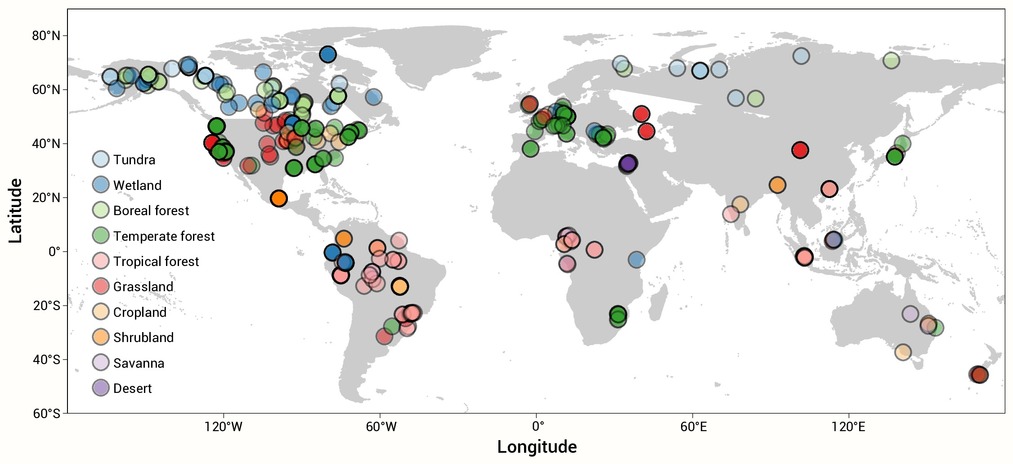
Figure 1.
Global distribution of the 408 sampling sites
-
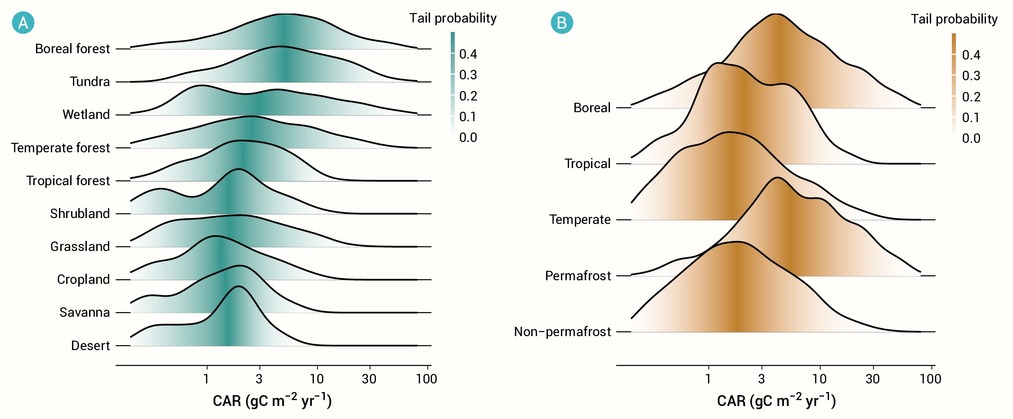
Figure 2.
Density distributions of soil carbon accumulation rate (CAR) across ecosystems
-
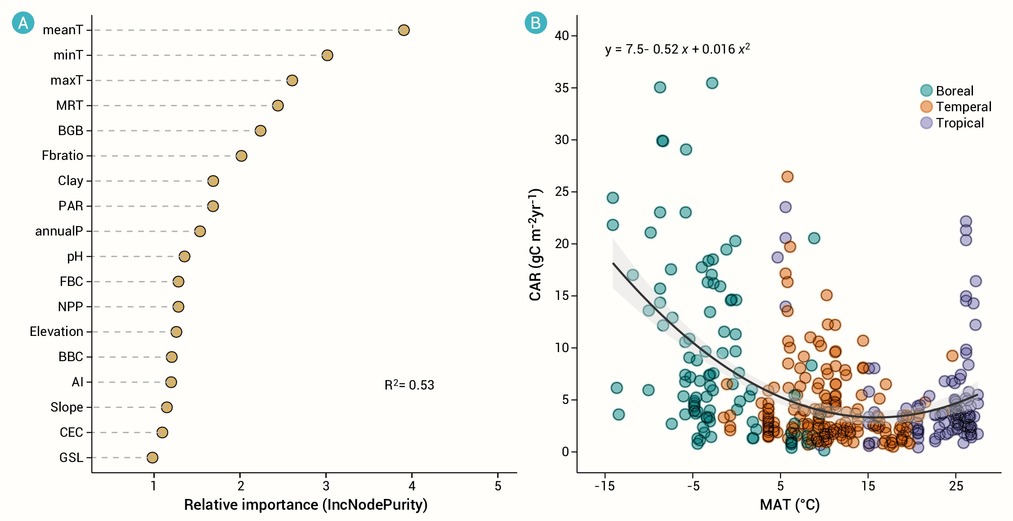
Figure 3.
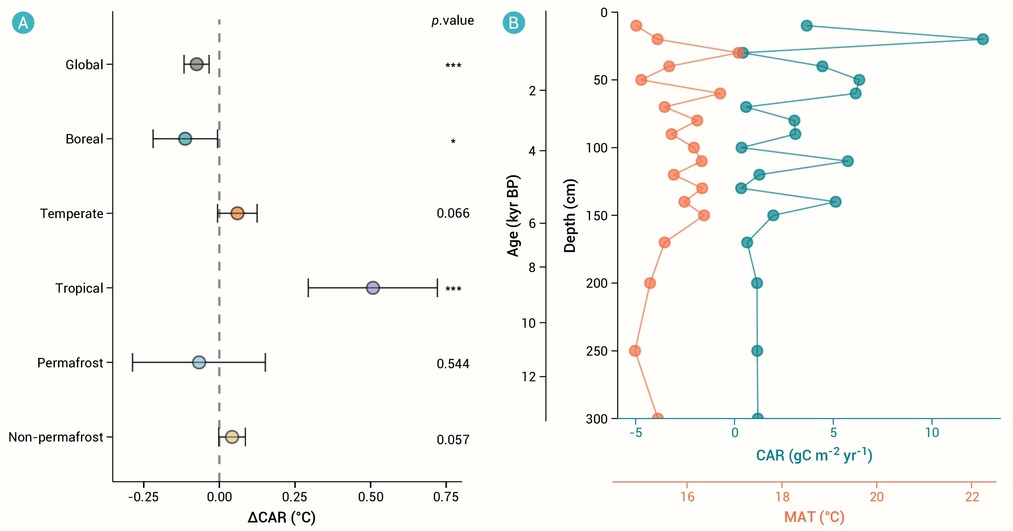
Drivers of temporal and spatial patterns of soil carbon accumulation rate (CAR)
-
Figure 4.
Temperature sensitivity of soil carbon accumulation rate (CAR)
-
Figure 5.
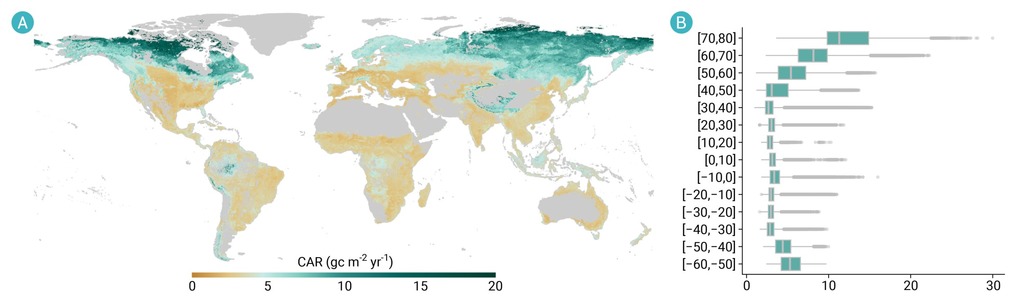
Global pattern of soil carbon accumulation rate (CAR)
-
Figure 6.
Temporal dynamics of carbon accumulation rate (CAR) since the start of the Holocene
-
Figure 7.
Global patterns of percentage changes in soil carbon accumulation rate (CAR%) across historical (5 kyr BP) and projected (2100AD) time periods in comparison to contemporary levels
