
Impacts of permafrost degradation on the richness of human-used plant species in the High Mountain Asia
-
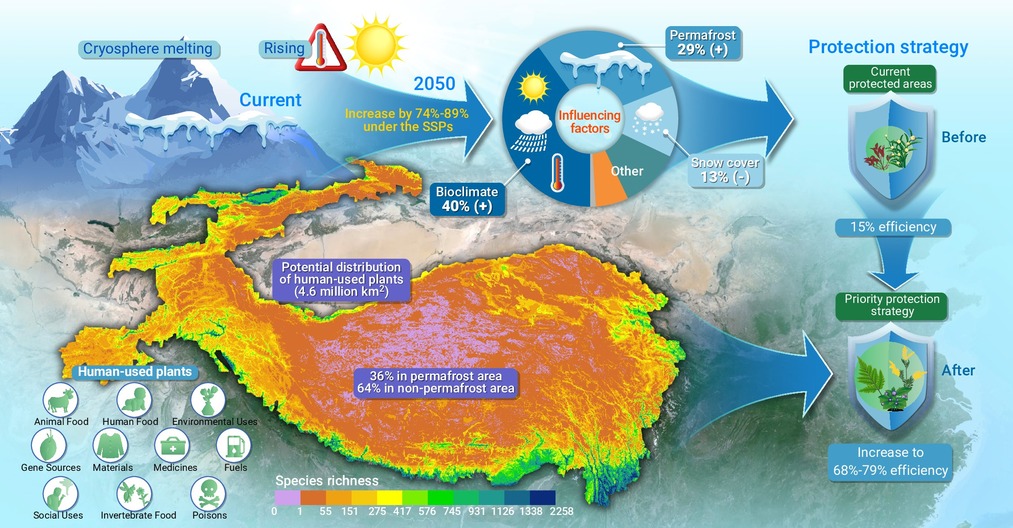
GRAPHICAL ABSTRACT
 DownLoad:
Full size image
DownLoad:
Full size image
-
PUBLIC SUMMARY
-
Approximately 36% of human-used plant species richness is distributed in permafrost areas.
An obvious elevation-dependent pattern is found in future changes of plant species richness.
Effects of bioclimatic, permafrost and snow cover on the plant richness are 40%, 29% and 13%, respectively.
Our priority strategies will increase the conservation efficiency to 68%-79%.
-
-
ABSTRACT
Climate warming has accelerated the melting of cryosphere, substantially affecting the plants biodiversity in global cold regions. However, the spatiotemporal patterns of human-used plants and their responses to climate change remain uncertain. Here, by synthesizing 3,716 investigated plant species from ten use categories in the High Mountain Asia, we show that the potential distribution area of human-used plants species richness is 4.6 ± 0.2 million km2, of which 36% is located in permafrost areas. The change in plant species richness shows an obvious elevation-dependent pattern, and this is most obvious in permafrost regions. The area of regions with increasing species richness of human-used plants is projected to increase by 74%-89% by 2050 under the Shared Socioeconomic Pathways. Among them, bioclimatic factors, permafrost and snow cover have the greatest impacts on species richness, with respective standardized effects of 40%, 29% and 13%. Based on the conservation gaps of human-used plants, our proposed priority protection strategies will increase conservation efficiency to 68%-79% relative to current natural reserves. These findings highlight the cryosphere melting substantially influences plant biodiversity, and underscore the urgent need to integrate these impacts into the Convention on Biological Diversity. -

-
REFERENCES
[1] Fromentin J. M., Emery M. R., Donaldson J., et al. (2022). Thematic assessment report on the sustainable use of wild species of the intergovernmental science-policy platform on biodiversity and ecosystem services. IPBES. DOI:10.5281/zenodo.6448567 [2] Pironon S., Ondo I., Diazgranados M., et al. (2024). The global distribution of plants used by humans. Science 383:293−297. DOI:10.1126/science.adg8028 [3] Richardson K., Steffen W., Lucht W., et al. (2023). Earth beyond six of nine planetary boundaries. Sci. Adv. 9:eadh2458. DOI:10.1126/sciadv.adh2458 [4] Brondízio E. S., Settele J., Diaz S., et al. (2019). Global assessment report on biodiversity and ecosystem services of the intergovernmental science-policy platform on biodiversity and ecosystem services. IPBES. DOI:10.5281/zenodo.3831673 [5] Huss M., Bookhagen B., Huggel C., et al. (2017). Toward mountains without permanent snow and ice. Earths Future 5:418−435. DOI:10.1002/2016EF000514 [6] Hock R., Rasul G., Adler C., et al. (2019). High mountain areas. In: Ipcc special report on the ocean and cryosphere in a changing climate. (Cambridge University Press). 131-202. DOI:10.1017/9781009157964.004 [7] Peng X., Zhang T., Frauenfeld O. W., et al. (2021). A holistic assessment of 1979–2016 global cryospheric extent. Earths Future 9:e2020EF001969. DOI:10.1029/2020EF001969 [8] Smith S. L., O’Neill H. B., Isaksen K., et al. (2022). The changing thermal state of permafrost. Nat. Rev. Earth Environ. 3:10−23. DOI:10.1038/s43017-021-00240-1 [9] Yun H., Ciais P., Zhu Q., et al. (2024). Changes in above-versus belowground biomass distribution in permafrost regions in response to climate warming. Proc. Natl. Acad. Sci. USA 121:e2314036121. DOI:10.1073/pnas.2314036121 [10] Jin X., Jin H., Iwahana G., et al. (2021). Impacts of climate-induced permafrost degradation on vegetation: A review. Adv. Clim. Change Res. 12:29−47. DOI:10.1016/j.accre.2020.07.002 [11] Peng R., Liu H., Anenkhonov O. A., et al. (2022). Tree growth is connected with distribution and warming‐induced degradation of permafrost in southern siberia. Glob. Chang. Biol. 28:5243−5253. DOI:10.1111/gcb.16284 [12] Yun H., Zhu Q., Tang J., et al. (2023). Warming, permafrost thaw and increased nitrogen availability as drivers for plant composition and growth across the tibetan plateau. Soil Biol. Biochem. 182:109041. DOI:10.1016/j.soilbio.2023.109041 [13] Ma W., Hu J., Zhang B., et al. (2024). Later-melting rather than thickening of snowpack enhance the productivity and alter the community composition of temperate grassland. Sci. Total Environ. 923:171440. DOI:10.1016/j.scitotenv.2024.171440 [14] Li B., Chen Y. and Shi X. (2020). Does elevation dependent warming exist in high mountain asia. Environ. Res. Lett. 15:024012. DOI:10.1088/1748-9326/ab6d7f [15] Zhang G., Mu C., Nan Z., et al. (2023). Elevation dependency of future degradation of permafrost over the qinghai-tibet plateau. Environ. Res. Lett. 18:075005. DOI:10.1088/1748-9326/ace0d1 [16] Xu X., Zhang H., Luo J., et al. (2017). Area-corrected species richness patterns of vascular plants along a tropical elevational gradient. J. Mountain Sci. 14:694−704. DOI:10.1007/s11629-016-3894-6 [17] Rumpf S. B., Hülber K., Klonner G., et al. (2018). Range dynamics of mountain plants decrease with elevation. Proc. Natl. Acad. Sci. USA 115:1848−1853. DOI:10.1073/pnas.1713936115 [18] He X., Ziegler A. D., Elsen P. R., et al. (2023). Accelerating global mountain forest loss threatens biodiversity hotspots. One Earth 6:303−315. DOI:10.1016/j.oneear.2023.02.005 [19] Lu L., Zhao L., Hu H., et al. (2023). A comprehensive evaluation of flowering plant diversity and conservation priority for national park planning in china. Fundam Res. 3:939−950. DOI:10.1016/j.fmre.2022.08.008 [20] Yao T., Bolch T., Chen D., et al. (2022). The imbalance of the asian water tower. Nat. Rev. Earth Environ. 3:618−632. DOI:10.1038/s43017-022-00299-4 [21] Zhang Q., Shen Z., Pokhrel Y., et al. (2023). Oceanic climate changes threaten the sustainability of asia’s water tower. Nature 615:87−93. DOI:10.1038/s41586-022-05643-8 [22] Ran Y., Li X., Che T., et al. (2022). Current state and past changes in frozen ground at the third pole: A research synthesis. Adv. Clim. Change Res. 13:632−641. DOI:10.1016/j.accre.2022.09.004 [23] Baral P., Allen S., Steiner J. F., et al. (2023). Climate change impacts and adaptation to permafrost change in high mountain asia: A comprehensive review. Environ. Res. Lett. 18:093005. DOI:10.1088/1748-9326/acf1b4 [24] Wang X., Ran Y., Pang G., et al. (2022). Contrasting characteristics, changes, and linkages of permafrost between the arctic and the third pole. Earth-Sci. Rev. 230:104042. DOI:10.1016/j.earscirev.2022.104042 [25] Wang T., Wu T., Wang P., et al. (2019). Spatial distribution and changes of permafrost on the qinghai-tibet plateau revealed by statistical models during the period of 1980 to 2010. Sci. Total Environ. 650:661−670. DOI:10.1016/j.scitotenv.2018.08.398 [26] Ding W. N., Ree R. H., Spicer R. A., et al. (2020). Ancient orogenic and monsoon-driven assembly of the world’s richest temperate alpine flora. Science 369:578−581. DOI:10.1126/science.abb4484 [27] Chen Y. (2019). A preliminary catalogue of vascular plants in the pan-himalaya. Beijing Science Press and Cambridge University Press. https://www.hceis.com/home/book_view.aspx?id=2485 [28] Diazgranados M., Allkin B., Black N., et al. (2020). World checklist of useful plant species. Royal botanic gardens, Kew. (KNB Data Repository). DOI:10.5063/F1CV4G34 [29] Graham C. H., Elith J., Hijmans R. J., et al. (2008). The influence of spatial errors in species occurrence data used in distribution models. J. Appl. Ecol. 45:239−247. DOI:10.1111/j.1365-2664.2007.01408.x [30] Zizka A., Silvestro D., Andermann T., et al. (2019). Coordinatecleaner: Standardized cleaning of occurrence records from biological collection databases. Methods Ecol. Evol. 10:744−751. DOI:10.1111/2041-210X.13152 [31] Boria R. A., Olson L. E., Goodman S. M., et al. (2014). Spatial filtering to reduce sampling bias can improve the performance of ecological niche models. Ecol. Model 275:73−77. DOI:10.1016/j.ecolmodel.2013.12.012 [32] Karger D. N., Conrad O., Böhner J., et al. (2017). Climatologies at high resolution for the earth’s land surface areas. Sci. Data 4:170122. DOI:10.1038/sdata.2017.122 [33] Jin H., Peng X., Frauenfeld O. W., et al. (2024). The infrastructure cost of permafrost degradation for the northern hemisphere. Glob. Environ. Change 84:102791. DOI:10.1016/j.gloenvcha.2023.102791 [34] Amatulli G., Domisch S., Tuanmu M., et al. (2018). A suite of global, cross-scale topographic variables for environmental and biodiversity modeling. Sci. Data 5:180040. DOI:10.1038/sdata.2018.40 [35] Gallardo B., Zieritz A. and Aldridge D. C. (2015). The importance of the human footprint in shaping the global distribution of terrestrial, freshwater and marine invaders. PLoS One 10:e0125801. DOI:10.1371/journal.pone.0125801 [36] O’neill B. C., Tebaldi C., Van D., et al. (2016). The scenario model intercomparison project (scenariomip) for cmip6. Geosci. Model Dev. 9:3461. DOI:10.5194/gmd-9-3461-2016 [37] Armstrong D. I., Staal A., Abrams J. F., et al. (2022). Exceeding 1.5℃ global warming could trigger multiple climate tipping points. Science 377:eabn7950. DOI:10.1126/science.abn7950 [38] Tebaldi C., Debeire K., Eyring V., et al. (2021). Climate model projections from the scenario model intercomparison project (scenariomip) of cmip6. Earth Syst. Dyn. 12:253−293. DOI:10.5194/esd-12-253-2021 [39] Elith J. and Leathwick J. R. (2009). Species distribution models: Ecological explanation and prediction across space and time. Annu. Rev. Ecol. Evol. Syst. 40:677−697. DOI:10.1146/annurev.ecolsys.110308.120159 [40] Hao T., Elith J., Guillera‐Arroita G., et al. (2019). A review of evidence about use and performance of species distribution modelling ensembles like biomod. Divers. Distrib. 25:839−852. DOI:10.1111/ddi.12892 [41] Thuiller W. (2003). Biomod: Optimizing predictions of species distributions and projecting potential future shifts under global change. Glob. Chang. Biol. 9:1353−1362. DOI:10.1046/j.1365-2486.2003.00666.x [42] Thuiller W., Lafourcade B., Engler R., et al. (2009). Biomod: A platform for ensemble forecasting of species distributions. Ecography 32:369−373. DOI:10.1111/j.1600-0587.2008.05742.x [43] Song H., Ordonez A., Svenning J. C., et al. (2021). Regional disparity in extinction risk: Comparison of disjunct plant genera between eastern asia and eastern north america. Glob. Chang. Biol. 27:1904−1914. DOI:10.1111/gcb.15525 [44] Fielding A. H. and Bell J. F. (1997). A review of methods for the assessment of prediction errors in conservation presence/absence models. Environ. Conserv. 24:38−49. DOI:10.1017/S0376892997000088 [45] Allouche O., Tsoar A. and Kadmon R. (2006). Assessing the accuracy of species distribution models: Prevalence, kappa and the true skill statistic (tss). J. Appl. Ecol. 43:1223−1232. DOI:10.1111/j.1365-2664.2006.01214.x [46] Hanley J. A. and McNeil B. J. (1982). The meaning and use of the area under a receiver operating characteristic (roc) curve. RAD. 143:29−36. DOI:10.1148/radiology.143.1.7063747 [47] Ferrier S. and Guisan A. (2006). Spatial modelling of biodiversity at the community level. J. Appl. Ecol. 43:393−404. DOI:10.1111/j.1365-2664.2006.01149.x [48] Liu C., Berry P. M., Dawson T. P., et al. (2005). Selecting thresholds of occurrence in the prediction of species distributions. Ecography 28:385−393. DOI:10.1111/j.0906-7590.2005.03957.x [49] Moilanen A. (2007). Landscape zonation, benefit functions and target-based planning: Unifying reserve selection strategies. Biol. Conserv. 134:571−579. DOI:10.1016/j.biocon.2006.09.008 [50] Yasuhara M., Wei C., Kucera M., et al. (2020). Past and future decline of tropical pelagic biodiversity. Proc. Natl. Acad. Sci. USA 117:12891−12896. DOI:10.1073/pnas.1916923117 [51] Zhao L., Li J., Barrett R. L., et al. (2024). Spatial heterogeneity of extinction risk for flowering plants in china. Nat. Commun. 15:6352. DOI:10.1038/s41467-024-50704-3 [52] Dunn L., Lang C., Marilleau N., et al. (2021). Soil microbial communities in the face of changing farming practices: A case study in an agricultural landscape in france. PLoS One 16:e0252216. DOI:10.1371/journal.pone.0252216 [53] Lehtomäki J. and Moilanen A. (2013). Methods and workflow for spatial conservation prioritization using Zonation. Environ. Model. Softw. 47:128−137. DOI:10.1016/j.envsoft.2013.05.001 [54] Zhu Y., Tian D. and Yan F. (2020). Effectiveness of entropy weight method in decision‐making. Math. Probl. Eng. 2020:3564835. DOI:10.1155/2020/3564835 [55] Maxwell S. L., Cazalis V., Dudley N., et al. (2020). Area-based conservation in the twenty-first century. Nature 586:217−227. DOI:10.1038/s41586-020-2773-z [56] Kennedy C. M., Oakleaf J. R., Theobald D. M., et al. (2019). Managing the middle: A shift in conservation priorities based on the global human modification gradient. Glob. Chang. Biol. 25:811−826. DOI:10.1111/gcb.14549 [57] Belote R. T., Barnett K., Dietz M. S., et al. (2021). Options for prioritizing sites for biodiversity conservation with implications for "30 by 30". Biol. Conserv. 264:109378. DOI:10.1016/j.biocon.2021.109378 [58] Sabatini F. M., Jiménez-Alfaro B., Jandt U., et al. (2022). Global patterns of vascular plant alpha diversity. Nat. Commun. 13:4683. DOI:10.1038/s41467-022-32063-z [59] Guo W. Y., Serra-Diaz J. M., Eiserhardt W. L., et al. (2023). Climate change and land use threaten global hotspots of phylogenetic endemism for trees. Nat. Commun. 14:6950. DOI:10.1038/s41467-023-42671-y [60] Sloan S., Jenkins C. N., Joppa L. N., et al. (2014). Remaining natural vegetation in the global biodiversity hotspots. Biol. Conserv. 177:12−24. DOI:10.1016/j.biocon.2014.05.027 [61] Myers N., Mittermeier R. A., Mittermeier C. G., et al. (2000). Biodiversity hotspots for conservation priorities. Nature 403:853−858. DOI:10.1038/35002501 [62] Kumar S., Suyal D. C., Yadav A., et al. (2019). Microbial diversity and soil physiochemical characteristic of higher altitude. PLoS One 14:e0213844. DOI:10.1371/journal.pone.0213844 [63] Hu G., Zhao L., Wu T., et al. (2022). Continued warming of the permafrost regions over the northern hemisphere under future climate change. Earths Future 10:e2022EF002835. DOI:10.1029/2022EF002835 [64] Liang J., Ding Z., Lie G., et al. (2020). Species richness patterns of vascular plants and their drivers along an elevational gradient in the central himalayas. Glob. Ecol. Conserv. 24:e01279. DOI:10.1016/j.gecco.2020.e01279 [65] Galván-Cisneros C. M., Villa P. M., Coelho A. J., et al. (2023). Altitude as environmental filtering influencing phylogenetic diversity and species richness of plants in tropical mountains. J. Mt. Sci. 20:285−298. DOI:10.1007/s11629-022-7687-9 [66] Chen X., Jeong S., Park C., et al. (2022). Different responses of surface freeze and thaw phenology changes to warming among arctic permafrost types. Remote Sens. Environ. 272:112956. DOI:10.1016/j.rse.2022.112956 [67] Xi Y., Zhang W., Wei F., et al. (2024). Boreal tree species diversity increases with global warming but is reversed by extremes. Nat. Plants. 10:1473−1483. DOI:10.1038/s41477-024-01794-w [68] Cheng C., He N., Li M., et al. (2023). Plant species richness on the tibetan plateau: Patterns and determinants. Ecography 2023:e06265. DOI:10.1111/ecog.06265 [69] Kang X., Qi W., Knops J. M., et al. (2023). Climate factors impact different facets of grassland biodiversity both directly and indirectly through soil conditions. Landsc. Ecol. 38:327−340. DOI:10.1007/s10980-022-01525-6 [70] Kelsey K. C., Pedersen S. H., Leffler A. J., et al. (2021). Winter snow and spring temperature have differential effects on vegetation phenology and productivity across arctic plant communities. Glob. Chang. Biol. 27:1572−1586. DOI:10.1111/gcb.15505 [71] Chen N., Wang X., Yuan F., et al. (2025). Warming-independent shortened snow cover duration enhances vegetation greening across northern permafrost region. Commun. Earth Environ. 6:250. DOI:10.1038/s43247-025-02211-6 [72] Zeppel M., Wilks J. V. and Lewis J. D. (2014). Impacts of extreme precipitation and seasonal changes in precipitation on plants. Biogeosciences 11:3083−3093. DOI:10.5194/bg-11-3083-2014 [73] Wrona F. J., Johansson M., Culp J. M., et al. (2016). Transitions in arctic ecosystems: Ecological implications of a changing hydrological regime. J. Geophys. Res. Biogeosci. 121:650−674. DOI:10.1002/2015JG003133 [74] Cheng T. F., Chen D., Wang B., et al. (2024). Human-induced warming accelerates local evapotranspiration and precipitation recycling over the tibetan plateau. Commun. Earth Environ. 5:388. DOI:10.1038/s43247-024-01563-9 [75] Baltzer J. L., Veness T., Chasmer L. E., et al. (2014). Forests on thawing permafrost: Fragmentation, edge effects, and net forest loss. Glob. Chang. Biol. 20:824−834. DOI:10.1111/gcb.12349 [76] Heijmans M. M., Magnússon R. Í., Lara M. J., et al. (2022). Tundra vegetation change and impacts on permafrost. Nat. Rev. Earth Environ. 3:68−84. DOI:10.1038/s43017-021-00233-0 [77] Ramírez J. E., Prieto‐Torres D. A., Gordillo‐Martínez A., et al. (2021). Insights for protection of high species richness areas for the conservation of mesoamerican endemic birds. Divers. Distrib. 27:18−33. DOI:10.1111/ddi.13153 [78] Huang J., Huang J., Liu C., et al. (2016). Diversity hotspots and conservation gaps for the chinese endemic seed flora. Biol. Conserv. 198:104−112. DOI:10.1016/j.biocon.2016.04.007 [79] Zhang Z., He J., Li J., et al. (2015). Distribution and conservation of threatened plants in china. Biol. Conserv. 192:454−460. DOI:10.1016/j.biocon.2015.10.019 [80] Zhang M., Slik J. and Ma K. (2017). Priority areas for the conservation of perennial plants in china. Biol. Conserv. 210:56−63. DOI:10.1016/j.biocon.2016.06.007 [81] Yang R., Cao Y., Hou S., et al. (2020). Cost-effective priorities for the expansion of global terrestrial protected areas: Setting post-2020 global and national targets. Sci. Adv. 6:eabc3436. DOI:10.1126/sciadv.abc3436 [82] Bobrowski M., Weidinger J. and Schickhoff U. (2021). Is new always better? Frontiers in global climate datasets for modeling treeline species in the himalayas. Atmosphere 12:543. DOI:10.3390/atmos12050543 [83] Sun Y., Deng Y., Yao S., et al. (2025). Distribution range and richness of plant species are predicted to increase by 2100 due to a warmer and wetter climate in northern china. Glob. Chang. Biol. 31:e70334. DOI:10.1111/gcb.70334 [84] Niskanen A., Niittynen P., Aalto J., et al. (2019). Lost at high latitudes: Arctic and endemic plants under threat as climate warms. Divers. Distrib. 25:809−821. DOI:10.1111/ddi.12889 [85] Guisan A. and Thuiller W. (2005). Predicting species distribution: Offering more than simple habitat models. Ecol. Lett. 8:993−1009. DOI:10.1111/j.1461-0248.2005.00792.x [86] Chevalier M., Broennimann O. and Guisan A. (2024). Climate change may reveal currently unavailable parts of species’ ecological niches. Nat. Ecol. Evol. 8:1298−1310. DOI:10.1038/s41559-024-02426-4 [87] Kuempel C. D., Chauvenet A. L., Possingham H. P., et al. (2020). Evidence-based guidelines for prioritizing investments to meet international conservation objectives. One Earth 2:55−63. DOI:10.1016/j.oneear.2019.12.013 [88] McIntosh E. J., Pressey R. L., Lloyd S., et al. (2017). The impact of systematic conservation planning. Annu. Rev. Environ. Resour. 42:677−697. DOI:10.1146/annurev-environ-102016-060902 [89] Li B. V., Wu S., Pimm S. L., et al. (2024). The synergy between protected area effectiveness and economic growth. Curr. Biol. 34:2907-2920. e2905. DOI:10.1016/j.cub.2024.05.044 [90] Elsen P. R., Monahan W. B., Dougherty E. R., et al. (2020). Keeping pace with climate change in global terrestrial protected areas. Sci. Adv. 6:eaay0814. DOI:10.1126/sciadv.aay0814 [91] Sun W., Zhang E., Zhao Y., et al. (2025). Conservation priority corridors enhance the effectiveness of protected area networks in china. Commun. Earth Environ. 6:275. DOI:10.1038/s43247-025-02227-y [92] Rodrigues A. S. and Cazalis V. (2020). The multifaceted challenge of evaluating protected area effectiveness. Nat. Commun. 11:5147. DOI:10.1038/s41467-020-18989-2 [93] Cazalis V., Princé K., Mihoub J. B., et al. (2020). Effectiveness of protected areas in conserving tropical forest birds. Nat. Commun. 11:4461. DOI:10.1038/s41467-020-18230-0 -
ABOUT THIS ARTICLE
Cite this article:
Song J., Mu C., Mu M., et al. (2026). Impacts of permafrost degradation on the richness of human-used plant species in the High Mountain Asia. The Innovation Geoscience 4:100221. https://doi.org/10.59717/j.xinn-geo.2026.100221
Welcome!
To request copyright permission to republish or share portions of our works, please visit Copyright Clearance Center's (CCC) Marketplace website at marketplace.copyright.com.
Export File
Citation
Song J., Mu C., Mu M., et al. (2026). Impacts of permafrost degradation on the richness of human-used plant species in the High Mountain Asia. The Innovation Geoscience 4:100221. https://doi.org/10.59717/j.xinn-geo.2026.100221

Format
Content
-
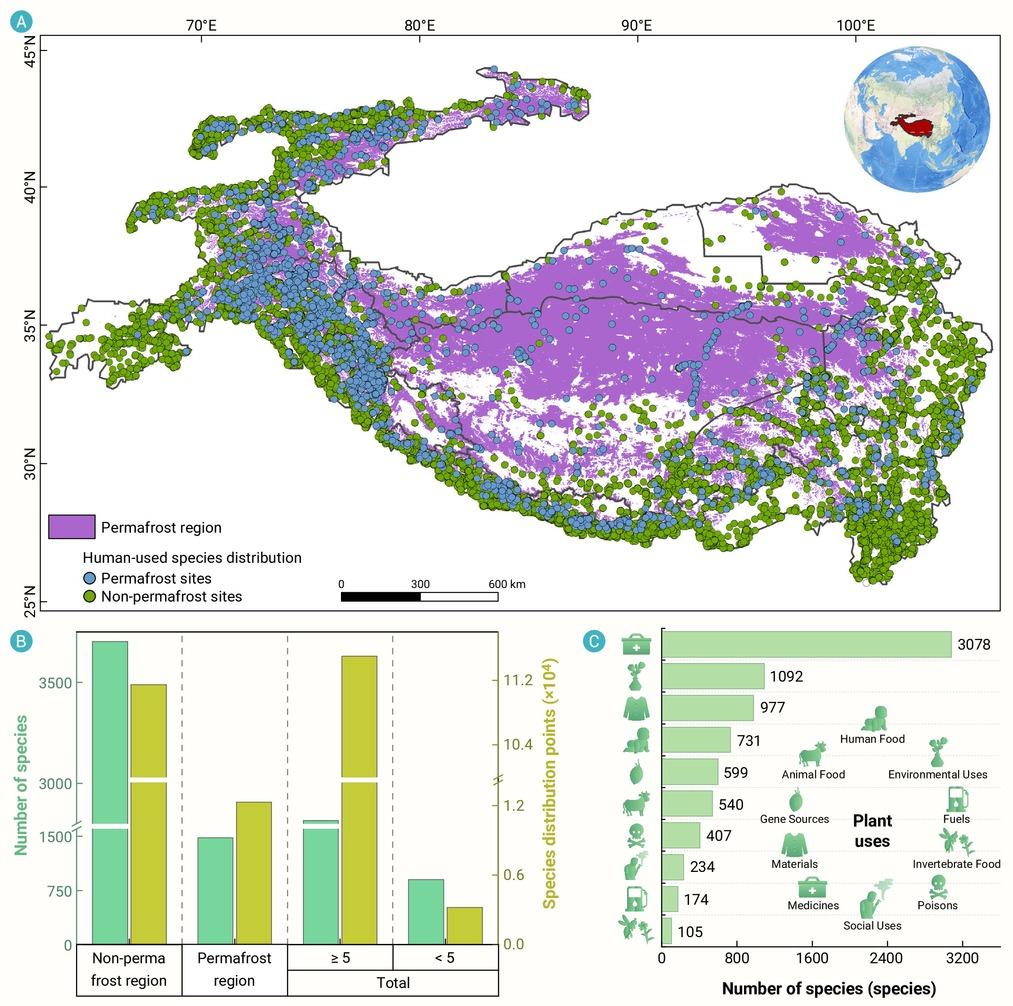
Figure 1.
Sample distribution of human-used plants in the High Mountain Asia region
-
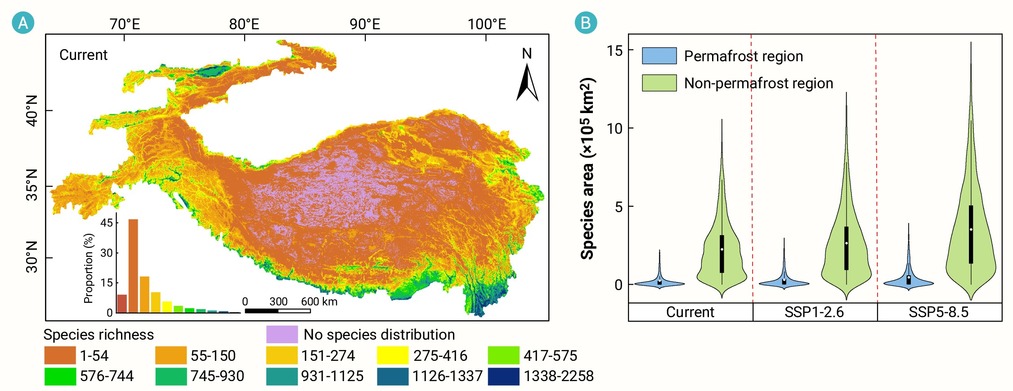
Figure 2.
Distribution of human-used plant species richness
-
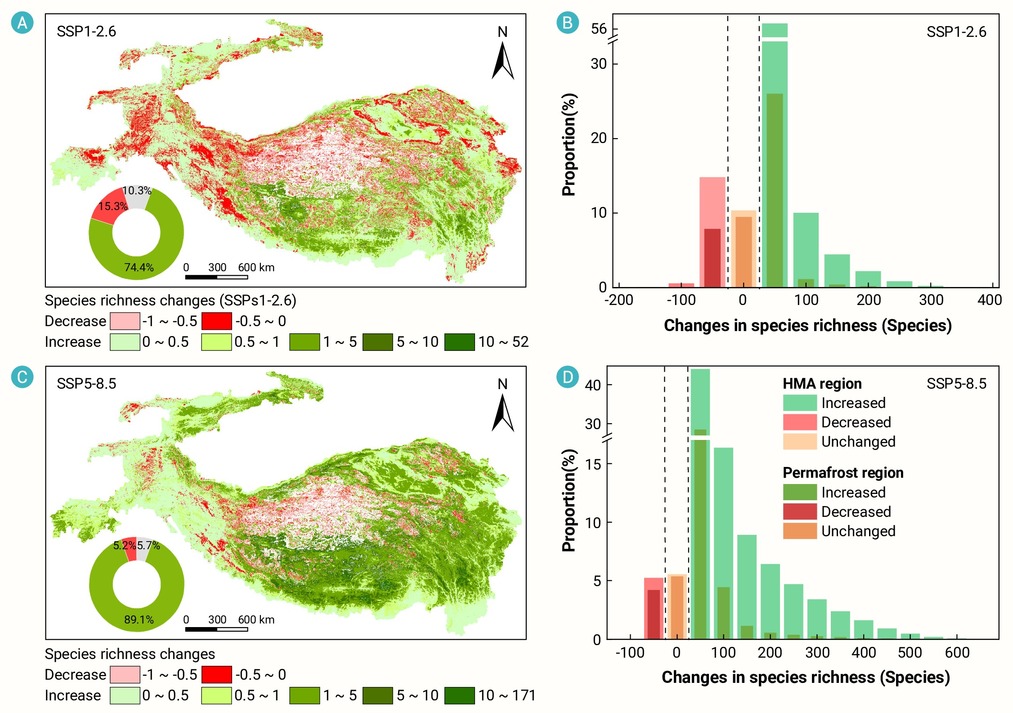
Figure 3.
Future human-used plant species richness
-
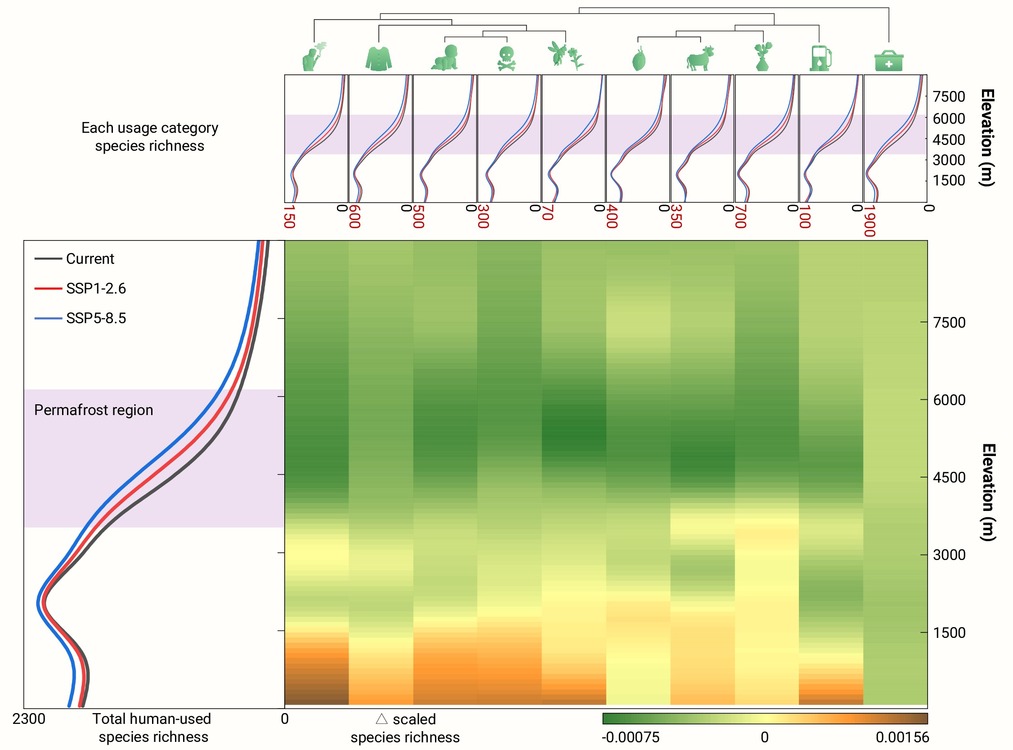
Figure 4.
Changes in human-used plant species richness with elevation
-
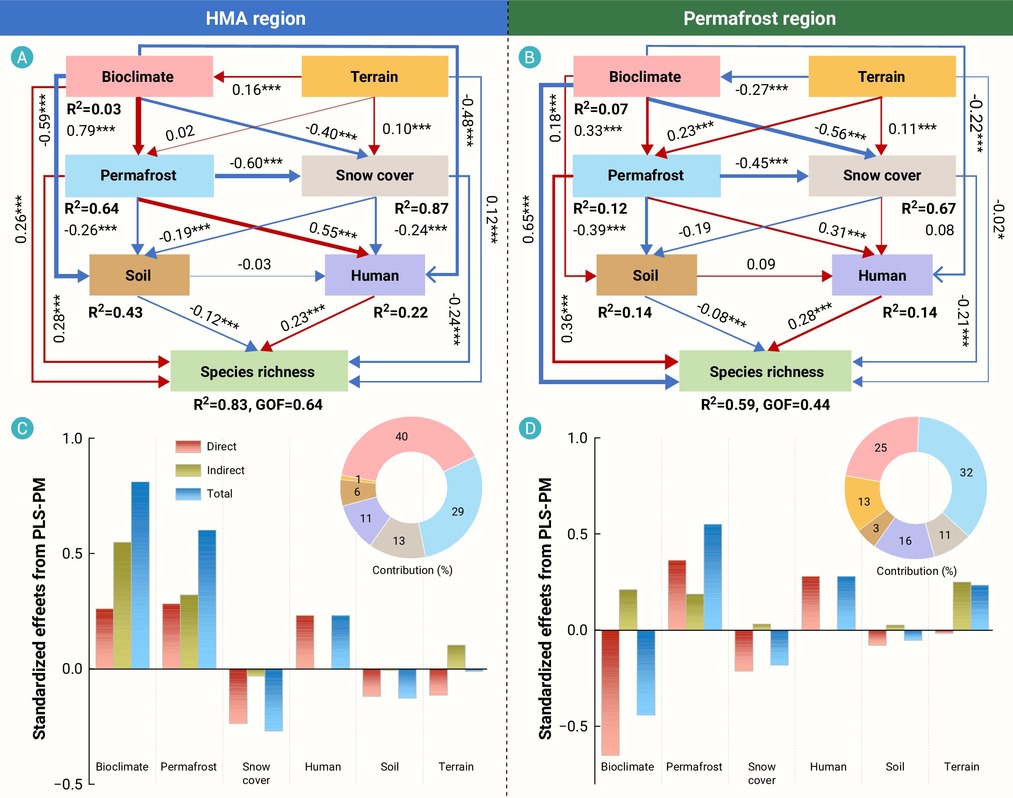
Figure 5.
Environmental determinants of human-used plant species richness
-
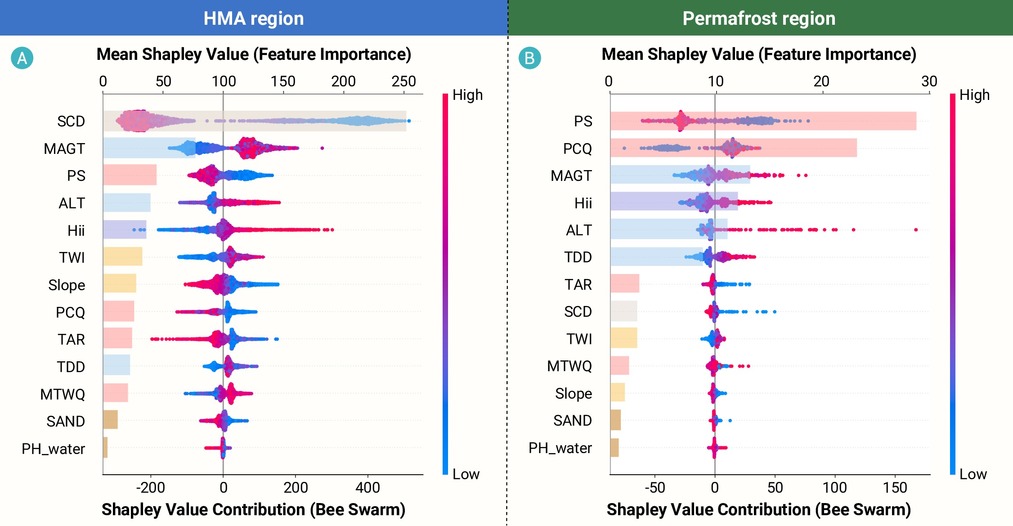
Figure 6.
Contributions of various environmental variables to the human-used plant species richness
-
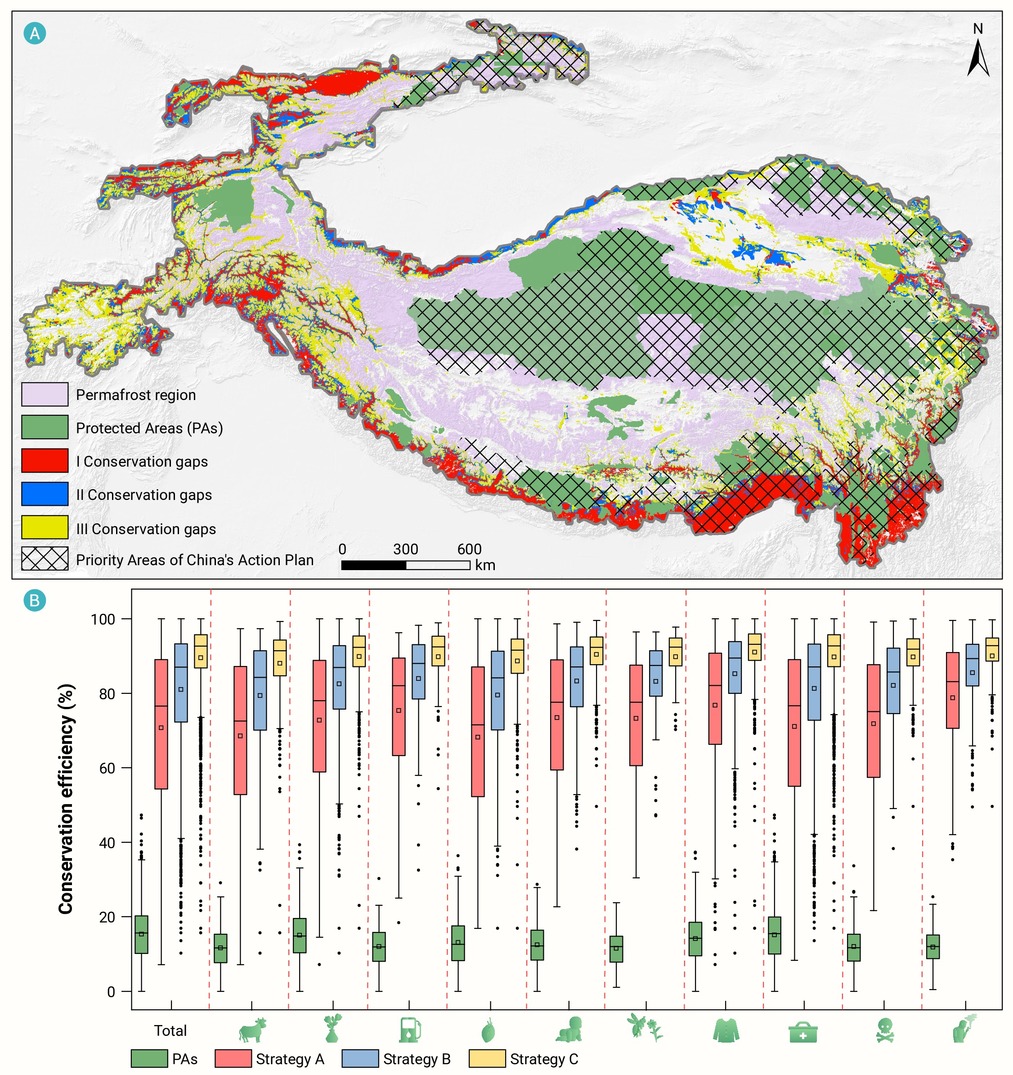
Figure 7.
Distribution of conservation gaps and implementation effects of strategies
