
Leaf senescence as a natural "free radical factory" producing environmentally persistent free radicals
-
GRAPHICAL ABSTRACT
 DownLoad:
Full size image
DownLoad:
Full size image
-
PUBLIC SUMMARY
-
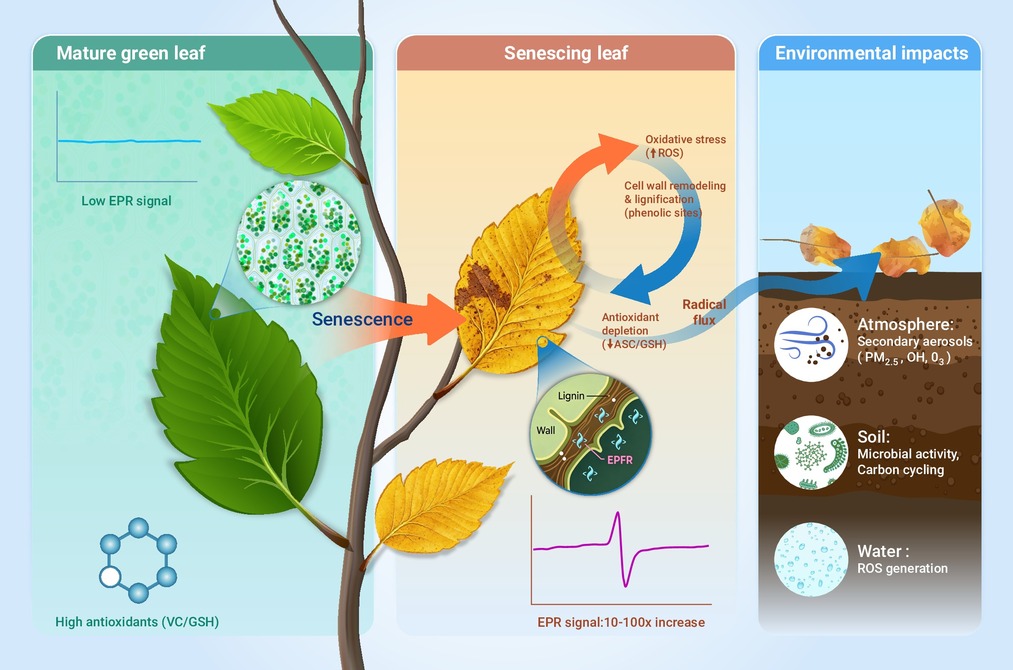
Leaf senescence produces environmentally persistent free radicals (EPFRs), a newly identified natural source.
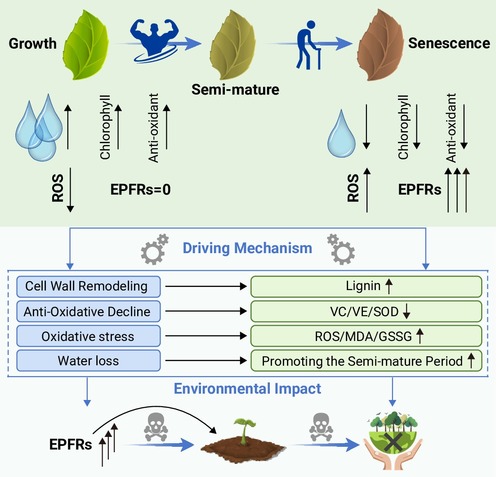
Cell wall remodeling and lignin accumulation provide phenolic sites for stabilizing EPFRs during senescence.
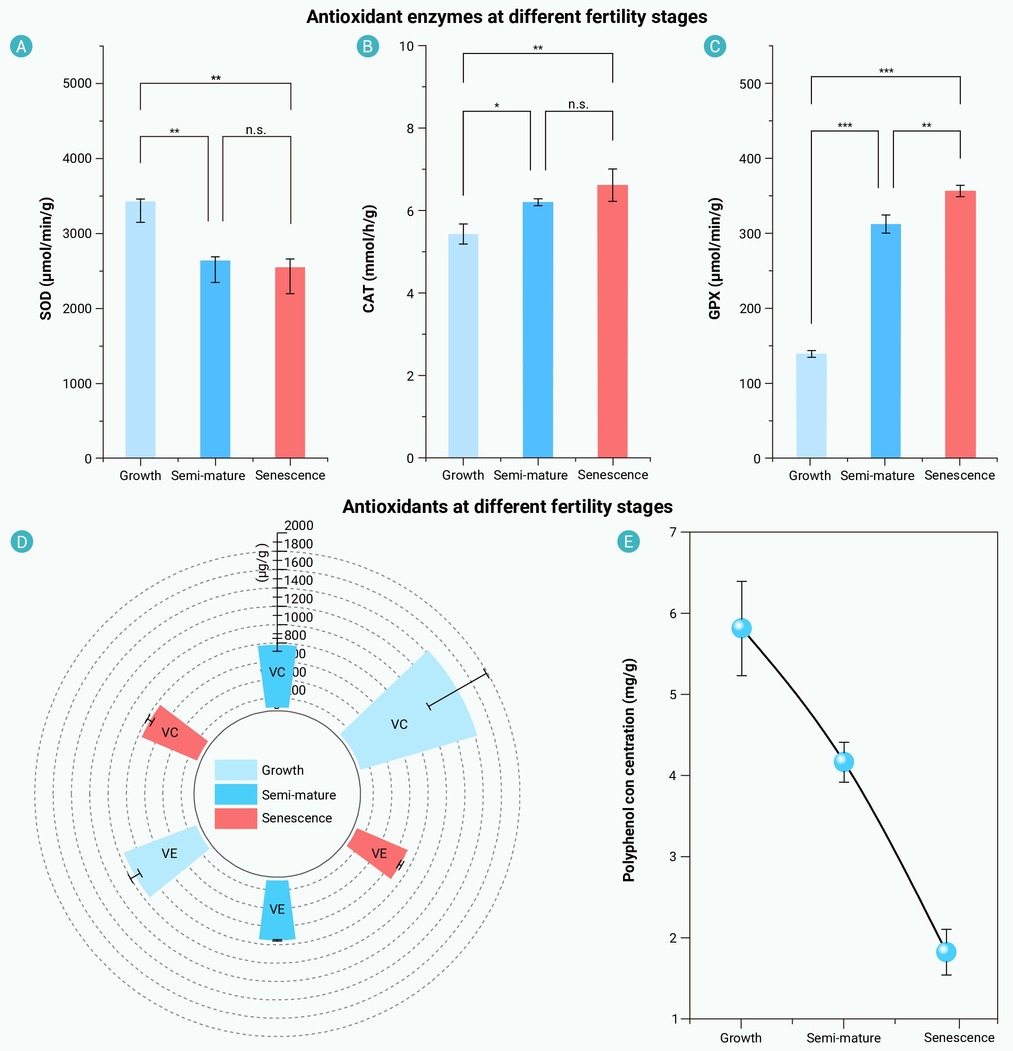
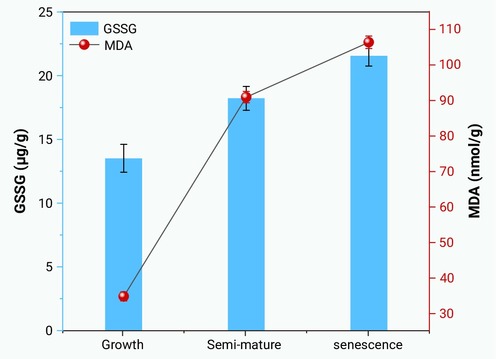
Declining antioxidants and elevated oxidative stress drive EPFRs formation in senescent leaves.
Senesced crop residues contain high levels of EPFRs, potentially impacting soil health and carbon cycling.
The senescence program itself, not merely water loss, is the key driver of EPFRs generation.
-
-
ABSTRACT
Environmentally persistent free radicals (EPFRs) are emerging pollutants of global concern, yet their natural sources remain largely undefined. Here, we identify natural leaf senescence as a major, previously unrecognized source of EPFRs in terrestrial ecosystems. By conducting a cross-species analysis of woody and herbaceous plants, we show that EPFR formation is consistently triggered during senescence, producing markedly elevated electron paramagnetic resonance (EPR) signals compared with mature foliage. Importantly, this radical generation is driven by the senescence process itself—rather than mere water loss. Mechanistic analyses reveal that cell wall remodeling, characterized by lignin accumulation, provides phenolic-rich reaction sites for radical stabilization, while concurrent antioxidant depletion and heightened oxidative stress create a permissive redox environment. Our findings establish plant senescence as a critical biological generator of EPFRs, with implications for understanding radical fluxes in the soil–plant–atmosphere continuum and for re-evaluating the environmental impact of agricultural residue management.-
Keywords:
- Environmentally /
- persistent /
- free /
- radicals /
- (EPFRs)/Leaf /
- senescence/Lignin /
- accumulation/Cell /
- wall /
- remodeling/Oxidative /
- stress
-

-
REFERENCES
[1] Xu Y. L., Lu X. F., Su G. J., et al. (2023). Scientific and regulatory challenges of environmentally persistent free radicals: From formation theory to risk prevention strategies. J. Hazard. Mater. 456:131674. DOI:10.1016/j.jhazmat.2023.131674 [2] Wang X. Y., Liu H. J., Xue Y. G., et al. (2024). Formation of environmentally persistent free radicals and their risks for human health: A review. Environ. Chem. Lett. 22:1327−1343. DOI:10.1007/s10311-024-01701-x [3] Xie L. Y., Zhu K. C., Chen N., et al. (2024). A critical review of an environmental risk substance induced by aging microplastics: Insights into environmentally persistent free radicals. Environ. Sci. Technol. 58:22502−22518. DOI:10.1021/acs.est.4c09107 [4] Zhao X. Q., Tang L., Zhang S., et al. (2024). Formation and biotoxicity of environmentally persistent free radicals in steelworks soil under thermal treatment. J. Hazard. Mater. 467:133697.DOI:10.1016/j.jhazmat.2024.133697 [5] Zhang Y. Q., Huang W. X., Wang H. C., et al. (2025). Environmentally persistent free radical emissions from indoor urning of pelletized biofuels. Environ. Sci. Technol. 59:5661−5671. DOI:10.1021/acs.est.4c14542 [6] Zhao S., Gao P., Miao D., et al. (2019). Formation and evolution of solvent-extracted and nonextractable environmentally persistent free radicals in fly ash of municipal solid waste incinerators. Environ. Sci. Technol. 53:10120−10130. DOI:10.1021/acs.est.9b03453 [7] Hu Y. J., Zhang B. N., Guo Q. Q., et al. (2022). Characterization into environmentally persistent free radicals formed in incineration fly ash and pyrolysis biochar of sewage sludge and biomass. J. Clean. Prod. 373:133666. DOI:10.1016/j.jclepro.2022.133666 [8] Zhao X. Q., Cheng P. F., Borch T., et al. (2022). Humidity induces the formation of radicals and enhances photodegradation of chlorinated-PAHs on Fe(III)-montmorillonite. J. Hazard. Mater. 423:127210. DOI:10.1016/j.jhazmat.2021.127210 [9] Shah S., Chen J., Saleem A. R., et al. (2025). Source-oriented pollution characteristics and decay kinetics of environmentally persistent free radicals in PM2.5 and PM10. J. Hazard. Mater. 495:139074. DOI:10.1016/j.jhazmat.2025.139074 [10] Ai J., Qin W. H., Chen J., et al. (2023). Pollution characteristics and light-driven evolution of environmentally persistent free radicals in PM2.5 in two typical northern cities of China. J. Hazard. Mater. 454:131466. DOI:10.1016/j.jhazmat.2023.131466 [11] Li K., Chen Z. L., Hao W. Q., et al. (2024). Differential inhibition of tire wear particles on sludge dewatering by aging modes. J. Hazard. Mater. 480:136214. DOI:10.1016/j.jhazmat.2024.136214 [12] Zhou H. H., Wang X., Sun H., et al. (2025). Soil heterogeneity influences the biotoxicity of photoaged tire wear particles in Eisenia fetida: A comparative assessment. J. Hazard. Mater. 496:139474. DOI:10.1016/j.jhazmat.2025.139474 [13] Vejerano E. P. and Ahn J. (2023). Leaves are a source of biogenic persistent free radicals. Environ. Sci. Technol. Lett. 10:662−667. DOI:10.1021/acs.estlett.3c00277 [14] Sakuraba Y., Jeong J., Kang M. Y., et al. (2014). Phytochrome-interacting transcription factors PIF4 and PIF5 induce leaf senescence in Arabidopsis. Nat. Commun. 5:4636. DOI:10.1038/ncomms5636 [15] Kräutler B. (2016). Breakdown of chlorophyll in higher plantsphyllobilins as abundant, yet hardly visible signs of ripening, senescence, and cell eeath. Angew. Chem. Int. 55:4882−4907. DOI:10.1002/anie.201508928 [16] Woo H. R., Masclaux-Daubresse C. and Lim P. O. (2018). Plant senescence: How plants know when and how to die. J. Exp. Bot. 69:715−718. DOI:10.1093/jxb/ery011 [17] Jia M., Liu X. Y., Xue H., et al. (2019). Noncanonical ATG8-ABS3 interaction controls senescence in plants. Nat. Plants. 5:212−224. DOI:10.1038/s41477-018-0348-x [18] Xue F., Li X., Qin L. X., et al. (2021). Anti-aging properties of phytoconstituents and phyto-nanoemulsions and their application in managing aging-related diseases. Adv Drug Deliver Rev. 176:113886. DOI:10.1016/j.addr.2021.113886 [19] Khachatryan L., McFerrin C. A., Hall R. W., et al. (2014). Environmentally persistent free radicals (EPFRs). 3. Free versus bound hydroxyl radicals in EPFRaqueous solutions. Environ. Sci. Technol. 48:9220-9226. DOI:10.1021/es501158r [20] Yang X., Liu F. B., Yang S. Q., et al. (2024). Atmospheric evolution of environmentally persistent free radicals in the rural North China Plain: Effects on water solubility and PM2.5 oxidative potential. Atmos. Chem. Phys. 24:11029-11043. DOI:10.5194/acp-24-11029-2024 [21] Chen X., Alvarez P. J. J. and Masiello C. A. (2025). Environmentally persistent free radicals in biochar: Environmental context and future research needs. Environ. Sci. Technol. 59:11440−11454. DOI:10.1021/acs.est.4c13603 [22] Yang J., Pignatello J. J., Pan B., et al. (2017). Degradation of p-Nitrophenol by Lignin and cellulose chars: H2O2-Mediated reaction and direct reaction with the char. Environ. Sci. Technol. 51:8972−8980. DOI:10.1021/acs.est.7b01087 [23] Ruan X. X., Liu Y. Y., Wang G. Q., et al. (2018). Transformation of functional groups and environmentally persistent free radicals in hydrothermal carbonisation of lignin. Bioresource Technol. 270:223−229. DOI:10.1016/j.biortech.2018.09.027 [24] Li F. F., Chang Z. F., Khaing K., et al. (2019). Organic matter protection by kaolinite over bio-decomposition as suggested by lignin and solvent-extractable lipid molecular markers. Sci. Total Environ. 647:570−576. DOI:10.1016/j.scitotenv.2018.07.456 [25] Chen S. J., Xia Y. H., Zhang B. L., et al. (2021). Disassembly of lignocellulose into cellulose, hemicellulose, and lignin for preparation of porous carbon materials with enhanced performances. J. Hazard. Mater. 408:124956. DOI:10.1016/j.jhazmat.2020.124956 [26] Chen L., Liu Z., Yang T. H., et al. (2024). Photoaged tire wear particles leading to the oxidative damage on earthworms (eisenia fetida) by disrupting the antioxidant defense system: The definitive role of environmental free radicals. Environ. Sci. Technol. 58:4500−4509. DOI:10.1021/acs.est.3c07878 [27] Ni Z., Zhang C., Ma H. A., et al. (2022). Facet-dependent photo-degradation of nitro polycyclic aromatic hydrocarbons on hematite under visible light: Participation of environmentally persistent free radicals and reactive oxygen/nitrogen species. Appl. Catal. B: Environ. 318:121816. DOI:10.1016/j.apcatb.2022.121816 [28] Sun Y. M., Li Y. R., Wang M., et al. (2018). Redox imbalance contributed differently to membrane damage of cucumber leaves under water stress and Fusarium infection. Plant Science 274:171−180. DOI:10.1016/j.plantsci.2018.05.025 [29] Jezek M., Silva-Alvim F. A. L., Hills A., et al. (2021). Guard cell endomembrane Ca2+-ATPases underpin a 'carbon memory' of photosynthetic assimilation that impacts on water-use efficiency. Nat. Plants. 7:1301−1313. DOI:10.1038/s41477-021-00966-2 [30] Cai J., Peng J., Feng J., et al. (2023). Antioxidant hepatic lipid metabolism can be promoted by orally administered inorganic nanoparticles. Nat. Commun. 14:3643. DOI:10.1038/s41467-023-39423-3 [31] Li T. F., Ma H., Wu S. B., et al. (2020). Effect of highly selective oxypropylation of phenolic hydroxyl groups on subsequent lignin pyrolysis: Toward the lignin valorization. Energy Convers. Manage. 207:112551. DOI:10.1016/j.enconman.2020.112551 [32] Liu B. W., Qi Y., Qiu X. Q., et al. (2025). Photoelectrocatalytic pathway for the preparation of power-effective aviation fuel precursors from lignin. Adv. Funct. Mater. 35:2421552. DOI:10.1002/adfm.202421552 [33] Silva C. D. G., Sun P. C., Barrett K., et al. (2024). Polyphenol oxidase activity on guaiacyl and syringyl lignin units. Angew. Chem. Int. 63:e202409324. DOI:10.1002/anie.202409324 [34] Ding N., Fei Q., Xiao D. D., et al. (2023). Highly efficient and recyclable Z-scheme heterojunction of Ag3PO4/g-C3N4 floating foam for photocatalytic inactivation of harmful algae under visible light. Chemosphere. 317:137773. DOI:10.1016/j.chemosphere.2023.137773 [35] Keylor M. H., Matsuura B. S., Griesser M., et al. (2016). Synthesis of resveratrol tetramers via a stereoconvergent radical equilibrium. Science 354:1260−1265. DOI:10.1126/science.aaj1597 [36] Li Y. J., Qin H. X., Wu D. P., et al. (2026). Natural polyphenol-promoted degradation of emerging contaminants during copper sulfide mineral oxygenation: the synergism of surface-bound radicals and singlet oxygen. Environ. Sci. Technol. 60:6784−6794. DOI:10.1021/acs.est.5c16502 [37] Zhang Z. M., Yang J. R., Zhou Q. L., et al. (2025). The role and mechanism of the cGAS-STING pathway-mediated ROS in apoptosis and ferroptosis induced by manganese exposure. Redox Biology. 85:103761. DOI:10.1016/j.redox.2025.103761 [38] Ma B., Li Y. L., Wang K., et al. (2025). In vitro physiological evaluation of metal bioaccessibility and reactive oxygen species distribution in biomass incineration lightweight mesoporous particulate matter. J. Hazard. Mater. 498:139931. DOI:10.1016/j.jhazmat.2025.139931 [39] Ye J. Y., Zhang Y. H., Gao Y., et al. (2025). Impacts of environmentally persistent free radicals on the denitrification toxicity of photoaged tire wear particles in estuarine sediments. J. Hazard. Mater. 494:138623. DOI:10.1016/j.jhazmat.2025.138623 [40] Xia W. H., Geng Z. X., Meng Z. H., et al. (2026). Photoaging-driven transformation of tire wear particles: unraveling the spatiotemporal dynamics of persistent free radicals and their phytotoxic lmpact. Environ. Sci. Technol. 60:996−1006. DOI:10.1021/acs.est.5c03767 -
ABOUT THIS ARTICLE
Cite this article:
Feng H., Jin X., Ren F., et al. (2026). Leaf senescence as a natural "free radical factory" producing environmentally persistent free radicals. The Innovation Geoscience 4:100241. https://doi.org/10.59717/j.xinn-geo.2026.100241
Welcome!
To request copyright permission to republish or share portions of our works, please visit Copyright Clearance Center's (CCC) Marketplace website at marketplace.copyright.com.
Export File
Citation
Feng H., Jin X., Ren F., et al. (2026). Leaf senescence as a natural "free radical factory" producing environmentally persistent free radicals. The Innovation Geoscience 4:100241. https://doi.org/10.59717/j.xinn-geo.2026.100241

Format
Content
-
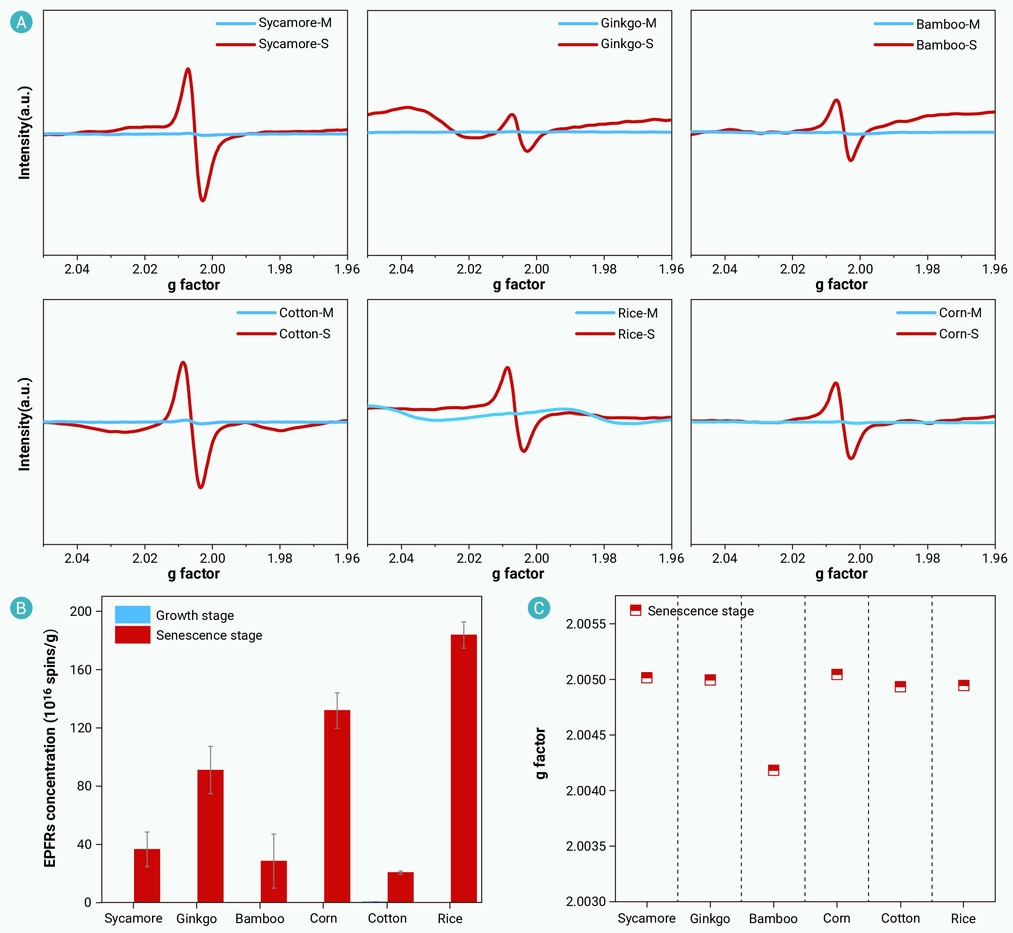
Figure 1.
EPFRs are ubiquitously generated in senescent leaves
-
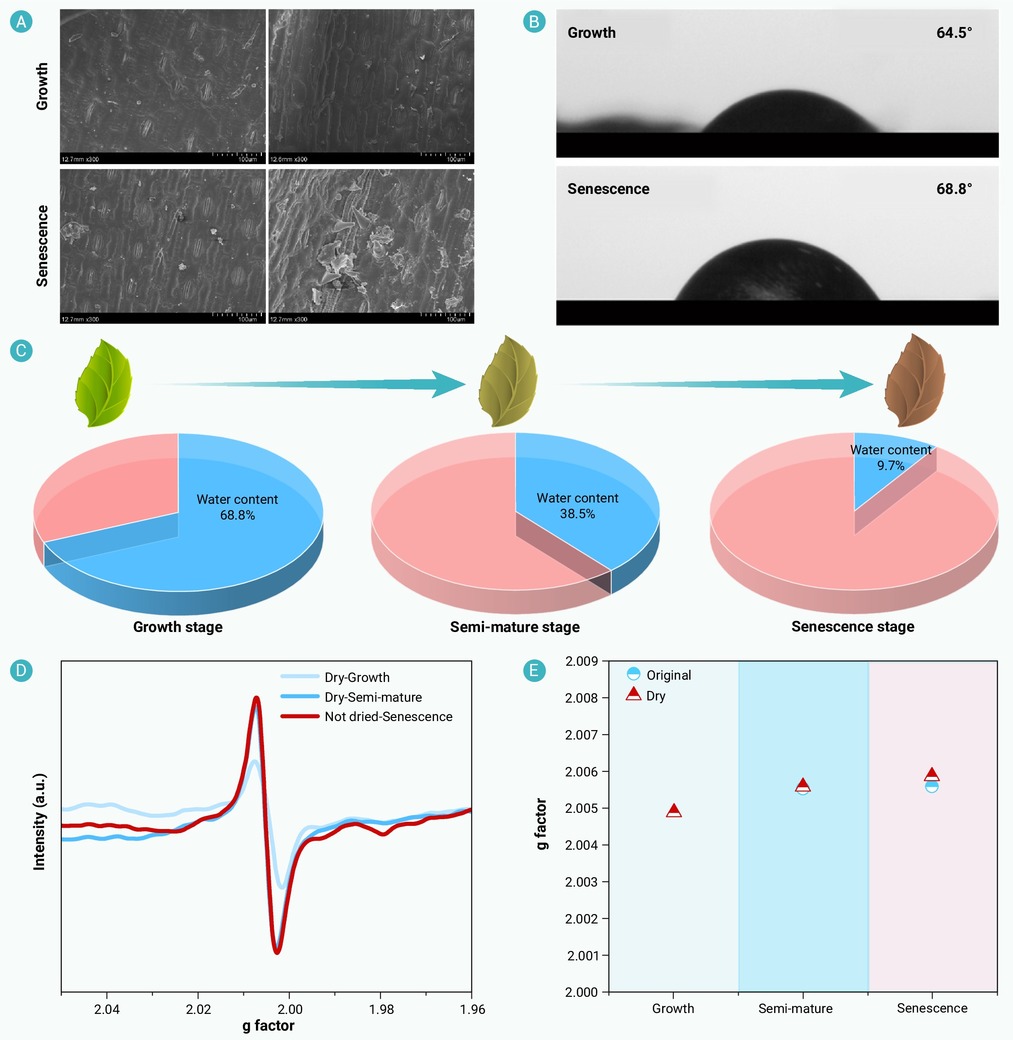
Figure 2.
Morphological and physicochemical changes promote a permissive environment
-
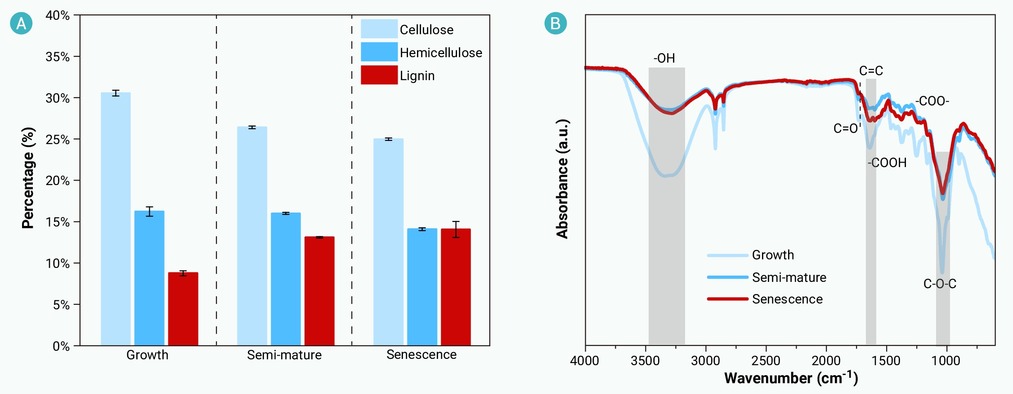
Figure 3.
Cell wall remodeling and lignin accumulation provide the material basis for EPFRs
-
Figure 4.
Collapse of the antioxidant system and elevated oxidative stress drive EPFR formation
-
Figure 5.
Changes in antioxidant markers during leaf development
-
Figure 6.
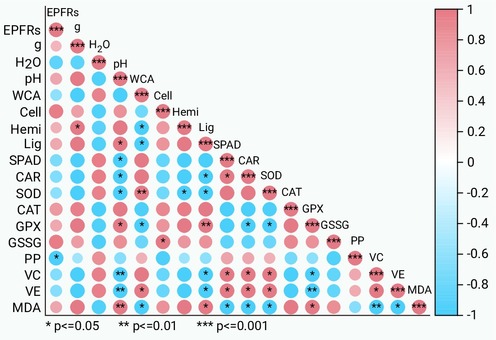
Correlation analysis integrates the synergistic drivers of EPFR generation.
-
Figure 7.
A coherent pathway depicting the transition from growing to senescent leaves.
