
A piezoelectric-driven microneedle platform for skin disease therapy
-
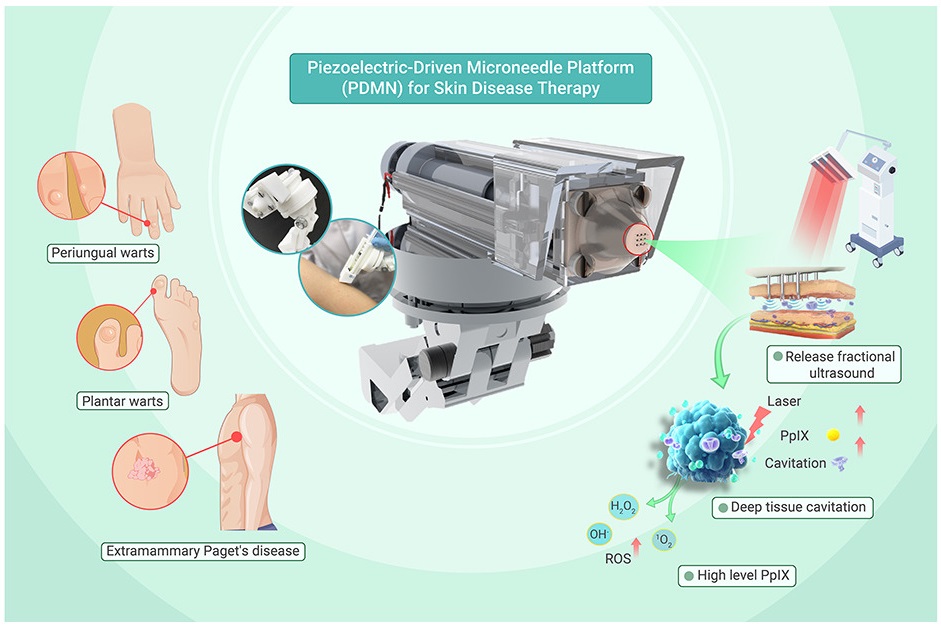
GRAPHICAL ABSTRACT
 DownLoad:
Full size image
DownLoad:
Full size image
-
PUBLIC SUMMARY
- ■ Piezoelectric-driven microneedle (PDMN) platform is fabricated for deep tissue cavitation with high-level reactive oxygen species.
- ■ PDMN significantly enhances transdermal drug delivery in a minimally invasive manner.
- ■ PDMN platform achieves a deeper penetration depth of the photosensitizer and higher accumulation of photosensitizers in tumor compared to traditional photodynamic therapy (PDT) in animal models.
- ■ Clinical trials demonstrated that PDMN-PDT not only boosted treatment effectiveness with high patient compliance but also remarkably reduced the treatment time and drug concentration.
-
ABSTRACT
With over a million cases detected each year, skin disease is a global public health problem that diminishes the quality of life due to its difficulty to eradicate, propensity for recurrence, and potential for post-treatment scarring. Photodynamic therapy (PDT) is a treatment with minimal invasiveness or scarring and few side effects, making it well tolerated by patients. However, this treatment requires further research and development to improve its effective clinical use. Here, a piezoelectric-driven microneedle (PDMN) platform that achieves high efficiency, safety, and non-invasiveness for enhanced PDT is proposed. This platform induces deep tissue cavitation, increasing the level of protoporphyrin IX and significantly enhancing drug penetration. A clinical trial involving 25 patients with skin disease was conducted to investigate the timeliness and efficacy of PDMN-assisted PDT (PDMN-PDT). Our findings suggested that PDMN-PDT boosted treatment effectiveness and reduced the required incubation time and drug concentration by 25% and 50%, respectively, without any anesthesia compared to traditional PDT. These findings suggest that PDMN-PDT is a safe and minimally invasive approach for skin disease treatment, which may improve the therapeutic efficacy of topical medications and enable translation for future clinical applications. -

-
REFERENCES
[1] Kabashima, K., Honda, T., Ginhoux, F., et al. (2019). The immunological anatomy of the skin. Nat. Rev. Immunol. 19(1): 19-30. https://doi.org/10.1038/s41577-018-0084-5. [2] Prausnitz, M.R., and Langer, R. (2008). Transdermal drug delivery. Nat. Biotechnol. 26(11): 1261-1268. https://doi.org/10.1038/nbt.1504. [3] Li, X., Lovell, J.F., Yoon, J., et al. (2020). Clinical development and potential of photothermal and photodynamic therapies for cancer. Nat. Rev. Clin. Oncol. 17(11): 657-674. https://doi.org/10.1038/s41571-020-0410-2. [4] Simões, M.C.F., Sousa, J.J.S., and Pais, A.A.C.C. (2015). Skin cancer and new treatment perspectives: A review. Cancer Lett. 357(1): 8-42. https://doi.org/10.1016/j.canlet.2014.11.001. [5] Barr, H., Kendall, C., Bazant-Hegemark, F., et al. (2006). Endoscopic photodynamic therapy for oesophageal disease. Photodiagnosis Photodyn. Ther. 3(2): 102-105. https://doi.org/10.1016/j.pdpdt.2006.03.008. [6] Buttar, N.S., Wang, K.K., Lutzke, L.S., et al. (2001). Combined endoscopic mucosal resection and photodynamic therapy for esophageal neoplasia within Barrett's esophagus. Gastrointest. Endosc. 54(6): 682-688. https://doi.org/10.1067/mge.2001.119875. [7] Schroeder, A., Kost, J., and Barenholz, Y. (2009). Ultrasound, liposomes, and drug delivery: principles for using ultrasound to control the release of drugs from liposomes. Chem. Phys. Lipids 162(1-2): 1-16. https://doi.org/10.1016/j.chemphyslip.2009.08.003. [8] Polat, B.E., Deen, W.M., Langer, R., et al. (2012). A physical mechanism to explain the delivery of chemical penetration enhancers into skin during transdermal sonophoresis - Insight into the observed synergism. J. Contr. Release 158(2): 250-260. https://doi.org/10.1016/j.jconrel.2011.11.008. [9] Sonokawa, T., Matsumoto, M., Takegahara, K., et al. (2021). Usefulness of simultaneous type image-enhanced endoscope system in photodynamic therapy for centrally located lung cancer. Photodiagnosis Photodyn. Ther. 35: 102345. https://doi.org/10.1016/j.pdpdt.2021.102345. [10] Zhu, Z., Wang, J., Pei, X., et al. (2023). Blue-ringed octopus-inspired microneedle patch for robust tissue surface adhesion and active injection drug delivery. Sci. Adv. 9(25): h2213. https://doi.org/10.1126/sciadv.adh2213. [11] Hu, C., He, X., Chen, Y., et al. (2021). Metformin mediated PD-L1 downregulation in combination with photodynamic-immunotherapy for treatment of breast cancer. Adv. Funct. Mater. 31(11): 2007149. https://doi.org/10.1002/adfm.202007149. [12] Huang, Z. (2005). A review of progress in clinical photodynamic therapy. Technol. Cancer Res. Treat. 4(3): 283-293. https://doi.org/10.1177/153303460500400308. [13] Petukhova, T.A., Hassoun, L.A., Foolad, N., et al. (2017). Effect of expedited microneedle-assisted photodynamic therapy for field treatment of actinic keratoses. A randomized clinical trial. JAMA Dermatol. 153(7): 637-643. https://doi.org/10.1001/jamadermatol.2017.0849. [14] Zhi, D., Yang, T., O'Hagan, J., et al. (2020). Photothermal therapy. J. Contr. Release 325: 52-71. https://doi.org/10.1016/j.jconrel.2020.06.032. [15] Mitragotri, S., Farrell, J., Tang, H., et al. (2000). Determination of threshold energy dose for ultrasound-induced transdermal drug transport. J. Control Release 63(1-2): 41-52. https://doi.org/10.1016/S0168-3659(99)00178-9. [16] Polat, B.E., Hart, D., Langer, R., et al. (2011). Ultrasound-mediated transdermal drug delivery: Mechanisms, scope, and emerging trends. J. Control Release 152(3): 330-348. https://doi.org/10.1016/j.jconrel.2011.01.006. [17] Seah, B.C.Q., and Teo, B.M. (2018). Recent advances in ultrasound-based transdermal drug delivery. Int. J. Nanomed. 13: 7749-7763. https://doi.org/10.2147/IJN.S174759. [18] Rwei, A.Y., Paris, J.L., Wang, B., et al. (2017). Ultrasound-triggered local anaesthesia. Nat. Biomed. Eng. 1(8): 644-653. https://doi.org/10.1038/s41551-017-0117-6. [19] Cao, Z., Yuan, G., Zeng, L., et al. (2022). Macrophage-targeted sonodynamic/photothermal synergistic therapy for preventing atherosclerotic plaque progression using CuS/TiO2 heterostructured nanosheets. ACS Nano 16(7): 10608-10622. https://doi.org/10.1021/acsnano.2c02177. [20] Hao, Y., Dong, M., Zhang, T., et al. (2017). Novel approach of using near-infrared responsive PEGylated gold nanorod coated poly(l-lactide) microneedles to enhance the antitumor efficiency of docetaxel-loaded MPEG-PDLLA micelles for treating an A431 tumor. ACS Appl. Mater. Interfaces 9(8): 15317-15327. https://doi.org/10.1021/acsami.7b03604. [21] Mitsuishi, T., Sasagawa, T., Kato, T., et al. (2010). Combination of carbon dioxide laser therapy and artificial dermis application in plantar warts: human papillomavirus DNA analysis after treatment. Dermatol. Surgery (St Louis) 36(9): 1401-1405. [22] You, J., Yang, C., Han, J., et al. (2023). Ultrarapid-acting microneedles for immediate delivery of biotherapeutics. Adv. Mater. 35(45): 2304582. https://doi.org/10.1002/adma.202304582. [23] Zhang, Y., Wang, S., Yang, Y., et al. (2023). Scarless wound healing programmed by core-shell microneedles. Nat. Commun. 14(1): 3431. https://doi.org/10.1038/s41467-023-39129-6. [24] Zhang, Y., Xu, Y., Kong, H., et al. (2023). Microneedle system for tissue engineering and regenerative medicine. Explorations 3(1): 20210170. https://doi.org/10.1002/EXP.20210170. [25] Zhang, X., Chen, G., Wang, Y., et al. (2024). Spatial tumor biopsy with fluorescence PCR microneedle array. Innovation 5(1): 100538. https://doi.org/10.1016/j.xinn.2023.100538. [26] Park, J.M., Jeong, K.H., Bae, M.I., et al. (2016). Fractional radiofrequency combined with sonophoresis to facilitate skin penetration of 5-aminolevulinic acid. Laser Med. Sci. 31(1): 113-118. https://doi.org/10.1007/s10103-015-1835-1. [27] Liu, P., Fu, Y., Wei, F., et al. (2022). Microneedle Patches with O2 propellant for deeply and fast delivering photosensitizers: towards improved photodynamic therapy. Adv. Sci. 9(25): 2202591. https://doi.org/10.1002/advs.202202591. [28] Zhu, J., Dong, L., Du, H., et al. (2019). 5-Aminolevulinic acid-loaded hyaluronic acid dissolving microneedles for effective photodynamic therapy of superficial tumors with enhanced long-term stability. Adv. Healthcare Mater. 8(22): 1900896. https://doi.org/10.1002/adhm.201900896. [29] Tepole, A.B., Kabaria, H., Bletzinger, K.U., et al. (2015). Isogeometric Kirchhoff-Love shell formulations for biological membranes. Comput. Methods Appl. Math. 293: 328-347. https://doi.org/10.1016/j.cma.2015.05.006. [30] Dollet, B., Marmottant, P., and Garbin, V. (2019). Bubble dynamics in soft and biological matter. Annu. Rev. Fluid Mech. 51: 331-355. https://doi.org/10.1146/annurev-fluid-010518-040352. [31] Holzapfel, G.A., Gasser, T.C., and Ogden, R.W. (2000). A new constitutive framework for arterial wall mechanics and a comparative study of material models. J. Elasticity 61(1-3): 1-48. https://doi.org/10.1023/A:1010835316564. [32] Wang, Y., Zhang, R., Pu, Y., et al. (2023). Sample collection, DNA extraction, and library construction protocols of the human microbiome studies in the international human phenome project. Phenomics 3(3): 300-308. https://doi.org/10.1007/s43657-023-00097-y. [33] Shan, H., Sun, X., Liu, X., et al. (2023). One-step formation of targeted liposomes in a versatile microfluidic mixing device. Small 19(7): 2205498. https://doi.org/10.1002/smll.202205498. [34] Xie, Y., Wu, H., Chen, Z., et al. (2023). Non-invasive evaluation of transdermal drug delivery using 3-D transient triplet differential (TTD) photoacoustic imaging. Photoacoustics 32: 100530. https://doi.org/10.1016/j.pacs.2023.100530. [35] Ubbink, R., Prens, E.P., and Mik, E.G. (2021). Quantitative intracellular oxygen availability before and after 5-aminolevulinic acid skin photodynamic therapy. Photodiagnosis Photodyn. Ther. 36: 102599. https://doi.org/10.1016/j.pdpdt.2021.102599. [36] Picard, M. (2022). Why Do We Care More About Disease than Health? Phenomics 2(3): 145-155. https://doi.org/10.1007/s43657-021-00037-8. [37] Ang, J.M., Riaz, I.B., Kamal, M.U., et al. (2017). Photodynamic therapy and pain: A systematic review. Photodiagnosis Photodyn. Ther. 19: 308-344. https://doi.org/10.1016/j.pdpdt.2017.07.002. [38] Wang, B., Shi, L., Zhang, Y.F., et al. (2017). Gain with no pain? Pain management in dermatological photodynamic therapy. Br. J. Dermatol. 177: 656-665. [39] Sterling, J.C., Gibbs, S., Haque Hussain, S.S., et al. (2014). British Association of Dermatologists' guidelines for the management of cutaneous warts 2014. Br. J. Dermatol. 171(3): 696-712. https://doi.org/10.1111/bjd.15344. [40] Viennet, C., Gheit, T., Muret, P., et al. (2013). Assessment of the efficacy of a new formulation for plantar wart mummification: new experimental design and human papillomavirus identification. Clin. Exp. Dermatol. 38(1): 85-88. https://doi.org/10.1111/ced.12025. [41] Champeau, M., Vignoud, S., Mortier, L., et al. (2019). Photodynamic therapy for skin cancer: How to enhance drug penetration? J. Photochem. Photobiol. B 197: 111544. https://doi.org/10.1016/j.jphotobiol.2019.111544. [42] Wu, L., Chen, W., Su, J., et al. (2019). Efficacy of the combination of superficial shaving with photodynamic therapy for recalcitrant periungual warts. Photodiagnosis Photodyn. Ther. 27: 340-344. https://doi.org/10.1016/j.pdpdt.2019.06.021. [43] Kibbi, N., Owen, J.L., Worley, B., et al. (2022). Evidence-based clinical practice guidelines for Extramammary Paget Disease. JAMA Oncol. 8(4): 618-628. https://doi.org/10.1001/jamaoncol.2021.7148. [44] Agostinis, P., Berg, K., Cengel, K.A., et al. (2011). Photodynamic therapy of cancer: An update. CA A Cancer J. Clin. 61(4): 250-281. https://doi.org/10.3322/caac.20114. [45] Kearney, M.C., Brown, S., Donnelly, R.F., et al. (2014). Potential of microneedles in enhancing delivery of photosensitizing agents for photodynamic therapy. Photodiagnosis Photodyn. Ther. 11(4): 459-466. https://doi.org/10.1016/j.pdpdt.2014.09.003. [46] Dai, H., Shen, Q., Shao, J., et al. (2021). Small molecular NIR-Ⅱ fluorophores for cancer phototheranostics. Innovation 2(1): 100082. https://doi.org/10.1016/j.xinn.2021.100082. [47] Karimkhani, C., Dellavalle, R.P., Coffeng, L.E., et al. (2017). Global skin disease morbidity and mortality: An update from the global burden of disease study 2013. JAMA Dermatol. 153(5): 406-412. https://doi.org/10.1001/jamadermatol.2016.5538. [48] Braathen, L.R., Szeimies, R.M., Basset-Seguin, N., et al. (2007). Guidelines on the use of photodynamic therapy for nonmelanoma skin cancer: An international consensus. J. Am. Acad. Dermatol. 56(1): 125-143. https://doi.org/10.1016/j.jaad.2006.06.006. [49] Jeong, W.Y., Kwon, M., Choi, H.E., et al. (2021). Recent advances in transdermal drug delivery systems: A review. Biomater. Res. 25(1): 24. https://doi.org/10.1186/s40824-021-00226-6. [50] Huang, D., Wang, J., Song, C., et al. (2023). Ultrasound-responsive matters for biomedical applications. Innovation 4(3): 100421. https://doi.org/10.1016/j.xinn.2023.100421. [51] Songca, S.P. (2023). Combinations of photodynamic therapy with other minimally invasive therapeutic technologies against cancer and microbial infections. Int. J. Mol. Sci. 24(13): 10875. https://doi.org/10.3390/ijms241310875. [52] Prausnitz, M.R., Mitragotri, S., and Langer, R. (2004). Current status and future potential of transdermal drug delivery. Nat. Rev. Drug Discov. 3(2): 115-124. https://doi.org/10.1038/nrd1304. [53] Dolmans, D.E.J.G.J., Fukumura, D., and Jain, R.K. (2003). Photodynamic therapy for cancer. Nat. Rev. Cancer 3(5): 380-387. https://doi.org/10.1038/nrc1071. [54] Li, X., Gu, L., Chen, Y., et al. (2022). A novel 450-nm laser-mediated sinoporphyrin sodium-based photodynamic therapy induces autophagic cell death in gastric cancer through regulation of the ROS/PI3K/Akt/mTOR signaling pathway. BMC Med. 20(1): 475. https://doi.org/10.1186/s12916-022-02676-8. -
ABOUT THIS ARTICLE
Cite this article:
Chen Z., Liu X., Jiang Z., et al., (2024). A piezoelectric-driven microneedle platform for skin disease therapy. The Innovation 5(3), 100621. https://doi.org/10.1016/j.xinn.2024.100621
Welcome!
To request copyright permission to republish or share portions of our works, please visit Copyright Clearance Center's (CCC) Marketplace website at marketplace.copyright.com.
Export File
Citation
Chen Z., Liu X., Jiang Z., et al., (2024). A piezoelectric-driven microneedle platform for skin disease therapy. The Innovation 5(3), 100621. https://doi.org/10.1016/j.xinn.2024.100621

Format
Content

-
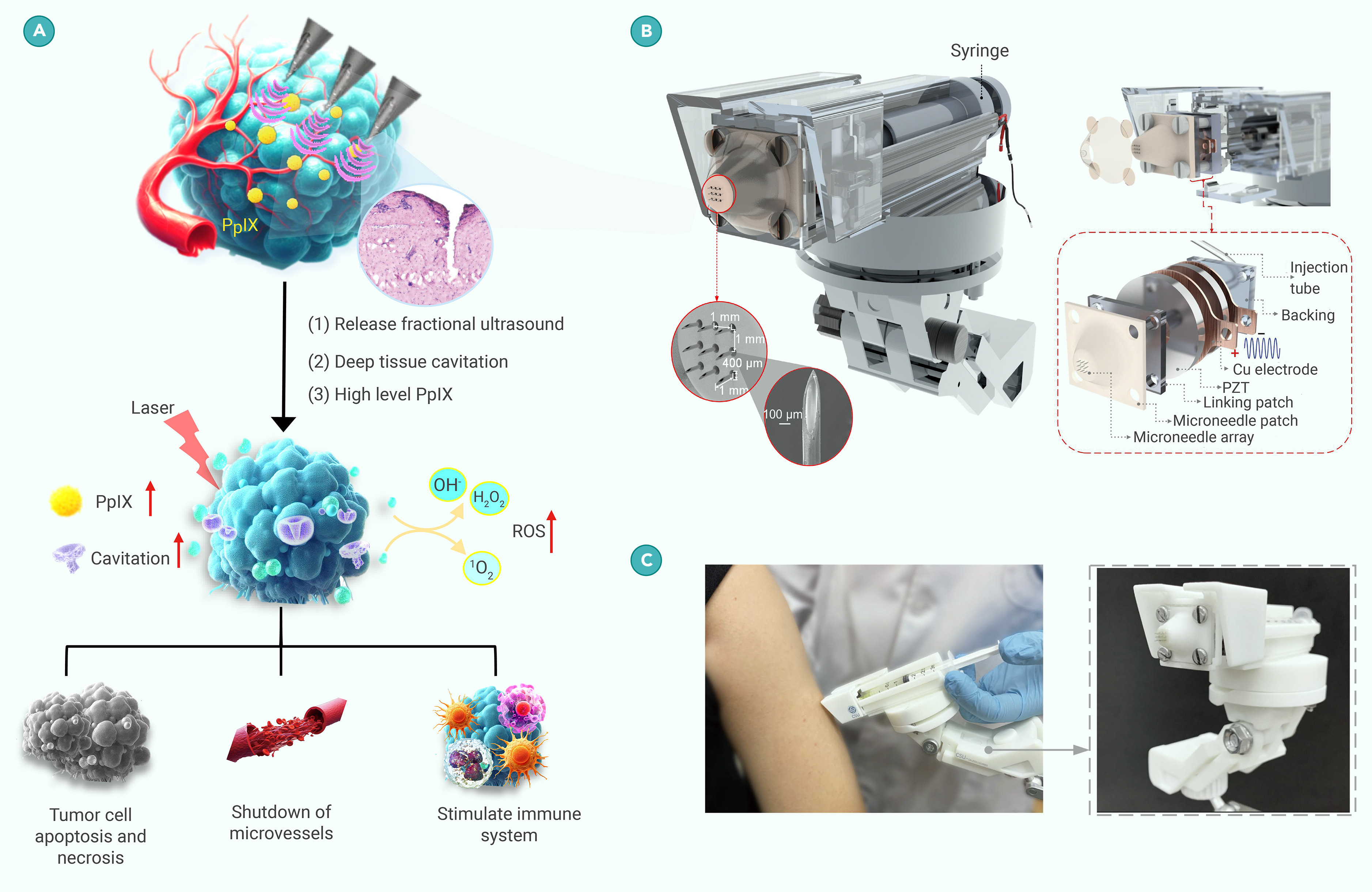
Figure 1.
Design and mechanism of PDMN-PDT for skin disease therapy
-
Figure 2.
Characterization of the PDMN platform
-
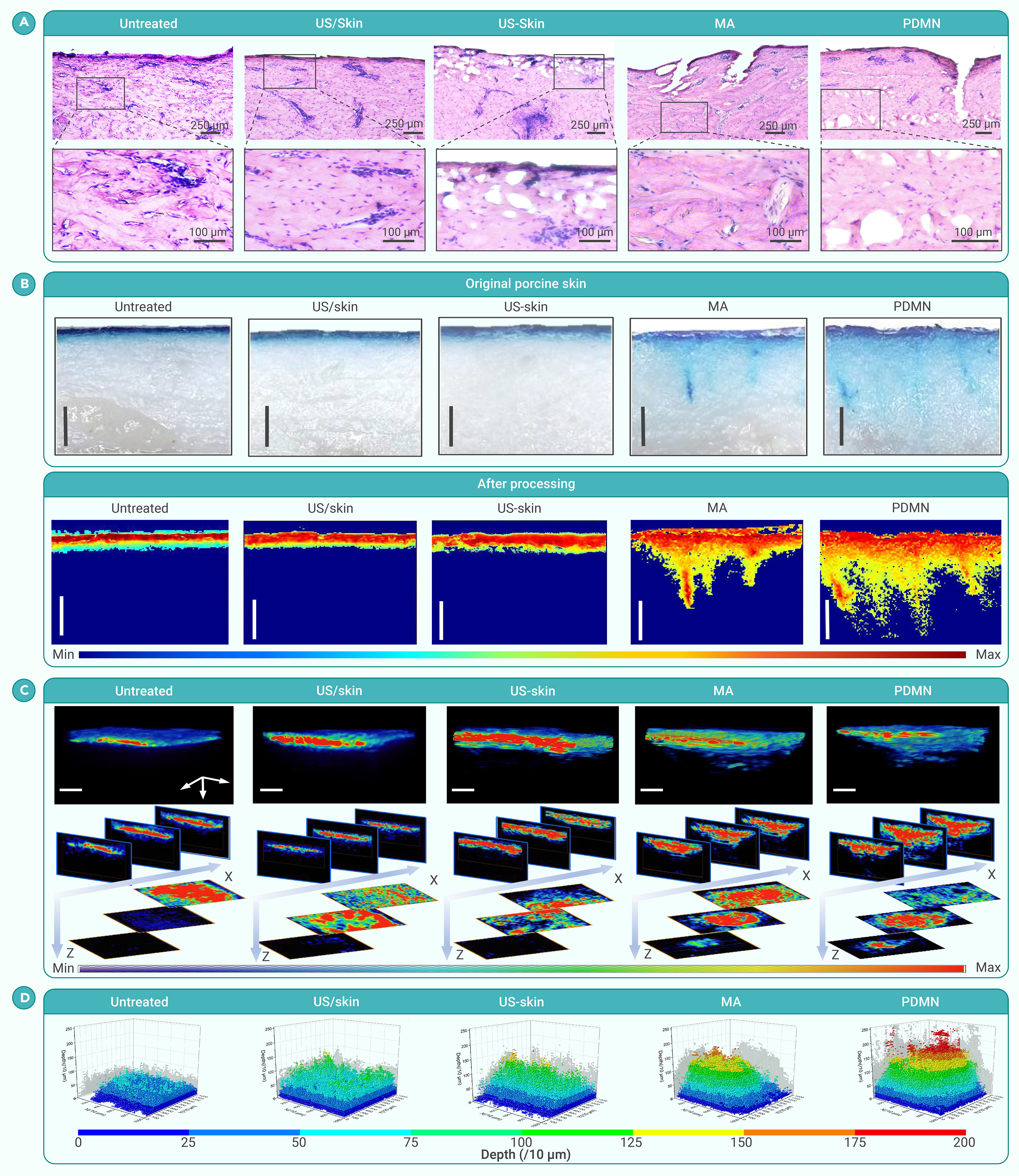
Figure 3.
PDMN platform for efficient transdermal drug delivery
-
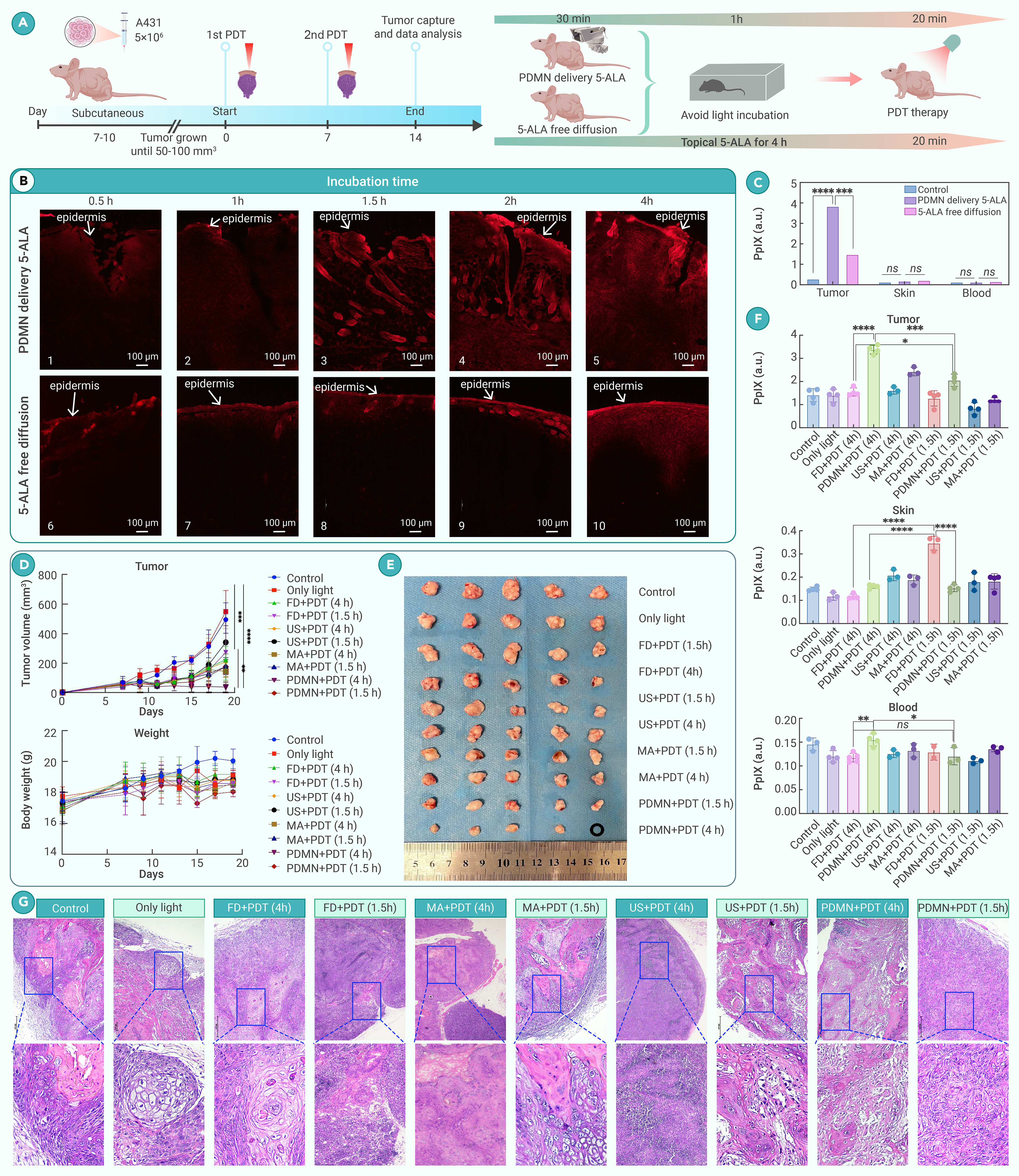
Figure 4.
PDMN-PDT in A431 murine models
-
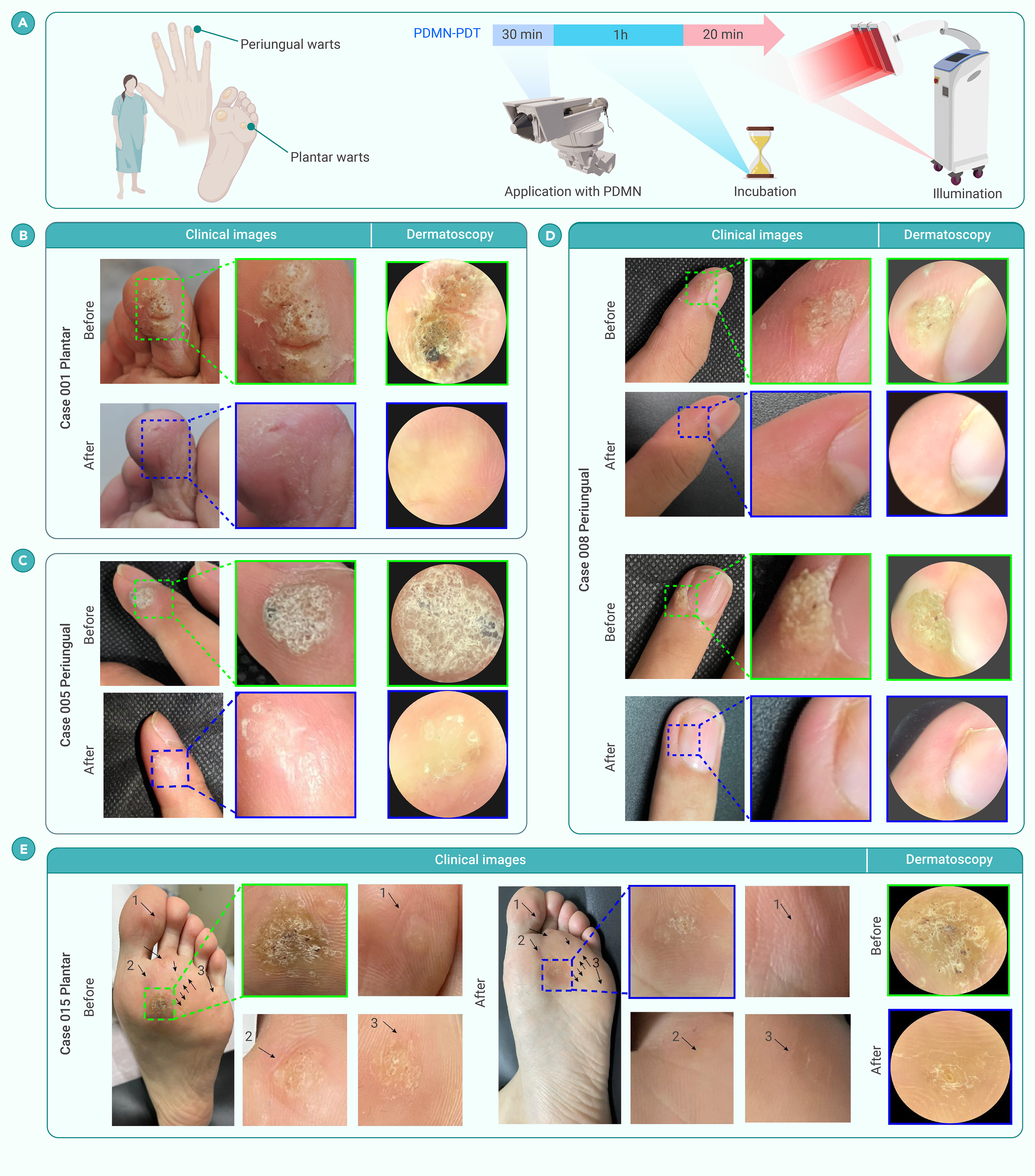
Figure 5.
Clinical treatment of viral skin diseases
-
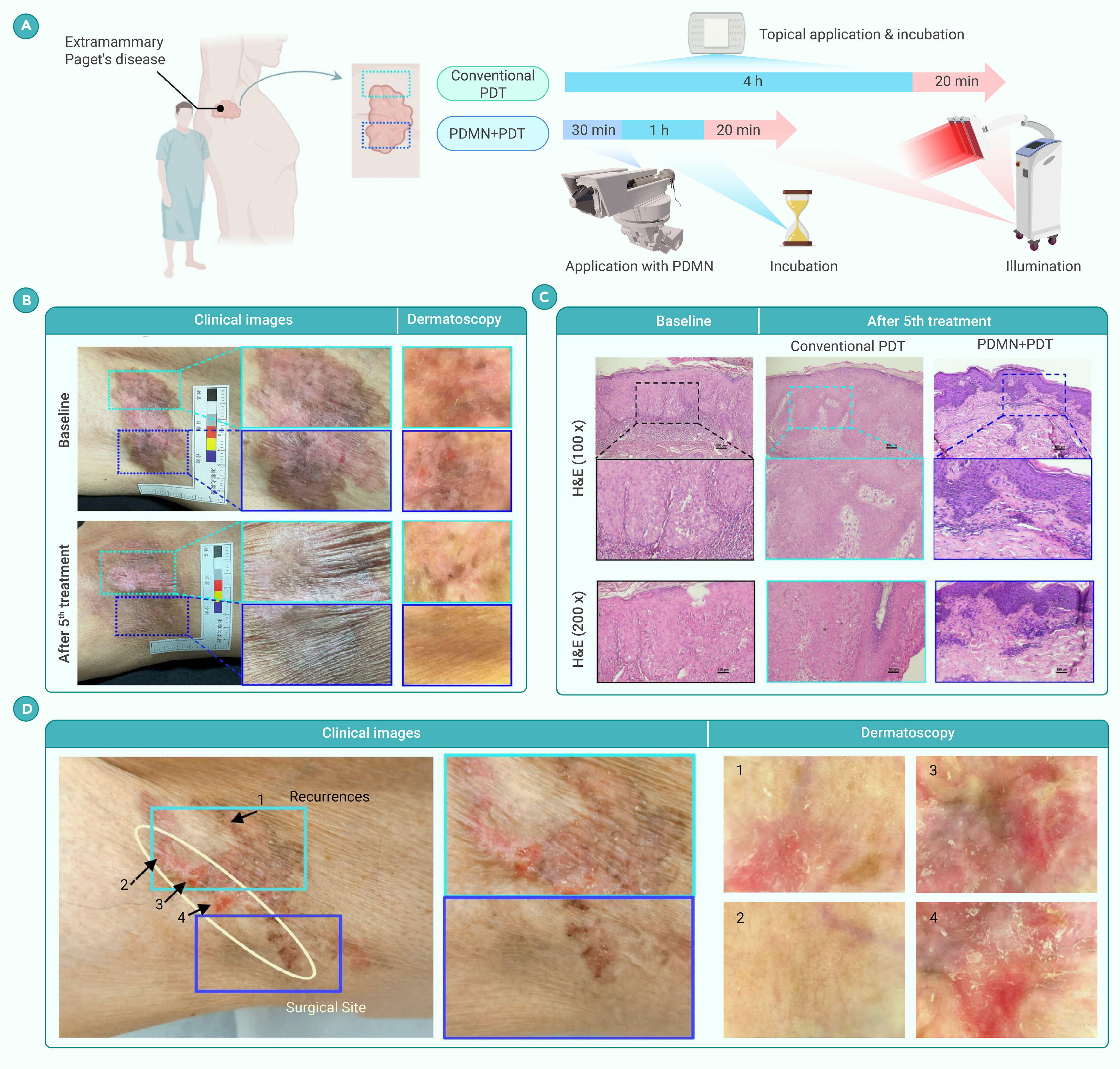
Figure 6.
Clinical treatment of EMPD by PDMN-PDT
-
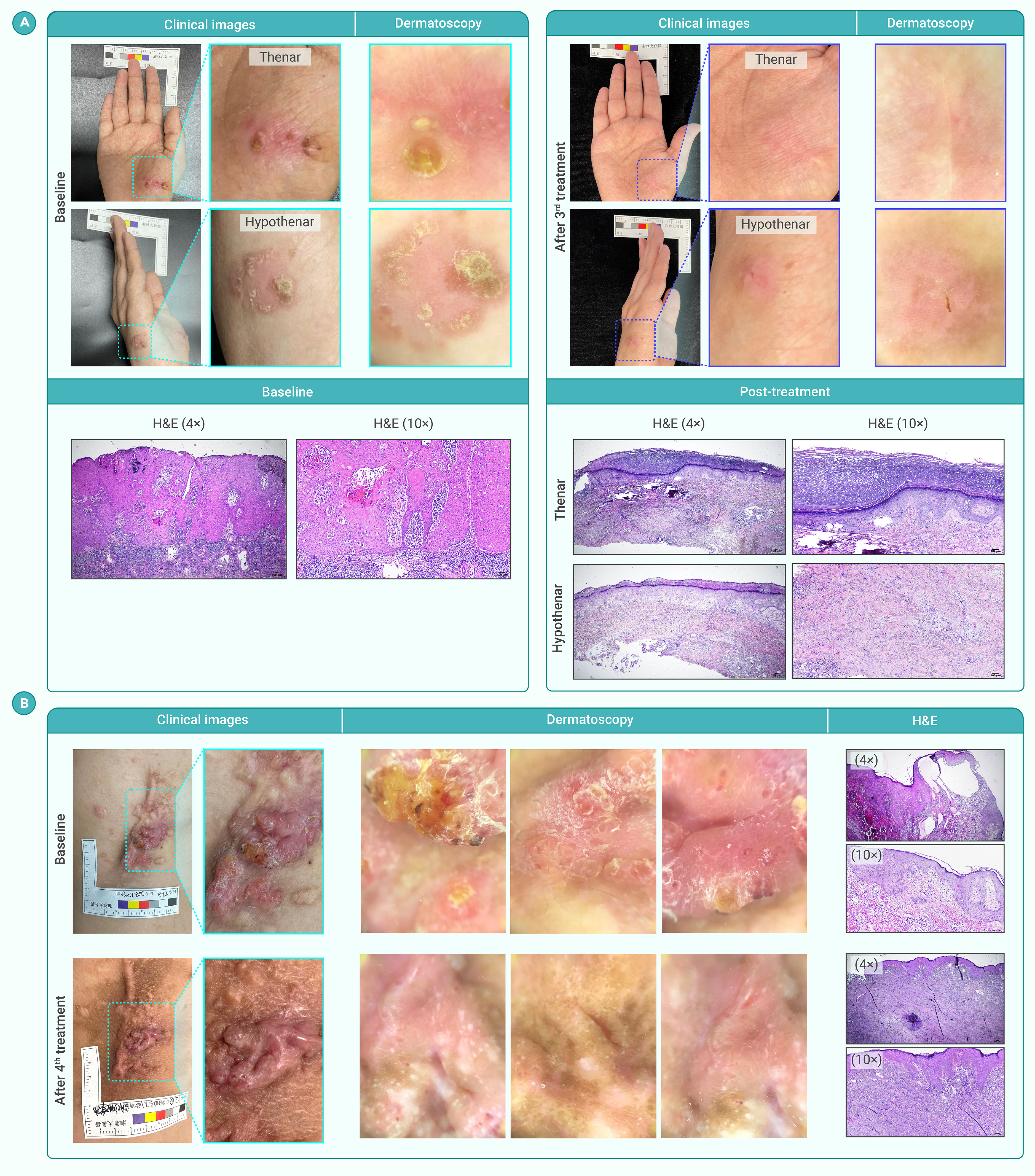
Figure 7.
Clinical treatment of BD and CLC by PDMN-PDT
