
Tumor microenvironment interplay amid microbial community, host gene expression and pathological features elucidates cancer heterogeneity and prognosis risk
-
GRAPHICAL ABSTRACT

 DownLoad:
Full size image
DownLoad:
Full size image
-
PUBLIC SUMMARY
-
There is a link between intratumoral microbiota, host, and histopathology images in cancer patients.
Patterns of association between intratumoral microbiota, host, and histopathology images exhibit tumor heterogeneity.
Associations between intratumoral microbiota, host, and histopathology images underlie the prognostic risk of cancers.
-
-
ABSTRACT
Microbial community, host gene expression, and pathological image in the tumor microenvironment (TME) are interrelated, and they can provide valuable insights into tumor heterogeneity. However, the complex and important interconnection patterns among these multimodal omics in pan-cancer remain far from being elucidated. Here, we developed a framework for decoding the association among the microbial community, host gene expression, and pathological image in the TME for a broad spectrum of cancers in multiple independent cohorts. Our results indicated three types of microbe-expression-image triplet (MEI-triplet) interplay patterns in human cancers. MEI1, including esophageal cancer (ESCA) and pancreatic adenocarcinoma (PAAD), was characterized by no significant intratumoral microbe-host interaction. MEI2, which included eight cancers (liver hepatocellular carcinoma [LIHC] is one of these), was characterized by a strong association of tumor microbiota and host gene expression, but changes in the TME were not reflected in pathological images. Meanwhile, MEI3, including colorectal cancer (CRC), stomach adenocarcinoma (STAD), and lung squamous cell carcinoma (LUSC), was characterized by strong associations among tumor microbiota, host gene expression, and pathological images. Further experiments with validation datasets for several representative cancer types also supported these patterns. Out of the three MEI patterns, patients with MEI1 had the worst prognosis risk, followed by those with MEI3 and MEI2. Our findings provide new insights into tumor heterogeneity, which could assist with providing more precise diagnosis and prognosis assessment in clinics. -

-
REFERENCES
[1] Cullin, N., Azevedo Antunes, C., Straussman, R., et al. (2021). Microbiome and cancer. Cancer Cell 39 :1317-1341. DOI: 10.1016/j.ccell.2021.08.006. [2] Donehower, L.A., Soussi, T., Korkut, A., et al. (2019). Integrated analysis of TP53 gene and pathway alterations in the cancer genome atlas. Cell Rep. 28: 1370−1384.e5. DOI: 10.1016/j.celrep.2019.07.001. [3] Tsai, P.C., Lee, T.H., Kuo, K.C., S., et al. (2023). Histopathology images predict multi-omics aberrations and prognoses in colorectal cancer patients. Nat. Commun. 14: 2102. DOI: 10.1038/s41467-023-37179-4. [4] Sepich-Poore G.D., Zitvogel. L., Straussman. R., et al. (2021). The microbiome and human cancer. Science 371: eabc4552. DOI: 10.1126/science.abc4552. [5] Lee, Y., Bogdanoff, D., Wang, Y., et al. (2021). XYZeq: Spatially resolved single-cell RNA sequencing reveals expression heterogeneity in the tumor microenvironment. Sci. Adv. 7: eabg4755. DOI: 10.1126/sciadv.abg4755. [6] Dentro, S.C., Leshchiner, I., Haase, K., et al. (2021). Characterizing genetic intra-tumor heterogeneity across 2,658 human cancer genomes. Cell 184: 2239−2254.e39. DOI: 10.1016/j.cell.2021.03.009. [7] Zuo, C., Zhang, Y., Cao, C., et al. (2022). Elucidating tumor heterogeneity from spatially resolved transcriptomics data by multi-view graph collaborative learning. Nat. Commun. 13: 5962. DOI: 10.1038/s41467-022-33619-9. [8] Ma, J., Huang, L., Hu, D., et al. (2021). The role of the tumor microbe microenvironment in the tumor immune microenvironment: Bystander, activator, or inhibitor. J. Exp. Clin. Cancer Res. 40: 327. DOI: 10.1186/s13046-021-02128-w. [9] Wong-Rolle, A., Wei, H.K., Zhao, C., Jin, C. (2021). Unexpected guests in the tumor microenvironment: Microbiome in cancer. Protein Cell. 12: 426−435. DOI: 10.1007/s13238-020-00813-8. [10] Ramirez-Labrada, A.G., Isla, D., Artal, A., et al. (2020). The influence of lung microbiota on lung carcinogenesis, immunity, and immunotherapy. Trends Cancer. 6: 86−97. DOI: 10.1016/j.trecan.2019.12.007. [11] Dzutsev, A., Badger, J.H., Perez-Chanona, E., et al. (2017). Microbes and Cancer. Annu. Rev. Immunol. 35: 199−228. DOI: 10.1146/annurev-immunol-051116-052133. [12] Garrett, W.S. (2015). Cancer and the microbiota. Science 348: 80−86. DOI: 10.1126/science.aaa4972. [13] van Pelt, G.W., Sandberg, T.P., Morreau, H., et al. (2018). The tumour-stroma ratio in colon cancer: The biological role and its prognostic impact. Histopathology 73: 197−206. DOI: 10.1111/his.13489. [14] Foersch, S., Glasner, C., Woerl, A.C., et al. (2023). Multistain deep learning for prediction of prognosis and therapy response in colorectal cancer. Nat. Med. 29: 430−439. DOI: 10.1038/s41591-022-02134-1. [15] Poore, G.D., Kopylova, E., Zhu, Q., et al. (2020). Microbiome analyses of blood and tissues suggest cancer diagnostic approach. Nature 579: 567−574. DOI: 10.1038/s41586-020-2095-1. [16] Wood, D.E. and Salzberg, S.L. (2014) Kraken: Ultrafast metagenomic sequence classification using exact alignments. Genome Biol. 15 : R46. DOI: 10.1186/gb-2014-15-3-r46. [17] Kim, D., Paggi, J.M., Park, C., et al. (2019). Graph-based genome alignment and genotyping with HISAT2 and HISAT-genotype. Nat. Biotechnol. 37: 907−915. DOI: 10.1038/s41587-019-0201-4. [18] Danecek, P., Bonfield, J.K., Liddle, J., et al. (2021)Twelve years of SAMtools and BCFtools. Gigascience 10 : giab008. DOI: 10.1093/gigascience/giab008. [19] Pertea, M., Pertea, G.M., Antonescu, C.M., et al. (2015). StringTie enables improved reconstruction of a transcriptome from RNA-seq reads. Nat. Biotechnol. 33: 290−295. DOI: 10.1038/nbt.3122. [20] Roelands, J., Kuppen, P.J.K., Ahmed, E.I., et al. (2023). An integrated tumor, immune and microbiome atlas of colon cancer. Nat. Med. 29: 1273−1286. DOI: 10.1038/s41591-023-02324-5. [21] Lu, M.Y., Williamson, D.F.K., Chen, T.Y., et al. (2021). Data-efficient and weakly supervised computational pathology on whole-slide images. Nat. Biomed. Eng. 5: 555−570. DOI: 10.1038/s41551-020-00682-w. [22] Hu, M.-K. (1962). Visual pattern recognition by moment invariants. 8 : 179-187. DOI: 10.1109/TIT.1962.1057692. [23] Yoshihara, K., Shahmoradgoli, M., Martinez, E., et al. (2013). Inferring tumour purity and stromal and immune cell admixture from expression data. Nat. Commun. 4: 2612. DOI: 10.1038/ncomms3612. [24] Becht, E., Giraldo, N.A., Lacroix, L., et al. (2016). Estimating the population abundance of tissue-infiltrating immune and stromal cell populations using gene expression. Genome Biol. 17: 218. DOI: 10.1186/s13059-016-1070-5. [25] Nejman, D., Livyatan, I., Fuks, G., et al. (2020). The human tumor microbiome is composed of tumor type-specific intracellular bacteria. Science 368: 973−980. DOI: 10.1126/science.aay9189. [26] Ghaddar, B., Biswas, A., Harris, C., et al. (2022). Tumor microbiome links cellular programs and immunity in pancreatic cancer. Cancer Cell 40 : 1240-1253 e5. DOI: 10.1016/j.ccell.2022.09.009. [27] Llorens-Rico, V., Simcock, J.A., Huys, G.R.B., et al. (2022). Single-cell approaches in human microbiome research. Cell 185: 2725−2738. DOI: 10.1016/j.cell.2022.06.040. [28] Hoadley, K.A., Yau, C., Hinoue, T., et al. (2018). Cell-of-origin patterns dominate the Molecular Classification of 10,000 Tumors from 33 Types of Cancer. Cell 2018, 173 :291-304 e296. [29] Li, Z., Seehawer, M., and Polyak, K. (2022). Untangling the web of intratumour heterogeneity. Nat. Cell Biol. 24: 1192−1201. DOI: 10.1038/s41556-022-00969-x. [30] Steyaert, S., Pizurica, M., Nagaraj, D., et al. (2023). Multimodal data fusion for cancer biomarker discovery with deep learning. Nat. Mach. Intell. 5: 351−362. DOI: 10.1038/s42256-023-00633-5. [31] Grossman, J.E., Vasudevan, D., Joyce, C.E., et al. (2021). Is PD-L1 a consistent biomarker for anti-PD-1 therapy. The model of balstilimab in a virally-driven tumor. Oncogene 40: 1393−1395. DOI: 10.1038/s41388-020-01611-6. [32] Liu, Y., Kim, J., Balagurunathan, Y., et al. (2016). Radiomic features are associated with EGFR mutation status in lung adenocarcinomas. Clin. Lung Cancer 17: 441−448.e6. DOI: 10.1016/j.cllc.2016.02.001. [33] Gevaert, O., Echegaray, S., Khuong, A., et al. (2017). Predictive radiogenomics modeling of EGFR mutation status in lung cancer. Sci. Rep. 7: 41674. DOI: 10.1038/srep41674. -
ABOUT THIS ARTICLE
Cite this article:
Ji L., Zhang H., Tian G., et al., (2023). Tumor microenvironment interplay amid microbial community, host gene expression and pathological features elucidates cancer heterogeneity and prognosis risk. The Innovation Life 1(2), 100028. https://doi.org/10.59717/j.xinn-life.2023.100028
Welcome!
To request copyright permission to republish or share portions of our works, please visit Copyright Clearance Center's (CCC) Marketplace website at marketplace.copyright.com.

Article Metrics
Relative Articles
Cited by
Export File
Citation
Ji L., Zhang H., Tian G., et al., (2023). Tumor microenvironment interplay amid microbial community, host gene expression and pathological features elucidates cancer heterogeneity and prognosis risk. The Innovation Life 1(2), 100028. https://doi.org/10.59717/j.xinn-life.2023.100028

Format
Content


-
Figure 1.
Tumor microbial profiles of the 13 cancer types and their host interactions
-
Figure 2.
Schematic overview of the workflow employed to generate the microbe-expression-image triplet (MEI-triplet) interplay pattern classification platform
-
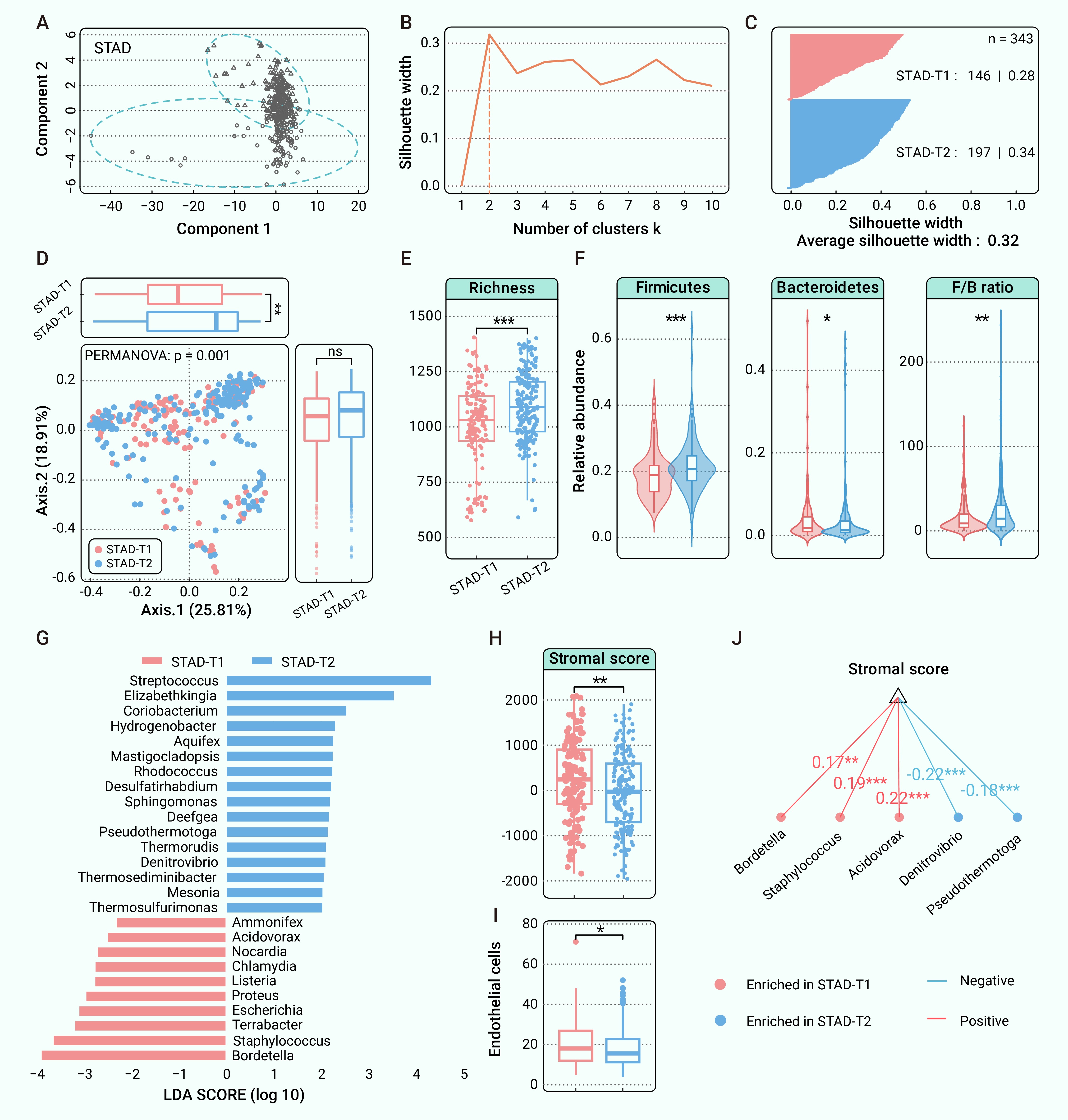
Figure 3.
Differences and associations of STAD subtypes at the level of tumor microbes and tumor microenvironment (TME) based on pathological image features
-
Figure 4.
Differences in, and associations of LUSC subtypes at the tumor microbe and TME levels based on pathological image features
-
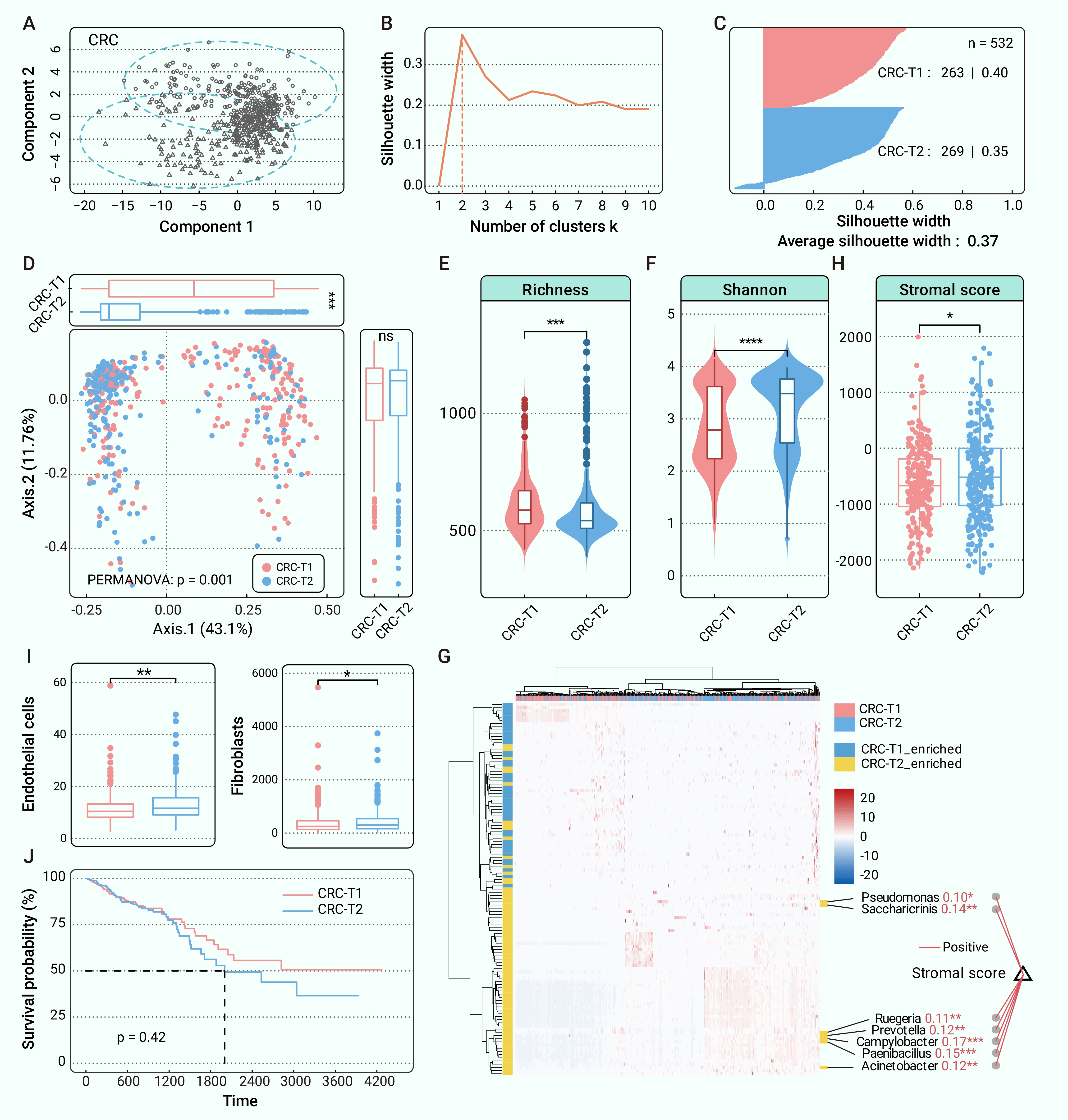
Figure 5.
Differences in, and associations of CRC subtypes at the level of the tumor microbes and TME based on pathological image features
-
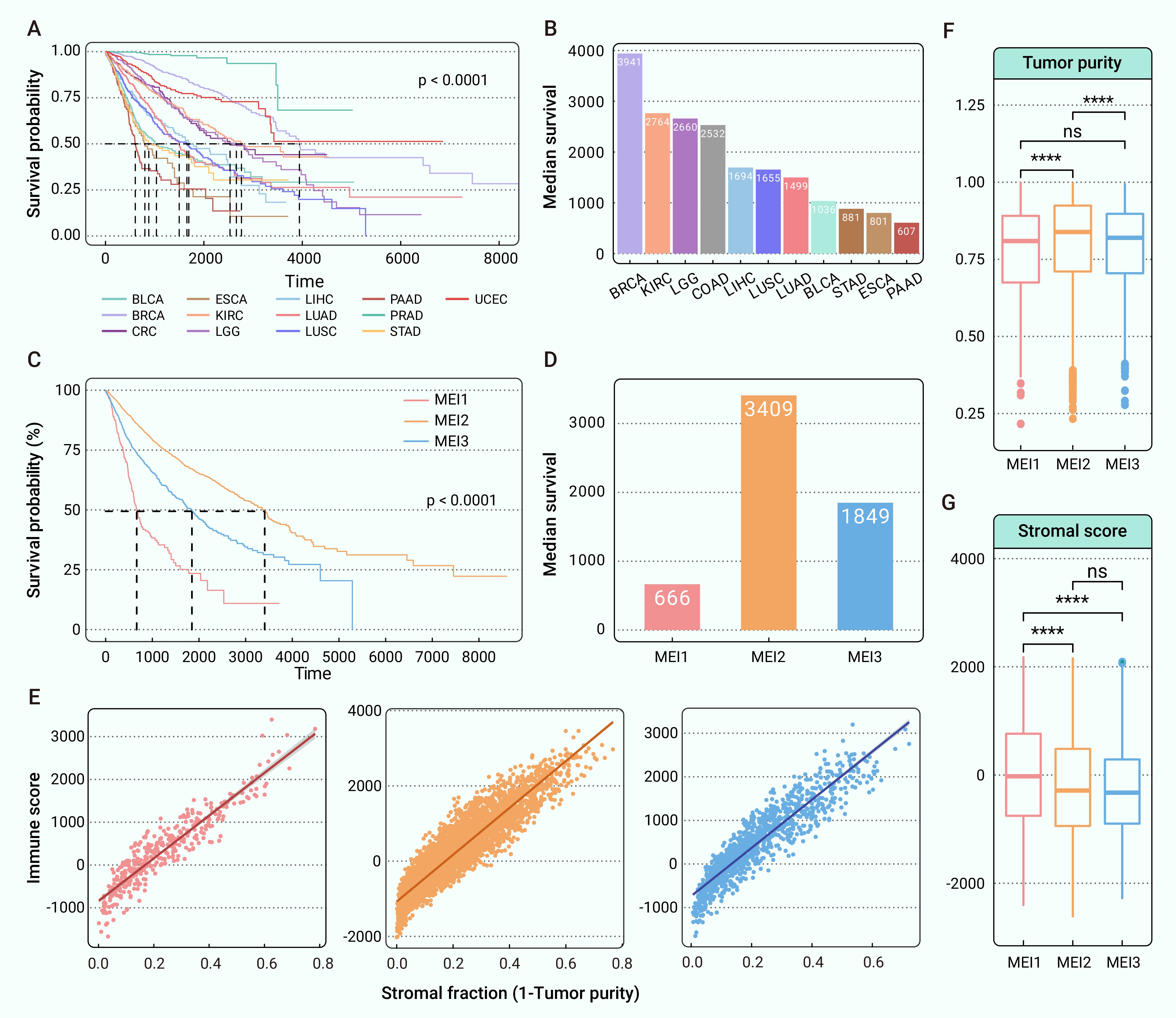
Figure 6.
Prognostic potential of the MEI-triplet interplay pattern
