
How a fungal order Hymenochaetales diversified in China inferred from its spatiotemporal pattern
-
GRAPHICAL ABSTRACT
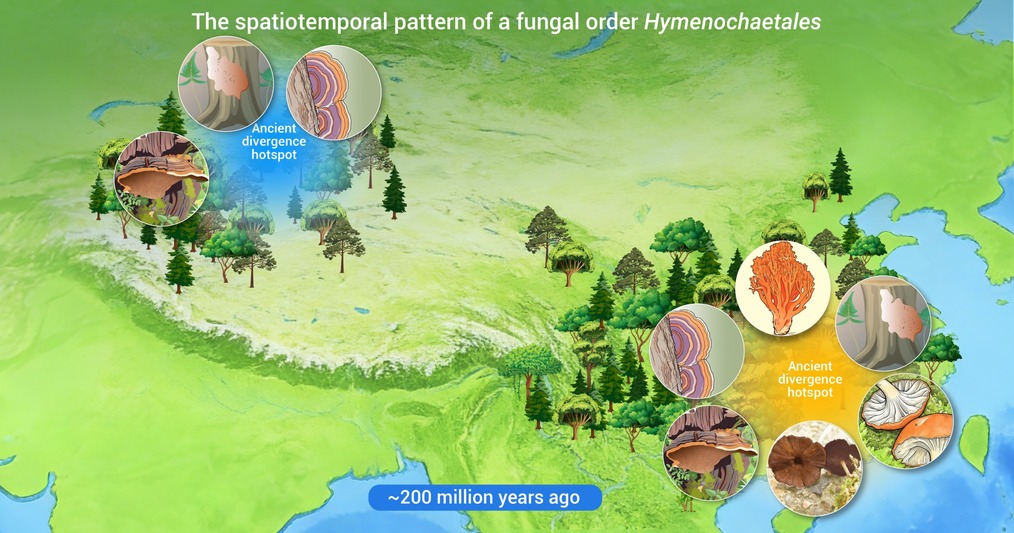
 DownLoad:
Full size image
DownLoad:
Full size image
-
PUBLIC SUMMARY
-
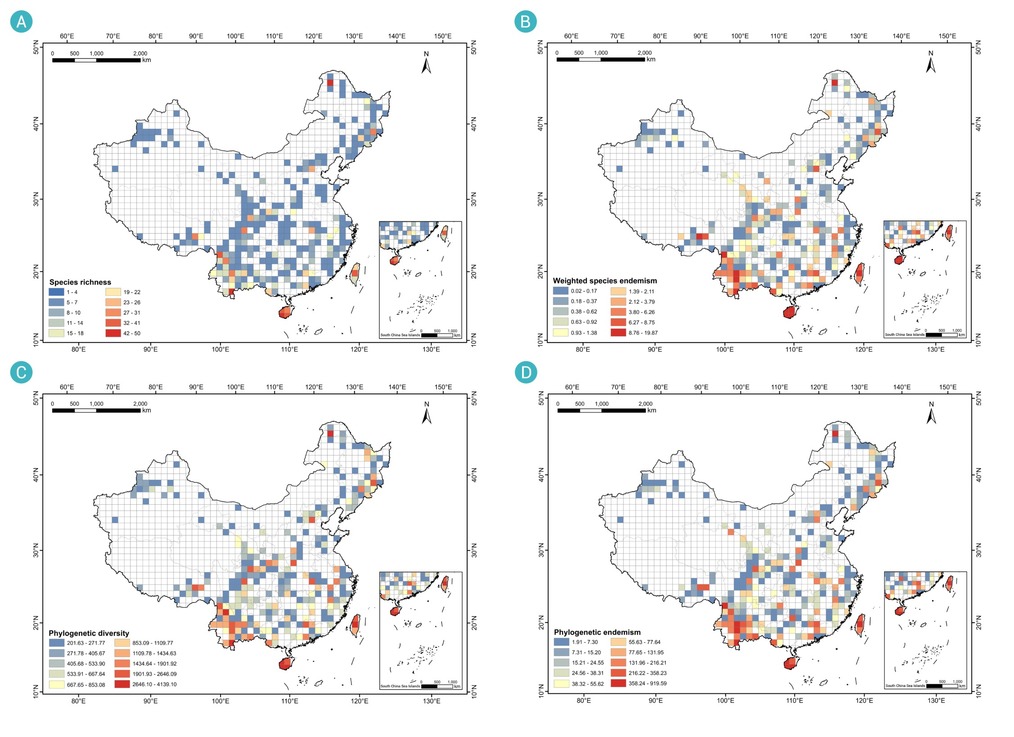
The diversity indices of Hymenochaetales were generally higher in southern China with lower latitudes.
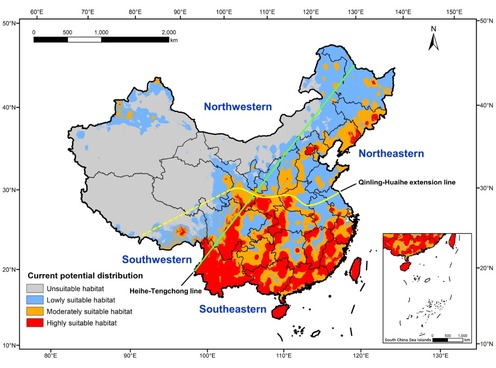
The lineages in highly suitable habitats concentrated in the central to southern China were oldest.
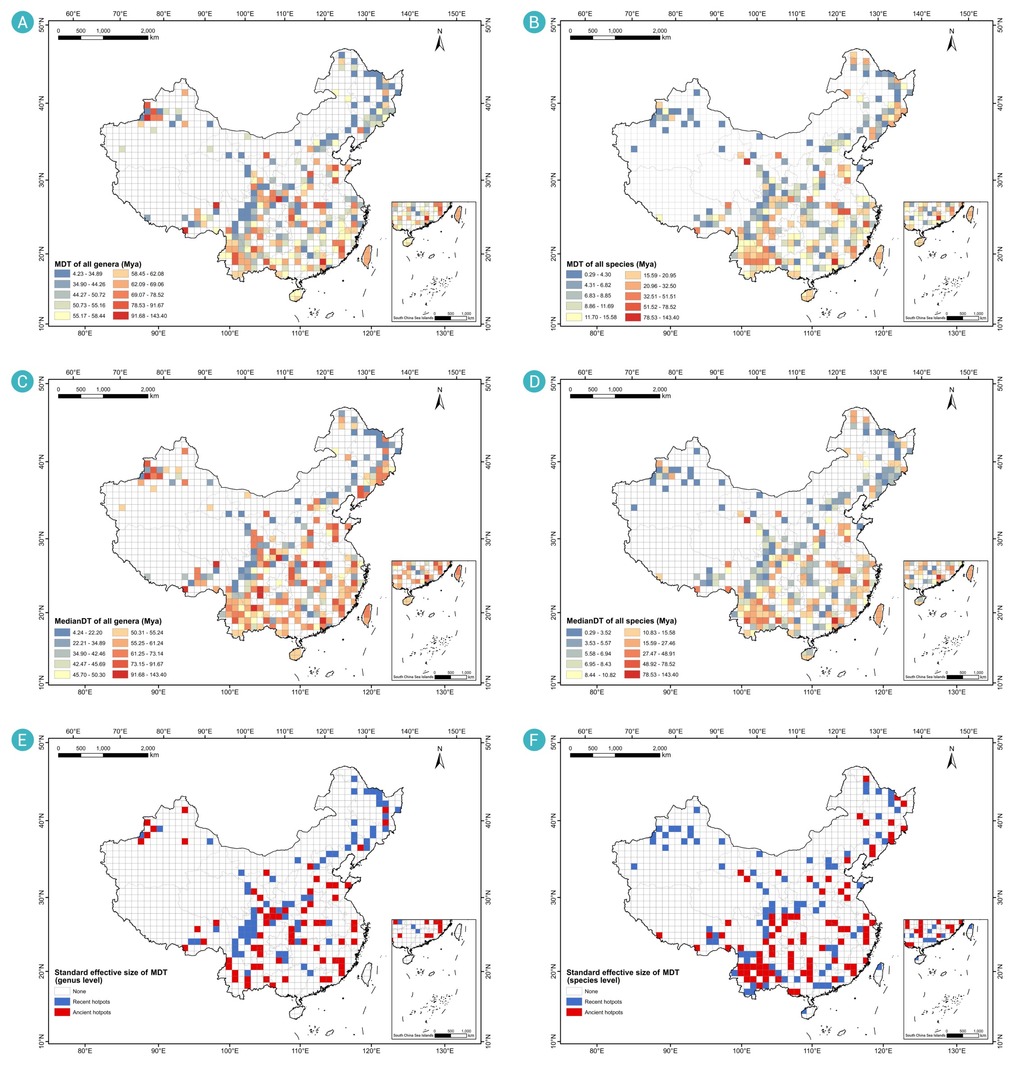
The Chinese ancestor was evaluated to originate 201.63 million years ago.
The two ancient divergence hotspots of Hymenochaetales underwent different diversification scenarios.
The differentiated diversification scenarios were correlated with local temperature and host plant density.
-
-
ABSTRACT
Spatiotemporal pattern of biodiversity is an indicator of evolutionary history, and provides crucial information for recognizing evolutionary process of life on the Earth over time and space. Here, we for the first time comprehensively analyze macrofungal spatiotemporal pattern in China at the order level taking Hymenochaetales as the exemplar. A total of3950 occurrence records from all 490 known species in China are included, and the results indicate that species richness, weighted species endemism, phylogenetic diversity and phylogenetic endemism of Hymenochaetales were generally higher in southern China with lower latitudes. Accordingly, the predicted current highly suitable habitats for Hymenochaetales concentrated in the central to southern China, where the lineages of Hymenochaetales were older than those in habitats with other suitability levels. The Chinese ancestor of Hymenochaetales was evaluated to originate 201.63 million years ago with two ancient divergence hotspots. Since the origination, Hymenochaetales in southeastern China intensively diversified, while the other ancient divergence hotspot near Tianshan Mountains in the northwest of northwestern China underwent much less diversification. The differentiated fate of Hymenochaetales between these two ancient divergence hotspots was correlated with local temperature and host plant density. In summary, the current study revealed the diversification scenario of Hymenochaetales in China, and provided a leading demonstration for macrofungal macroevolution.-
Keywords:
- Basidiomycota /
- biodiversity /
- divergence time /
- evolutionary history /
- potential distribution
-

-
REFERENCES
[1] Xing Y.W. and Ree R.H. (2017). Uplift-driven diversification in the Hengduan Mountains, a temperate biodiversity hotspot. Proc. Natl. Acad. Sci. USA. 114:E3444−E3451. DOI:10.1073/pnas.1616063114 [2] Bai M., Zhou L.W., Tong Y.J., et al. (2023). Risk assessment and warning system for strategic biological resources in China. The Innovation Life 1:100004. DOI:10.59717/j.xinn-life.2023.100004 [3] Lu L.M., Mao L.F., Yang T., et al. (2018). Evolutionary history of the angiosperm flora of China. Nature 554:234−238. DOI:10.1038/nature25485 [4] Jin W.T., Gernandt D.S., Wehenkel C., et al. (2021). Phylogenomic and ecological analyses reveal the spatiotemporal evolution of global pines. Proc. Natl. Acad. Sci. USA. 118:e2022302118. DOI:10.1073/pnas.2022302118 [5] Fan H.Z., Liu T.Y., Chen Y.H., et al. (2024). Geographical patterns and determinants of insect biodiversity in China. Sci. China Life Sci. 67:1255−1265. DOI:10.1007/s11427-023-2483-0 [6] Xu W., Wu Y.H., Zhou W.W., et al. (2024). Hidden hotspots of amphibian biodiversity in China. Proc. Natl. Acad. Sci. USA. 121:e2320674121. DOI:10.1073/pnas.2320674121 [7] Garcia-Porta J., Irisarri I., Kirchner M., et al. (2019). Environmental temperatures shape thermal physiology as well as diversification and genome-wide substitution rates in lizards. Nat. Commun. 10:4077. DOI:10.1038/s41467-019-11943-x [8] Wang X.W. and Zhou L.W. (2024a). Spatiotemporal pattern of a macrofungal genus Phylloporia (Basidiomycota) revealing its adaptive evolution in China. J. Fungi 10:780. DOI:10.3390/jof10110780 [9] Wang X.W., Liu S.L. and Zhou L.W. (2023). An updated taxonomic framework of Hymenochaetales (Agaricomycetes, Basidiomycota). Mycosphere 14:452−496. DOI:10.5943/mycosphere/14/1/6 [10] Zhou L.W., Wang X.W., Vlasák J., et al. (2018). Resolution of phylogenetic position of Nigrofomitaceae within Hymenochaetales (Basidiomycota) and Nigrofomes sinomelanoporus sp. nov. (Nigrofomitaceae) from China. MycoKeys 29:1−13. DOI:10.3897/mycokeys.29.21250 [11] Liu S.L., Gafforov Y., Zhang X.Y., et al. (2019). Reinstatement of the corticioid genus Leifia (Hymenochaetales, Basidiomycota) with a new species L. brevispora from Hubei, Central China. MycoKeys 51:85−96. DOI:10.3897/mycokeys.51.33262 [12] Liu S.L., Wang X.W., Li G.J., et al. (2024). Fungal diversity notes 1717–1817: Taxonomic and phylogenetic contributions on genera and species of fungal taxa. Fungal Divers. 124:1−216. DOI:10.1007/s13225-023-00529-0 [13] Wang X.W., Jiang J.H. and Zhou L.W. (2020). Basidioradulum mayi and B. tasmanicum spp. nov. (Hymenochaetales, Basidiomycota) from both sides of Bass Strait, Australia. Sci. Rep. 10:102. DOI:10.1038/s41598-019-57061-y [14] Wang X.W., May T.W., Liu S.L., et al. (2021a). Towards a natural classification of Hyphodontia sensu lato and the trait evolution of basidiocarps within Hymenochaetales (Basidiomycota). J. Fungi 7:478. DOI:10.3390/jof7060478 [15] Zhou L.W., Ghobad-Nejhad M., Tian X.M., et al. (2022). Current status of ‘Sanghuang’ as a group of medicinal mushrooms and their perspective in industry development. Food Rev. Int. 38:589−607. DOI:10.1080/87559129.2020.1740245 [16] Jiang J.H., Zhou L.J., Liu S.L., et al. (2020). Species clarification of the medicinal wood-inhabiting fungus Phylloporia (Hymenochaetales, Basidiomycota) in China. Phytotaxa 446:209−219. DOI:10.11646/phytotaxa.446.4.1 [17] Jiang J.H., Li Q.Z., Luo X., et al. (2024). Transcriptome and metabolome reveal accumulation of key metabolites with medicinal properties of Phylloporia pulla. Int. J. Mol. Sci. 25:11070. DOI:10.3390/ijms252011070 [18] Cheng Y., Zhou L.J., Jiang J.H., et al. (2023). Phylloporia (Hymenochaetales, Basidiomycota), a medicinal wood-inhabiting fungal genus with much potential for commercial development. Food Rev. Int. 39:2776−2789. DOI:10.1080/87559129.2021.1967382 [19] Zhou L.W., Vlasák J. and Dai Y.C. (2016). Taxonomy and phylogeny of Phellinidium (Hymenochaetales, Basidiomycota): A redefinition and the segregation of Coniferiporia gen. nov. for forest pathogens. Fungal Biol. 120:988−1001. DOI:10.1016/j.funbio.2016.04.008 [20] Wang X.W., Jiang J.H., Liu S.L., et al. (2022). Species diversification of the coniferous pathogenic fungal genus Coniferiporia (Hymenochaetales, Basidiomycota) in association with its biogeography and host plants. Phytopathology 112:404−413. DOI:10.1094/PHYTO-05-21-0181-R [21] Wu F., Dai S.J., Vlasák J., et al. (2019). Phylogeny and global diversity of Porodaedalea, a genus of gymnosperm pathogens in the Hymenochaetales. Mycologia. 111:40−53. DOI:10.1080/00275514.2018.1526618 [22] Wu F., Zhou L.W., Vlasák J., et al. (2022). Global diversity and systematics of Hymenochaetaceae with poroid hymenophore. Fungal Divers. 113:1−192. DOI:10.1007/s13225-021-00496-4 [23] Wang X.W. and Zhou L.W. (2024). Umbellaceae fam. nov. (Hymenochaetales, Basidiomycota) for Umbellus sinensis gen. et sp. nov. and three new combinations. J. Fungi 10:22. DOI:10.3390/jof10010022 [24] Wang X.W., Varga T., Li Q.S., et al. (2025). Complex evolutionary history of the fungal order Hymenochaetales revealed by analyses of trait evolution and diversification. Mycosphere 16:517−535. DOI:10.5943/mycosphere/16/1/7 [25] Zhang X.Q. and Dai Y.C. (2005). Flora fungorum sinicorum Vol 29. Hymenochaetaceae (Science Press), pp: 1–205. https://www.hceis.com/home/book_view.aspx?id=3774 [26] Dai Y.C. (2018). Flora fungorum sinicorum Vol 57. Hymenochaetales (I) (Science Press), pp: 1–248. https://www.nhbs.com/flora-fungorum-sinicorum-volume-57-chinese-book [27] Zhou L.W. and Dai Y.C. (2012). Phylogeny and taxonomy of Phylloporia (Hymenochaetales): New species and a worldwide key to the genus. Mycologia 104:211−222. DOI:10.3852/11-093 [28] Zhou L.W. and Xue H.J. (2012). Fomitiporia pentaphylacis and F. tenuitubus spp. nov. (Hymenochaetales, Basidiomycota) from Guangxi, southern China. Mycol. Prog. 11:907−913. DOI:10.1007/s11557-012-0806-1 [29] Zhou L.W. (2015). Four new species of Phylloporia (Hymenochaetales, Basidiomycota) from tropical China with a key to Phylloporia species worldwide. Mycologia 107:1184−1192. DOI:10.3852/14-254 [30] Yu J., Wang X.W., Liu S.L., et al. (2021). Taxonomy and phylogeny of Resinicium sensu lato from Asia-Pacific revealing a new genus and five new species (Hymenochaetales, Basidiomycota). IMA Fungus 12:19. DOI:10.1186/s43008-021-00071-1 [31] Zhou L.W. and May T.W. (2023). Fungal taxonomy: Current status and research agendas for the interdisciplinary and globalisation era. Mycology 14:52−59. DOI:10.1080/21501203.2022.2103194 [32] Cho Y., Kim D., Lee Y., et al. (2023). Validation of Fuscoporia (Hymenochaetales, Basidiomycota) ITS sequences and five new species based on multi-marker phylogenetic and morphological analyses. IMA Fungus 14:12. DOI:10.1186/s43008-023-00117-6 [33] Gunaseelan S., Kezo K., Karunarathna S.C., et al. (2024). New species of Tropicoporus (Basidiomycota, Hymenochaetales, Hymenochaetaceae) from India, with a key to Afro-Asian Tropicoporus species. MycoKeys 102:29−54. DOI:10.3897/mycokeys.102.117067 [34] Viner I., Larsson K.H., Spirin V., et al. (2024). Revision of Kneiffiella with segregation of Egonia gen. nov. (Hymenochaetales, Agaricomycetes): How similar morphology can hide taxonomic diversity in the molecular era. Persoonia 53:1−28. DOI:10.3767/persoonia.2024.53.01 [35] Yurchenko E., Langer E. and Riebesehl J. (2024). A high species diversity of Lyomyces (Basidiomycota, Hymenochaetales) in Central and South America, revealed after morphological and molecular analysis. MycoKeys 109:131−169. DOI:10.3897/mycokeys.109.127606 [36] Emms D.M. and Kelly S. (2015). OrthoFinder: Solving fundamental biases in whole genome comparisons dramatically improves orthogroup inference accuracy. Genome Biol. 16:157. DOI:10.1186/s13059-015-0721-2 [37] Emms D.M. and Kelly S. (2019). OrthoFinder: Phylogenetic orthology inference for comparative genomics. Genome Biol. 20:238. DOI:10.1186/s13059-019-1832-y [38] Katoh K. and Standley D.M. (2013). MAFFT multiple sequence alignment software version 7: Improvements in performance and usability. Mol. Biol. Evol. 30:772−780. DOI:10.1093/molbev/mst010 [39] Darriba D., Posada D., Kozlov A.M., et al. (2020). ModelTest-NG: A new and scalable tool for the selection of DNA and protein evolutionary models. Mol. Biol. Evol. 37:291−294. DOI:10.1093/molbev/msz189 [40] Stamatakis A. (2014). RAxML version 8: A tool for phylogenetic analysis and post-analysis of large phylogenies. Bioinformatics 30:1312−1313. DOI:10.1093/bioinformatics/btu033 [41] Katoh K., Kuma K., Toh H., et al. (2005). MAFFT version 5: Improvement in accuracy of multiple sequence alignment. Nucleic Acids Res. 33:511−518. DOI:10.1093/nar/gki198 [42] Capella-Gutiérrez S., Silla-Martínez J.M. and Gabaldón T. (2009). trimAl: A tool for automated alignment trimming in large-scale phylogenetic analyses, Bioinformatics 25:1972–1973. DOI:10.1093/bioinformatics/btp348. [43] Vaidya G., Lohman D.J. and Meier R. (2011). SequenceMatrix: Concatenation software for the fast assembly of multi-gene datasets with character set and codon information. Cladistics 27:171−180. DOI:10.1111/j.1096-0031.2010.00329.x [44] Guindon S. and Gascuel O. (2003). A simple, fast, and accurate algorithm to estimate large phylogenies by maximum likelihood. Syst. Biol. 52:696−704. DOI:10.1080/10635150390235520 [45] Darriba D., Taboada G.L., Doallo R., et al. (2012). jModelTest 2: More models, new heuristics and parallel computing. Nat. Methods 9:772. DOI:10.1038/nmeth.2109 [46] Edler D., Klein J., Antonelli A., et al. (2020). raxmlGUI 2.0: A graphical interface and toolkit for phylogenetic analyses using RAxML. Methods Ecol. Evol. 12:1–5. DOI:10.1111/2041-210X.13512 [47] Smith S.A. and O’Meara B.C. (2012). treePL: Divergence time estimation using penalized likelihood for large phylogenies. Bioinformatics 28:2689−2690. DOI:10.1093/bioinformatics/bts492 [48] Hibbett D.S., Grimaldi D. and Donoghue M.J. (1995). Cretaceous mushrooms in amber. Nature 377:487. DOI:10.1038/377487a0 [49] Hibbett D.S., Grimaldi D. and Donoghue M.J. (1997). Fossil mushrooms from Miocene and Cretaceous ambers and the evolution of Homobasidiomycetes. Am. J. Bot. 84:981−991. DOI:10.2307/2446289 [50] Smith S.Y., Currah R.S. and Stockey R.A. (2004). Cretaceous and Eocene poroid hymenophores from Vancouver Island, British Columbia. Mycologia 96:180−186. DOI:10.1080/15572536.2005.11833010 [51] Berbee M.L. and Taylor J.W. (2010). Dating the molecular clock in fungi – how close are we. Fungal Biol. Rev. 24:1−16. DOI:10.1016/j.fbr.2010.03.001 [52] Floudas D., Binder M., Riley R., et al. (2012). The Paleozoic origin of enzymatic lignin decomposition reconstructed from 31 fungal genomes. Science 336:1715−1719. DOI:10.1126/science.1221748 [53] Taylor T.N., Hass H. and Kerp H. (1999) The oldest fossil ascomycetes. Nature 399:648. DOI:10.1038/21349 [54] Taylor T.N., Hass H., Kerp H., et al. (2005). Perithecial ascomycetes from the 400 million years old Rhynie chert: An example of ancestral polymorphism. Mycologia 97:269−285. DOI:10.1080/15572536.2006.11832862 [55] Chang J., Rabosky D.L. and Alfaro M.E. (2020). Estimating diversification rates on incompletely sampled phylogenies: Theoretical concerns and practical solutions. Syst. Biol. 69:602−611. DOI:10.1093/sysbio/syz081 [56] Blaimer B.B., Santos B.F., Cruaud A., et al. (2023). Key innovations and the diversification of Hymenoptera. Nat. Commun. 14:1212. DOI:10.1038/s41467-023-36868-4 [57] Helmstetter A.J., Zenil-Ferguson R., Sauquet H., et al. (2023). Trait-dependent diversification in angiosperms: Patterns, models and data. Ecol. Lett. 26:640−657. DOI:10.1111/ele.14170 [58] Soghigian J., Sither C., Justi S.A., et al. (2023). Phylogenomics reveals the history of host use in mosquitoes. Nat. Commun. 14:6252. DOI:10.1038/s41467-023-41764-y [59] Tietje M., Antonelli A., Forest F., et al. (2023). Global hotspots of plant phylogenetic diversity. New Phytol. 240:1636−1646. DOI:10.1111/nph.19151 [60] Crisp M., Laffan S., Linder H.P., et al. (2001). Endemism in the Australian flora. J. Biogeogr. 28:183−198. DOI:10.1046/j.1365-2699.2001.00524.x [61] Laffan S.W. and Crisp M.D. (2003). Assessing endemism at multiple spatial scales, with an example from the Australian vascular flora. J. Biogeogr. 30:511−520. DOI:10.1046/j.1365-2699.2003.00875.x [62] Faith D.P. (1992). Conservation evaluation and phylogenetic diversity. Biol. Conserv. 61:1−10. DOI:10.1016/0006-3207(92)91201-3 [63] Webb C.O., Ackerly D.D., McPeek M.A., et al. (2002). Phylogenies and community ecology. Annu. Rev. Ecol. Evol. Syst. 33:475−505. DOI:10.1146/annurev.ecolsys.33.010802.150448 [64] Rodrigues A.S.L., Brooks T.M. and Gaston K.J. (2005). Purvis A., Gittleman J.L. and Brooks T.M. (eds). Phylogeny and Conservation (Cambridge Univ. Press), pp: 101–119. DOI:10.5860/choice.43-4656 [65] Brum F.T., Graham C.H., Costa G.C., et al. (2017). Global priorities for conservation across multiple dimensions of mammalian diversity. Proc. Natl. Acad. Sci. USA. 114:7641−7646. DOI:10.1073/pnas.1706461114 [66] Rosauer D., Laffan S.W., Crisp M.D., et al. (2009). Phylogenetic endemism: A new approach for identifying geographical concentrations of evolutionary history. Mol. Ecol. 18:4061−4072. DOI:10.1111/j.1365-294x.2009.04311.x [67] Cadotte M.W. and Davies J.T. (2010). Rarest of the rare: Advances in combining evolutionary distinctiveness and scarcity to inform conservation at biogeographical scales. Divers. Distrib. 16:376−385. DOI:10.1111/j.1472-4642.2010.00650 [68] Mishler B., Knerr N., González-Orozco C., et al. (2014). Phylogenetic measures of biodiversity and neo- and paleo-endemism in Australian Acacia. Nat. Commun. 5:4473. DOI:10.1038/ncomms5473 [69] Esri. (2020). ArcGlS Desktop: Release 10.8. (Redlands, CA: Environmental Systems Research Institute). https://www.esri.com/en-us/home [70] Yang X.Q., Kushwaha S.P.S., Saran S., et al. (2013). Maxent modeling for predicting the potential distribution of medicinal plant, Justicia adhatoda L. in Lesser Himalayan foothills. Ecol. Eng. 51:83−87. DOI:10.1016/j.ecoleng.2012.12.004 [71] Street G.M. (2020). Habitat suitability and distribution models with applications in R. J. Wildlife Manage 84:1212−1213. DOI:10.1002/jwmg.21868 [72] Warren D.L., Matzke N.J., Cardillo M., et al. (2021). ENMTools 1.0: An R package for comparative ecological biogeography. Ecography 44:504–511. DOI:10.1111/ecog.05485 [73] Thuiller W., Lafourcade B., Engler R., et al. (2009). BIOMOD—a platform for ensemble forecasting of species distributions. Ecography 32:369−373. DOI:10.1111/j.1600-0587.2008.05742.x [74] Strubbe D., Jackson H., Groombridge J., et al. (2015). Invasion success of a global avian invader is explained by within-taxon niche structure and association with humans in the native range. Divers. Distrib. 21:675−685. DOI:10.1111/ddi.12325 [75] Hastie T.J. (2017). Generalized additive models. Routledge. (ed). Statistical models in S (Taylor & Francis), pp: 249–307. DOI:10.1201/9780203753781-6 [76] Elith J., Leathwick J.R. and Hastie T. (2008). A working guide to boosted regression trees. J. Anim. Ecol. 77:802−813. DOI:10.1111/j.1365-2656.2008.01390.x [77] Hastie T.J. and Pregibon D. (2017). Generalized linear models. Routledge. (ed). Statistical models in S (Taylor & Francis), pp: 95–247. DOI:10.1201/9780429057489-1 [78] Breiman L. (2001). Random forests. Mach. Learn. 45:5−32. DOI:10.1023/A:1010933404324 [79] Phillips S.J., Anderson R.P., Dudik M., et al. (2017). Opening the black box: An open-source release of Maxent. Ecography 40:887−893. DOI:10.1111/ecog.03049 [80] Zhao Y., Deng X.W., Xiang W.H., et al. (2021). Predicting potential suitable habitats of Chinese fir under current and future climatic scenarios based on MaxEnt model. Ecol. Inform. 64:101393. DOI:10.1016/j.ecoinf.2021.101393 [81] Kruskal W.H. and Wallis W.A. (1952). Use of ranks in one-criterion variance analysis. J. Am. Stat. Assoc. 47:583−621. DOI:10.1080/01621459.1952.10483441 [82] Hawksworth D.L. and Lücking R. (2017). Fungal diversity revisited: 2.2 to 3.8 million species. Microbiol. Spectr. 5:4. DOI:10.1128/microbiolspec.funk-0052-2016. [83] Wang X.W., Liu S.L. and Zhou L.W. (2021). Citizen Science initiative in taxonomy of macrofungi in China 1.0. Mycosystema 40:844–850. DOI:10.13346/j.mycosystema.200283 [84] Wu F., Zhou L.W., Yang Z.L., et al. (2019b). Resource diversity of Chinese macrofungi: Edible, medicinal and poisonous species. Fungal Divers. 98:1−76. DOI:10.1007/s13225-019-00432-7 [85] Chang M., Jiang J.H., Wang J., et al. (2025). Discovering Phlebia acerina for efficient degradation of bisphenol S and insights into its degradation mechanism. Bioresource Technol. 418:131912. DOI:10.1016/j.biortech.2024.131912 [86] Sun S., Hoy M.J. and Heitman J. (2020). Fungal pathogens. Curr. Biol. 30:PR1163−R1169. DOI:10.1016/j.cub.2020.07.032 [87] Liu S.L., Zhao P., Cai L., et al. (2025). Catalogue of fungi in China 1. New taxa of plant-inhabiting fungi. Mycology 16:1−58. DOI:10.1080/21501203.2024.2316066 [88] Manawasinghe I.S., Hyde K.D., Wanasinghe D.N., et al. (2025). Fungal diversity notes 1818–1918: Taxonomic and phylogenetic contributions on genera and species of fungi. Fungal Divers. 130:1−261. DOI:10.1007/s13225-024-00541-y [89] Wang K., Liu S.L., Liu X.Z., et al. (2025b). Catalogue of fungi in China 3. New taxa of macrofungi from southern Xizang, China. Mycology 16:91−123. DOI:10.1080/21501203.2024.2392014 [90] Liu S.L., He S.H., Wang X.W., et al. (2022). Trechisporales emended with a segregation of Sistotremastrales ord. nov. (Basidiomycota). Mycosphere 13:862−954. DOI:10.5943/mycosphere/13/1/11 [91] Liu S.L., Wei H.W. and Zhou L.W. (2023). Xenasmatellales ord. nov. and Xenasmatellaceae fam. nov. for Xenasmatella (Agaricomycetes, Basidiomycota). Mycology 14:175−189. DOI:10.1080/21501203.2023.2216213 [92] He M.Q., Cao B., Liu F., et al. (2024). Phylogenomics, divergence times and notes of orders in Basidiomycota. Fungal Divers. 126:127−406. DOI:10.1007/s13225-024-00535-w [93] Varga T., Krizsán K., Földi C., et al. (2019). Megaphylogeny resolves global patterns of mushroom evolution. Nat. Ecol. Evol. 3:668−678. DOI:10.1038/s41559-019-0834-1 [94] Sato H. (2024). The evolution of ectomycorrhizal symbiosis in the Late Cretaceous is a key driver of explosive diversification in Agaricomycetes. New Phytol. 241:444−460. DOI:10.1111/nph.19055 [95] Monteiro M., Reino L., Ferreira M.T., et al. (2022). Patterns and drivers of the global diversity of non-native macrofungi. Divers. Distrib. 28:2042−2055. DOI:10.1111/ddi.13607 [96] Zhou L.W., Hao Z.Q., Wang Z., et al. (2011). Comparison of ecological patterns of polypores in three forest zones in China. Mycology 2:260−275. DOI:10.1080/21501203.2011.602726 [97] Liao J.Y., Zhang L.P., Liu Y., et al. (2018). Diversity and utilization of edible plants and macro-fungi in subtropical Guangdong Province, Southern China. Forests 9:666. DOI:10.3390/f9110666 [98] Ge S.L., Jiang C., Wang J., et al. (2023) Analyzing temperature and precipitation extremes in China using multiple gridded datasets: A comparative evaluation. Weather Clim. Extremes 42:100614. DOI:10.1016/j.wace.2023.100614 [99] Wei S.K., Rao Z.G., Cao J.T., et al. (2023). Holocene warming trend based on peat brGDGTs records from southeastern humid to northwestern arid China. Paleogeogr. Paleoclimatol. Paleoecol. 619:111528. DOI:10.1016/j.palaeo.2023.111528 [100] Lu L.M., Zhao L.N., Hu H.H., et al. (2023). A comprehensive evaluation of flowering plant diversity and conservation priority for national park planning in China. Fundam. Res. 3:939−950. DOI:10.1016/j.fmre.2022.08.008 [101] Zhao L.N., Li J.Y., Barrett R.L., et al. (2024). Spatial heterogeneity of extinction risk for flowering plants in China. Nat. Commun. 15:6352. DOI:10.1038/s41467-024-50704-3 [102] Kier G., Kreft H., Lee T.M., et al. (2009). A global assessment of endemism and species richness across island and mainland regions. Proc. Natl. Acad. Sci. USA. 106:9322−9327. DOI:10.1073/pnas.0810306106 [103] Burnham K.P. and Anderson D.R. (2002). Model selection and multimodel inference: A practical information-theoretic approach (Springer). DOI:10.1007/b97636. [104] Deng H.J., Chen Y.N., Wang H.J., et al. (2015). Climate change with elevation and its potential impact on water resources in the Tianshan Mountains, Central Asia. Global Planet. Change 135:28−37. DOI:10.1016/j.gloplacha.2015.09.015 [105] Fan M.T., Xu J.H., Chen Y.N., et al. (2021). Reconstructing high-resolution temperature for the past 40 years in the Tianshan Mountains, China based on the Earth system data products. Atmos. Res. 253:105493. DOI:10.1016/j.atmosres.2021.105493 [106] Tang Q.H., Liu X.C., Zhou Y.Y., et al. (2022). Climate change and water security in the northern slope of the Tianshan Mountains. Geogr. Sustain. 3:246−257. DOI:10.1016/j.geosus.2022.08.004 [107] Jin C.H., Wang B., Cheng T.F., et al. (2024). How much we know about precipitation climatology over Tianshan Mountains––the Central Asian water tower. Npj. Clim. Atmos. Sci. 7:21. DOI:10.1038/s41612-024-00572-x [108] Cai Q., Codjia J.E.I., Buyck B., et al. (2024). The evolution of ectomycorrhizal symbiosis and host-plant switches are the main drivers for diversification of Amanitaceae (Agaricales, Basidiomycota). BMC. Biol. 22:230. DOI:10.1186/s12915-024-02031-8 -
ABOUT THIS ARTICLE
Cite this article:
Wang X.-W. and Zhou L.-W. (2026). How a fungal order Hymenochaetales diversified in China inferred from its spatiotemporal pattern. The Innovation Life 4:100197. https://doi.org/10.59717/j.xinn-life.2026.100197
Welcome!
To request copyright permission to republish or share portions of our works, please visit Copyright Clearance Center's (CCC) Marketplace website at marketplace.copyright.com.
Article Metrics
Relative Articles
Cited by
Export File
Citation
Wang X.-W. and Zhou L.-W. (2026). How a fungal order Hymenochaetales diversified in China inferred from its spatiotemporal pattern. The Innovation Life 4:100197. https://doi.org/10.59717/j.xinn-life.2026.100197

Format
Content
-
Figure 1.
Patterns of species richness (A), weighted species endemism (B), phylogenetic diversity (C) and phylogenetic endemism (D) for Hymenochaetales in China
-
Figure 2.
The current potential distribution of Hymenochaetales in China predicted by the ensemble model
-
Figure 3.
Geographical patterns of the mean divergence times (MDTs; A, B), median divergence times (MedianDTs; C, D), and the null-model test to identify recent (blue in color) and ancient (red in color) divergence hotspots (E, F)
-
Figure 4.
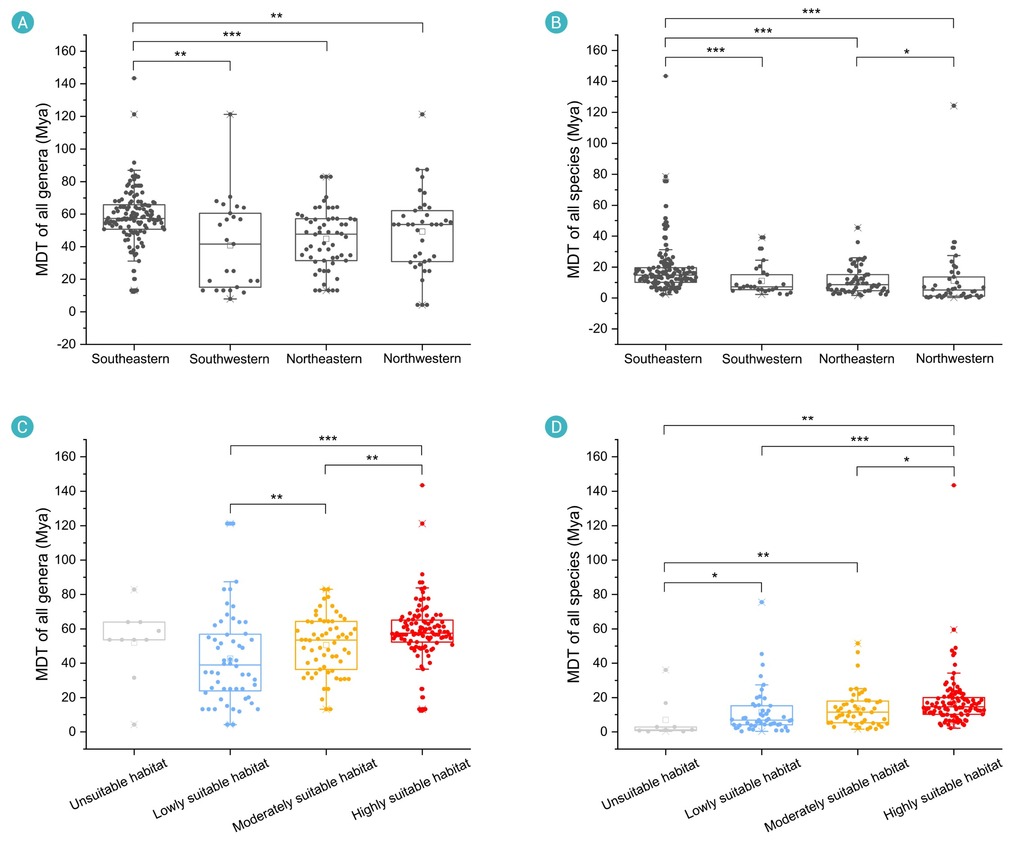
The Kruskal–Wallis non-parametric statistical tests of mean divergence times (MDTs) for four groups separately divided by geographical demarcation lines (A, B) and suitable habitats (C, D).
-
Figure 5.
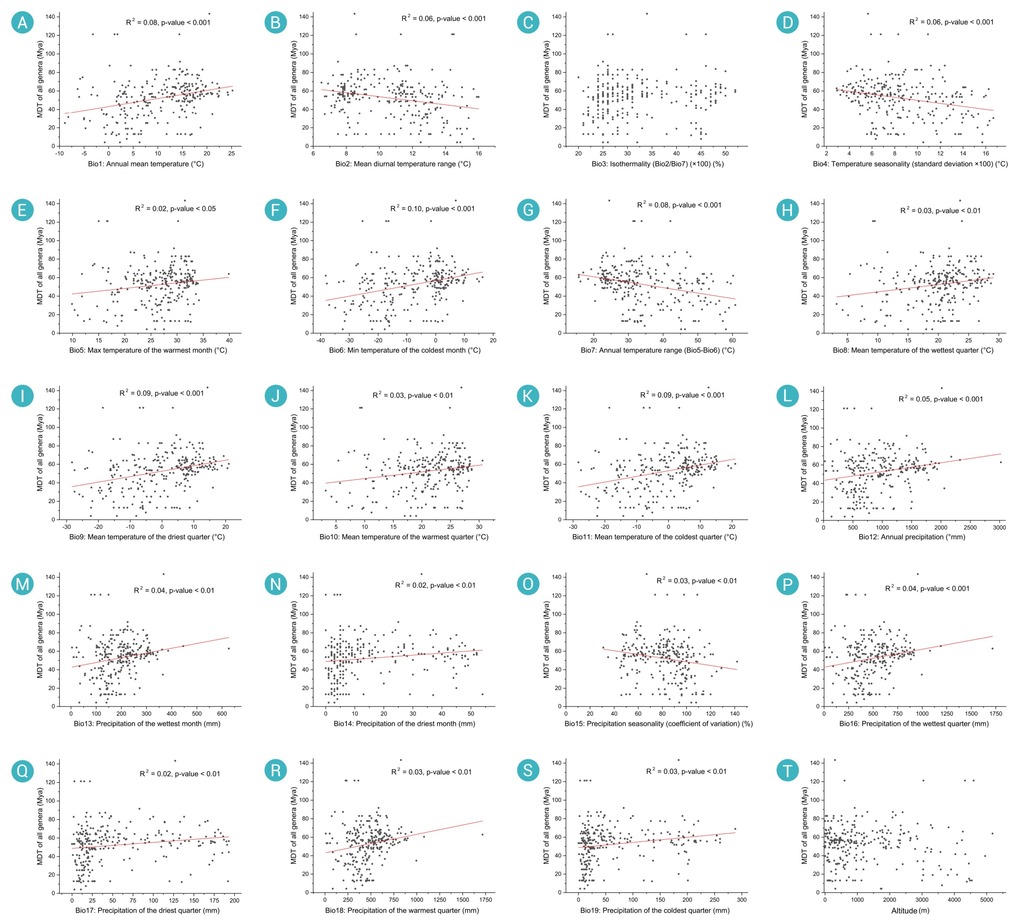
Correlation between 20 abiotic variables and mean divergence times (MDTs) at the genus level.
-
Figure 6.
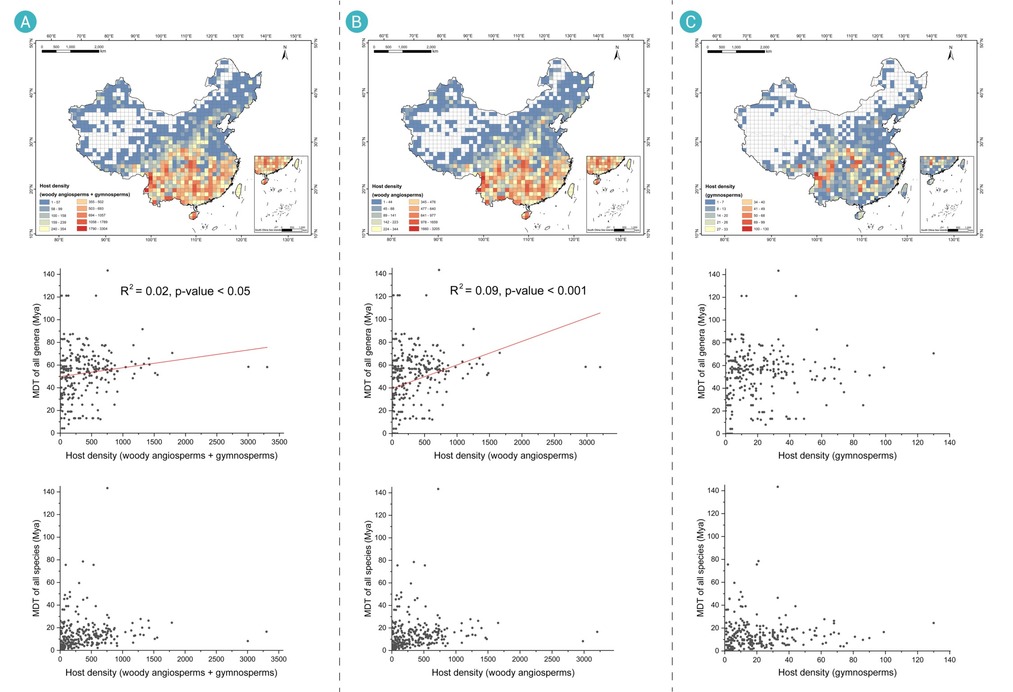
Patterns of host plant density (upper) in China and correlation between host plant density and mean divergence times (MDTs) of all genera (middle) and all species (bottom)
