
Legal protection biases and gaps for China’s threatened vascular plants
-
GRAPHICAL ABSTRACT
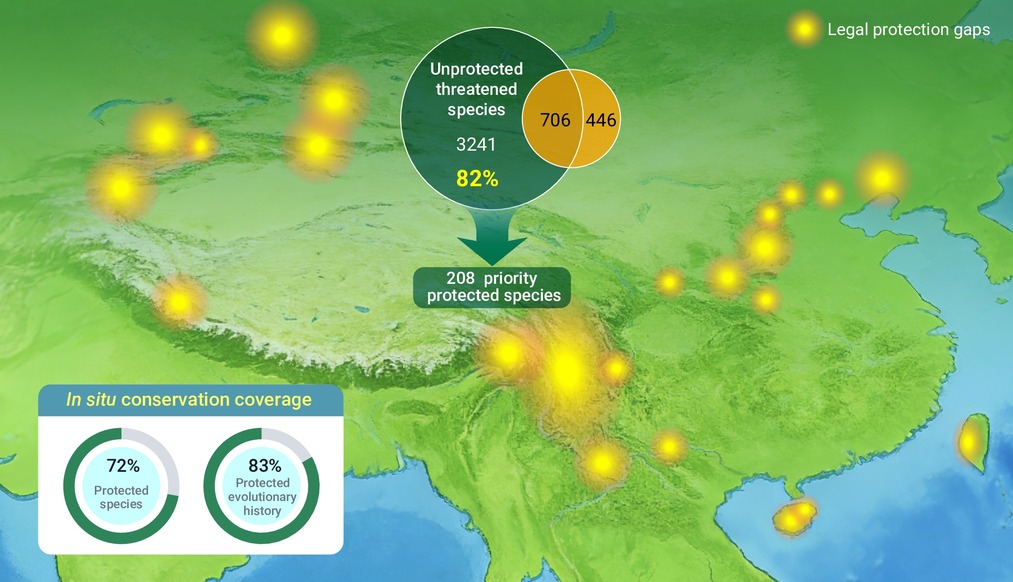
 DownLoad:
Full size image
DownLoad:
Full size image
-
PUBLIC SUMMARY
-
Over 80% of China's threatened vascular plants remain legally unprotected.
A total of 208 species were identified as high-priority candidates for legal protection.
Legal protection gaps spatially overlap with diversity hotspots of unprotected threatened species.
National nature reserves safeguard the majority of species and evolutionary history in gap regions.
-
-
ABSTRACT
With over 10% of its flora threatened, China faces a growing plant extinction crisis. While the List of National Key Protected Wild Plants (Legal Protection List) currently provides legal protection to over 1,100 plant species, its overall coverage and effectiveness remain uncertain. Here, we integrated the vascular plants in China’s Threatened Species List and the Legal Protection List to assess the legal protection of 4,393 key species. Using > 110,000 distribution records and a comprehensive phylogeny, we evaluated the taxonomic and phylogenetic distribution of legally protected versus unprotected species and projected their responses to future climate change. We also assessed spatial variation in the effectiveness of legal protection using a newly developed Legal Protection Index (LPI). Our results indicate that legal protection extends to only 18% of threatened species. Unprotected species are phylogenetically clustered and disproportionately vulnerable to future climate, highlighting 208 species as high-priority candidates for legal protection. Regions with the highest taxonomic and phylogenetic diversity—Southwestern China, Hainan, and Taiwan—exhibit the lowest effectiveness of legal protection, representing critical protection gaps. However, a positive finding is that 72% of species and 83% of evolutionary history in these regions are already safeguarded through in situ conservation, although nationwide, 1,195 threatened species remain neither legally protected nor conserved in nature reserves. These findings highlight spatial and evolutionary gaps in China’s legal protection system and offer a roadmap for prioritizing climate-resilient and evolutionarily informed conservation strategies. -

-
REFERENCES
[1] Ceballos G., Ehrlich P. R. and Dirzo R. (2017). Biological annihilation via the ongoing sixth mass extinction signaled by vertebrate population losses and declines. Proc. Natl. Acad. Sci. USA 114:E6089−E6096. DOI:10.1073/pnas.1704949114 [2] Cowie R. H., Bouchet P. and Fontaine B. (2022). The Sixth Mass Extinction: Fact, fiction or speculation. Biol. Rev. 97:640−663. DOI:10.1111/brv.12816 [3] Guenard B., Hughes A. C., Laine C., et al. (2025). Limited and biased global conservation funding means most threatened species remain unsupported. Proc. Natl. Acad. Sci. USA 122:e2412479122. DOI:10.1073/pnas.2412479122 [4] Pimm S. L., Jenkins C. N., Abell R., et al. (2014). The biodiversity of species and their rates of extinction, distribution, and protection. Science 344:1246752. DOI:10.1126/science.1246752 [5] Bachman S. P., Field R., Reader T., et al. (2019). Progress, challenges and opportunities for Red Listing. Biol. Conserv. 234:45−55. DOI:10.1016/j.biocon.2019.03.002 [6] Rodrigues A. S., Pilgrim J. D., Lamoreux J. F., et al. (2006). The value of the IUCN Red List for conservation. Trends Ecol. Evol. 21:71−76. DOI:10.1016/j.tree.2005.10.010 [7] Betts J., Young R. P., Hilton-Taylor C., et al. (2020). A framework for evaluating the impact of the IUCN Red List of threatened species. Conserv. Biol. 34:632−643. DOI:10.1111/cobi.13454 [8] The Editorial Committee of Flora of China (2013). Introduction. Wu Z. Y., Raven P. H., Hong D. Y., et al. (eds). Flora of China (Science Press & Missouri Botanical Garden Press), pp:21-22. https://www.iplant.cn/foc/vol/1 [9] Qin H., Yang Y., Dong S., et al. (2017). Threatened species list of China’s higher plants. Biodivers. Sci. 25:696. DOI:10.17520/biods.2017144 [10] National Forestry Administration and Ministry of Agriculture (1999). List of National Key Protected Wild Plants (The First Batch). https://www.gov.cn/gongbao/content/2000/content_60072.htm [11] National Forestry and Grassland Administration and Ministry of Agriculture and Rural Affairs (2021). List of National Key Protected Wild Plants. https://www.gov.cn/zhengce/zhengceku/2021-09/09/content_5636409.htm [12] Lu Z., Qin H., Jin X., et al. (2021). On the necessity, principle, and process of updating the list of national key protected wild plants. Biodivers. Sci. 29:1577. DOI:10.17520/biods.2021394 [13] Pan X., Shan Z., Tian X., et al. (2025). Evaluating conservation gaps of China's national key protected wild plants: Insights from county-level distribution data. BMC Biol. 23:156. DOI:10.1186/s12915-025-02270-3 [14] Maxwell S. L., Cazalis V., Dudley N., et al. (2020). Area-based conservation in the twenty-first century. Nature 586:217−227. DOI:10.1038/s41586-020-2773-z [15] Watson J. E., Dudley N., Segan D. B., et al. (2014). The performance and potential of protected areas. Nature 515:67−73. DOI:10.1038/nature13947 [16] Zhang Z. J., He J. S., Li J. S., et al. (2015). Distribution and conservation of threatened plants in China. Biol. Conserv. 192:454−460. DOI:10.1016/j.biocon.2015.10.019 [17] Qin F., Zhang X. X., Huang Y. F., et al. (2023). Geographic distribution, conservation effectiveness, and gaps for national key protected wild plants in China. J. Syst. Evol. 61:967−978. DOI:10.1111/jse.12941 [18] Xue T. T., Yang X. D., Liu Q., et al. (2022). Integration of hotspot identification, gap analysis, and niche modeling supports the conservation of Chinese threatened higher plants. J. Syst. Evol. 61:682−697. DOI:10.1111/jse.12901 [19] Ye C., Liu H., Qin H., et al. (2023). Geographical distribution and conservation strategy of national key protected wild plants of China. iScience 26:107364. DOI:10.1016/j.isci.2023.107364 [20] Faith D. P. (1992). Conservation evaluation and phylogenetic diversity. Biol. Conserv. 61:1−10. DOI:10.1016/0006-3207(92)91201-3 [21] Matthews T. J., Triantis K. A., Wayman J. P., et al. (2024). The global loss of avian functional and phylogenetic diversity from anthropogenic extinctions. Science 386:55−60. DOI:10.1126/science.adk7898 [22] Thuiller W., Lavergne S., Roquet C., et al. (2011). Consequences of climate change on the tree of life in Europe. Nature 470:531−534. DOI:10.1038/nature09705 [23] Hu Y., Zhou W., Hu Y., et al. (2025). Conservation evolutionary biology: A unified framework connecting the past, present, and future of biodiversity conservation. Mol. Biol. Evol. 42:msaf122. DOI:10.1093/molbev/msaf122 [24] Lu L., Zhao L., Hu H., et al. (2023). A comprehensive evaluation of flowering plant diversity and conservation priority for national park planning in China. Fundam. Res. 3:939−950. DOI:10.1016/j.fmre.2022.08.008 [25] Peng S., Shrestha N., Luo Y., et al. (2023). Incorporating global change reveals extinction risk beyond the current Red List. Curr. Biol. 33:3669-3678 e3664. DOI:10.1016/j.cub.2023.07.047. [26] Cardillo M., Skeels A. and Dinnage R. (2023). Priorities for conserving the world's terrestrial mammals based on over-the-horizon extinction risk. Curr. Biol. 33:1381-1388 e1386. DOI:10.1016/j.cub.2023.02.063. [27] Urban M. C. (2015). Accelerating extinction risk from climate change. Science 348:571−573. DOI:10.1126/science.aaa4984 [28] Archer E., Arneth A., Leadley P., et al. (2025). Achieving the global biodiversity framework under climate change. Glob. Chang. Biol. 31:e70249. DOI:10.1111/gcb.70249 [29] Chen Y., Wu Y., Dong Y., et al. (2022). Extinction risk of Chinese angiosperms varies between woody and herbaceous species. Divers. Distrib. 29:232−243. DOI:10.1111/ddi.13655 [30] Humphreys A. M., Govaerts R., Ficinski S. Z., et al. (2019). Global dataset shows geography and life form predict modern plant extinction and rediscovery. Nat. Ecol. Evol. 3:1043−1047. DOI:10.1038/s41559-019-0906-2 [31] Huang J., Ma K. and Chen B. (2014). Diversity and geographic distribution of endemic species of seed plants in China (Science Press). https://www.researchgate.net/publication/313795433_zhongguoteyouzhongzizhiwudeduoyangxingjiqidelifenbu [32] Zhou X., Zhang X., Sun J., et al. (2016). Diversity and distribution of lycophytes and ferns in China. Biodivers. Sci. 24:102−107. DOI:10.17520/biods.2015256 [33] R Core Team (2024). R: A language and environment for statistical computing (R Foundation for Statistical Computing). https://www.r-project.org [34] Paradis E. (2012). Analysis of Phylogenetics and Evolution with R (Springer New York Publisher). DOI:10.1007/978-1-4614-1743-9 [35] Letunic I. and Bork P. (2024). Interactive Tree of Life (iTOL) v6: Recent updates to the phylogenetic tree display and annotation tool. Nucleic Acids Res. 52:W78−W82. DOI:10.1093/nar/gkae268 [36] Jin Y. and Qian H. (2019). V.PhyloMaker: An R package that can generate very large phylogenies for vascular plants. Ecography 42:1353−1359. DOI:10.1111/ecog.04434 [37] Fritz S. A. and Purvis A. (2010). Selectivity in mammalian extinction risk and threat types: A new measure of phylogenetic signal strength in binary traits. Conserv. Biol. 24:1042−1051. DOI:10.1111/j.1523-1739.2010.01455.x [38] Orme D., Freckleton R., Thomas G., et al. (2023). caper: Comparative analyses of phylogenetics and evolution in R. R package version 1.0.3. https://cran.r-project.org/web/packages/caper [39] Zhao L., Li J., Barrett R. L., et al. (2024). Spatial heterogeneity of extinction risk for flowering plants in China. Nat. Commun. 15:6352. DOI:10.1038/s41467-024-50704-3 [40] Lu L. M., Mao L. F., Yang T., et al. (2018). Evolutionary history of the angiosperm flora of China. Nature 554:234−238. DOI:10.1038/nature25485 [41] Guo Q. F., Qian H. and Zhang J. (2022). On the relationship between species diversity and range size. J. Biogeogr. 49:1911−1919. DOI:10.1111/jbi.14477 [42] Staude I. R., Navarro L. M., Pereira H. M., et al. (2019). Range size predicts the risk of local extinction from habitat loss. Global Ecol. Biogeogr. 29:16−25. DOI:10.1111/geb.13003 [43] Wang Y. Y., Lyu T., Luo A., et al. (2023). Geographic patterns in range sizes and their drivers of endemic angiosperms in China. Ecosphere 14:e4646. DOI:10.1002/ecs2.4646 [44] Fick S. E. and Hijmans R. J. (2017). WorldClim 2: New 1-km spatial resolution climate surfaces for global land areas. Int. J. Climatol. 37:4302−4315. DOI:10.1002/joc.5086 [45] Meyer C., Weigelt P. and Kreft H. (2016). Multidimensional biases, gaps and uncertainties in global plant occurrence information. Ecol. Lett. 19:992−1006. DOI:10.1111/ele.12624 [46] Goodwin Z. A., Harris D. J., Filer D., et al. (2015). Widespread mistaken identity in tropical plant collections. Curr. Biol. 25:R1066−R1067. DOI:10.1016/j.cub.2015.10.002 [47] Yang W., Ma K. and Kreft H. (2013). Geographical sampling bias in a large distributional database and its effects on species richness–environment models. J. Biogeogr. 40:1415−1426. DOI:10.1111/jbi.12108 [48] Lu L. M., Hu H. H., Peng D. X., et al. (2020). Noise does not equal bias in assessing the evolutionary history of the angiosperm flora of China: A response to Qian (2019). J. Biogeogr. 47:2286−2291. DOI:10.1111/jbi.13947 [49] Yang Y. C., Zhang Q. and Chen Z. D. (2023). Mikrubi: A model for species distributions using region-based records. Ecography 2023:e06283. DOI:10.1111/ecog.06283 [50] Hijmans R. J., Barbosa M., Bivand R., et al. (2025). terra: Spatial data analysis. R package version 1.7-78. https://cran.r-project.org/web/packages/terra [51] Wickham H., François R., Henry L., et al. (2023). dplyr: A grammar of data manipulation. R package version 1.1.4. https://cran.r-project.org/web/packages/dplyr [52] Oksanen J., Simpson G. L., Blanchet F. G., et al. (2025). vegan: Community ecology package. R package version 2.6-6.1. https://cran.r-project.org/web/packages/vegan [53] Daru B. H., Karunarathne P. and Schliep K. (2020). phyloregion: R package for biogeographical regionalization and macroecology. Methods Ecol. Evol. 11:1483−1491. DOI:10.1111/2041-210x.13478 [54] Daru B. H., Karunarathne P., Schliep K., et al. (2023). Phyloregion: Biogeographic regionalization and macroecology. R package version 1.0.8. https://cran.r-project.org/web/packages/phyloregion [55] Proches S., Wilson J. R. and Cowling R. M. (2006). How much evolutionary history in a 10 x 10 m plot. Proc. Biol. Sci. 273:1143−1148. DOI:10.1098/rspb.2005.3427 [56] Vallejos R., Osorio F. and Bevilacqua M. (2020). Spatial relationships between two georeferenced variables: With applications in R (Springer International Publishing). DOI: 10.1007/978-3-030-56681-4. [57] Tims A. R. and Alroy J. (2022). Phylogeny-based conservation priorities for Australian freshwater fishes. Conserv. Biol. 36:e13811. DOI:10.1111/cobi.13811 [58] Zhao L. N., Liu Y., Ye J. F., et al. (2025). Flowering plants at Sino-Himalaya and the Tibetan Plateau face increased extinction risk. J. Syst. Evol. 63:148−159. DOI:10.1111/jse.13160 [59] Webb C. O., Ackerly D. D., McPeek M. A., et al. (2002). Phylogenies and community ecology. Annu. Rev. Ecol. Syst. 33:475−505. DOI:10.1146/annurev.ecolsys.33.010802.150448 [60] Wiens J. J. and Donoghue M. J. (2004). Historical biogeography, ecology and species richness. Trends Ecol. Evol. 19:639−644. DOI:10.1016/j.tree.2004.09.011 [61] Zheng Y., Liu J., Feng X., et al. (2017). The distribution, diversity, and conservation status of Cycas in China. Ecol. Evol. 7:3212−3224. DOI:10.1002/ece3.2910 [62] Clark J. A. and May R. M. (2002). Taxonomic bias in conservation research. Science 297:191−192. DOI:10.1126/science.297.5579.191b [63] Wu X., Chen J. and Cui G. (2023). Proposals for updating the list of national key protected wild plants—based on an analysis of existing conservation lists. Biodivers. Sci. 31:22622. DOI:10.17520/biods.2022622 [64] Liu Y. P., Shen Z. H., Wang Q. G., et al. (2017). Determinants of richness patterns differ between rare and common species: Implications for Gesneriaceae conservation in China. Divers. Distrib. 23:235−246. DOI:10.1111/ddi.12523 [65] Wang W., Pan K., Li Z., et al. (1998). Gesneriaceae. Wu Z. Y., Raven P. H., Hong D. Y., et al. (eds). Flora of China (Science Press & Missouri Botanical Garden Press), pp:244-401. https://www.iplant.cn/foc/vol/18 [66] Wang W., Fu D., Li L., et al. (2001). Ranunculaceae. Wu Z. Y., Raven P. H., Hong D. Y., et al. (eds). Flora of China (Science Press & Missouri Botanical Garden Press), pp:133-438. https://www.iplant.cn/foc/vol/6 [67] Bayle A., Carlson B. Z., Nicoud B., et al. (2024). Uncovering the distribution and limiting factors of Ericaceae-dominated shrublands in the French Alps. Front. Biogeogr. 16:1−17. DOI:10.21425/f5fbg61746 [68] Lin L., Jiang X. L., Guo K. Q., et al. (2023). Climate change impacts the distribution of Quercus section Cyclobalanopsis (Fagaceae), a keystone lineage in East Asian evergreen broadleaved forests. Plant Divers. 45:552−568. DOI:10.1016/j.pld.2023.03.014 [69] Brown J. H. (1984). On the relationship between abundance and distribution of species. Am. Nat. 124:255−279. DOI:10.1086/284267 [70] Gaston K. J., Blackburn T. M., Greenwood J. J. D., et al. (2000). Abundance–occupancy relationships. J. Appl. Ecol. 37:39−59. DOI:10.1046/j.1365-2664.2000.00485.x [71] Thomas C. D., Cameron A., Green R. E., et al. (2004). Extinction risk from climate change. Nature 427:145−148. DOI:10.1038/nature02121 [72] Thuiller W., Lavorel S., Araujo M. B., et al. (2005). Climate change threats to plant diversity in Europe. Proc. Natl. Acad. Sci. USA 102:8245−8250. DOI:10.1073/pnas.0409902102 [73] Schloss C. A., Nunez T. A. and Lawler J. J. (2012). Dispersal will limit ability of mammals to track climate change in the Western Hemisphere. Proc. Natl. Acad. Sci. USA 109:8606−8611. DOI:10.1073/pnas.1116791109 [74] Link-Pérez M. A. and Laffan S. W. (2018). Fern and lycophyte diversity in the Pacific Northwest: Patterns and predictors. J. Syst. Evol. 56:498−522. DOI:10.1111/jse.12430 [75] Testo W. L. and Watkins J. E., Jr. (2013). Understanding mechanisms of rarity in pteridophytes: Competition and climate change threaten the rare fern Asplenium scolopendrium var. americanum (Aspleniaceae). Am. J. Bot. 100:2261−2270. DOI:10.3732/ajb.1300150 [76] Steven J. P., Robert P. A. and Robert E. S. (2006). Maximum entropy modeling of species geographic distributions. Ecol. Model. 190:231−259. DOI:10.1016/j.ecolmodel.2005.03.026 [77] Yang L., Jia H. and Hua Q. (2025). Predicting suitable habitats of parasitic desert species based on Biomod2 ensemble model: Cynomorium songaricum rupr and its host plants as an example. BMC Plant Biol. 25:351. DOI:10.1186/s12870-025-06370-8 [78] Eiserhardt W. L., Borchsenius F., Plum C. M., et al. (2015). Climate-driven extinctions shape the phylogenetic structure of temperate tree floras. Ecol. Lett. 18:263−272. DOI:10.1111/ele.12409 [79] Zhang L., Luo Z. H., Mallon D., et al. (2017). Biodiversity conservation status in China's growing protected areas. Biol. Conserv. 210:89−100. DOI:10.1016/j.biocon.2016.05.005 [80] Wu R. D., Zhang S., Yu D. W., et al. (2011). Effectiveness of China's nature reserves in representing ecological diversity. Front. Ecol. Environ. 9:383−389. DOI:10.1890/100093 -
ABOUT THIS ARTICLE
Cite this article:
Feng Y., Lai Y., Li J., et al. (2026). Legal protection biases and gaps for China’s threatened vascular plants. The Innovation Life 4:100205. https://doi.org/10.59717/j.xinn-life.2026.100205
Welcome!
To request copyright permission to republish or share portions of our works, please visit Copyright Clearance Center's (CCC) Marketplace website at marketplace.copyright.com.
Export File
Citation
Feng Y., Lai Y., Li J., et al. (2026). Legal protection biases and gaps for China’s threatened vascular plants. The Innovation Life 4:100205. https://doi.org/10.59717/j.xinn-life.2026.100205

Format
Content
-
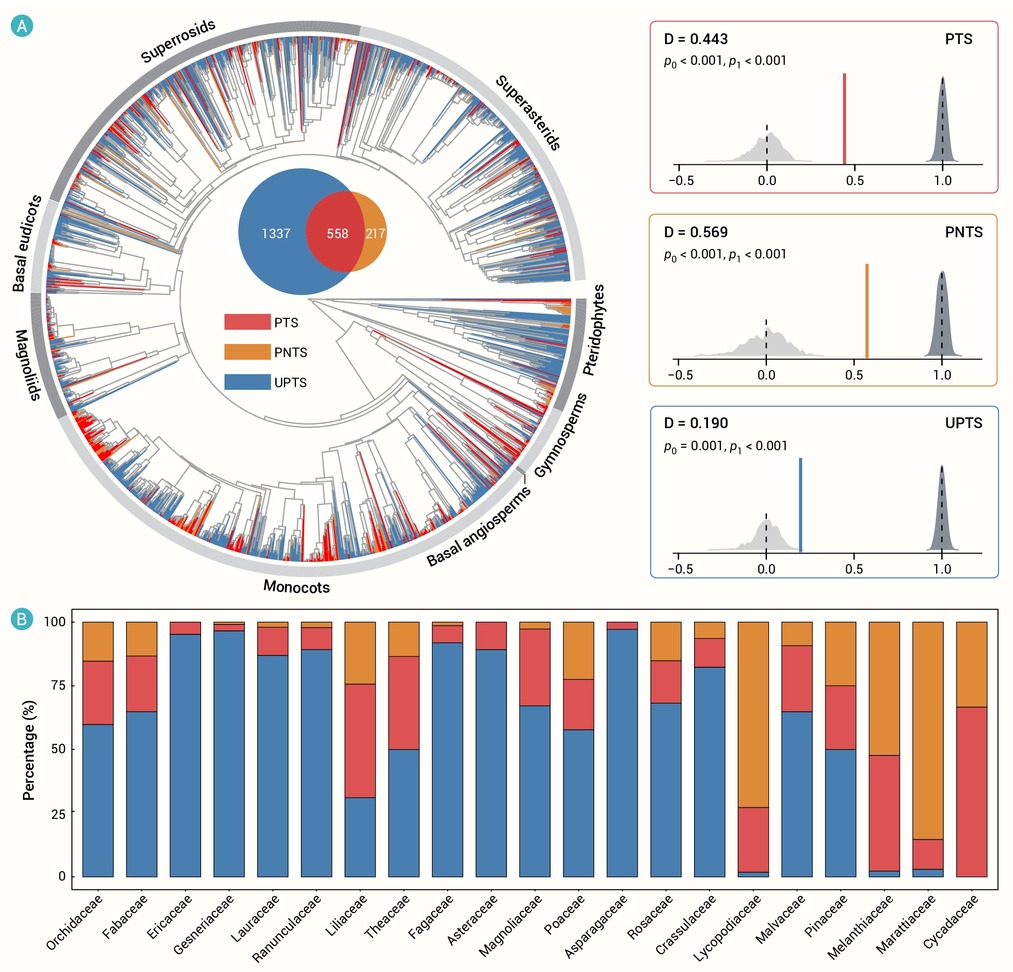
Figure 1.
Phylogenetic signals and legal protection of China’s Key Vascular Plants
-
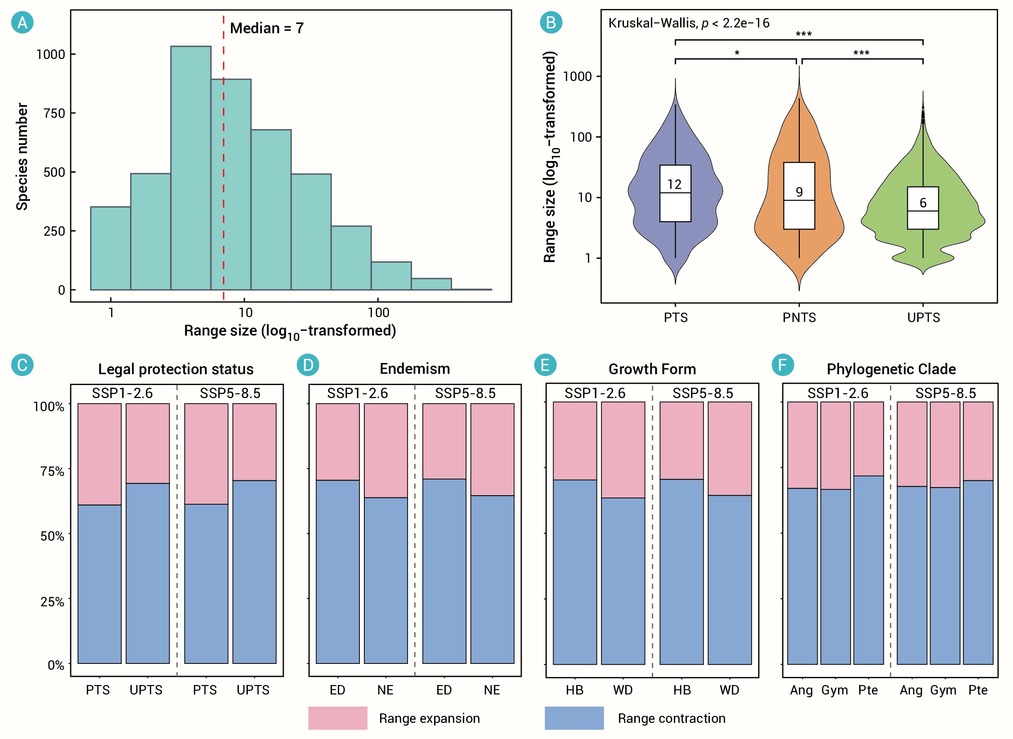
Figure 2.
Current status and future changes of species range sizes
-
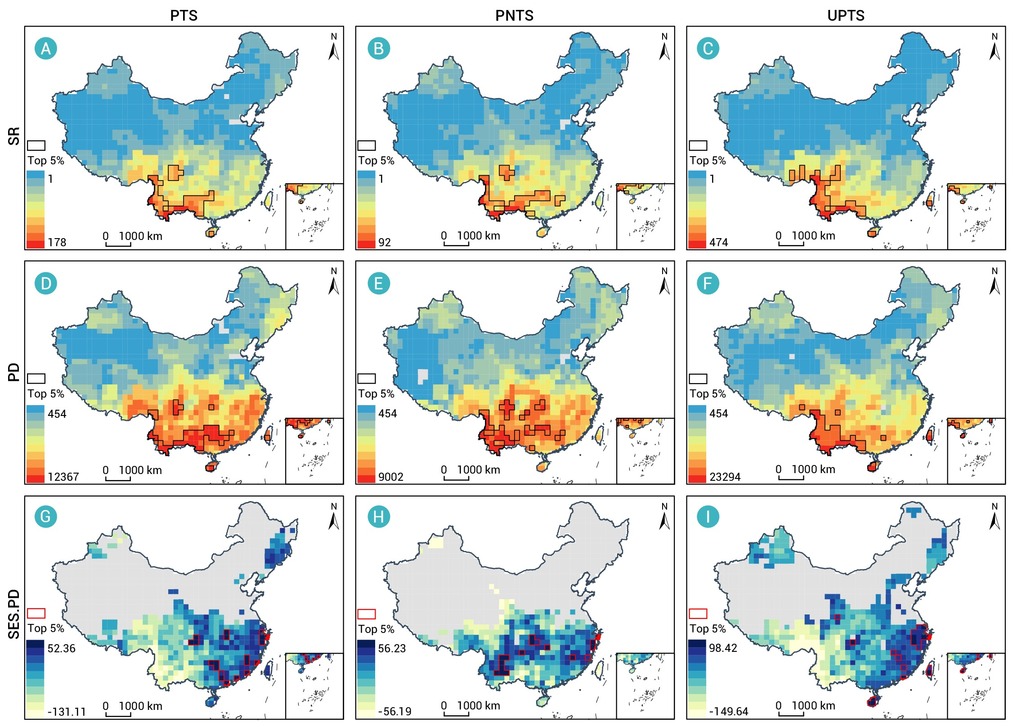
Figure 3.
Spatial patterns of diversity for China’s Key Vascular Plants
-
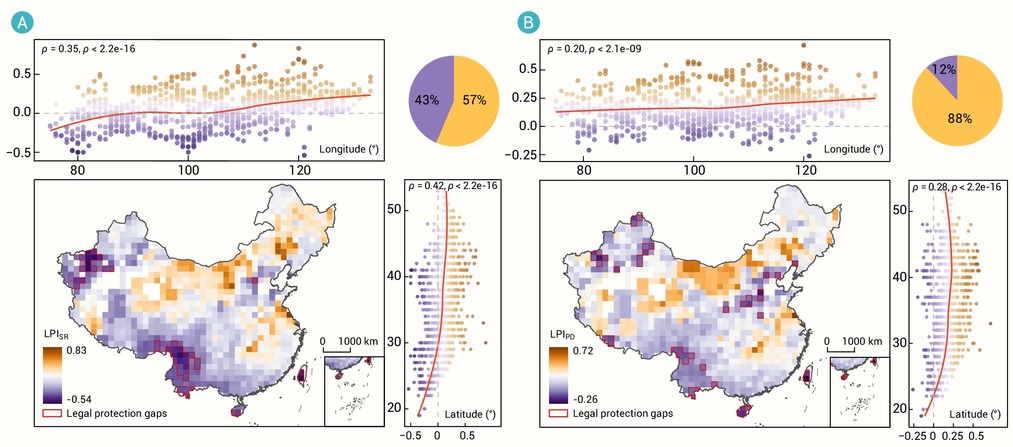
Figure 4.
Spatial patterns of legal protection effectiveness
-
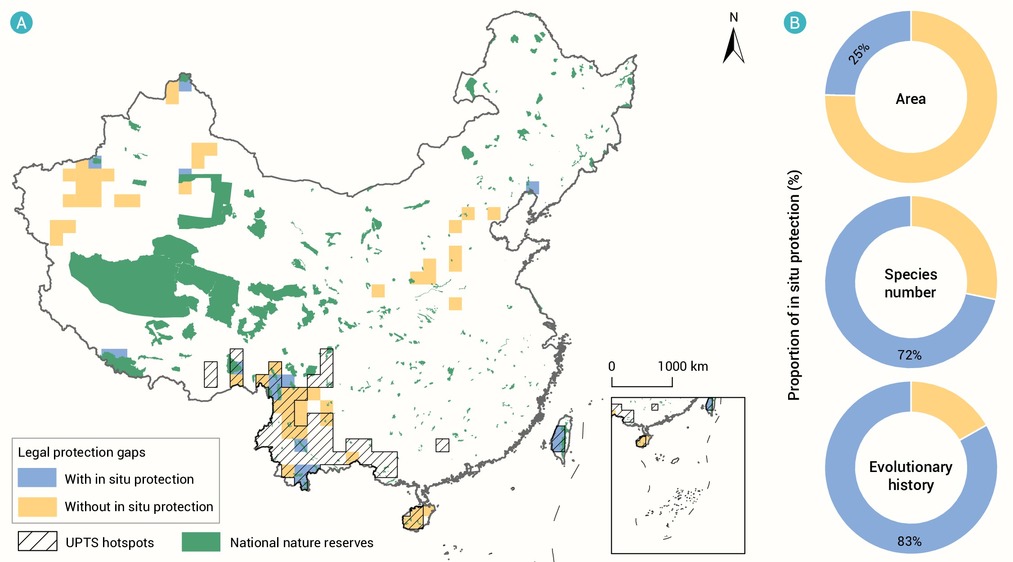
Figure 5.
Geographic patterns of legal protection gaps compared to in situ conservation by nature reserves
-
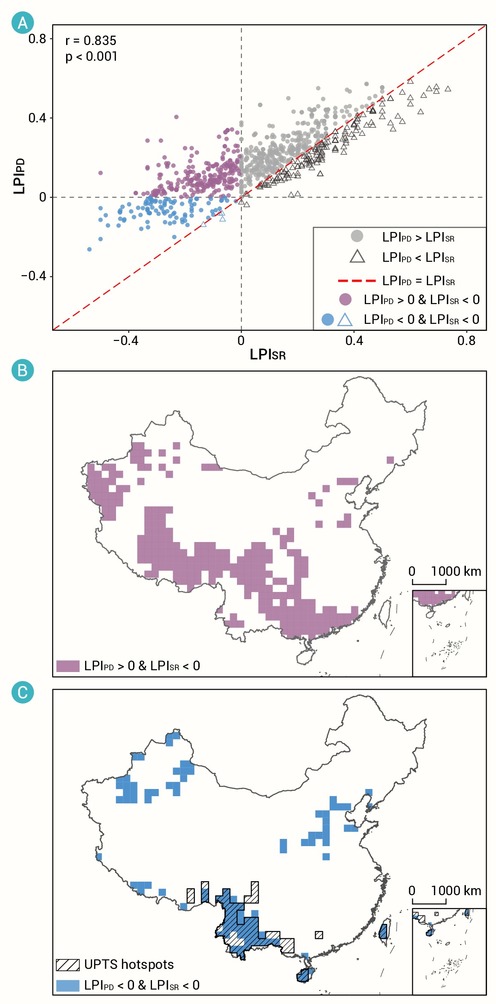
Figure 6.
Comparison between richness-based and phylogeny-based legal protection effectiveness
-
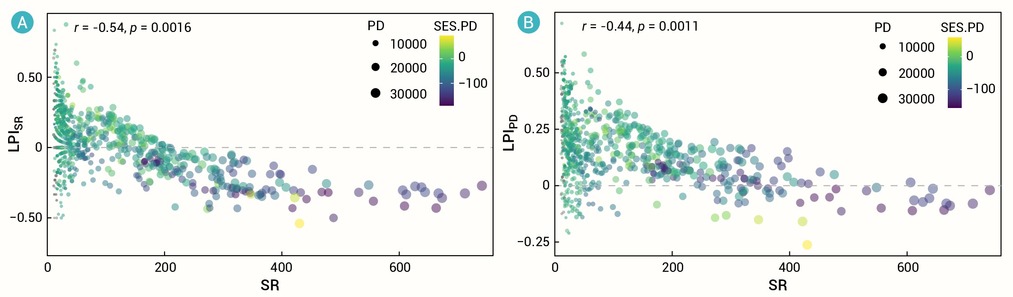
Figure 7.
Relationships between Legal Protection Index and biodiversity metrics across grid cells in China
