
Radiating pattern revealed by a deep learning model traces the evolutionary dynamics of the Archaea domain
-
GRAPHICAL ABSTRACT
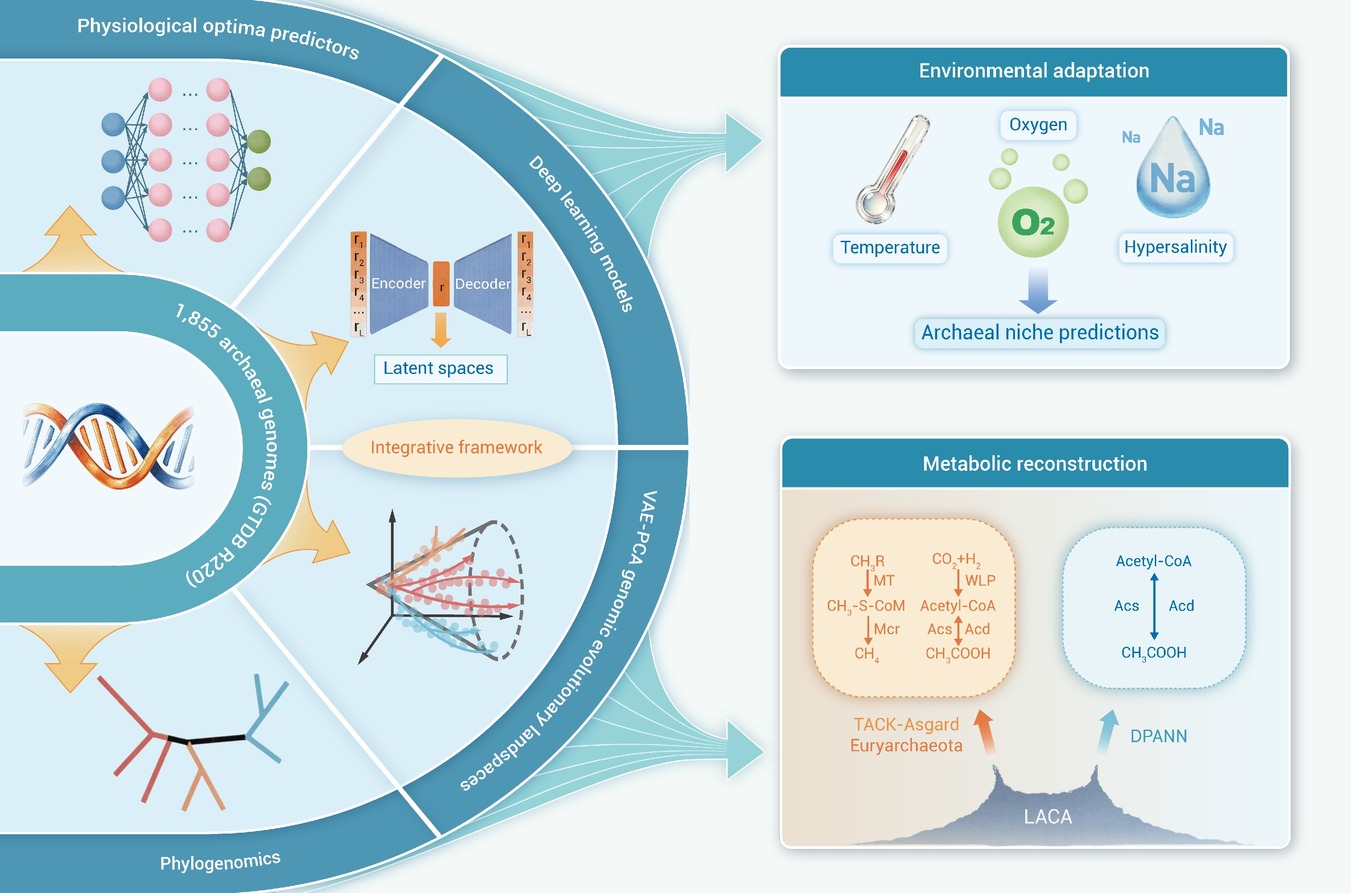
 DownLoad:
Full size image
DownLoad:
Full size image
-
PUBLIC SUMMARY
-
Early diversification of archaea remains unsettled due to uncertainty from conventional phylogenomics.
By integrating deep learning and traditional phylogenomics, we revealed archaeal evolutionary patterns.
Early diversification of DPANN potentially linked to acetate metabolism in lower temperature environments.
The other archaea might share an ancestor with methyl-reducing methanogenesis and carbon fixation.
From domain-wide radiating patterns to genus-level adaptation, our framework offers comprehensive insights.
-
-
ABSTRACT
Archaea, one of the primary domains of life, have coevolved with Earth for billions of years and play critical roles in biogeochemical cycles across diverse ecosystems. However, resolving deep archaeal phylogeny is confounded by among-site heterogeneity and compositional biases, which together exacerbate long-branch attraction in lineages like DPANN. Here, using variational autoencoders and other deep learning models along with phylogenomics, we re-evaluated archaeal evolution and identified a radiating evolutionary landscape of three major archaeal superphyla, DPANN, TACK-Asgard and Euryarchaeota. Our integrated results also support the scenario in which DPANN evolved as an early monophyletic lineage, potentially relying on acetate-related metabolism under lower temperature conditions, whereas TACK-Asgard and Euryarchaeota possibly share a hydrogen-dependent methyl-reducing methanogen ancestor with the complete Wood–Ljungdahl pathway in higher temperature habitats. Environmental factors, including temperature, oxygen, and salinity, have kept influencing subsequent archaeal evolution in distinct patterns, highlighting the interplay between environmental factors and evolutionary trajectories of this ancient domain. By demonstrating that deep learning can be systematically integrated with phylogenomics to generate testable hypotheses on ancient metabolisms and environmental adaptation, this work provides a new analytical insight for archaeal evolutionary studies. -

-
REFERENCES
[1] Woese C. R. and Fox G. E. (1977). Phylogenetic structure of the prokaryotic domain: The primary kingdoms. Proc. Natl. Acad. Sci. USA 74:5088−5090. DOI:10.1073/pnas.74.11.5088 [2] Woese C. R., Magrum L. J. and Fox G. E. (1978). Archaebacteria. J. Mol. Evol. 11:245−251. DOI:10.1007/BF01734485 [3] Woese C. R., Kandler O. and Wheelis M. L. (1990). Towards a natural system of organisms: Proposal for the domains Archaea, Bacteria, and Eucarya. Proc. Natl. Acad. Sci. USA 87:4576−4579. DOI:10.1073/pnas.87.12.4576 [4] Martin W. F. and Sousa F. L. (2015). Early microbial evolution: The age of anaerobes. Cold Spring Harb. Perspect. Biol. 8:a018127. DOI:10.1101/cshperspect.a018127 [5] Ueno Y., Yamada K., Yoshida N., et al. (2006). Evidence from fluid inclusions for microbial methanogenesis in the early Archaean era. Nature 440:516−519. DOI:10.1038/nature04584 [6] Schopf J. W., Kitajima K., Spicuzza M. J., et al. (2018). SIMS analyses of the oldest known assemblage of microfossils document their taxon-correlated carbon isotope compositions. Proc. Natl. Acad. Sci. USA 115:53−58. DOI:10.1073/pnas.1718063115 [7] Baker B. J., De Anda V., Seitz K. W., et al. (2020). Diversity, ecology and evolution of archaea. Nat. Microbiol. 5:887−900. DOI:10.1038/s41564-020-0715-z [8] Tahon G., Geesink P. and Ettema T. J. G. (2021). Expanding archaeal diversity and phylogeny: Past, present, and future. Annu. Rev. Microbiol. 75:359−381. DOI:10.1146/annurev-micro-040921-050212 [9] Berghuis B. A., Yu F. B., Schulz F., et al. (2019). Hydrogenotrophic methanogenesis in archaeal phylum Verstraetearchaeota reveals the shared ancestry of all methanogens. Proc. Natl. Acad. Sci. USA 116:5037−5044. DOI:10.1073/pnas.1815631116 [10] Borrel G., Adam P. S., McKay L. J., et al. (2019). Wide diversity of methane and short-chain alkane metabolisms in uncultured archaea. Nat. Microbiol. 4:603−613. DOI:10.1038/s41564-019-0363-3 [11] Spang A., Caceres E. F. and Ettema T. J. G. (2017). Genomic exploration of the diversity, ecology, and evolution of the archaeal domain of life. Science 357:eaaf3883. DOI:10.1126/science.aaf3883 [12] Rinke C., Chuvochina M., Mussig A. J., et al. (2021). A standardized archaeal taxonomy for the Genome Taxonomy Database. Nat. Microbiol. 6:946−959. DOI:10.1038/s41564-021-00918-8 [13] Moi D., Bernard C., Steinegger M., et al. (2025). Structural phylogenetics unravels the evolutionary diversification of communication systems in gram-positive bacteria and their viruses. Nat. Struct. & Mol. Biol. 32:2492−2502. DOI:10.1038/s41594-025-01649-8 [14] Greener J. G., Moffat L. and Jones D. T. (2018). Design of metalloproteins and novel protein folds using variational autoencoders. Sci. Rep. 8:16189. DOI:10.1038/s41598-018-34533-1 [15] Hie B. L., Yang K. K. and Kim P. S. (2022). Evolutionary velocity with protein language models predicts evolutionary dynamics of diverse proteins. Cell Syst. 13:274−285,e276. DOI:10.1016/j.cels.2022.01.003 [16] Lu A. X., Yan W., Yang K. K., et al. (2024). Tokenized and continuous embedding compressions of protein sequence and structure. bioRxiv:2024.2008.2006.606920. DOI:10.1101/2024.08.06.606920. [17] Detlefsen N. S., Hauberg S. and Boomsma W. (2022). Learning meaningful representations of protein sequences. Nat. Commun. 13:1914. DOI:10.1038/s41467-022-29443-w [18] Ding X., Zou Z. and Brooks C. L. III (2019). Deciphering protein evolution and fitness landscapes with latent space models. Nat. Commun. 10:5644. DOI:10.1038/s41467-019-13633-0 [19] Ziegler C., Martin J., Sinner C., et al. (2023). Latent generative landscapes as maps of functional diversity in protein sequence space. Nat. Commun. 14:2222. DOI:10.1038/s41467-023-37958-z [20] Guy L. and Ettema T. J. (2011). The archaeal 'TACK' superphylum and the origin of eukaryotes. Trends Microbiol. 19:580−587. DOI:10.1016/j.tim.2011.09.002 [21] Rinke C., Schwientek P., Sczyrba A., et al. (2013). Insights into the phylogeny and coding potential of microbial dark matter. Nature 499:431−437. DOI:10.1038/nature12352 [22] Williams T. A., Szollosi G. J., Spang A., et al. (2017). Integrative modeling of gene and genome evolution roots the archaeal tree of life. Proc. Natl. Acad. Sci. USA 114:E4602−E4611. DOI:10.1073/pnas.1618463114 [23] Baker B. A., McCarthy C. G. P., Lopez-Garcia P., et al. (2025). Phylogenomic analyses indicate the archaeal superphylum DPANN originated from free-living euryarchaeal-like ancestors. Nat. Microbiol. 10:1593−1604. DOI:10.1038/s41564-025-02024-5 [24] Mei R., Kaneko M., Imachi H., et al. (2023). The origin and evolution of methanogenesis and archaea are intertwined. PNAS Nexus 2:pgad023. DOI:10.1093/pnasnexus/pgad023 [25] Garcia P. S., Gribaldo S. and Borrel G. (2022). Diversity and evolution of methane-related pathways in archaea. Annu. Rev. Microbiol. 76:727−755. DOI:10.1146/annurev-micro-041020-024935 [26] Adam P. S., Borrel G. and Gribaldo S. (2019). An archaeal origin of the Wood-Ljungdahl H(4)MPT branch and the emergence of bacterial methylotrophy. Nat. Microbiol. 4:2155−2163. DOI:10.1038/s41564-019-0534-2 [27] Berg I. A., Kockelkorn D., Ramos-Vera W. H., et al. (2010). Autotrophic carbon fixation in archaea. Nat. Rev. Microbiol. 8:447−460. DOI:10.1038/nrmicro2365 [28] Weiss M. C., Sousa F. L., Mrnjavac N., et al. (2016). The physiology and habitat of the last universal common ancestor. Nat. Microbiol. 1:16116. DOI:10.1038/nmicrobiol.2016.116 [29] Adam P. S., Kolyfetis G. E., Bornemann T. L. V., et al. (2022). Genomic remnants of ancestral methanogenesis and hydrogenotrophy in archaea drive anaerobic carbon cycling. Sci. Adv. 8:eabm9651. DOI:10.1126/sciadv.abm9651 [30] Wang Y., Wegener G., Williams T. A., et al. (2021). A methylotrophic origin of methanogenesis and early divergence of anaerobic multicarbon alkane metabolism. Sci. Adv. 7:eabj1453. DOI:10.1126/sciadv.abj1453 [31] Adam P. S., Borrel G. and Gribaldo S. (2018). Evolutionary history of carbon monoxide dehydrogenase/acetyl-CoA synthase, one of the oldest enzymatic complexes. Proc. Natl. Acad. Sci. USA 115:E1166−E1173. DOI:10.1073/pnas.1716667115 [32] Vulcano F., Hribovsek P., Denny E. O., et al. (2023). Potential for homoacetogenesis via the Wood-Ljungdahl pathway in Korarchaeia lineages from marine hydrothermal vents. Environ. Microbiol. Rep. 15:698−707. DOI:10.1111/1758-2229.13168 [33] He Y., Li M., Perumal V., et al. (2016). Genomic and enzymatic evidence for acetogenesis among multiple lineages of the archaeal phylum Bathyarchaeota widespread in marine sediments. Nat. Microbiol. 1:16035. DOI:10.1038/nmicrobiol.2016.35 [34] Schmidt M. and Schonheit P. (2013). Acetate formation in the photoheterotrophic bacterium Chloroflexus aurantiacus involves an archaeal type ADP-forming acetyl-CoA synthetase isoenzyme I. FEMS Microbiol. Lett. 349:171−179. DOI:10.1111/1574-6968.12312 [35] Jones C. P., Khan K. and Ingram-Smith C. (2017). Investigating the mechanism of ADP-forming acetyl-CoA synthetase from the protozoan parasite Entamoeba histolytica. FEBS Lett. 591:603−612. DOI:10.1002/1873-3468.12573 [36] Brasen C., Schmidt M., Grotzinger J., et al. (2008). Reaction mechanism and structural model of ADP-forming acetyl-CoA synthetase from the hyperthermophilic archaeon Pyrococcus furiosus: Evidence for a second active site histidine residue. J. Biol. Chem. 283:15409−15418. DOI:10.1074/jbc.M710218200 [37] Ouboter H. T., Arshad A., Berger S., et al. (2023). Acetate and acetyl-CoA metabolism of ANME-2 anaerobic archaeal methanotrophs. Appl. Environ. Microbiol. 89:e0036723. DOI:10.1128/aem.00367-23 [38] Kingma D. P. and Welling M. (2013). Auto-encoding variational Bayes. arXiv:1312.6114. DOI:10.48550/arXiv.1312.6114 [39] Kingma D. P. and Welling M. (2019). An introduction to variational autoencoders. Found. Trends Mach. Learn. 12:4−89. DOI:10.1561/2200000056 [40] Zhu M., Song Y., Yuan Q., et al. (2024). Accurately predicting optimal conditions for microorganism proteins through geometric graph learning and language model. Commun. Biol. 7:1709. DOI:10.1038/s42003-024-07436-3 [41] Tan P., Li M., Zhang L., et al. (2023). TemPL: A novel deep learning model for zero-shot prediction of protein stability and activity based on temperature-guided language modeling. arXiv:2304.03780. DOI:10.48550/arXiv.2304.03780 [42] Li G., Rabe K. S., Nielsen J., et al. (2019). Machine learning applied to predicting microorganism growth temperatures and enzyme catalytic optima. ACS Synth. Biol. 8:1411−1420. DOI:10.1021/acssynbio.9b00099 [43] Gado J. E., Beckham G. T. and Payne C. M. (2020). Improving enzyme optimum temperature prediction with resampling strategies and ensemble learning. J. Chem. Inf. Model. 60:4098−4107. DOI:10.1021/acs.jcim.0c00489 [44] Barnum T. P., Crits-Christoph A., Molla M., et al. (2024). Predicting microbial growth conditions from amino acid composition. bioRxiv:2024.2003.2022.586313. DOI:10.1101/2024.03.22.586313 [45] Gado J. E., Knotts M., Shaw A. Y., et al. (2025). Machine learning prediction of enzyme optimum pH. Nat. Mach. Intell. 7:716−729. DOI:10.1038/s42256-025-01026-6 [46] Hu S., Wang X., Wang Z., et al. (2024). HPClas: A data-driven approach for identifying halophilic proteins based on catBoost. mLife 3:515−526. DOI:10.1002/mlf2.12125 [47] Davin A. A., Woodcroft B. J., Soo R. M., et al. (2025). A geological timescale for bacterial evolution and oxygen adaptation. Science 388:eadp1853. DOI:10.1126/science.adp1853 [48] Flamholz A. I., Goldford J. E., Richter P. A., et al. (2024). Annotation-free prediction of microbial dioxygen utilization. mSystems 9:e0076324. DOI:10.1128/msystems.00763-24 [49] Groussin M., Boussau B., Charles S., et al. (2013). The molecular signal for the adaptation to cold temperature during early life on Earth. Biol. Lett. 9:20130608. DOI:10.1098/rsbl.2013.0608 [50] Groussin M., Boussau B. and Gouy M. (2013). A branch-heterogeneous model of protein evolution for efficient inference of ancestral sequences. Syst. Biol. 62:523−538. DOI:10.1093/sysbio/syt016 [51] Hyatt D., Chen G. L., Locascio P. F., et al. (2010). Prodigal: Prokaryotic gene recognition and translation initiation site identification. BMC Bioinform. 11:119. DOI:10.1186/1471-2105-11-119 [52] Camacho C., Coulouris G., Avagyan V., et al. (2009). BLAST+: Architecture and applications. BMC Bioinform. 10:421. DOI:10.1186/1471-2105-10-421 [53] Katoh K. and Standley D. M. (2013). MAFFT multiple sequence alignment software version 7: Improvements in performance and usability. Mol. Biol. Evol. 30:772−780. DOI:10.1093/molbev/mst010 [54] Capella-Gutierrez S., Silla-Martinez J. M. and Gabaldon T. (2009). trimAl: A tool for automated alignment trimming in large-scale phylogenetic analyses. Bioinformatics 25:1972−1973. DOI:10.1093/bioinformatics/btp348 [55] Price M. N., Dehal P. S. and Arkin A. P. (2010). FastTree 2--approximately maximum-likelihood trees for large alignments. PLOS ONE 5:e9490. DOI:10.1371/journal.pone.0009490 [56] Nguyen L. T., Schmidt H. A., von Haeseler A., et al. (2015). IQ-TREE: A fast and effective stochastic algorithm for estimating maximum-likelihood phylogenies. Mol. Biol. Evol. 32:268−274. DOI:10.1093/molbev/msu300 [57] Kalyaanamoorthy S., Minh B. Q., Wong T. K. F., et al. (2017). ModelFinder: Fast model selection for accurate phylogenetic estimates. Nat. Methods. 14:587−589. DOI:10.1038/nmeth.4285 [58] Mirdita M., Schutze K., Moriwaki Y., et al. (2022). ColabFold: Making protein folding accessible to all. Nat. Methods 19:679−682. DOI:10.1038/s41592-022-01488-1 [59] Zhang C., Shine M., Pyle A. M., et al. (2022). US-align: Universal structure alignments of proteins, nucleic acids, and macromolecular complexes. Nat. Methods 19:1109−1115. DOI:10.1038/s41592-022-01585-1 [60] Wang Y., Wegener G., Hou J., et al. (2019). Expanding anaerobic alkane metabolism in the domain of Archaea. Nat. Microbiol. 4:595−602. DOI:10.1038/s41564-019-0364-2 [61] Leng H., Wang Y., Zhao W., et al. (2023). Identification of a deep-branching thermophilic clade sheds light on early bacterial evolution. Nat. Commun. 14:4354. DOI:10.1038/s41467-023-39960-x [62] Moody E. R. R., Mahendrarajah T. A., Dombrowski N., et al. (2022). An estimate of the deepest branches of the tree of life from ancient vertically evolving genes. eLife 11:e66695. DOI:10.7554/eLife.66695 [63] Huang W.-C., Dombrowski N., Mahendrarajah T. A., et al. (2025). Phylogenetic reconciliation supports a methanogenic ancestor of the archaea and a derived origin for host-associated lineages. bioRxiv:2025.11.11.687807. DOI:10.1101/2025.11.11.687807 [64] Williams T. A. and Heaps S. E. (2014). An introduction to phylogenetics and the tree of life. In New Approaches to Prokaryotic Systematics, Goodfellow M., Sutcliffe I., and Chun J. (eds) (Academic Press), pp:13-44. DOI:10.1016/bs.mim.2014.05.001 [65] de la Paz J. A., Nartey C. M., Yuvaraj M., et al. (2020). Epistatic contributions promote the unification of incompatible models of neutral molecular evolution. Proc. Natl. Acad. Sci. USA 117:5873−5882. DOI:10.1073/pnas.1913071117 [66] Rodriguez-Rivas J., Croce G., Muscat M., et al. (2022). Epistatic models predict mutable sites in SARS-CoV-2 proteins and epitopes. Proc. Natl. Acad. Sci. USA 119:e2113118119. DOI:10.1073/pnas.2113118119 [67] Bisardi M., Rodriguez-Rivas J., Zamponi F., et al. (2022). Modeling sequence-space exploration and emergence of epistatic signals in protein evolution. Mol. Biol. Evol. 39:msab321. DOI:10.1093/molbev/msab321 [68] Duchene D. A., Mather N., Van Der Wal C., et al. (2022). Excluding loci with substitution saturation improves inferences from phylogenomic data. Syst. Biol. 71:676−689. DOI:10.1093/sysbio/syab075 [69] Jermiin L. S. and Misof B. (2020). Measuring historical and compositional signals in phylogenetic data. bioRxiv:2020.2001.2003.894097. DOI:10.1101/2020.01.03.894097 [70] Philippe H., Brinkmann H., Lavrov D. V., et al. (2011). Resolving difficult phylogenetic questions: Why more sequences are not enough. PLOS Biol. 9:e1000602. DOI:10.1371/journal.pbio.1000602 [71] Manuel C., Sakalli E., Schmidt H. A., et al. (2025). When the past fades: Detecting phylogenetic signal with SatuTe. Mol. Biol. Evol. 42:msaf090. DOI:10.1093/molbev/msaf090 [72] Felsenstein J. (1978). Cases in which parsimony or compatibility methods will be positively misleading. Syst. Zool. 27:401−410. DOI:10.2307/2412923 [73] Susko E. and Roger A. J. (2021). Long branch attraction biases in phylogenetics. Syst. Biol. 70:838−843. DOI:10.1093/sysbio/syab001 [74] Roch S., Nute M. and Warnow T. (2019). Long-branch attraction in species tree estimation: Inconsistency of partitioned likelihood and topology-based summary methods. Syst. Biol. 68:281−297. DOI:10.1093/sysbio/syy061 [75] Ingram-Smith C., Woods B. I. and Smith K. S. (2006). Characterization of the acyl substrate binding pocket of acetyl-CoA synthetase. Biochemistry 45:11482−11490. DOI:10.1021/bi061023e [76] Musfeldt M. and Schonheit P. (2002). Novel type of ADP-forming acetyl coenzyme A synthetase in hyperthermophilic archaea: Heterologous expression and characterization of isoenzymes from the sulfate reducer Archaeoglobus fulgidus and the methanogen Methanococcus jannaschii. J. Bacteriol. 184:636−644. DOI:10.1128/JB.184.3.636-644.2002 [77] Brasen C. and Schonheit P. (2005). AMP-forming acetyl-CoA synthetase from the extremely halophilic archaeon Haloarcula marismortui: Purification, identification and expression of the encoding gene, and phylogenetic affiliation. Extremophiles 9:355−365. DOI:10.1007/s00792-005-0449-0 [78] Liang M. H., Qv X. Y., Jin H. H., et al. (2016). Characterization and expression of AMP-forming acetyl-CoA synthetase from Dunaliella tertiolecta and its response to nitrogen starvation stress. Sci. Rep. 6:23445. DOI:10.1038/srep23445 [79] Kuprat T., Ortjohann M., Johnsen U., et al. (2021). Glucose metabolism and acetate switch in archaea: The enzymes in Haloferax volcanii. J. Bacteriol. 203:e00690−20. DOI:10.1128/JB.00690-20 [80] Fournier G. P. and Gogarten J. P. (2008). Evolution of acetoclastic methanogenesis in Methanosarcina via horizontal gene transfer from cellulolytic Clostridia. J. Bacteriol. 190:1124−1127. DOI:10.1128/JB.01382-07 [81] Rothman D. H., Fournier G. P., French K. L., et al. (2014). Methanogenic burst in the end-Permian carbon cycle. Proc. Natl. Acad. Sci. USA 111:5462−5467. DOI:10.1073/pnas.1318106111 [82] He C., Keren R., Whittaker M. L., et al. (2021). Genome-resolved metagenomics reveals site-specific diversity of episymbiotic CPR bacteria and DPANN archaea in groundwater ecosystems. Nat. Microbiol. 6:354−365. DOI:10.1038/s41564-020-00840-5 [83] Gong W., Hao B., Wei Z., et al. (2008). Structure of the alpha2epsilon2 Ni-dependent CO dehydrogenase component of the Methanosarcina barkeri acetyl-CoA decarbonylase/synthase complex. Proc. Natl. Acad. Sci. USA 105:9558−9563. DOI:10.1073/pnas.0800415105 [84] Schwank K., Bornemann T. L. V., Dombrowski N., et al. (2019). An archaeal symbiont-host association from the deep terrestrial subsurface. ISME J. 13:2135−2139. DOI:10.1038/s41396-019-0421-0 [85] Probst A. J. and Moissl-Eichinger C. (2015). "Altiarchaeales": Uncultivated archaea from the subsurface. Life (Basel) 5:1381−1395. DOI:10.3390/life5021381 [86] Weiss M. C., Preiner M., Xavier J. C., et al. (2018). The last universal common ancestor between ancient Earth chemistry and the onset of genetics. PLOS Genet. 14:e1007518. DOI:10.1371/journal.pgen.1007518 [87] Kurth J. M., Nobu M. K., Tamaki H., et al. (2021). Methanogenic archaea use a bacteria-like methyltransferase system to demethoxylate aromatic compounds. ISME J. 15:3549−3565. DOI:10.1038/s41396-021-01025-6 [88] Bueno de Mesquita C. P., Wu D. and Tringe S. G. (2023). Methyl-based methanogenesis: An ecological and genomic review. Microbiol. Mol. Biol. Rev. 87:e0002422. DOI:10.1128/mmbr.00024-22 [89] Dombrowski N., Teske A. P. and Baker B. J. (2018). Expansive microbial metabolic versatility and biodiversity in dynamic Guaymas Basin hydrothermal sediments. Nat. Commun. 9:4999. DOI:10.1038/s41467-018-07418-0 [90] Hoedt E. C., Parks D. H., Volmer J. G., et al. (2018). Culture- and metagenomics-enabled analyses of the Methanosphaera genus reveals their monophyletic origin and differentiation according to genome size. ISME J. 12:2942−2953. DOI:10.1038/s41396-018-0225-7 [91] Sprenger W. W., Hackstein J. H. and Keltjens J. T. (2007). The competitive success of Methanomicrococcus blatticola, a dominant methylotrophic methanogen in the cockroach hindgut, is supported by high substrate affinities and favorable thermodynamics. FEMS Microbiol. Ecol. 60:266−275. DOI:10.1111/j.1574-6941.2007.00287.x [92] Thomas C. M., Taib N., Gribaldo S., et al. (2021). Comparative genomic analysis of Methanimicrococcus blatticola provides insights into host adaptation in archaea and the evolution of methanogenesis. ISME Commun. 1:47. DOI:10.1038/s43705-021-00050-y [93] Preiner M., Xavier J. C., Sousa F. L., et al. (2018). Serpentinization: Connecting geochemistry, ancient metabolism and industrial hydrogenation. Life (Basel) 8:41. DOI:10.3390/life8040041 [94] Belthle K. S., Martin W. F. and Tuysuz H. (2024). Synergistic effects of silica-supported iron-cobalt catalysts for CO(2) reduction to prebiotic organics. ChemCatChem 16:e202301218. DOI:10.1002/cctc.202301218 [95] Preiner M., Igarashi K., Muchowska K. B., et al. (2020). A hydrogen-dependent geochemical analogue of primordial carbon and energy metabolism. Nat. Ecol. Evol. 4:534−542. DOI:10.1038/s41559-020-1125-6 [96] Zhou Z., Zhang C. J., Liu P. F., et al. (2022). Non-syntrophic methanogenic hydrocarbon degradation by an archaeal species. Nature 601:257−262. DOI:10.1038/s41586-021-04235-2 [97] Hahn C. J., Laso-Perez R., Vulcano F., et al. (2020). "Candidatus Ethanoperedens," a thermophilic genus of archaea mediating the anaerobic oxidation of ethane. mBio 11:e00600−20. DOI:10.1128/mBio.00600-20 [98] Kohtz A. J., Nupp S. and Hatzenpichler R. (2025). Cultivation of Methanonezhaarchaeia, the third class of methanogens within the phylum Thermoproteota. Sci. Adv. 11:eaea0936. DOI:10.1126/sciadv.aea0936 [99] Spang A., Stairs C. W., Dombrowski N., et al. (2019). Proposal of the reverse flow model for the origin of the eukaryotic cell based on comparative analyses of Asgard archaeal metabolism. Nat. Microbiol. 4:1138−1148. DOI:10.1038/s41564-019-0406-9 [100] Rao Y. Z., Li Y. X., Li Z. W., et al. (2026). Horizontal gene transfer and gene loss drove the divergent evolution of host dependency in Micrarchaeota. Natl. Sci. Rev. 13:nwaf542. DOI:10.1093/nsr/nwaf542 [101] Sakai H. D., Nur N., Kato S., et al. (2022). Insight into the symbiotic lifestyle of DPANN archaea revealed by cultivation and genome analyses. Proc. Natl. Acad. Sci. USA 119:e2115449119. DOI:10.1073/pnas.2115449119 [102] Reysenbach A. L. (2015). Thermoprotei class. nov. In Bergey's manual of systematics of archaea and bacteria, Whitman W. B. (ed) (Wiley), pp:1-1. DOI:10.1002/9781118960608.cbm00018 [103] Hou J., Wang Y., Zhu P., et al. (2023). Taxonomic and carbon metabolic diversification of Bathyarchaeia during its coevolution history with early Earth surface environment. Sci. Adv. 9:eadf5069. DOI:10.1126/sciadv.adf5069 [104] Qi Y. L., Evans P. N., Li Y. X., et al. (2021). Comparative genomics reveals thermal adaptation and a high metabolic diversity in "Candidatus Bathyarchaeia". mSystems 6:e0025221. DOI:10.1128/mSystems.00252-21 [105] Kerou M., Eloy Alves R. J. and Schleper C. (2016). Nitrososphaeria. In Bergey's manual of systematics of archaea and bacteria, Whitman W. B. (ed) (Wiley), pp:1-8. DOI:10.1002/9781118960608.cbm00055. [106] Ren M. and Wang J. (2022). Phylogenetic divergence and adaptation of Nitrososphaeria across lake depths and freshwater ecosystems. ISME J. 16:1491−1501. DOI:10.1038/s41396-022-01199-7 [107] Ren M., Feng X., Huang Y., et al. (2019). Phylogenomics suggests oxygen availability as a driving force in Thaumarchaeota evolution. ISME J. 13:2150−2161. DOI:10.1038/s41396-019-0418-8 [108] Oren A., Ventosa A. and Kamekura M. (2017). Halobacteria. In Bergey's manual of systematics of archaea and bacteria, Whitman W. B. (ed) (Wiley), pp:1-5. DOI:10.1002/9781118960608.cbm00026.pub2. [109] Baker B. A., Gutierrez-Preciado A., Rodriguez Del Rio A., et al. (2024). Expanded phylogeny of extremely halophilic archaea shows multiple independent adaptations to hypersaline environments. Nat. Microbiol. 9:964−975. DOI:10.1038/s41564-024-01647-4 [110] Oren A. (2002). Diversity of halophilic microorganisms: Environments, phylogeny, physiology, and applications. J. Ind. Microbiol. Biotechnol. 28:56−63. DOI:10.1038/sj/jim/7000176 [111] Boussau B., Blanquart S., Necsulea A., et al. (2008). Parallel adaptations to high temperatures in the Archaean eon. Nature 456:942−945. DOI:10.1038/nature07393 [112] Jablonska J. and Tawfik D. S. (2021). The evolution of oxygen-utilizing enzymes suggests early biosphere oxygenation. Nat. Ecol. Evol. 5:442−448. DOI:10.1038/s41559-020-01386-9 [113] Lalonde S. V. and Konhauser K. O. (2015). Benthic perspective on Earth's oldest evidence for oxygenic photosynthesis. Proc. Natl. Acad. Sci. USA 112:995−1000. DOI:10.1073/pnas.1415718112 [114] Olson S. L., Kump L. R. and Kasting J. F. (2013). Quantifying the areal extent and dissolved oxygen concentrations of Archean oxygen oases. Chem. Geol. 362:35−43. DOI:10.1016/j.chemgeo.2013.08.012 [115] Forterre P. (2002). A hot story from comparative genomics: Reverse gyrase is the only hyperthermophile-specific protein. Trends Genet. 18:236−237. DOI:10.1016/s0168-9525(02)02650-1 [116] Forterre P., Mirambeau G., Jaxel C., et al. (1985). High positive supercoiling in vitro catalyzed by an ATP and polyethylene glycol-stimulated topoisomerase from Sulfolobus acidocaldarius. EMBO J. 4:2123−2128. DOI:10.1002/j.1460-2075.1985.tb03902.x [117] Kikuchi A. and Asai K. (1984). Reverse gyrase--a topoisomerase which introduces positive superhelical turns into DNA. Nature 309:677-681. DOI:10.1038/309677a0. [118] Brochier-Armanet C. and Forterre P. (2007). Widespread distribution of archaeal reverse gyrase in thermophilic bacteria suggests a complex history of vertical inheritance and lateral gene transfers. Archaea 2:83−93. DOI:10.1155/2006/582916 [119] Catchpole R. J. and Forterre P. (2019). The evolution of reverse gyrase suggests a nonhyperthermophilic last universal common ancestor. Mol. Biol. Evol. 36:2737−2747. DOI:10.1093/molbev/msz180 [120] Jablonska J. and Tawfik D. S. (2019). The number and type of oxygen-utilizing enzymes indicates aerobic vs. anaerobic phenotype. Free Radic. Biol. Med. 140:84−92. DOI:10.1016/j.freeradbiomed.2019.03.031 [121] Sibbald S. J., Eme L., Archibald J. M., et al. (2020). Lateral gene transfer mechanisms and pan-genomes in eukaryotes. Trends Parasitol. 36:927−941. DOI:10.1016/j.pt.2020.07.014 [122] Soucy S. M., Huang J. and Gogarten J. P. (2015). Horizontal gene transfer: Building the web of life. Nat. Rev. Genet. 16:472−482. DOI:10.1038/nrg3962 [123] Stairs C. W., Eme L., Munoz-Gomez S. A., et al. (2018). Microbial eukaryotes have adapted to hypoxia by horizontal acquisitions of a gene involved in rhodoquinone biosynthesis. eLife 7:e34292. DOI:10.7554/eLife.34292 [124] Zhang J. and Yang J. R. (2015). Determinants of the rate of protein sequence evolution. Nat. Rev. Genet. 16:409−420. DOI:10.1038/nrg3950 [125] Yang J. R., Liao B. Y., Zhuang S. M., et al. (2012). Protein misinteraction avoidance causes highly expressed proteins to evolve slowly. Proc. Natl. Acad. Sci. USA 109:E831−840. DOI:10.1073/pnas.1117408109 [126] Echave J., Spielman S. J. and Wilke C. O. (2016). Causes of evolutionary rate variation among protein sites. Nat. Rev. Genet. 17:109−121. DOI:10.1038/nrg.2015.18 [127] Scanlan D. J., Ostrowski M., Mazard S., et al. (2009). Ecological genomics of marine picocyanobacteria. Microbiol. Mol. Biol. Rev. 73:249−299. DOI:10.1128/MMBR.00035-08 [128] Becker E. A., Seitzer P. M., Tritt A., et al. (2014). Phylogenetically driven sequencing of extremely halophilic archaea reveals strategies for static and dynamic osmo-response. PLOS Genet. 10:e1004784. DOI:10.1371/journal.pgen.1004784 [129] Ionescu D., Zoccarato L., Cabello-Yeves P. J., et al. (2023). Extreme fluctuations in ambient salinity select for bacteria with a hybrid "salt-in"/"salt-out" osmoregulation strategy. Front. Microbiomes 2:1329925. DOI:10.3389/frmbi.2023.1329925 [130] Ghai R., Pasic L., Fernandez A. B., et al. (2011). New abundant microbial groups in aquatic hypersaline environments. Sci. Rep. 1:135. DOI:10.1038/srep00135 [131] Narasingarao P., Podell S., Ugalde J. A., et al. (2012). De novo metagenomic assembly reveals abundant novel major lineage of archaea in hypersaline microbial communities. ISME J. 6:81−93. DOI:10.1038/ismej.2011.78 [132] Zhao D., Zhang S., Kumar S., et al. (2022). Comparative genomic insights into the evolution of Halobacteria-associated "Candidatus Nanohaloarchaeota". mSystems 7:e0066922. DOI:10.1128/msystems.00669-22 [133] Sorokin D. Y., Makarova K. S., Abbas B., et al. (2017). Discovery of extremely halophilic, methyl-reducing euryarchaea provides insights into the evolutionary origin of methanogenesis. Nat. Microbiol. 2:17081. DOI:10.1038/nmicrobiol.2017.81 [134] Zhou H., Zhao D., Zhang S., et al. (2022). Metagenomic insights into the environmental adaptation and metabolism of Candidatus Haloplasmatales, one archaeal order thriving in saline lakes. Environ. Microbiol. 24:2239−2258. DOI:10.1111/1462-2920.15899 [135] Michoud G., Ngugi D. K., Barozzi A., et al. (2021). Fine-scale metabolic discontinuity in a stratified prokaryote microbiome of a Red Sea deep halocline. ISME J. 15:2351−2365. DOI:10.1038/s41396-021-00931-z [136] Roesser M. and Muller V. (2001). Osmoadaptation in bacteria and archaea: Common principles and differences. Environ. Microbiol. 3:743−754. DOI:10.1046/j.1462-2920.2001.00252.x [137] Protasov E., Nonoh J. O., Kastle Silva J. M., et al. (2023). Diversity and taxonomic revision of methanogens and other archaea in the intestinal tract of terrestrial arthropods. Front. Microbiol. 14:1281628. DOI:10.3389/fmicb.2023.1281628 [138] Mazurie A., Bonchev D., Schwikowski B., et al. (2010). Evolution of metabolic network organization. BMC Syst. Biol. 4:59. DOI:10.1186/1752-0509-4-59 [139] Raymond J. and Segre D. (2006). The effect of oxygen on biochemical networks and the evolution of complex life. Science 311:1764−1767. DOI:10.1126/science.1118439 [140] Takemoto K. and Yoshitake I. (2013). Limited influence of oxygen on the evolution of chemical diversity in metabolic networks. Metabolites 3:979−992. DOI:10.3390/metabo3040979 [141] Martemucci G., Costagliola C., Mariano M., et al. (2022). Free radical properties, source and targets, antioxidant consumption and health. Oxygen 2:48−78. DOI:10.3390/oxygen2020006 [142] Davies M. J. (2005). The oxidative environment and protein damage. Biochim. Biophys. Acta 1703:93−109. DOI:10.1016/j.bbapap.2004.08.007 [143] Carlton J. D., Langwig M. V., Gong X., et al. (2023). Expansion of Armatimonadota through marine sediment sequencing describes two classes with unique ecological roles. ISME Commun. 3:64. DOI:10.1038/s43705-023-00269-x [144] Liang C., Yang B., Cao Y. C., et al. (2024). Salinization mechanism of lakes and controls on organic matter enrichment: From present to deep-time records. Earth-Sci. Rev. 251:104720. DOI:10.1016/j.earscirev.2024.104720 [145] Swan B. K., Tupper B., Sczyrba A., et al. (2013). Prevalent genome streamlining and latitudinal divergence of planktonic bacteria in the surface ocean. Proc. Natl. Acad. Sci. USA 110:11463−11468. DOI:10.1073/pnas.1304246110 [146] Giovannoni S. J., Tripp H. J., Givan S., et al. (2005). Genome streamlining in a cosmopolitan oceanic bacterium. Science 309:1242−1245. DOI:10.1126/science.1114057 [147] Brixi G., Durrant M. G., Ku J., et al. (2025). Genome modeling and design across all domains of life with Evo 2. bioRxiv:2025.2002.2018.638918. DOI:10.1101/2025.02.18.638918 [148] Hamamsy T., Morton J. T., Blackwell R., et al. (2024). Protein remote homology detection and structural alignment using deep learning. Nat. Biotechnol. 42:975−985. DOI:10.1038/s41587-023-01917-2 [149] Varadi M., Bertoni D., Magana P., et al. (2024). AlphaFold Protein Structure Database in 2024: Providing structure coverage for over 214 million protein sequences. Nucleic Acids Res. 52:D368−D375. DOI:10.1093/nar/gkad1011 [150] Jumper J., Evans R., Pritzel A., et al. (2021). Highly accurate protein structure prediction with AlphaFold. Nature 596:583−589. DOI:10.1038/s41586-021-03819-2 [151] van Kempen M., Kim S. S., Tumescheit C., et al. (2024). Fast and accurate protein structure search with Foldseek. Nat. Biotechnol. 42:243−246. DOI:10.1038/s41587-023-01773-0 [152] Ramoneda J., Hoffert M., Stallard-Olivera E., et al. (2024). Leveraging genomic information to predict environmental preferences of bacteria. ISME J. 18:wrae195. DOI:10.1093/ismejo/wrae195 -
ABOUT THIS ARTICLE
Cite this article:
Lv Z., Wang F. and Wang Y. (2026). Radiating pattern revealed by a deep learning model traces the evolutionary dynamics of the Archaea domain. The Innovation Life 4:100235. https://doi.org/10.59717/j.xinn-life.2026.100235
Welcome!
To request copyright permission to republish or share portions of our works, please visit Copyright Clearance Center's (CCC) Marketplace website at marketplace.copyright.com.
Export File
Citation
Lv Z., Wang F. and Wang Y. (2026). Radiating pattern revealed by a deep learning model traces the evolutionary dynamics of the Archaea domain. The Innovation Life 4:100235. https://doi.org/10.59717/j.xinn-life.2026.100235

Format
Content
-
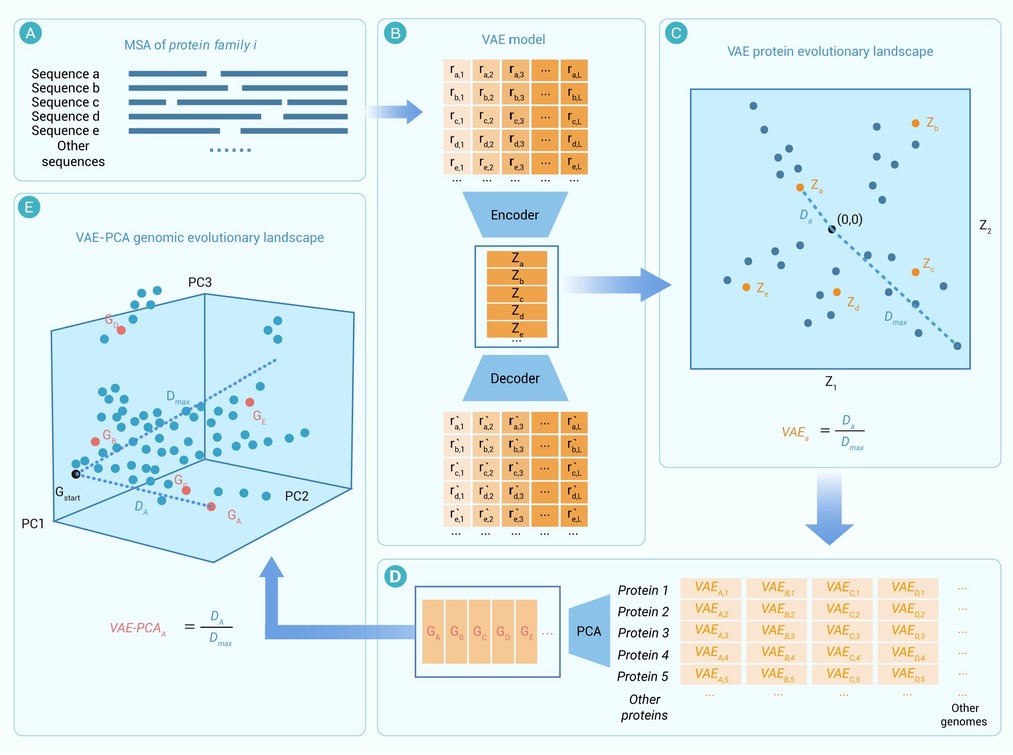
Figure 1.
Workflow for constructing a VAE-PCA evolutionary landscape
-
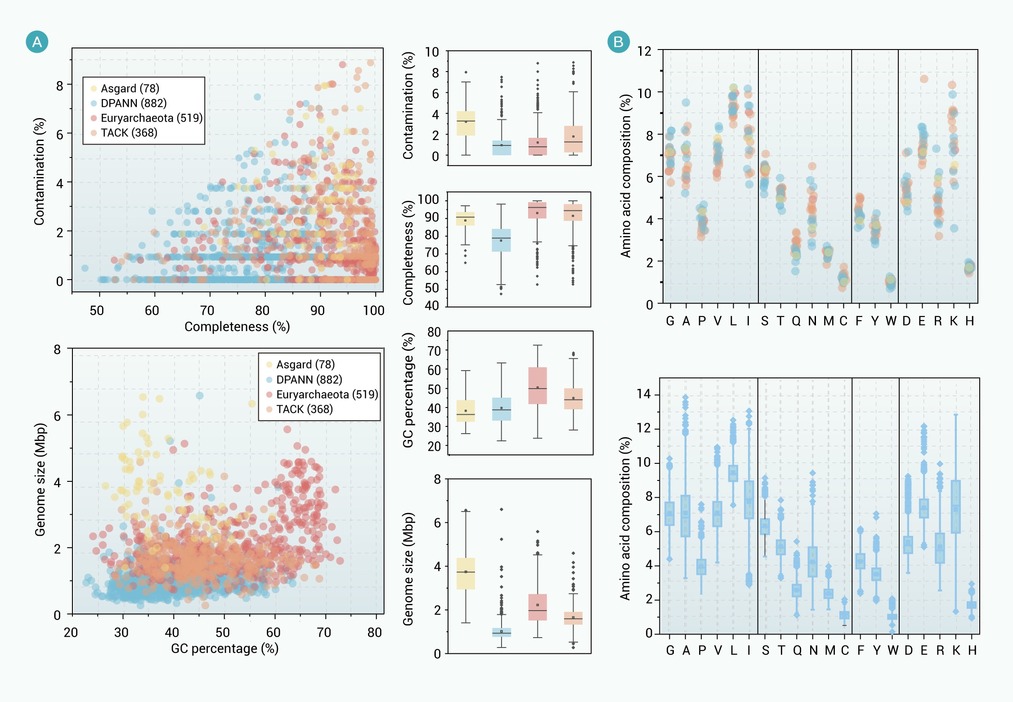
Figure 2.
Genome information of the 1855 archaeal genera
-
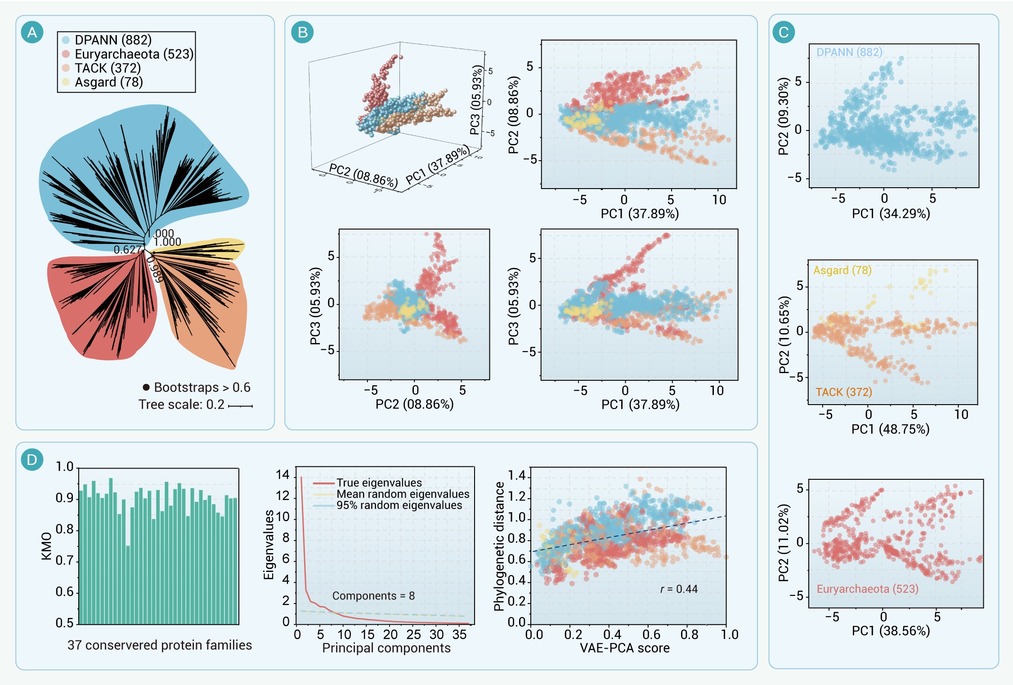
Figure 3.
Phylogenomic tree and VAE-PCA evolutionary landscapes of 1855 archaeal genomes
-
Figure 4.
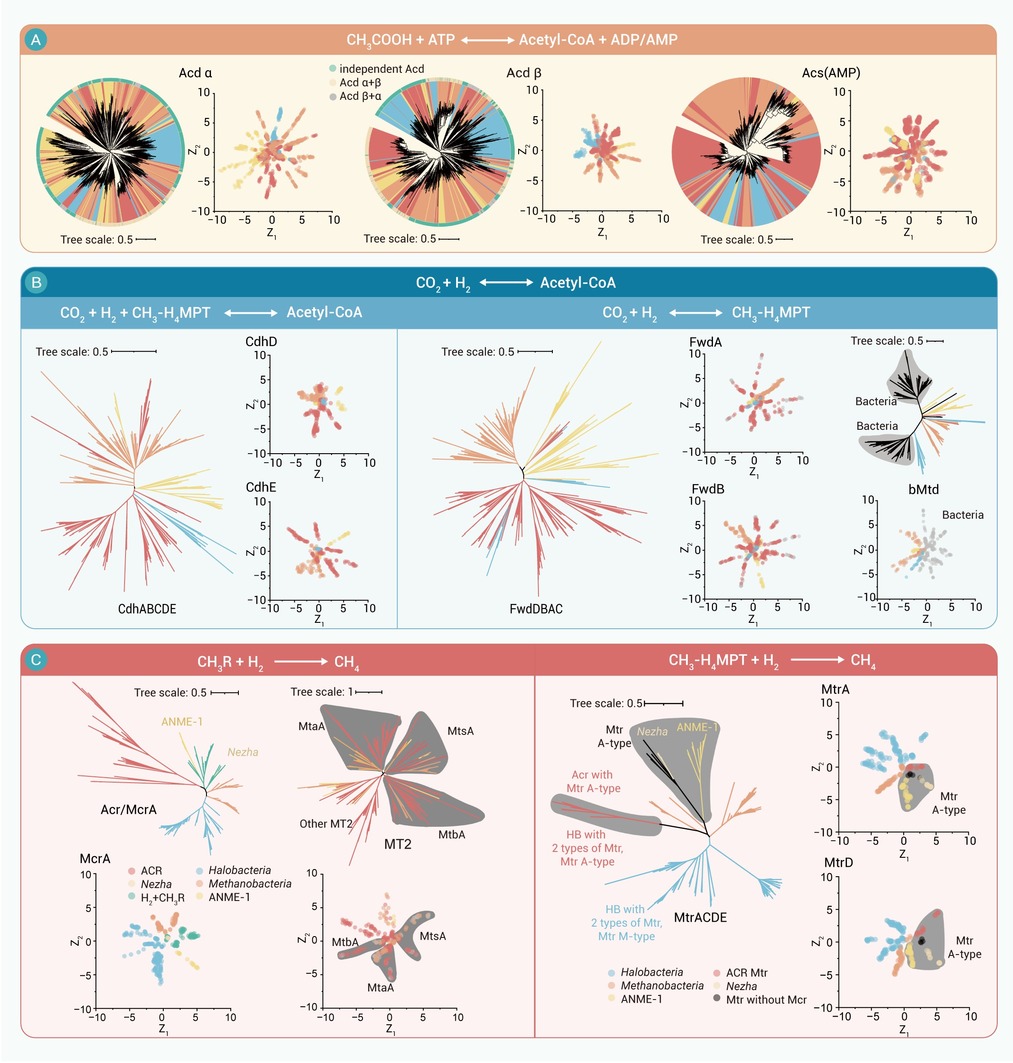
Protein trees and VAE evolutionary landscapes of enzymes related to acetate-related metabolism, the WLP and methanogenesis
-
Figure 5.
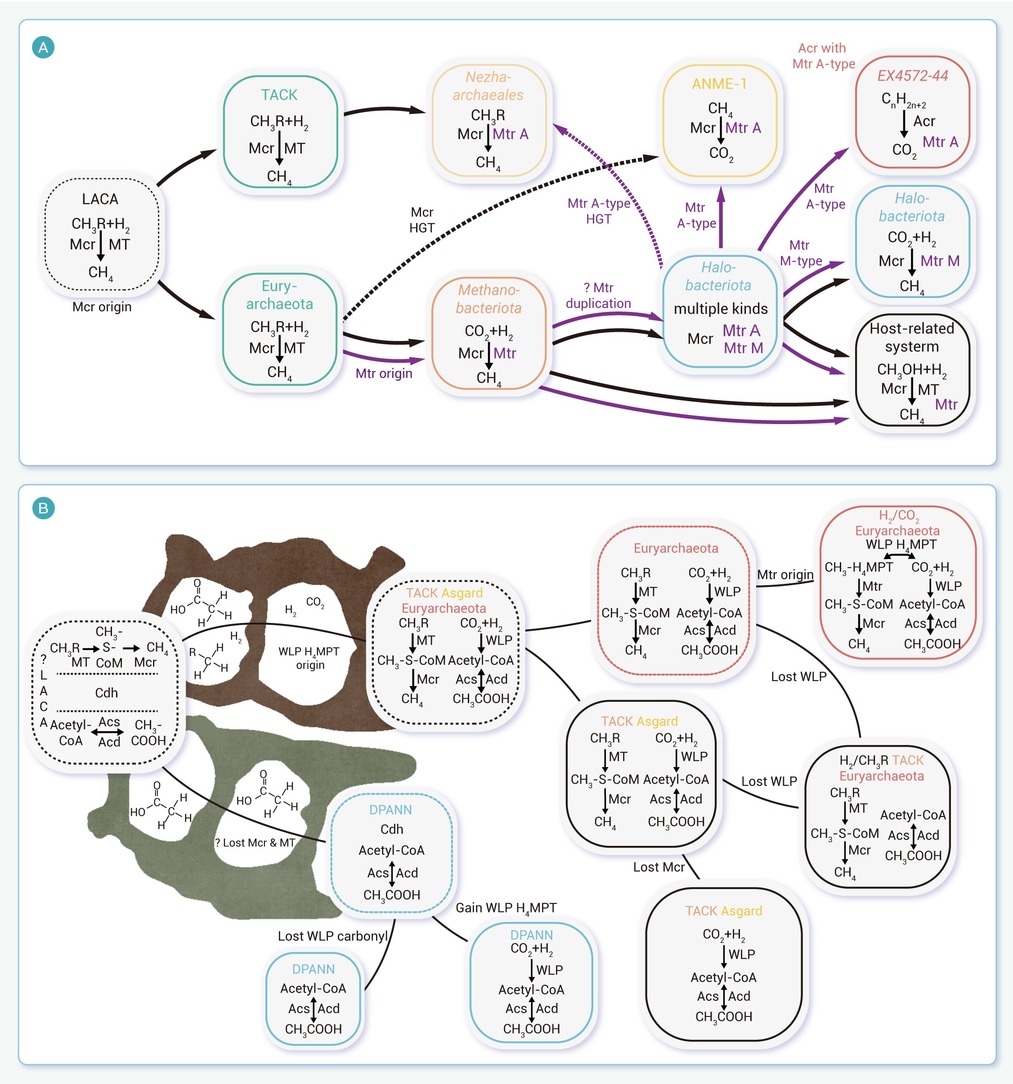
Acetate-related metabolism, the WLP, and methanogenesis in LACA and its descendants
-
Figure 6.
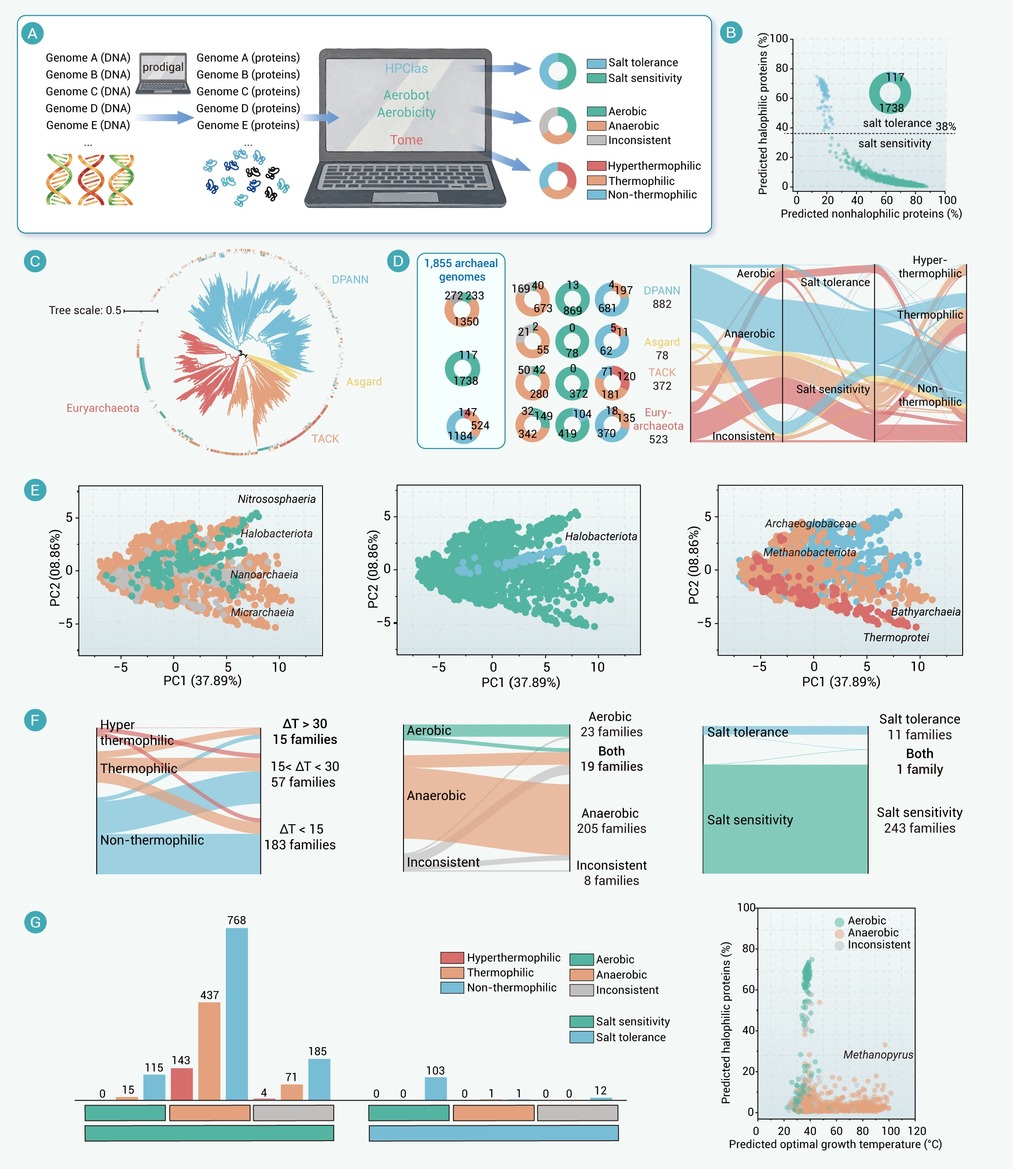
Predicted optimum physiological conditions for 1855 archaeal genomes
-
Figure 7.
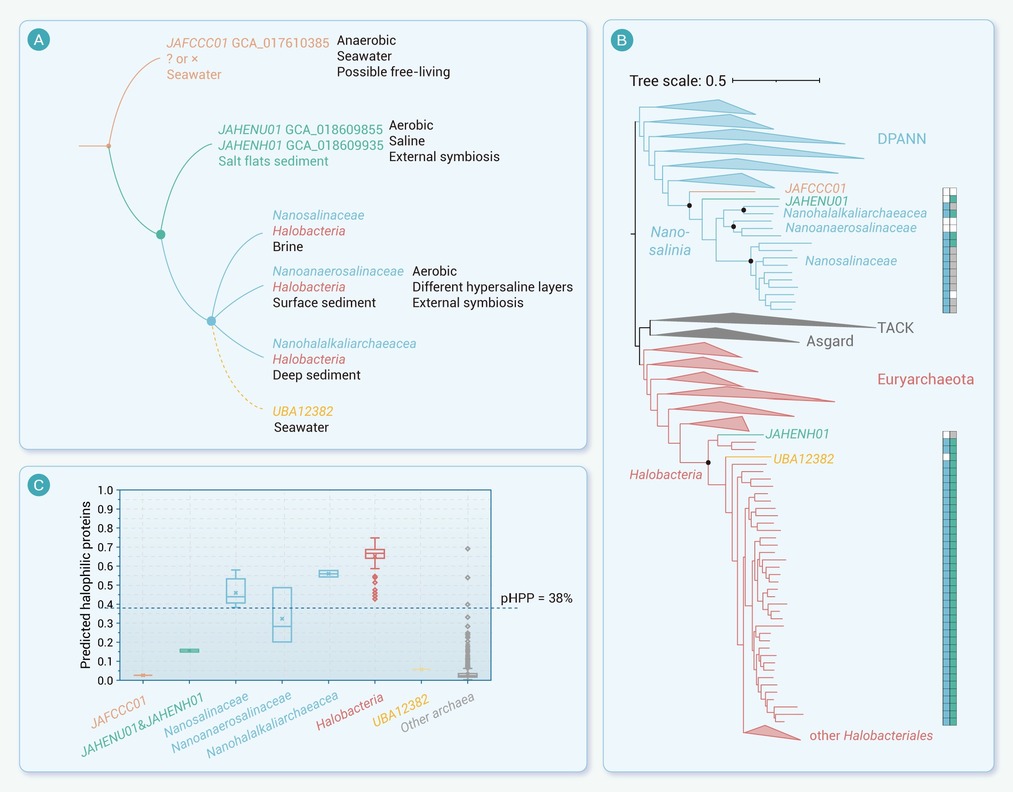
Coevolutionary history of Halobacteria and Nanosalinia
