
A-D-A-type electron acceptors based on pyrrole-containing ladder-type heteroarenes for organic solar cells
-
GRAPHICAL ABSTRACT
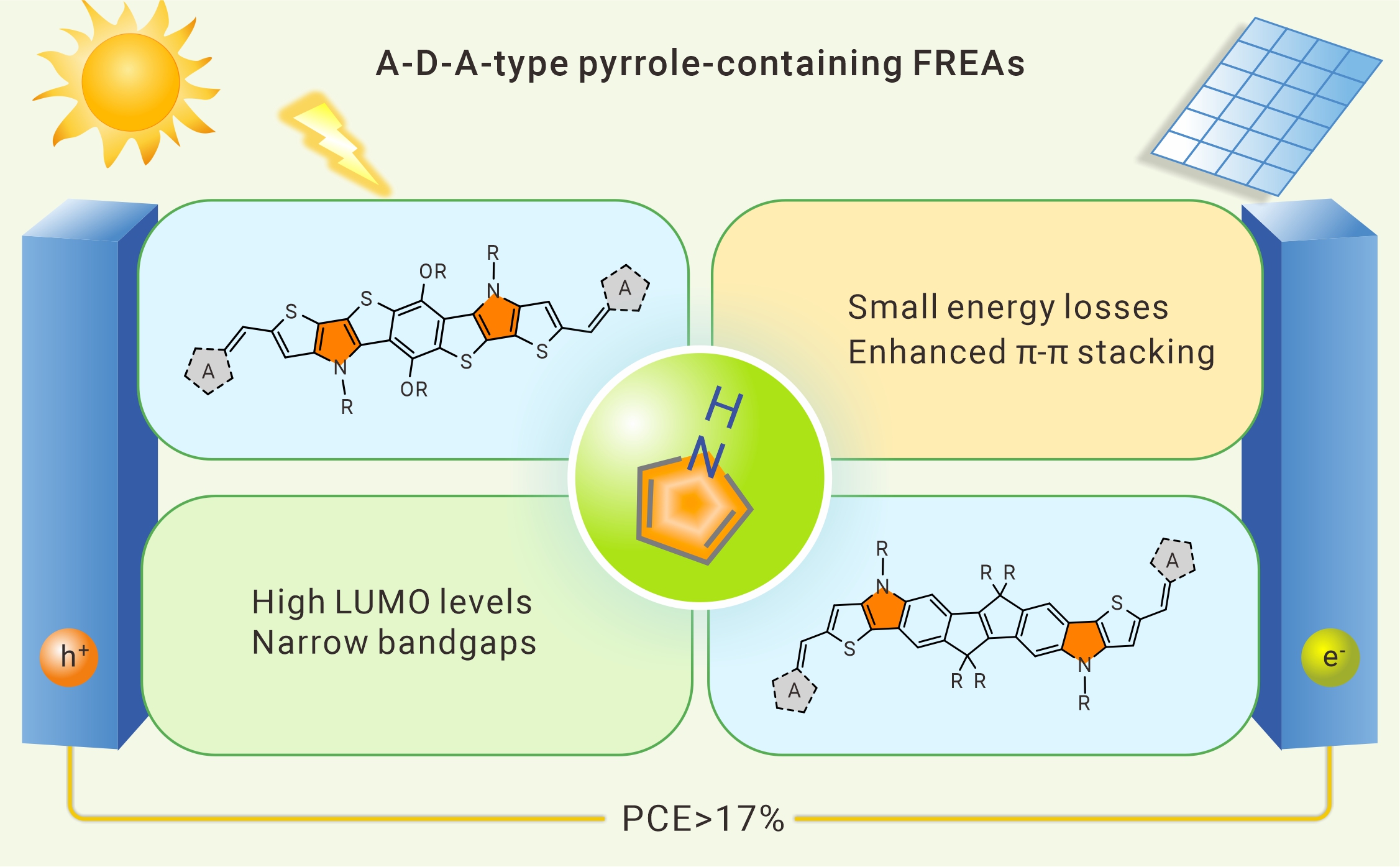
 DownLoad:
Full size image
DownLoad:
Full size image
-
PUBLIC SUMMARY
-
Pyrrole-containing fused-ring electron acceptors for photovoltaics are reviewed.
Synthetic strategies for pyrrole-based ladder-type heteroarenes are summarized.
Structure-performance relationships are discussed.
Remaining challenges and key research directions are proposed.
-
-
ABSTRACT
Organic solar cells (OSCs) have undergone rapid development and achieved significant breakthroughs in power conversion efficiencies, largely due to the emergence of nonfullerene acceptors (NFAs) with ladder-type multifused-ring structures. Over the past few years, huge efforts have been devoted to synthesizing new ladder-type donor cores via rational molecular design, as it can directly dictate most of the OSC-related physicochemical and optoelectronic properties of NFAs. Among the numerous reported ladder-type donor cores with diverse chemical structures, those containing pyrrole rings are becoming the preferred building blocks for the development of high-performance NFAs due to their intriguing physicochemical properties and unique molecular stacking. To date, most of the state-of-the-art NFAs (e.g., Y-series and M-series acceptors) use pyrrole-containing ladder-type heteroarenes as the donor cores. In this review, we summarize acceptor-donor-acceptor (A-D-A)-type NFAs based on pyrrole-containing ladder-type heteroarenes with detailed discussion of the relationships between molecular structures and device performance. We also provide a brief summary of common synthetic strategies for pyrrole-containing ladder-type heteroarenes. Finally, the remaining challenges and the key research directions in the near future are proposed in the hope of providing some useful insights for the further rational design of novel pyrrole-containing ladder-type building blocks and corresponding high-performance NFA materials. -

-
REFERENCES
[1] Cheng, Y.-J., Yang, S.-H., and Hsu, C.-S. (2009). Synthesis of conjugated polymers for organic solar cell applications. Chem. Rev. 109: 5868−5923. DOI: 10.1021/cr900182s. [2] Li, G., Zhu, R., and Yang, Y. (2012). Polymer solar cells. Nat. Photonics 6: 153−161. DOI: 10.1038/nphoton.2012.11. [3] Krebs, F.C., Espinosa, N., Hösel, M., et al. (2014). 25th anniversary article: rise to power-OPV-based solar parks. Adv. Mater. 26: 29−39. DOI: 10.1002/adma.201302031. [4] Darling, S.B., and You, F. (2013). The case for organic photovoltaics. RSC Adv. 3: 17633−17648. DOI: 10.1039/c3ra42989j. [5] Yu, G., Gao, J., Hummelen, J.C., et al. (1995). Polymer photovoltaic cells: enhanced efficiencies via a network of internal donor-acceptor heterojunctions. Science 270: 1789−1791. DOI: 10.1126/science.270.5243.1789. [6] Zhao, G., He, Y., and Li, Y. (2010). 6.5% efficiency of polymer solar cells based on poly(3-hexylthiophene) and indene-C60 bisadduct by device optimization. Adv. Mater. 22 : 4355-4358. [7] He, Y., Chen, H.-Y., Hou, J., et al. (2010). Indene-C60 bisadduct: a new acceptor for high-performance polymer solar cells. J. Am. Chem. Soc. 132: 1377−1382. DOI: 10.1021/ja908602j. [8] Gélinas, S., Rao, A., Kumar, A., et al. (2014). Ultrafast long-range charge separation in organic semiconductor photovoltaic diodes. Science 343: 512−516. [9] He, Y., and Li, Y. (2011). Fullerene derivative acceptors for high performance polymer solar cells. Phys. Chem. Chem. Phys. 13: 1970−1983. DOI: 10.1039/C0CP01178A. [10] Hummelen, J.C., Knight, B.W., LePeq, F., et al. (1995). Preparation and characterization of fulleroid and methanofullerene derivatives. J. Org. Chem. 60: 532−538. DOI: 10.1021/jo00108a012. [11] Kooistra, F.B., Mihailetchi, V.D., Popescu, L.M., et al. (2006). New C84 derivative and its application in a bulk heterojunction solar cell. Chem. Mater. 18: 3068−3073. DOI: 10.1021/cm052783z. [12] Sariciftci, N.S., Smilowitz, L., Heeger, A.J., et al. (1992). Photoinduced electron transfer from a conducting polymer to buckminsterfullerene. Science 258: 1474−1476. DOI: 10.1126/science.258.5087.1474. [13] Zhao, J., Li, Y., Yang, G., et al. (2016). Efficient organic solar cells processed from hydrocarbon solvents. Nat. Energy 1: 15027. DOI: 10.1038/nenergy.2015.27. [14] Deng, D., Zhang, Y., Zhang, J., et al. (2016). Fluorination-enabled optimal morphology leads to over 11% efficiency for inverted small-molecule organic solar cells. Nat. Commun. 7: 13740. DOI: 10.1038/ncomms13740. [15] Lin, Y., and Zhan, X. (2014). Non-fullerene acceptors for organic photovoltaics: an emerging horizon. Mater. Horiz. 1: 470−488. DOI: 10.1039/C4MH00042K. [16] Anthony, J.E., Facchetti, A., Heeney, M., et al. (2010). N-type organic semiconductors in organic electronics. Adv. Mater. 22: 3876−3892. DOI: 10.1002/adma.200903628. [17] Nielsen, C.B., Holliday, S., Chen, H.-Y., et al. (2015). Non-fullerene electron acceptors for use in organic solar cells. Acc. Chem. Res. 48: 2803−2812. DOI: 10.1021/acs.accounts.5b00199. [18] Lin, Y., Wang, J., Zhang, Z.-G., et al. (2015). An electron acceptor challenging fullerenes for efficient polymer solar cells. Adv. Mater. 27: 1170−1174. DOI: 10.1002/adma.201404317. [19] Ma, Y., Zhang, M., Yan, Y., et al. (2017). Ladder-type dithienonaphthalene-based small-molecule acceptors for efficient nonfullerene organic solar cells. Chem. Mater. 29: 7942−7952. DOI: 10.1021/acs.chemmater.7b02887. [20] Ma, Y., Zhang, M., Tang, Y., et al. (2017). Angular-shaped dithienonaphthalene-based nonfullerene acceptor for high-performance polymer solar cells with large open-circuit voltages and minimal energy losses. Chem. Mater. 29: 9775−9785. DOI: 10.1021/acs.chemmater.7b03770. [21] Lee, J.-W., Sun, C., Phan, T.N.-L., et al. (2023). Trimerized small-molecule acceptors enable high-performance organic solar cells with high open-circuit voltage and prolonged life-time. Energy Environ. Sci. 16: 3339−3349. DOI: 10.1039/D3EE00272A. [22] Lee, J.-W., Sun, C., Lee, C., et al. (2023). Linker engineering of dimerized small molecule acceptors for highly efficient and stable organic solar cells. ACS Energy Lett. 8: 1344−1353. DOI: 10.1021/acsenergylett.2c02679. [23] Sun, C., Lee, J.-W., Tan, Z., et al. (2023). Regiospecific incorporation of acetylene linker in high-electron mobility dimerized acceptors for organic solar cells with high efficiency (18.8%) and long 1-sun lifetime (> 5000 h). Adv. Energy Mater. 13 : 2301283. DOI: 10.1002/aenm.202301283. [24] Yuan, J., Zhang, Y., Zhou, L., et al. (2019). Single-junction organic solar cell with over 15% efficiency using fused-ring acceptor with electron-deficient core. Joule 3: 1140−1151. DOI: 10.1016/j.joule.2019.01.004. [25] Chen, H., Jeong, S.Y., Tian, J., et al. (2023). A 19% efficient and stable organic photovoltaic device enabled by a guest nonfullerene acceptor with fibril-like morphology. Energy Environ. Sci. 16: 1062−1070. DOI: 10.1039/D2EE03483B. [26] Qin, J., Zhang, L., Zuo, C., et al. (2021). A chlorinated copolymer donor demonstrates a 18.13% power conversion efficiency. J. Semicond. 42 : 010501. DOI: 10.1088/1674-4926/42/1/010501. [27] Jin, K., Xiao, Z., and Ding, L. (2021). 18.69% PCE from organic solar cells. J. Semicond. 42 : 060502. DOI: 10.1088/1674-4926/42/6/060502. [28] Ma, R., Zhou, K., Sun, Y., et al. (2022). Achieving high efficiency and well-kept ductility in ternary all-polymer organic photovoltaic blends thanks to two well miscible donors. Matter 5: 725−734. DOI: 10.1016/j.matt.2021.12.002. [29] Sun, Y., Nian, L., Kan, Y., et al. (2022). Rational control of sequential morphology evolution and vertical distribution toward 17.18% efficiency all-small-molecule organic solar cells. Joule 6 : 2835-2848. DOI: 10.1016/j.joule.2022.10.005. [30] Zou, W., Han, C., Zhang, X., et al. (2023). A bithiazole-substituted donor for high-efficiency thick ternary organic solar cells via regulation of crystallinity and miscibility. Adv. Energy Mater. 13: 2300784. DOI: 10.1002/aenm.202300784. [31] Ma, Y., Cai, D., Wan, S., et al. (2020). Control over π-π stacking of heteroheptacene-based nonfullerene acceptors for 16% efficiency polymer solar cells. Natl. Sci. Rev. 7: 1886−1895. DOI: 10.1093/nsr/nwaa189. [32] Schweda, B., Reinfelds, M., Hofstadler, P., et al. (2021). Recent progress in the design of fused-ring non-fullerene acceptors-relations between molecular structure and optical, electronic, and photovoltaic properties. ACS Appl. Energy Mater. 4: 11899−11981. DOI: 10.1021/acsaem.1c01737. [33] Yan, C., Barlow, S., Wang, Z., et al. (2018). Non-fullerene acceptors for organic solar cells. Nat. Rev. Mater. 3: 18003. DOI: 10.1038/natrevmats.2018.3. [34] Yue, Q., Liu, W., and Zhu, X. (2020). N-type molecular photovoltaic materials: design strategies and device applications. J. Am. Chem. Soc. 142: 11613−11628. DOI: 10.1021/jacs.0c04084. [35] Wong, K.-T., Chao, T.-C., Chi, L.-C., et al. (2006). Syntheses and structures of novel heteroarene-fused coplanar π-conjugated chromophores. Org. Lett. 8: 5033−5036. DOI: 10.1021/ol061791y. [36] Xu, Y.-X., Chueh, C.-C., Yip, H.-L., et al. (2012). Improved charge transport and absorption coefficient in indacenodithieno[3,2-b]thiophene-based ladder-type polymer leading to highly efficient polymer solar cells. Adv. Mater. 24: 6356−6361. DOI: 10.1002/adma.201203246. [37] Holliday, S., Ashraf, R.S., Wadsworth, A., et al. (2016). High-efficiency and air-stable P3HT-based polymer solar cells with a new non-fullerene acceptor. Nat. Commun. 7: 11585. DOI: 10.1038/ncomms11585. [38] Ma, Y., Zheng, Q., Yin, Z., et al. (2013). Ladder-type dithienonaphthalene-based donor-acceptor copolymers for organic solar cells. Macromolecules 46: 4813−4821. DOI: 10.1021/ma400696e. [39] Ma, Y., Zheng, Q., Wang, L., et al. (2014). Improving the photovoltaic performance of ladder-type dithienonaphthalene-containing copolymers through structural isomerization. J. Mater. Chem. A 2: 13905−13915. DOI: 10.1039/C4TA02585G. [40] Nogami, Y., Pouget, J.-P., and Ishiguro, T. (1994). Structure of highly conducting PF6--doped polypyrrole. Synth. Met. 62: 257−263. DOI: 10.1016/0379-6779(94)90214-3. [41] Ateh, D.D., Navsaria, H.A., and Vadgama, P. (2006). Polypyrrole-based conducting polymers and interactions with biological tissues. J. Royal Soc. Interface 3: 741−752. DOI: 10.1098/rsif.2006.0141. [42] Fujii, M., Nishinaga, T., and Iyoda, M. (2009). Synthesis of thiophene–pyrrole mixed oligomers end-capped with hexyl group for field-effect transistors. Tetrahedron Lett. 50: 555−558. DOI: 10.1016/j.tetlet.2008.11.061. [43] Hendriks, K.H., Li, W., Wienk, M.M., et al. (2014). Small-bandgap semiconducting polymers with high near-infrared photoresponse. J. Am. Chem. Soc. 136: 12130−12136. DOI: 10.1021/ja506265h. [44] Bulumulla, C., Gunawardhana, R., Kularatne, R.N., et al. (2018). Thieno[3,2-b]pyrrole-benzothiadiazole banana-shaped small molecules for organic field-effect transistors. ACS Appl. Mater. Interfaces 10: 11818−11825. DOI: 10.1021/acsami.8b01113. [45] Bulumulla, C., Gunawardhana, R., Gamage, P.L., et al. (2020). Pyrrole-containing semiconducting materials: synthesis and applications in organic photovoltaics and organic field-effect transistors. ACS Appl. Mater. Interfaces 12: 32209−32232. DOI: 10.1021/acsami.0c07161. [46] Lu, B., Chen, Z., Jia, B., et al. (2020). Enhancing performance of fused-ring electron acceptor using pyrrole instead of thiophene. ACS Appl. Mater. Interfaces 12: 14029−14036. DOI: 10.1021/acsami.0c00733. [47] Shang, A., Luo, S., Zhang, J., et al. (2022). Over 18% binary organic solar cells enabled by isomerization of non-fullerene acceptors with alkylthiophene side chains. Sci. China Chem. 65: 1758−1766. DOI: 10.1007/s11426-022-1290-y. [48] Ma, Y., Zhang, M., Wan, S., et al. (2021). Efficient organic solar cells from molecular orientation control of m-series acceptors. Joule 5: 197−209. DOI: 10.1016/j.joule.2020.11.006. [49] Li, S., Li, C.-Z., Shi, M., et al. (2020). New phase for organic solar cell research: emergence of y-series electron acceptors and their perspectives. ACS Energy Lett. 5: 1554−1567. DOI: 10.1021/acsenergylett.0c00537. [50] He, Q., Ufimkin, P., Aniés, F., et al. (2022). Molecular engineering of Y-series acceptors for nonfullerene organic solar cells. SusMat 2: 591−606. DOI: 10.1002/sus2.82. [51] Murugan, P., Hu, T., Hu, X., et al. (2022). Fused-ring A-DA′D-A (Y-series) non-fullerene acceptors: recent developments and design strategies for organic photovoltaics. J. Mater. Chem. A 10: 17968−17987. DOI: 10.1039/D2TA04501J. [52] Wei, Q., Liu, W., Leclerc, M., et al. (2020). A-DA′D-A non-fullerene acceptors for high-performance organic solar cells. Sci. China Chem. 63: 1352−1366. DOI: 10.1007/s11426-020-9799-4. [53] Martina, S., Enkelmann, V., Wegner, G., et al. (1991). N-protected pyrrole derivatives substituted for metal-catalyzed cross-coupling reactions. Synthesis 1991: 613−615. DOI: 10.1055/s-1991-26526. [54] Edder, C., Armstrong, P.B., Prado, K.B., et al. (2006). Benzothiadiazole- and pyrrole-based polymers bearing thermally cleavable solubilizing groups as precursors for low bandgap polymers. Chem. Commun. 14: 1965−1967. DOI: 10.1039/B601296P. [55] van Mullekom, H.A.M., Venkemans, J.A.J.M., and Meijer, E.W. (1996). Alternating copolymer of pyrrole and 2,1,3-benzothiadiazole. Chem. Commun., 2163-2164. DOI: 10.1039/CC9960002163. [56] Jones, C., Boudinet, D., Xia, Y., et al. (2014). Synthesis and properties of semiconducting bispyrrolothiophenes for organic field-effect transistors. Chem. Eur. J. 20: 5938−5945. DOI: 10.1002/chem.201304914. [57] Sun, J., Ma, X., Zhang, Z., et al. (2018). Dithieno[3,2-b:2′,3′-d]pyrrol fused nonfullerene acceptors enabling over 13% efficiency for organic solar cells. Adv. Mater. 30: 1707150. DOI: 10.1002/adma.201707150. [58] Su, Y.-J., Wu, S.-H., Huang, S.-C., et al. (2022). Extended conjugation and end-group modification of silicon-bridged carbazole-based non-fullerene acceptors in indoor organic photovoltaics. ACS Appl. Energy Mater. 5: 13851−13860. DOI: 10.1021/acsaem.2c02472. [59] Luo, Z., Ma, R., Yu, J., et al. (2022). Heteroheptacene-based acceptors with thieno[3,2-b]pyrrole yield high-performance polymer solar cells. Natl. Sci. Rev. 9: nwac076. DOI: 10.1093/nsr/nwac076. [60] Ma, Y., Cai, D., Wan, S., et al. (2020). Ladder-type heteroheptacenes with different heterocycles for nonfullerene acceptors. Angew. Chem. Int. Ed. 59: 21627−21633. DOI: 10.1002/anie.202007907. [61] Zanirato, P., Spagnolo, P., and Zanardi, G. (1983). Thermal decomposition of o-azidobithienyls. J. Chem. Soc., Perkin Trans., 2551-2554. DOI: 10.1039/P19830002551. [62] Ogawa, K., Radke, K.R., Rothstein, S.D., et al. (2001). Synthesis of secondary and tertiary aminothiophenes via palladium-catalyzed amination. J. Org. Chem. 66: 9067−9070. DOI: 10.1021/jo016195q. [63] Freeman, A.W., Urvoy, M., and Criswell, M.E. (2005). Triphenylphosphine-mediated reductive cyclization of 2-nitrobiphenyls: a practical and convenient synthesis of carbazoles. J. Org. Chem. 70: 5014−5019. DOI: 10.1021/jo0503299. [64] Balaji, G., Phua, D.I., Shim, W.L., et al. (2010). Synthesis and characterization of unsymmetric indolodithienopyrrole and extended diindolodithienopyrrole. Org. Lett. 12: 232−235. DOI: 10.1021/ol902528b. [65] Qi, T., Guo, Y., Liu, Y., et al. (2008). Synthesis and properties of the anti and syn isomers of dibenzothieno[b,d]pyrrole. Chem. Commun. 14: 6227−6229. DOI: 10.1039/B813683A. [66] Balaji, G., Della Pelle, A.M., Popere, B.C., et al. (2012). Synthesis and properties of thienopyrrole based heteroacenes-indolodibenzothienopyrrole and dicarbazolodithienopyrrole. Org. Biomol. Chem. 10: 3455−3462. DOI: 10.1039/c2ob25087j. [67] Förtsch, S., Vogt, A., and Bäuerle, P. (2017). New methods for the synthesis of 4H-dithieno[3,2-b:2′,3′-d]pyrrole. J. Phys. Org. Chem. 30: e3743. DOI: 10.1002/poc.3743. [68] Vogt, A., Henne, F., Wetzel, C., et al. (2020). Synthesis and characterization of S,N-heterotetracenes. Beilstein. J. Org. Chem. 16: 2636−2644. DOI: 10.3762/bjoc.16.214. [69] Koeckelberghs, G., De Cremer, L., Vanormelingen, W., et al. (2005). Improved synthesis of N-alkyl substituted dithieno[3,2-b:2′,3′-d]pyrroles. Tetrahedron 61: 687−691. DOI: 10.1016/j.tet.2004.10.106. [70] Mitsudo, K., Shimohara, S., Mizoguchi, J., et al. (2012). Synthesis of nitrogen-bridged terthiophenes by tandem Buchwald-Hartwig coupling and their properties. Org. Lett. 14: 2702−2705. DOI: 10.1021/ol300887t. [71] Wetzel, C., Brier, E., Vogt, A., et al. (2015). Fused thiophene-pyrrole-containing ring systems up to a heterodecacene. Angew. Chem. Int. Ed. 54: 12334−12338. DOI: 10.1002/anie.201502840. [72] Rudnick, A., Wetzel, C., Tscheuschner, S., et al. (2017). Spectroscopic study of thiophene-pyrrole-containing S,N-heteroheptacenes compared to acenes and phenacenes. J. Phys. Chem. B 121: 7492−7501. DOI: 10.1021/acs.jpcb.7b02935. [73] Wetzel, C., Vogt, A., Rudnick, A., et al. (2017). Thiophene-pyrrole containing S,N-heteroheptacenes: synthesis, and optical and electrochemical characterisation. Org. Chem. Front. 4: 1629−1635. DOI: 10.1039/C7QO00294G. [74] Brier, E., Wetzel, C., Bauer, M., et al. (2019). S,N-heteroacenes up to a tridecamer. Chem. Mater. 31: 7007−7023. DOI: 10.1021/acs.chemmater.9b01652. [75] Huang, Y., Wu, D., Huang, J., et al. (2014). Use of the wilkinson catalyst for the ortho-ch heteroarylation of aromatic amines: facile access to highly extended π-conjugated heteroacenes for organic semiconductors. Angew. Chem. Int. Ed. 53: 12158−12162. DOI: 10.1002/anie.201406445. [76] Irgashev, R.A., Karmatsky, A.A., Rusinov, G.L., et al. (2016). Construction of heteroacenes with fused thiophene and pyrrole rings via the fischer indolization reaction. Org. Lett. 18: 804−807. DOI: 10.1021/acs.orglett.6b00081. [77] Lang, Y., Chen, H., Lai, H., et al. (2022). Isomeric nonfullerene acceptors: planar conformation leading to a higher efficiency. ACS Appl. Energy Mater. 5: 4556−4563. DOI: 10.1021/acsaem.2c00008. [78] Cheng, Y.-J., Wu, J.-S., Shih, P.-I., et al. (2011). Carbazole-based ladder-type heptacylic arene with aliphatic side chains leading to enhanced efficiency of organic photovoltaics. Chem. Mater. 23: 2361−2369. DOI: 10.1021/cm200041v. [79] Xie, L., Zhang, Y., Zhuang, W., et al. (2022). Low-bandgap nonfullerene acceptor based on thieno[3,2-b]indole core for highly efficient binary and ternary organic solar cells. Chem. Eng. J. 427: 131674. DOI: 10.1016/j.cej.2021.131674. [80] Wang, Z., Jia, B., Cai, G., et al. (2021). Pyrrolo[3,2-b]pyrrole-based fused-ring electron acceptors with strong near-infrared absorption beyond 1000 nm. Dyes Pigments 195: 109705. DOI: 10.1016/j.dyepig.2021.109705. [81] Zhou, H., Yang, L., and You, W. (2012). Rational design of high performance conjugated polymers for organic solar cells. Macromolecules 45: 607−632. DOI: 10.1021/ma201648t. [82] Wei, J., Tu, Q., and Zheng, Q. (2017). Heteroheptacene-cored semiconducting molecules for non-fullerene organic solar cells. Dyes Pigments 144: 133−141. DOI: 10.1016/j.dyepig.2017.05.026. [83] Cao, Q., Xiong, W., Chen, H., et al. (2017). Design, synthesis, and structural characterization of the first dithienocyclopentacarbazole-based n-type organic semiconductor and its application in non-fullerene polymer solar cells. J. Mater. Chem. A 5: 7451−7461. DOI: 10.1039/C7TA01143A. [84] Tu, Q., Ma, Y., Zhou, X., et al. (2019). Enhancing the photovoltaic performance of ladder-type dithienocyclopentacarbazole-based nonfullerene acceptors through fluorination and side-chain engineering. Chem. Mater 31: 5953−5963. DOI: 10.1021/acs.chemmater.9b02355. [85] Hsiao, Y.-T., Li, C.-H., Chang, S.-L., et al. (2017). Haptacyclic carbazole-based ladder-type nonfullerene acceptor with side-chain optimization for efficient organic photovoltaics. ACS Appl. Mater. Interfaces 9: 42035−42042. DOI: 10.1021/acsami.7b12612. [86] Chen, T.-W., Hsiao, Y.-T., Lin, Y.-W., et al. (2019). Fluorinated heptacyclic carbazole-based ladder-type acceptors with aliphatic side chains for efficient fullerene-free organic solar cells. Mater. Chem. Front. 3: 829−835. DOI: 10.1039/C9QM00005D. [87] He, Q., Shahid, M., Jiao, X., et al. (2020). Crucial role of fluorine in fully alkylated ladder-type carbazole-based nonfullerene organic solar cells. ACS Appl. Mater. Interfaces 12: 9555−9562. DOI: 10.1021/acsami.0c00981. [88] Chen, T.-W., Yu, J.-Y., Lin, Y.-W., et al. (2020). Chlorinated carbon-bridged and silicon-bridged carbazole-based nonfullerene acceptors manifest synergistic enhancement in ternary organic solar cell with efficiency over 15%. Solar RRL 4: 2000357. DOI: 10.1002/solr.202000357. [89] Chen, T.-W., Karapala, V.K., Chen, J.-T., et al. (2021). Recent advances of carbazole-based nonfullerene acceptors: Molecular design, optoelectronic properties, and photovoltaic performance in organic solar cells. J. Chin. Chem. Soc. 68: 1186−1196. DOI: 10.1002/jccs.202100038. [90] Chen, T.-W., Peng, K.-L., Lin, Y.-W., et al. (2020). A chlorinated nonacyclic carbazole-based acceptor affords over 15% efficiency in organic solar cells. J. Mater. Chem. A 8: 1131−1137. DOI: 10.1039/C9TA12605H. [91] Wang, H., Zhang, Z., Yu, J., et al. (2019). Nonacyclic carbazole-based non-fullerene acceptors enable over 12% efficiency with enhanced stability for organic solar cells. J. Mater. Chem. A 7: 21903−21910. DOI: 10.1039/C9TA08573D. [92] Ouyang, J., Zeng, G., Xin, Y., et al. (2020). A novel carbazole-based nonfullerene acceptor for high-efficiency polymer solar cells. Solar RRL 4: 1900417. DOI: 10.1002/solr.201900417. [93] Yao, Z., Liao, X., Gao, K., et al. (2018). Dithienopicenocarbazole-based acceptors for efficient organic solar cells with optoelectronic response over 1000 nm and an extremely low energy loss. J. Am. Chem. Soc. 140: 2054−2057. DOI: 10.1021/jacs.7b13239. [94] Feng, H., Song, X., Zhang, Z., et al. (2019). Molecular orientation unified nonfullerene acceptor enabling 14% efficiency as-cast organic solar cells. Adv. Funct. Mater. 29: 1903269. DOI: 10.1002/adfm.201903269. [95] Geng, R., Song, X., Feng, H., et al. (2019). Nonfullerene acceptor for organic solar cells with chlorination on dithieno[3,2-b:2′,3′-d]pyrrol fused-ring. ACS Energy Lett. 4: 763−770. DOI: 10.1021/acsenergylett.9b00147. [96] Yang, L., Song, X., Yu, J., et al. (2019). Tuning of the conformation of asymmetric nonfullerene acceptors for efficient organic solar cells. J. Mater. Chem. A 7: 22279−22286. DOI: 10.1039/C9TA07634D. [97] Yang, L., Hu, Z., Zhang, Z., et al. (2020). Molecular engineering of acceptors to control aggregation for optimized nonfullerene solar cells. J. Mater. Chem. A 8: 5458−5466. DOI: 10.1039/D0TA00651C. [98] Guo, Q., Ma, R., Hu, J., et al. (2020). Over 15% efficiency polymer solar cells enabled by conformation tuning of newly designed asymmetric small-molecule acceptors. Adv. Funct. Mater. 30: 2000383. DOI: 10.1002/adfm.202000383. [99] Li, G., Li, D., Ma, R., et al. (2020). Efficient modulation of end groups for the asymmetric small molecule acceptors enabling organic solar cells with over 15% efficiency. J. Mater. Chem. A 8: 5927−5935. DOI: 10.1039/D0TA01032D. [100] Matteson, D.S., and Snyder, H.R. (1957). A practical synthesis of thieno[3,2-b]pyrrole. J. Org. Chem. 22: 1500−1504. DOI: 10.1021/jo01362a048. [101] Bulumulla, C., Kularatne, R.N., Gunawardhana, R., et al. (2018). Incorporation of thieno[3,2-b]pyrrole into diketopyrrolopyrrole-based copolymers for efficient organic field effect transistors. ACS Macro Lett. 7: 629−634. DOI: 10.1021/acsmacrolett.8b00236. [102] Bulumulla, C., Gunawardhana, R., Gamage, P.L., et al. (2018). π-spacer-linked bisthienopyrroles with tunable optical properties. Synlett 29: 2567−2571. DOI: 10.1055/s-0037-1611055. [103] Luo, Z., Ma, R., Yu, J., et al. (2022). Heteroheptacene-based acceptors with thieno[3,2-b]pyrrole yield high-performance polymer solar cells. Natl. Sci. Rev. 9: nwac076. DOI: 10.1093/nsr/nwac076. [104] Zhu, J., Zhang, Z., Lv, Y., et al. (2022). Organic solar cells based on non-fullerene acceptors containing thiophene[3,2-b]pyrrole. Org. Electron. 103: 106461. DOI: 10.1016/j.orgel.2022.106461. [105] Wang, Z., Cai, G., Xue, P., et al. (2022). Enhancing photovoltaic performance of asymmetric fused-ring electron acceptor by expanding pyrrole to pyrrolo[3,2-b]pyrrole. Chin. J. Chem. 40: 2861−2866. DOI: 10.1002/cjoc.202200420. [106] Zhang, J., Liu, W., Zhang, M., et al. (2019). Revealing the critical role of the homo alignment on maximizing current extraction and suppressing energy loss in organic solar cells. iScience 19: 883−893. DOI: 10.1016/j.isci.2019.08.038. [107] Jiang, Y., Su, W., Wang, W., et al. (2023). Comprehensive understanding of fluorination-performance relationship: the best-performed A-D-A-type acceptors. Fund. Res. DOI: 10.1016/j.fmre.2023.03.010. [108] Yao, Z., Liao, X., Guo, Y., et al. (2019). Exploring overall photoelectric applications by organic materials containing symmetric donor isomers. Chem. Mater. 31: 8810−8819. DOI: 10.1021/acs.chemmater.9b02715. [109] Liao, X., Xie, Q., Guo, Y., et al. (2022). Inhibiting excessive molecular aggregation to achieve highly efficient and stabilized organic solar cells by introducing a star-shaped nitrogen heterocyclic-ring acceptor. Energy Environ. Sci. 15: 384−394. DOI: 10.1039/D1EE02858H. [110] Dai, S., Zhou, J., Chandrabose, S., et al. (2020). High-performance fluorinated fused-ring electron acceptor with 3D stacking and exciton/charge transport. Adv. Mater. 32: 2000645. DOI: 10.1002/adma.202000645. [111] Huang, C., Liao, X., Gao, K., et al. (2018). Highly efficient organic solar cells based on S,N-heteroacene non-fullerene acceptors. Chem. Mater. 30: 5429−5434. DOI: 10.1021/acs.chemmater.8b02276. [112] Yu, Z.-P., Li, X., He, C., et al. (2020). High-efficiency organic solar cells with low voltage-loss of 0.46 V. Chin. Chem. Lett. 31 : 1991-1996. DOI: 10.1016/j.cclet.2019.12.003. [113] Chen, X., Liu, H., Xia, L., et al. (2019). A pentacyclic S,N-heteroacene based electron acceptor with strong near-infrared absorption for efficient organic solar cells. Chem. Commun. 55: 7057−7060. DOI: 10.1039/C9CC03536B. [114] Oh, S., Amjad, M., Ahn, T., et al. (2023). Rational design of the S,N-heteroacene-based nonfullerene by introducing the fluorine atom for efficient high-performance organic solar cells. Bull. Korean Chem. Soc. 44: 399−406. DOI: 10.1002/bkcs.12674. [115] Kraus, T., Lucas, S., Wolff, P., et al. (2021). Advanced acceptor-substituted S,N-heteropentacenes for application in organic solar cells. Chem. Eur. J. 27: 10913−10924. DOI: 10.1002/chem.202100702. [116] Zhang, X., Ding, Y., Wan, X., et al. (2020). A novel acceptor with a N,N-dialkyl thieno[3′,2′:2,3]indolo[7,6-g]thieno[3,2-b]indole (TITI) core for organic solar cells with a high fill factor of 0.75. Chem. Commun. 56 : 751-753. DOI: 10.1039/C9CC08098H. [117] Wang, W., An, R., Wang, T., et al. (2022). Nitrogen-bridged star-shaped fused-ring electron acceptors for organic solar cells. Giant 10: 100093. DOI: 10.1016/j.giant.2022.100093. [118] Ma, Y., Luan, S., Cai, D., et al. (2023). Revealing the spacing effect of neighboring side-chains in modulating molecular aggregation and orientation of M-series acceptors. Aggregate 4: e322. DOI: 10.1002/agt2.322. [119] Wang, P., Ma, Y., Yin, P., et al. (2021). Molecular orientation, anisotropic electron transport and photovoltaic properties of ladder-type heteroheptacene-based semiconductors. Chem. Eng. J. 418: 129497. DOI: 10.1016/j.cej.2021.129497. [120] Zheng, W., Ma, Y., Tu, Q., et al. (2022). Boosting the photovoltaic performance of ladder-type heteroheptacene-based nonfullerene acceptors by incorporating auxochromic groups in the electron-rich core. Chem. Eng. J. 427: 131022. DOI: 10.1016/j.cej.2021.131022. [121] Ma, Y., Sun, R., Chen, Z., et al. (2023). 17% efficiency for linear-shaped ADA-type nonfullerene acceptors enabled by 3D reticulated molecular packing. Nano Energy 107: 108116. DOI: 10.1016/j.nanoen.2022.108116. [122] Tang, C., Ma, X., Wang, J.-Y., et al. (2021). High-performance ladder-type heteroheptacene-based nonfullerene acceptors enabled by asymmetric cores with enhanced noncovalent intramolecular interactions. Angew. Chem. Int. Ed. 60: 19314−19323. DOI: 10.1002/anie.202105861. [123] Tu, Q., Zheng, W., Ma, Y., et al. (2023). Enhancing the intermolecular interactions of ladder-type heteroheptacene-based nonfullerene acceptors for efficient polymer solar cells by incorporating asymmetric side chains. CCS Chem. 5: 455−468. DOI: 10.31635/ccschem.022.202101524. [124] Cai, D., Zhang, J., Wang, J.-Y., et al. (2020). Enhancing the photovoltaic performance of heteroheptacene-based nonfullerene acceptors through the synergistic effect of side-chain engineering and fluorination. J. Mater. Chem. A 8: 24543−24552. DOI: 10.1039/D0TA09351C. [125] Wan, S., Ma, Y., Cai, D., et al. (2021). Enhancing the photovoltaic performance of ladder-type heteroheptacene-based nonfullerene acceptors by incorporating halogen atoms on their ending groups. Adv. Funct. Mater. 31: 2010436. DOI: 10.1002/adfm.202010436. [126] Liao, R., Ma, X., Tang, C., et al. (2022). Noncovalent molecular interactions, charge transport and photovoltaic performance of asymmetric M-series acceptors with dichlorinated end groups. J. Mater. Chem. A 10: 23915−23926. DOI: 10.1039/D2TA05869C. [127] Li, Z., Ma, X., Liao, R., et al. (2022). M-series nonfullerene acceptors with varied fluorinated end groups: crystal structure, intermolecular interaction, charge transport, and photovoltaic performance. Solar RRL 6: 2200119. DOI: 10.1002/solr.202200119. [128] Tao, H., Tang, C., Ma, Y., et al. (2023). Enhancing photovoltaic performance of ladder-type heteroarene-based electron acceptors by modulating molecular packing. Chin. J. Chem. 41: 2143−2150. DOI: 10.1002/cjoc.202300083. [129] Ma, Y., Wang, P., Lin, W., et al. (2022). High-performance heptacyclic ladder-type heteroarene-based electron acceptors enabled by bulky neighboring side-chains and end-group fluorination. Chem. Eng. J. 432: 134393. DOI: 10.1016/j.cej.2021.134393. [130] Liao, R., Tang, C., Ma, Y., et al. (2023). Impact of regio-isomeric monochlorinated end groups on packing mode, miscibility, and photovoltaic performance of asymmetric selenophene-fused M-series acceptors. Chin. Chem. Lett. 34: 108448. DOI: 10.1016/j.cclet.2023.108448. -
ABOUT THIS ARTICLE
Cite this article:
Ma Y. and Zheng Q. (2023). A-D-A-type electron acceptors based on pyrrole-containing ladder-type heteroarenes for organic solar cells. The Innovation Materials 1(3), 100044. https://doi.org/10.59717/j.xinn-mater.2023.100044
Welcome!
To request copyright permission to republish or share portions of our works, please visit Copyright Clearance Center's (CCC) Marketplace website at marketplace.copyright.com.

Export File
Citation
Ma Y. and Zheng Q. (2023). A-D-A-type electron acceptors based on pyrrole-containing ladder-type heteroarenes for organic solar cells. The Innovation Materials 1(3), 100044. https://doi.org/10.59717/j.xinn-mater.2023.100044

Format
Content

-
Figure 1.
Schematic diagram of the chemical structure and calculated energy levels
-
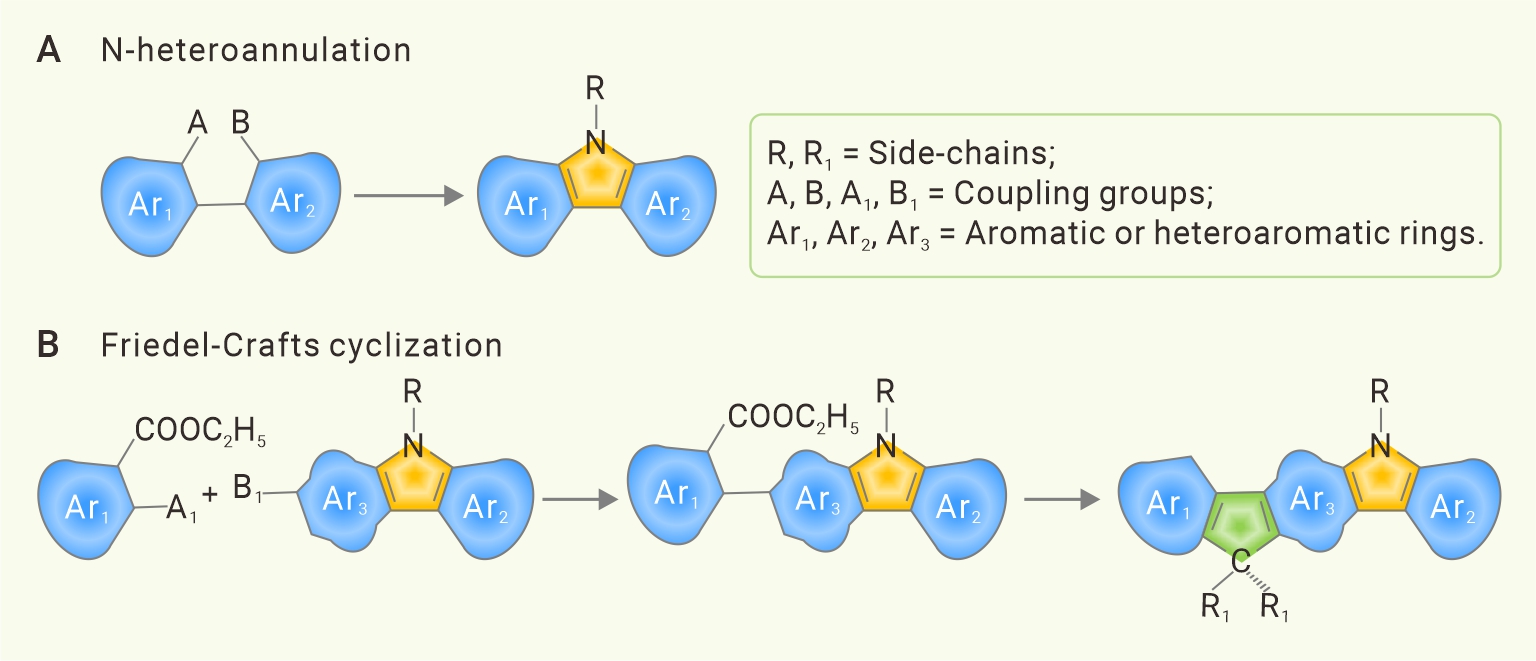
Figure 2.
Schematic diagram of the strategies for constructing pyrrole-containing ladder-type conjugated frameworks.
-
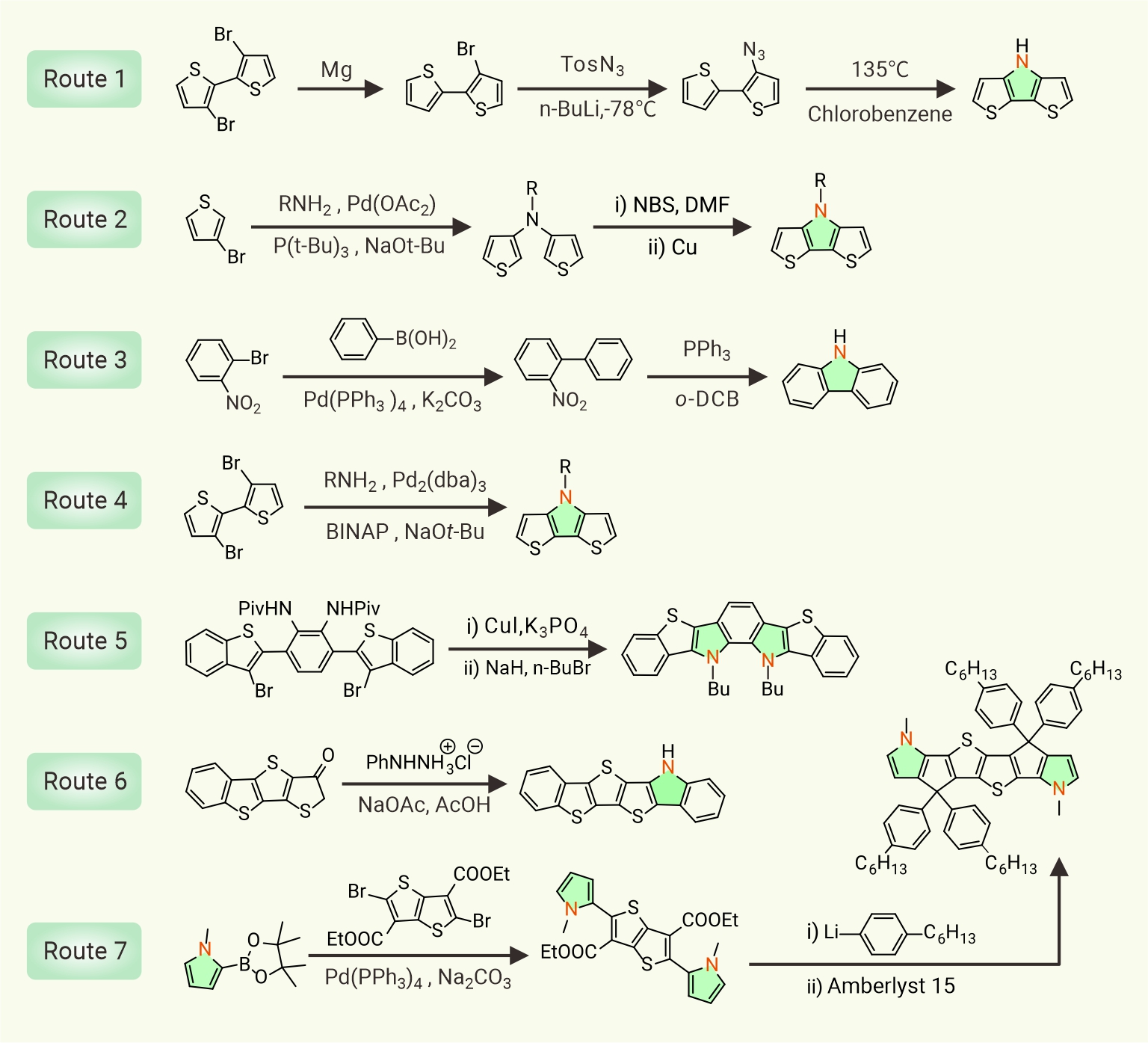
Figure 3.
Some examples on the synthesis of pyrrole-containing multifused-rings by N-heteroannulation and Friedel-Crafts cyclization.
-
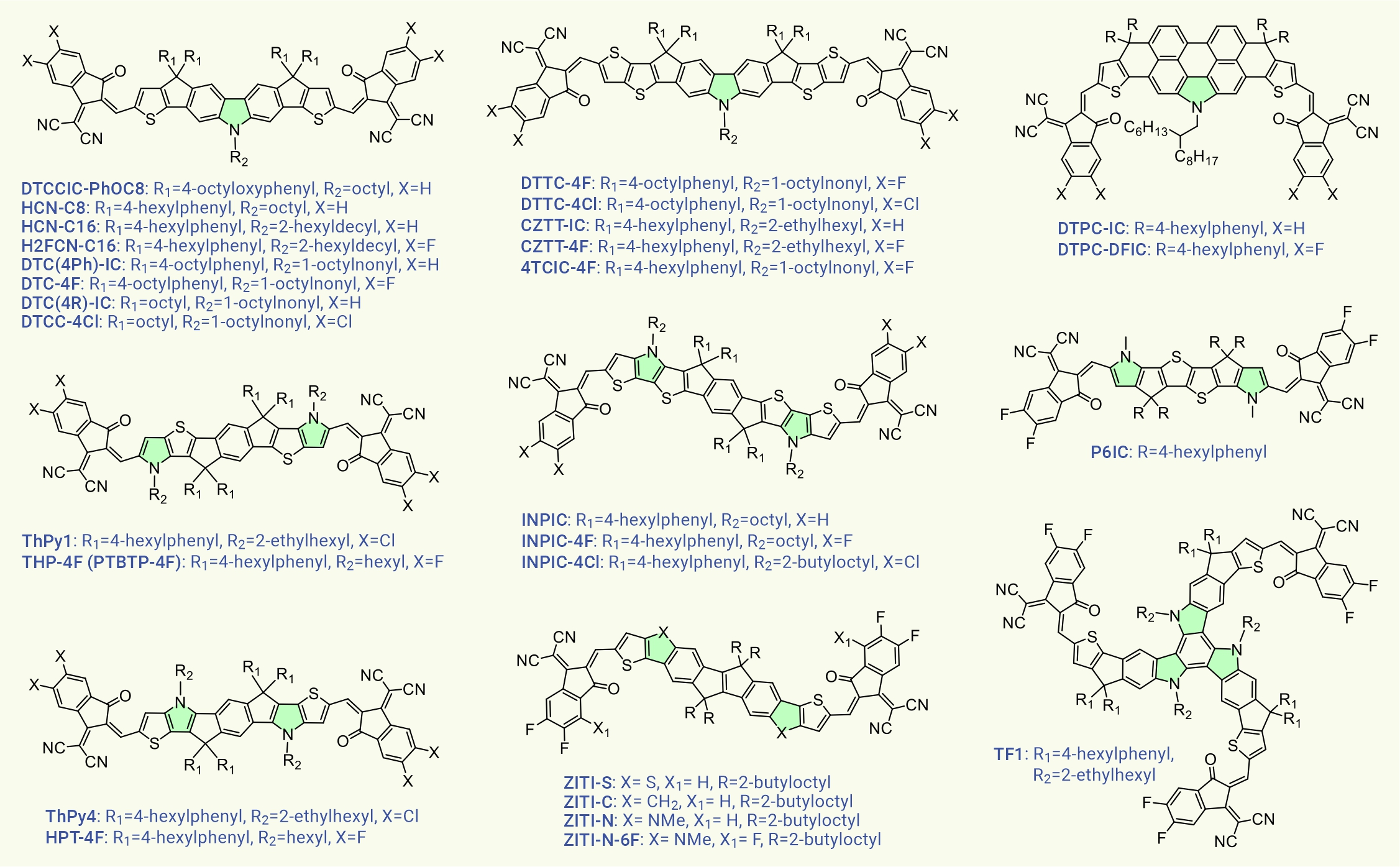
Figure 4.
Chemical structures of typical pyrrole-containing FREAs based on carbon-bridged ladder-type donor cores.
-
Figure 5.
Chemical structures of typical A-D-A-type FREAs with sp3-hybridized-carbon-free conjugated skeletons.
-
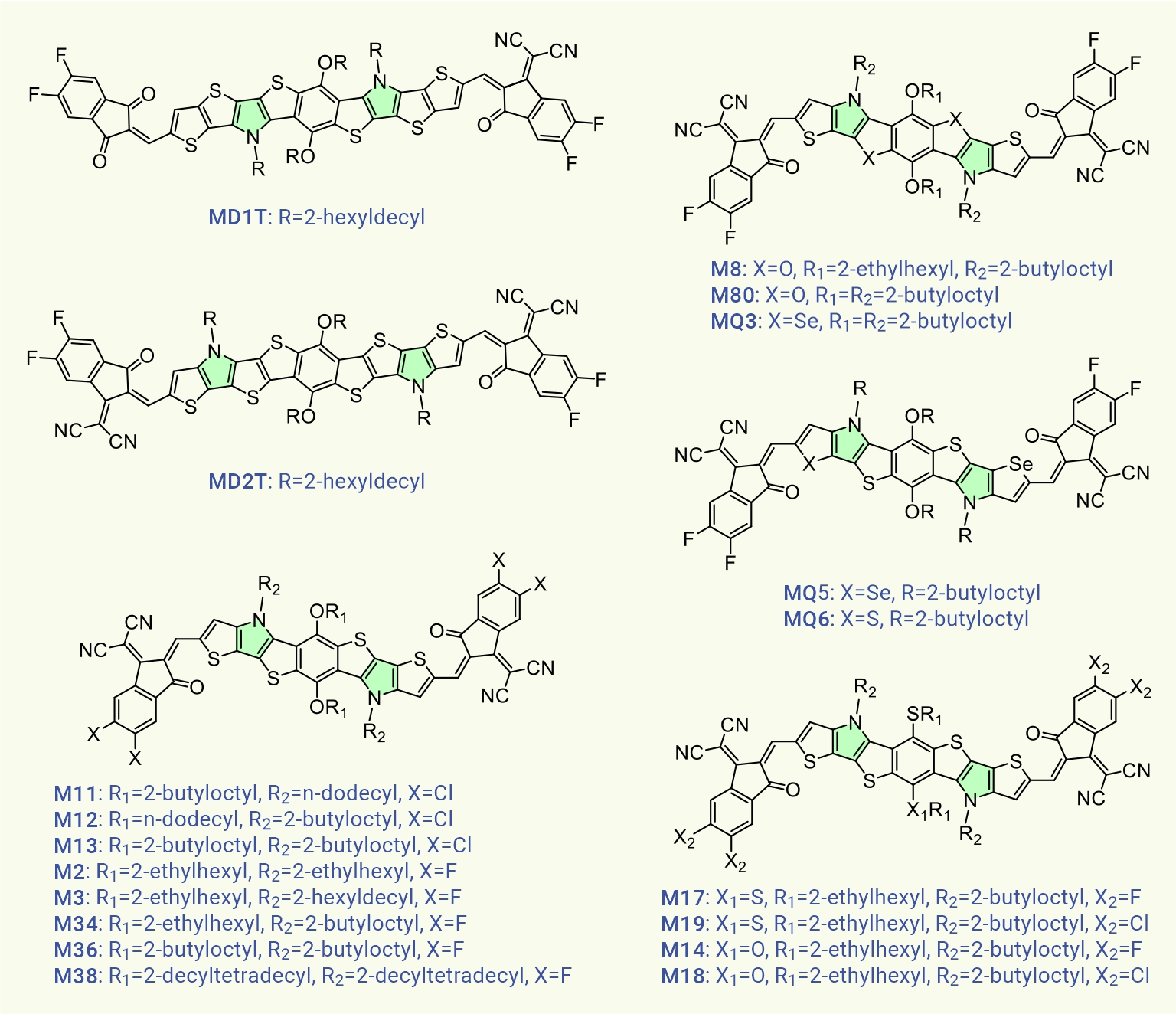
Figure 6.
Chemical structures of typical M-series FREAs.
-
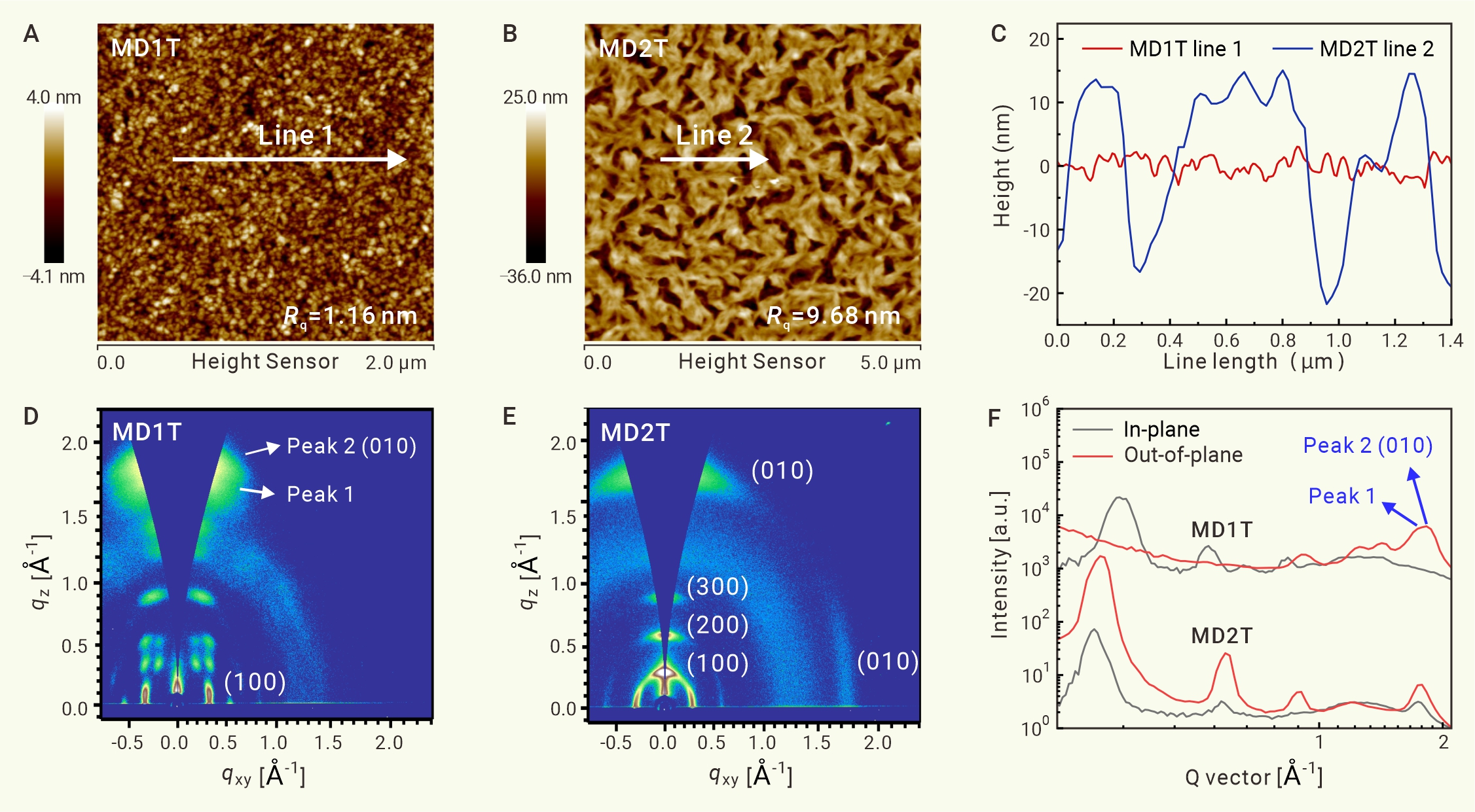
Figure 7.
Atomic force microscopy images and grazing-incidence wide-angle X-ray scattering patterns
-
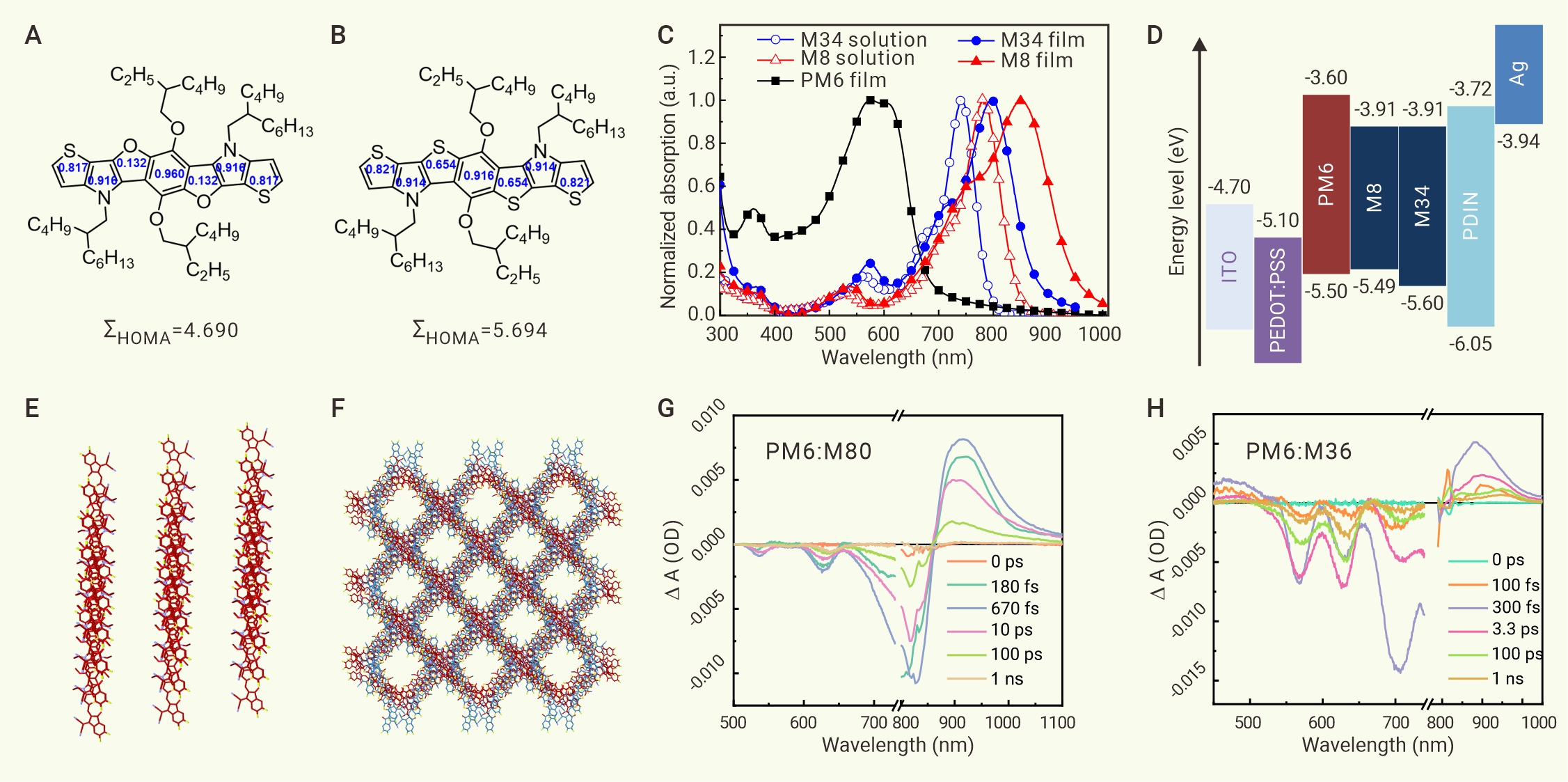
Figure 8.
Calculated HOMA values, absorption spectra, energy levels, X-ray crystallographic packing motifs, and TA spectra
