
Large crystalline domains homogenization via solvent exchange-coupled dry annealing for ultrastrong and ultratough hydrogels
-
GRAPHICAL ABSTRACT

 DownLoad:
Full size image
DownLoad:
Full size image
-
PUBLIC SUMMARY
-
An integrated solvent exchange and dry annealing approach to prepare polyvinyl alcohol hydrogels.
Toughening hydrogel with uniformly distributed, large, and densely crosslinked crystalline domains.
Achieved an ultrahigh tensile strength of 34.15 MPa and a toughness of 95.21 MJ m–3.
-
-
ABSTRACT
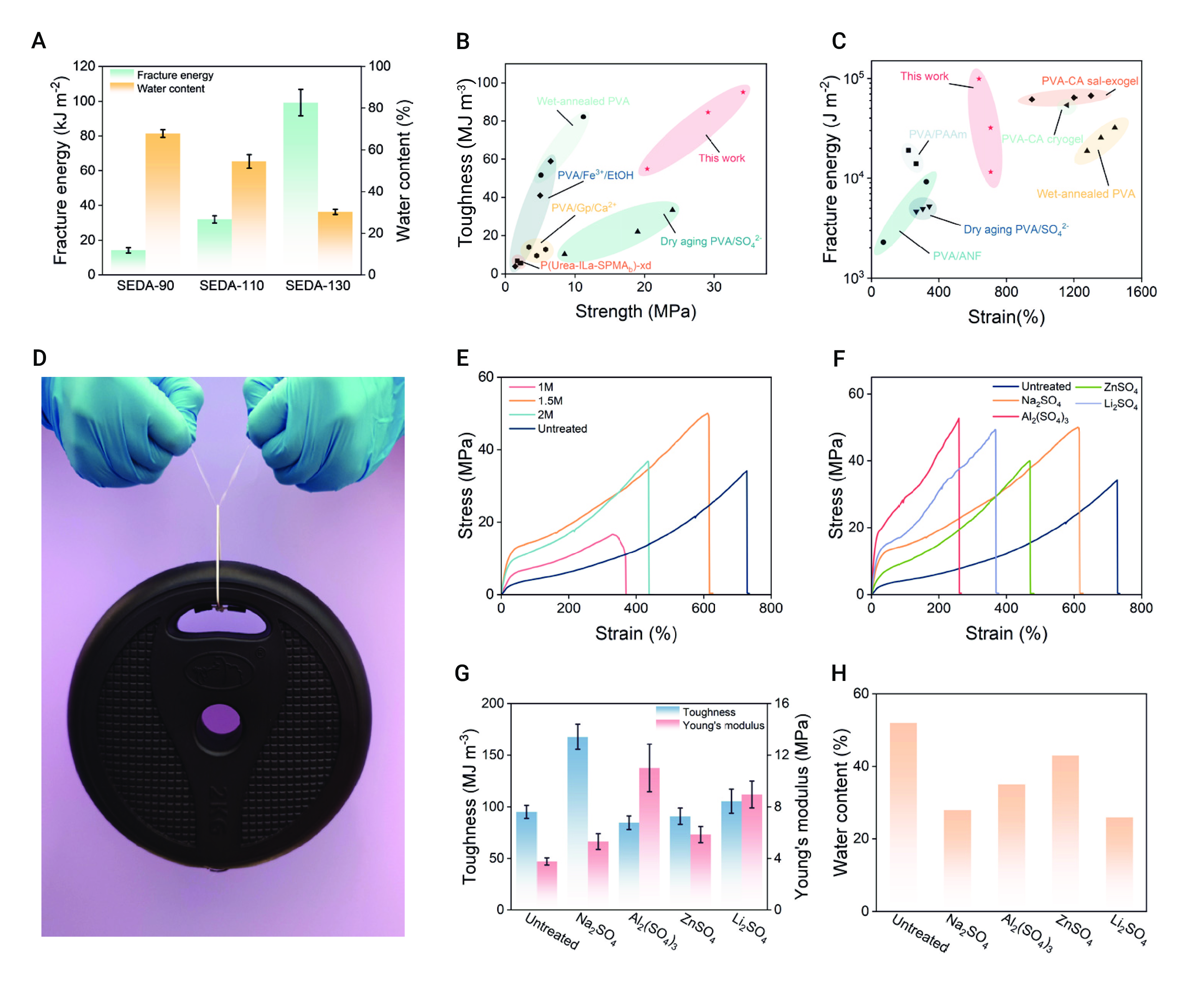
Current hydrogel fabrication techniques often fall short of simultaneously optimizing key structural parameters, such as network uniformity, crosslinking density, and crystalline domain size, essential for achieving superior mechanical performance. Herein, we introduce a solvent exchange coupled dry-annealing technique, revolutionizing the synthesis of polyvinyl alcohol (PVA) hydrogels. This strategy seamlessly integrates the uniformity afforded by solvent exchange with the benefits of anisotropic densification and crystallization induced by dry annealing, thereby transforming the microstructural configuration of polymer networks, achieving unprecedented uniformity, along with adjustable crystalline domains density and size. Consequently, the resulting PVA hydrogels feature a robust, highly organized network with densely packed, and large crystalline domains. These hydrogels exhibit extraordinary mechanical strength with stress levels reaching 34.15 MPa and toughness (up to 95.21 MJ m-3) , supplemented by a fracture energy of 99.2 kJ m-2, significantly outperforming traditional hydrogels. Further enhancement of mechanical properties was achieved through a salting-out process, boosting strength to 52.5 MPa and toughness to 167.9 MJ m-3. This advancement not only ushers in a new era of hydrogel technology but also opens avenues for creating advanced hydrogels with tailored mechanical properties for a variety of sophisticated applications.-
Keywords:
- Hydrogel /
- Mechanical properties /
- Crystalline domain /
- Solvent exchange /
- Dry annealing
-

-
REFERENCES
[1] Yuk, H., Varela, C.E., Nabzdyk, C.S., et al. (2019). Dry double-sided tape for adhesion of wet tissues and devices. Nature 575: 169−174. DOI: 10.1038/s41586-019-1710-5. [2] Li, S., Yang, H., Zhu, N., et al. (2023). Biotissue-inspired anisotropic carbon fiber composite hydrogels for logic gates, integrated soft actuators, and sensors with ultra-high sensitivity. Adv. Funct. Mater. 33: 2211189. DOI: 10.1002/adfm.202211189. [3] Bertsch, P., Diba, M., Mooney, D.J., et al. (2023). Self-healing injectable hydrogels for tissue regeneration. Chem. Rev. 123: 834−873. DOI: 10.1021/acs.chemrev.2c00179. [4] Sun, X., Pang, Z., Zhu, Y., et al. (2023). All-cellulose hydrogel-based adhesive. The Innovation Materials 1: 100040. DOI: 10.59717/j.xinn-mater.2023.100040. [5] He, Z., Chen, Y., Li, J., et al. (2024). Hofmeister effect regulated gel iontronic sensor for wide-range pressure perception. The Innovation Materials 2 . DOI: 10.59717/j.xinn-mater.2024.100078. [6] Zhang, Y., Zhang, Y., Deng, J., et al. (2024). In situ electrochemically-bonded self-adapting polymeric interface for durable aqueous zinc ion batteries. Adv. Funct. Mater. 34: 2310995. DOI: 10.1002/adfm.202310995. [7] Huang, Z., Yang, S., Zhang, Y., et al. (2024). Ultrathin reed membranes: Nature's intimate ion-regulation skins safeguarding zinc metal anodes in aqueous batteries. Adv. Energy Mater. 14: 2400033. DOI: 10.1002/aenm.202400033. [8] Zeng, Z., Yu, L., Yang, S., et al. (2024). Tuning water-cellulose interactions via copper-coordinated mercerization for hydro-actuated, shape-memory cellulosic hydroplastics. Matter 7: 3036−3052. DOI: 10.1016/j.matt.2024.04.033. [9] Zhang, Z., Chen, G., Xue, Y., et al. (2023). Fatigue-resistant conducting polymer hydrogels as strain sensor for underwater robotics. Adv. Funct. Mater. 33: 2305705. DOI: 10.1002/adfm.202305705. [10] Liang, X., Chen, G., Lin, S., et al. (2022). Bioinspired 2d isotropically fatigue-resistant hydrogels. Adv. Mater. 34: 2107106. DOI: 10.1002/adma.202107106. [11] Zhang, Y.S., and Khademhosseini, A. (2017). Advances in engineering hydrogels. Science 356: eaaf3627. DOI: 10.1126/science.aaf3627. [12] Ye, Y., Wan, Z., Gunawardane, P.D.S.H., et al. (2024). Ultra-stretchable and environmentally resilient hydrogels via sugaring-out strategy for soft robotics sensing. Adv. Funct. Mater. 34: 2315184. DOI: 10.1002/adfm.202315184. [13] Cui, W., King, D.R., Huang, Y., et al. (2020). Fiber-reinforced viscoelastomers show extraordinary crack resistance that exceeds metals. Adv. Mater. 32: 1907180. DOI: 10.1002/adma.201907180. [14] Ni, J., Lin, S., Qin, Z., et al. (2021). Strong fatigue-resistant nanofibrous hydrogels inspired by lobster underbelly. Matter 4: 1919−1934. DOI: 10.1016/j.matt.2021.03.023. [15] Yang, X., Xu, L., Wang, C., et al. (2023). Reinforcing hydrogel by nonsolvent-quenching-facilitated in situ nanofibrosis. Adv. Mater. 35: 2303728. DOI: 10.1002/adma.202303728. [16] Li, G., Huang, K., Deng, J., et al. (2022). Highly conducting and stretchable double-network hydrogel for soft bioelectronics. Adv. Mater. 34: 2200261. DOI: 10.1002/adma.202200261. [17] Zhang, M., Yang, Y., Li, M., et al. (2023). Toughening double-network hydrogels by polyelectrolytes. Adv. Mater. 35: 2301551. DOI: 10.1002/adma.202301551. [18] Ji, D., Park, J.M., Oh, M.S., et al. (2022). Superstrong, superstiff, and conductive alginate hydrogels. Nat. Commun. 13: 3019. DOI: 10.1038/s41467-022-30691-z. [19] Wu, S., Hua, M., Alsaid, Y., et al. (2021). Poly(vinyl alcohol) hydrogels with broad-range tunable mechanical properties via the hofmeister effect. Adv. Mater. 33: 2007829. DOI: 10.1002/adma.202007829. [20] Wu, Y., Zhang, Y., Wu, H., et al. (2023). Solvent-exchange-assisted wet annealing: A new strategy for superstrong, tough, stretchable, and anti-fatigue hydrogels. Adv. Mater. 35: 2210624. DOI: 10.1002/adma.202210624. [21] Liang, X., Chen, G., Lin, S., et al. (2021). Anisotropically fatigue-resistant hydrogels. Adv. Mater. 33: 2102011. DOI: 10.1002/adma.202102011. [22] Sun, X., Mao, Y., Yu, Z., et al. (2024). A biomimetic “salting out – alignment – locking” tactic to design strong and tough hydrogel. Adv. Mater. 36: 2400084. DOI: 10.1002/adma.202400084. [23] Hua, M., Wu, S., Ma, Y., et al. (2021). Strong tough hydrogels via the synergy of freeze-casting and salting out. Nature 590: 594−599. DOI: 10.1038/s41586-021-03212-z. [24] Xu, L., Qiao, Y., and Qiu, D. (2023). Coordinatively stiffen and toughen hydrogels with adaptable crystal-domain cross-linking. Adv. Mater. 35: 2209913. DOI: 10.1002/adma.202209913. [25] Liu, J., Lin, S., Liu, X., et al. (2020). Fatigue-resistant adhesion of hydrogels. Nat. Commun. 11: 1071. DOI: 10.1038/s41467-020-14871-3. [26] Otsuka, E., and Suzuki, A. (2009). A simple method to obtain a swollen pva gel crosslinked by hydrogen bonds. Appl. Polym. Sci. 114: 10−16. DOI: 10.1002/app.30546. [27] Otsuka, E., Komiya, S., Sasaki, S., et al. (2012). Effects of preparation temperature on swelling and mechanical properties of pva cast gels. Soft Matter 8: 8129−8136. DOI: 10.1039/C2SM25513H. [28] Deng, J., Chen, N., Yang, S., et al. (2024). Supercooling-driven homogenization and strengthening of hydrogel networks. ACS Appl. Mater. Interfaces. DOI: 10.1021/acsami.4c11192. [29] Peppas, N.A., and Merrill, E.W. (1976). Poly(vinyl alcohol) hydrogels: Reinforcement of radiation-crosslinked networks by crystallization. J. Appl. Polym. Sci. 14: 441−457. DOI: 10.1002/pol.1976.170140215. [30] Tang, N., Jiang, Y., Wei, K., et al. (2024). Evolutionary reinforcement of polymer networks: A stepwise-enhanced strategy for ultrarobust eutectogels. Adv. Mater. 36: 2309576. DOI: 10.1002/adma.202309576. [31] Hou, Y., Chen, C., Liu, K., et al. (2015). Preparation of pva hydrogel with high-transparence and investigations of its transparent mechanism. RSC Adv. 5: 24023−24030. DOI: 10.1039/C5RA01280E. [32] Cheng, H., Zhao, Y., Wei, X., et al. (2024). Supercooling and solvent depletion-driven poly(vinyl alcohol) film formation mechanism as elucidated by in situ synchrotron radiation x-ray scattering. Macromolecules 57: 1569−1580. DOI: 10.1021/acs.macromol.3c02640. [33] Zhang, R., Zhang, Q., Ji, Y., et al. (2018). Stretch-induced complexation reaction between poly(vinyl alcohol) and iodine: An in situ synchrotron radiation small- and wide-angle x-ray scattering study. Soft Matter 14: 2535−2546. DOI: 10.1039/C7SM02155K. [34] Men, Y., Rieger, J., Lindner, P., et al. (2005). Structural changes and chain radius of gyration in cold-drawn polyethylene after annealing: Small- and wide-angle x-ray scattering and small-angle neutron scattering studies. J. Phys. Chem. B 109: 16650−16657. DOI: 10.1021/jp052723g. [35] Lin, S., Liu, X., Liu, J., et al. (2019). Anti-fatigue-fracture hydrogels. Sci. Adv. 5: eaau8528. DOI: 10.1126/sciadv.aau8528. [36] Liu, D., Cao, Y., Jiang, P., et al. (2023). Tough, transparent, and slippery pva hydrogel led by syneresis. Small 19: e2206819. DOI: 10.1002/smll.202206819. [37] Wan, H., Wu, B., Hou, L., et al. (2024). Amphibious polymer materials with high strength and superb toughness in various aquatic and atmospheric environments. Adv. Mater. 36: 2307290. DOI: 10.1002/adma.202307290. [38] Dong, X., Guo, X., Liu, Q., et al. (2022). Strong and tough conductive organo-hydrogels via freeze-casting assisted solution substitution. Adv. Funct. Mater. 32: 2203610. DOI: 10.1002/adfm.202203610. [39] Liao, T., Yang, X., Zhao, X., et al. (2021). Gaussian and non-gaussian distributions of fracture properties in tensile stretching of high-density polyethylene. Macromolecules 54: 8860−8874. DOI: 10.1021/acs.macromol.1c00944. [40] Chen, K., Liang, K., Liu, H., et al. (2023). Skin-inspired ultra-tough supramolecular multifunctional hydrogel electronic skin for human–machine interaction. Nanomicro Lett 15: 102. DOI: 10.1007/s40820-023-01084-8. [41] Long, T., Li, Y., Fang, X., et al. (2018). Salt-mediated polyampholyte hydrogels with high mechanical strength, excellent self-healing property, and satisfactory electrical conductivity. Adv. Funct. Mater. 28: 1804416. DOI: 10.1002/adfm.201804416. [42] Xu, L., Zhao, X., Xu, C., et al. (2018). Water-rich biomimetic composites with abiotic self-organizing nanofiber network. Adv. Mater. 30: 1703343. DOI: 10.1002/adma.201703343. [43] Li, J., Suo, Z., and Vlassak, J.J. (2014). Stiff, strong, and tough hydrogels with good chemical stability. J. Mater. Chem. B 2: 6708−6713. DOI: 10.1039/C4TB01194E. -
ABOUT THIS ARTICLE
Cite this article:
Chen N., Deng J., Yang S., et al., (2024). Large crystalline domains homogenization via solvent exchange-coupled dry annealing for ultrastrong and ultratough hydrogels. The Innovation Materials 2(4): 100101. https://doi.org/10.59717/j.xinn-mater.2024.100101
Welcome!
To request copyright permission to republish or share portions of our works, please visit Copyright Clearance Center's (CCC) Marketplace website at marketplace.copyright.com.
Article Metrics
Relative Articles
Cited by
Export File
Citation
Chen N., Deng J., Yang S., et al., (2024). Large crystalline domains homogenization via solvent exchange-coupled dry annealing for ultrastrong and ultratough hydrogels. The Innovation Materials 2(4): 100101. https://doi.org/10.59717/j.xinn-mater.2024.100101

Format
Content

-
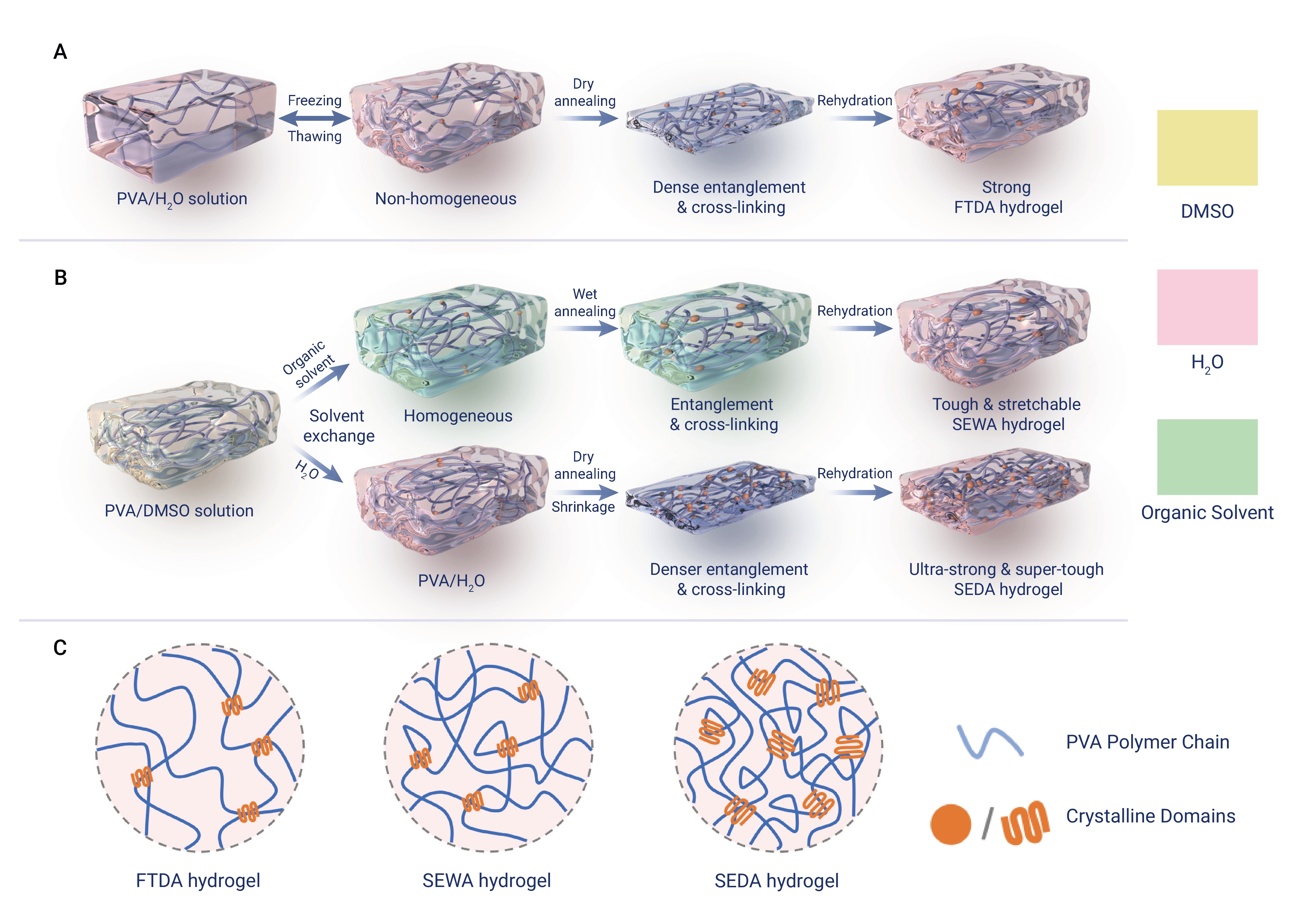
Figure 1.
Comparative overview of hydrogel fabrication techniques
-
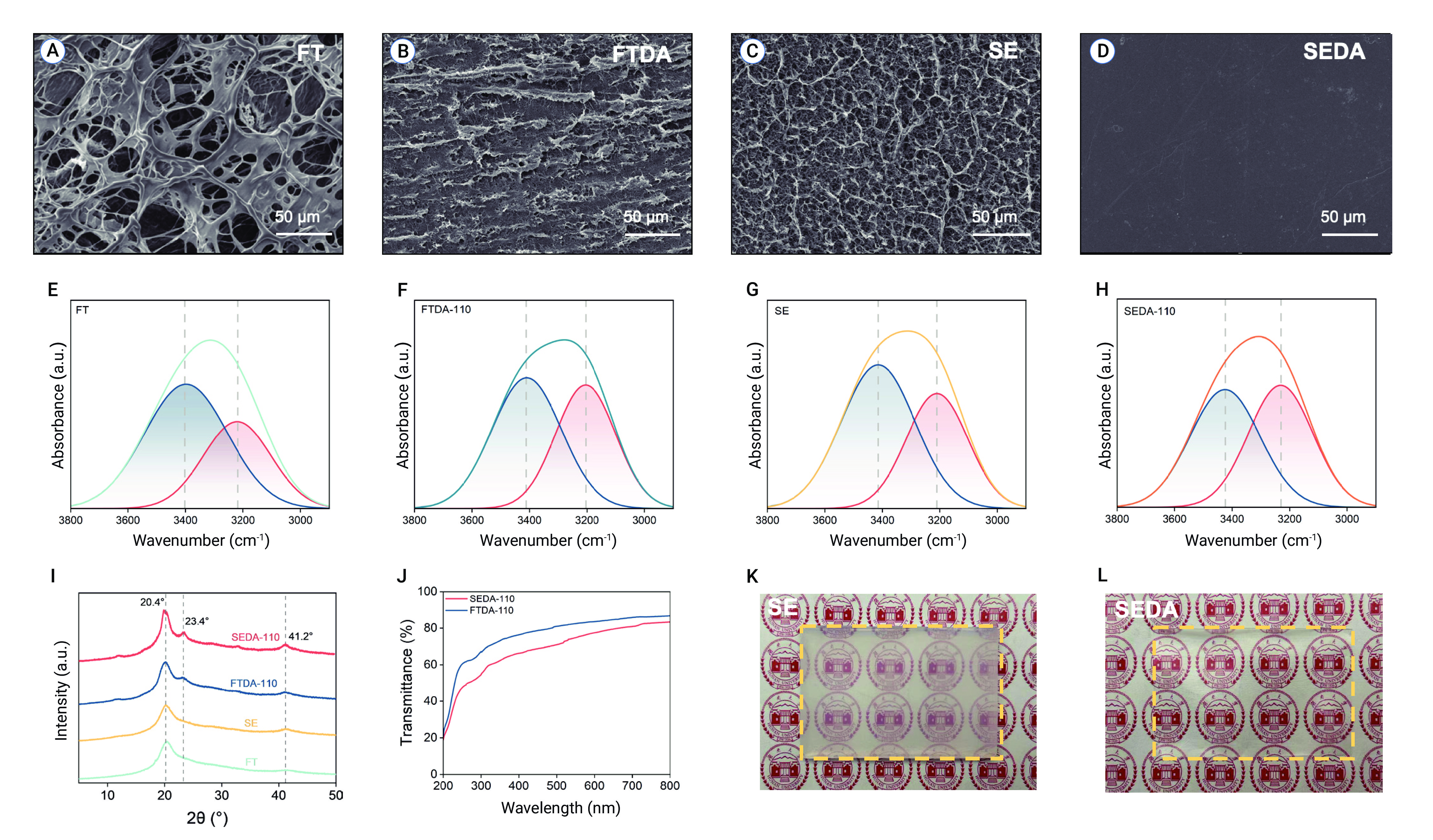
Figure 2.
Evolution of hydrogel structures
-
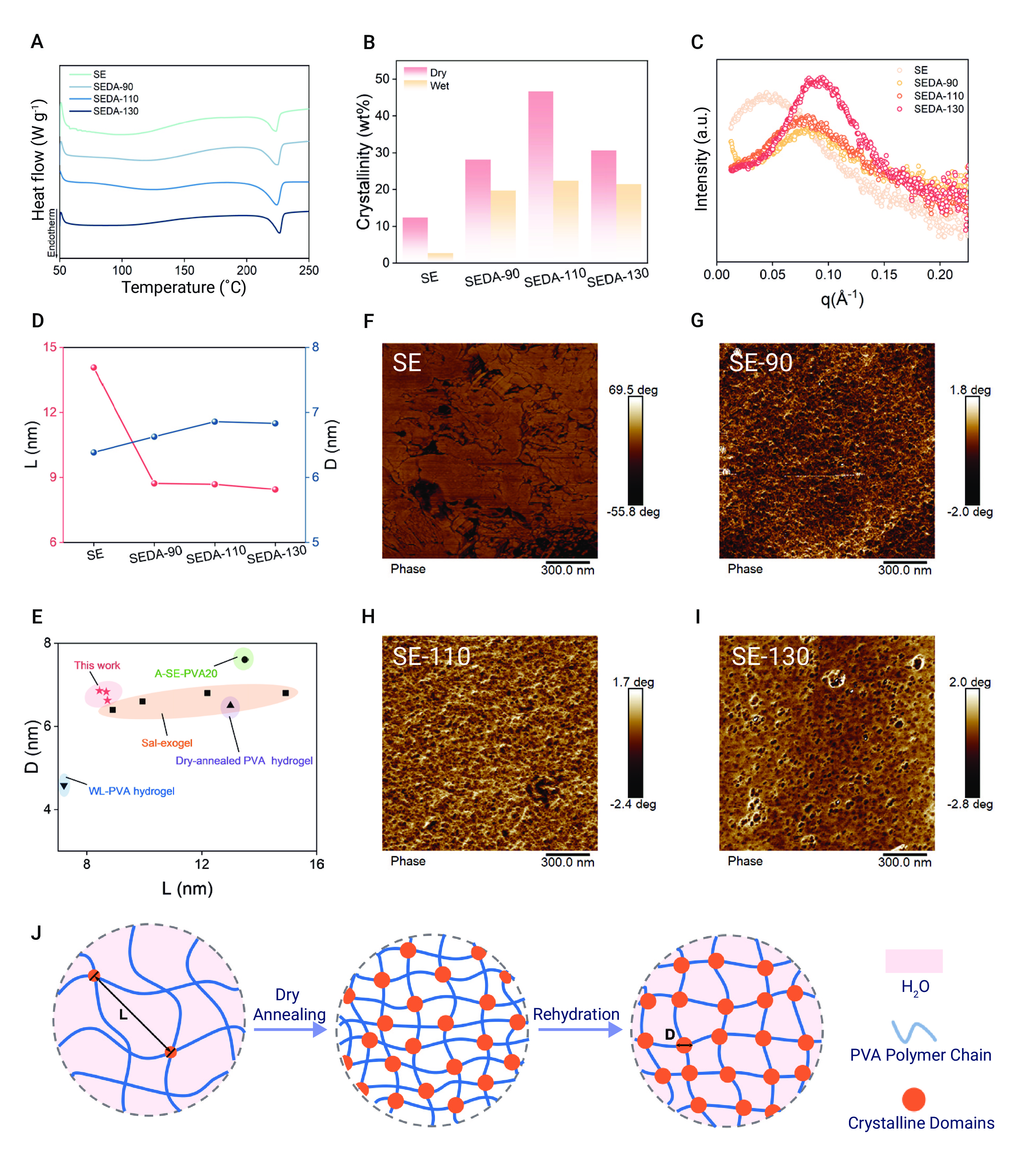
Figure 3.
Crystallinity enhancement in hydrogel structural evolution
-
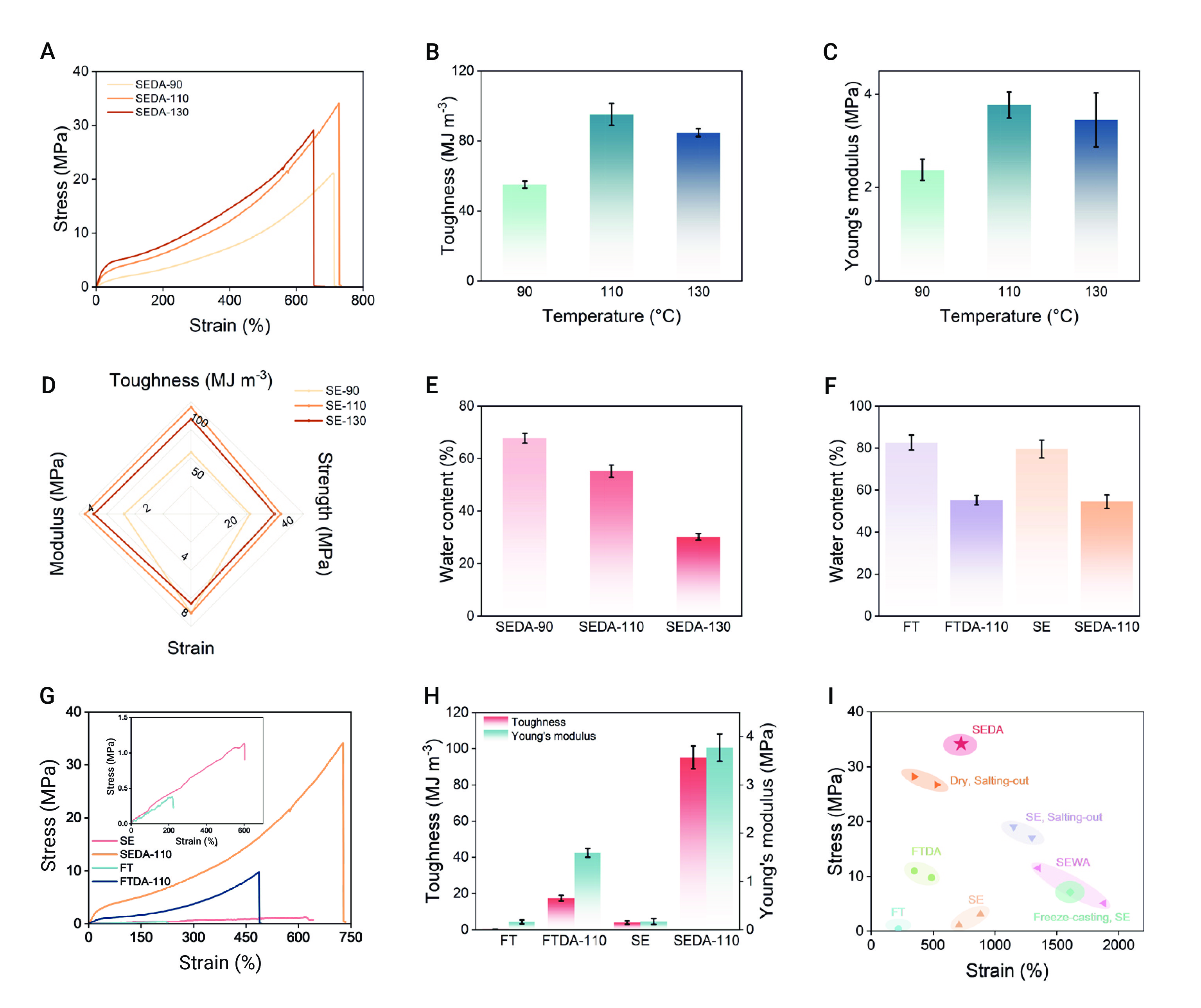
Figure 4.
Mechanical characterization of hydrogels
-
Figure 5.
Structural changes of SEDA-110 hydrogel during tensile deformation
-
Figure 6.
Tunable mechanical properties of PVA Hydrogels produced by SEDA method
