
Regulating the spin state of triple-atom catalysts for improved oxygen electrocatalysis in zinc-air batteries at subzero temperature
-
GRAPHICAL ABSTRACT
 DownLoad:
Full size image
DownLoad:
Full size image
-
PUBLIC SUMMARY
-
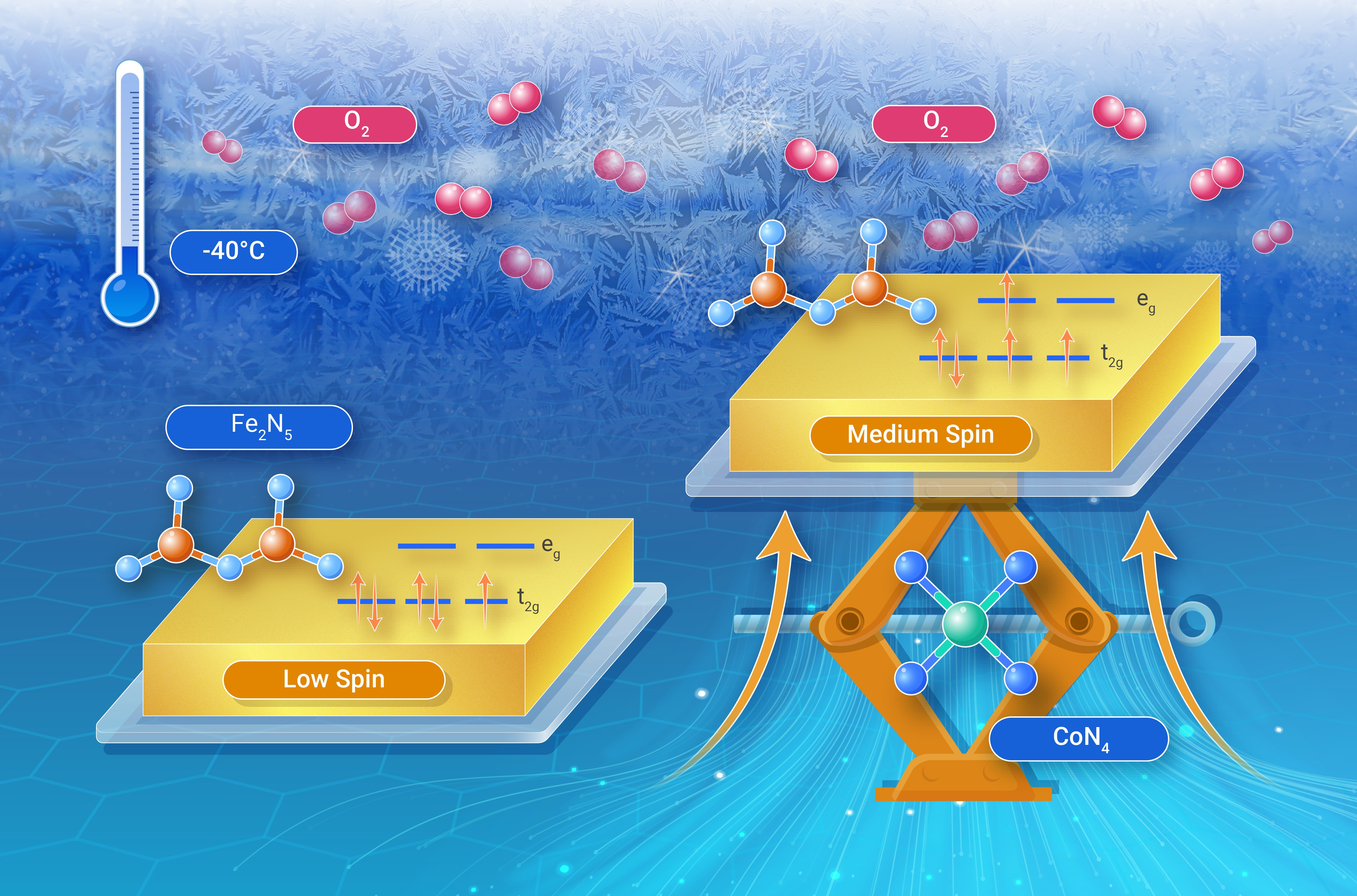
Single CoN4 site was introduced to modulate the spin state of dual-atom Fe2N5.
The Fe2/Co-NHCS with medium spin state demonstrates excellent oxygen reduction reaction performance.
Zinc-air batteries powered by Fe2/Co-NHCS demonstrate superior performance at normal and low temperature.
-
-
ABSTRACT
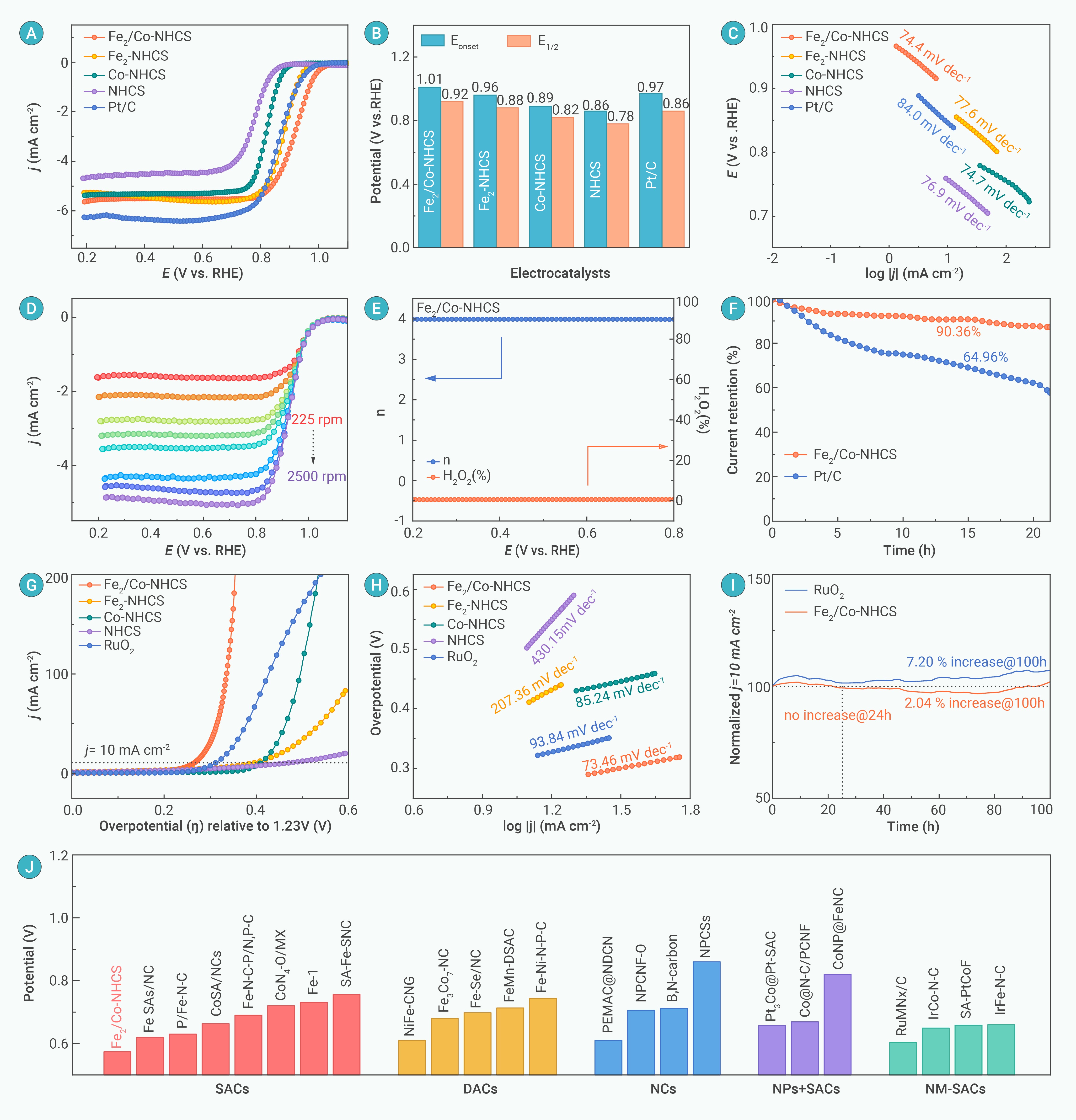
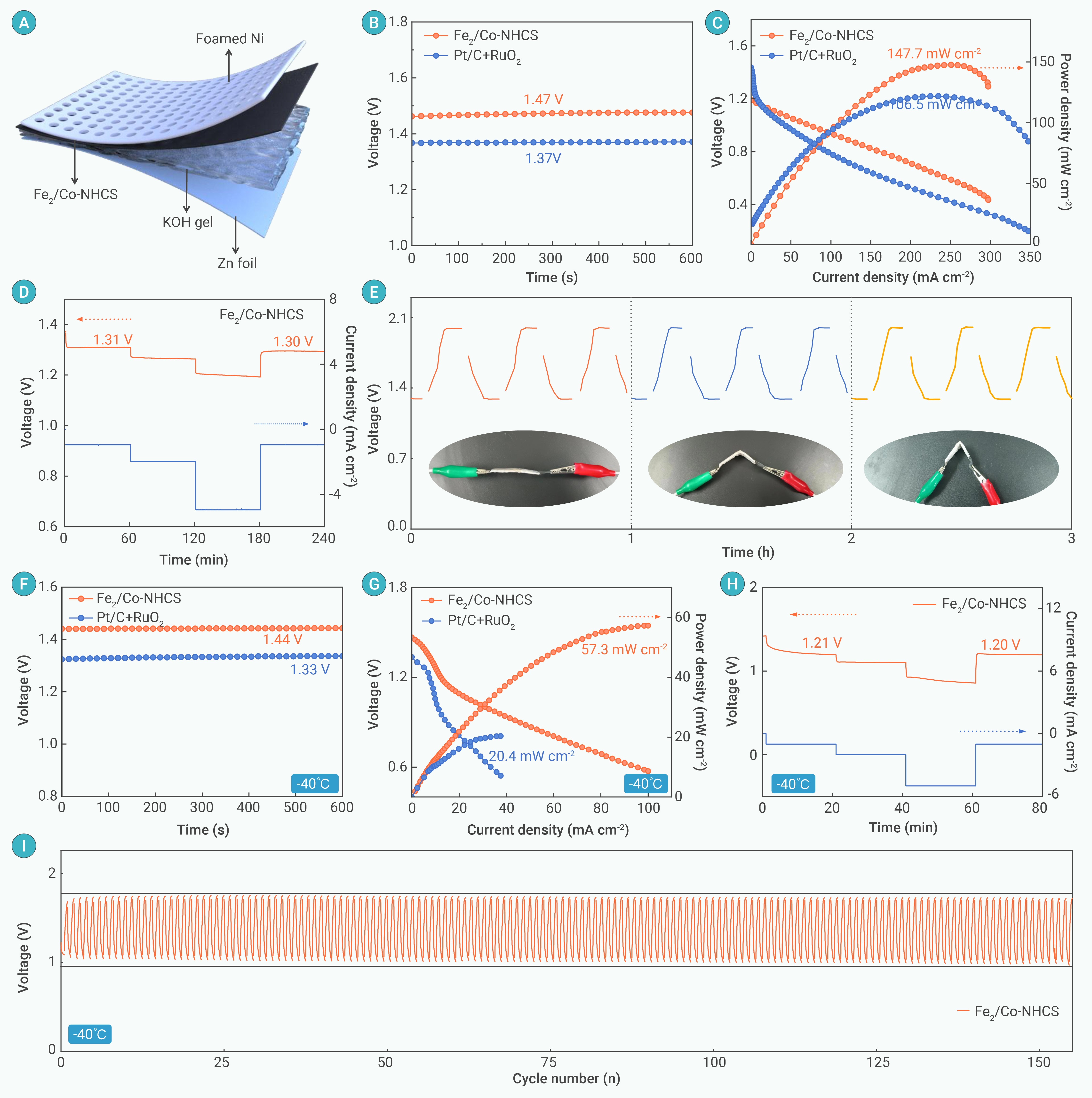
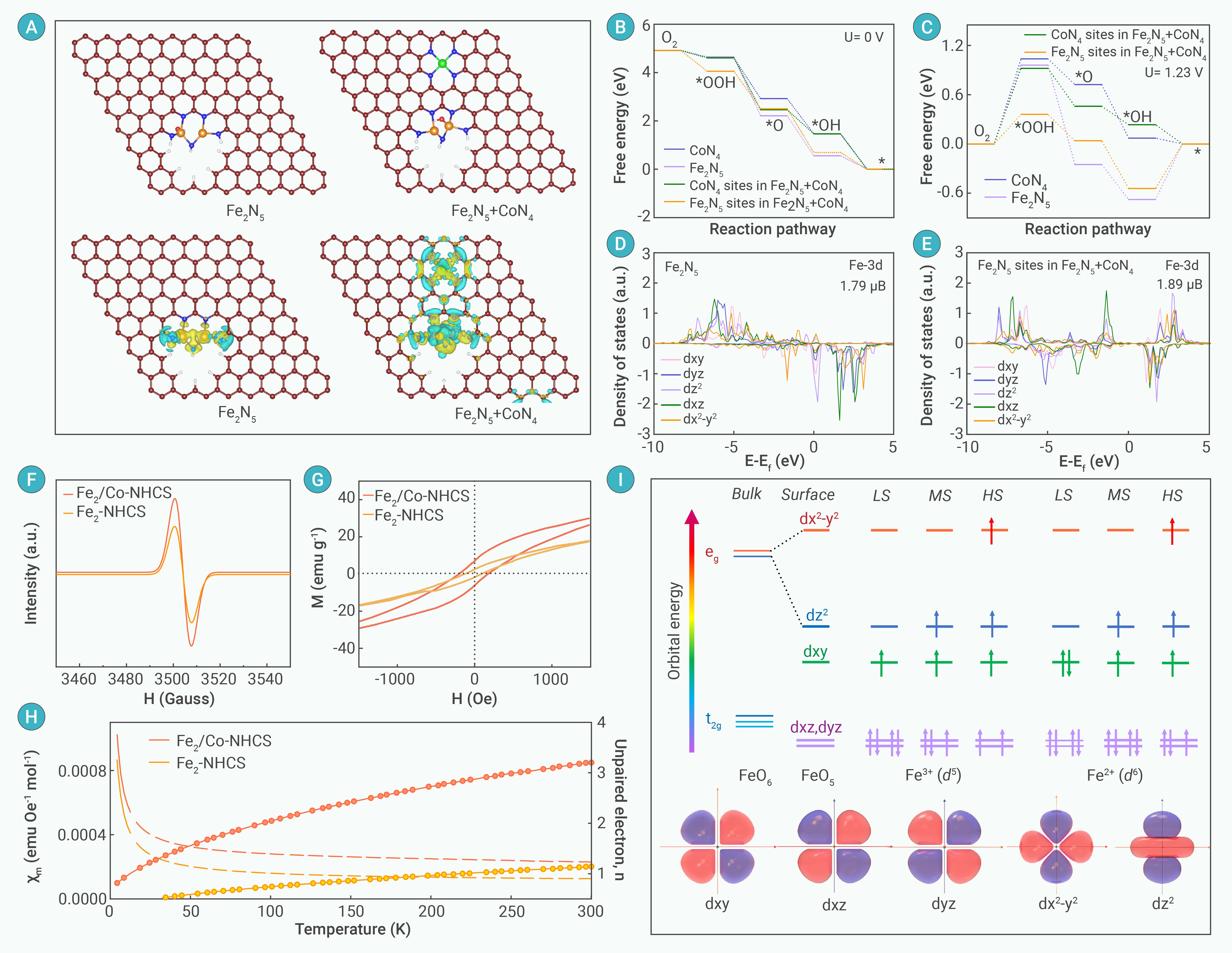
Triple-atom catalysts (TACs), building upon dual-atom catalysts, have demonstrated exceptional catalytic activity toward oxygen reduction reaction (ORR). Nevertheless, advancing the catalytic activity of TACs for application in low-temperature (Low-T) energy conversion devices remains a formidable challenge, primarily limited by the slow capture efficiency of oxygen reactants at catalytic sites. In this work, utilizing Fe-Fe double atomic pairs as a foundational research model, we plant the CoN4 site adjacent to activate them to construct efficient ORR electrocatalysts (named as Fe2/Co-NHCS) featuring the Fe2N5+CoN4 tri-atomic structure. The adjacent CoN4 site can optimize the spin state of the Fe-Fe double atomic pairs from low to medium spin with ${ {t}_{{2g}^{4}}} $ ${ {e}_{{g}^{1}} }$3d-electron configuration, which makes the catalysts bind with oxygen reactants more readily to complete ORR process. As anticipated, the Fe2/Co-NHCS achieved a high half-wave potential of 0.92 V. Moreover, the flexible Zn-air batteries powered by Fe2/Co-NHCS deliver a large peak power density of 57.3 mW cm-2 and brilliant charge-discharge stability over 150 stable cycles at -40°C. This research advances ORR electrocatalysts by modulating the electron spin states at diatomic Fe sites, paving a viable route for expanding the application range of ZABs in low-temperature environment. -

-
REFERENCES
[1] Zhao C. X., Liu X., Liu J. N., et al. (2023). Inductive effect on single-atom sites. J. Am. Chem. Soc. 145:27531−27538. DOI:10.1021/jacs.3c09190 [2] Zhang C., Wang X., Ma Z., et al. (2023). Spin state modulation on dual Fe center by adjacent Ni sites enabling the boosted activities and ultra-long stability in Zn-air batteries. Sci. Bull. 68:2042−2053. DOI:10.1016/j.scib.2023.07.049 [3] Sun J.-K., Pan Y.-W., Xu M.-Q., et al. (2023). Heteroatom doping regulates the catalytic performance of single-atom catalyst supported on graphene for ORR. Nano Res. 17:1086−1093. DOI:10.1007/s12274-023-5898-1 [4] Zhao Y., Tian Z., Wang W., et al. (2024). Size-dependent activity of Fe-N-doped mesoporous carbon nanoparticles towards oxygen reduction reaction. Green Carbon 2:221−230. DOI:10.1016/j.greenca.2024.03.002 [5] Kang D., Zhang C., Wang X., et al. (2024). Efficient atomically dispersed Fe catalysts with robust three-phase interface for stable seawater-based zinc-air batteries. Green Carbon 3:1−10. DOI:10.1016/j.greenca.2024.09.002 [6] Li S., Shi L., Guo Y., et al. (2024). Selective oxygen reduction reaction: mechanism understanding, catalyst design and practical application. Chem. Sci. 15:11188−11228. DOI:10.1039/d4sc02853h [7] Dan M., Zhang X., Yang Y., et al. (2024). Dual-axial engineering on atomically dispersed catalysts for ultrastable oxygen reduction in acidic and alkaline solutions. Proc. Natl. Acad. Sci. USA 121:2318174121. DOI:10.1073/pnas.2318174121 [8] Wang Y., Zhang C., Wang X., et al. (2023). Engineering carbon-chainmail-shell coated Co9Se8 nanoparticles as efficient and durable catalysts inseawater-based Zn-air batteries. Acta Phys-Chim. Sin. 40:2305004. DOI:10.3866/pku.Whxb202305004 [9] Chen J., Qiu C., Zhang L., et al. (2024). Wood-derived Fe cluster reinforced asymmetric single-atom catalysts and weather-resistant organohydrogel for wide temperature flexible Zn–air batteries. Energy Environ. Sci. 17:4746−4757. DOI:10.1039/d4ee01226g [10] Dong Y., Wang Y., Tian Z., et al. (2021). Enhanced catalytic performance of Pt by coupling with carbon defects. The Innovation 2:100161. DOI:10.1016/j.xinn.2021.100161 [11] Yuan Y., Adimi S., Thomas T., et al. (2021). Co3Mo3N-An efficient multifunctional electrocatalyst. The Innovation 2:100096. DOI:10.1016/j.xinn.2021.100096 [12] Xu L., Iqbal R., Wang Y., et al. (2024). Emerging two-dimensional materials: Synthesis, physical properties, and application for catalysis in energy conversion and storage. Innov. Mater. 2:100060. DOI:10.59717/j.xinn-mater.2024.100060 [13] Wang X., Zhou X., Li C., et al. (2022). Asymmetric Co-N3P1 trifunctional catalyst with tailored electronic structures enabling boosted activities and corrosion resistance in an uninterrupted seawater splitting system. Adv. Mater. 34:2204021. DOI:10.1002/adma.202204021 [14] Tong K., Xu L., Yao H., et al. (2024). Hydrogen spillover bridged dual nano-islands triggered by built-in electric field for efficient and robust alkaline hydrogen evolution at ampere-level current density. Nano Res. 17:5050−5060. DOI:10.1007/s12274-024-6520-x [15] Tang B., Zhou Y., Ji Q., et al. (2024). A Janus dual-atom catalyst for electrocatalytic oxygen reduction and evolution. Nat. Synth. 3:878−890. DOI:10.1038/s44160-024-00545-1 [16] Hao L., Gao Y., Robertson A. W., et al. (2024). A universal strategy for fabrication of dual atom materials for multifunctional electrocatalysis. Innov. Mater. 2:100050. DOI:10.59717/j.xinn-mater.2024.100050 [17] Zeng R., Gao Q., Xiao L., et al. (2024). Precise tuning of the d-band center of dual-atomic enzymes for catalytic therapy. J. Am. Chem. Soc. 146:10023−10031. DOI:10.1021/jacs.4c00791 [18] Li R., Zhang Z., Liang X., et al. (2023). Polystyrene waste thermochemical hydrogenation to ethylbenzene by a N-bridged Co, Ni dual-atom catalyst. J. Am. Chem. Soc. 145:16218−16227. DOI:10.1021/jacs.3c05184 [19] Zhang J., Zhao Y., Zhao W., et al. (2023). Improving electrocatalytic oxygen evolution through local field distortion in Mg/Fe dual-site catalysts. Angew. Chem. Int. Ed. 62:202314303. DOI:10.1002/anie.202314303 [20] Li L., Zhu J., Kong F., et al. (2024). Tailoring atomic strain environment for high-performance acidic oxygen reduction by Fe-Ru dual atoms communicative effect. Matter 7:1517−1532. DOI:10.1016/j.matt.2024.01.019 [21] Wang H., Yang T., Wang J., et al. (2024). Coordination engineering in single-site catalysts: General principles, characterizations, and recent advances. Chem 10:48−85. DOI:10.1016/j.chempr.2023.08.014 [22] Chen S., Wang T., Ma L., et al. (2022). Aqueous rechargeable zinc air batteries operated at −110°C. Chem 9:497−510. DOI:10.1016/j.chempr.2022.10.028 [23] Ye C., Zheng M., Li Z., et al. (2022). Electrical pulse induced one-step formation of atomically dispersed Pt on oxide clusters for ultra-low-temperature zinc-air battery. Angew. Chem. Int. Ed. 61:202213366. DOI:10.1002/anie.202213366 [24] Wang Y., Wu J., Tang S., et al. (2023). Synergistic Fe-Se atom pairs as bifunctional oxygen electrocatalysts boost low-temperature rechargeable Zn-air battery. Angew. Chem. Int. Ed. 62:202219191. DOI:10.1002/anie.202219191 [25] Wang Q., Tan Y., Tang S., et al. (2023). Edge-hosted Mn-N4-C12 site tunes adsorption energy for ultralow-temperature and high-capacity solid-state Zn-air battery. ACS Nano 17:9565−9574. DOI:10.1021/acsnano.3c02521 [26] Cui T., Wang Y. P., Ye T., et al. (2022). Engineering dual single-atom sites on 2D ultrathin N-doped carbon nanosheets attaining ultra-low-temperature zinc-air battery. Angew. Chem. Int. Ed. 61:202115219. DOI:10.1002/anie.202115219 [27] Yan Y., Wen B., Liu M., et al. (2024). Orienting electron fillings in d orbitals of cobalt single atoms for effective zinc–air battery at a subzero temperature. Adv. Funct. Mater. 34:2316100. DOI:10.1002/adfm.202316100 [28] Yang G., Zhu J., Yuan P., et al. (2021). Regulating Fe-spin state by atomically dispersed Mn-N in Fe-N-C catalysts with high oxygen reduction activity. Nat .Commun. 12:1734. DOI:10.1038/s41467-021-21919-5 [29] Xu S., Feng S., Yu Y., et al. (2024). Dual-site segmentally synergistic catalysis mechanism: boosting CoFeSx nanocluster for sustainable water oxidation. Nat. Commun. 15:1720. DOI:10.1038/s41467-024-45700-6 [30] Liu Y., Liu X., Lv Z., et al. (2022). Tuning the spin state of the iron center by bridge-bonded Fe-O-Ti ligands for enhanced oxygen reduction. Angew. Chem. Int. Ed. 61:202117617. DOI:10.1002/anie.202117617 [31] Zhang H., Chen H. C., Feizpoor S., et al. (2024). Tailoring oxygen reduction reaction kinetics of Fe-N-C catalyst via spin manipulation for efficient zinc-air batteries. Adv. Mater. 36:2400523. DOI:10.1002/adma.202400523 [32] Xue D., Yuan P., Jiang S., et al. (2023). Altering the spin state of Fe-N-C through ligand field modulation of single-atom sites boosts the oxygen reduction reaction. Nano Energy 105:108020. DOI:10.1016/j.nanoen.2022.108020 [33] Li Y., Ji Y., Zhao Y., et al. (2022). Local spin-state tuning of iron single-atom electrocatalyst by S-coordinated doping for kinetics-boosted ammonia synthesis. Adv. Mater. 34:2202240. DOI:10.1002/adma.202202240 [34] Sun Y., Sun S., Yang H., et al. (2020). Spin-related electron transfer and orbital interactions in oxygen electrocatalysis. Adv. Mater. 32:2003297. DOI:10.1002/adma.202003297 [35] Sheng X., Mei Z., Jing Q., et al. (2024). Revealing the orbital interactions between dissimilar metal sites during oxygen reduction process. Small 20:2305390. DOI:10.1002/smll.202305390 [36] Wang X., Xu L., Li C., et al. (2023). Developing a class of dual atom materials for multifunctional catalytic reactions. Nat. Commun. 14:7210. DOI:10.1038/s41467-023-42756-8 [37] Ni B., Shen P., Zhang G., et al. (2024). Second-shell N dopants regulate acidic O2 reduction pathways on isolated Pt sites. J. Am. Chem. Soc. 146:11181−11192. DOI:10.1021/jacs.3c14186 [38] Liu Y., Li J., Lv Z., et al. (2024). Efficient proton-exchange membrane fuel cell performance of atomic Fe sites via p-d hybridization with Al dopants. J. Am. Chem. Soc. 146:12636−12644. DOI:10.1021/jacs.4c01598 [39] Han A., Sun W., Wan X., et al. (2023). Construction of Co4 atomic clusters to enable Fe-N4 motifs with highly active and durable oxygen reduction performance. Angew. Chem. Int. Ed. 62:202303185. DOI:10.1002/anie.202303185 [40] Guo P., Liu B., Tu F., et al. (2024). Breaking Sabatier's vertex via switching the oxygen adsorption configuration and reaction pathway on dual active sites for acidic oxygen reduction. Energy Environ. Sci. 17:3077−3087. DOI:10.1039/d4ee00823e [41] Chen Z., Fan Q., Zhou J., et al. (2023). Toward understanding the formation mechanism and OER catalytic mechanism of hydroxides by In situ and operando techniques. Angew. Chem. Int. Ed. 62:202309293. DOI:10.1002/anie.202309293 [42] Zhou J., Ren Z., Qiao F., et al. (2024). Unraveling volcano trend in OER of metal–organic frameworks with asymmetric configuration through energy band engineering. Appl. Catal. B: Environ. Energy 353:124089. DOI:10.1016/j.apcatb.2024.124089 [43] Wang X., Yao H., Zhang C., et al. (2023). Double‐tuned RuCo dual metal single atoms and nanoalloy with synchronously expedited Volmer/Tafel kinetics for effective and ultrastable ampere‐level current density hydrogen production. Adv. Funct. Mater. 33:2301804. DOI:10.1002/adfm.202301804 [44] Lu X. F., Chen Y., Wang S., et al. (2019). Interfacing manganese oxide and cobalt in porous graphitic carbon polyhedrons boosts oxygen electrocatalysis for Zn-air batteries. Adv. Mater. 31:1902339. DOI:10.1002/adma.201902339 [45] Huang H., Sun M., Li S., et al. (2024). Enhancing H2O2 electrosynthesis at industrial-relevant current in acidic media on aiatomic cobalt sites. J. Am. Chem. Soc. 146:9434−9443. DOI:10.1021/jacs.4c02031 [46] Li Y., Zuo S., Wei F., et al. (2024). Boosted hydrogen evolution kinetics of heteroatom-doped carbons with isolated Zn as an accelerant. Proc. Natl. Acad. Sci. USA 121:2315362121. DOI:10.1073/pnas.2315362121 [47] Wang X., Zhang J., Wang P., et al. (2023). Terbium-induced cobalt valence-band narrowing boosts electrocatalytic oxygen reduction. Energy Environ. Sci. 16:5500−5512. DOI:10.1039/d3ee02503a [48] Shi L., Lin X., Liu F., et al. (2022). Geometrically deformed iron-based single-atom catalysts for high-performance acidic proton exchange membrane fuel cells. ACS Catal. 12:5397−5406. DOI:10.1021/acscatal.2c00915 [49] Liu J.-N., Zhao C.-X., Wang J., et al. (2024). A data-driven bifunctional oxygen electrocatalyst with a record-breaking ΔE = 0.57 V for ampere-hour-scale zinc-air batteries. Joule. 8:1804-1819DOI:10.1016/j.joule.2024.03.017 [50] Zhang Y. L., Liu B., Dai Y. K., et al. (2024). Engineering Co-N-Cr cross-interfacial electron bridges to break activity-stability trade-off for superdurable bifunctional single atom oxygen electrocatalysts. Angew. Chem. Int. Ed. 63:202400577. DOI:10.1002/anie.202400577 [51] Zhao B., Luo H., Liu J., et al. (2024). S-doped carbonized wood fiber decorated with sulfide heterojunction-embedded S, N-doped carbon microleaf arrays for efficient high-current-density oxygen evolution. Chin. Chem. Lett. 36:109919. DOI:10.1016/j.cclet.2024.109919 [52] Zhou S., Shi L., Li Y., et al. (2024). Metal‐organic framework‐based electrocatalysts for acidic water splitting. Adv. Funct. Mater. 34:2400767. DOI:10.1002/adfm.202400767 [53] Jing Q., Mei Z., Sheng X., et al. (2023). Tuning the bonding behavior of d‐p orbitals to enhance oxygen reduction through push–pull electronic effects. Adv. Funct. Mater. 34:2307002. DOI:10.1002/adfm.202307002 [54] Wang L., Mei Z., An Q., et al. (2023). Modulating the electronic spin state of atomically dispersed iron sites by adjacent zinc atoms for enhanced spin-dependent oxygen electrocatalysis. Chem. Catal. 3:1000758. DOI:10.1016/j.checat.2023.100758 -
ABOUT THIS ARTICLE
Cite this article:
Zhang C., He Z., Qiao L., et al. (2025). Regulating the spin state of triple-atom catalysts for improved oxygen electrocatalysis in zinc-air batteries at subzero temperature. The Innovation Materials 3:100131. https://doi.org/10.59717/j.xinn-mater.2025.100131
Welcome!
To request copyright permission to republish or share portions of our works, please visit Copyright Clearance Center's (CCC) Marketplace website at marketplace.copyright.com.
Article Metrics
Relative Articles
Cited by
Export File
Citation
Zhang C., He Z., Qiao L., et al. (2025). Regulating the spin state of triple-atom catalysts for improved oxygen electrocatalysis in zinc-air batteries at subzero temperature. The Innovation Materials 3:100131. https://doi.org/10.59717/j.xinn-mater.2025.100131

Format
Content
-
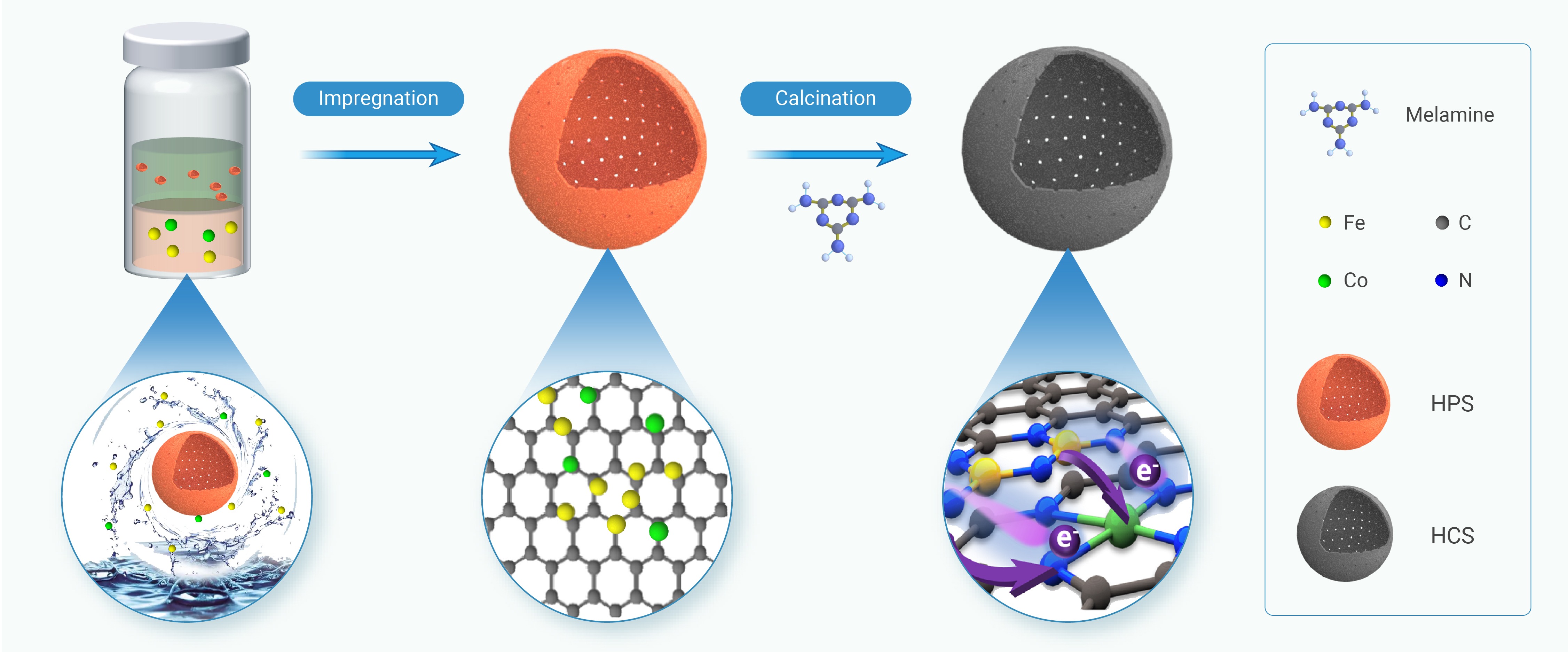
Figure 1.
Preparation method and process of Fe2/Co-NHCS.
-
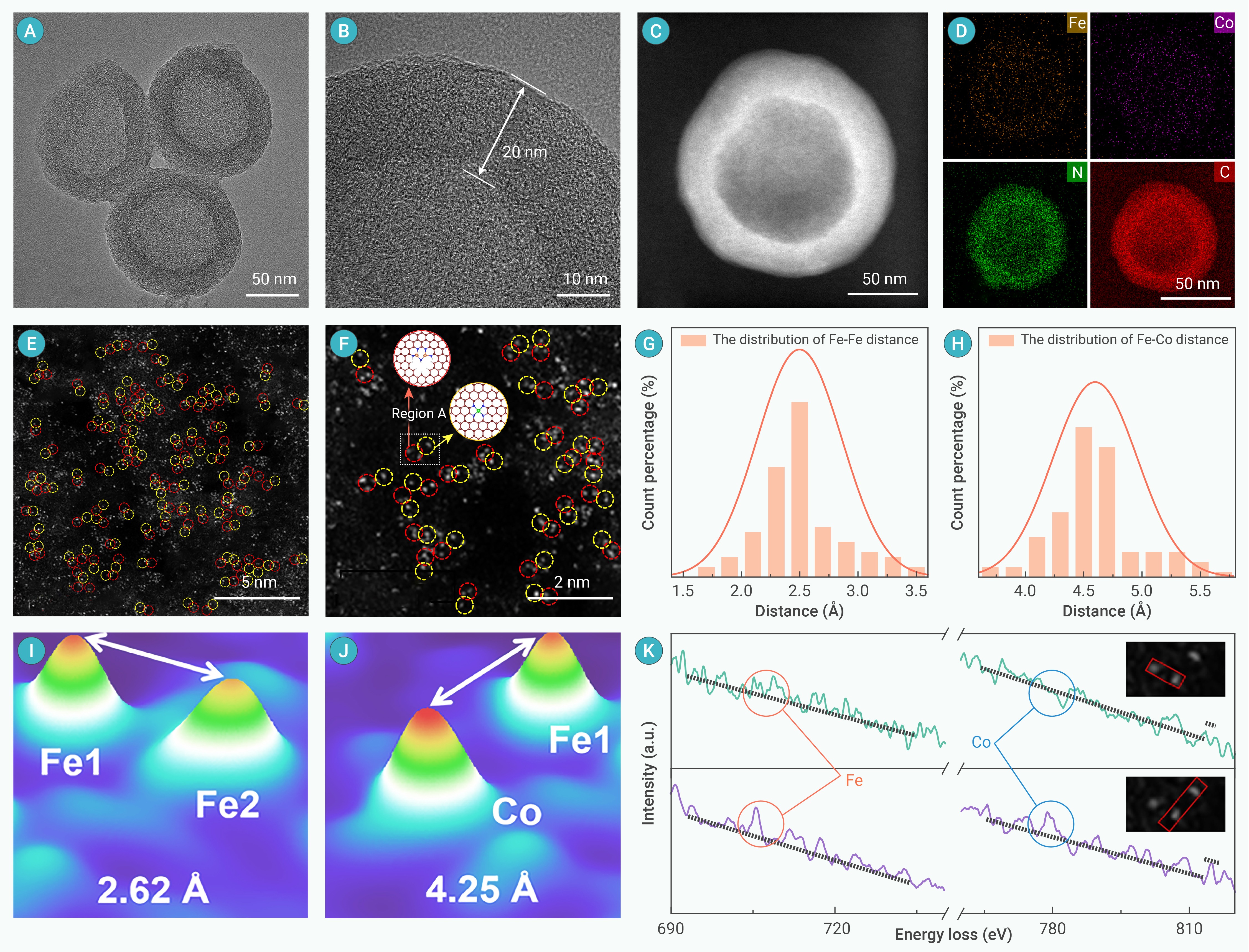
Figure 2.
Morphology and structural characterization of Fe2/Co-NHCS
-
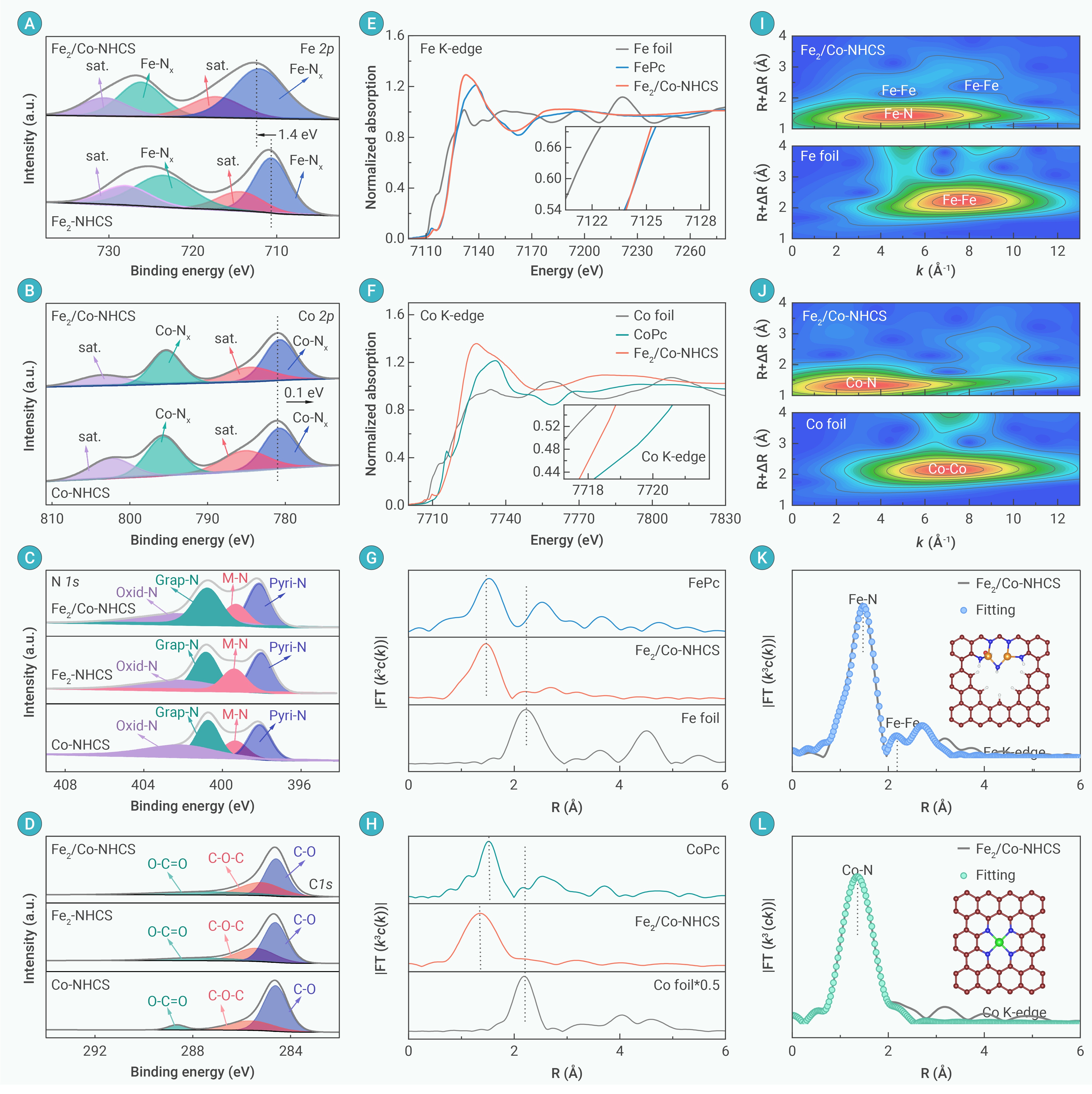
Figure 3.
Atomic configurations of Fe2/Co-NHCS catalysts of Fe2/Co-NHCS
-
Figure 4.
Electrocatalytic performance of Fe2/Co-NHCS
-
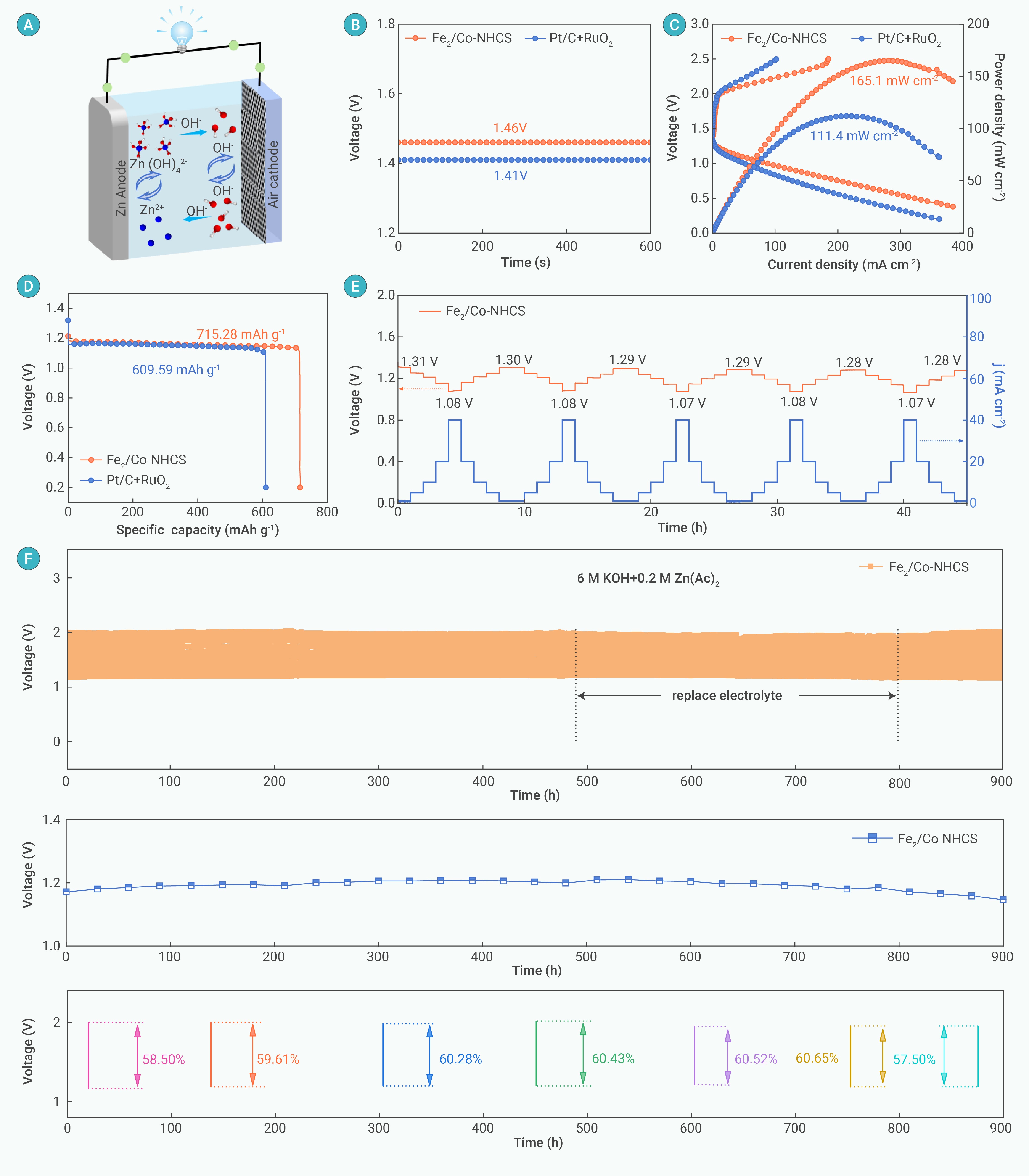
Figure 5.
ZABs performance
-
Figure 6.
F-ZABs performance
-
Figure 7.
DFT calculations
