
Encapsulation of Ni nanoparticles in O-doped carbon as chainmail electrocatalyst for alkaline seawater hydrogen evolution
-
GRAPHICAL ABSTRACT

 DownLoad:
Full size image
DownLoad:
Full size image
-
PUBLIC SUMMARY
-
A chainmail catalyst with O-doped carbon-coated Ni nanoparticles was made via salicylic acid intercalation.
Ni@O-C/CNTs shows excellent hydrogen evolution reaction (58 mV) in alkaline seawater with >2000 h stability.
In electrolyzer tests, Ni@O-C/CNTs achieves high efficiency and >300 h stability in real seawater.
-
-
ABSTRACT
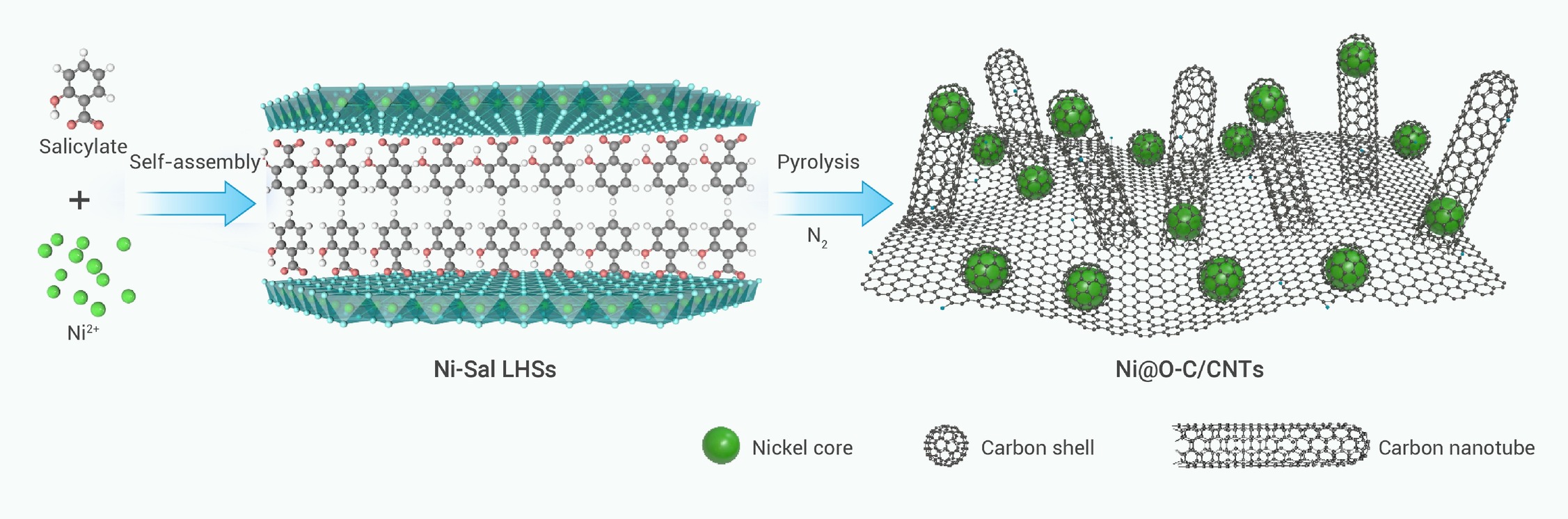
Carbon encapsulation represents a promising strategy for enhancing the activity and stability of the nanocatalysts via the chainmail approach, showing great potential in seawater electrolysis. Herein, a chainmail design is proposed to synthesize nickel nanoparticles protected with an O-doped graphitic shell on carbon nanotubes (Ni@O-C/CNTs) for highly efficient and stable hydrogen evolution reaction (HER) in alkaline seawater. Ni@O-C/CNTs are synthesized by in situ pyrolysis of salicylate intercalated layered nickel hydroxides, forming abundant Ni-O-C bonds at the interface. This chainmail design facilitates the penetration of valence electrons from the active Ni core to the graphitic shell, thereby promoting the adsorption of intermediates involved in HER. Moreover, the enriched O groups on CNTs enhance hydrophilicity and aerophobicity, facilitating electrolyte transport and hydrogen evolution during HER. Owing to the unique chainmail design, Ni@O-C/CNTs exhibit excellent HER performance in real alkaline seawater with a 58 mV overpotential at the current density of 10 mA cm−2 and maintain stability at a current density of 150 mA cm−2 over 2000 hours. Impressively, a high energy efficiency of 80% and stability of up to 300 hours are achieved for the alkaline seawater electrolyzer assembled using Ni@O-C/CNTs under practical conditions. -

-
REFERENCES
[1] Sepulveda N. A., Jenkins J. D., Edington A., et al. (2021). The design space for long-duration energy storage in decarbonized power systems. Nat. Energy 6:506−516. DOI:10.1038/s41560-021-00796-8 [2] Yang H., Han X., Douka A. I., et al. (2021). Advanced oxygen electrocatalysis in energy conversion and storage. Adv. Funct. Mater. 31:2007602. DOI:10.1002/adfm.202007602 [3] Lu X. and Valtchev V. (2023). Green carbon: Towards a greener world. Green Carbon 1:1. DOI:10.1016/j.greenca.2023.06.001 [4] Chen M., Rao P., Miao Z., et al. (2023). Strong metal-support interaction of Pt-based electrocatalysts with transition metal oxides/nitrides/carbides for oxygen reduction reaction. Microstructures 3:2023025. DOI:10.20517/microstructures.2023.12 [5] Han X., Li N., Baik J. S., et al. (2023). Sulfur mismatch substitution in layered double hydroxides as efficient oxygen electrocatalysts for flexible zinc–air batteries. Adv. Funct. Mater. 33:2212233. DOI:10.1002/adfm.202212233 [6] Wu Z. P., Lu X. F., Zang S. Q., et al. (2020). Non‐noble‐metal‐based electrocatalysts toward the oxygen evolution reaction. Adv. Funct. Mater. 30:1910274. DOI:10.1002/adfm.201910274 [7] Huang H., Cho A., Kim S., et al. (2020). Structural design of amorphous comopx with abundant active sites and synergistic catalysis effect for effective water splitting. Adv. Funct. Mater. 30:2003889. DOI:10.1002/adfm.202003889 [8] Liu W., Niu X., Tang J., et al. (2023). Energy-efficient anodic reactions for sustainable hydrogen production via water electrolysis. Chem. Synth. 3:44. DOI:10.20517/cs.2023.28 [9] Wu T., Sun M.-Z. and Huang B.-L. (2022). Non-noble metal-based bifunctional electrocatalysts for hydrogen production. Rare Met. 41:2169−2183. DOI:10.1007/s12598-021-01914-x [10] Wang C. and Li C. (2024). Enhanced electrocatalytic performance of platinum by phase-dependent growing on MoS2 substrate. Innov. Mater. 2:100081. DOI:10.59717/j.xinn-mater.2024.100081 [11] Lu X., Pan J., Lovell E., et al. (2018). A sea-change: Manganese doped nickel/nickel oxide electrocatalysts for hydrogen generation from seawater. Energy Environ. Sci. 11:1898−1910. DOI:10.1039/c8ee00976g [12] Jin H., Wang X., Tang C., et al. (2021). Stable and highly efficient hydrogen evolution from seawater enabled by an unsaturated nickel surface nitride. Adv. Mater. 33:2007508. DOI:10.1002/adma.202007508 [13] Zhang H., Wang Y., Zhang B., et al. (2023). Interwoven N-doped carbon nanotubes with capped Ni-doped FeP as double-functional electrocatalysts for overall seawater electrolysis. Sci. China Mater. 66:4630−4638. DOI:10.1007/s40843-023-2608-6 [14] Liu G., Zhang Z., Liu W., et al. (2023). Ultra-small carbon-supported FeRu alloy as a superior electrocatalyst for hydrogen evolution reaction. Sci. China Mater. 66:2672−2679. DOI:10.1007/s40843-022-2403-1 [15] Yi L., Chen X., Wen Y., et al. (2024). Solidophobic surface for electrochemical extraction of high-valued Mg(OH)2 coupled with H2 production from seawater. Nano Lett. 24:5920−5928. DOI:10.1021/acs.nanolett.4c01484 [16] Xu W., Ma T., Chen H., et al. (2023). Scalable fabrication of Cu2S@NiS@Ni/NiMo hybrid cathode for high‐performance seawater eelectrolysis. Adv. Funct. Mater. 33:2302263. DOI:10.1002/adfm.202302263 [17] Yu L., Zhu Q., Song S., et al. (2019). Non-noble metal-nitride based electrocatalysts for high-performance alkaline seawater electrolysis. Nat. Commun. 10:5106. DOI:10.1038/s41467-019-13092-7 [18] Zang W., Sun T., Yang T., et al. (2020). Efficient hydrogen evolution of oxidized Ni‐N3 defective sites for alkaline freshwater and seawater electrolysis. Adv. Mater. 33:2003846. DOI:10.1002/adma.202003846 [19] Sun J.-P., Zhao Z., Li J., et al. (2022). Recent advances in electrocatalytic seawater splitting. Rare Met. 42:751−768. DOI:10.1007/s12598-022-02168-x [20] Tong W., Forster M., Dionigi F., et al. (2020). Electrolysis of low-grade and saline surface water. Nat. Energy 5:367−377. DOI:10.1038/s41560-020-0550-8 [21] Wu L., Zhang F., Song S., et al. (2022). Efficient alkaline water/seawater hydrogen evolution by a nanorod‐nanoparticle‐structured Ni‐MoN catalyst with fast water‐dissociation kinetics. Adv. Mater. 34:2201774. DOI:10.1002/adma.202201774 [22] Yu L., Wu L., mcelhenny B., et al. (2020). Ultrafast room-temperature synthesis of porous S-doped Ni/Fe (Oxy)hydroxide electrodes for oxygen evolution catalysis in seawater splitting. Energy Environ. Sci. 13:3439−3446. DOI:10.1039/d0ee00921k [23] Deng J., Deng D. and Bao X. (2017). Robust catalysis on 2D materials encapsulating metals: Concept, application, and perspective. Adv. Mater. 29:1606967. DOI:10.1002/adma.201606967 [24] Tu Y., Deng J., Ma C., et al. (2020). Double-layer hybrid chainmail catalyst for high-performance hydrogen evolution. Nano Energy 72:104700. DOI:10.1016/j.nanoen.2020.104700 [25] Yu X., Pan Z., Pei C., et al. (2024). Core-shell heterostructure by coupling layered ReS2 with Co9S8 nanocubes for boosted oxygen evolution reaction. Chin. Chem. Lett. 35:108484. DOI:10.1016/j.cclet.2023.108484 [26] Deng J., Ren P., Deng D., et al. (2015). Enhanced electron penetration through an ultrathin graphene layer for highly efficient catalysis of the hydrogen evolution reaction. Angew. Chem. Int. Ed. 54:2100−2104. DOI:10.1002/anie.201409524 [27] Cui X., Ren P., Deng D., et al. (2016). Single layer graphene encapsulating non-precious metals as high-performance electrocatalysts for water oxidation. Energy Environ. Sci. 9:123−129. DOI:10.1039/c5ee03316k [28] Cui X., Ren P., Ma C., et al. (2020). Robust interface ru centers for high‐performance acidic oxygen evolution. Adv. Mater. 32:1908126. DOI:10.1002/adma.201908126 [29] Li J., Hu Y., Huang X., et al. (2023). Bimetallic phosphide heterostructure coupled with ultrathin carbon layer boosting overall alkaline water and seawater splitting. Small 19:2206533. DOI:10.1002/smll.202206533 [30] Yang Q., Yu Y. And Bi X. (2023). Hierarchical structure of CoMn nanoparticles encapsulated in N-doped carbon nanotube frameworks grown on nickel foam for water splitting. ACS Sustainable Chem. Eng. 11:14197−14206. DOI:10.1021/acssuschemeng.3c03959 [31] Zhang T., Wang H., Guo X., et al. (2022). Co@C nanorods as both magnetic stirring nanobars and magnetic recyclable nanocatalysts for microcatalytic reactions. Appl. Catal., B 304:120925. DOI:10.1016/j.apcatb.2021.120925 [32] Wang F., Yue S., Han X., et al. (2024). ZnS/C dual-quantum-dots heterostructural nanofibers for high-performance photocatalytic H2O2 production. ACS Appl. Mater. Interfaces 16:2606−2613. DOI:10.1021/acsami.3c14183 [33] Arizaga G., Satyanarayana K. and Wypych F. (2007). Layered hydroxide salts: synthesis, properties and potential applications. Solid State Ionics 178:1143−1162. DOI:10.1016/j.ssi.2007.04.016 [34] Zhang T., Cheng R., Li B., et al. (2021). Novel one-dimensional Cu@C nanofibers: direct solid-state synthesis and applications in electrocatalytic water splitting. Chem. Commun. 57:769−772. DOI:10.1039/d0cc06992b [35] Hodges A., Hoang A. L., Tsekouras G., et al. (2024). A high-performance capillary-fed electrolysis cell promises more cost-competitive renewable hydrogen. Nat. Commun. 15:7959. DOI:10.1038/s41467-024-52303-8 [36] Blöchl P. E. (1994). Projector augmented-wave method. Phys. Rev. B 50:17953−17979. DOI:10.1103/physrevb.50.17953 [37] Perdew J. P., Burke K. And Ernzerh M. (1996). Generalized gradient approximation made simple. Phys. Rev. Lett. 77:3865−3868. DOI:10.1103/PhysRevLett.77.3865 [38] Guo X., Kan H., Liu X., et al. (2018). Facile synthesis of hollow hierarchical Ni@C nanocomposites with well-dispersed high-loading Ni nanoparticle embedded in carbon for reduction of 4-nitrophenol. RSC Adv. 8:15999−16003. DOI:10.1039/c8ra02281j [39] Gohier A., Ewels C. P., Minea T. M., et al. (2008). Carbon nanotube growth mechanism switches from tip- to base-growth with decreasing catalyst particle size. Carbon 46:1331−1338. DOI:10.1016/j.carbon.2008.05.016 [40] Zhang R., Zhang Y. and Wei F. (2017). Horizontally aligned carbon nanotube arrays: Growth mechanism, controlled synthesis, characterization, properties and applications. Chem. Soc. Rev. 46:3661−3715. DOI:10.1039/c7cs00104e [41] Jing Tang and Yamauchi Y. (2016). MOF morphologies in control. Nat. Chem. 8:638−639. DOI:10.1038/nchem.2548 [42] Wan W., Wei S., Li J., et al. (2019). Transition metal electrocatalysts encapsulated into N-doped carbon nanotubes on reduced graphene oxide nanosheets: Efficient water splitting through synergistic effects. J. Mater. Chem. A 7:15145−15155. DOI:10.1039/c9ta03213d [43] Ren H., Shu X., Liu Z., et al. (2020). In-situ synthesis of layered porous coal-derived carbon/Ni magnetic composites with promising microwave absorption performance. J. Magn. Magn. Mater. 513:167231. DOI:10.1016/j.jmmm.2020.167231 [44] Hu Y. R., Dong X. L., Zhuang H. K., et al. (2021). Introducing electrochemically active oxygen species to boost the pseudocapacitance of carbon-based supercapacitor. Chemelectrochem 8:3073−3079. DOI:10.1002/celc.202100641 [45] Yu L., Deng D. And Bao X. (2020). Chain mail for catalysts. Angew. Chem., Int. Ed. 59:15294−15297. DOI:10.1002/anie.202007604 [46] Lei C., Zheng Q., Cheng F., et al. (2020). High‐performance metal‐free nanosheets array electrocatalyst for oxygen evolution reaction in acid. Adv. Funct. Mater. 30:2003000. DOI:10.1002/adfm.202003000 [47] Li D., Ren B., Jin Q., et al. (2018). Nitrogen-doped, oxygen-functionalized, edge- and defect-rich vertically aligned graphene for highly enhanced oxygen evolution reaction. J. Mater. Chem. A 6:2176−2183. DOI:10.1039/c7ta07896j [48] Zhang Z., Qin Y., Dou M., et al. (2016). One-step conversion from Ni/Fe polyphthalocyanine to N-doped carbon supported Ni-Fe nanoparticles for highly efficient water splitting. Nano Energy 30:426−433. DOI:10.1016/j.nanoen.2016.10.035 [49] Sun H., Li L., Humayun M., et al. (2022). Achieving highly efficient pH-universal hydrogen evolution by superhydrophilic amorphous/crystalline Rh(OH)3/NiTe coaxial nanorod array electrode. Appl. Catal., B 305:121088. DOI:10.1016/j.apcatb.2022.121088 [50] Jiang J., Xu G., Gong B., et al. (2024). Hydrogen spillover mechanism of superaerophobic NiSe2‐Ni5P4 electrocatalyst to promote hydrogen evolution in saline water. Adv. Funct. Mater. 35:2412685. DOI:10.1002/adfm.202412685 [51] Zhang M., Dai Q., Zheng H., et al. (2018). Novel MOF -derived Co@N-C bifunctional catalysts for highly efficient Zn-air batteries and water splitting. Adv. Mater. 30:1705431. DOI:10.1002/adma.201705431 [52] Li Y.-A., Hu H., Xu W., et al. (2024). Nanoripples in graphene: A remarkable structure for proton mass transport. Innov. Mater. 2:100053. DOI:10.59717/j.xinn-mater.2024.100053 [53] Zhang H., Ma Z., Duan J., et al. (2016). Active sites implanted carbon cages in core-shell architecture: Highly active and durable electrocatalyst for hydrogen evolution reaction. ACS Nano 10:684−694. DOI:10.1021/acsnano.5b05728 [54] Wang S., Zhang L., Li X., et al. (2016). Sponge-like nickel phosphide–carbon nanotube hybrid electrodes for efficient hydrogen evolution over a wide pH range. Nano Res. 10:415−425. DOI:10.1007/s12274-016-1301-9 [55] Yu X., Li Y., Pei C., et al. (2024). Interfacial design of Ti3C2Tx mxene/graphene heterostructures boosted Ru nanoclusters with high activity toward hydrogen evolution reaction. Adv. Sci. 11:2310013. DOI:10.1002/advs.202310013 [56] Zeng M., Liu Y., Zhao F., et al. (2016). Metallic cobalt nanoparticles encapsulated in nitrogen-enriched graphene shells: Its bifunctional electrocatalysis and application in zinc-air batteries. Adv. Funct. Mater. 26:4397−4404. DOI:10.1002/adfm.201600636 [57] Dresp S., Dionigi F., Klingenhof M., et al. (2019). Direct electrolytic splitting of seawater: opportunities and challenges. ACS Energy Lett. 4:933−942. DOI:10.1021/acsenergylett.9b00220 [58] Oluigbo C. J., Xie M., Ullah N., et al. (2019). Novel one-step synthesis of nickel encapsulated carbon nanotubes as efficient electrocatalyst for hydrogen evolution reaction. Int. J. Hydrogen Energy 44:2685−2693. DOI:10.1016/j.ijhydene.2018.11.215 [59] Zhang T., Han X., Yang H., et al. (2020). Atomically dispersed nickel(i) on an alloy-encapsulated nitrogen-doped carbon nanotube array for high-performance electrochemical CO2 reduction reaction. Angew. Chem., Int. Ed. 59:12055−12061. DOI:10.1002/anie.202002984 [60] Li L., Qiu H., Zhu Y., et al. (2023). Atomic ruthenium modification of nickel-cobalt alloy for enhanced alkaline hydrogen evolution. Appl. Catal. B 331:122710. DOI:10.1016/j.apcatb.2023.122710 [61] Pei A., Xie R., Zhang Y., et al. (2023). Effective electronic tuning of pt single atoms via heterogeneous atomic coordination of (Co,Ni)(OH)2 for efficient hydrogen evolution. Energy Environ. Sci. 16:1035−1048. DOI:10.1039/d2ee02785b -
ABOUT THIS ARTICLE
Cite this article:
Wan K., Zhang T., Wang H., et al. (2025). Encapsulation of Ni nanoparticles in O-doped carbon as chainmail electrocatalyst for alkaline seawater hydrogen evolution. The Innovation Materials 3:100148. https://doi.org/10.59717/j.xinn-mater.2025.100148
Welcome!
To request copyright permission to republish or share portions of our works, please visit Copyright Clearance Center's (CCC) Marketplace website at marketplace.copyright.com.
Article Metrics
Relative Articles
Cited by
Export File
Citation
Wan K., Zhang T., Wang H., et al. (2025). Encapsulation of Ni nanoparticles in O-doped carbon as chainmail electrocatalyst for alkaline seawater hydrogen evolution. The Innovation Materials 3:100148. https://doi.org/10.59717/j.xinn-mater.2025.100148

Format
Content
-
Figure 1.
Schematic illustration of the fabrication process of Ni@O-C/CNTs nanocomposite.
-
Figure 1.
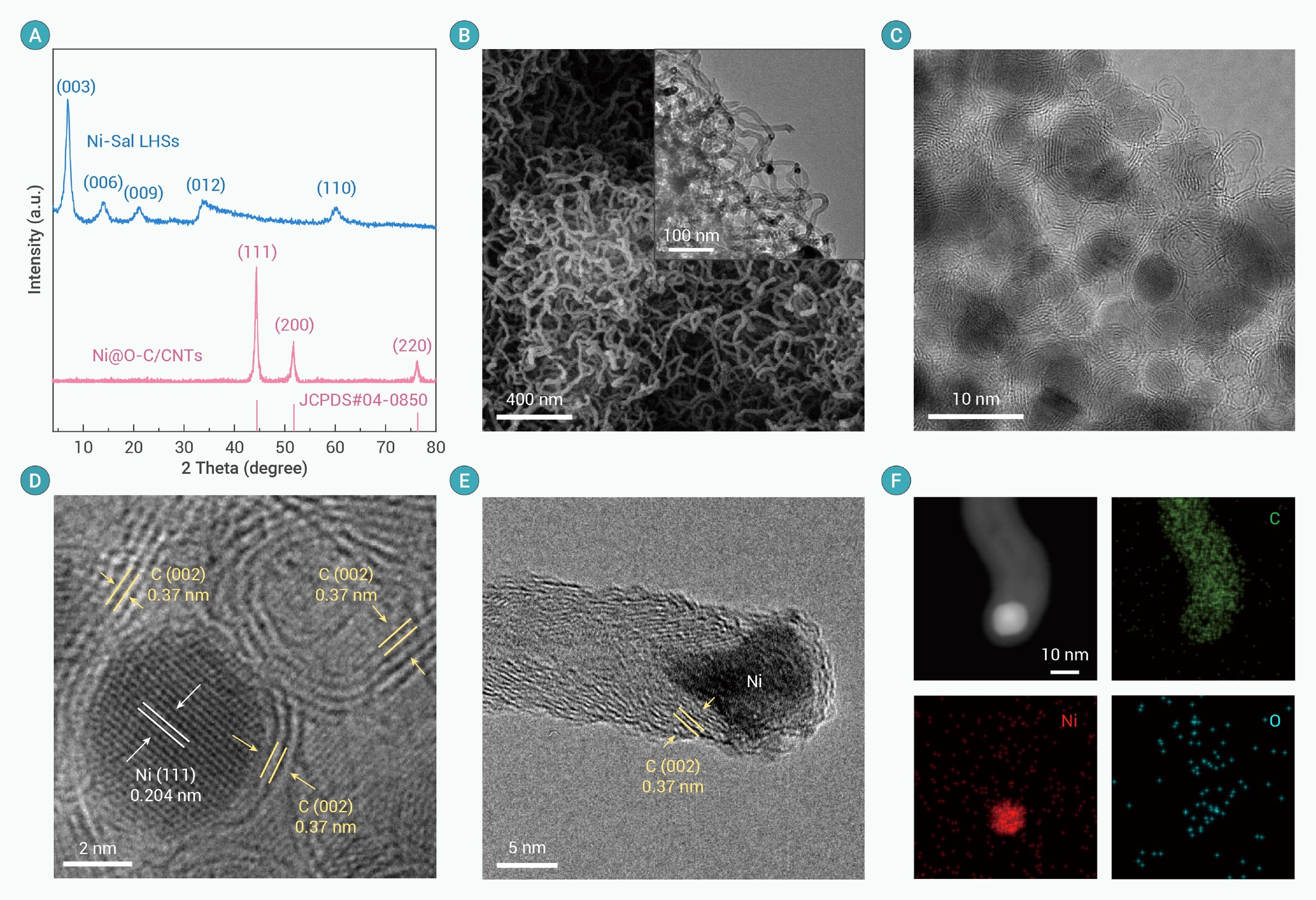
Structural characterization of Ni@O-C/CNTs catalyst
-
Figure 2.
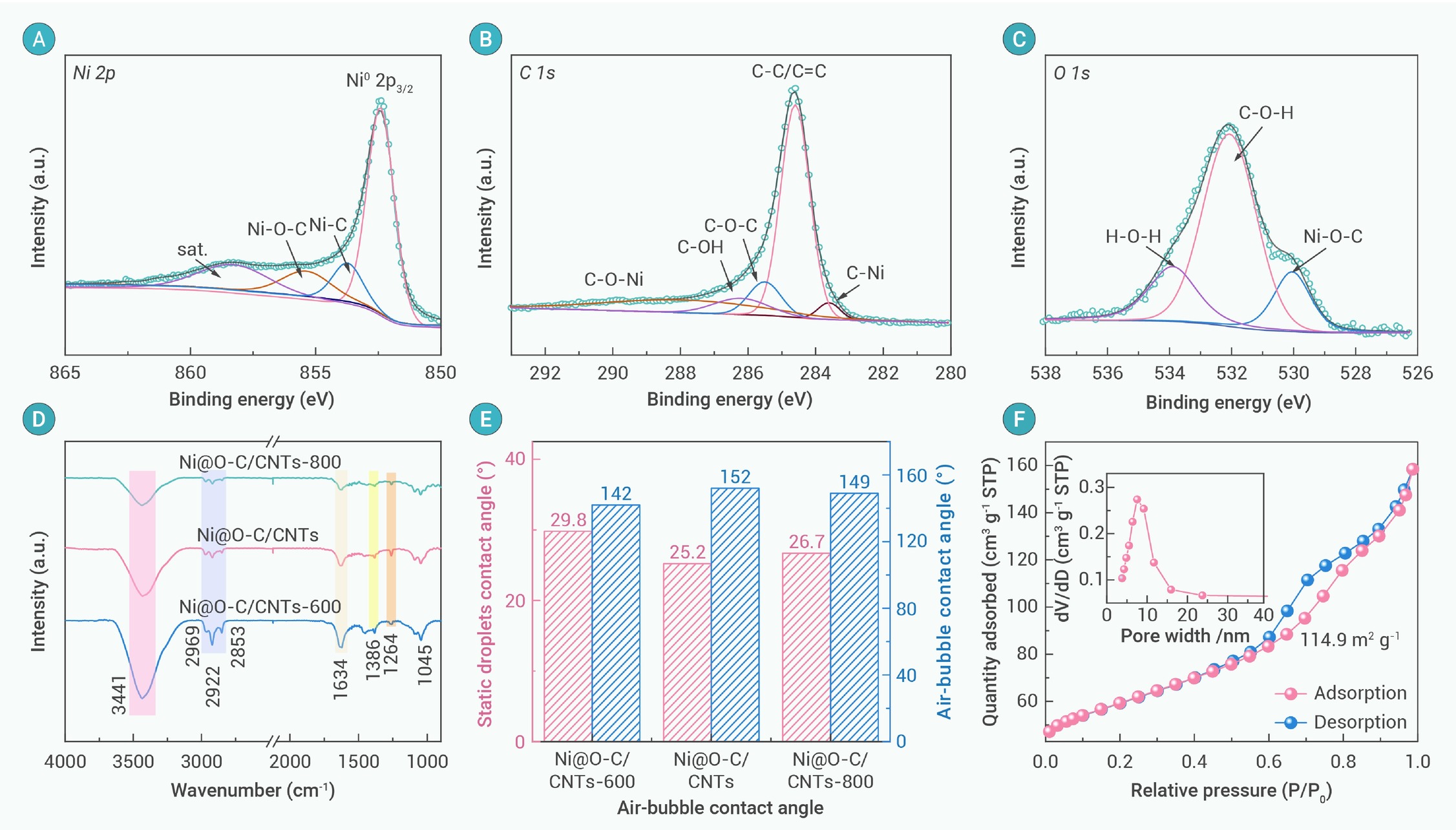
Compositional and surface characterization of Ni@O-C/CNTs
-
Figure 3.
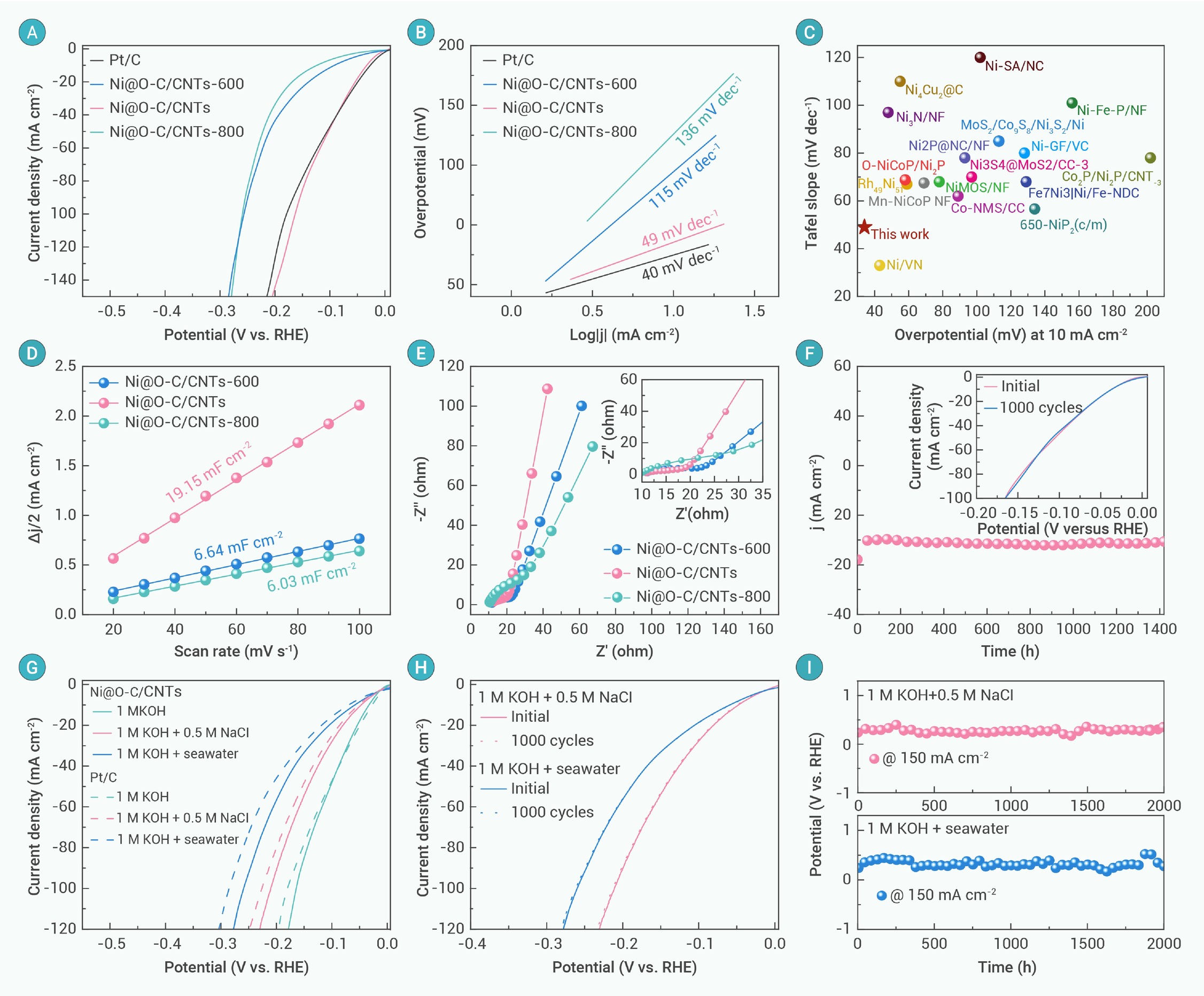
Electrocatalytic HER performance of Ni@O-C/CNTs
-
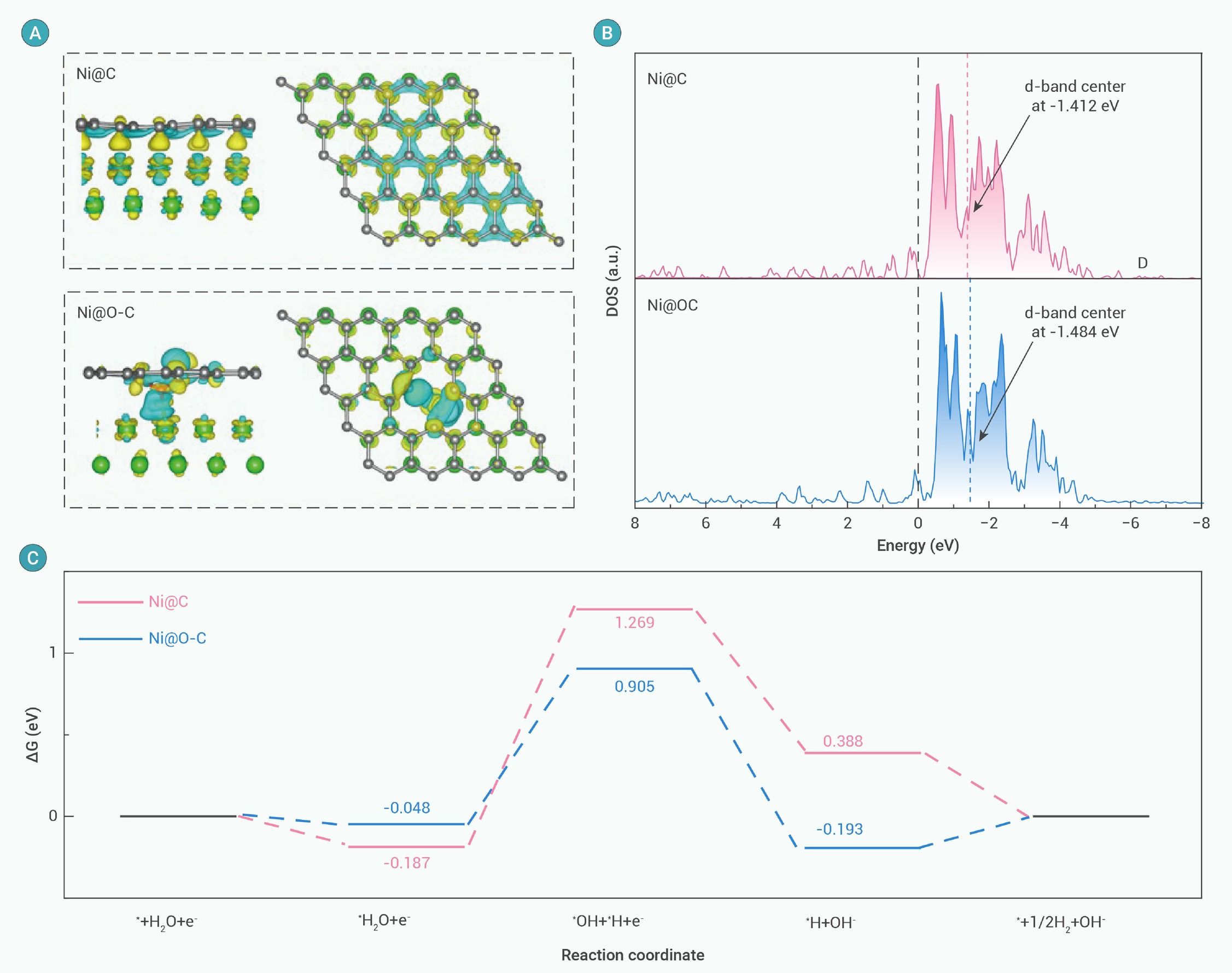
Figure 4.
Theoretical analysis of electronic structure and HER mechanism
-
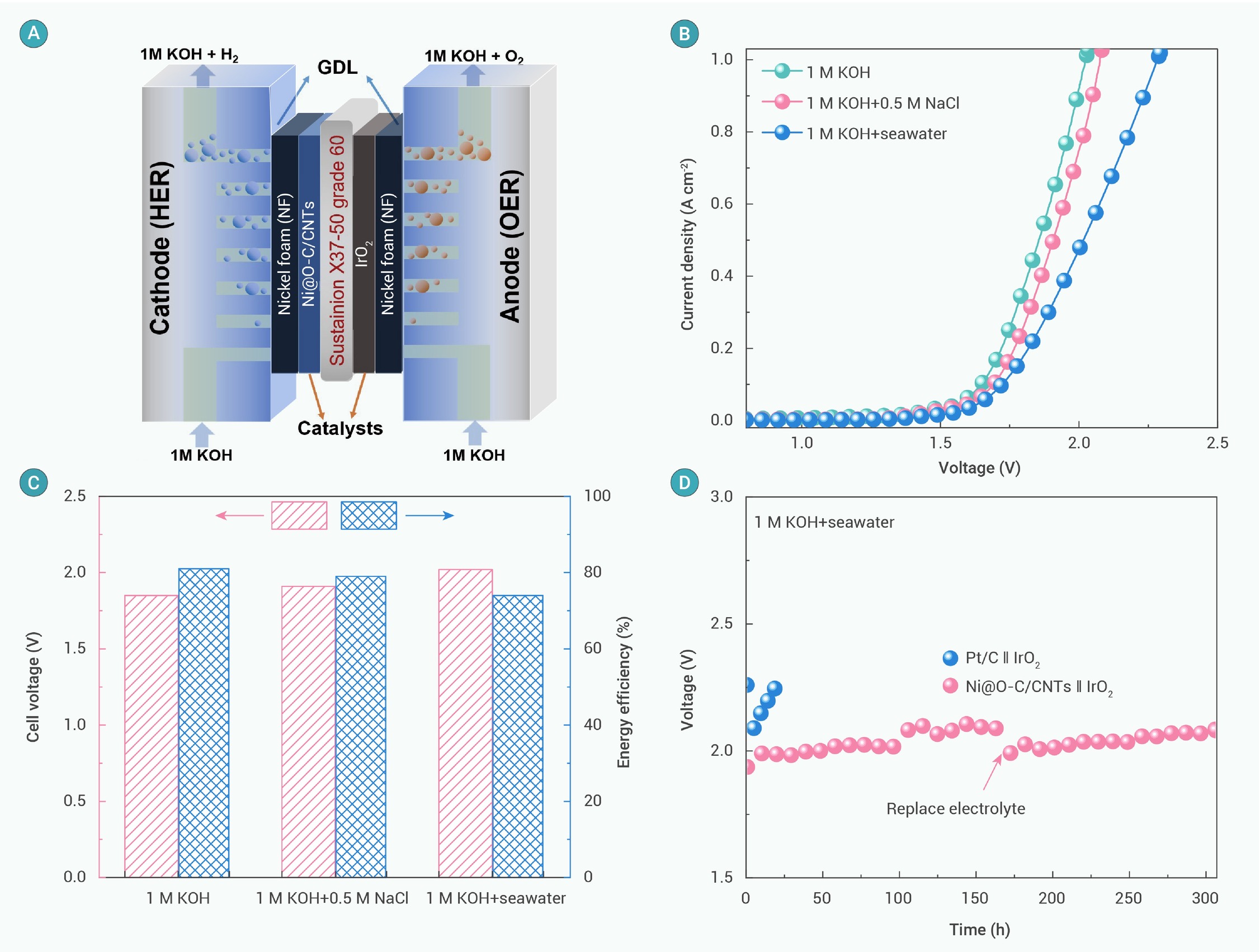
Figure 5.
Alkaline HER in the MEA electrolyzer
