
Molecular engineering on hole injection self-assembled monolayers for superior RGB quantum dot light-emitting diodes
-
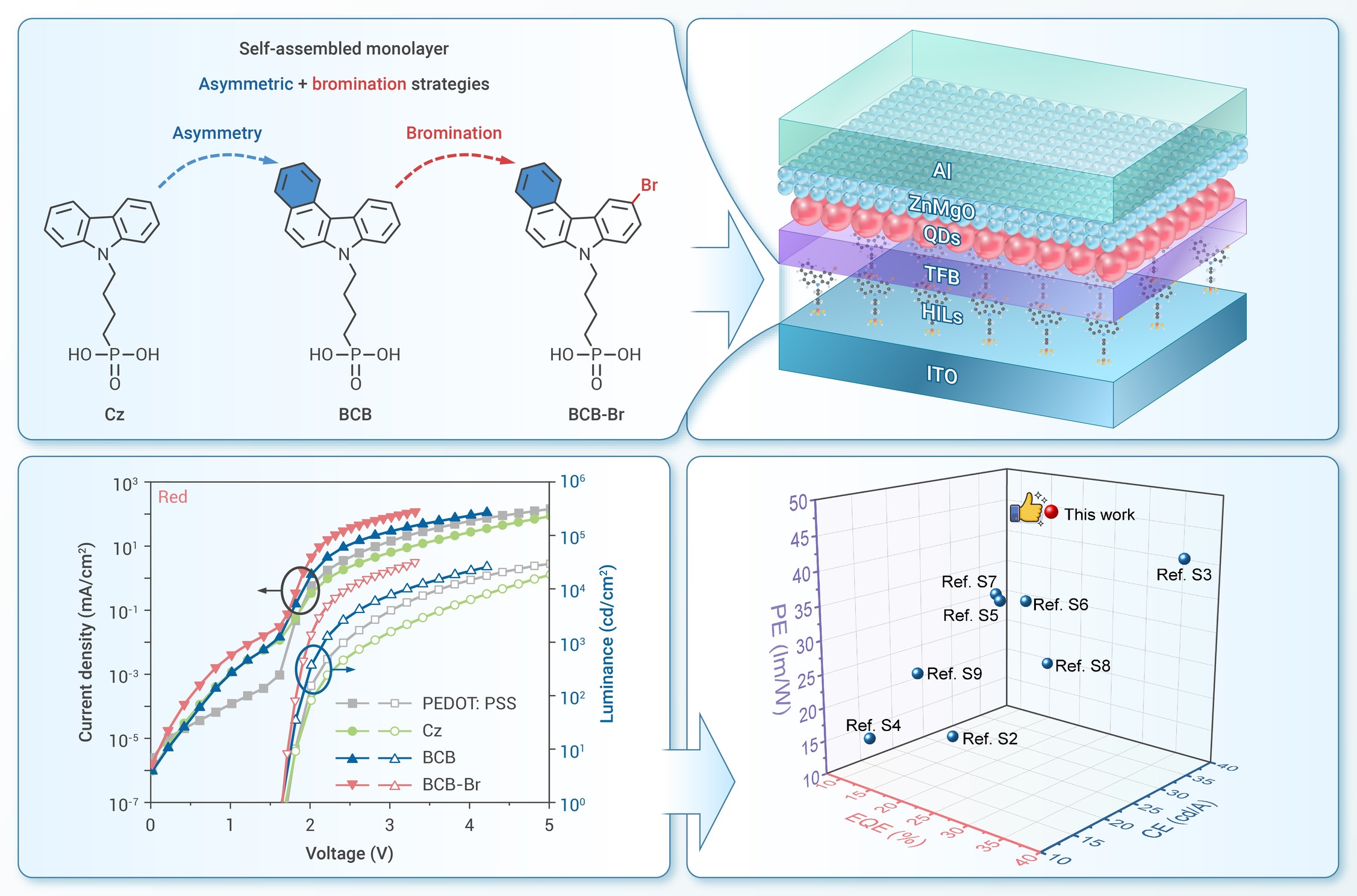
GRAPHICAL ABSTRACT
 DownLoad:
Full size image
DownLoad:
Full size image
-
PUBLIC SUMMARY
-
SAMs are promising alternatives to problematic PEDOT:PSS for efficient QLEDs.
Comprehensive molecular engineering enhanced the SAMs’ interface modification capability.
The BCB-Br based red QLEDs deliver one of the highest EQE, PE and CE values with a low Vt.
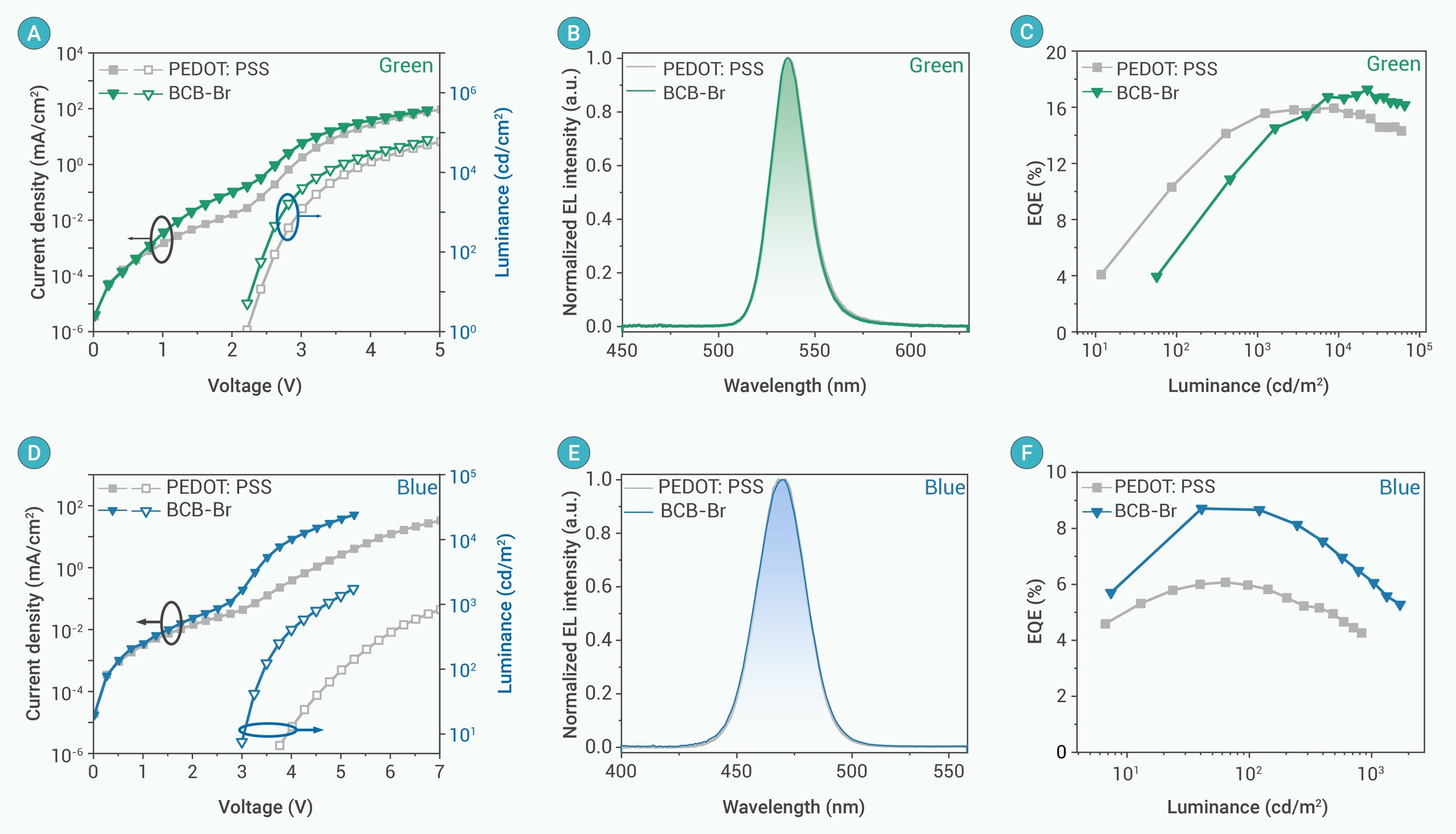
BCB-Br demonstrates excellent compatibility in green and blue QLEDs.
-
-
ABSTRACT
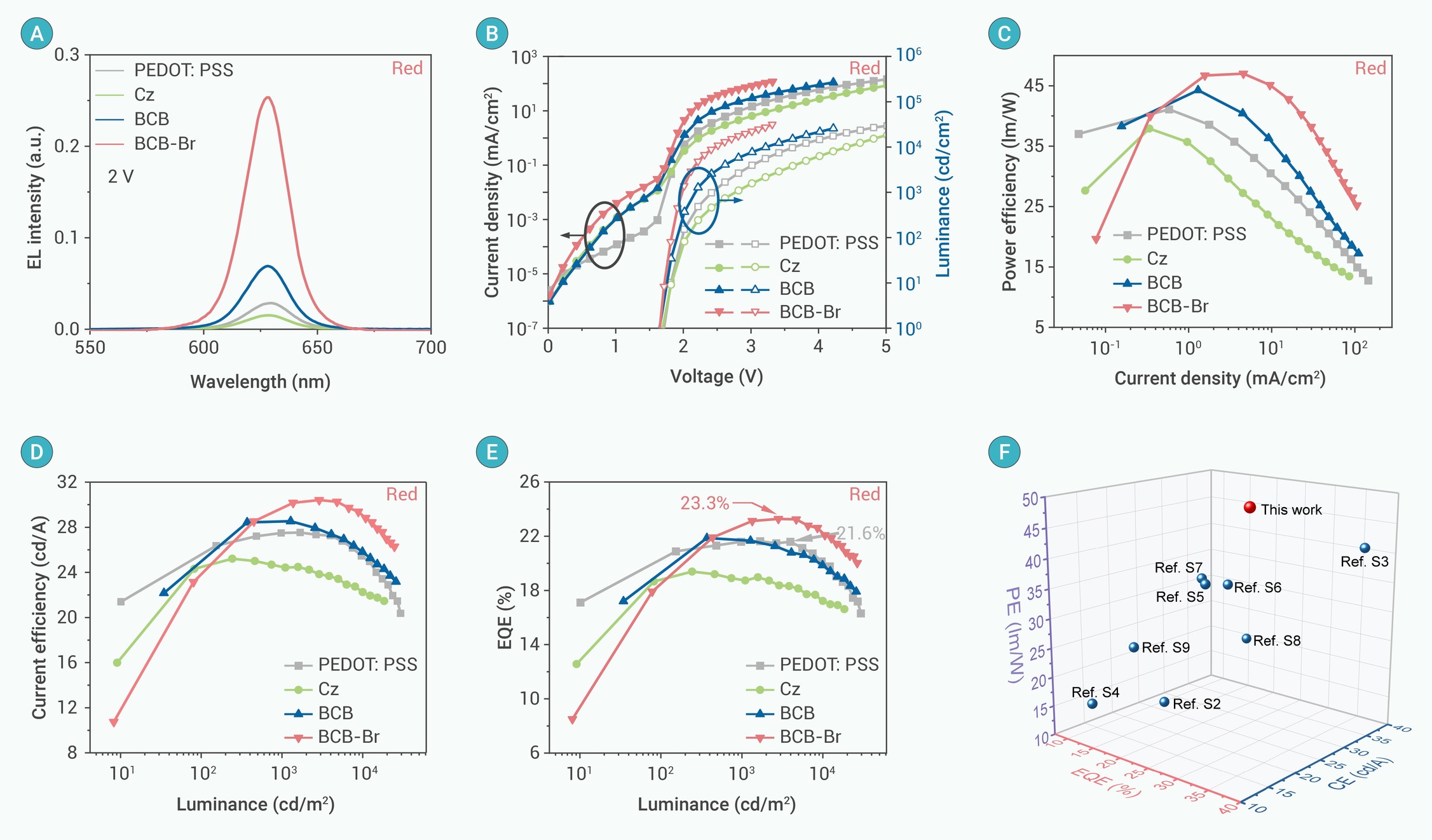
Colloidal quantum dot light-emitting diodes (QLEDs) show strong performance dependence on efficient hole injection and balanced carrier injection. The widely used hole-injection layer (HIL) poly(3,4-ethylenedioxythiophene): poly(styrenesulfonate) (PEDOT:PSS) suffers from inherent strong acidity, high cost and mismatched work function (WF) with transparent anodes in QLEDs. In this study, we propose herein molecular engineering on self-assembled monolayers (SAMs) as promising HILs to fabricate efficient red, green and blue QLEDs. Asymmetric conjugation extension and bromination on carbazole core strategically modulate the SAMs in dipole moment and interfacial modification of ITO’s WF. The 4-(10-bromo-7H-benzo[c]carbazol-7-yl)butyl)phosphonic acid (BCB-Br) constructs the optimal cascade energy level alignment for hole injection. SAMs based HILs with exceptional uniformity and conductivity afford significantly enhanced hole injection and reduced interfacial contact resistance in QLEDs. The BCB-Br HIL based red QLEDs contribute an impressive external quantum efficiency of 23.3% and a notably low turn-on voltage of 1.73 V. Moreover, the devices are endowed with commendable power efficiency of 47.0 lm/W and current efficiency of 30.4 cd/A, among the highest values across the critical QLEDs performance metrics in the literature. The university of SAMs as excellent HILs is further demonstrated by the superior electroluminescence (EL) performances in both green and blue QLEDs over PEDOT:PSS. These findings underscore the efficacy of molecular designed SAMs to boost the interface modification on transparent anodes, offering valuable insights for the development of new HILs for QLEDs. -

-
REFERENCES
[1] Won Y.-H., Cho O., Kim T. et al. (2019). Highly efficient and stable InP/ZnSe/ZnS quantum dot light-emitting diodes. Nature 575:634−638. DOI:10.1038/s41586-019-1771-5 [2] Yoo J., Lee K., Yang U. J. et al. (2024). Highly efficient printed quantum dot light-emitting diodes through ultrahigh-definition double-layer transfer printing. Nat. Photonics 18:1105−1112. DOI:10.1038/s41566-024-01496-x [3] Jang E. and Jang H. (2023). Review: Quantum dot light-emitting diodes. Chem. Rev. 123:4663−4692. DOI:10.1021/acs.chemrev.2c00695 [4] Lei S., Xiao Y., Yu K. et al. (2023). Revisiting hole injection in quantum dot light-emitting diodes. Adv. Funct. Mater. 33:2305732. DOI:10.1002/adfm.202305732 [5] Shen, H., Gao, Q., Zhang, Y. et al. (2019). Visible quantum dot light-emitting diodes with simultaneous high brightness and efficiency. Nat. Photonics 13:192−197. DOI:10.1038/s41566-019-0364-z [6] Xu H., Song J., Zhou P. et al. (2024). Dipole-dipole-interaction-assisted self-assembly of quantum dots for highly efficient light-emitting diodes. Nat. Photonics 18:186−191. DOI:10.1038/s41566-023-01344-4 [7] Kim T., Kim K.-H., Kim S. et al. (2020). Efficient and stable blue quantum dot light-emitting diode. Nature 586:385−389. DOI:10.1038/s41586-020-2791-x [8] Peng J., Wang T., Wang R. et al. (2024). Efficient perovskite light-emitting diodes achieved by suppressing the acidic surface of PEDOT:PSS films. Chem. Eng. J 485:149668. DOI:10.1016/j.cej.2024.149668 [9] Zhao J., Chen F., Jia H. et al. (2023). Boosting Cu-In-Zn-S-based quantum-dot light-emitting diodes enabled by engineering Cu-NiOx/PEDOT:PSS bilayered hole-Injection layer. Small 20:2307115. DOI:10.1002/smll.202307115 [10] Zhang Y., Zhan Y., Yuan G. et al. (2024). Record high external quantum efficiency of 20% achieved in fully solution-processed quantum dot light-emitting diodes based on hole-conductive metal oxides. J. Colloid Interface Sci. 660:746−755. DOI:10.1016/j.jcis.2024.01.099 [11] Lin J., Dai X., Liang X. et al. (2019). High-performance quantum-dot light-emitting diodes using NiOx hole-injection layers with a high and stable work function. Adv. Funct. Mater. 30:1907265. DOI:10.1002/adfm.201907265 [12] Zhuo M.-P., Liang F., Shi Y.-L. et al. (2017). WO3 nanobelt doped PEDOT:PSS layers for efficient hole-injection in quantum dot light-emitting diodes. J. Mater. Chem. C 5:12343−12348. DOI:10.1039/c7tc04575a [13] Yu H., Liu Z., Ren Z. et al. (2024). Improved molecular packing of self-assembled monolayer charge injectors for perovskite light-emitting diodes. J. Phys. Chem. Lett. 15:6705−6711. DOI:10.1021/acs.jpclett.4c01264 [14] Li N., Xia Y., Lou Y. H. et al. (2024). Dual-functional self-assembled molecule enabling high-performance deep-blue perovskite light-emitting diodes. Adv. Funct. Mater. 34:2411227. DOI:10.1002/adfm.202411227 [15] Li M., Liu M., Qi F. et al. (2024). Self-assembled monolayers for interfacial engineering in solution-processed thin-film electronic devices: design, fabrication, and applications. Chem. Rev. 124:2138−2204. DOI:10.1021/acs.chemrev.3c00396 [16] Li C., Chen Y., Zhang Z. et al. (2024). Pros and cons of hole-selective self-assembled monolayers in inverted PSCs and TSCs: extensive case studies and data analysis. Energy Environ. Sci. 17:6157−6203. DOI:10.1039/d4ee02492c [17] Aktas E., Phung N., Köbler H. et al. (2021). Understanding the perovskite/self-assembled selective contact interface for ultra-stable and highly efficient p–i–n perovskite solar cells. Energy Environ. Sci. 14:3976−3985. DOI:10.1039/d0ee03807e [18] Gedda M., Gkeka D., Nugraha M.I. et al. (2022). High-efficiency perovskite-organic blend light-emitting diodes featuring self-assembled monolayers as hole-injecting interlayers. Adv. Energy Mater. 13:2201396. DOI:10.1002/aenm.202201396 [19] Xu S.H., Xu J.Z., Tang Y.B. et al. (2024). Interfacial dipole engineering for energy level alignment in NiOx-based quantum dot light-emitting diodes. Small 20:2411227. DOI:10.1002/smll.202403325 [20] Tan Q., Li Z., Luo G. et al. (2023). Inverted perovskite solar cells using dimethylacridine-based dopants. Nature 620:545−551. DOI:10.1038/s41586-023-06207-0 [21] Zhao K., Liu Q., Yao L. et al. (2024). peri-Fused polyaromatic molecular contacts for perovskite solar cells. Nature 632:301−306. DOI:10.1038/s41586-024-07712-6 [22] Jiang, Y. Oh N. and Shim M. (2016). Double-heterojunction nanorod light-emitting diodes with high efficiencies at high brightness using self-assembled monolayers. ACS Photonics 3:1862−1868. DOI:10.1021/acsphotonics.6b00371 [23] Lin J.-Y., Hsu F.-C., Chao Y.-C. et al. (2023). Self-assembled monolayer for low-power-consumption, long-term-stability, and high-efficiency quantum dot light-emitting diodes. ACS Appl. Mater. Interfaces 15:25744−25751. DOI:10.1021/acsami.3c01566 [24] Ali F., Roldán‐Carmona C., Sohail M. et al. (2020). Applications of self-assembled monolayers for perovskite solar cells interface engineering to address efficiency and stability. Adv. Energy Mater. 10:2002989. DOI:10.1002/aenm.202002989 [25] Li E., Liu C., Lin H. et al. (2021). Bonding strength regulates anchoring-based self-assembly monolayers for efficient and stable perovskite solar cells. Adv. Funct. Mater. 31:2103847. DOI:10.1002/adfm.202103847 [26] Al-Ashouri A., Köhnen E., Li B. et al. (2020). Monolithic perovskite/silicon tandem solar cell with >29% efficiency by enhanced hole extraction. Science 370:1300−1309. DOI:10.1126/science.abd4016 [27] Kim S.Y., Cho S.J., Byeon S.E. et al. (2020). Self-assembled monolayers as interface engineering nanomaterials in perovskite solar cells. Adv. Energy Mater. 10:2002606. DOI:10.1002/aenm.202002606 [28] Magomedov A., Al-Ashouri A., Kasparavičius E. et al. (2018). Self-assembled hole transporting monolayer for highly efficient perovskite solar cells. Adv. Energy Mater. 8:1801892. DOI:10.1002/aenm.201801892 [29] He R., Wang W., Yi Z. et al. (2023). All-perovskite tandem 1-cm2 cells with improved interface quality. Nature 618:80−86. DOI:10.1038/s41586-023-05992-y [30] Wang W., Wei K., Yang L. et al. (2023). Dynamic self-assembly of small molecules enables the spontaneous fabrication of hole conductors at perovskite/electrode interfaces for over 22% stable inverted perovskite solar cells. Mater. Horiz. 10:2609−2617. DOI:10.1039/d3mh00219e [31] Wang W., Liu X., Wang J. et al. (2023). Versatile self-assembled molecule enables high-efficiency wide-bandgap perovskite solar cells and organic solar cells. Adv. Energy Mater. 13:2300694. DOI:10.1002/aenm.202300694 [32] Duan J., Wang M., Wang Y. et al. (2021). Effect of side-group-regulated dipolar passivating molecules on CsPbBr3 perovskite solar cells. ACS Energy Lett. 6:2336−2342. DOI:10.1021/acsenergylett.1c01060 [33] Kim T.H., Kim B.W. and Im S.H. (2024). A self-assembling molecule for improving the mobility in PEDOT:PSS hole transport layer for efficient perovskite light-emitting diodes. Adv. Electron. Mater. 11:2400626. DOI:10.1002/aelm.202400626 [34] Hotchkiss P. J., Jones S. C., Paniagua S. A. et al. (2012). The modification of indium tin oxide with phosphonic acids: mechanism of binding, tuning of surface properties, and potential for use in organic electronic applications. Acc. Chem. Res. 45:337−346. DOI:10.1021/ar200119g [35] Chen Q., Hu Y., Lin J. et al. (2024). Phenethylammonium bromide interlayer for high-performance red quantum-dot light emitting diodes. Nanoscale Horiz. 9:465−471. DOI:10.1039/d3nh00495c [36] Wang F., Zhang H., Lin Q. et al. (2020). Suppressed efficiency roll-off in blue light-emitting diodes by balancing the spatial charge distribution. J. Mater. Chem. C 8:12927−12934. DOI:10.1039/d0tc03295f [37] Liu Y., Liu Q., Ding L. et al. (2024). Enhancing the efficiency and stability of inverted perovskite solar cells and modules through top interface modification with N-type semiconductors. Angew. Chem. Int. Ed. 64:e202416390. DOI:10.1002/anie.202416390 [38] Qu X. and Sun X. (2023). Impedance spectroscopy for quantum dot light-emitting diodes. J. Semicond. 44:091603. DOI:10.1088/1674-4926/44/9/091603 [39] Wang J., Li M., Cai B. et al. (2024). Matched electron-transport materials enabling efficient and stable perovskite quantum-dot-based light-emitting diodes. Angew. Chem. Int. Ed. 63:e202410689. DOI:10.1002/anie.202410689 [40] Ma Z., Sun Z., Yang H. et al. (2023). Interface-mediation-enabled high-performance near-infrared AgAuSe quantum dot light-emitting diodes. J. Am. Chem. Soc. 145:24972−24980. DOI:10.1021/jacs.3c10214 [41] Qu X., Ma J., Wang K. et al. (2024). Characteristic voltages and times from capacitance–voltage analysis of quantum dot light-emitting diodes. Appl. Phys. Lett. 124:263503. DOI:10.1063/5.0221019 [42] Wang R., Xiang H.Y., Zhang C. et al. (2024). A record-breaking low turn-on voltage blue QLED via reducing built-in potential. Nano Res. 17:10446−10452. DOI:10.1007/s12274-024-6570-0 -
ABOUT THIS ARTICLE
Cite this article:
Wang W., Chen Q., Hua G., et al. (2025). Molecular engineering on hole injection self-assembled monolayers for superior RGB quantum dot light-emitting diodes. The Innovation Materials 3:100151. https://doi.org/10.59717/j.xinn-mater.2025.100151
Welcome!
To request copyright permission to republish or share portions of our works, please visit Copyright Clearance Center's (CCC) Marketplace website at marketplace.copyright.com.
Article Metrics
Relative Articles
Cited by
Export File
Citation
Wang W., Chen Q., Hua G., et al. (2025). Molecular engineering on hole injection self-assembled monolayers for superior RGB quantum dot light-emitting diodes. The Innovation Materials 3:100151. https://doi.org/10.59717/j.xinn-mater.2025.100151

Format
Content
-
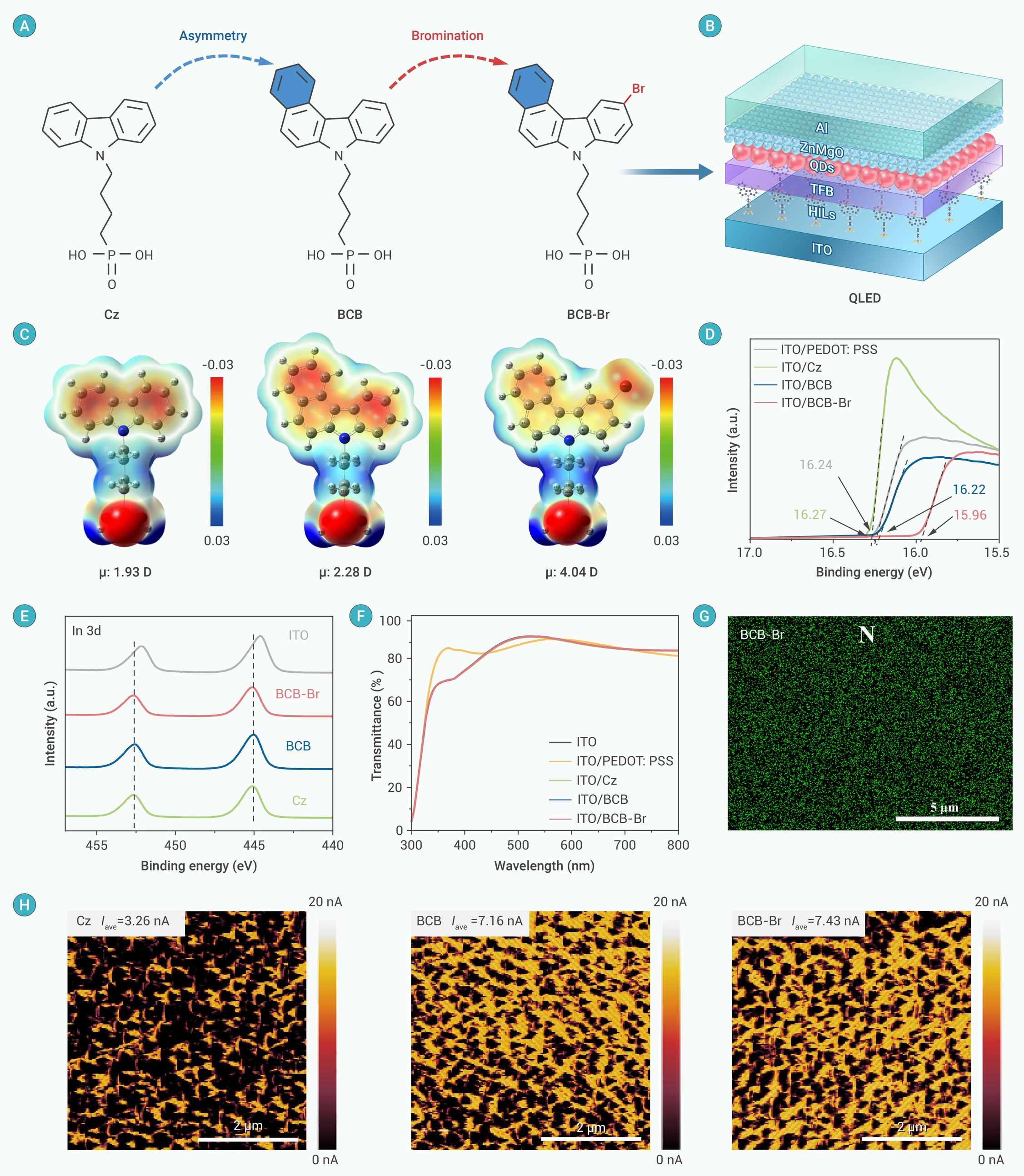
Figure 1.
Molecular structures of SAMs and characterizations of their films
-
Figure 2.
The EL performances of the red QLEDs utilizing SAMs or PEDOT:PSS as the HILs
-
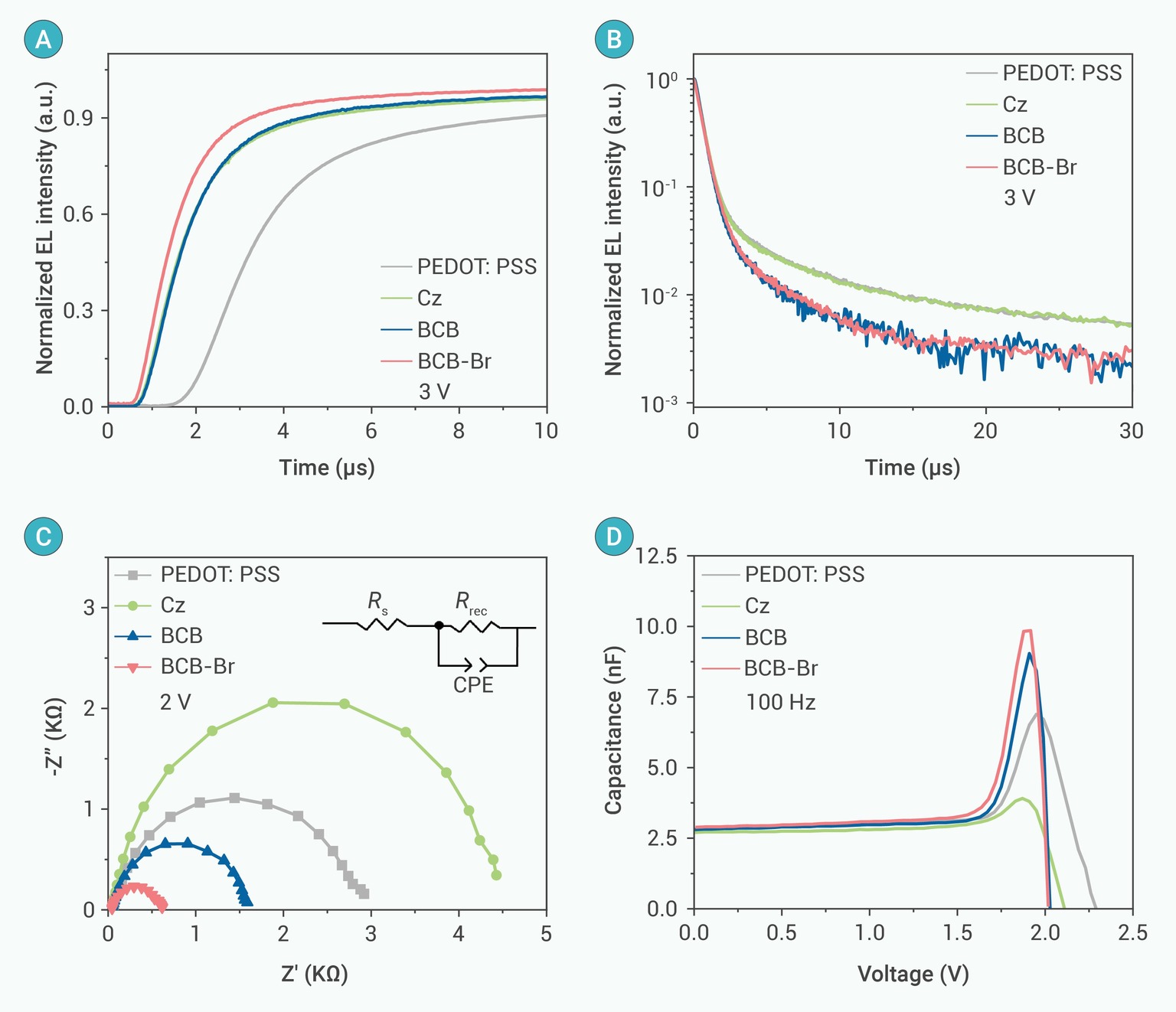
Figure 3.
Study on carrier and exciton dynamics of the red-emitting QLEDs utilizing SAMs or PEDOT:PSS as the HILs
-
Figure 4.
The device performance of representative green and blue-emitting QLEDs utilizing BCB-Br or PEDOT:PSS HILs
