
Tailoring self-assembled granular hydrogels (GHs) for immunomodulation and chronic wound healing
-
GRAPHICAL ABSTRACT
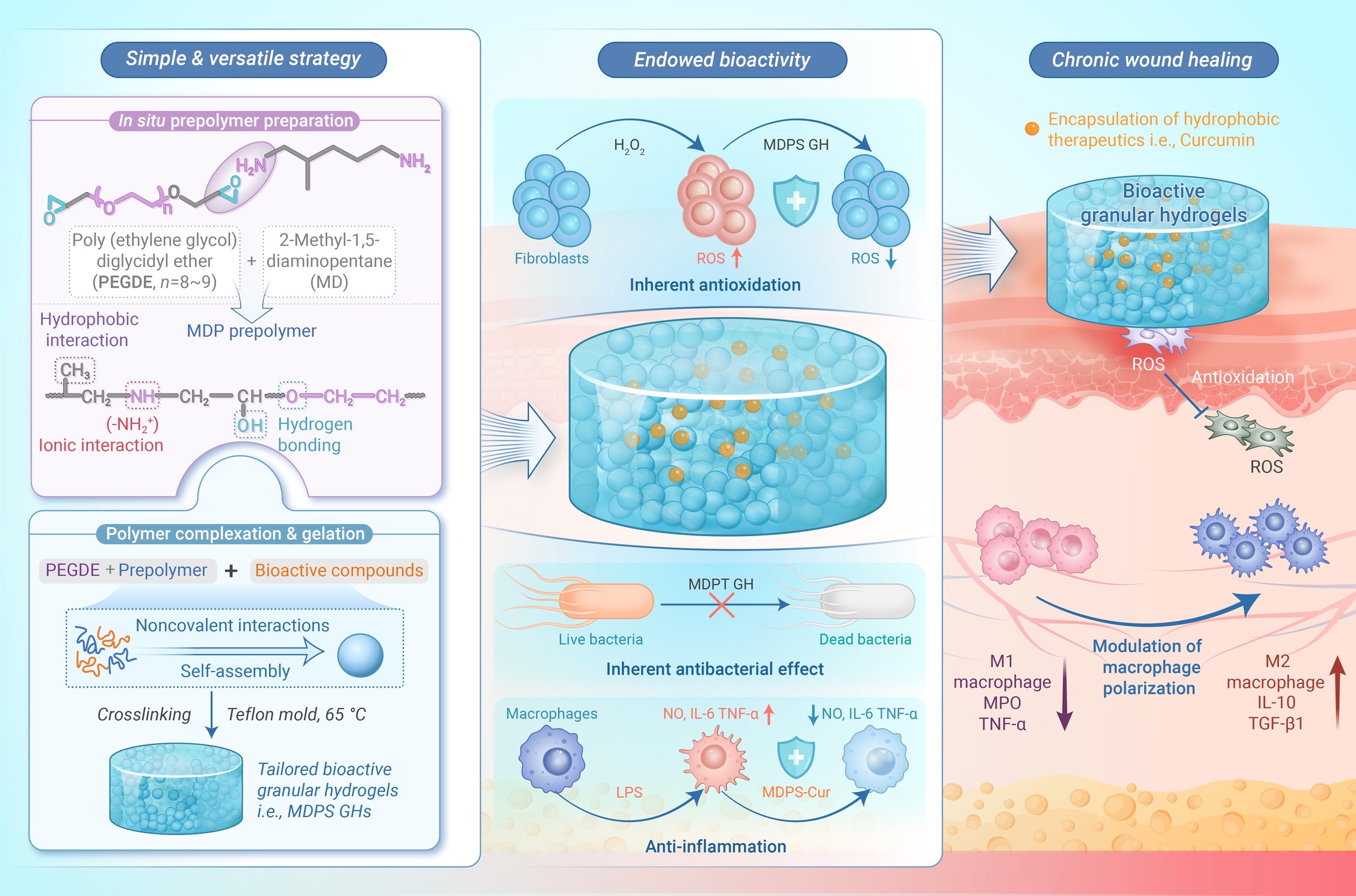
 DownLoad:
Full size image
DownLoad:
Full size image
-
PUBLIC SUMMARY
-
Integrating click chemistry and phase separation is feasible for preparing granular hydrogels (GHs).
GHs with rationally selected bioactive compounds can accelerate the healing of chronic and infected wounds.
GHs with tailored biofunctions are promising for applications in immunomodulation and tissue regeneration.
-
-
ABSTRACT
Granular hydrogels (GHs) hold a prominent position in tissue engineering and drug delivery due to their unique physicochemical properties. However, challenges still exist in tailoring bioactive GHs. This study presents a straightforward approach for preparing GHs with on-demand bioactivity. By utilizing the click chemistry of nucleophilic opening of epoxides by amines, in conjunction with the in-situ formation of poly(amino alcohol ethers) (MDP) prepolymers and lignosulfonate (LS) complexation-mediated phase separation, we have developed a new family of poly(amino alcohol ethers)-based GHs, named MDPS. MDPS exhibits microstructures with interconnected microgels, which have excellent hemocompatibility, cytocompatibility, and antioxidative properties. Moreover, by incorporating bioactive compounds within the microgel units, the curcumin-loaded MDPS exhibits outstanding anti-inflammatory effects in macrophage polarization, subsequently accelerating wound healing in a diabetic wound model. We further validate the feasibility of our approach to tailoring GHs with on-demand bioactivity by substituting LS with tannic acid (TA) to generate another type of GH, named MDPT, which exhibits excellent antibacterial properties both in vitro and in an S. aureus-infected wound model. Finally, the universal applicability of the proposed strategy is further demonstrated by utilizing two additional alternatives, sodium phytate (SP) and fucoidan (FCD), to prepare functional GHs. Overall, we develop a rapid and environmentally friendly strategy for tailoring functional GHs and demonstrate their versatile functions and bioactivities in two wound models. The approach presented here enables the customized design of bioactive GHs to advance applications in tissue regeneration and drug delivery. -

-
REFERENCES
[1] Zvinavashe A. T., Laurent J., Mhada M., et al. (2021). Programmable design of seed coating function induces water-stress tolerance in semi-arid regions. Nat. Food 2:485−493. DOI:10.1038/s43016-021-00315-8 [2] Caserto J. S., Wright L., Reese C., et al. (2024). Ingestible hydrogel microparticles improve bee health after pesticide exposure. Nat. Sustain. 7:1441−1451. DOI:10.1038/s41893-024-01432-5 [3] Correa S., Grosskopf A. K., Hernandez H. L., et al. (2021). Translational applications of hydrogels. Chem. Rev. 121:11385−11457. DOI:10.1021/acs.chemrev.0c01177 [4] Daly A. C., Riley L., Segura T., et al. (2020). Hydrogel microparticles for biomedical applications. Nat. Rev. Mater. 5:20−43. DOI:10.1038/s41578-019-0148-6 [5] Richbourg N., Wechsler M. E., Rodriguez-Cruz J. J., et al. (2024). Model-based modular hydrogel design. Nat. Rev. Bioeng. 2:575−587. DOI:10.1038/s44222-024-00167-4 [6] Emiroglu D. B., Bekcic A., Dranseike D., et al. (2022). Building block properties govern granular hydrogel mechanics through contact deformations. Sci. Adv. 8:eadd8570. DOI:10.1126/sciadv.add8570 [7] Daly A. C. (2024). Granular hydrogels in biofabrication: recent advances and future perspectives. Adv. Healthcare Mater. 13:2301388. DOI:10.1002/adhm.202301388 [8] Jaberi A., Kedzierski A., Kheirabadi S., et al. (2024). Engineering microgel packing to tailor the physical and biological properties of gelatin methacryloyl granular hydrogel scaffolds. Adv. Healthcare Mater. 13:2402489. DOI:10.1002/adhm.202402489 [9] Wan Y., Han J., Cheng F., et al. (2020). Green preparation of hierarchically structured hemostatic epoxy-amine sponge. Chem. Eng. J. 397:125445. DOI:10.1016/j.cej.2020.125445 [10] Tuftee C., Alsberg E., Ozbolat I. T., et al. (2024). Emerging granular hydrogel bioinks to improve biological function in bioprinted constructs. Trends Biotechnol. 42:339−352. DOI:10.1016/j.tibtech.2023.09.007 [11] Kühn S., Sievers J., Stoppa A., et al. (2020). Cell-instructive multiphasic gel-in-gel materials. Adv. Funct. Mater. 30:1908857. DOI:10.1002/adfm.201908857 [12] De France K. J., Xu F. and Hoare T. (2018). Structured macroporous hydrogels: progress, challenges, and opportunities. Adv. Healthc. Mater. 7:1700927. DOI:10.1002/adhm.201700927 [13] Garcia C. G. and Kiick K. L. (2019). Methods for producing microstructured hydrogels for targeted applications in biology. Acta Biomater. 84:34−48. DOI:10.1016/j.actbio.2018.11.028 [14] Franco C. L., Price J. and West J. L. (2011). Development and optimization of a dual-photoinitiator, emulsion-based technique for rapid generation of cell-laden hydrogel microspheres. Acta Biomater. 7:3267−3276. DOI:10.1016/j.actbio.2011.06.011 [15] Headen D. M., Aubry G., Lu H., et al. (2014). Microfluidic-based generation of size-controlled, biofunctionalized synthetic polymer microgels for cell encapsulation. Adv. Mater. 26:3003−3008. DOI:10.1002/adma.201304880 [16] Dendukuri D., Pregibon D. C., Collins J., et al. (2006). Continuous-flow lithography for high-throughput microparticle synthesis. Nat. Mater. 5:365−369. DOI:10.1038/nmat1617 [17] Naqvi S. M., Vedicherla S., Gansau J., et al. (2016). Living cell factories-electrosprayed microcapsules and microcarriers for minimally invasive delivery. Adv. Mater. 28:5662−5671. DOI:10.1002/adma.201503598 [18] Sinclair A., O'Kelly M. B., Bai T., et al. (2018). Self-healing zwitterionic microgels as a versatile platform for malleable cell constructs and injectable therapies. Adv. Mater. 30:1803087. DOI:10.1002/adma.201803087 [19] Tang S., Huang L., Daniels-Mulholland R. J., et al. (2016). Compositional tuning of epoxide-polyetheramine “click” reaction toward cytocompatible, cationic hydrogel particles with antimicrobial and DNA binding activities. Acta Biomater. 43:292−302. DOI:10.1016/j.actbio.2016.07.011 [20] Wan Y., Han J., Cheng F., et al. (2022). Leveraging polyetheramine-bisepoxide reaction in water and LCST-mediated phase separation toward microstructured poly(amino alcohol ethers) hydrogels. Colloids Surf. A Physicochem. Eng. Asp. 641:128572. DOI:10.1016/j.colsurfa.2022.128572 [21] Wan Y., Han J., Cheng F., et al. (2023). LCST-mediated phase separation strategy for preparation of poly(amino alcohol ethers) microparticle-gelatin hydrogel composites. Eur. Polym. J. 189:111983. DOI:10.1016/j.eurpolymj.2023.111983 [22] Li K., Zhong W., Li P., et al. (2023). Recent advances in lignin antioxidant: Antioxidant mechanism, evaluation methods, influence factors and various applications. Int. J. Biol. Macromol. 251:125992. DOI:10.1016/j.ijbiomac.2023.125992 [23] Wang Y., Branicky R., Noe A., et al. (2018). Superoxide dismutases: Dual roles in controlling ROS damage and regulating ROS signaling. J. Cell Biol. 217:1915−1928. DOI:10.1083/jcb.201708007 [24] Sies H. and Jones D. P. (2020). Reactive oxygen species (ROS) as pleiotropic physiological signalling agents. Nat. Rev. Mol. Cell Biol. 21:363−383. DOI:10.1038/s41580-020-0230-3 [25] Yu Y., Zhang W., Liu X., et al. (2022). Extracellular matrix scaffold-immune microenvironment modulates tissue regeneration. Compos. Part B-Eng. 230:109524. DOI:10.1016/j.compositesb.2021.109524 [26] Peng Y., Ao M., Dong B., et al. (2021). Anti-inflammatory effects of curcumin in the inflammatory diseases: status, limitations and countermeasures. Drug Des. Devel. Ther. 15:4503−4525. DOI:10.2147/DDDT.S327378 [27] Hunt M., Torres M., Bachar-Wikstrom E., et al. (2024). Cellular and molecular roles of reactive oxygen species in wound healing. Commun. Biol. 7:1534. DOI:10.1038/s42003-024-07219-w [28] Moghaddam A. M., Mohammadian S., Vazini H., et al. (2018). Macrophage plasticity, polarization, and function in health and disease. J. Cell. Physiol. 233:6425. DOI:10.1002/jcp.26429 [29] Huang Y., Xiao L., Zhou J., et al. (2021). Strong Tough Polyampholyte Hydrogels via the Synergistic Effect of Ionic and Metal-Ligand Bonds. Adv. Funct. Mater. 31:2103917. DOI:10.1002/adfm.202103917 [30] Chen S., Saeed A. F. U. H., Liu Q., et al. (2023). Macrophages in immunoregulation and therapeutics. Sig. Transduct. Target. Ther. 8:207. DOI:10.1038/s41392-023-01452-1 [31] Uberoi A., McCready-Vangi A. and Grice E. A. (2024). The wound microbiota: microbial mechanisms of impaired wound healing and infection. Nat. Rev. Microbiol. 22:507−521. DOI:10.1038/s41579-024-01035-z [32] Cao H., Xiang D., Zhou X., et al. (2023). High-strength, antibacterial, antioxidant, hemostatic, and biocompatible chitin/PEGDE-tannic acid hydrogels for wound healing. Carbohydr. Polym. 307:120609. DOI:10.1016/j.carbpol.2023.120609 -
ABOUT THIS ARTICLE
Cite this article:
Wan Y., Li S., Han J., et al. (2025). Tailoring self-assembled granular hydrogels (GHs) for immunomodulation and chronic wound healing. The Innovation Materials 3:100154. https://doi.org/10.59717/j.xinn-mater.2025.100154
Welcome!
To request copyright permission to republish or share portions of our works, please visit Copyright Clearance Center's (CCC) Marketplace website at marketplace.copyright.com.

Article Metrics
Relative Articles
Cited by
Export File
Citation
Wan Y., Li S., Han J., et al. (2025). Tailoring self-assembled granular hydrogels (GHs) for immunomodulation and chronic wound healing. The Innovation Materials 3:100154. https://doi.org/10.59717/j.xinn-mater.2025.100154

Format
Content


-
Figure 1.
Tolerated self-assembled granular hydrogels (GHs) as immunoregulatory niches for diabetic or bacteria-infected wound repair
-
Figure 2.
Characterizations of the MDPS GHs prepared with different concentrations of lignin sulfonate (LS) solution
-
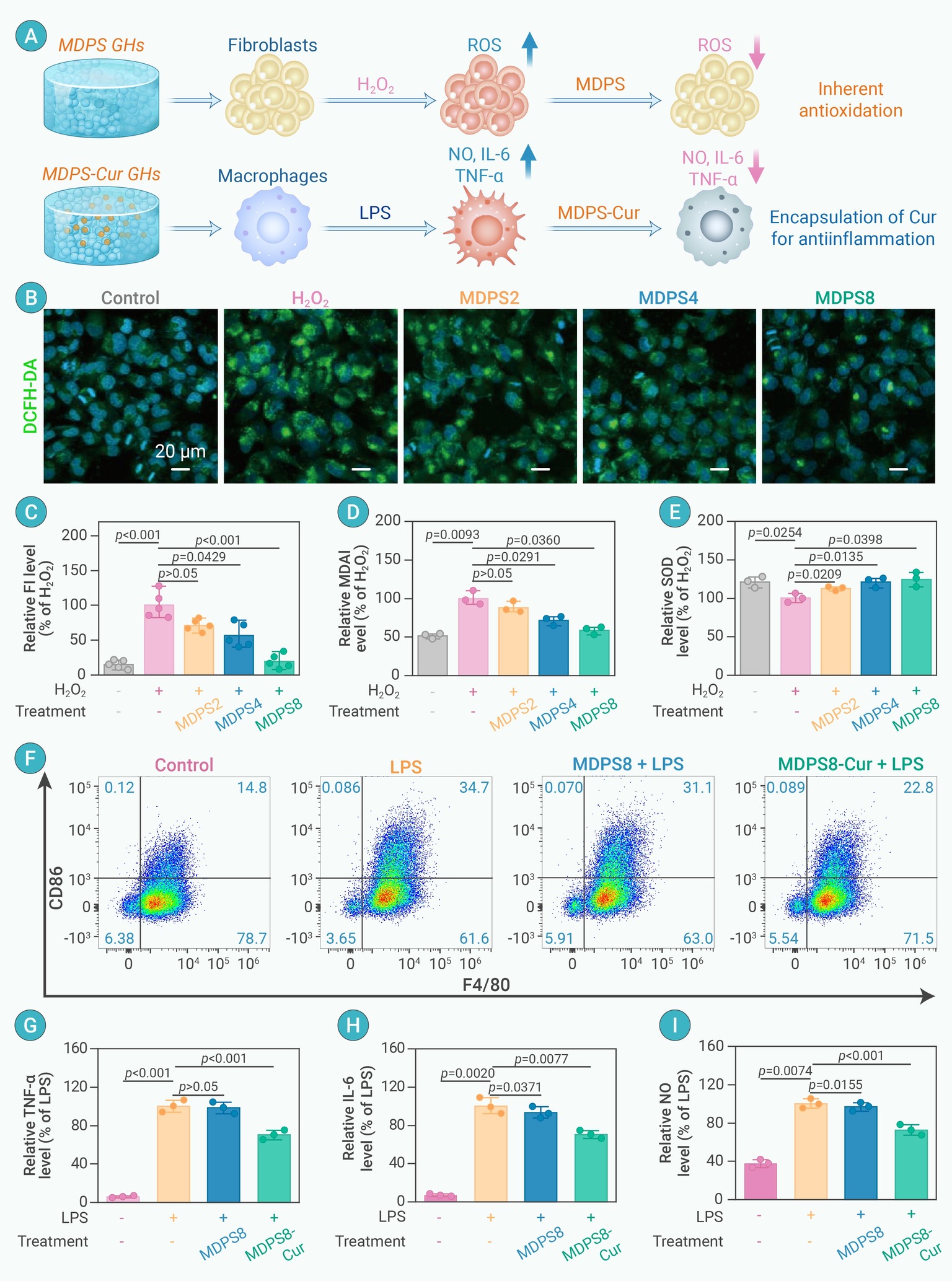
Figure 3.
In vitro cell studies
-
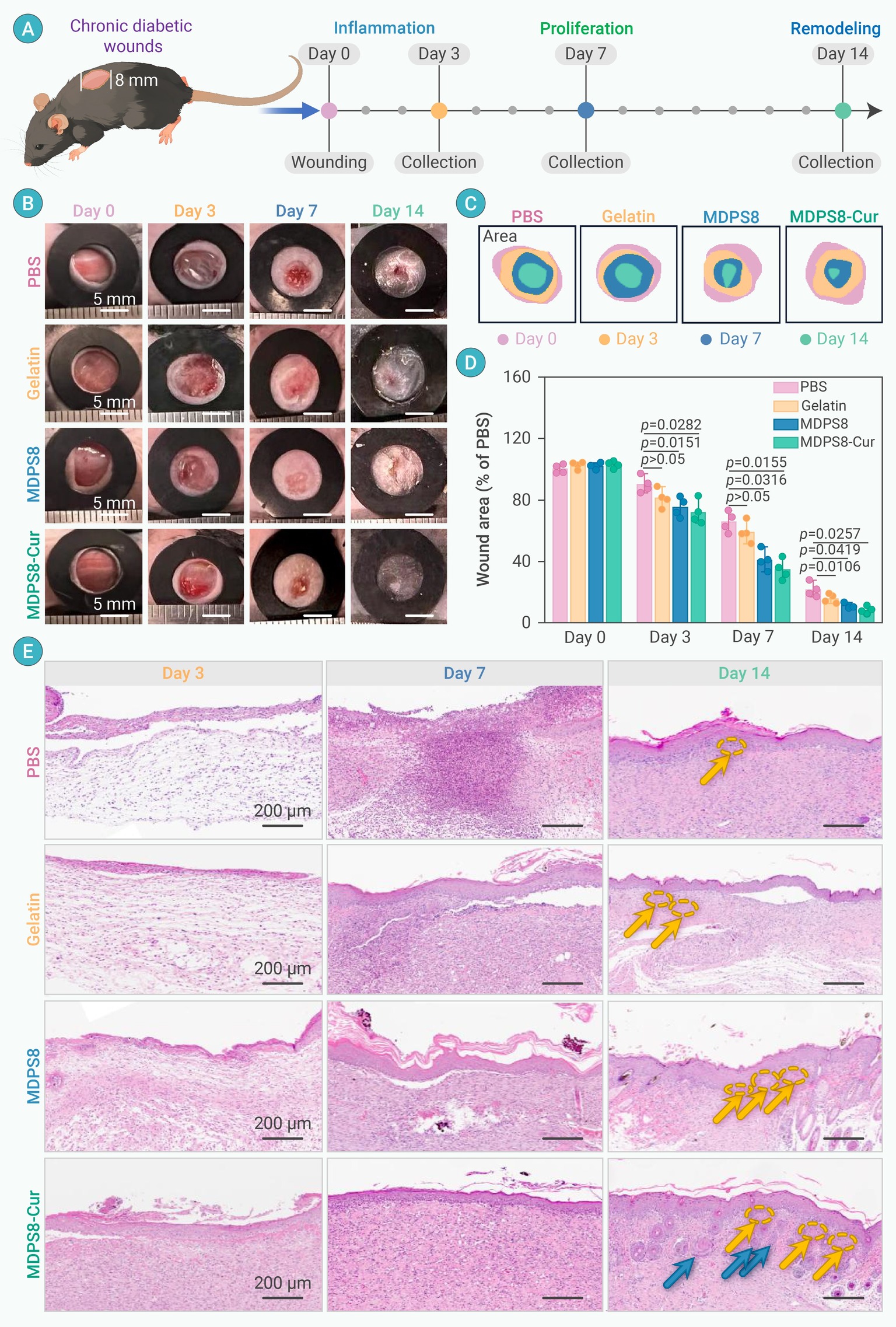
Figure 4.
Effects of the MDPS8-Cur hydrogel in promoting diabetic wound healing
-
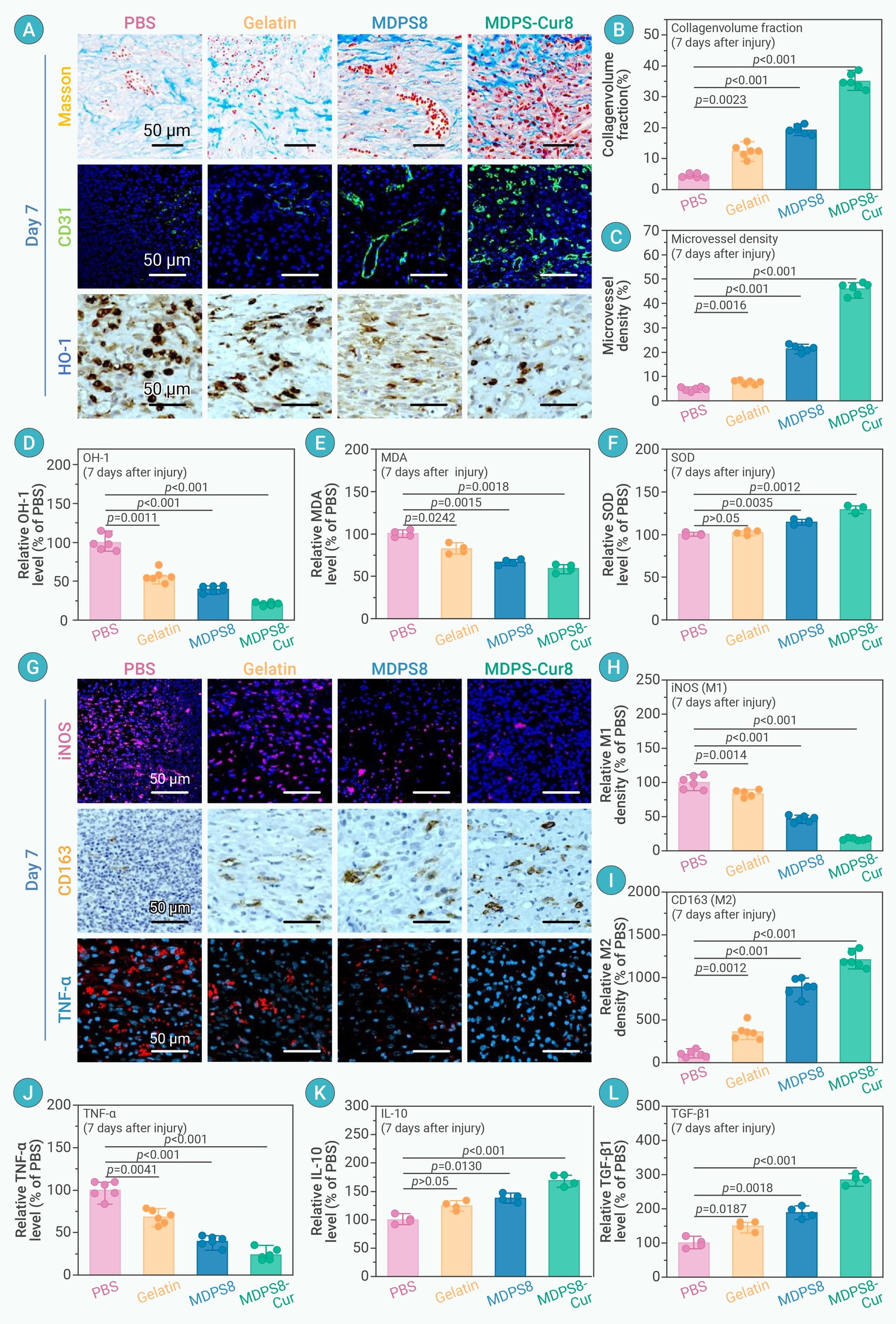
Figure 5.
Stained sections of wound tissues on day 7 and quantitative analysis
-
Figure 6.
Characterizations of the MDPS granular hydrogels prepared with different concentrations of TA solution
-
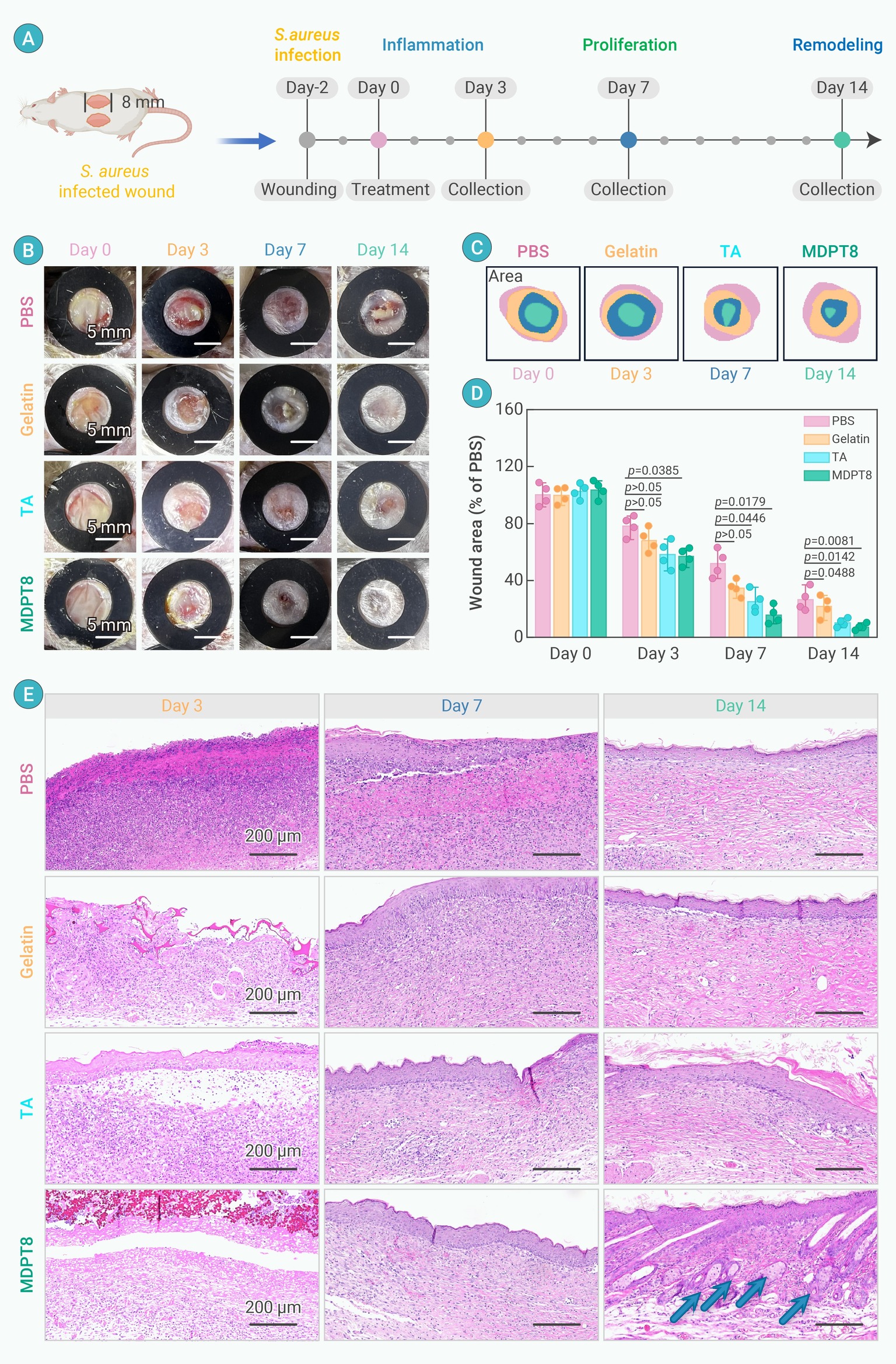
Figure 7.
Effects of the MDPT8 hydrogel on promoting wound healing in S. aureus-infected wounds
