
Rectifying the impairment of immune thrombocytopenia plasmas through photobiomodulation
-
GRAPHICAL ABSTRACT
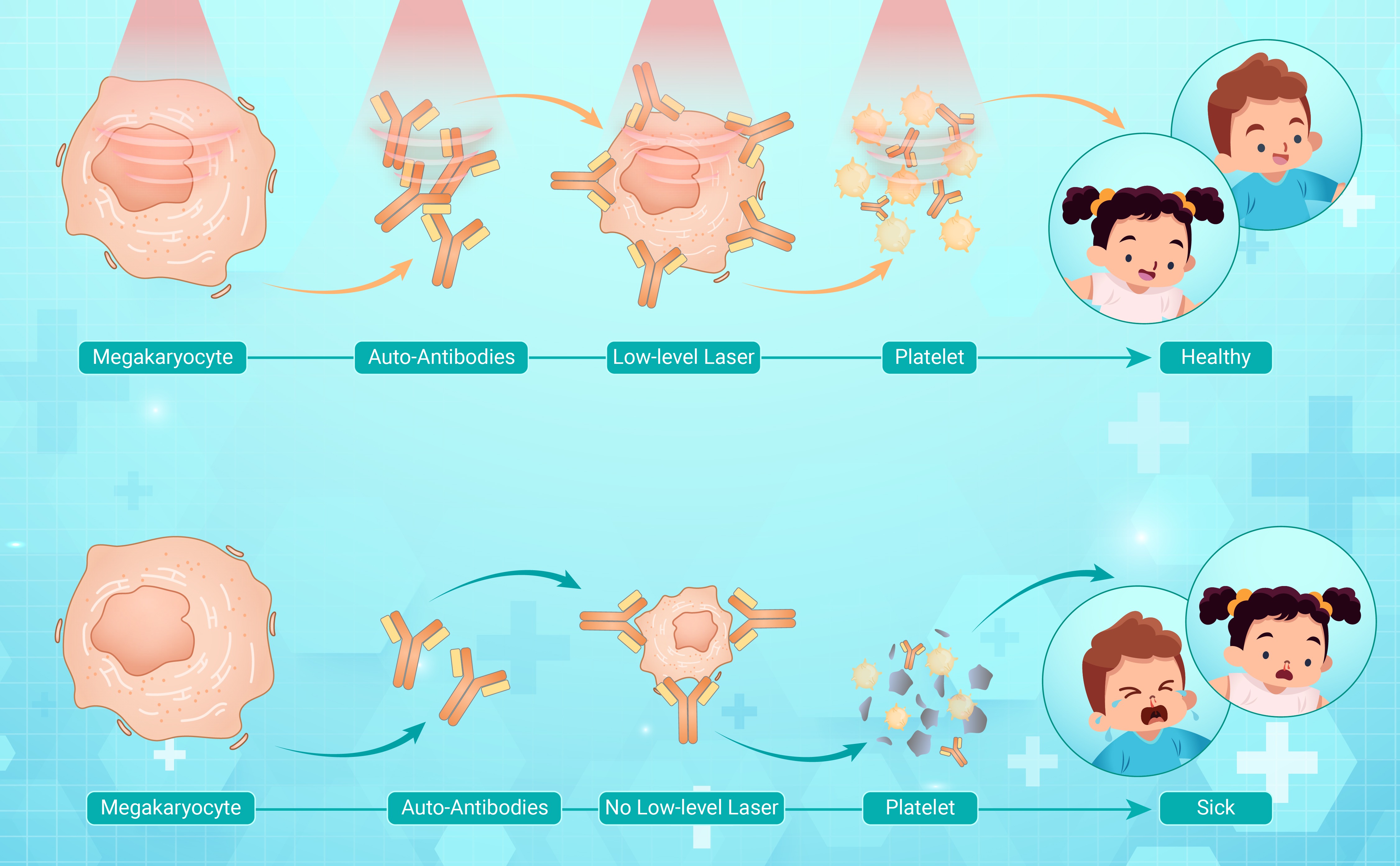
 DownLoad:
Full size image
DownLoad:
Full size image
-
PUBLIC SUMMARY
-
Immune thrombocytopenia is an autoimmune hemorrhage disorder.
Patients’ plasmas hinder megakaryocyte differentiation and maturation.
Photobiomodulation effectively mitigates the detrimental impacts.
Photobiomodulation appears to uphold cellular mitochondrial functionality.
-
-
ABSTRACT
Immune thrombocytopenia (ITP) is an autoimmune hemorrhage disorder. The first-line treatment of this disorder is corticosteroids, followed by thrombopoietin (TPO) receptor agonists such as Nplate, and/or splenectomy. Yet, the extended usage of corticosteroids or the expensive Nplate, coupled with the implications of splenectomy, raises concerns due to the array of associated side effects and an escalated vulnerability to subsequent complications. The current investigation shows that while anti-platelet antibodies and ITP plasmas hinder megakaryocyte differentiation and maturation and impair proplatelet and platelet formation in ex vivo culture of umbilical cord human CD34+ stem cells (cHSCs), low-level laser (LLL) treatment or photobiomodulation (PBM) effectively mitigates these detrimental impacts. PBM reinstated megakaryocyte differentiation and maturation, bolstering proplatelet and platelet formation in the presence of auto-platelet antibodies or ITP plasmas. The mitigating effects of PBM appear to pivot on its capacity to uphold cellular mitochondrial functionality and rectify the mitochondrial impairments engendered by anti-platelet antibodies or ITP plasmas. These findings underscore the potential of PBM as a safe and cost-efficient alternative for the management of a specific subset of ITP patients. -

-
REFERENCES
[1] Provan, D., and Semple, J.W. (2022). Recent advances in the mechanisms and treatment of immune thrombocytopenia. EBioMedicine 76: 103820. DOI: 10.1016/j.ebiom.2022.103820. [2] Bolton-Maggs, P.H.B., and George, J.N. (2021). Immune Thrombocytopenia Treatment. N. Engl. J. Med. 385: 948−950. DOI: 10.1056/NEJMe2110953. [3] Kochhar, M., and Neunert, C. (2021). Immune thrombocytopenia: A review of upfront treatment strategies. Blood Rev. 49: 100822. DOI: 10.1016/j.blre.2021.100822. [4] Kuter, D.J. (2022). Novel therapies for immune thrombocytopenia. Br. J. Haematol. 196: 1311−1328. DOI: 10.1111/bjh.17872. [5] Lupton, B.A., Hill, A., Whitfield, M.F., et al. (1988). Reduced platelet count as a risk factor for intraventricular hemorrhage. Am. J. Dis. Child. 142: 1222−1224. DOI: 10.1001/archpedi.1988.02150110100029. [6] Ferrer-Marin, F., Liu, Z.J., Gutti, R., et al. (2010). Neonatal thrombocytopenia and megakaryocytopoiesis. Semin. Hematol. 47: 281−288. DOI: 10.1053/j.seminhematol.2010.04.002. [7] Mehta, P., Vasa, R., Neumann, L., et al. (1980). Thrombocytopenia in the high-risk infant. J. Pediatr. 97: 791−794. DOI: 10.1016/s0022-3476(80)80272-1. [8] Leal-Junior, E.C., Vanin, A.A., Miranda, E.F., et al. (2015). Effect of phototherapy (low-level laser therapy and light-emitting diode therapy) on exercise performance and markers of exercise recovery: A systematic review with meta-analysis. Lasers Med. Sci. 30: 925−939. DOI: 10.1007/s10103-013-1465-4. [9] McGee, C., Liebert, A., Herkes, G., et al. (2022). Protocol for randomized controlled trial to evaluate the safety and feasibility of a novel helmet to deliver transcranial light emitting diodes photobiomodulation therapy to patients with Parkinson's disease. Front. Neurosci. 16: 945796. DOI: 10.3389/fnins.2022.945796. [10] Figueiro Longo, M.G., Tan, C.O., Chan, S.T., et al. (2020). Effect of transcranial low-level light therapy vs sham therapy among patients with moderate traumatic brain injury: A randomized clinical trial. JAMA Netw. Open 3: e2017337. DOI: 10.1001/jamanetworkopen.2020.17337. [11] Botez, M., Anton, C., Mircea, R., et al. (2012). Noninvasive laser therapy for outpatients with chronic inflammatory disorders of cervix. Rev. Med. Chir. Soc. Med. Nat. Iasi 116: 1131−1135. [12] Omar, M.T., Shaheen, A.A., and Zafar, H. (2012). A systematic review of the effect of low-level laser therapy in the management of breast cancer-related lymphedema. Support. Care Cancer 20: 2977−2984. DOI: 10.1007/s00520-012-1546-0. [13] MF, D.E.O., Johnson, D.S., Demchak, T., et al. (2022). Low-intensity LASER and LED (photobiomodulation therapy) for pain control of the most common musculoskeletal conditions. Eur. J. Phys. Rehabil. Med. 58: 282−289. DOI: 10.23736/s1973-9087.21.07236-1. [14] Liebert, A., Bicknell, B., Laakso, E.L., et al. (2021). Improvements in clinical signs of Parkinson's disease using photobiomodulation: A prospective proof-of-concept study. BMC Neurol. 21: 256. DOI: 10.1186/s12883-021-02248-y. [15] Zhang, Q., Dong, T., Li, P., et al. (2016). Noninvasive low-level laser therapy for thrombocytopenia. Sci. Transl. Med. 8: 349ra101. DOI: 10.1126/scitranslmed.aaf964. [16] Yang, J., Zhang, Q., Li, P., et al. (2016). Low-level light treatment ameliorates immune thrombocytopenia. Sci. Rep. 6: 38238. DOI: 10.1038/srep38238. [17] Lu, M., Li, P., Zhang, Q., et al. (2019). Potentials of noninvasive low-level laser therapy for neonatal thrombocytopenia (SPIE). DOI: 10.1117/12.2507053. [18] Hu, Z., Slayton, W.B., Rimsza, L.M., et al. (2010). Differences between newborn and adult mice in their response to immune thrombocytopenia. Neonatology 98: 100−108. DOI: 10.1159/000280413. [19] Iraqi, M., Perdomo, J., Yan, F., et al. (2015). Immune thrombocytopenia: antiplatelet autoantibodies inhibit proplatelet formation by megakaryocytes and impair platelet production in vitro. Haematologica 100: 623−632. DOI: 10.3324/haematol.2014.115634. [20] Zheng, S.S., Ahmadi, Z., Leung, H.H.L., et al. (2022). Antiplatelet antibody predicts platelet desialylation and apoptosis in immune thrombocytopenia. Haematologica 107: 2195−2205. DOI: 10.3324/haematol.2021.279751. [21] Wang, Y., Huang, Y.-Y., Wang, Y., et al. (2017). Photobiomodulation of human adipose-derived stem cells using 810nm and 980nm lasers operates via different mechanisms of action. BBA Gen. Subj. 1861: 441−449. DOI: 10.1016/j.bbagen.2016.10.008. [22] Fuchs, C., Schenk, M.S., Pham, L., et al. (2021). Photobiomodulation Response From 660 nm is Different and More Durable Than That From 980 nm. Lasers Surg. Med. 53: 1279−1293. DOI: 10.1002/lsm.23419. [23] Yan, M., and Wu, M.X. (2022). Low-level light pre-conditioning promotes C2C12 myoblast differentiation under hypoxic conditions. J. Biophotonics 15: e202100246. DOI: 10.1002/jbio.202100246. [24] Etemadi, A., Faghih, A., and Chiniforush, N. (2022). Effects of Photobiomodulation Therapy with Various Laser Wavelengths on Proliferation of Human Periodontal Ligament Mesenchymal Stem Cells. Photochem. Photobiol. 98: 1182−1189. DOI: 10.1111/php.13588. [25] Wang, Q., Chang, H., Shen, Q., et al. (2021). Photobiomodulation therapy for thrombocytopenia by upregulating thrombopoietin expression via the ROS-dependent Src/ERK/STAT3 signaling pathway. J. Thromb. Haemost. 19: 2029−2043. DOI: 10.1111/jth.15252. [26] Demetri, G.D. (2001). Targeted approaches for the treatment of thrombocytopenia. Oncologist 6: 15−23. DOI: 10.1634/theoncologist.6-suppl_5-15. [27] Homeida, S., Ebdon, C., Batty, P., et al. (2012). New thrombopoietin receptor agonists for platelet disorders. Drugs Today (Barc.) 48: 293−301. DOI: 10.1358/dot:2012.48.4.1740505. -
ABOUT THIS ARTICLE
Cite this article:
Wang L., Yang J., Wang Z., et al., (2024). Rectifying the impairment of immune thrombocytopenia plasmas through photobiomodulation. The Innovation Medicine 2(1): 100046. https://doi.org/10.59717/j.xinn-med.2024.100046
Welcome!
To request copyright permission to republish or share portions of our works, please visit Copyright Clearance Center's (CCC) Marketplace website at marketplace.copyright.com.
Article Metrics
Relative Articles
Cited by
Export File
Citation
Wang L., Yang J., Wang Z., et al., (2024). Rectifying the impairment of immune thrombocytopenia plasmas through photobiomodulation. The Innovation Medicine 2(1): 100046. https://doi.org/10.59717/j.xinn-med.2024.100046

Format
Content
-
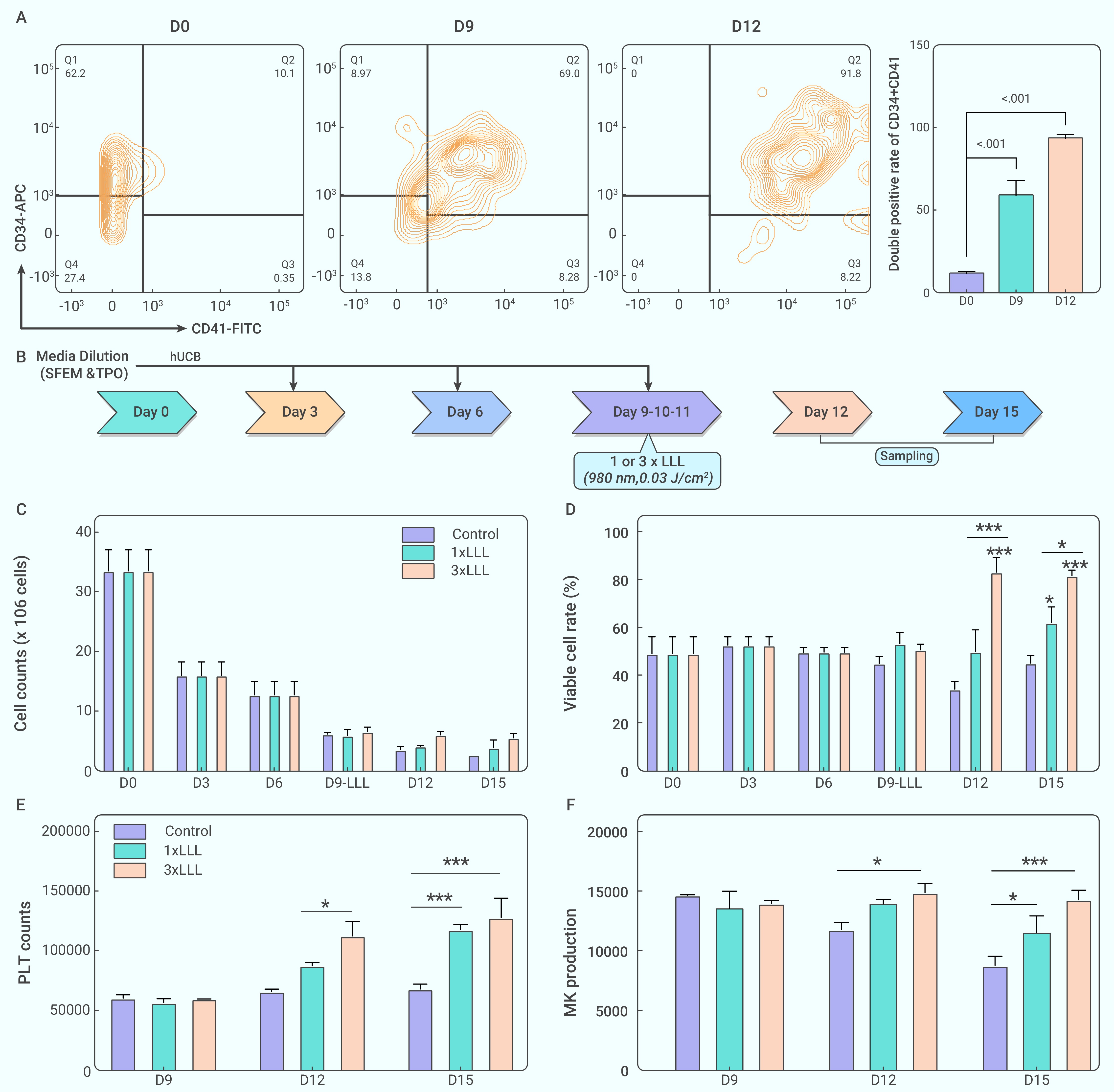
Figure 1.
Enhanced differentiation of MKs and PLT production from hUCB34+ cells ex vivo by 980 nm laser at 0.03J/cm2
-
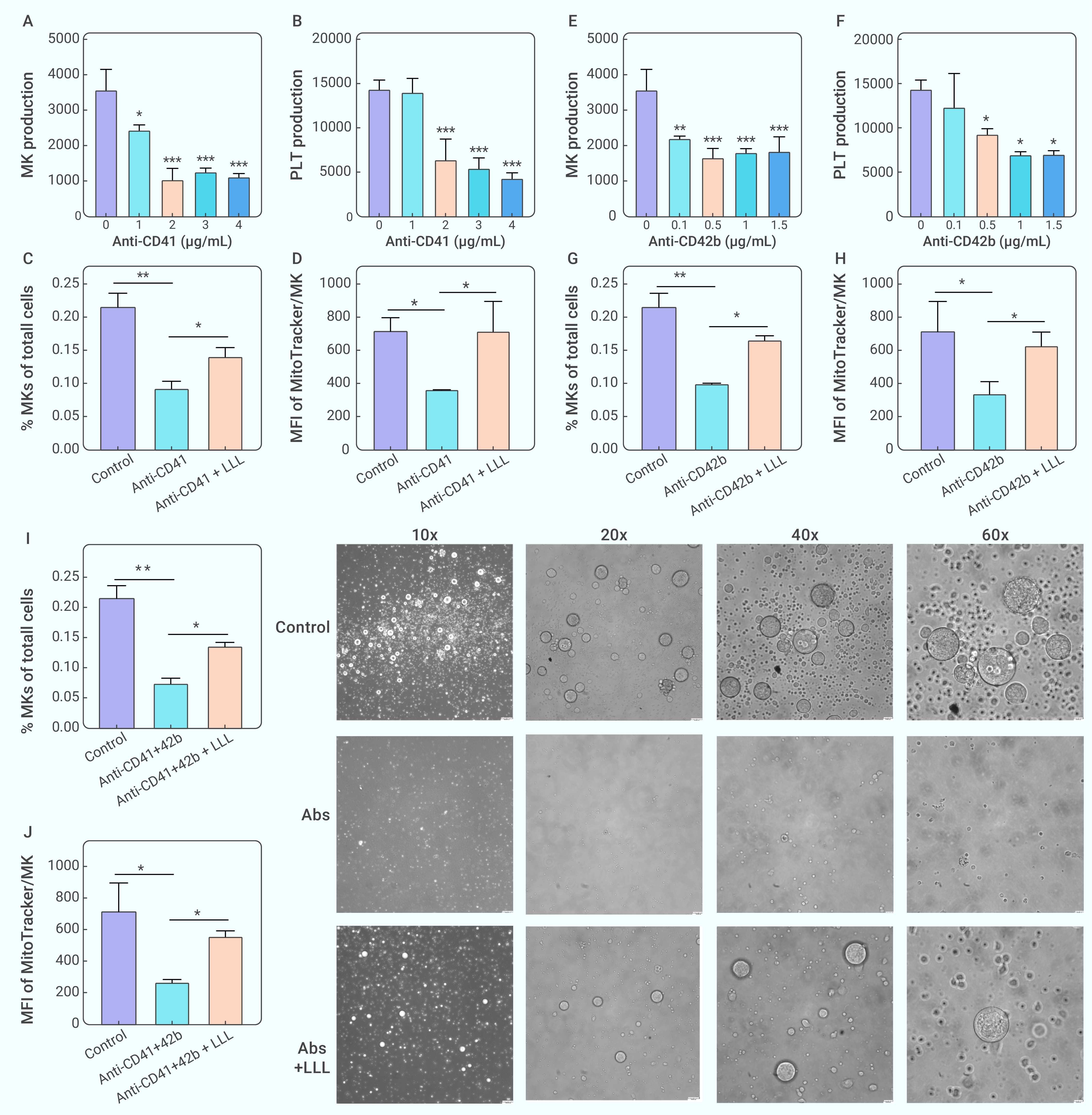
Figure 2.
LLL treatment significantly mitigates antibodies-mediated impairment of MK maturation and PLT production
-
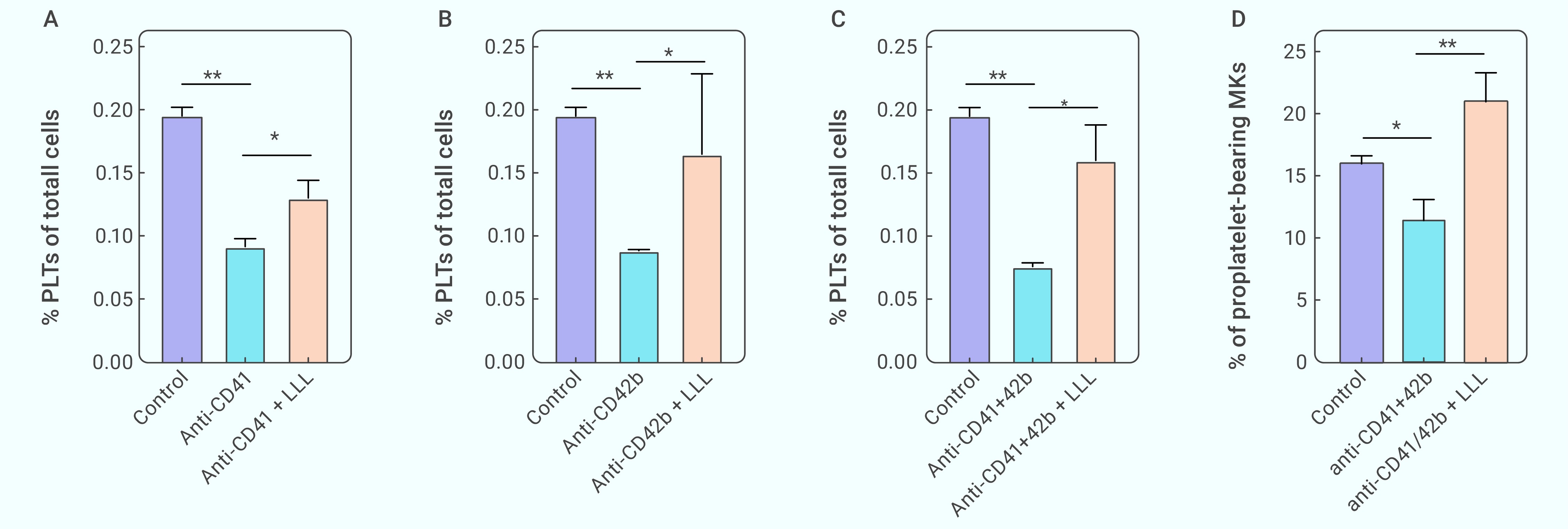
Figure 3.
LLL counteracts autoantibody’s adversary and increases PLT production and proplatelet bearing MK formation Sorted MK were differentiated in SFEM supplemented with either 3 μg/mL anti-CD41
-
Figure 4.
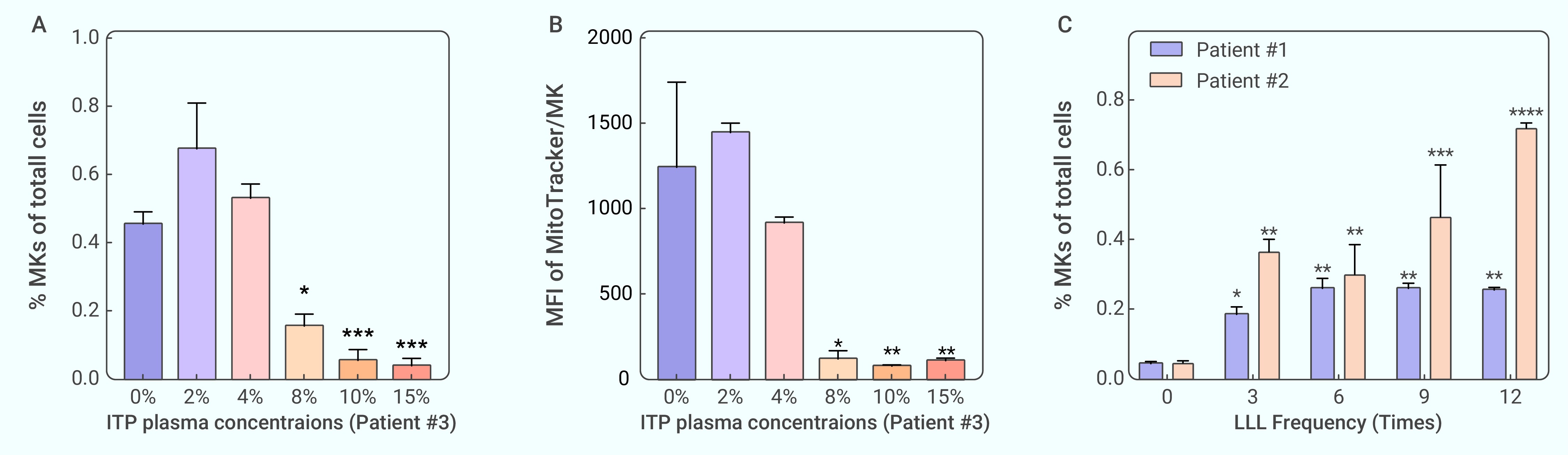
Plasmas from ITP patients severely reduce MK production and Mitochondrial mass
-
Figure 5.
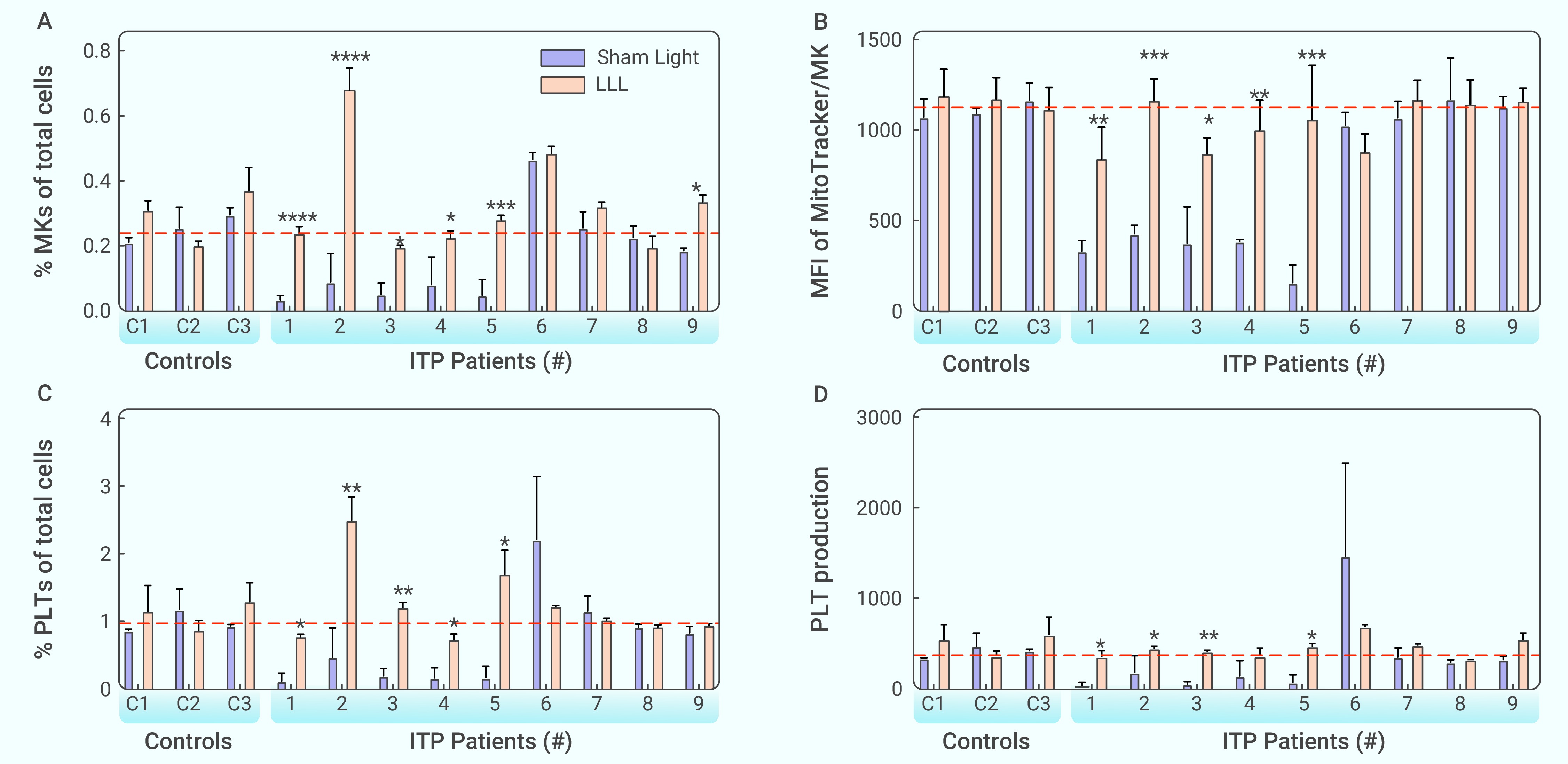
LLL enhances MK differentiation and PLT production in the presence of plasma from ITP patients
