
Long term exposure to PM2.5 chemical components associated with prevalence of cardiovascular diseases in China
-
GRAPHICAL ABSTRACT

 DownLoad:
Full size image
DownLoad:
Full size image
-
PUBLIC SUMMARY
-
Nitrate, organic matter, ammonium, black carbon, and sulphate top air pollution's cardiovascular burden.
Targeting traffic and fossil fuel sources of pollution may reduce China's cardiovascular disease burden.
Northern and Central China face higher cardiovascular burden from air pollution, mainly from organic matter.
-
-
ABSTRACT
IntroductionAmbient fine particulate matter pollution (PM2.5) has been widely associated with cardiovascular disease (CVD). However, less is known about the contribution of different chemical components of PM2.5 to CVD using a nationally representative sample in China.MethodsA nationally representative sample of older adults was recruited from 31 provinces, municipalities, or autonomous regions of China by the fourth national Urban and Rural Elderly Population Survey in 2015. We estimated the annual average concentrations of PM2.5 and its five dust-free chemical components (black carbon [BC], organic matter [OM], sulphate [$ {{\text{SO}_{\text{4}}^{\text{2-}} }}$], nitrate [${ {\text{N}\text{O}}_{\text 3}^{\text -} }$], and ammonium [$ { {\text{N}\text{H}}_{\text 4}^{\text +} }$]) at geocoded residential addresses with the spatial resolution of 10×10 km using bilinear interpolation. Logistic regression models were constructed to estimate the associations between PM2.5 chemical components and prevalence of self-reported CVD, and potential reducible fractions were further estimated using counterfactual analyses.ResultsA total of 220,425 participants with a mean age of 69.73 years, 52.24% females, and 6.08% minor ethnicity were included in the study, of which 55,837 (25.3%) reported having CVD. An interquartile range (IQR) increment in annual PM2.5 chemical components was associated with significantly elevated risk of CVD prevalence. The odds ratios were 1.254 (95% CI: 1.235-1.275, IQR: 7.11 µg/m3) for $ {\text{N}\text{O}}_{\text3}^{\text-} $, 1.197 (95% CI: 1.178-1.216, IQR: 4.35 µg/m3) for $ {\text{N}\text{H}}_{\text 4}^{\text +} $, 1.187 (95% CI: 1.173-1.202, IQR: 5.34 µg/m3) for OM, 1.122 (95% CI: 1.107-1.137, IQR: 0.97 µg/m3) for BC, and 1.106 (95% CI: 1.089-1.123, IQR: 4.67 µg/m3) for $ {\text{S}\text{O}}_{\text 4}^{\text 2-} $. The associations were significantly stronger in those older than 70 years.Conclusions Our study suggests that long-term exposure to PM2.5 chemical components could increase the risk of CVD prevalence. Future air pollution guidelines target reducing specific PM2.5 chemical components may help alleviate the burden of CVD. -

-
REFERENCES
[1] Roth, G.A., Mensah, G.A., and Fuster, V. (2020). The global burden of cardiovascular diseases and risks: A compass for global action. J. Am. Coll. Cardiol. 76: 2980−2981. DOI: 10.1016/j.jacc.2020.11.021. [2] Global Burden of Disease Collaborative Network (2019). Global Burden of Disease study 2019 (GBD 2019) results. https://vizhub.healthdata.org/gbd-results/. [3] Ma, Q., Li, R., Wang, L., et al. (2021). Temporal trend and attributable risk factors of stroke burden in China, 1990-2019: An analysis for the Global Burden of Disease study 2019. Lancet Public Health 6: e897−e906. DOI: 10.1016/S2468-2667(21)00228-0. [4] Roth, G.A., Mensah, G.A., Johnson, C.O., et al. (2020). Global burden of cardiovascular diseases and risk factors, 1990-2019: Update from the GBD 2019 study. J. Am. Coll. Cardiol. 76: 2982−3021. DOI: 10.1016/j.jacc.2020.11.010. [5] Liu, S., Li, Y., Zeng, X., et al. (2019). Burden of cardiovascular diseases in China, 1990-2016: Findings from the 2016 Global Burden of Disease study. JAMA Cardiol. 4: 342−352. DOI: 10.1001/jamacardio.2019.0295. [6] Brauer, M., Casadei, B., Harrington, R.A., et al. (2021). Taking a stand against air pollution-the impact on cardiovascular disease: A joint opinion from the World Heart Federation, American College of Cardiology, American Heart Association, and the European Society of Cardiology. Circulation 143: e800−e804. DOI: 10.1161/CIRCULATIONAHA.120.052666. [7] Huang, C., Moran, A.E., Coxson, P.G., et al. (2017). Potential cardiovascular and total mortality benefits of air pollution control in urban China. Circulation 136: 1575−1584. DOI: 10.1161/CIRCULATIONAHA.116.026487. [8] Chen, R., Jiang, Y., Hu, J., et al. (2022). Hourly air pollutants and acute coronary syndrome onset in 1.29 million patients. Circulation 145 : 1749-1760. DOI: 10.1161/CIRCULATIONAHA.121.057179. [9] Huang, K., Liang, F., Yang, X., et al. (2019). Long term exposure to ambient fine particulate matter and incidence of stroke: Prospective cohort study from the China-PAR project. BMJ 367: l6720. DOI: 10.1136/bmj.l6720. [10] Cai, M., Zhang, S., Lin, X., et al. (2022). Association of ambient particulate matter pollution of different sizes with in-hospital case fatality among stroke patients in China. Neurology 98: e2474−e2486. DOI: 10.1212/WNL.0000000000200546. [11] Cai, M., Lin, X., Wang, X., et al. (2022). Ambient particulate matter pollution of different sizes associated with recurrent stroke hospitalization in China: A cohort study of 1.07 million stroke patients. Sci. Total. Environ. 856 : 159104. DOI: 10.1016/j.scitotenv.2022.159104. [12] Lin, X., Cai, M., Tan, K., et al. (2023). Ambient particulate matter and in-hospital case fatality of acute myocardial infarction: A multi-province cross-sectional study in China. Ecotoxicol. Environ. Saf. 268: 115731. DOI: 10.1016/j.ecoenv.2023.115731. [13] Tian, F., Cai, M., Li, H., et al. (2022). Air pollution associated with incident stroke, post-stroke cardiovascular events, and death: A trajectory analysis of a prospective cohort. Neurology 99: e2472−e2484. DOI: 10.1212/WNL.0000000000201316. [14] Zhang, S., Qian, Z.M., Chen, L., et al. (2023). Exposure to air pollution during pre-hypertension and subsequent hypertension, cardiovascular disease, and death: A trajectory analysis of the UK Biobank cohort. Environ. Health Perspect. 131: 17008. DOI: 10.1289/EHP10967. [15] Rajagopalan, S., and Landrigan, P.J. (2021). Pollution and the heart. N. Engl. J. Med. 385: 1881−1892. DOI: 10.1056/NEJMra2030281. [16] Kulick, E.R., Kaufman, J.D., and Sack, C. (2023). Ambient air pollution and stroke: An updated review. Stroke 54: 882−893. DOI: 10.1161/STROKEAHA.122.035498. [17] Bhatnagar, A. (2022). Cardiovascular effects of particulate air pollution. Annu. Rev. Med. 73: 393−406. DOI: 10.1146/annurev-med-042220-011549. [18] Expert Consensus Task, F., Shi, X., and Duan, G. (2022). Recommendations of controlling and preventing acute health risks of fine particulate matter pollution - China, 2021. China CDC Wkly. 4: 329−341. DOI: 10.46234/ccdcw2022.078. [19] Newman, J.D., Bhatt, D.L., Rajagopalan, S., et al. (2020). Cardiopulmonary impact of particulate air pollution in high-risk populations: JACC state-of-the-art review. J. Am. Coll. Cardiol. 76: 2878−2894. DOI: 10.1016/j.jacc.2020.10.020. [20] Tibuakuu, M., Michos, E.D., Navas-Acien, A., et al. (2018). Air pollution and cardiovascular disease: A focus on vulnerable populations worldwide. Curr. Epidemiol. Rep. 5: 370−378. DOI: 10.1007/s40471-018-0166-8. [21] Gong, J., Wang, G., Wang, Y., et al. (2022). Nowcasting and forecasting the care needs of the older population in China: Analysis of data from the China Health and Retirement Longitudinal Study (CHARLS). Lancet Public Health 7: e1005−e1013. DOI: 10.1016/S2468-2667(22)00203-1. [22] Su, B., Li, D., Xie, J., et al. (2022). Chronic disease in China: Geographic and socioeconomic determinants among persons aged 60 and older. J. Am. Med. Dir. Assoc. 24: 206−212.e5. DOI: 10.1016/j.jamda.2022.10.002. [23] Su, B., Liu, C., Chen, L., et al. (2023). Long-term exposure to PM2.5 and O3 with cardiometabolic multimorbidity: Evidence among Chinese elderly population from 462 cities. Ecotoxicol. Environ. Saf. 255 : 114790. DOI: 10.1016/j.ecoenv.2023.114790. [24] Geng, G., Zhang, Q., Tong, D., et al. (2017). Chemical composition of ambient PM2.5 over China and relationship to precursor emissions during 2005–2012. Atmos. Chem. Phys. 17 : 9187-9203. DOI: 10.5194/acp-17-9187-2017. [25] Liu, S., Geng, G., Xiao, Q., et al. (2022). Tracking daily concentrations of PM2.5 chemical composition in China since 2000. Environ. Sci. Technol. 56 : 16517-16527. DOI: 10.1021/acs.est.2c06510. [26] Liu, W., Wei, J., Cai, M., et al. (2022). Particulate matter pollution and asthma mortality in China: A nationwide time-stratified case-crossover study from 2015 to 2020. Chemosphere 308 : 136316. DOI: 10.1016/j.chemosphere.2022.136316. [27] Cai, M., Lin, X., Wang, X., et al. (2023). Long-term exposure to ambient fine particulate matter chemical composition and in-hospital case fatality among patients with stroke in China. Lancet Reg. Health West. Pac. 32: 100679. DOI: 10.1016/j.lanwpc.2022.100679. [28] Cai, M., Wei, J., Zhang, S., et al. (2023). Short-term air pollution exposure associated with death from kidney diseases: A nationwide time-stratified case-crossover study in China from 2015 to 2019. BMC Med. 21: 32. DOI: 10.1186/s12916-023-02734-9. [29] Li, M., Edgell, R.C., Wei, J., et al. (2023). Air pollution and stroke hospitalization in the Beibu Gulf Region of China: A case-crossover analysis. Ecotoxicol. Environ. Saf. 255: 114814. DOI: 10.1016/j.ecoenv.2023.114814. [30] Cai, M., Liu, E., Tao, H., et al. (2018). Does a medical consortium influence health outcomes of hospitalized cancer patients? An integrated care model in Shanxi, China. Int. J. Integr. Care 18: 7. DOI: 10.5334/ijic.3588. [31] Cai, M., Liu, E., Bai, P., et al. (2022). The chasm in percutaneous coronary intervention and in-hospital mortality rates among acute myocardial infarction patients in rural and urban hospitals in China: A mediation analysis. Int. J. Public Health 67: 1604846. DOI: 10.3389/ijph.2022.1604846. [32] Muñoz-Sabater, J., Dutra, E., Agustí-Panareda, A., et al. (2021). ERA5-Land: A state-of-the-art global reanalysis dataset for land applications. Earth Syst. Sci. Data 13: 4349−4383. DOI: 10.5194/essd-13-4349-2021. [33] Naimi, A.I., Cole, S.R., and Kennedy, E.H. (2017). An introduction to g methods. Int. J. Epidemiol. 46: 756−762. DOI: 10.1093/ije/dyw323. [34] Cai, M., Liu, E., Zhang, R., et al. (2020). Comparing the performance of Charlson and Elixhauser comorbidity indices to predict in-hospital mortality among a Chinese population. Clin. Epidemiol. 12: 307−316. DOI: 10.2147/CLEP.S241610. [35] R Core Team (2022). R: A language and environment for statistical computing. https://www.R-project.org/. [36] Mathur, M.B., and VanderWeele, T.J. (2020). Sensitivity analysis for unmeasured confounding in meta-analyses. J. Am. Stat. Assoc. 115: 163−172. DOI: 10.1080/01621459.2018.1529598. [37] Smith, L.H., and VanderWeele, T.J. (2019). Bounding bias due to selection. Epidemiology 30: 509−516. DOI: 10.1097/EDE.0000000000001032. [38] VanderWeele, T.J., and Ding, P. (2017). Sensitivity analysis in observational research: Introducing the E-value. Ann. Intern. Med. 167: 268−274. DOI: 10.7326/M16-2607. [39] Dockery, D.W., Pope, C.A., 3rd, Xu, X., et al. (1993). An association between air pollution and mortality in six U.S. cities. N. Engl. J. Med. 329: 1753−1759. DOI: 10.1056/NEJM199312093292401. [40] World Health Organization. (2021). WHO global air quality guidelines: Particulate matter (PM2.5 and PM10), ozone, nitrogen dioxide, sulfur dioxide and carbon monoxide (World Health Organization). https://apps.who.int/iris/handle/10665/345329. [41] Shi, L., Zhu, Q., Wang, Y., et al. (2023). Incident dementia and long-term exposure to constituents of fine particle air pollution: A national cohort study in the United States. Proc. Natl. Acad. Sci. U.S.A. 120: e2211282119. DOI: 10.1073/pnas.2211282119. [42] Smith, K.R., Jerrett, M., Anderson, H.R., et al. (2009). Public health benefits of strategies to reduce greenhouse-gas emissions: Health implications of short-lived greenhouse pollutants. Lancet 374: 2091−2103. DOI: 10.1016/S0140-6736(09)61716-5. [43] Saarikoski, S., Niemi, J.V., Aurela, M., et al. (2021). Sources of black carbon at residential and traffic environments obtained by two source apportionment methods. Atmos. Chem. Phys. 21: 14851−14869. DOI: 10.5194/acp-21-14851-2021. [44] Feng, T., Bei, N., Zhao, S., et al. (2021). Nitrate debuts as a dominant contributor to particulate pollution in Beijing: Roles of enhanced atmospheric oxidizing capacity and decreased sulfur dioxide emission. Atmos. Environ. 244: 117995. DOI: 10.1016/j.atmosenv.2020.117995. [45] Sun, K., Tao, L., Miller, D.J., et al. (2017). Vehicle emissions as an important urban ammonia source in the United States and China. Environ. Sci. Technol. 51: 2472−2481. DOI: 10.1021/acs.est.6b02805. [46] Zhai, S., Jacob, D.J., Wang, X., et al. (2021). Control of particulate nitrate air pollution in China. Nat. Geosci. 14: 389−395. DOI: 10.1038/s41561-021-00726-z. [47] Hang, Y., Meng, X., Li, T., et al. (2022). Assessment of long-term particulate nitrate air pollution and its health risk in China. iScience 25: 104899. DOI: 10.1016/j.isci.2022.104899. [48] Lin, H., Tao, J., Du, Y., et al. (2016). Particle size and chemical constituents of ambient particulate pollution associated with cardiovascular mortality in Guangzhou, China. Environ. Pollut. 208 : 758-766. DOI: 10.1016/j.envpol.2015.10.056. [49] Liang, R., Chen, R., Yin, P., et al. (2022). Associations of long-term exposure to fine particulate matter and its constituents with cardiovascular mortality: A prospective cohort study in China. Environ. Int. 162: 107156. DOI: 10.1016/j.envint.2022.107156. [50] Peters, A. (2023). Ambient air pollution and Alzheimer's disease: The role of the composition of fine particles. Proc. Natl. Acad. Sci. U.S.A. 120: e2220028120. DOI: 10.1073/pnas.2220028120. -
ABOUT THIS ARTICLE
Cite this article:
Cai M., Su B., Hu G., et al., (2024). Long term exposure to PM2.5 chemical components associated with prevalence of cardiovascular diseases in China. The Innovation Medicine 2(3): 100077. https://doi.org/10.59717/j.xinn-med.2024.100077
Welcome!
To request copyright permission to republish or share portions of our works, please visit Copyright Clearance Center's (CCC) Marketplace website at marketplace.copyright.com.
Article Metrics
Relative Articles
Cited by
Export File
Citation
Cai M., Su B., Hu G., et al., (2024). Long term exposure to PM2.5 chemical components associated with prevalence of cardiovascular diseases in China. The Innovation Medicine 2(3): 100077. https://doi.org/10.59717/j.xinn-med.2024.100077

Format
Content
-
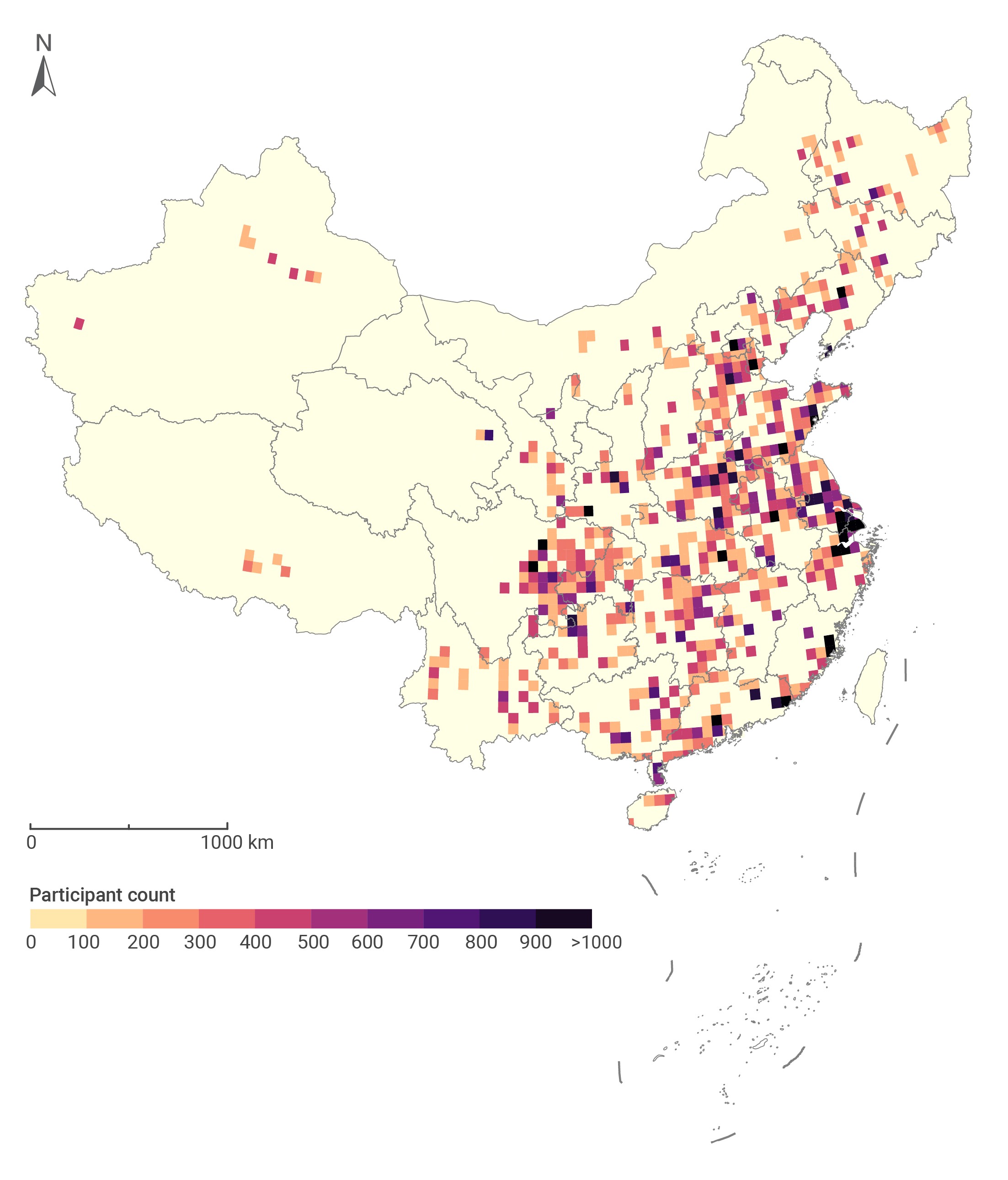
Figure 1.
A map of the spatial distribution of study participants.
-
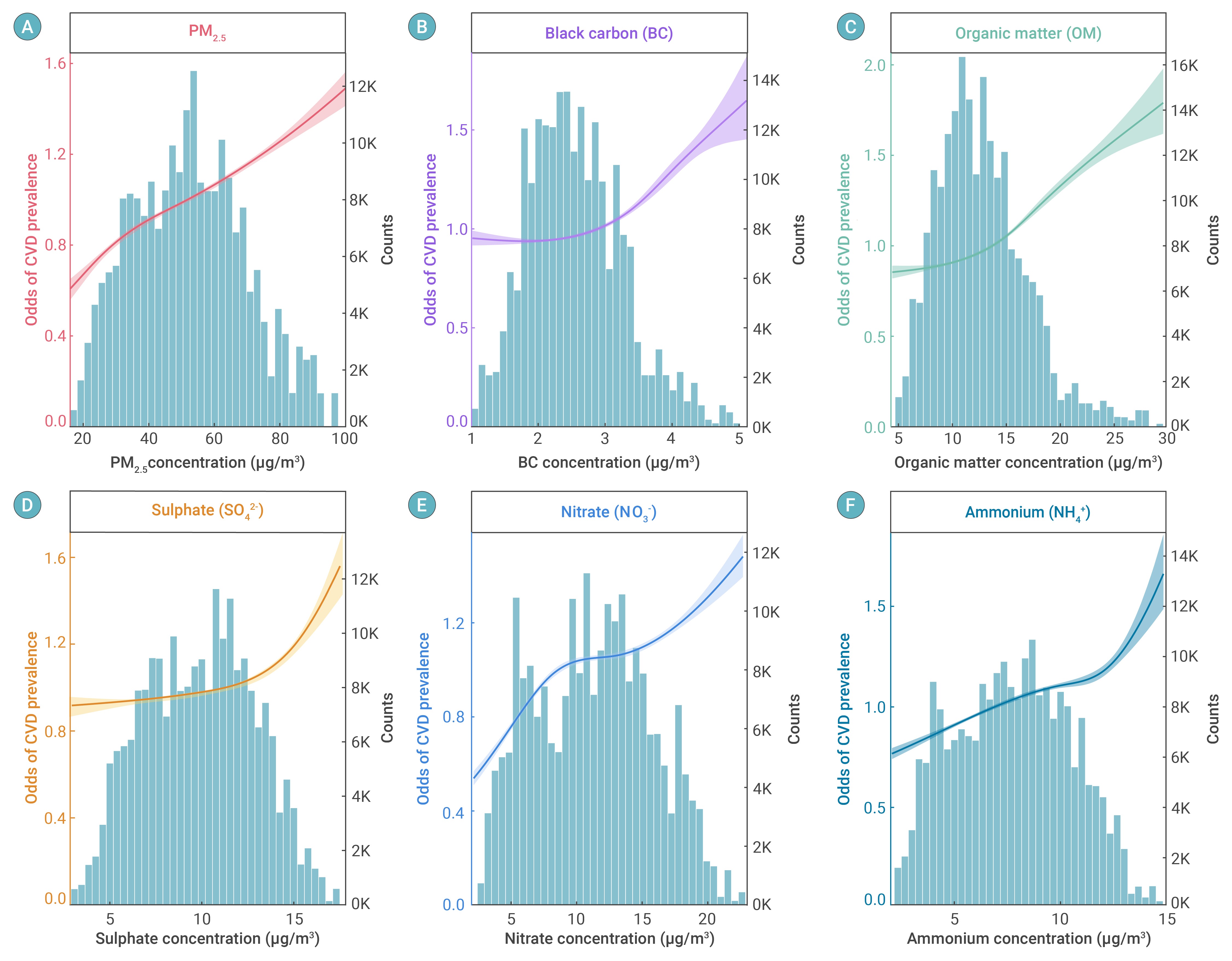
Figure 2.
Exposure-response relationships of annual concentrations of ambient PM2.5 and its chemical components [black carbon (BC), organic matter (OM), sulphate (
$ {\mathrm{S}\mathrm{O}}_{4}^{2-} $ $ {\mathrm{N}\mathrm{O}}_{3}^{-} $ $ {\mathrm{N}\mathrm{H}}_{4}^{+} $ -
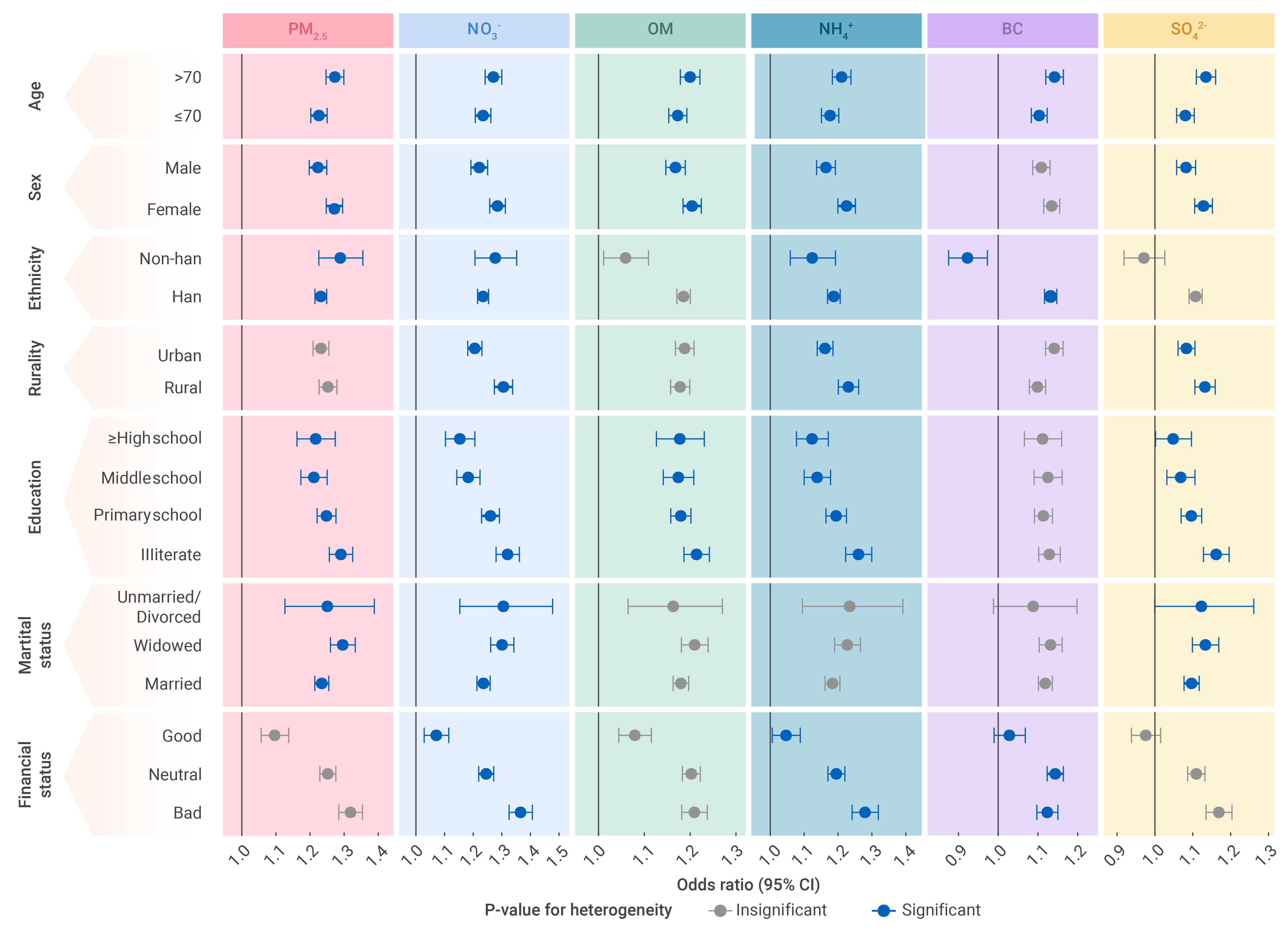
Figure 3.
Associations of ambient PM2.5 and its chemical components [black carbon (BC), organic matter (OM), sulphate (
$ {\mathrm{S}\mathrm{O}}_{4}^{2-} $ $ {\mathrm{N}\mathrm{O}}_{3}^{-} $ $ {\mathrm{N}\mathrm{H}}_{4}^{+} $ -
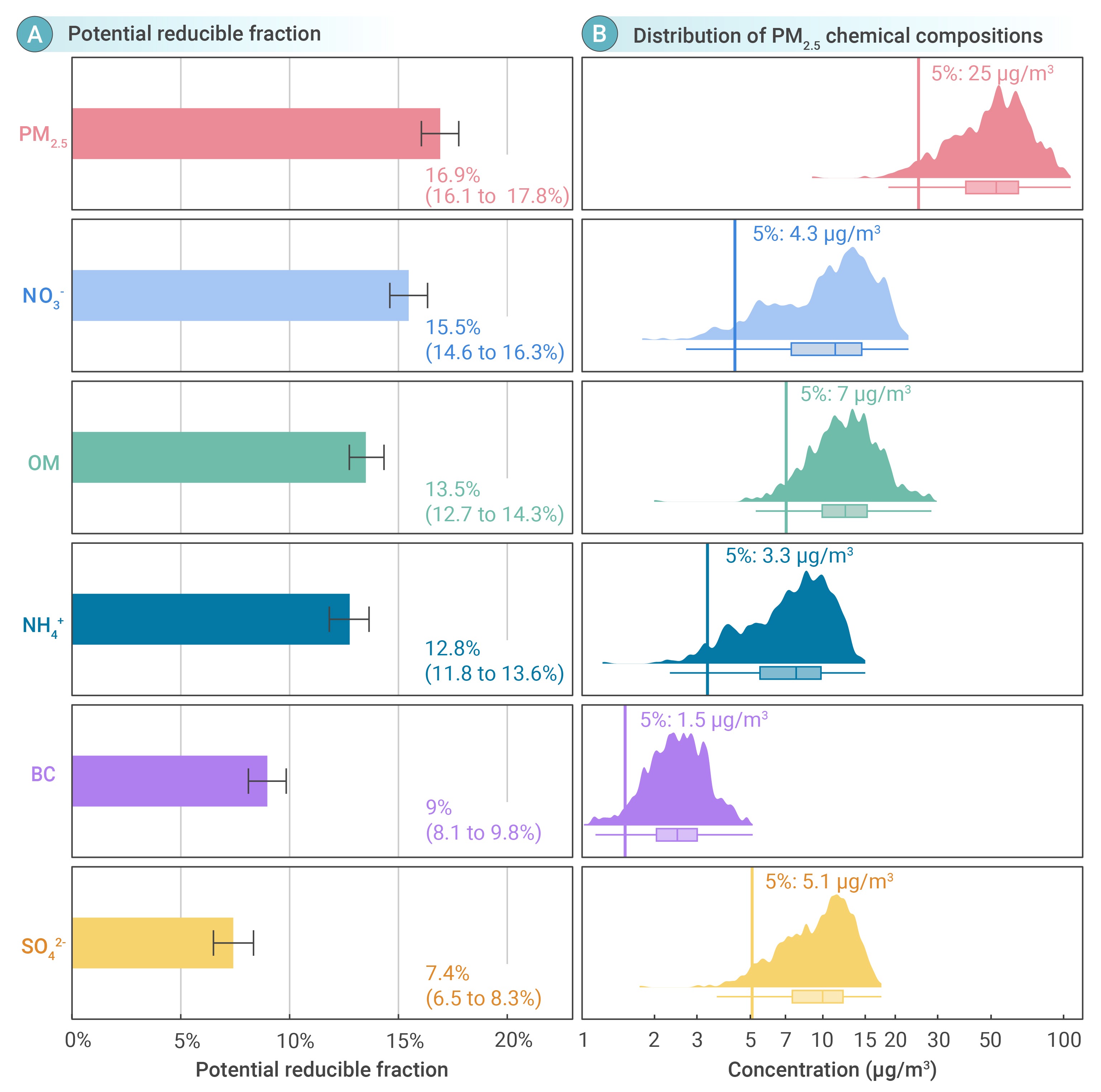
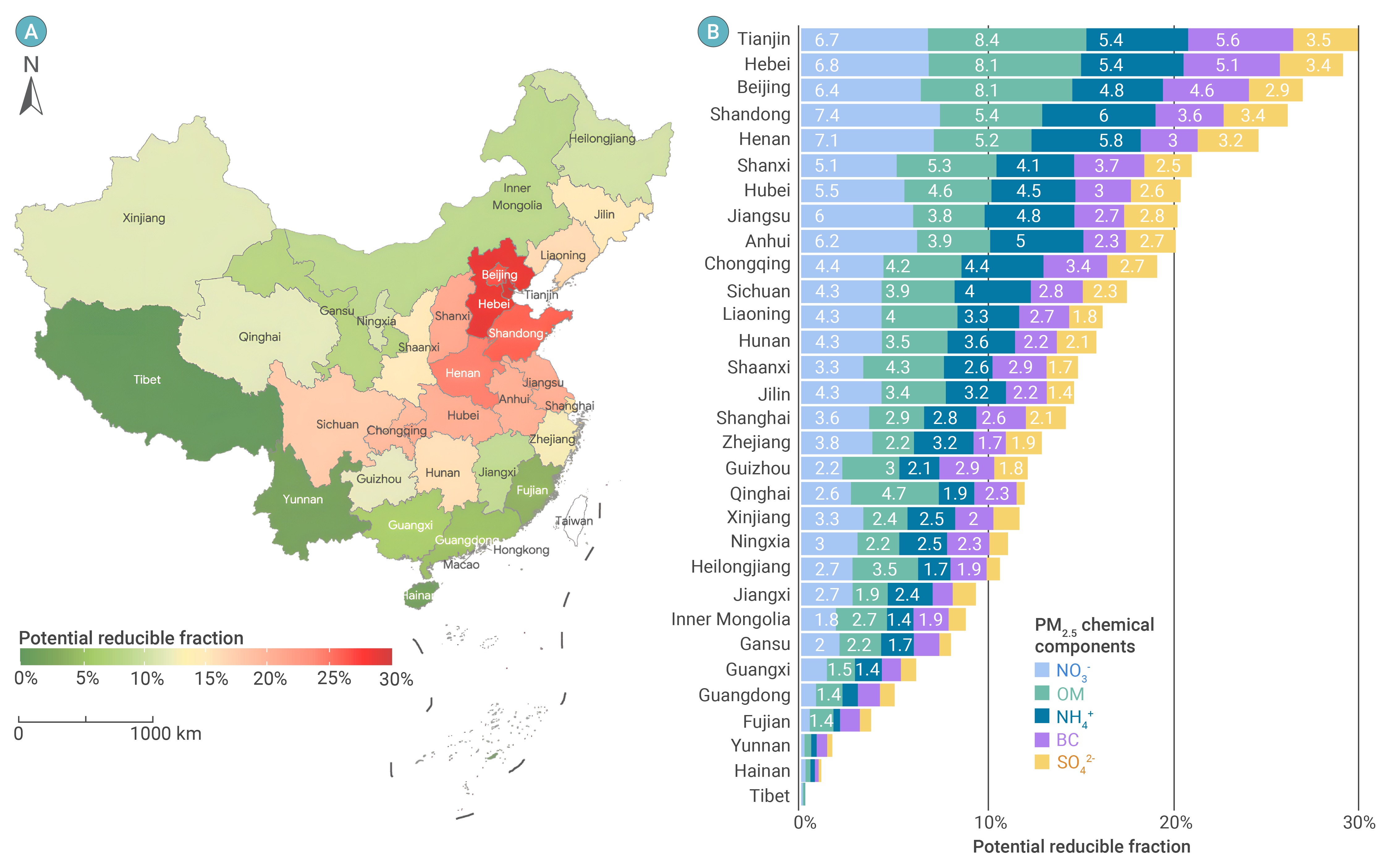
Figure 4.
Potential reducible fraction of CVD attributable to ambient PM2.5 and its chemical components [black carbon (BC), organic matter (OM), sulphate (
$ {\mathrm{S}\mathrm{O}}_{4}^{2-} $ $ {\mathrm{N}\mathrm{O}}_{3}^{-} $ $ {\mathrm{N}\mathrm{H}}_{4}^{+} $ -
Figure 5.
Potential reducible fraction of CVD attributable to ambient PM2.5 chemical components [black carbon (BC), organic matter (OM), sulphate (
$ {\mathrm{S}\mathrm{O}}_{4}^{2-} $ $ {\mathrm{N}\mathrm{O}}_{3}^{-} $ $ \mathrm{N}\mathrm{H}_4^+ $
