
Safety of the stent-based diverting technique after low anterior resection in patients with rectal cancer
-
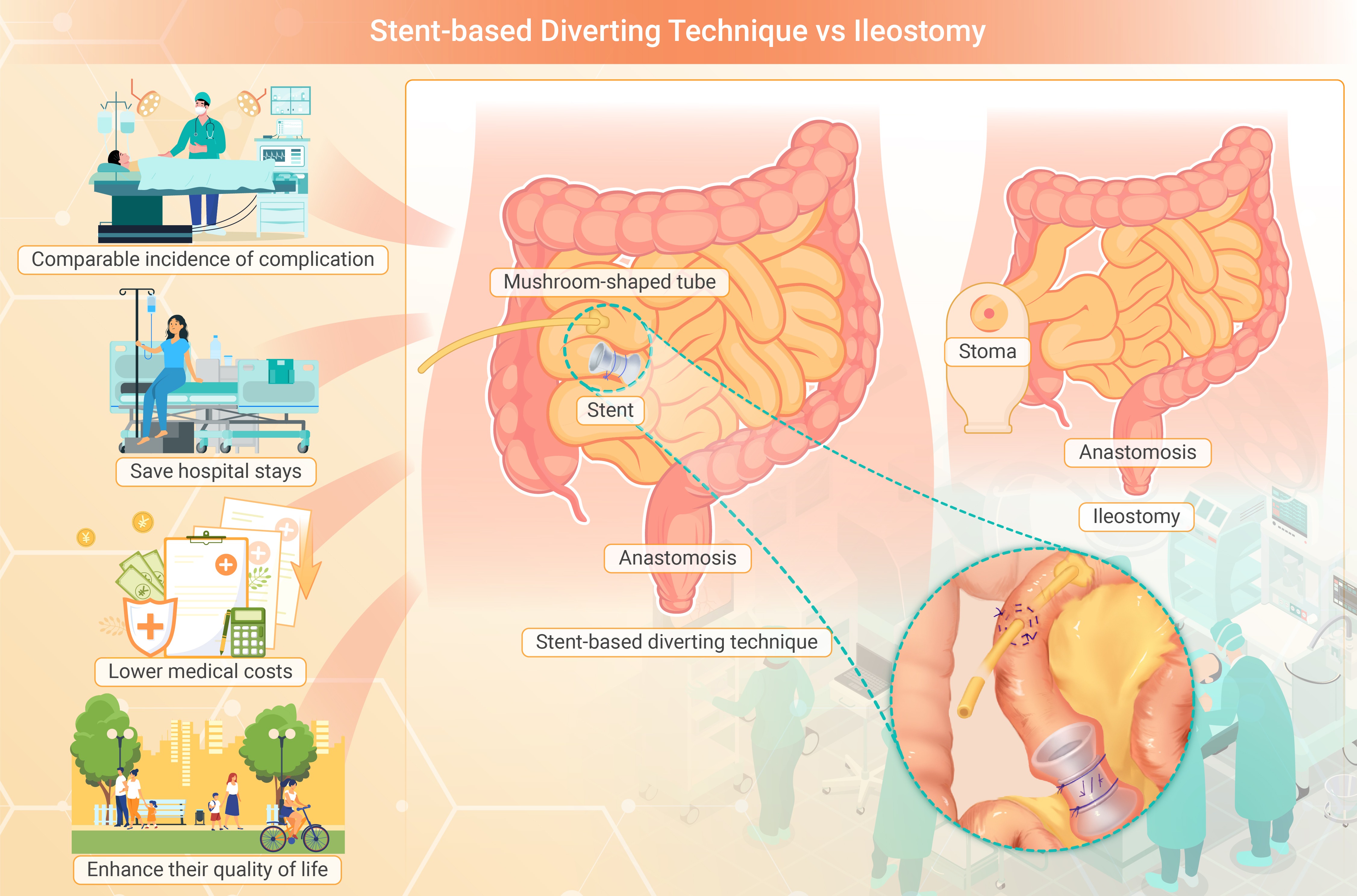
GRAPHICAL ABSTRACT
 DownLoad:
Full size image
DownLoad:
Full size image
-
PUBLIC SUMMARY
-
Stent-based diverting technique did not raise the incidence of complication.
Stent-based diverting technique reduced postoperative hospital stays.
Stent-based diverting technique lowered medical costs.
Stent-based diverting technique improved quality-of-life.
-
-
ABSTRACT
Given that anastomotic leakage (AL) is a severe complication of low anterior resection (LAR) for rectal cancer, ileostomy is the most common method for reducing the severity of AL, which in turn has stoma-related side effects. A self-developed technique named the stent-based diverting technique (SDT) not only protects the anastomosis but also avoids the stoma. From December 2021 to March 2023, 80 patients were randomized into the ileostomy arm (n = 43) or the SDT arm (n = 37). Demographic characteristics, laboratory test results, surgical outcomes, and oncological features were compared between the groups. For the primary endpoint, the incidence of severe complications was 14.0% in the ileostomy arm and 8.1% in the SDT arm (relative risk=0.58, 95% confidence interval=0.156-2.163, p=0.494). For the second endpoint, the incidences of mild and total complications were comparable. The shorter the hospital stay, the lower the cost and quality of life, which could be improved by the SDT procedure. This prospective randomized clinical trial preliminarily evaluated the usefulness of SDT after LAR for patients with rectal cancer, suggesting that SDT might be an alternative operation for patients who need to receive ileostomy after rectal surgery. -

-
REFERENCES
[1] Bonjer, H.J., Deijen, C.L., Abis, G.A., et al. (2015). A randomized trial of laparoscopic versus open surgery for rectal cancer. N. Engl. J. Med. 372: 1324−1332. DOI: 10.1056/NEJMoa1414882. [2] Tang, R.K., Sansonetti, P.J., and Gao, Y.Z. (2023). Stem cell retrograde: A new reason why colorectal cancer is more common than small intestinal cancer. The Innovation 4: 100387. DOI: 10.1016/j.xinn.2023.100387. [3] Borstlap, W.A., Westerduin, E., Aukema, T.S., et al. (2017). Anastomotic leakage and chronic presacral sinus formation after low anterior resection: Results from a large cross-sectional study. Ann. Surg. 266: 870−877. DOI: 10.1097/SLA.0000000000002429. [4] Zhou, S.C., Zhou, H.T., Zheng, Z.X., et al. (2019). Predictive risk factors for anastomotic leakage after anterior resection of rectal cancer in elderly patients over 80 years old: An analysis of 288 consecutive patients. World J. Surg. Oncol. 17: 112. DOI: 10.1186/s12957-019-1655-z. [5] Chen, H., Cai, H.K., and Tang, Y.H. (2018). An updated meta-analysis of transanal drainage tube for prevention of anastomotic leak in anterior resection for rectal cancer. Surg. Oncol. 27: 333−340. DOI: 10.1016/j.suronc.2018.05.018. [6] Mrak, K., Uranitsch, S., Pedross, F., et al. (2016). Diverting ileostomy versus no diversion after low anterior resection for rectal cancer: A prospective, randomized, multicenter trial. Surgery 159: 1129−1139. DOI: 10.1016/j.surg.2015.11.006. [7] Song, Z.F., Huang, X.F., Dai, S., et al. (2022). A stent-based diverting technique after low anterior resection of rectal cancer: our preliminary experience. Langenbecks Arch. Surg. 407: 1751−1756. DOI: 10.1007/s00423-022-02433-8. [8] Glynne-Jones, R., Wyrwicz, L., Tiret, E., et al. (2017). Rectal cancer: ESMO clinical practice guidelines for diagnosis, treatment and follow-up. Ann. Oncol. 1: iv22−iv40. DOI: 10.1093/annonc/mdx224. [9] Rahbari, N.N., Weitz, J., Hohenberger, W., et al. (2010). Definition and grading of anastomotic leakage following anterior resection of the rectum: A proposal by the International Study Group of Rectal Cancer. Surgery 147: 339−351. DOI: 10.1016/j.surg.2009.10.012. [10] Dindo, D., Demartines, N., and Clavien, P.A. (2004). Classifcation of surgical complications: A new proposal with evaluation in a cohort of 6336 patients and results of a survey. Ann. Surg. 240: 205−213. DOI: 10.1097/01.sla.0000133083.54934.ae. [11] Jutesten, H., Draus, J., Frey, J., et al. (2018). Late leakage after anterior resection: A defunctioning stoma alters the clinical course of anastomotic leakage. Colorectal Dis. 20: 150−159. DOI: 10.1111/codi.13914. [12] Challine, A., Lefèvre, J.H., Creavin, B., et al. (2020). Can a local drainage salvage a failed colorectal or coloanal anastomosis? a prospective cohort of 54 patients. Dis. Colon Rectum 63 : 93-100. DOI: 10.1097/DCR.0000000000001516. [13] Paun, B.C., Cassie, S., MacLean, A.R., et al. (2010). Postoperative complications following surgery for rectal cancer. Ann. Surg. 251: 807−818. DOI: 10.1097/SLA.0b013e3181dae4ed. [14] Hajibandeh, S., Hajibandeh, S., Sarma, D.R., et al. (2019). Meta-analysis of temporary loop ileostomy closure during or after adjuvant chemotherapy following rectal cancer resection: The dilemma remains. Int. J. Colorectal Dis. 34: 1151−1159. DOI: 10.1007/s00384-019-03321-2. [15] Shinji, S., Ueda, Y., Yamada, T., et al. (2018). Male sex and history of ischemic heart disease are major risk factors for anastomotic leakage after laparoscopic anterior resection in patients with rectal cancer. BMC Gastroenterol. 18: 117. DOI: 10.1186/s12876-018-0846-3. [16] Erlandsson, J., Holm, T., Pettersson, D., et al. (2017). Optimal fractionation of preoperative radiotherapy and timing to surgery for rectal cancer (Stockholm III): A multicenter, randomized, nonblinded, phase 3, noninferiority trial. Lancet Oncol. 18: 336−346. DOI: 10.1016/S1470-2045(17)30086-4. [17] Qin, Q., Ma, T., Deng, Y., et al. (2016). Impact of preoperative radiotherapy on anastomotic leakage and stenosis after rectal cancer resection: Post hoc analysis of a randomized controlled trial. Dis. Colon Rectum 59: 934−942. DOI: 10.1097/DCR.0000000000000665. [18] Qin, Q., Huang, B.J., Wu, A.W., et al. (2023). Development and validation of a postradiotherapy prediction model for bowel dysfunction after rectal cancer resection. Gastroenterology 165: 1430−1442.e14. DOI: 10.1053/j.gastro.2023.08.022. [19] Yang, J.G., Luo, Y.J., Tian, T.T., et al. (2022). Effects of neoadjuvant radiotherapy on postoperative complications in rectal cancer: A meta-analysis. J. Oncol. 5: 8197701. DOI: 10.1155/2022/8197701. [20] Zhang, W., Lou, Z., Liu, Q., et al. (2017). Multicenter analysis of risk factors for anastomotic leakage after middle and low rectal cancer resection without diverting stoma: A retrospective study of 319 consecutive patients. Int. J. Colorectal Dis. 32: 1431−1437. DOI: 10.1007/s00384-017-2875-8. [21] van der Pas, M.H., Haglind, E., Cuesta, M.A., et al. (2013). Laparoscopic versus open surgery for rectal cancer (COLOR II): Short-term outcomes of a randomized, phase 3 trial. Lancet Oncol. 14: 210−218. DOI: 10.1016/S1470-2045(13)70016-0. [22] Kawada, K., and Sakai, Y. (2016). Preoperative, intraoperative and postoperative risk factors for anastomotic leakage after laparoscopic low anterior resection with double stapling technique anastomosis. World J. Gastroenterol 22: 5718−5727. DOI: 10.3748/wjg.v22.i25.5718. [23] Caulfield, H., and Hyman, N.H. (2013). Anastomotic leak after low anterior resection: A spectrum of clinical entities. JAMA Surg. 148: 177−182. DOI: 10.1001/jamasurgery.2013.413. [24] Kim, C.W., Baek, S.J., Hur, H., et al. (2016). Anastomotic leakage after low anterior resection for rectal cancer is different between minimally invasive surgery and open surgery. Ann. Surg. 263: 130−137. DOI: 10.1097/SLA.0000000000001157. [25] Cho, S.H., Lee, I.K., Lee, Y.S., et al. (2021). The usefulness of transanal tube for reducing anastomotic leak in mid rectal cancer: Compared to diverting stoma. Ann. Surg. Treat. Res. 100: 100−108. DOI: 10.4174/astr.2021.100.2.100. [26] Tamura, K., Matsuda, K., Horiuchi, T., et al. (2021). Laparoscopic anterior resection with or without transanal tube for rectal cancer patients - A multicenter randomized controlled trial. Am. J. Surg. 222: 606−612. DOI: 10.1016/j.amjsurg.2020.12.054. [27] Hidaka, E., Ishida, F., Mukai, S., et al. (2015). Efficacy of transanal tube for prevention of anastomotic leakage following laparoscopic low anterior resection for rectal cancers: A retrospective cohort study in a single institution. Surg. Endosc. 29: 863−867. DOI: 10.1007/s00464-014-3740-2. [28] Zhao, S., Zhang, L.Y., Gao, F., et al. (2021). Transanal drainage tube use for preventing anastomotic leakage after laparoscopic low anterior resection in patients with rectal cancer: a randomized clinical trial. AMA Surg. 156: 1151−1158. DOI: 10.1001/jamasurg.2021.4568. [29] Reshef, A., Ben-Arie, G., and Pinsk, I. (2019). Protection of colorectal anastomosis with an intraluminal bypass device for patients undergoing an elective anterior resection: A pilot study. Tech. Coloproctol 23: 565−571. DOI: 10.1007/s10151-019-02015-9. [30] Kim, J.H., Kim, S.H., and Jung, S.H. (2019). Fecal diverting device for the substitution of defunctioning stoma: Preliminary clinical study. Surg. Endosc. 33: 333−340. DOI: 10.1007/s00464-018-6389-4. [31] Chen, S.J., Zhang, P.X., Duan, H.M. et al. (2023). Gut microbiota in muscular atrophy development, progression, and treatment: New therapeutic targets and opportunities. The Innovation 4: 100479. DOI: 10.1016/j.xinn.2023.100479. -
ABOUT THIS ARTICLE
Cite this article:
Tong Y., Chen M., Song Z., et al., (2024). Safety of the stent-based diverting technique after low anterior resection in patients with rectal cancer. The Innovation Medicine 2(3): 100079. https://doi.org/10.59717/j.xinn-med.2024.100079
Welcome!
To request copyright permission to republish or share portions of our works, please visit Copyright Clearance Center's (CCC) Marketplace website at marketplace.copyright.com.
Figures(2)
Tables(4)
Article Metrics
Relative Articles
Cited by
Export File
Citation
Tong Y., Chen M., Song Z., et al., (2024). Safety of the stent-based diverting technique after low anterior resection in patients with rectal cancer. The Innovation Medicine 2(3): 100079. https://doi.org/10.59717/j.xinn-med.2024.100079

Format
Content

-
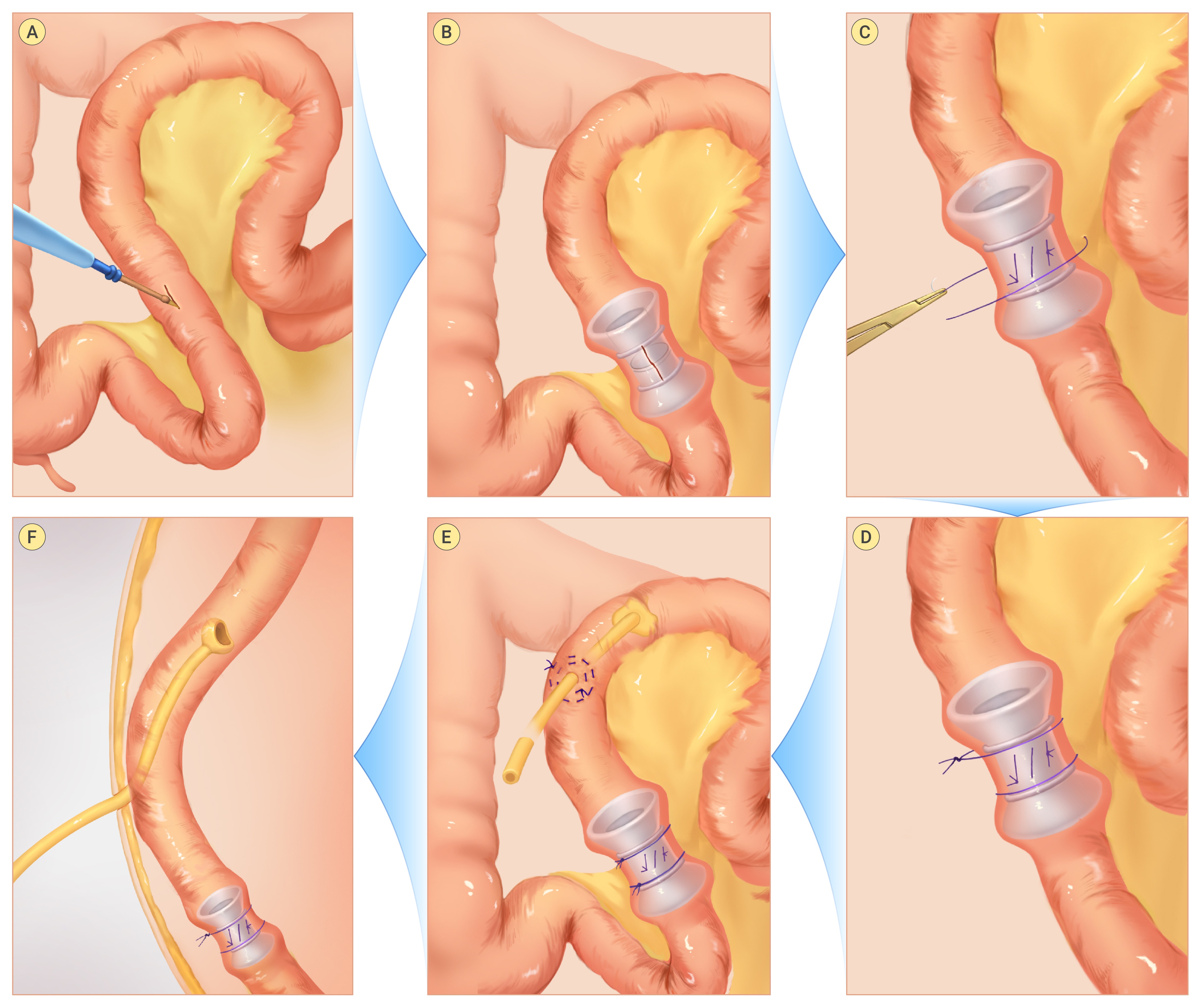
Figure 2.
Schematic diagram of stent-based diverting technique
-
Figure 1.
The flowchart of study
