
-
GRAPHICAL ABSTRACT
 DownLoad:
Full size image
DownLoad:
Full size image
-
PUBLIC SUMMARY
-
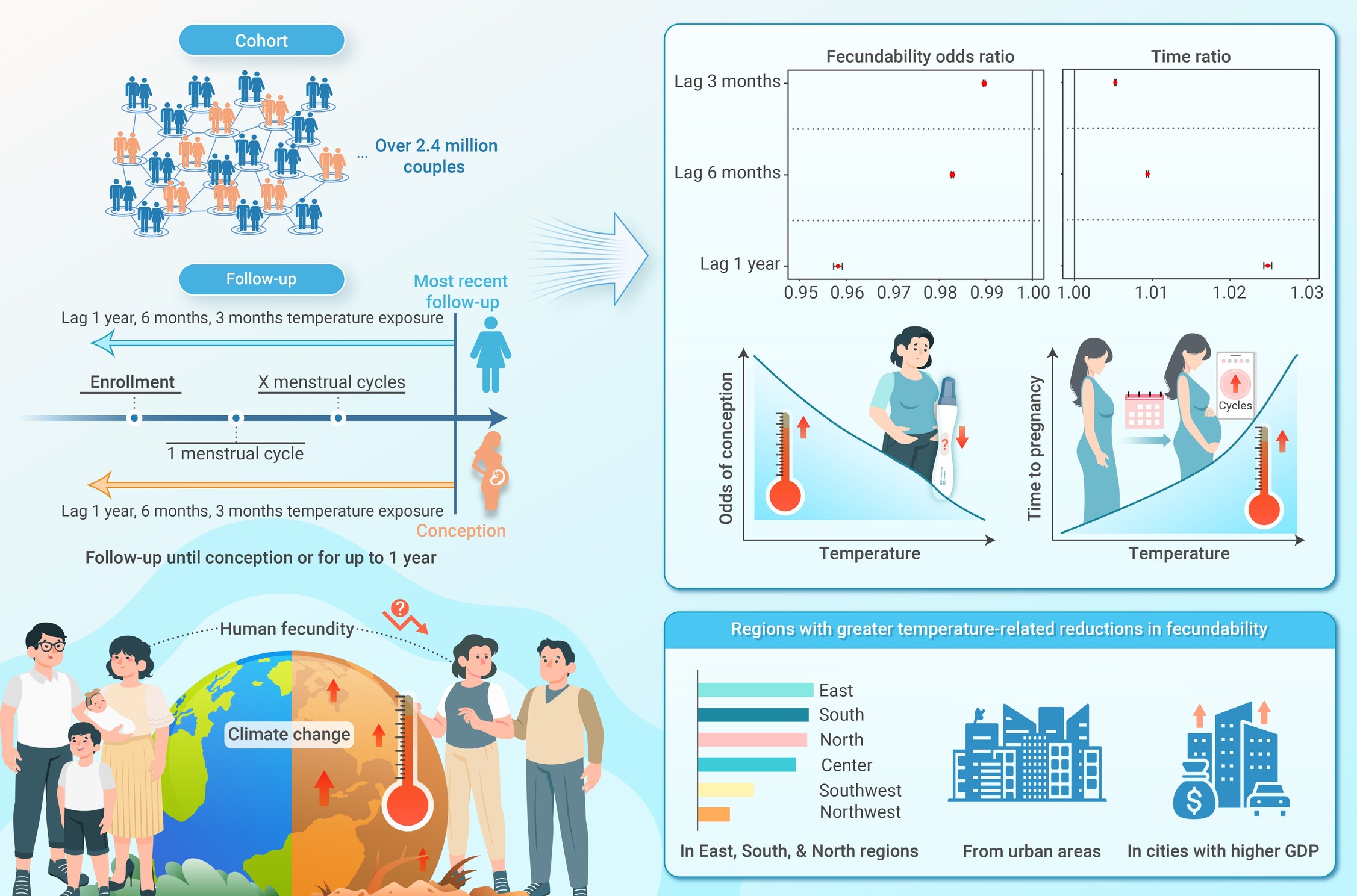
Exposure to higher temperatures were associated with reduced fecundity and longer time to pregnancy.
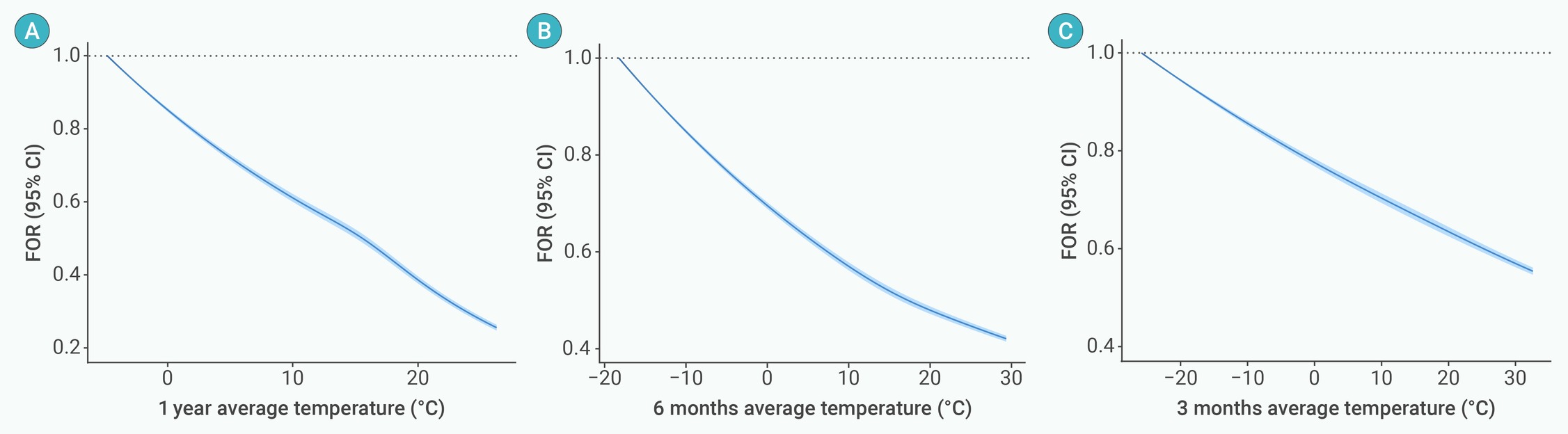
Exposure-response relationships exhibited a monotonic manner.
Decline in fecundity associated with rising temperatures was stronger in the East, South, and North regions.
The associations were stronger in couples where the woman was overweight/obese or exposed to second-hand smoke.
The associations were stronger in couples where the man was overweight/obese or consumed alcohol.
-
-
ABSTRACT
Climate change may affect fertility; however, associations between ambient temperature and human fecundity remain understudied. We assessed the relationship between temperature and fecundity in 2,443,879 reproductive-age couples from 350 cities across China, with follow-up every 3 months until conception or for up to 1 year. We used Cox regression models to evaluate associations of 1-year, 6-month, and 3-month average temperature exposures preceding conception or censoring with fecundability odds ratios (FORs). Accelerated failure time and multivariate linear regression models were applied to examine associations between temperature and time to pregnancy (TTP). During the one-year follow-up, 2,038,378 (83.4%) couples conceived. Higher temperatures were associated with reduced fecundity and extended TTP, with monotonic exposure-response curves observed. Specifically, a 1°C increase in 1-year average temperature was associated with a 4.2% decrease in fecundity (FOR=0.958, 95% confidence interval [CI]: 0.957, 0.959). The corresponding absolute probability of pregnancy within 1 year decreased by 1.35% (absolute risk difference=–1.35%, 95% CI: –1.41%, –1.26%). Each 1°C increase in annual average temperature was associated with a 2.5% increase in median TTP for all couples (time ratio=1.025, 95% CI: 1.024, 1.025). Among couples who conceived within 1 year, TTP was prolonged by 1.60% (95% CI: 1.55%, 1.65%). Smaller FOR estimates, indicating reduced fecundity, were observed in the East, South, and North regions; in tropical and temperate monsoon zones; and among couples where either partner was overweight/obese, woman was attempting her first pregnancy or exposed to second-hand smoke, or man consumed alcohol. Increased temperatures may adversely impact fecundity by prolonging TTP, highlighting the need for heat mitigation strategies. -

-
REFERENCES
[1] GBD 2021 Fertility and Forecasting Collaborators. (2024). Global fertility in 204 countries and territories, 1950-2021, with forecasts to 2100: A comprehensive demographic analysis for the Global Burden of Disease Study 2021. Lancet 403:2057−2099. DOI:10.1016/S0140-6736(24)00550-6 [2] Romanello M., McGushin A., Di Napoli C., et al. (2021). The 2021 report of the Lancet Countdown on health and climate change: Code red for a healthy future. Lancet 398:1619−1662. DOI:10.1016/s0140-6736(21)01787-6 [3] Temitope L. (2022). A qualitative synthesis of the impact of infertility on the mental health of African women. Afr. J. Reprod. Health 26:49−57. DOI:10.29063/ajrh2022/v26i12.6 [4] Öztürk R., Bloom T. L., Li Y., et al. (2021). Stress, stigma, violence experiences and social support of US infertile women. J. Reprod. Infant. Psychol. 39:205−217. DOI:10.1080/02646838.2020.1754373 [5] China meteorological administration. (2022). Chapter 1: Atmosphere. Yang F., Li J. (ed). Blue Book on Climate Change in China (2022) (Beijing: Science Press), pp: 11-44. ISBN: 978-7-03-072789-3 [6] Segal T. R. and Giudice L. C. (2022). Systematic review of climate change effects on reproductive health. Fertil. Steril. 118:215−223. DOI:10.1016/j.fertnstert.2022.06.005 [7] Girardi G. and Bremer A. A. (2022). Effects of climate and environmental changes on women's reproductive health. J. Womens Health (Larchmt) 31:755−757. DOI:10.1089/jwh.2021.0631 [8] Chalupka S. M., Latter A. and Trombley J. (2023). Climate and environmental change: A generation at risk. MCN Am. J. Matern. Child Nurs. 48:181−187. DOI:10.1097/nmc.0000000000000924 [9] Hajdu T. and Hajdu G. (2021). Temperature, climate change, and human conception rates: Evidence from Hungary. J. Popul. Econ. 35:1751−1776. DOI:10.1007/s00148-020-00814-1 [10] Barreca A., Deschenes O. and Guldi M. (2018). Maybe next month. Temperature shocks and dynamic adjustments in birth rates. Demography 55:1269−1293. DOI:10.1007/s13524-018-0690-7 [11] Gaskins A. J., Minguez-Alarcon L., VoPham T., et al. (2021). Impact of ambient temperature on ovarian reserve. Fertil. Steril. 116:1052−1060. DOI:10.1016/j.fertnstert.2021.05.091 [12] Zhang X., Fan Z., Wang Q., et al. (2023). Association between ambient temperature and semen quality among sperm donation volunteers in South China. Environ. Int. 173:107809. DOI:10.1016/j.envint.2023.107809 [13] Joffe M. (1997). Time to pregnancy: A measure of reproductive function in either sex. Asclepios Project. Occup. Environ. Med. 54:289−295. DOI:10.1136/oem.54.5.289 [14] Zhang S., Wang Q. and Shen H. (2015). Design of the national free proception health examination project in China. Zhonghua Yi Xue Za Zhi 95:162−165. DOI:10.3760/cma.j.issn.0376-2491.2015.03.002 [15] Shen Y., Jiang L., Xie X., et al. (2024). Long-term exposure to fine particulate matter and fasting blood glucose and diabetes in 20 million Chinese women of reproductive age. Diabetes Care 47:1400−1407. DOI:10.2337/dc23-2153 [16] Zhao J., Xuan Y., Zhang Y., et al. (2023). Assessment of prior infection with hepatitis B virus and fecundability in couples planning pregnancy. JAMA Netw. Open 6:e2330870. DOI:10.1001/jamanetworkopen.2023.30870 [17] Yang Y., Guo T., Fu J., et al. (2022). Association of preconception thyrotropin levels with fecundability and risk of spontaneous abortion in China. JAMA Netw. Open 5:e2228892. DOI:10.1001/jamanetworkopen.2022.28892 [18] Hong X., Zhao J., Huang K., et al. (2019). Preconception blood pressure and time to pregnancy among couples attempting to conceive their first pregnancy. Am. J. Obstet. Gynecol. 221:470 e471-470 e410. DOI:10.1016/j.ajog.2019.05.038 [19] Zhou Y., Meng T., Wu L., et al. (2020). Association between ambient temperature and semen quality: A longitudinal study of 10 802 men in China. Environ. Int. 135:105364. DOI:10.1016/j.envint.2019.105364 [20] Pang L., Jiang M., Sui X., et al. (2024). Association of PM2.5 mass and its components with ovarian reserve in a northern peninsular province, China: The critical exposure period and components. J. Hazard. Mater. 462:132735. DOI:10.1016/j.jhazmat.2023.132735 [21] Mistry M. N., Schneider R., Masselot P., et al. (2022). Comparison of weather station and climate reanalysis data for modelling temperature-related mortality. Sci. Rep. 12:5178. DOI:10.1038/s41598-022-09049-4 [22] Velez M. P., Arbuckle T. E. and Fraser W. D. (2015). Maternal exposure to perfluorinated chemicals and reduced fecundity: The MIREC study. Hum. Reprod. 30:701−709. DOI:10.1093/humrep/deu350 [23] Textor J., van der Zander B., Gilthorpe M. S., et al. (2016). Robust causal inference using directed acyclic graphs: The R package 'dagitty'. Int. J. Epidemiol. 45:1887−1894. DOI:10.1093/ije/dyw341 [24] Sharma R., Biedenharn K. R., Fedor J. M., et al. (2013). Lifestyle factors and reproductive health: Taking control of your fertility. Reprod. Biol. Endocrinol. 11:66. DOI:10.1186/1477-7827-11-66 [25] Cao Y., Zhao X., Dou Z., et al. (2024). The correlation between menstrual characteristics and fertility in women of reproductive age: A systematic review and meta-analysis. Fertil. Steril. 122:918−927. DOI:10.1016/j.fertnstert.2024.06.016 [26] Zhong V. W., Van Horn L., Cornelis M. C., et al. (2019). Associations of dietary cholesterol or egg consumption with incident cardiovascular disease and mortality. JAMA 321:1081−1095. DOI:10.1001/jama.2019.1572 [27] Zhong V. W., Van Horn L., Greenland P., et al. (2020). Associations of processed meat, unprocessed red meat, poultry, or fish intake with incident cardiovascular disease and all-cause mortality. JAMA Intern. Med. 180:503−512. DOI:10.1001/jamainternmed.2019.6969 [28] Tong M., Lu H., Xu H., et al. (2024). Reduced human fecundity attributable to ambient fine particles in low- and middle-income countries. Environ. Int. 189:108784. DOI:10.1016/j.envint.2024.108784 [29] Patel K., Kay R. and Rowell L. (2006). Comparing proportional hazards and accelerated failure time models: an application in influenza. Pharm. Stat. 5:213−224. DOI:10.1002/pst.213 [30] Wu X., Braun D., Schwartz J., et al. (2020). Evaluating the impact of long-term exposure to fine particulate matter on mortality among the elderly. Sci. Adv. 6:eaba5692. DOI:10.1126/sciadv.aba5692 [31] Broekmans F. J., Soules M. R. and Fauser B. C. (2009). Ovarian aging: Mechanisms and clinical consequences. Endocr. Rev. 30:465−493. DOI:10.1210/er.2009-0006 [32] Broughton D. E. and Moley K. H. (2017). Obesity and female infertility: Potential mediators of obesity's impact. Fertil. Steril. 107:840−847. DOI:10.1016/j.fertnstert.2017.01.017 [33] Practice Committee of the American Society for Reproductive Medicine. Electronic address a. a. o. (2024). Tobacco or marijuana use and infertility: A committee opinion. Fertil. Steril. 121:589−603. DOI:10.1016/j.fertnstert.2023.12.029 [34] Amor H., Hammadeh M. E., Mohd I., et al. (2022). Impact of heavy alcohol consumption and cigarette smoking on sperm DNA integrity. Andrologia 54:e14434. DOI:10.1111/and.14434 [35] Bitler M. and Schmidt L. (2006). Health disparities and infertility: Impacts of state-level insurance mandates. Fertil. Steril. 85:858−865. DOI:10.1016/j.fertnstert.2005.11.038 [36] Xu H., Feng G., Yang R., et al. (2023). OvaRePred: Online tool for predicting the age of fertility milestones. The Innovation 4:100490. DOI:10.1016/j.xinn.2023.100490 [37] Xu H., Feng G., Yang R., et al. (2025). Reaffirming the role of ovarian reserve in fertility assessment: Insights from OvaRePred. Innov. Med. 3:100135. DOI:10.59717/j.xinn-med.2025.100135 [38] Chen R., Jiang Y., Hu J., et al. (2022). Hourly air pollutants and acute coronary syndrome onset in 1.29 million patients. Circulation 145:1749-1760. DOI:10.1161/CIRCULATIONAHA.121.057179 [39] Gudziunaite S. and Moshammer H. (2022). Temporal patterns of weekly births and conceptions predicted by meteorology, seasonal variation, and lunar phases. Wien. Klin. Wochenschr. 134:538−545. DOI:10.1007/s00508-022-02038-7 [40] Santi D., Magnani E., Michelangeli M., et al. (2018). Seasonal variation of semen parameters correlates with environmental temperature and air pollution: A big data analysis over 6 years. Environ. Pollut. 235:806−813. DOI:10.1016/j.envpol.2018.01.021 [41] Sammad A., Umer S., Shi R., et al. (2020). Dairy cow reproduction under the influence of heat stress. J. Anim. Physiol. Anim. Nutr. (Berl) 104:978−986. DOI:10.1111/jpn.13257 [42] Roth Z. (2017). Effect of heat stress on reproduction in dairy cows: Insights into the cellular and molecular responses of the oocyte. Annu. Rev. Anim. Biosci. 5:151−170. DOI:10.1146/annurev-animal-022516-022849 [43] Wechalekar H., Setchell B. P., Pilkington K. R., et al. (2016). Effects of whole-body heat on male germ cell development and sperm motility in the laboratory mouse. Reprod. Fertil. Dev. 28:545−555. DOI:10.1071/rd13395 [44] Costa G. M. J., Lacerda S., Figueiredo A. F. A., et al. (2018). Higher environmental temperatures promote acceleration of spermatogenesis in vivo in mice (Mus musculus). J. Therm. Biol. 77:14−23. DOI:10.1016/j.jtherbio.2018.07.010 [45] Pavani K., Carvalhais I., Faheem M., et al. (2015). Reproductive performance of holstein dairy cows grazing in dry-summer subtropical climatic conditions: Effect of heat stress and heat shock on meiotic competence and in vitro fertilization. Asian-Australas J. Anim. Sci. 28:334−342. DOI:10.5713/ajas.14.0480 [46] Santolaria P., López-Gatius F., García-Ispierto I., et al. (2010). Effects of cumulative stressful and acute variation episodes of farm climate conditions on late embryo/early fetal loss in high producing dairy cows. Int. J. Biometeorol. 54:93−98. DOI:10.1007/s00484-009-0258-8 [47] Wang L., Di J., Wang Q., et al. (2024). Heat exposure induced risks of preterm birth mediated by maternal hypertension. Nat. Med. 30:1974−1981. DOI:10.1038/s41591-024-03002-w [48] Greaney J. L., Kenney W. L. and Alexander L. M. (2016). Sympathetic regulation during thermal stress in human aging and disease. Auton. Neurosci. 196:81−90. DOI:10.1016/j.autneu.2015.11.002 [49] Casillas F., Flores-Gonzalez A., Juarez-Rojas L., et al. (2023). Chronic stress decreases fertility parameters in female rats. Syst. Biol. Reprod. Med. 69:234−244. DOI:10.1080/19396368.2023.2171822 [50] Iamsaard S., Tongpan S., Yannasithinon S., et al. (2021). Effect of chronic stress on expression and secretion of seminal vesicle proteins in adult rats. Andrologia 53:e13800. DOI:10.1111/and.13800 [51] Harlan S. L. and Ruddell D. M. (2011). Climate change and health in cities: Impacts of heat and air pollution and potential co-benefits from mitigation and adaptation. Curr. Opin. Environ. Sustain. 3:126−134. DOI:10.1016/j.cosust.2011.01.001 [52] Lacalle-Calderon M., Perez-Trujillo M. and Neira I. (2017). Fertility and economic development: Quantile regression evidence on the inverse J-shaped pattern. Eur. J. Popul. 33:1−31. DOI:10.1007/s10680-016-9382-4 [53] Mills M., Rindfuss R. R., McDonald P., et al. (2011). Why do people postpone parenthood. Reasons and social policy incentives. Hum. Reprod. Update 17:848−860. DOI:10.1093/humupd/dmr026 [54] Liu J., Varghese B. M., Hansen A., et al. (2022). Heat exposure and cardiovascular health outcomes: A systematic review and meta-analysis. Lancet Planet. Health 6:e484−e495. DOI:10.1016/s2542-5196(22)00117-6 [55] Liu J., Varghese B. M., Hansen A., et al. (2025). Increasing burden of poor mental health attributable to high temperature in Australia. Nat. Clim. Change 15:489−496. DOI:10.1038/s41558-025-02309-x [56] Qi J., Wang Y., Wang L., et al. (2023). The modification effect of ozone pollution on the associations between heat wave and cardiovascular mortality. Innov. Med. 1:100043. DOI:10.59717/j.xinn-med.2023.100043 [57] Chen R., Yin P., Wang L., et al. (2018). Association between ambient temperature and mortality risk and burden: Time series study in 272 main Chinese cities. BMJ 363:k4306. DOI:10.1136/bmj.k4306 [58] Qiu J., Liang Z., Yi J., et al. (2023). Extreme temperature exposure increases the risk of preterm birth in women with abnormal pre-pregnancy body mass index: A cohort study in a southern province of China. Front. Public Health 11:1156880. DOI:10.3389/fpubh.2023.1156880 [59] Camlin N. J., McLaughlin E. A. and Holt J. E. (2014). Through the smoke: Use of in vivo and in vitro cigarette smoking models to elucidate its effect on female fertility. Toxicol. Appl. Pharmacol. 281:266−275. DOI:10.1016/j.taap.2014.10.010 [60] Barratt C. L. R., Bjorndahl L., De Jonge C. J., et al. (2017). The diagnosis of male infertility: An analysis of the evidence to support the development of global WHO guidance-challenges and future research opportunities. Hum. Reprod. Update 23:660−680. DOI:10.1093/humupd/dmx021 [61] Zhang Q., Wang Y. Y., Zhang Y., et al. (2017). The influence of age at menarche, menstrual cycle length and bleeding duration on time to pregnancy: A large prospective cohort study among rural Chinese women. BJOG 124:1654−1662. DOI:10.1111/1471-0528.14469 -
ABOUT THIS ARTICLE
Cite this article:
Cai J., Shen Y., Dong J., et al. (2025). Ambient temperature and fecundity in 2.4 million couples. The Innovation Medicine 3:100139. https://doi.org/10.59717/j.xinn-med.2025.100139
Welcome!
To request copyright permission to republish or share portions of our works, please visit Copyright Clearance Center's (CCC) Marketplace website at marketplace.copyright.com.
Article Metrics
Relative Articles
Cited by
Export File
Citation
Cai J., Shen Y., Dong J., et al. (2025). Ambient temperature and fecundity in 2.4 million couples. The Innovation Medicine 3:100139. https://doi.org/10.59717/j.xinn-med.2025.100139

Format
Content
-
Figure 1.
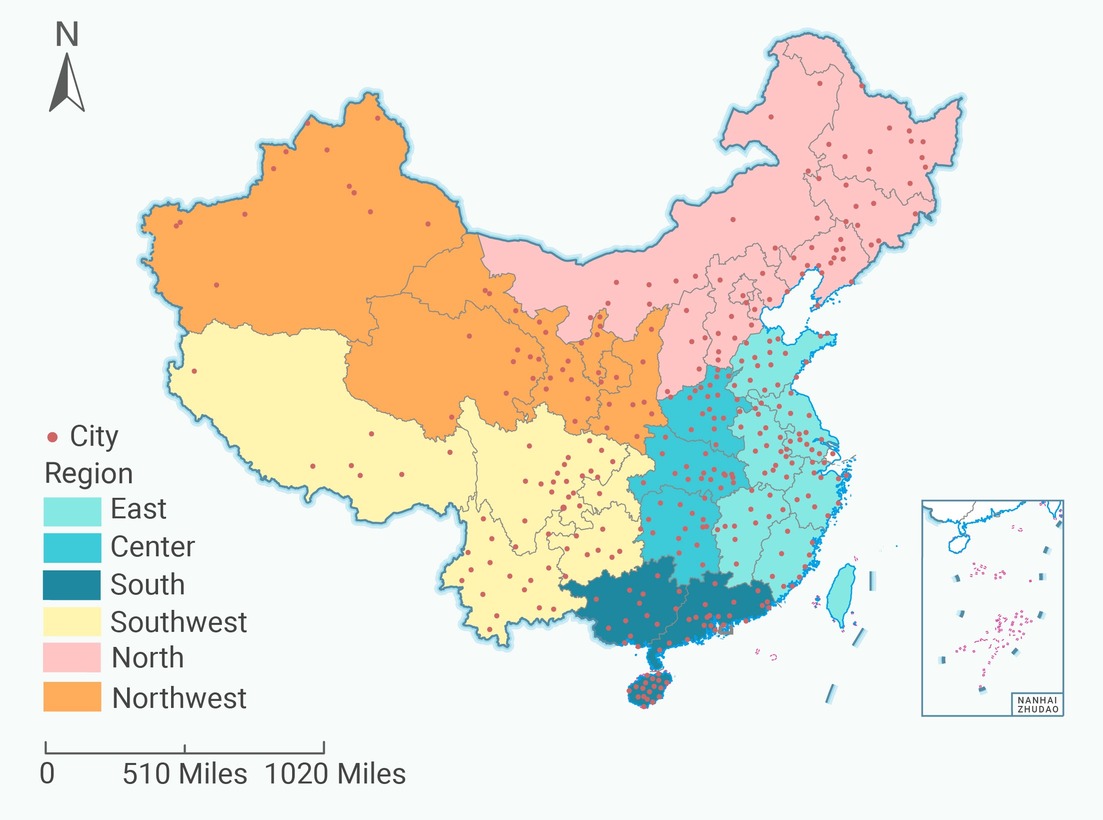
Spatial distribution of study sites and regions of China.
-
Figure 2.
Exposure-response curves for 1-year (A), 6-month (B), and 3-month (C) average ambient temperature and fecundability odds ratios (N=2,443,879).
