
Reductions in acute myocardial infarction burden linked to short-term PM2.5 exposure: Evidence from the Chinese CCA Registry
-
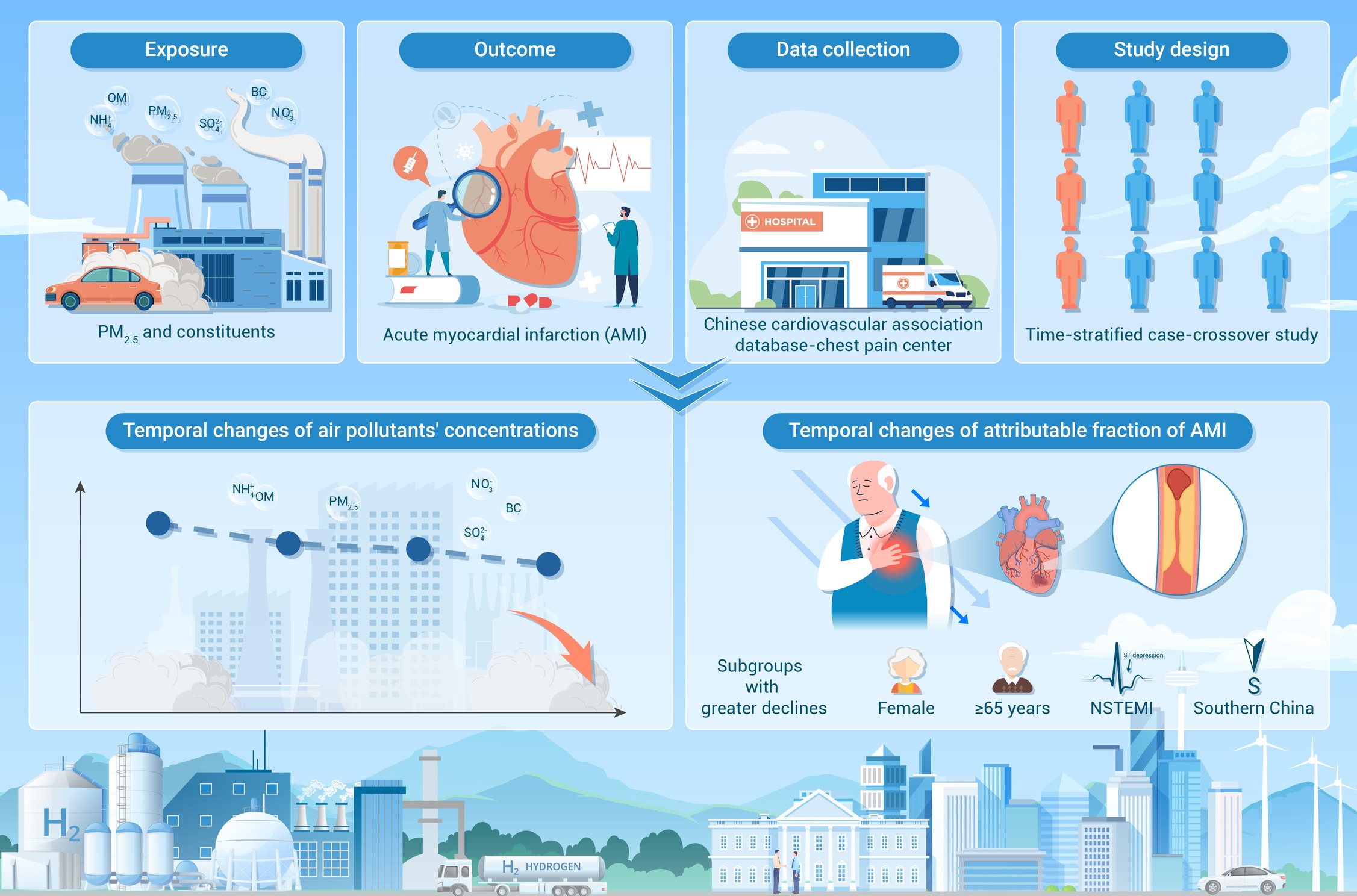
GRAPHICAL ABSTRACT
 DownLoad:
Full size image
DownLoad:
Full size image
-
PUBLIC SUMMARY
-
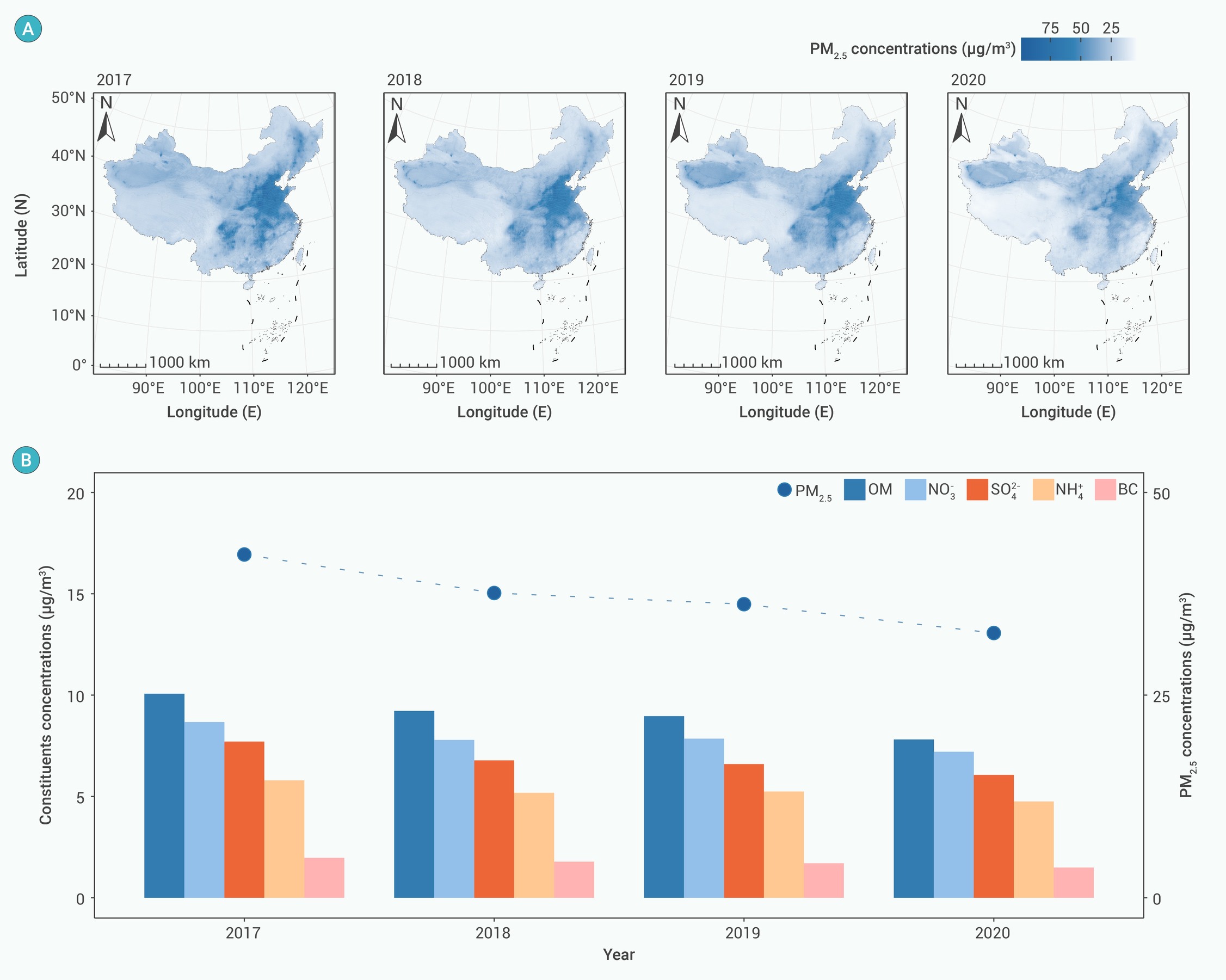
Concentrations of fine particulate matter (PM2.5) and its constituents pronouncedly declined during 2017-2020.
The burden of acute myocardial infarction (AMI) by PM2.5 mass and its constituents substantially declined.
The declines of AMI morbidity burden were greater for organic matter and sulfate than other constituents.
The AMI morbidity burden by PM2.5 declined more in females, people aged ≥65 years, and in Southern China.
Our study could assist in establishing targeted policies and driving actions in prevention strategies for AMI.
-
-
ABSTRACT
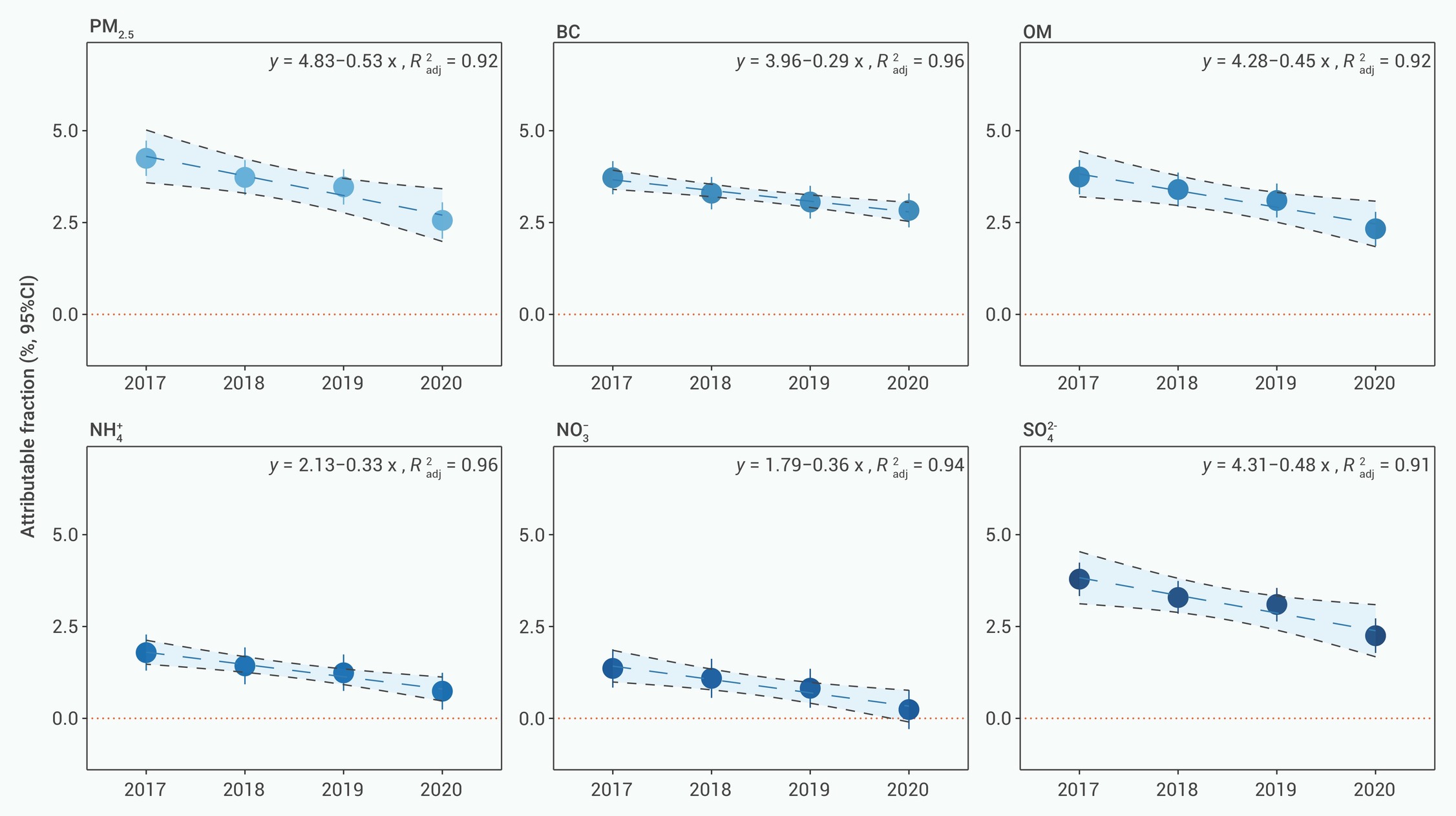
BackgroundPM2.5 (fine particulate matter with aerodynamic diameter ≤ 2.5μm) concentrations have substantially declined in the past decade across China, but temporal changes of morbidity burden of acute myocardial infarction (AMI) attributable to short-term exposures to PM2.5 and its various chemical constituents, including black carbon (BC), organic matter (OM), ammonium ($ {\mathrm{NH}}_{\mathrm{4}}^{\mathrm{+}} $), nitrate ($ {\mathrm{NO}}_{\mathrm{3}}^{\mathrm{-}} $) and sulfate ($ {\mathrm{SO}}_{\mathrm{4}}^{\mathrm{2}\mathrm{-}} $) in China remain unknown.MethodsA time-stratified case-crossover design was applied in 785,052 AMI cases across China during 2017-2020. We utilized conditional logistic regression models to estimate the excess risks (ERs) and attributable fractions (AFs) from AMI onset attributable to short-term exposures (lag01 day) to PM2.5 and constituents, and used linear regression models to estimate temporal changes of AFs of AMI morbidity.ResultsThe annual average reductions in concentrations of PM2.5 mass, BC, OM, $ {\mathrm{NH}}_{\mathrm{4}}^{\mathrm{+}} $, $ {\mathrm{NO}}_{\mathrm{3}}^{\mathrm{-}} $ and $ {\mathrm{SO}}_{\mathrm{4}}^{\mathrm{2}\mathrm{-}} $ during 2017-2020 were respectively 3.05μg/m3/year, 0.15μg/m3/year, 0.70μg/m3/year, 0.31μg/m3/year, 0.44μg/m3/year, and 0.51μg/m3/year. Correspondingly, the annual average reductions in AFs were recorded as -0.53% (95%CI: -0.92%, -0.15%), -0.29% (95%CI: -0.43%, -0.15%), -0.45% (95%CI: -0.78%, -0.12%), -0.33% (95%CI: -0.51%, -0.16%), -0.36% (95%CI: -0.59%, -0.13%), and -0.48% (95%CI: -0.86%, -0.10%), respectively. The temporal reduction of PM2.5-attributed and chemical constituents-attributed AFs were greater in females, people aged ≥65 years, non-ST-segment-elevation myocardial infarction (NSTEMI) cases, and people resided in Southern China.ConclusionsAs the concentration of PM2.5 mass and chemical constituents decreased over the years, the decline was observed in the morbidity burden of AMI attributable to PM2.5 and its constituents across China from 2017 to 2020. -

-
REFERENCES
[1] GBD 2021 Causes of Death Collaborators. (2024). Global burden of 288 causes of death and life expectancy decomposition in 204 countries and territories and 811 subnational locations, 1990-2021: A systematic analysis for the Global Burden of Disease Study 2021. Lancet 403:2100−2132. DOI:10.1016/S0140-6736(24)00367-2 [2] Martínez M. J., Rueda F., Labata C., et al. (2022). Non-STEMI vs. STEMI cardiogenic shock: clinical profile and long-term outcomes. J. Clin. Med. 11:3558. DOI:10.3390/jcm11123558 [3] Benjamin E. J., Virani S. S., Callaway C. W., et al. (2018). Heart disease and stroke statistics—2018 update: A report from the American Heart Association. Circulation 137:e67−e492. DOI:10.1161/CIR.0000000000000558 [4] Lin X., Cai M., Tan K., et al. (2023). Ambient particulate matter and in-hospital case fatality of acute myocardial infarction: A multi-province cross-sectional study in China. Ecotoxicol. Environ. Saf. 268:115731. DOI:10.1016/j.ecoenv.2023.115731 [5] Ma X., Zhang B., Duan H., et al. (2023). Estimating future PM2.5-attributed acute myocardial infarction incident cases under climate mitigation and population change scenarios in Shandong Province, China. Ecotoxicol. Environ. Saf. 256:114893. DOI:10.1016/j.ecoenv.2023.114893 [6] The Writing Committee of the Report on Cardiovascular Health and Diseases in China. (2023). Report on cardiovascular health and diseases in China 2022: An updated summary. Biomed. Environ. Sci. 36:669−701. DOI:10.3967/bes2023.106 [7] World Bank Group. (2011). Toward a healthy and harmonious life in China: Stemming the rising tide of non-communicable diseases. https://www.worldbank.org/en/news/feature/2011/07/26/toward-health-harmonious-life-china-stemming-rising-tide-of-non-communicable-diseases. [8] Liu Y., Pan J., Fan C., et al. (2021). Short-term exposure to ambient air pollution and mortality from myocardial infarction. J. Am. Coll. Cardio. 77:271−281. DOI:10.1016/j.jacc.2020.11.033 [9] Mo S., Hu J., Yu C., et al. (2023). Short-term effects of fine particulate matter constituents on myocardial infarction death. J. Environ. Sci. 133:60−69. DOI:10.1016/j.jes.2022.07.019 [10] Van Donkelaar A., Martin R. V., Li C., et al. (2019). Regional estimates of chemical composition of fine particulate matter using a combined geoscience-statistical method with information from satellites, models, and monitors. Environ. Sci. Technol. 53:2595−2611. DOI:10.1021/acs.est.8b06392 [11] Shin J., Oh J., Kang I.-S., et al. (2021). Effect of short-term exposure to fine particulate matter and temperature on acute myocardial infarction in Korea. Int. J. Environ. Res. Public Health 18:4822. DOI:10.3390/ijerph18094822 [12] Madrigano J., Kloog I., Goldberg R., et al. (2013). Long-term exposure to PM2.5 and incidence of acute myocardial infarction. Environ. Health Perspect. 121:192-196. DOI:10.1289/ehp.1205284. [13] Weichenthal S., Kulka R., Lavigne E., et al. (2017). Biomass burning as a source of ambient fine particulate air pollution and acute myocardial infarction. Epidemiology 28:329−337. DOI:10.1097/EDE.0000000000000636 [14] Wu Y., Li M., Tian Y., et al. (2019). Short-term effects of ambient fine particulate air pollution on inpatient visits for myocardial infarction in Beijing, China. Environ. Sci. Pollut. Res. 26:14178−14183. DOI:10.1007/s11356-019-04728-8 [15] Chen H., Zhang Z., van Donkelaar A., et al. (2020). Understanding the joint impacts of fine particulate matter concentration and composition on the incidence and mortality of cardiovascular disease: A component-adjusted approach. Environ. Sci. Technol. 54:4388−4399. DOI:10.1021/acs.est.9b06861 [16] Zhou S., Liu F., Liu H., et al. (2023). Association of ambient air pollution and cardiovascular symptoms: A systematic review and meta-analysis. Cardiol. Plus 8:134−143. DOI:10.1097/CP9.0000000000000054 [17] Mustafić H., Jabre P., Caussin C., et al. (2012). Main air pollutants and myocardial infarction: A systematic review and meta-analysis. JAMA 307:713−721. DOI:10.1001/jama.2012.126 [18] Yang J., Zhou M., Li M., et al. (2020). Fine particulate matter constituents and cause-specific mortality in China: A nationwide modelling study. Environ. Int. 143:105927. DOI:10.1016/j.envint.2020.105927 [19] Yu W., Xu R., Ye T., et al. (2024). Estimates of global mortality burden associated with short-term exposure to fine particulate matter PM2.5. Lancet Planet. Health 8:e146-e155. DOI:10.1016/S2542-5196(24)00003-2 [20] McDuffie E. E., Martin R. V., Spadaro J. V., et al. (2021). Source sector and fuel contributions to ambient PM2.5 and attributable mortality across multiple spatial scales. Nat. Commun. 12:3594. DOI:10.1038/s41467-021-23853-y [21] Olaniyan T., Pinault L., Li C., et al. (2022). Ambient air pollution and the risk of acute myocardial infarction and stroke: A national cohort study. Environ. Res. 204:111975. DOI:10.1016/j.envres.2021.111975 [22] Zhang Q. and Geng G. (2019). Impact of clean air action on PM2.5 pollution in China. Sci. China Earth Sci. 62:1845-1846. DOI:10.1007/s11430-019-9531-4 [23] Dominici F., Peng R. D., Zeger S. L., et al. (2007). Particulate air pollution and mortality in the United States: Did the risks change from 1987 to 2000. Am. J. Epidemiol. 166:880−888. DOI:10.1093/aje/kwm222 [24] Corda M. O., Charalampous P., Haagsma J. A., et al. (2024). Mortality burden of cardiovascular disease attributable to ambient PM2.5 exposure in Portugal, 2011 to 2021. BMC Public Health 24:1188. DOI:10.1186/s12889-024-18572-0 [25] Chen C., Warrington J. A., Dominici F., et al. (2021). Temporal variation in association between short-term exposure to fine particulate matter and hospitalisations in older adults in the USA: A long-term time-series analysis of the US Medicare dataset. Lancet Planet. Health 5:e534−e541. DOI:10.1016/S2542-5196(21)00168-6 [26] Lim C.-H., Ryu J., Choi Y., et al. (2020). Understanding global PM2.5 concentrations and their drivers in recent decades (1998–2016). Environ. Int. 144:106011. DOI:10.1016/j.envint.2020.106011 [27] Cohen A. J., Brauer M., Burnett R., et al. (2017). Estimates and 25-year trends of the global burden of disease attributable to ambient air pollution: an analysis of data from the Global Burden of Diseases Study 2015. Lancet 389:1907−1918. DOI:10.1016/S0140-6736(17)30505-6 [28] Li C., van Donkelaar A., Hammer M. S., et al. (2023). Reversal of trends in global fine particulate matter air pollution. Nat. Commun. 14:5349. DOI:10.1038/s41467-023-41086-z [29] Ban J., Ma R., Zhang Y., et al. (2021). PM2.5-associated risk for cardiovascular hospital admission and related economic burdens in Beijing, China. Sci. Total Environ. 799:149445. DOI:10.1016/j.scitotenv.2021.149445 [30] Huang J., Pan X., Guo X., et al. (2018). Health impact of China's air pollution prevention and control action plan: An analysis of national air quality monitoring and mortality data. Lancet Planet. Health 2:e313−e323. DOI:10.1016/S2542-5196(18)30141-4 [31] Chen C., Fang J. L., Shi W. Y., et al. (2020). Clean air actions and health plans in China. Chin. Med. J. 133:1609−1611. DOI:10.1097/CM9.0000000000000888 [32] Shi Q., Zheng B., Zheng Y., et al. (2022). Co-benefits of CO2 emission reduction from China’s clean air actions between 2013-2020. Nat. Commun. 13:5061. DOI:10.1038/s41467-022-32656-8 [33] Huang Z., Li X., Chen J., et al. (2024). Does the three-year action plan for winning the blue sky defense battle implementation enabling the high-quality development of regional energy. A quasi-natural experiment from China. Energy 312:133405. DOI:10.1016/j.energy.2024.133405 [34] Lu X., Zhang S., Xing J., et al. (2020). Progress of air pollution control in China and its challenges and opportunities in the ecological civilization era. Engineering 6:1423−1431. DOI:10.1016/j.eng.2020.03.014 [35] Jiang X. (2023). A conversation on air pollution in China. Nat. Geosci. 16:939−940. DOI:10.1038/s41561-023-01308-x [36] Zou B., You J., Lin Y., et al. (2019). Air pollution intervention and life-saving effect in China. Environ. Int. 125:529−541. DOI:10.1016/j.envint.2018.10.045 [37] Li Y., Zhao X., Liao Q., et al. (2020). Specific differences and responses to reductions for premature mortality attributable to ambient PM2.5 in China. Sci. Total Environ. 742:140643. DOI:10.1016/j.scitotenv.2020.140643 [38] Wu C., He G., Wu W., et al. (2024). Ambient PM2.5 and cardiopulmonary mortality in the oldest-old people in China: A national time-stratified case-crossover study. Med 5:62-72.e63. DOI:10.1016/j.medj.2023.12.005 [39] Xu R., Huang S., Shi C., et al. (2023). Extreme temperature events, fine particulate matter, and myocardial infarction mortality. Circulation 148:312−323. DOI:10.1161/circulationaha.122.063504 [40] Dingcheng X. and Shaodong Y. (2017). Chest pain centers in China: Current status and prospects. Cardiol. Plus 2:18−21. DOI:10.4103/2470-7511.248469 [41] Xiang D.C., Jin Y.Z., Fang W.Y., et al. (2021). The national chest pain centers program: Monitoring and improving quality of care for patients with acute chest pain in China. Cardiol. Plus 6:187−197. DOI:10.4103/2470-7511.327239 [42] Xiang D., Xiang X., Zhang W., et al. (2020). Management and outcomes of patients with STEMI during the COVID-19 pandemic in China. J. Am. College Cardiol. 76:1318−1324. DOI:10.1016/j.jacc.2020.06.039 [43] Xue X., Hu J., Xiang D., et al. (2023). Hourly air pollution exposure and the onset of symptomatic arrhythmia: An individual-level case-crossover study in 322 Chinese cities. CMAJ 195:E601−E611. DOI:10.1503/cmaj.220929 [44] Du P., Lu K., Zhang C., et al. (2023). Association of PM2.5 from agriculture sources and acute myocardial infarction onset: Results from 2015 to 2018 in China. Cardiol. Plus 8:118-125. DOI:10.1097/cp9.0000000000000048 [45] Jiang Y., Zhang Q., Zhu X., et al. (2023). Differentiating the effects of fine and coarse particulate air pollution on the onset of stable and unstable angina: A case-crossover study in 305 Chinese cities. Cardiol. Plus 8:126−133. DOI:10.1097/cp9.0000000000000052 [46] Jiang Y., Yi S., Gao C., et al. (2023). Cold spells and the onset of acute myocardial infarction: A nationwide case-crossover study in 323 Chinese cities. Environ. Health Perspect. 131:87016. DOI:10.1289/ehp11841 [47] Nishiwaki Y., Michikawa T., Takebayashi T., et al. (2013). Long-term exposure to particulate matter in relation to mortality and incidence of cardiovascular disease: The JPHC Study. J. Atheroscler. Thromb. 20:296−309. DOI:10.5551/jat.15347 [48] Chen H., Goldberg M. S., Burnett R. T., et al. (2013). Long-term exposure to traffic-related air pollution and cardiovascular mortality. Epidemiology 24:35−43. DOI:10.1097/EDE.0b013e318276c005 [49] Geng G., Xiao Q., Liu S., et al. (2021). Tracking air pollution in China: Near real-time PM2.5 retrievals from multisource data fusion. Environ. Sci. Technol. 55:12106-12115. DOI:10.1021/acs.est.1c01863 [50] Liu S., Geng G., Xiao Q., et al. (2022). Tracking daily concentrations of PM2.5 chemical composition in China since 2000. Environ. Sci. Technol. 56:16517-16527. DOI:10.1021/acs.est.2c06510 [51] Xiao Q., Geng G., Cheng J., et al. (2021). Evaluation of gap-filling approaches in satellite-based daily PM2.5 prediction models. Atmos. Environ. 244:117921. DOI:10.1016/j.atmosenv.2020.117921 [52] Wei J., Li Z., Li K., et al. (2022). Full-coverage mapping and spatiotemporal variations of ground-level ozone (O3) pollution from 2013 to 2020 across China. Remote Sens. Environ. 270:112775. DOI:10.1016/j.rse.2021.112775 [53] Wei J., Li Z., Wang J., et al. (2023). Ground-level gaseous pollutants (NO2, SO2, and CO) in China: Daily seamless mapping and spatiotemporal variations. Atmos. Chem. Phys. 23:1511−1532. DOI:10.5194/acp-23-1511-2023 [54] Urban A., Di Napoli C., Cloke H. L., et al. (2021). Evaluation of the ERA5 reanalysis-based Universal Thermal Climate Index on mortality data in Europe. Environ. Res. 198:111227. DOI:10.1016/j.envres.2021.111227 [55] Chaudhary E., George F., Saji A., et al. (2023). Cumulative effect of PM2.5 components is larger than the effect of PM2.5 mass on child health in India. Nat. Commun. 14:6955. DOI:10.1038/s41467-023-42709-1 [56] Wang C., Hao L., Liu C., et al. (2020). Associations between fine particulate matter constituents and daily cardiovascular mortality in Shanghai, China. Ecotoxicol. Environ. Saf. 191:110154. DOI:10.1016/j.ecoenv.2019.110154 [57] Mostofsky E., Schwartz J., Coull B. A., et al. (2012). Modeling the association between particle constituents of air pollution and health outcomes. Am. J. Epidemiol. 176:317−326. DOI:10.1093/aje/kws018 [58] Qiu X., Wei Y., Wang Y., et al. (2020). Inverse probability weighted distributed lag effects of short-term exposure to PM2.5 and ozone on CVD hospitalizations in New England Medicare participants-Exploring the causal effects. Environ. Res. 182:109095. DOI:10.1016/j.envres.2019.109095 [59] Chen R., Yin P., Meng X., et al. (2017). Fine particulate air pollution and daily mortality. A nationwide analysis in 272 Chinese cities. Am. J. Respir. Crit. Care Med. 196:73-81. DOI:10.1164/rccm.201609-1862OC [60] He C., Liu C., Chen R., et al. (2022). Fine particulate matter air pollution and under-5 children mortality in China: A national time-stratified case-crossover study. Environ. Int. 159:107022. DOI:10.1016/j.envint.2021.107022 [61] Yu S., Zhu Q., Yu M., et al. (2024). The association between long-term exposure to ambient formaldehyde and respiratory mortality risk: A national study in China. Ecotoxicol. Environ. Saf. 283:116860. DOI:10.1016/j.ecoenv.2024.116860 [62] Schenker N. and Gentleman J. F. (2001). On judging the significance of differences by examining the overlap between confidence intervals. Am. Stat. 55:182−186. DOI:10.1198/000313001317097960 [63] Lin X., Cai M., Pan J., et al. (2024). PM2.5 chemical components are associated with in-hospital case fatality among acute myocardial infarction patients in China. Ecotoxicol. Environ. Saf. 284:116898. DOI:10.1016/j.ecoenv.2024.116898 [64] Jiang Y., Du C., Chen R., et al. (2024). Differential effects of fine particulate matter constituents on acute coronary syndrome onset. Nat. Commun. 15:10848. DOI:10.1038/s41467-024-55080-6 [65] Li Y., Lu B., Wei J., et al. (2024). Short-term exposure to ambient fine particulate matter constituents and myocardial infarction mortality. Chemosphere 364:143101. DOI:10.1016/j.chemosphere.2024.143101 [66] Li J., Wang Y., Steenland K., et al. (2022). Long-term effects of PM2.5 components on incident dementia in the northeastern United States. The Innovation 3:100208. DOI:10.1016/j.xinn.2022.100208 [67] Guo S., Hu M., Guo Q., et al. (2012). Primary sources and secondary formation of organic aerosols in Beijing, China. Environ. Sci. Technol. 46:9846−9853. DOI:10.1021/es2042564 [68] Mikuška P., Křůmal K. and Večeřa Z. (2015). Characterization of organic compounds in the PM2.5 aerosols in winter in an industrial urban area. Atmos. Environ. 105:97-108. DOI:10.1016/j.atmosenv.2015.01.028 [69] Wu S., Deng F., Wei H., et al. (2012). Chemical constituents of ambient particulate air pollution and biomarkers of inflammation, coagulation and homocysteine in healthy adults: A prospective panel study. Part. Fibre Toxicol. 9:49. DOI:10.1186/1743-8977-9-49 [70] Fu L., Guo Y., Zhu Q., et al. (2024). Effects of long-term exposure to ambient fine particulate matter and its specific components on blood pressure and hypertension incidence. Environ. Int. 184:108464. DOI:10.1016/j.envint.2024.108464 [71] Briggs N. L. and Long C. M. (2016). Critical review of black carbon and elemental carbon source apportionment in Europe and the United States. Atmos. Environ. 144:409−427. DOI:10.1016/j.atmosenv.2016.09.002 [72] Ostro B., Feng W.-Y., Broadwin R., et al. (2007). The effects of components of fine particulate air pollution on mortality in California: Results from CALFINE. Environ. Health Perspect. 115:13−19. DOI:10.1289/ehp.9281 [73] Xue T., Liu J., Zhang Q., et al. (2019). Rapid improvement of PM2.5 pollution and associated health benefits in China during 2013-2017. Sci. China Earth Sci. 62:1847-1856. DOI:10.1007/s11430-018-9348-2 [74] Cromar K. R., Gladson L. A. and Ewart G. (2019). Trends in excess morbidity and mortality associated with air pollution above American thoracic society-recommended standards, 2008-2017. Ann. Am. Thorac. Soc. 16:836−845. DOI:10.1513/AnnalsATS.201812-914OC [75] Kim H., Kim H. and Lee J.-T. (2015). Effects of ambient air particles on mortality in Seoul: Have the effects changed over time. Environ. Res. 140:684−690. DOI:10.1016/j.envres.2015.05.029 [76] Li C., Martin R. V. and van Donkelaar A. (2024). Understanding reductions of PM2.5 concentration and its chemical composition in the United States: Implications for mitigation strategies. ACS EST Air. 1:637-645. DOI:10.1021/acsestair.4c00004 [77] Yaohua T., Hui L., Yiqun W., et al. (2019). Association between ambient fine particulate pollution and hospital admissions for cause specific cardiovascular disease: Time series study in 184 major Chinese cities. BMJ 367:l6572. DOI:10.1136/bmj.l6572 [78] Clougherty J. E. (2011). A growing role for gender analysis in air pollution epidemiology. Cien. Saude Colet. 16:2221−2238. DOI:10.1590/s1413-81232011000400021 [79] Kan H., London Stephanie J., Chen G., et al. (2008). Season, sex, age, and education as modifiers of the effects of outdoor air pollution on daily mortality in Shanghai, China: The public health and air pollution in Asia (PAPA) study. Environ. Health Perspect. 116:1183−1188. DOI:10.1289/ehp.10851 [80] Kim C. S. and Hu S. C. (1998). Regional deposition of inhaled particles in human lungs: Comparison between men and women. J. Appl. Physiol. 84:1834−1844. DOI:10.1152/jappl.1998.84.6.1834 [81] Arora S., Stouffer G. A., Kucharska-Newton A. M., et al. (2019). Twenty year trends and sex differences in young adults hospitalized with acute myocardial infarction. Circulation 139:1047−1056. DOI:10.1161/CIRCULATIONAHA.118.037137 [82] Liang F., Liu F., Huang K., et al. (2020). Long-term exposure to fine particulate matter and cardiovascular disease in China. J. Am. Coll. Cardiol. 75:707−717. DOI:10.1016/j.jacc.2019.12.031 [83] Liao N. S., Sidney S., Deosaransingh K., et al. (2021). Particulate air pollution and risk of cardiovascular events among adults with a history of stroke or acute myocardial infarction. Am. Heart Assoc. 10:e019758. DOI:10.1161/JAHA.120.019758 [84] Luo L., Jiang J., Zhang G., et al. (2017). Stroke mortality attributable to ambient particulate matter pollution from 1990 to 2015 in China: An age-period-cohort and spatial autocorrelation analysis. Int. J. Environ. Res. Public Health 14:772. DOI:10.3390/ijerph14070772 [85] Brook R. D., Rajagopalan S., Pope C. A., et al. (2010). Particulate matter air pollution and cardiovascular disease: An update to the scientific statement from the American heart association. Circulation 121:2331−2378. DOI:10.1161/CIR.0b013e3181dbece1 [86] Shumake K. L., Sacks J. D., Lee J. S., et al. (2013). Susceptibility of older adults to health effects induced by ambient air pollutants regulated by the European Union and the United States. Aging Clin. Exp. Res. 25:3−8. DOI:10.1007/s40520-013-0001-5 [87] Liu T., Zhu Q., Wei J., et al. (2024). The interactive and joint associations of ambient PM2.5 and temperature on the onset of acute coronary syndrome: Findings from the Chinese Cardiovascular Association (CCA) database-chest pain center Rrgistry. Environ. Sci. Technol. 58:21978-21988. DOI:10.1021/acs.est.4c07508 [88] Xu J., Yao M., Wu W., et al. (2021). Estimation of ambient PM2.5-related mortality burden in China by 2030 under climate and population change scenarios: A modeling study. Environ. Int. 156:106733. DOI:10.1016/j.envint.2021.106733 [89] Zhu Q., Wu C., Yu S., et al. (2024). Short-term exposure to nitrogen dioxide and cardiopulmonary mortality among the oldest-old people: A nationwide time-stratified case-crossover study in China. Aging Research 2:9340032. DOI:10.26599/AGR.2024.9340032 [90] Bergen S., Sheppard L., Sampson Paul D., et al. (2013). A national prediction model for PM2.5 component exposures and measurement error-corrected health effect inference. Environ. Health Perspect. 121:1017-1025. DOI:10.1289/ehp.1206010 [91] Chen R., Jiang Y., Hu J., et al. (2022). Hourly air pollutants and acute coronary syndrome onset in 1.29 million patients. Circulation 145:1749-1760. DOI:10.1161/CIRCULATIONAHA.121.057179 [92] Jiang Y., Hu J., Peng L., et al. (2022). Non-optimum temperature increases risk and burden of acute myocardial infarction onset: A nationwide case-crossover study at hourly level in 324 Chinese cities. EClinicalMedicine 50:101501. DOI:10.1016/j.eclinm.2022.101501 [93] Guan W., Venkatesh A. K., Bai X., et al. (2019). Time to hospital arrival among patients with acute myocardial infarction in China: A report from China PEACE prospective study. Eur. Heart J. Qual. Care Clin. Outcomes 5:63−71. DOI:10.1093/ehjqcco/qcy022 [94] Sheppard L., Burnett R. T., Szpiro A. A., et al. (2012). Confounding and exposure measurement error in air pollution epidemiology. Air Qual. Atoms. Health 5:203−216. DOI:10.1007/s11869-011-0140-9 [95] Al horr Y., Arif M., Katafygiotou M., et al. (2016). Impact of indoor environmental quality on occupant well-being and comfort: A review of the literature. Int. J. Sustain. Built Environ. 5:1−11. DOI:10.1016/j.ijsbe.2016.03.006 -
ABOUT THIS ARTICLE
Cite this article:
Li Y., He G., Zhu Q., et al. (2025). Reductions in acute myocardial infarction burden linked to short-term PM2.5 exposure: Evidence from the Chinese CCA Registry. The Innovation Medicine 3:100148. https://doi.org/10.59717/j.xinn-med.2025.100148
Welcome!
To request copyright permission to republish or share portions of our works, please visit Copyright Clearance Center's (CCC) Marketplace website at marketplace.copyright.com.
Article Metrics
Relative Articles
Cited by
Export File
Citation
Li Y., He G., Zhu Q., et al. (2025). Reductions in acute myocardial infarction burden linked to short-term PM2.5 exposure: Evidence from the Chinese CCA Registry. The Innovation Medicine 3:100148. https://doi.org/10.59717/j.xinn-med.2025.100148

Format
Content

-
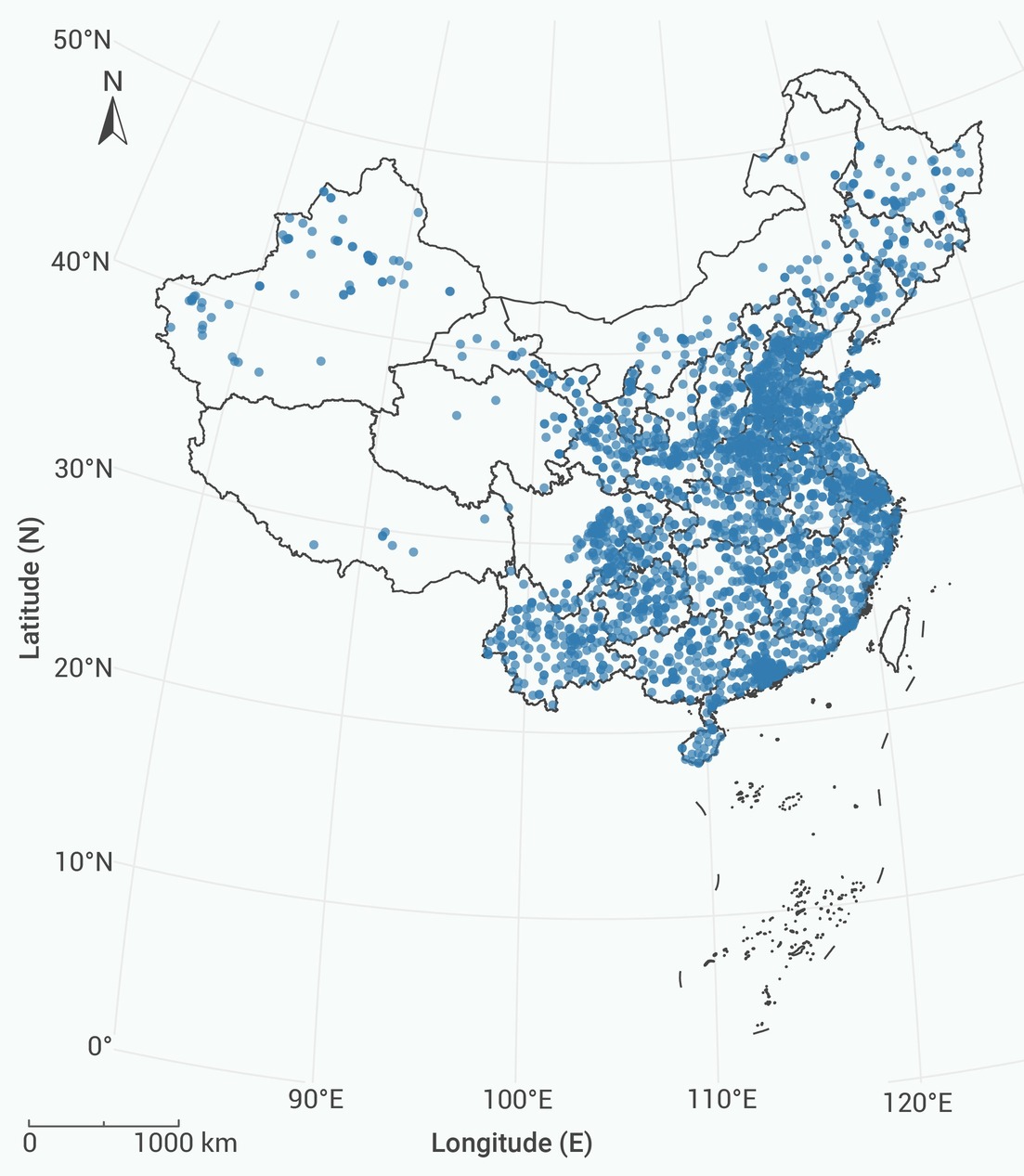
Figure 1.
Geographic distribution of chest pain centers across China from 2017 to 2020.
-
Figure 2.
Spatial distribution of PM2.5 concentrations
-
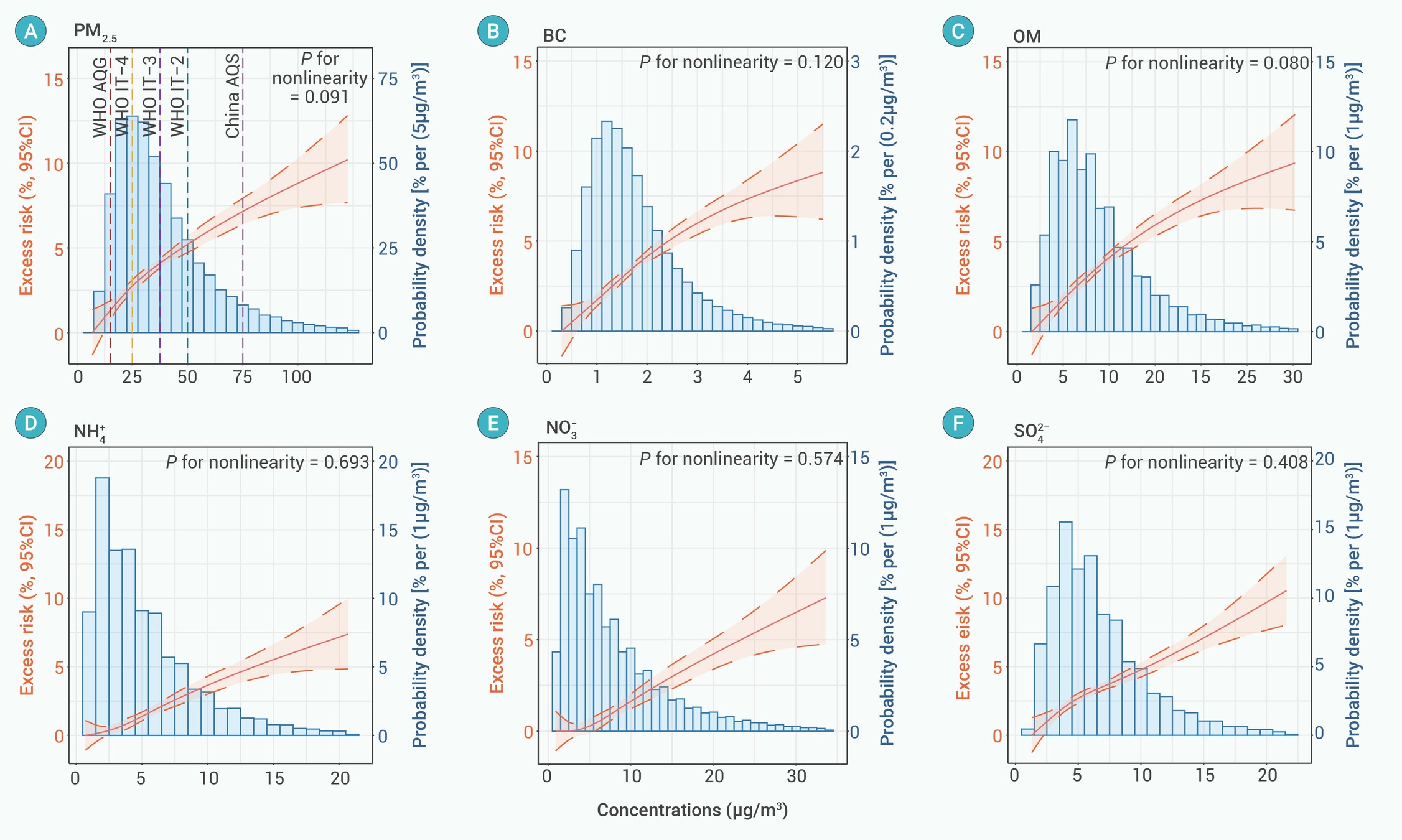
Figure 3.
Nonlinear exposure-response associations of short-term exposure to ambient PM2.5 and its chemical constituents with overall AMI onset from 2017 to 2020.
-
Figure 4.
The attributable fraction (AF, %) of AMI onset attributable to short-term exposure to PM2.5 and its chemical constituents during 2017 to 2020.
-
Figure 5.
The average change of attributable fraction (AF, %) of AMI onset caused by PM2.5 with its chemical constituents’ exposure during 2017 to 2020 in different subgroups.
