
Current landscape with an analytical outlook: Chikungunya virus vaccine development
-
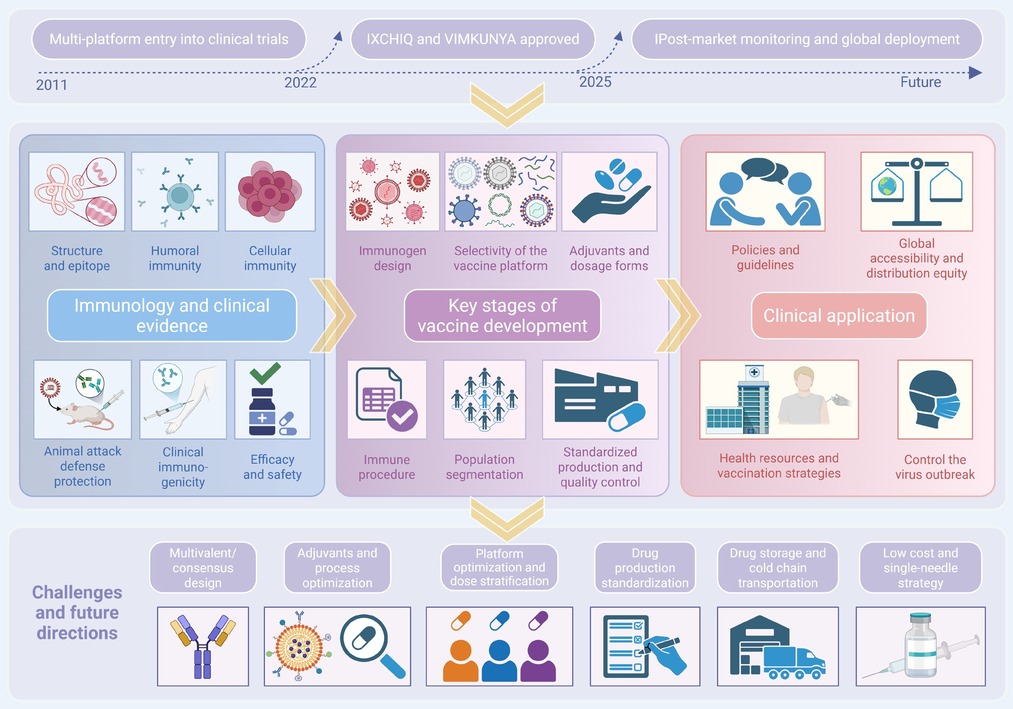
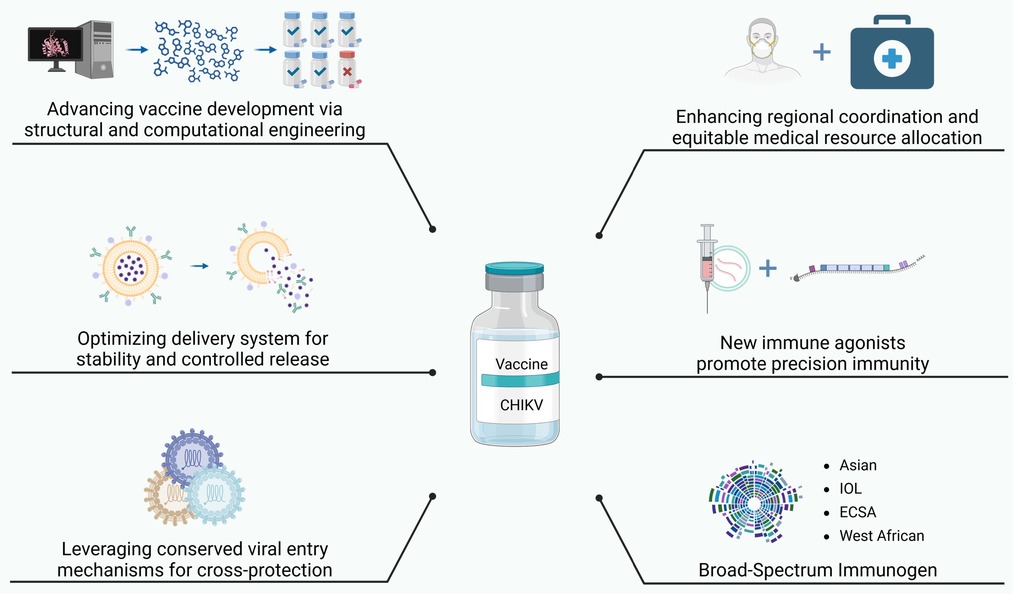
GRAPHICAL ABSTRACT
 DownLoad:
Full size image
DownLoad:
Full size image
-
PUBLIC SUMMARY
-
The recent regulatory approval of the first chikungunya vaccines marks a pivotal milestone in public health.
Key challenges persist in ensuring durable, broad immunity and addressing safety for global deployment.
Next-generation vaccine platforms are crucial to overcome these hurdles and achieve equitable protection.
-
-
ABSTRACT
Chikungunya virus (CHIKV), a mosquito-borne alphavirus primarily transmitted by Aedes species, continues to pose a significant global health threat due to its rapid transmission potential and debilitating arthralgia. In response to the escalating incidence and expanding geographic range, notable progress has been achieved in vaccine development. Two vaccines have received regulatory authorization: IXCHIQ (VLA1553; live-attenuated; FDA approved 9 Nov 2023; U.S. license suspended 22 Aug 2025), and VIMKUNYA (recombinant VLP; FDA accelerated approval 14 Feb 2025; commercial launch Mar 2025). These approvals represent major milestones in CHIKV prevention efforts. However, several challenges persist, including limited durability of immune protection, safety concerns in vulnerable populations, antigenic drift among circulating lineages, and the need for thermostable, globally deployable formulations. In this review, we systematically evaluate diverse vaccine platforms, including live-attenuated, inactivated, VLP, nucleic acid, and viral vector-based candidates, through a comparative analysis of immunogenicity, safety, and scalability. Furthermore, we provide strategic insights into overcoming major barriers in CHIKV vaccinology, including the risks of antibody-dependent enhancement (ADE), the challenge of achieving durable immunity, and the practical limitations of cold-chain dependency. By integrating advances in structural vaccinology and broadly neutralizing antibody development with clinical and regulatory perspectives, this review proposes a roadmap for next-generation CHIKV vaccines aimed at promoting equitable global deployment. -

-
REFERENCES
[1] Robinson M. C. (1955). An epidemic of virus disease in Southern Province, Tanganyika Territory, in 1952-53. I. Clinical features. Trans. R. Soc. Trop. Med. Hyg. 49:28−32. DOI:10.1016/0035-9203(55)90080-8 [2] Thiberville S. D., Moyen N., Dupuis-Maguiraga L., et al. (2013). Chikungunya fever: Epidemiology, clinical syndrome, pathogenesis and therapy. Antiviral Res. 99:345−370. DOI:10.1016/j.antiviral.2013.06.009 [3] de Souza W. M., Lecuit M. and Weaver S. C. (2025). Chikungunya virus and other emerging arthritogenic alphaviruses. Nat. Rev. Microbiol. 23:585−601. DOI:10.1038/s41579-025-01177-8 [4] World Health Organization. (2025). Chikungunya epidemiology update — June 2025. https://cdn.who.int/media/docs/default-source/documents/epp/ezh/chikungunya-epidemiology-update_11june2025.pdf. [5] Ribeiro Dos Santos G., Jawed F., Mukandavire C., et al. (2025). Global burden of chikungunya virus infections and the potential benefit of vaccination campaigns. Nat. Med. 31:2342−2349. DOI:10.1038/s41591-025-03703-w [6] Kang H., Auzenbergs M., Clapham H., et al. (2024). Chikungunya seroprevalence, force of infection, and prevalence of chronic disability after infection in endemic and epidemic settings: A systematic review, meta-analysis, and modelling study. Lancet Infect. Dis. 24:488−503. DOI:10.1016/S1473-3099(23)00810-1 [7] El-Sayed A. and Kamel M. (2020). Climatic changes and their role in emergence and re-emergence of diseases. Environ. Sci. Pollut. Res. Int. 27:22336−22352. DOI:10.1007/s11356-020-08896-w [8] de Souza W. M., de Lima S. T. S., Simoes Mello L. M., et al. (2023). Spatiotemporal dynamics and recurrence of chikungunya virus in Brazil: An epidemiological study. Lancet Microbe 4:e319−e329. DOI:10.1016/S2666-5247(23)00033-2 [9] Vega-Rua A., Lourenco-de-Oliveira R., Mousson L., et al. (2015). Chikungunya virus transmission potential by local Aedes mosquitoes in the Americas and Europe. PLoS Negl. Trop. Dis. 9:e0003780. DOI:10.1371/journal.pntd.0003780 [10] Feng Y., Chang F., Yang Y., et al. (2025). From dengue to chikungunya: Guangdong as a sentinel for arboviral threats in East Asia. Biosci. Trends 19:368−373. DOI:10.5582/bst.2025.01228 [11] Li Y., Jiang S., Zhang M., et al. (2025). An outbreak of Chikungunya fever in China - Foshan City, Guangdong Province, China, July 2025. China CDC Wkly. 7:1064−1065. DOI:10.46234/ccdcw2025.172 [12] Powers A. M. (2018). Vaccine and therapeutic options to control chikungunya virus. Clin. Microbiol. Rev. 31:e00104−00116. DOI:10.1128/CMR.00104-16 [13] Zaid A., Burt F. J., Liu X., et al. (2021). Arthritogenic alphaviruses: Epidemiological and clinical perspective on emerging arboviruses. Lancet Infect. Dis. 21:e123−e133. DOI:10.1016/S1473-3099(20)30491-6 [14] Pan American Health Organization and World Health Organization. (2023). Case definitions, clinical classification, and disease phases for dengue, chikungunya and Zika. https://www.paho.org/sites/default/files/2023-12/2023-cde-definiciones-caso-dengue-chik-zika.pdf. [15] Vairo F., Haider N., Kock R., et al. (2019). Chikungunya: Epidemiology, pathogenesis, clinical features, management, and prevention. Infect. Dis. Clin. North Am. 33:1003−1025. DOI:10.1016/j.idc.2019.08.006 [16] Sahadeo N., Mohammed H., Allicock O. M., et al. (2015). Molecular characterisation of chikungunya virus infections in trinidad and comparison of clinical and laboratory features with Dengue and other acute febrile cases. PLoS Negl. Trop. Dis. 9:e0004199. DOI:10.1371/journal.pntd.0004199 [17] Feldstein L. R., Ellis E. M., Rowhani-Rahbar A., et al. (2019). Estimating the cost of illness and burden of disease associated with the 2014-2015 chikungunya outbreak in the U. S. Virgin Islands. PLoS Negl. Trop. Dis. 13:e0007563. DOI:10.1371/journal.pntd.0007563 [18] Tiozzo G., de Roo A. M., Gurgel do Amaral G. S., et al. (2025). Assessing chikungunya's economic burden and impact on health-related quality of life: Two systematic literature reviews. PLoS Negl. Trop. Dis. 19:e0012990. DOI:10.1371/journal.pntd.0012990 [19] Bachmann M. F., van Damme P., Lienert F., et al. (2025). Virus-like particles: A versatile and effective vaccine platform. Expert Rev. Vaccines 24:444−456. DOI:10.1080/14760584.2025.2508517 [20] Zhang X., Xu J., Wang Y., et al. (2023). Respiratory viral infections in the elderly: From the perspective of the aging immune system. Innov. Med. 1:100022. DOI:10.59717/j.xinn-med.2023.100022 [21] Cherian N., Bettis A., Deol A., et al. (2023). Strategic considerations on developing a CHIKV vaccine and ensuring equitable access for countries in need. NPJ Vaccines 8:123. DOI:10.1038/s41541-023-00722-x [22] Erasmus J. H., Rossi S. L. and Weaver S. C. (2016). Development of vaccines for Chikungunya Fever. J. Infect. Dis. 214:S488−S496. DOI:10.1093/infdis/jiw271 [23] Kendall C., Khalid H., Muller M., et al. (2019). Structural and phenotypic analysis of chikungunya virus RNA replication elements. Nucleic Acids Res. 47:9296−9312. DOI:10.1093/nar/gkz640 [24] Khan A. H., Morita K., Parquet M. D. C., et al. (2002). Complete nucleotide sequence of chikungunya virus and evidence for an internal polyadenylation site. J. Gen. Virol. 83:3075−3084. DOI:10.1099/0022-1317-83-12-3075 [25] Holmes A. C., Basore K., Fremont D. H., et al. (2020). A molecular understanding of alphavirus entry. PLoS Pathog. 16:e1008876. DOI:10.1371/journal.ppat.1008876 [26] Voss J. E., Vaney M. C., Duquerroy S., et al. (2010). Glycoprotein organization of chikungunya virus particles revealed by X-ray crystallography. Nature 468:709−712. DOI:10.1038/nature09555 [27] De Caluwe L., Arien K. K. and Bartholomeeusen K. (2021). Host factors and pathways involved in the entry of mosquito-borne alphaviruses. Trends Microbiol. 29:634−647. DOI:10.1016/j.tim.2020.10.011 [28] Kim A. S., Kafai N. M., Winkler E. S., et al. (2021). Pan-protective anti-alphavirus human antibodies target a conserved E1 protein epitope. Cell 184:4414–4429 e4419. DOI:10.1016/j.cell.2021.07.006. [29] Jin J. and Simmons G. (2019). Antiviral functions of monoclonal antibodies against chikungunya virus. Viruses 11:305. DOI:10.3390/v11040305 [30] Jin J., Liss N. M., Chen D. H., et al. (2015). Neutralizing monoclonal antibodies block chikungunya virus entry and release by targeting an epitope critical to viral pathogenesis. Cell Rep. 13:2553−2564. DOI:10.1016/j.celrep.2015.11.043 [31] Malonis R. J., Earnest J. T., Kim A. S., et al. (2021). Near-germline human monoclonal antibodies neutralize and protect against multiple arthritogenic alphaviruses. Proc. Natl. Acad. Sci. U. S. A. 118:e2100104118. DOI:10.1073/pnas.2100104118 [32] Tong K., Hernandez E. M., Basore K., et al. (2024). Chikungunya virus E2 B domain nanoparticle immunogen elicits homotypic neutralizing antibody in mice. Vaccine 42:126405. DOI:10.1016/j.vaccine.2024.126405 [33] Pal P., Dowd K. A., Brien J. D., et al. (2013). Development of a highly protective combination monoclonal antibody therapy against chikungunya virus. PLoS Pathog. 9:e1003312. DOI:10.1371/journal.ppat.1003312 [34] Kam Y. W., Simarmata D., Chow A., et al. (2012). Early appearance of neutralizing immunoglobulin G3 antibodies is associated with chikungunya virus clearance and long-term clinical protection. J. Infect. Dis. 205:1147−1154. DOI:10.1093/infdis/jis033 [35] Nayak K., Jain V., Kaur M., et al. (2020). Antibody response patterns in chikungunya febrile phase predict protection versus progression to chronic arthritis. JCI Insight 5:e130509. DOI:10.1172/jci.insight.130509 [36] Nitatpattana N., Kanjanopas K., Yoksan S., et al. (2014). Long-term persistence of chikungunya virus neutralizing antibodies in human populations of North Eastern Thailand. Virol. J. 11:183. DOI:10.1186/1743-422x-11-183 [37] Powers J. M., Lyski Z. L., Weber W. C., et al. (2023). Infection with chikungunya virus confers heterotypic cross-neutralizing antibodies and memory B-cells against other arthritogenic alphaviruses predominantly through the B domain of the E2 glycoprotein. PLoS Negl. Trop. Dis. 17:e0011154. DOI:10.1371/journal.pntd.0011154 [38] Jacob-Nascimento L. C., Anjos R. O., Portilho M. M., et al. (2025). Long-term persistence of serum IgM antibodies against chikungunya virus in patients with chronic arthralgia. Virol. J. 22:115. DOI:10.1186/s12985-025-02721-x [39] Malvy D., Ezzedine K., Mamani-Matsuda M., et al. (2009). Destructive arthritis in a patient with chikungunya virus infection with persistent specific IgM antibodies. BMC Infect. Dis. 9:200. DOI:10.1186/1471-2334-9-200 [40] Li Y., Chen Z., Wu L., et al. (2022). A neutralizing-protective supersite of human monoclonal antibodies for yellow fever virus. The Innovation 3:100323. DOI:10.1016/j.xinn.2022.100323 [41] Weber W. C., Andoh T. F., Kreklywich C. N., et al. (2024). Nonreciprocity in CHIKV and MAYV vaccine-elicited protection. Vaccines (Basel) 12:970. DOI:10.3390/vaccines12090970 [42] Baylis S. A., Yue C., Panning M., et al. (2022). Collaborative study to evaluate a candidate world health organization international standard for antibodies to chikungunya virus. https://cdn.who.int/media/docs/default-source/biologicals/bs-documents-%28ecbs%29/2022-documents/new-2022-document-susan/bs-2022.2434_baylis-s_-chikungunya-virus-rr-for-serology_final.pdf. [43] Patil H. P., Gosavi M., Mishra A. C., et al. (2021). Age-dependent evaluation of immunoglobulin G response after chikungunya virus infection. Am. J. Trop. Med. Hyg. 104:1438−1443. DOI:10.4269/ajtmh.20-1398 [44] Yoon I. K., Srikiatkhachorn A., Alera M. T., et al. (2020). Pre-existing chikungunya virus neutralizing antibodies correlate with risk of symptomatic infection and subclinical seroconversion in a Philippine cohort. Int. J. Infect. Dis. 95:167−173. DOI:10.1016/j.ijid.2020.03.073 [45] Tariq A., Khan A., Mutuku F., et al. (2024). Understanding the factors contributing to dengue virus and chikungunya virus seropositivity and seroconversion among children in Kenya. PLoS Negl. Trop. Dis. 18:e0012616. DOI:10.1371/journal.pntd.0012616 [46] Poh C. M., Chan Y. H. and Ng L. F. P. (2020). Role of T cells in chikungunya virus infection and utilizing their potential in anti-viral immunity. Front. Immunol. 11:287. DOI:10.3389/fimmu.2020.00287 [47] Agarwal R., Chang J., Cortes F. H., et al. (2025). Chikungunya virus-specific CD4(+) T cells are associated with chronic chikungunya viral arthritic disease in humans. Cell Rep. Med. 6:102134. DOI:10.1016/j.xcrm.2025.102134 [48] Fox J. M. and Diamond M. S. (2016). Immune-mediated protection and pathogenesis of chikungunya virus. J. Immunol. 197:4210−4218. DOI:10.4049/jimmunol.1601426 [49] Ware B. C., Parks M. G., da Silva M. O. L., et al. (2024). Chikungunya virus infection disrupts MHC-I antigen presentation via nonstructural protein 2. PLoS Pathog. 20:e1011794. DOI:10.1371/journal.ppat.1011794 [50] Pal P., Fox J. M., Hawman D. W., et al. (2014). Chikungunya viruses that escape monoclonal antibody therapy are clinically attenuated, stable, and not purified in mosquitoes. J. Virol. 88:8213−8226. DOI:10.1128/jvi.01032-14 [51] Sun S., Xiang Y., Akahata W., et al. (2013). Structural analyses at pseudo atomic resolution of chikungunya virus and antibodies show mechanisms of neutralization. Elife 2:e00435. DOI:10.7554/eLife.00435 [52] Smith S. A., Silva L. A., Fox J. M., et al. (2015). Isolation and characterization of broad and ultrapotent human monoclonal antibodies with therapeutic activity against chikungunya virus. Cell Host Microbe 18:86−95. DOI:10.1016/j.chom.2015.06.009 [53] Lum F. M., Couderc T., Chia B. S., et al. (2018). Antibody-mediated enhancement aggravates chikungunya virus infection and disease severity. Sci. Rep. 8:1860. DOI:10.1038/s41598-018-20305-4 [54] Powers A. M., Brault A. C., Tesh R. B., et al. (2000). Re-emergence of Chikungunya and O'nyong-nyong viruses: Evidence for distinct geographical lineages and distant evolutionary relationships. J. Gen. Virol. 81:471−479. DOI:10.1099/0022-1317-81-2-471 [55] Weaver S. C. and Forrester N. L. (2015). Chikungunya: Evolutionary history and recent epidemic spread. Antiviral Res. 120:32−39. DOI:10.1016/j.antiviral.2015.04.016 [56] Krambrich J., Mihalic F., Gaunt M. W., et al. (2024). The evolutionary and molecular history of a chikungunya virus outbreak lineage. PLoS Negl. Trop. Dis. 18:e0012349. DOI:10.1371/journal.pntd.0012349 [57] Tsetsarkin K. A., Vanlandingham D. L., McGee C. E., et al. (2007). A single mutation in chikungunya virus affects vector specificity and epidemic potential. PLoS Pathog. 3:e201. DOI:10.1371/journal.ppat.0030201 [58] Tsetsarkin K. A., Chen R., Leal G., et al. (2011). Chikungunya virus emergence is constrained in Asia by lineage-specific adaptive landscapes. Proc. Natl. Acad. Sci. U. S. A. 108:7872−7877. DOI:10.1073/pnas.1018344108 [59] Tsetsarkin K. A. and Weaver S. C. (2011). Sequential adaptive mutations enhance efficient vector switching by chikungunya virus and its epidemic emergence. PLoS Pathog. 7:e1002412. DOI:10.1371/journal.ppat.1002412 [60] Kosulin K., Brasel T. L., Smith J., et al. (2025). Cross-neutralizing activity of the chikungunya vaccine VLA1553 against three prevalent chikungunya lineages. Emerg. Microbes Infect. 14:2469653. DOI:10.1080/22221751.2025.2469653 [61] Buerger V., Hadl S., Schneider M., et al. (2025). Safety and immunogenicity of a live-attenuated chikungunya virus vaccine in endemic areas of Brazil: Interim results of a double-blind, randomised, placebo-controlled phase 3 trial in adolescents. Lancet Infect. Dis. 25:114−125. DOI:10.1016/S1473-3099(24)00458-4 [62] Schneider M., Narciso-Abraham M., Hadl S., et al. (2023). Safety and immunogenicity of a single-shot live-attenuated chikungunya vaccine: A double-blind, multicentre, randomised, placebo-controlled, phase 3 trial. Lancet 401:2138−2147. DOI:10.1016/S0140-6736(23)00641-4 [63] Zhang Y. N., Deng C. L., Li J. Q., et al. (2019). Infectious Chikungunya Virus (CHIKV) with a complete capsid deletion: A new approach for a CHIKV vaccine. J. Virol. 93:e00504−00519. DOI:10.1128/JVI.00504-19 [64] Tretyakova I., Joh J., Gearon M., et al. (2024). Live-attenuated CHIKV vaccine with rearranged genome replicates in vitro and induces immune response in mice. PLoS Negl. Trop. Dis. 18:e0012120. DOI:10.1371/journal.pntd.0012120 [65] Kempster S. L., Ferguson D., Ham C., et al. (2025). Inactivated viral vaccine BBV87 protects against chikungunya virus challenge in a non-human primate model. Viruses 17:550. DOI:10.3390/v17040550 [66] Najit Technologies I. (2025). Trial of an inactivated chikungunya virus vaccine. https://clinicaltrials.gov/study/NCT06669208. [67] Richardson J. S., Anderson D. M., Mendy J., et al. (2025). Chikungunya virus virus-like particle vaccine safety and immunogenicity in adolescents and adults in the USA: A phase 3, randomised, double-blind, placebo-controlled trial. Lancet 405:1343−1352. DOI:10.1016/S0140-6736(25)00345-9 [68] Zhao Z., Deng Y., Niu P., et al. (2021). Co-immunization with CHIKV VLP and DNA vaccines induces a promising humoral response in mice. Front. Immunol. 12:655743. DOI:10.3389/fimmu.2021.655743 [69] Garg H., Mehmetoglu-Gurbuz T. and Joshi A. (2020). Virus Like Particles (VLP) as multivalent vaccine candidate against Chikungunya, Japanese Encephalitis, Yellow Fever and Zika Virus. Sci. Rep. 10:4017. DOI:10.1038/s41598-020-61103-1 [70] Shaw C. A., August A., Bart S., et al. (2023). A phase 1, randomized, placebo-controlled, dose-ranging study to evaluate the safety and immunogenicity of an mRNA-based chikungunya virus vaccine in healthy adults. Vaccine 41:3898−3906. DOI:10.1016/j.vaccine.2023.04.064 [71] Liang X., Zhou Y., Yang Y., et al. (2025). CHIKV mRNA vaccines encoding conserved structural/envelope proteins confer broad cross-lineage protection against infection. Signal. Transduct. Target. Ther. 10:98. DOI:10.1038/s41392-025-02182-2 [72] Mallilankaraman K., Shedlock D. J., Bao H., et al. (2011). A DNA vaccine against chikungunya virus is protective in mice and induces neutralizing antibodies in mice and nonhuman primates. PLoS Negl. Trop. Dis. 5:e928. DOI:10.1371/journal.pntd.0000928 [73] Reisinger E. C., Tschismarov R., Beubler E., et al. (2019). Immunogenicity, safety, and tolerability of the measles-vectored chikungunya virus vaccine MV-CHIK: A double-blind, randomised, placebo-controlled and active-controlled phase 2 trial. Lancet 392:2718−2727. DOI:10.1016/S0140-6736(18)32488-7 [74] Folegatti P. M., Harrison K., Preciado-Llanes L., et al. (2021). A single dose of ChAdOx1 Chik vaccine induces neutralizing antibodies against four chikungunya virus lineages in a phase 1 clinical trial. Nat. Commun. 12:4636. DOI:10.1038/s41467-021-24906-y [75] Garcia-Arriaza J., Esteban M. and Lopez D. (2021). Modified vaccinia virus Ankara as a viral vector for vaccine candidates against chikungunya virus. Biomedicines 9:1122. DOI:10.3390/biomedicines9091122 [76] Adam A., Woolsey C., Lu H., et al. (2024). A safe insect-based chikungunya fever vaccine affords rapid and durable protection in cynomolgus macaques. NPJ Vaccines 9:251. DOI:10.1038/s41541-024-01047-z [77] Chuong C., Cereghino C., Rai P., et al. (2024). Enhanced attenuation of chikungunya vaccines expressing antiviral cytokines. NPJ Vaccines 9:59. DOI:10.1038/s41541-024-00843-x [78] Gorchakov R., Wang E., Leal G., et al. (2012). Attenuation of chikungunya virus vaccine strain 181/clone 25 is determined by two amino acid substitutions in the E2 envelope glycoprotein. J. Virol. 86:6084−6096. DOI:10.1128/JVI.06449-11 [79] Hidajat R., Nickols B., Forrester N., et al. (2016). Next generation sequencing of DNA-launched Chikungunya vaccine virus. Virology 490:83−90. DOI:10.1016/j.virol.2016.01.009 [80] Rudd P. A. and Mahalingam S. (2015). Fighting back against chikungunya. Lancet Infect. Dis. 15:488−489. DOI:10.1016/S1473-3099(15)70079-4 [81] Meissner H. C. (2022). Understanding vaccine safety and the roles of the FDA and the CDC. N. Engl. J. Med. 386:1638−1645. DOI:10.1056/NEJMra2200583 [82] U.S. Food and Drug Administration. (2025). FDA Update on the Safety of Ixchiq (Chikungunya Vaccine, Live). https://www.fda.gov/vaccines-blood-biologics/safety-availability-biologics/fda-update-safety-ixchiq-chikungunya-vaccine-live. [83] Yin J., Zhao Y., Huang F., et al. (2023). Immune response and homeostasis mechanism following administration of BBIBP-CorV SARS-CoV-2 inactivated vaccine. The Innovation 4:100359. DOI:10.1016/j.xinn.2022.100359 [84] Harrison V. R., Binn L. N. and Randall R. (1967). Comparative immunogenicities of chikungunya vaccines prepared in avian and mammalian tissues. Am. J. Trop. Med. Hyg. 16:786−791. [85] Polack F. P., Teng M. N., Collins P. L., et al. (2002). A role for immune complexes in enhanced respiratory syncytial virus disease. J. Exp. Med. 196:859−865. DOI:10.1084/jem.20020781 [86] Delgado M. F., Coviello S., Monsalvo A. C., et al. (2009). Lack of antibody affinity maturation due to poor Toll-like receptor stimulation leads to enhanced respiratory syncytial virus disease. Nat. Med. 15:34−41. DOI:10.1038/nm.1894 [87] Sabbaghi A., Miri S. M., Keshavarz M., et al. (2019). Inactivation methods for whole influenza vaccine production. Rev. Med. Virol. 29:e2074. DOI:10.1002/rmv.2074 [88] Xu D., Carter J. J., Li C., et al. (2024). Vaccine design via antigen reorientation. Nat. Chem. Biol. 20:1012−1021. DOI:10.1038/s41589-023-01529-6 [89] Zhao T., Cai Y., Jiang Y., et al. (2023). Vaccine adjuvants: Mechanisms and platforms. Signal Transduct. Target. Ther. 8:283. DOI:10.1038/s41392-023-01557-7 [90] Amanna I. J., Raue H. P. and Slifka M. K. (2012). Development of a new hydrogen peroxide-based vaccine platform. Nat. Med. 18:974−979. DOI:10.1038/nm.2763 [91] Chang L. J., Dowd K. A., Mendoza F. H., et al. (2014). Safety and tolerability of chikungunya virus-like particle vaccine in healthy adults: A phase 1 dose-escalation trial. Lancet 384:2046−2052. DOI:10.1016/S0140-6736(14)61185-5 [92] Bennett S. R., McCarty J. M., Ramanathan R., et al. (2022). Safety and immunogenicity of PXVX0317, an aluminium hydroxide-adjuvanted chikungunya virus-like particle vaccine: A randomised, double-blind, parallel-group, phase 2 trial. Lancet Infect. Dis. 22:1343−1355. DOI:10.1016/S1473-3099(22)00226-2 [93] Tindale L. C., Richardson J. S., Anderson D. M., et al. (2025). Chikungunya virus virus-like particle vaccine safety and immunogenicity in adults older than 65 years: A phase 3, randomised, double-blind, placebo-controlled trial. Lancet 405:1353−1361. DOI:10.1016/S0140-6736(25)00372-1 [94] Akahata W., Yang Z. Y., Andersen H., et al. (2010). A virus-like particle vaccine for epidemic chikungunya virus protects nonhuman primates against infection. Nat. Med. 16:334−338. DOI:10.1038/nm.2105 [95] Nooraei S., Bahrulolum H., Hoseini Z. S., et al. (2021). Virus-like particles: Preparation, immunogenicity and their roles as nanovaccines and drug nanocarriers. J. Nanobiotechnology 19:59. DOI:10.1186/s12951-021-00806-7 [96] Chavda V. P., Ghali E., Balar P. C., et al. (2024). Protein subunit vaccines: Promising frontiers against COVID-19. J. Control. Release 366:761−782. DOI:10.1016/j.jconrel.2024.01.017 [97] Coirada F. C., Fernandes E. R., Mello L. R., et al. (2023). Heterologous DNA prime- subunit protein boost with chikungunya virus E2 induces neutralizing antibodies and cellular-mediated immunity. Int. J. Mol. Sci. 24:10517. DOI:10.3390/ijms241310517 [98] Pulendran B., P S. A. and O'Hagan D. T. (2021). Emerging concepts in the science of vaccine adjuvants. Nat. Rev. Drug Discov. 20:454−475. DOI:10.1038/s41573-021-00163-y [99] Wang C. and Yuan F. (2024). A comprehensive comparison of DNA and RNA vaccines. Adv. Drug Deliv. Rev. 210:115340. DOI:10.1016/j.addr.2024.115340 [100] World Health Organization. (2023). Guidelines on stability evaluation of vaccines for use under Extended Controlled Temperature Conditions (ECTC). WHO Technical Report Series, https://cdn.who.int/media/docs/default-source/biologicals/vaccine-standardization/ectc/guidelines-on-ectc-trs_999_a5.pdf. [101] Zhang N. N., Li X. F., Deng Y. Q., et al. (2020). A thermostable mRNA vaccine against COVID-19. Cell 182:1271–1283 e1216. DOI:10.1016/j.cell.2020.07.024 [102] Mata E., Broset E., Matute C., et al. (2025). Preserved efficacy of lyophilized SARS-CoV-2 mRNA vaccine incorporating novel ionizable lipids after one year at 25 degrees C. NPJ Vaccines 10:135. DOI:10.1038/s41541-025-01201-1 [103] Swingle K. L., Hamilton A. G., Han X., et al. (2025). Circular RNA lipid nanoparticle vaccine against SARS-CoV-2. Proc. Natl. Acad. Sci. U. S. A. 122:e2505718122. DOI:10.1073/pnas.2505718122 [104] Huelsmeyer M., Kuzman D., Boncina M., et al. (2023). A universal tool for stability predictions of biotherapeutics, vaccines and in vitro diagnostic products. Sci. Rep. 13:10077. DOI:10.1038/s41598-023-35870-6 [105] Tebas P., Yang S., Boyer J. D., et al. (2021). Safety and immunogenicity of INO-4800 DNA vaccine against SARS-CoV-2: A preliminary report of an open-label, Phase 1 clinical trial. EClinicalMedicine 31:100689. DOI:10.1016/j.eclinm.2020.100689 [106] Gupta A., Rudra A., Reed K., et al. (2024). Advanced technologies for the development of infectious disease vaccines. Nat. Rev. Drug Discov. 23:914−938. DOI:10.1038/s41573-024-01041-z [107] Tretyakova I., Hearn J., Wang E., et al. (2014). DNA vaccine initiates replication of live attenuated chikungunya virus in vitro and elicits protective immune response in mice. J. Infect. Dis. 209:1882−1890. DOI:10.1093/infdis/jiu114 [108] Bartholomeeusen K., Daniel M., LaBeaud D. A., et al. (2023). Chikungunya fever. Nat. Rev. Dis. Primers. 9:17. DOI:10.1038/s41572-023-00429-2 [109] Coughlan L., Kremer E. J. and Shayakhmetov D. M. (2022). Adenovirus-based vaccines-a platform for pandemic preparedness against emerging viral pathogens. Mol. Ther. 30:1822−1849. DOI:10.1016/j.ymthe.2022.01.034 [110] Wang W., O'Driscoll M., Wang Q., et al. (2024). Dynamics of measles immunity from birth and following vaccination. Nat. Microbiol. 9:1676−1685. DOI:10.1038/s41564-024-01694-x [111] Launay O., Artaud C., Lachatre M., et al. (2022). Safety and immunogenicity of a measles-vectored SARS-CoV-2 vaccine candidate, V591 / TMV-083, in healthy adults: results of a randomized, placebo-controlled Phase I study. EBioMedicine 75:103810. DOI:10.1016/j.ebiom.2021.103810 [112] Rehman S., Sukaina M., Aminpoor H., et al. (2025). Vaccine induced immune thrombotic thrombocytopenia after sinopharm vaccination: A systematic review of case reports. Clin. Case Rep. 13:e70873. DOI:10.1002/ccr3.70873 [113] Luo H., Zhou Q., Feng J., et al. (2024). Global prevalence of preexisting antibodies against human adenoviruses, surveyed from 1962 to 2021. Intervirology 67:19−39. DOI:10.1159/000538233 [114] Tang J., Amin M. A. and Campian J. L. (2025). Past, present, and future of viral vector vaccine platforms: A comprehensive review. Vaccines (Basel) 13:524. DOI:10.3390/vaccines13050524 [115] Medicines and Healthcare products Regulatory Agency (2025). IXCHIQ Chikungunya vaccine: Temporary suspension in people aged 65 years or older. https://www.gov.uk/drug-safety-update/ixchiq-chikungunya-vaccine-temporary-suspension-in-people-aged-65-years-or-older. [116] Laffan M. A., Rees S., Yadavalli M., et al. (2022). Thrombosis with thrombocytopenia after AZD1222 (ChAdOx1 nCov-19) vaccination: Case characteristics and associations. Vaccine 40:5585−5593. DOI:10.1016/j.vaccine.2022.08.007 [117] Tanaka A., Tumkosit U., Nakamura S., et al. (2017). Genome-wide screening uncovers the significance of N-sulfation of heparan sulfate as a host cell factor for chikungunya virus infection. J. Virol. 91:e00432−00417. DOI:10.1128/JVI.00432-17 [118] Sahoo B. and Chowdary T. K. (2019). Conformational changes in chikungunya virus E2 protein upon heparan sulfate receptor binding explain mechanism of E2-E1 dissociation during viral entry. Biosci. Rep. 39:BSR20191077. DOI:10.1042/BSR20191077 [119] Kirui J., Abidine Y., Lenman A., et al. (2021). The phosphatidylserine receptor TIM-1 enhances authentic chikungunya virus cell entry. Cells 10:1828. DOI:10.3390/cells10071828 [120] Basore K., Kim A. S., Nelson C. A., et al. (2019). Cryo-EM structure of chikungunya virus in complex with the Mxra8 receptor. Cell 177:1725–1737 e1716. DOI:10.1016/j.cell.2019.04.006. [121] Zhou Q. F., Fox J. M., Earnest J. T., et al. (2020). Structural basis of chikungunya virus inhibition by monoclonal antibodies. Proc. Natl. Acad. Sci. U. S. A. 117:27637−27645. DOI:10.1073/pnas.2008051117 [122] Fox J. M., Long F., Edeling M. A., et al. (2015). Broadly neutralizing alphavirus antibodies bind an epitope on E2 and inhibit entry and egress. Cell 163:1095−1107. DOI:10.1016/j.cell.2015.10.050 [123] Warter L., Lee C. Y., Thiagarajan R., et al. (2011). Chikungunya virus envelope-specific human monoclonal antibodies with broad neutralization potency. J. Immunol. 186:3258−3264. DOI:10.4049/jimmunol.1003139 [124] Raju S., Adams L. J., Earnest J. T., et al. (2023). A chikungunya virus-like particle vaccine induces broadly neutralizing and protective antibodies against alphaviruses in humans. Sci. Transl. Med. 15:eade8273. DOI:10.1126/scitranslmed.ade8273 [125] August A., Attarwala H. Z., Himansu S., et al. (2021). A phase 1 trial of lipid-encapsulated mRNA encoding a monoclonal antibody with neutralizing activity against chikungunya virus. Nat. Med. 27:2224−2233. DOI:10.1038/s41591-021-01573-6 [126] Goh L. Y., Hobson-Peters J., Prow N. A., et al. (2013). Neutralizing monoclonal antibodies to the E2 protein of chikungunya virus protects against disease in a mouse model. Clin. Immunol. 149:487−497. DOI:10.1016/j.clim.2013.10.004 [127] Powell L. A., Miller A., Fox J. M., et al. (2020). Human mAbs broadly protect against arthritogenic alphaviruses by recognizing conserved elements of the Mxra8 receptor-binding site. Cell Host Microbe 28:699–711 e697. DOI:10.1016/j.chom.2020.07.008. [128] Tumkosit U., Siripanyaphinyo U., Takeda N., et al. (2020). Anti-chikungunya virus monoclonal antibody that inhibits viral fusion and release. J. Virol. 94. DOI:10.1128/JVI.00252-20. [129] Lam S., Nyo M., Phuektes P., et al. (2015). A potent neutralizing IgM mAb targeting the N218 epitope on E2 protein protects against chikungunya virus pathogenesis. MAbs 7:1178−1194. DOI:10.1080/19420862.2015.1083664 [130] Quiroz J. A., Malonis R. J., Thackray L. B., et al. (2019). Human monoclonal antibodies against chikungunya virus target multiple distinct epitopes in the E1 and E2 glycoproteins. PLoS Pathog. 15:e1008061. DOI:10.1371/journal.ppat.1008061 [131] Brehin A. C., Rubrecht L., Navarro-Sanchez M. E., et al. (2008). Production and characterization of mouse monoclonal antibodies reactive to Chikungunya envelope E2 glycoprotein. Virology 371:185−195. DOI:10.1016/j.virol.2007.09.028 [132] Sutton M. S., Pletnev S., Callahan V., et al. (2023). Vaccine elicitation and structural basis for antibody protection against alphaviruses. Cell 186:2672–2689 e2625. DOI:10.1016/j.cell.2023.05.019 [133] Masrinoul P., Puiprom O., Tanaka A., et al. (2014). Monoclonal antibody targeting chikungunya virus envelope 1 protein inhibits virus release. Virology 464-465:111–117. DOI:10.1016/j.virol.2014.05.038 [134] Ashbrook A. W., Burrack K. S., Silva L. A., et al. (2014). Residue 82 of the chikungunya virus E2 attachment protein modulates viral dissemination and arthritis in mice. J. Virol. 88:12180−12192. DOI:10.1128/jvi.01672-14 [135] Gardner C. L., Hritz J., Sun C., et al. (2014). Deliberate attenuation of chikungunya virus by adaptation to heparan sulfate-dependent infectivity: A model for rational arboviral vaccine design. PLoS Negl. Trop. Dis. 8:e2719. DOI:10.1371/journal.pntd.0002719 [136] Jin J., Galaz-Montoya J. G., Sherman M. B., et al. (2018). Neutralizing antibodies inhibit chikungunya virus budding at the plasma membrane. Cell Host Microbe 24:417–428 e415. DOI:10.1016/j.chom.2018.07.018 [137] Weber W. C., Streblow Z. J., Kreklywich C. N., et al. (2024). The approved live-attenuated chikungunya virus vaccine (IXCHIQ((R))) elicits cross-neutralizing antibody breadth extending to multiple arthritogenic alphaviruses similar to the antibody breadth following natural infection. Vaccines (Basel) 12:893. DOI:10.3390/vaccines12080893 [138] Slifka D. K., Raue H. P., Weber W. C., et al. (2022). Development of a next-generation chikungunya virus vaccine based on the HydroVax platform. PLoS Pathog. 18:e1010695. DOI:10.1371/journal.ppat.1010695 [139] Qiao R., Liu Y., Mao Q., et al. (2025). Novel trispecific neutralizing antibodies with enhanced potency and breadth against pan-sarbecoviruses. MedComm 6:e70191. DOI:10.1002/mco2.70191 [140] Zhao X., Qiu T., Huang X., et al. (2024). Potent and broadly neutralizing antibodies against sarbecoviruses induced by sequential COVID-19 vaccination. Cell Discov. 10:14. DOI:10.1038/s41421-024-00648-1 [141] Perez-Estigarribia P. E., Ribeiro Dos Santos G., Cauchemez S., et al. (2025). Modeling the impact of vaccine campaigns on the epidemic transmission dynamics of chikungunya virus outbreaks. Nat. Med. 31:2335−2341. DOI:10.1038/s41591-025-03684-w [142] Peletta A., Lemoine C., Courant T., et al. (2023). Meeting vaccine formulation challenges in an emergency setting: Towards the development of accessible vaccines. Pharmacol. Res. 189:106699. DOI:10.1016/j.phrs.2023.106699 [143] Rangel M. V., McAllister N., Dancel-Manning K., et al. (2022). Emerging Chikungunya Virus variants at the E1-E1 interglycoprotein spike interface impact virus attachment and inflammation. J. Virol. 96:e0158621. DOI:10.1128/JVI.01586-21 [144] Stumpf M. M., Brunetti T., Davenport B. J., et al. (2025). Deep mutationally scanned CHIKV E3/E2 virus library maps viral amino acid preferences and predicts viral escape mutants of neutralizing CHIKV antibodies. J. Virol. 99:e0008125. DOI:10.1128/jvi.00081-25 [145] Cerqueira-Silva T., Rodrigues L. C., Pearce N., et al. (2025). Perinatal outcomes of symptomatic chikungunya, dengue and Zika infection during pregnancy in Brazil: A registry-based cohort study. Nat. Commun. 16:7207. DOI:10.1038/s41467-025-62640-x [146] Gerardin P., Couderc T., Bintner M., et al. (2016). Chikungunya virus-associated encephalitis: A cohort study on La Reunion Island, 2005-2009. Neurology 86:94−102. DOI:10.1212/WNL.0000000000002234 [147] Keddy K. H. and Tadesse B. T. (2024). Inaccessible: Health, wealth, governance, and equity in low-income and middle-income countries. Lancet Infect. Dis. 24:444−445. DOI:10.1016/S1473-3099(23)00811-3 [148] Ratzan S. C., Parker R. M., Rabin K. H., et al. (2024). Quality health communication is critical to optimal adult immunization. Ann. Intern. Med. 177:253−254. DOI:10.7326/M23-3452 [149] Gontu A., Misra S., Chothe S. K., et al. (2025). Trans amplifying mRNA vaccine expressing consensus spike elicits broad neutralization of SARS CoV 2 variants. NPJ Vaccines 10:110. DOI:10.1038/s41541-025-01166-1 [150] Liu X., Zhao T., Wang L., et al. (2023). A mosaic influenza virus-like particles vaccine provides broad humoral and cellular immune responses against influenza A viruses. NPJ Vaccines 8:132. DOI:10.1038/s41541-023-00728-5 [151] He Q., Zhang Y., Fu Z., et al. (2025). Broad-spectrum coronavirus vaccines: Integrated strategies to combat viral diversity. Expert Rev. Vaccines 24:1−12. DOI:10.1080/14760584.2025.2538561 [152] Wells T. J., Esposito T., Henderson I. R., et al. (2025). Mechanisms of antibody-dependent enhancement of infectious disease. Nat. Rev. Immunol. 25:6−21. DOI:10.1038/s41577-024-01067-9 [153] Sampath V., Rabinowitz G., Shah M., et al. (2021). Vaccines and allergic reactions: The past, the current COVID-19 pandemic, and future perspectives. Allergy 76:1640−1660. DOI:10.1111/all.14840 [154] Zhou H.-Y., Li Y., Li J.-Y., et al. (2024). Harnessing the power of artificial intelligence to combat infectious diseases: Progress, challenges, and future outlook. Innov. Med. 2:100091. DOI:10.59717/j.xinn-med.2024.100091 [155] Zhao F. and Zai X. (2025). Proceeding artificial intelligence technology towards vaccine designs. Innov. Life 3:100162. DOI:10.59717/j.xinn-life.2025.100162 [156] Vishweshwaraiah Y. L. and Dokholyan N. V. (2022). Toward rational vaccine engineering. Adv. Drug Deliv. Rev. 183:114142. DOI:10.1016/j.addr.2022.114142 [157] Mason D. M., Friedensohn S., Weber C. R., et al. (2021). Optimization of therapeutic antibodies by predicting antigen specificity from antibody sequence via deep learning. Nat. Biomed. Eng. 5:600−612. DOI:10.1038/s41551-021-00699-9 [158] Abramson J., Adler J., Dunger J., et al. (2024). Accurate structure prediction of biomolecular interactions with AlphaFold 3. Nature 630:493−500. DOI:10.1038/s41586-024-07487-w [159] Krokidis M. G., Koumadorakis D. E., Lazaros K., et al. (2025). AlphaFold3: An overview of applications and performance insights. Int. J. Mol. Sci. 26:3671. DOI:10.3390/ijms26083671 [160] Listov D., Goverde C. A., Correia B. E., et al. (2024). Opportunities and challenges in design and optimization of protein function. Nat. Rev. Mol. Cell Biol. 25:639−653. DOI:10.1038/s41580-024-00718-y [161] Qerqez A. N., Silva R. P. and Maynard J. A. (2023). Outsmarting pathogens with antibody engineering. Annu. Rev. Chem. Biomol. Eng. 14:217−241. DOI:10.1146/annurev-chembioeng-101121-084508 [162] Lavelle E. C. and McEntee C. P. (2024). Vaccine adjuvants: Tailoring innate recognition to send the right message. Immunity 57:772−789. DOI:10.1016/j.immuni.2024.03.015 [163] Ben-Akiva E., Chapman A., Mao T., et al. (2025). Linking vaccine adjuvant mechanisms of action to function. Sci. Immunol. 10:eado5937. DOI:10.1126/sciimmunol.ado5937 [164] European Medicines Agency. (2005). Adjuvants in vaccines for human use — Scientific guideline. https://www.ema.europa.eu/en/adjuvants-vaccines-human-use. [165] World Health Organization. (2014). Guidelines on the non-clinical evaluation of vaccine adjuvants and adjuvanted vaccines. WHO Technical Report Series, https://iris.who.int/handle/10665/112805. [166] Preston K. B. and Randolph T. W. (2021). Stability of lyophilized and spray dried vaccine formulations. Adv. Drug Deliv. Rev. 171:50−61. DOI:10.1016/j.addr.2021.01.016 [167] Muramatsu H., Lam K., Bajusz C., et al. (2022). Lyophilization provides long-term stability for a lipid nanoparticle-formulated, nucleoside-modified mRNA vaccine. Mol. Ther. 30:1941−1951. DOI:10.1016/j.ymthe.2022.02.001 [168] Ai L., Li Y., Zhou L., et al. (2023). Lyophilized mRNA-lipid nanoparticle vaccines with long-term stability and high antigenicity against SARS-CoV-2. Cell Discov. 9:9. DOI:10.1038/s41421-022-00517-9 [169] Xiao Y., Tang Z., Huang X., et al. (2022). Emerging mRNA technologies: Delivery strategies and biomedical applications. Chem. Soc. Rev. 51:3828−3845. DOI:10.1039/d1cs00617g [170] Cullis P. R. and Felgner P. L. (2024). The 60-year evolution of lipid nanoparticles for nucleic acid delivery. Nat. Rev. Drug Discov. 23:709−722. DOI:10.1038/s41573-024-00977-6 [171] Walvekar P., Kumar P. and Choonara Y. E. (2023). Long-acting vaccine delivery systems. Adv. Drug Deliv. Rev. 198:114897. DOI:10.1016/j.addr.2023.114897 [172] Ma Y., VanKeulen-Miller R. and Fenton O. S. (2025). mRNA lipid nanoparticle formulation, characterization and evaluation. Nat. Protoc. 20:2618−2651. DOI:10.1038/s41596-024-01134-4 [173] Pardi N. and Krammer F. (2024). mRNA vaccines for infectious diseases - advances, challenges and opportunities. Nat. Rev. Drug Discov. 23:838−861. DOI:10.1038/s41573-024-01042-y [174] Clemens J., Aziz A. B., Tadesse B. T., et al. (2022). Evaluation of protection by COVID-19 vaccines after deployment in low and lower-middle income countries. EClinicalMedicine 43:101253. DOI:10.1016/j.eclinm.2021.101253 [175] Chen L., Xu F., Han Z., et al. (2022). Strategic COVID-19 vaccine distribution can simultaneously elevate social utility and equity. Nat. Hum. Behav. 6:1503−1514. DOI:10.1038/s41562-022-01429-0 [176] Giersing B. K., Isbrucker R., Kaslow D. C., et al. (2023). Clinical and regulatory development strategies for Shigella vaccines intended for children younger than 5 years in low-income and middle-income countries. Lancet Glob. Health 11:e1819−e1826. DOI:10.1016/S2214-109X(23)00421-7 [177] Alakija A. (2023). Vaccine manufacturing in Africa. BMJ 381:908. DOI:10.1136/bmj.p908 [178] Tsanni A. (2025). Africa's chief diplomat for vaccine manufacturing. Nature 643:865−867. DOI:10.1038/d41586-025-01670-3 [179] Park S. P., Lee H. J., Yu Y., et al. (2023). Designing the global vaccine supply chain: Balancing intellectual property rights with post COVID-19 vaccine equity. BMJ Glob. Health 8:e013669. DOI:10.1136/bmjgh-2023-013669 [180] Chua C. L., Sam I. C., Merits A., et al. (2016). Antigenic variation of East/Central/South African and Asian chikungunya virus genotypes in neutralization by immune sera. PLoS Negl. Trop. Dis. 10:e0004960. DOI:10.1371/journal.pntd.0004960 [181] Weaver S. C. and Lecuit M. (2015). Chikungunya virus and the global spread of a mosquito-borne disease. N. Engl. J. Med. 372:1231−1239. DOI:10.1056/NEJMra1406035 [182] Caputo B., Russo G., Manica M., et al. (2020). A comparative analysis of the 2007 and 2017 Italian chikungunya outbreaks and implication for public health response. PLoS Negl. Trop. Dis. 14:e0008159. DOI:10.1371/journal.pntd.0008159 [183] Cortes N., Lira A., Prates-Syed W., et al. (2023). Integrated control strategies for dengue, Zika, and Chikungunya virus infections. Front. Immunol. 14:1281667. DOI:10.3389/fimmu.2023.1281667 [184] Jumper J., Evans R., Pritzel A., et al. (2021). Highly accurate protein structure prediction with AlphaFold. Nature 596:583−589. DOI:10.1038/s41586-021-03819-2 [185] Baek M., DiMaio F., Anishchenko I., et al. (2021). Accurate prediction of protein structures and interactions using a three-track neural network. Science 373:871−876. DOI:10.1126/science.abj8754 [186] Maure C., Khazhidinov K., Kang H., et al. (2024). Chikungunya vaccine development, challenges, and pathway toward public health impact. Vaccine 42:126483. DOI:10.1016/j.vaccine.2024.126483 [187] Qiao R., Li J., Gong J., et al. (2025). Evolving SARS-CoV-2 vaccines: From current solutions to broad-spectrum protection. Vaccines (Basel) 13:635. DOI:10.3390/vaccines13060635 [188] Cavaleri M., de Sousa C. M. A., Hacker A., et al. (2025). A roadmap for fostering timely regulatory and ethics approvals of international clinical trials in support of global health research systems. Lancet Glob. Health 13:e769−e777. DOI:10.1016/S2214-109X(24)00515-1 [189] Singh J. A. and Upshur R. E. G. (2021). The granting of emergency use designation to COVID-19 candidate vaccines: Implications for COVID-19 vaccine trials. Lancet Infect. Dis. 21:e103−e109. DOI:10.1016/S1473-3099(20)30923-3 -
ABOUT THIS ARTICLE
Cite this article:
Zhao X., Yang L., Mi Y., et al. (2025). Current landscape with an analytical outlook: Chikungunya virus vaccine development. The Innovation Medicine 3:100173. https://doi.org/10.59717/j.xinn-med.2025.100173
Welcome!
To request copyright permission to republish or share portions of our works, please visit Copyright Clearance Center's (CCC) Marketplace website at marketplace.copyright.com.
Article Metrics
Relative Articles
Cited by
Export File
Citation
Zhao X., Yang L., Mi Y., et al. (2025). Current landscape with an analytical outlook: Chikungunya virus vaccine development. The Innovation Medicine 3:100173. https://doi.org/10.59717/j.xinn-med.2025.100173

Format
Content
-
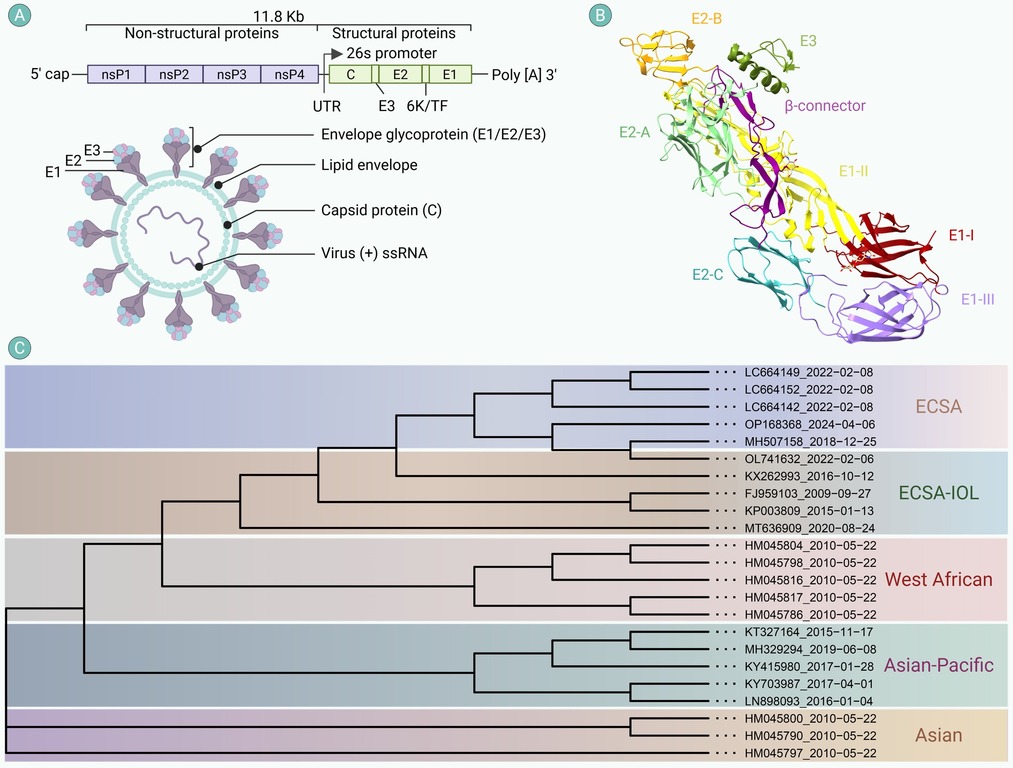
Figure 1.
Structural composition and phylogenetic relationships of CHIKV lineages
-
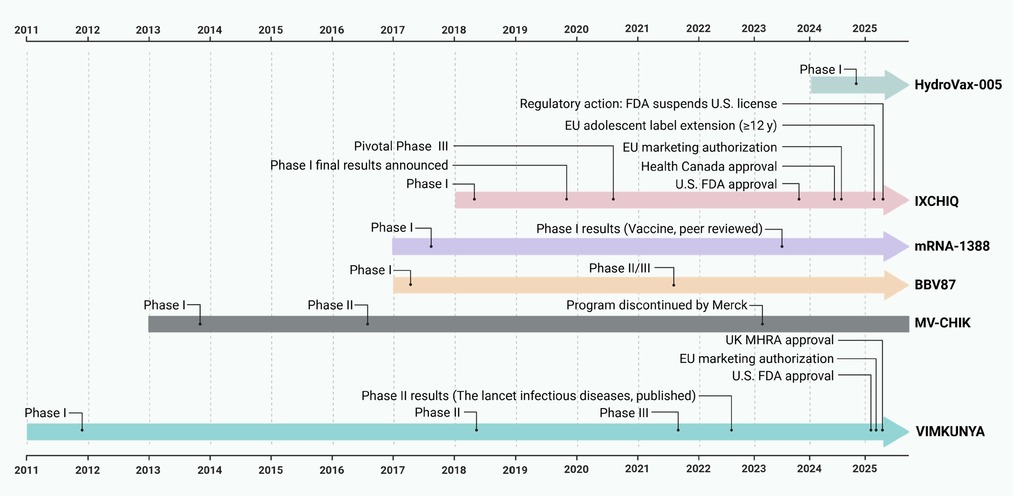
Figure 2.
Clinical development timelines (2011–2025) and regulatory milestones for CHIKV vaccine candidates.
-
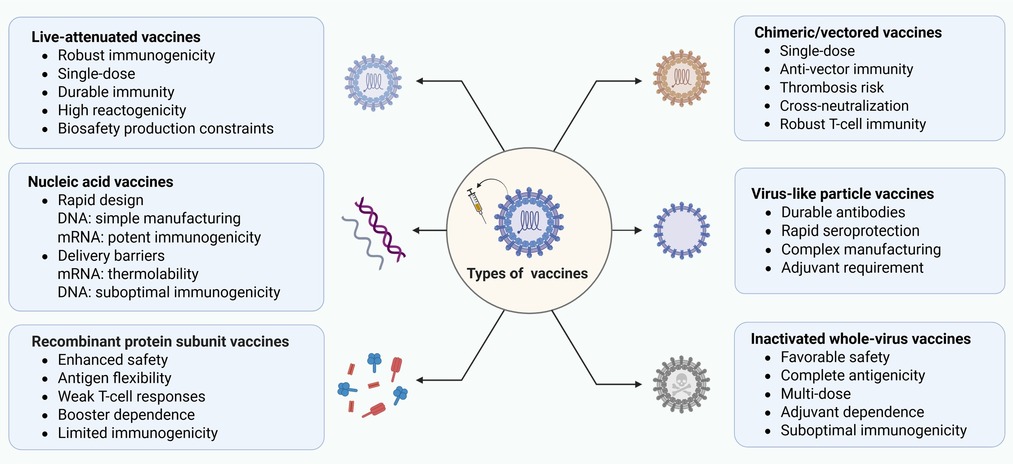
Figure 3.
Comparison of CHIKV vaccine platforms
-
Figure 4.
Strategies for broad-spectrum and next-generation CHIKV vaccines
