
Rising PM2.5 variability fuels mortality from pollution extremes
-
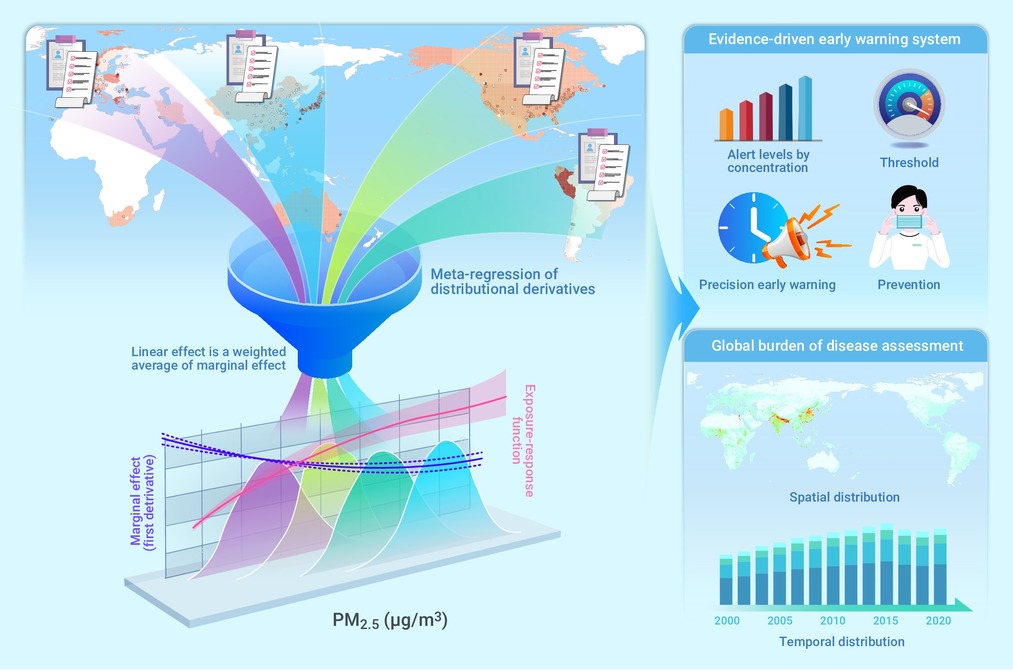
GRAPHICAL ABSTRACT
 DownLoad:
Full size image
DownLoad:
Full size image
-
PUBLIC SUMMARY
-
Growing PM2.5 variability across regions triggers extreme pollution and endangers public health.
A new method was developed for global evidence synthesis of non-linear health risks.
Short-term exposure to PM2.5 causes over 670,000 deaths globally each year.
Early warning systems are crucial to mitigate health impacts from extreme air pollution peaks.
-
-
ABSTRACT
Fine particulate matter (PM2.5) pollution is a leading cause of the global mortality burden, but public health risks from short-term fluctuations, in addition to long-term exposure, have been insufficiently studied. Potentially influenced by climate change, the daily variability of PM2.5 has significantly increased over the past 60 years, particularly in densely populated regions of East Asia, South Asia, and western North America. To quantify the short-term mortality burden exacerbated by this growing variability, we developed a novel method, the Meta-Regression of Distributional Derivatives (MR-ODDs), to construct nonlinear exposure-response relationships from published summary statistics without requiring individual-level data. Using this approach, we estimate that an average of 672,867 (95% CI: 579,452–740,680) deaths per year globally were attributable to short-term PM2.5 exposure between 2000 and 2023. The mortality burden is especially pronounced in regions where intensifying climate variability drives more frequent extreme pollution events. Western North America, in particular, has emerged as the region with the fastest-rising risk from such events. These findings indicate that extreme pollution events pose a new and growing threat to global public health, demanding a shift in policy from managing annual average concentrations to focusing on early warning and intervention for extreme pollution peaks. -

-
REFERENCES
[1] Cai W., Santoso A., Collins M., et al. (2021). Changing El Niño–Southern Oscillation in a warming climate. Nat. Rev. Earth Environ. 2:628−644. DOI:10.1038/s43017-021-00199-z [2] Cai W., Santoso A., Wang G., et al. (2015). ENSO and greenhouse warming. Nat. Clim. Change 5:849−859. DOI:10.1038/nclimate2743 [3] Newman R. and Noy I. (2023). The global costs of extreme weather that are attributable to climate change. Nat. Commun. 14. DOI:10.1038/s41467-023-41888-1 [4] Xu R. B., Yu P., Abramson M. J., et al. (2020). Wildfires, global climate change, and human health. N. Engl. J. Med. 383:2173−2181. DOI:10.1056/NEJMsr2028985 [5] Zhang H., Wang Y., Park T.-W., et al. (2017). Quantifying the relationship between extreme air pollution events and extreme weather events. Atmos. Res. 188:64−79. DOI:10.1016/j.atmosres.2016.11.010 [6] Easterling D. R., Meehl G. A., Parmesan C., et al. (2000). Climate extremes: Observations, modeling, and impacts. Science 289:2068−2074. DOI:10.1126/science.289.5487.2068 [7] Robinson W. A. (2021). Climate change and extreme weather: A review focusing on the continental United States. J. Air Waste Manag. Assoc. 71:1186−1209. DOI:10.1080/10962247.2021.1942319 [8] Stott P. (2016). How climate change affects extreme weather events. Science 352:1517−1518. DOI:10.1126/science.aaf7271 [9] Xue T., Guan T., Geng G., et al. (2021). Estimation of pregnancy losses attributable to exposure to ambient fine particles in south Asia: An epidemiological case-control study. Lancet Planet. Health 5:e15−e24. DOI:10.1016/S2542-5196(20)30268-0 [10] Di Q., Wang Y., Zanobetti A., et al. (2017). Air pollution and mortality in the medicare population. N. Engl. J. Med. 376:2513−2522. DOI:10.1056/NEJMoa1702747 [11] Shi L., Wu X., Danesh Yazdi M., et al. (2020). Long-term effects of PM2·5 on neurological disorders in the American Medicare population: A longitudinal cohort study. Lancet Planet. Health 4:e557−e565. DOI:10.1016/s2542-5196(20)30227-8 [12] Stafoggia M., Cesaroni G., Peters A., et al. (2014). Long-term exposure to ambient air pollution and incidence of cerebrovascular events: Results from 11 European Cohorts within the ESCAPE Project. Environ. Health Persp. 122:919−925. DOI:10.1289/ehp.1307301 [13] Wu X., Braun D., Schwartz J., et al. (2020). Evaluating the impact of long-term exposure to fine particulate matter on mortality among the elderly. Sci. Adv. 6:eaba5692. DOI:10.1126/sciadv.aba5692 [14] Xue T., Tong M., Li J., et al. (2022). Estimation of stillbirths attributable to ambient fine particles in 137 countries. Nat. Commun. 13:6950. DOI:10.1038/s41467-022-34250-4 [15] Yazdi M. D., Wang Y., Di Q., et al. (2021). Long-term effect of exposure to lower concentrations of air pollution on mortality among US Medicare participants and vulnerable subgroups: A doubly-robust approach. Lancet Planet. Health 5:E689−E697. DOI:10.1016/S2542-5196(21)00204-7 [16] Han Y., Xue T., Kelly F. J., et al. (2022). Association of PM (2.5) reduction with improved kidney function: A nationwide quasiexperiment among Chinese adults. Health Data Sci. 2022:9846805. DOI:10.34133/2022/9846805 [17] Kang N., Li P., Xue T., et al. (2024). Development of a method to determine the environmental burden of diseases and an application to identify factors driving changes in the number of PM(2.5)-related deaths in China between 2000 and 2010. Environ. Health (Wash) 2:642-650. DOI:10.1021/envhealth.4c00048 [18] Cai M., Su B., Hu G., et al. (2024). Long term exposure to PM<sub>2.5</sub> chemical components associated with prevalence of cardiovascular diseases in China. Innov. Med. 2:100077. DOI:10.59717/j.xinn-med.2024.100077 [19] Orellano P., Reynoso J., Quaranta N., et al. (2020). Short-term exposure to particulate matter (PM(10) and PM(2.5)), nitrogen dioxide (NO(2)), and ozone (O(3)) and all-cause and cause-specific mortality: Systematic review and meta-analysis. Environ. Int. 142:105876. DOI:10.1016/j.envint.2020.105876 [20] Yu W., Xu R., Ye T., et al. (2024). Estimates of global mortality burden associated with short-term exposure to fine particulate matter (PM2·5). Lancet Planet. Health 8:e146−e155. DOI:10.1016/s2542-5196(24)00003-2 [21] Liu C., Chen R., Sera F., et al. (2019). Ambient particulate air pollution and daily mortality in 652 cities. N. Engl. J. Med. 381:705−715. DOI:10.1056/NEJMoa1817364 [22] Chen R., Yin P., Meng X., et al. (2017). Fine particulate air pollution and daily mortality. A nationwide analysis in 272 Chinese cities. Am. J. Respir. Crit. Care Med. 196:73-81. DOI:10.1164/rccm.201609-1862OC [23] Hao H., Wang K., Wu G., et al. (2024). PM2.5 concentrations based on near-surface visibility in the Northern Hemisphere from 1959 to 2022. Earth Syst. Sci. Data 16:4051-4076. DOI:10.5194/essd-16-4051-2024 [24] Zhang W., Zhou T. and Wu P. (2024). Anthropogenic amplification of precipitation variability over the past century. Science 385:427−432. DOI:10.1126/science.adp0212 [25] Brown J. R., Moise A. F. and Colman R. A. (2017). Projected increases in daily to decadal variability of Asian-Australian monsoon rainfall. Geophys. Res. Lett. 44:5683−5690. DOI:10.1002/2017gl073217 [26] Pendergrass A. G., Knutti R., Lehner F., et al. (2017). Precipitation variability increases in a warmer climate. Sci. Rep. 7:17966. DOI:10.1038/s41598-017-17966-y [27] Zhang W., Furtado K., Wu P., et al. (2021). Increasing precipitation variability on daily-to-multiyear time scales in a warmer world. Sci. Adv. 7:eabf8021. DOI:10.1126/sciadv.abf8021 [28] Yitzhaki S. (1996). On using linear regressions in welfare economics. J. Bus. Econ. Stat. 14:478−486. DOI. DOI:10.2307/1392256 [29] Xu R. B., Ye T. T., Yue X., et al. (2023). Global population exposure to landscape fire air pollution from 2000 to 2019. Nature 621:521−529. DOI:10.1038/s41586-023-06398-6 [30] Li M., Fang W., Meng R., et al. (2023). The comparison of mortality burden between exposure to dry-cold events and wet-cold events: A nationwide study in China. Sci. Total Environ. 904:166859. DOI:10.1016/j.scitotenv.2023.166859 [31] Liu C., Chen R., Sera F., et al. (2023). Interactive effects of ambient fine particulate matter and ozone on daily mortality in 372 cities: Two stage time series analysis. BMJ 383:e075203. DOI:10.1136/bmj-2023-075203 [32] Madaniyazi L., Armstrong B., Tobias A., et al. (2024). Seasonality of mortality under climate change: A multicountry projection study. Lancet Planet. Health 8:e86−e94. DOI:10.1016/S2542-5196(23)00269-3 [33] Wu Y., Wen B., Gasparrini A., et al. (2024). Temperature frequency and mortality: Assessing adaptation to local temperature. Environ. Int. 187:108691. DOI:10.1016/j.envint.2024.108691 [34] van Donkelaar A., Hammer M. S., Bindle L., et al. (2021). Monthly global estimates of fine particulate matter and their uncertainty. Environ. Sci. Technol. 55:15287−15300. DOI:10.1021/acs.est.1c05309 [35] Balshi M. S., McGuirez A. D., Duffy P., et al. (2009). Assessing the response of area burned to changing climate in western boreal North America using a Multivariate Adaptive Regression Splines (MARS) approach. Global Change Biol. 15:578−600. DOI:10.1111/j.1365-2486.2008.01679.x [36] Flannigan M. D., Logan K. A., Amiro B. D., et al. (2005). Future area burned in Canada. Climatic Change 72:1−16. DOI:10.1007/s10584-005-5935-y [37] Jain P., Wang X. L. and Flannigan M. D. (2017). Trend analysis of fire season length and extreme fire weather in North America between 1979 and 2015. Int. J. Wildland Fire 26:1009−1020. DOI:10.1071/Wf17008 [38] Flannigan M. D., Wotton B. M., Marshall G. A., et al. (2016). Fuel moisture sensitivity to temperature and precipitation: Climate change implications. Climatic Change 134:59−71. DOI:10.1007/s10584-015-1521-0 [39] Abatzoglou J. T. and Williams A. P. (2016). Impact of anthropogenic climate change on wildfire across western US forests. P. Natl. Acad. Sci. U. S. A. 113:11770−11775. DOI:10.1073/pnas.1607171113 [40] Huang R. J., Zhang Y. L., Bozzetti C., et al. (2014). High secondary aerosol contribution to particulate pollution during haze events in China. Nature 514:218−222. DOI:10.1038/nature13774 [41] Yang Y. R., Liu X. G., Qu Y., et al. (2015). Formation mechanism of continuous extreme haze episodes in the megacity Beijing, China, in January 2013. Atmos. Res. 155:192−203. DOI:10.1016/j.atmosres.2014.11.023 [42] Chen H. P. and Wang H. J. (2015). Haze Days in North China and the associated atmospheric circulations based on daily visibility data from 1960 to 2012. J. Geophys. Res. Atmos. 120:5895−5909. DOI:10.1002/2015jd023225 [43] Zhang R. H., Li Q. and Zhang R. N. (2014). Meteorological conditions for the persistent severe fog and haze event over eastern China in January 2013. Sci. China Earth Sci. 57:26−35. DOI:10.1007/s11430-013-4774-3 [44] Niu F., Li Z., Li C., et al. (2010). Increase of wintertime fog in China: Potential impacts of weakening of the Eastern Asian monsoon circulation and increasing aerosol loading. J. Geophys. Res. Atmos. 115. DOI:10.1029/2009jd013484 [45] Xu M., Chang C. P., Fu C., et al. (2006). Steady decline of east Asian monsoon winds, 1969–2000: Evidence from direct ground measurements of wind speed. J. Geophys. Res. Atmos. 111. DOI:10.1029/2006jd007337 [46] Zou Y., Wang Y., Zhang Y., et al. (2017). Arctic sea ice, Eurasia snow, and extreme winter haze in China. Sci. Adv. 3:e1602751. DOI:10.1126/sciadv.1602751 [47] Ding Y. H. and Liu Y. J. (2014). Analysis of long-term variations of fog and haze in China in recent 50 years and their relations with atmospheric humidity. Sci. China Earth Sci. 57:36−46. DOI:10.1007/s11430-013-4792-1 [48] Peng W., Kim S. E., Purohit P., et al. (2021). Incorporating political-feasibility concerns into the assessment of India's clean-air policies. One Earth 4:1163−1174. DOI:10.1016/j.oneear.2021.07.004 [49] Xie Y. Y., Zhou M., Hunt K. M. R., et al. (2024). Recent PM2.5 air quality improvements in India benefited from meteorological variation. Nat. Sustain. 7:983-993. DOI:10.1038/s41893-024-01366-y [50] Zhou M., Xie Y., Wang C., et al. (2024). Impacts of current and climate induced changes in atmospheric stagnation on Indian surface PM(2.5) pollution. Nat. Commun. 15:7448. DOI:10.1038/s41467-024-51462-y [51] Kawano A., Kelp M., Qiu M., et al. (2025). Improved daily PM(2.5) estimates in India reveal inequalities in recent enhancement of air quality. Sci. Adv. 11:eadq1071. DOI:10.1126/sciadv.adq1071 [52] Kumar R., Barth M. C., Pfister G. G., et al. (2018). How will air quality change in South Asia by 2050. J. Geophys. Res. Atmos. 123:1840−1864. DOI:10.1002/2017jd027357 [53] Sharples J. J., Cary G. J., Fox-Hughes P., et al. (2016). Natural hazards in Australia: Extreme bushfire. Climatic Change 139:85−99. DOI:10.1007/s10584-016-1811-1 [54] Cruz M. G., Sullivan A. L., Gould J. S., et al. (2012). Anatomy of a catastrophic wildfire: The Black Saturday Kilmore East fire in Victoria, Australia. Forest Ecol. Manag. 284:269−285. DOI:10.1016/j.foreco.2012.02.035 [55] Ndalila M. N., Williamson G. J. and Bowman D. M. J. S. (2018). Geographic patterns of fire severity following an extreme eucalyptus forest fire in Southern Australia: 2013 Forcett-Dunalley Fire. Fire 1. DOI:10.3390/fire1030040. [56] van Oldenborgh G. J., Krikken F., Lewis S., et al. (2021). Attribution of the Australian bushfire risk to anthropogenic climate change. Nat. Hazard Earth Sys. 21:941−960. DOI:10.5194/nhess-21-941-2021 [57] Li Y., Tong D., Ma S., et al. (2021). Dominance of wildfires impact on air quality exceedances during the 2020 record‐breaking wildfire season in the United States. Geophys. Res. Lett. 48. DOI:10.1029/2021gl094908 [58] Keeley J. E. and Syphard A. D. (2021). Large California wildfires: 2020 fires in historical context. Fire Ecol. 17. DOI:10.1186/s42408-021-00110-7 [59] Crist M. R. (2023). Rethinking the focus on forest fires in federal wildland fire management: Landscape patterns and trends of non-forest and forest burned area. J. Environ. Manag. 327. DOI:10.1016/j.jenvman.2022.116718 [60] Burnett R. T., Pope C. A. 3rd, Ezzati M., et al. (2014). An integrated risk function for estimating the global burden of disease attributable to ambient fine particulate matter exposure. Environ. Health Perspect. 122:397−403. DOI:10.1289/ehp.1307049 [61] Samet J. M., Dominici F., Curriero F. C., et al. (2000). Fine particulate air pollution and mortality in 20 U.S. cities, 1987-1994. N. Engl. J. Med. 343:1742-1749. DOI:10.1056/NEJM200012143432401 [62] Schwartz J. (2000). Harvesting and long term exposure effects in the relation between air pollution and mortality. Am. J. Epidemiol. 151:440−448. DOI:10.1093/oxfordjournals.aje.a010228 [63] Yang Q. and Dong X. (2024). Air pollution and defensive behavior: Evidence from transaction data in China. PLoS One 19:e0307295. DOI:10.1371/journal.pone.0307295 [64] Li T., Guo Y., Liu Y., et al. (2019). Estimating mortality burden attributable to short-term PM(2.5) exposure: A national observational study in China. Environ. Int. 125:245-251. DOI:10.1016/j.envint.2019.01.073 -
ABOUT THIS ARTICLE
Cite this article:
Deng J., Zhou P., Guo J., et al. (2026). Rising PM2.5 variability fuels mortality from pollution extremes. The Innovation Medicine 4:100238. https://doi.org/10.59717/j.xinn-med.2026.100238
Welcome!
To request copyright permission to republish or share portions of our works, please visit Copyright Clearance Center's (CCC) Marketplace website at marketplace.copyright.com.
Export File
Citation
Deng J., Zhou P., Guo J., et al. (2026). Rising PM2.5 variability fuels mortality from pollution extremes. The Innovation Medicine 4:100238. https://doi.org/10.59717/j.xinn-med.2026.100238

Format
Content
-
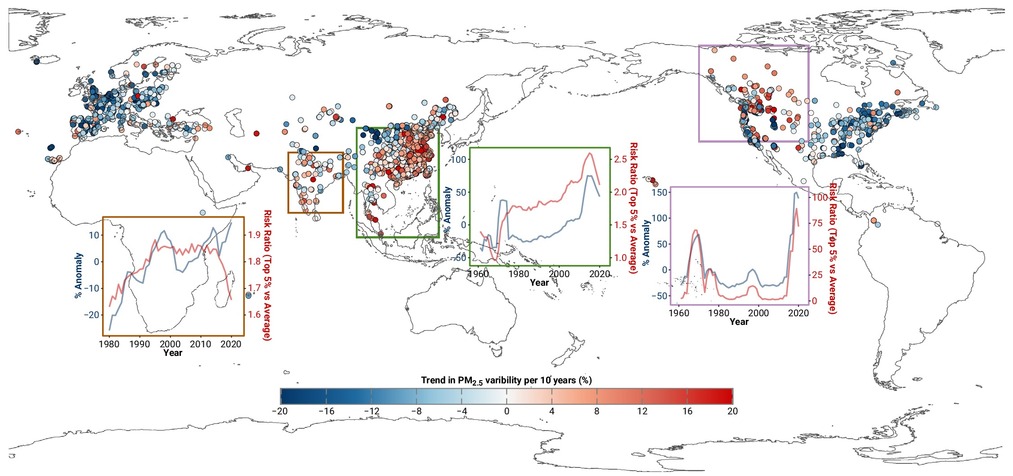
Figure 1.
Trend in daily PM2.5 variability, 1961-2020
-
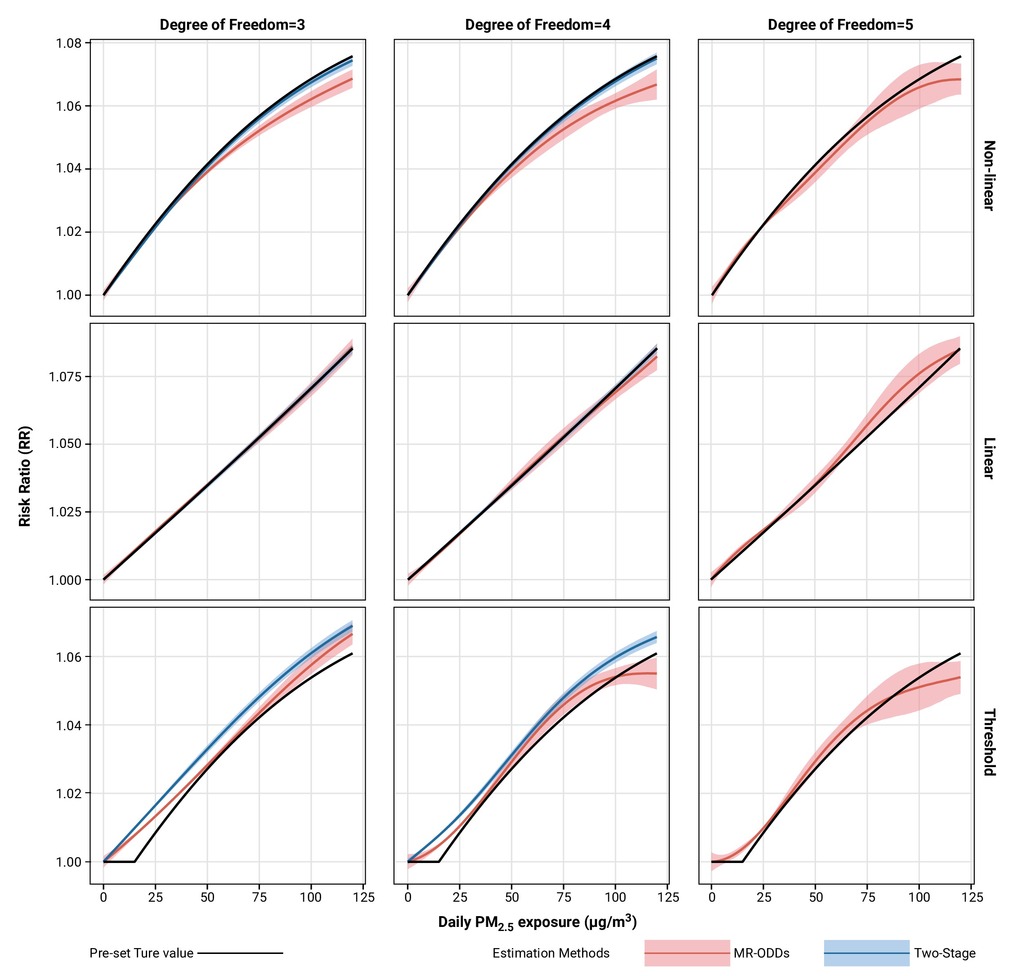
Figure 2.
Performance of meta-regression of distributional derivatives (MR-ODDs) method in simulation
-
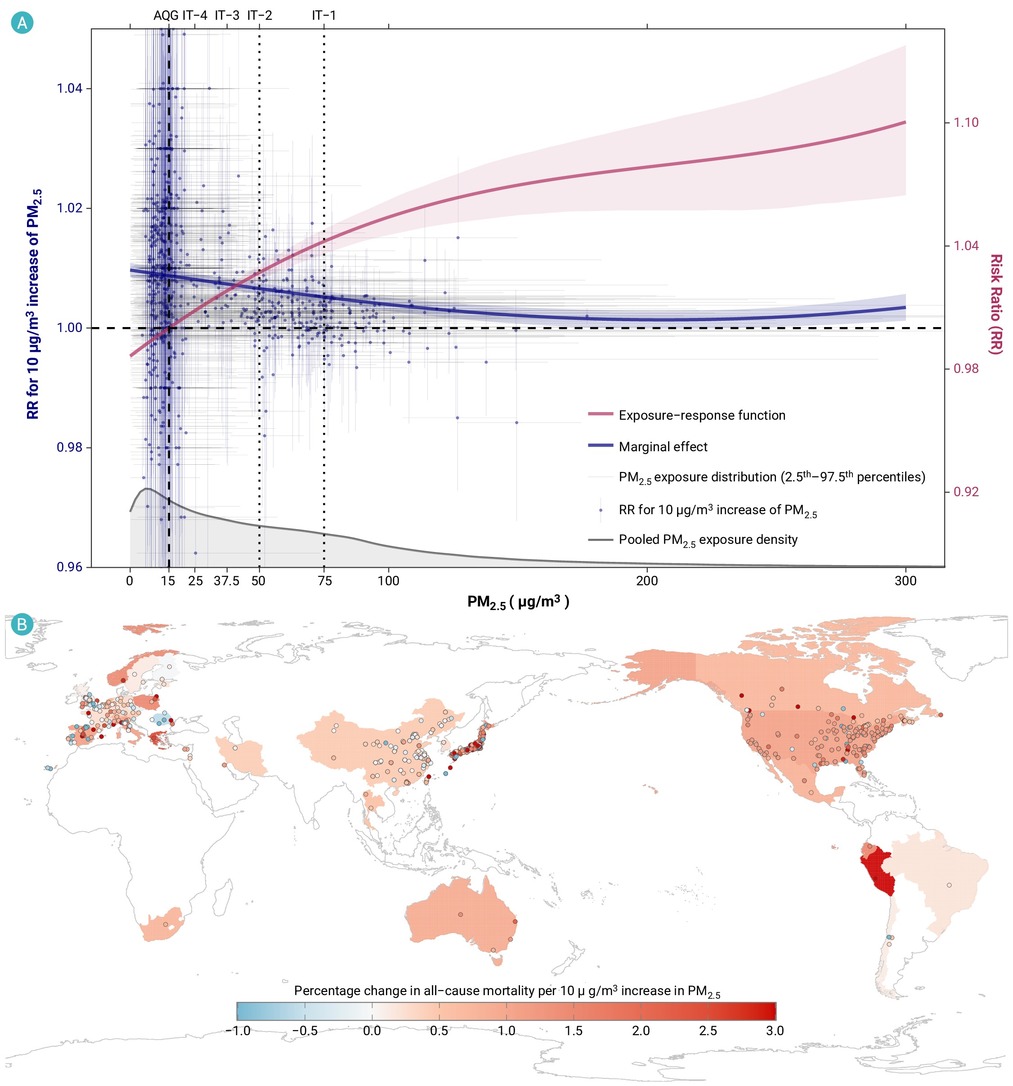
Figure 3.
Exposure-response function derived by the meta-regression of distributional derivatives (MR-ODDs) method
-
Figure 4.
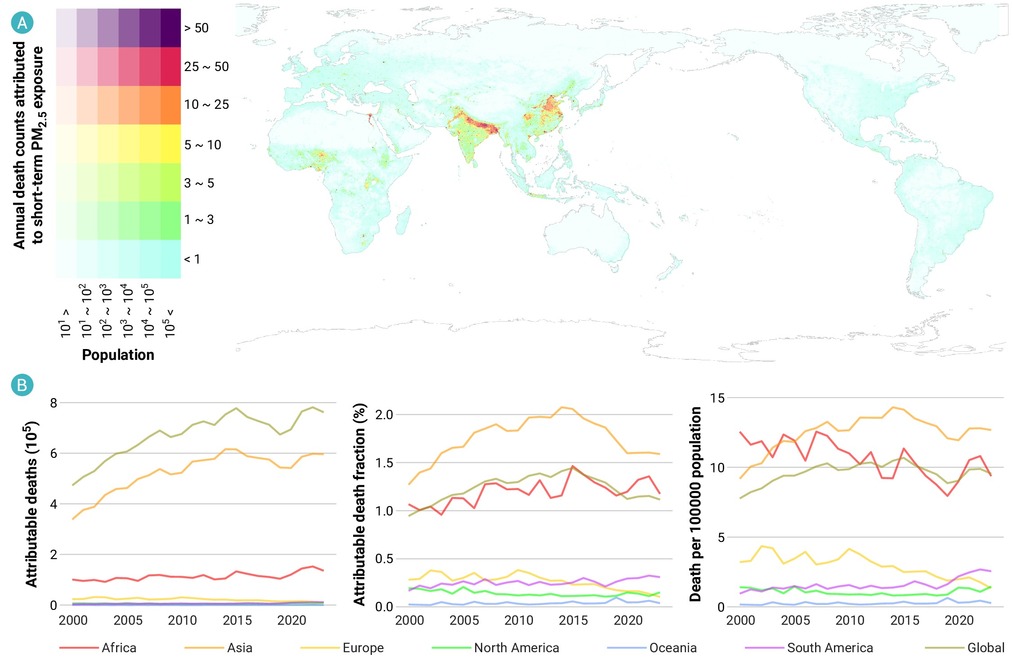
Spatiotemporal trends in deaths attributable to short-term PM2.5 exposure
-
Figure 5.
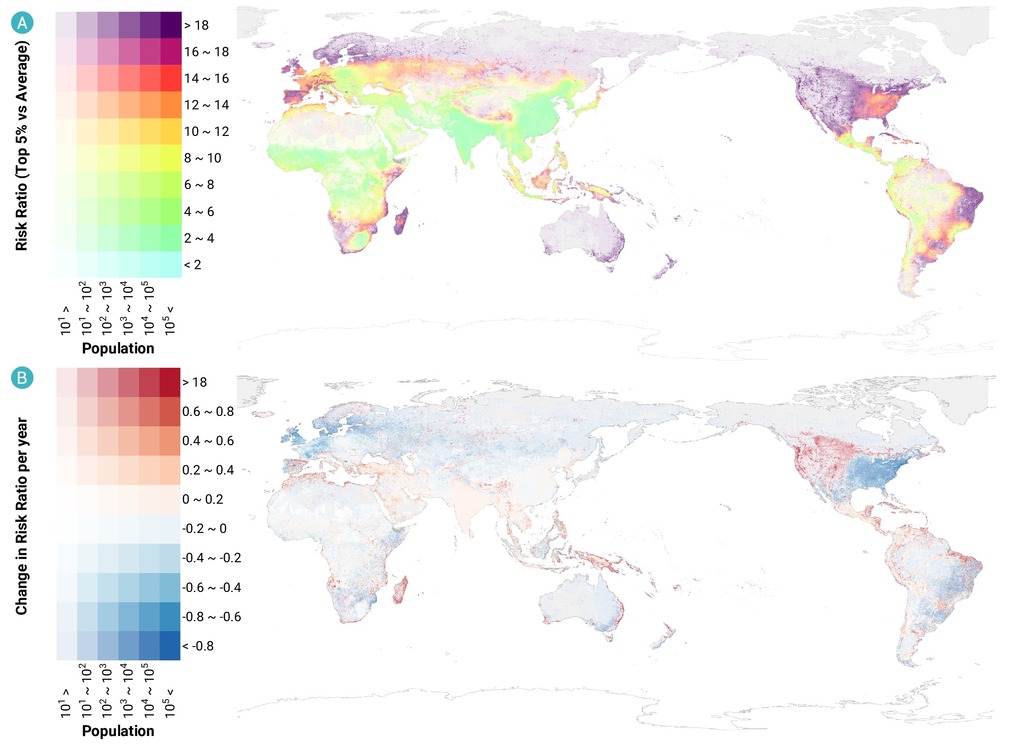
Contribution from top 5% pollution days to PM2.5-related deaths and its spatiotemporal trends, 2000-2023
-
Figure 6.
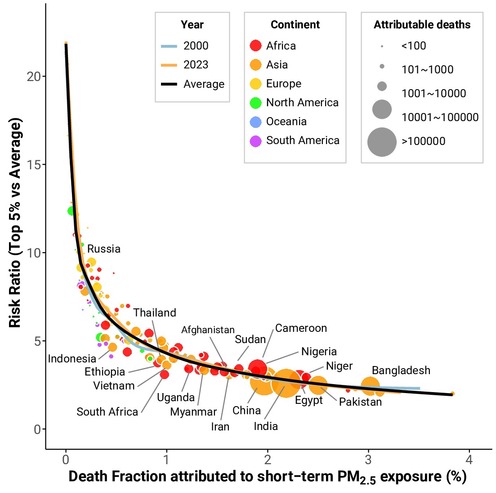
The relationship between the risk ratio and death fraction attributable to short-term PM2.5 exposure from 2000 to 2023
