
Challenges, advances and future directions in nutritional epidemiology
-
GRAPHICAL ABSTRACT
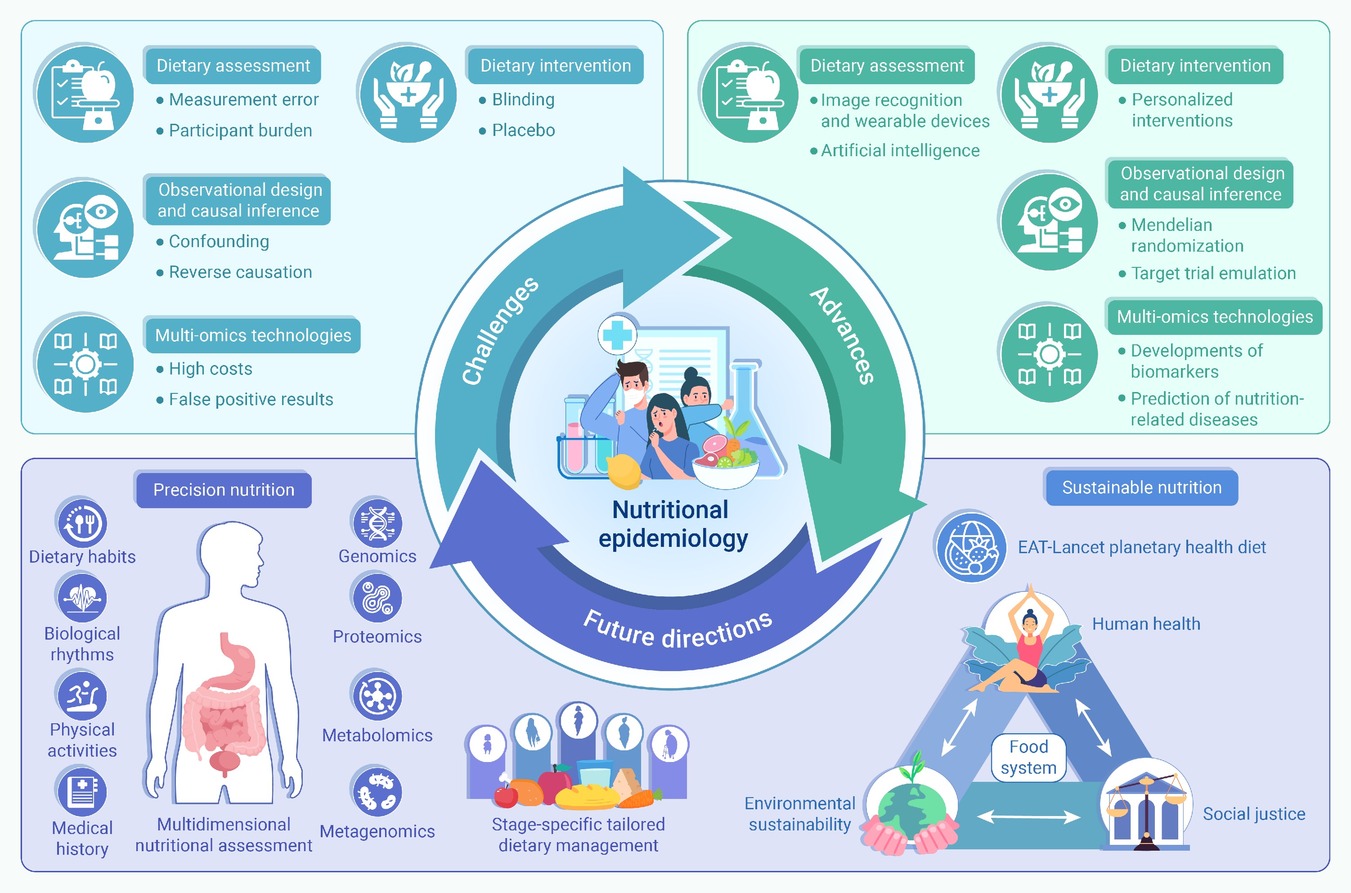
 DownLoad:
Full size image
DownLoad:
Full size image
-
PUBLIC SUMMARY
-
Key challenges in nutritional epidemiology include dietary assessment, intervention, and causal inference.
Advances like multi-omics and artificial intelligence improve exposure assessment and mechanistic insight.
Future directions integrate technology, nutrition, and environment on a broad scale.
-
-
ABSTRACT
Nutritional epidemiology is an interdisciplinary field that uses epidemiological methods to study diet-disease relationships in humans at the population level. It provides essential evidence to inform dietary guidelines, guide nutritional policies, and ultimately enhance human well-being. Over the years, nutritional epidemiology has achieved landmark contributions, including establishing the preventive role of folic acid in neural tube defects and revealing the harmful effects of trans fatty acids and sugar-sweetened beverages. Yet, the field faces persistent methodological and translational challenges, particularly in dietary assessment, dietary intervention implementation, and causal inference for complex diet-disease relationships. Recent technological advances are, however, catalyzing progress in exposure assessments and mechanistic insights. Simultaneously, emerging paradigms such as precision nutrition and sustainable nutrition are further expanding its scope. This review offers an integrated summary of these prevailing challenges, advancements, and emerging directions in nutritional epidemiology to shape future research efforts.-
Keywords:
- Nutritional epidemiology /
- Precision nutrition /
- Sustainable nutrition
-

-
REFERENCES
[1] AGlobal burden and strength of evidence for 88 risk factors in 204 countries and 811 subnational locations, 1990-2021: A systematic analysis for the Global Burden of Disease Study 2021. (2024). Lancet 403:2162-2203. DOI:10.1016/s0140-6736(24)00933-4 [2] Health effects of dietary risks in 195 countries, 1990-2017: A systematic analysis for the Global Burden of Disease Study 2017. (2019). Lancet 393:1958-1972. DOI:10.1016/s0140-6736(19)30041-8. [3] Mozaffarian D., Blanck H. M., Garfield K. M., et al. (2022). A Food is Medicine approach to achieve nutrition security and improve health. Nat. Med. 28: 2238−2240. DOI:10.1038/s41591-022-02027-3 [4] Tessier A. J., Wang F., Korat A. A., et al. (2025). Optimal dietary patterns for healthy aging. Nat. Med. 31:1644−1652. DOI:10.1038/s41591-025-03570-5 [5] Willett W. (2012). Nutritional epidemiology (3rd edn). Willett W. (ed). Oxford University Press, pp:1–529. DOI:10.1093/acprof:oso/9780199754038.001.0001 [6] Smithells R. W., Sheppard S., Schorah C. J., et al. (1980). Possible prevention of neural-tube defects by periconceptional vitamin supplementation. Lancet 1:339−340. DOI:10.1016/s0140-6736(80)90886-7 [7] Honein M. A., Paulozzi L. J., Mathews T. J., et al. (2001). Impact of folic acid fortification of the US food supply on the occurrence of neural tube defects. JAMA 285:2981−2986. DOI:10.1001/jama.285.23.2981 [8] Mozaffarian D., Katan M. B., Ascherio A., et al. (2006). Trans fatty acids and cardiovascular disease. N. Engl. J. Med. 354:1601−1613. DOI:10.1056/NEJMra054035 [9] World Health Organization. (2018). WHO plan to eliminate industrially-produced trans-fatty acids from global food supply. https://www.who.int/news/item/14-05-2018-who-plan-to-eliminate-industrially-produced-trans-fatty-acids-from-global-food-supply [10] Pacheco L. S., Tobias D. K., Haslam D. E., et al. (2025). Sugar-sweetened or artificially sweetened beverage consumption, physical activity and risk of type 2 diabetes in US adults. Diabetologia 68:792−800. DOI:10.1007/s00125-024-06351-w [11] Pacheco L. S., Tobias D. K., Li Y., et al. (2024). Sugar-sweetened or artificially-sweetened beverage consumption, physical activity, and risk of cardiovascular disease in adults: a prospective cohort study. Am. J. Clin. Nutr. 119:669−681. DOI:10.1016/j.ajcnut.2024.01.001 [12] World Health Organization. (2023). Global report on the use of sugar-sweetened beverage taxes, 2023. https://www.who.int/publications/i/item/9789240084995 [13] Lane M. M., Gamage E., Du S., et al. (2024). Ultra-processed food exposure and adverse health outcomes: Umbrella review of epidemiological meta-analyses. BMJ 384:e077310. DOI:10.1136/bmj-2023-077310 [14] World Health Organization. (2025). Call for experts to develop a WHO guideline on consumption of ultra-processed foods. https://www.who.int/news-room/articles-detail/call-for-experts-to-develop-a-who-guideline-on-consumption-of-ultra-processed-foods [15] Scrinis G., Popkin B. M., Corvalan C., et al. (2025). Policies to halt and reverse the rise in ultra-processed food production, marketing, and consumption. Lancet 406:2685−2702. DOI:10.1016/S0140-6736(25)01566-1 [16] Zhang F. F., Barr S. I., McNulty H., et al. (2020). Health effects of vitamin and mineral supplements. BMJ 369: m2511. DOI:10.1136/bmj.m2511 [17] Libera J., Iłowiecka K. and Stasiak D. (2021). Consumption of processed red meat and its impact on human health: A review. Int. J. Food Sci. Technol. 56:6115−6123. DOI:10.1111/ijfs.15270 [18] Satija A., Yu E., Willett W. C., et al. (2015). Understanding nutritional epidemiology and its role in policy. Adv. Nutr. 6:5−18. DOI:10.3945/an.114.007492 [19] Wadell A. T., Bärebring L., Hulander E., et al. (2023). Dietary biomarkers and food records indicate compliance to study diets in the ADIRA (Anti-inflammatory Diet In Rheumatoid Arthritis) trial. Front. Nutr. 10:1209787. DOI:10.3389/fnut.2023.1209787 [20] Murai U., Tajima R., Matsumoto M., et al. (2023). Validation of dietary intake estimated by web-based dietary assessment methods and usability using dietary records or 24-h dietary recalls: A scoping review. Nutrients 15:1816. DOI:10.3390/nu15081816 [21] Lentjes M. A., McTaggart A., Mulligan A. A., et al. (2014). Dietary intake measurement using 7 d diet diaries in British men and women in the European prospective investigation into cancer-norfolk study: A focus on methodological issues. Br. J. Nutr. 111:516−526. DOI:10.1017/s0007114513002754 [22] Zipf G., Chiappa M., Porter K. S., et al. (2013). National health and nutrition examination survey: Plan and operations, 1999-2010. Vital. Health Stat. 1:1−37. [23] Cui Q., Xia Y., Wu Q., et al. (2023). Validity of the food frequency questionnaire for adults in nutritional epidemiological studies: A systematic review and meta-analysis. Crit. Rev. Food Sci. Nutr. 63:1670−1688. DOI:10.1080/10408398.2021.1966737 [24] Rimm E. B., Giovannucci E. L., Stampfer M. J., et al. (1992). Reproducibility and validity of an expanded self-administered semiquantitative food frequency questionnaire among male health professionals. Am. J. Epidemiol. 135:1114-1126; discussion 1127-1136. DOI:10.1093/oxfordjournals.aje.a116211 [25] Bao Y., Bertoia M. L., Lenart E. B., et al. (2016). Origin, methods, and evolution of the three nurses' health studies. Am. J. Public Health 106:1573−1581. DOI:10.2105/ajph.2016.303338 [26] Landberg R., Karra P., Hoobler R., et al. (2024). Dietary biomarkers-an update on their validity and applicability in epidemiological studies. Nutr. Rev. 82:1260−1280. DOI:10.1093/nutrit/nuad119 [27] Al-Delaimy W. K., Ferrari P., Slimani N., et al. (2005). Plasma carotenoids as biomarkers of intake of fruits and vegetables: Individual-level correlations in the European Prospective Investigation into Cancer and Nutrition (EPIC). Eur. J. Clin. Nutr. 59:1387−1396. DOI:10.1038/sj.ejcn.1602252 [28] Edmands W. M., Ferrari P., Rothwell J. A., et al. (2015). Polyphenol metabolome in human urine and its association with intake of polyphenol-rich foods across European countries. Am. J. Clin. Nutr. 102:905−913. DOI:10.3945/ajcn.114.101881 [29] Subar A. F., Kirkpatrick S. I., Mittl B., et al. (2012). The Automated Self-Administered 24-hour dietary recall (ASA24): A resource for researchers, clinicians, and educators from the National Cancer Institute. J. Acad. Nutr. Diet 112:1134−1137. DOI:10.1016/j.jand.2012.04.016 [30] Park Y., Dodd K. W., Kipnis V., et al. (2018). Comparison of self-reported dietary intakes from the Automated Self-Administered 24-h recall, 4-d food records, and food-frequency questionnaires against recovery biomarkers. Am. J. Clin. Nutr. 107:80−93. DOI:10.1093/ajcn/nqx002 [31] Dalakleidi K. V., Papadelli M., Kapolos I., et al. (2022). Applying image-based food-recognition systems on dietary assessment: A systematic review. Adv. Nutr. 13:2590−2619. DOI:10.1093/advances/nmac078 [32] Ma P., Lau C. P., Yu N., et al. (2021). Image-based nutrient estimation for Chinese dishes using deep learning. Food Res. Int. 147:110437. DOI:10.1016/j.foodres.2021.110437 [33] Chotwanvirat P., Prachansuwan A., Sridonpai P., et al. (2024). Advancements in using AI for dietary assessment based on food images: Scoping review. J. Med. Internet Res. 26:e51432. DOI:10.2196/51432 [34] Yan R., Luo H., Lu J., et al. (2025). DietAI24 as a framework for comprehensive nutrition estimation using multimodal large language models. Commun. Med. (Lond) 5:458. DOI:10.1038/s43856-025-01159-0 [35] Sharma R., Gaur S. S., Ajay A., et al. (2025). Artificial intelligence and precision nutrition: Tailoring diets with data-driven insights. Nutrire 50:56. DOI:10.1186/s41110-025-00360-4 [36] Cohen Y., Jansen T., Onwuka S., et al. (2026). Advances and opportunities in measuring dietary intake: From omics to AI. Nat Metab. 8:413-432. DOI:10.1038/s42255-026-01494-z [37] Wang M., Yang Y., Min J., et al. (2022). A wearable electrochemical biosensor for the monitoring of metabolites and nutrients. Nat. Biomed. Eng. 6:1225−1235. DOI:10.1038/s41551-022-00916-z [38] Lorestani F., Zhang X., Abdullah A. M., et al. (2023). A highly sensitive and long-term stable wearable patch for continuous analysis of biomarkers in sweat. Adv. Funct. Mater. 33:2306117. DOI:10.1002/adfm.202306117 [39] Bakhshandeh F., Zheng H., Barra N. G., et al. (2024). Wearable aptalyzer integrates microneedle and electrochemical sensing for in vivo monitoring of glucose and lactate in live animals. Adv. Mater. 36:e2313743. DOI:10.1002/adma.202313743 [40] Tong X., Jiang T., Yang J., et al. (2025). Continuous glucose monitoring (CGM) system based on protein hydrogel anti-biofouling coating for long-term accurate and point-of-care glucose monitoring. Biosens. Bioelectron. 277:117307. DOI:10.1016/j.bios.2025.117307 [41] Tin A. and Köttgen A. (2021). Mendelian randomization analysis as a tool to gain insights into causes of diseases: A primer. J. Am. Soc. Nephrol. 32:2400−2407. DOI:10.1681/asn.2020121760 [42] Hernán M. A., Dahabreh I. J., Dickerman B. A., et al. (2025). The target trial framework for causal inference from observational data: Why and when is it helpful. Ann. Intern. Med. 178:402−407. DOI:10.7326/annals-24-01871 [43] Delgado-Lista J., Alcala-Diaz J. F., Torres-Peña J. D., et al. (2022). Long-term secondary prevention of cardiovascular disease with a Mediterranean diet and a low-fat diet (CORDIOPREV): A randomised controlled trial. Lancet 399:1876−1885. DOI:10.1016/s0140-6736(22)00122-2 [44] Ruiz-Canela M., Corella D., Martínez-González M., et al. (2025). Comparison of an energy-reduced Mediterranean diet and physical activity versus an ad libitum Mediterranean diet in the prevention of type 2 diabetes : A secondary analysis of a randomized controlled trial. Ann. Intern. Med. 178:1378−1389. DOI:10.7326/annals-25-00388 [45] Tobias D. K., Pradhan A. D., Duran E. K., et al. (2025). Vitamin D supplementation vs. placebo and incident type 2 diabetes in an ancillary study of the randomized Vitamin D and Omega-3 Trial. Nat. Commun. 16:3332. DOI:10.1038/s41467-025-58721-6 [46] Neale R. E., Baxter C., Romero B. D., et al. (2022). The D-Health Trial: A randomised controlled trial of the effect of vitamin D on mortality. Lancet Diabetes Endocrinol. 10:120−128. DOI:10.1016/s2213-8587(21)00345-4 [47] Virtanen J. K., Nurmi T., Aro A., et al. (2022). Vitamin D supplementation and prevention of cardiovascular disease and cancer in the finnish Vitamin D trial: A randomized controlled trial. Am. J. Clin. Nutr. 115:1300−1310. DOI:10.1093/ajcn/nqab419 [48] Staudacher H. M., Irving P. M., Lomer M. C. E., et al. (2017). The challenges of control groups, placebos and blinding in clinical trials of dietary interventions. Proc. Nutr. Soc. 76:628. DOI:10.1017/s0029665117002816 [49] Crichton G. E., Howe P. R., Buckley J. D., et al. (2012). Long-term dietary intervention trials: critical issues and challenges. Trials 13:111. DOI:10.1186/1745-6215-13-111 [50] Lawrence M., Wingrove K., Naude C., et al. (2016). Evidence synthesis and translation for nutrition interventions to combat micronutrient deficiencies with particular focus on food fortification. Nutrients 8:555. DOI:10.3390/nu8090555. [51] Petersen M. C., Gallop M. R., Flores Ramos S., et al. (2022). Complex physiology and clinical implications of time-restricted eating. Physiol. Rev. 102:1991−2034. DOI:10.1152/physrev.00006.2022 [52] Parrotta M. E., Colangeli L., Scipione V., et al. (2025). Time restricted eating: A valuable alternative to calorie restriction for addressing obesity. Curr. Obes. Rep. 14:17. DOI:10.1007/s13679-025-00609-z [53] Sutton E. F., Beyl R., Early K. S., et al. (2018). Early time-restricted feeding improves insulin sensitivity, blood pressure, and oxidative stress even without weight loss in men with prediabetes. Cell Metab. 27:1212−1221.e1213. DOI:10.1016/j.cmet.2018.04.010 [54] Pavlou V., Cienfuegos S., Lin S., et al. (2023). Effect of time-restricted eating on weight loss in adults with type 2 diabetes: A randomized clinical trial. JAMA Netw. Open 6:e2339337. DOI:10.1001/jamanetworkopen.2023.39337 [55] Liu D., Huang Y., Huang C., et al. (2022). Calorie restriction with or without time-restricted eating in weight loss. N. Engl. J. Med. 386:1495−1504. DOI:10.1056/NEJMoa2114833 [56] Santos H. O., Genario R., Tinsley G. M., et al. (2022). A scoping review of intermittent fasting, chronobiology, and metabolism. Am. J. Clin. Nutr. 115:991−1004. DOI:10.1093/ajcn/nqab433 [57] Varady K. A., Cienfuegos S., Ezpeleta M., et al. (2022). Clinical application of intermittent fasting for weight loss: Progress and future directions. Nat. Rev. Endocrinol. 18:309−321. DOI:10.1038/s41574-022-00638-x [58] Schwingshackl L., Zähringer J., Nitschke K., et al. (2021). Impact of intermittent energy restriction on anthropometric outcomes and intermediate disease markers in patients with overweight and obesity: Systematic review and meta-analyses. Crit. Rev. Food Sci. Nutr. 61:1293−1304. DOI:10.1080/10408398.2020.1757616 [59] Paolassini-Guesnier P., Van Beekum M., Kesse-Guyot E., et al. (2025). Mindful eating is associated with a better diet quality in the NutriNet-Santé study. Appetite 206:107797. DOI:10.1016/j.appet.2024.107797 [60] Zainol Hisham N. R. J. and Yulita (2025). The relationships between daily mindful eating behavior and physical and psychological outcomes among university students: the moderating role of eating attitudes. Mindfulness 16:2270-2281. DOI:10.1007/s12671-025-02623-7 [61] Livingstone K. M., Celis-Morales C., Navas-Carretero S., et al. (2021). Personalised nutrition advice reduces intake of discretionary foods and beverages: Findings from the Food4Me randomised controlled trial. Int. J. Behav. Nutr. Phys. Act. 18:70. DOI:10.1186/s12966-021-01136-5 [62] Bermingham K. M., Linenberg I., Polidori L., et al. (2024). Effects of a personalized nutrition program on cardiometabolic health: A randomized controlled trial. Nat. Med. 30:1888−1897. DOI:10.1038/s41591-024-02951-6 [63] Ben-Yacov O., Godneva A., Rein M., et al. (2021). Personalized postprandial glucose response-targeting diet versus mediterranean diet for glycemic control in prediabetes. Diabetes Care 44:1980−1991. DOI:10.2337/dc21-0162 [64] Neal B., Wu Y., Feng X., et al. (2021). Effect of salt substitution on cardiovascular events and death. N. Engl. J. Med. 385:1067−1077. DOI:10.1056/NEJMoa2105675 [65] Yuan Y., Jin A., Neal B., et al. (2023). Salt substitution and salt-supply restriction for lowering blood pressure in elderly care facilities: A cluster-randomized trial. Nat. Med. 29:973−981. DOI:10.1038/s41591-023-02286-8 [66] Zhang X., Yuan Y., Li C., et al. (2024). Effect of a salt substitute on incidence of hypertension and hypotension among normotensive adults. J. Am. Coll. Cardiol. 83:711−722. DOI:10.1016/j.jacc.2023.12.013 [67] U.S. Department of Health and Human Services, U.S. Department of Agriculture. (2026). Dietary guidelines for Americans (10th ed.). https://cdn.realfood.gov/DGA.pdf [68] Hill A. B. (1965). The environment and disease: Association or causation. Proc. R. Soc. Med. 58:295−300. DOI:10.1177/003591576505800503 [69] Pearl J. (1995). Causal diagrams for empirical research. Biometrika 82:669−688. DOI:10.2307/2337329 [70] Li X., Cheng S., Cheng J., et al. (2022). Habitual coffee consumption increases risk of primary open-angle glaucoma: A Mendelian randomization study. Ophthalmology 129:1014−1021. DOI:10.1016/j.ophtha.2022.04.027 [71] Domenighetti C., Sugier P. E., Ashok Kumar Sreelatha A., et al. (2022). Dairy intake and Parkinson's disease: A Mendelian randomization study. Mov. Disord. 37:857−864. DOI:10.1002/mds.28902 [72] Shi R., Wang L., Burgess S., et al. (2024). MR-SPLIT: A novel method to address selection and weak instrument bias in one-sample Mendelian randomization studies. PLoS Genet. 20:e1011391. DOI:10.1371/journal.pgen.1011391 [73] Wang Y., Li T., Fu L., et al. (2021). A novel method for Mendelian randomization analyses with pleiotropy and linkage disequilibrium in genetic variants from individual data. Front. Genet. 12: 634394. DOI:10.3389/fgene.2021.634394 [74] Merino J. and Tobias D. K. (2022). The unique challenges of studying the genetics of diet and nutrition. Nat. Med. 28:221−222. DOI:10.1038/s41591-021-01626-w [75] Bonekamp N. E., Cruijsen E., Visseren F. L., et al. (2023). Compliance with the DASH diet and risk of all-cause and cardiovascular mortality in patients with myocardial infarction. Clin. Nutr. 42:1418−1426. DOI:10.1016/j.clnu.2023.06.033 [76] Jin X., Ding C., Hunter D. J., et al. (2022). Effectiveness of vitamin D supplementation on knee osteoarthritis - a target trial emulation study using data from the Osteoarthritis Initiative cohort. Osteoarthr. Cartil. 30:1495−1505. DOI:10.1016/j.joca.2022.06.005 [77] Zheng P., Afshin A., Biryukov S., et al. (2022). The Burden of Proof studies: Assessing the evidence of risk. Nat. Med. 28:2038−2044. DOI:10.1038/s41591-022-01973-2 [78] Haile D., Harding K. L., McLaughlin S. A., et al. (2025). Health effects associated with consumption of processed meat, sugar-sweetened beverages and trans fatty acids: A Burden of Proof study. Nat. Med. 31:2244−2254. DOI:10.1038/s41591-025-03775-8 [79] Lescinsky H., Afshin A., Ashbaugh C., et al. (2022). Health effects associated with consumption of unprocessed red meat: A Burden of Proof study. Nat. Med. 28:2075−2082. DOI:10.1038/s41591-022-01968-z [80] Stanaway J. D., Afshin A., Ashbaugh C., et al. (2022). Health effects associated with vegetable consumption: A Burden of Proof study. Nat. Med. 28:2066−2074. DOI:10.1038/s41591-022-01970-5 [81] Singar S., Nagpal R., Arjmandi B. H., et al. (2024). Personalized nutrition: Tailoring dietary recommendations through genetic insights. Nutrients 16:2673. DOI:10.3390/nu16162673 [82] Lal M. K., Sharma E., Tiwari R. K., et al. (2022). Nutrient-mediated perception and signalling in human metabolism: A perspective of nutrigenomics. Int. J. Mol. Sci. 23:11305. DOI:10.3390/ijms231911305 [83] Abdullah M. M., Jones P. J. and Eck P. K. (2015). Nutrigenetics of cholesterol metabolism: Observational and dietary intervention studies in the postgenomic era. Nutr. Rev. 73:523−543. DOI:10.1093/nutrit/nuv016 [84] Qi Q., Chu A. Y., Kang J. H., et al. (2012). Sugar-sweetened beverages and genetic risk of obesity. N. Engl. J. Med. 367:1387−1396. DOI:10.1056/NEJMoa1203039 [85] Zhu K., Li R., Yao P., et al. (2025). Proteomic signatures of healthy dietary patterns are associated with lower risks of major chronic diseases and mortality. Nat. Food 6:47−57. DOI:10.1038/s43016-024-01059-x [86] Liu J., Zhao H., Yin Z., et al. (2023). Application and prospect of metabolomics-related technologies in food inspection. Food Res. Int. 171:113071. DOI:10.1016/j.foodres.2023.113071 [87] Manghi P., Bhosle A., Wang K., et al. (2024). Coffee consumption is associated with intestinal Lawsonibacter asaccharolyticus abundance and prevalence across multiple cohorts. Nat. Microbiol. 9:3120−3134. DOI:10.1038/s41564-024-01858-9 [88] Noerman S. and Landberg R. (2023). Blood metabolite profiles linking dietary patterns with health-Toward precision nutrition. J. Intern. Med. 293:408−432. DOI:10.1111/joim.13596 [89] Kujawska M. and Hall L. J. (2025). Microbe-diet interactions and personalized nutrition. Annu. Rev. Food Sci. Technol.16:1-22. DOI:10.1146/annurev-food-111523-121845 [90] Bolte L. A., Vich Vila A., Imhann F., et al. (2021). Long-term dietary patterns are associated with pro-inflammatory and anti-inflammatory features of the gut microbiome. Gut 70:1287−1298. DOI:10.1136/gutjnl-2020-322670 [91] Brandao Gois M. F., Sinha T., Spreckels J. E., et al. (2022). Role of the gut microbiome in mediating lactose intolerance symptoms. Gut 71:215−217. DOI:10.1136/gutjnl-2020-323911 [92] Angima G., Qu Y., Park S. H., et al. (2024). Prebiotic strategies to manage lactose intolerance symptoms. Nutrients 16:1002. DOI:10.3390/nu16071002 [93] Fu J., Zheng Y., Gao Y., et al. (2022). Dietary fiber intake and gut microbiota in human health. Microorganisms 10:2507. DOI:10.3390/microorganisms10122507 [94] Galié S., García-Gavilán J., Papandreou C., et al. (2021). Effects of Mediterranean diet on plasma metabolites and their relationship with insulin resistance and gut microbiota composition in a crossover randomized clinical trial. Clin. Nutr. 40:3798−3806. DOI:10.1016/j.clnu.2021.04.028 [95] Yuan F., Wang L., Nguyen S. M., et al. (2025). Plant-based diets, gut microbiota, blood metabolome, and risk of colorectal, liver, and pancreatic cancers: Results from a large prospective cohort study of predominantly low-income Americans. Am. J. Clin. Nutr. 12:101135. DOI:10.1016/j.ajcnut.2025.101135 [96] Chen L., Tan T., Chen Y., et al. (2025). Dietary polyunsaturated fatty acid and the risk of rheumatoid arthritis: Insights from genetic predisposition and proteomics. Arthritis Rheumatol. 77:1475−1487. DOI:10.1002/art.43229 [97] Leitner D. F., Siu Y., Korman A., et al. (2023). Metabolomic, proteomic, and transcriptomic changes in adults with epilepsy on modified Atkins diet. Epilepsia 64:1046−1060. DOI:10.1111/epi.17540 [98] Fu Y., Zhang K., Miao Z., et al. (2026). Advancing precision nutrition through multimodal data and artificial intelligence. Adv. Sci. (Weinh)12:e21111. DOI:10.1002/advs.202521111 [99] Chong M. F. (2022). Dietary trajectories through the life course: Opportunities and challenges. Br. J. Nutr. 128:154−159. DOI:10.1017/s0007114522001295 [100] Li Q., Collender P. A., Yu H., et al. (2025). Elevated risk of infectious diseases in adulthood after prenatal or early postnatal exposure to the Great Chinese Famine. Proc. Natl. Acad. Sci. U.S.A. 122:e2513421122. DOI:10.1073/pnas.2513421122 [101] Chen C., Nie Z., Wang J., et al. (2022). Prenatal exposure to the Chinese famine of 1959-62 and risk of cardiovascular diseases in adulthood: Findings from the China PEACE million persons project. Eur. J. Prev. Cardiol. 29:2111−2119. DOI:10.1093/eurjpc/zwac210 [102] Li C., C Ó. G. and Lumey L. H. (2024). Famine mortality and contributions to later-life type 2 diabetes at the population level: A synthesis of findings from Ukrainian, Dutch and Chinese famines. BMJ Glob. Health 9:e015355. DOI:10.1136/bmjgh-2024-015355 [103] Zheng J., Zhou Z., Huang J., et al. (2025). Exposure to sugar rationing in first 1000 days after conception and long term cardiovascular outcomes: Natural experiment study. BMJ 391:e083890. DOI:10.1136/bmj-2024-083890 [104] Zheng J., Zhou Z., Huang J., et al. (2025). Sugar rationing in the first 1000 days after conception and long-term risk of metabolic dysfunction-associated steatotic liver disease and major adverse liver outcomes: A natural experiment study. Clin. Gastroenterol. Hepatol. DOI:10.1016/j.cgh.2025.10.015 [105] Zheng J., Yang C., Zhou Z., et al. (2025). Sugar restriction in the first 1000 days after conception, and long-term respiratory health: A quasi-experiment study. Am. J. Clin. Nutr. 122:1759−1768. DOI:10.1016/j.ajcnut.2025.09.045 [106] Ramos-Lopez O., Martinez J. A. and Milagro F. I. (2022). Holistic integration of omics tools for precision nutrition in health and disease. Nutrients 14:4074. DOI:10.3390/nu14194074 [107] Arshad M. T., Ali M. K. M., Maqsood S., et al. (2025). Personalized nutrition in the era of digital health: A new frontier for managing diabetes and obesity. Food Sci. Nutr. 13:e71006. DOI:10.1002/fsn3.71006 [108] Mortazavi B. J. and Gutierrez-Osuna R. (2023). A review of digital innovations for diet monitoring and precision nutrition. J. Diabetes Sci. Technol. 17:217−223. DOI:10.1177/19322968211041356 [109] Zhang K., Fu Y., Gou W., et al. (2025). Quantification of personalized glycemic sensitivity to food and its potential for precision nutrition in a series of n-of-1 trials. Am. J. Clin. Nutr. 122:502−512. DOI:10.1016/j.ajcnut.2025.04.015 [110] Ma Y., Fu Y., Tian Y., et al. (2021). Individual postprandial glycemic responses to diet in n-of-1 trials: Westlake N-of-1 trials for macronutrient intake (WE-MACNUTR). J. Nutr. 151:3158−3167. DOI:10.1093/jn/nxab227 [111] Kirk D., Kok E., Tufano M., et al. (2022). Machine learning in nutrition research. Adv. Nutr. 13:2573−2589. DOI:10.1093/advances/nmac103 [112] Wu X., Oniani D., Shao Z., et al. (2025). A scoping review of artificial intelligence for precision nutrition. Adv. Nutr. 16:100398. DOI:10.1016/j.advnut.2025.100398 [113] Monlezun D. J. and MacKay K. (2024). Artificial intelligence and health inequities in dietary interventions on atherosclerosis: A narrative review. Nutrients 16. DOI:10.3390/nu16162601 [114] Olawade D. B., Owhonda R. C., Alabi J. O., et al. (2026). Digital twin paradigm in diabetes prediction and management. Diabetes Res. Clin. Pract. 231:113075. DOI:10.1016/j.diabres.2025.113075 [115] Celis-Morales C., Livingstone K. M., Marsaux C. F., et al. (2015). Design and baseline characteristics of the Food4Me study: A web-based randomised controlled trial of personalised nutrition in seven European countries. Genes Nutr. 10:450. DOI:10.1007/s12263-014-0450-2 [116] Arkadianos I., Valdes A. M., Marinos E., et al. (2007). Improved weight management using genetic information to personalize a calorie controlled diet. Nutr. J. 6:29. DOI:10.1186/1475-2891-6-29 [117] Zeevi D., Korem T., Zmora N., et al. (2015). Personalized nutrition by prediction of glycemic responses. Cell 163:1079−1094. DOI:10.1016/j.cell.2015.11.001 [118] Vermeulen S. J., Campbell B. M. and Ingram J. S. I. (2012). Climate change and food systems. Annu. Rev. Environ. Resour. 37:195−222. DOI:10.1146/annurev-environ-020411-130608 [119] Steffen W., Richardson K., Rockström J., et al. (2015). Sustainability. Planetary boundaries: Guiding human development on a changing planet. Science 347:1259855. DOI:10.1126/science.1259855 [120] Molden D. (2007). Water for food, water for life: A comprehensive assessment of water management in agriculture. Molden D. (ed). Earthscan; International Water Management Institute, pp: 1-645. DOI:10.4324/978184977379 [121] Willett W., Rockström J., Loken B., et al. (2019). Food in the anthropocene: the EAT-Lancet Commission on healthy diets from sustainable food systems. Lancet 393:447−492. DOI:10.1016/s0140-6736(18)31788-4 [122] Tulloch A. I. T., Borthwick F., Bogueva D., et al. (2023). How the EAT-Lancet Commission on food in the anthropocene influenced discourse and research on food systems: A systematic review covering the first 2 years post-publication. Lancet Glob. Health 11:e1125−e1136. DOI:10.1016/s2214-109x(23)00212-7 [123] Wang Y., Pan D., Zhang C., et al. (2025). Planetary health diet and risk of mortality and chronic diseases: Results from US NHANES, UK Biobank, and a meta-analysis. Sci. Adv. 11:eadq5147. DOI:10.1126/sciadv.adq5147 [124] Stubbendorff A., Janzi S., Jukkola J., et al. (2025). Mini-review of the EAT-Lancet planetary health diet and its role in cardiometabolic disease prevention. Metabolism 172:156373. DOI:10.1016/j.metabol.2025.156373 [125] Dalile B., Kim C., Challinor A., et al. (2022). The EAT-Lancet reference diet and cognitive function across the life course. Lancet Planet. Health 6:e749−e759. DOI:10.1016/s2542-5196(22)00123-1 [126] Gomes Gonçalves N., Cacau L. T., Ferreira N. V., et al. (2024). Adherence to the planetary health diet and cognitive decline: Findings from the ELSA-Brasil study. Nat. Aging 4:1465−1476. DOI:10.1038/s43587-024-00666-4 [127] Beal T., Ortenzi F. and Fanzo J. (2023). Estimated micronutrient shortfalls of the EAT-Lancet planetary health diet. Lancet Planet. Health 7:e233−e237. DOI:10.1016/s2542-5196(23)00006-2 [128] Mishra A., Sulser T. B., Gabriel S., et al. (2025). Affordability and nutritional challenges for the future of EAT diets: An economic modelling analysis. Lancet Planet. Health 9:101325. DOI:10.1016/j.lanplh.2025.101325 [129] Fabios E., Zazpe I., Santiago S., et al. (2025). EAT-Lancet reference diet and nutritional adequacy in children: Examining the planetary health diet index for children (PHDI-C). Eur J Nutr 65:16. DOI:10.1007/s00394-025-03858-9 [130] Hanley-Cook G. T., Argaw A. A., de Kok B. P., et al. (2021). EAT-Lancet diet score requires minimum intake values to predict higher micronutrient adequacy of diets in rural women of reproductive age from five low- and middle-income countries. Br. J. Nutr. 126:92−100. DOI:10.1017/s0007114520003864 [131] van Zanten H. H. E., Bekkers V., Beier F., et al. (2025). Integrating circularity into the 2025 EAT-Lancet framework: A global modelling analysis. Lancet Planet. Health 9:101337. DOI:10.1016/j.lanplh.2025.101337 [132] Michailidis V., Lugato E., Panagos P., et al. (2025). Impact of healthy diet shifts on soil greenhouse gas emissions across Europe. Glob. Chang. Biol. 31:e70624. DOI:10.1111/gcb.70624 [133] Biesbroek S., Kok F. J., Tufford A. R., et al. (2023). Toward healthy and sustainable diets for the 21st century: Importance of sociocultural and economic considerations. Proc. Natl. Acad. Sci. U.S.A. 120:e2219272120. DOI:10.1073/pnas.2219272120 [134] EAT-Lancet Commission 2.0: Securing a just transition to healthy, environmentally sustainable diets for all. (2023). Lancet 402:352-354. DOI:10.1016/s0140-6736(23)01290-4 [135] Marrero A., Nicoson C., Kelahan H., et al. (2024). Equity as a priority in EAT-Lancet-aligned food system transformations. Nat. Food 5:811−817. DOI:10.1038/s43016-024-01047-1 [136] Rockström J., Thilsted S. H., Willett W. C., et al. (2025). The EAT-Lancet Commission on healthy, sustainable, and just food systems. Lancet 406:1625−1700. DOI:10.1016/s0140-6736(25)01201-2 [137] Wang X., Bodirsky B. L., Müller C., et al. (2022). The triple benefits of slimming and greening the Chinese food system. Nat. Food 3:686−693. DOI:10.1038/s43016-022-00580-1 [138] Crippa M., Solazzo E., Guizzardi D., et al. (2021). Food systems are responsible for a third of global anthropogenic GHG emissions. Nat. Food 2:198−209. DOI:10.1038/s43016-021-00225-9 [139] Gu B., Ge Y., Ren Y., et al. (2012). Atmospheric reactive nitrogen in China: Sources, recent trends, and damage costs. Environ. Sci. Technol. 46:9420−9427. DOI:10.1021/es301446g [140] Wu M., Lv Y., Liu W., et al. (2025). Exploring environmental and cardiometabolic impacts associated with adherence to the sustainable EAT-Lancet reference diet: Findings from the China health and nutrition survey. Environ. Health Perspect. 133:57028. DOI:10.1289/ehp15006 [141] Cai H., Talsma E. F., Chang Z., et al. (2024). Health outcomes, environmental impacts, and diet costs of adherence to the EAT-Lancet diet in China in 1997-2015: A health and nutrition survey. Lancet Planet. Health 8:e1030−e1042. DOI:10.1016/s2542-5196(24)00285-7 [142] Lei L., Qin H., Chen Y., et al. (2025). Association between adherence to EAT-Lancet diet and risk of hypertension: An 18-year national cohort study in China. J. Am. Nutr. Assoc. 44:40−49. DOI:10.1080/27697061.2024.2399826 [143] Zhang S., Yan Y., Zeng X. F., et al. (2025). Associations of the EAT-Lancet reference diet with metabolic dysfunction-associated steatotic liver disease and its severity: A multicohort study. Hepatology 81:1583−1594. DOI:10.1097/hep.0000000000001039 [144] Li Z., Ye K. X., Yang M., et al. (2025). Planetary health diet and cognitive decline in Chinese older adults: Balancing health benefits and environmental sustainability. Food Res. Int. 219:116977. DOI:10.1016/j.foodres.2025.116977 [145] Aweya J. J., Sharma D., Bajwa R. K., et al. (2025). Ancient grains as functional foods: Integrating traditional knowledge with contemporary nutritional science. Foods 14:2529. DOI:10.3390/foods14142529 [146] Ye B., Xiong Q., Yang J., et al. (2024). Adoption of region-specific diets in China can help achieve gains in health and environmental sustainability. Nat. Food 5:764−774. DOI:10.1038/s43016-024-01038-2 -
ABOUT THIS ARTICLE
Cite this article:
Zhang J., Geng T., Wang Y., et al. (2026). Challenges, advances and future directions in nutritional epidemiology. The Innovation Nutrition 1:100009. https://doi.org/10.59717/j.xinn-nutri.2026.100009
Welcome!
To request copyright permission to republish or share portions of our works, please visit Copyright Clearance Center's (CCC) Marketplace website at marketplace.copyright.com.
Export File
Citation
Zhang J., Geng T., Wang Y., et al. (2026). Challenges, advances and future directions in nutritional epidemiology. The Innovation Nutrition 1:100009. https://doi.org/10.59717/j.xinn-nutri.2026.100009

Format
Content
-
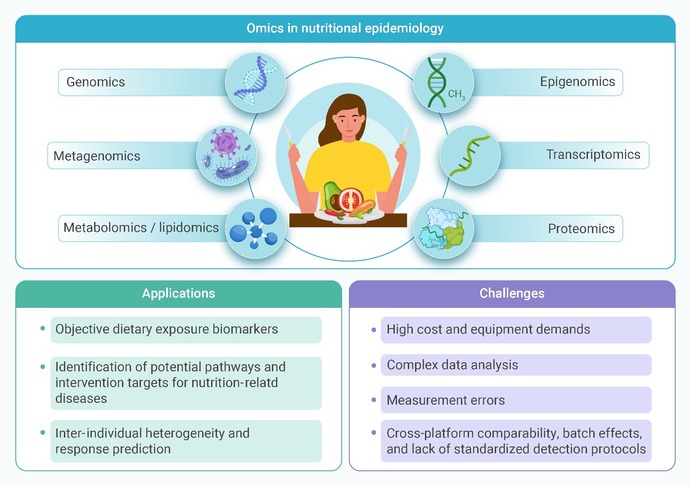
Figure 1.
Omics in nutritional epidemiology
