
From unidirectional toxicity to bidirectional systemic interplay in Cardio-Oncology
-
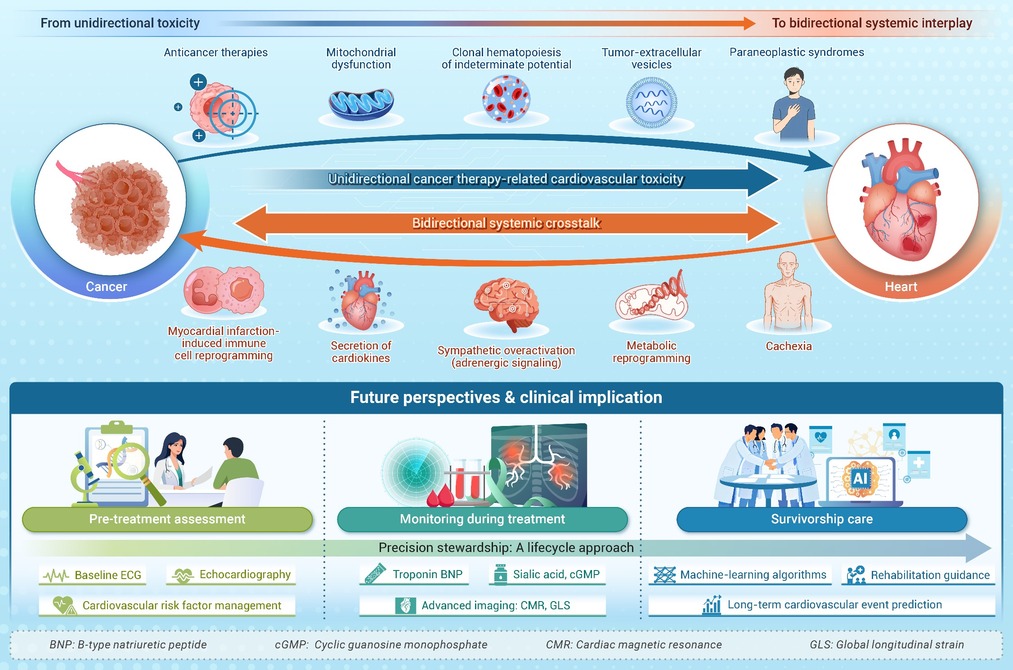
GRAPHICAL ABSTRACT
 DownLoad:
Full size image
DownLoad:
Full size image
-
PUBLIC SUMMARY
-
Cancer treatment can damage the heart and blood vessels in many different ways.
This field now extends beyond toxicity to include two-way interactions between cancer and the heart.
Heart disease may also influence tumor progression through immune, metabolic, and systemic signals.
Better imaging, biomarkers, and artificial intelligence may improve earlier detection of risk.
Closer integration of oncology and cardiology may support safer and more precise patient care.
-
-
ABSTRACT
Cardio-oncology has expanded beyond the traditional focus on cancer therapy-related cardiovascular toxicity (CTR-CVT) to encompass the broader and increasingly recognized interplay between cancer and the cardiovascular system. Although advances in anticancer therapy have markedly improved survival, cardiovascular complications have become a major determinant of long-term morbidity and mortality in patients with cancer. At the same time, emerging evidence suggests that the relationship between cancer and cardiovascular disease is bidirectional: malignancy itself may impair cardiac structure and function, whereas pre-existing cardiovascular disease may contribute to tumor progression through immune, metabolic, neuroendocrine, and secretory mechanisms. In this review, we summarize the evolving clinical spectrum of CTR-CVT, discuss its pathophysiological basis within a multi-hit framework linking baseline cardiovascular vulnerability, tumor-derived signals, treatment-related injury, and review recent advances in multi-modal imaging, biomarker surveillance, artificial intelligence-assisted risk assessment, and real-world data integration. We further propose a multi-dimensional stewardship framework spanning pre-therapy risk stratification, intra-therapy surveillance and cardio protection, and long-term survivorship care. Finally, we highlight the emerging concept of reverse cardio-oncology, in which the diseased cardiovascular system may act as a systemic driver of malignancy, thereby reinforcing a reciprocal relationship between cancer and the heart. Together, these advances support a shift from a unidirectional toxicity model toward a systems-based framework for precision surveillance, mechanism-informed intervention, and integrated cardio-oncology care. -

-
REFERENCES
[1] Moslehi J.J. (2024). Cardio-Oncology: A new clinical frontier and novel platform for cardiovascular investigation. Circulation 150:513−515. DOI:10.1161/circulationaha.124.065473 [2] Viñas-Mendieta A.E., Gallardo-Grajeda A. and López-Fernández T. (2025). Cardio-oncology: Chances and challenges. Basic Res. Cardiol. 120:3−9. DOI:10.1007/s00395-024-01080-y [3] Bloom M.W., Vo J.B., Rodgers J.E., et al. (2025). Cardio-oncology and heart failure: A scientific statement from the heart failure society of America. J. Card. Fail. 31:415−455. DOI:10.1016/j.cardfail.2024.08.045 [4] Alhuneafat L., Guha A., Blaes A., et al. (2025). Cancer and cardiovascular disease: Shared risk factors, mechanisms, and clinical implications: JACC: CardioOncology State-of-the-Art Review. JACC CardioOncol. 7:453−469. DOI:10.1016/j.jaccao.2025.07.001 [5] López-Fernández T., Marco I., Aznar M.C., et al. (2024). Breast cancer and cardiovascular health. Eur. Heart J. 45:4366−4382. DOI:10.1093/eurheartj/ehae637 [6] Camilli M., Cipolla C. M., Dent S., et al. (2024). Anthracycline cardiotoxicity in adult cancer patients: JACC: CardioOncology State-of-the-Art Review. JACC CardioOncol. 6:655−677. DOI:10.1016/j.jaccao.2024.07.016 [7] Fabiani I., Chianca M., Aimo A., et al. (2024). Use of new and emerging cancer drugs: What the cardiologist needs to know. Eur. Heart J. 45:1971−1987. DOI:10.1093/eurheartj/ehae161 [8] Herrmann J., López-Fernández T. and Lyon A.R. (2025). The year in cardiovascular medicine 2024: The top 10 papers in cardio-oncology. Eur. Heart J. 46:1186−1188. DOI:10.1093/eurheartj/ehaf019 [9] Herrmann J., López-Fernández T. and Lyon A.R. (2026). The year in cardiovascular medicine 2025: The top 10 papers in cardio-oncology. Eur. Heart J. 47:555−557. DOI:10.1093/eurheartj/ehaf1095 [10] Herrmann J., Lpez-Fernndez T. and Lyon A.R. (2023). The year in cardiovascular medicine 2022: The top 10 papers in cardio-oncology. Eur. Heart J. 44:348−350. DOI:10.1093/eurheartj/ehac813 [11] Wilcox N.S., Amit U., Reibel J.B., et al. (2024). Cardiovascular disease and cancer: Shared risk factors and mechanisms. Nat. Rev. Cardiol. 21:617−631. DOI:10.1038/s41569-024-01017-x [12] Meijers W.C., Aboumsallem J.P., Lyon A. R., et al. (2026). Forward and reverse cardio-oncology. Physiol. Rev. 106:587−644. DOI:10.1152/physrev.00041.2024 [13] Newman A.A.C., Dalman J.M. and Moore K.J. (2025). Cardiovascular disease and cancer: A dangerous liaison. Arterioscler. Thromb. Vasc. Biol. 45:359−371. DOI:10.1161/atvbaha.124.319863 [14] de Boer R.A., Yousif L.I., Aboumsallem J.P., et al. (2025). Current insights in bidirectional cardio-oncology: Heart failure driving cancer: JACC: CardioOncology Short-Form Primer. JACC CardioOncol. 7:518−522. DOI:10.1016/j.jaccao.2025.05.014 [15] Addison D., Neilan T.G., Barac A., et al. (2023). Cardiovascular imaging in contemporary cardio-oncology: A scientific statement from the American heart association. Circulation 148:1271−1286. DOI:10.1161/cir.0000000000001174 [16] Khera R., Asnani A.H., Krive J., et al. (2025). Artificial intelligence to enhance precision medicine in cardio-oncology: A scientific statement from the American heart association. Circ. Genom. Precis. Med. 18:e000097. DOI:10.1161/hcg.0000000000000097 [17] Dabour M.S., George M.Y., Daniel M.R., et al. (2024). The cardioprotective and anticancer effects of SGLT2 inhibitors: JACC: CardioOncology State-of-the-Art Review. JACC CardioOncol. 6:159−182. DOI:10.1016/j.jaccao.2024.01.007 [18] Rakisheva A., Farmakis D., Attanasio A., et al. (2025). Prevention of cancer therapy-related cardiac dysfunction and heart failure in cancer patients and survivors. A Clinical Consensus Statement of the Heart Failure Association, the European Association of Preventive Cardiology of the ESC, and the ESC Council of Cardio-Oncology. Eur. J. Heart Fail. 27:2084−2099. DOI:10.1002/ejhf.3753 [19] Salloum F.N., Tocchetti C.G., Ameri P., et al. (2023). Priorities in cardio-oncology basic and translational science: GCOS 2023 symposium proceedings: JACC: CardioOncology State-of-the-Art Review. JACC CardioOncol. 5:715−731. DOI:10.1016/j.jaccao.2023.08.003 [20] Ky B. (2025). Cardio-oncology and our community: Advancing science and care for our patients. JACC CardioOncol. 7:82. DOI:10.1016/j.jaccao.2024.12.003 [21] Lyon A.R., López-Fernández T., Couch L.S., et al. (2022). 2022 ESC Guidelines on cardio-oncology developed in collaboration with the European Hematology Association (EHA), the European Society for Therapeutic Radiology and Oncology (ESTRO) and the International Cardio-Oncology Society (IC-OS). Eur. Heart J. 43:4229−4361. DOI:10.1093/eurheartj/ehac244 [22] Ng H.S., Meng R., Marin T.S., et al. (2024). Cardiovascular mortality in people with cancer compared to the general population: A systematic review and meta-analysis. Cancer Med. 13:e70057. DOI:10.1002/cam4.70057 [23] Lyon A.R., Dent S., Stanway S., et al. (2020). Baseline cardiovascular risk assessment in cancer patients scheduled to receive cardiotoxic cancer therapies: A position statement and new risk assessment tools from the Cardio-Oncology study group of the heart failure association of the European society of cardiology in collaboration with the international cardio-oncology society. Eur. J. Heart Fail. 22:1945−1960. DOI:10.1002/ejhf.1920 [24] Shil S., Kumar P. and Mumbrekar K.D. (2025). Cancer therapy-induced cardiotoxicity: Mechanisms and mitigations. Heart Fail. Rev. 30:1075−1092. DOI:10.1007/s10741-025-10531-0 [25] Saha S., Singh P.K., Roy P., et al. (2025). Cancer-induced cardiac dysfunction: Mechanisms, diagnostics, and emerging therapeutics in the era of onco-cardiology. Cancers 17:3225. DOI:10.3390/cancers17193225 [26] Osorio-Méndez J J., Gómez-Grosso L.A., Montoya-Ortiz G., et al. (2025). Small extracellular vesicles from breast cancer cells induce cardiotoxicity. Int. J. Mol. Sci. 26:945. DOI:10.3390/ijms26030945 [27] Ma Y., Wang Y., Chen R., et al. (2025). Exosomal transfer of pro-pyroptotic miR-216a-5p exacerbates anthracycline cardiotoxicity through breast cancer-heart pathological crosstalk. Signal Transduct. Target. Ther. 10:157. DOI:10.1038/s41392-025-02245-4 [28] Mei Z., Liu Q., Liu G., et al. (2025). Tumor extracellular vesicles aggravate mitochondrial damage in myocardial ischemia/reperfusion injury. Adv. Sci. (Weinh.) 12:e17493. DOI:10.1002/advs.202417493 [29] Karekar P., Jensen H.N., Russart K.L.G., et al. (2021). Tumor-induced cardiac dysfunction: A potential role of ROS. Antioxidants 10:1299. DOI:10.3390/antiox10081299 [30] Koutroumpakis E., Deswal A., Yusuf S.W., et al. (2022). Radiation-induced cardiovascular disease: Mechanisms, prevention, and treatment. Curr. Oncol. Rep. 24:543−553. DOI:10.1007/s11912-022-01238-8 [31] Liu Q., Cai W., Wang X., et al. (2023). Recent death early warning value of ECG changes in patients with NSCLC. Medicine 102:e35698. DOI:10.1097/md.0000000000035698 [32] Marmelo F.C. and Sá C.F.R. (2019). Physiopathology and diagnosis of cardiotoxicity in patients submitted to chemotherapy treatment. Oncol. Rev. 13:383. DOI:10.4081/oncol.2019.383 [33] Sobczuk P., Czerwińska M., Kleibert M., et al. (2022). Anthracycline-induced cardiotoxicity and renin-angiotensin-aldosterone system-from molecular mechanisms to therapeutic applications. Heart Fail. Rev. 27:295−319. DOI:10.1007/s10741-020-09977-1 [34] Cochera F., Dinca D., Bordejevic D.A., et al. (2018). Nebivolol effect on doxorubicin-induced cardiotoxicity in breast cancer. Cancer Manag. Res. 10:2071−2081. DOI:10.2147/cmar.S166481 [35] Díaz-Guerra A., Villena-Gutiérrez R., Clemente-Moragón A., et al. (2024). Anthracycline cardiotoxicity induces progressive changes in myocardial metabolism and mitochondrial quality control: Novel therapeutic target. JACC CardioOncol. 6:217−232. DOI:10.1016/j.jaccao.2024.02.005 [36] Lossos C., Liu Y., Kolb K.E., et al. (2019). Mechanisms of lymphoma clearance induced by high-dose alkylating agents. Cancer Discov. 9:944−961. DOI:10.1158/2159-8290.Cd-18-1393 [37] Gupta S.K., Garg A., Avramopoulos P., et al. (2019). miR-212/132 cluster modulation prevents doxorubicin-mediated atrophy and cardiotoxicity. Mol. Ther. 27:17−28. DOI:10.1016/j.ymthe.2018.11.004 [38] Galán-Arriola C., Vílchez-Tschischke J.P., Lobo M., et al. (2022). Coronary microcirculation damage in anthracycline cardiotoxicity. Cardiovasc. Res. 118:531−541. DOI:10.1093/cvr/cvab053 [39] Yang F., Zhang G., An N., et al. (2024). Interplay of ferroptosis, cuproptosis, and PANoptosis in cancer treatment-induced cardiotoxicity: Mechanisms and therapeutic implications. Semin. Cancer Biol. 106-107:106-122. DOI:10.1016/j.semcancer.2024.09.003. [40] Zhou X., Liu Y., Shen Y., et al. (2024). Rescue of cardiac dysfunction during chemotherapy in acute myeloid leukaemia by blocking IL-1α. Eur. Heart J. 45:2235−2250. DOI:10.1093/eurheartj/ehae188 [41] Weatherald J., Bondeelle L., Chaumais M.-C., et al. (2020). Pulmonary complications of Bcr-Abl tyrosine kinase inhibitors. Eur. Respir. J. 56:2000279. DOI:10.1183/13993003.00279-2020 [42] Chen N., Zhang T., Yang X., et al. (2025). Myeloid cells in the microenvironment of brain metastases. Biochim. Biophys. Acta 1880:189311. DOI:10.1016/j.bbcan.2025.189311 [43] Yu A.F., Moskowitz C.S., Lee Chuy K., et al. (2020). Cardiotoxicity surveillance and risk of heart failure during her2 targeted therapy. JACC: CardioOncol. 2:166−175. DOI:10.1016/j.jaccao.2020.03.002 [44] Kenigsberg B., Wellstein A. and Barac A. (2018). Left ventricular dysfunction in cancer treatment. JACC: Heart Fail. 6:87−95. DOI:10.1016/j.jchf.2017.08.024 [45] Quagliariello V., Berretta M., Bisceglia I., et al. (2025). In the era of cardiovascular-kidney-metabolic syndrome in cardio-oncology: From pathogenesis to prevention and therapy. Cancers 17:1169. DOI:10.3390/cancers17071169 [46] Beck T.C., Arhontoulis D.C., Morningstar J.E., et al. (2022). Cellular and molecular mechanisms of MEK1 inhibitor–induced cardiotoxicity. JACC CardioOncol. 4:535−548. DOI:10.1016/j.jaccao.2022.07.009 [47] Manasanch E.E. and Orlowski R.Z. (2017). Proteasome inhibitors in cancer therapy. Nat. Rev. Clin. Oncol. 14:417−433. DOI:10.1038/nrclinonc.2016.206 [48] Cavalcante L., Chandana S., Lakhani N., et al. (2024). Case report of fatal immune-mediated myocarditis following treatment with davoceticept (ALPN-202), a PD-L1-dependent CD28 costimulator and dual PD-L1/CTLA-4 checkpoint inhibitor, in combination with pembrolizumab. J. Immunother. Cancer 12:e009475. DOI:10.1136/jitc-2024-009475 [49] Wei S.C., Meijers W. C., Axelrod M.L., et al. (2021). A genetic mouse model recapitulates immune checkpoint inhibitor–associated myocarditis and supports a mechanism-based therapeutic intervention. Cancer Discov. 11:614−625. DOI:10.1158/2159-8290.Cd-20-0856 [50] Koeckerling D., Reddy R.K., Barker J., et al. (2024). Cardiovascular events after chimeric antigen receptor T-Cell therapy for advanced hematologic malignant neoplasms. JAMA Netw. Open 7:e2437222. DOI:10.1001/jamanetworkopen.2024.37222 [51] Heinzerling L., Ott P.A., Hodi F.S., et al. (2016). Cardiotoxicity associated with CTLA4 and PD1 blocking immunotherapy. J. Immunother. Cancer 4:50. DOI:10.1186/s40425-016-0152-y [52] Liu L., Yao W., Wang M., et al. (2024). A systematic review of cardiovascular toxicities induced by cancer immune therapies: Underlying mechanisms, clinical manifestations and therapeutic approaches. Semin. Cancer Biol. 106-107:179-191. DOI:10.1016/j.semcancer.2024.10.004. [53] Burg N., Swendeman S., Worgall S., et al. (2018). Sphingosine 1‐phosphate receptor 1 signaling maintains endothelial cell barrier function and protects against immune complex–induced vascular injury. Arthritis Rheumatol. 70:1879−1889. DOI:10.1002/art.40558 [54] Cuzick J., Sestak I., Forbes J.F., et al. (2020). Use of anastrozole for breast cancer prevention (IBIS-II): Long-term results of a randomised controlled trial. Lancet 395:117−122. DOI:10.1016/s0140-6736(19)32955-1 [55] Goss P.E., Ingle J.N., Pritchard K.I., et al. (2016). Extending aromatase-inhibitor adjuvant therapy to 10 years. N. Engl. J. Med. 375:209−219. DOI:10.1056/NEJMoa1604700 [56] Mamounas E.P., Bandos H., Lembersky B.C., et al. (2019). Use of letrozole after aromatase inhibitor-based therapy in postmenopausal breast cancer (NRG Oncology/NSABP B-42): A randomised, double-blind, placebo-controlled, phase 3 trial. Lancet Oncol. 20:88−99. DOI:10.1016/s1470-2045(18)30621-1 [57] Walls G.M., Hill N., McMahon M., et al. (2024). Baseline cardiac parameters as biomarkers of radiation cardiotoxicity in lung cancer. JACC: CardioOncol. 6:529−540. DOI:10.1016/j.jaccao.2024.05.009 [58] Zhang N., Tian X., Sun D., et al. (2025). Clonal hematopoiesis, cardiovascular disease and cancer treatment-induced cardiotoxicity. Semin. Cancer Biol. 111:89−114. DOI:10.1016/j.semcancer.2025.02.007 [59] Dorresteijn J.A., Visseren F.L., Wassink A.M., et al. (2013). Development and validation of a prediction rule for recurrent vascular events based on a cohort study of patients with arterial disease: The SMART risk score. Heart (British Cardiac Society) 99:866−872. DOI:10.1136/heartjnl-2013-303640 [60] Du X., Ninomiya T., de Galan B., et al. (2009). Risks of cardiovascular events and effects of routine blood pressure lowering among patients with type 2 diabetes and atrial fibrillation: Results of the ADVANCE study. Eur. Heart J. 30:1128−1135. DOI:10.1093/eurheartj/ehp055 [61] SCORE2 working group and ESC Cardiovascular risk collaboration (2021). SCORE2 risk prediction algorithms: New models to estimate 10-year risk of cardiovascular disease in Europe. Eur. Heart J. 42:2439-2454. DOI:10.1093/eurheartj/ehab309. [62] SCORE2-OP working group and ESC Cardiovascular risk collaboration (2021). SCORE2-OP risk prediction algorithms: Estimating incident cardiovascular event risk in older persons in four geographical risk regions. Eur. Heart J. 42:2455-2467. DOI:10.1093/eurheartj/ehab312. [63] Tonry C., Russell-Hallinan A., McCune C., et al. (2023). Circulating biomarkers for management of cancer therapeutics-related cardiac dysfunction. Cardiovasc. Res. 119:710−728. DOI:10.1093/cvr/cvac087 [64] Chen C., Zheng H., Wang Y., et al. (2024). Changes in sST2 and NT-proBNP levels predict early cardiac arrhythmia in breast cancer patients treated with anthracycline-containing chemotherapies. Front. Cardiovasc. Med. 11:1477679. DOI:10.3389/fcvm.2024.1477679 [65] Tian C., Yang Y., Bai B., et al. (2021). Potential of exosomes as diagnostic biomarkers and therapeutic carriers for doxorubicin-induced cardiotoxicity. Int. J. Biol. Sci. 17:1328−1338. DOI:10.7150/ijbs.58786 [66] Todorova V.K., Azhar G., Stone A., et al. (2024). Neutrophil biomarkers can predict cardiotoxicity of anthracyclines in breast cancer. Int. J. Mol. Sci. 25:9735. DOI:10.3390/ijms25179735 [67] Attanasio U., Di Sarro E., Tricarico L., et al. (2024). Cardiovascular biomarkers in cardio-oncology: Antineoplastic drug cardiotoxicity and beyond. Biomolecules 14:199. DOI:10.3390/biom14020199 [68] Al-Droubi S.S., Jahangir E., Kochendorfer K.M., et al. (2023). Artificial intelligence modelling to assess the risk of cardiovascular disease in oncology patients. Eur. Heart J. Digit. Health 4:302−315. DOI:10.1093/ehjdh/ztad031 [69] Boriani G., Imberti J.F., Asteggiano R., et al. (2025). Mobile/wearable digital devices for care of active cancer patients: A survey from the ESC Council of Cardio-Oncology. Eur. Heart J. Digit. Health 6:162−169. DOI:10.1093/ehjdh/ztae082 [70] Habibian M. and Lyon A.R. (2019). Monitoring the heart during cancer therapy. Eur. Heart J. Suppl. 21:M44−M49. DOI:10.1093/eurheartj/suz230 [71] Prifti E., Fall A., Davogustto G., et al. (2021). Deep learning analysis of electrocardiogram for risk prediction of drug-induced arrhythmias and diagnosis of long QT syndrome. Eur. Heart J. 42:3948−3961. DOI:10.1093/eurheartj/ehab588 [72] Lin A., Manral N., McElhinney P., et al. (2022). Deep learning-enabled coronary CT angiography for plaque and stenosis quantification and cardiac risk prediction: An international multicentre study. Lancet Digit. Health 4:e256−e265. DOI:10.1016/s2589-7500(22)00022-x [73] Vaid A., Johnson K.W., Badgeley M.A., et al. (2022). Using deep-learning algorithms to simultaneously identify right and left ventricular dysfunction from the electrocardiogram. JACC Cardiovasc. Imaging 15:395−410. DOI:10.1016/j.jcmg.2021.08.004 [74] Teske A.J., Moudgil R., López-Fernández T., et al. (2023). Global cardio oncology registry (G-COR): Registry design, primary objectives, and future perspectives of a multicenter global initiative. Circ. Cardiovasc. Qual. Outcomes 16:e009905. DOI:10.1161/circoutcomes.123.009905 [75] Lipshultz S.E., Adams M.J., Colan S.D., et al. (2013). Long-term cardiovascular toxicity in children, adolescents, and young adults who receive cancer therapy: Pathophysiology, course, monitoring, management, prevention, and research directions: A scientific statement from the American heart association. Circulation 128:1927−1995. DOI:10.1161/CIR.0b013e3182a88099 [76] Hayek S., Gibson T.M., Leisenring W.M., et al. (2020). Prevalence and predictors of frailty in childhood cancer survivors and siblings: A report from the childhood cancer survivor study. J. Clin. Oncol. 38:232−247. DOI:10.1200/jco.19.01226 [77] Strongman H., Gadd S., Matthews A.A., et al. (2022). Does cardiovascular mortality overtake cancer mortality during cancer survivorship?: An English retrospective cohort study. JACC CardioOncol. 4:113−123. DOI:10.1016/j.jaccao.2022.01.102 [78] Stoltzfus K.C., Zhang Y., Sturgeon K., et al. (2020). Fatal heart disease among cancer patients. Nat. Commun. 11:2011. DOI:10.1038/s41467-020-15639-5 [79] Muhandiramge J., Zalcberg J.R., Warner E.T., et al. (2024). Cardiovascular disease and stroke following cancer and cancer treatment in older adults. Cancer 130:4138−4148. DOI:10.1002/cncr.35503 [80] Ioffe D., Bhatia-Patel S.C., Gandhi S., et al. (2024). Cardiovascular concerns, cancer treatment, and biological and chronological aging in cancer: JACC Family Series. JACC CardioOncol. 6:143−158. DOI:10.1016/j.jaccao.2024.02.001 [81] Thompson K.A., Hildebrandt M.A. and Ater J.L. (2017). Cardiac outcomes with pregnancy after cardiotoxic therapy for childhood cancer. J. Am. Coll. Cardiol. 69:594−595. DOI:10.1016/j.jacc.2016.11.040 [82] Nolan M., Oikonomou E.K., Silversides C. K., et al. (2020). Impact of cancer therapy-related cardiac dysfunction on risk of heart failure in pregnancy. JACC CardioOncol. 2:153−162. DOI:10.1016/j.jaccao.2020.04.007 [83] Hameed A.B., Tarsa M., Graves C.R., et al. (2024). Universal cardiovascular disease risk assessment in pregnancy: Call to action JACC: Advances Expert Panel. JACC Adv. 3:101055. DOI:10.1016/j.jacadv.2024.101055 [84] Gziri M.M., Amant F., Debiève F., et al. (2012). Effects of chemotherapy during pregnancy on the maternal and fetal heart. Prenat. Diagn. 32:614−619. DOI:10.1002/pd.3847 [85] Varella L. and Partridge A.H. (2024). Approaching cancer during pregnancy. Nat. Rev. Cancer 24:159−160. DOI:10.1038/s41568-023-00647-6 [86] Tan-Chiu E., Yothers G., Romond E., et al. (2005). Assessment of cardiac dysfunction in a randomized trial comparing doxorubicin and cyclophosphamide followed by paclitaxel, with or without trastuzumab as adjuvant therapy in node-positive, human epidermal growth factor receptor 2-overexpressing breast cancer: NSABP B-31. J. Clin. Oncol. 23:7811−7819. DOI:10.1200/jco.2005.02.4091 [87] Bonaca M.P., Olenchock B.A., Salem J.E., et al. (2019). Myocarditis in the setting of cancer therapeutics: Proposed case definitions for emerging clinical syndromes in cardio-oncology. Circulation 140:80−91. DOI:10.1161/circulationaha.118.034497 [88] Tocchetti C.G., Farmakis D., Koop Y., et al. (2024). Cardiovascular toxicities of immune therapies for cancer - a scientific statement of the Heart Failure Association (HFA) of the ESC and the ESC Council of Cardio-Oncology. Eur. J. Heart Fail. 26:2055−2076. DOI:10.1002/ejhf.3340 [89] McDonagh T.A., Metra M., Adamo M., et al. (2021). 2021 ESC Guidelines for the diagnosis and treatment of acute and chronic heart failure. Eur. Heart J. 42:3599−3726. DOI:10.1093/eurheartj/ehab368 [90] Cardinale D., Ciceri F., Latini R., et al. (2018). Anthracycline-induced cardiotoxicity: A multicenter randomised trial comparing two strategies for guiding prevention with enalapril: The International CardioOncology Society-one trial. Eur. J. Cancer 94:126−137. DOI:10.1016/j.ejca.2018.02.005 [91] Heidenreich P.A., Bozkurt B., Aguilar D., et al. (2022). 2022 AHA/ACC/HFSA Guideline for the management of heart failure: Executive summary: A report of the American college of cardiology/American heart association joint committee on clinical practice guidelines. Circulation 145:e876−e894. DOI:10.1161/cir.0000000000001062 [92] Hess C.N., Roe M.T., Clare R.M., et al. (2015). Relationship between cancer and cardiovascular outcomes following percutaneous coronary intervention. J. Am. Heart Assoc. 4:e001779. DOI:10.1161/jaha.115.001779 [93] Bharadwaj A.S., Swamy P.M. and Mamas M.A. (2020). Outcomes of percutaneous coronary interventions in cancer patients. Expert Rev. Cardiovasc. Ther. 18:25−32. DOI:10.1080/14779072.2020.1718493 [94] Wong N.D., Budoff M.J., Ferdinand K., et al. (2022). Atherosclerotic cardiovascular disease risk assessment: An American society for preventive cardiology clinical practice statement. Am. J. Prev. Cardiol. 10:100335. DOI:10.1016/j.ajpc.2022.100335 [95] Neumann F.J., Sousa-Uva M., Ahlsson A., et al. (2019). 2018 ESC/EACTS guidelines on myocardial revascularization. Eur. Heart J. 40:87−165. DOI:10.1093/eurheartj/ehy394 [96] Zhu X., Wu S., Dahut W. L., et al. (2007). Risks of proteinuria and hypertension with bevacizumab, an antibody against vascular endothelial growth factor: Systematic review and meta-analysis. Am. J. Kidney Dis. 49:186−193. DOI:10.1053/j.ajkd.2006.11.039 [97] Miyajima A., Yazawa S., Kosaka T., et al. (2015). Prognostic impact of renin-angiotensin system blockade on renal cell carcinoma after surgery. Ann. Surg. Oncol. 22:3751−3759. DOI:10.1245/s10434-015-4436-0 [98] Zamorano J.L., Lancellotti P., Rodriguez Muñoz D., et al. (2016). 2016 ESC position paper on cancer treatments and cardiovascular toxicity developed under the auspices of the ESC committee for practice guidelines: The task force for cancer treatments and cardiovascular toxicity of the European society of cardiology (ESC). Eur. Heart J. 37:2768−2801. DOI:10.1093/eurheartj/ehw211 [99] Van Gelder I.C., Rienstra M., Bunting K.V., et al. (2024). 2024 ESC guidelines for the management of atrial fibrillation developed in collaboration with the European association for cardio-thoracic surgery (EACTS). Eur. Heart J. 45:3314−3414. DOI:10.1093/eurheartj/ehae176 [100] Mosarla R.C., Vaduganathan M., Qamar A., et al. (2019). Anticoagulation strategies in patients with cancer: JACC Review Topic of the Week. J. Am. Coll. Cardiol. 73:1336−1349. DOI:10.1016/j.jacc.2019.01.017 [101] Marshall A., Levine M., Hill C., et al. (2020). Treatment of cancer-associated venous thromboembolism: 12-month outcomes of the placebo versus rivaroxaban randomization of the SELECT-D trial (SELECT-D: 12m). J. Thromb. Haemost. 18:905−915. DOI:10.1111/jth.14752 [102] Yamashita Y., Morimoto T., Muraoka N., et al. (2023). Edoxaban for 12 months versus 3 months in patients with cancer with isolated distal deep vein thrombosis (ONCO DVT Study): An open-label, multicenter, randomized clinical trial. Circulation 148:1665−1676. DOI:10.1161/circulationaha.123.066360 [103] Waliany S., Lee D., Witteles R.M., et al. (2021). Immune checkpoint inhibitor cardiotoxicity: Understanding basic mechanisms and clinical characteristics and finding a cure. Annu. Rev. Pharmacol. Toxicol. 61:113−134. DOI:10.1146/annurev-pharmtox-010919-023451 [104] China expert group of multidisciplinary management of dyslipidemia in breast cancer patients with endocrine therapy (2017). China expert consensus on the management of dyslipidemia in postmenopausal patients with early-stage breast cancer. Zhonghua Zhong Liu Za Zhi 39:72-77. DOI:10.3760/cma.j.issn.0253-3766.2017.01.014. [105] Neilan T. G., Quinaglia T., Onoue T., et al. (2023). Atorvastatin for anthracycline-associated cardiac dysfunction: The STOP-CA randomized clinical trial. JAMA 330:528−536. DOI:10.1001/jama.2023.11887 [106] de Baat E.C., Mulder R.L., Armenian S., et al. (2022). Dexrazoxane for preventing or reducing cardiotoxicity in adults and children with cancer receiving anthracyclines. Cochrane Database Syst. Rev. 9:Cd014638. DOI:10.1002/14651858.CD014638.pub2 [107] Ryan T.D., Bates J.E., Kinahan K.E., et al. (2025). Cardiovascular toxicity in patients treated for childhood cancer: A scientific statement from the American heart association. Circulation 151:e926−e943. DOI:10.1161/cir.0000000000001308 [108] Livi L., Barletta G., Martella F., et al. (2021). Cardioprotective strategy for patients with nonmetastatic breast cancer who are receiving an anthracycline-based chemotherapy: A randomized clinical trial. JAMA Oncol. 7:1544−1549. DOI:10.1001/jamaoncol.2021.3395 [109] Abdel-Qadir H., Bobrowski D., Zhou L., et al. (2021). Statin exposure and risk of heart failure after anthracycline- or trastuzumab-based chemotherapy for early breast cancer: A propensity score‒matched cohort study. J. Am. Heart Assoc. 10:e018393. DOI:10.1161/jaha.119.018393 [110] Quagliariello V., Berretta M., Bisceglia I., et al. (2025). PCSK9 inhibitor inclisiran attenuates cardiotoxicity induced by sequential anthracycline and trastuzumab exposure via NLRP3 and MyD88 pathway inhibition. Int. J. Mol. Sci. 26:6617. DOI:10.3390/ijms26146617 [111] Kobara M., Toba H. and Nakata T. (2022). A glucagon-like peptide 1 analog protects mitochondria and attenuates hypoxia-reoxygenation injury in cultured cardiomyocytes. J. Cardiovasc. Pharmacol. 79:568−576. DOI:10.1097/fjc.0000000000001218 [112] Barale C., Buracco S., Cavalot F., et al. (2017). Glucagon-like peptide 1-related peptides increase nitric oxide effects to reduce platelet activation. Thromb. Haemost. 117:1115−1128. DOI:10.1160/th16-07-0586 [113] Hu Y., Zhao Y., Dai N., et al. (2026). GLP-1R agonists and heart failure: Novel beneficial effects suggested by Mendelian randomization. Eur. Heart J. Published online January 29:2026. DOI:10.1093/eurheartj/ehaf1066 [114] Akpek M., Ozdogru I., Sahin O., et al. (2015). Protective effects of spironolactone against anthracycline-induced cardiomyopathy. Eur. J. Heart Fail. 17:81−89. DOI:10.1002/ejhf.196 [115] Gulati G., Heck S.L., Ree A.H., et al. (2016). Prevention of cardiac dysfunction during adjuvant breast cancer therapy (PRADA): A 2 × 2 factorial, randomized, placebo-controlled, double-blind clinical trial of candesartan and metoprolol. Eur. Heart J. 37:1671−1680. DOI:10.1093/eurheartj/ehw022 [116] Avila M.S., Ayub-Ferreira S.M., de Barros Wanderley M.R.Jr., et al. (2018). Carvedilol for prevention of chemotherapy-related cardiotoxicity: The CECCY trial. J. Am. Coll. Cardiol. 71:2281−2290. DOI:10.1016/j.jacc.2018.02.049 [117] Davis M.K., Villa D., Tsang T.S.M., et al. (2019). Effect of eplerenone on diastolic function in women receiving anthracycline-based chemotherapy for breast cancer. JACC CardioOncol. 1:295−298. DOI:10.1016/j.jaccao.2019.10.001 [118] Greco A., Quagliariello V., Rizzo G., et al. (2025). SGLT2i dapagliflozin in primary prevention of chemotherapy induced cardiotoxicity in breast cancer patients treated with neo-adjuvant anthracycline-based chemotherapy +/- trastuzumab: Rationale and design of the multicenter PROTECT trial. Cardio-oncology 11:79. DOI:10.1186/s40959-025-00368-9 [119] Lu Y., Gao J., Hou Y., et al. (2025). Targeting the NLRP3 inflammasome abrogates cardiotoxicity of immune checkpoint blockers. J. Immunother. Cancer 13:e010127. DOI:10.1136/jitc-2024-010127 [120] Fu J., Wang G., Zeng L., et al. (2025). PD-1/PD-L1 inhibitor treatment associated with cardiotoxicity regulated by macrophage polarization and SOCS3/JAK/STAT3 signaling pathway. Cent. Eur. J. Immunol. 50:24−37. DOI:10.5114/ceji.2025.149377 [121] Dosch AR., Singh S., Nagathihalli N.S., et al. (2022). Interleukin-1 signaling in solid organ malignancies. Biochim. Biophys. Acta Rev. Cancer 1877:188670. DOI:10.1016/j.bbcan.2021.188670 [122] Xiao Z., Singh S. and Singh M. (2021). Improving cancer immunotherapy by targeting IL-1. Oncoimmunology 10:2008111. DOI:10.1080/2162402x.2021.2008111 [123] Cavalli G., Foppoli M., Cabrini L., et al. (2017). Interleukin-1 receptor blockade rescues myocarditis-associated end-stage heart failure. Front. Immunol. 8:131. DOI:10.3389/fimmu.2017.00131 [124] Belev B., Vičić I., Sedlić F., et al. (2024). Salivary interleukin-13 and transforming growth factor beta as potential biomarkers of cancer cachexia. Cancers 16:3035. DOI:10.3390/cancers16173035 [125] Yuan L., Chen X., Cheng L., et al. (2018). HDAC11 regulates interleukin-13 expression in CD4+ T cells in the heart. J. Mol. Cell. Cardiol. 122:1−10. DOI:10.1016/j.yjmcc.2018.07.253 [126] Bakhshian Nik A., Alvarez-Argote S. and O'Meara C.C. (2022). Interleukin 4/13 signaling in cardiac regeneration and repair. Am. J. Physiol. Heart Circ. Physiol. 323:H833−H844. DOI:10.1152/ajpheart.00310.2022 [127] Qian N., Gao Y., Wang J., et al. (2021). Emerging role of interleukin-13 in cardiovascular diseases: A ray of hope. J. Cell. Mol. Med. 25:5351−5357. DOI:10.1111/jcmm.16566 [128] Guo X., Jiang M., Tao Z., et al. (2025). 5-Oxoproline prevents doxorubicin-induced cardiotoxicity and tumor growth. Redox Biol. 85:103753. DOI:10.1016/j.redox.2025.103753 [129] Ba M. and Duan Y. (2020). Advance of 2-methoxyestradiol as a promising anticancer agent for cancer therapy. Future Med. Chem. 12:273−275. DOI:10.4155/fmc-2019-0258 [130] Joshi B.V., Moon H.R., Fettinger J.C., et al. (2005). A new synthetic route to (North)-methanocarba nucleosides designed as A3 adenosine receptor agonists. J. Org. Chem. 70:439−447. DOI:10.1021/jo0487606 [131] Nechita L.C., Tutunaru D., Nechita A., et al. (2025). AI and smart devices in Cardio-Oncology: Advancements in cardiotoxicity prediction and cardiovascular monitoring. Diagnostics 15:787. DOI:10.3390/diagnostics15060787 [132] Wu S., Cao W., Fu S., et al. (2025). CardioAI: A multi-modal AI-based system to support symptom monitoring and risk prediction of cancer treatment-induced cardiotoxicity. Proc. SIGCHI Conf. Hum. Factors Comput. Syst. 2025:313. DOI:10.1145/3706598.3714272 [133] Jacobs J.E.J., Greason G., Mangold K.E., et al. (2024). Artificial intelligence electrocardiogram as a novel screening tool to detect a newly abnormal left ventricular ejection fraction after anthracycline-based cancer therapy. Eur. J. Prev. Cardiol. 31:560−566. DOI:10.1093/eurjpc/zwad348 [134] Kappel C., Rushton-Marovac M., Leong D., et al. (2022). Pursuing connectivity in cardio-oncology care-the future of telemedicine and artificial intelligence in providing equity and access to rural communities. Front. Cardiovasc. Med. 9:927769. DOI:10.3389/fcvm.2022.927769 [135] Armenian S.H. and Robison L.L. (2013). Childhood cancer survivorship: An update on evolving paradigms for understanding pathogenesis and screening for therapy-related late effects. Curr. Opin. Pediatr. 25:16−22. DOI:10.1097/MOP.0b013e32835b0b6a [136] Ehrhardt M.J., Leerink J.M., Mulder R.L., et al. (2023). Systematic review and updated recommendations for cardiomyopathy surveillance for survivors of childhood, adolescent, and young adult cancer from the international late effects of childhood cancer guideline harmonization group. Lancet Oncol. 24:e108−e120. DOI:10.1016/s1470-2045(23)00012-8 [137] Bennetts J.D., Williams T.D., Beavers C.J., et al. (2025). The cardio-oncology multidisciplinary team: Beyond the basics. Cardio-Oncology 11:69. DOI:10.1186/s40959-025-00369-8 [138] Dent S. F., Kikuchi R., Kondapalli L., et al. (2020). Optimizing cardiovascular health in patients with cancer: A practical review of risk assessment, monitoring, and prevention of cancer treatment-related cardiovascular toxicity. Am. Soc. Clin. Oncol. Educ. Book 40:1−15. DOI:10.1200/edbk_286019 [139] Karlstaedt A., Moslehi J. and de Boer R.A. (2022). Cardio-onco-metabolism: Metabolic remodelling in cardiovascular disease and cancer. Nat. Rev. Cardiol. 19:414−425. DOI:10.1038/s41569-022-00698-6 [140] Awwad L., Achlaug L., Aviram S., et al. (2025). Bidirectional interaction in cardio-oncology toward novel therapeutic strategies for cardiovascular diseases: JACC: CardioOncology Primer. JACC CardioOncol. 7:554−558. DOI:10.1016/j.jaccao.2025.04.007 [141] Aboumsallem J.P., Moslehi J. and de Boer R.A. (2020). Reverse cardio-oncology: Cancer development in patients with cardiovascular disease. J. Am. Heart Assoc. 9:e013754. DOI:10.1161/jaha.119.013754 [142] Alzahrani A., Gokul K., Paleri A., et al. (2026). New-onset atrial fibrillation as a predictor of cancer: Insights from a real-world dataset. Heart Rhythm 23:819−828. DOI:10.1016/j.hrthm.2025.10.040 [143] Seretis A., Cividini S., Markozannes G., et al. (2019). Association between blood pressure and risk of cancer development: A systematic review and meta-analysis of observational studies. Sci. Rep. 9:8565. DOI:10.1038/s41598-019-45014-4 [144] Mirabel M., Nevoret C., Domengé O., et al. (2026). Increased cancer incidence in patients with pre-existing heart failure: Results from a French nationwide cohort study. Eur. J. Prev. Cardiol. 33:289−296. DOI:10.1093/eurjpc/zwaf152 [145] Yoon S.Y., Kim M., Kim H., et al. (2025). Risk of hematologic malignancies in patients with acute myocardial infarction: A nationwide population-based cohort study. JACC CardioOncol. 7:580−589. DOI:10.1016/j.jaccao.2025.04.003 [146] Meijers W.C. and de Boer R.A. (2019). Common risk factors for heart failure and cancer. Cardiovasc. Res. 115:844−853. DOI:10.1093/cvr/cvz035 [147] de Boer R.A., Meijers W.C., van der Meer P., et al. (2019). Cancer and heart disease: Associations and relations. Eur. J. Heart Fail. 21:1515−1525. DOI:10.1002/ejhf.1539 [148] Kojic A., Moslehi J., Ky B., et al. (2025). Cardiometabolic disease and cardio-oncology: Insights from iPSC models and tissue engineering. Cell Rep. Med. 6:102261. DOI:10.1016/j.xcrm.2025.102261 [149] Vladimirov S., Tomasevic M., Popov N., et al. (2025). The converging roles of microRNAs and lipid metabolism in atherosclerotic cardiovascular disease and cancer. Semin. Cancer Biol. 114:41−59. DOI:10.1016/j.semcancer.2025.06.005 [150] Dalman J.M. and Moore K.J. (2025). Cancer development in atherosclerotic cardiovascular disease: JACC: CardioOncology Short-Form Primer. JACC CardioOncol. 7:514−517. DOI:10.1016/j.jaccao.2025.05.016 [151] Koelwyn G.J., Newman A.A.C., Afonso M.S., et al. (2020). Myocardial infarction accelerates breast cancer via innate immune reprogramming. Nat. Med. 26:1452−1458. DOI:10.1038/s41591-020-0964-7 [152] Caller T., Rotem I., Shaihov-Teper O., et al. (2024). Small extracellular vesicles from infarcted and failing heart accelerate tumor growth. Circulation 149:1729−1748. DOI:10.1161/circulationaha.123.066911 [153] Dong Z.K., Wang Y.F., Li W.P., et al. (2024). Neurobiology of cancer: Adrenergic signaling and drug repurposing. Pharmacol. Ther. 264:108750. DOI:10.1016/j.pharmthera.2024.108750 [154] Jiang W., Hu J.W., He X.R., et al. (2021). Statins: A repurposed drug to fight cancer. J. Exp. Clin. Cancer Res. 40:241. DOI:10.1186/s13046-021-02041-2 [155] Carnet Le Provost K., Kepp O., Kroemer G., et al. (2023). Trial watch: Beta-blockers in cancer therapy. Oncoimmunology 12:2284486. DOI:10.1080/2162402x.2023.2284486 [156] Liu X., Zhuang L. and Gan B. (2023). Unleashing ferroptosis for cancer therapy with warfarin. Trends Endocrinol. Metab. 34:683−684. DOI:10.1016/j.tem.2023.08.008 [157] Grewal K., Wang X., Austin P.C., et al. (2025). Bleeding and new malignancy diagnoses after anticoagulation for atrial fibrillation: A population-based cohort study. Circulation 151:773−782. DOI:10.1161/circulationaha.124.070865 [158] Hohl M., Götzinger F., Jäger S., et al. (2025). Assessing phototoxic drug properties of hydrochlorothiazide using human skin biopsies. Commun. Biol. 8:705. DOI:10.1038/s42003-025-08064-1 [159] Tong J., Senechal I., Ramalingam S., et al. (2025). Risk assessment prior to cardiotoxic anticancer therapies in 7 steps. Br. J. Hosp. Med. 86:1−21. DOI:10.12968/hmed.2024.0632 [160] Brown S.A., Fang M.Z., Sparapani R., et al. (2025). PrevCardioOncAI: Machine learning algorithms for predicting cardiovascular disease in cancer survivors. J. Am. Heart Assoc. 14:e030363. DOI:10.1161/jaha.123.030363 [161] Cheeseman J., Kuhnle G., Stafford G., et al. (2021). Sialic acid as a potential biomarker for cardiovascular disease, diabetes and cancer. Br. J. Hosp. Med. 15:911−928. DOI:10.2217/bmm-2020-0776 [162] Ulvestad L. and Sager G. (2005). Cyclic GMP as a biomarker for cardiovascular disease and cancer. Tidsskr. Nor. Laegeforen. 125:27−28. [163] Laplane L., Duluc D., Bikfalvi A., et al. (2019). Beyond the tumour microenvironment. Int. J. Cancer 145:2611−2618. DOI:10.1002/ijc.32343 [164] Belényesi S.K., Patmore S. and O'Driscoll L. (2025). Extracellular vesicles and the tumour microenvironment. Biochim. Biophys. Acta Rev. Cancer 1880:189275. DOI:10.1016/j.bbcan.2025.189275 [165] Tao S.C. and Guo S.C. (2020). Role of extracellular vesicles in tumour microenvironment. Cell Commun. Signal. 18:163. DOI:10.1186/s12964-020-00643-5 [166] Naing A., Hajjar J., Gulley J.L., et al. (2020). Strategies for improving the management of immune-related adverse events. J. Immunother. Cancer 8:e001754. DOI:10.1136/jitc-2020-001754 -
ABOUT THIS ARTICLE
Cite this article:
Wang J., Wang R., Yu L., et al. (2026). From unidirectional toxicity to bidirectional systemic interplay in Cardio-Oncology. The Innovation Oncology 1:100004. https://doi.org/10.59717/j.xinn-oncol.2026.100004
Welcome!
To request copyright permission to republish or share portions of our works, please visit Copyright Clearance Center's (CCC) Marketplace website at marketplace.copyright.com.
Export File
Citation
Wang J., Wang R., Yu L., et al. (2026). From unidirectional toxicity to bidirectional systemic interplay in Cardio-Oncology. The Innovation Oncology 1:100004. https://doi.org/10.59717/j.xinn-oncol.2026.100004

Format
Content
-
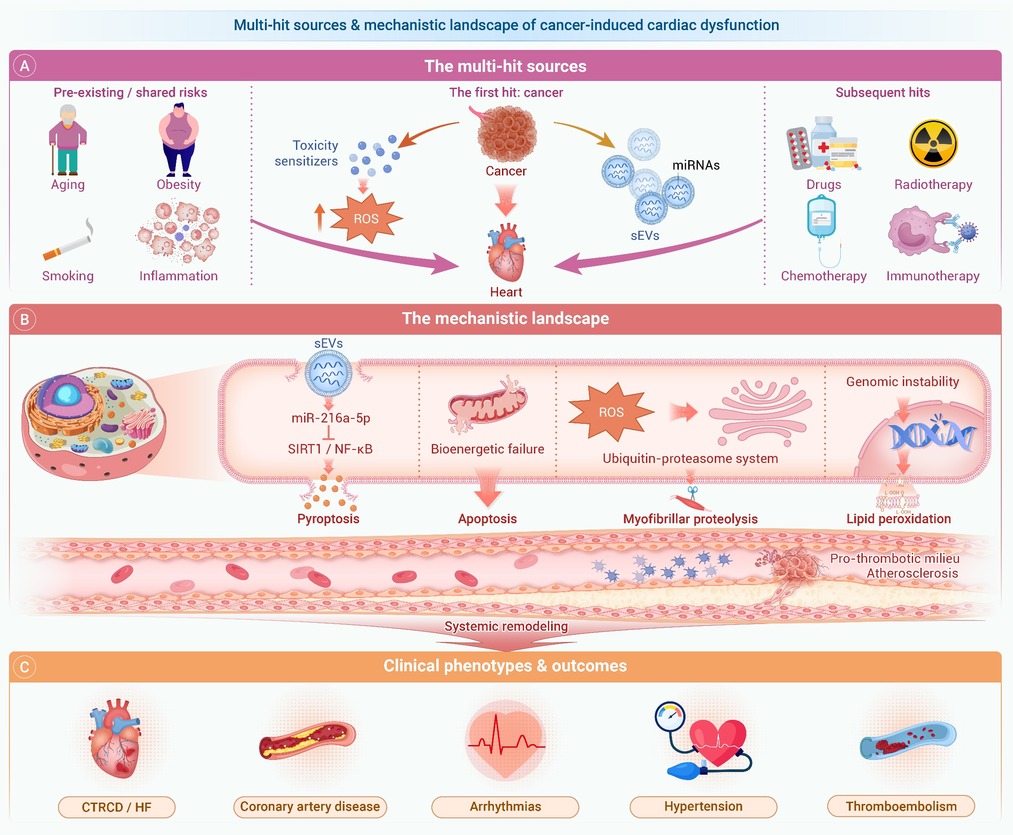
Figure 1.
Multi-hit sources and mechanistic landscape of cancer-induced cardiac dysfunction
-
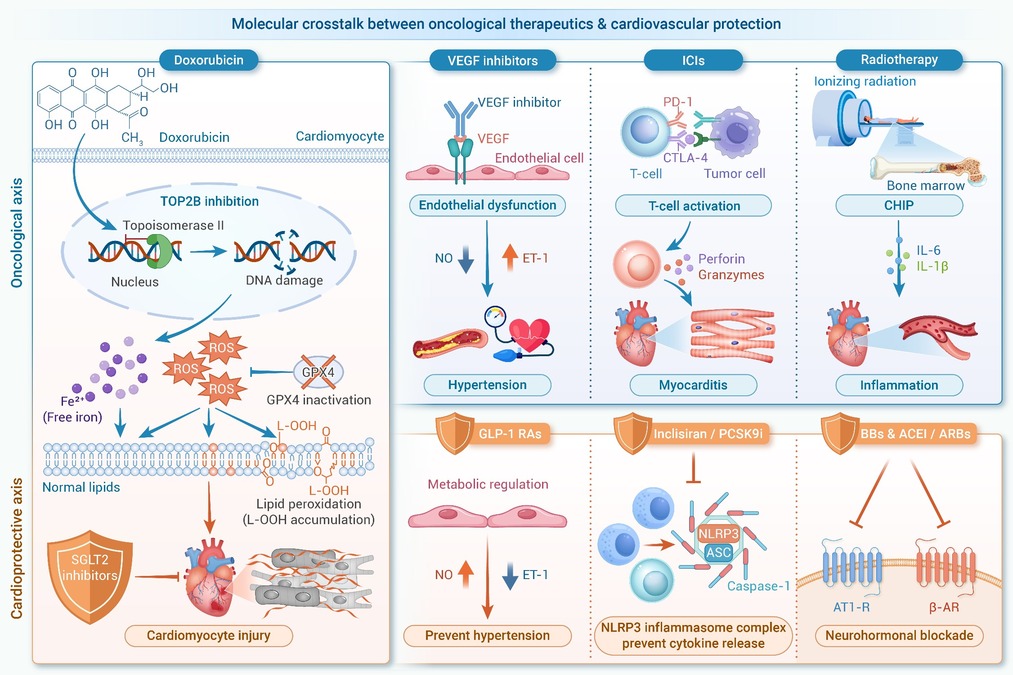
Figure 2.
Molecular crosstalk between oncological therapeutics and cardiovascular protection
-
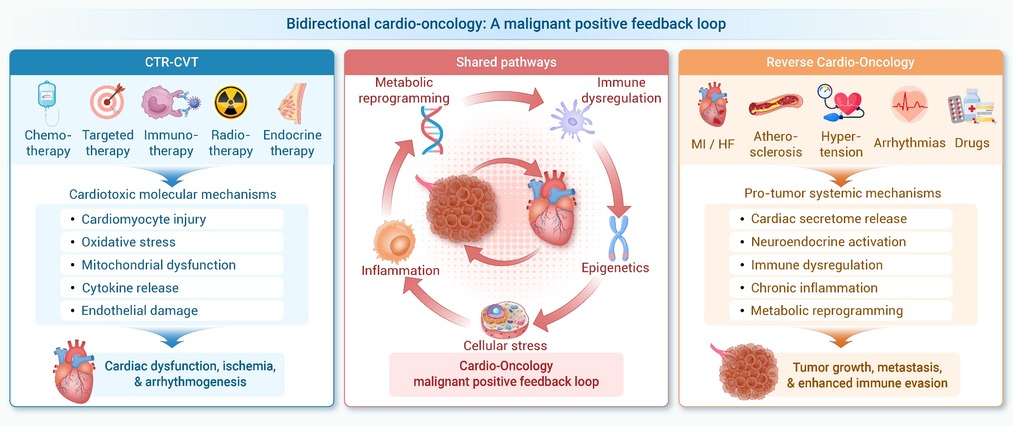
Figure 3.
Bidirectional cardio-oncology as a malignant positive feedback loop
