
Assessing socioeconomic risks of climate change through integrated modelling
-
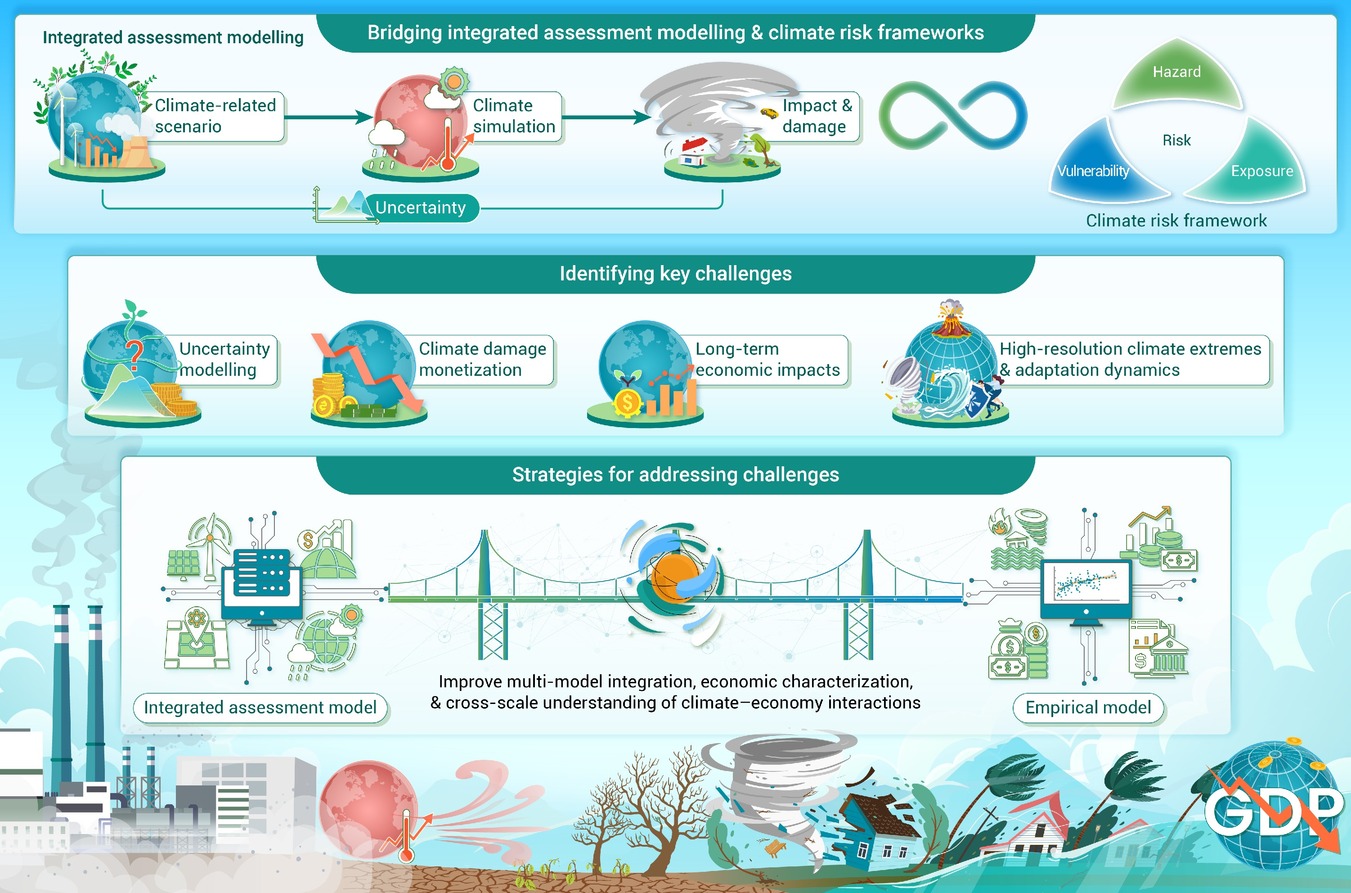
GRAPHICAL ABSTRACT
 DownLoad:
Full size image
DownLoad:
Full size image
-
PUBLIC SUMMARY
-
Incorporate key elements of integrated assessment modelling into the Intergovernmental Panel on Climate Change (IPCC)’s framework of climate change risks.
Investigate the integrated assessment tools for climate risks, highlighting their modelling features, scientific foundations, limitations and future directions.
Identify key modelling challenges: uncertainty, climate damage monetization, long-term economic modelling, high-resolution climate extremes, and adaptation.
Outline pathways to enhance models by bridging integrated assessment models (IAMs) and empirical models.
-
-
ABSTRACT
Climate change poses significant socio-economic risks, necessitating integrated assessment modelling that bridges natural and socioeconomic systems to identify and manage climate risks. However, research on key components of integrated assessment frameworks remains fragmented across disciplines, lacking explicit integration with the theoretical framework of climate change risk. This hinders the practical application of integrated assessment approaches in climate risk management. In this narrative review, we synthesize key elements of integrated assessment modelling—climate-related scenarios, climate simulations, climate impacts and damages, and uncertainties—within the Intergovernmental Panel on Climate Change (IPCC)’s risk framework, defined by hazard, exposure, and vulnerability. We examine how these elements are represented in integrated assessment models (IAMs) and empirical approaches, highlighting their modelling features and scientific foundations. We identify critical challenges in current research, including (1) the treatment of uncertainty, (2) monetization of climate damages, (3) representation of long-term economic impacts, and (4) incorporation of high-resolution climate extremes and adaptation dynamics. We propose that addressing these gaps requires bridging IAMs and empirical methods to improve multi-model integration, economic characterization, and the understanding of climate–economy interactions across spatial and temporal scales. -

-
REFERENCES
[1] Rezaei E.E. and Gohar L. (2023). Climate change impacts on crop yields. Nat. Rev. Earth Environ. 4:831−846. DOI:10.1038/s43017-023-00491-0 [2] Pryor S.C., Barthelmie R.J., Bukovsky M.S., et al. (2020). Climate change impacts on wind power generation. Nat. Rev. Earth Environ. 1:627−643. DOI:10.1038/s43017-020-0101-7 [3] Zhang Z., Hui H. and Song Y. (2025). Mitigating the vicious cycle between urban heatwaves and building energy systems in Guangdong–Hong Kong–Macao Greater Bay Area. Innov. Energy 2:100080. DOI:10.59717/j.xinn-energy.2025.100080 [4] Matthews T., Wilby R.L., Kala C.P., et al. (2025). Mortality impacts of the most extreme heat events. Nat. Rev. Earth Environ. 6:193−210. DOI:10.1038/s43017-024-00635-w [5] Adshead D., Fuldauer L.I., Thacker S., et al. (2024). Climate threats to coastal infrastructure and sustainable development outcomes. Nat. Clim. Chang. 14:344−352. DOI:10.1038/s41558-024-01950-2 [6] Cheng Y., Li C., Xu Y., et al. (2024). Extreme impacts on electric power systems from non-catastrophic meteorological conditions. Innov. Energy 1:100008. DOI:10.59717/j.xinn-energy.2024.100008 [7] Burke M., Hsiang S.M. and Miguel E. (2015). Global non-linear effect of temperature on economic production. Nature 527:235−239. DOI:10.1038/nature15725 [8] Tran T.-N.-D., Tapas M.R., Do S.K., et al. (2024). Investigating the impacts of climate change on hydroclimatic extremes in the Tar-Pamlico River basin, North Carolina. J. Environ. Manage. 363:121375. DOI:10.1016/j.jenvman.2024.121375 [9] Chang J.J., Wei Y.M., Yuan X.C., et al. (2020). The Nonlinear Impacts of Global Warming on Regional Economic Production: An Empirical Analysis from China. Weather Clim. Soc. 12:759−769. DOI:10.1175/WCAS-D-20-0029.1 [10] Tran T.-N.-D. and Lakshmi V. (2024). Enhancing human resilience against climate change: Assessment of hydroclimatic extremes and sea level rise impacts on the Eastern Shore of Virginia, United States. Sci. Total Environ. 947:174289. DOI:10.1016/j.scitotenv.2024.174289 [11] Burke M., Davis W.M. and Diffenbaugh N.S. (2018). Large potential reduction in economic damages under UN mitigation targets. Nature 557:549−553. DOI:10.1038/s41586-018-0071-9 [12] Marshall S.R.O., Tran T.-N.-D., Arshad A., et al. (2025). SWAT and CMIP6-driven hydro-climate modeling of future flood risks and vegetation dynamics in the White Oak Bayou Watershed, United States. Earth Syst. Environ. DOI:10.1007/s41748-025-00621-2. [13] Wei Y.M., Han R., Liang Q.M., et al. (2020). Self-preservation strategy for approaching global warming targets in the post-Paris Agreement era. Nat. Commun. 11:1624. DOI:10.1038/s41467-020-15453-z [14] Wei Y.M., Han R., Wang C., et al. (2018). An integrated assessment of INDCs under Shared Socioeconomic Pathways: an implementation of C3IAM. Nat. Hazards 92:585−618. DOI:10.1007/s11069-018-3297-9 [15] Wei Y.-M., Kang J.-N. and Chen W. (2022). Climate or Carbon Mitigation Engineering Management. Engineering 17:17−21. DOI:10.1016/j.eng.2021.09.008 [16] Intergovernmental Panel on Climate Change. (2023). Climate Change 2022: Impacts, Adaptation and Vulnerability: Contribution of Working Group II to the Sixth Assessment Report of the Intergovernmental Panel on Climate Change (Cambridge University Press). [17] Rising J., Tedesco M., Piontek F., et al. (2022). The missing risks of climate change. Nature 610:643−651. DOI:10.1038/s41586-022-05243-6 [18] Diaz D. and Moore F. (2017). Quantifying the economic risks of climate change. Nat. Clim. Chang. 7:774−782. DOI:10.1038/NCLIMATE3411 [19] Piontek F., Drouet L., Emmerling J., et al. (2021). Integrated perspective on translating biophysical to economic impacts of climate change. Nat. Clim. Chang. 11:563−572. DOI:10.1038/s41558-021-01065-y [20] Gambhir A., Butnar I., Li P.H., et al. (2022). Near-term transition and longer-term physical climate risks of greenhouse gas emissions pathways. Nat. Clim. Chang. 12:88−96. DOI:10.1038/s41558-021-01236-x [21] Drouet L., Bosetti V., Padoan S.A., et al. (2021). Net zero-emission pathways reduce the physical and economic risks of climate change. Nat. Clim. Chang. 11:1070−1076. DOI:10.1038/s41558-021-01218-z [22] Tapas M.R., Tran T.-N.-D., Do S.K., et al. (2024). A methodological framework for assessing sea level rise impacts on nitrate loading in coastal agricultural watersheds using SWAT+: A case study of the Tar-Pamlico River basin, North Carolina, USA. Sci. Total Environ. 951:175523. DOI:10.1016/j.scitotenv.2024.175523 [23] Nguyen B.Q., Van Binh D., Tran T.-N.-D., et al. (2024). Response of streamflow and sediment variability to cascade dam development and climate change in the Sai Gon Dong Nai River basin. Clim. Dyn. 62:7997−8017. DOI:10.1007/s00382-024-07319-7 [24] Tran T.N.D., Nguyen B.Q., Grodzka-Łukaszewska M., et al. (2024). Investigating the Future Flood and Drought Shifts in the Transboundary Srepok River Basin Using CMIP6 Projections. IEEE JSTAEORS 17:7516−7529. DOI:10.1109/JSTARS.2024.3380514 [25] Schwoerer T., Ives M.C., Knowlton J.G., et al. (2023). Climate policy must account for community-specific socio-economic, health, and biophysical conditions—evidence from coastal Alaska. Reg. Environ. Change 23:90. DOI:10.1007/s10113-023-02080-9 [26] Reinwald F., Thiel S., Kainz A., et al. (2024). Components of urban climate analyses for the development of planning recommendation maps. Urban Clim. 57:102090. DOI:10.1016/j.uclim.2024.102090 [27] Tran T.-N.-D., Nguyen B.Q., Grodzka-Łukaszewska M., et al. (2023). The role of reservoirs under the impacts of climate change on the Srepok River basin, Central Highlands of Vietnam. Front. Environ. Sci. 11:1304845. DOI:10.3389/fenvs.2023.1304845 [28] Intergovernmental Panel on Climate Change. (2014). Climate Change 2014 – Impacts, Adaptation and Vulnerability: Part A: Global and Sectoral Aspects: Working Group II Contribution to the IPCC Fifth Assessment Report (Cambridge University Press). [29] Liu H., Mi Z., Wu M., et al. (2024). The Innovation Energy: An international journal of energyscience and engineering. Innov. Energy 1:100001. DOI:10.59717/j.xinn-energy.2024.100001 [30] Nordhaus W.D. (1993). Rolling the ‘DICE’: an optimal transition path for controlling greenhouse gases. Resour. Energy Econ. 15:27−50. DOI:10.1016/0928-7655(93)90017-O [31] Tol R.S.J. and Fankhauser S. (1998). On the representation of impact in integrated assessment models of climate change. Environ. Model. Assess. 3:63−74. DOI:10.1023/a:1019050503531 [32] Wilson C., Guivarch C., Kriegler E., et al. (2021). Evaluating process-based integrated assessment models of climate change mitigation. Clim. Change 166:1−22. DOI:10.1007/s10584-021-03099-9 [33] Batten S. (2018). Climate change and the macro-economy: a critical review. Bank of England Working Papers :706. DOI:10.2139/ssrn.3104554. [34] Nordhaus W.D. (2017). Evolution of Assessments of the Economics of Global Warming Changes in the DICE model, 1992 – 2017. Natl. Bur. Econ. Res. Work. Pap. Ser. :23319. DOI:10.3386/w23319. [35] Weyant J. (2017). Some Contributions of Integrated Assessment Models of Global Climate. Change. Rev. Environ. Econ. Policy 11:115−137. DOI:10.1093/reep/rew018 [36] Bosetti V. (2021). Integrated Assessment Models for Climate Change. Oxford Res. Encycl. Econ. Fin. DOI:10.1093/acrefore/9780190625979.013.572. [37] Nordhaus W.D. (2017). Revisiting the social cost of carbon. PNAS 114:1518−1523. DOI:10.1073/pnas.1609244114 [38] Silva Herran D., Tachiiri K. and Matsumoto K.i. (2019). Global energy system transformations in mitigation scenarios considering climate uncertainties. Appl. Energy 243:119−131. DOI:10.1016/j.apenergy.2019.03.069 [39] Luderer G., Madeddu S., Merfort L., et al. (2022). Impact of declining renewable energy costs on electrification in low-emission scenarios (vol 7, pg 32, 2022). Nat. Energy 7:380−381. DOI:10.1038/s41560-022-01000-1 [40] Johns T.C., Durman C.F., Banks H.T., et al. (2006). The new Hadley Centre Climate Model (HadGEM1): Evaluation of coupled simulations. J. Clim. 19:1327−1353. DOI:10.1175/JCLI3712.1 [41] Castruccio S., McInerney D.J., Stein M.L., et al. (2014). Statistical Emulation of Climate Model Projections Based on Precomputed GCM Runs. J. Clim. 27:1829−1844. DOI:10.1175/JCLI-D-13-00099.1 [42] van Vuuren D.P., Edmonds J., Kainuma M., et al. (2011). How well do integrated assessment models simulate climate change. Clim. Change 104:255−285. DOI:10.1007/s10584-009-9764-2 [43] Tebaldi C., Armbruster A., Engler H.P., et al. (2020). Emulating climate extreme indices. Environ. Res. Lett. 15:074006. DOI:10.1088/1748-9326/ab8332 [44] Meinshausen M., Raper S.C.B. and Wigley T.M.L. (2011). Emulating coupled atmosphere-ocean and carbon cycle models with a simpler model, MAGICC6–Part 1: Model description and calibration. Atmos. Chem. Phys. 11:1417−1456. DOI:10.5194/acp-11-1417-2011 [45] Millar R.J., Nicholls Z.R., Friedlingstein P., et al. (2017). A modified impulse-response representation of the global near-surface air temperature and atmospheric concentration response to carbon dioxide emissions. Atmos. Chem. Phys. 17:7213−7228. DOI:10.5194/acp-17-7213-2017 [46] Yuan X.C., Zhang N., Wang W.Z., et al. (2021). Large-scale emulation of spatio-temporal variation in temperature under climate change. Environ. Res. Lett. 16:014041. DOI:10.1088/1748-9326/abd213 [47] Calvin K., Patel P., Clarke L., et al. (2019). GCAM v5.1: representing the linkages between energy, water, land, climate, and economic systems. Geosci. Model Dev. 12:677–698. DOI:10.5194/gmd-12-677-2019. [48] Stehfest E., van Vuuren D., Bouwman L., et al. (2014). Integrated assessment of global environmental change with IMAGE 3.0: Model description and policy applications. (Netherlands Environmental Assessment Agency (PBL)). [49] Manne A.S. and Richels R.G. (2005). MERGE: an integrated assessment model for global climate change. Energy Environ.:175–189. [50] Farmer J.D., Hepburn C., Mealy P., et al. (2015). A Third Wave in the Economics of Climate Change. Environ. Resour. Econ. 62:329−357. DOI:10.1007/s10640-015-9965-2 [51] Rising J.A., Taylor C., Ives M.C., et al. (2022). Challenges and innovations in the economic evaluation of the risks of climate change. Ecol. Econ. 197:107437. DOI:10.1016/j.ecolecon.2022.107437 [52] Hsiang S. (2016). Climate Econometrics. Annu. Rev. Resour. Econ. 8:43−75. DOI:10.1146/annurev-resource-100815-095343 [53] Castle J.L. and Hendry D.F. (2022). Econometrics for Modelling Climate Change. Oxford Res. Encycl. Econ. Fin. DOI:10.1093/acrefore/9780190625979.013.675. [54] Chang J.J., Mi Z.F. and Wei Y.M. (2023). Temperature and GDP: A review of climate econometrics analysis. Struct. Chang. Econ. Dyn. 66:383−392. DOI:10.1016/j.strueco.2023.05.009 [55] Fankhauser S. and Tol R.S.J. (2005). On climate change and economic growth. Resour. Energy Econ. 27:1−17. DOI:10.1016/j.reseneeco.2004.03.003 [56] Lecocq F. and Shalizi Z. (2007). How might climate change affect economic growth in developing countries? A review of the growth literature with a climate lens. World Bank Policy Res. Work. Pap. :4315. [57] Graff Zivin J. and Neidell M. (2009). Medical technology adoption, uncertainty, and irreversibilities: is a bird in the hand really worth more than in the bush. Health Econ. 19:142−153. DOI:10.1002/hec.1455 [58] Zhang P., Deschenes O., Meng K., et al. (2018). Temperature effects on productivity and factor reallocation: Evidence from a half million chinese manufacturing plants. J. Environ. Econ. Manage. 88:1−17. DOI:10.1016/j.jeem.2017.11.001 [59] Henseler M. and Schumacher I. (2019). The impact of weather on economic growth and its production factors. Clim. Change 154:417−433. DOI:10.1007/s10584-019-02441-6 [60] Letta M. and Tol R.S.J. (2019). Weather, Climate and Total Factor Productivity. Environ. Resour. Econ. 73:283−305. DOI:10.1007/s10640-018-0262-8 [61] Moore F.C. and Diaz D.B. (2015). Temperature impacts on economic growth warrant stringent mitigation policy. Nat. Clim. Chang. 5:127−131. DOI:10.1038/nclimate2481 [62] Gambhir A., Ganguly G. and Mittal S. (2022). Climate change mitigation scenario databases should incorporate more non-IAM pathways. Joule 6:2663−2667. DOI:10.1016/j.joule.2022.11.007 [63] Drouet L., Bosetti V. and Tavoni M. (2015). Selection of climate policies under the uncertainties in the Fifth Assessment Report of the IPCC. Nat. Clim. Chang. 5:937−940. DOI:10.1038/NCLIMATE2721 [64] van Vuuren D.P., Kriegler E., O’Neill B.C., et al. (2014). A new scenario framework for climate change research: scenario matrix architecture. Clim. Change 122:373−386. DOI:10.1007/s10584-013-0906-1 [65] Burke M., Dykema J., Lobell D.B., et al. (2015). Incorporating Climate Uncertainty into Estimates of Climate Change Impacts. Rev. Econ. Stat. 97:461−471. DOI:10.1162/REST_a_00478 [66] Kunreuther H., Heal G., Allen M., et al. (2013). Risk management and climate change. Nat. Clim. Chang. 3:447−450. DOI:10.1038/NCLIMATE1740 [67] Frigg R., Bradley S., Du H., et al. (2014). Laplace’s demon and the adventures of his apprentices. Philos. Sci. 81:31−59. DOI:10.1086/674416 [68] Stainforth D.A., Allen M.R., Tredger E.R., et al. (2007). Confidence, uncertainty and decision-support relevance in climate predictions. Philos. Trans. R. Soc. A Math. Phys. Eng. Sci. 365:2145−2161. DOI:10.1098/rsta.2007.2074 [69] Daron J.D. and Stainforth D.A. (2013). On predicting climate under climate change. Environ. Res. Lett. 8:034021. DOI:10.1088/1748-9326/8/3/034021 [70] Hawkins E., Smith R.S., Gregory J.M., et al. (2016). Irreducible uncertainty in near-term climate projections. Clim. Dyn. 46:3807−3819. DOI:10.1007/s00382-015-2806-8 [71] Kikstra J.S., Waidelich P., Rising J., et al. (2021). The social cost of carbon dioxide under climate-economy feedbacks and temperature variability. Environ. Res. Lett. 16:094037. DOI:10.1088/1748-9326/ac1d0b [72] Hornsey M.J., Harris E.A., Bain P.G., et al. (2016). Meta-analyses of the determinants and outcomes of belief in climate change. Nat. Clim. Chang. 6:622−626. DOI:10.1038/NCLIMATE2943 [73] Yang P., Mi Z., Yao M., et al. (2021). The impact of climate risk valuation on the regional mitigation strategies. J. Clean. Prod. 313:127786. DOI:10.1016/j.jclepro.2021.127786 [74] Kousser T. and Tranter B. (2018). The influence of political leaders on climate change attitudes. Glob. Environ. Change 50:100−109. DOI:10.1016/j.gloenvcha.2018.03.005 [75] O’Neill B.C., Tebaldi C., van Vuuren D.P., et al. (2016). The Scenario Model Intercomparison Project (ScenarioMIP) for CMIP6. Geosci. Model Dev. 9:3461−3482. DOI:10.5194/gmd-9-3461-2016 [76] Riahi K., van Vuuren D.P., Kriegler E., et al. (2017). The Shared Socioeconomic Pathways and their energy, land use, and greenhouse gas emissions implications: An overview. Glob. Environ. Change 42:153−168. DOI:10.1016/j.gloenvcha.2016.05.009 [77] Jaxa-Rozen M. and Trutnevyte E. (2021). Sources of uncertainty in long-term global scenarios of solar photovoltaic technology. Nat. Clim. Chang. 11:266−273. DOI:10.1038/s41558-021-00998-8 [78] Forster P.M., Maycock A.C., McKenna C.M., et al. (2020). Latest climate models confirm need for urgent mitigation. Nat. Clim. Chang. 10:7−10. DOI:10.1038/s41558-019-0660-0 [79] Nordhaus W. (2019). Climate Change: The Ultimate Challenge for Economics. Am. Econ. Rev. 109:1991−2014. DOI:10.1257/aer.109.6.1991 [80] Hänsel M.C., Drupp M.A., Johansson D.J.A., et al. (2020). Climate economics support for the UN climate targets. Nat. Clim. Chang. 10:781−789. DOI:10.1038/s41558-020-0833-x [81] Burke M., Hsiang S.M. and Miguel E. (2016). Climate Economics. Science 352:292−293. DOI:10.1126/science.aad9634 [82] Calel R., Chapman S.C., Stainforth D.A., et al. (2020). Temperature variability implies greater economic damages from climate change. Nat. Commun. 11:5028. DOI:10.1038/s41467-020-18797-8 [83] O’Neill B.C., Carter T.R., Ebi K.L., et al. (2020). Achievements and needs for the climate change scenario framework. Nat. Clim. Chang. 10:1074−1084. DOI:10.1038/s41558-020-00952-0 [84] Sutton R.T. (2019). Climate Science Needs to Take Risk Assessment Much More Seriously. Bull. Am. Meteorol. Soc. 100:1637−1642. DOI:10.1175/BAMS-D-18-0280.1 [85] Moss R.H., Edmonds J.A., Hibbard K.A., et al. (2010). The next generation of scenarios for climate change research and assessment. Nature 463:747−756. DOI:10.1038/nature08823 [86] Lamarque J.F., Bond T.C., Eyring V., et al. (2011). Global and regional evolution of short-lived radiatively-active gases and aerosols in the Representative Concentration Pathways. Clim. Change 109:191−212. DOI:10.1007/s10584-011-0155-0 [87] Rosentrater L.D. (2010). Representing and using scenarios for responding to climate change. Wiley Interdiscip. Rev. Clim. Change 1:253−259. DOI:10.1002/wcc.32 [88] van Vuuren D.P., Edmonds J., Kainuma M., et al. (2011). The representative concentration pathways: an overview. Clim. Change 109:5−31. DOI:10.1007/s10584-011-0148-z [89] Wu T.W., Lu Y.X., Fang Y.J., et al. (2019). The Beijing Climate Center Climate System Model (BCC-CSM): the main progress from CMIP5 to CMIP6. Geosci. Model Dev. 12:1573−1600. DOI:10.5194/gmd-12-1573-2019 [90] Hassan W.H. and Nile B.K. (2021). Climate change and predicting future temperature in Iraq using CanESM2 and HadCM3 modeling. Model. Earth Syst. Environ. 7:737−748. DOI:10.1007/s40808-020-01034-y [91] Chapman C.C., Monselesan D.P., Risbey J.S., et al. (2022). A large-scale view of marine heatwaves revealed by archetype analysis. Nat. Commun. 13:7843. DOI:10.1038/s41467-022-35493-x [92] Paltsev S. and Sokolov A. (2021). Scenarios with MIT Integrated Global Systems Model: Significant Global Warming Regardless of Different Approaches. World Sci. Encycl. Clim. Change Case Stud. Clim. Risk Action Oppor. 2:235−241. DOI:10.1007/s10584-009-9792-y [93] Sokolov A.P., Schlosser C.A., Dutkiewicz S., et al. (2005). MIT integrated global system model (IGSM) version 2: model description and baseline evaluation. (MIT Joint Program on the Science and Policy of Global Change). [94] Smith C.J., Forster P.M., Allen M., et al. (2018). FAIR v1.3: a simple emissions-based impulse response and carbon cycle model. Geosci. Model Dev. 11:2273–2297. DOI:10.5194/gmd-11-2273-2018. [95] Hartin C.A., Patel P., Schwarber A., et al. (2015). A simple object-oriented and open-source model for scientific and policy analyses of the global climate system–Hector v1.0. Geosci. Model Dev. 8:939–955. DOI:10.5194/gmd-8-939-2015. [96] Rogelj J., Popp A., Calvin K.V., et al. (2018). Scenarios towards limiting global mean temperature increase below 1.5 °C. Nat. Clim. Chang. 8:325–332. DOI:10.1038/s41558-018-0091-3. [97] Lee J.Y., Marotzke J., Bala G., et al. (2023). Future Global Climate: Scenario-Based Projections and Near-Term Information. Masson-Delmotte V., Zhai P., Pirani A., et al. (eds). Climate Change 2021: The Physical Science Basis. Contribution of Working Group I to the Sixth Assessment Report of the Intergovernmental Panel on Climate Change (Cambridge University Press), pp:553–672. DOI:10.1017/9781009157896.006. [98] Brecha R.J., Ganti G., Gidden M.J., et al. (2022). Institutional decarbonization scenarios evaluated against the Paris Agreement 1.5 °C goal. Nat. Commun. 13:4304. DOI:10.1038/s41467-022-31734-1. [99] Kober T., Schiffer H.-W., Densing M., et al. (2020). Global energy perspectives to 2060–WEC's World Energy Scenarios 2019. Energy Strategy Rev. 31:100523. DOI:10.1016/j.esr.2020.100523 [100] Grubler A., Wilson C., Bento N., et al. (2018). A low energy demand scenario for meeting the 1.5°C target and sustainable development goals without negative emission technologies. Nat. Energy 3:515–527. DOI:10.1038/s41560-018-0172-6. [101] Ives M., Mercure J.-F., Way R., et al. (2021). A new perspective on decarbonising the global energy system. (Smith School of Enterprise and the Environment, University of Oxford), Report No. 21-04. [102] Zonooz M.R.F., Nopiah Z., Yusof A.M., et al. (2009). A review of MARKAL energy modeling. Eur. J. Sci. Res. 26:352−361. [103] Pfenninger S., Hawkes A. and Keirstead J. (2014). Energy systems modeling for twenty-first century energy challenges. Renew. Sustain. Energy Rev. 33:74−86. DOI:10.1016/j.rser.2014.02.003 [104] Loulou R. and Labriet M. (2008). ETSAP-TIAM: the TIMES integrated assessment model Part I: Model structure. Comput. Manag. Sci. 5:7−40. DOI:10.1007/s10287-007-0046-z [105] Mantzos L. (2009). Overview of primes energy system model. (E3MLab of National Technical University of Athens). [106] Bosello F. and Cian E.D. (2014). Documentation on the development of damage functions and adaptation in the WITCH model. CMCC Res. Pap. :RP0228. [107] Gracceva F. and Zeniewski P. (2013). Exploring the uncertainty around potential shale gas development–A global energy system analysis based on TIAM (TIMES Integrated Assessment Model). Energy 57:443−457. DOI:10.1016/j.energy.2013.06.006 [108] Guo F., van Ruijven B., Zakeri B., et al. (2021). Global Energy Interconnection: A scenario analysis based on the MESSAGEix-GLOBIOM Model. (International Institute for Applied Systems Analysis). [109] Fujimori S., Hasegawa T. and Masui T. (2017). AIM/CGE V2.0: Basic Feature of the Model. Fujimori S., Kainuma M. and Masui T. (eds). Post-2020 Climate Action: Global and Asian Perspectives (Springer Singapore):281–302. DOI:10.1007/978-981-10-3869-3_13. [110] Hilaire J. and Bertram C. (2020). The REMIND-MAgPIE model and scenarios for transition risk analysis. (Potsdam Institute for Climate Impact Research). [111] Way R., Ives M.C., Mealy P., et al. (2022). Empirically grounded technology forecasts and the energy transition. Joule 6:2057−2082. DOI:10.1016/j.joule.2022.08.009 [112] Emmerling J., Drouet L., van der Wijst K.I., et al. (2019). The role of the discount rate for emission pathways and negative emissions. Environ. Res. Lett. 14:104008. DOI:10.1088/1748-9326/ab3cc9 [113] de Oliveira C.C., Angelkorte G., Rochedo P.R., et al. (2021). The role of biomaterials for the energy transition from the lens of a national integrated assessment model. Clim. Change 167:57. DOI:10.1007/s10584-021-03201-1 [114] Daioglou V., Rose S.K., Bauer N., et al. (2020). Bioenergy technologies in long-run climate change mitigation: results from the EMF-33 study. Clim. Change 163:1603−1620. DOI:10.1007/s10584-020-02799-y [115] Moore F.C., Baldos U., Hertel T., et al. (2017). New science of climate change impacts on agriculture implies higher social cost of carbon. Nat. Commun. 8:1607. DOI:10.1038/s41467-017-01792-x [116] Jägermeyr J., Müller C., Ruane A.C., et al. (2021). Climate impacts on global agriculture emerge earlier in new generation of climate and crop models. Nat. Food 2:873−885. DOI:10.1038/s43016-021-00400-y [117] Heinicke S., Frieler K.A., Jägermeyr J., et al. (2022). Global gridded crop models underestimate yield responses to droughts and heatwaves. Environ. Res. Lett. 17:044026. DOI:10.1088/1748-9326/ac592e [118] Kahn M.E., Mohaddes K., Ng R.N., et al. (2021). Long-term macroeconomic effects of climate change: A cross-country analysis. Energy Econ. 104:105624. DOI:10.1016/j.eneco.2021.105624 [119] Rising J. and Devineni N. (2020). Crop switching reduces agricultural losses from climate change in the United States by half under RCP 8.5. Nat. Commun. 11:4991. DOI:10.1038/s41467-020-18725-w. [120] Rode A., Carleton T., Delgado M., et al. (2021). Estimating a social cost of carbon for global energy consumption. Nature 598:308−314. DOI:10.1038/s41586-021-03883-8 [121] Nordhaus W.D. (1992). An Optimal Transition Path for Controlling Greenhouse Gases. Science 258:1315−1319. DOI:10.1126/science.258.5086.1315 [122] Cai Y.Y. and Lontzek T.S. (2019). The Social Cost of Carbon with Economic and Climate Risks. J. Polit. Econ. 127:2684−2734. DOI:10.1086/701890 [123] Yang P., Yao Y.F., Mi Z., et al. (2018). Social cost of carbon under shared socioeconomic pathways. Glob. Environ. Change 53:225−232. DOI:10.1016/j.gloenvcha.2018.10.001 [124] Luderer G., Pehl M., Arvesen A., et al. (2019). Environmental co-benefits and adverse side-effects of alternative power sector decarbonization strategies. Nat. Commun. 10:5229. DOI:10.1038/s41467-019-13067-8 [125] Ricke K., Drouet L., Caldeira K., et al. (2018). Country-level social cost of carbon. Nat. Clim. Chang. 8:895−900. DOI:10.1038/s41558-018-0282-y [126] Creutzig F., Agoston P., Goldschmidt J.C., et al. (2017). The underestimated potential of solar energy to mitigate climate change. Nat. Energy 2:17140. DOI:10.1038/nenergy.2017.140 [127] Xiao M., Junne T., Haas J., et al. (2021). Plummeting costs of renewables - Are energy scenarios lagging. Energy Strategy Rev. 35:100636. DOI:10.1016/j.esr.2021.100636 [128] Hoekstra A., Steinbuch M. and Verbong G. (2017). Creating Agent-Based Energy Transition Management Models That Can Uncover Profitable Pathways to Climate Change Mitigation. Complexity 2017:1967645. DOI:10.1155/2017/1967645 [129] Shiraki H. and Sugiyama M. (2020). Back to the basic: toward improvement of technoeconomic representation in integrated assessment models. Clim. Change 162:13−24. DOI:10.1007/s10584-020-02731-4 [130] Victoria M., Haegel N., Peters I.M., et al. (2021). Solar photovoltaics is ready to power a sustainable future. Joule 5:1041−1056. DOI:10.1016/j.joule.2021.03.005 [131] Wilson C., Grubler A., Bauer N., et al. (2012). Future capacity growth of energy technologies: are scenarios consistent with historical evidence. Clim. Change 118:381−395. DOI:10.1007/s10584-012-0618-y [132] Huntingford C., Williamson M.S. and Nijsse F.J.M.M. (2020). CMIP6 climate models imply high committed warming. Clim. Change 162:1515−1520. DOI:10.1007/s10584-020-02849-5 [133] Tebaldi C., Debeire K., Eyring V., et al. (2020). Climate model projections from the scenario model intercomparison project (ScenarioMIP) of CMIP6. Earth Syst. Dyn. Discuss. 2020:1−50. DOI:10.5194/esd-2020-68 [134] Herger N., Sanderson B.M. and Knutti R. (2015). Improved pattern scaling approaches for the use in climate impact studies. Geophys. Res. Lett. 42:3486−3494. DOI:10.1002/2015GL063569 [135] Masson-Delmotte V., Zhai P., Pirani A., et al. (2021). Climate Change 2021: The Physical Science Basis. Contribution of Working Group I to the Sixth Assessment Report of the Intergovernmental Panel on Climate Change (Cambridge University Press). [136] Pindyck R.S. (2013). Climate change policy: what do the models tell us. J. Econ. Lit. 51:860−872. DOI:10.1257/jel.51.3.860 [137] Schultes A., Piontek F., Rogelj J., et al. (2021). Economic damages from on-going climate change imply deeper near-term emission cuts. Environ. Res. Lett. 16:104053. DOI:10.1088/1748-9326/ac27ce [138] Takakura J.Y., Takahashi K., Fujimori S., et al. (2019). Dependence of economic impacts of climate change on anthropogenically directed pathways. Nat. Clim. Chang. 9:737−741. DOI:10.1038/s41558-019-0578-6 [139] Snyder A., Calvin K., Phillips M., et al. (2020). The domestic and international implications of future climate for US agriculture in GCAM. PLoS ONE 15:e0237918. DOI:10.1371/journal.pone.0237918 [140] Carleton T.A. and Hsiang S.M. (2016). Social and economic impacts of climate. Science 353:aad9837. DOI:10.1126/science.aad9837 [141] Dell M., Jones B.F. and Olken B.A. (2014). What do we learn from the weather. The new climate-economy literature. J. Econ. Lit. 52:740−798. DOI:10.1257/jel.52.3.740 [142] Kalkuhl M. and Wenz L. (2020). The impact of climate conditions on economic production. Evidence from a global panel of regions. J. Environ. Econ. Manage. 103:102360. DOI:10.1016/j.jeem.2020.102360 [143] Pindyck R.S. (2017). The Use and Misuse of Models for Climate Policy. Rev. Environ. Econ. Policy 11:100−114. DOI:10.1093/reep/rew012 [144] Roson R. and Sartori M. (2016). Estimation of Climate Change Damage Functions for 140 Regions in the GTAP 9 Database. J. Glob. Econ. Anal. 1:78−115. DOI:10.21642/JGEA.010202AF [145] Howard P.H. and Sterner T. (2025). Methodology Matters: A Careful Meta-Analysis of Climate Damages. Environ. Resour. Econ. DOI:10.1007/s10640-025-01016-7. [146] Islam M.M. (2022). Distributive justice in global climate finance – Recipients’ climate vulnerability and the allocation of climate funds. Glob. Environ. Change 73:102475. DOI:10.1016/j.gloenvcha.2022.102475 [147] Pendergrass A.G. and Hartmann D.L. (2014). The Atmospheric Energy Constraint on Global-Mean Precipitation Change. J. Clim. 27:757−768. DOI:10.1175/JCLI-D-13-00163.1 [148] Lesk C., Rowhani P. and Ramankutty N. (2016). Influence of extreme weather disasters on global crop production. Nature 529:84−87. DOI:10.1038/nature16467 [149] Forzieri G., Bianchi A., e Silva F.B., et al. (2018). Escalating impacts of climate extremes on critical infrastructures in Europe. Glob. Environ. Change 48:97−107. DOI:10.1016/j.gloenvcha.2017.11.007 [150] Byers E., Gidden M., Leclère D., et al. (2018). Global exposure and vulnerability to multi-sector development and climate change hotspots. Environ. Res. Lett. 13:055012. DOI:10.1088/1748-9326/aabf45 [151] DeFries R.S., Edenhofer O., Halliday A., et al. (2019). The missing economic risks in assessments of climate change impacts. (Grantham Research Institute on Climate Change and the Environment, The Earth Institute at Columbia University, Potsdam Institute for Climate Impact Research). [152] Carleton T. and Greenstone M. (2022). A guide to updating the US Government’s social cost of carbon. Rev. Environ. Econ. Policy 16:196−218. DOI:10.1086/720988 [153] Stern N., Stiglitz J., Karlsson K., et al. (2022). A Social Cost of Carbon Consistent with a Net-Zero Climate Goal. (Roosevelt Institute). [154] Sarofim M.C., Waldhoff S.T. and Anenberg S.C. (2021). A temperature binning approach for multi-sector climate impact analysis. Clim. Change 165:22. DOI:10.1007/s10584-021-03048-6 [155] Takakura J., Fujimori S., Hanasaki N., et al. (2021). Reproducing complex simulations of economic impacts of climate change with lower-cost emulators. Geosci. Model Dev. 14:3121−3140. DOI:10.5194/gmd-14-3121-2021 [156] Auffhammer M. and Mansur E.T. (2014). Measuring climatic impacts on energy consumption: A review of the empirical literature. Energy Econ. 46:522−530. DOI:10.1016/j.eneco.2014.04.017 [157] Davis L.W. and Gertler P.J. (2015). Contribution of air conditioning adoption to future energy use under global warming. PNAS 112:5962−5967. DOI:10.1073/pnas.1423558112 [158] Schlenker W. and Roberts M.J. (2009). Nonlinear temperature effects indicate severe damages to U. S. crop yields under climate change. PNAS 106:15594−15598. DOI:10.1073/pnas.0906865106 [159] Schlenker W., Michael Hanemann W. and Fisher A.C. (2005). Will US agriculture really benefit from global warming. Accounting for irrigation in the hedonic approach. Am. Econ. Rev. 95:395−406. DOI:10.1257/0002828053828455 [160] Hsiang S.M. (2010). Temperatures and cyclones strongly associated with economic production in the Caribbean and Central America. PNAS 107:15367−15372. DOI:10.1073/pnas.1009510107 [161] Chen X.G. and Yang L. (2019). Temperature and industrial output: Firm-level evidence from China. J. Environ. Econ. Manage. 95:257−274. DOI:10.1016/j.jeem.2017.07.009 [162] Missirian A. and Schlenker W. (2017). Asylum applications respond to temperature fluctuations. Science 358:1610−1613. DOI:10.1126/science.aao0432 [163] Carleton T., Hsiang S.M. and Burke M. (2016). Conflict in a changing climate. Eur. Phys. J. Spec. Top. 225:489−511. DOI:10.1140/epjst/e2015-50100-5 [164] Dasgupta S., van Maanen N., Gosling S.N., et al. (2021). Effects of climate change on combined labour productivity and supply: an empirical, multi-model study. Lancet Planet. Health 5:e455−e465. DOI:10.1016/S2542-5196(21)00170-4 [165] Neidell M., Graff Zivin J. and Sheahan M. (2021). Temperature and work: Time allocated to work under varying climate and labor market conditions. PLoS ONE 16:e0254224. DOI:10.1371/journal.pone.0254224 [166] Yang J., Yin P., Zhou M., et al. (2021). Projecting heat-related excess mortality under climate change scenarios in China. Nat. Commun. 12:1039. DOI:10.1038/s41467-021-21305-1 [167] Graff Zivin J. and Neidell M. (2014). Temperature and the allocation of time: Implications for climate change. J. Labor Econ. 32:1−26. DOI:10.1086/671766 [168] Hsiang S., Kopp R., Jina A., et al. (2017). Estimating economic damage from climate change in the United States. Science 356:1362−1368. DOI:10.1126/science.aal4369 [169] Dell M., Jones B.F. and Olken B.A. (2012). Temperature Shocks and Economic Growth: Evidence from the Last Half Century. Am. Econ. J. Macroecon. 4:66−95. DOI:10.1257/mac.4.3.66 [170] Lemoine D. and Kapnick S. (2016). A top-down approach to projecting market impacts of climate change. Nat. Clim. Chang. 6:51−55. DOI:10.1038/NCLIMATE2759 [171] Newell R.G., Prest B.C. and Sexton S.E. (2021). The GDP-Temperature relationship: Implications for climate change damages. J. Environ. Econ. Manage. 108:102445. DOI:10.1016/j.jeem.2021.102445 [172] Burke M. and Tanutama V. (2019). Climatic constraints on aggregate economic output. Natl. Bur. Econ. Res. Work. Pap. :25779. DOI:10.3386/w25779. [173] Colacito R., Hoffmann B. and Phan T. (2019). Temperature and Growth: A Panel Analysis of the United States. J. Money Credit Bank. 51:313−368. DOI:10.1111/jmcb.12574 [174] Yuan X.C., Yang Z.M., Wei Y.M., et al. (2020). The Economic Impacts of Global Warming on Chinese Cities. Clim. Change Econ. 11:2050007. DOI:10.1142/S2010007820500074 [175] Stern N. (2013). The Structure of Economic Modeling of the Potential Impacts of Climate Change: Grafting Gross Underestimation of Risk onto Already Narrow Science Models. J. Econ. Lit. 51:838−859. DOI:10.1257/jel.51.3.838 [176] Hsiang S.M. and Jina A.S. (2014). The causal effect of environmental catastrophe on long-run economic growth: Evidence from 6,700 cyclones. Natl. Bur. Econ. Res. Work. Pap. :20352. DOI:10.3386/w20352. [177] Pretis F., Schwarz M., Tang K., et al. (2018). Uncertain impacts on economic growth when stabilizing global temperatures at 1.5°C or 2°C warming. Philos. Trans. R. Soc. A Math. Phys. Eng. Sci. 376:20160460. DOI:10.1098/rsta.2016.0460. [178] Dietz S., Rising J., Stoerk T., et al. (2021). Economic impacts of tipping points in the climate system. PNAS 118:e2103081118. DOI:10.1073/pnas.2103081118 [179] Cai Y., Judd K.L., Lenton T.M., et al. (2015). Environmental tipping points significantly affect the cost−benefit assessment of climate policies. PNAS 112:4606−4611. DOI:10.1073/pnas.1503890112 [180] Carleton T., Jina A., Delgado M., et al. (2022). Valuing the Global Mortality Consequences of Climate Change Accounting for Adaptation Costs and Benefits. Q. J. Econ. 137:2037−2105. DOI:10.1093/qje/qjac020 [181] Auffhammer M. (2018). Quantifying Economic Damages from Climate Change. J. Econ. Perspect. 32:33−52. DOI:10.1257/jep.32.4.33 [182] Burke M. and Emerick K. (2016). Adaptation to Climate Change: Evidence from US Agriculture. Am. Econ. J. Econ. Policy 8:106−140. DOI:10.1257/pol.20130025 [183] Chapagain D., Baarsch F., Schaeffer M., et al. (2020). Climate change adaptation costs in developing countries: insights from existing estimates. Clim. Dev. 12:934−942. DOI:10.1080/17565529.2020.1711698 [184] Malik A., Li M., Lenzen M., et al. (2022). Impacts of climate change and extreme weather on food supply chains cascade across sectors and regions in Australia. Nat. Food 3:631−643. DOI:10.1038/s43016-022-00570-3 [185] Lau C.K., Cai Y. and Gozgor G. (2023). How do weather risks in Canada and the United States affect global commodity prices? Implications for the decarbonisation process. Ann. Oper. Res. DOI:10.1007/s10479-023-05672-0. -
ABOUT THIS ARTICLE
Cite this article:
Chang J., Mi Z., Yu B., et al. (2026). Assessing socioeconomic risks of climate change through integrated modelling. The Innovation Energy 3:100140. https://doi.org/10.59717/j.xinn-energy.2026.100140
Welcome!
To request copyright permission to republish or share portions of our works, please visit Copyright Clearance Center's (CCC) Marketplace website at marketplace.copyright.com.
Export File
Citation
Chang J., Mi Z., Yu B., et al. (2026). Assessing socioeconomic risks of climate change through integrated modelling. The Innovation Energy 3:100140. https://doi.org/10.59717/j.xinn-energy.2026.100140

Format
Content
-
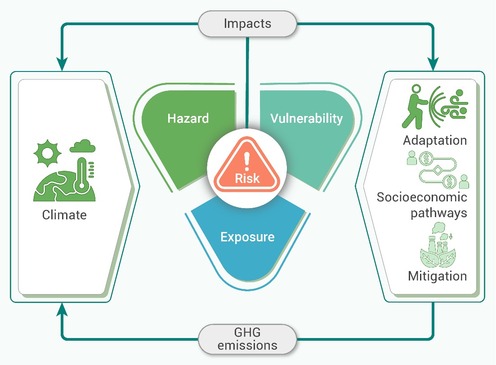
Figure 1.
IPCC’s conceptual framework of climate change risks (adapted from IPCC28).
-
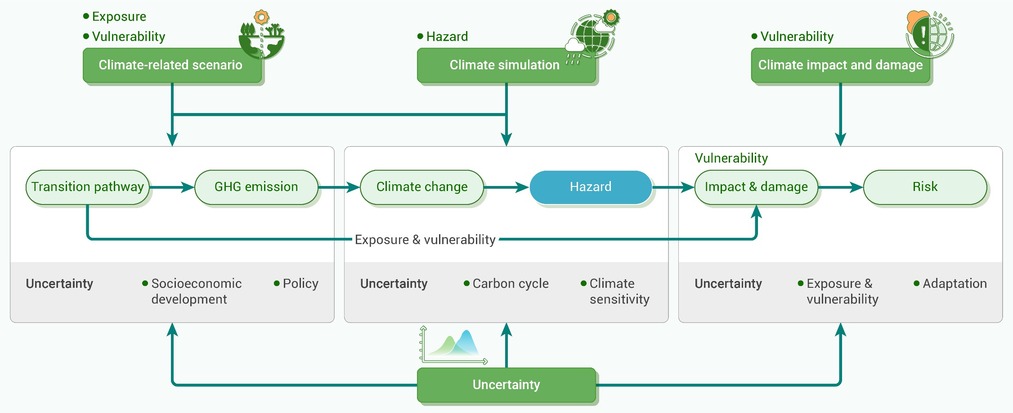
Figure 2.
Integrated assessment framework of climate change risks
-
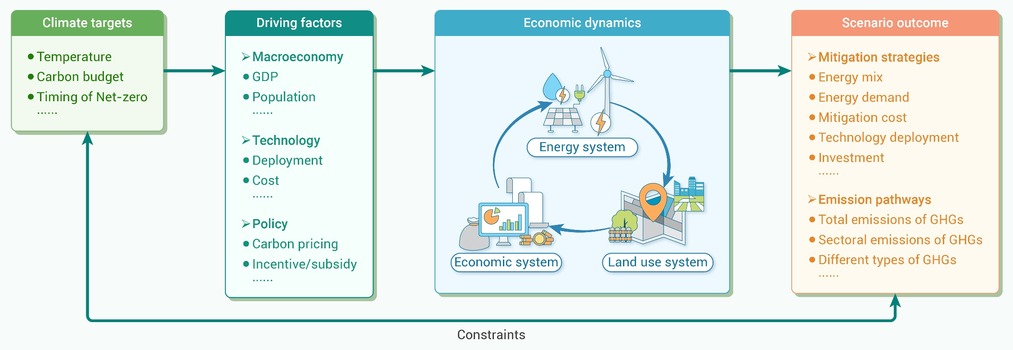
Figure 3.
Construction process of climate mitigation scenarios
-
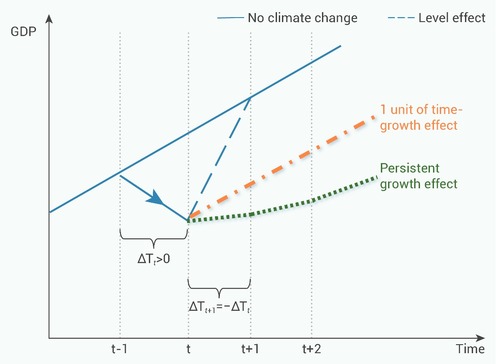
Figure 4.
The persistence of the climate impacts on GDP. It is assumed that the impact of temperature on GDP remains identical in both the level effect and growth effect within the same period.148
