
-
GRAPHICAL ABSTRACT
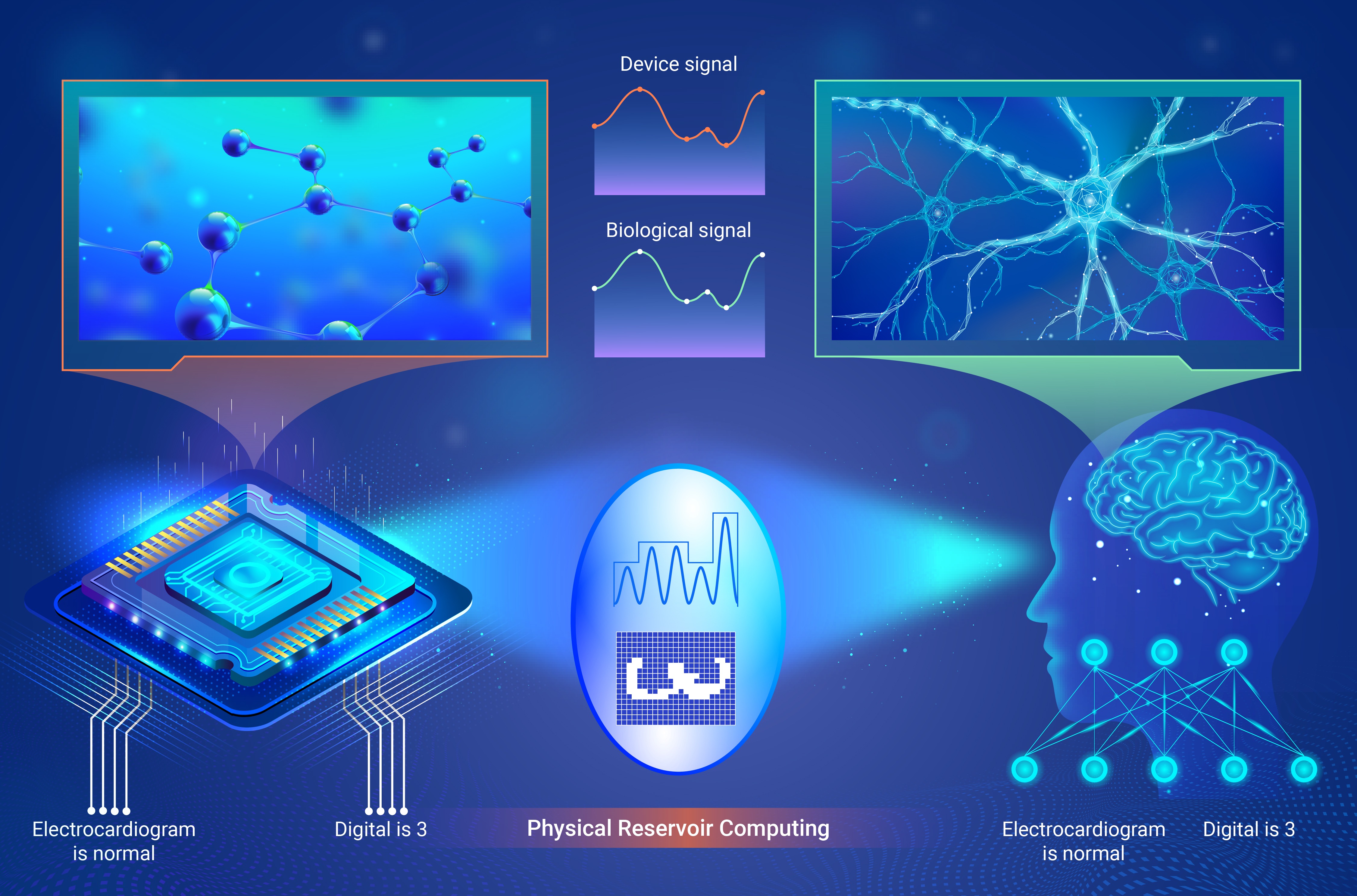
 DownLoad:
Full size image
DownLoad:
Full size image
-
PUBLIC SUMMARY
-
Advancements in physical reservoir computing (PRC) for low-latency, energy-efficient Edge AI.
Highlighting power efficiency, and scalability benefits, among neuromorphic hardware platforms.
Commented challenges like device variability and system stability in heterogeneous integration.
-
-
ABSTRACT
Reservoir computing has emerged as an efficient computational paradigm for processing temporal and dynamic data, driving advancements in neuromorphic electronics for physical implementation. This review covers the advancements in neuromorphic devices for implementing physical reservoir computing, emphasizing device-level innovations that address the challenges of low-latency, energy-efficient, multimodal physical reservoir computing implementations. The advantages, disadvantages, and core challenges of various spatial architectures for building physical reservoir computing systems are discussed. Realistic paths on algorithmic and physical implementations of the input and output layers of the system are investigated, and issues such as heterogeneous device integration, consistent readout, and system stability are analyzed. This topical review emphasizes the reconfigurability and scalability of fully analogized physical reservoir computing architectures and adaptive dynamic nodes. We discuss challenges and future directions of physical reservoir computing across algorithmic, device, architectural, and application domains. This review establishes a foundational framework and provides strategic guidance for implementing physical reservoir computing in neuromorphic edge artificial intelligent systems. -

-
REFERENCES
[1] Xu Y., Liu X., Cao X., et al. (2021). Artificial intelligence: A powerful paradigm for scientific research. Innovation 2:100179. DOI:10.1016/j.xinn.2021.100179 [2] Liang X., Tang J., Zhong Y., et al. (2024). Physical reservoir computing with emerging electronics. Nat. Electron. 7:193−206. DOI:10.1038/s41928-024-01133-z [3] Yan M., Huang C., Bienstman P., et al. (2024). Emerging opportunities and challenges for the future of reservoir computing. Nat. Commun. 15:2056. DOI:10.1038/s41467-024-45187-1 [4] Suarez L. E., Mihalik A., Milisav F., et al. (2024). Connectome-based reservoir computing with the conn2res toolbox. Nat. Commun. 15:656. DOI:10.1038/s41467-024-44900-4 [5] Wu X., Lin Z., Deng J., et al. (2024). Nonmasking-based reservoir computing with a single dynamic memristor for image recognition. Nonlinear Dynam. 112:6663−6678. DOI:10.1007/s11071-024-09338-9 [6] Zhang W., Gao B., Tang J., et al. (2020). Neuro-inspired computing chips. Nat. Electron. 3:371−382. DOI:10.1038/s41928-020-0435-7 [7] Guo D., Yang D., Zhang H., et al. (2025). Deepseek-r1: Incentivizing reasoning capability in llms via reinforcement learning. arXiv preprint arXiv:2501.12948. DOI:10.48550/arXiv.2501.12948. [8] Liu A., Feng B., Xue B., et al. (2024). Deepseek-v3 technical report. arXiv preprint arXiv:2412.19437. DOI:10.48550/arXiv.2412.19437. [9] Liu A., Feng B., Wang B., et al. (2024). Deepseek-v2: A strong, economical, and efficient mixture-of-experts language model. arXiv preprint arXiv:2405.04434. DOI:10.48550/arXiv.2405.04434. [10] Bai L., Chen S., Wang P., et al. (2025). DeepSeek or ChatGPT: Can brain-computer interfaces/brain-inspired computing achieve leapfrog development with large AI models. Brain-X 3:e70021. DOI:10.1002/brx2.70021 [11] Finocchio G., Incorvia J. A. C., Friedman J. S., et al. (2024). Roadmap for unconventional computing with nanotechnology. Nano Futures 8:012001. DOI:10.1088/2399-1984/ad299a [12] Ghenzi N., Park T. W., Kim S. S., et al. (2024). Heterogeneous reservoir computing in second-order Ta2O5/HfO2 memristors. Nanoscale Horiz. 9:427−437. DOI:10.1039/d3nh00493g [13] Guo J. and Wei D. (2024). Chaos prediction of motor based on the integrated method of convolutional neural network and multi-reservoir echo state network. Mod. Phys. Lett. B 1:2450431. DOI:10.1142/s0217984924504311 [14] Jang J., Lee J., Bae J.-H., et al. (2024). InGaZnO-based synaptic transistor with embedded ZnO charge-trapping layer for reservoir computing. Sensor. Actuat. a-Phys. 373:115405. DOI:10.1016/j.sna.2024.115405 [15] Meier D., Íñiguez-González J., Rodrigues D., et al. (2024). Editorial: Focus issue on topological solitons for neuromorphic systems. Neuromorph. Comput. Eng. 4:010202. DOI:10.1088/2634-4386/ad207c [16] Farronato M., Mannocci P., Melegari M., et al. (2023). Reservoir Computing with Charge-Trap Memory Based on a MoS2 Channel for Neuromorphic Engineering. Adv. Mater. 35:e2205381. DOI:10.1002/adma.202205381 [17] Momeni A. and Fleury R. (2022). Electromagnetic wave-based extreme deep learning with nonlinear time-Floquet entanglement. Nat. Commun. 13:2651. DOI:10.1038/s41467-022-30297-5 [18] Zhang H. T., Park T. J., Islam A., et al. (2022). Reconfigurable perovskite nickelate electronics for artificial intelligence. Science 375:533−539. DOI:10.1126/science.abj7943 [19] Zhang Z., Zhao X., Zhang X., et al. (2022). In-sensor reservoir computing system for latent fingerprint recognition with deep ultraviolet photo-synapses and memristor array. Nat. Commun. 13:6590. DOI:10.1038/s41467-022-34230-8 [20] Cazettes F., Mazzucato L., Murakami M., et al. (2023). A reservoir of foraging decision variables in the mouse brain. Nat. Neurosci. 26:840−849. DOI:10.1038/s41593-023-01305-8 [21] Tan H. and van Dijken S. (2023). Dynamic machine vision with retinomorphic photomemristor-reservoir computing. Nat. Commun. 14. 2169,DOI:10.1038/s41467-023-37886-y. [22] Vidamour I. T., Swindells C., Venkat G., et al. (2023). Reconfigurable reservoir computing in a magnetic metamaterial. Commun. Phys. 6:230. DOI:10.1038/s42005-023-01352-4 [23] Lin Y., Chen X., Zhang Q., et al. (2024). Nano device fabrication for in-memory and in-sensor reservoir computing. Int. J. Extreme Manuf. 7:012002. DOI:10.1088/2631-7990/ad88bb [24] Li H., Yu Z., Zhao Q., et al. (2022). Accelerating deep learning with high energy efficiency: From microchip to physical systems. Innovation 3:100252. DOI:10.1016/j.xinn.2022.100252 [25] Fan L. (2021). Mapping the Human Brain: What Is the Next Frontier. Innovation 2:100073. DOI:10.1016/j.xinn.2020.100073 [26] Enel P., Procyk E., Quilodran R., et al. (2016). Reservoir Computing Properties of Neural Dynamics in Prefrontal Cortex. PLoS Comput. Biol. 12:e1004967. DOI:10.1371/journal.pcbi.1004967 [27] Mante V., Sussillo D., Shenoy K. V., et al. (2013). Context-dependent computation by recurrent dynamics in prefrontal cortex. Nature 503:78−84. DOI:10.1038/nature12742 [28] Wu F., Yu P. and Mao L. (2023). Neurotronics: Communicating with brain through chemically intelligent materials. Innov. Mater. 1:100007. DOI:10.59717/j.xinn-mater.2023.100007 [29] Wang D. L., Nie Y. K., Hu G. L., et al. (2024). Ultrafast silicon photonic reservoir computing engine delivering over 200 TOPS. Nat. Commun. 15. DOI:10.1038/s41467-024-55172-3. [30] Appeltant L., Soriano M. C., Van der Sande G., et al. (2011). Information processing using a single dynamical node as complex system. Nat. Commun. 2:468. DOI:10.1038/ncomms1476 [31] Du C., Cai F., Zidan M. A., et al. (2017). Reservoir computing using dynamic memristors for temporal information processing. Nat. Commun. 8:2204. DOI:10.1038/s41467-017-02337-y [32] Sun L., Wang Z., Jiang J., et al. (2021). In-sensor reservoir computing for language learning via two-dimensional memristors. Sci. Adv. 7:1455. DOI:10.1126/sciadv.abg1455 [33] Lao J., Yan M., Tian B., et al. (2022). Ultralow-Power Machine Vision with Self-Powered Sensor Reservoir. Adv. Sci. 9:e2106092. DOI:10.1002/advs.202106092 [34] Liang X., Zhong Y., Tang J., et al. (2022). Rotating neurons for all-analog implementation of cyclic reservoir computing. Nat. Commun. 13:1549. DOI:10.1038/s41467-022-29260-1 [35] Chen R., Yang H., Li R., et al. (2024). Thin-film transistor for temporal self-adaptive reservoir computing with closed-loop architecture. Sci. Adv. 10:eadl1299. DOI:10.1126/sciadv.adl1299 [36] Wang S., Chen X., Zhao C., et al. (2023). An organic electrochemical transistor for multi-modal sensing, memory and processing. Nat. Electron. 6:281−291. DOI:10.1038/s41928-023-00950-y [37] Liu K., Dang B., Zhang T., et al. (2022). Multilayer Reservoir Computing Based on Ferroelectric α-In2Se3 for Hierarchical Information Processing. Adv. Mater. 34:e2108826. DOI:10.1002/adma.202108826 [38] Lin N., Wang S. C., Li Y., et al. (2025). Resistive memory-based zero-shot liquid state machine for multimodal event data learning. Nat. Comput. Sci. 5:37−47. DOI:10.1038/s43588-024-00751-z [39] Jaeger H. (2001). The "echo state" approach to analysing and training recurrent neural networks-with an erratum note. Bonn, Germany: German Nat. Res. Center for Inf. Technol. GMD Tech. Rep. 148:13. [40] Lin N., Chen J., Zhao R., et al. (2024). In-memory and in-sensor reservoir computing with memristive devices. APL Mach. Learn. 2:901. DOI:10.1063/5.0174863 [41] Dambre J., Verstraeten D., Schrauwen B., et al. (2012). Information processing capacity of dynamical systems. Sci. Rep. 2:514. DOI:10.1038/srep00514 [42] Maass W., Natschlager T. and Markram H. (2002). Real-time computing without stable states: a new framework for neural computation based on perturbations. Neural Comput. 14:2531−2560. DOI:10.1162/089976602760407955 [43] Natschläger T., Maass W. and Markram H. (2002). The" liquid computer": A novel strategy for real-time computing on time series. Telematik 8:39−43. [44] Fernando C. and Sojakka S. (2003). Pattern Recognition in a Bucket. In W. Banzhaf, J. Ziegler, T. Christaller, et al., eds. Advances in Artificial Life. Springer Berlin Heidelberg. [45] Boyd S. and Chua L. (1985). Fading memory and the problem of approximating nonlinear operators with Volterra series. IEEE T. Circ. Syst. 32:1150−1161. DOI:10.1109/tcs.1985.1085649 [46] Atiya A. F. and Parlos A. G. (2000). New results on recurrent network training: unifying the algorithms and accelerating convergence. IEEE Trans. Neural Netw. 11:697−709. DOI:10.1109/72.846741 [47] Bertschinger N. and Natschlager T. (2004). Real-time computation at the edge of chaos in recurrent neural networks. Neural Comput. 16:1413−1436. DOI:10.1162/089976604323057443 [48] Larger L., Goedgebuer J.-P. and Udaltsov V. (2004). Ikeda-based nonlinear delayed dynamics for application to secure optical transmission systems using chaos. C.R. Phys. 5:669−681. DOI:10.1016/j.crhy.2004.05.003 [49] Verstraeten D., Schrauwen B., Stroobandt D., et al. (2005). Isolated word recognition with the Liquid State Machine: a case study. Inform. Process. Lett. 95:521−528. DOI:10.1016/j.ipl.2005.05.019 [50] Legenstein R. and Maass W. (2007). Edge of chaos and prediction of computational performance for neural circuit models. Neural Netw. 20:323−334. DOI:10.1016/j.neunet.2007.04.017 [51] Sacchi R., Ozturk M. C., Principe J. C., et al. (2007). Water inflow forecasting using the echo state network: a brazilian case study. 2007 International Joint Conference on Neural Networks. IEEE. [52] Vandoorne K., Dierckx W., Schrauwen B., et al. (2008). Toward optical signal processing using photonic reservoir computing. Opt. Express 16:11182−11192. DOI:10.1364/oe.16.011182 [53] Sillin H. O., Aguilera R., Shieh H. H., et al. (2013). A theoretical and experimental study of neuromorphic atomic switch networks for reservoir computing. Nanotechnology 24:384004. DOI:10.1088/0957-4484/24/38/384004 [54] Triefenbach F., Jalalvand A., Demuynck K., et al. (2013). Acoustic Modeling With Hierarchical Reservoirs. IEEE T. Audio Speech 21:2439−2450. DOI:10.1109/tasl.2013.2280209 [55] Vandoorne K., Mechet P., Van Vaerenbergh T., et al. (2014). Experimental demonstration of reservoir computing on a silicon photonics chip. Nat. Commun. 5:3541. 3541,DOI:10.1038/ncomms4541. [56] Appeltant L., Van der Sande G., Danckaert J., et al. (2014). Constructing optimized binary masks for reservoir computing with delay systems. Sci. Rep. 4:3629. DOI:10.1038/srep03629 [57] Alomar M. L., Soriano M. C., Escalona-Moran M., et al. (2015). Digital Implementation of a Single Dynamical Node Reservoir Computer. IEEE T. CIRCUITS-II 62:977−981. DOI:10.1109/tcsii.2015.2458071 [58] Kudithipudi D., Saleh Q., Merkel C., et al. (2015). Design and Analysis of a Neuromemristive Reservoir Computing Architecture for Biosignal Processing. Front. Neurosci. 9:502. DOI:10.3389/fnins.2015.00502 [59] Fujii K. and Nakajima K. (2017). Harnessing Disordered-Ensemble Quantum Dynamics for Machine Learning. Phys. Rev. Appl. 8:024030. DOI:10.1103/PhysRevApplied.8.024030 [60] Tran S. D. and Teuscher C. (2017). Memcapacitive reservoir computing. 2017 IEEE/ACM International Symposium on Nanoscale Architectures (NANOARCH). IEEE. [61] Dion G., Mejaouri S. and Sylvestre J. (2018). Reservoir computing with a single delay-coupled non-linear mechanical oscillator. J. Appl. Phys. 124:2132. DOI:10.1063/1.5038038 [62] Nakane R., Tanaka G. and Hirose A. (2018). Reservoir Computing With Spin Waves Excited in a Garnet Film. IEEE Access 6:4462−4469. DOI:10.1109/access.2018.2794584 [63] Tanaka H., Akai-Kasaya M., TermehYousefi A., et al. (2018). A molecular neuromorphic network device consisting of single-walled carbon nanotubes complexed with polyoxometalate. Nat. Commun. 9:2693. DOI:10.1038/s41467-018-04886-2 [64] Viero Y., Guérin D., Vladyka A., et al. (2018). Light-Stimulatable Molecules/Nanoparticles Networks for Switchable Logical Functions and Reservoir Computing. Adv. Funct. Mater. 28:1801506. DOI:10.1002/adfm.201801506 [65] Jiang W. C., Chen L. N., Zhou K. Y., et al. (2019). Physical reservoir computing using magnetic skyrmion memristor and spin torque nano-oscillator. Appl. Phys. Lett. 115:2403. DOI:10.1063/1.5115183 [66] Gauthier D. J., Bollt E., Griffith A., et al. (2021). Next generation reservoir computing. Nat. Commun. 12:5564. DOI:10.1038/s41467-021-25801-2 [67] Liang X., Luo Y., Pei Y., et al. (2022). Multimode transistors and neural networks based on ion-dynamic capacitance. Nat. Electron. 5:859−869. DOI:10.1038/s41928-022-00876-x [68] S. S., NI. O. and CR. C. (2022). Reply to Sanjay B. Kulkarni, Pankaj M. Joshi, Marco Bandini, et al.'s Letter to the Editor re: Sanad Saad, Nadir I. Osman, Christopher R. Chapple. Female Urethra: Is Ventral the True Dorsal? Eur Urol 2020;78:e218-9. Eur. Urol. 81:e16-e17. DOI:10.1016/j.eururo.2021.09.032. [69] Zhong Y., Tang J., Li X., et al. (2022). A memristor-based analogue reservoir computing system for real-time and power-efficient signal processing. Nat. Electron. 5:672−681. DOI:10.1038/s41928-022-00838-3 [70] Liu K., Zhang T., Dang B., et al. (2022). An optoelectronic synapse based on α-In2Se3 with controllable temporal dynamics for multimode and multiscale reservoir computing. Nat. Electron. 5:761−773. DOI:10.1038/s41928-022-00847-2 [71] Wang S., Li Y., Wang D., et al. (2023). Echo state graph neural networks with analogue random resistive memory arrays. Nat. Mach. Intell. 5:104−113. DOI:10.1038/s42256-023-00609-5 [72] Lee O., Wei T., Stenning K. D., et al. (2024). Task-adaptive physical reservoir computing. Nat. Mater. 23:79−87. DOI:10.1038/s41563-023-01698-8 [73] Liu D. Y., Tian X. Y., Bai J., et al. (2024). A wearable in-sensor computing platform based on stretchable organic electrochemical transistors. Nat. Electron. 5:1−10. DOI:10.1038/s41928-024-01250-9 [74] Kim J., Park E. C., Shin W., et al. (2024). Analog reservoir computing via ferroelectric mixed phase boundary transistors. Nat. Commun. 15:9147. DOI:10.1038/s41467-024-53321-2 [75] Yu J., Li Y., Sun W., et al. (2021). Energy efficient and robust reservoir computing system using ultrathin (3.5 nm) ferroelectric tunneling junctions for temporal data learning. 2021 Symposium on VLSI Technology. IEEE. [76] Jaeger H. and Haas H. (2004). Harnessing nonlinearity: predicting chaotic systems and saving energy in wireless communication. Science 304:78−80. DOI:10.1126/science.1091277 [77] Gallicchio C., Micheli A. and Pedrelli L. (2017). Deep reservoir computing: A critical experimental analysis. Neurocomputing 268:87−99. DOI:10.1016/j.neucom.2016.12.089 [78] Petre P. and Cruz-Albrecht J. (2016). Neuromorphic mixed-signal circuitry for Asynchronous Pulse Processing. 2016 IEEE International Conference on Rebooting Computing (ICRC). [79] Bai K. and Yi Y. (2018). DFR: An Energy-efficient Analog Delay Feedback Reservoir Computing System for Brain-inspired Computing. Acm J. Emerg. Tech. Com. 14:1−22. DOI:10.1145/3264659 [80] Elbedwehy A. N., El-Mohandes A. M., Elnakib A., et al. (2022). Fpga-based reservoir computing system for ecg denoising. Microprocess. Microsyst. 91. DOI:10.1016/j.micpro.2022.104549. [81] Shen Y., Harris N. C., Skirlo S., et al. (2017). Deep learning with coherent nanophotonic circuits. Nat. Photonics 11:441−446. DOI:10.1038/nphoton.2017.93 [82] Nakajima M., Tanaka K. and Hashimoto T. (2021). Scalable reservoir computing on coherent linear photonic processor. Commun. Phys. 4:20. DOI:10.1038/s42005-021-00519-1 [83] Duport F., Schneider B., Smerieri A., et al. (2012). All-optical reservoir computing. Opt. Express 20:22783−22795. DOI:10.1364/OE.20.022783 [84] Qin J., Zhao Q., Yin H., et al. (2017). Numerical Simulation and Experiment on Optical Packet Header Recognition Utilizing Reservoir Computing Based on Optoelectronic Feedback. IEEE Photonics J. 9:1-11. 7901311,DOI:10.1109/jphot.2017.2658028. [85] Ghosh S., Opala A., Matuszewski M., et al. (2019). Quantum reservoir processing. Npj Quantum Inf. 5:35. DOI:10.1038/s41534-019-0149-8 [86] Ghosh S., Paterek T. and Liew T. C. H. (2019). Quantum Neuromorphic Platform for Quantum State Preparation. Phys. Rev. Lett. 123:260404. DOI:10.1103/PhysRevLett.123.260404 [87] Zhu X., Wang Q. and Lu W. D. (2020). Memristor networks for real-time neural activity analysis. Nat. Commun. 11:2439. DOI:10.1038/s41467-020-16261-1 [88] Jang Y. H., Kim W., Kim J., et al. (2021). Time-varying data processing with nonvolatile memristor-based temporal kernel. Nat. Commun. 12:5727. DOI:10.1038/s41467-021-25925-5 [89] Zhong Y., Tang J., Li X., et al. (2021). Dynamic memristor-based reservoir computing for high-efficiency temporal signal processing. Nat. Commun. 12:408. DOI:10.1038/s41467-020-20692-1 [90] Chen Z., Li W., Fan Z., et al. (2023). All-ferroelectric implementation of reservoir computing. Nat. Commun. 14:3585. DOI:10.1038/s41467-023-39371-y [91] Duong N. T., Chien Y.-C., Xiang H., et al. (2023). Dynamic Ferroelectric Transistor‐Based Reservoir Computing for Spatiotemporal Information Processing. Adv. Intell. Syst. 5:2300009. DOI:10.1002/aisy.202300009 [92] Tannirkulam Chandrasekaran S., Prashant Bhanushali S., Banerjee I., et al. (2021). Toward Real-Time, At-Home Patient Health Monitoring Using Reservoir Computing CMOS IC. IEEE J. Em. Sel. Top. C. 11:829−839. DOI:10.1109/jetcas.2021.3128587 [93] Chen X., Weng T., Li C., et al. (2022). Synchronization of reservoir computing models via a nonlinear controller. Physica A 607:128205. DOI:10.1016/j.physa.2022.128205 [94] Soriano M. C., Ortin S., Brunner D., et al. (2013). Optoelectronic reservoir computing: tackling noise-induced performance degradation. Opt. Express 21:12−20. DOI:10.1364/OE.21.000012 [95] Zhang H., Feng X., Li B., et al. (2014). Integrated photonic reservoir computing based on hierarchical time-multiplexing structure. Opt. Express 22:31356−31370. DOI:10.1364/OE.22.031356 [96] Du W., Li C., Huang Y., et al. (2022). An Optoelectronic Reservoir Computing for Temporal Information Processing. IEEE Electron Device Lett. 43:406−409. DOI:10.1109/led.2022.3142257 [97] Nakajima M., Inoue K., Tanaka K., et al. (2022). Physical deep learning with biologically inspired training method: gradient-free approach for physical hardware. Nat. Commun. 13:7847. DOI:10.1038/s41467-022-35216-2 [98] Bhovad P. and Li S. (2021). Physical reservoir computing with origami and its application to robotic crawling. Sci. Rep. 11:13002. DOI:10.1038/s41598-021-92257-1 [99] Chen J., Nurdin H. I. and Yamamoto N. (2020). Temporal Information Processing on Noisy Quantum Computers. Phys. Rev. Appl. 14:024065. DOI:10.1103/PhysRevApplied.14.024065 [100] Ghosh S., Nakajima K., Krisnanda T., et al. (2021). Quantum Neuromorphic Computing with Reservoir Computing Networks. Adv. Quantum. Technol. 4:2100053. DOI:10.1002/qute.202100053 [101] Tran Q. H. and Nakajima K. (2021). Learning Temporal Quantum Tomography. Phys. Rev. Lett. 127:260401. DOI:10.1103/PhysRevLett.127.260401 [102] Kubota T., Suzuki Y., Kobayashi S., et al. (2023). Temporal information processing induced by quantum noise. Phys. Rev. Res. 5:023057. DOI:10.1103/PhysRevResearch.5.023057 [103] Larger L., Baylón-Fuentes A., Martinenghi R., et al. (2017). High-Speed Photonic Reservoir Computing Using a Time-Delay-Based Architecture: Million Words per Second Classification. Phys. Rev. X 7:011015. DOI:10.1103/PhysRevX.7.011015 [104] Rafayelyan M., Dong J., Tan Y., et al. (2020). Large-Scale Optical Reservoir Computing for Spatiotemporal Chaotic Systems Prediction. Phys. Rev. X 10:041037. DOI:10.1103/PhysRevX.10.041037 [105] Larger L., Soriano M. C., Brunner D., et al. (2012). Photonic information processing beyond Turing: an optoelectronic implementation of reservoir computing. Opt. Express 20:3241−3249. DOI:10.1364/OE.20.003241 [106] Lukoševičius M. and Jaeger H. (2009). Reservoir computing approaches to recurrent neural network training. Comput. Sci. Rev. 3:127−149. DOI:10.1016/j.cosrev.2009.03.005 [107] Kendall J. D. and Kumar S. (2020). The building blocks of a brain-inspired computer. Appl. Phys. Rev. 7:1305. DOI:10.1063/1.5129306 [108] Mujal P., Martínez‐Peña R., Nokkala J., et al. (2021). Opportunities in Quantum Reservoir Computing and Extreme Learning Machines. Adv. Quantum. Technol. 4:2100027. DOI:10.1002/qute.202100027 [109] Cao J., Zhang X., Cheng H., et al. (2022). Emerging dynamic memristors for neuromorphic reservoir computing. Nanoscale 14:289−298. DOI:10.1039/d1nr06680c [110] Kumar S., Wang X., Strachan J. P., et al. (2022). Dynamical memristors for higher-complexity neuromorphic computing. Nat. Rev. Mater. 7:575−591. DOI:10.1038/s41578-022-00434-z [111] Tanaka H., Azhari S., Usami Y., et al. (2022). In-materio computing in random networks of carbon nanotubes complexed with chemically dynamic molecules: a review. Neuromorph. Comput. Eng. 2:022002. DOI:10.1088/2634-4386/ac676a [112] Deng X., Kang N. and Zhang Z. (2023). Carbon-based cryoelectronics: graphene and carbon nanotube. Chip 2:100064. DOI:10.1016/j.chip.2023.100064 [113] Qi Z., Mi L., Qian H., et al. (2023). Physical Reservoir Computing Based on Nanoscale Materials and Devices. Adv. Funct. Mater. 33:2306149. DOI:10.1002/adfm.202306149 [114] Chakraborty N. N., Ameli S. O., Das H., et al. (2024). Hardware software co-design for leveraging STDP in a memristive neuroprocessor. Neuromorph. Comput. Eng. 4:024010. DOI:10.1088/2634-4386/ad462b [115] Everschor-Sitte K., Majumdar A., Wolk K., et al. (2024). Topological magnetic and ferroelectric systems for reservoir computing. Nat. Rev. Phys. 6:455−462. DOI:10.1038/s42254-024-00729-w [116] Nako E., Toprasertpong K., Nakane R., et al. (2022). Experimental demonstration of novel scheme of HZO/Si FeFET reservoir computing with parallel data processing for speech recognition. 2022 IEEE Symposium on VLSI Technology and Circuits (VLSI Technology and Circuits). [117] Tang M., Zhan X., Wu S., et al. (2022). A Compact Fully Ferroelectric-FETs Reservoir Computing Network With Sub-100 ns Operating Speed. IEEE Electron Device Lett. 43:1555−1558. DOI:10.1109/led.2022.3188496 [118] Tian B., Liu L., Yan M., et al. (2018). A Robust Artificial Synapse Based on Organic Ferroelectric Polymer. Adv. Electron. Mater. 5:1800600. DOI:10.1002/aelm.201800600 [119] Toprasertpong K., Nako E., Wang Z., et al. (2022). Reservoir computing on a silicon platform with a ferroelectric field-effect transistor. Communications Engineering 1:21. DOI:10.1038/s44172-022-00021-8 [120] Pei M., Zhu Y., Liu S., et al. (2023). Power-Efficient Multisensory Reservoir Computing Based on Zr-Doped HfO2 Memcapacitive Synapse Arrays. Adv. Mater. 35. 2305609,DOI:10.1002/adma.202305609. [121] Cao Y., Zhang Z., Qin B. W., et al. (2024). Physical Reservoir Computing Using van der Waals Ferroelectrics for Acoustic Keyword Spotting. ACS Nano 18:23265−23276. DOI:10.1021/acsnano.4c06144 [122] Lee J., Lee S., Kim J., et al. (2024). Temporal data learning of ferroelectric HfAlOx capacitors for reservoir computing system. J. Alloys Compd. 990:174371. DOI:10.1016/j.jallcom.2024.174371 [123] Torrejon J., Riou M., Araujo F. A., et al. (2017). Neuromorphic computing with nanoscale spintronic oscillators. Nature 547:428−431. DOI:10.1038/nature23011 [124] Sun W., Zhang W., Yu J., et al. (2022). 3d reservoir computing with high area efficiency (5.12 tops/mm2) implemented by 3d dynamic memristor array for temporal signal processing. 2022 IEEE Symposium on VLSI Technology and Circuits (VLSI Technology and Circuits). IEEE. [125] Kanao T., Suto H., Mizushima K., et al. (2019). Reservoir Computing on Spin-Torque Oscillator Array. Phys. Rev. Appl. 12:4052. DOI:10.1103/PhysRevApplied.12.024052 [126] Marković D. (2019). Reservoir computing with the frequency, phase and amplitude of spin-torque nano-oscillators. Appl. Phys. Lett. 114:2409. DOI:10.1063/1.5079305 [127] Nakajima K., Fujii K., Negoro M., et al. (2019). Boosting Computational Power through Spatial Multiplexing in Quantum Reservoir Computing. Phys. Rev. Appl. 11:4021. DOI:10.1103/PhysRevApplied.11.034021 [128] Tsunegi S., Taniguchi T., Nakajima K., et al. (2019). Physical reservoir computing based on spin torque oscillator with forced synchronization. Appl. Phys. Lett. 114:4109. DOI:10.1063/1.5081797 [129] Akashi N., Yamaguchi T., Tsunegi S., et al. (2020). Input-driven bifurcations and information processing capacity in spintronics reservoirs. Phys. Rev. Res. 2:3303. DOI:10.1103/PhysRevResearch.2.043303 [130] Martinez-Pena R., Giorgi G. L., Nokkala J., et al. (2021). Dynamical Phase Transitions in Quantum Reservoir Computing. Phys. Rev. Lett. 127:100502. DOI:10.1103/PhysRevLett.127.100502 [131] Nakane R., Hirose A. and Tanaka G. (2021). Spin waves propagating through a stripe magnetic domain structure and their applications to reservoir computing. Phys. Rev. Res. 3:3243. DOI:10.1103/PhysRevResearch.3.033243 [132] Watt S., Kostylev M., Ustinov A. B., et al. (2021). Implementing a Magnonic Reservoir Computer Model Based on Time-Delay Multiplexing. Phys. Rev. Appl. 15:4060. DOI:10.1103/PhysRevApplied.15.064060 [133] Akashi N., Kuniyoshi Y., Tsunegi S., et al. (2022). A Coupled Spintronics Neuromorphic Approach for High-Performance Reservoir Computing. Adv. Intell. Syst. 4:389−390. DOI:10.1002/aisy.202200123 [134] Gartside J. C., Stenning K. D., Vanstone A., et al. (2022). Reconfigurable training and reservoir computing in an artificial spin-vortex ice via spin-wave fingerprinting. Nat. Nanotechnol. 17:460−469. DOI:10.1038/s41565-022-01091-7 [135] Yokouchi T., Sugimoto S., Rana B., et al. (2022). Pattern recognition with neuromorphic computing using magnetic field-induced dynamics of skyrmions. Sci. Adv. 8:eabq5652. DOI:10.1126/sciadv.abq5652 [136] Nakane R., Hirose A. and Tanaka G. (2023). Performance Enhancement of a Spin-Wave-Based Reservoir Computing System Utilizing Different Physical Conditions. Phys. Rev. Appl. 19:034047. DOI:10.1103/PhysRevApplied.19.034047 [137] Sun Y., Lin T., Lei N., et al. (2023). Experimental demonstration of a skyrmion-enhanced strain-mediated physical reservoir computing system. Nat. Commun. 14:3434. DOI:10.1038/s41467-023-39207-9 [138] Diaz-Alvarez A., Higuchi R., Sanz-Leon P., et al. (2019). Emergent dynamics of neuromorphic nanowire networks. Sci. Rep. 9:14920. DOI:10.1038/s41598-019-51330-6 [139] Fu K., Zhu R., Loeffler A., et al. (2020). Reservoir computing with neuromemristive nanowire networks. 2020 International Joint Conference on Neural Networks (IJCNN). IEEE. [140] Hochstetter J., Zhu R., Loeffler A., et al. (2021). Avalanches and edge-of-chaos learning in neuromorphic nanowire networks. Nat. Commun. 12:4008. DOI:10.1038/s41467-021-24260-z [141] Lilak S., Woods W., Scharnhorst K., et al. (2021). Spoken Digit Classification by In-Materio Reservoir Computing With Neuromorphic Atomic Switch Networks. Front. Nanotechnol. 3:675792. DOI:10.3389/fnano.2021.675792 [142] Zhu R., Hochstetter J., Loeffler A., et al. (2021). Information dynamics in neuromorphic nanowire networks. Sci. Rep. 11:13047. DOI:10.1038/s41598-021-92170-7 [143] Daniels R. K., Mallinson J. B., Heywood Z. E., et al. (2022). Reservoir computing with 3D nanowire networks. Neural Netw. 154:122−130. DOI:10.1016/j.neunet.2022.07.001 [144] Milano G., Montano K. and Ricciardi C. (2023). In materia implementation strategies of physical reservoir computing with memristive nanonetworks. J. Phys. D: Appl. Phys. 56:084005. DOI:10.1088/1361-6463/acb7ff [145] Dale M., Miller J. F., Stepney S., et al. (2019). A substrate-independent framework to characterize reservoir computers. Proc. Math. Phys. Eng. Sci. 475:20180723. DOI:10.1098/rspa.2018.0723 [146] Cucchi M., Gruener C., Petrauskas L., et al. (2021). Reservoir computing with biocompatible organic electrochemical networks for brain-inspired biosignal classification. Sci. Adv. 7:eabh0693. DOI:10.1126/sciadv.abh0693 [147] Kan S., Nakajima K., Asai T., et al. (2022). Physical Implementation of Reservoir Computing through Electrochemical Reaction. Adv. Sci. 9:e2104076. DOI:10.1002/advs.202104076 [148] Usami Y., van de Ven B., Mathew D. G., et al. (2021). In-Materio Reservoir Computing in a Sulfonated Polyaniline Network. Adv. Mater. 33:e2102688. DOI:10.1002/adma.202102688 [149] Koh S. G., Shima H., Naitoh Y., et al. (2022). Reservoir computing with dielectric relaxation at an electrode-ionic liquid interface. Sci. Rep. 12:6958. DOI:10.1038/s41598-022-10152-9 [150] Nishioka D., Tsuchiya T., Namiki W., et al. (2022). Edge-of-chaos learning achieved by ion-electron-coupled dynamics in an ion-gating reservoir. Sci. Adv. 8:eade1156. DOI:10.1126/sciadv.ade1156 [151] Baek E., Song S., Baek C.-K., et al. (2024). Neuromorphic dendritic network computation with silent synapses for visual motion perception. Nat. Electron. 7:454−465. DOI:10.1038/s41928-024-01171-7 [152] Fang R., Li X., Ren K., et al. (2024). Improved dynamic characteristics of oxide electrolyte-gated transistor for time-delayed reservoir computing. Appl. Phys. Lett. 124:053505. DOI:10.1063/5.0185402 [153] Fang R., Wang S., Zhang W., et al. (2024). Oxide-Based Electrolyte-Gated Transistors with Stable and Tunable Relaxation Responses for Deep Time-Delayed Reservoir Computing. Adv. Electron. Mater. 10:2300652. DOI:10.1002/aelm.202300652 [154] Jiang C., Xu H., Yang L., et al. (2024). Neuromorphic antennal sensory system. Nat. Commun. 15:2109. DOI:10.1038/s41467-024-46393-7 [155] Jiang Y., Shi S., Wang S., et al. (2024). In-sensor reservoir computing for gas pattern recognition using Pt-AlGaN/GaN HEMTs. Device 3:100550. DOI:10.1016/j.device.2024.100550 [156] Li P., Zhang M., Zhou Q., et al. (2024). Reconfigurable optoelectronic transistors for multimodal recognition. Nat. Commun. 15:3257. DOI:10.1038/s41467-024-47580-2 [157] Liu K., Li J., Li F., et al. (2023). A multi-terminal ion-controlled transistor with multifunctionality and wide temporal dynamics for reservoir computing. Nano Res. 17:4444−4453. DOI:10.1007/s12274-023-6343-1 [158] Zha J., Xia Y., Shi S., et al. (2024). A 2D Heterostructure-Based Multifunctional Floating Gate Memory Device for Multimodal Reservoir Computing. Adv. Mater. 36:e2308502. DOI:10.1002/adma.202308502 [159] Liu R., He Y., Zhu X., et al. (2024). Hardware-Feasible and Efficient N-Type Organic Neuromorphic Signal Recognition via Reservoir Computing. Adv. Mater. 10:e2409258. DOI:10.1002/adma.202409258 [160] Merkel C., Saleh Q., Donahue C., et al. (2014). Memristive Reservoir Computing Architecture for Epileptic Seizure Detection. Procedia Comput. Sci. 41:249−254. DOI:10.1016/j.procs.2014.11.110 [161] Midya R., Wang Z., Asapu S., et al. (2019). Reservoir Computing Using Diffusive Memristors. Adv. Intell. Syst. 1:1900084. DOI:10.1002/aisy.201900084 [162] Tanaka G., Yamane T., Heroux J. B., et al. (2019). Recent advances in physical reservoir computing: A review. Neural Netw. 115:100−123. DOI:10.1016/j.neunet.2019.03.005 [163] Mao J.-Y., Zheng Z., Xiong Z.-Y., et al. (2020). Lead-free monocrystalline perovskite resistive switching device for temporal information processing. Nano Energy 71:104616. DOI:10.1016/j.nanoen.2020.104616 [164] Wang T., Huang H. M., Wang X. X., et al. (2021). An artificial olfactory inference system based on memristive devices. InfoMat 3:804−813. DOI:10.1002/inf2.12196 [165] Yang J., Cho H., Ryu H., et al. (2021). Tunable Synaptic Characteristics of a Ti/TiO(2)/Si Memory Device for Reservoir Computing. ACS Appl. Mater. Inter. 13:33244−33252. DOI:10.1021/acsami.1c06618 [166] Jaafar A. H., Shao L., Dai P., et al. (2022). 3D-structured mesoporous silica memristors for neuromorphic switching and reservoir computing. Nanoscale 14:17170−17181. DOI:10.1039/d2nr05012a [167] Kim D., Shin J. and Kim S. (2022). Implementation of reservoir computing using volatile WO -based memristor. Appl. Surf. Sci. 599:153876. DOI:10.1016/j.apsusc.2022.153876 [168] Lyapunov N., Zheng X. D., Yang K., et al. (2022). A Bifunctional Memristor Enables Multiple Neuromorphic Computing Applications. Adv. Electron. Mater. 8:2101235. DOI:10.1002/aelm.202101235 [169] Tanaka G. and Nakane R. (2022). Simulation platform for pattern recognition based on reservoir computing with memristor networks. Sci. Rep. 12:9868. DOI:10.1038/s41598-022-13687-z [170] Armendarez N. X., Mohamed A. S., Dhungel A., et al. (2024). Brain-Inspired Reservoir Computing Using Memristors with Tunable Dynamics and Short-Term Plasticity. ACS Appl. Mater. Inter. 16:6176−6188. DOI:10.1021/acsami.3c16003 [171] Baccetti V., Zhu R., Kuncic Z., et al. (2024). Ergodicity, lack thereof, and the performance of reservoir computing with memristive networks. Nano Express 5:015021. DOI:10.1088/2632-959X/ad2999 [172] Ju D. and Kim S. (2024). Temporal multibit operation of dynamic memristor for reservoir computing. Results Phys. 61:107796. DOI:10.1016/j.rinp.2024.107796 [173] Lee D. K., Noh G., Oh S., et al. (2024). Crystallinity-controlled volatility tuning of ZrO2 memristor for physical reservoir computing. InfoMat 4:e12635. DOI:10.1002/inf2.12635 [174] Lee Y., Huang Y., Chang Y. F., et al. (2024). Programmable Retention Characteristics in MoS2-Based Atomristors for Neuromorphic and Reservoir Computing Systems. ACS Nano 18:14327−14338. DOI:10.1021/acsnano.4c00333 [175] Dang B., Zhang T., Wu X., et al. (2024). Reconfigurable in-sensor processing based on a multi-phototransistor-one-memristor array. Nat. Electron. 7:991−1003. DOI:10.1038/s41928-024-01280-3 [176] Liang X., Zhong Y., Li X., et al. (2022). A Physical Reservoir Computing Model Based on Volatile Memristor for Temporal Signal Processing. 2022 29th IEEE International Conference on Electronics, Circuits and Systems (ICECS). IEEE. [177] John R. A., Demirag Y., Shynkarenko Y., et al. (2022). Reconfigurable halide perovskite nanocrystal memristors for neuromorphic computing. Nat. Commun. 13:2074. DOI:10.1038/s41467-022-29727-1 [178] Jiang N., Tang J., Zhang W., et al. (2023). Bioinspired In-Sensor Reservoir Computing for Self-Adaptive Visual Recognition with Two-Dimensional Dual-Mode Phototransistors. Adv. Opt. Mater. 11:2300271. DOI:10.1002/adom.202300271 [179] Verstraeten D., Schrauwen B., D'Haene M., et al. (2007). An experimental unification of reservoir computing methods. Neural Netw. 20:391−403. DOI:10.1016/j.neunet.2007.04.003 [180] Moon J., Ma W., Shin J. H., et al. (2019). Temporal data classification and forecasting using a memristor-based reservoir computing system. Nat. Electron. 2:480−487. DOI:10.1038/s41928-019-0313-3 [181] Wu G. J., Tian B. B., Liu L., et al. (2020). Programmable transition metal dichalcogenide homojunctions controlled by nonvolatile ferroelectric domains. Nat. Electron. 3:43−50. DOI:10.1038/s41928-019-0350-y [182] Feng G., Zhu Q., Liu X., et al. (2024). A ferroelectric fin diode for robust non-volatile memory. Nat. Commun. 15. 513,DOI:10.1038/s41467-024-44759-5. [183] Tian B., Xie Z., Chen L., et al. (2023). Ultralow-power in-memory computing based on ferroelectric memcapacitor network. Exploration (Beijing) 3. 20220126,DOI:10.1002/EXP.20220126. [184] Cui H., Xiao Y., Yang Y., et al. (2025). A bioinspired in-materia analog photoelectronic reservoir computing for human action processing. Nat. Commun. 16. DOI:10.1038/s41467-025-56899-3. [185] Huang H., Liang X., Wang Y., et al. (2024). Fully integrated multi-mode optoelectronic memristor array for diversified in-sensor computing. Nat. Nanotechnol. 19:1−11. DOI:10.1038/s41565-024-01794-z [186] Milano G., Pedretti G., Montano K., et al. (2022). In materia reservoir computing with a fully memristive architecture based on self-organizing nanowire networks. Nat. Mater. 21:195−202. DOI:10.1038/s41563-021-01099-9 [187] Gao C., Liu D., Xu C., et al. (2024). Toward grouped-reservoir computing: organic neuromorphic vertical transistor with distributed reservoir states for efficient recognition and prediction. Nat. Commun. 15:740. DOI:10.1038/s41467-024-44942-8 [188] Lian M., Gao C., Lin Z., et al. (2024). Towards mixed physical node reservoir computing: light-emitting synaptic reservoir system with dual photoelectric output. Light Sci. Appl. 13:179. DOI:10.1038/s41377-024-01516-z [189] Leng Y. B., Lv Z., Huang S., et al. (2024). A Near-Infrared Retinomorphic Device with High Dimensionality Reservoir Expression. Adv. Mater. 36:e2411225. DOI:10.1002/adma.202411225 [190] Moon J., Wu Y. T. and Lu W. D. (2021). Hierarchical architectures in reservoir computing systems. Neuromorph. Comput. Eng. 1:014006. DOI:10.1088/2634-4386/ac1b75 [191] Shen Y.-W., Li R.-Q., Liu G.-T., et al. (2023). Deep photonic reservoir computing recurrent network. Optica 10:1745−1751. DOI:10.1364/optica.506635 [192] Paquot Y., Duport F., Smerieri A., et al. (2012). Optoelectronic reservoir computing. Sci. Rep. 2:287. DOI:10.1038/srep00287 [193] Danesh W., Zhao C. Y., Wysocki B. T., et al. (2015). Channel Estimation in Wireless OFDM Systems Using Reservoir Computing. 2015 IEEE Symposium on Computational Intelligence for Security and Defense Applications (Cisda):127-131. DOI:10.1109/CISDA.2015.7208638. [194] Da Ros F., Ranzini S. M., Bulow H., et al. (2020). Reservoir-Computing Based Equalization With Optical Pre-Processing for Short-Reach Optical Transmission. IEEE Journal of Selected Topics in Quantum Electronics 26:1−12. DOI:10.1109/jstqe.2020.2975607 [195] Jere S., Safavinejad R., Zheng L., et al. (2023). Channel Equalization Through Reservoir Computing: A Theoretical Perspective. IEEE Wirel. Commun. Le. 12:774−778. DOI:10.1109/lwc.2023.3234239 [196] Antonelo E., Schrauwen B. and Stroobandt D. (2008). Mobile robot control in the road sign problem using reservoir computing networks. IEEE Int. Conf. Robot. Autom. IEEE. [197] Sabelhaus A. P., Bruce J., Caluwaerts K., et al. (2015). System Design and Locomotion of SUPERball, an Untethered Tensegrity Robot. IEEE Int. Conf. Robot.:2867-2873. DOI:10.1109/IROS.2013.6696539. [198] Zhao Q., Nakajima K., Sumioka H., et al. (2013). Spine dynamics as a computational resource in spine-driven quadruped locomotion. IEEE Int. C. Int. Robot.:1445-1451. DOI:10.1109/ICRA.2015.7139590. [199] Escalona-Moran M. A., Soriano M. C., Fischer I., et al. (2015). Electrocardiogram classification using reservoir computing with logistic regression. IEEE J. Biomed. Health 19:892−898. DOI:10.1109/JBHI.2014.2332001 [200] Yadav R., Zhang W. Z., Kaiwartya O., et al. (2020). Energy-Latency Tradeoff for Dynamic Computation Offloading in Vehicular Fog Computing. IEEE T. Veh. Technol. 69:14198−14211. DOI:10.1109/Tvt.2020.3040596 [201] Yadav R., Zhang W. Z., Elgendy I. A., et al. (2021). Smart Healthcare: RL-Based Task Offloading Scheme for Edge-Enable Sensor Networks. IEEE Sens. J. 21:24910−24918. DOI:10.1109/Jsen.2021.3096245 [202] Ling C., Zhang W. Z., He H., et al. (2024). QoS and Fairness Oriented Dynamic Computation Offloading in the Internet of Vehicles Based on Estimate Time of Arrival. IEEE T. Veh. Technol. 73:10554−10571. DOI:10.1109/Tvt.2024.3364669 [203] Sun X., Wang D. S., Zhang W. Z., et al. (2024). Minimizing Service Latency Through Image-Based Microservice Caching and Randomized Request Routing in Mobile Edge Computing. IEEE Internet Things 11:30054−30068. DOI:10.1109/Jiot.2024.3410546 -
ABOUT THIS ARTICLE
Cite this article:
Liu J., Feng G., Li W., et al. (2025). Physical reservoir computing for Edge AI applications. The Innovation Materials 3:100127. https://doi.org/10.59717/j.xinn-mater.2025.100127
Welcome!
To request copyright permission to republish or share portions of our works, please visit Copyright Clearance Center's (CCC) Marketplace website at marketplace.copyright.com.
Export File
Citation
Liu J., Feng G., Li W., et al. (2025). Physical reservoir computing for Edge AI applications. The Innovation Materials 3:100127. https://doi.org/10.59717/j.xinn-mater.2025.100127

Format
Content

-
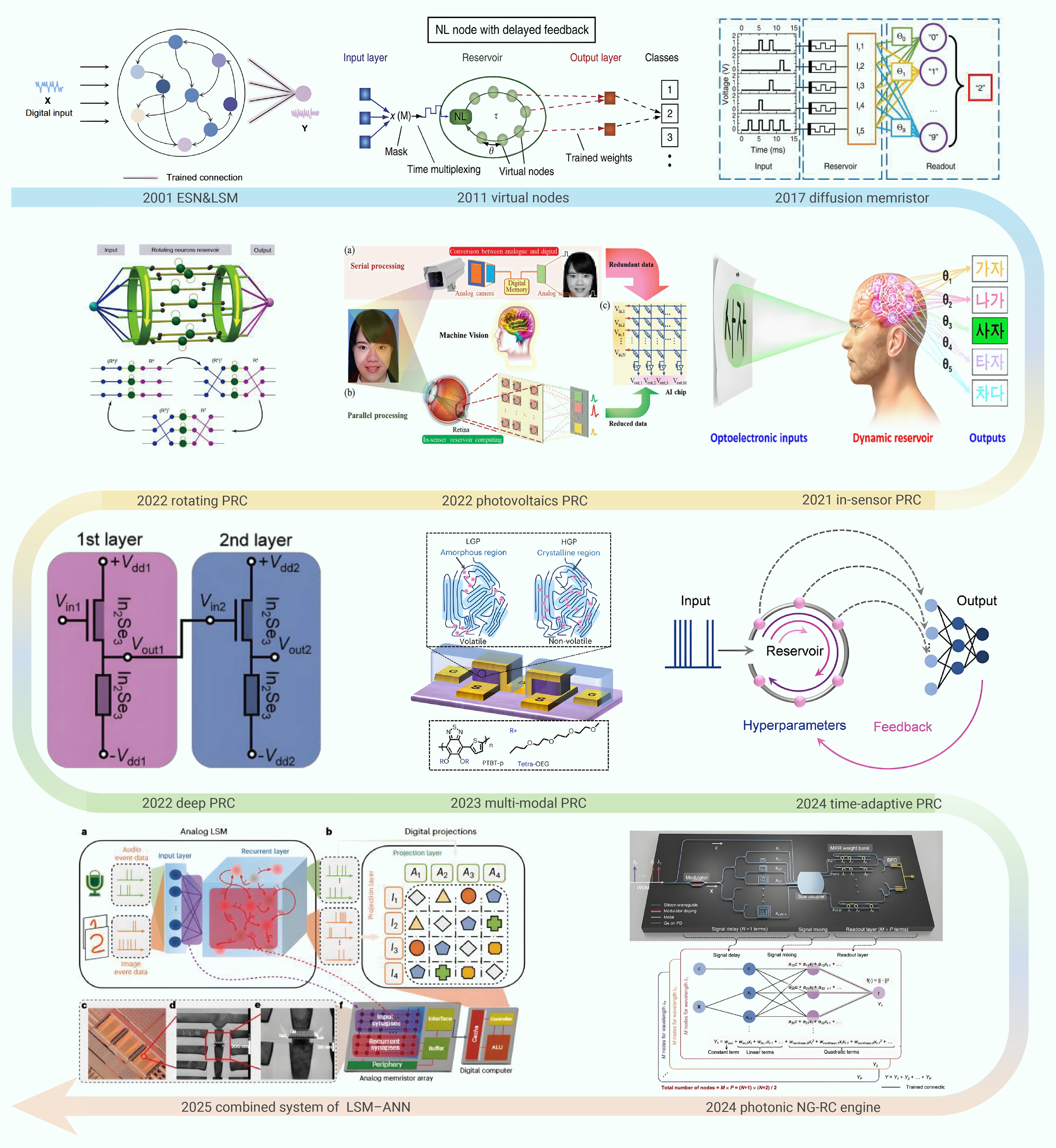
Figure 1.
Key milestones in the research of RC
-
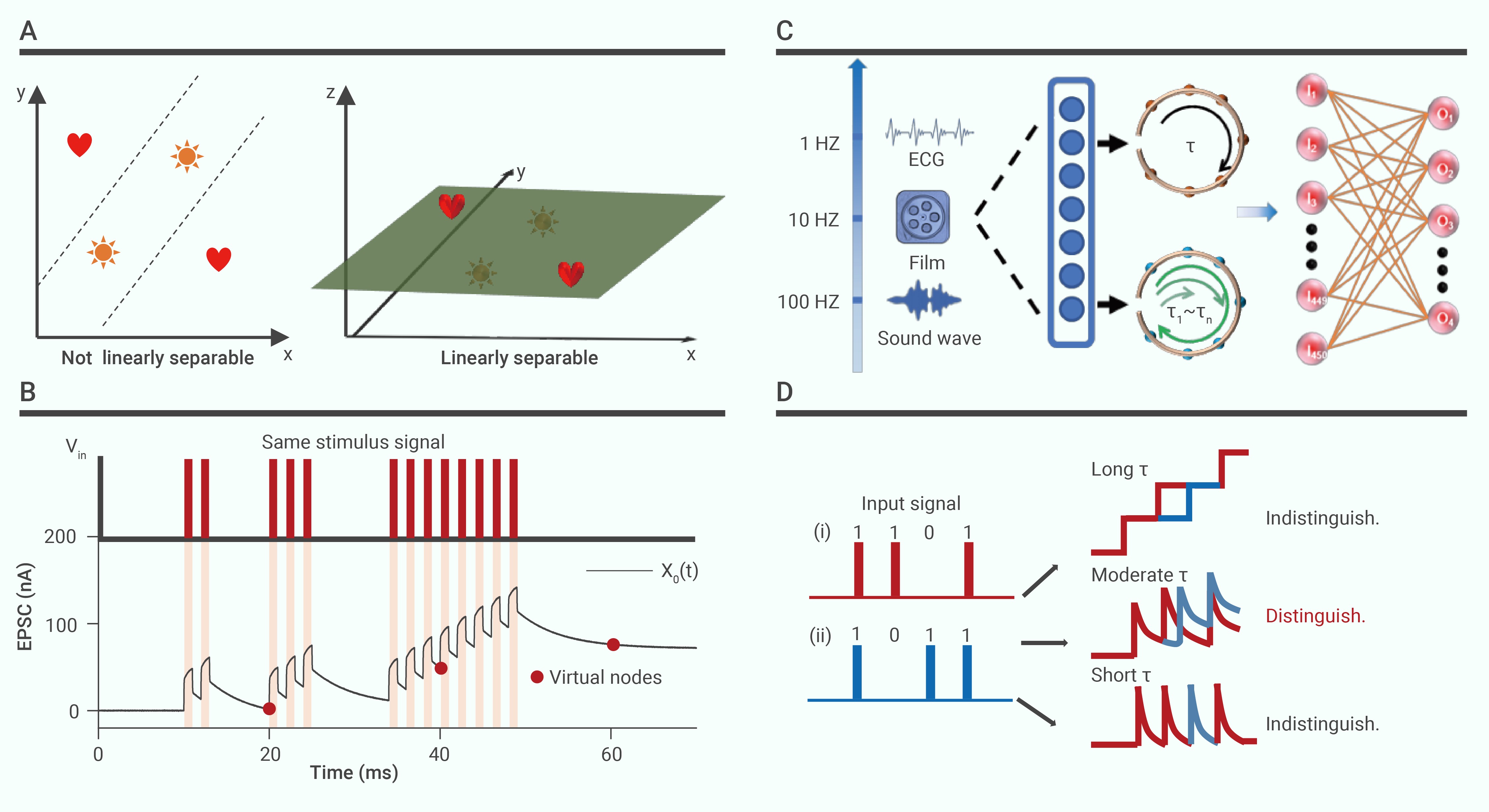
Figure 2.
The influence of linear separability and time-adaptive characteristics on RC
-
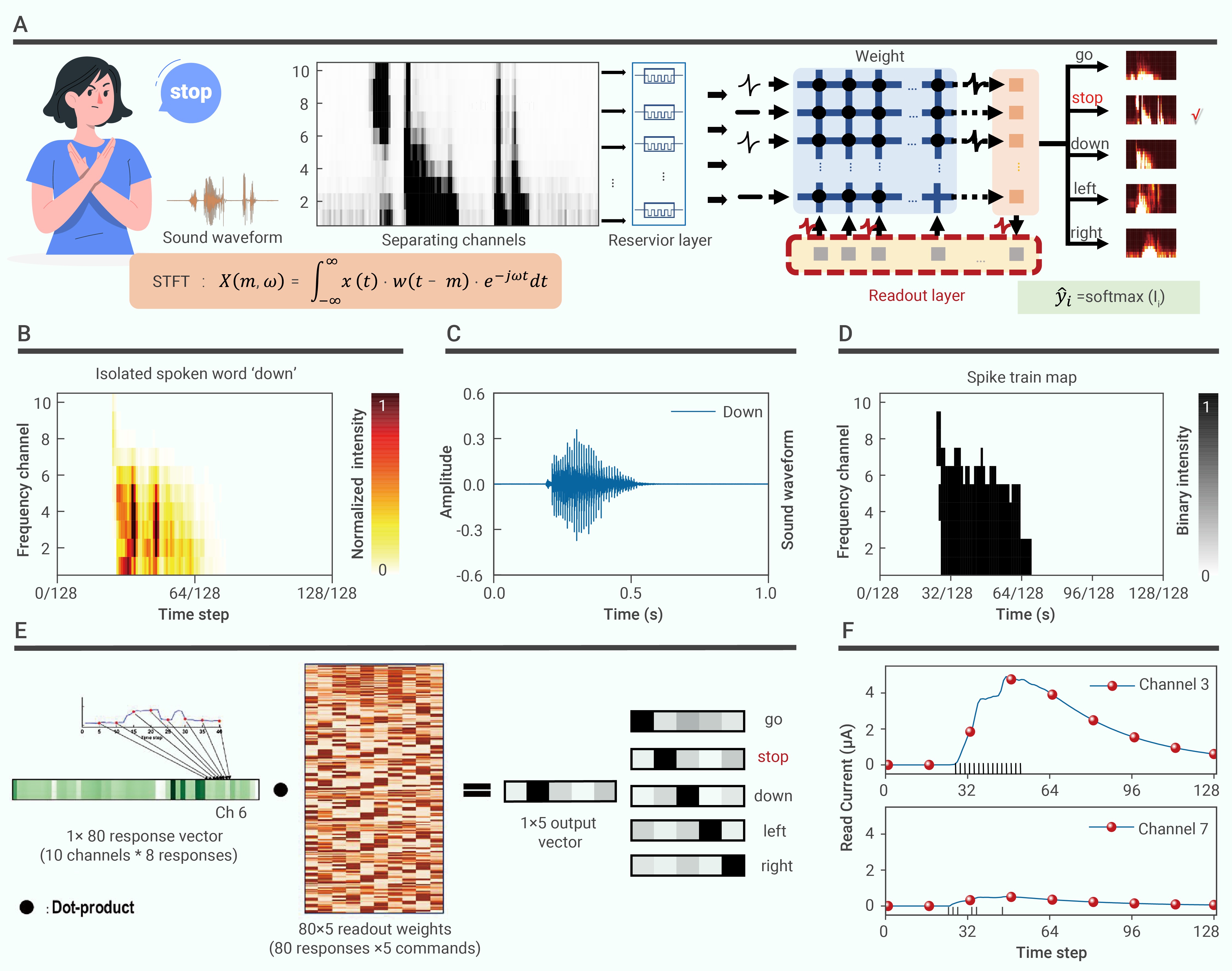
Figure 3.
General Process of Speech Command Recognition Using PRC Systems
-
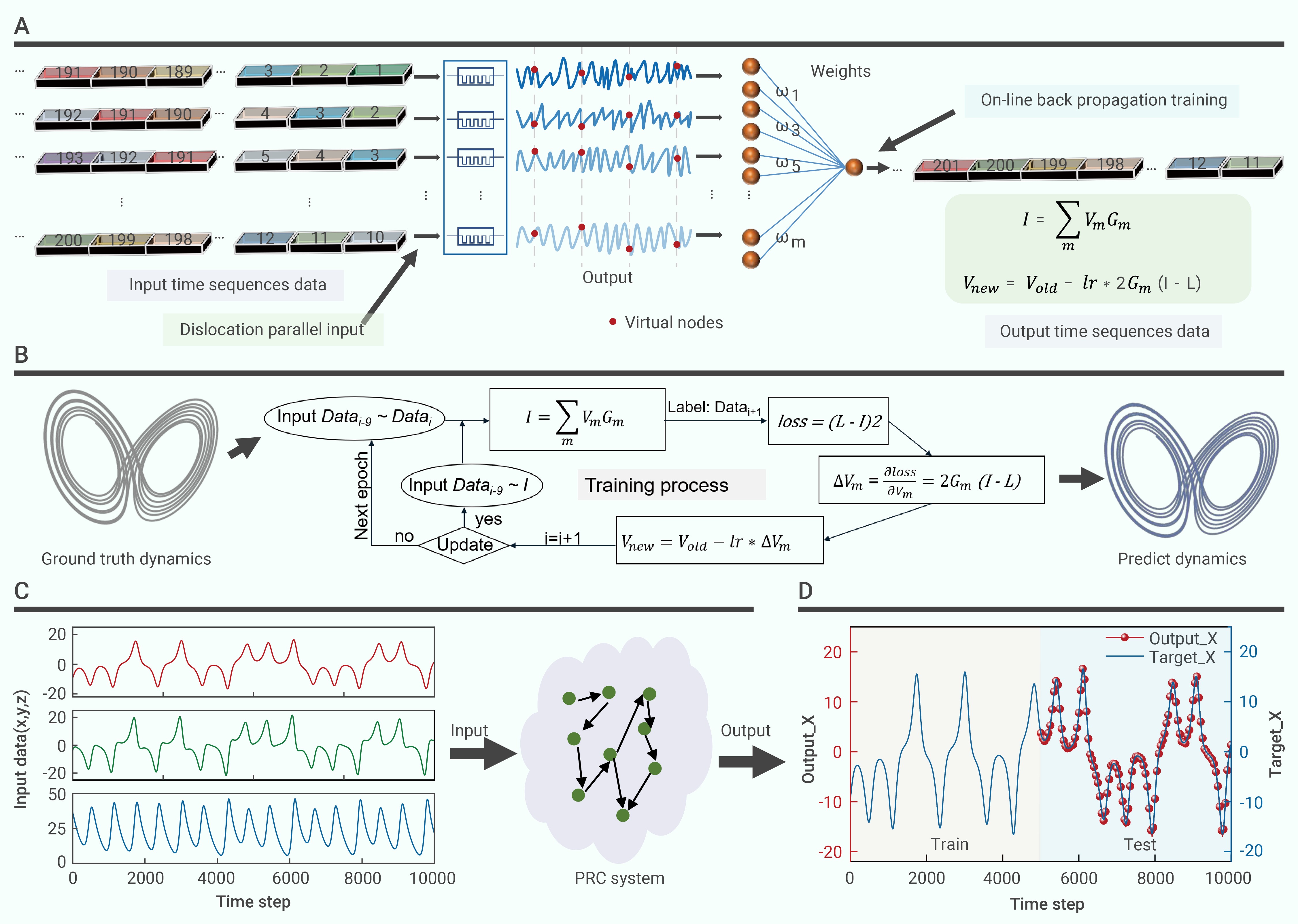
Figure 4.
Time-Series Prediction Using a PRC System
-
Figure 5.
Schematic diagram, operational principles, suitable fields, pros and cons. of Various Neuromorphic Devices for PRC Systems
-
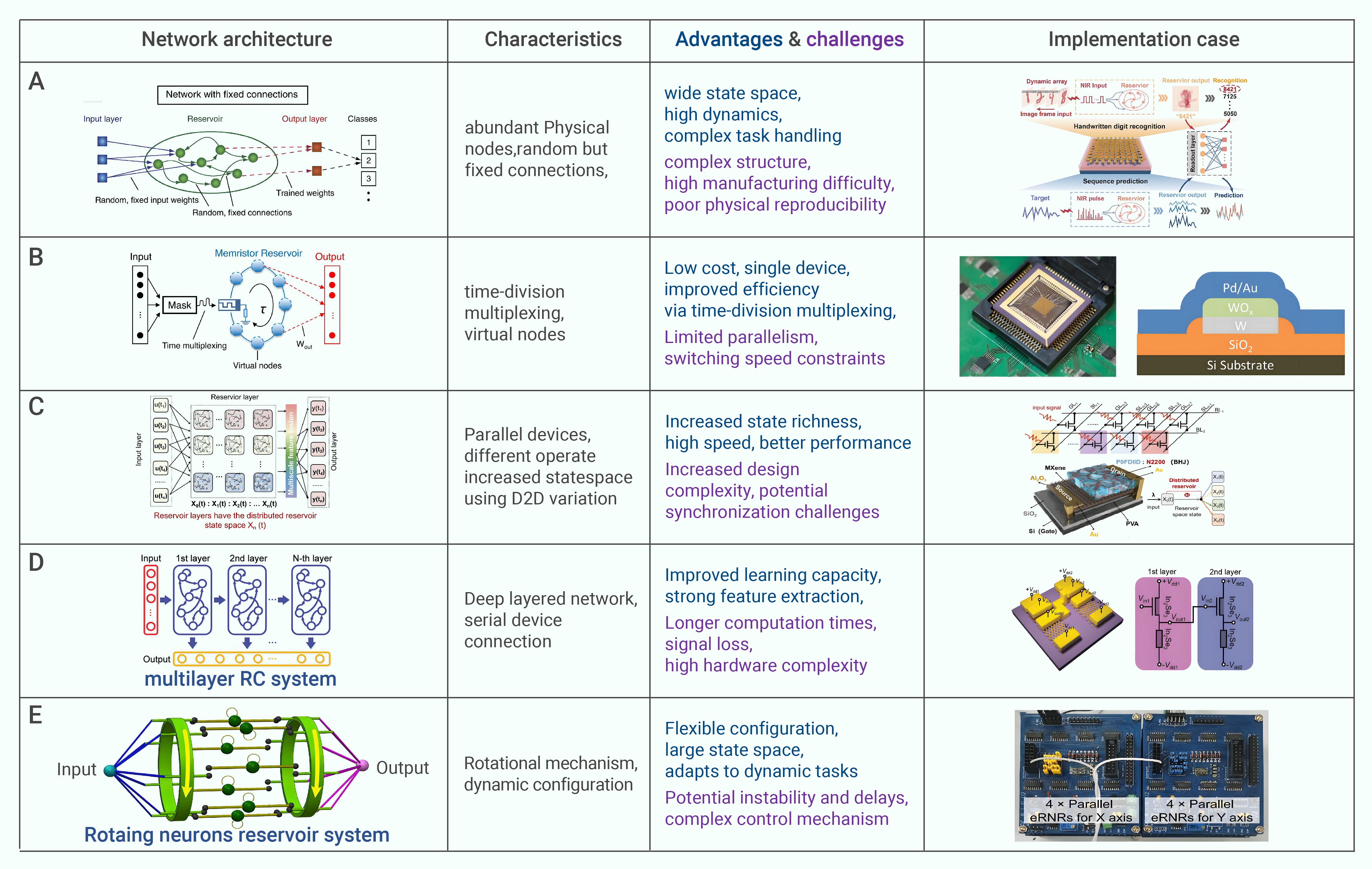
Figure 6.
Various Spatial Architectures of PRC Systems and Their Physical Realizations
-
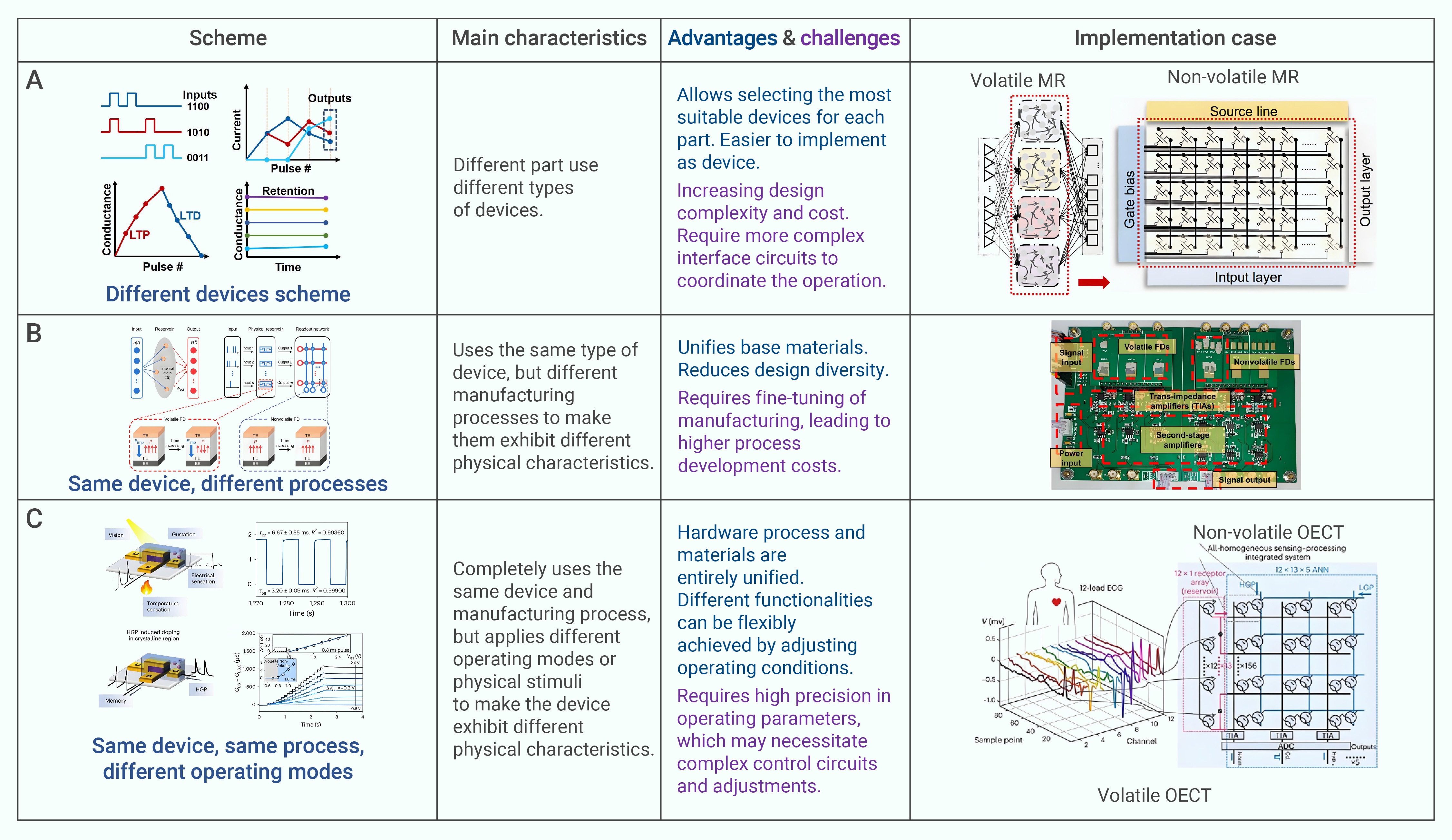
Figure 7.
Conceptual Framework and Physical Realization of Various Hardware Readout Networks in PRC Systems
-
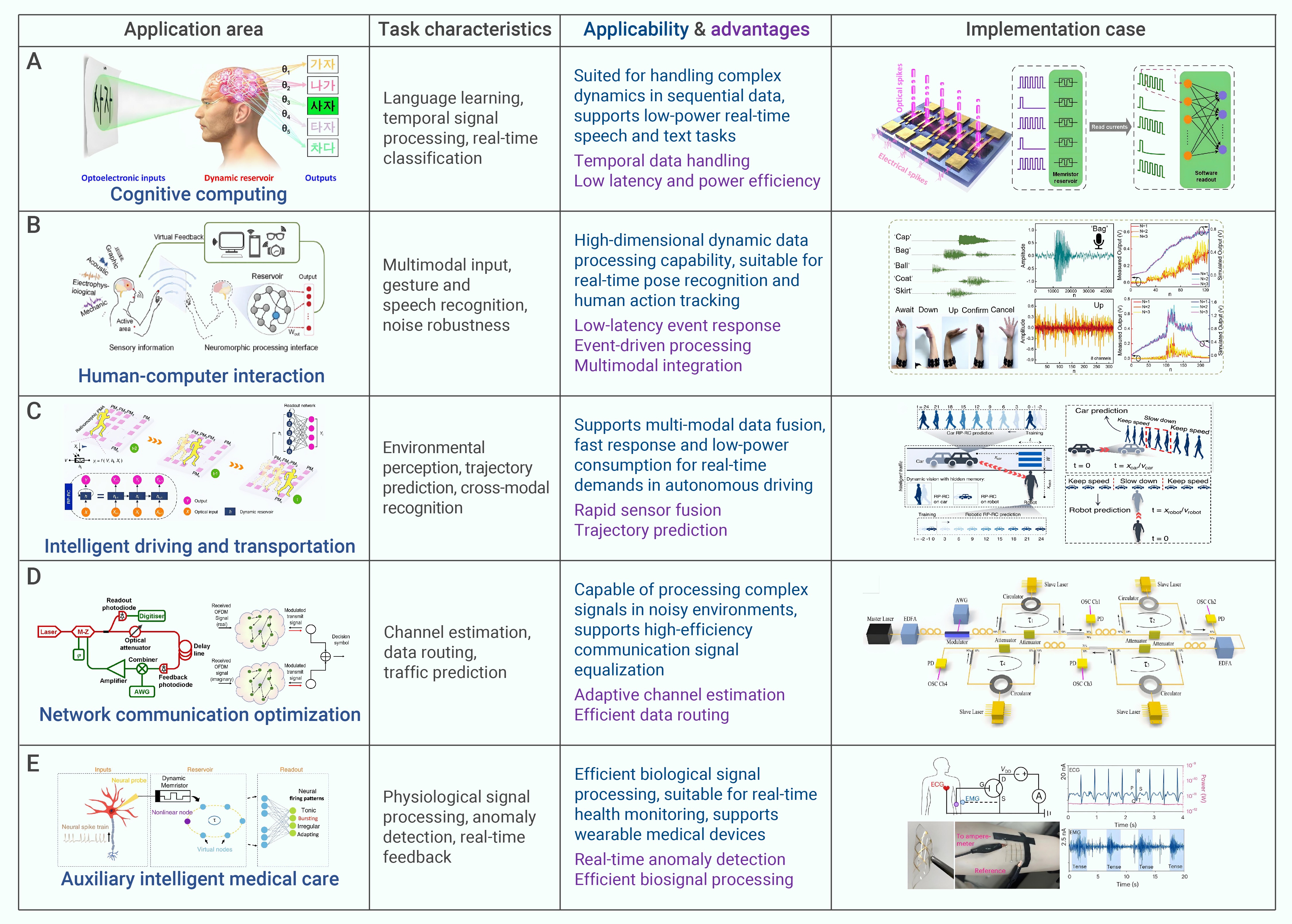
Figure 8.
Applicability of PRC Systems Across Various Application Domains
-
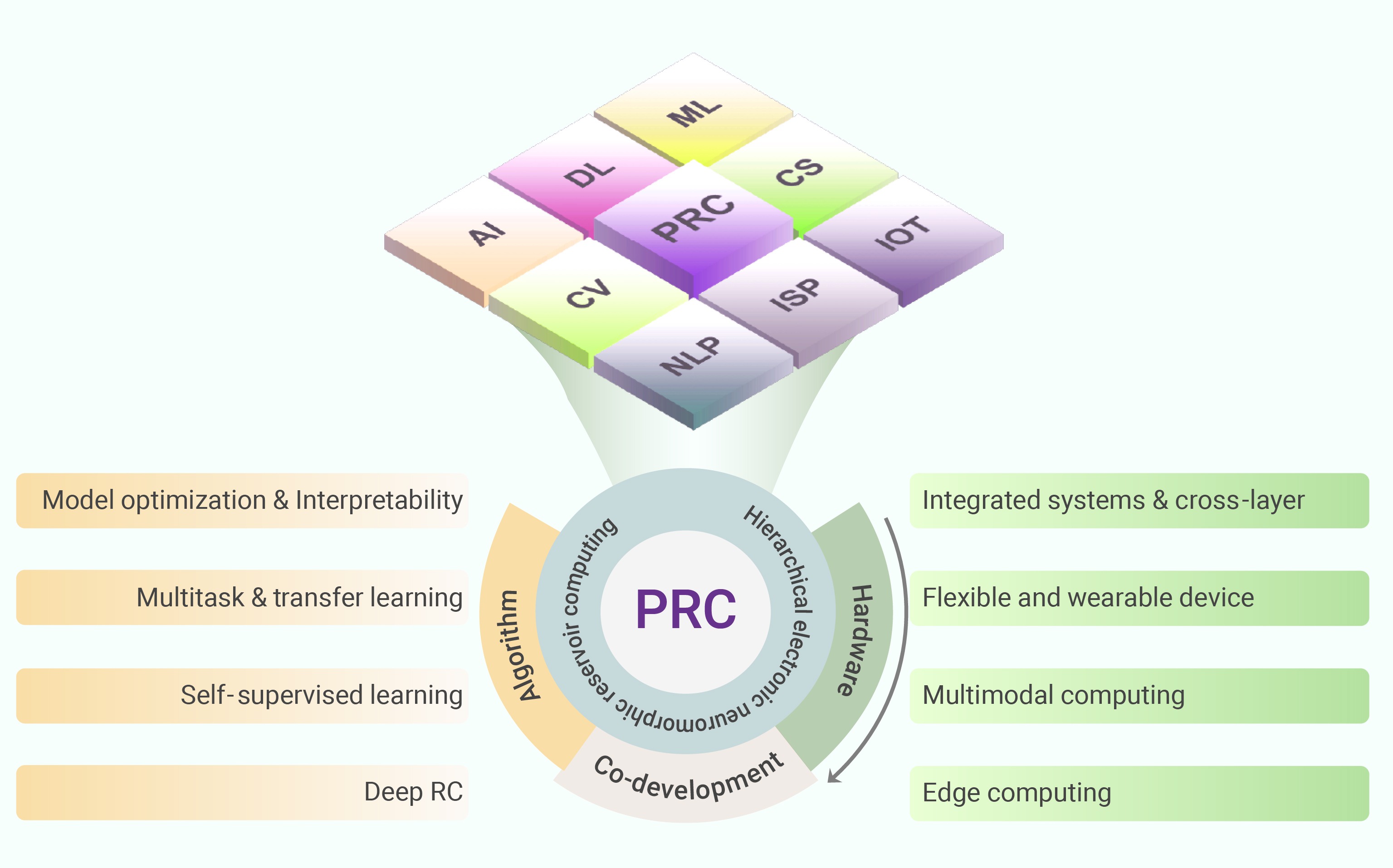
Figure 9.
Schematic framework illustrating the synergistic development of PRC algorithms and hardware architectures.
-
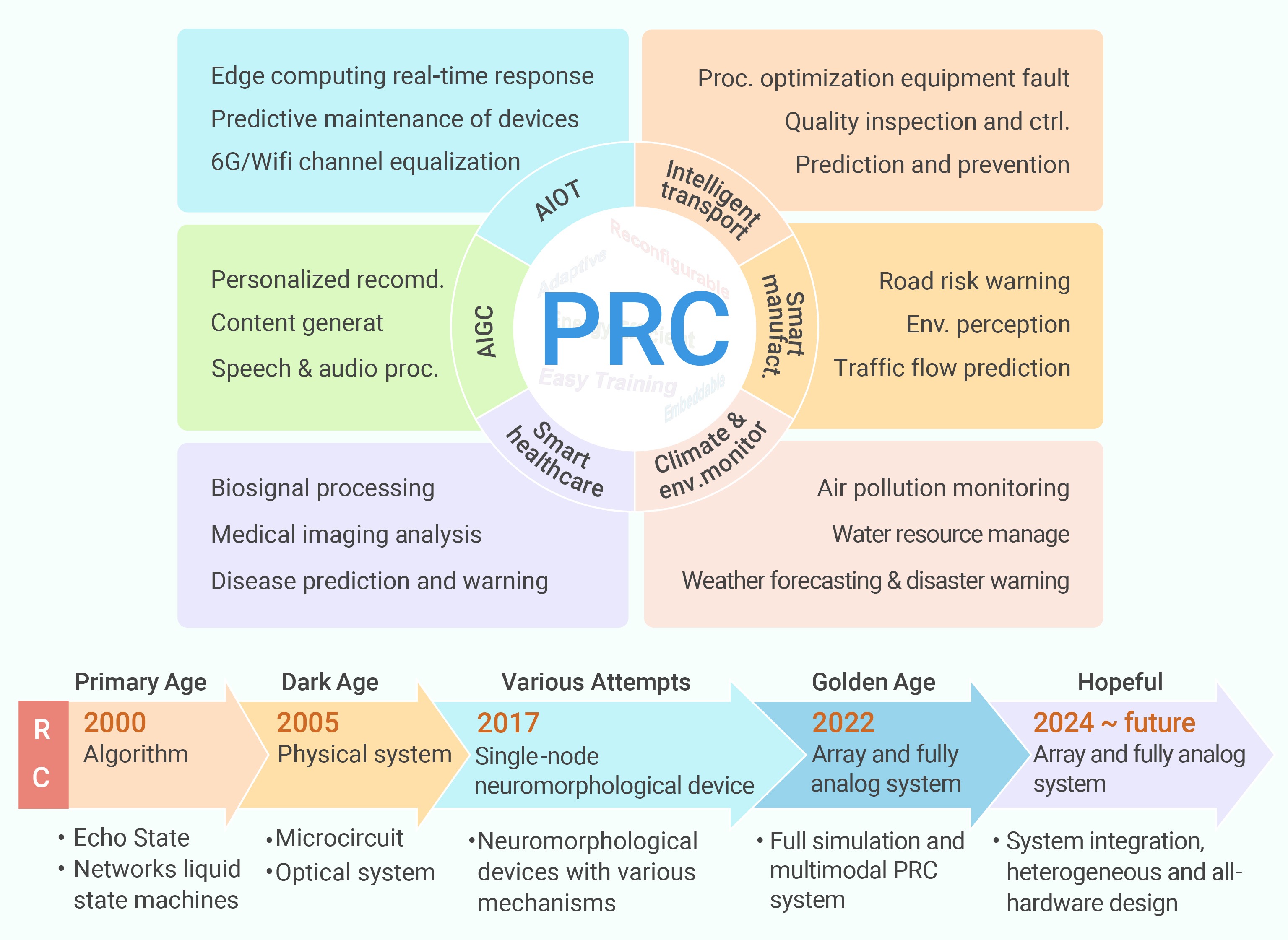
Figure 10.
Five stages of RC development and future application domains for PRC each domain is illustrated with three specific application scenarios, highlighting RC’s potential impact across diverse fields.
