
Dietary factors and diabetic retinopathy: An umbrella review of systematic reviews and meta-analyses
-
GRAPHICAL ABSTRACT
 DownLoad:
Full size image
DownLoad:
Full size image
-
PUBLIC SUMMARY
-
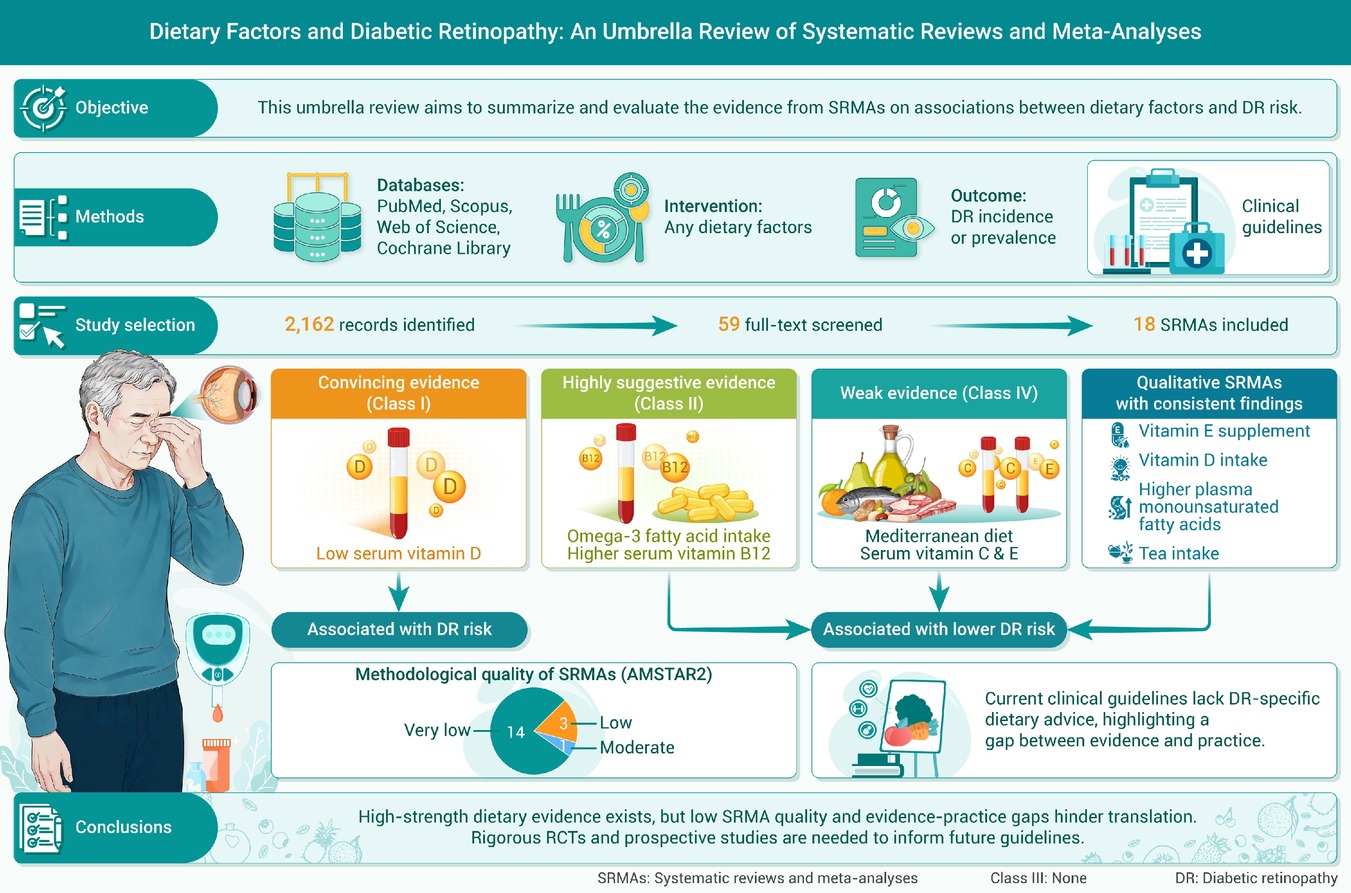
Low vitamin D levels were convincingly linked to a higher risk of diabetic retinopathy (DR).
Omega-3 fatty acid intake and higher serum vitamin B12 showed highly suggestive evidence for lowering DR risk.
Mediterranean diet, vitamins C and E consistently linked to lower DR risk, but weak evidence.
Most systematic reviews had very low methodological quality, so findings should be interpreted cautiously.
Current clinical guidelines lack DR-specific dietary advice, highlighting a gap between evidence and practice.
-
-
ABSTRACT
Diabetic retinopathy (DR) is a leading cause of vision impairment globally. Numerous systematic reviews and meta-analyses (SRMAs) have investigated specific dietary components, but a comprehensive synthesis is lacking. This umbrella review aims to summarize and evaluate the evidence from SRMAs on associations between dietary factors and DR risk. PubMed, Scopus, Web of Science, and the Cochrane Library were searched from inception to May 1, 2026. SRMAs of observational studies or randomized controlled trials examining any dietary factors and DR incidence or prevalence in individuals with diabetes were included. Of2162 articles screened, 18 were included. The most consistent finding was the protective association between Mediterranean diet and DR. Low serum vitamin D demonstrated convincing evidence for DR risk, while highly suggestive evidence was identified for omega-3 fatty acid intake and serum vitamin B12. Multiple qualitative systematic reviews consistently concluded that higher serum vitamin C and E, vitamin D intake, plasma monounsaturated fatty acids, and tea intake were associated with lower DR risk. Although conclusions on other dietary factors were inconsistent, most studies showed protective effects of fish, fruits, vegetables, and dietary fiber. However, most included SRMAs were rated as very low methodological quality, indicating that even statistically robust associations should be interpreted cautiously and that rigorous prospective studies and targeted interventions are still needed. -

-
REFERENCES
[1] Cheung N.M.P. and Wong T.Y.(2010). Diabetic retinopathy. Lancet 376:124−136. DOI:10.1016/S0140-6736(09)62124-3 [2] Trott M., Driscoll R. and Pardhan S. (2022). Associations between diabetic retinopathy and modifiable risk factors: An umbrella review of meta-analyses. Diabet. Med. 39:e14796. DOI:10.1111/dme.14796 [3] Teo Z.L., Tham Y.C., Yu M., et al. (2021). Global prevalence of diabetic retinopathy and projection of burden through 2045: Systematic review and meta-analysis. Ophthalmology 128:1580−1591. DOI:10.1016/j.ophtha.2021.04.027 [4] Benson W.B. (2010). Micronutrients and diabetic retinopathy: A systematic review. Evid.-Based Ophthalmol. 11:100−101. DOI:10.1097/IEB.0b013e3181d5db80 [5] Luo B.A., Gao F. and Qin L.L. (2017). The association between vitamin D deficiency and diabetic retinopathy in type 2 diabetes: A meta-analysis of observational studies. Nutrients 9:307. DOI:10.3390/nu9030307 [6] Xiong R., Yuan Y., Zhu Z., et al. (2022). Micronutrients and diabetic retinopathy: Evidence from the national health and nutrition examination survey and a meta-analysis. Am. J. Ophthalmol. 238:141−156. DOI:10.1016/j.ajo.2022.01.005 [7] Chen K.Y., Chan H.C. and Chan C.M. (2025). Can fibrate therapy redefine the management of diabetic retinopathy? A comprehensive systematic review and meta-analysis of efficacy and safety. J. Diabetes Complications 39:109178. DOI:10.1016/j.jdiacomp.2025.109178 [8] Chen K.Y., Chan H.C. and Chan C.M. (2025). Which treatment modality offers the best outcomes for diabetic retinopathy? A systematic review and network meta-analysis. Diabetes Res. Clin. Pract. 227:112379. DOI:10.1016/j.diabres.2025.112379 [9] Chen K.Y., Chan H.C. and Chan C.M. (2025). Is there a link between dry eye disease and diabetes mellitus? A systematic review and meta-analysis. J. Diabetes Complications 39:109149. DOI:10.1016/j.jdiacomp.2025.109149 [10] Trott M., Driscoll R. and Pardhan S. (2022). Associations between diabetic retinopathy, mortality, disease, and mental health: An umbrella review of observational meta-analyses. BMC Endocr. Disord. 22:311. DOI:10.1186/s12902-022-01236-8 [11] Moher D., Shamseer L., Clarke M., et al. (2015). Preferred reporting items for systematic review and meta-analysis protocols (PRISMA-P) 2015 statement. Syst. Rev. 4:1. DOI:10.1186/2046-4053-4-1 [12] Shea B.J., Reeves B.C., Wells G., et al. (2017). AMSTAR 2: A critical appraisal tool for systematic reviews that include randomised or non-randomised studies of healthcare interventions, or both. BMJ. 358:j4008. DOI:10.1136/bmj.j4008 [13] Lau J., Ioannidis J.P.A. and Schmid C.H. (1997). Quantitative synthesis in systematic reviews. Ann. Intern. Med. 127:820−826. DOI:10.7326/0003-4819-127-9-199711010-00008 [14] Papatheodorou S. (2019). Umbrella reviews: what they are and why we need them. Eur. J. Epidemiol. 34:543−546. DOI:10.1007/s10654-019-00505-6 [15] Higgins J.P.T., Thompson S.G., Deeks J.J., et al. (2003). Measuring inconsistency in meta-analyses. BMJ 327:557−560. DOI:10.1136/bmj.327.7414.557 [16] Sterne J.A.C., Sutton A.J., Ioannidis J.P.A., et al. (2011). Recommendations for examining and interpreting funnel plot asymmetry in meta-analyses of randomised controlled trials. BMJ 343:d4002. DOI:10.1136/bmj.d4002 [17] Ioannidis J.P.A. and Trikalinos T.A. (2007). An exploratory test for an excess of significant findings. Clin. Trials 4:245−253. DOI:10.1177/1740774507079441 [18] Cui H., Zhang W., Zhang L., et al. (2024). Risk factors for prostate cancer: An umbrella review of prospective observational studies and mendelian randomization analyses. PLoS Med. 21:e1004362. DOI:10.1371/journal.pmed.1004362 [19] Cai L., Huang Y., Li X., et al. (2024). Effects of dietary intervention on diabetic nephropathy: An umbrella review of systematic reviews and meta-analyses of randomized controlled trials. Front. Endocrinol. 15:1385872. DOI:10.3389/fendo.2024.1385872 [20] Marx N., Federici M., Schütt K., et al. (2023). 2023 ESC Guidelines for the management of cardiovascular disease in patients with diabetes developed by the task force on the management of cardiovascular disease in patients with diabetes of the European Society of Cardiology (ESC). Eur. Heart J. 44:4043−4140. DOI:10.1093/eurheartj/ehad192 [21] Chinese Diabetes Society. (2025). Guideline for the prevention and treatment of type 2 diabetes mellitus in China (2024 edition). Chin. J. Diabetes Mellitus 17:16−139. DOI:10.3760/cma.j.cn115791-20241203-00705 [22] Fundus Disease Group of Ophthalmological Society of Chinese Medical Association, Fundus Disease Group of Ophthalmologist Branch of Chinese Medical Doctor Association. (2023). Evidence-based guidelines for diagnosis and treatment of diabetic retinopathy in China (2022). Chin. J. Ocul. Fundus Dis.39:99−124. DOI:10.3760/cma.j.cn511434-20230110-00018 [23] National Institute for Health and Care Excellence (NICE). (2024). Diabetic retinopathy: Management and monitoring. In NICE Clinical Guidelines. London: NICE. https://www.nice.org.uk/guidance/ng242 [24] National Institute for Health and Care Excellence (NICE). (2026). Type 2 diabetes in adults: Management. In NICE Guidelines. London: NICE. https://24.www.nice.org.uk/guidance/ng28 [25] Wong T.Y., Sun J., Kawasaki R., et al. (2018). Guidelines on diabetic eye care: The international council of ophthalmology recommendations for screening, follow-up, referral, and treatment based on resource settings. Ophthalmology 125:1608−1622. DOI:10.1016/j.ophtha.2018.04.007 [26] Lim J.I., Kim S.J., Bailey S.T., et al. (2025). Diabetic Retinopathy Preferred Practice Pattern®. Ophthalmology 132:P75−P162. DOI:10.1016/j.ophtha.2024.12.020 [27] American Diabetes Association Professional Practice Committee. (2026). Retinopathy, neuropathy, and foot care: Standards of care in diabetes—2026. Diabetes Care 49:S261–S276. DOI:10.2337/dc26-S012 [28] Yu G., Cao C., Shu X., et al. (2026). Association between vitamin D deficiency and the risk of diabetic retinopathy in patients with type 2 diabetes: A meta-analysis. Mol. Genet. Genom. Med. 14:e70157. DOI:10.1002/mgg3.70157 [29] Lan Y. and Ke X. (2026). Association between serum vitamin D levels and the risk of diabetic retinopathy: A meta-analysis. Front. Med. 13:1771156. DOI:10.3389/fmed.2026.1771156 [30] Zooravar D., Soltani P. and Khezri S. (2025). Mediterranean diet and diabetic microvascular complications: a systematic review and meta-analysis. BMC Nutr. 11:66. DOI:10.1186/s40795-025-01038-w [31] Petrea C.E., Ghenciu L.A., Iacob R., et al. (2025). Vitamin D deficiency as a risk factor for diabetic retinopathy: A systematic review and meta-analysis. Biomedicines 13:68. DOI:10.3390/biomedicines13010068 [32] Chen K.Y., Chan H.C. and Chan C.M. (2025). Association between omega-3 fatty acid intake and risk of diabetic retinopathy: A systematic review and meta-analysis. J. Nutr. Health Aging 29:100632. DOI:10.1016/j.jnha.2025.100632 [33] Yang X., Hu R., Zhu Y., et al. (2023). Meta-analysis of serum vitamin B12 levels and diabetic retinopathy in type 2 diabetes. Arch. Med. Res. 54:64−73. DOI:10.1016/j.arcmed.2022.12.006 [34] Wu Y., Xie Y., Yuan Y., et al. (2023). The mediterranean diet and age-related eye diseases: A systematic review. Nutrients 15:2043. DOI:10.3390/nu15092043 [35] Trott M., Driscoll R., Iraldo E., et al. (2022). Associations between vitamin D status and sight threatening and non-sight threatening diabetic retinopathy: A systematic review and meta-analysis. J. Diabetes Metab. Disord. 21:1177−1184. DOI:10.1007/s40200-022-01059-3 [36] Shah J., Cheong Z.Y., Tan B.Y., et al. (2022). Dietary intake and diabetic retinopathy: A systematic review of the literature. Nutrients 14:5021. DOI:10.3390/nu14235021 [37] Milluzzo A., Barchitta M., Maugeri A., et al. (2022). Do nutrients and nutraceuticals play a role in diabetic retinopathy: A systematic review. Nutrients 14:4430. DOI:10.3390/nu14204430 [38] Yusufu M., Zhang X., Sun X., et al. (2019). How to perform better intervention to prevent and control diabetic retinopathy among patients with type 2 diabetes: A meta-analysis of randomized controlled trials. Diabetes Res. Clin. Pract. 156:107834. DOI:10.1016/j.diabres.2019.107834 [39] Yuan J., Zhou J.B., Zhao W., et al. (2019). Could vitamin D be associated with proliferative diabetic retinopathy? Evidence from pooling studies. Horm. Metab. Res. 51:729−734. DOI:10.1055/a-1010-6449 [40] Tabatabaei-Malazy O., Ardeshirlarijani E., Namazi N., et al. (2019). Dietary antioxidative supplements and diabetic retinopathy: A systematic review. J. Diabetes Metab. Disord. 18:705−716. DOI:10.1007/s40200-019-00434-x [41] Dow C., Mancini F., Rajaobelina K., et al. (2018). Diet and risk of diabetic retinopathy: A systematic review. Eur. J. Epidemiol. 33:141−156. DOI:10.1007/s10654-017-0338-8 [42] Wong M.Y.Z., Man R.E.K., Gupta P., et al. (2017). A systematic review of the associations between dietary intake and diabetic retinopathy. Acta Ophthalmol. 95:(S259). DOI:10.1111/j.1755-3768.2017.02312 [43] Mirabelli M., Chiefari E., Arcidiacono B., et al. (2020). Mediterranean diet nutrients to turn the tide against insulin resistance and related diseases. Nutrients 12:1066. DOI:10.3390/nu12041066 [44] Mohajeri M. and Cicero A.F.G. (2023). Adherence to the Mediterranean Diet Association with Serum Levels of Nitric Oxide, Prostacyclin, and Thromboxane B(2) among Prinzmetal Angina Patients and Healthy Persons. Nutrients 15:738. DOI:10.3390/nu15030738 [45] Rocha B.S., Nunes C., Pereira C., et al. (2014). A shortcut to wide-ranging biological actions of dietary polyphenols: Modulation of the nitrate-nitrite-nitric oxide pathway in the gut. Food Funct. 5:1646−1652. DOI:10.1039/c4fo00124a [46] Wang Z., Gao W., Cheng X., et al. (2025). Vitamin D(3) attenuates hepatic inflammation in primary biliary cholangitis by inhibiting TLR4/NF-κB mediated M1 macrophage polarization. Sci. Rep. 15:44345. DOI:10.1038/s41598-025-27911-z [47] Kowluru R.A., Tang J. and Kern T.S. (2001). Abnormalities of retinal metabolism in diabetes and experimental galactosemia. VII. Effect of long-term administration of antioxidants on the development of retinopathy. Diabetes 50:1938−1942. DOI:10.2337/diabetes.50.8.1938 [48] Khodaeian M., Tabatabaei-Malazy O., Qorbani M., et al. (2015). Effect of vitamins C and E on insulin resistance in diabetes: A meta-analysis study. Eur. J. Clin. Invest. 45:1161−1174. DOI:10.1111/eci.12534 [49] Bursell S.E., Clermont A.C., Aiello L.P., et al. (1999). High-dose vitamin E supplementation normalizes retinal blood flow and creatinine clearance in patients with type 1 diabetes. Diabetes Care 22:1245−1251. DOI:10.2337/diacare.22.8.1245 [50] McRae M.P. (2018). Dietary fiber intake and type 2 diabetes mellitus: An umbrella review of meta-analyses. J. Chiropr. Med. 17:44−53. DOI:10.1016/j.jcm.2017.11.002 [51] Kang Q. and Yang C. (2020). Oxidative stress and diabetic retinopathy: Molecular mechanisms, pathogenetic role and therapeutic implications. Redox Biol. 37:101799. DOI:10.1016/j.redox.2020.101799 [52] Delpino F.M., Figueiredo L.M., da Silva B.G.C., et al. (2022). Omega-3 supplementation and diabetes: A systematic review and meta-analysis. Crit. Rev. Food Sci. Nutr. 62:4435−4448. DOI:10.1080/10408398.2021.1875977 [53] Das U.N. (2013). Lipoxins, resolvins, and protectins in the prevention and treatment of diabetic macular edema and retinopathy. Nutrition 29:1−7. DOI:10.1016/j.nut.2012.02.003 [54] Sapieha P., Stahl A., Chen J., et al. (2011). 5-Lipoxygenase metabolite 4-HDHA is a mediator of the antiangiogenic effect of ω-3 polyunsaturated fatty acids. Sci. Transl. Med. 3:69ra12. DOI:10.1126/scitranslmed.3001571 [55] Tikhonenko M., Lydic T.A., Opreanu M., et al. (2013). N-3 polyunsaturated Fatty acids prevent diabetic retinopathy by inhibition of retinal vascular damage and enhanced endothelial progenitor cell reparative function. PLoS One 8:e55177. DOI:10.1371/journal.pone.0055177 [56] Masoro E.J. (2005). Overview of caloric restriction and ageing. Mech. Ageing Dev. 126:913−922. DOI:10.1016/j.mad.2005.03.012 [57] American Diabetes Association. (2016). 3. Foundations of care and comprehensive medical evaluation. Diabetes Care 39(Suppl. 1):S23–S35. DOI:10.2337/dc16-S006 [58] Bola C., Bartlett H. and Eperjesi F. (2014). Resveratrol and the eye: Activity and molecular mechanisms. Graefes Arch. Clin. Exp. Ophthalmol. 252:699−713. DOI:10.1007/s00417-014-2604-8 [59] Lee H.S., Jun J.H., Jung E.H., et al. (2014). Epigalloccatechin-3-gallate inhibits ocular neovascularization and vascular permeability in human retinal pigment epithelial and human retinal microvascular endothelial cells via suppression of MMP-9 and VEGF activation. Molecules 19:12150−12172. DOI:10.3390/molecules190812150 -
ABOUT THIS ARTICLE
Cite this article:
Shi S., Zhou Q., Zhang S., et al. (2026). Dietary factors and diabetic retinopathy: An umbrella review of systematic reviews and meta-analyses. The Innovation Nutrition 1:100024. https://doi.org/10.59717/j.xinn-nutri.2026.100024
Welcome!
To request copyright permission to republish or share portions of our works, please visit Copyright Clearance Center's (CCC) Marketplace website at marketplace.copyright.com.
Export File
Citation
Shi S., Zhou Q., Zhang S., et al. (2026). Dietary factors and diabetic retinopathy: An umbrella review of systematic reviews and meta-analyses. The Innovation Nutrition 1:100024. https://doi.org/10.59717/j.xinn-nutri.2026.100024

Format
Content
-
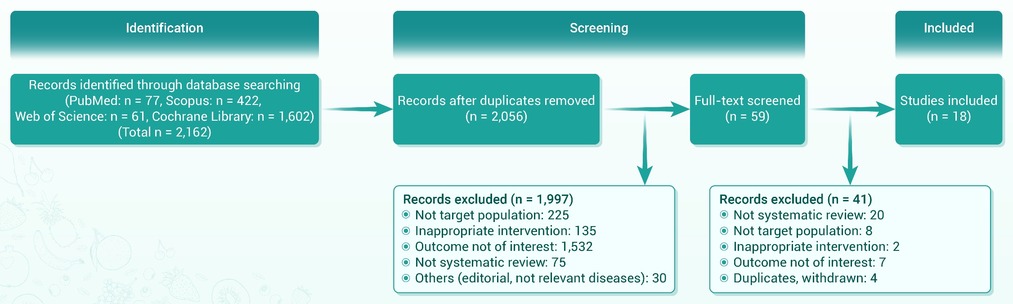
Figure 1.
PRISMA flow diagram of the study selection process.
-
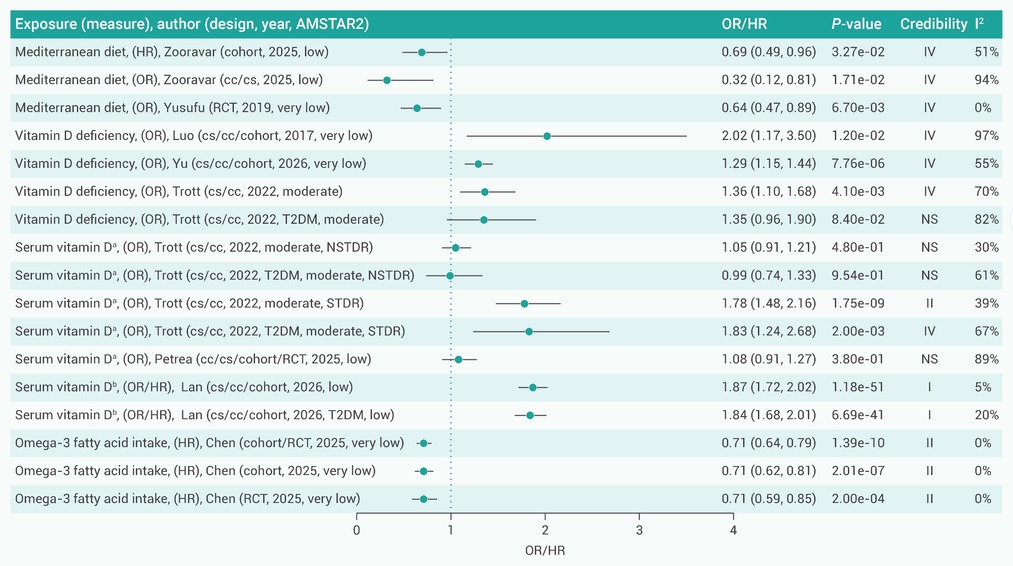
Figure 2.
Forest plot of pooled hazard ratios (HRs) and odds ratios (ORs) from meta-analyses evaluating dietary factors and diabetic retinopathy risk.
-
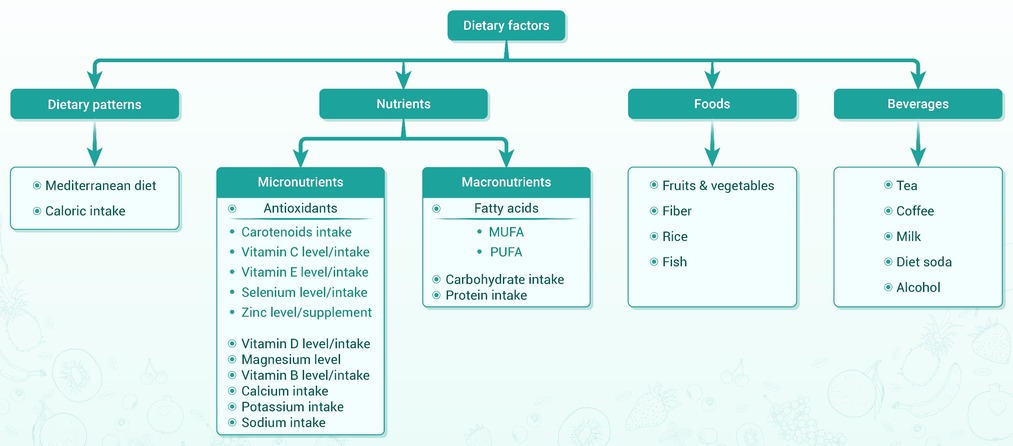
Figure 3.
An overview of dietary factors included in the systematic reviews. MUFA, monounsaturated fatty acid; PUFA, polyunsaturated fatty acids.
