
Habitual glucosamine use and mortality risk among individuals with type 2 diabetes: A prospective study
-
GRAPHICAL ABSTRACT
 DownLoad:
Full size image
DownLoad:
Full size image
-
PUBLIC SUMMARY
-
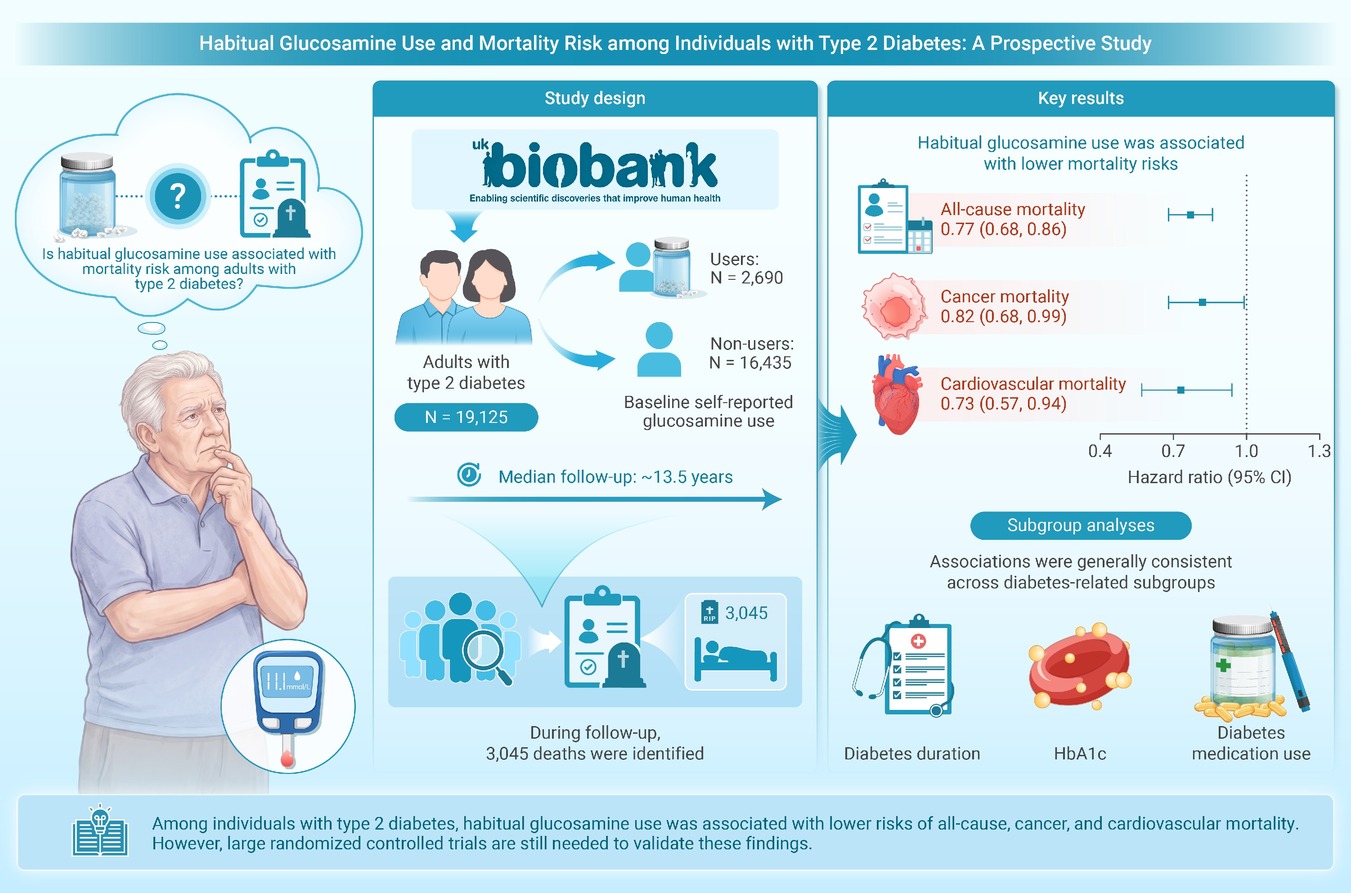
Habitual glucosamine use was associated with lower mortality risks among individuals with type 2 diabetes.
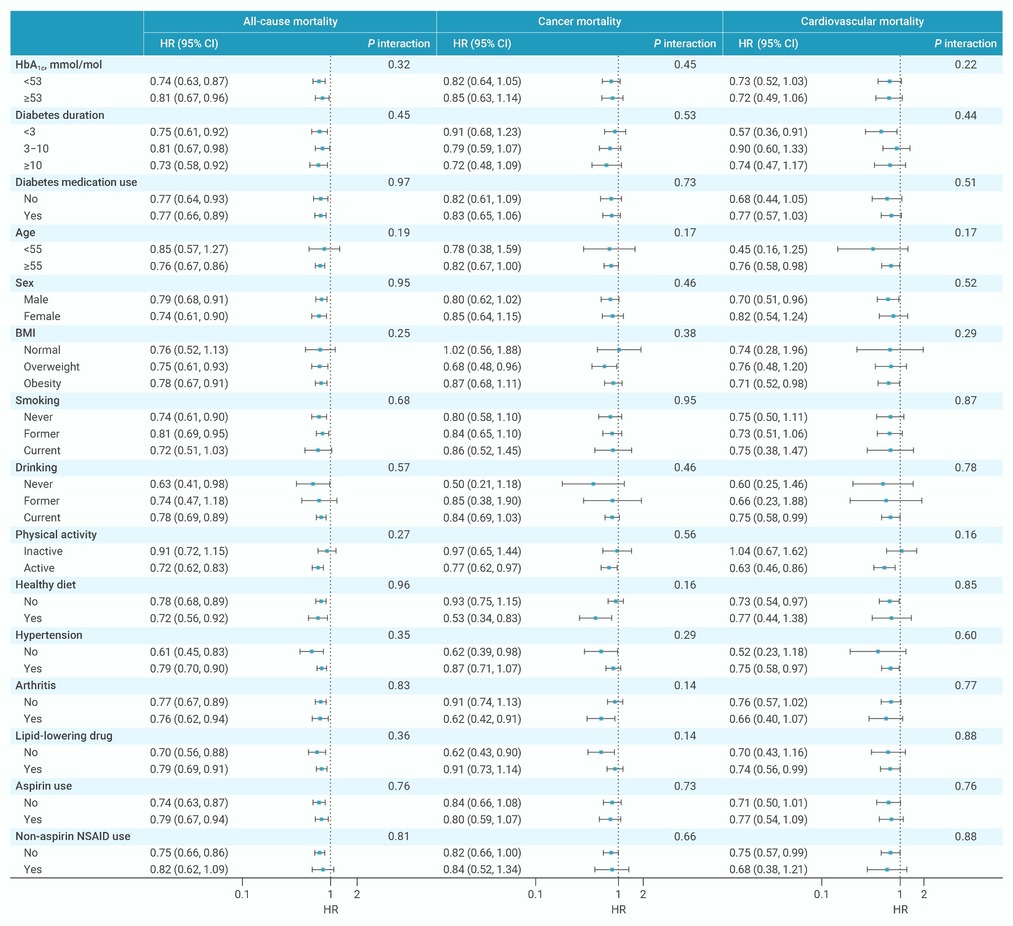
The associations were generally similar across diabetes-related factors, demographic, and lifestyle subgroups.
Blood biomarkers of inflammation, kidney and liver function, and lipids may partly explain these associations.
-
-
ABSTRACT
Glucosamine is a commonly used supplement, but concerns persist regarding its use in individuals with diabetes. This study aimed to examine the association of habitual glucosamine use with risks of all-cause and cause-specific mortality among individuals with type 2 diabetes, and to explore the potential mediating role of blood biomarkers in these associations. We included19125 participants with type 2 diabetes from the UK Biobank who provided self-reported information on glucosamine use at baseline. Cox proportional hazards models were used to estimate the associations, with results presented as hazard ratios (HRs) and its 95% confidence intervals (CIs). Mediation analyses were conducted to estimate the extent to which selected blood biomarkers may be involved in these associations. Over a median follow-up of 13.5 years,3045 deaths were recorded, including1095 cancer deaths and 741 cardiovascular deaths. In multivariable-adjusted analyses, glucosamine use was associated with lower risks of all-cause, cancer, and cardiovascular mortality, with HRs (95% CIs) of 0.77 (0.68, 0.86), 0.82 (0.68, 0.99), and 0.73 (0.57, 0.94), respectively. These associations were generally consistent across several subgroups, including diabetes-related factors, demographic characteristics, lifestyle, medication use and health conditions. Furthermore, blood biomarkers (such as cystatin C, alkaline phosphatase, and C-reactive protein) explained 13.61% (95% CI, 8.26, 34.14) of the association between glucosamine use and all-cause mortality. Our findings suggest that glucosamine use was inversely associated with mortality in individuals with type 2 diabetes, with several blood biomarkers partly explaining this association; however, clinical trials are needed to confirm these findings.-
Keywords:
- type 2 diabetes /
- cohort study /
- glucosamine /
- prospective study
-

-
REFERENCES
[1] Genitsaridi I., Salpea P., Salim A., et al. (2026). 11th edition of the IDF diabetes atlas: Global, regional, and national diabetes prevalence estimates for 2024 and projections for 2050. Lancet Diabetes Endocrinol. 14:149−156. DOI:10.1016/s2213-8587(25)00299-2 [2] Louati K., Vidal C., Berenbaum F., et al. (2015). Association between diabetes mellitus and osteoarthritis: Systematic literature review and meta-analysis. RMD open 1:e000077. DOI:10.1136/rmdopen-2015-000077 [3] Jordan K. M., Arden N. K., Doherty M., et al. (2003). EULAR recommendations 2003: An evidence based approach to the management of knee osteoarthritis: Report of a task force of the standing committee for international clinical studies including therapeutic trials (ESCISIT). Ann. Rheum. Dis. 62:1145−1155. DOI:10.1136/ard.2003.011742 [4] Sibbritt D., Lui C., Kroll T., et al. (2016). Prevalence of glucosamine and omega-3 fatty acid use and characteristics of users among mid-age women: Analysis of a nationally representative sample of 10,638 women. J. Nutr. Health Aging 20:637−644. DOI:10.1007/s12603-016-0721-2 [5] Ma H., Li X., Sun D., et al. (2019). Association of habitual glucosamine use with risk of cardiovascular disease: Prospective study in UK Biobank. BMJ 365:l1628. DOI:10.1136/bmj.l1628 [6] Cheng Z. J., Luo Y. F., Zhu Q. Y., et al. (2025). Association of habitual glucosamine use with risk of microvascular complications among individuals with type 2 diabetes: A prospective cohort study in UK biobank. Nutr. Diabetes 15:12. DOI:10.1038/s41387-025-00369-8 [7] Marshall S., Bacote V. and Traxinger R. R. (1991). Discovery of a metabolic pathway mediating glucose-induced desensitization of the glucose transport system. Role of hexosamine biosynthesis in the induction of insulin resistance. J. Biol. Chem. 266:4706−4712 [8] Patti M. E., Virkamäki A., Landaker E. J., et al. (1999). Activation of the hexosamine pathway by glucosamine in vivo induces insulin resistance of early postreceptor insulin signaling events in skeletal muscle. Diabetes 48:1562−1571. DOI:10.2337/diabetes.48.8.1562 [9] Robinson K. A., Sens D. A. and Buse M. G. (1993). Pre-exposure to glucosamine induces insulin resistance of glucose transport and glycogen synthesis in isolated rat skeletal muscles. Study of mechanisms in muscle and in rat-1 fibroblasts overexpressing the human insulin receptor. Diabetes 42:1333-1346. DOI:10.2337/diab.42.9.1333. [10] Monauni T., Zenti M. G., Cretti A., et al. (2000). Effects of glucosamine infusion on insulin secretion and insulin action in humans. Diabetes 49:926−935. DOI:10.2337/diabetes.49.6.926 [11] Scroggie D. A., Albright A. and Harris M. D. (2003). The effect of glucosamine-chondroitin supplementation on glycosylated hemoglobin levels in patients with type 2 diabetes mellitus: A placebo-controlled, double-blinded, randomized clinical trial. Arch. Intern. Med. 163:1587−1590. DOI:10.1001/archinte.163.13.1587 [12] Albert S. G., Oiknine R. F., Parseghian S., et al. (2007). The effect of glucosamine on serum HDL cholesterol and apolipoprotein AI levels in people with diabetes. Diabetes Care 30:2800−2803. DOI:10.2337/dc07-0545 [13] Muniyappa R., Karne R. J., Hall G., et al. (2006). Oral glucosamine for 6 weeks at standard doses does not cause or worsen insulin resistance or endothelial dysfunction in lean or obese subjects. Diabetes 55:3142−3150. DOI:10.2337/db06-0714 [14] Tannis A. J., Barban J. and Conquer J. A. (2004). Effect of glucosamine supplementation on fasting and non-fasting plasma glucose and serum insulin concentrations in healthy individuals. Osteoarthr. Cartil. 12:506−511. DOI:10.1016/j.joca.2004.03.001 [15] Dostrovsky N. R., Towheed T. E., Hudson R. W., et al. (2011). The effect of glucosamine on glucose metabolism in humans: A systematic review of the literature. Osteoarthr. Cartil. 19:375−380. DOI:10.1016/j.joca.2011.01.007 [16] Li Z. H., Gao X., Chung V. C., et al. (2020). Associations of regular glucosamine use with all-cause and cause-specific mortality: A large prospective cohort study. Ann. Rheum. Dis. 79:829−836. DOI:10.1136/annrheumdis-2020-217176 [17] Bell G. A., Kantor E. D., Lampe J. W., et al. (2012). Use of glucosamine and chondroitin in relation to mortality. Eur. J. Epidemiol. 27:593−603. DOI:10.1007/s10654-012-9714-6 [18] Navarro S. L., White E., Kantor E. D., et al. (2015). Randomized trial of glucosamine and chondroitin supplementation on inflammation and oxidative stress biomarkers and plasma proteomics profiles in healthy humans. PLoS One 10:e0117534. DOI:10.1371/journal.pone.0117534 [19] Kantor E. D., Lampe J. W., Vaughan T. L., et al. (2012). Association between use of specialty dietary supplements and C-reactive protein concentrations. Am. J. Epidemiol. 176:1002−1013. DOI:10.1093/aje/kws186 [20] Hua J., Sakamoto K. and Nagaoka I. (2002). Inhibitory actions of glucosamine, a therapeutic agent for osteoarthritis, on the functions of neutrophils. J. Leukoc. Biol. 71:632−640. DOI:10.1189/jlb.71.4.632 [21] Haas M. J., Wong N. C. and Mooradian A. D. (2004). Effect of glucosamine on apolipoprotein AI mRNA stabilization and expression in HepG2 cells. Metabolism 53:766−771. DOI:10.1016/j.metabol.2003.11.027 [22] Li F., Zhang Z., Bai Y., et al. (2023). Glucosamine improves non-alcoholic fatty liver disease induced by high-fat and high-sugar diet through regulating intestinal barrier function, liver inflammation, and lipid metabolism. Molecules 28: 6918. DOI:10.3390/molecules28196918. [23] Sudlow C., Gallacher J., Allen N., et al. (2015). UK biobank: An open access resource for identifying the causes of a wide range of complex diseases of middle and old age. PLoS Med. 12:e1001779. DOI:10.1371/journal.pmed.1001779 [24] Eastwood S. V., Mathur R., Atkinson M., et al. (2016). Algorithms for the capture and adjudication of prevalent and incident diabetes in UK Biobank. PLoS One 11:e0162388. DOI:10.1371/journal.pone.0162388 [25] Jarman B., Townsend P. and Carstairs V. (1991). Deprivation indices. BMJ 303:523. DOI:10.1136/bmj.303.6801.523-a [26] Said M. A., Verweij N. and van der Harst P. (2018). Associations of combined genetic and lifestyle risks with incident cardiovascular disease and diabetes in the UK Biobank study. JAMA Cardiol. 3:693−702. DOI:10.1001/jamacardio.2018.1717 [27] Dehbi H. M., Royston P. and Hackshaw A. (2017). Life expectancy difference and life expectancy ratio: Two measures of treatment effects in randomised trials with non-proportional hazards. BMJ 357:j2250. DOI:10.1136/bmj.j2250 [28] Chudasama Y. V., Khunti K. K., Zaccardi F., et al. (2019). Physical activity, multimorbidity, and life expectancy: A UK biobank longitudinal study. BMC Med. 17:108. DOI:10.1186/s12916-019-1339-0 [29] Xu C., Zhang P. and Cao Z. (2022). Cardiovascular health and healthy longevity in people with and without cardiometabolic disease: A prospective cohort study. EClinicalMedicine 45:101329. DOI:10.1016/j.eclinm.2022.101329 [30] Shi B., Choirat C., Coull B. A., et al. (2021). CMAverse: A suite of functions for reproducible causal mediation analyses. Epidemiology 32:e20−e22. DOI:10.1097/ede.0000000000001378 [31] Valeri L. and Vanderweele T. J. (2013). Mediation analysis allowing for exposure-mediator interactions and causal interpretation: Theoretical assumptions and implementation with SAS and SPSS macros. Psychol. Methods 18:137−150. DOI:10.1037/a0031034 [32] Ma H., Li X., Zhou T., et al. (2020). Glucosamine use, inflammation, and genetic susceptibility, and incidence of type 2 diabetes: A prospective study in UK Biobank. Diabetes Care 43:719−725. DOI:10.2337/dc19-1836 [33] Pearson-Stuttard J., Bennett J., Cheng Y. J., et al. (2021). Trends in predominant causes of death in individuals with and without diabetes in England from 2001 to 2018: An epidemiological analysis of linked primary care records. Lancet Diabetes Endocrinol. 9:165−173. DOI:10.1016/s2213-8587(20)30431-9 [34] Standards of care in diabetes-2023 abridged for primary care providers. (2022). Clin. Diabetes 41:4-31. DOI:10.2337/cd23-as01. [35] Williams M. F., London D. A., Husni E. M., et al. (2016). Type 2 diabetes and osteoarthritis: A systematic review and meta-analysis. J. Diabetes Complicat. 30:944−950. DOI:10.1016/j.jdiacomp.2016.02.016 [36] Weimer S., Priebs J., Kuhlow D., et al. (2014). D-glucosamine supplementation extends life span of nematodes and of ageing mice. Nat. Commun. 5:3563. DOI:10.1038/ncomms4563 [37] Hu Y., Liu G., Yu E., et al. (2023). Low-carbohydrate diet scores and mortality among adults with incident type 2 diabetes. Diabetes Care 46:874−884. DOI:10.2337/dc22-2310 [38] Largo R., Alvarez-Soria M. A., Díez-Ortego I., et al. (2003). Glucosamine inhibits IL-1beta-induced NFkappaB activation in human osteoarthritic chondrocytes. Osteoarthr. Cartil. 11:290−298. DOI:10.1016/s1063-4584(03)00028-1 [39] Kantor E. D., Zhang X., Wu K., et al. (2016). Use of glucosamine and chondroitin supplements in relation to risk of colorectal cancer: Results from the nurses' health study and health professionals follow-up study. Int. J. Cancer 139:1949−1957. DOI:10.1002/ijc.30250 -
ABOUT THIS ARTICLE
Cite this article:
Xia M., Li R., Wang Y., et al. (2026). Habitual glucosamine use and mortality risk among individuals with type 2 diabetes: A prospective study. The Innovation Nutrition 1:100028. https://doi.org/10.59717/j.xinn-nutri.2026.100028
Welcome!
To request copyright permission to republish or share portions of our works, please visit Copyright Clearance Center's (CCC) Marketplace website at marketplace.copyright.com.
Export File
Citation
Xia M., Li R., Wang Y., et al. (2026). Habitual glucosamine use and mortality risk among individuals with type 2 diabetes: A prospective study. The Innovation Nutrition 1:100028. https://doi.org/10.59717/j.xinn-nutri.2026.100028

Format
Content
-
Figure 1.
Subgroup analyses of the associations between habitual glucosamine use and mortality
