
-
GRAPHICAL ABSTRACT
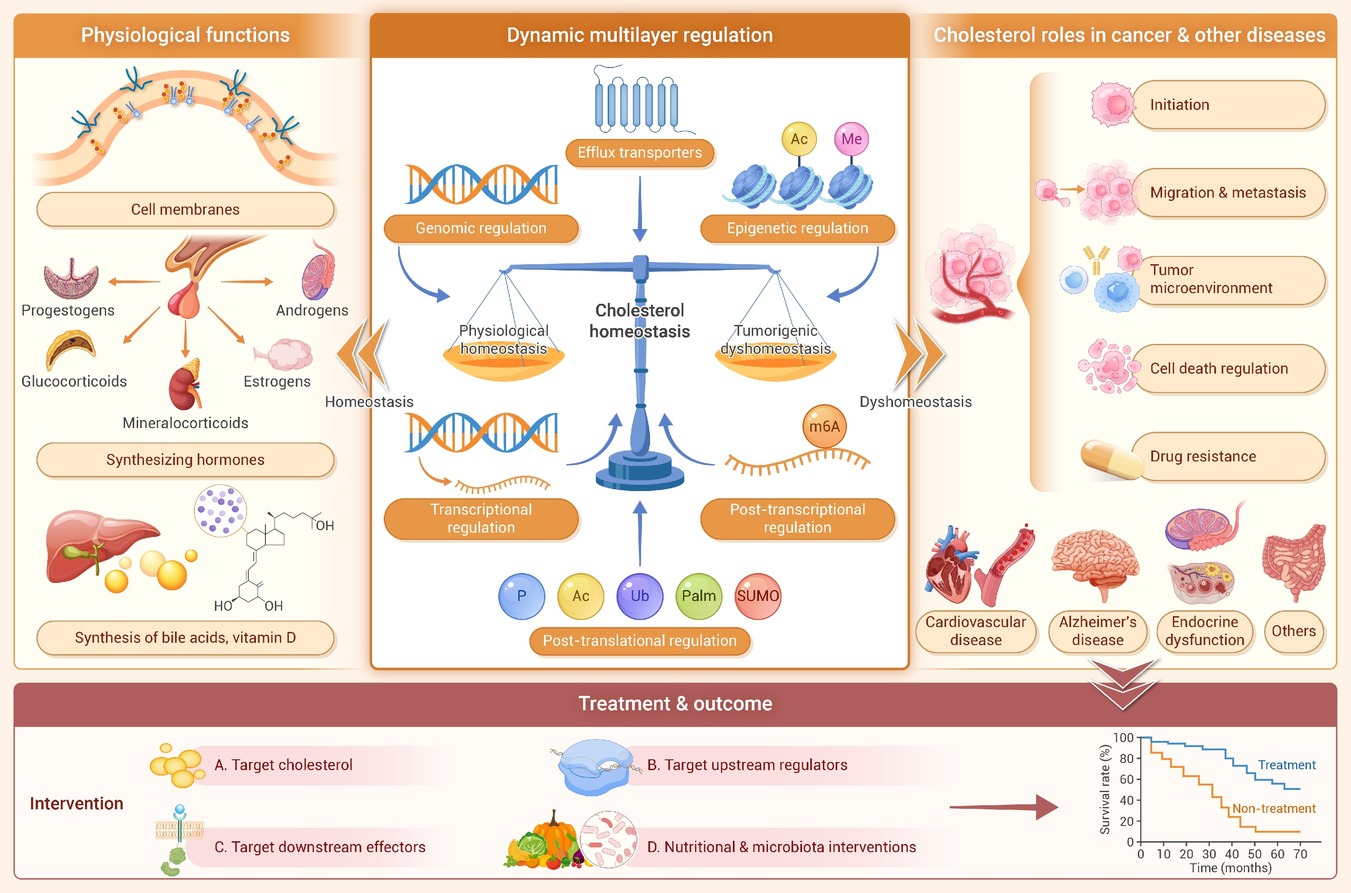
 DownLoad:
Full size image
DownLoad:
Full size image
-
PUBLIC SUMMARY
-
Healthy cells use a precise multi-layered system to balance cholesterol production and clearance.
Cancer cells hijack cholesterol production, uptake, and storage to fuel tumor growth and spread.
Cholesterol imbalance in the tumor microenvironment (TME) rewires immune cells to suppress defenses.
Blocking cholesterol synthesis or restoring its balance boosts immune attack and drug sensitivity.
-
-
ABSTRACT
Cholesterol constitutes an indispensable lipid metabolite for all eukaryotic cells and governs diverse core metabolic processes. Its homeostasis is precisely controlled by multilayered dynamic regulatory. Malignant cells subvert this homeostatic network to reprogram cholesterol synthesis, lipoprotein uptake and intracellular esterification, which collectively fuels tumorigenesis, metastasis and therapeutic resistance. Meanwhile, dysregulated cholesterol metabolism educates tumor microenvironment and induces immunosuppression especially by switching the polarization of tumor-associated macrophages. Therefore, targeting cholesterol metabolism has emerged as a highly promising anti-tumor strategy, in particular for the immunotherapy. This review focuses on the multi-layered regulatory mechanisms of cholesterol and its pathological roles in cancer, summarizes the latest advances in relevant targeted therapies, and elucidates the core value of cholesterol metabolism as a therapeutic vulnerability in cancer treatment.-
Keywords:
- Cholesterol metabolism /
- Tumorigenesis /
- Immunotherapy
-

-
REFERENCES
[1] Huang B., Song B. L. and Xu C. (2020). Cholesterol metabolism in cancer: Mechanisms and therapeutic opportunities. Nat. Metab. 2:132−141. DOI:10.1038/s42255-020-0174-0 [2] Altmann S. W., Davis H. R. Jr., Zhu L. J., et al. (2004). Niemann-Pick C1 Like 1 protein is critical for intestinal cholesterol absorption. Science 303:1201−1204. DOI:10.1126/science.1093131 [3] Repa J. J., and Mangelsdorf D. J. (2000). The role of orphan nuclear receptors in the regulation of cholesterol homeostasis. Annu. Rev. Cell Dev. Biol. 16:459−481. DOI:10.1146/annurev.cellbio.16.1.459 [4] Ikonen E. and Olkkonen V. M. (2023). Intracellular cholesterol trafficking. Cold Spring Harb. Perspect. Biol. 15:a041404. DOI:10.1101/cshperspect.a041404 [5] Goldstein J. L. and Brown M. S. (1990). Regulation of the mevalonate pathway. Nature 343:425−430. DOI:10.1038/343425a0 [6] Park J., Zielinski M., Magder A., et al. (2017). Human farnesyl pyrophosphate synthase is allosterically inhibited by its own product. Nat. Commun. 8:14132. DOI:10.1038/ncomms14132 [7] Gill S., Stevenson J., Kristiana I., et al. (2011). Cholesterol-dependent degradation of squalene monooxygenase, a control point in cholesterol synthesis beyond HMG-CoA reductase. Cell Metab. 13:260−273. DOI:10.1016/j.cmet.2011.01.015 [8] Gliozzi M., Musolino V., Bosco F., et al. (2021). Cholesterol homeostasis: Researching a dialogue between the brain and peripheral tissues. Pharmacol. Res. 163:105215. DOI:10.1016/j.phrs.2020.105215 [9] Albitar O., D'Souza C. M. and Adeghate E. A. (2024). Effects of lipoproteins on metabolic health. Nutrients 16:2156. DOI:10.3390/nu16132156 [10] Goldstein J. L. and Brown M. S. (2009). The LDL receptor. Arterioscler. Thromb. Vasc. Biol. 29:431−438. DOI:10.1161/atvbaha.108.179564 [11] Maxfield F. R. and van Meer G. (2010). Cholesterol, the central lipid of mammalian cells. Curr. Opin. Cell Biol. 22:422−429. DOI:10.1016/j.ceb.2010.05.004 [12] Rohatgi A., Westerterp M., von Eckardstein A., et al. (2021). HDL in the 21st century: A multifunctional roadmap for future HDL research. Circulation 143:2293−2309. DOI:10.1161/circulationaha.120.044221 [13] Acton S., Rigotti A., Landschulz K. T., et al. (1996). Identification of scavenger receptor SR-BI as a high density lipoprotein receptor. Science 271:518−520. DOI:10.1126/science.271.5248.518 [14] Ferrari A. and Tontonoz P. (2025). Nonvesicular cholesterol transport in physiology. J. Clin. Invest. 135:e188127. DOI:10.1172/jci188127 [15] Hai Q. and Smith J. D. (2021). Acyl-Coenzyme A: Cholesterol acyltransferase (ACAT) in cholesterol metabolism: From its discovery to clinical trials and the genomics era. Metabolites 11:543. DOI:10.3390/metabo11080543 [16] Chang T. Y., Li B. L., Chang C. C., et al. (2009). Acyl-coenzyme A: Cholesterol acyltransferases. Am. J. Physiol. Endocrinol. Metab. 297:E1−E9. DOI:10.1152/ajpendo.90926.2008 [17] Xu H., Zhou S., Tang Q., et al. (2020). Cholesterol metabolism: New functions and therapeutic approaches in cancer. Biochim. Biophys. Acta Rev. Cancer 1874:188394. DOI:10.1016/j.bbcan.2020.188394 [18] Back P. I., Yu M., Modaresahmadi S., et al. (2024). Immune implications of cholesterol-containing lipid nanoparticles. ACS Nano 18:28480−28501. DOI:10.1021/acsnano.4c06369 [19] Ma L., Cho W. and Nelson E. R. (2022). Our evolving understanding of how 27-hydroxycholesterol influences cancer. Biochem. Pharmacol. 196:114621. DOI:10.1016/j.bcp.2021.114621 [20] Jia W., Wei M., Rajani C., et al. (2021). Targeting the alternative bile acid synthetic pathway for metabolic diseases. Protein Cell 12:411−425. DOI:10.1007/s13238-020-00804-9 [21] Russell D. W. (2000). Oxysterol biosynthetic enzymes. Biochim. Biophys. Acta 1529:126−135. DOI:10.1016/s1388-1981(00)00142-6 [22] Hou Y., Fu Z., Wang C., et al. (2025). 27-Hydroxycholesterol in cancer development and drug resistance. J. Enzyme Inhib. Med. Chem. 40:2507670. DOI:10.1080/14756366.2025.2507670 [23] Fu X., Menke J. G., Chen Y., et al. (2001). 27-hydroxycholesterol is an endogenous ligand for liver X receptor in cholesterol-loaded cells. J. Biol. Chem. 276:38378−38387. DOI:10.1074/jbc.M105805200 [24] Saito H., Tachiura W., Nishimura M., et al. (2023). Hydroxylation site-specific and production-dependent effects of endogenous oxysterols on cholesterol homeostasis: Implications for SREBP-2 and LXR. J. Biol. Chem. 299:102733. DOI:10.1016/j.jbc.2022.102733 [25] Umetani M., Domoto H., Gormley A. K., et al. (2007). 27-Hydroxycholesterol is an endogenous SERM that inhibits the cardiovascular effects of estrogen. Nat. Med. 13:1185−1192. DOI:10.1038/nm1641 [26] DuSell C. D. and McDonnell D. P. (2008). 27-Hydroxycholesterol: A potential endogenous regulator of estrogen receptor signaling. Trends Pharmacol. Sci. 29:510−514. DOI:10.1016/j.tips.2008.07.003 [27] Starkey N. J. E., Li Y., Drenkhahn-Weinaug S. K., et al. (2018). 27-Hydroxycholesterol is an estrogen receptor β-selective negative allosteric modifier of 17β-estradiol binding. Endocrinology 159:1972−1981. DOI:10.1210/en.2018-00081 [28] Yu L., Xu L., Chu H., et al. (2023). Macrophage-to-endothelial cell crosstalk by the cholesterol metabolite 27HC promotes atherosclerosis in male mice. Nat. Commun. 14:4101. DOI:10.1038/s41467-023-39586-z [29] Nakano Y., Yamamoto M., Matoba T., et al. (2023). Association between serum oxysterols and coronary plaque regression during lipid-lowering therapy with statin and ezetimibe: Insights from the CuVIC trial. J. Atheroscler. Thromb. 30:907−918. DOI:10.5551/jat.63507 [30] Luo M., Bao L., Chen Y., et al. (2022). ZMYND8 is a master regulator of 27-hydroxycholesterol that promotes tumorigenicity of breast cancer stem cells. Sci. Adv. 8:eabn5295. DOI:10.1126/sciadv.abn5295 [31] Ma L., Wang L., Nelson A. T., et al. (2020). 27-Hydroxycholesterol acts on myeloid immune cells to induce T cell dysfunction, promoting breast cancer progression. Cancer Lett. 493:266−283. DOI:10.1016/j.canlet.2020.08.020 [32] Wu Q., Ishikawa T., Sirianni R., et al. (2013). 27-Hydroxycholesterol promotes cell-autonomous, ER-positive breast cancer growth. Cell Rep. 5:637−645. DOI:10.1016/j.celrep.2013.10.006 [33] Lund E. G., Kerr T. A., Sakai J., et al. (1998). cDNA cloning of mouse and human cholesterol 25-hydroxylases, polytopic membrane proteins that synthesize a potent oxysterol regulator of lipid metabolism. J. Biol. Chem. 273:34316−34327. DOI:10.1074/jbc.273.51.34316 [34] Radhakrishnan A., Ikeda Y., Kwon H. J., et al. (2007). Sterol-regulated transport of SREBPs from endoplasmic reticulum to Golgi: Oxysterols block transport by binding to Insig. Proc. Natl. Acad. Sci. U. S. A. 104:6511−6518. DOI:10.1073/pnas.0700899104 [35] Trindade B. C., Ceglia S., Berthelette A., et al. (2021). The cholesterol metabolite 25-hydroxycholesterol restrains the transcriptional regulator SREBP2 and limits intestinal IgA plasma cell differentiation. Immunity 54:2273−2287.e2276. DOI:10.1016/j.immuni.2021.09.004 [36] Du X., Pham Y. H. and Brown A. J. (2004). Effects of 25-hydroxycholesterol on cholesterol esterification and sterol regulatory element-binding protein processing are dissociable: Implications for cholesterol movement to the regulatory pool in the endoplasmic reticulum. J. Biol. Chem. 279:47010−47016. DOI:10.1074/jbc.M408690200 [37] Cashikar A. G., Toral-Rios D., Timm D., et al. (2023). Regulation of astrocyte lipid metabolism and ApoE secretion by the microglial oxysterol, 25-hydroxycholesterol. J. Lipid Res. 64:100350. DOI:10.1016/j.jlr.2023.100350 [38] Liu Y., Wei Z., Ma X., et al. (2018). 25-Hydroxycholesterol activates the expression of cholesterol 25-hydroxylase in an LXR-dependent mechanism. J. Lipid Res. 59:439−451. DOI:10.1194/jlr.M080440 [39] Sun M., Garnier L., Chevalier R., et al. (2025). Lymphatic-derived oxysterols promote anti-tumor immunity and response to immunotherapy in melanoma. Nat. Commun. 16:1217. DOI:10.1038/s41467-025-55969-w [40] Toral-Rios D., Long J. M., Ulrich J. D., et al. (2024). Cholesterol 25-hydroxylase mediates neuroinflammation and neurodegeneration in a mouse model of tauopathy. J. Exp. Med. 221:e20232000. DOI:10.1084/jem.20232000 [41] Wong M. Y., Lewis M., Doherty J. J., et al. (2020). 25-Hydroxycholesterol amplifies microglial IL-1β production in an apoE isoform-dependent manner. J. Neuroinflammation 17:192. DOI:10.1186/s12974-020-01869-3 [42] Romero J., Toral-Rios D., Yu J., et al. (2024). 25-hydroxycholesterol promotes brain cytokine production and leukocyte infiltration in a mouse model of lipopolysaccharide-induced neuroinflammation. J. Neuroinflammation 21:251. DOI:10.1186/s12974-024-03233-1 [43] Choi H., Kim H. J., Lee S. E., et al. (2025). 25-Hydroxycholesterol modulates microglial function and exacerbates Alzheimer's disease pathology: Mechanistic insights and therapeutic potential of cholesterol esterification inhibition. J. Neuroinflammation 22:50. DOI:10.1186/s12974-025-03357-y [44] Björkhem I. (2006). Crossing the barrier: Oxysterols as cholesterol transporters and metabolic modulators in the brain. J. Intern. Med. 260:493−508. DOI:10.1111/j.1365-2796.2006.01725.x [45] Lütjohann D., Breuer O., Ahlborg G., et al. (1996). Cholesterol homeostasis in human brain: Evidence for an age-dependent flux of 24S-hydroxycholesterol from the brain into the circulation. Proc. Natl. Acad. Sci. U. S. A. 93:9799−9804. DOI:10.1073/pnas.93.18.9799 [46] Abildayeva K., Jansen P. J., Hirsch-Reinshagen V., et al. (2006). 24(S)-hydroxycholesterol participates in a liver X receptor-controlled pathway in astrocytes that regulates apolipoprotein E-mediated cholesterol efflux. J. Biol. Chem. 281:12799−12808. DOI:10.1074/jbc.M601019200 [47] Li Y., Xu T., Yang J., et al. (2025). Cholesterol and 24S-OHC induce neuronal apoptosis and necroptosis, but not ferroptosis despite elevated iron levels. Mol. Neurobiol. 62:16617−16635. DOI:10.1007/s12035-025-05272-y [48] Yamanaka K., Saito Y., Yamamori T., et al. (2011). 24(S)-hydroxycholesterol induces neuronal cell death through necroptosis, a form of programmed necrosis. J. Biol. Chem. 286:24666−24673. DOI:10.1074/jbc.M111.236273 [49] Feng W., Ju M., Wang T., et al. (2025). Linking oxysterols and different stages of mild cognitive impairment: Insights from gut metabolites and N6-methyladenosine. Alzheimers Res. Ther. 17:102. DOI:10.1186/s13195-025-01743-5 [50] Lütjohann D., Papassotiropoulos A., Björkhem I., et al. (2000). Plasma 24S-hydroxycholesterol (cerebrosterol) is increased in Alzheimer and vascular demented patients. J. Lipid Res. 41:195−198. DOI:10.1016/S0022-2275(20)32052-6 [51] Giannelli S., Eroli F., Loera-Valencia R., et al. (2025). Elevated 24-hydroxycholesterol levels counteract okadaic acid-induced tau hyperphosphorylation and neuronal morphology impairment. Neurobiol. Dis. 214:107029. DOI:10.1016/j.nbd.2025.107029 [52] Zhang X., Chen C. and Liu Y. (2024). Navigating the metabolic maze: Anomalies in fatty acid and cholesterol processes in Alzheimer's astrocytes. Alzheimers Res. Ther. 16:63. DOI:10.1186/s13195-024-01430-x [53] Matsuda A., Nagao K., Matsuo M., et al. (2013). 24(S)-hydroxycholesterol is actively eliminated from neuronal cells by ABCA1. J. Neurochem. 126:93−101. DOI:10.1111/jnc.12275 [54] Urano Y., Ochiai S. and Noguchi N. (2013). Suppression of amyloid-β production by 24S-hydroxycholesterol via inhibition of intracellular amyloid precursor protein trafficking. FASEB J. 27:4305−4315. DOI:10.1096/fj.13-231456 [55] Gamba P., Leonarduzzi G., Tamagno E., et al. (2011). Interaction between 24-hydroxycholesterol, oxidative stress, and amyloid-β in amplifying neuronal damage in Alzheimer's disease: Three partners in crime. Aging Cell 10:403−417. DOI:10.1111/j.1474-9726.2011.00681.x [56] Dunk M. M., Rapp S. R., Hayden K. M., et al. (2024). Plasma oxysterols are associated with serum lipids and dementia risk in older women. Alzheimers Dement. 20:3696−3704. DOI:10.1002/alz.13811 [57] Cui D., Yu X., Guan Q., et al. (2025). Cholesterol metabolism: Molecular mechanisms, biological functions, diseases, and therapeutic targets. Mol. Biomed. 6:72. DOI:10.1186/s43556-025-00321-3 [58] Russell D. W. (2003). The enzymes, regulation, and genetics of bile acid synthesis. Annu. Rev. Biochem. 72:137−174. DOI:10.1146/annurev.biochem.72.121801.161712 [59] Guo R., Guo C., Qin S., et al. (2026). GPR183 potentiates CAR-T cell infiltration and antitumor immunity through a positive feedback loop involving the oxysterol 7α,25-OHC. Mol. Cancer 25:116. DOI:10.1186/s12943-026-02642-5 [60] Chen K. Y., De Giovanni M., Xu Y., et al. (2025). Inflammation switches the chemoattractant requirements for naive lymphocyte entry into lymph nodes. Cell 188:1019−1035.e1022. DOI:10.1016/j.cell.2024.11.031 [61] Meljon A., Crick P. J., Yutuc E., et al. (2019). Mining for oxysterols in Cyp7b1(-/-) mouse brain and plasma: Relevance to spastic paraplegia type 5. Biomolecules 9:149. DOI:10.3390/biom9040149 [62] Martin C., Bean R., Rose K., et al. (2001). Cyp7b1 catalyses the 7alpha-hydroxylation of dehydroepiandrosterone and 25-hydroxycholesterol in rat prostate. Biochem. J. 355:509−515. DOI:10.1042/0264-6021:3550509 [63] Kim B. Y., Son Y., Kim B. J., et al. (2023). Atheroma-relevant 7-oxysterols differentially upregulate cd14 expression. Int. J. Mol. Sci. 24:10542. DOI:10.3390/ijms241310542 [64] Son Y., Kim B. Y., Kim M., et al. (2023). Glucocorticoids impair the 7α-hydroxycholesterol-enhanced innate immune response. Immune Netw. 23:e40. DOI:10.4110/in.2023.23.e40 [65] Huang Y. L., Chang W. J., Lin C. H., et al. (2025). Data from multi-national aging cohorts show dysregulated metabolic pathways in people with physio-cognitive decline. Commun. Med. (Lond) 5:351. DOI:10.1038/s43856-025-01073-5 [66] Zhang X., Lv C., An Y., et al. (2018). Increased levels of 27-hydroxycholesterol induced by dietary cholesterol in brain contribute to learning and memory impairment in rats. Mol. Nutr. Food Res. 62:e201700531. DOI:10.1002/mnfr.201700531 [67] Anderson A., Campo A., Fulton E., et al. (2020). 7-Ketocholesterol in disease and aging. Redox Biol. 29:101380. DOI:10.1016/j.redox.2019.101380 [68] Shinkyo R., Xu L., Tallman K. A., et al. (2011). Conversion of 7-dehydrocholesterol to 7-ketocholesterol is catalyzed by human cytochrome p450 7a1 and occurs by direct oxidation without an epoxide intermediate. J. Biol. Chem. 286:33021−33028. DOI:10.1074/jbc.M111.282434 [69] Leonarduzzi G., Vizio B., Sottero B., et al. (2006). Early involvement of ROS overproduction in apoptosis induced by 7-ketocholesterol. Antioxid. Redox Signal. 8:375−380. DOI:10.1089/ars.2006.8.375 [70] Vejux A., Abed-Vieillard D., Hajji K., et al. (2020). 7-ketocholesterol and 7β-hydroxycholesterol: In vitro and animal models used to characterize their activities and to identify molecules preventing their toxicity. Biochem. Pharmacol. 173:113648. DOI:10.1016/j.bcp.2019.113648 [71] Navas-Madroñal M., Rodriguez C., Kassan M., et al. (2019). Enhanced endoplasmic reticulum and mitochondrial stress in abdominal aortic aneurysm. Clin. Sci. (Lond.) 133:1421−1438. DOI:10.1042/cs20190399 [72] Poli G., Leoni V., Biasi F., et al. (2022). Oxysterols: From redox bench to industry. Redox Biol. 49:102220. DOI:10.1016/j.redox.2021.102220 [73] Helmschrodt C., Becker S., Schröter J., et al. (2013). Fast lc-ms/ms analysis of free oxysterols derived from reactive oxygen species in human plasma and carotid plaque. Clin. Chim. Acta 425:3−8. DOI:10.1016/j.cca.2013.06.022 [74] Tong K. L., Mahmood Zuhdi A. S. and Wong P. F. (2024). The role of miR-134-5p in 7-ketocholesterol-induced human aortic endothelial dysfunction. EXCLI J. 23:1073−1090. DOI:10.17179/excli2024-7342 [75] Hayden J. M., Brachova L., Higgins K., et al. (2002). Induction of monocyte differentiation and foam cell formation in vitro by 7-ketocholesterol. J. Lipid Res. 43:26−35. DOI:10.1016/S0022-2275(20)30183-8 [76] Li G., Park H. J., Suh J. H., et al. (2024). 7-ketocholesterol plays a key role in cholesterol-induced hepatitis via macrophage and neutrophil infiltration. J. Nutr. Biochem. 125:109552. DOI:10.1016/j.jnutbio.2023.109552 [77] Glogowska E., Jose G. P., Dias Araújo A. R., et al. (2025). Potentiation of macrophage Piezo1 by atherogenic 7-ketocholesterol. Cell Rep. 44:115542. DOI:10.1016/j.celrep.2025.115542 [78] Porter J. A., Young K. E. and Beachy P. A. (1996). Cholesterol modification of hedgehog signaling proteins in animal development. Science 274:255−259. DOI:10.1126/science.274.5285.255 [79] Xiao X., Tang J. J., Peng C., et al. (2017). Cholesterol modification of smoothened is required for Hedgehog signaling. Mol. Cell 66:154−162.e110. DOI:10.1016/j.molcel.2017.02.015 [80] Zhang Y. and Beachy P. A. (2023). Cellular and molecular mechanisms of Hedgehog signalling. Nat. Rev. Mol. Cell Biol. 24:668−687. DOI:10.1038/s41580-023-00591-1 [81] Briscoe J. and Thérond P. P. (2013). The mechanisms of Hedgehog signalling and its roles in development and disease. Nat. Rev. Mol. Cell Biol. 14:416−429. DOI:10.1038/nrm3598 [82] Hall T. M., Porter J. A., Young K. E., et al. (1997). Crystal structure of a Hedgehog autoprocessing domain: Homology between Hedgehog and self-splicing proteins. Cell 91:85−97. DOI:10.1016/s0092-8674(01)80011-8 [83] Perler F. B. (1998). Protein splicing of inteins and hedgehog autoproteolysis: Structure, function, and evolution. Cell 92:1−4. DOI:10.1016/s0092-8674(00)80892-2 [84] Ciepla P., Magee A. I. and Tate E. W. (2015). Cholesterylation: A tail of hedgehog. Biochem. Soc. Trans. 43:262−267. DOI:10.1042/bst20150032 [85] Siebold C. and Rohatgi R. (2023). The inseparable relationship between cholesterol and Hedgehog signaling. Annu. Rev. Biochem. 92:273−298. DOI:10.1146/annurev-biochem-052521-040313 [86] Huang P., Wierbowski B. M., Lian T., et al. (2022). Structural basis for catalyzed assembly of the sonic Hedgehog-patched1 signaling complex. Dev. Cell 57:670−685.e678. DOI:10.1016/j.devcel.2022.02.008 [87] Hu A., Zhang J. Z., Wang J., et al. (2022). Cholesterylation of smoothened is a calcium-accelerated autoreaction involving an intramolecular ester intermediate. Cell Res. 32:288−301. DOI:10.1038/s41422-022-00622-0 [88] Qiu Z. P., Hu A. and Song B. L. (2021). The 3-beta-hydroxysteroid-delta(8), delta(7)-isomerase EBP inhibits cholesterylation of smoothened. Biochim. Biophys. Acta Mol. Cell Biol. Lipids 1866:159041. DOI:10.1016/j.bbalip.2021.159041 [89] Berman D. M., Karhadkar S. S., Hallahan A. R., et al. (2002). Medulloblastoma growth inhibition by hedgehog pathway blockade. Science 297:1559−1561. DOI:10.1126/science.1073733 [90] Migden M. R., Guminski A., Gutzmer R., et al. (2015). Treatment with two different doses of sonidegib in patients with locally advanced or metastatic basal cell carcinoma (BOLT): A multicentre, randomised, double-blind phase 2 trial. Lancet Oncol. 16:716−728. DOI:10.1016/s1470-2045(15)70100-2 [91] Liu Y. B., He L. M., Sun M., et al. (2024). A sterol analog inhibits hedgehog pathway by blocking cholesterylation of smoothened. Cell Chem. Biol. 31:1264−1276.e1267. DOI:10.1016/j.chembiol.2024.02.002 [92] Atwood S. X., Sarin K. Y., Whitson R. J., et al. (2015). Smoothened variants explain the majority of drug resistance in basal cell carcinoma. Cancer Cell 27:342−353. DOI:10.1016/j.ccell.2015.02.002 [93] Wu X., Xiao S., Zhang M., et al. (2021). A novel protein encoded by circular SMO RNA is essential for Hedgehog signaling activation and glioblastoma tumorigenicity. Genome Biol. 22:33. DOI:10.1186/s13059-020-02250-6 [94] Martinelli G., Oehler V. G., Papayannidis C., et al. (2015). Treatment with PF-04449913, an oral smoothened antagonist, in patients with myeloid malignancies: A phase 1 safety and pharmacokinetics study. Lancet Haematol. 2:e339−346. DOI:10.1016/s2352-3026(15)00096-4 [95] Tibes R. and Mesa R. A. (2014). Targeting hedgehog signaling in myelofibrosis and other hematologic malignancies. J. Hematol. Oncol. 7:18. DOI:10.1186/1756-8722-7-18 [96] Nagashima S., Yagyu H., Ohashi K., et al. (2012). Liver-specific deletion of 3-hydroxy-3-methylglutaryl coenzyme A reductase causes hepatic steatosis and death. Arterioscler. Thromb. Vasc. Biol. 32:1824−1831. DOI:10.1161/atvbaha.111.240754 [97] De Giorgi M., Jarrett K. E., Burton J. C., et al. (2020). Depletion of essential isoprenoids and ER stress induction following acute liver-specific deletion of HMG-CoA reductase. J. Lipid Res. 61:1675−1686. DOI:10.1194/jlr.RA120001006 [98] Nagashima S., Yagyu H., Tozawa R., et al. (2015). Plasma cholesterol-lowering and transient liver dysfunction in mice lacking squalene synthase in the liver. J. Lipid Res. 56:998−1005. DOI:10.1194/jlr.M057406 [99] Thorngate F. E., Strockbine P. A., Erickson S. K., et al. (2002). Altered adrenal gland cholesterol metabolism in the apoE-deficient mouse. J. Lipid Res. 43:1920−1926. DOI:10.1194/jlr.m200205-jlr200 [100] Cuffe H., Liu M., Key C. C., et al. (2018). Targeted deletion of adipocyte abca1 (ATP-binding cassette transporter a1) impairs diet-induced obesity. Arterioscler. Thromb. Vasc. Biol. 38:733−743. DOI:10.1161/atvbaha.117.309880 [101] Key C. C., Liu M., Kurtz C. L., et al. (2017). Hepatocyte ABCA1 deletion impairs liver insulin signaling and lipogenesis. Cell Rep. 19:2116−2129. DOI:10.1016/j.celrep.2017.05.032 [102] Westerterp M., Murphy A. J., Wang M., et al. (2013). Deficiency of ATP-binding cassette transporters a1 and g1 in macrophages increases inflammation and accelerates atherosclerosis in mice. Circ. Res. 112:1456−1465. DOI:10.1161/circresaha.113.301086 [103] Yu L., Hammer R. E., Li-Hawkins J., et al. (2002). Disruption of Abcg5 and Abcg8 in mice reveals their crucial role in biliary cholesterol secretion. Proc. Natl. Acad. Sci. U. S. A. 99:16237−16242. DOI:10.1073/pnas.252582399 [104] Meiner V. L., Cases S., Myers H. M., et al. (1996). Disruption of the acyl-CoA:cholesterol acyltransferase gene in mice: Evidence suggesting multiple cholesterol esterification enzymes in mammals. Proc. Natl. Acad. Sci. U. S. A. 93:14041−14046. DOI:10.1073/pnas.93.24.14041 [105] Shibuya Y., Chang C. C., Huang L. H., et al. (2014). Inhibiting ACAT1/SOAT1 in microglia stimulates autophagy-mediated lysosomal proteolysis and increases Aβ1-42 clearance. J. Neurosci. 34:14484−14501. DOI:10.1523/jneurosci.2567-14.2014 [106] Vergnes L., Chin R. G., de Aguiar Vallim T., et al. (2016). SREBP-2-deficient and hypomorphic mice reveal roles for SREBP-2 in embryonic development and SREBP-1c expression. J. Lipid Res. 57:410−421. DOI:10.1194/jlr.M064022 [107] Xu M., Jiang S. Y., Tang S., et al. (2025). Nuclear SREBP2 condensates regulate the transcriptional activation of lipogenic genes and cholesterol homeostasis. Nat. Metab. 7:1034−1051. DOI:10.1038/s42255-025-01291-0 [108] Rong S., Cortés V. A., Rashid S., et al. (2017). Expression of SREBP-1c requires SREBP-2-mediated generation of a sterol ligand for LXR in livers of mice. eLife 6:e25015. DOI:10.7554/eLife.25015 [109] Rong S., McDonald J. G. and Engelking L. J. (2017). Cholesterol auxotrophy and intolerance to ezetimibe in mice with SREBP-2 deficiency in the intestine. J. Lipid Res. 58:1988−1998. DOI:10.1194/jlr.M077610 [110] Peet D. J., Turley S. D., Ma W., et al. (1998). Cholesterol and bile acid metabolism are impaired in mice lacking the nuclear oxysterol receptor LXR alpha. Cell 93:693−704. DOI:10.1016/s0092-8674(00)81432-4 [111] Graham S. E., Clarke S. L., Wu K. H., et al. (2021). The power of genetic diversity in genome-wide association studies of lipids. Nature 600:675−679. DOI:10.1038/s41586-021-04064-3 [112] Leigh S., Futema M., Whittall R., et al. (2017). The UCL low-density lipoprotein receptor gene variant database: Pathogenicity update. J. Med. Genet. 54:217−223. DOI:10.1136/jmedgenet-2016-104054 [113] Khaleqsefat E., Rasul K. H., Kheder R. K., et al. (2025). Frameshift variation in the HMG-CoA reductase gene and unresponsiveness to cholesterol-lowering drugs in type 2 diabetes mellitus patients. Sci. Rep. 15:288. DOI:10.1038/s41598-024-75461-7 [114] Kaczmarczyk L. S., Babele D., Levi N., et al. (2024). Regulation of cholesterol biosynthesis by CTCF and H3K27 methylation is critical for cell migration. Eur. J. Cell Biol. 103:151454. DOI:10.1016/j.ejcb.2024.151454 [115] Mattei A. L., Bailly N. and Meissner A. (2022). DNA methylation: A historical perspective. Trends Genet. 38:676−707. DOI:10.1016/j.tig.2022.03.010 [116] Malhotra P., Soni V., Kumar A., et al. (2014). Epigenetic modulation of intestinal cholesterol transporter Niemann-Pick C1-like 1 (NPC1L1) gene expression by DNA methylation. J. Biol. Chem. 289:23132−23140. DOI:10.1074/jbc.M113.546283 [117] Zhang L., Zou W., Zhang S., et al. (2024). Maternal high-fat diet orchestrates offspring hepatic cholesterol metabolism via MEF2A hypermethylation-mediated CYP7A1 suppression. Cell. Mol. Biol. Lett. 29:154. DOI:10.1186/s11658-024-00673-8 [118] Chen H., Li Y., Li H., et al. (2024). NBS1 lactylation is required for efficient DNA repair and chemotherapy resistance. Nature 631:663−669. DOI:10.1038/s41586-024-07620-9 [119] Chen H., Nisar M. A., Mulla J., et al. (2025). Liver TET1 promotes metabolic dysfunction-associated steatotic liver disease. EMBO Mol. Med. 17:1101−1117. DOI:10.1038/s44321-025-00224-4 [120] Villagra A., Ulloa N., Zhang X., et al. (2007). Histone deacetylase 3 down-regulates cholesterol synthesis through repression of lanosterol synthase gene expression. J. Biol. Chem. 282:35457−35470. DOI:10.1074/jbc.M701719200 [121] Zhang J., Xu H., He Y., et al. (2024). Inhibition of KDM4A restricts SQLE transcription and induces oxidative stress imbalance to suppress bladder cancer. Redox Biol. 77:103407. DOI:10.1016/j.redox.2024.103407 [122] Li G., Wang D., Zhai Y., et al. (2024). Glycometabolic reprogramming-induced XRCC1 lactylation confers therapeutic resistance in ALDH1A3-overexpressing glioblastoma. Cell Metab. 36:1696−1710.e1610. DOI:10.1016/j.cmet.2024.07.011 [123] Liu F., Chen W., Zhang Z., et al. (2026). Targeting aurora kinase b regulates cholesterol metabolism and enhances chemoimmunotherapy in cholangiocarcinoma. Gut 75:353−366. DOI:10.1136/gutjnl-2025-335291 [124] Horton J. D., Goldstein J. L. and Brown M. S. (2002). SREBPs: Activators of the complete program of cholesterol and fatty acid synthesis in the liver. J. Clin. Invest. 109:1125−1131. DOI:10.1172/jci15593 [125] DeBose-Boyd R. A., Brown M. S., Li W. P., et al. (1999). Transport-dependent proteolysis of SREBP: Relocation of site-1 protease from Golgi to ER obviates the need for SREBP transport to Golgi. Cell 99:703−712. DOI:10.1016/s0092-8674(00)81668-2 [126] Radhakrishnan A., Goldstein J. L., McDonald J. G., et al. (2008). Switch-like control of SREBP-2 transport triggered by small changes in ER cholesterol: A delicate balance. Cell Metab. 8:512−521. DOI:10.1016/j.cmet.2008.10.008 [127] Brown M. S., Radhakrishnan A. and Goldstein J. L. (2018). Retrospective on cholesterol homeostasis: The central role of scap. Annu. Rev. Biochem. 87:783−807. DOI:10.1146/annurev-biochem-062917-011852 [128] Ozkan-Nikitaras T., Grzesik D. J., Romano L. E. L., et al. (2024). N-SREBP2 provides a mechanism for dynamic control of cellular cholesterol homeostasis. Cells 13:1255. DOI:10.3390/cells13151255 [129] Brown A. J., Sun L., Feramisco J. D., et al. (2002). Cholesterol addition to ER membranes alters conformation of SCAP, the SREBP escort protein that regulates cholesterol metabolism. Mol. Cell 10:237−245. DOI:10.1016/s1097-2765(02)00591-9 [130] Zeng H., Qin H., Liao M., et al. (2022). CD36 promotes de novo lipogenesis in hepatocytes through INSIG2-dependent SREBP1 processing. Mol. Metab. 57:101428. DOI:10.1016/j.molmet.2021.101428 [131] Chen J., Zhou Y., Liu Z., et al. (2024). Hepatic glycogenesis antagonizes lipogenesis by blocking S1P via UDPG. Science 383:eadi3332. DOI:10.1126/science.adi3332 [132] Matalonga J., Glaria E., Bresque M., et al. (2017). The nuclear receptor LXR limits bacterial infection of host macrophages through a mechanism that impacts cellular NAD metabolism. Cell Rep. 18:1241−1255. DOI:10.1016/j.celrep.2017.01.007 [133] Glass C. K. and Rosenfeld M. G. (2000). The coregulator exchange in transcriptional functions of nuclear receptors. Genes Dev. 14:121−141. DOI:10.1101/gad.14.2.121 [134] Wang B. and Tontonoz P. (2018). Liver X receptors in lipid signalling and membrane homeostasis. Nat. Rev. Endocrinol. 14:452−463. DOI:10.1038/s41574-018-0037-x [135] Huang K., Jo H., Echesabal-Chen J., et al. (2021). Combined LXR and RXR agonist therapy increases ABCA1 protein expression and enhances ApoAI-mediated cholesterol efflux in cultured endothelial cells. Metabolites 11:640. DOI:10.3390/metabo11090640 [136] Matsuo M. (2022). ABCA1 and ABCG1 as potential therapeutic targets for the prevention of atherosclerosis. J. Pharmacol. Sci. 148:197−203. DOI:10.1016/j.jphs.2021.11.005 [137] Bonamassa B. and Moschetta A. (2013). Atherosclerosis: Lessons from LXR and the intestine. Trends Endocrinol. Metab. 24:120−128. DOI:10.1016/j.tem.2012.10.004 [138] Li X., Huang X., Song K., et al. (2025). Qingre Sanjie Formula alleviates atherosclerosis by promoting LXR-α/ABCG5/G8-mediated reverse cholesterol transport and bile acid synthesis. Phytomedicine 142:156691. DOI:10.1016/j.phymed.2025.156691 [139] Zelcer N., Hong C., Boyadjian R., et al. (2009). LXR regulates cholesterol uptake through Idol-dependent ubiquitination of the LDL receptor. Science 325:100−104. DOI:10.1126/science.1168974 [140] Goedeke L., Canfrán-Duque A., Rotllan N., et al. (2021). MMAB promotes negative feedback control of cholesterol homeostasis. Nat. Commun. 12:6448. DOI:10.1038/s41467-021-26787-7 [141] Conde J., Fernández-Pisonero I., Lorenzo-Martín L. F., et al. (2025). The mevalonate pathway contributes to breast primary tumorigenesis and lung metastasis. Mol. Oncol. 19:56−80. DOI:10.1002/1878-0261.13716 [142] Poovitha S., Khan A. A., Arkat S., et al. (2025). Srebf and Runx3 regulate hepatic HMG-CoA reductase and intracellular cholesterol under hypoxia. Cell. Mol. Life Sci. 82:222. DOI:10.1007/s00018-025-05736-3 [143] Qi Y. N., Liu Z., Hong L. L., et al. (2023). Methyltransferase-like proteins in cancer biology and potential therapeutic targeting. J. Hematol. Oncol. 16:89. DOI:10.1186/s13045-023-01477-7 [144] Yang Y., Cai J., Yang X., et al. (2022). Dysregulated m6A modification promotes lipogenesis and development of non-alcoholic fatty liver disease and hepatocellular carcinoma. Mol. Ther. 30:2342−2353. DOI:10.1016/j.ymthe.2022.02.021 [145] Oladosu O., Chin E., Barksdale C., et al. (2024). Inhibition of miR-33a-5p in macrophage-like cells in vitro promotes apoAI-mediated cholesterol efflux. Pathophysiology 31:117−126. DOI:10.3390/pathophysiology31010009 [146] Najafi-Shoushtari S. H., Kristo F., Li Y., et al. (2010). MicroRNA-33 and the SREBP host genes cooperate to control cholesterol homeostasis. Science 328:1566−1569. DOI:10.1126/science.1189123 [147] Rayner K. J., Suárez Y., Dávalos A., et al. (2010). MiR-33 contributes to the regulation of cholesterol homeostasis. Science 328:1570−1573. DOI:10.1126/science.1189862 [148] Sharma B., Randhawa V., Vaiphei K., et al. (2021). Expression of miR-18a-5p, miR-144-3p, and miR-663b in colorectal cancer and their association with cholesterol homeostasis. J. Steroid Biochem. Mol. Biol. 208:105822. DOI:10.1016/j.jsbmb.2021.105822 [149] Bhardwaj A., Singh H., Trinidad C. M., et al. (2018). The isomiR-140-3p-regulated mevalonic acid pathway as a potential target for prevention of triple negative breast cancer. Breast Cancer Res. 20:150. DOI:10.1186/s13058-018-1074-z [150] Wang S., Dong L., Ma L., et al. (2022). SQLE facilitates the pancreatic cancer progression via the lncRNA-TTN-AS1/miR-133b/SQLE axis. J. Cell. Mol. Med. 26:3636−3647. DOI:10.1111/jcmm.17347 [151] Ramírez C. M., Lin C. S., Abdelmohsen K., et al. (2014). RNA binding protein HuR regulates the expression of ABCA1. J. Lipid Res. 55:1066−1076. DOI:10.1194/jlr.M044925 [152] Agbo J., Akinyemi A. R., Li D., et al. (2021). RNA-binding protein hnRNPR reduces neuronal cholesterol levels by binding to and suppressing HMGCR. J. Integr. Neurosci. 20:265−276. DOI:10.31083/j.jin2002026 [153] Zhang J. and Manley J. L. (2013). Misregulation of pre-mRNA alternative splicing in cancer. Cancer Discov. 3:1228−1237. DOI:10.1158/2159-8290.Cd-13-0253 [154] Wan Y., Anastasakis D. G., Rodriguez J., et al. (2021). Dynamic imaging of nascent RNA reveals general principles of transcription dynamics and stochastic splice site selection. Cell 184:2878−2895.e2820. DOI:10.1016/j.cell.2021.04.012 [155] Wang L., Ruan Y., Wu X., et al. (2022). lncRNA ZFAS1 promotes HMGCR mRNA stabilization via binding U2AF2 to modulate pancreatic carcinoma lipometabolism. J. Immunol. Res. 2022:4163198. DOI:10.1155/2022/4163198 [156] Wang H., Chen Y., Liu Y., et al. (2022). The lncRNA ZFAS1 regulates lipogenesis in colorectal cancer by binding polyadenylate-binding protein 2 to stabilize SREBP1 mRNA. Mol. Ther. Nucleic Acids 27:363−374. DOI:10.1016/j.omtn.2021.12.010 [157] Wu X., Xu M., Geng M., et al. (2023). Targeting protein modifications in metabolic diseases: Molecular mechanisms and targeted therapies. Signal Transduct. Target. Ther. 8:220. DOI:10.1038/s41392-023-01439-y [158] Pokhrel R. H., Acharya S., Ahn J. H., et al. (2021). AMPK promotes antitumor immunity by downregulating PD-1 in regulatory T cells via the HMGCR/p38 signaling pathway. Mol. Cancer 20:133. DOI:10.1186/s12943-021-01420-9 [159] Steinberg G. R. and Carling D. (2019). AMP-activated protein kinase: The current landscape for drug development. Nat. Rev. Drug Discov. 18:527−551. DOI:10.1038/s41573-019-0019-2 [160] Burg J. S. and Espenshade P. J. (2011). Regulation of HMG-CoA reductase in mammals and yeast. Prog. Lipid Res. 50:403−410. DOI:10.1016/j.plipres.2011.07.002 [161] Rice L. M., Donigan M., Yang M., et al. (2014). Protein phosphatase 2A (PP2A) regulates low density lipoprotein uptake through regulating sterol response element-binding protein-2 (SREBP-2) DNA binding. J. Biol. Chem. 289:17268−17279. DOI:10.1074/jbc.M114.570390 [162] Li Y., Xu S., Mihaylova M. M., et al. (2011). AMPK phosphorylates and inhibits SREBP activity to attenuate hepatic steatosis and atherosclerosis in diet-induced insulin-resistant mice. Cell Metab. 13:376−388. DOI:10.1016/j.cmet.2011.03.009 [163] Han Y., Hu Z., Cui A., et al. (2019). Post-translational regulation of lipogenesis via AMPK-dependent phosphorylation of insulin-induced gene. Nat. Commun. 10:623. DOI:10.1038/s41467-019-08585-4 [164] Xu D., Wang Z., Xia Y., et al. (2020). The gluconeogenic enzyme PCK1 phosphorylates INSIG1/2 for lipogenesis. Nature 580:530−535. DOI:10.1038/s41586-020-2183-2 [165] Düvel K., Yecies J. L., Menon S., et al. (2010). Activation of a metabolic gene regulatory network downstream of mTOR complex 1. Mol. Cell 39:171−183. DOI:10.1016/j.molcel.2010.06.022 [166] Peterson T. R., Sengupta S. S., Harris T. E., et al. (2011). mTOR complex 1 regulates lipin 1 localization to control the SREBP pathway. Cell 146:408−420. DOI:10.1016/j.cell.2011.06.034 [167] Han J., Li E., Chen L., et al. (2015). The CREB coactivator CRTC2 controls hepatic lipid metabolism by regulating SREBP1. Nature 524:243−246. DOI:10.1038/nature14557 [168] Sharpe L. J., Cook E. C., Zelcer N., et al. (2014). The UPS and downs of cholesterol homeostasis. Trends Biochem. Sci. 39:527−535. DOI:10.1016/j.tibs.2014.08.008 [169] Ponugoti B., Kim D. H., Xiao Z., et al. (2010). SIRT1 deacetylates and inhibits SREBP-1C activity in regulation of hepatic lipid metabolism. J. Biol. Chem. 285:33959−33970. DOI:10.1074/jbc.M110.122978 [170] Tao R., Xiong X., DePinho R. A., et al. (2013). FoxO3 transcription factor and Sirt6 deacetylase regulate low density lipoprotein (LDL)-cholesterol homeostasis via control of the proprotein convertase subtilisin/kexin type 9 (Pcsk9) gene expression. J. Biol. Chem. 288:29252−29259. DOI:10.1074/jbc.M113.481473 [171] Lebeau P. F., Byun J. H., Platko K., et al. (2022). Caffeine blocks SREBP2-induced hepatic PCSK9 expression to enhance LDLR-mediated cholesterol clearance. Nat. Commun. 13:770. DOI:10.1038/s41467-022-28240-9 [172] Christianson J. C., Jarosch E. and Sommer T. (2023). Mechanisms of substrate processing during ER-associated protein degradation. Nat. Rev. Mol. Cell Biol. 24:777−796. DOI:10.1038/s41580-023-00633-8 [173] Jiang L. Y., Jiang W., Tian N., et al. (2018). Ring finger protein 145 (RNF145) is a ubiquitin ligase for sterol-induced degradation of HMG-CoA reductase. J. Biol. Chem. 293:4047−4055. DOI:10.1074/jbc.RA117.001260 [174] Faulkner R. A., Yang Y., Tsien J., et al. (2024). Direct binding to sterols accelerates endoplasmic reticulum-associated degradation of HMG CoA reductase. Proc. Natl. Acad. Sci. U. S. A. 121:e2318822121. DOI:10.1073/pnas.2318822121 [175] Schumacher M. M., Jun D. J., Jo Y., et al. (2016). Geranylgeranyl-regulated transport of the prenyltransferase UBIAD1 between membranes of the ER and Golgi. J. Lipid Res. 57:1286−1299. DOI:10.1194/jlr.M068759 [176] Schumacher M. M., Jun D. J., Johnson B. M., et al. (2018). UbiA prenyltransferase domain-containing protein-1 modulates HMG-CoA reductase degradation to coordinate synthesis of sterol and nonsterol isoprenoids. J. Biol. Chem. 293:312−323. DOI:10.1074/jbc.RA117.000423 [177] Xie J. and Li L. (2021). Functional study of SCCD pathogenic gene UBIAD1 (Review). Mol. Med. Rep. 24:706. DOI:10.3892/mmr.2021.12345 [178] Jo Y. and DeBose-Boyd R. A. (2022). Post-translational regulation of HMG CoA reductase. Cold Spring Harb. Perspect Biol. 14:a041253. DOI:10.1101/cshperspect.a041253 [179] Zhong S., Li L., Liang N., et al. (2021). Acetaldehyde dehydrogenase 2 regulates HMG-CoA reductase stability and cholesterol synthesis in the liver. Redox Biol. 41:101919. DOI:10.1016/j.redox.2021.101919 [180] Lu X. Y., Shi X. J., Hu A., et al. (2020). Feeding induces cholesterol biosynthesis via the mTORC1-USP20-HMGCR axis. Nature 588:479−484. DOI:10.1038/s41586-020-2928-y [181] Zhao J., Zhai B., Gygi S. P., et al. (2015). mTOR inhibition activates overall protein degradation by the ubiquitin proteasome system as well as by autophagy. Proc. Natl. Acad. Sci. U. S. A. 112:15790−15797. DOI:10.1073/pnas.1521919112 [182] Yi S. A., Sepic S., Schulman B. A., et al. (2024). mTORC1-CTLH E3 ligase regulates the degradation of HMG-CoA synthase 1 through the Pro/N-degron pathway. Mol. Cell 84:2166−2184.e2169. DOI:10.1016/j.molcel.2024.04.026 [183] Dickson A. S., Pauzaite T., Arnaiz E., et al. (2023). A HIF independent oxygen-sensitive pathway for controlling cholesterol synthesis. Nat. Commun. 14:4816. DOI:10.1038/s41467-023-40541-1 [184] Wei M., Nurjanah U., Herkilini A., et al. (2022). Unspliced XBP1 contributes to cholesterol biosynthesis and tumorigenesis by stabilizing SREBP2 in hepatocellular carcinoma. Cell. Mol. Life Sci. 79:472. DOI:10.1007/s00018-022-04504-x [185] Wang Y. J., Bian Y., Luo J., et al. (2017). Cholesterol and fatty acids regulate cysteine ubiquitylation of ACAT2 through competitive oxidation. Nat. Cell Biol. 19:808−819. DOI:10.1038/ncb3551 [186] Zhu Y., Gu L., Lin X., et al. (2023). P53 deficiency affects cholesterol esterification to exacerbate hepatocarcinogenesis. Hepatology 77:1499−1511. DOI:10.1002/hep.32518 [187] Nelson J. K., Sorrentino V., Avagliano Trezza R., et al. (2016). The deubiquitylase USP2 regulates the LDLR pathway by counteracting the E3-ubiquitin ligase IDOL. Circ. Res. 118:410−419. DOI:10.1161/circresaha.115.307298 [188] Chua N. K., Hart-Smith G. and Brown A. J. (2019). Non-canonical ubiquitination of the cholesterol-regulated degron of squalene monooxygenase. J. Biol. Chem. 294:8134−8147. DOI:10.1074/jbc.RA119.007798 [189] Zelcer N., Sharpe L. J., Loregger A., et al. (2014). The E3 ubiquitin ligase MARCH6 degrades squalene monooxygenase and affects 3-hydroxy-3-methyl-glutaryl coenzyme A reductase and the cholesterol synthesis pathway. Mol. Cell. Biol. 34:1262−1270. DOI:10.1128/mcb.01140-13 [190] Vrentzou A., Leidner F., Schmidt C. C., et al. (2025). UBE2J2 sensitizes the ERAD ubiquitination cascade to changes in membrane lipid saturation. Nat. Commun. 16:8973. DOI:10.1038/s41467-025-64777-1 [191] Song P., Jiang Q., Wu X., et al. (2025). Palmitic acid and palmitoylation in cancer: Understanding, insights, and challenges. The Innovation 6:100918. DOI:10.1016/j.xinn.2025.100918 [192] Wu M., Zhou X., Zhou X., et al. (2024). ZDHHC3-mediated SCAP S-acylation promotes cholesterol biosynthesis and tumor immune escape in hepatocellular carcinoma. Cell Rep. 43:114962. DOI:10.1016/j.celrep.2024.114962 [193] Jeong D. W., Park J. W., Kim K. S., et al. (2023). Palmitoylation-driven PHF2 ubiquitination remodels lipid metabolism through the SREBP1c axis in hepatocellular carcinoma. Nat. Commun. 14:6370. DOI:10.1038/s41467-023-42170-0 [194] Li J. K., Rao Y. Q., Koh S. K., et al. (2022). Proteomic analysis of s-acylated proteins in human retinal pigment epithelial cells and the role of palmitoylation of Niemann-Pick type C1 protein in cholesterol transport. Front Aging Neurosci. 14:965943. DOI:10.3389/fnagi.2022.965943 [195] Appu A. P., Bagh M. B., Plavelil N., et al. (2025). Niemann Pick C1 mistargeting disrupts lysosomal cholesterol homeostasis contributing to neurodegeneration in a Batten disease model. Sci. Adv. 11:eadr5703. DOI:10.1126/sciadv.adr5703 [196] Singaraja R. R., Kang M. H., Vaid K., et al. (2009). Palmitoylation of ATP-binding cassette transporter A1 is essential for its trafficking and function. Circ. Res. 105:138−147. DOI:10.1161/circresaha.108.193011 [197] Gu H. M., Li G., Gao X., et al. (2013). Characterization of palmitoylation of ATP binding cassette transporter G1: Effect on protein trafficking and function. Biochim. Biophys. Acta 1831:1067−1078. DOI:10.1016/j.bbalip.2013.01.019 [198] Hao J. W., Wang J., Guo H., et al. (2020). CD36 facilitates fatty acid uptake by dynamic palmitoylation-regulated endocytosis. Nat. Commun. 11:4765. DOI:10.1038/s41467-020-18565-8 [199] Wang J., Hao J. W., Wang X., et al. (2019). DHHC4 and DHHC5 facilitate fatty acid uptake by palmitoylating and targeting CD36 to the plasma membrane. Cell Rep. 26:209−221.e205. DOI:10.1016/j.celrep.2018.12.022 [200] Zhang Y., Dai L., Cui Z., et al. (2026). Integrin β3 orchestrates hepatic steatosis via a novel CD36-dependent lipid uptake complex. Adv. Sci. (Weinh.) 13:e17455. DOI:10.1002/advs.202517455 [201] Yang D., Li L., Zang K., et al. (2025). EVA1A regulates hepatic lipid homeostasis by modulating CD36 expression and its palmitoylation. Research (Wash. D. C.) 8:1001. DOI:10.34133/research.1001 [202] Zhang Y., Dong D., Xu X., et al. (2022). Oxidized high-density lipoprotein promotes CD36 palmitoylation and increases lipid uptake in macrophages. J. Biol. Chem. 298:102000. DOI:10.1016/j.jbc.2022.102000 [203] Zhang F., Fu Y., Wang J., et al. (2024). Conjugated linoleic acid (CLA) reduces intestinal fatty acid uptake and chylomicron formation in HFD-fed mice associated with the inhibition of DHHC7-mediated CD36 palmitoylation and the downstream ERK pathway. Food Funct. 15:5000−5011. DOI:10.1039/d4fo00099d [204] Fu Y., Zhang F., Lang L., et al. (2025). Inhibition of DHHC9-mediated CD36 palmitoylation lessens high-fat diet (HFD)-induced impairment of pubertal mammary gland development through the JNK-ERK pathway. Cell. Mol. Biol. Lett. 30:117. DOI:10.1186/s11658-025-00799-3 [205] Wang J., Hu J., Hu H., et al. (2025). APT1-derived depalmitoylation of CD36 alleviates diabetes-induced lipotoxicity in podocytes. Int. J. Biol. Sci. 21:3852−3866. DOI:10.7150/ijbs.109220 [206] Vertegaal A. C. O. (2022). Signalling mechanisms and cellular functions of SUMO. Nat. Rev. Mol. Cell Biol. 23:715−731. DOI:10.1038/s41580-022-00500-y [207] Chen J., Sun X., Liu Y., et al. (2024). SENP3 attenuates foam cell formation by deSUMOylating NLRP3 in macrophages stimulated with ox-LDL. Cell. Signal. 117:111092. DOI:10.1016/j.cellsig.2024.111092 [208] Pirillo A., Svecla M., Catapano A. L., et al. (2021). Impact of protein glycosylation on lipoprotein metabolism and atherosclerosis. Cardiovasc. Res. 117:1033−1045. DOI:10.1093/cvr/cvaa252 [209] Hoosdally S. J., Andress E. J., Wooding C., et al. (2009). The human scavenger receptor CD36: Glycosylation status and its role in trafficking and function. J. Biol. Chem. 284:16277−16288. DOI:10.1074/jbc.M109.007849 [210] Wang S., Mao Y., Narimatsu Y., et al. (2018). Site-specific O-glycosylation of members of the low-density lipoprotein receptor superfamily enhances ligand interactions. J. Biol. Chem. 293:7408−7422. DOI:10.1074/jbc.M117.817981 [211] Yuan Y., Zhao L., Chen Y., et al. (2011). Advanced glycation end products (AGEs) increase human mesangial foam cell formation by increasing Golgi SCAP glycosylation in vitro. Am. J. Physiol. Renal. Physiol. 301:F236−243. DOI:10.1152/ajprenal.00646.2010 [212] Tanaka A. R., Abe-Dohmae S., Ohnishi T., et al. (2003). Effects of mutations of ABCA1 in the first extracellular domain on subcellular trafficking and ATP binding/hydrolysis. J. Biol. Chem. 278:8815−8819. DOI:10.1074/jbc.M206885200 [213] Li H., Sun L., Gao P., et al. (2024). Lactylation in cancer: Current understanding and challenges. Cancer Cell 42:1803−1807. DOI:10.1016/j.ccell.2024.09.006 [214] Kuang X., Chen S. and Ye Q. (2024). The lactate metabolism and protein lactylation in epilepsy. Front. Cell. Neurosci. 18:1464169. DOI:10.3389/fncel.2024.1464169 [215] Duan Y., Gong K., Xu S., et al. (2022). Regulation of cholesterol homeostasis in health and diseases: From mechanisms to targeted therapeutics. Signal Transduct. Target. Ther. 7:265. DOI:10.1038/s41392-022-01125-5 [216] Snaebjornsson M. T., Janaki-Raman S. and Schulze A. (2020). Greasing the wheels of the cancer machine: The role of lipid metabolism in cancer. Cell Metab. 31:62−76. DOI:10.1016/j.cmet.2019.11.010 [217] Zhang J., Liu B., Xu C., et al. (2024). Cholesterol homeostasis confers glioma malignancy triggered by hnRNPA2B1-dependent regulation of SREBP2 and LDLR. Neuro Oncol. 26:684−700. DOI:10.1093/neuonc/noad233 [218] Morrow M. R., Batchuluun B., Wu J., et al. (2022). Inhibition of ATP-citrate lyase improves NASH, liver fibrosis, and dyslipidemia. Cell Metab. 34:919−936.e918. DOI:10.1016/j.cmet.2022.05.004 [219] Zhang X., Qiu L., Zhang L., et al. (2025). PBX3-HMGCR axis promotes hepatocellular carcinoma progression through enhancing de novo cholesterol biosynthesis. Int. J. Mol. Sci. 26:5210. DOI:10.3390/ijms26115210 [220] Geng F. and Guo D. (2024). SREBF1/SREBP-1 concurrently regulates lipid synthesis and lipophagy to maintain lipid homeostasis and tumor growth. Autophagy 20:1183−1185. DOI:10.1080/15548627.2023.2275501 [221] Geng F., Zhong Y., Su H., et al. (2023). SREBP-1 upregulates lipophagy to maintain cholesterol homeostasis in brain tumor cells. Cell Rep. 42:112790. DOI:10.1016/j.celrep.2023.112790 [222] Zhang C., Yu R., Li S., et al. (2025). KRAS mutation increases histone H3 lysine 9 lactylation (H3K9la) to promote colorectal cancer progression by facilitating cholesterol transporter GRAMD1A expression. Cell Death Differ. 32:2225−2238. DOI:10.1038/s41418-025-01533-4 [223] Yue S., Li J., Lee S. Y., et al. (2014). Cholesteryl ester accumulation induced by PTEN loss and PI3K/AKT activation underlies human prostate cancer aggressiveness. Cell Metab. 19:393−406. DOI:10.1016/j.cmet.2014.01.019 [224] Kennel K. B. and Greten F. R. (2025). The immune microenvironment of colorectal cancer. Nat. Rev. Cancer 25:945−964. DOI:10.1038/s41568-025-00872-1 [225] Ma Y., Huang Y., Hu F., et al. (2024). Lipid metabolic rewiring in glioma-associated microglia/macrophages (Review). Int. J. Mol. Med. 54:102. DOI:10.3892/ijmm.2024.5426 [226] Xiao J., Wang S., Chen L., et al. (2024). 25-Hydroxycholesterol regulates lysosome AMP kinase activation and metabolic reprogramming to educate immunosuppressive macrophages. Immunity 57:1087−1104.e1087. DOI:10.1016/j.immuni.2024.03.021 [227] Viola A., Munari F., Sánchez-Rodríguez R., et al. (2019). The metabolic signature of macrophage responses. Front. Immunol. 10:1462. DOI:10.3389/fimmu.2019.01462 [228] Shao N., Qiu H., Liu J., et al. (2025). Targeting lipid metabolism of macrophages: A new strategy for tumor therapy. J. Adv. Res. 68:99−114. DOI:10.1016/j.jare.2024.02.009 [229] Zhang Y., Li F., Liu L., et al. (2025). Nanoparticle drug delivery systems for atherosclerosis: Precision targeting, inflammatory modulation, and plaque stabilization. Adv. Sci. (Weinh.) 12:e04990. DOI:10.1002/advs.202504990 [230] Frank A. C., Raue R., Fuhrmann D. C., et al. (2021). Lactate dehydrogenase B regulates macrophage metabolism in the tumor microenvironment. Theranostics 11:7570−7588. DOI:10.7150/thno.58380 [231] Bonilla M. E., Radyk M. D., Perricone M. D., et al. (2024). Metabolic landscape of the healthy pancreas and pancreatic tumor microenvironment. JCI Insight 9:e180114. DOI:10.1172/jci.insight.180114 [232] Kloosterman D. J., Erbani J., Boon M., et al. (2024). Macrophage-mediated myelin recycling fuels brain cancer malignancy. Cell 187:5336−5356.e5330. DOI:10.1016/j.cell.2024.07.030 [233] Wang S., Yan W., Kong L., et al. (2023). Oncolytic viruses engineered to enforce cholesterol efflux restore tumor-associated macrophage phagocytosis and anti-tumor immunity in glioblastoma. Nat. Commun. 14:4367. DOI:10.1038/s41467-023-39683-z [234] Pan Y., Chen H., Zhang X., et al. (2023). METTL3 drives NAFLD-related hepatocellular carcinoma and is a therapeutic target for boosting immunotherapy. Cell Rep. Med. 4:101144. DOI:10.1016/j.xcrm.2023.101144 [235] Zhou X., Wang G., Tian C., et al. (2024). Inhibition of DUSP18 impairs cholesterol biosynthesis and promotes anti-tumor immunity in colorectal cancer. Nat. Commun. 15:5851. DOI:10.1038/s41467-024-50138-x [236] Huang B. Z., Chang J. I., Li E., et al. (2017). Influence of statins and cholesterol on mortality among patients with pancreatic cancer. J. Natl. Cancer Inst 109:djw275. DOI:10.1093/jnci/djw275 [237] Allott E. H., Ebot E. M., Stopsack K. H., et al. (2020). Statin use is associated with lower risk of PTEN-null and lethal prostate cancer. Clin. Cancer Res. 26:1086−1093. DOI:10.1158/1078-0432.Ccr-19-2853 [238] Choi M., Han J., Yang B. R., et al. (2021). Association of insulin, metformin, and statin with mortality in breast cancer patients. Cancer Res. Treat. 53:65−76. DOI:10.4143/crt.2020.430 [239] Fan Y., Zhang R., Wang C., et al. (2024). STAT3 activation of SCAP-SREBP-1 signaling upregulates fatty acid synthesis to promote tumor growth. J. Biol. Chem. 300:107351. DOI:10.1016/j.jbc.2024.107351 [240] Eiyama A., Aaltonen M. J., Nolte H., et al. (2021). Disturbed intramitochondrial phosphatidic acid transport impairs cellular stress signaling. J. Biol. Chem. 296:100335. DOI:10.1016/j.jbc.2021.100335 [241] Feng B., Yao P. M., Li Y., et al. (2003). The endoplasmic reticulum is the site of cholesterol-induced cytotoxicity in macrophages. Nat. Cell Biol. 5:781−792. DOI:10.1038/ncb1035 [242] Lin L. C., Chang H. Y., Kuo T. T., et al. (2023). Oxidative stress mediates the inhibitory effects of Manzamine A on uterine leiomyoma cell proliferation and extracellular matrix deposition via SOAT inhibition. Redox Biol. 66:102861. DOI:10.1016/j.redox.2023.102861 [243] Chen F., Tang H., Li C., et al. (2025). CYP51A1 drives resistance to pH-dependent cell death in pancreatic cancer. Nat. Commun. 16:2278. DOI:10.1038/s41467-025-57583-2 [244] de Freitas F. A., Levy D., Zarrouk A., et al. (2021). Impact of oxysterols on cell death, proliferation, and differentiation induction: Current status. Cells 10:2301. DOI:10.3390/cells10092301 [245] Ouyang J., Xiao Y., Ren Q., et al. (2022). 7-ketocholesterol induces oxiapoptophagy and inhibits osteogenic differentiation in MC3T3-E1 cells. Cells 11:2882. DOI:10.3390/cells11182882 [246] Roussi S., Winter A., Gosse F., et al. (2005). Different apoptotic mechanisms are involved in the antiproliferative effects of 7beta-hydroxysitosterol and 7beta-hydroxycholesterol in human colon cancer cells. Cell Death Differ. 12:128−135. DOI:10.1038/sj.cdd.4401530 [247] Lee K. M., Kim T. H., Noh E. J., et al. (2024). 25-Hydroxycholesterol induces oxidative stress, leading to apoptosis and ferroptosis in extravillous trophoblasts. Chem. Biol. Interact 403:111214. DOI:10.1016/j.cbi.2024.111214 [248] Wang X., Shi J., Huang M., et al. (2023). TUBB2B facilitates progression of hepatocellular carcinoma by regulating cholesterol metabolism through targeting HNF4A/CYP27A1. Cell Death Dis. 14:179. DOI:10.1038/s41419-023-05687-2 [249] Raza S., Meyer M., Schommer J., et al. (2016). 27-Hydroxycholesterol stimulates cell proliferation and resistance to docetaxel-induced apoptosis in prostate epithelial cells. Med. Oncol. 33:12. DOI:10.1007/s12032-015-0725-5 [250] Vandenabeele P., Galluzzi L., Vanden Berghe T., et al. (2010). Molecular mechanisms of necroptosis: An ordered cellular explosion. Nat. Rev. Mol. Cell Biol. 11:700−714. DOI:10.1038/nrm2970 [251] Degterev A., Huang Z., Boyce M., et al. (2005). Chemical inhibitor of nonapoptotic cell death with therapeutic potential for ischemic brain injury. Nat. Chem. Biol. 1:112−119. DOI:10.1038/nchembio711 [252] Magtanong L., Ko P. J. and Dixon S. J. (2016). Emerging roles for lipids in non-apoptotic cell death. Cell Death Differ. 23:1099−1109. DOI:10.1038/cdd.2016.25 [253] Yamanaka K., Urano Y., Takabe W., et al. (2014). Induction of apoptosis and necroptosis by 24(S)-hydroxycholesterol is dependent on activity of acyl-CoA: Cholesterol acyltransferase 1. Cell Death Dis. 5:e990. DOI:10.1038/cddis.2013.524 [254] Funakoshi T., Aki T., Tajiri M., et al. (2016). Necroptosis-like neuronal cell death caused by cellular cholesterol accumulation. J. Biol. Chem. 291:25050−25065. DOI:10.1074/jbc.M116.727404 [255] Pilot T., Solier S., Jalil A., et al. (2025). Macrophage caspase-8 inhibition accelerates necrotic core expansion in atheroma plaque in mice. Front. Immunol. 16:1513637. DOI:10.3389/fimmu.2025.1513637 [256] Yu P., Zhang X., Liu N., et al. (2021). Pyroptosis: Mechanisms and diseases. Signal Transduct. Target. Ther. 6:128. DOI:10.1038/s41392-021-00507-5 [257] Olivier E., Dutot M., Regazzetti A., et al. (2017). 25-Hydroxycholesterol induces both P2X7-dependent pyroptosis and caspase-dependent apoptosis in human skin model: New insights into degenerative pathways. Chem. Phys. Lipids 207:171−178. DOI:10.1016/j.chemphyslip.2017.06.001 [258] Jiang T. and Li Y. (2024). 25-hydroxycholesterol aggravates oxygen-glucose deprivation/reoxygenation-induced pyroptosis through promoting activation of NLRP3 inflammasome in H9C2 cardiomyocytes. Braz J. Med. Biol. Res. 57:e13299. DOI:10.1590/1414-431X2024e13299 [259] Chen S., Zhou C., Yu H., et al. (2019). 27-hydroxycholesterol contributes to lysosomal membrane permeabilization-mediated pyroptosis in co-cultured sh-sy5y cells and c6 cells. Front Mol. Neurosci. 12:14. DOI:10.3389/fnmol.2019.00014 [260] Yan J., Li S., Zhang Y., et al. (2021). Cholesterol induces pyroptosis and matrix degradation via mSREBP1-driven endoplasmic reticulum stress in intervertebral disc degeneration. Front. Cell Dev. Biol. 9:803132. DOI:10.3389/fcell.2021.803132 [261] Sun R., Peng M., Xu P., et al. (2020). Low-density lipoprotein receptor (LDLR) regulates NLRP3-mediated neuronal pyroptosis following cerebral ischemia/reperfusion injury. J. Neuroinflammation 17:330. DOI:10.1186/s12974-020-01988-x [262] Giordano A., Murano I., Mondini E., et al. (2013). Obese adipocytes show ultrastructural features of stressed cells and die of pyroptosis. J. Lipid Res. 54:2423−2436. DOI:10.1194/jlr.M038638 [263] Wang Y., Fang C., Xu L., et al. (2021). Polybrominated diphenyl ether quinone exposure induces atherosclerosis progression via CD36-mediated lipid accumulation, NLRP3 inflammasome activation, and pyroptosis. Chem. Res. Toxicol. 34:2125−2134. DOI:10.1021/acs.chemrestox.1c00214 [264] Zha S., Yu X., Wang X., et al. (2022). Topical simvastatin improves lesions of diffuse normolipemic plane xanthoma by inhibiting foam cell pyroptosis. Front. Immunol. 13:865704. DOI:10.3389/fimmu.2022.865704 [265] Stockwell B. R., Jiang X. and Gu W. (2020). Emerging mechanisms and disease relevance of ferroptosis. Trends Cell Biol. 30:478−490. DOI:10.1016/j.tcb.2020.02.009 [266] Wang Y., Calvert A. E., Cardenas H., et al. (2024). Nanoparticle targeting in chemo-resistant ovarian cancer reveals dual axis of therapeutic vulnerability involving cholesterol uptake and cell redox balance. Adv. Sci. (Weinh.) 11:e2305212. DOI:10.1002/advs.202305212 [267] Xian M., Wang Q., Xiao L., et al. (2024). Leukocyte immunoglobulin-like receptor B1 (LILRB1) protects human multiple myeloma cells from ferroptosis by maintaining cholesterol homeostasis. Nat. Commun. 15:5767. DOI:10.1038/s41467-024-50073-x [268] Shir J. C., Chen P. Y., Kuo C. H., et al. (2025). DHODH blockade induces ferroptosis in neuroblastoma by modulating the mevalonate pathway. Mol. Cell. Proteomics 24:101014. DOI:10.1016/j.mcpro.2025.101014 [269] Liu W., Chakraborty B., Safi R., et al. (2021). Dysregulated cholesterol homeostasis results in resistance to ferroptosis increasing tumorigenicity and metastasis in cancer. Nat. Commun. 12:5103. DOI:10.1038/s41467-021-25354-4 [270] Huang J., Pan H., Sun J., et al. (2023). TMEM147 aggravates the progression of HCC by modulating cholesterol homeostasis, suppressing ferroptosis, and promoting the M2 polarization of tumor-associated macrophages. J. Exp Clin. Cancer Res. 42:286. DOI:10.1186/s13046-023-02865-0 [271] Li Y., Ran Q., Duan Q., et al. (2024). 7-Dehydrocholesterol dictates ferroptosis sensitivity. Nature 626:411−418. DOI:10.1038/s41586-023-06983-9 [272] Yamada N., Karasawa T., Ito J., et al. (2024). Inhibition of 7-dehydrocholesterol reductase prevents hepatic ferroptosis under an active state of sterol synthesis. Nat. Commun. 15:2195. DOI:10.1038/s41467-024-46386-6 [273] Lin Z., Liu J., Long F., et al. (2022). The lipid flippase SLC47A1 blocks metabolic vulnerability to ferroptosis. Nat. Commun. 13:7965. DOI:10.1038/s41467-022-35707-2 [274] Ma X., Xiao L., Liu L., et al. (2021). CD36-mediated ferroptosis dampens intratumoral CD8(+) T cell effector function and impairs their antitumor ability. Cell Metab. 33:1001−1012.e1005. DOI:10.1016/j.cmet.2021.02.015 [275] Tsvetkov P., Coy S., Petrova B., et al. (2022). Copper induces cell death by targeting lipoylated TCA cycle proteins. Science 375:1254−1261. DOI:10.1126/science.abf0529 [276] Sun L., Zhang Y., Yang B., et al. (2023). Lactylation of METTL16 promotes cuproptosis via m(6)A-modification on FDX1 mRNA in gastric cancer. Nat. Commun. 14:6523. DOI:10.1038/s41467-023-42025-8 [277] Liu Y. T., Chen L., Li S. J., et al. (2024). Dysregulated Wnt/β-catenin signaling confers resistance to cuproptosis in cancer cells. Cell Death Differ. 31:1452−1466. DOI:10.1038/s41418-024-01341-2 [278] Li Y., Ma J., Wang R., et al. (2024). Zinc transporter 1 functions in copper uptake and cuproptosis. Cell Metab. 36:2118−2129.e2116. DOI:10.1016/j.cmet.2024.07.009 [279] Tsvetkov P., Detappe A., Cai K., et al. (2019). Mitochondrial metabolism promotes adaptation to proteotoxic stress. Nat. Chem. Biol. 15:681−689. DOI:10.1038/s41589-019-0291-9 [280] Cai H., Xue P., Liu S., et al. (2025). CuOTeDsP nanotherapeutics enhance cuproptosis-mediated immunotherapy by modulating cholesterol metabolism in bladder cancer. J. Nanobiotechnology 23:534. DOI:10.1186/s12951-025-03609-2 [281] Zhao Y., Yuan J., Qi Y., et al. (2025). Dual molecularly imprinted nanocomposite with transferrin mediated glioma targeting and cholesterol exhaustion for synergistic cuproptosis/immune checkpoint blockade/immunogenic cell death. Mater Today Bio 34:102209. DOI:10.1016/j.mtbio.2025.102209 [282] Zhao X., Guo B., Sun W., et al. (2023). Targeting squalene epoxidase confers metabolic vulnerability and overcomes chemoresistance in hnscc. Adv. Sci. (Weinh.) 10:e2206878. DOI:10.1002/advs.202206878 [283] Liu Q., Zhang Y., Li H., et al. (2024). Squalene epoxidase promotes the chemoresistance of colorectal cancer via (S)-2,3-epoxysqualene-activated NF-κB. Cell Commun. Signal 22:278. DOI:10.1186/s12964-024-01649-z [284] Mok E. H. K., Leung C. O. N., Zhou L., et al. (2022). Caspase-3-induced activation of SREBP2 drives drug resistance via promotion of cholesterol biosynthesis in hepatocellular carcinoma. Cancer Res. 82:3102−3115. DOI:10.1158/0008-5472.Can-21-2934 [285] Takaoka M., Zhao X., Lim H. Y., et al. (2024). Early intermittent hyperlipidaemia alters tissue macrophages to fuel atherosclerosis. Nature 634:457−465. DOI:10.1038/s41586-024-07993-x [286] Ma C., Li Y., Tian M., et al. (2024). Gsα regulates macrophage foam cell formation during atherosclerosis. Circ. Res. 134:e34−e51. DOI:10.1161/circresaha.123.323156 [287] Muse E. D., Yu S., Edillor C. R., et al. (2018). Cell-specific discrimination of desmosterol and desmosterol mimetics confers selective regulation of LXR and SREBP in macrophages. Proc. Natl. Acad. Sci. U. S. A. 115:E4680−e4689. DOI:10.1073/pnas.1714518115 [288] Joseph S. B., Castrillo A., Laffitte B. A., et al. (2003). Reciprocal regulation of inflammation and lipid metabolism by liver X receptors. Nat. Med. 9:213−219. DOI:10.1038/nm820 [289] Canfrán-Duque A., Rotllan N., Zhang X., et al. (2023). Macrophage-derived 25-hydroxycholesterol promotes vascular inflammation, atherogenesis, and lesion remodeling. Circulation 147:388−408. DOI:10.1161/circulationaha.122.059062 [290] Zhang J. and Liu Q. (2015). Cholesterol metabolism and homeostasis in the brain. Protein Cell 6:254−264. DOI:10.1007/s13238-014-0131-3 [291] Li D., Zhang J. and Liu Q. (2022). Brain cell type-specific cholesterol metabolism and implications for learning and memory. Trends Neurosci. 45:401−414. DOI:10.1016/j.tins.2022.01.002 [292] Martín M. G., Pfrieger F. and Dotti C. G. (2014). Cholesterol in brain disease: Sometimes determinant and frequently implicated. EMBO Rep. 15:1036−1052. DOI:10.15252/embr.201439225 [293] Varma V. R., Büşra Lüleci H., Oommen A. M., et al. (2021). Abnormal brain cholesterol homeostasis in Alzheimer's disease-a targeted metabolomic and transcriptomic study. NPJ. Aging Mech. Dis. 7:11. DOI:10.1038/s41514-021-00064-9 [294] Hur J. Y., Frost G. R., Wu X., et al. (2020). The innate immunity protein IFITM3 modulates γ-secretase in Alzheimer's disease. Nature 586:735−740. DOI:10.1038/s41586-020-2681-2 [295] Bai X., Wu J., Zhang M., et al. (2021). DHCR24 knock-down induced Tau hyperphosphorylation at Thr181, Ser199, Thr231, Ser262, Ser396 epitopes and inhibition of autophagy by overactivation of GSK3β/mTOR signaling. Front. Aging Neurosci. 13:513605. DOI:10.3389/fnagi.2021.513605 [296] Rappoport A. (2025). A lipid-raft theory of Alzheimer's disease. Annu. Rev. Biochem. 94:387−416. DOI:10.1146/annurev-biochem-052024-115455 [297] Yamazaki Y., Zhao N., Caulfield T. R., et al. (2019). Apolipoprotein E and Alzheimer disease: Pathobiology and targeting strategies. Nat. Rev. Neurol. 15:501−518. DOI:10.1038/s41582-019-0228-7 [298] Bai X., Mai M., Yao K., et al. (2022). The role of DHCR24 in the pathogenesis of AD: Re-cognition of the relationship between cholesterol and AD pathogenesis. Acta Neuropathol. Commun. 10:35. DOI:10.1186/s40478-022-01338-3 [299] Mesa-Herrera F., Marín R., Torrealba E., et al. (2022). Neuronal ER-signalosome proteins as early biomarkers in prodromal Alzheimer's disease independent of Amyloid-β production and Tau phosphorylation. Front. Mol. Neurosci. 15:879146. DOI:10.3389/fnmol.2022.879146 [300] Fabelo N., Martín V., Marín R., et al. (2014). Altered lipid composition in cortical lipid rafts occurs at early stages of sporadic Alzheimer's disease and facilitates APP/BACE1 interactions. Neurobiol. Aging 35:1801−1812. DOI:10.1016/j.neurobiolaging.2014.02.005 [301] Yassine H. N., Feng Q., Chiang J., et al. (2016). ABCA1-mediated cholesterol efflux capacity to cerebrospinal fluid is reduced in patients with mild cognitive impairment and Alzheimer's disease. J. Am. Heart Assoc. 5:e002886. DOI:10.1161/jaha.115.002886 [302] Miller W. L. and Auchus R. J. (2011). The molecular biology, biochemistry, and physiology of human steroidogenesis and its disorders. Endocr. Rev. 32:81−151. DOI:10.1210/er.2010-0013 [303] Liu C., Zuo W., Yan G., et al. (2023). Granulosa cell mevalonate pathway abnormalities contribute to oocyte meiotic defects and aneuploidy. Nat. Aging 3:670−687. DOI:10.1038/s43587-023-00419-9 [304] Zhang S., Guo B., Fang J., et al. (2025). Abnormal cholesterol-cholesteryl ester metabolism impairs mouse oocyte quality during ovarian aging. Cell. Mol. Biol. Lett. 30:140. DOI:10.1186/s11658-025-00811-w [305] Yang X., Zhao Z., Fan Q., et al. (2022). Cholesterol metabolism is decreased in patients with diminished ovarian reserve. Reprod. Biomed. Online 44:185−192. DOI:10.1016/j.rbmo.2021.09.013 [306] Martin L. J. and Touaibia M. (2020). Improvement of testicular steroidogenesis using flavonoids and isoflavonoids for prevention of late-onset male hypogonadism. Antioxidants (Basel) 9:237. DOI:10.3390/antiox9030237 [307] Liu C., Peng H., Yu J., et al. (2025). Impaired ketogenesis in leydig cells drives testicular aging. Nat. Commun. 16:4224. DOI:10.1038/s41467-025-59591-8 [308] Tan X., Xu Y., Ou N., et al. (2025). CCN5 drives leydig cell aging and testicular dysfunction: Insights into fibrosis, lipid dysregulation, and therapeutic potential. Research (Wash. D. C.) 8:0762. DOI:10.34133/research.0762 [309] Ziegler D. V., Czarnecka-Herok J., Vernier M., et al. (2024). Cholesterol biosynthetic pathway induces cellular senescence through ERRα. NPJ. Aging 10:5. DOI:10.1038/s41514-023-00128-y [310] Wang S., Li B., Li J., et al. (2025). Cellular senescence induced by cholesterol accumulation is mediated by lysosomal ABCA1 in APOE4 and AD. Mol. Neurodegener 20:15. DOI:10.1186/s13024-025-00802-7 [311] Danpanichkul P., Suparan K., Prasitsumrit V., et al. (2025). Long-term outcomes and risk modifiers of metabolic dysfunction-associated steatotic liver disease between lean and non-lean populations. Clin. Mol. Hepatol. 31:74−89. DOI:10.3350/cmh.2024.0631 [312] Ajmera V., Cepin S., Tesfai K., et al. (2023). A prospective study on the prevalence of NAFLD, advanced fibrosis, cirrhosis and hepatocellular carcinoma in people with type 2 diabetes. J. Hepatol. 78:471−478. DOI:10.1016/j.jhep.2022.11.010 [313] Yao Y., Wang B., Geng T., et al. (2024). The association between TyG and all-cause/non-cardiovascular mortality in general patients with type 2 diabetes mellitus is modified by age: Results from the cohort study of NHANES 1999-2018. Cardiovasc. Diabetol. 23:43. DOI:10.1186/s12933-024-02120-6 [314] Huang L., Wei M., Li H., et al. (2025). GP73-dependent regulation of exosome biogenesis promotes colorectal cancer liver metastasis. Mol. Cancer 24:151. DOI:10.1186/s12943-025-02350-6 [315] Zhang X., Coker O. O., Chu E. S., et al. (2021). Dietary cholesterol drives fatty liver-associated liver cancer by modulating gut microbiota and metabolites. Gut 70:761−774. DOI:10.1136/gutjnl-2019-319664 [316] Waddell I. S. and Orfila C. (2023). Dietary fiber in the prevention of obesity and obesity-related chronic diseases: From epidemiological evidence to potential molecular mechanisms. Crit. Rev. Food Sci. Nutr. 63:8752−8767. DOI:10.1080/10408398.2022.2061909 [317] Kabisch S., Weickert M. O. and Pfeiffer A. F. H. (2024). The role of cereal soluble fiber in the beneficial modulation of glycometabolic gastrointestinal hormones. Crit. Rev. Food Sci. Nutr. 64:4331−4347. DOI:10.1080/10408398.2022.2141190 [318] Dumas E., Grandal Rejo B., Gougis P., et al. (2024). Concomitant medication, comorbidity and survival in patients with breast cancer. Nat. Commun. 15:2966. DOI:10.1038/s41467-024-47002-3 [319] Li Q., Wang M., Hu Y., et al. (2021). MYBL2 disrupts the Hippo-YAP pathway and confers castration resistance and metastatic potential in prostate cancer. Theranostics 11:5794−5812. DOI:10.7150/thno.56604 [320] Sun D., Cui X., Yang W., et al. (2025). Simvastatin inhibits PD-L1 via ILF3 to induce ferroptosis in gastric cancer cells. Cell Death Dis. 16:208. DOI:10.1038/s41419-025-07562-8 [321] Xie W., Peng M., Liu Y., et al. (2023). Simvastatin induces pyroptosis via ROS/caspase-1/GSDMD pathway in colon cancer. Cell Commun. Signal 21:329. DOI:10.1186/s12964-023-01359-y [322] Feng J., Dai W., Mao Y., et al. (2020). Simvastatin re-sensitizes hepatocellular carcinoma cells to sorafenib by inhibiting HIF-1α/PPAR-γ/PKM2-mediated glycolysis. J. Exp. Clin. Cancer Res. 39:24. DOI:10.1186/s13046-020-1528-x [323] Wang F., Liu W., Ning J., et al. (2018). Simvastatin suppresses proliferation and migration in non-small cell lung cancer via pyroptosis. Int J. Biol. Sci. 14:406−417. DOI:10.7150/ijbs.23542 [324] Mo H., Shao J., Li Z., et al. (2024). FDFT1 maintains glioblastoma stem cells through activation of the Akt pathway. Stem Cell Res. Ther 15:492. DOI:10.1186/s13287-024-04102-7 [325] Wasinger C., Künzl M., Minichsdorfer C., et al. (2014). Autocrine secretion of 15d-PGJ2 mediates simvastatin-induced apoptotic burst in human metastatic melanoma cells. Br. J. Pharmacol. 171:5708−5727. DOI:10.1111/bph.12871 [326] Zhu J., Xiong Y., Zhang Y., et al. (2025). Simvastatin overcomes the pPCK1-pLDHA-SPRINGlac axis-mediated ferroptosis and chemo-immunotherapy resistance in AKT-hyperactivated intrahepatic cholangiocarcinoma. Cancer Commun. (Lond) 45:1038−1071. DOI:10.1002/cac2.70036 [327] Kamel W. A., Sugihara E., Nobusue H., et al. (2017). Simvastatin-induced apoptosis in osteosarcoma cells: A key role of RhoA-AMPK/p38 MAPK signaling in antitumor activity. Mol. Cancer Ther. 16:182−192. DOI:10.1158/1535-7163.Mct-16-0499 [328] Ding L., Chen Q., Chen K., et al. (2021). Simvastatin potentiates the cell-killing activity of imatinib in imatinib-resistant chronic myeloid leukemia cells mainly through PI3K/AKT pathway attenuation and Myc downregulation. Eur. J. Pharmacol. 913:174633. DOI:10.1016/j.ejphar.2021.174633 [329] Yang C., Li L., Ye Z., et al. (2024). Mechanisms underlying neutrophils adhesion to triple-negative breast cancer cells via CD11b-ICAM1 in promoting breast cancer progression. Cell Commun. Signal 22:340. DOI:10.1186/s12964-024-01716-5 [330] Murtola T. J., Syvälä H., Tolonen T., et al. (2018). Atorvastatin versus placebo for prostate cancer before radical prostatectomy-a randomized, double-blind, placebo-controlled clinical trial. Eur. Urol. 74:697−701. DOI:10.1016/j.eururo.2018.06.037 [331] Chen Y., Lee D., Kwan K. K., et al. (2025). Mevalonate pathway promotes liver cancer by suppressing ferroptosis through CoQ10 production and selenocysteine-tRNA modification. J. Hepatol. 83:1338−1352. DOI:10.1016/j.jhep.2025.06.034 [332] Erkner E., Hentrich T., Schairer R., et al. (2024). The RORɣ/SREBP2 pathway is a master regulator of cholesterol metabolism and serves as potential therapeutic target in t(4;11) leukemia. Oncogene 43:281−293. DOI:10.1038/s41388-023-02903-3 [333] Zheng C., Yao H., Lu L., et al. (2024). Dysregulated ribosome biogenesis is a targetable vulnerability in triple-negative breast cancer: MRPS27 as a key mediator of the stemness-inhibitory effect of lovastatin. Int. J. Biol. Sci. 20:2130−2148. DOI:10.7150/ijbs.94058 [334] Kobayashi Y., Kashima H., Wu R. C., et al. (2015). Mevalonate pathway antagonist suppresses formation of serous tubal intraepithelial carcinoma and ovarian carcinoma in mouse models. Clin. Cancer Res. 21:4652−4662. DOI:10.1158/1078-0432.Ccr-14-3368 [335] Huang X., Liang N., Zhang F., et al. (2024). Lovastatin-induced mitochondrial oxidative stress leads to the release of mtDNA to promote apoptosis by activating cGAS-STING pathway in human colorectal cancer cells. Antioxidants (Basel) 13:679. DOI:10.3390/antiox13060679 [336] Gyoten M., Luo Y., Fujiwara-Tani R., et al. (2023). Lovastatin treatment inducing apoptosis in human pancreatic cancer cells by inhibiting cholesterol rafts in plasma membrane and mitochondria. Int J. Mol. Sci. 24:16814. DOI:10.3390/ijms242316814 [337] Ko D., Park S., Park M., et al. (2025). Pitavastatin is a novel Mcl-1 inhibitor that overcomes paclitaxel resistance in triple-negative breast cancer. Exp. Hematol. Oncol. 14:125. DOI:10.1186/s40164-025-00716-6 [338] Huang M., Wang D., Huang J., et al. (2025). Hepatitis B virus promotes liver cancer by modulating the immune response to environmental carcinogens. Nat. Commun. 16:5360. DOI:10.1038/s41467-025-60894-z [339] Chen Y. H., Wu J. X., Yang S. F., et al. (2024). Molecular mechanisms underlying the anticancer properties of pitavastatin against cervical cancer cells. Int. J. Mol. Sci. 25:7915. DOI:10.3390/ijms25147915 [340] Li C., Wang Y., Liu D., et al. (2022). Squalene epoxidase drives cancer cell proliferation and promotes gut dysbiosis to accelerate colorectal carcinogenesis. Gut 71:2253−2265. DOI:10.1136/gutjnl-2021-325851 [341] Wen J., Zhang X., Wong C. C., et al. (2024). Targeting squalene epoxidase restores anti-PD-1 efficacy in metabolic dysfunction-associated steatohepatitis-induced hepatocellular carcinoma. Gut 73:2023−2036. DOI:10.1136/gutjnl-2023-331117 [342] Kalogirou C., Linxweiler J., Schmucker P., et al. (2021). MiR-205-driven downregulation of cholesterol biosynthesis through SQLE-inhibition identifies therapeutic vulnerability in aggressive prostate cancer. Nat. Commun. 12:5066. DOI:10.1038/s41467-021-25325-9 [343] Wei G., Huang Y., Li W., et al. (2025). SREBF1-based metabolic reprogramming in prostate cancer promotes tumor ferroptosis resistance. Cell Death Discov. 11:75. DOI:10.1038/s41420-025-02354-7 [344] Wang T. B., Geng M., Jin H., et al. (2021). SREBP1 site 1 protease inhibitor PF-429242 suppresses renal cell carcinoma cell growth. Cell Death Dis. 12:717. DOI:10.1038/s41419-021-03999-9 [345] Cai J., Ye Z., Hu Y., et al. (2023). Fatostatin induces ferroptosis through inhibition of the AKT/mTORC1/GPX4 signaling pathway in glioblastoma. Cell Death Dis. 14:211. DOI:10.1038/s41419-023-05738-8 [346] Li X., Chen Y. T., Hu P., et al. (2014). Fatostatin displays high antitumor activity in prostate cancer by blocking SREBP-regulated metabolic pathways and androgen receptor signaling. Mol. Cancer Ther 13:855−866. DOI:10.1158/1535-7163.Mct-13-0797 [347] Wu R., Li N., Huang W., et al. (2025). Melittin suppresses ovarian cancer growth by regulating SREBP1-mediated lipid metabolism. Phytomedicine 137:156367. DOI:10.1016/j.phymed.2025.156367 [348] Carbó J. M., León T. E., Font-Díaz J., et al. (2021). Pharmacologic activation of LXR alters the expression profile of tumor-associated macrophages and the abundance of regulatory T cells in the tumor microenvironment. Cancer Res. 81:968−985. DOI:10.1158/0008-5472.Can-19-3360 [349] Curtarello M., Tognon M., Venturoli C., et al. (2019). Rewiring of lipid metabolism and storage in ovarian cancer cells after anti-VEGF therapy. Cells 8:1601. DOI:10.3390/cells8121601 [350] Shi J., Cheng Y., Wang L., et al. (2025). SR-B1 deficiency suppresses progression in acute myeloid leukemia via ferroptosis and reverses resistance to venetoclax. Free Radic. Biol. Med. 233:24−38. DOI:10.1016/j.freeradbiomed.2025.03.031 [351] Eckel O., Mirea M. A., Gschwendtner A., et al. (2025). Expression of the cholesterol transporter SR-B1 in melanoma cells facilitates inflammatory signaling leading to reduced cholesterol synthesis. Neoplasia 63:101154. DOI:10.1016/j.neo.2025.101154 [352] Hong Y., Abudukeremu X., She F., et al. (2024). SOAT1 in gallbladder cancer: Clinicopathological significance and avasimibe therapeutics. J. Biochem. Mol. Toxicol. 38:e23733. DOI:10.1002/jbt.23733 [353] Han D., Ding B., Zheng P., et al. (2026). Albumin nanoparticles co-loaded with dual drugs for enhanced ferroptosis-based cancer therapy through modulating cholesterol metabolism. ACS Nano 20:2225−2238. DOI:10.1021/acsnano.5c17428 [354] Hillis A. L., Martin T. D., Manchester H. E., et al. (2024). Targeting cholesterol biosynthesis with statins synergizes with AKT inhibitors in triple-negative breast cancer. Cancer Res. 84:3250−3266. DOI:10.1158/0008-5472.Can-24-0970 [355] Guan Y., Liu X., Yang Z., et al. (2025). PCSK9 promotes LDLR degradation by preventing SNX17-mediated LDLR recycling. Circulation 151:1512−1526. DOI:10.1161/circulationaha.124.072336 [356] Panwar V., Singh A., Bhatt M., et al. (2023). Multifaceted role of mTOR (mammalian target of rapamycin) signaling pathway in human health and disease. Signal Transduct. Target. Ther. 8:375. DOI:10.1038/s41392-023-01608-z [357] Liu H., Zeng X., Huang J., et al. (2021). Dietary fiber extracted from pomelo fruitlets promotes intestinal functions, both in vitro and in vivo. Carbohydr. Polym. 252:117186. DOI:10.1016/j.carbpol.2020.117186 [358] Singh J., Metrani R., Shivanagoudra S. R., et al. (2019). Review on bile acids: Effects of the gut microbiome, interactions with dietary fiber, and alterations in the bioaccessibility of bioactive compounds. J. Agric. Food Chem. 67:9124−9138. DOI:10.1021/acs.jafc.8b07306 [359] Fredman G. and Serhan C. N. (2024). Specialized pro-resolving mediators in vascular inflammation and atherosclerotic cardiovascular disease. Nat. Rev. Cardiol. 21:808−823. DOI:10.1038/s41569-023-00984-x [360] Bäck M., Yurdagul A., Jr., Tabas I., et al. (2019). Inflammation and its resolution in atherosclerosis: Mediators and therapeutic opportunities. Nat. Rev. Cardiol. 16:389−406. DOI:10.1038/s41569-019-0169-2 [361] Sherratt S. C. R., Libby P., Budoff M. J., et al. (2023). Role of omega-3 fatty acids in cardiovascular disease: The debate continues. Curr. Atheroscler. Rep. 25:1−17. DOI:10.1007/s11883-022-01075-x [362] Moreau R. A., Nyström L., Whitaker B. D., et al. (2018). Phytosterols and their derivatives: Structural diversity, distribution, metabolism, analysis, and health-promoting uses. Prog. Lipid Res. 70:35−61. DOI:10.1016/j.plipres.2018.04.001 [363] Hu Y., Ma C., Yang R., et al. (2023). Impact of molecular interactions between hydrophilic phytosterol glycosyl derivatives and bile salts on the micellar solubility of cholesterol. Food Res. Int. 167:112642. DOI:10.1016/j.foodres.2023.112642 [364] Ikeda I., Tanaka K., Sugano M., et al. (1988). Inhibition of cholesterol absorption in rats by plant sterols. J. Lipid Res. 29:1573−1582. DOI:10.1016/S0022-2275(20)38403-0 [365] Jia B., Zou Y., Han X., et al. (2023). Gut microbiome-mediated mechanisms for reducing cholesterol levels: Implications for ameliorating cardiovascular disease. Trends Microbiol. 31:76−91. DOI:10.1016/j.tim.2022.08.003 [366] Chen M. L., Yi L., Zhang Y., et al. (2016). Resveratrol attenuates trimethylamine-n-oxide (TMAO)-induced atherosclerosis by regulating TMAO synthesis and bile acid metabolism via remodeling of the gut microbiota. mBio. 7:e02210−02215. DOI:10.1128/mBio.02210-15 [367] Ridlon J. M. and Gaskins H. R. (2024). Another renaissance for bile acid gastrointestinal microbiology. Nat. Rev. Gastroenterol. Hepatol. 21:348−364. DOI:10.1038/s41575-024-00896-2 [368] Coleman B., Woollett L. A. and Davidson W. S. (2026). Century of progress on the structure of APOB-100 in atherogenic lipoproteins. Circ. Res. 138:e328575. DOI:10.1161/circresaha.126.328575 [369] He Y., Pavanello C., Hutchins P. M., et al. (2024). Flipped C-terminal ends of APOA1 promote ABCA1-dependent cholesterol efflux by small HDLs. Circulation 149:774−787. DOI:10.1161/circulationaha.123.065959 [370] Fu C., Liu D., Liu Q., et al. (2024). Revisiting an old relationship: The causal associations of the ApoB/ApoA1 ratio with cardiometabolic diseases and relative risk factors-a mendelian randomization analysis. Cardiovasc. Diabetol. 23:51. DOI:10.1186/s12933-024-02140-2 [371] Ginsberg H. N., Packard C. J., Chapman M. J., et al. (2021). Triglyceride-rich lipoproteins and their remnants: Metabolic insights, role in atherosclerotic cardiovascular disease, and emerging therapeutic strategies-a consensus statement from the European Atherosclerosis Society. Eur. Heart J. 42:4791−4806. DOI:10.1093/eurheartj/ehab551 [372] Varbo A., Benn M., Tybjærg-Hansen A., et al. (2013). Elevated remnant cholesterol causes both low-grade inflammation and ischemic heart disease, whereas elevated low-density lipoprotein cholesterol causes ischemic heart disease without inflammation. Circulation 128:1298−1309. DOI:10.1161/circulationaha.113.003008 [373] Park Y. M. (2014). CD36, a scavenger receptor implicated in atherosclerosis. Exp Mol. Med. 46:e99. DOI:10.1038/emm.2014.38 [374] Janabi M., Yamashita S., Hirano K., et al. (2000). Oxidized LDL-induced NF-kappa B activation and subsequent expression of proinflammatory genes are defective in monocyte-derived macrophages from CD36-deficient patients. Arterioscler. Thromb. Vasc. Biol. 20:1953−1960. DOI:10.1161/01.atv.20.8.1953 [375] Xing Y. and Lin X. (2025). Challenges and advances in the management of inflammation in atherosclerosis. J. Adv. Res. 71:317−335. DOI:10.1016/j.jare.2024.06.016 [376] Tsimikas S. and Witztum J. L. (2024). Oxidized phospholipids in cardiovascular disease. Nat. Rev. Cardiol. 21:170−191. DOI:10.1038/s41569-023-00937-4 [377] Poirot M., Buñay J., Ayadi S., et al. (2026). Liver X receptors and the hallmarks of aging: From molecular mechanisms to therapeutic opportunities. Ageing Res. Rev. 114:102967. DOI:10.1016/j.arr.2025.102967 [378] Dang E. V. and Reboldi A. (2024). Cholesterol sensing and metabolic adaptation in tissue immunity. Trends Immunol. 45:861−870. DOI:10.1016/j.it.2024.09.013 [379] Xiang J., Zhang Z., Xie H., et al. (2021). Effect of different bile acids on the intestine through enterohepatic circulation based on FXR. Gut Microbes 13:1949095. DOI:10.1080/19490976.2021.1949095 [380] Wu H., Mu C., Xu L., et al. (2024). Host-microbiota interaction in intestinal stem cell homeostasis. Gut Microbes 16:2353399. DOI:10.1080/19490976.2024.2353399 [381] Wang H., Chen J., Hollister K., et al. (1999). Endogenous bile acids are ligands for the nuclear receptor FXR/BAR. Mol. Cell 3:543−553. DOI:10.1016/s1097-2765(00)80348-2 [382] Jin W., Zheng M., Chen Y., et al. (2024). Update on the development of TGR5 agonists for human diseases. Eur. J. Med. Chem. 271:116462. DOI:10.1016/j.ejmech.2024.116462 [383] Li T. and Chiang J. Y. L. (2024). Bile acid signaling in metabolic and inflammatory diseases and drug development. Pharmacol. Rev. 76:1221−1253. DOI:10.1124/pharmrev.124.000978 [384] Mohanty I., Allaband C., Mannochio-Russo H., et al. (2024). The changing metabolic landscape of bile acids-keys to metabolism and immune regulation. Nat. Rev. Gastroenterol. Hepatol. 21:493−516. DOI:10.1038/s41575-024-00914-3 [385] Collins S. L., Stine J. G., Bisanz J. E., et al. (2023). Bile acids and the gut microbiota: Metabolic interactions and impacts on disease. Nat. Rev. Microbiol. 21:236−247. DOI:10.1038/s41579-022-00805-x [386] Wu Z., Bagarolo G. I., Thoröe-Boveleth S., et al. (2020). "Lipidomics": Mass spectrometric and chemometric analyses of lipids. Adv. Drug Deliv. Rev. 159:294−307. DOI:10.1016/j.addr.2020.06.009 -
ABOUT THIS ARTICLE
Cite this article:
Lin L., Song P., Xie W., et al. (2026). Cholesterol metabolism implications for cancer and therapy. The Innovation Nutrition 1:100025. https://doi.org/10.59717/j.xinn-nutri.2026.100025
Welcome!
To request copyright permission to republish or share portions of our works, please visit Copyright Clearance Center's (CCC) Marketplace website at marketplace.copyright.com.
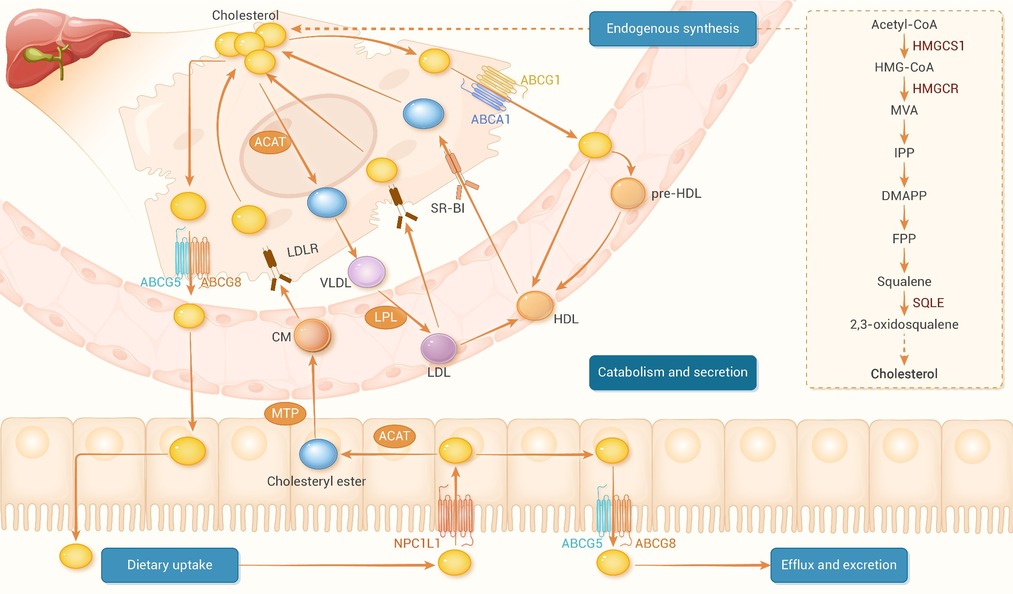
Export File
Citation
Lin L., Song P., Xie W., et al. (2026). Cholesterol metabolism implications for cancer and therapy. The Innovation Nutrition 1:100025. https://doi.org/10.59717/j.xinn-nutri.2026.100025

Format
Content
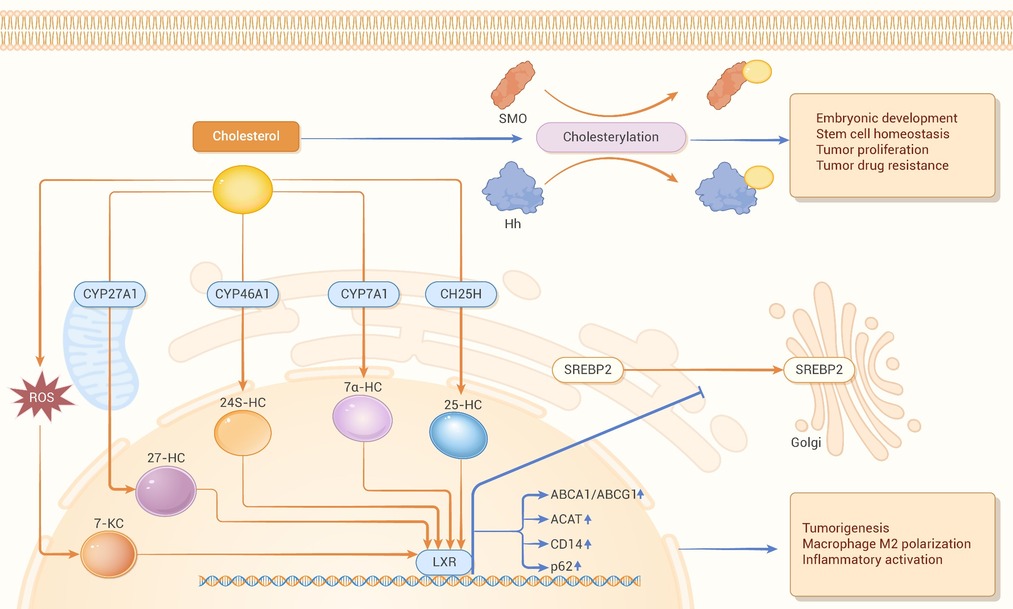
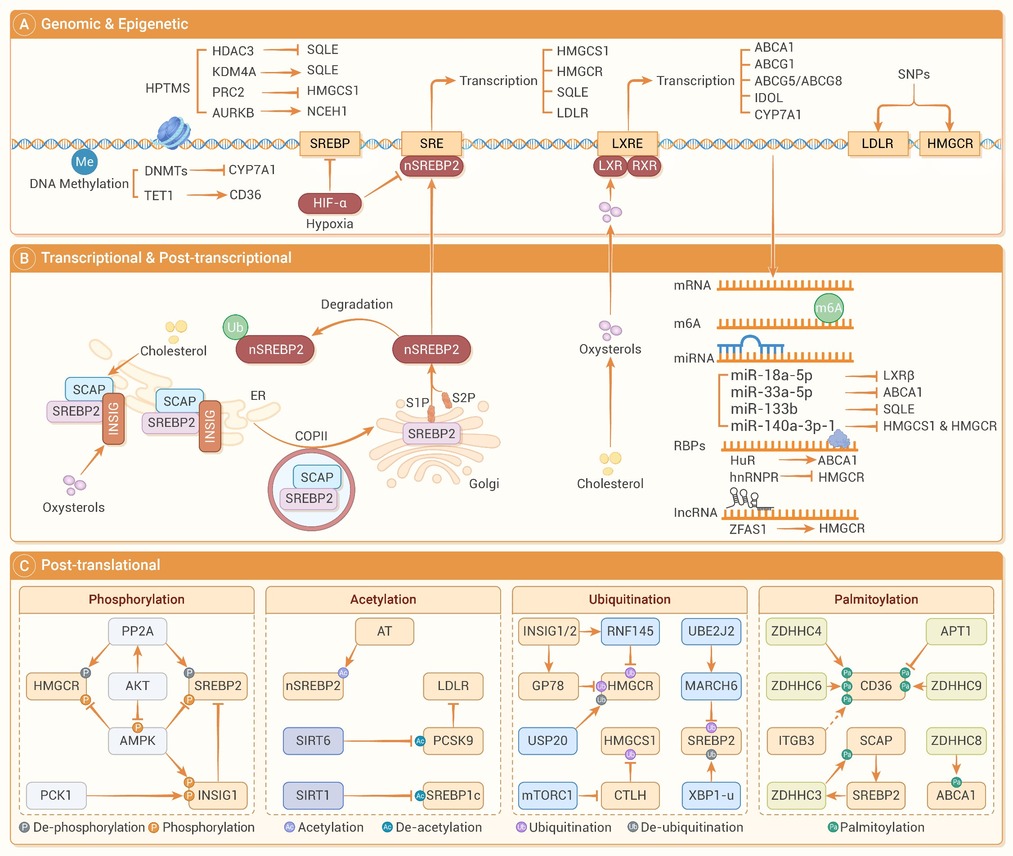
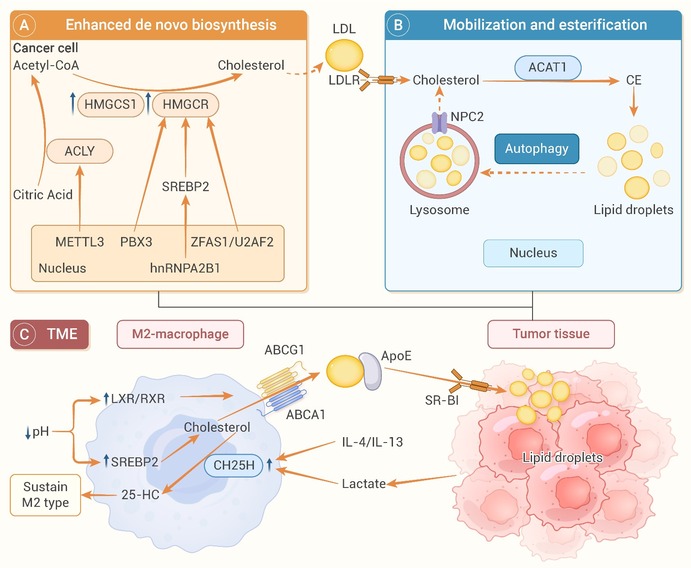
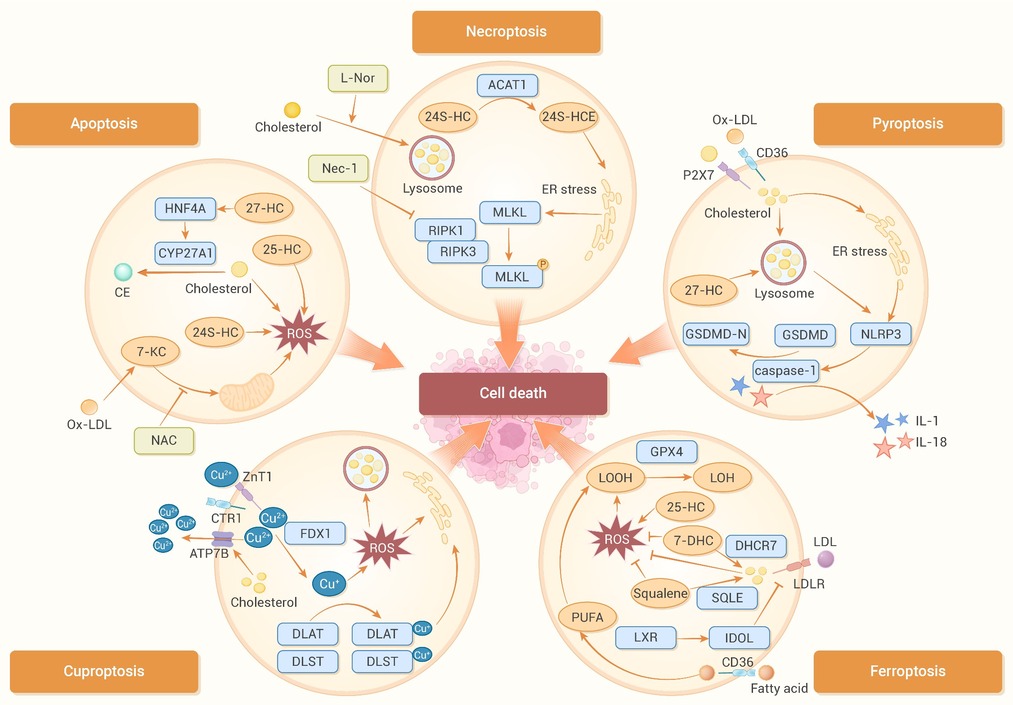
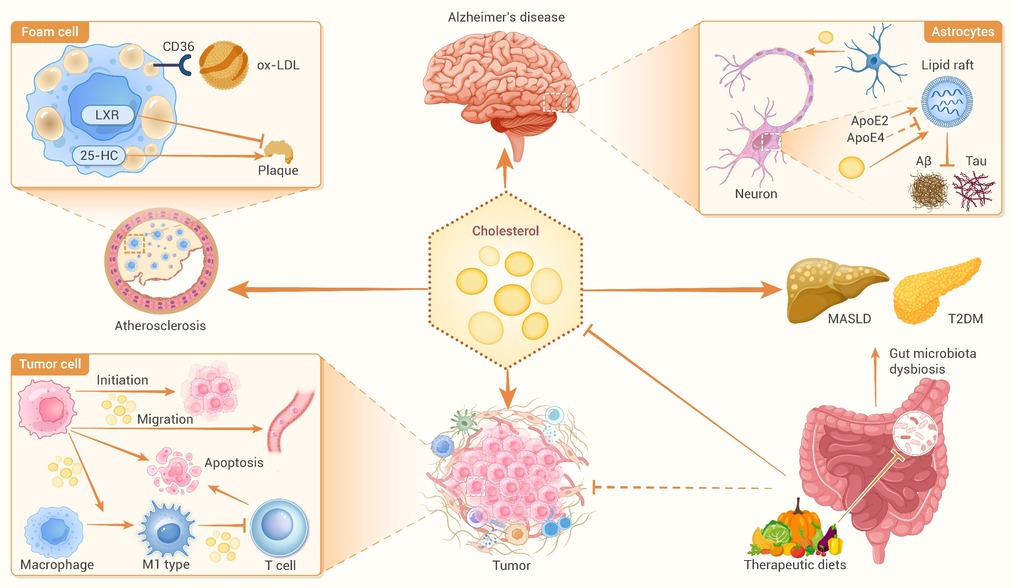
-
Figure 1.
Core cholesterol metabolic pathways in normal psychology
-
Figure 2.
Cholesterol and its associated metabolites
-
Figure 3.
Hierarchical dynamic regulatory network of cholesterol metabolism
-
Figure 4.
Cholesterol metabolic reprogramming driving tumor progression and shaping the immunosuppressive TME
-
Figure 5.
Roles of cholesterol and its associated metabolites in cell death
-
Figure 6.
Pathological roles of dysregulated cholesterol metabolism in major diseases and crosstalk between metabolic disorders and cancer
