
Flame-retardant composite phase change material with silicone resin and melamine phosphate for battery thermal safety
-
GRAPHICAL ABSTRACT

 DownLoad:
Full size image
DownLoad:
Full size image
-
PUBLIC SUMMARY
-
Composite phase change material (CPCM) with high flame retardant and antileakage has proposed.
CPCM with methyl MQ resin (MQ) and melamine phosphate (MP) has excellent flame retardant effect.
Thermophysical property of these CPCMs with epoxy resin, expanded graphite, MQ and MP are analyzed.
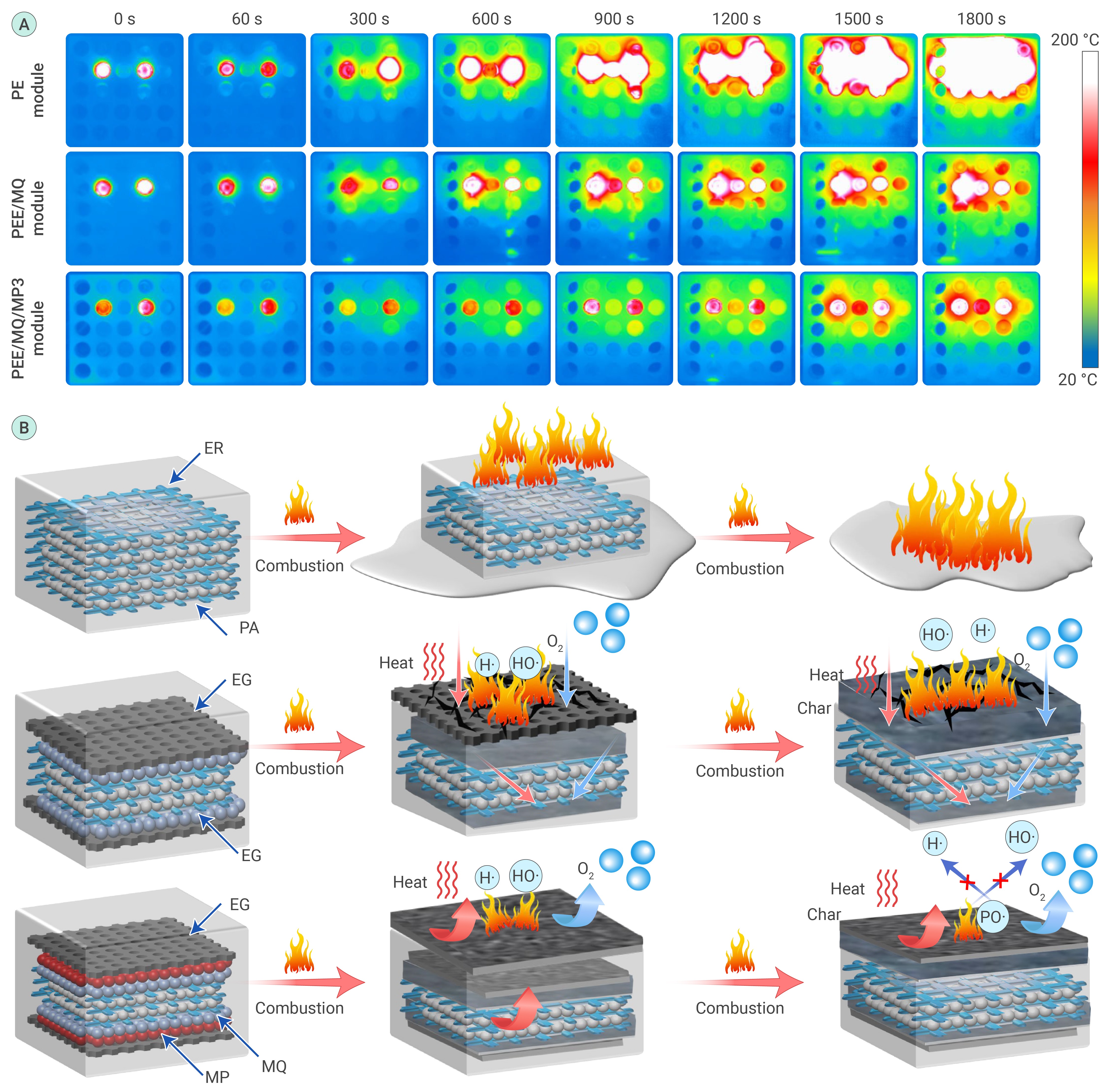
The postponing thermal runaway time of battery module with different CPCMs are compared.
The mechanism of balancing temperature and suppressing thermal runaway of batteries are analyzed.
-
-
ABSTRACT
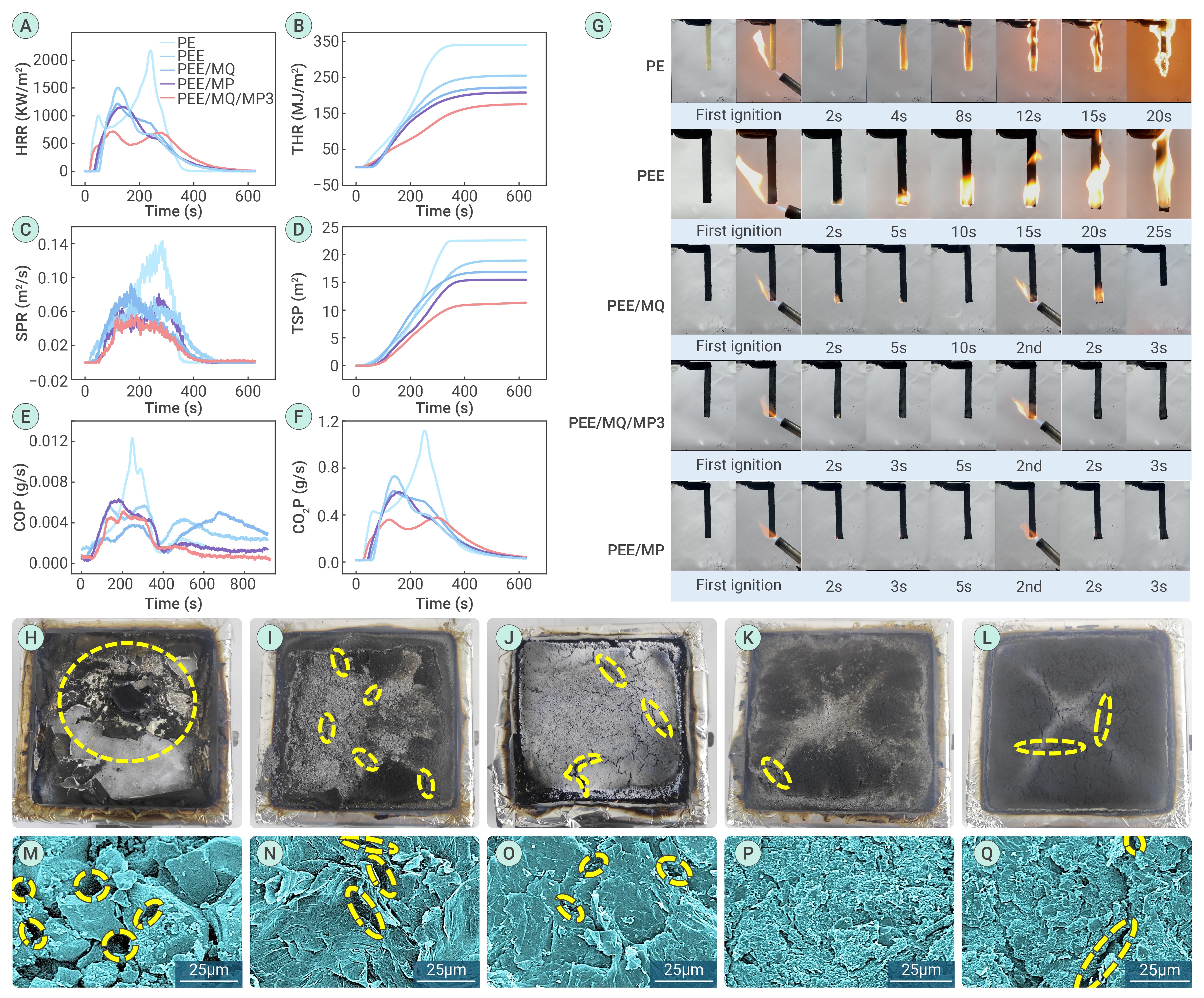
With the prosperity of electric vehicles (EVs), the thermal management of lithium-ion battery (LIB) is crucial for ensuring the safety of drivers on EVs. Composite phase change material (CPCM) with high latent heat has a great promising prospect in battery thermal management systems (BTMS). However, the thermal management efficiency of CPCM is limited due to the leakage, low thermal conductivity and flammability. Herein, the novel multifunctional CPCM with paraffin (PA), epoxy resin (ER), expanded graphite (EG), methyl MQ silicone resin (MQ) and melamine phosphate (MP) (PEE/MQ/MP3) has been prepared, which can achieve well anti-leakage, high flame-retardant and thermal conductivity, enhancing the thermal safety for battery module. The results reveal that PEE/MQ/MP3 with MQ and MP at a ratio of 1:2 can exhibit optimum flame retardant performance. The total heat release peak, smoke production rate, carbon monoxide production and carbon dioxide production are 169 MJ/m2, 0.05 m2/s, 0.005 g/s and 0.38 g/s, respectively. The battery module with PEE/MQ/MP3 displays excellent thermal management performance, delaying thermal propagation. Even after ten cycles at a 3 C rate, the maximum temperature is controlled below 50 °C and the maximum temperature difference is maintained with 5 °C. Besides, the thermal propagation processes of battery modules reveal that PEE/MQ/MP3 can absorb and transfer heat in the first stage timely and quickly, efficiently suppressing the thermal hazard occurrence. Therefore, this study has proposed a multifunctional flame-retardant CPCM as an effective solution to enhance the thermal safety of battery modules, thus ensuring the safety of EV drivers. -

-
REFERENCES
[1] Chen, S., Wei, X., Zhang, G., et al. (2023). All-temperature area battery application mechanism, performance, and strategies. The Innovation 4: 100465. DOI: 10.1016/j.xinn.2023.100465. [2] Niu, J., Deng, S., Gao, X., et al. (2022). Experimental study on low thermal conductive and flame retardant phase change composite material for mitigating battery thermal runaway propagation. J. Energy Stor. 47: 103557. DOI: 10.1016/j.est.2021.103557. [3] Subhedar, D., Chauhan, K.V., Panchal, S., et al. (2023). Numerical investigation of performance for liquid-cooled cylindrical electrical vehicle battery pack using Al2O3/EG-water nano coolant. Mater. Today Proceed. DOI: 10.1016/j.matpr. 2023.08.055. [4] Zhao, G., Wang, X., Negnevitsky, M., et al. (2021). A review of air-cooling battery thermal management systems for electric and hybrid electric vehicles. J. Power Sour. 501: 230001. DOI: 10.1016/j.jpowsour.2021.230001. [5] Feng, X., Ouyang, M., Liu, X., et al. (2018). Thermal runaway mechanism of lithium ion battery for electric vehicles: A review. Energy Stor. Mater. 10: 246−267. DOI: 10.1016/j.ensm.2017.05.013. [6] Yang, R., Xie, Y., Li, K., et al. (2023). Comparative study on the thermal characteristics of solid-state lithium-ion batteries. IEEE Trans. Transpor. Electrific. 10(1): 1541-1557. DOI: 10.1109/TTE.2023.3289997. [7] Murali, G., Sravya, G.S.N., Jaya, J., et al. (2021). A review on hybrid thermal management of battery packs and it's cooling performance by enhanced PCM. Renew. Sustain. Energy Rev. 150: 111513. DOI: 10.1016/j.rser.2021.111513. [8] Zhang, S.-B., He, X., Long, N.-C., et al. (2023). Improving the air-cooling performance for lithium-ion battery packs by changing the air flow pattern. Appl. Thermal Eng. 221: 119825. DOI: 10.1016/j.applthermaleng.2022.119825. [9] Youssef, R., Hosen, M.S., He, J., et al. (2022). Novel design optimization for passive cooling PCM assisted battery thermal management system in electric vehicles. Case Study Thermal Eng. 32: 101896. DOI: 10.1016/j.csite.2022.101896. [10] Jang, D.S., Yun, S., Hong, S.H., et al. (2022). Performance characteristics of a novel heat pipe-assisted liquid cooling system for the thermal management of lithium-ion batteries. Energy Conver. Manag. 251: 115001. DOI: 10.1016/j.enconman.2021.115001. [11] Kausthubharam, Koorata, P.K., and Panchal, S. (2023). Thermal management of largesized LiFePO4 pouch cell using simplified mini-channel cold plates. Appl. Thermal Eng. 234: 121286. DOI: 10.1016/j.applthermaleng.2023.121286. [12] Chen, X.-N., Xu, B., Fei, Y., et al. (2023). Parameter optimization of phase change material and the combination of phase change material and cool paint according to corresponding energy consumption characteristics under various climates. Energy 277: 127625. DOI: 10.1016/j.energy.2023.127625. [13] Arulprakasajothi, M., Raja, N.D., Saranya, A., et al. (2024). Optimizing heat transfer efficiency in electronic component cooling through fruit waste-derived phase change material. J. Energy Stor. 80: 110238. DOI: 10.1016/j.est.2023.110238. [14] Joshi, A.K., Kakati, P., Dandotiya, D., et al. (2023). Computational analysis of preheating cylindrical lithium-ion batteries with fin-assisted phase change material. Int. J. Modern Phys. C 35(4): 1−16. DOI: 10.1142/S0129183124500475. [15] Bais, A., Subhedar, D., and Panchal, S. (2023). Experimental investigation of longevity and temperature of a lithium-ion battery cell using phase change material based battery thermal management system. Mater. Today Proceed. DOI: 10.1016/j. matpr.2023.08.103. [16] Zhao, W., Zhao, H.-B., Cheng, J.-B., et al. (2022). A green, durable and effective flame-retardant coating for expandable polystyrene foams. Chem. Eng. J. 440: 135807. DOI: 10.1016/j.cej.2022.135807. [17] Huang, Q., Li, X., Zhang, G., et al. (2022). Innovative thermal management and thermal runaway suppression for battery module with flame retardant flexible composite phase change material. J. Clean. Product. 330: 129718. DOI: 10.1016/j.jclepro.2021.129718. [18] Luo, D., Xiang, L., Sun, X., et al. (2020). Phase-change smart lines based on paraffin-expanded graphite/polypropylene hollow fiber membrane composite phase change materials for heat storage. Energy 197: 117252. DOI: 10.1016/j.energy.2020.117252. [19] Mombeki Pea, H.J., An, Z., Du, X., et al. (2023). Structure, characterization and thermal properties of the form-stable paraffin/high-density polyethylene/expanded graphite/epoxy resin composite PCMs for thermal energy storage. J. Thermal Sci. 32(6): 2104−2114. DOI: 10.1007/s11630-023-1800-4. [20] Zhang, W., Cheng, H., Pan, R., et al. (2022). Phase change microcapsules with a polystyrene/boron nitride nanosheet hybrid shell for enhanced thermal management of electronics. Langmuir 38: 16055−16066. DOI: 10.1021/acs.langmuir.2c02660. [21] Islam, A., Pandey, A.K., Saidur, R., et al. (2023). Advancements in foam-based phase change materials: Unveiling leakage control, enhanced thermal conductivity, and promising applications. J. Energy Stor. 74: 109380. DOI: 10.1016/j.est.2023.109380. [22] Chinnasamy, V., Heo, J., Jung, S., et al. (2023). Shape stabilized phase change materials based on different support structures for thermal energy storage applications-A review. Energy 262: 125463. DOI: 10.1016/j.energy.2022.125463. [23] Chen, Y., Zhang, H., Xu, C., et al. (2022). Thermal properties of 1-hexadecanol/high density polyethylene/graphene nanoplates composites as form-stable heat storage materials. Solar Energy Mater. Solar Cells 237: 111580. DOI: 10.1016/j.solmat.2022.111580. [24] Wang, Y., Li, Y., Wang, W., et al. (2019). Recycled polycarbonate/acrylonitrile-butadiene-styrene reinforced and toughened through chemical compatibilization. J. Appl. Poly. Sci. 136(21): 47537. DOI: 10.1002/app.47537. [25] Sui, Y., Sima, H., Shao, W., et al. (2022). Novel bioderived cross-linked polyphosphazene microspheres decorated with FeCo-layered double hydroxide as an all-in-one intumescent flame retardant for epoxy resin. Compos. Part B Eng. 229: 109463. DOI: 10.1016/j.compositesb.2021.109463. [26] Varol, T., Güler, O., Akçay, S.B., et al. (2022). Enhancement of electrical and thermal conductivity of low-cost novel Cu–Ag alloys prepared by hot-pressing and electroless plating from recycled electrolytic copper powders. Mater. Chem. Phys. 281: 125892. DOI: 10.1016/j.matchemphys.2022.125892. [27] Lee, W., and Kim, J. (2022). Cellulose nanofiber grafting and aluminum nitride deposition on the surface of expanded graphite to improve the thermal conductivity and mechanical properties of phase change material composites. Compos. Part B Eng. 230: 109526. DOI: 10.1016/j.compositesb.2021.109526. [28] Zhao, L., Chen, Z., Ren, J., et al. (2022). Synchronously improved thermal conductivity and dielectric constant for epoxy composites by introducing functionalized silicon carbide nanoparticles and boron nitride microspheres. J. Colloid Inter. Sci. 627: 205−214. DOI: 10.1016/j.jcis.2022.07.058. [29] Zhao, H.-Y., Yu, M.-Y., Liu, J., et al. (2022). Efficient preconstruction of three-dimensional graphene networks for thermally conductive polymer composites. Nano Micro Lett. 14(1): 129. DOI: 10.1007/s40820-022-00878-6. [30] Lee, S., Kim, H.m., Seong, D.G., et al. (2019). Synergistic improvement of flame retardant properties of expandable graphite and multi-walled carbon nanotube reinforced intumescent polyketone nanocomposites. Carbon 143: 650−659. DOI: 10.1016/j.carbon.2018.11.050. [31] Zeng, Z., Wang, G., Wolan, B.F., et al. (2022). Printable aligned single-walled carbon nanotube film with outstanding thermal conductivity and electromagnetic interference shielding performance. Nano Micro Lett. 14(1): 179. DOI: 10.1007/s40820-022-00883-9. [32] Yu, X.K., and Tao, Y.B. (2022). Preparation and characterization of paraffin/expanded graphite composite phase change materials with high thermal conductivity. Int. J. Heat Mass Trans. 198: 123433. DOI: 10.1016/j.ijheatmasstransfer.2022.123433. [33] Lin, X., Zhang, X., Liu, L., et al. (2022). Polymer/expanded graphite-based flexible phase change material with high thermal conductivity for battery thermal management. J. Cleaner Product. 331: 130014. DOI: 10.1016/j.jclepro.2021.130014. [34] Yin, G.-Z., Yang, X.-M., Hobson, J., et al. (2022). Bio-based poly (glycerol-itaconic acid)/PEG/APP as form stable and flame-retardant phase change materials. Compos. Commun. 30: 101057. DOI: 10.1016/j.coco.2022.101057. [35] Feng, J., Liu, L., Zhang, Y., et al. (2023). Rethinking the pathway to sustainable fire retardants. Exploration 3: 20220088. DOI: 10.1002/EXP.20220088. [36] Feng, J., Lu, Y., Xie, H., et al. (2023). Atom-economic synthesis of an oligomeric P/N-containing fire retardant towards fire-retarding and mechanically robust polylactide biocomposites. J. Mater. Sci. Tech. 160: 86−95. DOI: 10.1016/j.jmst.2023.04.003. [37] Lei, S., Zeng, Z., Wu, Y., et al. (2023). Non-coordinating flame retardants with varied vapor pressures enabling biphasic fire-extinguishing electrolyte for high safety lithiumion batteries. Chem. Eng. J. 463: 142181. DOI: 10.1016/j.cej.2023.142181. [38] Liu, L., Zhu, M., Feng, J., et al. (2024). Fire-retardant and high-strength polymeric materials enabled by supramolecular aggregates. Aggregate e494. DOI: 10.1002/agt2. 494. [39] Orlov, A.V., Chursova, L.V., Grebeneva, T.A., et al. (2022). Flame retardants for slow-burning and fire-resistant polymer-composite materials. Poly. Sci. Series D 15(4): 568−573. DOI: 10.1134/S199542122204030X. [40] Liu, L., Zhu, M., Shi, Y., et al. (2021). Functionalizing MXene towards highly stretchable, ultratough, fatigue- and fire-resistant polymer nanocomposites. Chem. Eng. J. 424: 130338. DOI: 10.1016/j.cej.2021.130338. [41] Ren, J., Huo, S., Huang, G., et al. (2023). A novel P/Ni-doped g-C3N4 nanosheets for improving mechanical, thermal and flame-retardant properties of acrylonitrile–butadienestyrene resin. Chem. Eng. J. 452: 139196. DOI: 10.1016/j.cej.2022.139196. [42] Zhu, H., and Xu, S. (2020). Preparation of flame-retardant rigid polyurethane foams by combining modified melamine-formaldehyde resin and phosphorus flame retardants. ACS Omega 5: 9658−9667. DOI: 10.1021/ascomega.9b03659. [43] Li, Y., Wang, T., Li, X., et al. (2022). Experimental investigation on thermal management system with flame retardant flexible phase change material for retired battery module. Appl. Energy 327: 120109. DOI: 10.1016/j.apenergy.2022.120109. [44] Li, Y., Xue, B., Wang, S., et al. (2020). The photoaging and fire performance of polypropylene containing melamine phosphate. ACS Appl. Poly. Mater. 2(11): 4455−4463. DOI: 10.1021/acsapm.0c00578. [45] Salasinska, K., Mizera, K., Celiński, M., et al. (2020). Thermal properties and fire behavior of polyethylene with a mixture of copper phosphate and melamine phosphate as a novel flame retardant. Fire Safety J. 115: 103137. DOI: 10.1016/j.firesaf.2020.103137. [46] Kishi, H., Nakamura, T., Hagiwara, S., et al. (2020). Thermo-reversible phase structures of lightly cross-linked PDMS/MQ silicone polymer blends. Polymer 200: 122574. DOI: 10.1016/j.polymer.2020.122574. [47] Özer, M.S., and Gaan, S. (2022). Recent developments in phosphorus based flame retardant coatings for textiles: Synthesis, applications and performance. Prog. Organ. Coat. 171: 107027. DOI: 10.1016/j.porgcoat.2022.107027. [48] Qiu, Y., Qian, L., Feng, H., et al. (2018). Toughening effect and flame-retardant behaviors of phosphaphenanthrene/phenylsiloxane bigroup macromolecules in epoxy thermoset. Macromolecules 51: 9992−10002. DOI: 10.1021/acs.macromol.8b02090. [49] Makhlouf, G., Abdelkhalik, A., and Hassan, M.A. (2020). Combustion toxicity of polypropylene containing melamine salt of pentaerythritol phosphate with high efficiency and stable flame retardancy performance. Process Safety Environ. Protect. 138: 300−311. DOI: 10.1016/j.psep.2020.04.012. [50] Chen, M., Zhu, M., Zhang, S., et al. (2023). Experimental investigation on mitigation of thermal runaway propagation of lithium-ion battery module with flame retardant phase change materials. Appl. Thermal Eng. 235: 121401. DOI: 10.1016/j.applthermaleng.2023.121401. [51] Xu, Z., Chen, W., Wu, T., et al. (2023). Thermal management system study of flame retardant solid–solid phase change material battery. Surf. Interf. 36: 102558. DOI: 10.1016/j.surfin.2022.102558. [52] Gong, Y., Zhang, J., Chen, Y., et al. (2023) Application of polyethylene glycol-based flame-retardant phase change materials in the thermal management of lithium-ion batteries. Polymers 15(22): 4450. DOI:10.3390/polym15224450. [53] Wu, T., Wang, C., Hu, Y., et al. (2023). Flexible solid-solid phase change materials with high stability for thermal management. Int. J. Heat Mass Trans. 211: 124202. DOI: 10.1016/j.ijheatmasstransfer.2023.124202. [54] Zhang, J., Li, X., Zhang, G., et al. (2020). Experimental investigation of the flame retardant and form-stable composite phase change materials for a power battery thermal management system. J. Power Sour. 480: 229116. DOI: 10.1016/j.jpowsour.2020.229116. -
ABOUT THIS ARTICLE
Cite this article:
Li C., Wu Y., Li X., et al., (2024). Flame-retardant composite phase change material with silicone resin and melamine phosphate for battery thermal safety. The Innovation Energy 1(2): 100021. https://doi.org/10.59717/j.xinn-energy.2024.100021
Welcome!
To request copyright permission to republish or share portions of our works, please visit Copyright Clearance Center's (CCC) Marketplace website at marketplace.copyright.com.
Article Metrics
Relative Articles
Cited by
Export File
Citation
Li C., Wu Y., Li X., et al., (2024). Flame-retardant composite phase change material with silicone resin and melamine phosphate for battery thermal safety. The Innovation Energy 1(2): 100021. https://doi.org/10.59717/j.xinn-energy.2024.100021

Format
Content
-
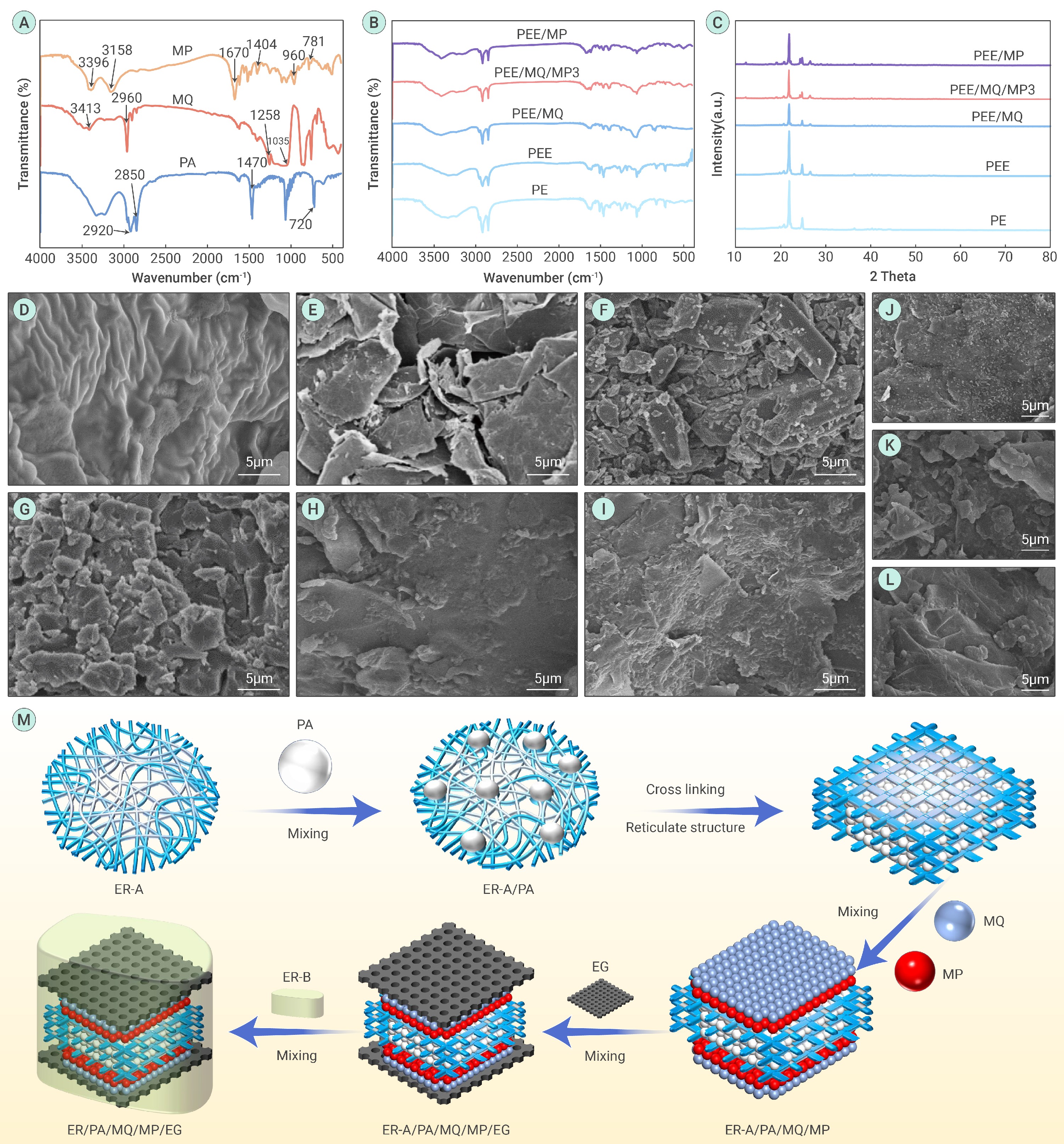
Figure 1.
FTIR spectrums of
-
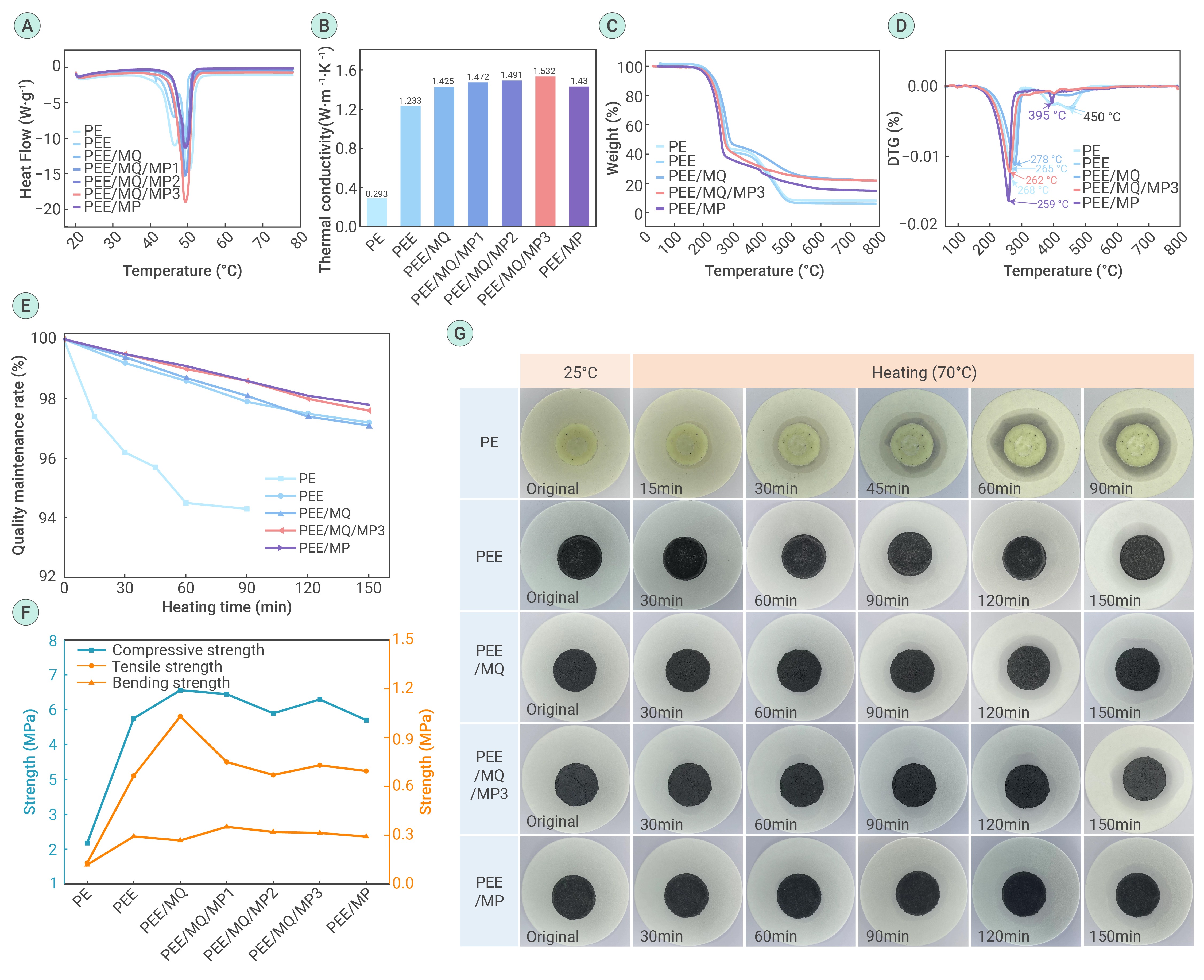
Figure 2.
The thermal characteristics of CPCMs
-
Figure 3.
Cone calorimetric test results of PE, PEE, PEE/MQ, PEE/MQ/MP3, PEE/MP
-
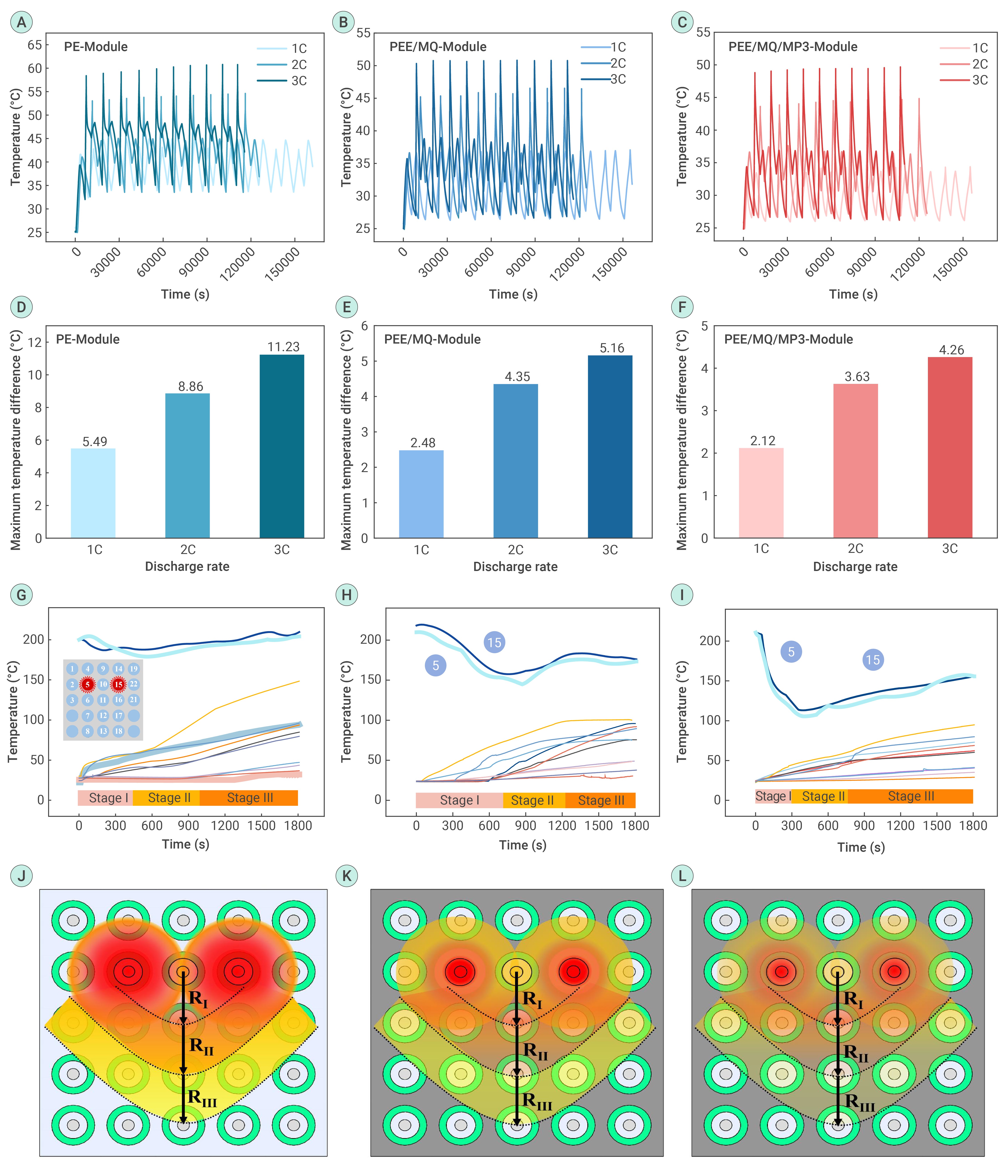
Figure 4.
The maximum temperature of the ten cycles (1 C, 2 C, and 3 C) for the
-
Figure 5.
The TR propagation of battery modules with different CPCMs
