
Design flexible renewable energy penetrated power system to address long-run and short-run interactive inference
-
GRAPHICAL ABSTRACT
 DownLoad:
Full size image
DownLoad:
Full size image
-
PUBLIC SUMMARY
-
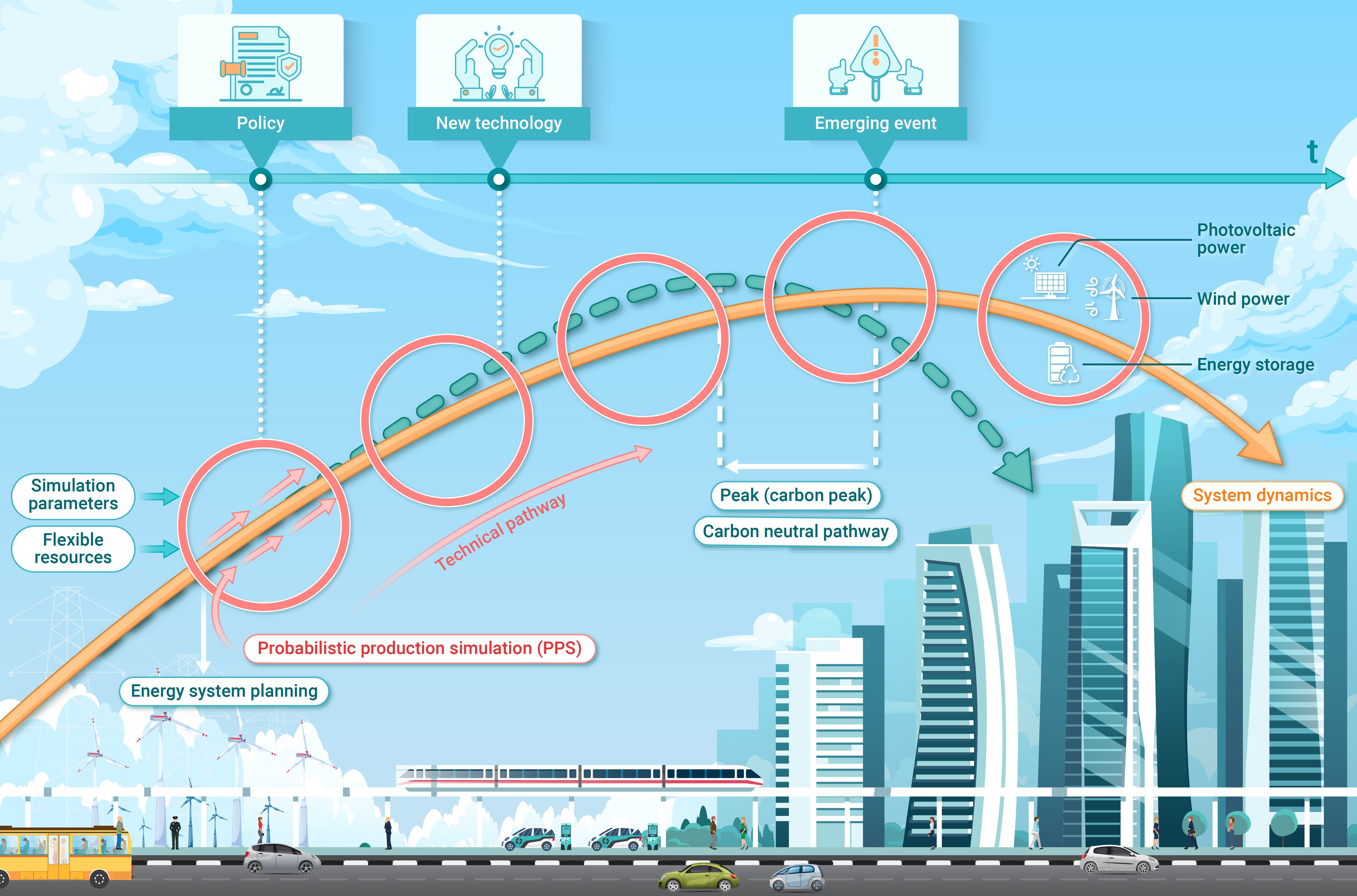
A hybrid simulation method is proposed to couple the long-run and short-run interactive inference in the evolution of power systems.
The economy, low carbon and flexibility are addressed in designing renewable energy penetrated power systems.
Different evolution pathways can be simulated with various flexible resources under selected societal factors.
-
-
ABSTRACT
For power systems with a high penetration of renewable energy, sufficient flexible resources such as energy storage must be combined to achieve sustainable energy development. However, in the planning of flexible resources, external societal factors can significantly change the evolution pathways of these resources. A simulation framework is urgently needed to integrate long-run development factors represented by societal influences, with the short-run operational characteristics within the physical energy framework. We provide technical support for the sustainable development of power systems, making the simulation results more accurate for future energy system planning. To address the lack of data for modeling external societal factors, a long-run modeling method based on system dynamics is proposed, alongside a short-run modeling method considering flexibility assessment and optimization. Long-run external societal factors necessitate a low-carbon system, while short-run concerns involve the actual topology of the power system to investigate high flexibility. We found that the sensitivity of various flexibility resource investments to both flexibility and low carbon in the power system is key to resolve this contradiction. An empirical calculation of the power system is conducted in the 213-bus flexibility test system including real data at 15-minute and 1-minute resolutions. Battery storage becomes the largest flexibility investment about a decade after the introduction of carbon reduction policies. While other flexibility resources particularly demand-side response due to unsaturated flexibility, also become major temporary investment assets. Considering the proposed interactive inference framework, there was a significant reduction in marginal abatement cost, and carbon trading continuously reduces the abatement cost. -

-
REFERENCES
[1] Duan, H.Y., Sun, X.H., Song, J.N., et al. (2022). Peaking carbon emissions under a coupled socioeconomic-energy system: Evidence from typical developed countries. Resour. Conserv. Recycl. 187: 106641. DOI: 10.1016/j.resconrec.2022.106641. [2] China Business News. (2021). Carbon peak carbon neutrality targets gradually fall to the ground from ministries to industries intensive roadmap. https://www.yicai. com/news/100917173.html. [3] Zhuo, Z., Du, E., Zhang, N., et al. (2022). Cost increase in the electricity supply to achieve carbon neutrality in China. Nat. Commun. 13: 3172. DOI: 10.1038/s41467-022-30747-0. [4] Chen, X. (2024). Green and low-carbon energy-use. The Innovation Energy 1: 100003. DOI: 10.59717/j.xinn-energy.2024.100003. [5] Lin, B. and Huang, C. (2022). Analysis of emission reduction effects of carbon trading: Market mechanism or government intervention. Sustain. Prod. Consum. 33: 28−37. DOI: 10.1016/j.spc.2022.06.016. [6] Wiethe, C. (2022). Impact of financial subsidy schemes on climate goals in the residential building sector. J. Clean. Prod. 344: 131040. DOI: 10.1016/j.jclepro.2022.131040. [7] Dong, Y., Yan, C., and Shao, Y. (2024). The electricity demand forecasting in the UK under the impact of the COVID-19 pandemic. Electr. Eng. DOI: 10.1007/s00202-023-02233-3. [8] Ugurlu, E. and Jindrichovska, I. (2024). The relationship between electricity consumption, trade, and GDP and the effect of COVID-19: A panel ARDL approach on the Visegrad countries. Front. Energy Res. 11: 1141847. DOI: 10.3389/fenrg.2023.1141847. [9] IEA (2020). Global Energy Review: The impacts of the Covid-19 crisis on global energy demand and CO2 emissions. https://www.iea.org/reports/global-energy-review-2020. [10] U.S. Energy Information Administration. (2020). Short-Term Energy Outlook (STEO). https://www.eia.gov/outlooks/steo/pdf/steo_full.pdf. [11] Shi, B., Yuan, Y., and Managi, S. (2023). Improved renewable energy storage, clean electrification and carbon mitigation in China: Based on a CGE Analysis. J. Clean. Prod. 418: 138222. DOI: 10.1016/j.jclepro.2023.138222. [12] Dioha, M.O., Kumar, A., Ewim, D.R.E., et al. (2020). Alternative scenarios for low-carbon transport in Nigeria: A long-range energy alternatives planning system model application. Chaiechi, T. (ed). Economic Effects of Natural Disasters (Elsevier-ScienceDirect), pp: 511-527. DOI: 10.1016/B978-0-12-817465-4.00030-3. [13] Impram, S., Nese, S.V., and Oral, B. (2020). Challenges of renewable energy penetration on power system flexibility: A survey. Energy Strategy Rev. 31: 100539. DOI: 10.1016/j.esr.2020.100539. [14] Huang, W., Zhang, X., Li, K., et al. (2022). Resilience oriented planning of urban multi-energy systems with generalized energy storage sources. IEEE Trans. Power Syst. 37: 2906−2918. DOI: 10.1109/tpwrs.2021.3123074. [15] Ricks, W., Voller, K., Galban, G., et al. (2024). The role of flexible geothermal power in decarbonized electricity systems. Nat. Energy DOI: 10.1038/s41560-023-01437-y. [16] Lu, Y., Xiang, Y., Huang, Y., et al. (2023). Deep reinforcement learning based optimal scheduling of active distribution system considering distributed generation, energy storage and flexible load. Energy 271: 127087. DOI: 10.1016/j.energy.2023.127087. [17] Zhang, N., Jiang, H., Li, Y., et al. (2021). Aggregating distributed energy storage: Cloud-based flexibility services from China. IEEE Power Energy Mag. 19: 63−73. DOI: 10.1109/mpe.2021.3072820. [18] Yu, Y.H., Du, E.R., Chen, Z.C., et al. (2022). Optimal portfolio of a 100% renewable energy generation base supported by concentrating solar power. Renew. Sust. Energ. Rev. 170: 112937. DOI: 10.1016/j.rser.2022.112937. [19] Zhu, H., Li, H., Liu, G.J., et al. (2023). Energy storage in high variable renewable energy penetration power systems: Technologies and applications. CSEE J. Power Energy Syst. 9: 2099−2108. DOI: 10.17775/cseejpes.2020.00090. [20] Deng, Y., Baeyens, J., Elst, M., et al. (2024). Renewable electricity and "green" feedstock-based chemicals will foster industrial sustainability. The Innovation Energy 1: 100016. DOI: 10.59717/j.xinn-energy.2024.100016. [21] Xiang, Y., Lu, Y., and Liu, J. (2023). Deep reinforcement learning based topology-aware voltage regulation of distribution networks with distributed energy storage. Appl. Energy 332: 120510. DOI: 10.1016/j.apenergy.2022.120510. [22] Zhang, N., Jiang, H.Y., Du, E.S., et al. (2022). An efficient power system planning model considering year-round hourly operation simulation. IEEE Trans. Power Syst. 37: 4925−4935. DOI: 10.1109/tpwrs.2022.3146299. [23] Zhang, Z., Li, F., Park, S.-W., et al. (2021). Local energy and planned ramping product joint market based on a distributed optimization method. CSEE J. Power Energy Syst. 7: 1357−1368. DOI: 10.17775/cseejpes.2020.03220. [24] Peng, G., Xiang, Y., Yang, J., et al. (2021). Clean energy transition evolution of power grid based on system dynamics. IEEE IAS Conference on Industrial and Commercial Power System Asia (IEEE I and CPS Asia), Chengdu, China. pp:556-561. DOI: 10.1109/ICPSAsia52756.2021.9621487. [25] Chen, W., Xiang, Y., Peng, G., et al. (2021). System dynamic modeling and analysis of power system supply side morphological development with dual carbon targets. Journal of Shanghai Jiao Tong University 55: 1567−1576. DOI: 10.16183/j.cnki.jsjtu.2021.294. [26] Yang, X., Cai, B., and Xue, Y. (2022). Review on optimization of nuclear power development: A cyber-physical-social system in energy perspective. Journal of Modern Power Systems and Clean Energy 10: 547−561. DOI: 10.35833/mpce.2021.000272. [27] Xiang, Y., Li, L., Peng, G., et al. (2023). Multi-objective investment evaluation for low-carbon power system evolution based on system dynamics. Electr. Power Syst. Res. 224: 109781. DOI: 10.1016/j.jpgr.2023.109781. [28] Chen, X., Liu, Y., Wang, Q., et al. (2021). Pathway toward carbon-neutral electrical systems in China by mid-century with negative CO2 abatement costs informed by high-resolution modeling. Joule 5: 2715−2741. DOI: 10.1016/j.joule.2021.10.006. [29] Hsu, C.-W. (2012). Using a system dynamics model to assess the effects of capital subsidies and feed-in tariffs on solar PV installations. Appl. Energy 100: 205−217. DOI: 10.1016/j.apenergy.2012.02.039. [30] Wang, Y., Wang, R., Tanaka, K., et al. (2023). Accelerating the energy transition towards photovoltaic and wind in China. Nature 619: 761−767. DOI: 10.1038/s41586-023-06180-8. [31] Yang, X., Gu, C., Yan, X., et al. (2020). Reliability-based probabilistic network pricing with demand uncertainty. IEEE Trans. Power Syst. 35: 3342−3352. DOI: 10.1109/tpwrs.2020.2976944. [32] Xiang, Y., Guo, Y., Wu, G., et al. (2022). Low-carbon economic planning of integrated electricity-gas energy systems. Energy 249: 123755. DOI: 10.1016/j.energy.2022.123755. [33] Hemmati, R., Saboori, H., and Jirdehi, M.A. (2017). Stochastic planning and scheduling of energy storage systems for congestion management in electric power systems including renewable energy resources. Energy 133: 380−387. DOI: 10.1016/j.energy.2017.05.167. [34] Li, H., Lu, Z., Qiao, Y., et al. (2021). The flexibility test system for studies of variable renewable energy resources. IEEE Trans. Power Syst. 36: 1526−1536. DOI: 10.1109/tpwrs.2020.3019983. [35] Yang, J., Xiang, Y., Wei, X., et al. (2020). Planning-objective based representative day selection for optimal investment decision of distribution networks. Energy Rep. 6: 543−548. DOI: 10.1016/j.egyr.2020.11.191. [36] Xia, T., Li, Y., Zhang, N., et al. (2022). Role of compressed air energy storage in urban integrated energy systems with increasing wind penetration. Renew. Sust. Energ. Rev. 160: 112203. DOI: 10.1016/j.rser.2022.112203. [37] Cheng, S., Gu, C., Yang, X., et al. (2022). Network pricing for multienergy systems under long-term load growth uncertainty. IEEE Trans. Smart Grid 13: 2715−2729. DOI: 10.1109/tsg.2022.3159647. -
ABOUT THIS ARTICLE
Cite this article:
Xiang Y., Li L., Li R., et al., (2024). Design flexible renewable energy penetrated power system to address long-run and short-run interactive inference. The Innovation Energy 1(3): 100042. https://doi.org/10.59717/j.xinn-energy.2024.100042
Welcome!
To request copyright permission to republish or share portions of our works, please visit Copyright Clearance Center's (CCC) Marketplace website at marketplace.copyright.com.
Article Metrics
Relative Articles
Cited by
Export File
Citation
Xiang Y., Li L., Li R., et al., (2024). Design flexible renewable energy penetrated power system to address long-run and short-run interactive inference. The Innovation Energy 1(3): 100042. https://doi.org/10.59717/j.xinn-energy.2024.100042

Format
Content
-
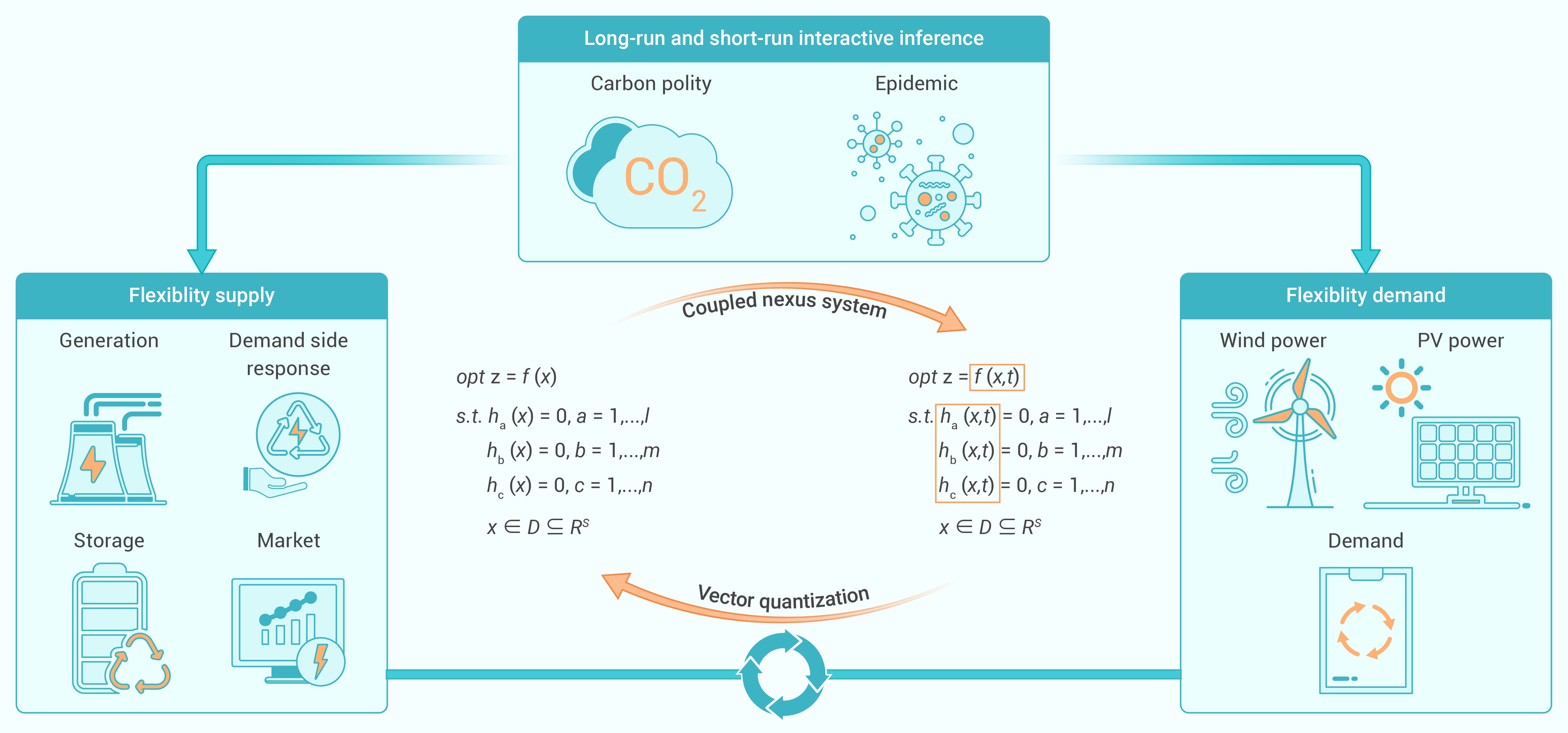
Figure 1.
Coupled nexus framework of long-run and short-run interactive inference.
-
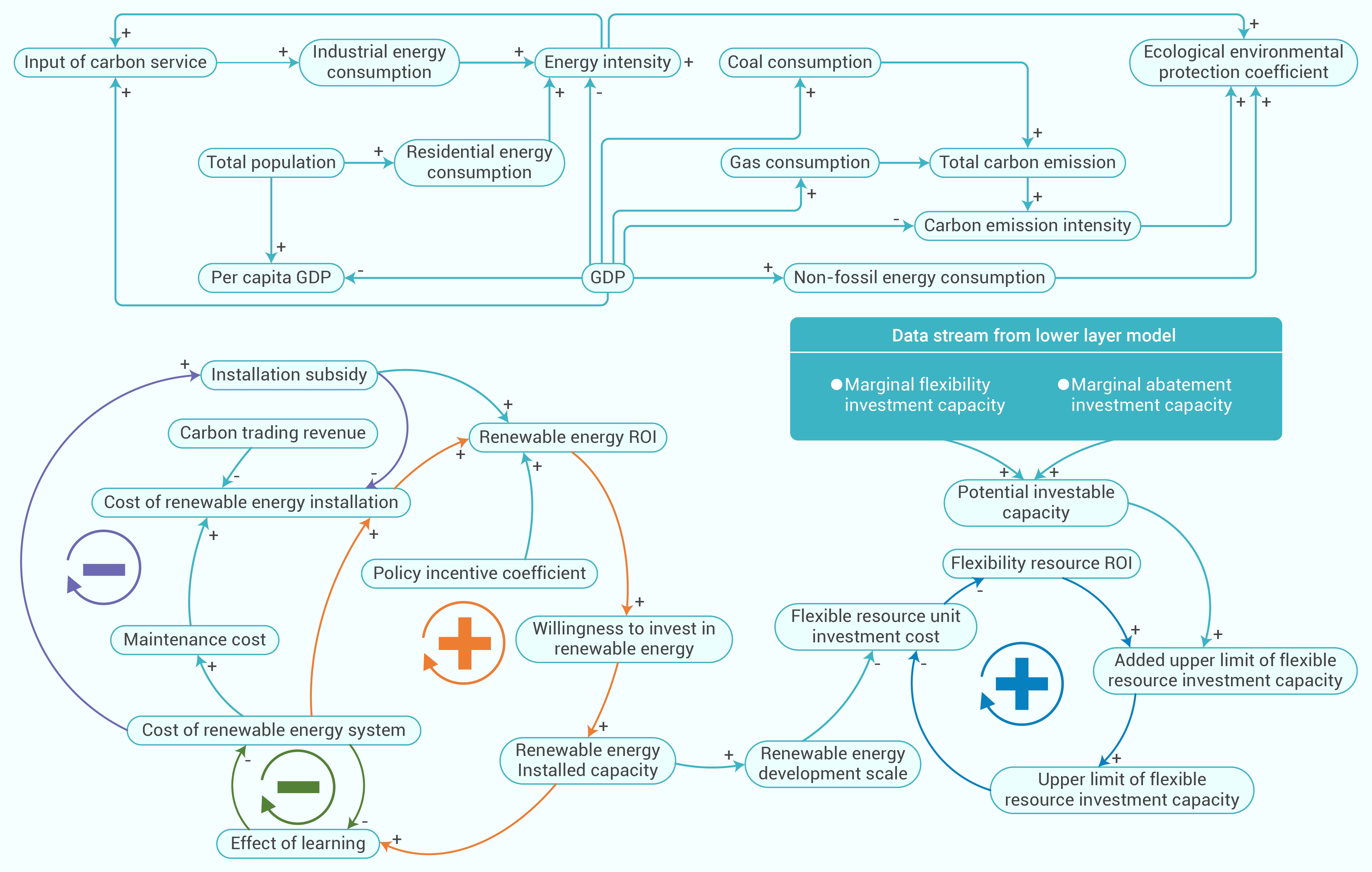
Figure 2.
Vector quantified causal loop diagram based on system dynamics.
-
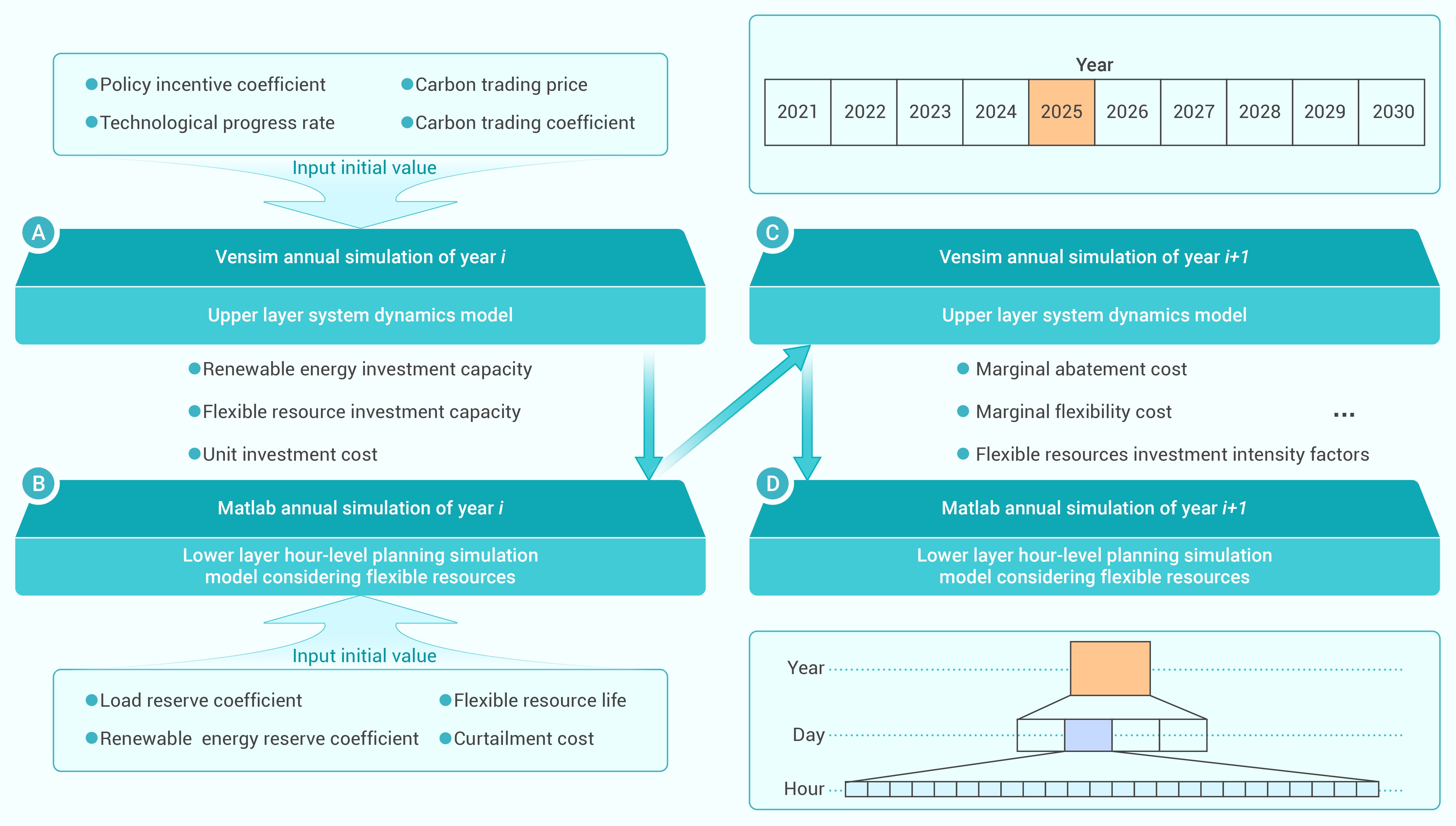
Figure 3.
Hybrid simulation flow of data interaction.
-
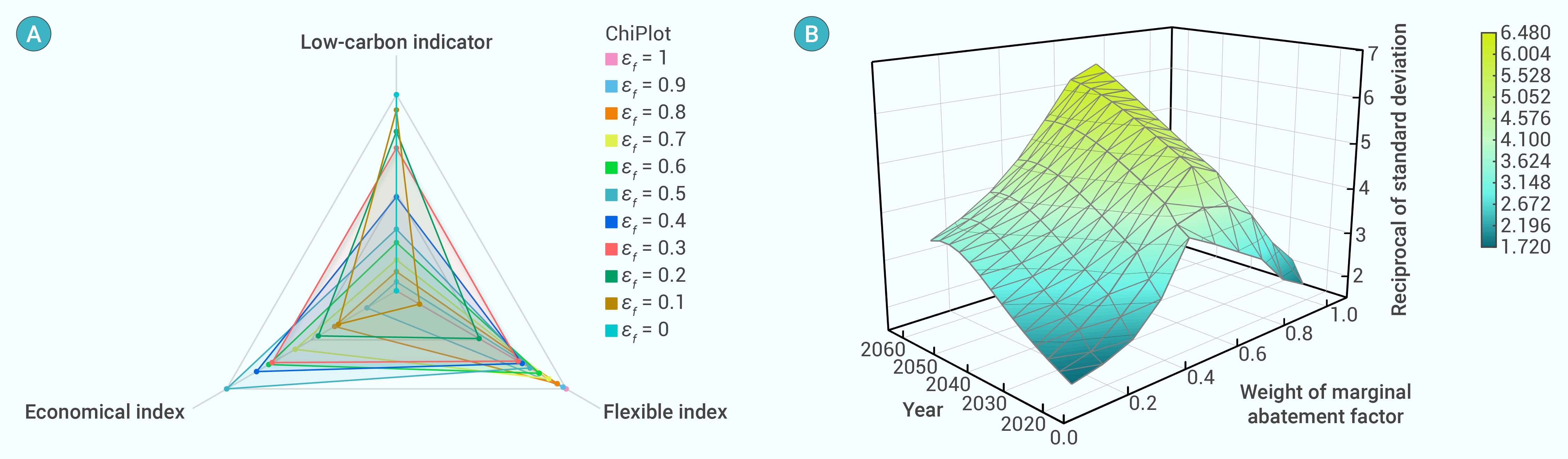
Figure 4.
Comparative tests of marginal abatement factor and marginal flexibility factor in energy evolution
-
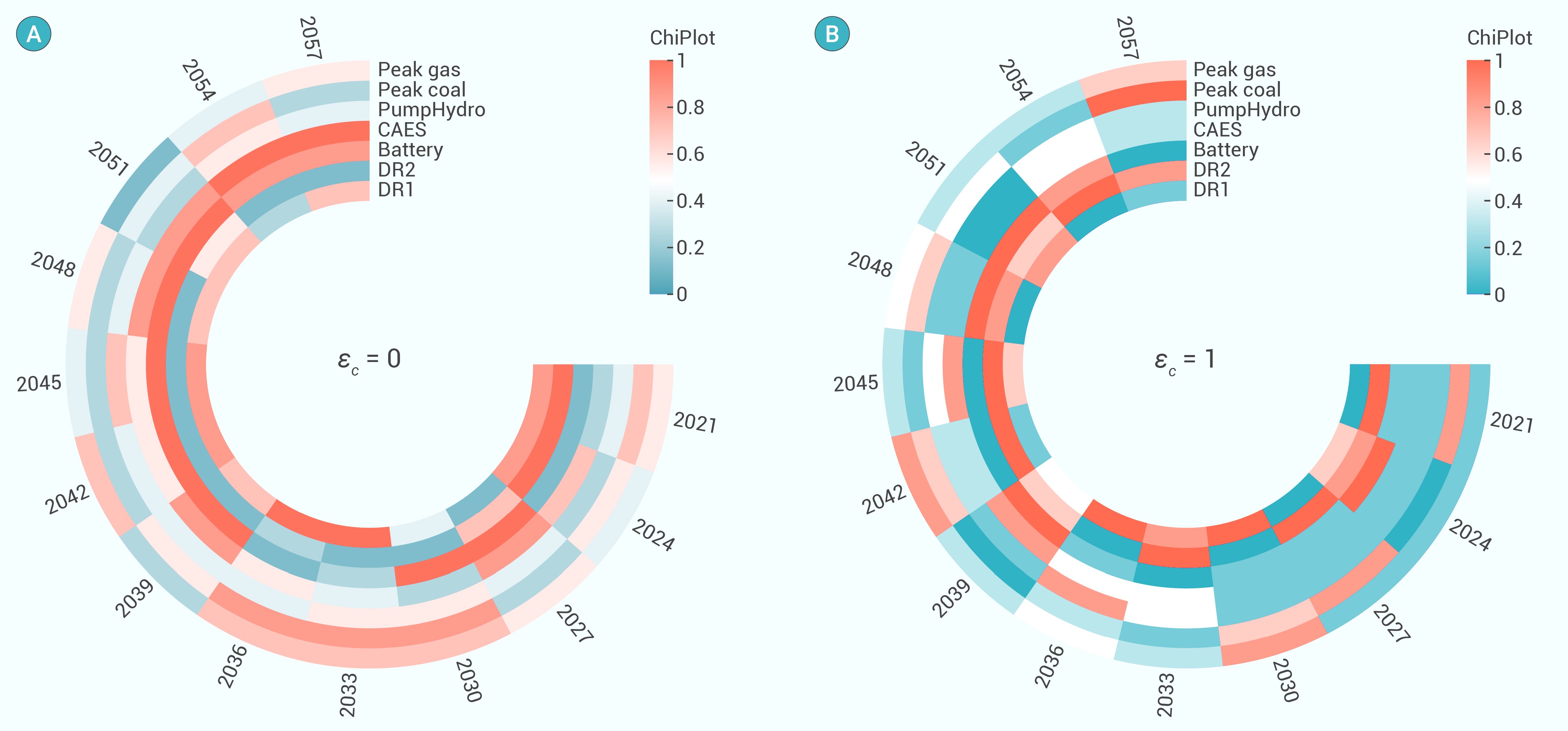
Figure 5.
Various flexibility resources development investment intensity at each time node in the evolution process
-
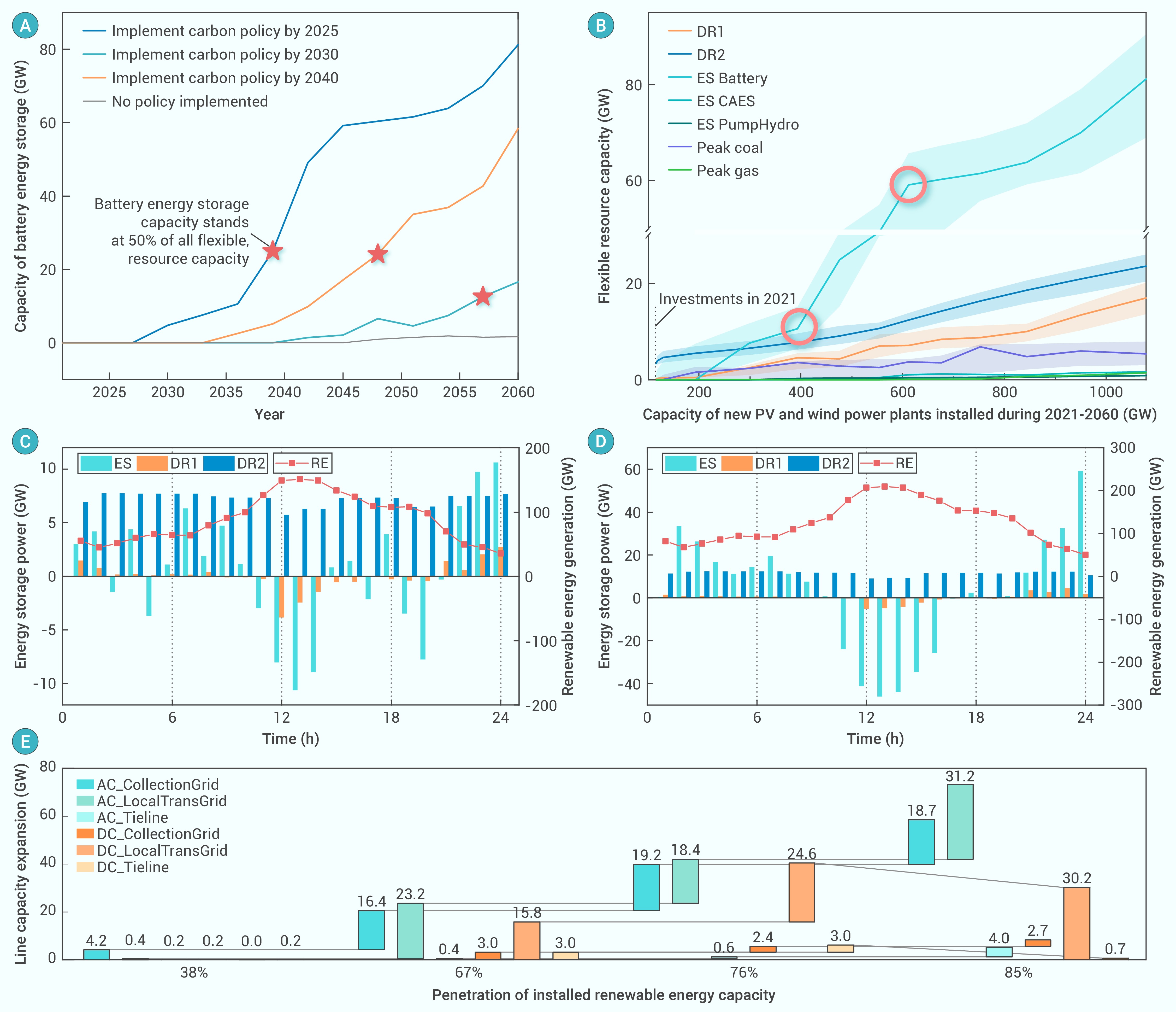
Figure 6.
Evolution pathways of variable flexible resources and transmission lines
-
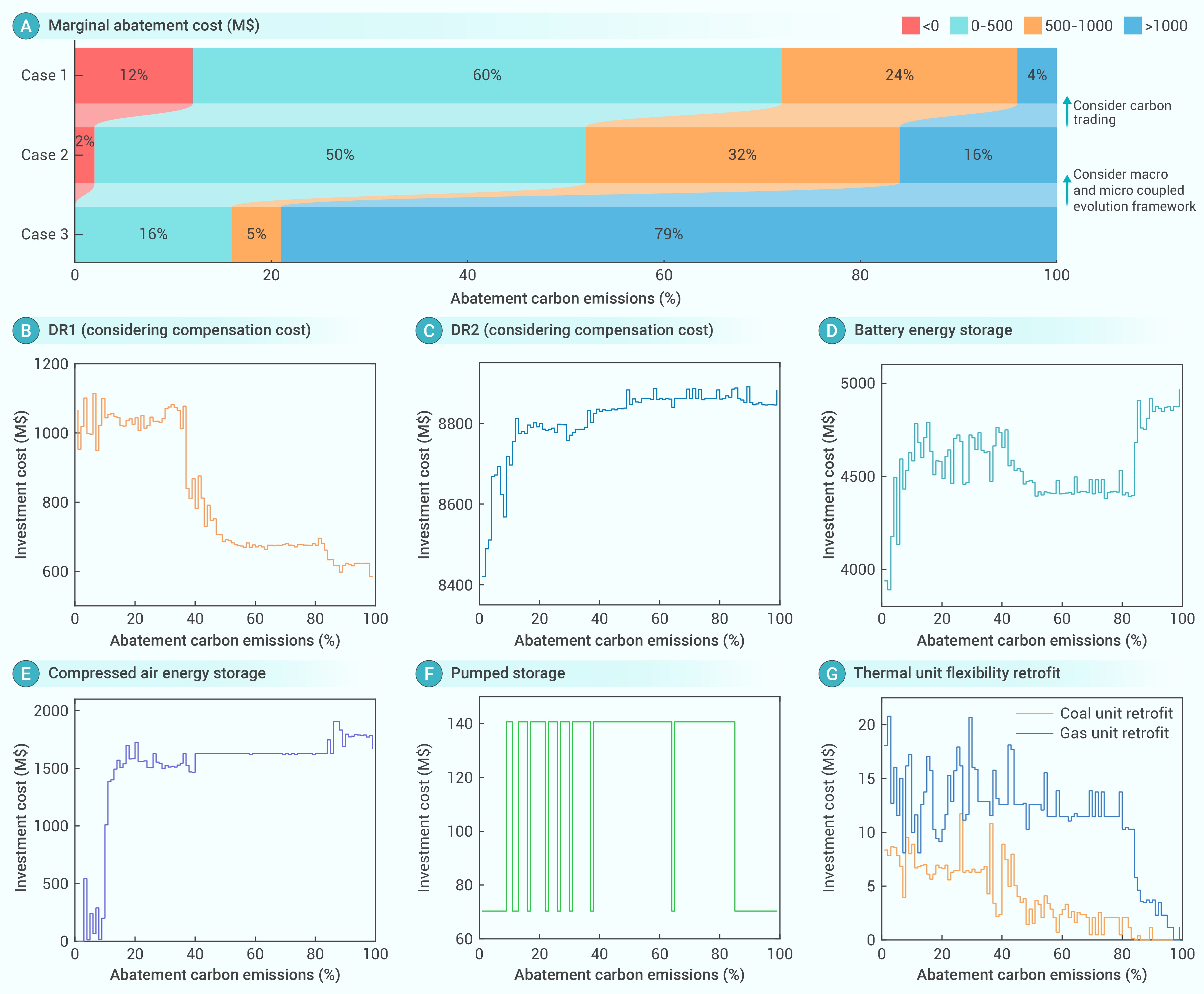
Figure 7.
Costs of CO2 emissions abatement in
2060 by deploying various flexible resources
