
Carnot battery with thermochemical energy storage and supercritical CO2 power cycle: Thermodynamic and techno-economic characteristics
-
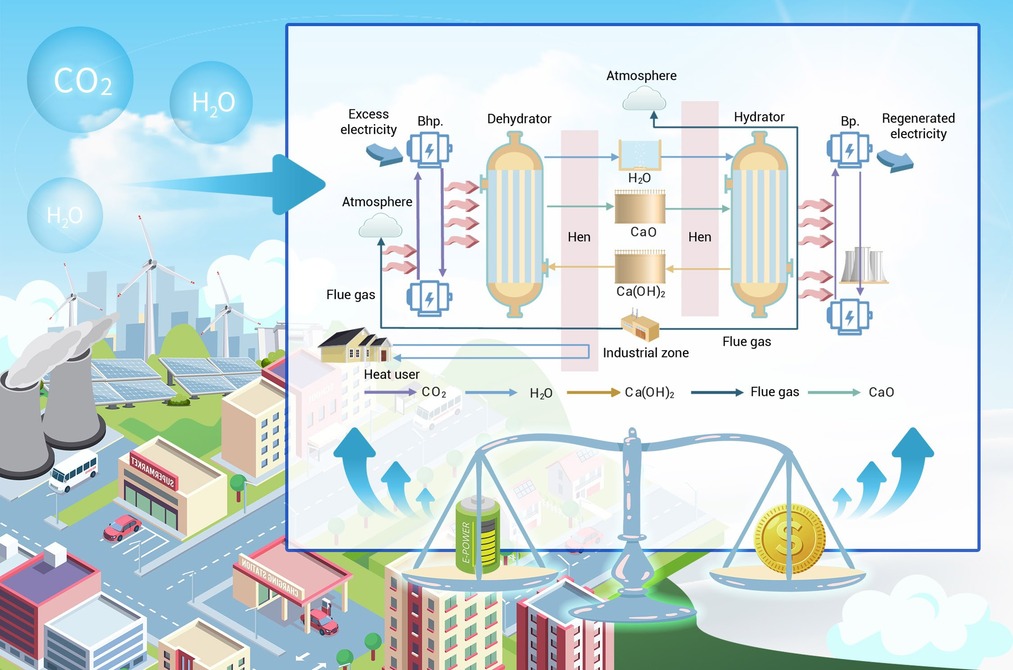
GRAPHICAL ABSTRACT
 DownLoad:
Full size image
DownLoad:
Full size image
-
PUBLIC SUMMARY
-
A Ca(OH)2/CaO-based Carnot battery with S-CO2 cycles and waste heat recovery is proposed.
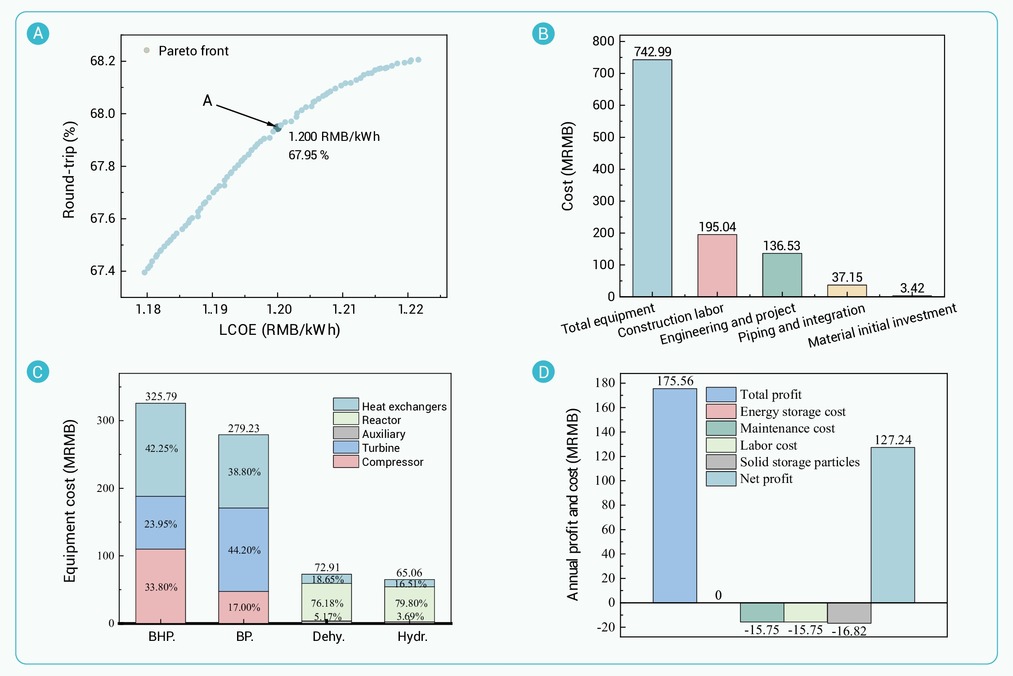
Multi-objective optimization achieves 67.95% round-trip efficiency and 1.200 RMB/kWh LCOE.
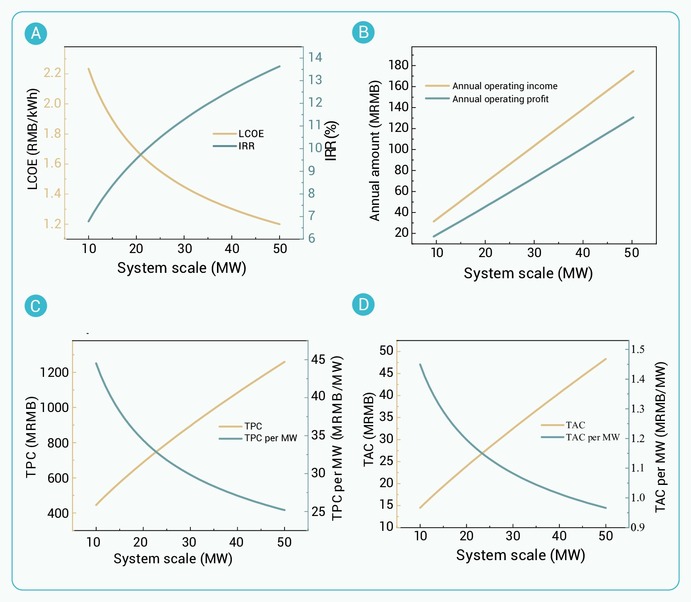
Scaling from 10 MW to 50 MW reduces LCOE by 46.3% and doubles IRR to 13.64%.
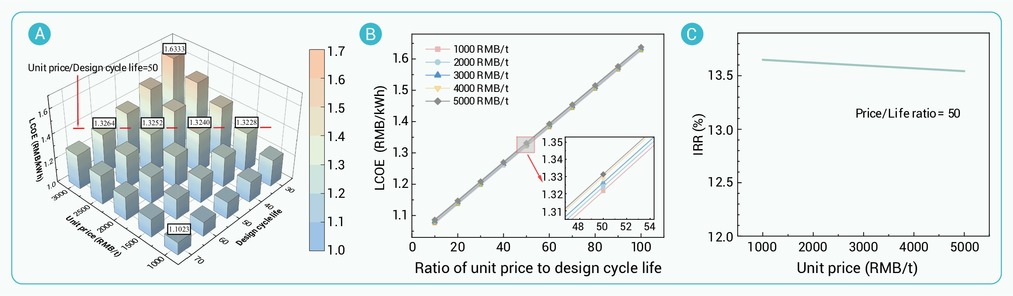
Materials influence system economics mainly via the unit price–design cycle life ratio.
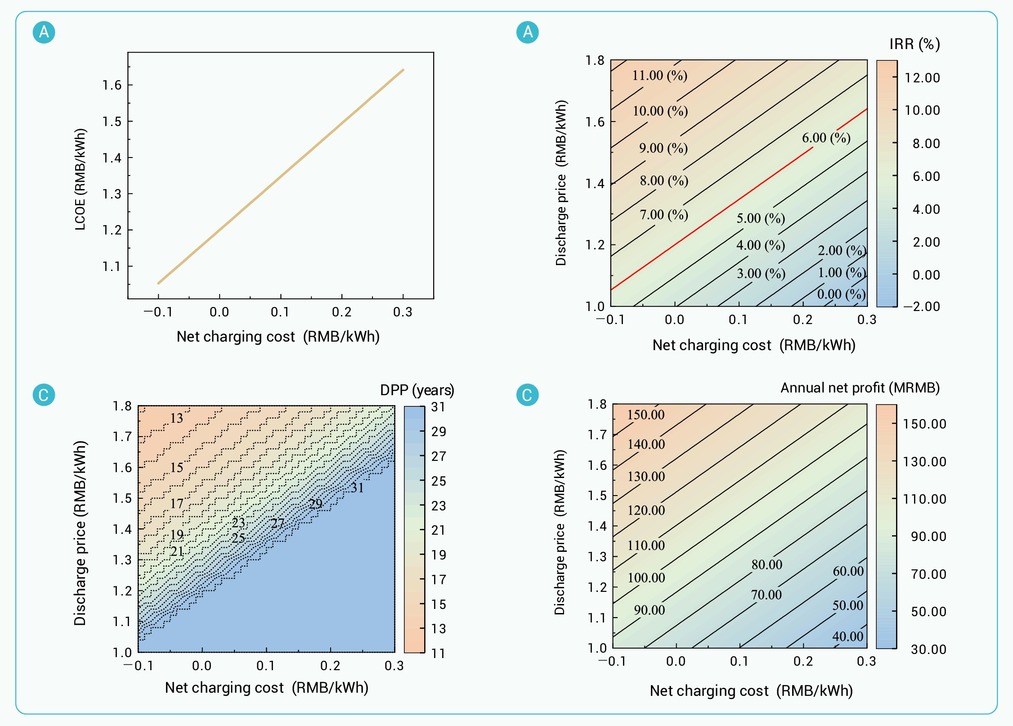
Profitability mainly depends on discharge pricing; high TPC remains the main challenge.
-
-
ABSTRACT
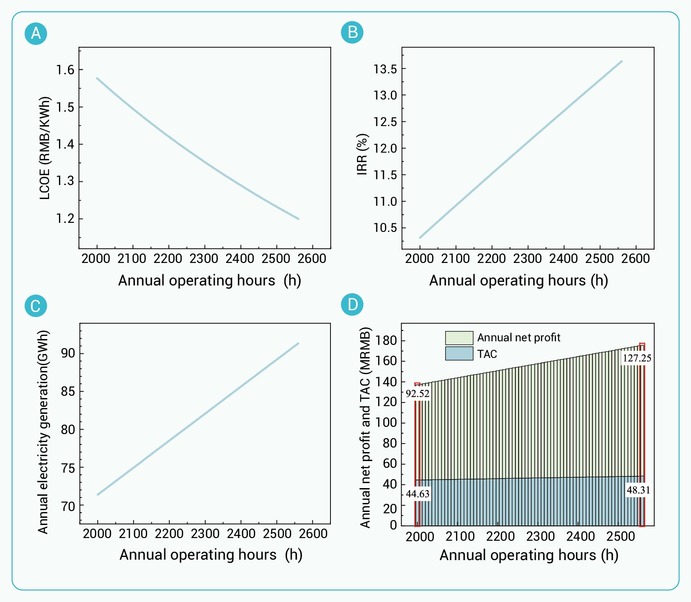
The global transition toward decarbonized energy systems necessitates efficient long-duration energy storage solutions to address renewable intermittency. Conventional technologies face limitations in scalability, safety and geography, highlighting the promise of Carnot batteries. This study proposes a novel Carnot battery system integrating calcium hydroxide/calcium oxide thermochemical energy storage, supercritical CO2 Brayton heat pump and power cycles, and industrial waste heat recovery. Through multi-objective optimization using the NSGA-II algorithm and HEATSEP framework, the system achieved a round-trip efficiency of 67.95% and a LCOE of 1.200 RMB/kWh at 50 MW scale—placing it at a high level among current Carnot battery systems. Sensitivity analyses confirm robust scalability: when scaling from 10 MW to 50 MW, the LCOE decreases by 46.3% and the IRR increases from 6.79% to 13.64%. Furthermore, increasing the annual operating hours to2560 h significantly reduces the LCOE while substantially raising the IRR. For high-cost materials, extending cycle life can yield 21.47% reduction in LCOE. Critically, system profitability is governed by discharge revenue. In markets with modest price differentials, economic feasibility therefore depends on additional reductions in capital cost, such as implementing deep integration with existing coal-fired assets. This integrated system and optimization directions provide a practical, generalizable blueprint for near-term, cost-competitive Carnot batteries. -

-
REFERENCES
[1] Yang J., Xu Q., Kou X., et al. (2024). Three-dimensional pore-scale study of methane hydrate dissociation mechanisms based on micro-CT images. Innov. Energy 1:100015. DOI:10.59717/j.xinn-energy.2024.100015 [2] Cherp A., Vinichenko V., Tosun J., et al. (2021). National growth dynamics of wind and solar power compared to the growth required for global climate targets. Nat. Energy 6:742−754. DOI:10.1038/s41560-021-00863-0 [3] Chacartegui R., Alovisio A., Ortiz C., et al. (2016). Thermochemical energy storage of concentrated solar power by integration of the calcium looping process and a CO2 power cycle. Appl. Energy 173:589−605. DOI:10.1016/j.apenergy.2016.04.053 [4] Denholm P., Arent D. J., Baldwin S. F., et al. (2021). The challenges of achieving a 100% renewable electricity system in the United States. Joule 5:1331−1352. DOI:10.1016/j.joule.2021.03.028 [5] Staadecker M., Szinai J., Sánchez-Pérez P. A., et al. (2024). The value of long-duration energy storage under various grid conditions in a zero-emissions future. Nat. Commun. 15:9501. DOI:10.1038/s41467-024-53274-6 [6] Chun S.-E., Evanko B., Wang X., et al. (2015). Design of aqueous redox-enhanced electrochemical capacitors with high specific energies and slow self-discharge. Nat. Commun. 6:7818. DOI:10.1038/ncomms8818 [7] Luo X., Wang J., Dooner M., et al. (2015). Overview of current development in electrical energy storage technologies and the application potential in power system operation. Appl. Energy 137:511−536. DOI:10.1016/j.apenergy.2014.09.081 [8] Lund P. D., Lindgren J., Mikkola J., et al. (2015). Review of energy system flexibility measures to enable high levels of variable renewable electricity. Renew. Sustain. Energy Rev. 45:785−807. DOI:10.1016/j.rser.2015.01.057 [9] Raju M. and Kumar Khaitan S. (2012). Modeling and simulation of compressed air storage in caverns: A case study of the Huntorf plant. Appl. Energy 89:474−481. DOI:10.1016/j.apenergy.2011.08.019 [10] Zakeri B. and Syri S. (2015). Electrical energy storage systems: A comparative life cycle cost analysis. Renew. Sustain. Energy Rev. 42:569−596. DOI:10.1016/j.rser.2014.10.011 [11] Zhao A. P., Li S., Xie D., et al. (2025). Hydrogen as the nexus of future sustainable transport and energy systems. Nat. Rev. Electr. Eng. 2:447−466. DOI:10.1038/s44287-025-00178-2 [12] Dawood F., Anda M. and Shafiullah G. M. (2020). Hydrogen production for energy: An overview. Int. J. Hydrogen Energy 45:3847−3869. DOI:10.1016/j.ijhydene.2019.12.059 [13] Götz M., Lefebvre J., Mörs F., et al. (2016). Renewable Power-to-Gas: A technological and economic review. Renew. Energy 85:1371−1390. DOI:10.1016/j.renene.2015.07.066 [14] Gibb B. C. (2025). Carnot batteries for dispatchable renewables. Nat. Chem. 17:629−631. DOI:10.1038/s41557-025-01813-z [15] Zhang C., Li M., Dang C., et al. (2025). Enhanced Carnot battery for high-efficiency energy storage: Feasibility analysis. Energy Conver. Manag. 332:119754. DOI:10.1016/j.enconman.2025.119754 [16] Vecchi A., Knobloch K., Liang T., et al. (2022). Carnot Battery development: A review on system performance, applications and commercial state-of-the-art. J. Energy Stor. 55:105782. DOI:10.1016/j.est.2022.105782 [17] Olympios A., McTigue J., Antunez P., et al. (2021). Progress and Prospects of Thermo-Mechanical Energy Storage - A Critical Review. Progress in Energy. [18] Benato A. (2017). Performance and cost evaluation of an innovative Pumped Thermal Electricity Storage power system. Energy 138:419−436. DOI:10.1016/j.energy.2017.07.066 [19] Jockenhöfer H., Steinmann W.-D. and Bauer D. (2018). Detailed numerical investigation of a pumped thermal energy storage with low temperature heat integration. Energy 145:665−676. DOI:10.1016/j.energy.2017.12.087 [20] Qiao H., Yu X. and Yang B. (2023). Working fluid design and performance optimization for the heat pump-organic Rankine cycle Carnot battery system based on the group contribution method. Energy Conver. Manag. 293:117459. DOI:10.1016/j.enconman.2023.117459 [21] Sciacovelli A., Vecchi A. and Ding Y. (2017). Liquid air energy storage (LAES) with packed bed cold thermal storage – From component to system level performance through dynamic modelling. Appl. Energy 190:84−98. DOI:10.1016/j.apenergy.2016.12.118 [22] Borri E., Tafone A., Romagnoli A., et al. (2017). A preliminary study on the optimal configuration and operating range of a “microgrid scale” air liquefaction plant for Liquid Air Energy Storage. Energy Conver. Manag. 143:275−285. DOI:10.1016/j.enconman.2017.03.079 [23] Kantharaj B., Garvey S. and Pimm A. (2015). Compressed air energy storage with liquid air capacity extension. Appl. Energy 157:152−164. DOI:10.1016/j.apenergy.2015.07.076 [24] Linares J. I., Montes M. J., Cantizano A., et al. (2020). A novel supercritical CO2 recompression Brayton power cycle for power tower concentrating solar plants. Appl. Energy 263:114644. DOI:10.1016/j.apenergy.2020.114644 [25] Tesio U., Guelpa E. and Verda V. (2020). Integration of thermochemical energy storage in concentrated solar power. Part 2: Comprehensive optimization of supercritical CO2 power block. Energy Conver. Manag. X 6:100038. DOI:10.1016/j.ecmx.2020.100038 [26] Ortiz C., García-Luna S., Carro A., et al. (2024). Techno-economic analysis of a modular thermochemical battery for electricity storage based on calcium-looping. Appl. Energy 367:123366. DOI:10.1016/j.apenergy.2024.123366 [27] Xu Q., Wang l., Li Z., et al. (2023). A calcium looping system powered by renewable electricity for long-term thermochemical energy storage, residential heat supply and carbon capture. Energy Conver. Manag. 276:116592. DOI:10.1016/j.enconman.2022.116592 [28] Wang D., Sun Z., Xu Q., et al. (2024). Thermodynamic modeling and analysis of a Carnot battery system integrating calcium looping thermochemical energy storage with coal-fired power plant. Energy Conver. Manag. 318:118888. DOI:10.1016/j.enconman.2024.118888 [29] Liu H., Zhang Y., Xu Q., et al. (2025). A Carnot battery system integrating Ca(OH)2/CaO thermochemical energy storage and supercritical CO2 cycles for long-term energy storage and residential heat supply. Appl. Energy 377:124535. DOI:10.1016/j.apenergy.2024.124535 [30] Xu B., Li P. and Chan C. (2015). Application of phase change materials for thermal energy storage in concentrated solar thermal power plants: A review to recent developments. Appl. Energy 160:286−307. DOI:10.1016/j.apenergy.2015.09.016 [31] Dai L., Long X.-F., Lou B., et al. (2018). Thermal cycling stability of thermochemical energy storage system Ca(OH)2/CaO. Appl. Therm. Eng. 133:261−268. DOI:10.1016/j.applthermaleng.2018.01.059 [32] Morgenstern L., Talebi E., Kerscher F., et al. (2023). Experimental investigation of CaO/Ca(OH)2 for thermochemical energy storage – commissioning of a 0.5 kWh experimental setup. Fuel 345:128220. DOI:10.1016/j.fuel.2023.128220 [33] Zhang Y., Liu H., Lu J., et al. (2025). An integrated energy storage system coupling Ca(OH)2/CaO/CaCO3 thermochemical energy storage, supercritical CO2 cycle, and CO2 capture. J. Energy Stor. 130:117487. DOI:10.1016/j.est.2025.117487 [34] Weiland N. T., Lance B. W. and Pidaparti S. R. (2019). sCO2 Power Cycle Component Cost Correlations From DOE Data Spanning Multiple Scales and Applications. ASME 9. DOI:10.1115/GT2019-90493 -
ABOUT THIS ARTICLE
Cite this article:
Liu H., Zhang Y., Xu Q., et al. (2026). Carnot battery with thermochemical energy storage and supercritical CO2 power cycle: Thermodynamic and techno-economic characteristics. The Innovation Energy 3:100163. https://doi.org/10.59717/j.xinn-energy.2026.100163
Welcome!
To request copyright permission to republish or share portions of our works, please visit Copyright Clearance Center's (CCC) Marketplace website at marketplace.copyright.com.
Export File
Citation
Liu H., Zhang Y., Xu Q., et al. (2026). Carnot battery with thermochemical energy storage and supercritical CO2 power cycle: Thermodynamic and techno-economic characteristics. The Innovation Energy 3:100163. https://doi.org/10.59717/j.xinn-energy.2026.100163

Format
Content
-
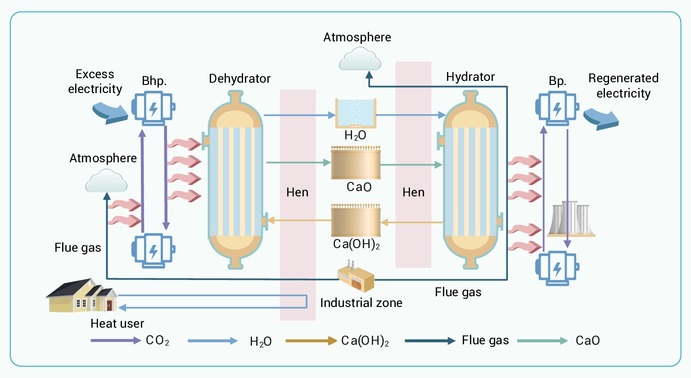
Figure 1.
Conceptual schemes of the proposed Ca(OH)2/CaO Carnot battery system powered by excess electricity.
-
Figure 2.
Multi-objective optimization results and techno-economic performance of the Carnot battery system
-
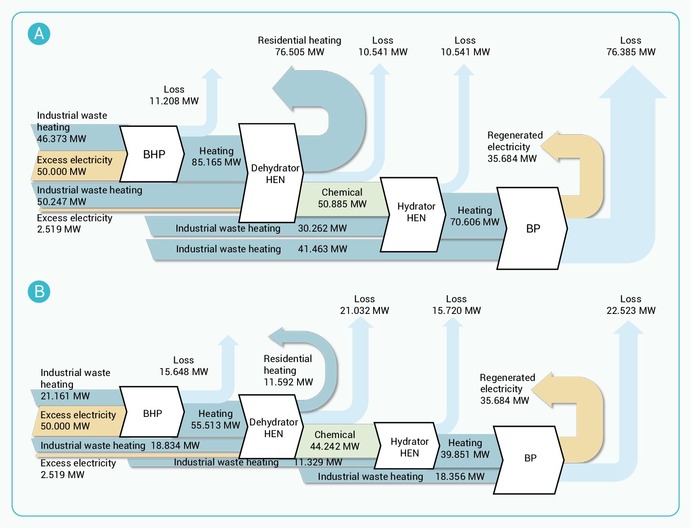
Figure 3.
Multi-objective optimization results of Carnot battery system
-
Figure 4.
mpact of energy storage material cost and cycle life on the economic performance of the Carnot battery system
-
Figure 5.
Impact of annual operating hours on techno-economic indicators
-
Figure 6.
Evolution of key techno-economic indicators for the Carnot battery system across scaling capacities from 10 MW to 50 MW
-
Figure 7.
Sensitivity of economic indicators to electricity price dynamics
