
Air-cooled battery thermal management system integrated with bionic shark structures based on PEG1500/EG/BN/TPE flexible composite
-
GRAPHICAL ABSTRACT
 DownLoad:
Full size image
DownLoad:
Full size image
-
PUBLIC SUMMARY
-
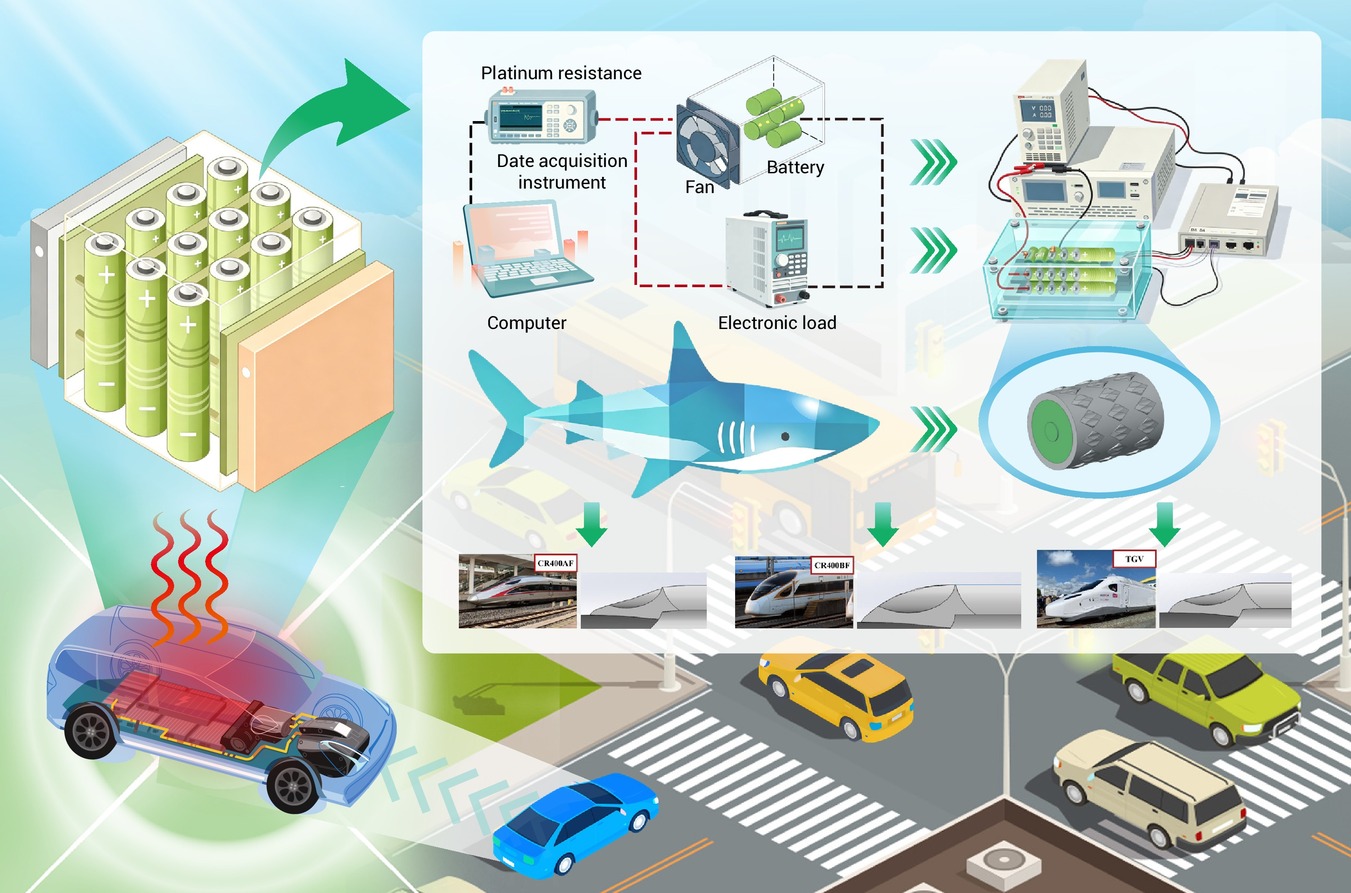
A bionic shark-scale structure optimizes composite phase change material (PCM) for electric vehicle battery thermal management system (BTMS) with axial air cooling.
Four cooling modes and pressure drop tests are conducted; validated simulations explore the heat dissipation mechanism of bionic structures.
Under 2C discharge, this hybrid scheme cuts temperature rise to 49.30% of natural convection and caps peak temperature at 50.90 °C.
Multi-dimensional structural optimization achieves the best layout, lowering average battery temperature to 46.11 °C for BTMS heat sink design.
-
-
ABSTRACT
To improve the heat dissipation efficiency of electric vehicle battery thermal management system (BTMS), a bionic shark-scale structure was proposed to optimize the thermal performance of flexible composite phase change material (PCM), with axial air cooling integrated to regulate the battery temperature. Experiments were conducted under four conditions, i.e., natural convection, air cooling, air cooling coupled with PCM, and air cooling coupled with bionic shark-scale PCM, to evaluate the thermal behaviour performance. In addition, pressure drop tests were conducted to assess the drag-reduction effects of the bionic structures. A numerical simulation model was also built with the validation of experimental data, which was subsequently applied to investigate the heat dissipation mechanisms and influences of the bionic structure together with optimization. The results show that, under a 2C discharge, the temperature rise of the battery pack of air-cooled coupled with bionic shark-scale PCM is only 49.30% of that under natural convection, while the maximum surface temperature is controlled at 50.90 °C, ensuring the safe operation. At an airflow velocity of 1.30 m/s, the duct pressure drop of the bionic PCM is slight lower than that of the smooth PCM. Subsequently, the bionic shark-scale structure is further optimized in terms of axial aspect ratio, lateral structure, rib row number, and rib arrangement. The optimal configuration achieves an average battery pack temperature of 46.11 °C, with a fish scale aspect ratio of 0.5, a side structure of CR400AF, and 13 rows arranged in a cross pattern. The present research provides insights into the effective design of heat sink of BTMS. -

-
REFERENCES
[1] Zhao C., Yan J., Tian X., et al. (2023). Progress in thermal energy storage technologies for achieving carbon neutrality. Carbon Neutral. 2:10. DOI:10.1007/s43979-023-00050-y [2] Eltoumi F., Becherif M., Djerdir A., et al. (2021). The key issues of electric vehicle charging via hybrid power sources: Techno-economic viability, analysis, and recommendations. Renew. Sustain. Energy Rev. 138:110534. DOI:10.1016/j.rser.2021.110534 [3] Xiao X. and Hui WX. (2026). Experimental and numerical study of a cascaded thermal energy storage system for waste heat recovery in hydrogen production plants. Energy 351:140753. DOI:10.1016/j.energy.2026.140753 [4] Xiao X., Yao MT., Xu YQ., et al. (2026). Preparation and characterization of TPEE@PEG1500/EG flexible composite phase change materials and thermal response for thermal management of batteries. Energy Convers. Manag. 352:121044. DOI:10.1016/j.enconman.2026.121044 [5] Zhang Y., Xie K., Shi J., et al. (2024). Dressing paraffin wax/boron nitride phase change composite with a polyethylene “underwear” for the reliable battery safety management. Small 20:2304886. DOI:10.1002/smll.202304886 [6] Shi R., Jiao S., Yue Q., et al. (2022). Challenges and advances of organic electrode materials for sustainable secondary batteries. Exploration 2:20220066. DOI:10.1002/EXP.20220066 [7] Yang F., Xie Y., Deng Y., et al. (2018). Predictive modeling of battery degradation and greenhouse gas emissions from US state-level electric vehicle operation. Nat. Commun. 9:2429. DOI:10.1038/s41467-018-04421-8 [8] Yang W., Zhou F., Zhou H., et al. (2020). Thermal performance of axial air cooling system with bionic surface structure for cylindrical lithium-ion battery module. Int. J. Heat Mass Transf. 161:120307. DOI:10.1016/j.ijheatmasstransfer.2020.120307 [9] Sur A., Narkhede S., Menon A., et al. (2024). Improving li-ion battery performance with internal cooling. J. Adv. Res. Fluid Mech. Therm. Sci. 125:220−233. DOI:10.37934/arfmts.125.1.220233 [10] Jouhara H., Serey N., Khordehgah N., et al. (2020). Investigation, development and experimental analyses of a heat pipe based battery thermal management system. Int. J. Thermofluids 1:100004. DOI: Not retrievable. DOI:10.1016/j.ijft.2019.100004 [11] Verma A., Shashidhara S. and Rakshit D. (2019). A comparative study on battery thermal management using phase change material (PCM). Therm. Sci. Eng. Prog. 11:74−83. DOI:10.1016/j.ijft.2019.100004 [12] Akinlabi A A H. and Solyali D. (2020). Configuration, design, and optimization of air-cooled battery thermal management system for electric vehicles: A review. Renew. Sustain. Energy Rev. 125:109815. DOI:10.1016/j.rser.2020.109815 [13] Kalaf O., Solyali D., Asmael M., et al. (2021). Experimental and simulation study of liquid coolant battery thermal management system for electric vehicles: A review. Int. J. Energy Res. 45:6495−6517. DOI:10.1002/er.6495 [14] Smith J., Singh R., Hinterberger M., et al. (2018). Battery thermal management system for electric vehicle using heat pipes. Int. J. Therm. Sci. 134:517−529. DOI:10.1016/j.ijthermalsci.2018.08.038 [15] Wu M., Li T., Wang P., et al. (2022). Dual-encapsulated highly conductive and liquid-free phase change composites enabled by polyurethane/graphite nanoplatelets hybrid networks for efficient energy storage and thermal management. Small 18:2105647. DOI:10.1002/smll.2022.2105647 [16] Shastri D., Mahajan M., Sur A., et al. (2025). Electric vehicle battery cooling using phase change materials and nanofluids. Int. J. Heat Technol. 43:989−996. DOI:10.18280/ijht.430317 [17] Sarkon G K., Hurdoganoglu D., Eyyamoglu B., et al. (2025). Preventing thermal runaway in lithium-ion batteries with nano-porous structures: A critical review. J. Power Sources 641:236793. DOI:10.1016/j.jpowsour.2025.236793 [18] Wu T., Wang C., Hu Y., et al. (2022). Research on novel battery thermal management system coupling with shape memory PCM and molecular dynamics analysis. Appl. Therm. Eng. 210:118373. DOI:10.1016/j.applthermaleng.2022.118373 [19] Safdari M., Ahmadi R. and Sadeghzadeh S. (2020). Numerical investigation on PCM encapsulation shape used in the passive-active battery thermal management. Energy 193:116840. DOI:10.1016/j.energy.2020.116840 [20] Alipanah M. and Li X. (2016). Numerical studies of lithium-ion battery thermal management systems using phase change materials and metal foams. Int. J. Heat Mass Transf. 102:1159−1168. DOI:10.1016/j.ijheatmasstransfer.2016.1159 [21] Choudhari V G., Dhoble A S. and Panchal S. (2020). Numerical analysis of different fin structures in phase change material module for battery thermal management system and its optimization. Int. J. Heat Mass Transf. 163:120434. DOI:10.1016/j.ijheatmasstransfer.2020.120434 [22] Wu W., Yang X., Zhang G., et al. (2016). An experimental study of thermal management system using copper mesh-enhanced composite phase change materials for power battery pack. Energy 113:909−916. DOI:10.1016/j.energy.2016.07.090 [23] Weng J., He Y., Ouyang D., et al. (2021). Honeycomb-inspired design of a thermal management module and its mitigation effect on thermal runaway propagation. Appl. Therm. Eng. 195:117147. DOI:10.1016/j.applthermaleng.2021.117147 [24] Lv Y., Liu G., Zhang G., et al. (2020). A novel thermal management structure using serpentine phase change material coupled with forced air convection for cylindrical battery modules. J. Power Sources 468:228398. DOI:10.1016/j.jpowsour.2020.228398 [25] Saleh R., Memarzadeh A., Hurdoganoglu D., et al. (2025). A comprehensive review on atomic layer deposition on key components in fuel cells. Fuel 395:135172. DOI:10.1016/j.fuel.2025.135172 [26] Sudo S., Tsuyuki K., Ito Y., et al. (2002). A study on the surface shape of fish scales. Int. J. Ser. C Mech. Syst. Mach. Elem. Manuf. 45:1100−1105. DOI:10.1299/jsmec.45.1100 [27] Zhang D., Luo Y., Li X., et al. (2011). Numerical simulation and experimental study of drag-reducing surface of a real shark skin. J. Hydrodyn., Ser. B 23:204−211. DOI:10.1016/S1001-6058(10)60105-9 [28] Oeffner J. and Lauder G V. (2012). The hydrodynamic function of shark skin and two biomimetic applications. J. Exp. Biol. 215:785−795. DOI:10.1242/jeb.064837 [29] Yang W., Zhou F., Chen X., et al. (2021). Performance analysis of axial air cooling system with shark-skin bionic structure containing phase change material. Energy Convers. Manag. 250:114921. DOI:10.1016/j.enconman.2021.114921 [30] Liu N., Jiang Y., Liu X., et al. (2025). Thermal performance analysis and structure optimization of bionic shark skin channel liquid cooling plate for lithium ion battery. Appl. Therm. Eng. 279:127683. DOI:10.1016/j.applthermaleng.2025.127683 [31] Xu WQ. (2025). Research on optimization of shark-like structure for flexible composite phase change materials and battery thermal management system coupled with air cooling. Master’s thesis, Donghua University, Shanghai. [32] Lauder G., Wainwright D., Domel A., et al. (2016). Structure, biomimetics, and fluid dynamics of fish skin surfaces. Phys. Rev. Fluids 1:060502. DOI:10.1103/PhysRevFluids.1.060502 [33] Barai A., Uddin K., Widanage W D., et al. (2018). A study of the influence of measurement timescale on internal resistance characterisation methodologies for lithium-ion cells. Sci. Rep. 8:21. DOI:10.1038/s41598-017-18123-8 [34] Boomsma A. and Sotiropoulos F. (2016). Direct numerical simulation of sharkskin denticles in turbulent channel flow. Phys. Fluids 28:035106. DOI:10.1063/1.4943434 [35] Bechert D W., Bruse M. and Hage W. (1997). Experiments on drag-reducing surfaces and their optimization with an adjustable geometry. J. Fluid Mech. 338:59−87. DOI:10.1017/S002211209700687X [36] Tao W. (2019). Heat Transfer. Higher Education Press. [37] Jiang CK., Wang JX., Yang LS., et al. (2026). Performance analysis of enhanced heat transfer in lithium-ion battery air-cooled thermal management systems coupled with vortex generators. Int. J. Therm. Sci. 227:110903. DOI:10.1016/j.ijthermalsci.2026.110903 [38] Xiao X. and Xu WQ. (2025). Optimal investigation on thermal management of battery based on bionical shark scale structure. J. Refrig. https://link.cnki.net/urlid/11.2182.TB.20251117.1526.003. [39] Sun Z., Yao S., Wei L., et al. (2021). Numerical investigation on the influence of the streamlined structures of the high-speed train’s nose on aerodynamic performances. Appl. Sci. 11:784. DOI:10.3390/app11020784 -
ABOUT THIS ARTICLE
Cite this article:
Xiao X., Xu W. and Yao M. (2026). Air-cooled battery thermal management system integrated with bionic shark structures based on PEG1500/EG/BN/TPE flexible composite. The Innovation Energy 3:100182. https://doi.org/10.59717/j.xinn-energy.2026.100182
Welcome!
To request copyright permission to republish or share portions of our works, please visit Copyright Clearance Center's (CCC) Marketplace website at marketplace.copyright.com.
Export File
Citation
Xiao X., Xu W. and Yao M. (2026). Air-cooled battery thermal management system integrated with bionic shark structures based on PEG1500/EG/BN/TPE flexible composite. The Innovation Energy 3:100182. https://doi.org/10.59717/j.xinn-energy.2026.100182

Format
Content
-
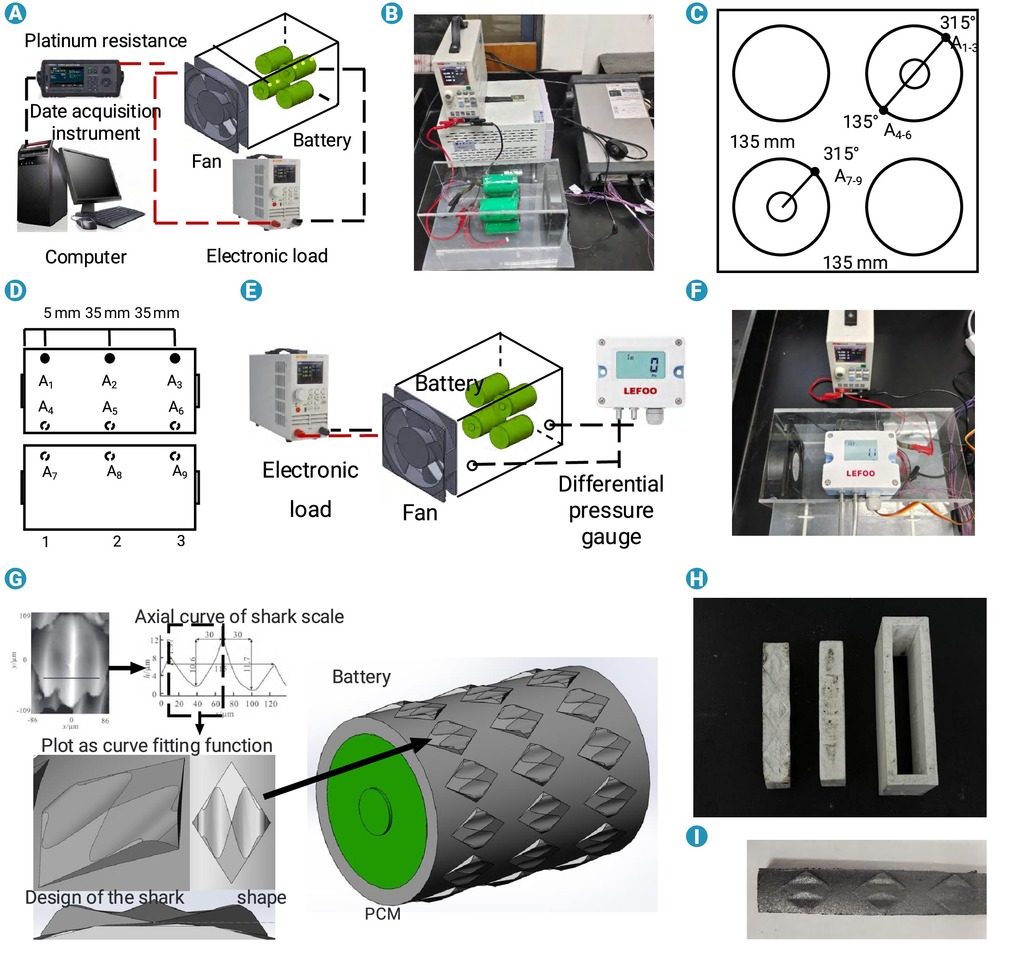
Figure 1.
Whole BTMS: (A) Schematic diagram of BTMS; (B) Physical photograph of BTMS; (C) Front view of thermocouple arrangement; (D) Side view of thermocouple arrangement; (E) Schematic diagram of pressure drop system; (F) Physical photograph of pressure drop system. Schematic diagram of bionic heat sink: (G) Concept of heat sink of bionic scale structure; (H) Pressing mould; (I) Bionic heat sink of CPCM.
-
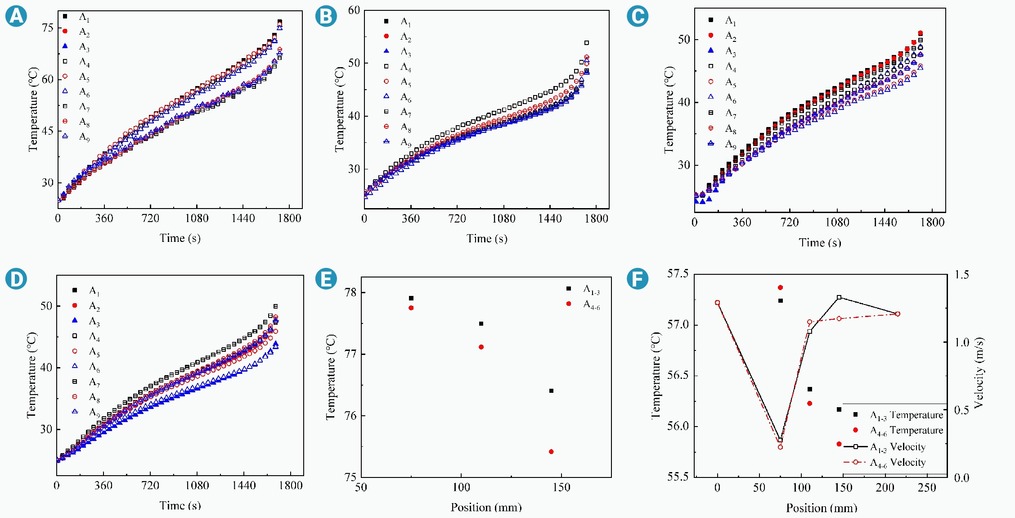
Figure 2.
Temperature variations at each measuring point of 2C battery discharge experiments
-
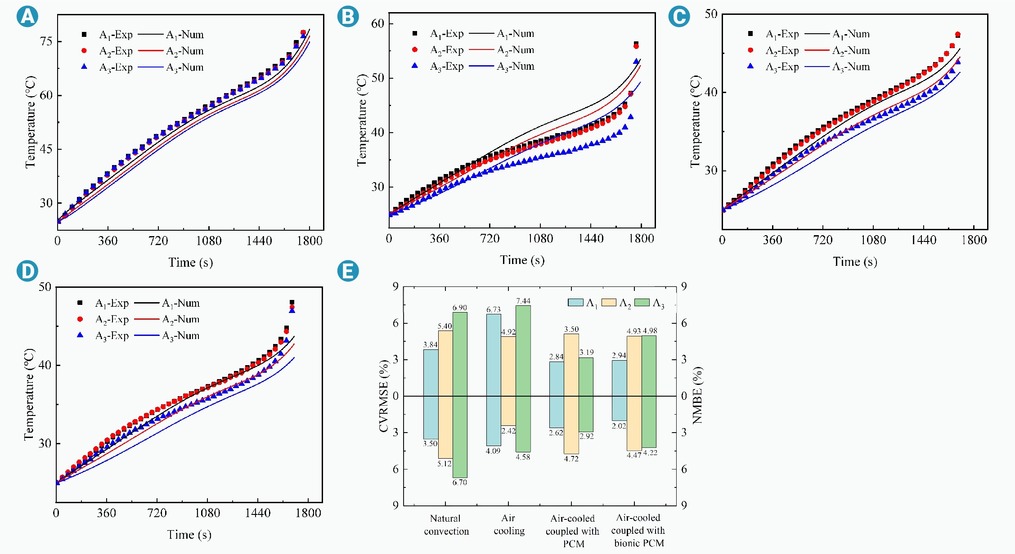
Figure 3.
Verification of temperature of simulated model at 2C discharge
-
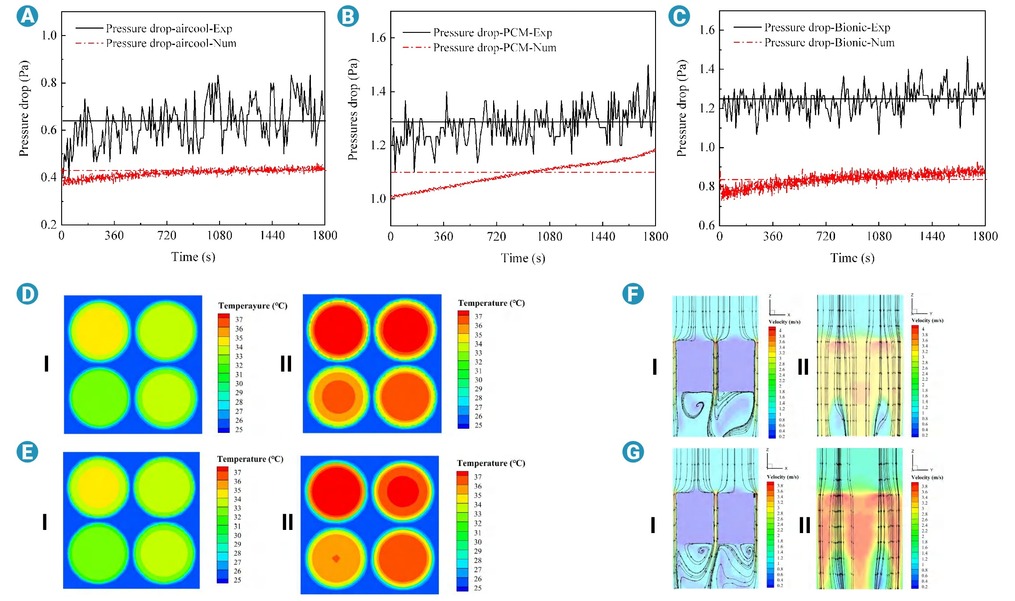
Figure 4.
Verification of pressure drop of simulated model at 2C discharge
-
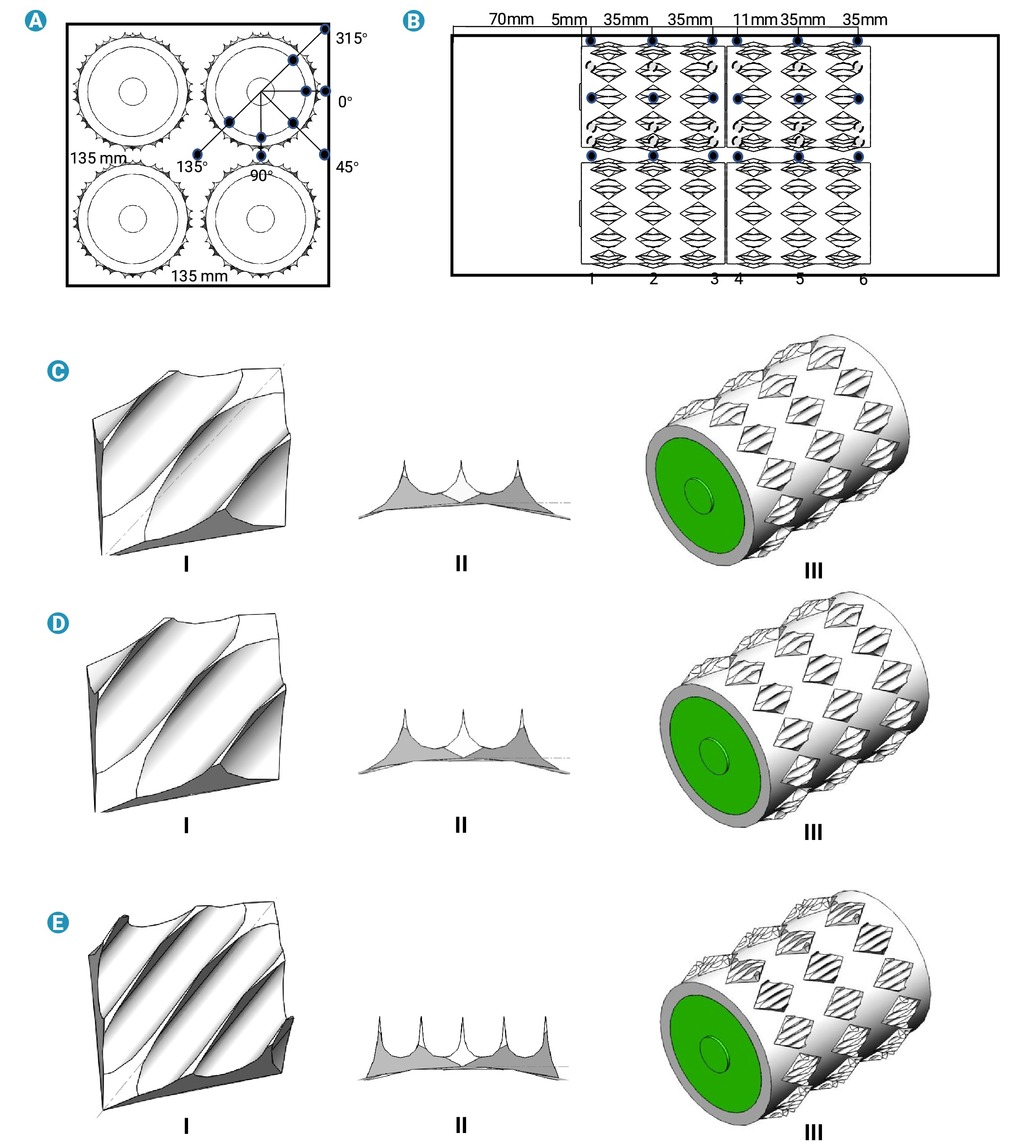
Figure 5.
Schematic diagram of measurement points
-
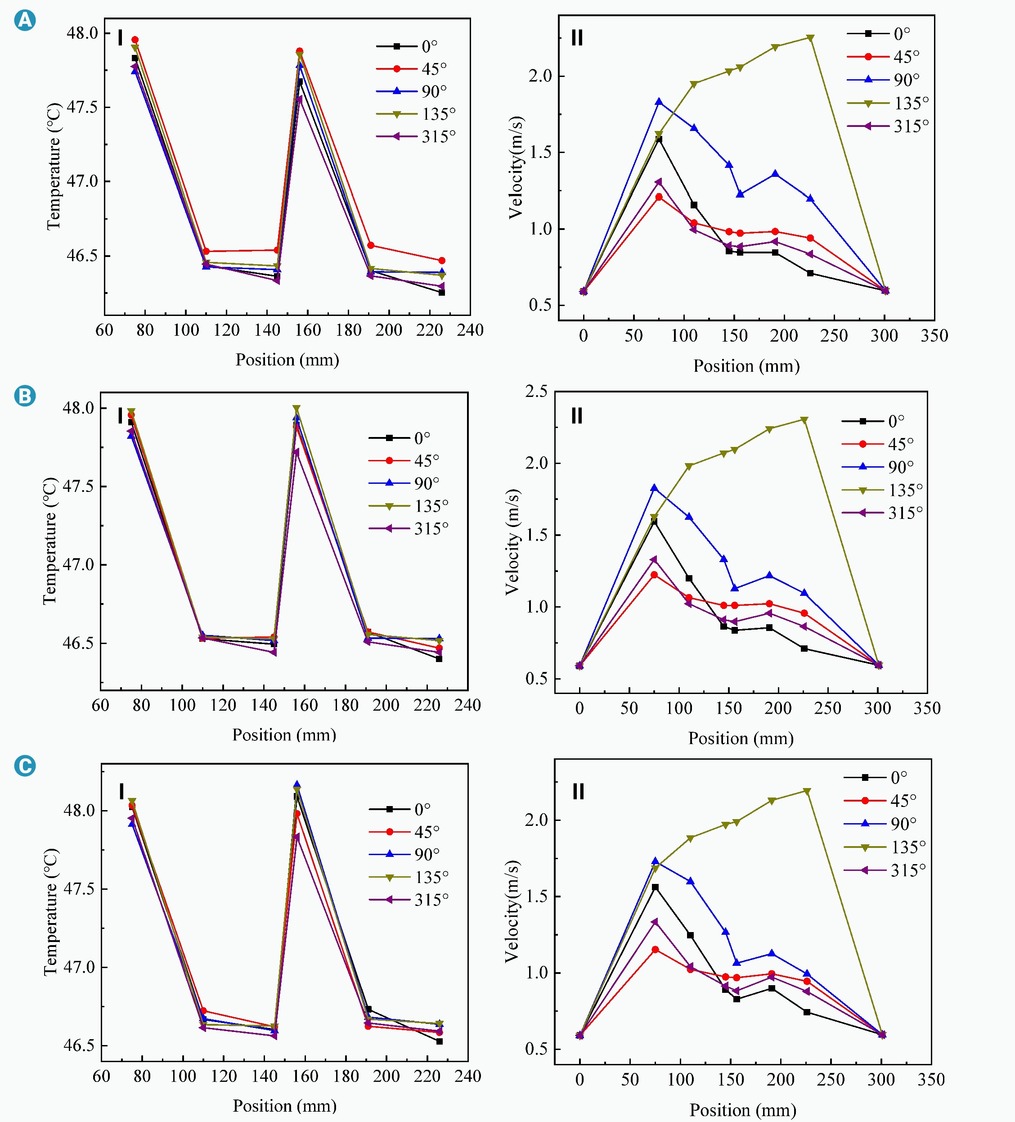
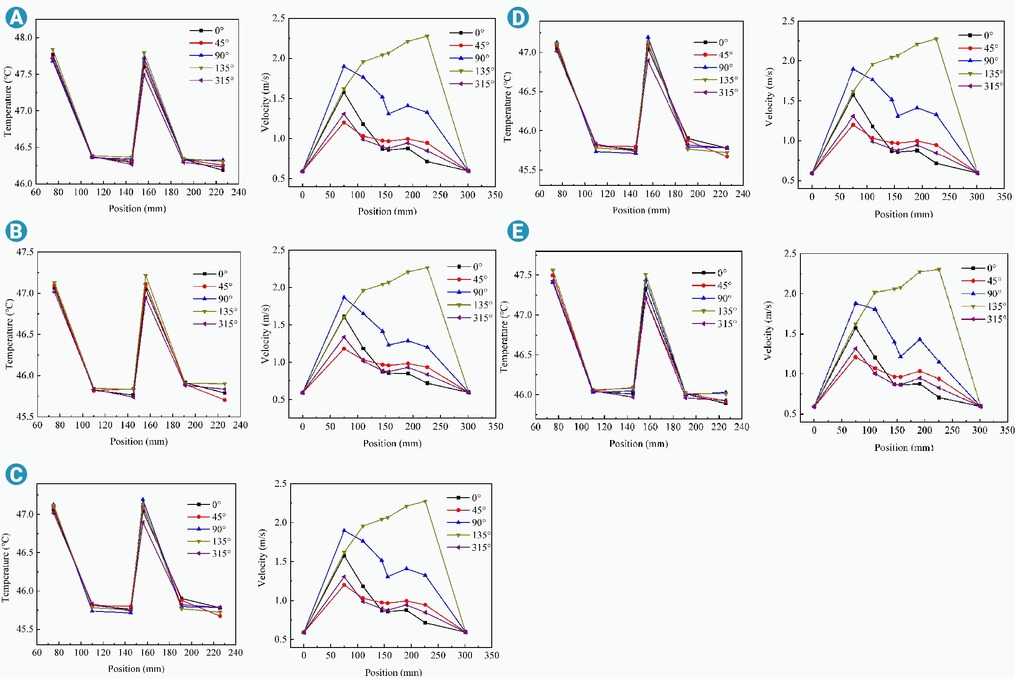
Figure 6.
Simulation results of batteries with different aspect ratios
-
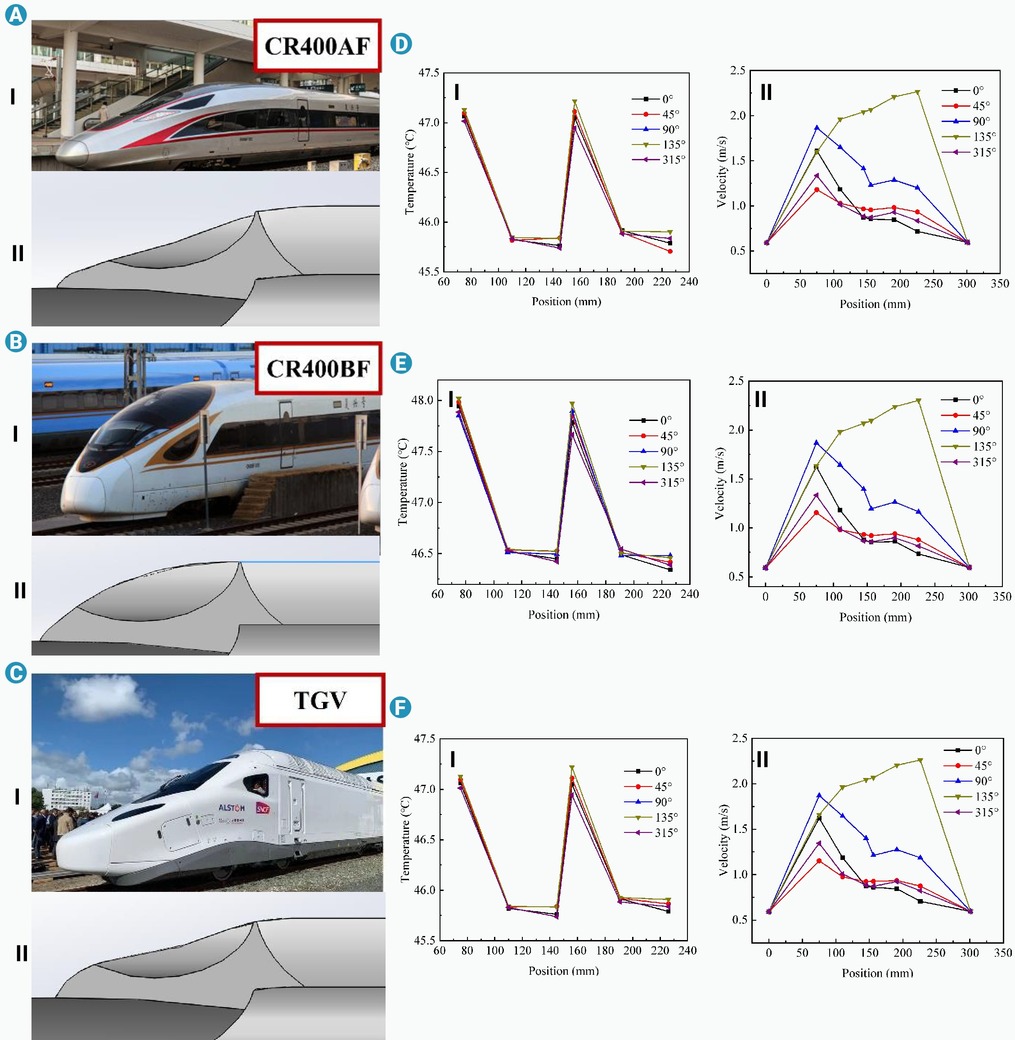
Figure 7.
Rib lateral structure optimization
-
Figure 8.
Simulation results of batteries with different row numbers
