
Holocene climate forcings on leaf wax hydrogen isotope records in the monsoon regions of China
-
GRAPHICAL ABSTRACT
 DownLoad:
Full size image
DownLoad:
Full size image
-
PUBLIC SUMMARY
-
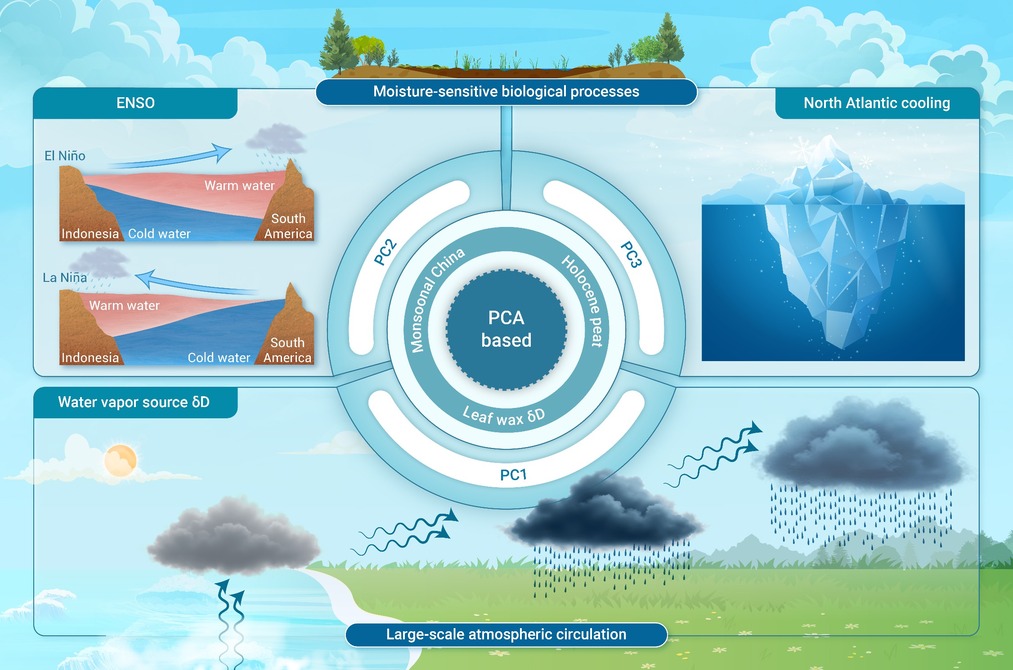
PCA on the Holocene peat leaf wax δD records from the monsoon regions of China.
PC1 linked to the water vapor source isotopes.
PC2 and PC3 related to the El Nio-Southern Oscillation (ENSO) and North Atlantic cooling, respectively.
PC2 and PC3 mainly responsible for the spatial heterogeneity of precipitation.
Moisture-sensitive biological effects likely differentiating leaf wax δD from stalagmite δ18O records.
-
-
ABSTRACT
The hydrogen isotopic compositions (δD) of leaf waxes have emerged as a pivotal paleohydrological proxy. However, their complex nature complicates paleoclimatic interpretations in the monsoon regions of China. To disentangle the controls, we performed principal component analysis (PCA) on Holocene leaf wax δD records from peat deposits across the monsoon regions of China, which reveals three dominant signals. The first principal component (PC1) strongly correlates with water vapor source isotopes. The second principal component (PC2) shows a close relationship with El Niño-Southern Oscillation (ENSO) mean state. The third principal component (PC3) is associated with North Atlantic cooling. Together, PC2 and PC3 mainly account for the spatiotemporal variations of precipitation in the monsoon regions of China. The PCA results highlight that while Northern hemisphere solar insolation provides the fundamental control, both high- and low-latitude climate systems modulate the isotopic signals. Moreover, these findings offer new insights into resolving the discrepancies between leaf wax δD and stalagmite δ18O records in the Asian monsoon regions during the Holocene. Given the observed covariation between PC1 and stalagmite δ18O records, we tentatively attribute the differences to moisture-dependent biological factors significantly affecting leaf wax δD.-
Keywords:
- leaf wax δD /
- Asian monsoon /
- Holocene /
- peat /
- hydrology /
- PCA
-

-
REFERENCES
[1] Bowen G. J., Cai Z., Fiorella R. P., et al. (2019). Isotopes in the water cycle: Regional- to global-scale patterns and applications. Annu. Rev. Earth Pl. Sc. 47:453−479. DOI:10.1146/annurev-earth-053018-060220 [2] Sachse D., Billault I., Bowen G. J., et al. (2012). Molecular paleohydrology: Interpreting the hydrogen-isotopic composition of lipid biomarkers from photosynthesizing organisms. Annu. Rev. Earth Pl. Sc. 40:221−249. DOI:10.1146/annurev-earth-042711-105535 [3] McFarlin J. M., Axford Y., Masterson A. L., et al. (2019). Calibration of modern sedimentary δ2H plant wax-water relationships in Greenland lakes. Quat. Sci. Rev. 225:105978. DOI:10.1016/j.quascirev.2019. 105978 [4] Inglis G. N., Bhattacharya T., Hemingway J. D., et al. (2022). Biomarker approaches for reconstructing terrestrial environmental change. Annu. Rev. Earth Pl. Sc. 50:369−394. DOI:10.1146/annurev-earth-032320-095943 [5] Garcin Y., Schefuß E., Dargie G. C., et al. (2022). Hydroclimatic vulnerability of peat carbon in the central Congo Basin. Nature 612:277−282. DOI:10.1038/s41586-022-05389-3 [6] Maloney A. E., Nelson D. B., Richey J. N., et al. (2019). Reconstructing precipitation in the tropical South Pacific from dinosterol 2H/1H ratios in lake sediment. Geochim. Cosmochim. Ac. 245:190−206. DOI:10.1016/j.gca. 2018.10.028 [7] Zhao B., Russell J. M., Blaus A., et al. (2024). Tropical Andean climate variations since the last deglaciation. Proc. Natl. Acad. Sci. USA 121:e2320143121. DOI:10.1073/pnas.2320143121 [8] Shanahan T. M., Hughen K. A., Ampel L., et al. (2013). Environmental controls on the 2H/1H values of terrestrial leaf waxes in the eastern Canadian Arctic. Geochim. Cosmochim. Ac. 119:286−301. DOI:10.1016/j.gca.2013.05.032 [9] Huang X., Pancost R. D., Xue J., et al. (2018). Response of carbon cycle to drier conditions in the mid-Holocene in central China. Nat. Commun. 9:1369. DOI:10.1038/s41467-018-03804-w [10] Sarkar S., Prasad S., Wilkes H., et al. (2015). Monsoon source shifts during the drying mid-Holocene: Biomarker isotope based evidence from the core ‘monsoon zone’ (CMZ) of India. Quat. Sci. Rev. 123:144−157. DOI:10.1016/j. quascirev.2015.06.020 [11] Seki O., Meyers P. A., Yamamoto S., et al. (2011). Plant-wax hydrogen isotopic evidence for postglacial variations in delivery of precipitation in the monsoon domain of China. Geology 39:875−878. DOI:10.1130/G32117.1 [12] Wang X. and Huang X. (2024). Increasing evapotranspiration in peatlands from the monsoon regions of East China with the rapid warming during the early Holocene. J. Hydrol. 644:132051. DOI:10.1016/j.jhydrol.2024. 132051 [13] Wang Z., Zhang F., Li X., et al. (2024). A substantial meltwater event on the northeastern Tibetan Plateau during the middle to late Holocene transition. Quat. Sci. Rev. 344:108996. DOI:10.1016/j.quascirev.2024.108996 [14] Zhao C., Cheng J., Wang J., et al. (2021). Paleoclimate significance of reconstructed rainfall isotope changes in Asian monsoon region. Geophys. Res. Lett. 48:e2021GL092460. DOI:10.1029/2021GL092460 [15] Rao Z., Jia G., Li Y., et al. (2016). Asynchronous evolution of the isotopic composition and amount of precipitation in north China during the Holocene revealed by a record of compound-specific carbon and hydrogen isotopes of long-chain n-alkanes from an alpine lake. Earth Planet. Sc. Lett. 446:68−76. DOI:10.1016/j.jpgl.2016.04.027 [16] Cheng H., Zhang H., Zhao J., et al. (2019). Chinese stalagmite paleoclimate researches: A review and perspective. Sci. China Earth Sci. 62:1489−1513. DOI:10.1007/s11430-019-9478-3 [17] Liu X., Liu J., Chen S., et al. (2020). New insights on Chinese cave δ18O records and their paleoclimatic significance. Earth-Sci. Rev. 207:103216. DOI:10.1016/j.earscirev.2020.103216 [18] Lever J., Krzywinski M. and Altman N. (2017). Principal component analysis. Nat. Methods 14:641−642. DOI:10.1038/nmeth.4346 [19] Chambers F. M., Booth R. K., Vleeschouwer F. D., et al. (2012). Development and refinement of proxy-climate indicators from peats. Quatern. Int. 268:21−33. DOI:10.1016/j.quaint.2011.04.039 [20] Gao X., Sun Z., Hou X., et al. (2024). Integrating paleolimnological hydrogen and oxygen isotope records during the Holocene the Tibetan Plateau. Global Planet. Change 236:104432. DOI:10.1016/j.gloplacha.2024.104432 [21] Wang B., Clemens S. C. and Liu P. (2003). Contrasting the Indian and East Asian monsoons: Implications on geologic timescales. Mar. Geol. 201:5−21. DOI:10.1016/S0025-3227(03)00196-8 [22] Seki O., Meyers P. A., Kawamura K., et al. (2009). Hydrogen isotopic ratios of plant wax n-alkanes in a peat bog deposited in northeast China during the last 16 kyr. Org. Geochem. 40:671−677. DOI:10.1016/j.orggeochem.2009.03. 007 [23] Wang X., Huang X., Zhao H., et al. (2022). Abrupt drying on the Southeast coast of China during the mid‐to‐late Holocene transition. Geophys. Res. Lett. 49:e2022GL100257. DOI:10.1029/2022GL100257 [24] Huang X., Zhang H., Griffiths M. L., et al. (2023). Holocene forcing of East Asian hydroclimate recorded in a subtropical peatland from southeastern China. Clim. Dynam. 60:981−993. DOI:10.1007/s00382-022-06333-x [25] Wang X., Huang X., Dirk S., et al. (2016). Molecular paleoclimate reconstructions over the last 9 ka from a peat sequence in South China. Plos One 11:e0160934. DOI:10.1371/journal.pone.0160934 [26] Wang X., Huang X. and Sachse D. (2023). Two-phase hydrological changes during the mid-to late Holocene transition in Southwest China. Quat. Sci. Rev. 322:108432. DOI:10.1016/j.quascirev.2023.108432 [27] Liu J., Chen J., Zhang X., et al. (2015). Holocene East Asian summer monsoon records in northern China and their inconsistency with Chinese stalagmite δ18O records. Earth-Sci. Rev. 148:194−208. DOI:10.1016/j.earscirev.2015. 06.004 [28] Li M., Hinnov L. and Kump L. (2019). Acycle: Time-series analysis software for paleoclimate research and education. Comput. Geosci. 127:12−22. DOI:10.1016/j.cageo.2019.02.011 [29] Yang X., Yang H., Wang B., et al. (2019). Early-Holocene monsoon instability and climatic optimum recorded by Chinese stalagmites. Holocene 29:1059−1067. DOI:10.1177/0959683619831433 [30] Contreras-Rosales L. A., Jennerjahn T., Tharammal T., et al. (2014). Evolution of the Indian summer monsoon and terrestrial vegetation in the Bengal region during the past 18 ka. Quat. Sci. Rev. 102:133−148. DOI:10.1016/j. quascirev.2014. 08.010 [31] Chen F., Chen J., Huang W., et al. (2019). Westerlies Asia and monsoonal Asia: Spatiotemporal differences in climate change and possible mechanisms on decadal to sub-orbital timescales. Earth-Sci. Rev. 192:337−354. DOI:10.1016/j.earscirev. 2019.03.005 [32] Cai Z., Tian L. and Bowen G. J. (2018). Spatial-seasonal patterns reveal large-scale atmospheric controls on Asian Monsoon precipitation water isotope ratios. Earth Planet. Sc. Lett. 503:158−169. DOI:10.1016/j.jpgl.2018. 09.028 [33] Wu H., Fan H., Lei R., et al. (2023). Atmospheric processes control the stable isotopic variability of precipitation in the middle–lower reaches of the Yangtze River Basin, East Asian monsoon region. J. Hydrol. 623:129835. DOI:10.1016/j.jhydrol.2023.129835 [34] Berger A. and Loutre M. F. (1991). Insolation values for the climate of the last 10 million years. Quat. Sci. Rev. 10:297−317. DOI:10.1016/0277-3791(91)90033-Q [35] Praetorius S. K., McManus J. F., Oppo D. W., et al. (2008). Episodic reductions in bottom-water currents since the last ice age. Nat. Geosci. 1:449−452. DOI:10.1038/ngeo227 [36] Soon W., Velasco Herrera V. M., Selvaraj K., et al. (2014). A review of Holocene solar-linked climatic variation on centennial to millennial timescales: Physical processes, interpretative frameworks and a new multiple cross-wavelet transform algorithm. Earth-Sci. Rev. 134:1−15. DOI: 10.1016/j.earscirev.2014.03. 003 [37] Zhang W., Yan H., Dodson J., et al. (2018). The 9.2 ka event in Asian summer monsoon area: The strongest millennial scale collapse of the monsoon during the Holocene. Clim. Dynam. 50:2767-2782. DOI:10.1007/s00382-017-3770-2 [38] Cheng H., Edwards R. L., Sinha A., et al. (2016). The Asian monsoon over the past 640,000 years and ice age terminations. Nature 534:640−646. DOI:10.1038/nature 18591 [39] Wang Q., Zhao K., Wang Y., et al. (2024). Orbital- and millennial-scale hydroclimate changes in central China during the last glacial period. Quat. Sci. Rev. 337:108802. DOI:10.1016/j.quascirev.2024.108802 [40] Chen F., Xu Q., Chen J., et al. (2015). East Asian summer monsoon precipitation variability since the last deglaciation. Sci. Rep. 5:11186. DOI:10.1038/srep11186 [41] Dang H., Jian Z., Wang Y., et al. (2020). Pacific warm pool subsurface heat sequestration modulated Walker circulation and ENSO activity during the Holocene. Sci. Adv. 2020:eabc0402. DOI:10.1126/sciadv.abc0402 [42] Koutavas A. and Joanides S. (2012). El Niño–Southern Oscillation extrema in the Holocene and Last Glacial Maximum. Paleoceanography 27:PA4208. DOI:10.1029/2012PA002378 [43] Moy C. M., Seltzer G. O., Rodbell D. T., et al. (2002). Variability of El Niño/Southern Oscillation activity at millennial timescales during the Holocene epoch. Nature 420:162−165. DOI:10.1038/nature01194 [44] Mohtadi M., Prange M. and Steinke S. (2016). Palaeoclimatic insights into forcing and response of monsoon rainfall. Nature 533:191. DOI:10.1038/nature17450 [45] Zhou L., Xia Y., Zhou C., et al. (2024). Sensitivity of western Pacific subtropical high to regional sea surface temperature changes. Global Planet. Change. 242:104565. DOI:10.1016/j.gloplacha.2024.104565 [46] Xue G., Cai Y., Zheng Y., et al. (2025). Western Pacific Subtropical High modulates regional hydroclimate changes on multiple timescales over central China. J. Geophys. Res.:Atmos. 130:e2024JD042735. DOI: 10.1029/2024 JD042735 [47] Rao Z., Li Y., Zhang J., et al. (2016). Investigating the long-term palaeoclimatic controls on the δD and δ18O of precipitation during the Holocene in the Indian and East Asian monsoonal regions. Earth-Sci. Rev. 159:292−305. DOI:10.1016/j. earscirev.2016.06.007 [48] Xu H., Song Y., Cao J., et al. (2024). Heterogeneity of the East Asian rainfall influenced by solar-forced western Pacific subtropical high. Commun. Earth Environ. 5:1−9. DOI:10.1038/s43247-024-01660-9 [49] Chen F., Huang L., Cao D., et al. (2024). “Mega-sandwich Pattern” of interdecadal precipitation variations and its regional manifestation in the Asian summer precipitation region. Sci. Bull. 69:2656−2659. DOI:10.1016/j.scib. 2024.06.026 [50] Liu Z., Lu Z., Wen X., et al. (2014). Evolution and forcing mechanisms of El Niño over the past 21,000 years. Nature 515:550−553. DOI:10.1038/nature13963 [51] Bond G., Kromer B., Beer J., et al. (2001). Persistent solar influence on North Atlantic climate during the Holocene. Science 294:2130−2136. DOI:10.1126/ science.1065680 [52] Menzel P., Gaye B., Mishra P. K., et al. (2014). Linking Holocene drying trends from Lonar Lake in monsoonal central India to North Atlantic cooling events. Palaeogeogr. Palaeoecol. 410:164−178. DOI:10.1016/j.palaeo.2014.05.044 [53] Zhong Y., Liu Y., Du X., et al. (2024). Pacific Walker Circulation modulated millennial-scale East Asian summer monsoon rainfall variability over the past 40 kyr. Global Planet. Change. 245:104676. DOI:10.1016/j.gloplacha.2024.104676 [54] Zhang R., Sutton R., Danabasoglu G., et al. (2019). A review of the role of the Atlantic Meridional overturning circulation in Atlantic multidecadal variability and associated climate impacts. Rev. Geophys. 57:316−375. DOI:10.1029/ 2019RG000644 [55] Chiang J. C. H., Fung I. Y., Wu C.-H., et al. (2015). Role of seasonal transitions and westerly jets in East Asian paleoclimate. Quat. Sci. Rev. 108:111−129. DOI:10.1016/j.quascirev.2014.11.009 [56] Zhang H., Griffiths Michael L., Chiang John C. H., et al. (2018). East Asian hydroclimate modulated by the position of the westerlies during Termination I. Science 362:580−583. DOI:10.1126/science.aat9393 [57] Liu H., Wang S., Wang H., et al. (2023). Apparent fractionation of hydrogen isotope from precipitation to leaf wax n-alkanes from natural environments and manipulation experiments. Sci. Total Environ. 877:162970. DOI:10.1016/j.scitotenv.2023.162970 -
ABOUT THIS ARTICLE
Cite this article:
Wang X., Huang X., Xue Y., et al. (2026). Holocene climate forcings on leaf wax hydrogen isotope records in the monsoon regions of China. The Innovation Geoscience 4:100180. https://doi.org/10.59717/j.xinn-geo.2026.100180
Welcome!
To request copyright permission to republish or share portions of our works, please visit Copyright Clearance Center's (CCC) Marketplace website at marketplace.copyright.com.
Article Metrics
Relative Articles
Cited by
Export File
Citation
Wang X., Huang X., Xue Y., et al. (2026). Holocene climate forcings on leaf wax hydrogen isotope records in the monsoon regions of China. The Innovation Geoscience 4:100180. https://doi.org/10.59717/j.xinn-geo.2026.100180

Format
Content
-
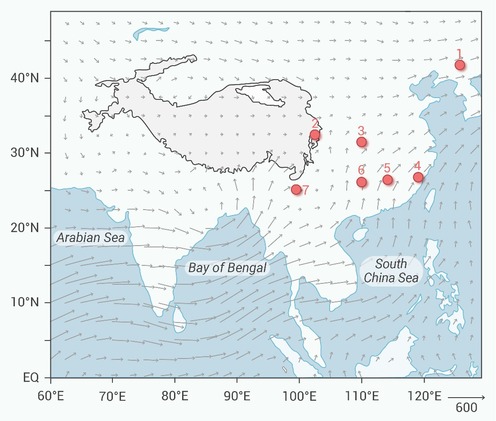
Figure 1.
Distributions of the leaf wax δD records from peats in the monsoon regions of China in this study
-
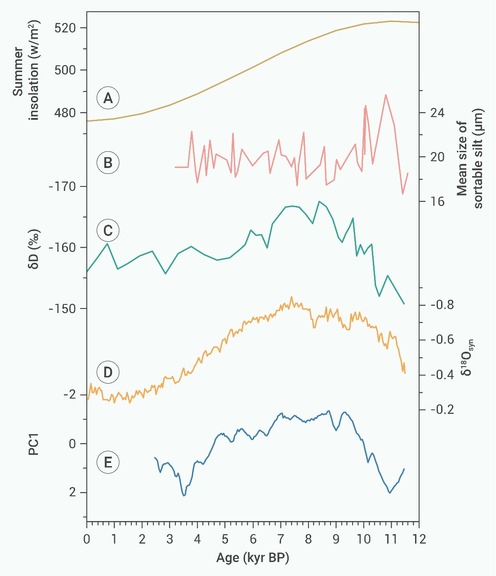
Figure 2.
Comparisons of PC1 and climate records
-
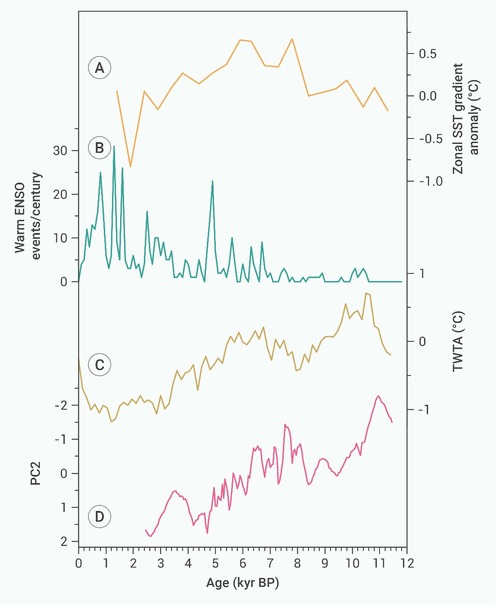
Figure 3.
Comparisons of PC2 and climate records
-
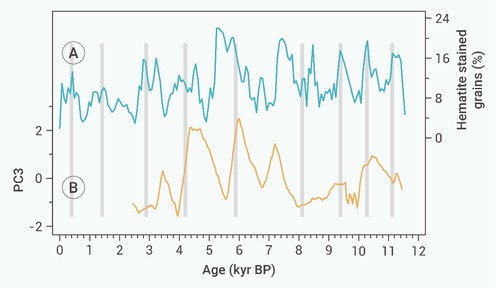
Figure 4.
Comparisons of PC3 and climate records
