
-
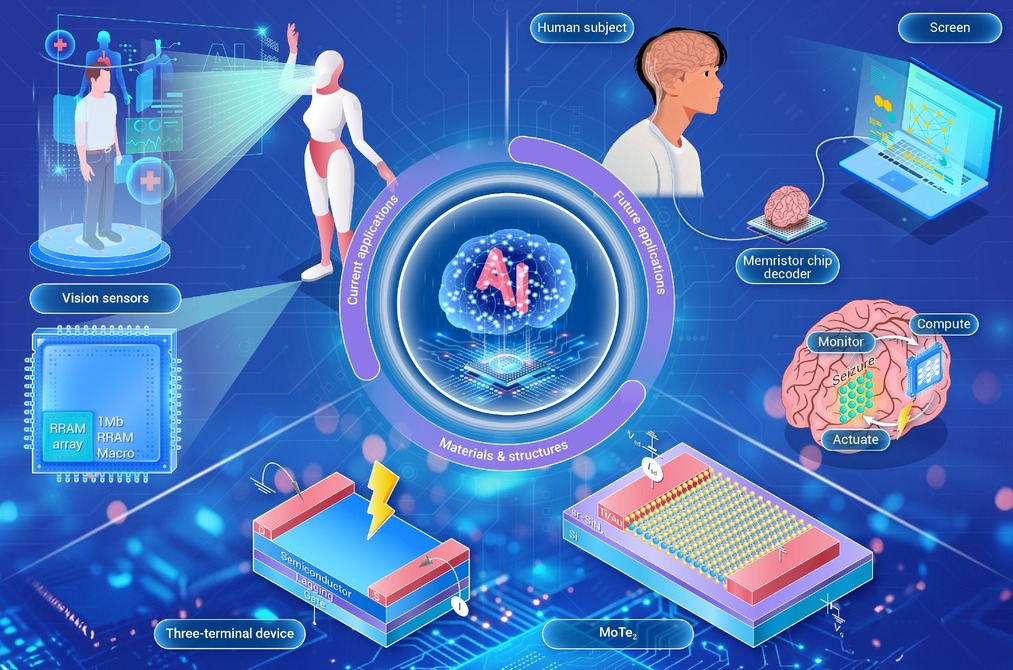
GRAPHICAL ABSTRACT
 DownLoad:
Full size image
DownLoad:
Full size image
-
PUBLIC SUMMARY
-
This review overviews integrated neuromorphic chips based on artificial synaptic devices.
It summarizes recent advances in synaptic materials, device structures, and chip integration.
Key progresses in large-scale integration, low power operation, and synaptic plasticity are highlighted.
Future opportunities of neuromorphic chips in AI, sensing, and intelligent robotics are discussed.
-
-
ABSTRACT
In the post-Moore era, advancing integrated circuits necessitates the development of artificial synaptic devices capable of replicating the functions of human brain with neuromorphic computing, which consists of numerous biological synapses. The neuromorphic chips based on integrated synaptic devices are the promising candidates due to their unique properties, which enable the simulation of human brain and biological synapse plasticity. In recent years, significant progress has been made in the development of optoelectronic synaptic devices and integrated neuromorphic chips. This review summarizes the recent advancements in the integrated synaptic devices, focusing on the structures, integrated technologies and their applications of neuromorphic chips. It discusses the two-terminal and three-terminal configurations of synaptic devices, emphasizing their advantages in simulating biological synapse functions. These advantages include a simple structure, low power consumption, high stability, a wide switching ratio and fast programming speed. Furthermore, the discussion covers the key applications of synaptic devices and integrated neuromorphic chips, such as image recognition, brain-like computing, tactile and vision sensors. For the synaptic-device-based neural networks in image recognition, they have great potential in tactile technology and visual bionics. Other potential applications have also been reviewed and discussed, including intelligent robots, electric skin, human-computer interaction and brain-computer interface, etc. Hence, neuromorphic chips have great promising application prospects, which can significantly promote the development of artificial intelligence and human civilization.-
Keywords:
- Neuromorphic chip /
- synaptic device /
- integrated technology /
- memristor synapse /
- intelligent robot.
-

-
REFERENCES
[1] Huang W., Jiang S., Lin Z., et al. (2025). All-optical modulation self-powered optoelectronic synaptic devices with monochromatic ultraviolet for inhibitory/excitatory synaptic behaviors. Appl. Phys. Rev. 12:031418. DOI:10.1063/5.0259134 [2] Li C., Wang J., Li D., et al. (2022). An oxide-based heterojunction optoelectronic synaptic device with wideband and rapid response performance. Chin. J. Met. Sci. Technol. 123:159−167. DOI:10.1016/j.jmst.2021.11.082 [3] Li Q., Wang T., Hu X., et al. (2022). Organic optoelectronic synaptic devices for energy-efficient neuromorphic computing. IEEE Electron Device Lett. 43:1089−1092. DOI:10.1109/LED.2022.3180346 [4] Kuzum D., Yu S. and Philip Wong H.S. (2013). Synaptic electronics: Materials, devices and applications. Nanotechnology 24:382001. DOI:10.1088/0957-4484/24/38/382001 [5] Indiveri G. and Liu S.C. (2015). Memory and information processing in neuromorphic systems. Proc. IEEE 103:1379−1397. DOI:10.1109/JPROC.2015.2444094 [6] Yang S., Li Y., Kang F., et al. (2025). Recent progress in organic cocrystal-based superlattices and their optoelectronic applications. Adv. Funct. Mater. 35:2504976. DOI:10.1002/adfm.202504976 [7] Zhang Y., Tan C.M.J., Toepfer C.N., et al. (2024). Microscale droplet assembly enables biocompatible multifunctional modular iontronics. Science 386:1024−1030. DOI:10.1126/science.adr0428 [8] Xiong T., Li W., Yu P., et al. (2023). Fluidic memristor: Bringing chemistry to neuromorphic devices. The Innovation 4:100435. DOI:10.1016/j.xinn.2023.100435 [9] Mo Y., Luo B., Dong H., et al. (2022). Light-stimulated artificial synapses based on Si-doped GaN thin films. J. Mater. Chem. C 10:13099−13106. DOI:10.1039/D2TC02168D [10] Zhang Z., Wang S., Liu C., et al. (2022). All-in-one two-dimensional retinomorphic hardware device for motion detection and recognition. Nat. Nanotechnol. 17:27−32. DOI:10.1038/s41565-021-01003-1 [11] Wan W., Kubendran R., Schaefer C., et al. (2022). A compute-in-memory chip based on resistive random-access memory. Nature 608:504−512. DOI:10.1038/s41586-022-04992-8 [12] Yao P., Wu H., Gao B., et al. (2020). Fully hardware-implemented memristor convolutional neural network. Nature 577:641−646. DOI:10.1038/s41586-020-1942-4 [13] Zhang J., Li J., Yang L., et al. (2025). Electric-stimulated controllable synaptic GaN nanodevice for neuromorphic computing. Chip 4:100149. DOI:10.1016/j.chip.2025.100149 [14] Xu Z., Chen S., Pan Y., et al. (2025). Preparation of organic N-fused perylenediimide-MXene hybrid material for robust versatile memristive device. Int. J. Extreme Manuf. 7:025507. DOI:10.1088/2631-7990/ad9bff [15] Zhu K., Pazos S., Aguirre F., et al. (2023). Hybrid 2D–CMOS microchips for memristive applications. Nature 618:57−62. DOI:10.1038/s41586-023-05973-1 [16] Rao M., Tang H., Wu J., et al. (2023). Thousands of conductance levels in memristors integrated on CMOS. Nature 615:823−829. DOI:10.1038/s41586-023-05759-5 [17] Zhang H., Jiang B., Cheng C., et al. (2023). A self-rectifying synaptic memristor array with ultrahigh weight potentiation linearity for a self-organizing-map neural network. Nano Lett. 23:3107−3115. DOI:10.1021/acs.nanolett.2c03624 [18] Huang J., Yang S., Tang X., et al. (2023). Flexible, transparent, and wafer-scale artificial synapse array based on TiO/Ti3C2t film for neuromorphic computing. Adv. Mater. 35:2303737. DOI:10.1002/adma.202303737 [19] Le V.-Q., Do T.-H., Retamal J.R.D., et al. (2019). Van der Waals heteroepitaxial AZO/NiO/AZO/muscovite (ANA/muscovite) transparent flexible memristor. Nano Energy 56:322−329. DOI:10.1016/j.nanoen.2018.10.042 [20] Pei J., Deng L., Song S., et al. (2019). Towards artificial general intelligence with hybrid Tianjic chip architecture. Nature 572:106−111. DOI:10.1038/s41586-019-1424-8 [21] Chen H., Xue X., Liu C., et al. (2021). Logic gates based on neuristors made from two-dimensional materials. Nat. Electron. 4:399−404. DOI:10.1038/s41928-021-00591-z [22] Kwon J.Y., Kim J.E., Kim J.S., et al. (2024). Artificial sensory system based on memristive devices. Exploration 4:20220162. DOI:10.1002/EXP.20220162 [23] Kim S.J., Im I.H., Baek J.H., et al. (2025). Linearly programmable two-dimensional halide perovskite memristor arrays for neuromorphic computing. Nat. Nanotechnol. 20:83−92. DOI:10.1038/s41565-024-01790-3 [24] Jo Y., Woo D.Y., Noh G., et al. (2024). Hardware implementation of network connectivity relationships using 2D hBn-based artificial neuron and synaptic devices. Adv. Funct. Mater. 34:2309058. DOI:10.1002/adfm.202309058 [25] Sun B., Guo T., Zhou G., et al. (2021). Synaptic devices based neuromorphic computing applications in artificial intelligence. Mater. Today Phys. 18:100393. DOI:10.1016/j.mtphys.2021.100393 [26] Merces L., Ferro L.M.M., Nawaz A., et al. (2024). Advanced neuromorphic applications enabled by synaptic ion-gating vertical transistors. Adv. Sci. 11:2305611. DOI:10.1002/advs.202305611 [27] Sehgal A., Dhull S., Roy S., et al. (2024). Advancements in memory technologies for artificial synapses. J. Mater. Chem. C 12:5274−5298. DOI:10.1039/D3TC04131J [28] Seok H., Lee D., Son S., et al. (2024). Beyond von neumann architecture: Brain-inspired artificial neuromorphic devices and integrated computing. Adv. Electron. Mater. 10:2300839. DOI:10.1002/aelm.202300839 [29] Tian B., Xie Z., Chen L., et al. (2023). Ultralow-power in-memory computing based on ferroelectric memcapacitor network. Exploration 3:20220126. DOI:10.1002/EXP.20220126 [30] Li J., Shen Z., Cao Y., et al. (2022). Artificial synapses enabled neuromorphic computing: From blueprints to reality. Nano Energy 103:107744. DOI:10.1016/j.nanoen.2022.107744 [31] Song S., Kim M., Yoo G., et al. (2021). Solution-processed oxide semiconductor-based artificial optoelectronic synapse array for spatiotemporal synaptic integration. J. Alloys Compd. 857:158027. DOI:10.1016/j.jallcom.2020.158027 [32] Chen Y., Shi Z., Lv B., et al. (2024). In situ growth of wafer-scale patterned graphene and fabrication of optoelectronic artificial synaptic device array based on Graphene/n-AlGaN heterojunction for visual learning. Small 20:2401150. DOI:10.1002/smll.202401150 [33] Xiang D., Liu T., Zhang X., et al. (2021). Dielectric engineered two-dimensional neuromorphic transistors. Nano Lett. 21:3557−3565. DOI:10.1021/acs.nanolett.1c00492 [34] Huang M., Ali W., Yang L., et al. (2023). Multifunctional optoelectronic synapses based on arrayed MoS2 monolayers emulating human association memory. Adv. Sci. 10:2300120. DOI:10.1002/advs.202300120 [35] Naqi M., Kim T., Cho Y., et al. (2024). Large scale integrated IGZO crossbar memristor array based artificial neural architecture for scalable in-memory computing. Mater. Today Nano 25:100441. DOI:10.1016/j.mtnano.2023.100441 [36] Lee K., Jang S., Kim K.L., et al. (2020). Artificially intelligent tactile ferroelectric skin. Adv. Sci. 7:2001662. DOI:10.1002/advs.202001662 [37] Zhang T., Fan C., Hu L., et al. (2024). A reconfigurable all-optical-controlled synaptic device for neuromorphic computing applications. ACS Nano 18:16236−16247. DOI:10.1021/acsnano.4c02278 [38] Dias C., Castro D., Aroso M., et al. (2022). Memristor-based neuromodulation device for real-time monitoring and adaptive control of neuronal populations. ACS Appl. Electron. Mater. 4:2380−2387. DOI:10.1021/acsaelm.2c00198 [39] Xia Z., Sun X., Wang Z., et al. (2025). Low-power memristor for neuromorphic computing: From materials to applications. Nano-Micro Lett. 17:217. DOI:10.1007/s40820-025-01705-4 [40] Abdelouahab M.-S., Lozi R. and Chua L. (2014). Memfractance: A mathematical paradigm for circuit elements with memory. Int. J. Bifurcation Chaos 24:1430023. DOI:10.1142/S0218127414300237 [41] Neves G., Cooke S.F. and Bliss T.V.P. (2008). Synaptic plasticity, memory and the hippocampus: A neural network approach to causality. Nat. Rev. Neurosci. 9:65−75. DOI:10.1038/nrn2303 [42] Xiao Z. and Huang J. (2016). Energy-efficient hybrid perovskite memristors and synaptic devices. Adv. Electron. Mater. 2:1600100. DOI:10.1002/aelm.201600100 [43] Campbell A.P. and Smrcka A.V. (2018). Targeting G protein-coupled receptor signalling by blocking G proteins. Nat. Rev. Drug Discovery 17:789−803. DOI:10.1038/nrd.2018.135 [44] Li C.-Y., Lu J.-T., Wu C.-P., et al. (2004). Bidirectional modification of presynaptic neuronal excitability accompanying spike timing-dependent synaptic plasticity. Neuron 41:257−268. DOI:10.1016/S0896-6273(03)00847-X [45] de la Rica R. and Matsui H. (2010). Applications of peptide and protein-based materials in bionanotechnology. Chem. Soc. Rev. 39:3499−3509. DOI:10.1039/B917574C [46] Palaferri D., Todorov Y., Bigioli A., et al. (2018). Room-temperature nine-µm-wavelength photodetectors and GHz-frequency heterodyne receivers. Nature 556:85−88. DOI:10.1038/nature25790 [47] Ren Y., Bu X., Wang M., et al. (2022). Synaptic plasticity in self-powered artificial striate cortex for binocular orientation selectivity. Nat. Commun. 13:5585. DOI:10.1038/s41467-022-33393-8 [48] Wu J., Zhang L., Chang W., et al. (2025). A biomimetic ionic hydrogel synapse for self-powered tactile-visual fusion perception. Adv. Funct. Mater. 35:2500048. DOI:10.1002/adfm.202500048 [49] Zhang J., Xu K., Lu L., et al. (2025). Ferroelectric/antiferroelectric HfZrOx artificial synapses/neurons for convolutional neural network–spiking neural network neuromorphic computing. Nano Lett. 25:13739−13747. DOI:10.1021/acs.nanolett.5c02889 [50] Mishra A.K., Pathak A. and Pandey S.K. (2025). Exploring multilevel properties of GeTe-based phase change memory devices for programmable synaptic activity. ACS Appl. Electron. Mater. 7:714−720. DOI:10.1021/acsaelm.4c01802 [51] Han Z., Xing Y., Lin Y., et al. (2025). Artificial synapse with high weight-updating performance based on charge-trapping mechanism. ACS Appl. Mater. Interfaces 17:18645−18654. DOI:10.1021/acsami.5c00738 [52] Liu L., Dananjaya P.A., Chee M.Y., et al. (2023). Proton-assisted redox-based three-terminal memristor for synaptic device applications. ACS Appl. Mater. Interfaces 15:29287−29296. DOI:10.1021/acsami.3c03974 [53] Boyn S., Grollier J., Lecerf G., et al. (2017). Learning through ferroelectric domain dynamics in solid-state synapses. Nat. Commun. 8:14736. DOI:10.1038/ncomms14736 [54] Nayak A., Ohno T., Tsuruoka T., et al. (2012). Controlling the synaptic plasticity of a Cu2S gap-type atomic switch. Adv. Funct. Mater. 22:3606−3613. DOI:10.1002/adfm.201200640 [55] Zhong Y., Li Y., Xu L., et al. (2015). Simple square pulses for implementing spike-timing-dependent plasticity in phase-change memory. Phys. Status Solidi RRL 9:414−419. DOI:10.1002/pssr.201510150 [56] Lee M., Lee W., Choi S., et al. (2017). Brain-inspired photonic neuromorphic devices using photodynamic amorphous oxide semiconductors and their persistent photoconductivity. Adv. Mater. 29:1700951. DOI:10.1002/adma.201700951 [57] Tan H., Ni Z., Peng W., et al. (2018). Broadband optoelectronic synaptic devices based on silicon nanocrystals for neuromorphic computing. Nano Energy 52:422−430. DOI:10.1016/j.nanoen.2018.08.018 [58] Zhou F., Zhou Z., Chen J., et al. (2019). Optoelectronic resistive random access memory for neuromorphic vision sensors. Nat. Nanotechnol. 14:776−782. DOI:10.1038/s41565-019-0501-3 [59] Wang Y., Lv Z., Chen J., et al. (2018). Photonic synapses based on inorganic perovskite quantum dots for neuromorphic computing. Adv. Mater. 30:1802883. DOI:10.1002/adma.201802883 [60] Ham S., Choi S., Cho H., et al. (2019). Photonic organolead halide perovskite artificial synapse capable of accelerated learning at low power inspired by dopamine-facilitated synaptic activity. Adv. Funct. Mater. 29:1806646. DOI:10.1002/adfm.201806646 [61] Park T.J., Deng S., Manna S., et al. (2023). Complex oxides for brain-inspired computing: A review. Adv. Mater. 35:2203352. DOI:10.1002/adma.202203352 [62] Wang X., Zong Y., Liu D., et al. (2023). Advanced optoelectronic devices for neuromorphic analog based on low-dimensional semiconductors. Adv. Funct. Mater. 33:2213894. DOI:10.1002/adfm.202213894 [63] Huang H., Liang X., Wang Y., et al. (2025). Fully integrated multi-mode optoelectronic memristor array for diversified in-sensor computing. Nat. Nanotechnol. 20:93−103. DOI:10.1038/s41565-024-01794-z [64] Zhang W., Gao B., Tang J., et al. (2020). Neuro-inspired computing chips. Nat. Electron. 3:371−382. DOI:10.1038/s41928-020-0435-7 [65] Lu X.F., Zhang Y., Wang N., et al. (2021). Exploring low power and ultrafast memristor on p-type van der waals SnS. Nano Lett. 21:8800−8807. DOI:10.1021/acs.nanolett.1c03169 [66] Liu F., Peng Y., Liu Y., et al. (2021). Amorphous ZrO2 tunnel junction memristor with a tunneling electroresistance ratio above 400. IEEE Electron Device Lett. 42:696−699. DOI:10.1109/LED.2021.3069837 [67] Zhang X., Wu C., Lv Y., et al. (2022). High-performance flexible polymer memristor based on stable filamentary switching. Nano Lett. 22:7246−7253. DOI:10.1021/acs.nanolett.2c02765 [68] Li B., Xia F., Du B., et al. (2024). 2D halide perovskites for high-performance resistive switching memory and artificial synapse applications. Adv. Sci. 11:2310263. DOI:10.1002/advs.202310263 [69] Ling Y., Li J., Luo T., et al. (2023). MoS2-based memristor: Robust resistive switching behavior and reliable biological synapse emulation. Nanomaterials 13:3117. DOI:10.3390/nano13243117 [70] Wu Y., Huang H., Xu C., et al. (2023). The FAPbI3 perovskite memristor with a PMMA passivation layer as an artificial synapse. Appl. Phys. A 129:364. DOI:10.1007/s00339-023-06632-y [71] Song H., Hu S., Liu Y., et al. (2024). Linearity improvement of TiO-based flexible memristor synapses even under bending. Phys. Status Solidi A 221:2300827. DOI:10.1002/pssa.202300827 [72] Krishnaprasad A., Dev D., Shawkat M.S., et al. (2023). Graphene/MoS2/SiOx memristive synapses for linear weight update. npj 2D Mater. Appl. 7:22. DOI:10.1038/s41699-023-00388-y [73] Chen A., Zhang P., Zheng Y., et al. (2024). Realizing reliable linearity and forming-free property in conductive bridging random access memory synapse by alloy electrode engineering. Appl. Phys. Express 17:036505. DOI:10.35848/1882-0786/ad2f65 [74] Yang T.J., Cho J.R., Lee H., et al. (2024). Improvement of the symmetry and linearity of synaptic weight update by combining the InGaZnO synaptic transistor and memristor. IEEE Access 12:28531−28537. DOI:10.1109/ACCESS.2024.3366224 [75] Li R., Wang W., Li Y., et al. (2023). Multi-modulated optoelectronic memristor based on Ga2O3/MoS2 heterojunction for bionic synapses and artificial visual system. Nano Energy 111:108398. DOI:10.1016/j.nanoen.2023.108398 [76] Pei J., Song L., Liu P., et al. (2025). Scalable synaptic transistor memory from solution-processed carbon nanotubes for high-speed neuromorphic data processing. Adv. Mater. 37:2312783. DOI:10.1002/adma.202312783 [77] Yang Y. and Calakos N. (2013). Presynaptic long-term plasticity. Front. Synaptic Neurosci. 5:8. DOI:10.3389/fnsyn.2013.00008 [78] Sun L., Wang W. and Yang H. (2020). Recent progress in synaptic devices based on 2D materials. Adv. Int. Sys. 2:1900167. DOI:10.1002/aisy.201900167 [79] Kwon K.C., Baek J.H., Hong K., et al. (2022). Memristive devices based on two-dimensional transition metal chalcogenides for neuromorphic computing. Nano-Micro Lett. 14:58. DOI:10.1007/s40820-021-00784-3 [80] Liu Z., Mei J., Tang J., et al. (2025). A memristor-based adaptive neuromorphic decoder for brain–computer interfaces. Nat. Electron. 8:362−372. DOI:10.1038/s41928-025-01340-2 [81] Dang Z., Guo F., Zhao Y., et al. (2024). Ferroelectric modulation of ReS2-based multifunctional optoelectronic neuromorphic devices for wavelength-selective artificial visual system. Adv. Funct. Mater. 34:2400105. DOI:10.1002/adfm.202400105 [82] Zhang W., Li J., Cheng L., et al. (2023). Synaptic transistor arrays based on pva/lignin composite electrolyte films. IEEE Trans. Electron Devices 70:3245−3250. DOI:10.1109/TED.2023.3265940 [83] Vu Q.A., Shin Y.S., Kim Y.R., et al. (2016). Two-terminal floating-gate memory with van der Waals heterostructures for ultrahigh on/off ratio. Nat. Commun. 7:12725. DOI:10.1038/ncomms12725 [84] Cao G., Meng P., Chen J., et al. (2021). 2D material based synaptic devices for neuromorphic computing. Adv. Funct. Mater. 31:2005443. DOI:10.1002/adfm.202005443 [85] Zhou F., Chen J., Tao X., et al. (2019). 2D materials based optoelectronic memory: Convergence of electronic memory and optical sensor. Research 2019:9490413. DOI:10.34133/2019/9490413 [86] He C., Tang J., Shang D.-S., et al. (2020). Artificial synapse based on van der waals heterostructures with tunable synaptic functions for neuromorphic computing. ACS Appl. Mater. Interfaces 12:11945−11954. DOI:10.1021/acsami.9b21747 [87] Jo S.H., Chang T., Ebong I., et al. (2010). Nanoscale memristor device as synapse in neuromorphic systems. Nano Lett. 10:1297−1301. DOI:10.1021/nl904092h [88] Ang K.W., Yu M.B., Zhu S.Y., et al. (2008). Novel NiGe MSM photodetector featuring asymmetrical schottky barriers using sulfur co-implantation and segregation. IEEE Electron Device Lett. 29:708−710. DOI:10.1109/LED.2008.923541 [89] Li G., Xie D., Zhong H., et al. (2022). Photo-induced non-volatile VO2 phase transition for neuromorphic ultraviolet sensors. Nat. Commun. 13:1729. DOI:10.1038/s41467-022-29456-5 [90] Hu G., An H., Xi J., et al. (2021). A ZnO micro/nanowire-based photonic synapse with piezo-phototronic modulation. Nano Energy 89:106282. DOI:10.1016/j.nanoen.2021.106282 [91] Subramanian Periyal S., Jagadeeswararao M., Ng S.E., et al. (2020). Halide perovskite quantum dots photosensitized-amorphous oxide transistors for multimodal synapses. Adv. Mater. Technol. 5:2000514. DOI:10.1002/admt.202000514 [92] Gao S., Liu G., Yang H., et al. (2019). An oxide schottky junction artificial optoelectronic synapse. ACS Nano 13:2634−2642. DOI:10.1021/acsnano.9b00340 [93] Meng J., Wang T., Zhu H., et al. (2022). Integrated in-sensor computing optoelectronic device for environment-adaptable artificial retina perception application. Nano Lett. 22:81−89. DOI:10.1021/acs.nanolett.1c03240 [94] Wang D., Zhao S., Li L., et al. (2022). All-flexible artificial reflex arc based on threshold-switching memristor. Adv. Funct. Mater. 32:2200241. DOI:10.1002/adfm.202200241 [95] Sun T., Feng B., Huo J., et al. (2023). Artificial intelligence meets flexible sensors: Emerging smart flexible sensing systems driven by machine learning and artificial synapses. Nano-Micro Lett. 16:14. DOI:10.1007/s40820-023-01235-x [96] Zhang F., Li C., Li Z., et al. (2023). Recent progress in three-terminal artificial synapses based on 2D materials: From mechanisms to applications. Microsyst. Nanoeng. 9:16. DOI:10.1038/s41378-023-00487-2 [97] Zhou M., Zhao Y., Gu X., et al. (2023). Realize low-power artificial photonic synapse based on (Al,Ga)N nanowire/graphene heterojunction for neuromorphic computing. APL Photonics 8:076107. DOI:10.1063/5.0152156 [98] Wu G., Tang L., Deng G., et al. (2022). Transparent dual-band ultraviolet photodetector based on graphene/p-GaN/AlGaN heterojunction. Opt. Express 30:21349−21361. DOI:10.1364/OE.460151 [99] Meng J., Wang T., He Z., et al. (2022). A high-speed 2D optoelectronic in-memory computing device with 6-bit storage and pattern recognition capabilities. Nano Res. 15:2472−2478. DOI:10.1007/s12274-021-3729-9 [100] Asadi K., Li M., Blom P.W.M., et al. (2011). Organic ferroelectric opto-electronic memories. Mater. Today 14:592−599. DOI:10.1016/S1369-7021(11)70300-5 [101] Lee D., Hwang E., Lee Y., et al. (2016). Multibit MoS2 photoelectronic memory with ultrahigh sensitivity. Adv. Mater. 28:9196−9202. DOI:10.1002/adma.201603571 [102] Hou Y.-X., Li Y., Zhang Z.-C., et al. (2021). Large-scale and flexible optical synapses for neuromorphic computing and integrated visible information sensing memory processing. ACS Nano 15:1497−1508. DOI:10.1021/acsnano.0c08921 [103] Cho S.W., Kwon S.M., Kim Y.-H., et al. (2021). Recent progress in transistor-based optoelectronic synapses: From neuromorphic computing to artificial sensory system. Adv. Int. Sys. 3:2000162. DOI:10.1002/aisy.202000162 [104] Lan S., Zhong J., Chen J., et al. (2021). An optoelectronic synaptic transistor with efficient dual modulation by light illumination. J. Mater. Chem. C 9:3412−3420. DOI:10.1039/D0TC05738J [105] Sun Y., Ding Y., Xie D., et al. (2021). Optically stimulated synaptic transistor based on MoS2/quantum dots mixed-dimensional heterostructure with gate-tunable plasticity. Opt. Lett. 46:1748−1751. DOI:10.1364/OL.414820 [106] Zhang M., Tang Z., Liu X., et al. (2020). Electronic neural interfaces. Nat. Electron. 3:191−200. DOI:10.1038/s41928-020-0390-3 [107] Zhang X., Zhuo Y., Luo Q., et al. (2020). An artificial spiking afferent nerve based on Mott memristors for neurorobotics. Nat. Commun. 11:51. DOI:10.1038/s41467-019-13827-6 [108] Liu C., Chen H., Wang S., et al. (2020). Two-dimensional materials for next-generation computing technologies. Nat. Nanotechnol. 15:545−557. DOI:10.1038/s41565-020-0724-3 [109] Wang S., Pan X., Lyu L., et al. (2022). Nonvolatile van der waals heterostructure phototransistor for encrypted optoelectronic logic circuit. ACS Nano 16:4528−4535. DOI:10.1021/acsnano.1c10978 [110] Xia F., Xia T., Xiang L., et al. (2022). Carbon nanotube-based flexible ferroelectric synaptic transistors for neuromorphic computing. ACS Appl. Mater. Interfaces 14:30124−30132. DOI:10.1021/acsami.2c07825 [111] Shi J., Jie J., Deng W., et al. (2022). A fully solution-printed photosynaptic transistor array with ultralow energy consumption for artificial-vision neural networks. Adv. Mater. 34:2200380. DOI:10.1002/adma.202200380 [112] Li T., Guo W., Ma L., et al. (2021). Epitaxial growth of wafer-scale molybdenum disulfide semiconductor single crystals on sapphire. Nat. Nanotechnol. 16:1201−1207. DOI:10.1038/s41565-021-00963-8 [113] Li F., Gao S., Lu Y., et al. (2021). Bio-inspired multi-mode pain-perceptual system (MMPPS) with noxious stimuli warning, damage localization, and enhanced damage protection. Adv. Sci. 8:2004208. DOI:10.1002/advs.202004208 [114] Yang C., Qian J., Jiang S., et al. (2020). An optically modulated organic schottky-barrier planar-diode-based artificial synapse. Adv. Opt. Mater. 8:2000153. DOI:10.1002/adom.202000153 [115] Yang X., Xiong Z., Chen Y., et al. (2020). A self-powered artificial retina perception system for image preprocessing based on photovoltaic devices and memristive arrays. Nano Energy 78:105246. DOI:10.1016/j.nanoen.2020.105246 [116] Kim D., Jin B., Kim S.-A., et al. (2022). An ultrasensitive silicon-based electrolyte-gated transistor for the detection of peanut allergens. Biosensors 12:4. DOI:10.3390/bios12010024 [117] Yang L. and Cao B.-Y. (2021). Thermal transport of amorphous phase change memory materials using population-coherence theory: A first-principles study. J. Phys. D: Appl. Phys. 54:505302. DOI:10.1088/1361-6463/ac1ec3 [118] He Y., Jiang S., Chen C., et al. (2021). Electrolyte-gated neuromorphic transistors for brain-like dynamic computing. J. Appl. Phys. 130:190904. DOI:10.1063/5.0069456 [119] Wang C., Li Y., Wang Y., et al. (2021). Thin-film transistors for emerging neuromorphic electronics: Fundamentals, materials, and pattern recognition. J. Mater. Chem. C 9:11464−11483. DOI:10.1039/D1TC01660A [120] Li Y., Xuan Z., Lu J., et al. (2021). One transistor one electrolyte-gated transistor based spiking neural network for power-efficient neuromorphic computing system. Adv. Funct. Mater. 31:2100042. DOI:10.1002/adfm.202100042 [121] Li J., Lei Y., Wang Z., et al. (2024). High-density artificial synapse array consisting of homogeneous electrolyte-gated transistors. Adv. Sci. 11:2305430. DOI:10.1002/advs.202305430 [122] Ni Y., Liu L., Liu J., et al. (2022). A high-strength neuromuscular system that implements reflexes as controlled by a multiquadrant artificial efferent nerve. ACS Nano 16:20294−20304. DOI:10.1021/acsnano.2c06122 [123] Liu J., Gong J., Wei H., et al. (2022). A bioinspired flexible neuromuscular system based thermal-annealing-free perovskite with passivation. Nat. Commun. 13:7427. DOI:10.1038/s41467-022-35092-w [124] Zhao Y., Wang L., Zhou Y., et al. (2021). Solid polymer electrolytes with high conductivity and transference number of Li ions for Li-based rechargeable batteries. Adv. Sci. 8:2003675. DOI:10.1002/advs.202003675 [125] Tian X., Zhao T., Li J., et al. (2022). Coplanar-gate synaptic transistor array with organic electrolyte using lithographic process. IEEE Trans. Electron Devices 69:2325−2330. DOI:10.1109/TED.2022.3154668 [126] Liu G., Li Q., Shi W., et al. (2022). Ultralow-power and multisensory artificial synapse based on electrolyte-gated vertical organic transistors. Adv. Funct. Mater. 32:2200959. DOI:10.1002/adfm.202200959 [127] Roe D.G., Kim S., Choi Y.Y., et al. (2021). Biologically plausible artificial synaptic array: Replicating ebbinghaus’ memory curve with selective attention. Adv. Mater. 33:2007782. DOI:10.1002/adma.202007782 [128] Wang Y., Gou S., Dong X., et al. (2025). A biologically inspired artificial neuron with intrinsic plasticity based on monolayer molybdenum disulfide. Nat. Electron. 8:680−688. DOI:10.1038/s41928-025-01433-y [129] Deng W., Yu Y., Yan X., et al. (2025). Linearly programmable oxygen-doped MoS2 memtransistor for neuromorphic computing. ACS Nano 19:27526−27537. DOI:10.1021/acsnano.5c06688 [130] Ghosh A., Vinzons L.U., Šlechta A., et al. (2025). Versatile dual-gate 2D transistor for logic-in-memory and neuromodulation applications. Small 07:2503991. DOI:10.1002/smll.202503991 [131] Kim S.-G., Lee S.-H., Yang I.S., et al. (2022). Effect of fluorine substitution in a hole dopant on the photovoltaic performance of perovskite solar cells. ACS Energy Letters 7:741−748. DOI:10.1021/acsenergylett.1c02807 [132] Li R., Gong Y., Huang H., et al. (2025). Photonics for neuromorphic computing: Fundamentals, devices, and opportunities. Adv. Mater. 37:2312825. DOI:10.1002/adma.202312825 [133] He Q., Wang H., Zhang Y., et al. (2025). Two-dimensional materials based two-transistor-two-resistor synaptic kernel for efficient neuromorphic computing. Nat. Commun. 16:4340. DOI:10.1038/s41467-025-59815-x [134] Kim S.J., Lee H.-J., Lee C.-H., et al. (2024). 2D materials-based 3D integration for neuromorphic hardware. npj 2D Mater. Appl. 8:70. DOI:10.1038/s41699-024-00509-1 [135] Jeon Y.-R., Seo D., Lee Y., et al. (2024). The 3D monolithically integrated hardware based neural system with enhanced memory window of the volatile and non-volatile devices. Adv. Sci. 11:2402667. DOI:10.1002/advs.202402667 [136] Wang Y., Zhou T., Cui Y., et al. (2024). Reconfigurable sensing-memory-processing and logical integration within 2D ferroelectric optoelectronic transistor for CMOS-compatible bionic vision. Adv. Funct. Mater. 34:2400039. DOI:10.1002/adfm.202400039 [137] Zhang W., Hejda M., Al-Taai Q.R.A., et al. (2024). Photonic-electronic spiking neuron with multi-modal and multi-wavelength excitatory and inhibitory operation for high-speed neuromorphic sensing and computing. Neuromorphic Comput. Eng. 4:044006. DOI:10.1088/2634-4386/ad8df8 [138] Lin J., You T., Wang M., et al. (2018). Efficient ion-slicing of InP thin film for Si-based hetero-integration. Nanotechnology 29:504002. DOI:10.1088/1361-6528/aae281 [139] Shi H., Huang K., Mu F., et al. (2020). Realization of wafer-scale single-crystalline GaN film on CMOS-compatible Si(100) substrate by ion-cutting technique. Semicond. Sci. Technol. 35:125004. DOI:10.1088/1361-6641/abb073 [140] Wu L.-S., Zhao Y., Shen H.-C., et al. (2016). Heterogeneous integration of GaAs pHEMT and Si CMOS on the same chip. Chin. Phys. B 25:067306. DOI:10.1088/1674-1056/25/6/067306 [141] Gutierrez-Aitken A., Scott D., Sato K., et al. (2017). Diverse accessible heterogeneous integration (Dahi) foundry at northrop grumman aerospace systems (NGAS). ECS Trans. 80:125. DOI:10.1149/08004.0125ecst [142] Choi Y., Jin P., Lee S., et al. (2025). All-printed chip-less wearable neuromorphic system for multimodal physicochemical health monitoring. Nat. Commun. 16:5689. DOI:10.1038/s41467-025-60854-7 [143] Tang W., Cho S.G., Hoang T.T., et al. (2024). Arvon: A heterogeneous system-in-package integrating FPGA and Dsp chiplets for versatile workload acceleration. IEEE J. Solid-State Circuits 59:1235−1245. DOI:10.1109/JSSC.2023.3343457 [144] Li T., Hou J., Yan J., et al. (2020). Chiplet heterogeneous integration technology—status and challenges. Electronics 9:670. DOI:10.3390/electronics9040670 [145] Gambino J.P., Adderly S.A. and Knickerbocker J.U. (2015). An overview of through-silicon-via technology and manufacturing challenges. Microelectron. Eng. 135:73−106. DOI:10.1016/j.mee.2014.10.019 [146] Liao K., Lian Y., Yu M., et al. (2025). Hetero-integrated perovskite/Si3N4 on-chip photonic system. Nat. Photonics 19:358−368. DOI:10.1038/s41566-024-01603-y [147] Smit M., Williams K. and van der Tol J. (2019). Past, present, and future of InP-based photonic integration. APL Photonics 4:050901. DOI:10.1063/1.5087862 [148] Hoefler G.E., Zhou Y., Anagnosti M., et al. (2019). Foundry development of system-on-chip InP-based photonic integrated circuits. IEEE J. Sel. Top. Quantum Electron. 25:1−17. DOI:10.1109/JSTQE.2019.2906270 [149] Gupta S. and Xavier J. (2025). Neuromorphic photonic on-chip computing. Chips 4:34. DOI:10.3390/chips4030034 [150] Zhou W., Shen X., Yang X., et al. (2024). Fabrication and integration of photonic devices for phase-change memory and neuromorphic computing. Int. J. Extreme Manuf. 6:022001. DOI:10.1088/2631-7990/ad1575 [151] Zhang D., Yu S.-Q., Salamo G.J., et al. (2024). Modeling study of Si3N4 waveguides on a sapphire platform for photonic integration applications. Materials 17:4148. DOI:10.3390/ma17164148 [152] Chen X., Milosevic M.M., Stanković S., et al. (2018). The emergence of silicon photonics as a flexible technology platform. Proc. IEEE 106:2101−2116. DOI:10.1109/JPROC.2018.2854372 [153] Hodassman S., Vardi R., Tugendhaft Y., et al. (2022). Efficient dendritic learning as an alternative to synaptic plasticity hypothesis. Sci. Rep. 12:6571. DOI:10.1038/s41598-022-10466-8 [154] Miehl C. and Gjorgjieva J. (2022). Stability and learning in excitatory synapses by nonlinear inhibitory plasticity. PLoS Comput. Biol. 18:1010682. DOI:10.1371/journal.pcbi.1010682 [155] Reifenstein E.T., Bin Khalid I. and Kempter R. (2021). Synaptic learning rules for sequence learning. eLife 10:67171. DOI:10.7554/eLife.67171 [156] Rakic P., Bourgeois J.-P. and Goldman-Rakic P.S. (1994). Synaptic development of the cerebral cortex: Implications for learning, memory, and mental illness. Prog. Brain Res. 102:227−243. DOI:10.1016/S0079-6123(08)60543-9 [157] Wei H., Han H., Guo K., et al. (2021). Artificial synapses that exploit ionic modulation for perception and integration. Mater. Today Phys. 18:100329. DOI:10.1016/j.mtphys.2020.100329 [158] Kennedy M.B. (2013). Synaptic signaling in learning and memory. Cold Spring Harb. Perspect. Biol. 8:016824. DOI:10.1101/cshperspect.a016824 [159] Zhao J., Zhou Z., Zhang Y., et al. (2019). An electronic synapse memristor device with conductance linearity using quantized conduction for neuroinspired computing. J. Mater. Chem. C 7:1298−1306. DOI:10.1039/C8TC04395G [160] Jang J., Gi S., Yeo I., et al. (2022). A learning-rate modulable and reliable tio memristor array for robust, fast, and accurate neuromorphic computing. Adv. Sci. 9:2201117. DOI:10.1002/advs.202201117 [161] Schuman C.D., Kay B., Date P., et al. (2021). Sparse binary matrix-vector multiplication on neuromorphic computers. IEEE Int. Parallel Distrib. Process. Symp. Workshops 2021:308−311. DOI:10.1109/IPDPSW52791.2021.00054 [162] Tian C., Wei L., Li Y., et al. (2021). Recent progress on two-dimensional neuromorphic devices and artificial neural network. Curr. Appl. Phys. 31:182−198. DOI:10.1016/j.cap.2021.08.014 [163] Agatonovic-Kustrin S. and Beresford R. (2000). Basic concepts of artificial neural network (ANN) modeling and its application in pharmaceutical research. J. Pharm. Biomed. Anal. 22:717−727. DOI:10.1016/S0731-7085(99)00272-1 [164] Schuman C.D., Kulkarni S.R., Parsa M., et al. (2022). Opportunities for neuromorphic computing algorithms and applications. Nat. Comput. Sci. 2:10−19. DOI:10.1038/s43588-021-00184-y [165] Liu X., Mao M., Liu B., et al. (2016). Harmonica: A framework of heterogeneous computing systems with memristor-based neuromorphic computing accelerators. IEEE Trans. Circuits Syst. 63:617−628. DOI:10.1109/TCSI.2016.2529279 [166] Pazos S., Zhu K., Villena M.A., et al. (2025). Synaptic and neural behaviours in a standard silicon transistor. Nature 640:69−76. DOI:10.1038/s41586-025-08742-4 [167] Choi Y., Kim J.-H., Qian C., et al. (2020). Gate-tunable synaptic dynamics of ferroelectric-coupled carbon-nanotube transistors. ACS Appl. Mater. Interfaces 12:4707−4714. DOI:10.1021/acsami.9b17742 [168] Fang Y., Li Q., Meng J., et al. (2023). Photonic synapses for image recognition and high density integration of simplified artificial neural networks. Adv. Electron. Mater. 9:2300120. DOI:10.1002/aelm.202300120 [169] Rosenfeld B., Simeone O. and Rajendran B. (2022). Spiking generative adversarial networks with a neural network discriminator: Local training, bayesian models, and continual meta-learning. IEEE Trans. Comput. 71:2778−2791. DOI:10.1109/TC.2022.3191738 [170] Tandale S.B. and Stoffel M. (2023). Spiking recurrent neural networks for neuromorphic computing in nonlinear structural mechanics. Comput. Meth. Appl. Mech. Eng. 412:116095. DOI:10.1016/j.cma.2023.116095 [171] Sozos K., Bogris A., Bienstman P., et al. (2022). High-speed photonic neuromorphic computing using recurrent optical spectrum slicing neural networks. Commun. Eng. 1:24. DOI:10.1038/s44172-022-00024-5 [172] Fahimi F., Dosen S., Ang K.K., et al. (2021). Generative adversarial networks-based data augmentation for brain–computer interface. IEEE Trans. Neural Netw. Learn. Syst. 32:4039−4051. DOI:10.1109/TNNLS.2020.3016666 [173] Hu X., Feng G., Duan S., et al. (2017). A memristive multilayer cellular neural network with applications to image processing. IEEE Trans. Neural Netw. Learn. Syst. 28:1889−1901. DOI:10.1109/TNNLS.2016.2552640 [174] Seo S., Lee J.-J., Lee R.-G., et al. (2021). An optogenetics-inspired flexible van der waals optoelectronic synapse and its application to a convolutional neural network. Adv. Mater. 33:2102980. DOI:10.1002/adma.202102980 [175] Kulkarni S.R. and Rajendran B. (2018). Spiking neural networks for handwritten digit recognition—supervised learning and network optimization. Neural Netw. 103:118−127. DOI:10.1016/j.neunet.2018.03.019 [176] Anwani N. and Rajendran B. (2020). Training multi-layer spiking neural networks using NormAD based spatio-temporal error backpropagation. Neurocomputing 380:67−77. DOI:10.1016/j.neucom.2019.10.104 [177] Velichko A. and Boriskov P. (2020). Concept of lIF neuron circuit for rate coding in spike neural networks. IEEE Trans. Circuits Syst. II, Exp. Briefs 67:3477−3481. DOI:10.1109/TCSII.2020.2997117 [178] Wu S., Li X. and Ding Y. (2021). Saturated impulsive control for synchronization of coupled delayed neural networks. Neural Netw. 141:261−269. DOI:10.1016/j.neunet.2021.04.012 [179] Taherkhani A., Belatreche A., Li Y., et al. (2020). A review of learning in biologically plausible spiking neural networks. Neural Netw. 122:253−272. DOI:10.1016/j.neunet.2019.09.036 [180] Ori H., Marder E. and Marom S. (2018). Cellular function given parametric variation in the Hodgkin and Huxley model of excitability. Proc. Natl. Acad. Sci. USA 115:8211−8218. DOI:10.1073/pnas.1808552115 [181] Yang R., Huang H.-M., Hong Q.-H., et al. (2018). Synaptic suppression triplet-stdp learning rule realized in second-order memristors. Adv. Funct. Mater. 28:1704455. DOI:10.1002/adfm.201704455 [182] Muni S.S., Rajagopal K., Karthikeyan A., et al. (2022). Discrete hybrid Izhikevich neuron model: Nodal and network behaviours considering electromagnetic flux coupling. Chaos, Solitons & Fractals 155:111759. DOI:10.1016/j.chaos.2021.111759 [183] Han C.Y., Fang S.L., Cui Y.L., et al. (2023). Configurable NbOx memristors as artificial synapses or neurons achieved by regulating the forming compliance current for the spiking neural network. Adv. Electron. Mater. 9:2300018. DOI:10.1002/aelm.202300018 [184] Quintino Palhares J.H., Garg N., Mouny P.-A., et al. (2024). 28 nm FDSOI embedded PCM exhibiting near zero drift at 12 K for cryogenic SNNs. npj Unconventional Computing 1:8. DOI:10.1038/s44335-024-00008-y [185] Cheong W.H., Jeon J.B., In J.H., et al. (2022). Demonstration of neuromodulation-inspired stashing system for energy-efficient learning of spiking neural network using a self-rectifying memristor array. Adv. Funct. Mater. 32:2200337. DOI:10.1002/adfm.202200337 [186] Xu J., Jiang B., Wang W., et al. (2025). High-order dynamics in an ultra-adaptive neuromorphic vision device.Nat. Nanotechnol. 20:1419–1430. DOI:10.1038/s41565-025-01984-3 [187] Birkoben T., Winterfeld H., Fichtner S., et al. (2020). A spiking and adapting tactile sensor for neuromorphic applications. Sci. Rep. 10:17260. DOI:10.1038/s41598-020-74219-1 [188] Hua Q., Cui X., Liu H., et al. (2020). Piezotronic synapse based on a single GaN microwire for artificial sensory systems. Nano Lett. 20:3761−3768. DOI:10.1021/acs.nanolett.0c00733 [189] Kamm G.B., Boffi J.C., Zuza K., et al. (2021). A synaptic temperature sensor for body cooling. Neuron 109:3283−3297.e11. DOI:10.1016/j.neuron.2021.10.001 [190] Ye H., Liu Z., Han H., et al. (2022). Lead-free AgBiI4 perovskite artificial synapses for a tactile sensory neuron system with information preprocessing function. Mater. Adv. 3:7248−7256. DOI:10.1039/D2MA00675H [191] Wang M., Tu J., Huang Z., et al. (2022). Tactile near-sensor analogue computing for ultrafast responsive artificial skin. Adv. Mater. 34:2201962. DOI:10.1002/adma.202201962 [192] Yoon J.H., Wang Z., Kim K.M., et al. (2018). An artificial nociceptor based on a diffusive memristor. Nat. Commun. 9:417. DOI:10.1038/s41467-017-02572-3 [193] Liu Y., Zhong J., Li E., et al. (2019). Self-powered artificial synapses actuated by triboelectric nanogenerator. Nano Energy 60:377−384. DOI:10.1016/j.nanoen.2019.03.079 [194] Zhu P., Mu S., Huang W., et al. (2024). Soft multifunctional neurological electronic skin through intrinsically stretchable synaptic transistor. Nano Res. 17:6550−6559. DOI:10.1007/s12274-024-6566-8 [195] Sun J., Oh S., Choi Y., et al. (2018). Optoelectronic synapse based on IGZO-alkylated graphene oxide hybrid structure. Adv. Funct. Mater. 28:1804397. DOI:10.1002/adfm.201804397 [196] Yang C.-M., Chen T.-C., Verma D., et al. (2020). Bidirectional all-optical synapses based on a 2D Bi2O2se/graphene hybrid structure for multifunctional optoelectronics. Adv. Funct. Mater. 30:2001598. DOI:10.1002/adfm.202001598 [197] Gao S., Liu G., Yang H., et al. (2019). An oxide schottky junction artificial optoelectronic synapse. ACS Nano 13:2634−2642. DOI:10.1021/acsnano.9b00340 [198] Jiang J., Xiao W., Li X., et al. (2024). Hardware-level image recognition system based on ZnO photo-synapse array with the self-denoising function. Adv. Funct. Mater. 34:2313507. DOI:10.1002/adfm.202313507 [199] Sun B., Zhou G., Yu T., et al. (2022). Multi-factor-controlled ReRAM devices and their applications. J. Mater. Chem. C 10:8895−8921. DOI:10.1039/D1TC06005H [200] Qin X., Hu J., Liu H., et al. (2023). Performance regulation of a ZnO/WOx-based memristor and its application in an emotion circuit. J. Phys. Chem. Lett. 14:3039−3046. DOI:10.1021/acs.jpclett.3c00063 [201] Mao S., Sun B., Ke C., et al. (2023). Evolution between CRS and NRS behaviors in MnO2/TiO2 nanocomposite based memristor for multi-factors-regulated memory applications. Nano Energy 107:108117. DOI:10.1016/j.nanoen.2022.108117 [202] Zhang X., Lu J., Wang Z., et al. (2021). Hybrid memristor-CMOS neurons for in-situ learning in fully hardware memristive spiking neural networks. Sci. Bull. 66:1624−1633. DOI:10.1016/j.scib.2021.04.014 [203] Li R., Song M., Guo Z., et al. (2022). In-memory mathematical operations with spin-orbit torque devices. Adv. Sci. 9:2202478. DOI:10.1002/advs.202202478 [204] James A.P. (2019). A hybrid memristor–CMOS chip for AI. Nat. Electron. 2:268−269. DOI:10.1038/s41928-019-0274-6 [205] Yuan P., Dong D., Zheng X., et al. (2022). Reflow soldering capability improvement by utilizing tan interfacial layer in 1Mbit RRAM chip. Micromachines 13:567. DOI:10.3390/mi13040567 [206] Cai F., Correll J.M., Lee S.H., et al. (2019). A fully integrated reprogrammable memristor–CMOS system for efficient multiply–accumulate operations. Nat. Electron. 2:290−299. DOI:10.1038/s41928-019-0270-x [207] Gao B., Lin B., Pang Y., et al. (2022). Concealable physically unclonable function chip with a memristor array. Sci. Adv. 8:eabn7753. DOI:10.1126/sciadv.abn7753 [208] Harabi K.-E., Hirtzlin T., Turck C., et al. (2023). A memristor-based Bayesian machine. Nat. Electron. 6:52−63. DOI:10.1038/s41928-022-00886-9 [209] Yang Y., Pan C., Li Y., et al. (2024). In-sensor dynamic computing for intelligent machine vision. Nat. Electron. 7:225−233. DOI:10.1038/s41928-024-01124-0 [210] Krauhausen I., Koutsouras D.A., Melianas A., et al. (2021). Organic neuromorphic electronics for sensorimotor integration and learning in robotics. Sci. Adv. 7:5068. DOI:10.1126/sciadv.abl5068 [211] He K., Liu Y., Yu J., et al. (2022). Artificial neural pathway based on a memristor synapse for optically mediated motion learning. ACS Nano 16:9691−9700. DOI:10.1021/acsnano.2c03100 [212] Yu R., Zhang X., Gao C., et al. (2022). Low-voltage solution-processed artificial optoelectronic hybrid-integrated neuron based on 2D MXene for multi-task spiking neural network. Nano Energy 99:107418. DOI:10.1016/j.nanoen.2022.107418 [213] Wang C., Liang S.-J., Wang C.-Y., et al. (2021). Scalable massively parallel computing using continuous-time data representation in nanoscale crossbar array. Nat. Nanotechnol. 16:1079−1085. DOI:10.1038/s41565-021-00943-y [214] Park M., Yang J.Y., Yeom M.J., et al. (2023). An artificial neuromuscular junction for enhanced reflexes and oculomotor dynamics based on a ferroelectric CuInP2S6/GaN HEMT. Sci. Adv. 9:eadh9889. DOI:10.1126/sciadv.adh9889 [215] Chen B., Yang H., Song B., et al. (2020). A memristor-based hybrid analog-digital computing platform for mobile robotics. Sci. Robot. 5:eabb6938. DOI:10.1126/scirobotics.abb6938 [216] Zhang J., Li J., Xu R., et al. (2025). A self-driven Ga2O3 memristor synapse for humanoid robot learning. Small Methods 9:2400989. DOI:10.1002/smtd.202400989 [217] Jiang M., Zhao Y., Liu T., et al. (2025). A dual-mode transparent device for 360° quasi-omnidirectional self-driven photodetection and efficient ultralow-power neuromorphic computing. Light:Sci. Appl. 14:273. DOI:10.1038/s41377-025-01991-y [218] Ma S., Pei J., Zhang W., et al. (2022). Neuromorphic computing chip with spatiotemporal elasticity for multi-intelligent-tasking robots. Sci. Robot. 7:eabk2948. DOI:10.1126/scirobotics.abk2948 [219] Yang Y., Bartolozzi C., Zhang H.H., et al. (2023). Neuromorphic electronics for robotic perception, navigation and control: A survey. Eng. Appl. Artif. Intell. 126:106838. DOI:10.1016/j.engappai.2023.106838 [220] Li M., Liu H., Zhao R., et al. (2023). Imperfection-enabled memristive switching in van der Waals materials. Nat. Electron. 6:491−505. DOI:10.1038/s41928-023-00984-2 [221] Xia Q. and Yang J.J. (2019). Memristive crossbar arrays for brain-inspired computing. Nat. Mater. 18:309−323. DOI:10.1038/s41563-019-0291-x [222] Ghahramani Z. (2015). Probabilistic machine learning and artificial intelligence. Nature 521:452−459. DOI:10.1038/nature14541 [223] Zenke F. and Neftci E.O. (2021). Brain-inspired learning on neuromorphic substrates. Proc. IEEE 109:935−950. DOI:10.1109/JPROC.2020.3045625 [224] Davies M., Srinivasa N., Lin T.H., et al. (2018). Loihi: A neuromorphic manycore processor with on-chip learning. IEEE Micro 38:82−99. DOI:10.1109/MM.2018.112130359 [225] Lee D., Park M., Baek Y., et al. (2022). In-sensor image memorization and encoding via optical neurons for bio-stimulus domain reduction toward visual cognitive processing. Nat. Commun. 13:5223. DOI:10.1038/s41467-022-32790-3 [226] Merolla P.A., Arthur J.V., Alvarez-Icaza R., et al. (2014). A million spiking-neuron integrated circuit with a scalable communication network and interface. Science 345:668−673. DOI:10.1126/science.1254642 [227] Sun B., Chen Y., Zhou G., et al. (2024). Memristor-based artificial chips. ACS Nano 18:14−27. DOI:10.1021/acsnano.3c07384 [228] Wang K., Ren S., Jia Y., et al. (2025). Neuromorphic chips for biomedical engineering. Mechanobiol. Med. 3:100133. DOI:10.1016/j.mbm.2025.100133 [229] Liu Z., Tang J., Gao B., et al. (2020). Neural signal analysis with memristor arrays towards high-efficiency brain–machine interfaces. Nat. Commun. 11:4234. DOI:10.1038/s41467-020-18105-4 [230] Bao C., Kim T.-H., Hassanpoor Kalhori A., et al. (2022). A 3D-printed neuromorphic humanoid hand for grasping unknown objects. iScience 25:104119. DOI:10.1016/j.isci.2022.104119 [231] Paredes-Vallés F., Hagenaars J.J., Dupeyroux J., et al. (2024). Fully neuromorphic vision and control for autonomous drone flight. Sci. Robot. 9:0591. DOI:10.1126/scirobotics.adi0591 -
ABOUT THIS ARTICLE
Cite this article:
Gu X., Bian L., Cheng L., et al. (2026). Recent progress on integrated neuromorphic chips. The Innovation Informatics 2:100027. https://doi.org/10.59717/j.xinn-inform.2026.100027
Welcome!
To request copyright permission to republish or share portions of our works, please visit Copyright Clearance Center's (CCC) Marketplace website at marketplace.copyright.com.
Export File
Citation
Gu X., Bian L., Cheng L., et al. (2026). Recent progress on integrated neuromorphic chips. The Innovation Informatics 2:100027. https://doi.org/10.59717/j.xinn-inform.2026.100027

Format
Content
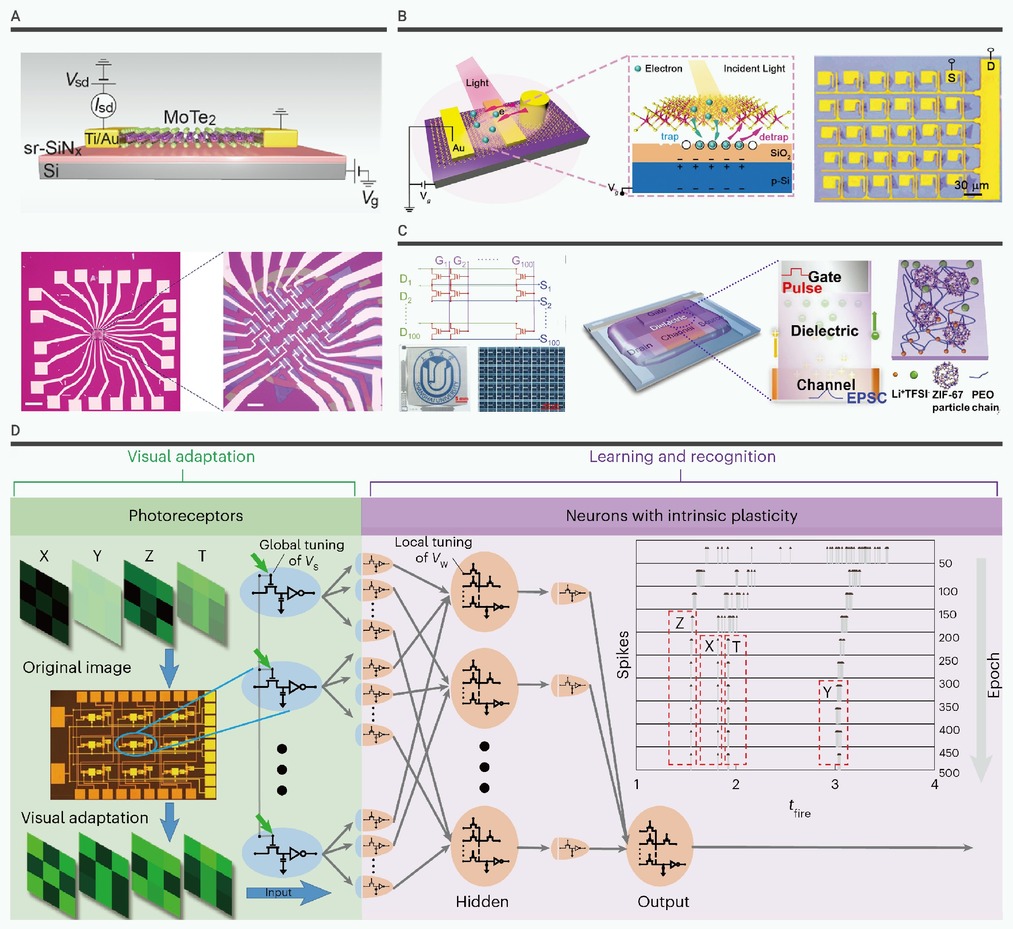
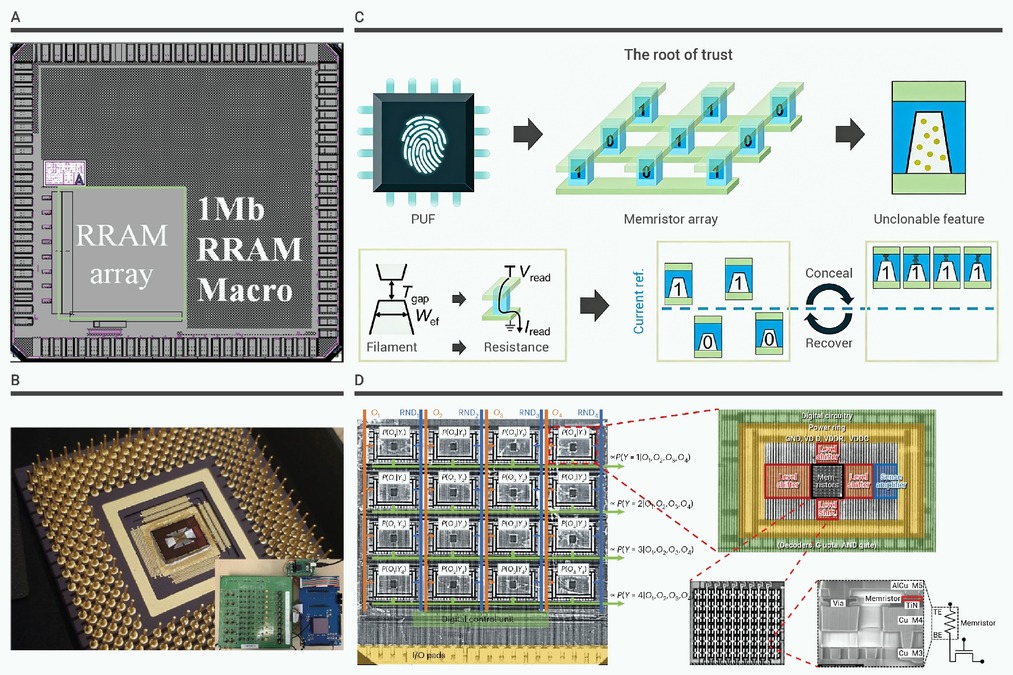
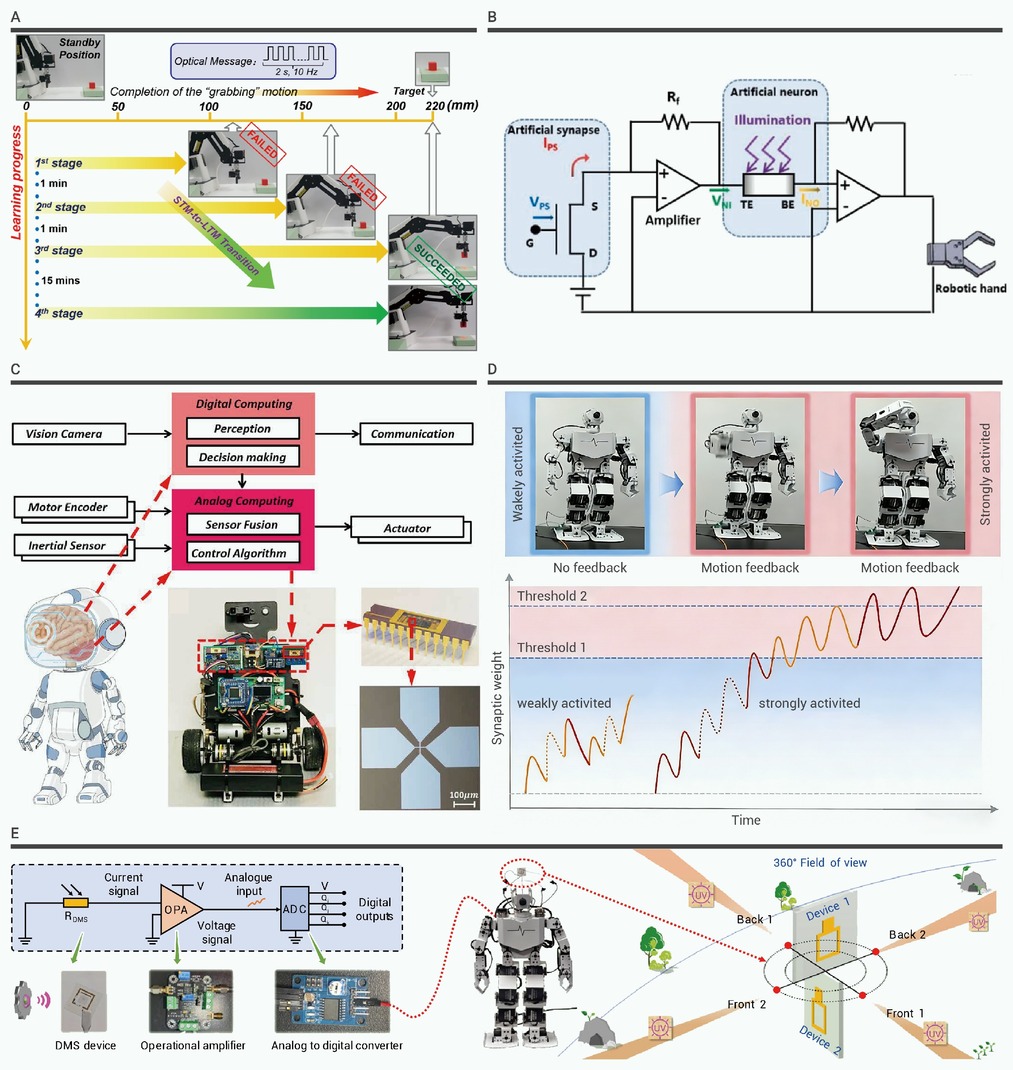
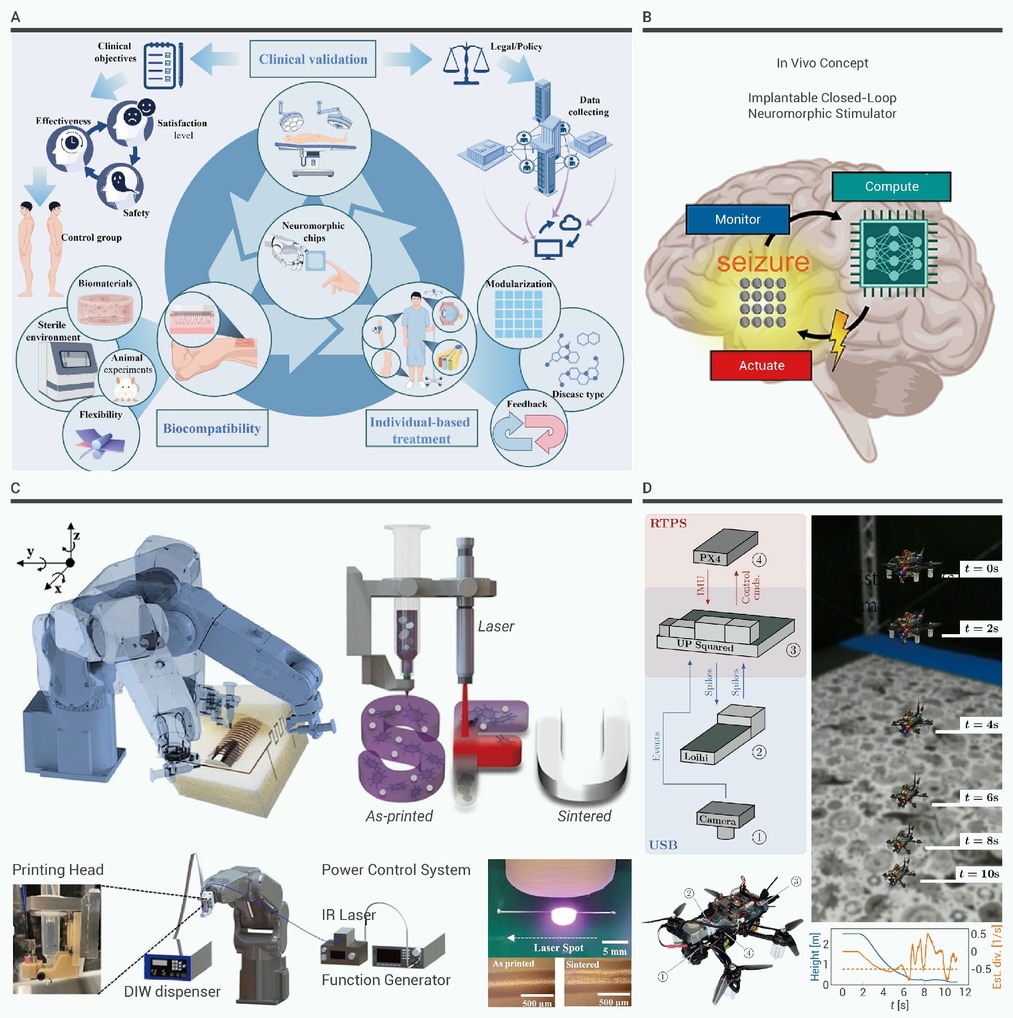
-
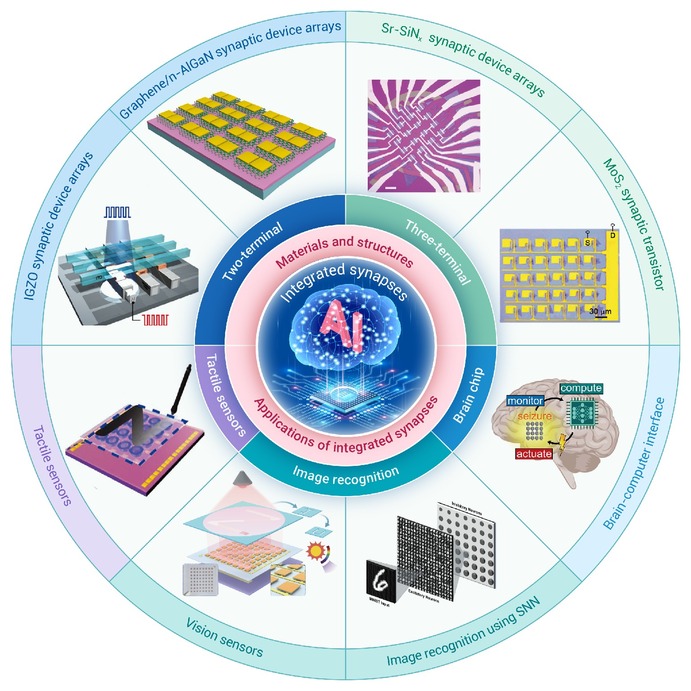
Figure 1.
The schematic diagram of materials, structures and applications of neuromorphic chips discussed in this review
-
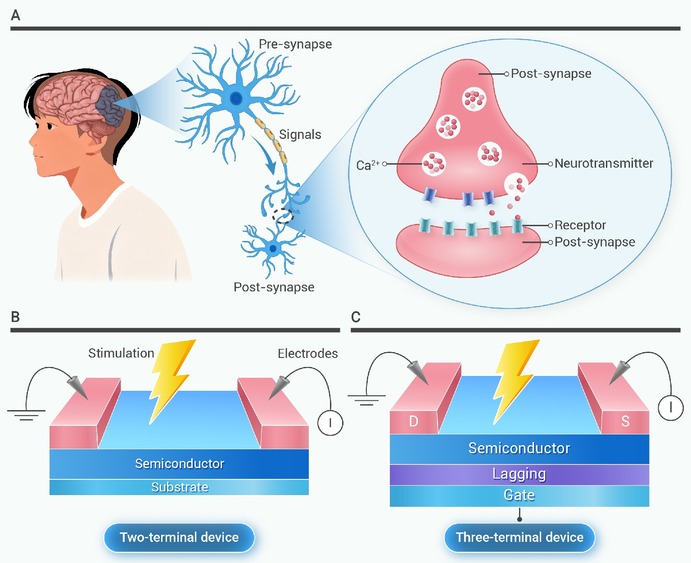
Figure 2.
Schematic illustration of biological synapses and artificial synaptic devices
-
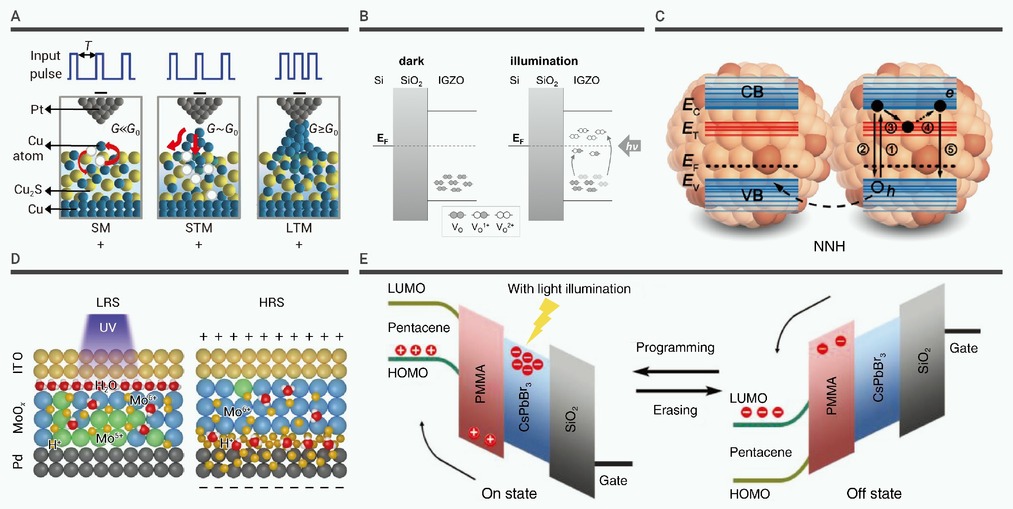
Figure 3.
Energy band diagrams illustrating the mechanisms of various types of synaptic device
-
Figure 4.
Schematic of the device architecture and working mechanism of a three-terminal artificial synaptic transistor
-
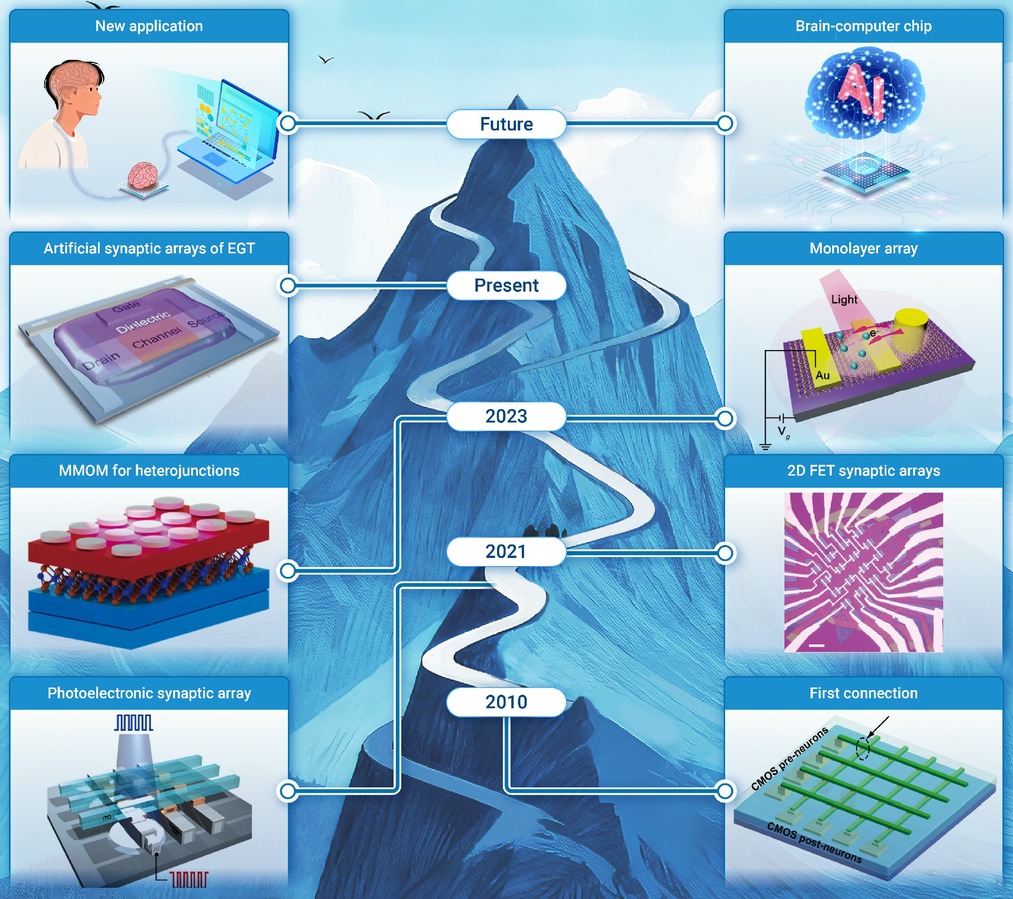
Figure 5.
A roadmap outlining the development of integrated synaptic-based chips and identifying the trends for future work
-
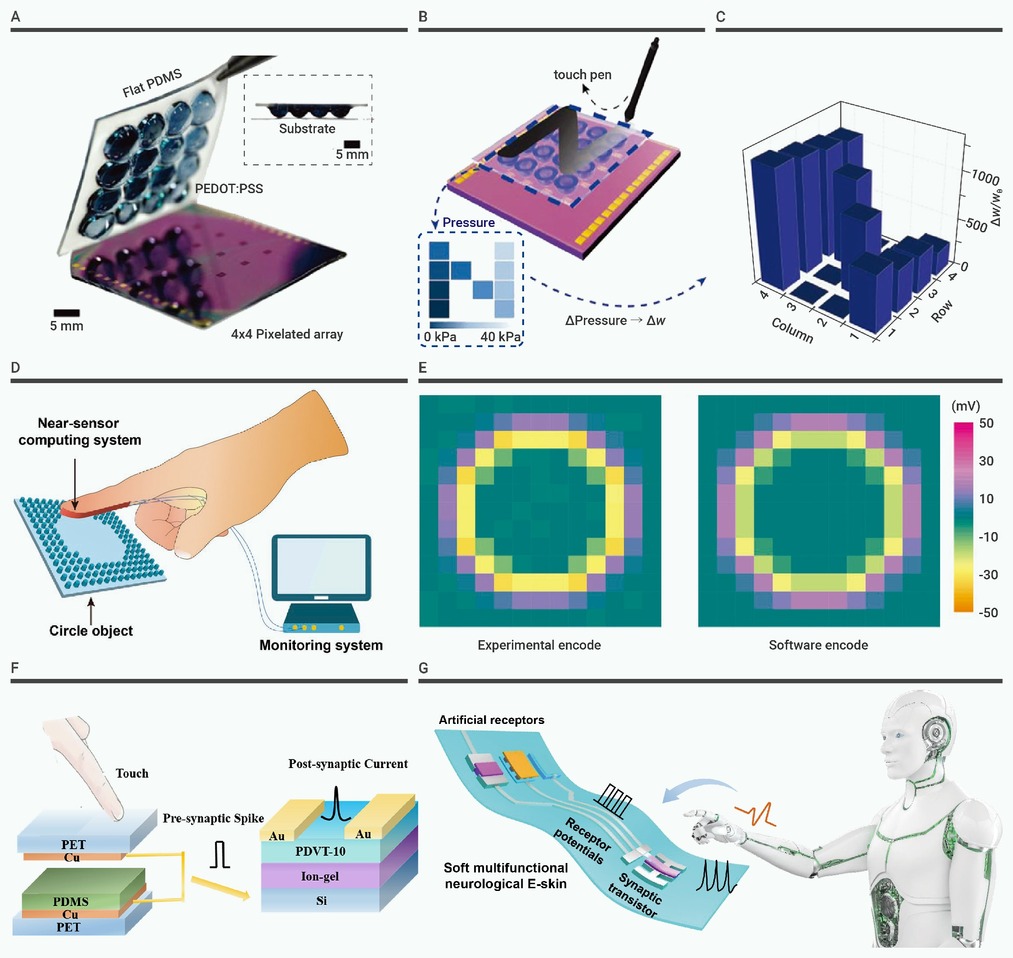
Figure 6.
Examples of tactile sensors and electronic skin
-
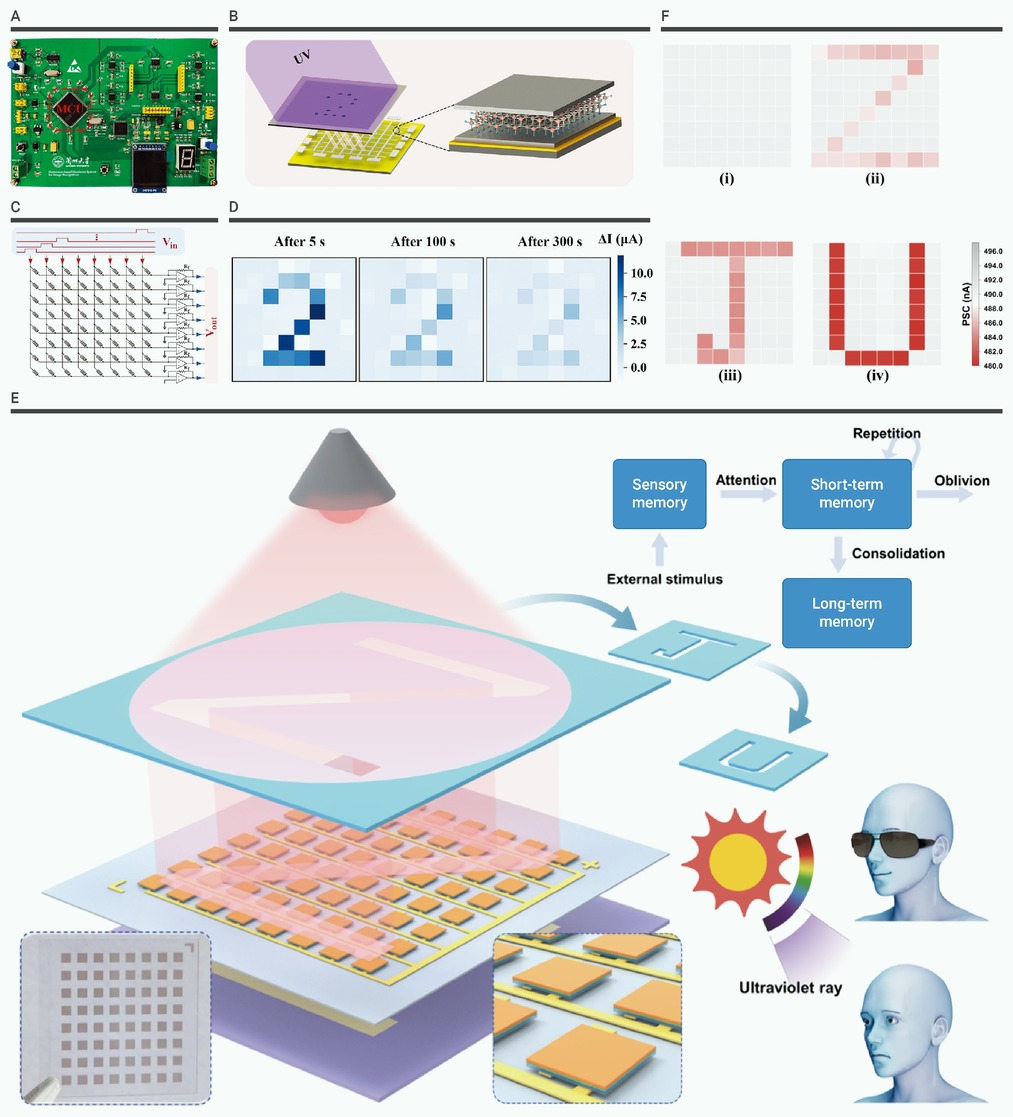
Figure 7.
A hardware-level image recognition system based on a ZnO photo-synapse array
-
Figure 8.
Examples of brain-inspired computing
-
Figure 9.
Examples of intelligent robots
-
Figure 10.
Examples of potential applications
