
Could microbes inhabiting extreme desert environments be a gateway to life on the Martian surface?
-
GRAPHICAL ABSTRACT
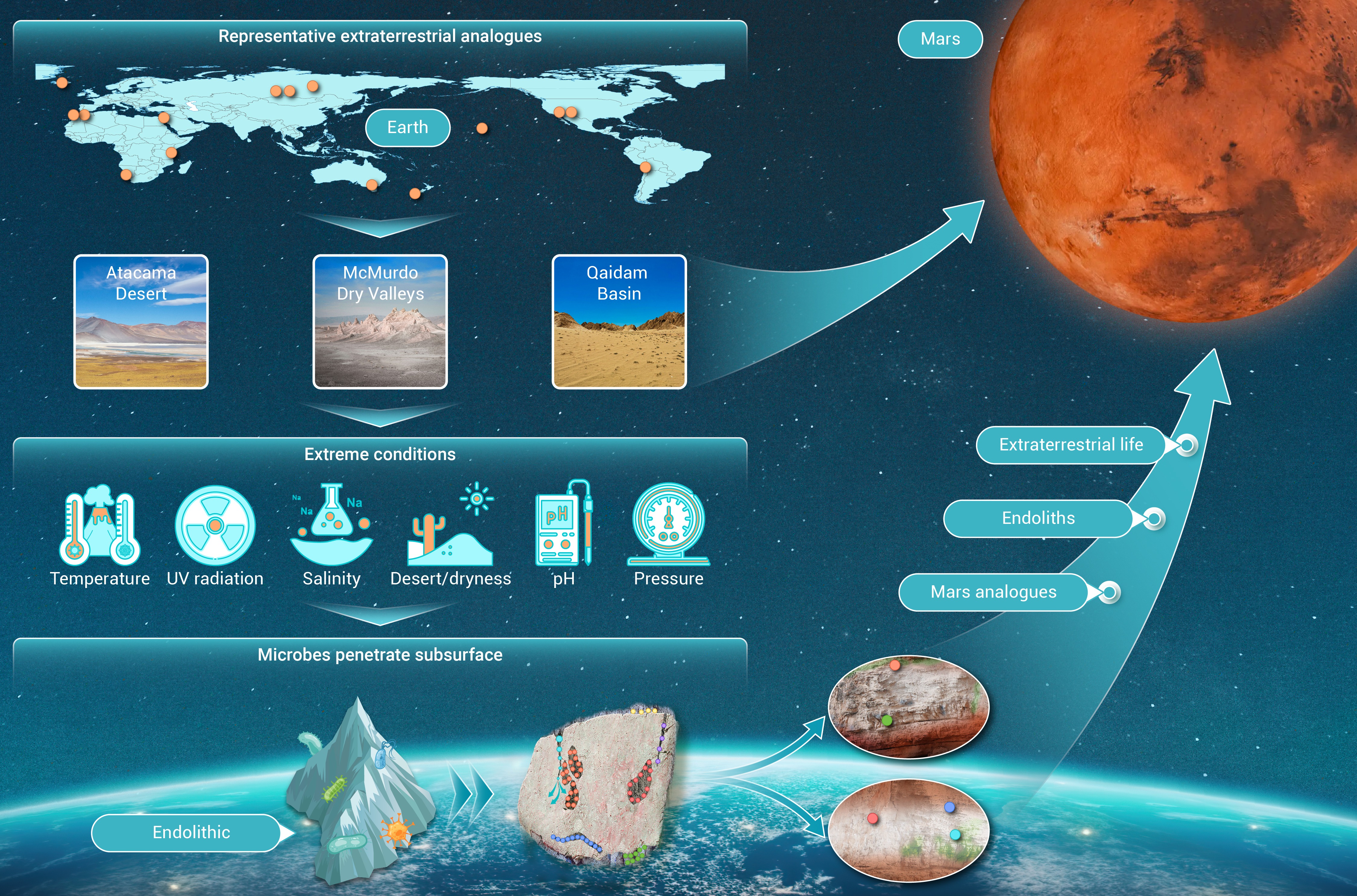
 DownLoad:
Full size image
DownLoad:
Full size image
-
PUBLIC SUMMARY
-
Extreme terrestrial environments can be colonized by microbes (archaea, bacteria, fungi).
Microbes thriving in extreme habitats likely support the existence of life in extraterrestrial environments.
Unraveling extreme environments like cave-like features and rock pores are vital for life search on Mars.
-
-
ABSTRACT
Existence of life outside the Earth is a mystery that human beings have been searching for centuries. In the past few decades, discovering microbes in extremely terrestrial habitats has opened a gateway to the possible existence of life on Mars. This review presented evidence of microbial life in extremely dry environments such as the Atacama Desert and McMurdo Dry Valleys, which serve as possible analogues for Martian conditions. The survival strategies of microbes, including their ability to penetrate rock pores and cave-like features in these extreme environments, highlighted the potential parallels in life strategies on Mars. It offered insights into how extraterrestrial life might have originated, evolved, and migrated between planets. Moreover, the review discussed the challenges associated with finding extraterrestrial life and proposed strategies to overcome these obstacles. Deep multidisciplinary investigations, approached with great caution, are imperative for detecting signs of life on the Red Planet and ensuring the survival of the human community. -

-
REFERENCES
[1] Dragone, N.B., Diaz, M.A., Hogg, I.D., et al. (2021). Exploring the boundaries of microbial habitability in soil. J Geophys Rese: Biogeosciences 126: 1−16. DOI: 10.1029/2020jg006052. [2] Matthews, A., Lima-Zaloumis, J., Debes Ii, R.V., et al. (2023). Heterotrophic growth dominates in the most extremotolerant extremophile Cultures. Astrobiology 23: 446−459. DOI: 10.1089/ast.2022.0100. [3] Thweatt, J.L., Harman, C.E., Araújo, M.N., et al. (2024). Chapter 6: The breadth and limits of life on Earth. Astrobiology 24: 124−142. DOI: 10.1089/ast.2021.0131. [4] Schmid, A.K., Allers, T., and DiRuggiero, J. (2020). SnapShot: Microbial extremophiles. Cell 180: 818−818.e1. DOI: 10.1016/j.cell.2020.01.018. [5] Merino, N., Aronson, H.S., Bojanova, D.P., et al. (2019). Living at the extremes: extremophiles and the limits of life in a planetary Context. Front. Microbiol. 10: 1−25. DOI: 10.3389/fmicb.2019.00780. [6] Keaney, D., Lucey, B., and Finn, K. (2024). A Review of environmental challenges facing Martian colonization and the potential for terrestrial microbes to transform a toxic extraterrestrial environment. Challenges 15: 1−21. DOI: 10.3390/challe15010005. [7] Xu, X. (2024). Frequent occurrence of extreme weather and out-of-balance climate systems. The Innovation Geoscience 2 : 100049. DOI: 10.59717/j.xinn-geo.2024.100049. [8] Azua-Bustos, A., Fairén, A.G., González-Silva, C., et al. (2023). Dark microbiome and extremely low organics in Atacama fossil delta unveil Mars life detection limits. Nat. Commun. 14: 1−14. DOI: 10.1038/s41467-023-36172-1. [9] Thombre, R.S., Vaishampayan, P.A., and Gomez, F. (2020). Applications of extremophiles in astrobiology. Salwan, R. and Sharma, V. (eds). Physiological and biotechnological aspects of extremophiles (Academic Press), pp. 89-104. DOI:10.1016/b978-0-12-818322-9.00007-1. [10] Martins, Z., Cottin, H., Kotler, J.M., et al. (2017). Earth as a tool for astrobiology—A European perspective. Space Sci. Rev. 209: 43−81. DOI: 10.1007/s11214-017-0369-1. [11] Preston, L.J. and Dartnell, L.R. (2014). Planetary habitability: Lessons learned from terrestrial analogues. Int. J. Astrobiol. 13: 81−98. DOI: 10.1017/s1473550413000396. [12] Martin-Andres, I., Sobrado, J., Cavalcante, E., et al. (2024). Survival of an Antarctic cyanobacterial mat under Martian conditions. Front. Microbiol. 15 . 1-14. DOI: 10.3389/fmicb.2024.1350457. [13] Koschnitzki, D., Moeller, R., Leuko, S., et al. (2020). Questioning the radiation limits of life: Ignicoccus hospitalis between replication and VBNC. Arch. Microbiol. 203: 1299−1308. DOI: 10.1007/s00203-020-02125-1. [14] Rull, F., Veneranda, M., Manrique-Martinez, J.A., et al. (2022). Spectroscopic study of terrestrial analogues to support rover missions to Mars – A Raman-centred review. Anal. Chim. Acta. 1209 . 339003. DOI: 10.1016/j.aca.2021.339003. [15] Schreder-Gomes, S.I., Benison, K.C., and Bernau, J.A. (2022). 830-million-year-old microorganisms in primary fluid inclusions in halite. Geology 50: 918−922. DOI: 10.1130/g49957.1. [16] Bourke, M.C. (2010). Barchan dune asymmetry: Observations from Mars and Earth. Icarus 205: 183−197. DOI: 10.1016/j.icarus.2009.08.023. [17] Liu, L., Liu, H., Zhang, W., et al. (2022). Microbial diversity and adaptive strategies in the Mars‐like Qaidam Basin, North Tibetan Plateau, China. Environ. Microbiol. Rep. 14: 873−885. DOI: 10.1111/1758-2229.13111. [18] Lynch, R.C., Darcy, J.L., Kane, N.C., et al. (2014). Metagenomic evidence for metabolism of trace atmospheric gases by high-elevation desert Actinobacteria. Front. Microbiol. 5: 1−13. DOI: 10.3389/fmicb.2014.00698. [19] Ortiz, M., Leung, P.M., Shelley, G., et al. (2021). Multiple energy sources and metabolic strategies sustain microbial diversity in Antarctic desert soils. Proc. Natl. Acad. Sci. USA 118: 1−10. DOI: 10.1073/pnas.2025322118. [20] Shen, J., Zerkle, A.L., Stueeken, E., and Claire, M.W. (2019). Nitrates as a potential N supply for microbial ecosystems in a hyperarid Mars analog system. Life 9: 1−20. DOI: 10.3390/life9040079. [21] Xiao, L., Wang, J., Dang, Y., et al. (2017). A new terrestrial analogue site for Mars research: The Qaidam Basin, Tibetan Plateau (NW China). Earth Sci. Rev. 164: 84−101. DOI: 10.1016/j.earscirev.2016.11.003. [22] Sajjad, W., Ilahi, N., Kang, S., et al. (2022). Endolithic microbes of rocks, their community, function and survival strategies. Int. Biodeter. Biodegr. 169: 105387. DOI: 10.1016/j.ibiod.2022.105387. [23] Macey, M.C., Ramkissoon, N.K., Cogliati, S., et al. (2023). Habitability and biosignature formation in simulated Martian aqueous environments. Astrobiology 23: 144−154. DOI: 10.1089/ast.2021.0197. [24] Shen, J., Smith, A.C., Claire, M.W., et al. (2020). Unraveling biogeochemical phosphorus dynamics in hyperarid Mars‐analogue soils using stable oxygen isotopes in phosphate. Geobiology 18: 760−779. DOI: 10.1111/gbi.12408. [25] Bryanskaya, A.V., Berezhnoy, A.A., Rozanov, A.S., et al. (2019). Survival of halophiles of Altai lakes under extreme environmental conditions: Implications for the search for Martian life. Int. J. Astrobiol. 19: 1−15. DOI: 10.1017/s1473550419000077. [26] Fairén, A.G., Davila, A.F., Lim, D., et al. (2010). Astrobiology through the ages of Mars: The study of terrestrial analogues to understand the habitability of Mars. Astrobiology 10: 821−843. DOI: 10.1089/ast.2009.0440. [27] Nicholson, W.L. (2009). Ancient micronauts: Interplanetary transport of microbes by cosmic impacts. Trends Microbiol. 17: 243−250. DOI: 10.1016/j.tim.2009.03.004. [28] O'Connor, B.R.W., Fernández-Martínez, M.Á., Léveillé, R.J., et al. (2021). Taxonomic characterization and microbial activity determination of cold-adapted microbial communities in lava tube ice caves from Lava Beds National Monument, a high-fidelity Mars analogue environment. Astrobiology 21: 613−627. DOI: 10.1089/ast.2020.2327. [29] Röling, W.F.M., Aerts, J.W., Patty, C.H.L., et al. (2015). The significance of microbe-mineral-biomarker interactions in the detection of life on Mars and beyond. Astrobiology 15: 492−507. DOI: 10.1089/ast.2014.1276. [30] Styczinski, M.J., Cooper, Z.S., Glaser, D.M., et al. (2024). Chapter 7: Assessing habitability beyond earth. Astrobiology 24: S143−S163. DOI: 10.1089/ast.2021.0097. [31] Owen, T., Biemann, K., Rushneck, D.R., et al. (1977). The composition of the atmosphere at the surface of Mars. J. Geophys. Res. 82: 4635−4639. DOI: 10.1029/JS082i028p04635. [32] Mahaffy, P.R., Webster, C.R., Atreya, S.K., et al. (2013). Abundance and isotopic composition of gases in the Martian atmosphere from the Curiosity rover. Science 341 : 263−266. DOI: 10.1126/science.1237966. [33] McElhoney, K.M., O’Neil, G.D., and Kounaves, S.P. (2014). Extraterrestrial. Moretto, L.M. and Kalcher, K. (eds). Environmental analysis by electrochemical sensors and biosensors (Springer New York, NY), pp: 131-151. DOI: 10.1007/978-1-4939-0676-5_6. [34] Chevrier, V., Poulet, F., and Bibring, J.-P. (2007). Early geochemical environment of Mars as determined from thermodynamics of phyllosilicates. Nature 448: 60−63. DOI: 10.1038/nature05961. [35] ÇOlak, B. and DoĞRuÖZ GÜNgÖR, N. (2022). The astrobiological significance of caves on earth and on Mars. Int. J. Envir. Geoinform. 9: 57−64. DOI: 10.30897/ijegeo.1037382. [36] Horneck, G. (1999). European activities in exobiology in Earth orbit: Results and perspectives. Adv. Space Res. 23: 381−386. DOI: 10.1016/S0273-1177(99)00061-7. [37] Weingarten, E.A., Zee, P.C., and Jackson, C.R. (2022). Microbial communities in saltpan sediments show tolerance to Mars analog conditions, but susceptibility to ccchloride and perchlorate toxicity. Astrobiology 22: 838−850. DOI: 10.1089/ast.2021.0132. [38] Wadsworth, J. and Cockell, C.S. (2017). Perchlorates on Mars enhance the bacteriocidal effects of UV light. Sci. Rep. 7: 1−8. DOI: 10.1038/s41598-017-04910-3. [39] Coleine, C., Stajich, J.E., and Selbmann, L. (2022). Fungi are key players in extreme ecosystems. Trends Ecol. Evol. 37: 517−528. DOI: 10.1016/j.tree.2022.02.002. [40] Azua-Bustos, A., Fairén, A.G., González-Silva, C., et al. (2018). Unprecedented rains decimate surface microbial communities in the hyperarid core of the Atacama Desert. Sci. Rep. 8: 1−8. DOI: 10.1038/s41598-018-35051-w. [41] Salvatore, M.R. and Levy, J.S. (2021). The McMurdo Dry Valleys of Antarctica: A geological, environmental, and ecological analog to the Martian surface and near surface. Soare, R.J., Conway, S.J., Williams, J.-W., et al. (ed) Mars geological enigmas (Elsevier), pp: 291-332. DOI: 10.1016/b978-0-12-820245-6.00011-2. [42] Warren-Rhodes, K.A., Lee, K.C., Archer, S.D.J., et al. (2019). Subsurface microbial habitats in an extreme desert Mars-analog environment. Front. Microbiol. 10: 1−11. DOI: 10.3389/fmicb.2019.00069. [43] Cockell, C.S. (2021). The biological study of lifeless worlds and environments. Astrobiology 21: 490−504. DOI: 10.1089/ast.2020.2337. [44] Zhou, J., Ding, C., Xiong, S., et al. (2024). Radar observations of liquid water in the south polar region of Mars: Indications from astrobiology perspectives. Universe 10: 1−21. DOI: 10.3390/universe10010043. [45] Phillips, M.S., Moersch, J.E., Cabrol, N.A., et al. (2023). Planetary mapping using deep learning: A method to evaluate feature identification confidence applied to habitats in Mars-analog terrain. Astrobiology 23: 76−93. DOI: 10.1089/ast.2022.0014. [46] Carre, L., Zaccai, G., Delfosse, X., et al. (2022). Relevance of earth-bound extremophiles in the search for extraterrestrial life. Astrobiology 22: 322−367. DOI: 10.1089/ast.2021.0033. [47] Horne, W.H., Volpe, R.P., Korza, G., et al. (2022). Effects of desiccation and freezing on microbial ionizing radiation survivability: Considerations for Mars sample return. Astrobiology 22: 1337−1350. DOI: 10.1089/ast.2022.0065. [48] Zheng, Y.-C. (2020). Mars exploration in 2020. The Innovation 1 : 100036. DOI: 10.1016/j.xinn.2020.100036. [49] Hartley, A.J., Chong, G., Houston, J., et al. (2005). 150 million years of climatic stability: Evidence from the Atacama Desert, northern Chile. J. Geol. Soc. 162: 421−424. DOI: 10.1144/0016-764904-071. [50] Sun, T., Bao, H., Reich, M., et al. (2018). More than ten million years of hyper-aridity recorded in the Atacama Gravels. Geochim. Cosmochim. Acta. 227: 123−132. DOI: 10.1016/j.gca.2018.02.021. [51] Cordero, R.R., Damiani, A., Jorquera, J., et al. (2018). Ultraviolet radiation in the Atacama Desert. Antonie van Leeuwenhoek 111: 1301−1313. DOI: 10.1007/s10482-018-1075-z. [52] Navarro-Gonzalez, R., Rainey, F.A., Molina, P., et al. (2003). Mars-like soils in the Atacama Desert, Chile, and the dry limit of microbial life. Science 302: 1018−1021. DOI: 10.1126/science.1089143. [53] Ewing, S.A., Yang, W., DePaolo, D.J., et al. (2008). Non-biological fractionation of stable Ca isotopes in soils of the Atacama Desert, Chile. Geochim. Cosmochim. Acta. 72: 1096−1110. DOI: 10.1016/j.gca.2007.10.029. [54] Connon, S.A., Lester, E.D., Shafaat, H.S., et al. (2007). Bacterial diversity in hyperarid Atacama Desert soils. JGR Biogeosciences 112: 1−9. DOI: 10.1029/2006jg000311. [55] Doran, P.T., Priscu, J.C., Lyons, W.B., et al. (2002). Antarctic climate cooling and terrestrial ecosystem response. Nature 415: 517−522. DOI: 10.1038/nature710. [56] Cassaro, A., Pacelli, C., Aureli, L., et al. (2021). Antarctica as a reservoir of planetary analogue environments. Extremophiles 25: 437−458. DOI: 10.1007/s00792-021-01245-w. [57] Cassaro, A., Pacelli, C., and Onofri, S. (2022). Survival, metabolic activity, and ultrastructural damages of Antarctic black fungus in perchlorates media. Front. Microbiol. 13: 1−13. DOI: 10.3389/fmicb.2022.992077. [58] Kounaves, S.P., Hecht, M.H., Kapit, J., et al. (2010). Wet chemistry experiments on the 2007 Phoenix Mars Scout Lander mission: Data analysis and results. JGR Planets 115: 1−16. DOI: 10.1029/2009je003424. [59] Mildrexler, D.J., Zhao, M., and Running, S.W. (2011). Satellite finds highest land skin temperatures on Earth. Bull. Am. Meteorol. Soc. 92: 855−860. DOI: 10.1175/2011BAMS3067.1. [60] Barnard, R.L., Osborne, C.A., and Firestone, M.K. (2013). Responses of soil bacterial and fungal communities to extreme desiccation and rewetting. ISME J. 7: 2229−2241. DOI: 10.1038/ismej.2013.104. [61] Fendrihan, S., Legat, A., Pfaffenhuemer, M., et al. (2006). Extremely halophilic archaea and the issue of long-term microbial survival. Rev. Environ. Sci. Bio. 5: 203−218. DOI: 10.1007/s11157-006-0007-y. [62] Wu, J.-H., McGenity, T.J., Rettberg, P., et al. (2022). The archaeal class Halobacteria and astrobiology: Knowledge gaps and research opportunities. Front. Microbiol. 13: 1−13. DOI: 10.3389/fmicb.2022.1023625. [63] Kashefi, K. and Lovley, D.R. (2003). Extending the upper temperature limit for life. Science 301: 934−934. DOI: 10.1126/science.1086823. [64] Clarke, A., Morris, G.J., Fonseca, F., et al. (2013). A low temperature limit for life on Earth. PLoS ONE 8: e66207. DOI: 10.1371/journal.pone.0066207. [65] Rivkina, E.M., Friedmann, E.I., McKay, C.P., et al. (2000). Metabolic activity of permafrost bacteria below the freezing point. Appl. Environ. Microbiol. 66: 3230−3233. DOI: 10.1128/AEM.66.8.3230-3233.2000. [66] Takai, K., Nakamura, K., Toki, T., et al. (2008). Cell proliferation at 122°C and isotopically heavy CH4 production by a hyperthermophilic methanogen under high-pressure cultivation. Proc. Natl. Acad. Sci. USA 105: 10949−10954. DOI: 10.1073/pnas.071233410. [67] Maus, D., Heinz, J., Schirmack, J., et al. (2020). Methanogenic archaea can produce methane in deliquescence-driven Mars analog environments. Sci. Rep. 10: 1−5. DOI: 10.1038/s41598-019-56267-4. [68] Morozova, D., Moeller, R., Rettberg, P., et al. (2015). Enhanced radiation resistance of Methanosarcina soligelidi SMA-21, a new methanogenic archaeon isolated from a Siberian permafrost-affected soil in direct comparison to Methanosarcina barkeri. Astrobiology 15: 951−960. DOI: 10.1089/ast.2015.1319. [69] Changela, H.G., Chatzitheodoridis, E., Antunes, A., et al. (2021). Mars: New insights and unresolved questions. Int. J. Astrobiol. 20: 394−426. DOI: 10.1017/s1473550421000276. [70] Casero, M.C., Ascaso, C., Quesada, A., et al. (2021). Response of endolithic Chroococcidiopsis strains from the polyextreme Atacama Desert to light radiation. Front. Microbiol. 11: 1−13. DOI: 10.3389/fmicb.2020.614875. [71] Mancinelli, R.L. and Klovstad, M. (2000). Martian soil and UV radiation: microbial viability assessment on spacecraft surfaces. Planet Space Sci. 48: 1093−1097. DOI: 10.1016/S0032-0633(00)00083-0. [72] Zaccaria, T., de Jonge, M.I., Domínguez-Andrés, J., et al. (2024). Survival of environment-derived opportunistic bacterial pathogens to Martian conditions: Is there a concern for human missions to Mars. Astrobiology 24: 100−113. DOI: 10.1089/ast.2023.0057. [73] Battista, J.R. (1997). Aainst all odds: The survival strategies of Deinococcus radiodurans. Annu. Rev. Microbiol. 51: 203−224Battista, J.R. (1997). Aainst all odds: The survival strategies of Deinococcus radiodurans. Annu. Rev. Microbiol. 51: 203−224. DOI: 0.1146/annurev.micro.51.1.203. DOI: 10.1146/annurev.micro.51.1.203. [74] Ferreira, A.C., Nobre, M.F., Moore, E., et al. (1999). Characterization and radiation resistance of new isolates of Rubrobacter radiotolerans and Rubrobacter xylanophilus. Extremophiles 3: 235−238. DOI: 10.1007/s007920050121. [75] Liu, Y., Chen, T., Li, J., et al. (2022). High proportions of radiation-resistant strains in culturable bacteria from the Taklimakan Desert. Biology 11: 1−18. DOI: 10.3390/biology11040501. [76] Tesei, D., Sterflinger, K., and Marzban, G. (2019). Global proteomics of extremophilic fungi: Mission accomplished? Tiquia-Arashiro, S. and Grube, M. (eds). Fungi in extreme environments: Ecological role and biotechnological significance (Springer, Cham), pp: 205–249. DOI: 10.1007/978-3-030-19030-9_12. [77] DasSarma, S., DasSarma, P., Laye, V.J., et al. (2019). Extremophilic models for astrobiology: Haloarchaeal survival strategies and pigments for remote sensing. Extremophiles 24: 31−41. DOI: 10.1007/s00792-019-01126-3. [78] Deutsch, A.N., Levy, J.S., Dickson, J.L., et al. (2022). Daily and seasonal processes shape hydrological activity and detectability of moisture in Antarctic, Mars-analog soils. Icarus 380: 114990. DOI: 10.1016/j.icarus.2022.114990. [79] Schörghofer, N., Benna, M., Berezhnoy, A.A., et al. (2021). Water group exospheres and surface interactions on the Moon, Mercury, and Ceres. Space Sci. Rev. 217: 1−35. DOI: 10.1007/s11214-021-00846-3. [80] Lauro, S.E., Pettinelli, E., Caprarelli, G., et al. (2020). Multiple subglacial water bodies below the south pole of Mars unveiled by new MARSIS data. Nat. Astron. 5: 63−70. DOI: 10.1038/s41550-020-1200-6. [81] Martín-Torres, F.J., Zorzano, M.-P., Valentín-Serrano, P., et al. (2015). Transient liquid water and water activity at Gale crater on Mars. Nat. Geosci. 8: 357−361. DOI: 10.1038/ngeo2412. [82] Perez-Fernandez, C.A., Wilburn, P., Davila, A.,et al. (2022). Adaptations of endolithic communities to abrupt environmental changes in a hyper-arid desert. Sci. Rep. 12: 1−12. DOI: 10.1038/s41598-022-23437-w. [83] Hecht, M.H., Kounaves, S.P., Quinn, R.C., et al. (2009). Detection of perchlorate and the soluble chemistry of Martian soil at the Phoenix Lander Site. Science 325: 64−67. DOI: 10.1126/science.1172466. [84] Rzymski, P., Poniedziałek, B., Hippmann, N., et al. (2022). Screening the survival of cyanobacteria under perchlorate stress. Potential implications for Mars InSitu resource utilization. Astrobiology 22: 672−684. DOI: 10.1089/ast.2021.0100. [85] Laye, V.J. and DasSarma, S. (2018). An Antarctic extreme halophile and its polyextremophilic enzyme: Effects of perchlorate salts. Astrobiology 18: 412−418. DOI: 10.1089/ast.2017.1766. [86] Heinz, J., Schirmack, J., Airo, A., et al. (2018). Enhanced microbial survivability in subzero brines. Astrobiology 18: 1171−1180. DOI: 10.1089/ast.2017.1805. [87] Heinz, J., Waajen, A.C., Airo, A., et al. (2019). Bacterial growth in chloride and perchlorate brines: Halotolerances and salt stress responses of Planococcus halocryophilus. Astrobiology 19: 1377−1387. DOI: 10.1089/ast.2019.2069. [88] Al Soudi, A.F., Farhat, O., Chen, F., et al. (2016). Bacterial growth tolerance to concentrations of chlorate and perchlorate salts relevant to Mars. Int. J. Astrobiol. 16: 229−235. DOI: 10.1017/s1473550416000434. [89] Billi, D., Verseux, C., Fagliarone, C., et al. (2019). A desert cyanobacterium under simulated Mars-like conditions in low Earth Orbit: Implications for the habitability of Mars. Astrobiology 19: 158−169. DOI: 10.1089/ast.2017.1807. [90] Oren, A., Elevi Bardavid, R., and Mana, L. (2013). Perchlorate and halophilic prokaryotes: implications for possible halophilic life on Mars. Extremophiles 18: 75−80. DOI: 10.1007/s00792-013-0594-9. [91] Heinz, J., Krahn, T., and Schulze-Makuch, D. (2020). A new record for microbial perchlorate tolerance: Fungal growth in NaClO4 brines and its implications for putative life on Mars. Life 10: 1−8. DOI: 10.3390/life10050053. [92] Segerer, A., Neuner, A., Kristjansson, J.K. et al. (1986). Acidianus infernus gen.nov., sp. nov., and Acidianus brierleyi Comb. nov.: Facultatively aerobic, extremely acidophilic thermophilic sulfur-metabolizing archaebacteria. Int. J. Syst. Bacteriol. 36: 559−564. DOI: 10.1099/00207713-36-4-559. [93] Korzhenkov, A.A., Toshchakov, S.V., Bargiela, R., et al. (2019). Archaea dominate the microbial community in an ecosystem with low-to-moderate temperature and extreme acidity. Microbiome 7: 1−14. DOI: 10.1186/s40168-019-0623-8. [94] Meklat, A., Bouras, N., Zitouni, A., et al. (2013). Actinopolyspora mzabensis sp. nov., a halophilic actinomycete isolated from an Algerian Saharan soil. Int. J. Syst. Evol. Microbiol. 63: 3787−3792. DOI: 10.1099/ijs.0.046649-0. [95] Pikuta, E., Lysenko, A., Chuvilskaya, N., et al. (2000). Anoxybacillus pushchinensis gen. nov., sp. nov., a novel anaerobic, alkaliphilic, moderately thermophilic bacterium from manure, and description of Anoxybacillus flavithermus comb. nov. Int. J. Syst. Evol. Microbiol. 50: 2109−2117. DOI: 10.1099/00207713-50-6-2109. [96] Goh, K.M., Kahar, U.M., Chai, Y.Y., et al. (2013). Recent discoveries and applications of Anoxybacillus. Appl. Microbiol. Biotechnol. 97: 1475−1488. DOI: 10.1007/s00253-012-4663-2. [97] Stevenson, A., Hamill, P.G., O'Kane, C.J., et al. (2017). Aspergillus penicillioides differentiation and cell division at 0.585 water activity. Env. Microbiol. 19 : 687-697. DOI: 10.1111/1462-2920.13597. [98] Stevenson, A., Cray, J.A., Williams, J.P., et al. (2015). Is there a common water-activity limit for the three domains of life. ISME 9: 1333−1351. DOI: 10.1038/ismej.2014.219. [99] Jiang, H., Chen, T.-J., Chi, Z., et al. (2019). Macromolecular pullulan produced by Aureobasidium melanogenum 13-2 isolated from the Taklimakan desert and its crucial roles in resistance to the stress treatments. Int. J. Biol. Macromo. 135: 429−436. DOI: 10.1016/j.ijbiomac.2019.05.190. [100] Zheng, Y., Xue, C., Chen, H., et al. (2020). Low-temperature adaptation of the snow alga Chlamydomonas nivalis is associated with the photosynthetic system regulatory process. Front. Microbiol. 11: 1−15. DOI: 10.3389/fmicb.2020.01233. [101] Peng, Z., Liu, G., and Huang, K. (2021). Cold adaptation mechanisms of a snow alga Chlamydomonas nivalis during temperature fluctuations. Front. Microbiol. 11: 1−18. DOI: 10.3389/fmicb.2020.611080. [102] Remias, D., Pichrtová, M., Pangratz, M., et al. (2016). Ecophysiology, secondary pigments and ultrastructure of Chlainomonas sp. (Chlorophyta) from the European Alps compared with Chlamydomonas nivalis forming red snow. FEMS Micro. Ecol. 92: 1−11. DOI: 10.1093/femsec/fiw030. [103] Onofri, S., Selbmann, L., Zucconi, L., et al. (2004). Antarctic microfungi as models for exobiology. Planet Space Sci. 52: 229−237. DOI: 10.1016/j.pss.2003.08.019. [104] Domsch, K.H., Gams, W., and H, A.T. (1980). Compendium of soil fungi. (Academic Press), pp: 1–860 DOI: 10.1111/j.1365-2389.2008.01052_1.x. [105] Nogi, Y., Hosoya, S., Kato, C., et al. (2004). Colwellia piezophila sp. nov., a novel piezophilic species from deep-sea sediments of the Japan Trench. Int. J. Syst. Evol. Microbiol. 54: 1627−1631. DOI: 10.1099/ijs.0.03049-0. [106] Kusube, M., Kyaw, T.S., Tanikawa, K., et al. (2017). Colwellia marinimaniae sp. nov., a hyperpiezophilic species isolated from an amphipod within the Challenger Deep, Mariana Trench. Int. J. Syst. Evol. Microbiol. 67: 824−831. DOI: 10.1099/ijsem.0.001671. [107] Yayanos, A.A., Dietz, S.A., and Boxtel, R.V. (1981). Obligately barophilic bacterium from the Mariana trench. Proc. Natl. Acad. Sci. USA 78: 5212−5215. DOI: 10.1073/pnas.78.8.521. [108] Onofri, S., Pacelli, C., Selbmann, L., et al. (2020). The amazing journey of Cryomyces antarcticus from Antarctica to Space. Seckbach, J. and Stan-Lotter, H. (eds). Extremophiles as astrobiological models (CrossRef), pp: 237-254. DOI: 10.1002/9781119593096.ch11. [109] Rothschild, L.J. and Mancinelli, R.L. (2001). Life in extreme environments. Nature 409: 1092−1101. DOI: 10.1038/35059215. [110] Kis-Papo, T., Weig, A.R., Riley, R., et al. (2014). Genomic adaptations of the halophilic Dead Sea filamentous fungus Eurotium rubrum. Nat. Commun. 5: 1−8. DOI: 10.1038/ncomms4745. [111] Gock, M.A., Hocking, A.D., Pitt, J.I., et al. (2003). Influence of temperature, water activity and pH on growth of some xerophilic fungi. Int. J. Food Microbiol. 81: 11−19. DOI: 10.1016/s0168-1605(02)00166-6. [112] Rappaport, H.B. and Oliverio, A.M. (2023). Extreme environments offer an unprecedented opportunity to understand microbial eukaryotic ecology, evolution, and genome biology. Nat. Commun. 14: 1−12. DOI: 10.1038/s41467-023-40657-4. [113] Barbier, G.G., Hoover, R.B., Zimmermann, M., et al. (2005). Genomics of the thermo-acidophilic red alga Galdieria sulphuraria. SPIE Optics + Photonics . DOI: 10.1117/12.614532. [114] Gross, W., Küver, J., Tischendorf, G., et al. (1998). Cryptoendolithic growth of the red alga Galdieria sulphurariain volcanic areas. Eur. J. Phycol. 33: 25−31. DOI: 10.1080/09670269810001736503. [115] Kashefi, K., Holmes, D.E., Reysenbach, A.-L., et al. (2002). Use of Fe(III) as an electron acceptor to recover previously uncultured hyperthermophiles: Isolation and characterization of Geothermobacterium ferrireducens gen. nov., sp. nov. Appl. Environ. Microbiol. 68: 1735−1742. DOI: 10.1128/aem.68.4.1735-1742.2002. [116] Thombre, R.S., Shinde, V.D., Oke, R.S., et al. (2016). Biology and survival of extremely halophilic archaeon Haloarcula marismortui RR12 isolated from Mumbai salterns, India in response to salinity stress. Sci. Rep. 6: 1−10. DOI: 10.1038/srep25642. [117] Kottemann, M., Kish, A., Iloanusi, C., et al. (2005). Physiological responses of the halophilic archaeon Halobacterium sp. strain NRC1 to desiccation and gamma irradiation. Extremophiles 9 : 219-227. DOI: 10.1007/s00792-005-0437-4. [118] Aston, J.E. and Peyton, B.M. (2007). Response of Halomonas campisalisto saline stress: changes in growth kinetics, compatible solute production and membrane phospholipid fatty acid composition. FEMS Microbiol. Lett. 274: 196−203. DOI: 10.1111/j.1574-6968.2007.00851.x. [119] Hölker, U., Bend, J., Pracht, R., et al. (2004). Hortaea acidophila, a new acid-tolerant black yeast from lignite. Antonie van Leeuwenhoek 86: 287−294. DOI: 10.1007/s10482-005-0101-0. [120] Sinha, S., Flibotte, S., Neira, M., et al. (2017). Insight into the recent genome duplication of the halophilic yeast Hortaea werneckii: Combining an improved genome with gene expression and chromatin structure. G3 (Bethesda). 7 : 2015-2022. DOI: 10.1534/g3.117.040691. [121] Lu, J., Nogi, Y., and Takami, H. (2001). Oceanobacillus iheyensis gen. nov., sp. nov., a deep-sea extremely halotolerant and alkaliphilic species isolated from a depth of 1050 m on the Iheya Ridge. FEMS Microbiol. Lett. 205 : 291-297. DOI: 10.1111/j.1574-6968.2001.tb10963.x. [122] Schleper, C., Puhler, g., Klenk, H.-P., et al. (1996). Picrophilus oshimae and Picrophilus tomdus fam. nov., gen. nov., sp. nov., two species of hyperacidophilic, thermophilic, heterotrophic, aerobic archaea. Int. J. Syst. Bacteriol. 46: 814−816. DOI: 10.1099/00207713-46-3-814. [123] Collins, M.A. and Buick, R.K. (1989). Effect of temperature on the spoilage of stored peas by Rhodotorula glutinis. Food Microbiol. 6 : 135-l 141. DOI: 10.1016/S0740-0020(89)80021-8. [124] Jolivet, E., L'Haridon, S., Corre, E., et al. (2003). Thermococcus gammatolerans sp. nov., a hyperthermophilic archaeon from a deep-sea hydrothermal vent that resists ionizing radiation. Int. J. Syst. Evol. Microbiol. 53: 847−851. DOI: 10.1099/ijs.0.02503-0. [125] Dalmasso, C., Oger, P., Courtine, D., et al. (2016). Complete genome sequence of the hyperthermophilic and piezophilic archeon Thermococcus piezophilus CDGST, able to grow under extreme hydrostatic pressures. Genome Announc. 4 : e00610-16. DOI: 10.1128/genomeA.00610-16. [126] Albuquerque, L., Simões, C., Nobre, M.F., et al. (2005). Truepera radiovictrixgen. nov., sp. nov., a new radiation resistant species and the proposal of Trueperaceaefam. nov. FEMS Microbiol. Lett. 247: 161−169. DOI: 10.1016/j.femsle.2005.05.002. [127] Biagioli, F., Coleine, C., Piano, E., et al. (2023). Microbial diversity and proxy species for human impact in Italian karst caves. Sci. Rep. 13: 1−13. DOI: 10.1038/s41598-022-26511-5. [128] Auler, A.S. and Stevanović, Z. (2021). Preface: Five decades of advances in karst hydrogeology. Hydrogeol J. 29: 1−6. DOI: 10.1007/s10040-020-02292-x. [129] Lollar, G.S., Warr, O., Telling, J., et al. (2019). ‘Follow the water’: Hydrogeochemical constraints on microbial investigations 2.4 km below surface at the Kidd Creek Deep Fluid and Deep Life Observatory. Geomicrobiol. J. 36 : 859-872. DOI: 10.1080/01490451.2019.1641770. [130] Tebo, B.M., Davis, R.E., Anitori, R.P., et al. (2015). Microbial communities in dark oligotrophic volcanic ice cave ecosystems of Mt. Erebus, Antarctica. Front. Microbiol. 6: 1−14. DOI: 10.3389/fmicb.2015.00179. [131] Wynne, J.J., Titus, T.N., Agha‐Mohammadi, A.a., et al. (2022). Fundamental science and engineering questions in planetary cave exploration. J. Geophys. Res.: Planets 127: 1−32. DOI: 10.1029/2022je007194. [132] Coleine, C., Biagioli, F., de Vera, J.P., et al. (2021). Endolithic microbial composition in Helliwell Hills, a newly investigated Mars‐like area in Antarctica. Environ. Microbiol. 23: 4002−4016. DOI: 10.1111/1462-2920.15419. [133] Bernhard, G. and Stierle, S. (2020). Trends of UV radiation in Antarctica. Atmosphere 11: 1−26. DOI: 10.3390/atmos11080795. [134] Selbmann, L., Pacelli, C., Zucconi, L., et al. (2018). Resistance of an Antarctic cryptoendolithic black fungus to radiation gives new insights of astrobiological relevance. Fungal Biol. 122: 546−554. DOI: 10.1016/j.funbio.2017.10.012. [135] Amarelle, V., Carrasco, V., and Fabiano, E. (2019). The hidden life of Antarctic rocks. Castro-Sowinski, S. (ed). The ecological role of micro-organisms in the Antarctic environment (Springer Cham), pp: 221–237. DOI: 10.1007/978-3-030-02786-5_10. [136] DiRuggiero, J., Wierzchos, J., Robinson, C.K., et al. (2013). Microbial colonisation of chasmoendolithic habitats in the hyper-arid zone of the Atacama Desert. Biogeosciences 10: 2439−2450. DOI: 10.5194/bg-10-2439-2013. [137] Coleine, C., Stajich, J.E., de los Ríos, A.,et al. (2020). Beyond the extremes: Rocks as ultimate refuge for fungi in drylands. Mycologia 113: 108−133. DOI: 10.1080/00275514.2020.1816761. [138] Puente-Sánchez, F., Arce-Rodríguez, A., Oggerin, M., et al. (2018). Viable cyanobacteria in the deep continental subsurface. Proc. Natl. Acad. Sci. USA 115: 10702−10707. DOI: 10.1073/pnas.1808176115. [139] Broady, P., Given, D., Greenfield, L., et al. (1987). The biota and environment of fumaroles on Mt Melbourne, Northern Victoria Land. Polar Biol. 7: 97−113. DOI: 10.1007/BF00570447. [140] Paun, V.I., Lavin, P., Chifiriuc, M.C., et al. (2021). First report on antibiotic resistance and antimicrobial activity of bacterial isolates from 13,000-year old cave ice core. Sci. Rep. 11: 1−15. DOI: 10.1038/s41598-020-79754-5. [141] Gunn, J. (2006). Encyclopedia of caves and karst science (Routledge). DOI: 10.4324/9780203483855. [142] Mischna, M.A., Richardson, M.I., Wilson, R.J., et al. (2003). On the orbital forcing of Martian water and CO2 cycles: A general circulation model study with simplified volatile schemes. J. Geophys. Res.: Planets 108: 1−6. DOI: 10.1029/2003je002051. [143] Popa, R., Smith, A.R., Popa, R., et al. (2012). Olivine-respiring bacteria isolated from the rock-ice interface in a Lava-Tube Cave, a Mars analog environment. Astrobiology 12: 9−18. DOI: 10.1089/ast.2011.0639. [144] Edwards, C.S., Christensen, P.R., and Hamilton, V.E. (2008). Evidence for extensive olivine‐rich basalt bedrock outcrops in Ganges and Eos chasmas, Mars. J. Geophys. Res.: Planets 113: 291−332. DOI: 10.1029/2008je003091. [145] Ruiz-Blas, F., Muñoz-Hisado, V., Garcia-Lopez, E., et al. (2023). The hidden microbial ecosystem in the perennial ice from a Pyrenean ice cave. Front. Microbiol. 14: 1−13. DOI: 10.3389/fmicb.2023.1110091. [146] Cushing, G.E., Titus, T.N., Wynne, J.J., et al. (2007). THEMIS observes possible cave skylights on Mars. Geophys. Res. Lett. 34: 1−5. DOI: 10.1029/2007gl030709. [147] Williams, T.J., Burg, D.W., Ertan, H., et al. (2010). Global proteomic analysis of the insoluble, soluble, and supernatant fractions of the psychrophilic archaeon Methanococcoides burtonii Part II: The effect of different methylated growth substrates. J. Proteome Res. 9: 653−663. DOI: 10.1021/pr9005102. [148] Onofri, S., de la Torre, R., de Vera, J.-P., et al. (2012). Survival of rock-colonizing organisms after 1.5 years in outer space. Astrobiology 12 : 508-516. DOI: 10.1089/ast.2011.0736. [149] von Hegner, I. (2021). Evolutionary processes transpiring in the stages of lithopanspermia. Acta. Biotheor. 69: 783−798. DOI: 10.1007/s10441-021-09411-5. [150] Onofri, S., de Vera, J.-P., Zucconi, L., et al. (2015). Survival of Antarctic cryptoendolithic fungi in simulated Martian conditions on board the International Space Station. Astrobiology 15: 1052−1059. DOI: 10.1089/ast.2015.1324. [151] Onofri, S., Selbmann, L., Pacelli, C., et al. (2019). Survival, DNA, and ultrastructural integrity of a cryptoendolithic Antarctic fungus in Mars and Lunar Rock analogs exposed outside the International Space Station. Astrobiology 19: 170−182. DOI: 10.1089/ast.2017.1728. [152] Eyre-Walker, A. and Keightley, P.D. (2007). The distribution of fitness effects of new mutations. Nat. Rev. Genet. 8: 610−618. DOI: 10.1038/nrg2146. [153] Carr, M.H. and Head, J.W. (2003). Oceans on Mars: An assessment of the observational evidence and possible fate. J. Geophys. Res.: Planets 108: 1−8. DOI: 10.1029/2002je001963. [154] Widdowson, M. and Cox, K.G. (1996). Uplift and erosional history of the Deccan Traps, India: Evidence from laterites and drainage patterns of the Western Ghats and Konkan Coast. Earth Planet Sci. Lett. 137: 57−69. DOI: 10.1016/0012-821X(95)00211-T. [155] Abrevaya, X.C., Galante, D., Tribelli, P.M., et al. (2023). Protective effects of halite to vacuum and vacuum-ultraviolet radiation: A potential scenario during a young sun superflare. Astrobiology 23: 245−268. DOI: 10.1089/ast.2022.0016. [156] Aureli, L., Pacelli, C., Cassaro, A., et al. (2020). Iron ion particle radiation resistance of dried colonies of Cryomyces antarcticus embedded in Martian regolith analogues. Life 10: 1−12. DOI: 10.3390/life10120306. [157] Cortesão, M., Fuchs, F.M., Commichau, F.M., et al. (2019). Bacillus subtilis spore resistance to simulated Mars surface conditions. Front. Microbiol. 10: 1−16. DOI: 10.3389/fmicb.2019.00333. [158] Horneck, G., Klaus, D.M., and Mancinelli, R.L. (2010). Space microbiology. Microbiol. Mol. Biol. Rev. 74: 121−156. DOI: 10.1128/mmbr.00016-09. [159] Horneck, G., Moeller, R., Cadet, J., et al. (2012). Resistance of bacterial endospores to outer space for planetary protection purposes—Experiment PROTECT of the EXPOSE-E Mission. Astrobiology 12: 445−456. DOI: 10.1089/ast.2011.0737. [160] Hallsworth, J.E., Koop, T., Dallas, T.D., et al. (2021). Water activity in Venus’s uninhabitable clouds and other planetary atmospheres. Nat. Astron. 5: 665−675. DOI: 10.1038/s41550-021-01391-3. [161] Nicholson, W.L. and Ricco, A.J. (2019). Nanosatellites for biology in space: In Situ measurement of Bacillus subtilis spore germination and growth after 6 months in low Earth orbit on the O/OREOS Mission. Life 10: 1−14. DOI: 10.3390/life10010001. [162] Bendia, A.G., Araujo, G.G., Pulschen, A.A., et al. (2018). Surviving in hot and cold: Psychrophiles and thermophiles from Deception Island volcano, Antarctica. Extremophiles 22: 917−929. DOI: 10.1007/s00792-018-1048-1. [163] Hose, L.D., Palmer, A.N., Palmer, M.V., et al. (2000). Microbiology and geochemistry in a hydrogen-sulphide-rich karst environment. Chem. Geol. 169: 399−423. DOI: 10.1016/S0009-2541(00)00217-5. [164] Zepeda Mendoza, M.L., Lundberg, J., Ivarsson, M., et al. (2016). Metagenomic analysis from the interior of a Speleothem in Tjuv-Ante's Cave, Northern Sweden. Plos One 11: 1−23. DOI: 10.1371/journal.pone.0151577. [165] Kumaresan, D., Stephenson, J., Doxey, A.C., et al. (2018). Aerobic proteobacterial methylotrophs in Movile Cave: genomic and metagenomic analyses. Microbiome 6: 1−10. DOI: 10.1186/s40168-017-0383-2. [166] Leung, P.M., Bay, S.K., Meier, D.V., et al. (2020). Energetic basis of microbial growth and persistence in Desert Ecosystems. mSystems 5: 1−14. DOI: 10.1128/mSystems.00495-19. [167] Shen, J., Zerkle, A.L., and Claire, M.W. (2022). Nitrogen cycling and biosignatures in a hyperarid Mars analog environment. Astrobiology 22: 127−142. DOI: 10.1089/ast.2021.0012. [168] Wiseschart, A. and Pootanakit, K. (2020). Metagenomic-based approach to a comprehensive understanding of cave microbial diversity. Mandal, S.D. and Bhatt, P. (eds). Recent advancements in microbial diversity (Academic Press), pp: 561-586. DOI: 10.1016/b978-0-12-821265-3.00023-2. [169] Léveillé, R.J. and Datta, S. (2010). Lava tubes and basaltic caves as astrobiological targets on Earth and Mars: A review. Planet Space Sci. 58: 592−598. DOI: 10.1016/j.pss.2009.06.004. [170] Weng, M.M., Zaikova, E., Millan, M., et al. (2022). Life underground: Investigating microbial communities and their biomarkers in Mars‐analog Lava Tubes at Craters of the Moon National Monument and Preserve. JGR Planets 127: 1−30. DOI: 10.1029/2022je007268. -
ABOUT THIS ARTICLE
Cite this article:
Bahadur A., Sajjad W., Banerjee A., et al., (2024). Could microbes inhabiting extreme desert environments be a gateway to life on the Martian surface? The Innovation Life 2(4): 100091. https://doi.org/10.59717/j.xinn-life.2024.100091
Welcome!
To request copyright permission to republish or share portions of our works, please visit Copyright Clearance Center's (CCC) Marketplace website at marketplace.copyright.com.
Export File
Citation
Bahadur A., Sajjad W., Banerjee A., et al., (2024). Could microbes inhabiting extreme desert environments be a gateway to life on the Martian surface? The Innovation Life 2(4): 100091. https://doi.org/10.59717/j.xinn-life.2024.100091

Format
Content


-
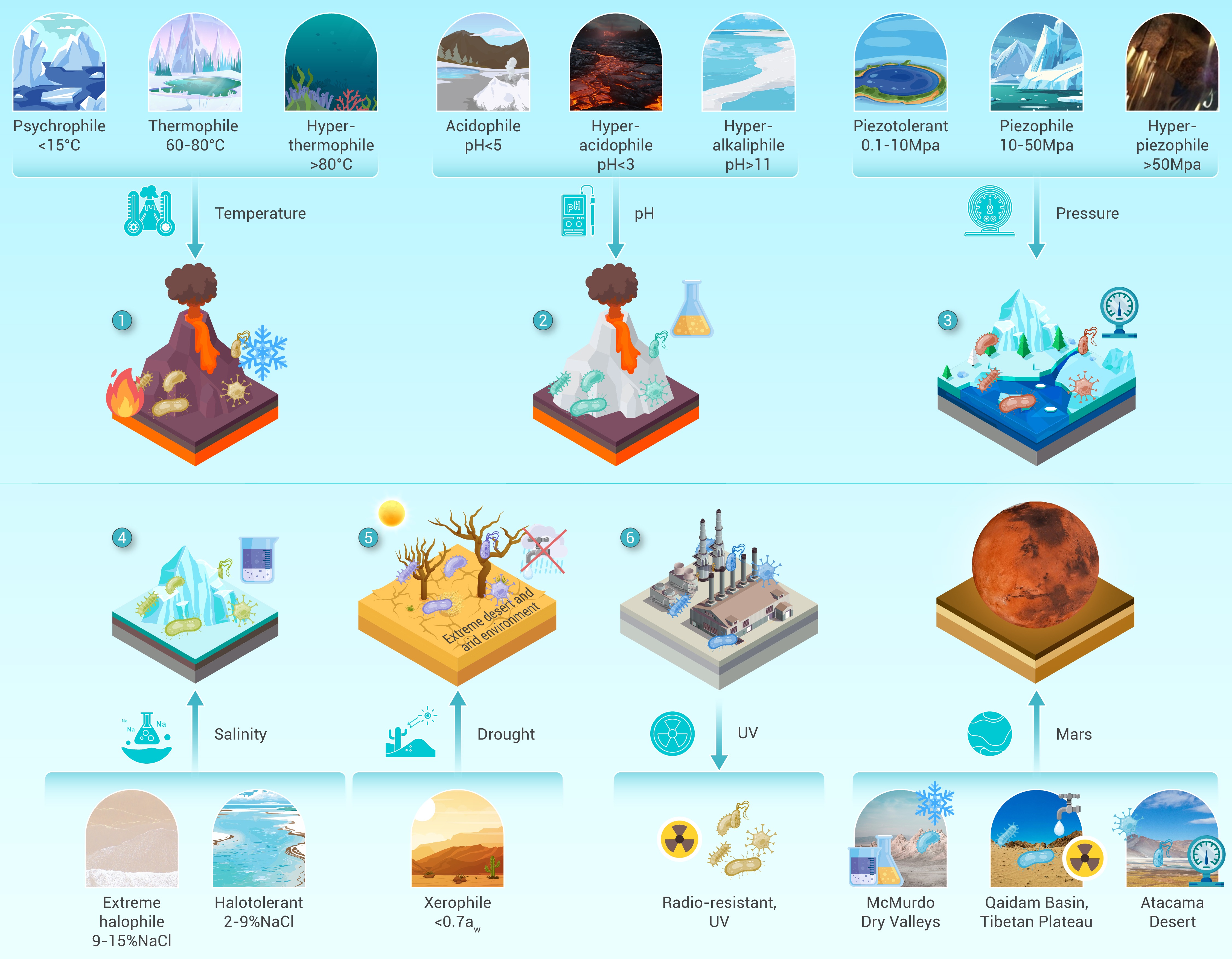
Figure 1.
Distinguished examples of extreme environments
-
Figure 2.
Worldwide distribution of Earth's major extreme environments
-
Figure 3.
Rocks pores are responsible for microbes with a refuge against extreme environments
