
PAHSA protects hematopoietic stem cells from caspase-4/11-mediated pyroptosis and exhaustion
-
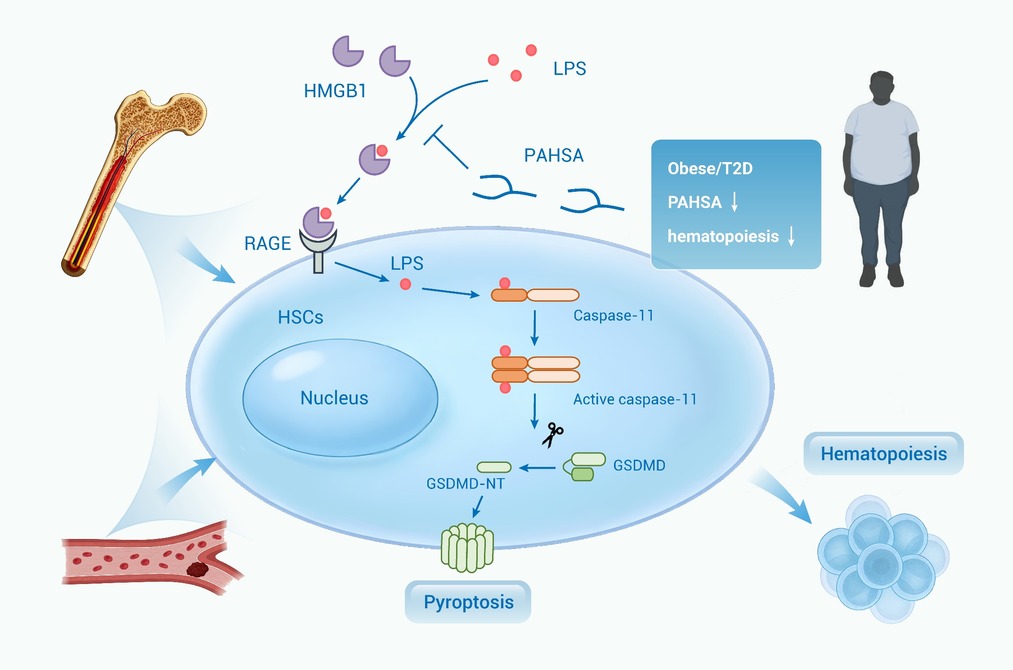
GRAPHICAL ABSTRACT
 DownLoad:
Full size image
DownLoad:
Full size image
-
PUBLIC SUMMARY
-
PAHSA protects hematopoietic stem cells (HSCs) from pyroptosis and maintains hematopoietic homeostasis.
PAHSA inhibits LPS delivery into cytosol, blocking non-canonical inflammasome activation.
PAHSA is potential for anti-infection treatment in obese and diabetic patients.
-
-
ABSTRACT
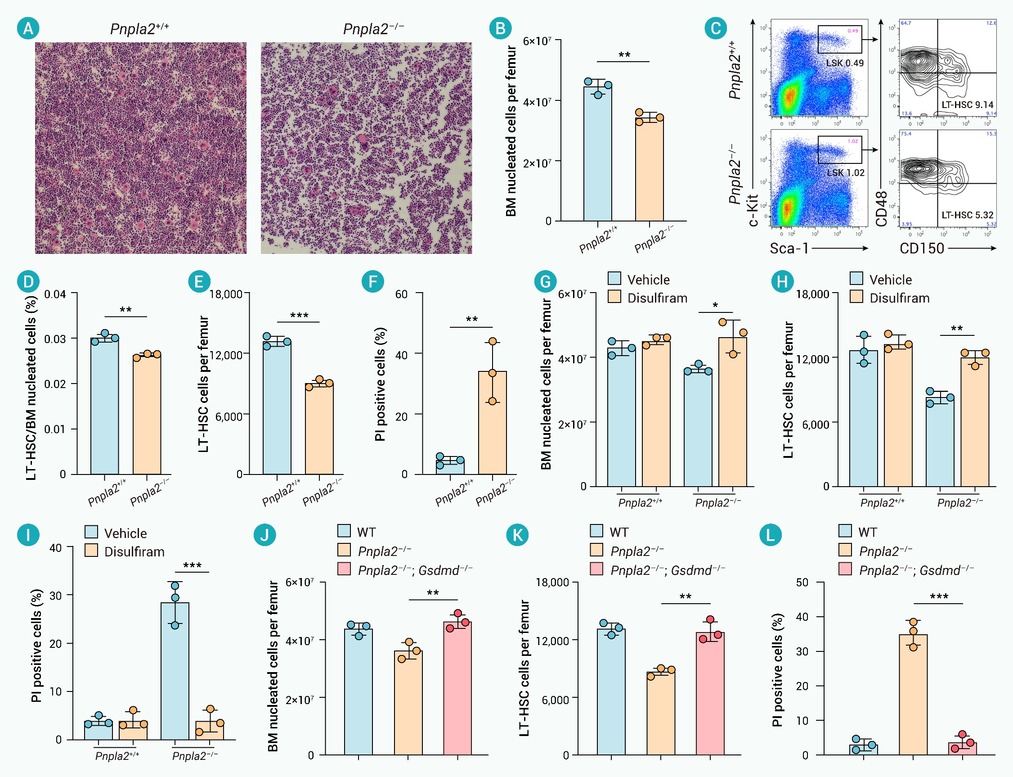
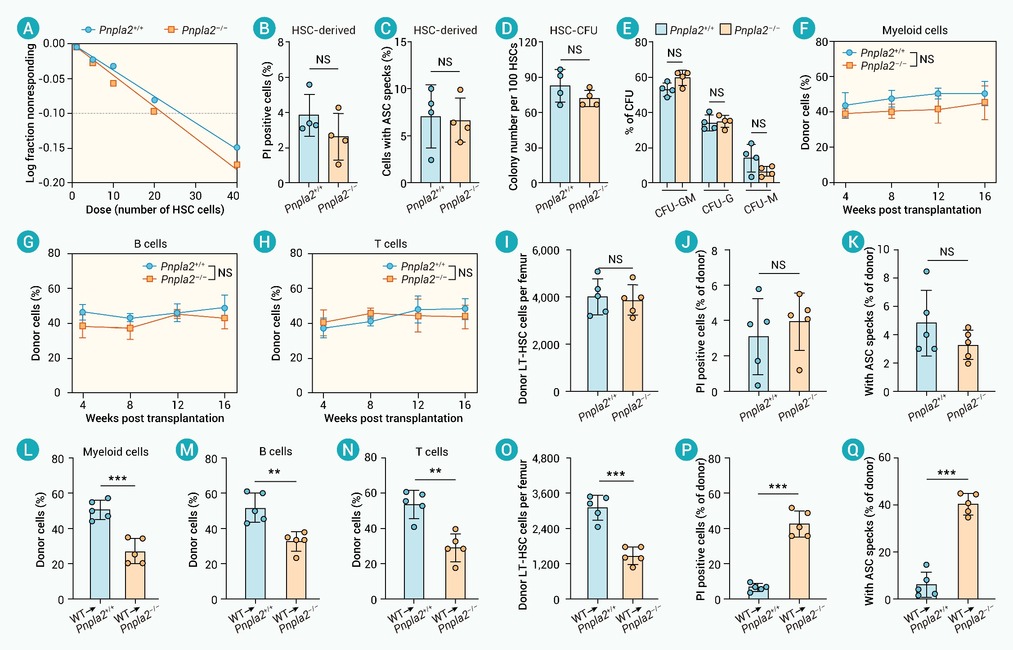
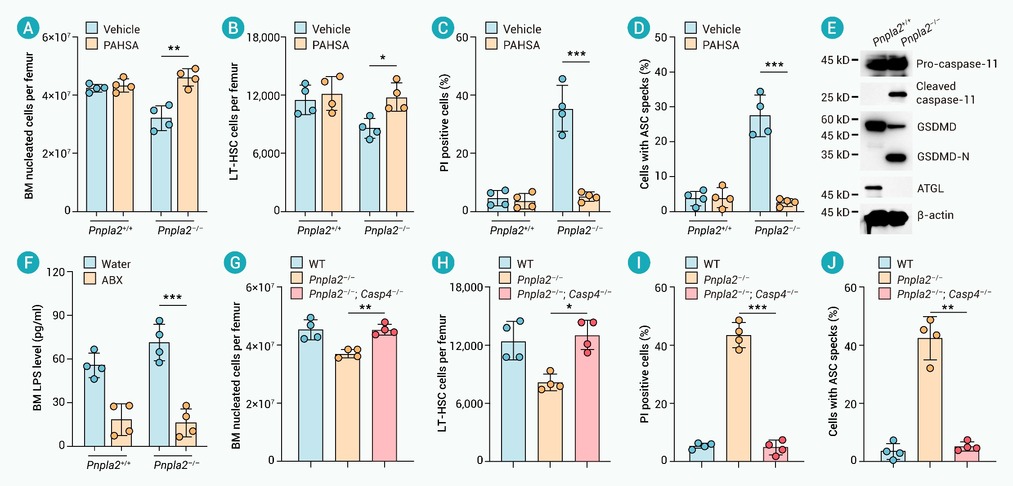
Hematopoietic stem cells (HSCs) serve as key resources of the blood system and their maintenance in the bone marrow niche is vital for the host survival. Pyroptosis following inflammasome activation is a common event when myeloid cells encounter danger signals. Whether inflammasome activation takes place in HSCs during their maintenance in the bone marrow is still elusive. Here we show that insufficient PAHSA caused by ATGL deficiency leads to increased pyroptosis and exhaustion of HSCs in Pnpla2 knockout mice. PAHSA affects HSC viability in a cell-extrinsic manner. With the help of HMGB1, seral LPS enters HSC cytosol and induces the non-canonical inflammasome activation mediated by the caspase-4/11, leading to HSC pyroptosis and exhaustion. Seral PAHSA binds LPS and hinders LPS binding to HMGB1, thus limiting the intracellular LPS levels in HSCs. PAHSA protects HSCs from LPS-stimulated non-canonical inflammasome activation and pyroptosis in obese mice, providing a promising approach to ameliorate HSC status in obese people in the future. -

-
REFERENCES
[1] Laurenti E. and Göttgens B. (2018). From haematopoietic stem cells to complex differentiation landscapes. Nature 553:418−426. DOI:10.1038/nature25022 [2] Liggett L. A. and Sankaran V. G. (2020). Unraveling hematopoiesis through the lens of genomics. Cell 182:1384−1400. DOI:10.1016/j.cell.2020.08.030 [3] Pinho S. and Frenette P. S. (2019). Haematopoietic stem cell activity and interactions with the niche. Nat. Rev. Mol. Cell Biol. 20:303−320. DOI:10.1038/s41580-019-0103-9 [4] Wilkinson A. C., Igarashi K. J. and Nakauchi H. (2020). Haematopoietic stem cell self-renewal in vivo and ex vivo. Nat. Rev. Genet. 21:541−554. DOI:10.1038/s41576-020-0241-0 [5] Chavakis T., Mitroulis I. and Hajishengallis G. (2019). Hematopoietic progenitor cells as integrative hubs for adaptation to and fine-tuning of inflammation. Nat. Immunol. 20:802−811. DOI:10.1038/s41590-019-0402-5 [6] Schultze J. L., Mass E. and Schlitzer A. (2019). Emerging principles in myelopoiesis at homeostasis and during infection and inflammation. Immunity 50:288−301. DOI:10.1016/j.immuni.2019.01.019 [7] Wei Q. and Frenette P. S. (2018). Niches for hematopoietic stem cells and their progeny. Immunity 48:632−648. DOI:10.1016/j.immuni.2018.03.024 [8] Pietras E. M., Mirantes-Barbeito C., Fong S., et al. (2016). Chronic interleukin-1 exposure drives haematopoietic stem cells towards precocious myeloid differentiation at the expense of self-renewal. Nat. Cell. Biol. 18:607−618. DOI:10.1038/ncb3346 [9] Takizawa H., Fritsch K., Kovtonyuk L. V., et al. (2017). Pathogen-induced TLR4-TRIF innate immune signaling in hematopoietic stem cells promotes proliferation but reduces competitive fitness. Cell Stem Cell 21:225−240.e225. DOI:10.1016/j.stem.2017.06.013 [10] Mistry J. J., Hellmich C., Moore J. A., et al. (2021). Free fatty-acid transport via CD36 drives β-oxidation-mediated hematopoietic stem cell response to infection. Nat. Commun. 12:7130. DOI:10.1038/s41467-021-27460-9 [11] Ratajczak M. Z. and Kucia M. (2022). Hematopoiesis and innate immunity: An inseparable couple for good and bad times, bound together by an hormetic relationship. Leukemia 36:23−32. DOI:10.1038/s41375-021-01482-0 [12] Xia J., Shen L., Liu Y., et al. (2025). Ace2 safeguards embryonic hematopoietic stem and progenitor cell production by restraining Nlrp3-mediated pyroptosis. Proc. Natl. Acad. Sci. USA 122:e2515641122. DOI:10.1073/pnas.2515641122 [13] Newton K., Dixit V. M. and Kayagaki N. (2021). Dying cells fan the flames of inflammation. Science 374:1076−1080. DOI:10.1126/science.abi5934 [14] Zhu F., Ma J., Li W., et al. (2023). The orphan receptor Nur77 binds cytoplasmic LPS to activate the non-canonical NLRP3 inflammasome. Immunity 56:753−767.e758. DOI:10.1016/j.immuni.2023.03.003 [15] Vanaja S. K., Russo A. J., Behl B., et al. (2016). Bacterial outer membrane vesicles mediate cytosolic localization of LPS and caspase-11 activation. Cell 165:1106−1119. DOI:10.1016/j.cell.2016.04.015 [16] Qian Y., Liu Q., Cheng X., et al. (2025). A VgrG2b fragment cleaved by caspase-11/4 promotes Pseudomonas aeruginosa infection through suppressing the NLRP3 inflammasome. elife 13:RP99939. DOI:10.7554/eLife.99939 [17] Deng M., Tang Y., Li W., et al. (2018). The endotoxin delivery protein HMGB1 mediates caspase-11-dependent lethality in sepsis. Immunity 49:740−753.e7. DOI:10.1016/j.immuni.2018.08.016 [18] Tang Y., Wang X., Li Z., et al. (2021). Heparin prevents caspase-11-dependent septic lethality independent of anticoagulant properties. Immunity 54:454−467.e456. DOI:10.1016/j.immuni.2021.01.007 [19] Shi J., Zhao Y., Wang Y., et al. (2014). Inflammatory caspases are innate immune receptors for intracellular LPS. Nature 514:187−192. DOI:10.1038/nature13683 [20] Chen Y., Qin X., An Q., et al. (2018). Mesenchymal stromal cells directly promote inflammation by canonical NLRP3 and non-canonical caspase-11 inflammasomes. EBioMedicine 32:31−42. DOI:10.1016/j.ebiom.2018.05.023 [21] Brejchova K., Radner F. P. W., Balas L., et al. (2021). Distinct roles of adipose triglyceride lipase and hormone-sensitive lipase in the catabolism of triacylglycerol estolides. Proc. Natl. Acad. Sci. USA 118. DOI:10.1073/pnas.2020999118 [22] Li W., Liu Q., Qian Y., et al. (2024). Adipose triglyceride lipase suppresses noncanonical inflammasome by hydrolyzing LPS. Nat. Chem. Biol. 20:1434−1442. DOI:10.1038/s41589-024-01569-6 [23] Patel R., Santoro A., Hofer P., et al. (2022). ATGL is a biosynthetic enzyme for fatty acid esters of hydroxy fatty acids. Nature 606:968−975. DOI:10.1038/s41586-022-04787-x [24] Yore M. M., Syed I., Moraes-Vieira P. M., et al. (2014). Discovery of a class of endogenous mammalian lipids with anti-diabetic and anti-inflammatory effects. Cell 159:318−332. DOI:10.1016/j.cell.2014.09.035 [25] Syed I., Lee J., Moraes-Vieira P. M., et al. (2018). Palmitic acid hydroxystearic acids activate GPR40, which is involved in their beneficial effects on glucose homeostasis. Cell Metab. 27:419−427.e414. DOI:10.1016/j.cmet.2018.01.001 [26] Yang Q., Vijayakumar A. and Kahn B. B. (2018). Metabolites as regulators of insulin sensitivity and metabolism. Nat. Rev. Mol. Cell Biol. 19:654−672. DOI:10.1038/s41580-018-0044-8 [27] Masters S. L., Gerlic M., Metcalf D., et al. (2012). NLRP1 inflammasome activation induces pyroptosis of hematopoietic progenitor cells. Immunity 37:1009−1023. DOI:10.1016/j.immuni.2012.08.027 [28] Shi J., Zhao Y., Wang K., et al. (2015). Cleavage of GSDMD by inflammatory caspases determines pyroptotic cell death. Nature 526:660−665. DOI:10.1038/nature15514 [29] Miao R., Jiang C., Chang W. Y., et al. (2023). Gasdermin D permeabilization of mitochondrial inner and outer membranes accelerates and enhances pyroptosis. Immunity 56:2523−2541.e2528. DOI:10.1016/j.immuni.2023.10.004 [30] Hu J. J., Liu X., Xia S., et al. (2020). FDA-approved disulfiram inhibits pyroptosis by blocking gasdermin D pore formation. Nat. Immunol. 21:736−745. DOI:10.1038/s41590-020-0669-6 [31] Wang C., Yang T., Xiao J., et al. (2021). NLRP3 inflammasome activation triggers gasdermin D-independent inflammation. Sci. Immunol. 6:eabj3859. DOI:10.1126/sciimmunol.abj3859 [32] Mandal P., Feng Y., Lyons J. D., et al. (2018). Caspase-8 collaborates with caspase-11 to drive tissue damage and execution of endotoxic shock. Immunity 49:42−55.e46. DOI:10.1016/j.immuni.2018.06.011 [33] Yang X., Cheng X., Tang Y., et al. (2019). Bacterial endotoxin activates the coagulation cascade through gasdermin D-dependent phosphatidylserine exposure. Immunity 51:983−996.e986. DOI:10.1016/j.immuni.2019.11.005 [34] Wei C., Jiang W., Wang R., et al. (2024). Brain endothelial GSDMD activation mediates inflammatory BBB breakdown. Nature 629:893−900. DOI:10.1038/s41586-024-07314-2 [35] Rathinam V. A. K., Zhao Y. and Shao F. (2019). Innate immunity to intracellular LPS. Nat. Immunol. 20:527−533. DOI:10.1038/s41590-019-0368-3 [36] Wang K., Sun Q., Zhong X., et al. (2020). Structural mechanism for GSDMD targeting by autoprocessed caspases in pyroptosis. Cell 180:941−955.e920. DOI:10.1016/j.cell.2020.02.002 [37] Kuda O., Brezinova M., Silhavy J., et al. (2018). Nrf2-mediated antioxidant defense and peroxiredoxin 6 are linked to biosynthesis of palmitic acid ester of 9-hydroxystearic acid. Diabetes 67:1190−1199. DOI:10.2337/db17-1087 [38] Gong T., Liu L., Jiang W., et al. (2020). DAMP-sensing receptors in sterile inflammation and inflammatory diseases. Nat. Rev. Immunol. 20:95−112. DOI:10.1038/s41577-019-0215-7 [39] Wang Y., Luo W., Han J., et al. (2020). MD2 activation by direct AGE interaction drives inflammatory diabetic cardiomyopathy. Nat. Commun. 11:2148. DOI:10.1038/s41467-020-15978-3 [40] Ren Y., Cao L., Wang L., et al. (2021). Autophagic secretion of HMGB1 from cancer-associated fibroblasts promotes metastatic potential of non-small cell lung cancer cells via NFκB signaling. Cell Death Dis. 12:858. DOI:10.1038/s41419-021-04150-4 [41] Fu Y., Xiang Y., Wang Y., et al. (2023). The STAT1/HMGB1/NF-κB pathway in chronic inflammation and kidney injury after cisplatin exposure. Theranostics 13:2757−2773. DOI:10.7150/thno.81406 [42] Barnett K. C., Li S., Liang K., et al. (2023). A 360° view of the inflammasome: Mechanisms of activation, cell death, and diseases. Cell 186:2288−2312. DOI:10.1016/j.cell.2023.04.025 [43] Sundaram B., Tweedell R. E., Prasanth Kumar S., et al. (2024). The NLR family of innate immune and cell death sensors. Immunity 57:674−699. DOI:10.1016/j.immuni.2024.03.012 [44] Liu Q., Tang Z., Qian Y., et al. (2025). Eukaryotic ADCY7 catalyzes the production of c-di-AMP to activate the NLRP3 inflammasome. Nat. Chem. Biol. 21:1283−1291. DOI:10.1038/s41589-025-01919-y [45] Khan N., Downey J., Sanz J., et al. (2020). M.tuberculosis reprograms hematopoietic stem cells to limit myelopoiesis and impair trained immunity. Cell 183:752−770.e722. DOI:10.1016/j.cell.2020.09.062 [46] Carnevalli L. S., Scognamiglio R., Cabezas-Wallscheid N., et al. (2014). Improved HSC reconstitution and protection from inflammatory stress and chemotherapy in mice lacking granzyme B. J. Exp. Med. 211:769−779. DOI:10.1084/jem.20131072 [47] Vanickova K., Milosevic M., Ribeiro Bas I., et al. (2023). Hematopoietic stem cells undergo a lymphoid to myeloid switch in early stages of emergency granulopoiesis. Embo j 42:e113527. DOI:10.15252/embj.2023113527 [48] Ratajczak M. Z., Bujko K., Ciechanowicz A., et al. (2021). SARS-CoV-2 entry receptor ACE2 is expressed on very small CD45(-) precursors of hematopoietic and endothelial cells and in response to virus spike protein activates the Nlrp3 inflammasome. Stem Cell Rev. Rep. 17:266−277. DOI:10.1007/s12015-020-10010-z [49] Choi B. S., Daniel N., Houde V. P., et al. (2021). Feeding diversified protein sources exacerbates hepatic insulin resistance via increased gut microbial branched-chain fatty acids and mTORC1 signaling in obese mice. Nat. Commun. 12:3377. DOI:10.1038/s41467-021-23782-w [50] Paluchova V., Oseeva M., Brezinova M., et al. (2020). Lipokine 5-PAHSA is regulated by adipose triglyceride lipase and primes adipocytes for De Novo lipogenesis in mice. Diabetes 69:300−312. DOI:10.2337/db19-0494 -
ABOUT THIS ARTICLE
Cite this article:
Qian Y., Liu Q., Zhang Y., et al. (2026). PAHSA protects hematopoietic stem cells from caspase-4/11-mediated pyroptosis and exhaustion. The Innovation Life 4:100178. https://doi.org/10.59717/j.xinn-life.2026.100178
Welcome!
To request copyright permission to republish or share portions of our works, please visit Copyright Clearance Center's (CCC) Marketplace website at marketplace.copyright.com.
Export File
Citation
Qian Y., Liu Q., Zhang Y., et al. (2026). PAHSA protects hematopoietic stem cells from caspase-4/11-mediated pyroptosis and exhaustion. The Innovation Life 4:100178. https://doi.org/10.59717/j.xinn-life.2026.100178

Format
Content
-
Figure 1.
Pnpla2 knockout mice have a decreased number of HSCs
-
Figure 2.
ATGL affects HSC self-renewal in a cell-extrinsic manner
-
Figure 3.
PAHSA suppresses LPS-induced pyroptosis in HSCs
-
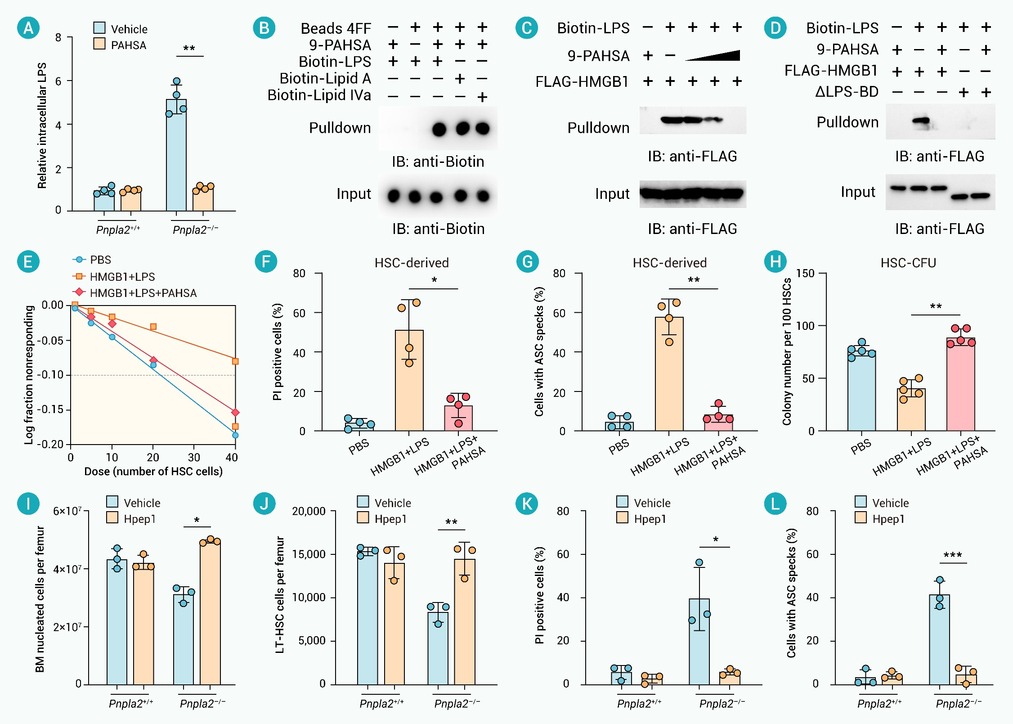
Figure 4.
PAHSA hinders the binding of LPS to HMGB1
-
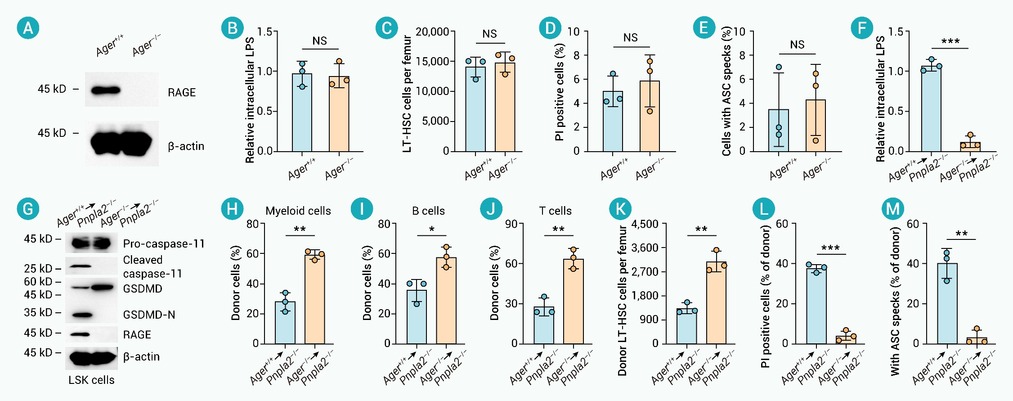
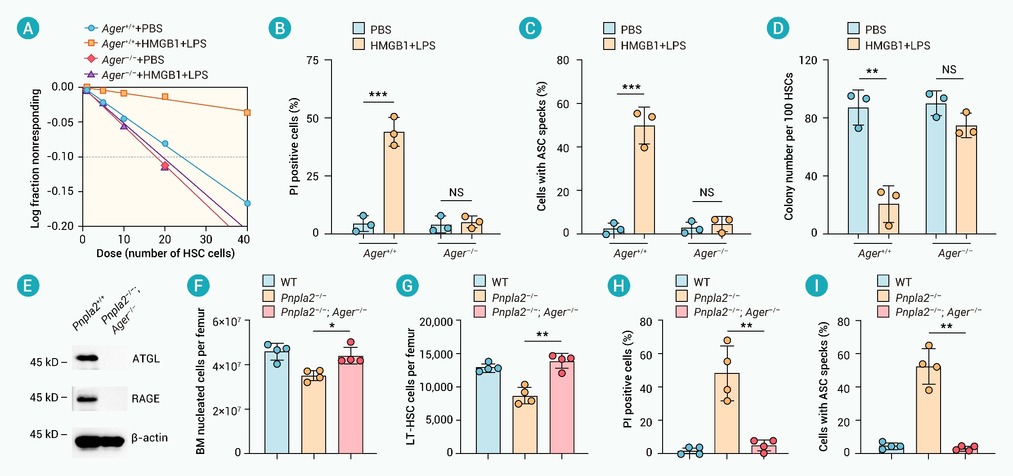
Figure 5.
RAGE is required for the entry of LPS into HSCs
-
Figure 6.
PAHSA limits the intracellular LPS in HSCs
-
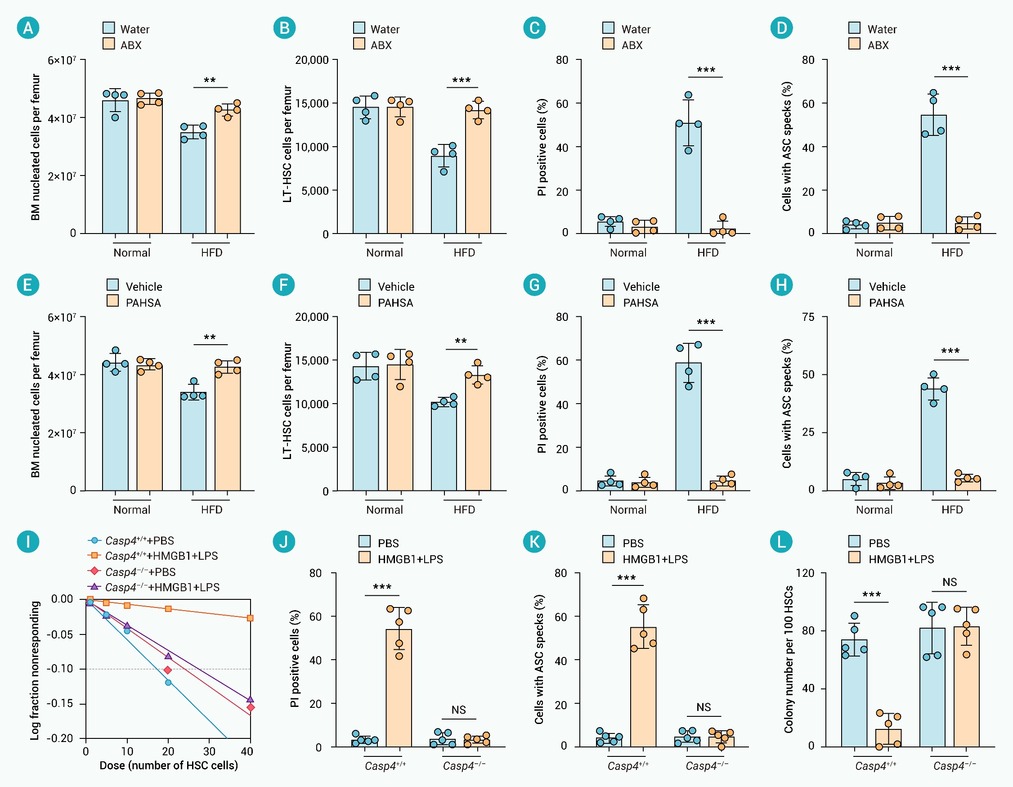
Figure 7.
PAHSA protects HSCs from pyroptosis in obese mice
