
Revisiting neanderthal ancestry: Evolutionary insights and biomedical relevance
-
GRAPHICAL ABSTRACT
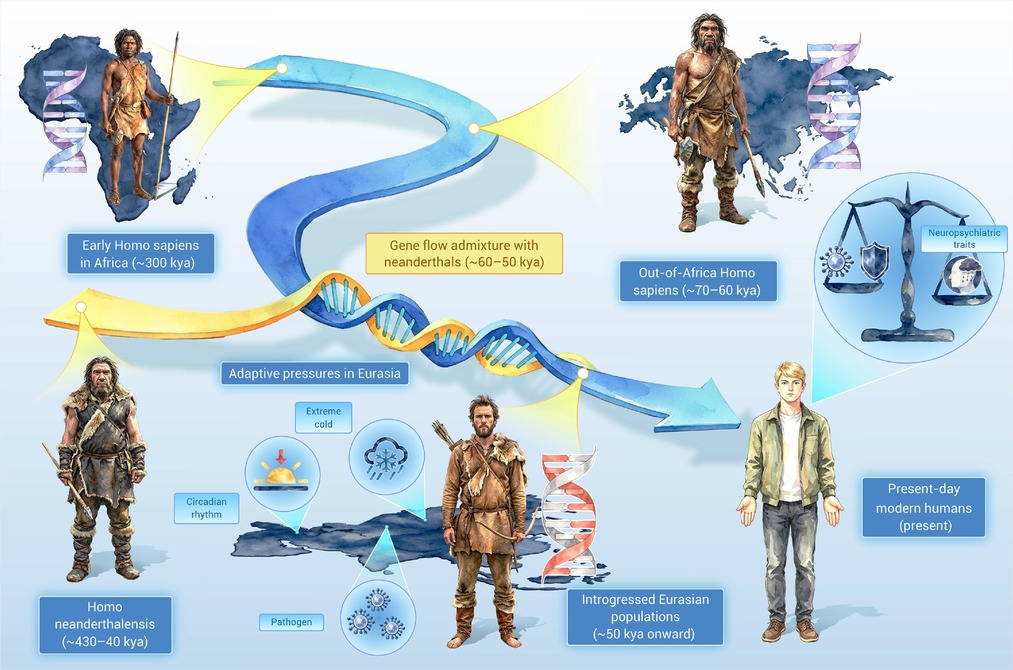
 DownLoad:
Full size image
DownLoad:
Full size image
-
PUBLIC SUMMARY
-
Ancient interbreeding with Neanderthals left a lasting genetic legacy in present-day human genomes.
We identify genomic regions where this archaic DNA continues to influence modern human biology.
Archaic variants contribute to the regulation of immune defense and neurobiological processes in modern humans.
Understanding this legacy provides important insights into the evolutionary origins of human disease risk.
-
-
ABSTRACT
The sequencing of the Neanderthal genome revealed that interbreeding with early modern humans left a genetic legacy of approximately 1–2% in non-African populations. This introgression provides a natural experimental pathway for exploring the complex functional consequences of archaic ancestry and the evolutionary forces shaping the modern human genome. This review outlines the spatiotemporal dynamics of admixture, suggesting multiple waves of gene flow, and examines the evolutionary fates of introgressed sequences—from purifying selection removing deleterious alleles to adaptive introgression aiding human adaptation to Eurasian environments. Neanderthal-derived alleles have been linked to variation in immune responses, skin barrier, metabolism, and susceptibility to neurological and psychiatric disorders. These effects are complex and context-dependent, including potential antagonistic pleiotropy, where alleles that were once adaptive may now increase disease risk. We highlight future directions, including integrating ancient DNA with multi-omics data, expanding studies to diverse populations, and using functional genomics to identify causal mechanisms. -

-
REFERENCES
[1] Stringer C. and Galway-Witham J. (2017). Palaeoanthropology: On the origin of our species. Nature 546:212−214. DOI:10.1038/546212a [2] Prufer K., Racimo F., Patterson N., et al. (2014). The complete genome sequence of a Neanderthal from the Altai Mountains. Nature 505:43−49. DOI:10.1038/nature12886 [3] Green R. E., Krause J., Briggs A. W., et al. (2010). A draft sequence of the Neandertal genome. Science 328:710−722. DOI:10.1126/science.1188021 [4] Gittelman R. M., Schraiber J. G., Vernot B., et al. (2016). Archaic hominin admixture facilitated adaptation to out-of-Africa environments. Curr. Biol. 26:3375−3382. DOI:10.1016/j.cub.2016.10.041 [5] Vernot B. and Akey J. M. (2014). Resurrecting surviving Neandertal lineages from modern human genomes. Science 343:1017−1021. DOI:10.1126/science.1245938 [6] Harris K. and Nielsen R. (2016). The genetic cost of Neanderthal introgression. Genetics 203:881−891. DOI:10.1534/genetics.116.186890 [7] Simonti C. N., Vernot B., Bastarache L., et al. (2016). The phenotypic legacy of admixture between modern humans and Neandertals. Science 351:737−741. DOI:10.1126/science.aad2149 [8] Quach H., Rotival M., Pothlichet J., et al. (2016). Genetic adaptation and Neandertal admixture shaped the immune system of human populations. Cell 167:643-656 e617. DOI:10.1016/j.cell.2016.09.024 [9] Zeberg H. and Paabo S. (2020). The major genetic risk factor for severe COVID-19 is inherited from Neanderthals. Nature 587:610−612. DOI:10.1038/s41586-020-2818-3 [10] Hubisz M. J., Williams A. L. and Siepel A. (2020). Mapping gene flow between ancient hominins through demography-aware inference of the ancestral recombination graph. PLoS Genet. 16:e1008895. DOI:10.1371/journal.pgen.1008895 [11] Li L., Comi T. J., Bierman R. F., et al. (2024). Recurrent gene flow between Neanderthals and modern humans over the past 200,000 years. Science 385:eadi1768. DOI:10.1126/science.adi1768 [12] Harvati K., Roding C., Bosman A. M., et al. (2019). Apidima Cave fossils provide earliest evidence of Homo sapiens in Eurasia. Nature 571:500−504. DOI:10.1038/s41586-019-1376-z [13] Kuhlwilm M., Gronau I., Hubisz M. J., et al. (2016). Ancient gene flow from early modern humans into Eastern Neanderthals. Nature 530:429−433. DOI:10.1038/nature16544 [14] Hershkovitz I., Weber G. W., Quam R., et al. (2018). The earliest modern humans outside Africa. Science 359:456−459. DOI:10.1126/science.aap8369 [15] May H., Sarig R., Pokhojaev A., et al. (2021). Response to comment on "a middle pleistocene homo from Nesher Ramla, Israel". Science 374:eabl5789. DOI:10.1126/science.abl5789 [16] Iasi L. N. M., Chintalapati M., Skov L., et al. (2024). Neanderthal ancestry through time: Insights from genomes of ancient and present-day humans. Science 386:eadq3010. DOI:10.1126/science.adq3010 [17] Wall J. D., Yang M. A., Jay F., et al. (2013). Higher levels of Neanderthal ancestry in East Asians than in Europeans. Genetics 194:199−209. DOI:10.1534/genetics.112.148213 [18] Villanea F. A. and Schraiber J. G. (2019). Multiple episodes of interbreeding between Neanderthal and modern humans. Nat. Ecol. Evol. 3:39−44. DOI:10.1038/s41559-018-0735-8 [19] Quilodran C. S., Rio J., Tsoupas A., et al. (2023). Past human expansions shaped the spatial pattern of Neanderthal ancestry. Sci. Adv. 9:eadg9817. DOI:10.1126/sciadv.adg9817 [20] Fu Q., Hajdinjak M., Moldovan O. T., et al. (2015). An early modern human from Romania with a recent Neanderthal ancestor. Nature 524:216−219. DOI:10.1038/nature14558 [21] Enard D. and Petrov D. A. (2018). Evidence that RNA viruses drove adaptive introgression between Neanderthals and modern humans. Cell 175:360-371 e313. DOI:10.1016/j.cell.2018.08.034. [22] Juric I., Aeschbacher S. and Coop G. (2016). The strength of selection against Neanderthal introgression. PLoS Genet. 12:e1006340. DOI:10.1371/journal.pgen.1006340 [23] Houldcroft C. J. and Underdown S. J. (2016). Neanderthal genomics suggests a pleistocene time frame for the first epidemiologic transition. Am. J. Phys. Anthropol. 160:379−388. DOI:10.1002/ajpa.22985 [24] Fu Q., Posth C., Hajdinjak M., et al. (2016). The genetic history of ice age europe. Nature 534:200−205. DOI:10.1038/nature17993 [25] Steinrucken M., Spence J. P., Kamm J. A., et al. (2018). Model-based detection and analysis of introgressed Neanderthal ancestry in modern humans. Mol. Ecol. 27:3873−3888. DOI:10.1111/mec.14565 [26] Groh J. S. and Coop G. (2024). The temporal and genomic scale of selection following hybridization. Proc. Natl. Acad. Sci. USA 121:e2309168121. DOI:10.1073/pnas.2309168121 [27] Brand C. M., Colbran L. L. and Capra J. A. (2023). Resurrecting the alternative splicing landscape of archaic hominins using machine learning. Nat. Ecol. Evol. 7:939−953. DOI:10.1038/s41559-023-02053-5 [28] Rong S., Neil C. R., Welch A., et al. (2023). Large-scale functional screen identifies genetic variants with splicing effects in modern and archaic humans. Proc. Natl. Acad. Sci. USA 120:e2218308120. DOI:10.1073/pnas.2218308120 [29] Skov L., Coll Macia M., Lucotte E. A., et al. (2023). Extraordinary selection on the human X chromosome associated with archaic admixture. Cell Genom. 3:100274. DOI:10.1016/j.xgen.2023.100274 [30] Buisan R., Moriano J., Andirko A., et al. (2022). A brain region-specific expression profile for genes within large introgression deserts and under positive selection in homo sapiens. Front Cell Dev. Biol. 10:824740. DOI:10.3389/fcell.2022.824740 [31] Sankararaman S., Mallick S., Patterson N., et al. (2016). The combined landscape of Denisovan and Neanderthal ancestry in present-day humans. Curr. Biol. 26:1241−1247. DOI:10.1016/j.cub.2016.03.037 [32] McCoy R. C., Wakefield J. and Akey J. M. (2017). Impacts of Neanderthal-introgressed sequences on the landscape of human gene expression. Cell 168:916-927 e912. DOI:10.1016/j.cell.2017.01.038. [33] Bergman J. and Schierup M. H. (2022). Evolutionary dynamics of pseudoautosomal region 1 in humans and great apes. Genome Biol. 23:215. DOI:10.1186/s13059-022-02784-x [34] Jegou B., Sankararaman S., Rolland A. D., et al. (2017). Meiotic genes are enriched in regions of reduced archaic ancestry. Mol. Biol. Evol. 34:1974−1980. DOI:10.1093/molbev/msx141 [35] Aneli S., Ceccatelli Berti C., Gilea A. I., et al. (2024). Functional characterization of archaic-specific variants in mitonuclear genes: Insights from comparative analysis in S. cerevisiae. Hum. Mol. Genet. 33:1152−1163. DOI:10.1093/hmg/ddae057 [36] McArthur E., Rinker D. C. and Capra J. A. (2021). Quantifying the contribution of Neanderthal introgression to the heritability of complex traits. Nat. Commun. 12:4481. DOI:10.1038/s41467-021-24582-y [37] Srinivasan S., Bettella F., Mattingsdal M., et al. (2016). Genetic markers of human evolution are enriched in schizophrenia. Biol. Psychiatry 80:284−292. DOI:10.1016/j.biopsych.2015.10.009 [38] Alagoz G., Molz B., Eising E., et al. (2022). Using neuroimaging genomics to investigate the evolution of human brain structure. Proc. Natl. Acad. Sci. USA 119:e2200638119. DOI:10.1073/pnas.2200638119 [39] Jagoda E., Lawson D. J., Wall J. D., et al. (2018). Disentangling immediate adaptive introgression from selection on standing introgressed variation in humans. Mol. Biol. Evol. 35:623−630. DOI:10.1093/molbev/msx314 [40] Yair S., Lee K. M. and Coop G. (2021). The timing of human adaptation from Neanderthal introgression. Genetics 218. DOI:10.1093/genetics/iyab052 [41] Dannemann M. and Kelso J. (2017). The contribution of Neanderthals to phenotypic variation in modern humans. Am. J. Hum. Genet. 101:578−589. DOI:10.1016/j.ajhg.2017.09.010 [42] Liston A., Humblet-Baron S., Duffy D., et al. (2021). Human immune diversity: From evolution to modernity. Nat. Immunol. 22:1479−1489. DOI:10.1038/s41590-021-01058-1 [43] Silvert M., Quintana-Murci L. and Rotival M. (2019). Impact and evolutionary determinants of Neanderthal introgression on transcriptional and post-transcriptional regulation. Am. J. Hum. Genet. 104:1241−1250. DOI:10.1016/j.ajhg.2019.04.016 [44] Yuan K., Ni X., Liu C., et al. (2021). Refining models of archaic admixture in Eurasia with ArchaicSeeker 2.0. Nat. Commun. 12:6232. DOI:10.1038/s41467-021-26503-5 [45] Kerner G., Patin E. and Quintana-Murci L. (2021). New insights into human immunity from ancient genomics. Curr. Opin. Immunol. 72:116−125. DOI:10.1016/j.coi.2021.04.006 [46] Rotival M., Quach H. and Quintana-Murci L. (2019). Defining the genetic and evolutionary architecture of alternative splicing in response to infection. Nat. Commun. 10:1671. DOI:10.1038/s41467-019-09689-7 [47] Patin E. and Quintana-Murci L. (2025). Tracing the evolution of human immunity through ancient DNA. Annu. Rev. Immunol. 43:57−82. DOI:10.1146/annurev-immunol-082323-024638 [48] Huang X., Kruisz P. and Kuhlwilm M. (2022). sstar: A Python package for detecting archaic introgression from population genetic data with S. Mol Biol. Evol. 39. DOI:10.1093/molbev/msac212 [49] Chen L., Wolf A. B., Fu W., et al. (2020). Identifying and interpreting apparent Neanderthal ancestry in African individuals. Cell 180:677-687 e616. DOI:10.1016/j.cell.2020.01.012 [50] Skov L., Hui R., Shchur V., et al. (2018). Detecting archaic introgression using an unadmixed outgroup. PLoS Genet. 14:e1007641. DOI:10.1371/journal.pgen.1007641 [51] He Y., Zhang X., Peng M. S., et al. (2025). Genome diversity and signatures of natural selection in mainland Southeast Asia. Nature 643:417−426. DOI:10.1038/s41586-025-08998-w [52] Sabeti P. C., Varilly P., Fry B., et al. (2007). Genome-wide detection and characterization of positive selection in human populations. Nature 449:913−918. DOI:10.1038/nature06250 [53] Chen Z., Reynolds R. H., Pardinas A. F., et al. (2023). The contribution of Neanderthal introgression and natural selection to neurodegenerative diseases. Neurobiol. Dis. 180:106082. DOI:10.1016/j.nbd.2023.106082 [54] Voight B. F., Kudaravalli S., Wen X., et al. (2006). A map of recent positive selection in the human genome. PLoS Biol. 4:e72. DOI:10.1371/journal.pbio.0040072 [55] Racimo F., Marnetto D. and Huerta-Sanchez E. (2017). Signatures of archaic adaptive introgression in present-day human populations. Mol. Biol. Evol. 34:296−317. DOI:10.1093/molbev/msw216 [56] Racimo F. (2016). Testing for ancient selection using cross-population allele frequency differentiation. Genetics 202:733−750. DOI:10.1534/genetics.115.178095 [57] Nielsen R., Hubisz M. J., Hellmann I., et al. (2009). Darwinian and demographic forces affecting human protein coding genes. Genome Res. 19:838−849. DOI:10.1101/gr.088336.108 [58] Williamson S. H., Hubisz M. J., Clark A. G., et al. (2007). Localizing recent adaptive evolution in the human genome. PLoS Genet. 3:e90. DOI:10.1371/journal.pgen.0030090 [59] Hsieh P., Vollger M. R., Dang V., et al. (2019). Adaptive archaic introgression of copy number variants and the discovery of previously unknown human genes. Science 366. DOI:10.1126/science.aax2083 [60] Zhang W. P., Ding Y. M., Cao Y., et al. (2024). Uncovering ghost introgression through genomic analysis of a distinct eastern Asian hickory species. Plant J. 119:1386−1399. DOI:10.1111/tpj.16859 [61] Setter D., Mousset S., Cheng X., et al. (2020). VolcanoFinder: Genomic scans for adaptive introgression. PLoS Genet. 16:e1008867. DOI:10.1371/journal.pgen.1008867 [62] Sidik S. (2023). AI search of Neanderthal proteins resurrects 'extinct' antibiotics. Nature. DOI:10.1038/d41586-023-02403-0 [63] Liang S. A., Ren T., Zhang J., et al. (2025). A refined analysis of Neanderthal-introgressed sequences in modern humans with a complete reference genome. Genome Biol. 26:32. DOI:10.1186/s13059-025-03502-z [64] Vaughn A. H. and Nielsen R. (2024). Fast and accurate estimation of selection coefficients and allele histories from ancient and modern DNA. Mol. Biol. Evol. 41:msae156. DOI:10.1093/molbev/msae156 [65] Stern A. J., Wilton P. R. and Nielsen R. (2019). An approximate full-likelihood method for inferring selection and allele frequency trajectories from DNA sequence data. PLoS Genet. 15:e1008384. DOI:10.1371/journal.pgen.1008384 [66] Pease J. B. and Hahn M. W. (2015). Detection and polarization of introgression in a five-taxon phylogeny. Syst. Biol. 64:651−662. DOI:10.1093/sysbio/syv023 [67] Durand E. Y., Patterson N., Reich D., et al. (2011). Testing for ancient admixture between closely related populations. Mol. Biol. Evol. 28:2239−2252. DOI:10.1093/molbev/msr048 [68] Pfeifer B., Alachiotis N., Pavlidis P., et al. (2020). Genome scans for selection and introgression based on k-nearest neighbour techniques. Mol. Ecol. Resour. 20:1597−1609. DOI:10.1111/1755-0998.13221 [69] Whitehouse L. S., Ray D. D. and Schrider D. R. (2024). Tree sequences as a general-purpose tool for population genetic inference. Mol. Biol. Evol. 41:msae223. DOI:10.1093/molbev/msae223 [70] Zhang X., Kim B., Singh A., et al. (2023). MaLAdapt reveals novel targets of adaptive introgression from Neanderthals and Denisovans in worldwide human populations. Mol. Biol. Evol. 40:msad001. DOI:10.1093/molbev/msad001 [71] Chen Y., Velazquez-Arcelay K. and Capra J. A. (2026). Comparing Neanderthal introgression maps reveals core agreement but substantial heterogeneity. Mol. Biol. Evol. 43:msag064. DOI:10.1093/molbev/msag064 [72] Gisladottir R. S. (2025). Advancing GWAS of human communication. Trends Genet. 41:643−646. DOI:10.1016/j.tig.2025.05.009 [73] Koller D., Wendt F. R., Pathak G. A., et al. (2022). Denisovan and Neanderthal archaic introgression differentially impacted the genetics of complex traits in modern populations. BMC Biol. 20:249. DOI:10.1186/s12915-022-01449-2 [74] Liu X., Koyama S., Tomizuka K., et al. (2024). Decoding triancestral origins, archaic introgression, and natural selection in the Japanese population by whole-genome sequencing. Sci. Adv. 10:eadi8419. DOI:10.1126/sciadv.adi8419 [75] Natri H. M., Hudjashov G., Jacobs G., et al. (2022). Genetic architecture of gene regulation in indonesian populations identifies QTLs associated with global and local ancestries. Am. J. Hum. Genet. 109:50−65. DOI:10.1016/j.ajhg.2021.11.017 [76] Jagoda E., Xue J. R., Reilly S. K., et al. (2022). Detection of Neanderthal adaptively introgressed genetic variants that modulate reporter gene expression in human immune cells. Mol. Biol. Evol. 39:msab304. DOI:10.1093/molbev/msab304 [77] Trujillo C. A., Rice E. S., Schaefer N. K., et al. (2021). Reintroduction of the archaic variant of NOVA1 in cortical organoids alters neurodevelopment. Science 371:eaax2537. DOI:10.1126/science.aax2537 [78] Dannemann M., He Z., Heide C., et al. (2020). Human stem cell resources are an inroad to Neandertal DNA functions. Stem Cell Reports 15:214−225. DOI:10.1016/j.stemcr.2020.05.018 [79] Cohen J. (2018). Neanderthal brain organoids come to life. Science 360:1284. DOI:10.1126/science.360.6395.1284 [80] Caporale A. L., Cinalli A. R., Rubinstein M., et al. (2024). The human accelerated region HAR202 controls NPAS3 expression in the developing forebrain displaying differential enhancer activity between modern and archaic human sequences. Mol. Biol. Evol. 41:msae186. DOI:10.1093/molbev/msae186 [81] Petersen J., Englmaier L., Artemov A. V., et al. (2023). A previously uncharacterized factor associated with metabolism and energy (FAME/C14orf105/CCDC198/1700011H14Rik) is related to evolutionary adaptation, energy balance, and kidney physiology. Nat. Commun. 14:3092. DOI:10.1038/s41467-023-38663-7 [82] Barreiro L. B. and Quintana-Murci L. (2020). Evolutionary and population (epi)genetics of immunity to infection. Hum. Genet. 139:723−732. DOI:10.1007/s00439-020-02167-x [83] Gao Y., Yang X., Chen H., et al. (2023). A pangenome reference of 36 Chinese populations. Nature 619:112−121. DOI:10.1038/s41586-023-06173-7 [84] Deschamps M., Laval G., Fagny M., et al. (2016). Genomic signatures of selective pressures and introgression from archaic hominins at human innate immunity genes. Am. J. Hum. Genet. 98:5−21. DOI:10.1016/j.ajhg.2015.11.014 [85] Zeberg H. and Paabo S. (2021). A genomic region associated with protection against severe COVID-19 is inherited from Neandertals. Proc. Natl. Acad. Sci. USA 118:e2026309118. DOI:10.1073/pnas.2026309118 [86] Zhou S., Butler-Laporte G., Nakanishi T., et al. (2021). A Neanderthal OAS1 isoform protects individuals of European ancestry against COVID-19 susceptibility and severity. Nat. Med. 27:659−667. DOI:10.1038/s41591-021-01281-1 [87] Huffman J. E., Butler-Laporte G., Khan A., et al. (2022). Multi-ancestry fine mapping implicates OAS1 splicing in risk of severe COVID-19. Nat. Genet. 54:125−127. DOI:10.1038/s41588-021-00996-8 [88] Aquino Y., Bisiaux A., Li Z., et al. (2023). Dissecting human population variation in single-cell responses to SARS-CoV-2. Nature 621:120−128. DOI:10.1038/s41586-023-06422-9 [89] Cobat A., Zhang Q., Effort C. H. G., et al. (2023). Human genomics of COVID-19 pneumonia: Contributions of rare and common variants. Annu. Rev. Biomed. Data Sci. 6:465−486. DOI:10.1146/annurev-biodatasci-020222-021705 [90] Jagoda E., Marnetto D., Senevirathne G., et al. (2023). Regulatory dissection of the severe COVID-19 risk locus introgressed by Neanderthals. Elife 12:e71235. DOI:10.7554/eLife.71235 [91] Sun W., Yang T., Sun F., et al. (2024). An IGHG1 variant exhibits polarized prevalence and confers enhanced IgG1 antibody responses against life-threatening organisms. Nat. Immunol. 25:1809−1819. DOI:10.1038/s41590-024-01944-4 [92] Corbett S., Courtiol A., Lummaa V., et al. (2018). The transition to modernity and chronic disease: Mismatch and natural selection. Nat. Rev. Genet. 19:419−430. DOI:10.1038/s41576-018-0012-3 [93] Sankararaman S., Mallick S., Dannemann M., et al. (2014). The genomic landscape of Neanderthal ancestry in present-day humans. Nature 507:354−357. DOI:10.1038/nature12961 [94] Mocci S., Littera R., Tranquilli S., et al. (2022). A protective HLA extended haplotype outweighs the major COVID-19 risk factor inherited from Neanderthals in the Sardinian population. Front. Immunol. 13:891147. DOI:10.3389/fimmu.2022.891147 [95] Mughal M. R., Koch H., Huang J., et al. (2020). Learning the properties of adaptive regions with functional data analysis. PLoS Genet. 16:e1008896. DOI:10.1371/journal.pgen.1008896 [96] Liu S., Luo H., Zhang P., et al. (2024). Adaptive selection of cis-regulatory elements in the Han Chinese. Mol. Biol. Evol. 41:msae034. DOI:10.1093/molbev/msae034 [97] Hu Y., Ding Q., He Y., et al. (2015). Reintroduction of a homocysteine level-associated allele into East Asians by Neanderthal introgression. Mol. Biol. Evol. 32:3108−3113. DOI:10.1093/molbev/msv176 [98] Ding Q., Hu Y., Xu S., et al. (2014). Neanderthal introgression at chromosome 3p21.31 was under positive natural selection in East Asians. Mol. Biol. Evol. 31:683-695. DOI:10.1093/molbev/mst260 [99] Reilly P. F., Tjahjadi A., Miller S. L., et al. (2022). The contribution of Neanderthal introgression to modern human traits. Curr. Biol. 32:R970−R983. DOI:10.1016/j.cub.2022.08.027 [100] Ma X. and Xu S. (2022). Archaic introgression contributed to the pre-agriculture adaptation of vitamin B1 metabolism in East Asia. iScience 25:105614. DOI:10.1016/j.isci.2022.105614 [101] Quach H. and Quintana-Murci L. (2017). Living in an adaptive world: Genomic dissection of the genus Homo and its immune response. J. Exp. Med. 214:877−894. DOI:10.1084/jem.20161942 [102] Villanea F. A., Huerta-Sanchez E. and Fox K. (2021). ABO genetic variation in Neanderthals and Denisovans. Mol. Biol. Evol. 38:3373−3382. DOI:10.1093/molbev/msab109 [103] Rusu V., Hoch E., Mercader J. M., et al. (2017). Type 2 diabetes variants disrupt function of SLC16A11 through two distinct mechanisms. Cell 170:199-212 e120. DOI:10.1016/j.cell.2017.06.011 [104] Adeyemo A. A., Shriner D., Bentley A. R., et al. (2021). Evolutionary genetics and acclimatization in nephrology. Nat. Rev. Nephrol. 17:827−839. DOI:10.1038/s41581-021-00483-7 [105] Xu R. Z. and Xu Z. (2018). Systemic mastocytosis with an associated hematological neoplasm masquerading as overt primary myelofibrosis. Blood 132:2613. DOI:10.1182/blood-2018-09-875914 [106] Gregory M. D., Kippenhan J. S., Eisenberg D. P., et al. (2017). Neanderthal-derived genetic variation shapes modern human cranium and brain. Sci. Rep. 7:6308. DOI:10.1038/s41598-017-06587-0 [107] Namba T. and Huttner W. B. (2024). What makes us human: Insights from the evolution and development of the human neocortex. Annu. Rev. Cell Dev. Biol. 40:427−452. DOI:10.1146/annurev-cellbio-112122-032521 [108] Pinson A., Xing L., Namba T., et al. (2022). Human TKTL1 implies greater neurogenesis in frontal neocortex of modern humans than Neanderthals. Science 377:eabl6422. DOI:10.1126/science.abl6422 [109] Barker H. R., Parkkila S. and Tolvanen M. E. E. (2025). Evolution is in the details: Regulatory differences in modern human and Neanderthal. Comput. Struct. Biotechnol. J. 27:2298−2312. DOI:10.1016/j.csbj.2025.05.052 [110] Mora-Bermudez F., Kanis P., Macak D., et al. (2022). Longer metaphase and fewer chromosome segregation errors in modern human than Neanderthal brain development. Sci. Adv. 8:eabn7702. DOI:10.1126/sciadv.abn7702 [111] Benton M. L., Abraham A., LaBella A. L., et al. (2021). The influence of evolutionary history on human health and disease. Nat. Rev. Genet. 22:269−283. DOI:10.1038/s41576-020-00305-9 [112] Schaefer N. K., Shapiro B. and Green R. E. (2021). An ancestral recombination graph of human, Neanderthal, and Denisovan genomes. Sci. Adv. 7:eabc0776. DOI:10.1126/sciadv.abc0776 [113] Pauly R., Johnson L., Feltus F. A., et al. (2024). Enrichment of a subset of Neanderthal polymorphisms in autistic probands and siblings. Mol. Psychiatry 29:3452−3461. DOI:10.1038/s41380-024-02593-7 [114] Pardinas A. F., Holmans P., Pocklington A. J., et al. (2019). Publisher correction: Common schizophrenia alleles are enriched in mutation-intolerant genes and in regions under strong background selection. Nat. Genet. 51:1193. DOI:10.1038/s41588-019-0450-7 [115] Dannemann M., Milaneschi Y., Yermakovich D., et al. (2022). Neandertal introgression partitions the genetic landscape of neuropsychiatric disorders and associated behavioral phenotypes. Transl. Psychiatry 12:433. DOI:10.1038/s41398-022-02196-2 [116] Zeberg H., Dannemann M., Sahlholm K., et al. (2020). A Neanderthal sodium channel increases pain sensitivity in present-day humans. Curr. Biol. 30:3465-3469 e3464. DOI:10.1016/j.cub.2020.06.045 [117] Gunz P., Tilot A. K., Wittfeld K., et al. (2019). Neandertal introgression sheds light on modern human endocranial globularity. Curr. Biol. 29:120-127 e125. DOI:10.1016/j.cub.2018.10.065 [118] Naskar T., Faruq M., Banerjee P., et al. (2018). Ancestral variations of the PCDHG gene cluster predispose to dyslexia in a multiplex family. EBioMedicine 28:168−179. DOI:10.1016/j.ebiom.2017.12.031 [119] Li Q., Chen J., Faux P., et al. (2023). Automatic landmarking identifies new loci associated with face morphology and implicates Neanderthal introgression in human nasal shape. Commun. Biol. 6:481. DOI:10.1038/s42003-023-04838-7 [120] Li Q., Faux P., Wentworth Winchester E., et al. (2025). PITX2 expression and Neanderthal introgression in HS3ST3A1 contribute to variation in tooth dimensions in modern humans. Curr. Biol. 35:131-144 e136. DOI:10.1016/j.cub.2024.11.027 [121] Agren R., Patil S., Zhou X., et al. (2023). Major genetic risk factors for Dupuytren's disease are inherited from Neandertals. Mol. Biol. Evol. 40:msad130. DOI:10.1093/molbev/msad130 [122] Li J., Hong X., Mesiano S., et al. (2018). Natural selection has differentiated the progesterone receptor among human populations. Am. J. Hum. Genet. 103:45−57. DOI:10.1016/j.ajhg.2018.05.009 [123] Zeberg H., Kelso J. and Paabo S. (2020). The Neandertal progesterone receptor. Mol. Biol. Evol. 37:2655−2660. DOI:10.1093/molbev/msaa119 [124] Mafessoni F., Grote S., de Filippo C., et al. (2020). A high-coverage Neandertal genome from Chagyrskaya Cave. Proc. Natl. Acad. Sci. USA 117:15132−15136. DOI:10.1073/pnas.2004944117 [125] Prufer K., de Filippo C., Grote S., et al. (2017). A high-coverage Neandertal genome from Vindija Cave in Croatia. Science 358:655−658. DOI:10.1126/science.aao1887 [126] Meyer M., Arsuaga J. L., de Filippo C., et al. (2016). Nuclear DNA sequences from the Middle Pleistocene Sima de los Huesos hominins. Nature 531:504−507. DOI:10.1038/nature17405 [127] Skov L., Coll Macia M., Sveinbjornsson G., et al. (2020). The nature of Neanderthal introgression revealed by 27,566 Icelandic genomes. Nature 582:78−83. DOI:10.1038/s41586-020-2225-9 [128] Tsutaya T., Sawafuji R., Taurozzi A. J., et al. (2025). A male Denisovan mandible from Pleistocene Taiwan. Science 388:176−180. DOI:10.1126/science.ads3888 [129] Maasch J., Torres M. D. T., Melo M. C. R., et al. (2023). Molecular de-extinction of ancient antimicrobial peptides enabled by machine learning. Cell Host Microbe. 31:1260-1274 e1266. DOI:10.1016/j.chom.2023.07.001 -
ABOUT THIS ARTICLE
Cite this article:
Bu S. and Zhang Z. (2026). Revisiting neanderthal ancestry: Evolutionary insights and biomedical relevance. The Innovation Life 4:100228. https://doi.org/10.59717/j.xinn-life.2026.100228
Welcome!
To request copyright permission to republish or share portions of our works, please visit Copyright Clearance Center's (CCC) Marketplace website at marketplace.copyright.com.
Export File
Citation
Bu S. and Zhang Z. (2026). Revisiting neanderthal ancestry: Evolutionary insights and biomedical relevance. The Innovation Life 4:100228. https://doi.org/10.59717/j.xinn-life.2026.100228

Format
Content
-
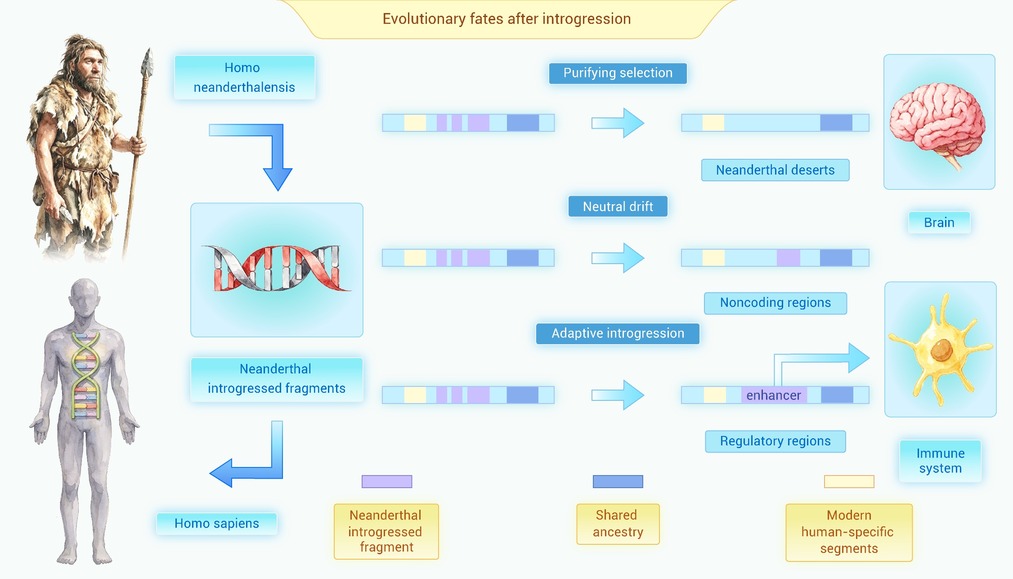
Figure 1.
Diverse evolutionary trajectories of Neanderthal introgressed fragments in modern humans
-
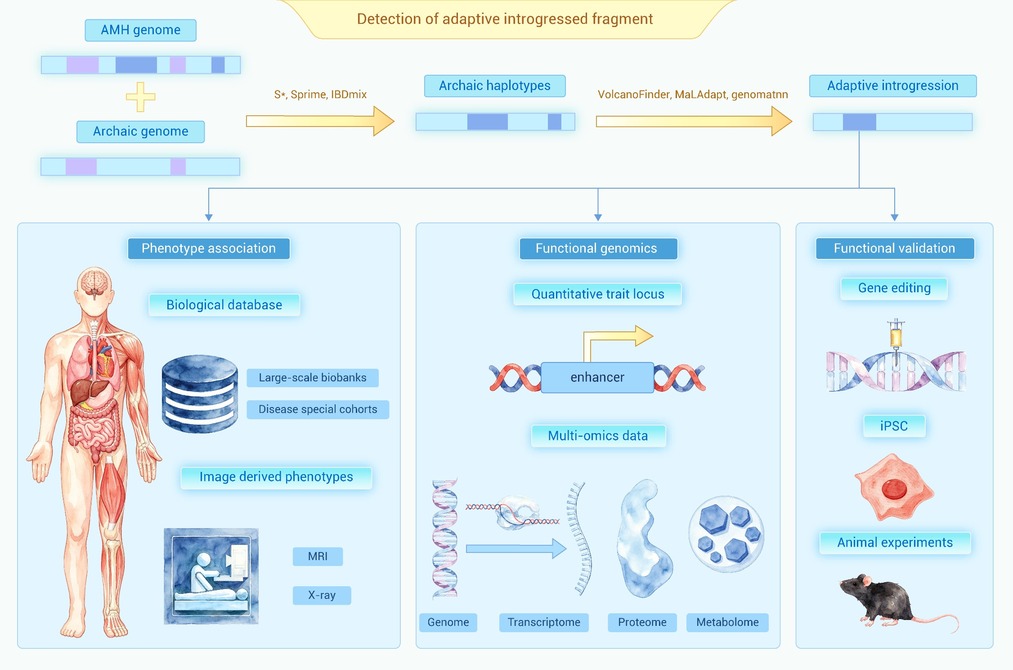
Figure 2.
Framework for detecting adaptive Neanderthal introgression and elucidating functional consequences
-
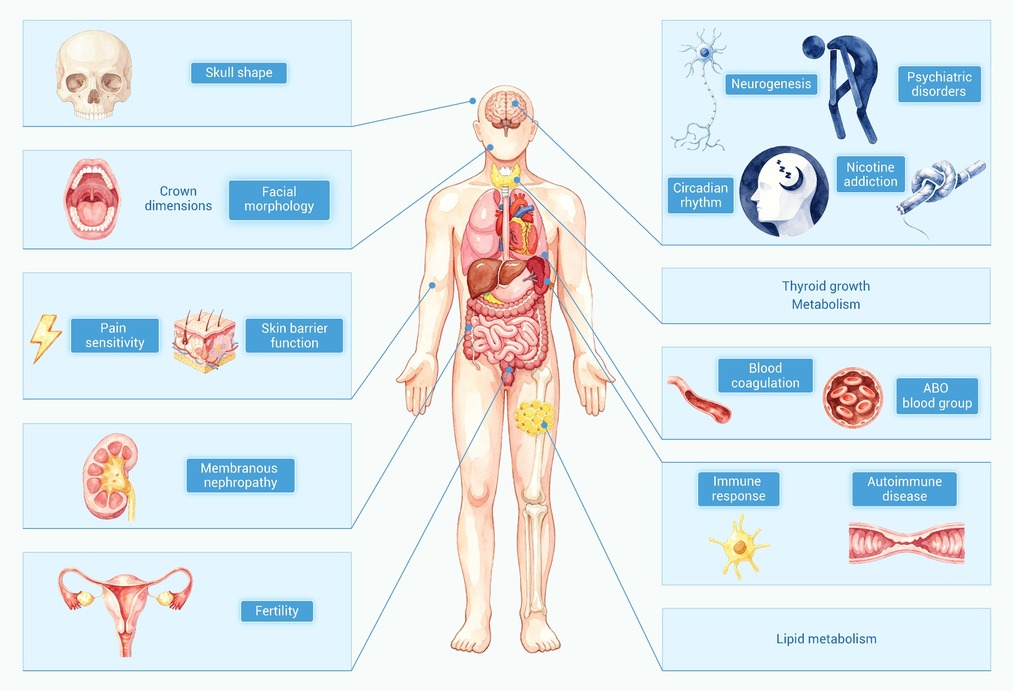
Figure 3.
Trait and disease associations linked to Neanderthal introgressed alleles
