
Large-scale and flexible circularly polarized room temperature phosphorescence with a high dissymmetry factor and chiral sensing
-
GRAPHICAL ABSTRACT
 DownLoad:
Full size image
DownLoad:
Full size image
-
PUBLIC SUMMARY
-
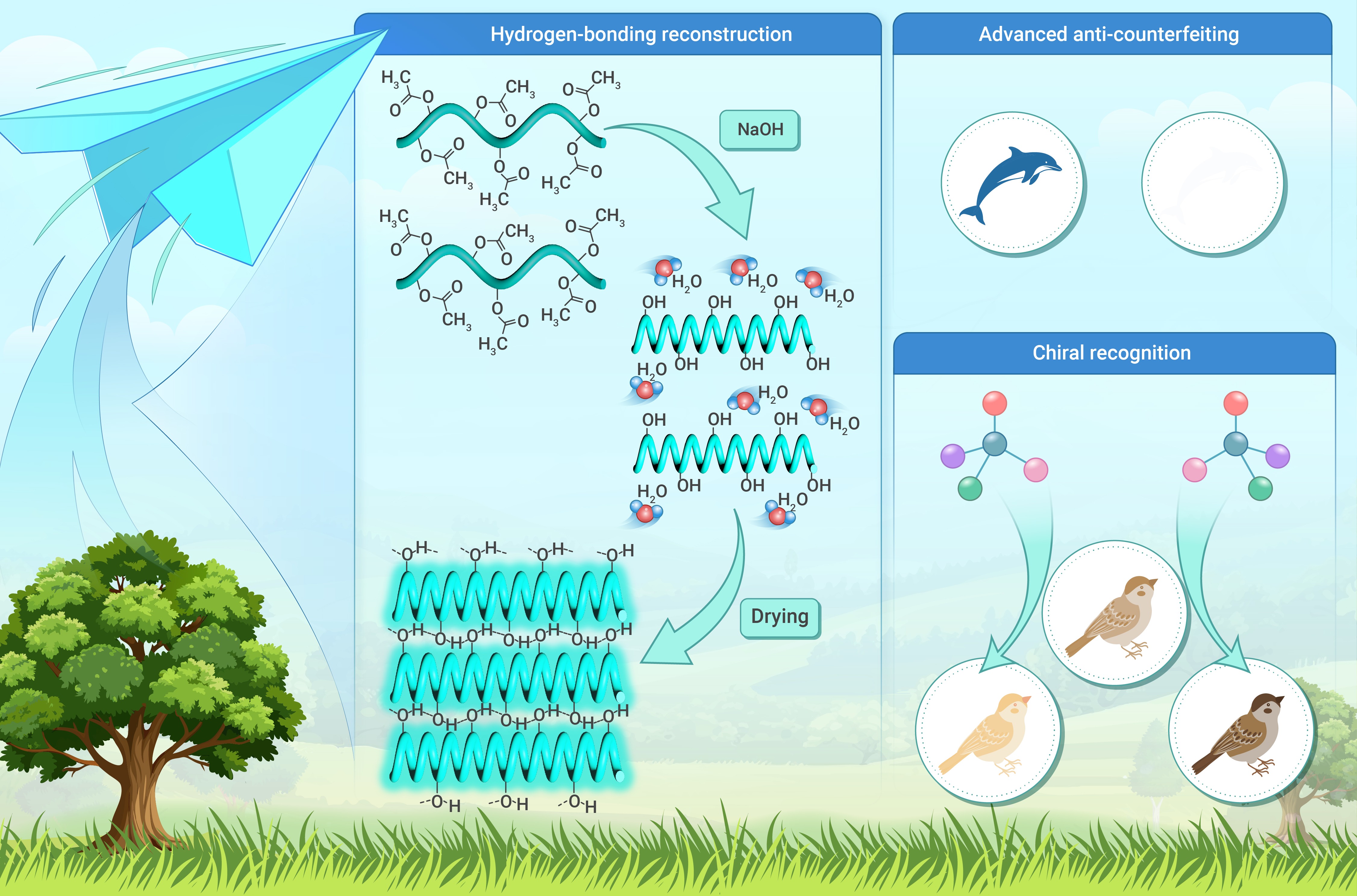
To amplify chirality by the reconstruction of hydrogen-bonding interactions in cellulose.
A scale-up process to produce circularly polarized room-temperature phosphorescent (CP-RTP) materials.
The gabs and glum of CP-RTP materials were as high as 0.48 and 0.16, respectively.
CP-RTP materials showed a visual recognition performance to many enantiomers.
-
-
ABSTRACT
Circularly polarized luminescence (CPL) materials have attracted great attention because of their rich optical information and excellent sensitivity. However, the strategy to prepare CPL materials with a high dissymmetry factor (g) is still limited. Herein, we demonstrate a facile route to scale up the fabrication of circularly polarized organic room-temperature phosphorescent (CP-RTP) materials with a high g value, outstanding flexibility and complete biodegradability, via the reconstruction and enhancement of hydrogen-bonding interactions of cellulose. The absorption dissymmetry factor (gabs) and luminescence dissymmetry factor (glum) of the CP-RTP materials are as high as 0.48 and 0.16, respectively, which are one or two orders of magnitude larger than previous records. These cellulose-based CP-RTP materials have full-color emission, and can be processed into different format. In particular, the CP-RTP materials exhibit chiral recognition performance in an instrument-free visual mode. They give a change of RTP performance once meeting different enantiomers, including lysine, histidine, cysteine, 2-chloromandelic acid, and 1-(2-naphthyl) ethanol. The novel strategy and new CP-RTP materials could promote the enrichment and practical applications of CPL materials. -

-
REFERENCES
[1] Mayorga Burrezo, P., Jimenez, V.G., Blasi, D., et al. (2019). Organic free radicals as circularly polarized luminescence emitters. Angew. Chem. Int. Ed. 58: 16282−16288. DOI: 10.1002/anie.201909398. [2] Sang, Y., Han, J., Zhao, T., et al. (2020). Circularly polarized luminescence in nanoassemblies: Generation, amplification, and application. Adv. Mater. 32: e1900110. DOI: 10.1002/adma.201900110. [3] Gong, Z.-L., Zhu, X., Zhou, Z., et al. (2021). Frontiers in circularly polarized luminescence: molecular design, self-assembly, nanomaterials, and applications. Sci. China: Chem. 64: 2060−2104. DOI: 10.1007/s11426-021-1146-6. [4] Zhang, Y., Yu, S., Han, B., et al. (2022). Circularly polarized luminescence in chiral materials. Matter 5: 837−875. DOI: 10.1016/j.matt.2022.01.001. [5] Tang Z. (2023). Printable circularly polarized luminescence materials for advancing flexible 3D imaging. The Innovation Materials 1: 100038. DOI: 10.59717/j.xinn-mater.2023.100038. [6] Qiu, Z., Ju, C.W., Frederic, L., et al. (2021). Amplification of dissymmetry factors in pi-extended [7]- and [9]helicenes. J. Am. Chem. Soc. 143: 4661−4667. DOI: 10.1021/jacs.0c13197. [7] Takaishi, K., Matsumoto, T., Kawataka, M., et al. (2021). Circularly polarized luminescence liquids based on siloxybinaphthyls: Best binaphthyl dihedral angle in the excited state. Angew. Chem. Int. Ed. 60: 9968−9972. DOI: 10.1002/anie.202101226. [8] Sun Y., Wang H., Liu S., et al., (2023). Paracyclophane-based bipolar near-ultraviolet emitters showing advanced circularly polarized luminescent properties. The Innovation Materials 1 : 100028. DOI: 10.59717/j.xinn-mater.2023.100028. [9] Lin, M., Bian, L., Chen, Q., et al. (2023). Cyclization of an achiral flipping panel to homochiral tubes exhibiting circularly polarized luminescence. Angew. Chem. Int. Ed. 62: e202303035. DOI: 10.1002/anie.202303035. [10] Zhao, F., Zhao, J., Liu, H., et al. (2023). Synthesis of pi-conjugated chiral organoborane macrocycles with blue to near-infrared emissions and the diradical character of cations. J. Am. Chem. Soc. 145: 10092−10103. DOI: 10.1021/jacs.3c00306. [11] Li, W.J., Gu, Q., Wang, X.Q., et al. (2021). AIE-active chiral [3]rotaxanes with switchable circularly polarized luminescence. Angew. Chem. Int. Ed. 60: 9507−9515. DOI: 10.1002/anie.202100934. [12] Xia, Q., Meng, L., He, T., et al. (2021). Direct visualization of chiral amplification of chiral aggregation induced emission molecules in nematic liquid crystals. ACS Nano 15: 4956−4966. DOI: 10.1021/acsnano.0c09802. [13] Garci, A., Abid, S., David, A.H.G., et al. (2022). Aggregation-induced emission and circularly polarized luminescence duality in tetracationic binaphthyl-based cyclophanes. Angew. Chem. Int. Ed. 61: e202208679. DOI: 10.1002/anie.202208679. [14] Zhang, X., Liu, H., Zhuang, G., et al. (2022). An unexpected dual-emissive luminogen with tunable aggregation-induced emission and enhanced chiroptical property. Nat. Commun. 13: 3543. DOI: 10.1038/s41467-022-31281-9. [15] Li, B., Li, Y., Chan, M.H., et al. (2021). Phosphorescent cyclometalated platinum(II) enantiomers with circularly polarized luminescence properties and their assembly behaviors. J. Am. Chem. Soc. 143: 21676−21684. DOI: 10.1021/jacs.1c10943. [16] Kotova, O., O’Reilly, C., Barwich, S.T., et al. (2022). Lanthanide luminescence from supramolecular hydrogels consisting of bio-conjugated picolinic-acid-based guanosine quadruplexes. Chem 8: 1395−1414. DOI: 10.1016/j.chempr.2022.01.015. [17] Willis, B.N., Schnable, D., Schley, N.D., and Ung, G. (2022). Spinolate lanthanide complexes for high circularly polarized luminescence metrics in the visible and near-infrared. J. Am. Chem. Soc. 144: 22421−22425. DOI: 10.1021/jacs.2c10364. [18] Jin, Y., Peng, Q.C., Xie, J.W., et al. (2023). Photo-activated circularly polarized luminescence film based on aggregation-induced emission copper(I) cluster-assembled materials. Angew. Chem. Int. Ed. 62: e202301000. DOI: 10.1002/anie.202301000. [19] Du, C., Li, Z., Zhu, X., et al. (2022). Hierarchically self-assembled homochiral helical microtoroids. Nat. Nanotechnol. 17: 1294−1302. DOI: 10.1038/s41565-022-01234-w. [20] Feng, L.Z., Wang, J.J., Ma, T., et al. (2022). Biomimetic non-classical crystallization drives hierarchical structuring of efficient circularly polarized phosphors. Nat. Commun. 13: 3339. DOI: 10.1038/s41467-022-30989-y. [21] Zhang, Y., Li, H., Geng, Z., et al. (2022). Dynamically stable and amplified circularly polarized excimer emission regulated by solvation of chiral co-assembly process. Nat. Commun. 13: 4905. DOI: 10.1038/s41467-022-32714-1. [22] Geng, Z., Liu, Z., Li, H., et al. (2023). Inverted and amplified CP-EL behavior promoted by AIE-Active chiral co-Assembled helical nanofibers. Adv. Mater. 35: e2209495. DOI: 10.1002/adma.202209495. [23] Hou, J., Toyoda, R., Meskers, S.C.J., and Feringa, B.L. (2022). Programming and dynamic control of the circular polarization of luminescence from an achiral fluorescent dye in a liquid crystal host by molecular motors. Angew. Chem. Int. Ed. 61: e202206310. DOI: 10.1002/anie.202206310. [24] Liu, S., Liu, X., Wu, Y., et al. (2022). Circularly polarized perovskite luminescence with dissymmetry factor up to 1.9 by soft helix bilayer device. Matter 5 : 2319-2333. DOI: 10.1016/j.matt.2022.05.012. [25] Zhang, X., Xu, Y., Valenzuela, C., et al. (2022). Liquid crystal-templated chiral nanomaterials: from chiral plasmonics to circularly polarized luminescence. Light Sci. Appl. 11: 223. DOI: 10.1038/s41377-022-00913-6. [26] Luo, Z.-W., Huang, A., Luo, H.-Y., et al. (2023). Regulating circularly polarized luminescent behavior of luminescent liquid crystalline polymers through resonance energy transfer. Macromolecules 56: 2700−2708. DOI: 10.1021/acs.macromol.3c00002. [27] Wu, Y., Li, M., Zheng, Z.G., et al. (2023). Liquid crystal assembly for ultra-dissymmetric circularly polarized luminescence and beyond. J. Am. Chem. Soc. 145: 12951−12966. DOI: 10.1021/jacs.3c01122. [28] Liu, W.-B., Xu, X.-H., Kang, S.-M., et al. (2021). Bottlebrush polymers carrying side chains on every backbone atom: controlled synthesis, polymerization-induced emission, and circularly polarized luminescence. Macromolecules 54: 3158−3168. DOI: 10.1021/acs.macromol.1c00016. [29] Pan, M., Zhao, R., Zhao, B., et al. (2021). Two chirality transfer channels assist handedness inversion and amplification of circularly polarized luminescence in chiral helical polyacetylene thin films. Macromolecules 54: 5043−5052. DOI: 10.1021/acs.macromol.1c00563. [30] Xu, L., Wang, C., Li, Y.X., et al. (2020). Crystallization-driven asymmetric helical assembly of conjugated block copolymers and the aggregation induced white-light emission and circularly polarized luminescence. Angew. Chem. Int. Ed. 59: 16675−16682. DOI: 10.1002/anie.202006561. [31] Nie, F., Wang, K.Z., and Yan, D. (2023). Supramolecular glasses with color-tunable circularly polarized afterglow through evaporation-induced self-assembly of chiral metal-organic complexes. Nat. Commun. 14: 1654. DOI: 10.1038/s41467-023-37331-0. [32] Ma, S., Zhao, B., and Deng, J. (2023). Helical polymer working as a chirality amplifier to generate and modulate multicolor circularly polarized luminescence in small molecular fluorophore/polymer composite films. ACS Cent. Sci. 9: 1409−1418. DOI: 10.1021/acscentsci.3c00122. [33] Liu, J., Song, Z.P., Wei, J., et al. (2024). Circularly polarized organic ultralong room-temperature phosphorescence with a high dissymmetry factor in chiral helical superstructures. Adv. Mater. 36: e2306834. DOI: 10.1002/adma.202306834. [34] Zhong, H., Zhao, B., and Deng, J. (2023). Polymer‐based circularly polarized luminescent materials. Adv. Opt. Mater. 11: 2202787. DOI: 10.1002/adom.202202787. [35] Zhang, D.W., Li, M., and Chen, C.F. (2022). Linear axially chiral conjugated polymers exhibiting ultralong low-temperature phosphorescence and intense circularly polarized luminescence. Angew. Chem. Int. Ed. 61: e202213130. DOI: 10.1002/anie.202213130. [36] Huang, W., Fu, C., Liang, Z., et al. (2022). Strong circularly-polarized room-temperature phosphorescence from a feasibly separable scaffold of bidibenzo[b,d]furan with locked axial chirality. Angew. Chem. Int. Ed. 61: e202202977. DOI: 10.1002/anie.202202977. [37] Chen, W., Tian, Z., Li, Y., et al. (2018). Long-persistent circularly polarized phosphorescence from chiral organic ionic crystals. Chem.-Eur. J. 24: 17444−17448. DOI: 10.1002/chem.201804342. [38] Huang, Z., He, Z., Ding, B., et al. (2022). Photoprogrammable circularly polarized phosphorescence switching of chiral helical polyacetylene thin films. Nat. Commun. 13: 7841. DOI: 10.1038/s41467-022-35625-3. [39] Gu, L., Ye, W., Liang, X., et al. (2021). Circularly polarized organic room temperature phosphorescence from amorphous copolymers. J. Am. Chem. Soc. 143: 18527−18535. DOI: 10.1021/jacs.1c08118. [40] Zheng, H., Li, W., Li, W., et al. (2018). Uncovering the circular polarization potential of chiral photonic cellulose films for photonic applications. Adv. Mater. 30: e1705948. DOI: 10.1002/adma.201705948. [41] Guo, S., Kamite, H., Suzuki, N., et al. (2018). Ambidextrous chirality transfer capability from cellulose tris(phenylcarbamate) to nonhelical chainlike luminophores: Achiral solvent-driven helix-helix transition of oligo- and polyfluorenes revealed by sign inversion of circularly polarized luminescence and circular dichroism spectra. Biomacromolecules 19: 449−459. DOI: 10.1021/acs.biomac.7b01554. [42] Jarvis, M. (2003). Chemistry: Cellulose stacks up. Nature 426: 611−612. DOI: 10.1038/426611a. [43] Klemm, D., Heublein, B., Fink, H.P., et al. (2005). Cellulose: Fascinating biopolymer and sustainable raw material. Angew. Chem. Int. Ed. 44: 3358−3393. DOI: 10.1002/anie.200460587. [44] Hillmyer, M.A. (2017). The promise of plastics from plants. Science 358: 868−870. DOI: 10.1126/science.aao6711. [45] Fox, S.C., Li, B., Xu, D., and Edgar, K.J. (2011). Regioselective esterification and etherification of cellulose: a review. Biomacromolecules 12: 1956−1972. DOI: 10.1021/bm200260d. [46] You, J., Zhang, X., Mi, Q., et al. (2022). Mild, rapid and efficient etherification of cellulose. Cellulose 29: 9583−9596. DOI: 10.1007/s10570-022-04879-x. [47] Zhang, X., Cheng, Y., You, J., et al. (2022). Ultralong phosphorescence cellulose with excellent anti-bacterial, water-resistant and ease-to-process performance. Nat. Commun. 13: 1117. DOI: 10.1038/s41467-022-28759-x. [48] Khoshnevisan, K., Maleki, H., Samadian, H., et al. (2018). Cellulose acetate electrospun nanofibers for drug delivery systems: Applications and recent advances. Carbohydr. Polym. 198: 131−141. DOI: 10.1016/j.carbpol.2018.06.072. [49] Vatanpour, V., Pasaoglu, M.E., Barzegar, H., et al. (2022). Cellulose acetate in fabrication of polymeric membranes: A review. Chemosphere 295: 133914. DOI: 10.1016/j.chemosphere.2022.133914. [50] Oprea, M., and Voicu, S.I. (2023). Cellulose acetate-based materials for water treatment in the context of circular economy. Water 15: 1860. DOI: 10.3390/w15101860. [51] Zhou, Q., Liu, M., Zhang, Y., et al. (2022). Packing density-promoted emission strategy toward tunable photoluminescence and room-temperature phosphorescence. ACS Sustainable Chem. Eng. 10: 8568−8576. DOI: 10.1021/acssuschemeng.2c01953. [52] Jin, K., Song, G., Diao, H., et al. (2023). Hydrogen-bond assisted nonconventional photoluminescence of crystalline and amorphous cellulose. Cellulose 30: 8139−8150. DOI: 10.1007/s10570-023-05392-5. [53] Hirata, S., and Vacha, M. (2016). Circularly polarized persistent room-temperature phosphorescence from metal-free chiral aromatics in air. J. Phys. Chem. Lett. 7: 1539−1545. DOI: 10.1021/acs.jpclett.6b00554. [54] Li, M., Li, S.H., Zhang, D., et al. (2018). Stable enantiomers displaying thermally activated delayed fluorescence: efficient oleds with circularly polarized electroluminescence. Angew. Chem. Int. Ed. 57: 2889−2893. DOI: 10.1002/anie.201800198. [55] Liang, X., Liu, T.T., Yan, Z.P., et al. (2019). Organic room-temperature phosphorescence with strong circularly polarized luminescence based on paracyclophanes. Angew. Chem. Int. Ed. 58: 17220−17225. DOI: 10.1002/anie.201909076. [56] Wu, X., Huang, C.Y., Chen, D.G., et al. (2020). Exploiting racemism enhanced organic room-temperature phosphorescence to demonstrate Wallach's rule in the lighting chiral chromophores. Nat. Commun. 11: 2145. DOI: 10.1038/s41467-020-15976-5. [57] Li, H., Li, H., Wang, W., et al. (2020). Stimuli-responsive circularly polarized organic ultralong room temperature phosphorescence. Angew. Chem. Int. Ed. 59: 4756−4762. DOI: 10.1002/anie.201915164. [58] Liu, R., Ding, B., Liu, D., et al. (2021). Switchable circularly polarized room-temperature phosphorescence based on pure organic amorphous binaphthyl polymer. Chem. Eng. J. 421: 129732. DOI: 10.1016/j.cej.2021.129732. [59] An, S., Gao, L., Hao, A., et al. (2021). Ultraviolet light detectable circularly polarized room temperature phosphorescence in chiral naphthalimide self-assemblies. ACS Nano 15: 20192−20202. DOI: 10.1021/acsnano.1c08182. [60] Bai, X., Sun, Y., Jiang, Y., et al. (2021). Circularly polarized luminescence from solvent-free chiral organic pi-liquids. Angew. Chem. Int. Ed. 60: 3745−3751. DOI: 10.1002/anie.202013550. [61] Li, H., Gu, J., Wang, Z., et al. (2022). Single-component color-tunable circularly polarized organic afterglow through chiral clusterization. Nat. Commun. 13: 429. DOI: 10.1038/s41467-022-28070-9. [62] Wang, T., Liu, M., Feng, W., et al. (2023). Long‐lived charge separation induced organic long‐persistent luminescence with circularly polarized characteristic. Adv. Opt. Mater. 11: 2202613. DOI: 10.1002/adom.202202613. [63] Liao, X.J., Pu, D., Yuan, L., et al. (2023). Planar chiral multiple resonance thermally activated delayed fluorescence materials for efficient circularly polarized electroluminescence. Angew. Chem. Int. Ed. 62: e202217045. DOI: 10.1002/anie.202217045. [64] Ma, S., Ma, H., Yang, K., et al. (2023). Intense circularly polarized fluorescence and room-temperature phosphorescence in carbon dots/chiral helical polymer composite films. ACS Nano 17: 6912−6921. DOI: 10.1021/acsnano.3c00713. [65] Guang, L., Lu, Y., Zhang, Y., et al. (2024). Circularly polarized phosphorescence of benzils achieved by chiral supramolecular polymerization. Angew. Chem. Int. Ed. 63: e202315362. DOI: 10.1002/anie.202315362. [66] Xu, D., Liu, C., Li, H., et al. (2024). Circularly polarized room temperature phosphorescence of chiral bromoxanthone using a chiral self‐assembled liquid crystal polymer frameworks. Adv. Opt. Mater. 63: 2303019. DOI: 10.1002/adom.202303019. [67] Kamide, K., Miyamoto, I., and Okajima, K. (1993). Formation and properties of the lyotropic mesophase of the cellulose/mixed inorganic acid system. Polym. J. 25: 453−461. DOI: 10.1295/polymj.25.453. [68] Kondo, T. (1997). The assignment of IR absorption bands due to free hydroxyl groups in cellulose. Cellulose 4: 281−292. DOI: 10.1023/a:1018448109214. [69] Popescu, C.M., Popescu, M.C., and Vasile, C. (2011). Structural analysis of photodegraded lime wood by means of FT-IR and 2D IR correlation spectroscopy. Int. J. Biol. Macromol. 48: 667−675. DOI: 10.1016/j.ijbiomac.2011.02.009. [70] Liang, Y.C., Cao, Q., Liu, K.K., et al. (2021). Phosphorescent carbon-nanodots-assisted forster resonant energy transfer for achieving red afterglow in an aqueous solution. ACS Nano 15: 16242−16254. DOI: 10.1021/acsnano.1c05234. [71] Jin, K., Ji, X., Zhang, J., et al. (2022). Colourful organic afterglow materials with super-wide color gamut and scaled processability from cellulose. Mater. Today Chem. 26: 101179. DOI: 10.1016/j.mtchem.2022.101179. -
ABOUT THIS ARTICLE
Cite this article:
Jin K., Yin C., You J., et al., (2024). Large-scale and flexible circularly polarized room temperature phosphorescence with a high dissymmetry factor and chiral sensing. The Innovation Materials 2(4): 100096. https://doi.org/10.59717/j.xinn-mater.2024.100096
Welcome!
To request copyright permission to republish or share portions of our works, please visit Copyright Clearance Center's (CCC) Marketplace website at marketplace.copyright.com.

Article Metrics
Relative Articles
Cited by
Export File
Citation
Jin K., Yin C., You J., et al., (2024). Large-scale and flexible circularly polarized room temperature phosphorescence with a high dissymmetry factor and chiral sensing. The Innovation Materials 2(4): 100096. https://doi.org/10.59717/j.xinn-mater.2024.100096

Format
Content


-
Figure 1.
Schematic illustration of full-color CPL materials with high g value from natural cellulose.
-
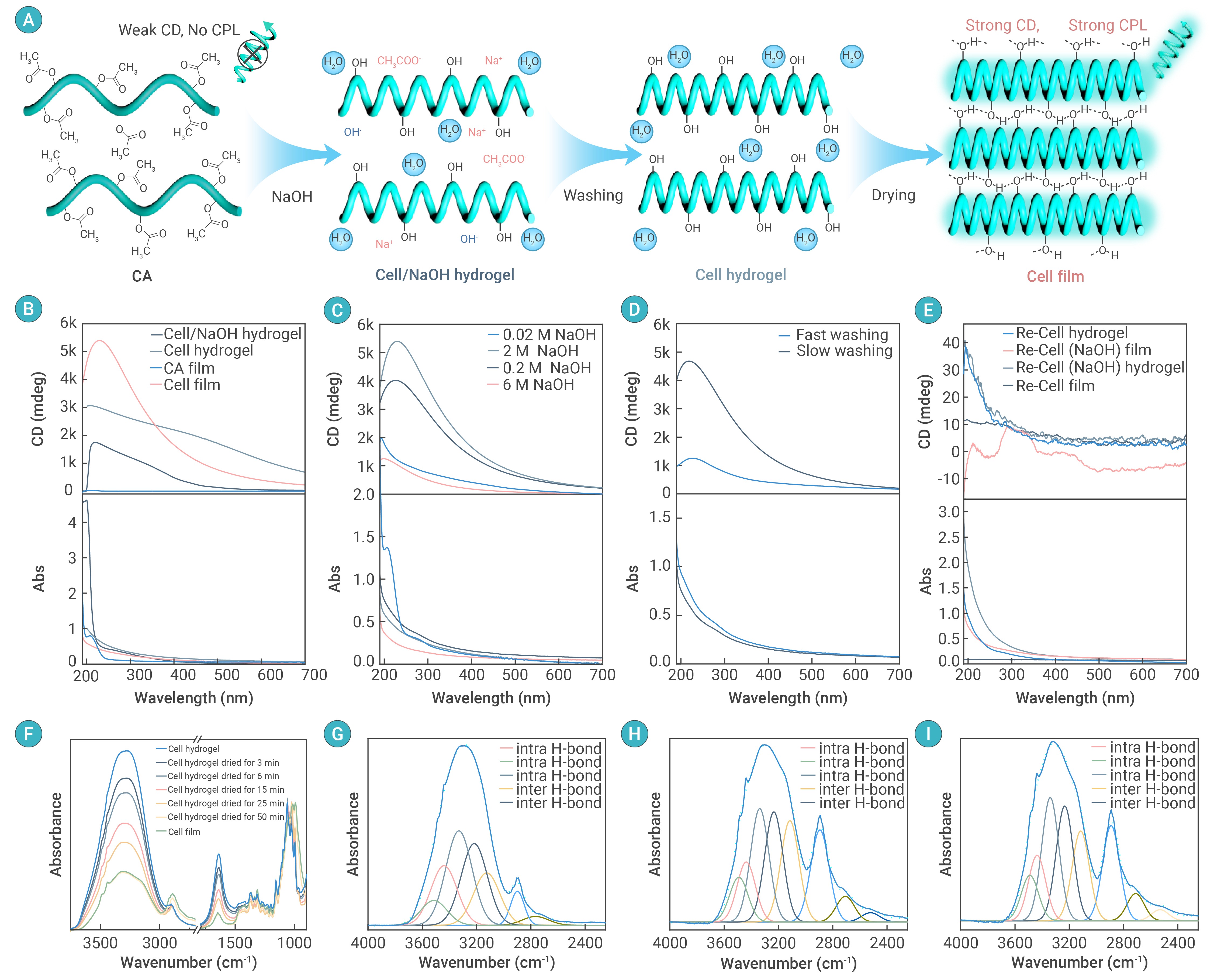
Figure 2.
Preparation and properties of cellulose-based CP-RTP materials
-
Figure 3.
Mechanism of cellulose-based CP-RTP materials
-
Figure 4.
Preparation and performance of full-color CPL materials
-
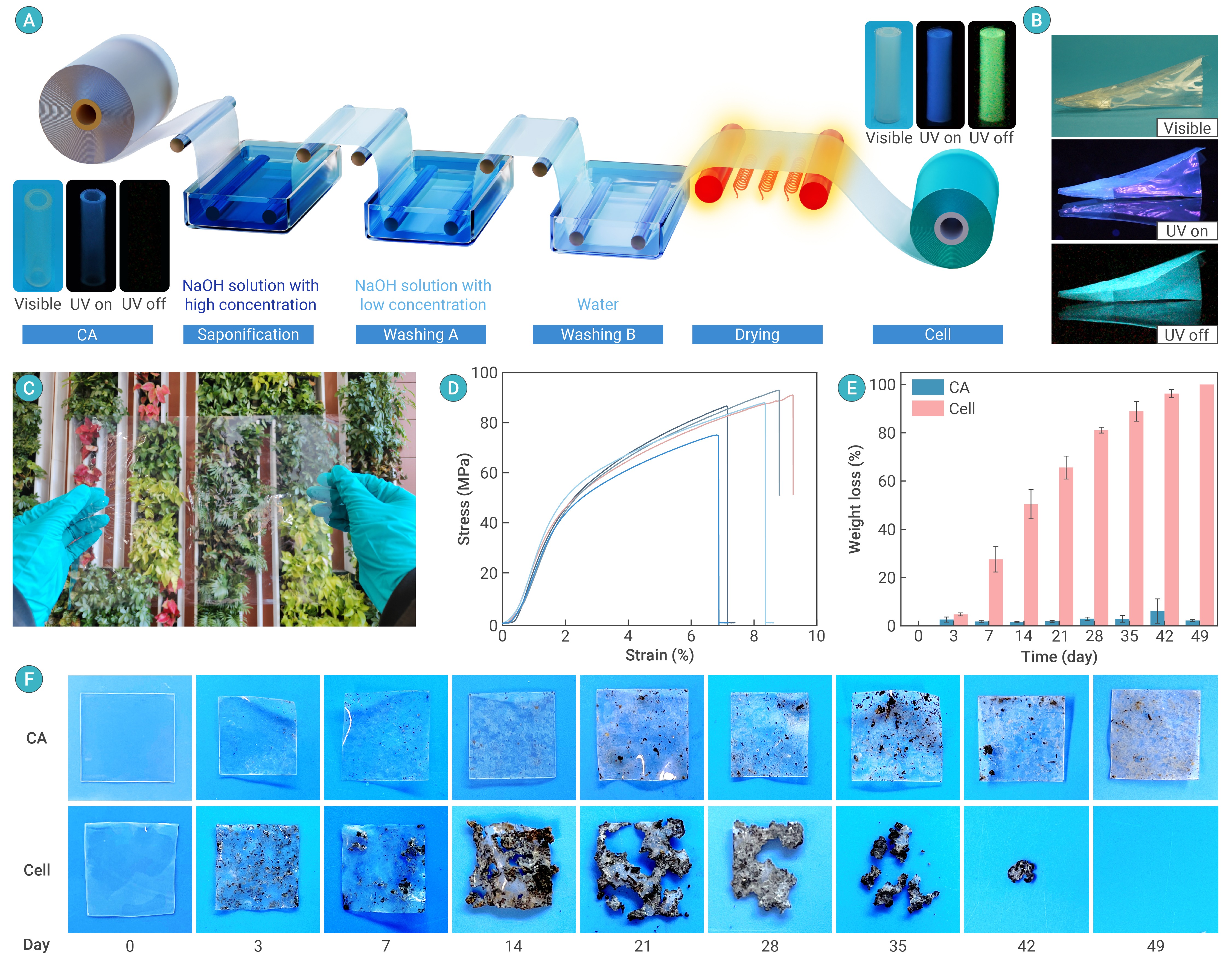
Figure 5.
Large-scale preparation of full-color CPL films
-
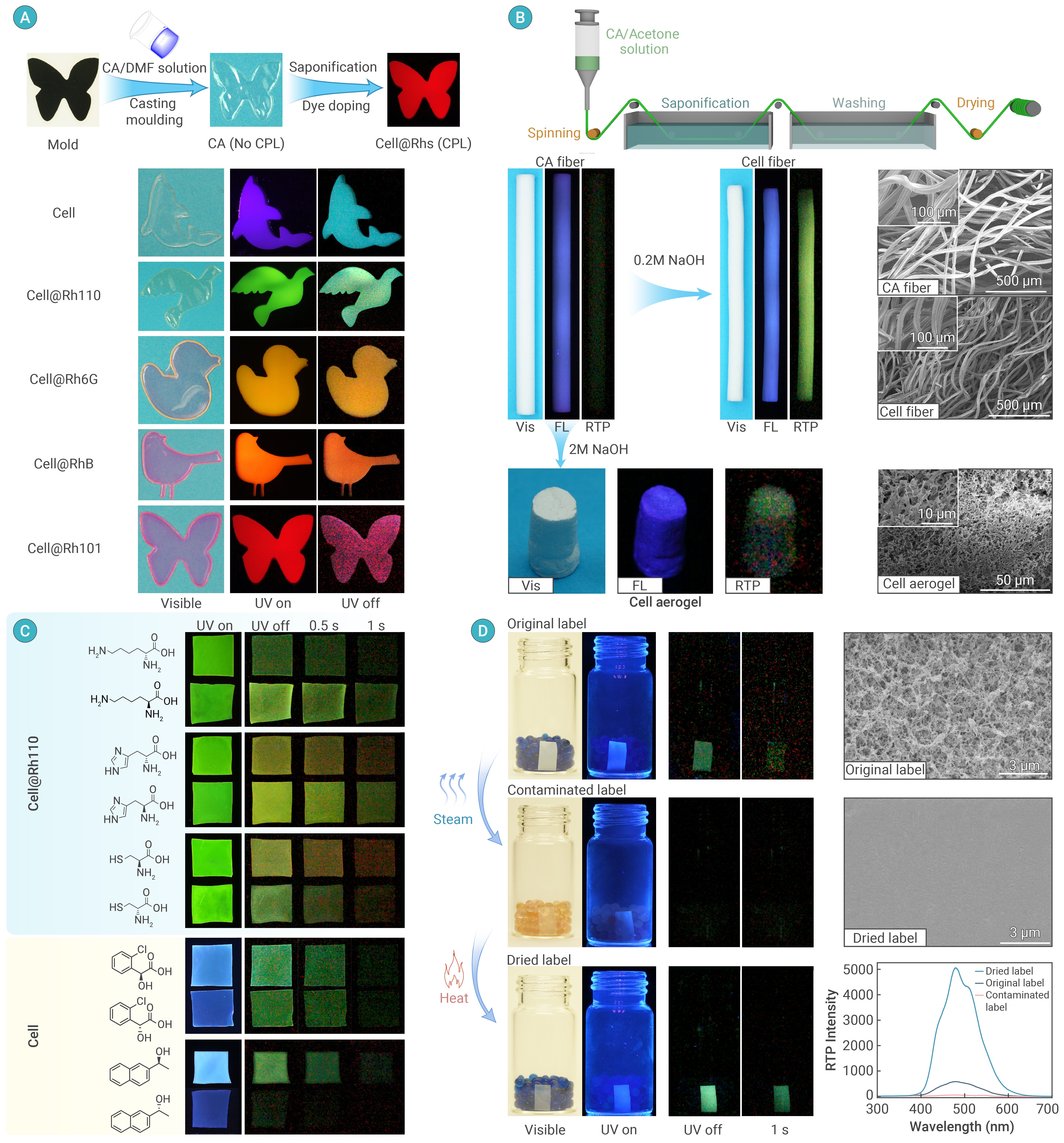
Figure 6.
Large-scale preparation and application of full-color CPL materials
