
Click Beetle-inspired wood robot for high-frequency continuous jumping
-
GRAPHICAL ABSTRACT
 DownLoad:
Full size image
DownLoad:
Full size image
-
PUBLIC SUMMARY
-
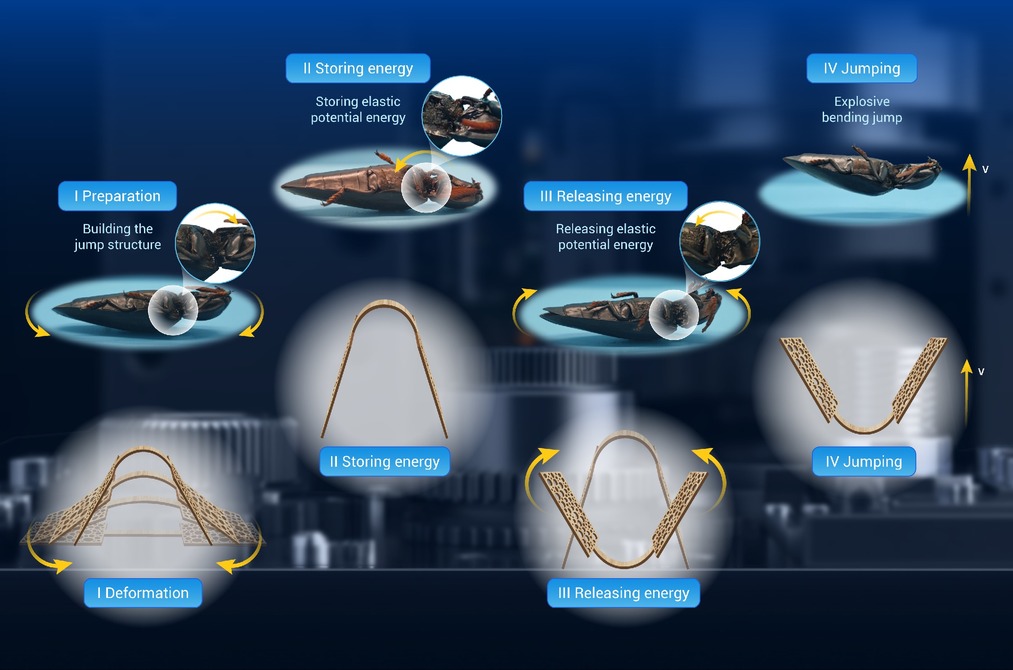
Inspired by click beetles, the magnetic wood jumping robot (J-robot) realizes efficient energy release.
The J-robot retains the mechanical advantages of wood, enabling continuous high-frequency jumping.
Magnetic drive enables the J-robot achieves high-frequency jumps and precise directional control.
J-robot can perform directional obstacle avoidance with high motion controllability in complex environments.
-
-
ABSTRACT
Achieving continuous jumping in soft robots significantly enhances their movement efficiency. Inspired by the jumping mechanism of click beetles, we present a magnetically controlled wooden jumping robot (J-robot) constructed from delignified wood decorated with polydopamine-modified NdFeB microparticles. The mechanically robust wood structure serves as an effective elastic energy reservoir, while the incorporated NdFeB microparticles enable instantaneous magnetic activation within the composite system. A customized magnetization process programs the J-robot into “arch bridge” and “U-shaped” configurations, facilitating rapid conversion of stored elastic energy into kinetic energy via magnetic field switching. This design allows the J-robot to yield a jump initiation time of 0.1 s and a maximum jump height of 23.5 mm. By adjusting magnetic field parameters, the J-robot performs up to 257 jumps min-1, a frequency surpassing most reported soft jumping robots. Additionally, the jump height scales proportionally with the elastic modulus of basic materials, offering valuable insight for soft jumping robot design. This work transforms conventional wood into a dynamic, high-performance actuation material, establishing a new paradigm for sustainable and environmentally adaptive soft robotics.-
Keywords:
- Wood /
- Magnetic responsiveness /
- Jumping robot /
- Biomimetic devices /
- Soft robot
-

-
REFERENCES
[1] Mu J., Yang L., Sheng N., et al. (2024). Advancing medical devices with soft actuators. Innov. Mater. 3:100112. DOI:10.59717/j.xinn-mater.2024.100112 [2] Rothemund P., Kim Y., Heisser R. H., et al. (2021). Shaping the future of robotics through materials innovation. Nat. Mater. 20:1582−1587. DOI:10.1038/s41563-021-01158-1 [3] Ren Z. and Sitti M. (2023). Design and build of small-scale magnetic soft-bodied robots with multimodal locomotion. Nat. Protoc. 19:441−486. DOI:10.1038/s41596-023-00916-6 [4] Yao Z., Guan Z., Zhang S., et al. (2025). Towards energy-autonomous wearables: Multimodal harvesting technologies and sustainable applications. Innov. Mater. 3:100143. DOI:10.59717/j.xinn-mater.2025.100143 [5] Fang J., Zhuang Y., Liu K., et al. (2022). A shift from efficiency to adaptability: recent progress in biomimetic interactive soft robotics in wet environments. Adv. Sci. 9:2104347. DOI:10.1002/advs.202104347 [6] Naclerio N. D., Karsai A., Murray-Cooper M., et al. (2021). Controlling subterranean forces enables a fast, steerable, burrowing soft robot. Sci. Robot. 6:eabe2922. DOI:10.1126/scirobotics.abe2922 [7] Wu Y., Dong X., Kim J.-k., et al. (2022). Wireless soft millirobots for climbing three-dimensional surfaces in confined spaces. Sci. Adv. 8:eabn3431. DOI:10.1126/sciadv.abn3431 [8] Kim Y., Parada G. A., Liu S., et al. (2019). Ferromagnetic soft continuum robots. Sci. Robot. 4:eaax7329. DOI:10.1126/scirobotics.aax7329 [9] Lou H., Wang Y., Sheng Y., et al. (2024). Water‐induced shape‐locking magnetic robots. Adv. Sci. 11:2405021. DOI:10.1002/advs.202405021 [10] Zhang Y., Li P., Quan J., et al. (2022). Progress, challenges, and prospects of soft robotics for space applications. Adv. Intell. Syst. 5:2200071. DOI:10.1002/aisy.202200071 [11] Wang X., Li S., Chang J.-C., et al. (2024). Multimodal locomotion ultra-thin soft robots for exploration of narrow spaces. Nat. Commun. 15:6296. DOI:10.1038/s41467-024-50598-1 [12] Chen H., Yao X., Qin H.-L., et al. (2025). A highly-stable multi-responsive bimorph liquid crystal actuator with chemically soldered heterogenous interface. Innov. Mater. 3:100144. DOI:10.59717/j.xinn-mater.2025.100144 [13] Feng W., Sun L., Jin Z., et al. (2024). A large-strain and ultrahigh energy density dielectric elastomer for fast moving soft robot. Nat. Commun. 15:4222. DOI:10.1038/s41467-024-48243-y [14] Zhang L., Xing S., Yin H., et al. (2024). Skin-inspired, sensory robots for electronic implants. Nat. Commun. 15:4777. DOI:10.1038/s41467-024-48903-z [15] Li J., Yu K., Wang G., et al. (2023). Recent development of jumping motions based on soft actuators. Adv. Funct. Mater. 33:2300156. DOI:10.1002/adfm.202300156 [16] Yang Y. and Wang Y. (2023). Snapping for 4D‐printed insect‐scale metal‐jumper. Adv. Sci. 11:2307088. DOI:10.1002/advs.202307088 [17] Wang Y., Du X., Zhang H., et al. (2023). Amphibious miniature soft jumping robot with on‐demand in‐flight maneuver. Adv. Sci. 10:2207493. DOI:10.1002/advs.202207493 [18] Xu L., Xue F., Zheng H., et al. (2022). An insect larvae inspired MXene-based jumping actuator with controllable motion powered by light. Nano Energy 103:107848. DOI:10.1016/j.nanoen.2022.107848 [19] Hu J., Nie Z., Wang M., et al. (2023). Springtail‐inspired light‐driven soft jumping robots based on liquid crystal elastomers with monolithic three‐leaf panel fold structure. Angew. Chem. Int. Ed. 62:e202218227. DOI:10.1002/anie.202218227 [20] Kuang Z., Liu J., Meng W., et al. (2024). Click‐beetles‐inspired light‐driven continuous jumping robots based on janus azobenzene polymer films. Adv. Funct. Mater. 35:2421111. DOI:10.1002/adfm.202421111 [21] Zhou X., Chen G., Jin B., et al. (2024). Multimodal autonomous locomotion of liquid crystal elastomer soft robot. Adv. Sci. 11:2402358. DOI:10.1002/advs.202402358 [22] Guo H., Priimagi A. and Zeng H. (2021). Optically controlled latching and launching in soft actuators. Adv. Funct. Mater. 32:2108919. DOI:10.1002/adfm.202108919 [23] Mu W., Li M., Chen E., et al. (2023). Spiral‐shape fast‐moving soft robots. Adv. Funct. Mater. 33:2300516. DOI:10.1002/adfm.202300516 [24] Chen R., Yuan Z., Guo J., et al. (2021). Legless soft robots capable of rapid, continuous, and steered jumping. Nat. Commun. 12:7028. DOI:10.1038/s41467-021-27265-w [25] Hawkes E. W., Xiao C., Peloquin R.-A., et al. (2022). Engineered jumpers overcome biological limits via work multiplication. Nature 604:657−661. DOI:10.1038/s41586-022-04606-3 [26] Lo J. and Parslew B. (2024). Characterising the take-off dynamics and energy efficiency in spring-driven jumping robots. Mech. Mach. Theory. 199:105688. DOI:10.1016/j.mechmachtheory.2024.105688 [27] Yao D. R., Kim I., Yin S., et al. (2024). Multimodal soft robotic actuation and locomotion. Adv. Mater. 36:2308829. DOI:10.1002/adma.202308829 [28] Fan X. J., Jiang Y. H., Li M. T., et al. (2022). Scale-reconfigurable miniature ferrofluidic robots for negotiating sharply variable spaces. Sci. Adv. 8:14. DOI:10.1126/sciadv.abq1677 [29] Wang C., Zhao Z., Han J., et al. (2024). Wireless magnetic robot for precise hierarchical control of tissue deformation. Adv. Sci. 11:2308619. DOI:10.1002/advs.202308619 [30] Maitland D. P. (1992). Locomotion by jumping in the Mediterranean fruit-fly larva Ceratitis capitata. Nature 355:159−161. DOI:10.1038/355159a0 [31] Bennet-Clark H. C. and Lucey E. C. A. (1967). The jump of the flea: a study of the energetics and a model of the mechanism. J. Exp. Biol. 47:59−76. DOI:10.1242/jeb.47.1.59 [32] Alexander R. M. and Vernon A. (2009). The mechanics of hopping by kangaroos (Macropodidae). J. Zool. 177:265−303. DOI:10.1111/j.1469-7998.1975.tb05983.x [33] Evans M. E. G. (1972). The jump of the click beetle (Coleoptera, Elateridae)-a preliminary study. J. Zool. 167:319−336. DOI:10.1111/j.1469-7998.1972.tb03115.x [34] Bolmin O., McElrath T. C., Wissa A., et al. (2022). Scaling of jumping performance in click beetles (Coleoptera: Elateridae). Integr. Comp. Biol. 62:1227−1234. DOI:10.1093/icb/icac068 [35] Ruan Y., Zhang M., Kundrata R., et al. (2022). Functional morphology of the thorax of the click beetle campsosternus auratus (Coleoptera, Elateridae), with an emphasis on its jumping mechanism. Insects 13:248. DOI:10.3390/insects13030248 [36] Guan H., Meng J., Cheng Z., et al. (2020). Processing natural wood into a high-performance flexible pressure sensor. ACS Appl. Mater. Interfaces 12:46357−46365. DOI:10.1021/acsami.0c12561 [37] Yu K., Ji X., Yuan T., et al. (2021). Robust jumping actuator with a shrimp‐shell architecture. Adv. Mater. 33:2104558. DOI:10.1002/adma.202104558 [38] Li L., Shang Z., Tang J., et al. (2022). Wood robot with magnetic anisotropy for programmable locomotion. Adv. Funct. Mater. 33:2207209. DOI:10.1002/adfm.202207209 -
ABOUT THIS ARTICLE
Cite this article:
Li X., Wang Y., Zhang Q., et al. (2026). Click Beetle-inspired wood robot for high-frequency continuous jumping. The Innovation Materials 4:100192. https://doi.org/10.59717/j.xinn-mater.2026.100192
Welcome!
To request copyright permission to republish or share portions of our works, please visit Copyright Clearance Center's (CCC) Marketplace website at marketplace.copyright.com.
Article Metrics
Relative Articles
Cited by
Export File
Citation
Li X., Wang Y., Zhang Q., et al. (2026). Click Beetle-inspired wood robot for high-frequency continuous jumping. The Innovation Materials 4:100192. https://doi.org/10.59717/j.xinn-mater.2026.100192

Format
Content
-
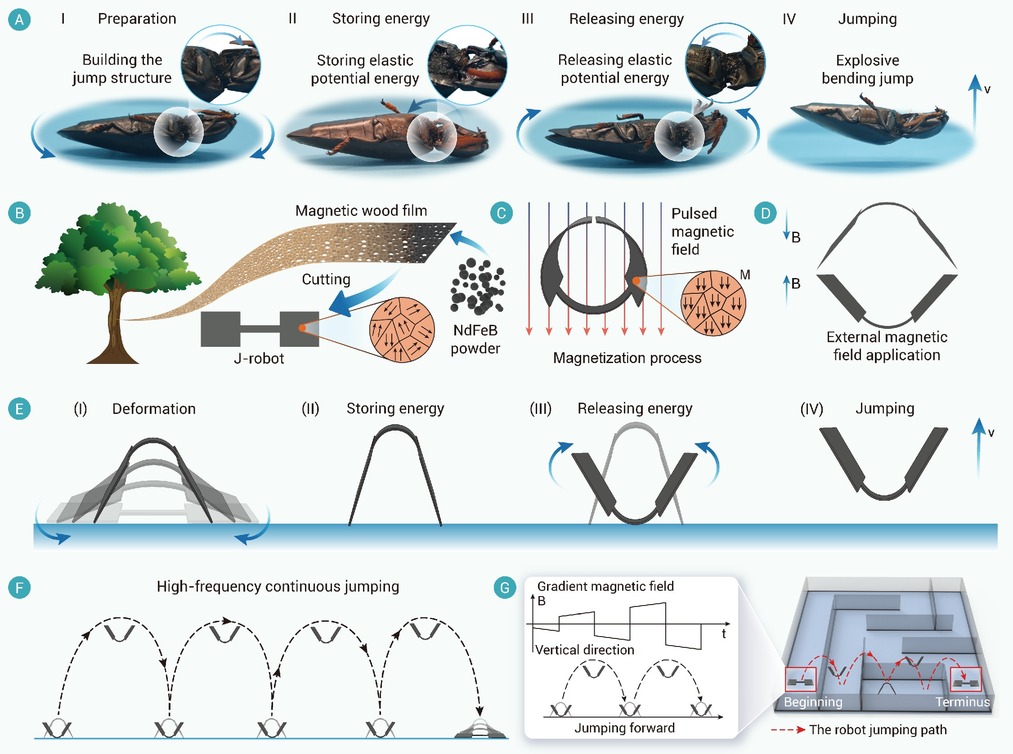
Figure 1.
The concept of click beetle inspired J-robot
-
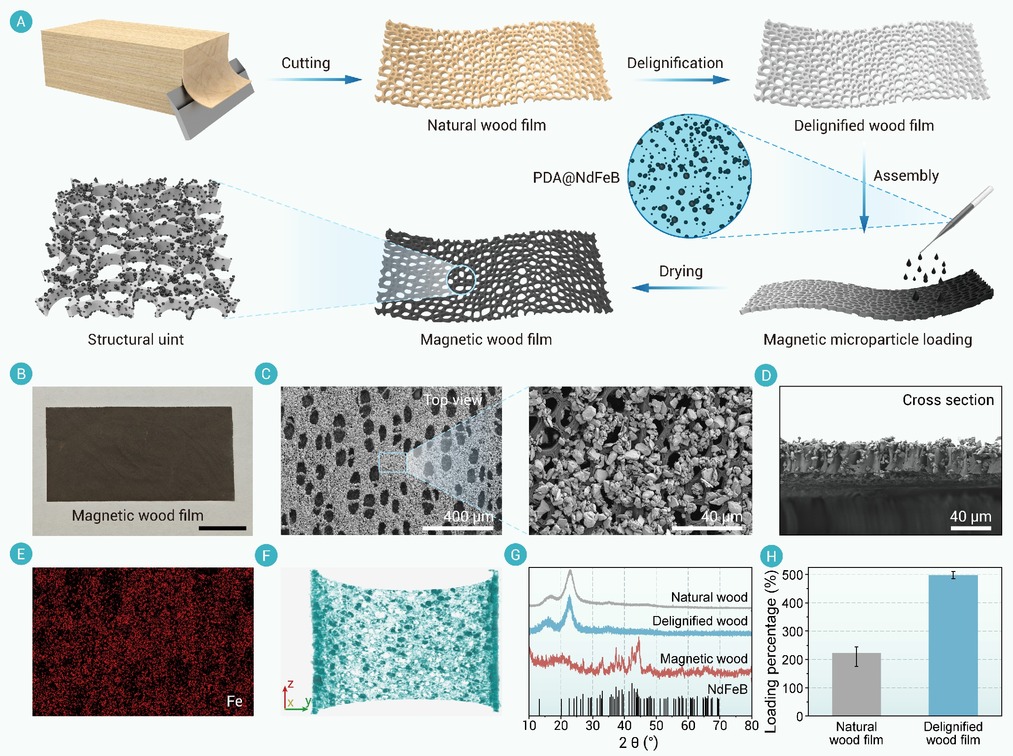
Figure 2.
Preparation and characterization of the magnetic wood film
-
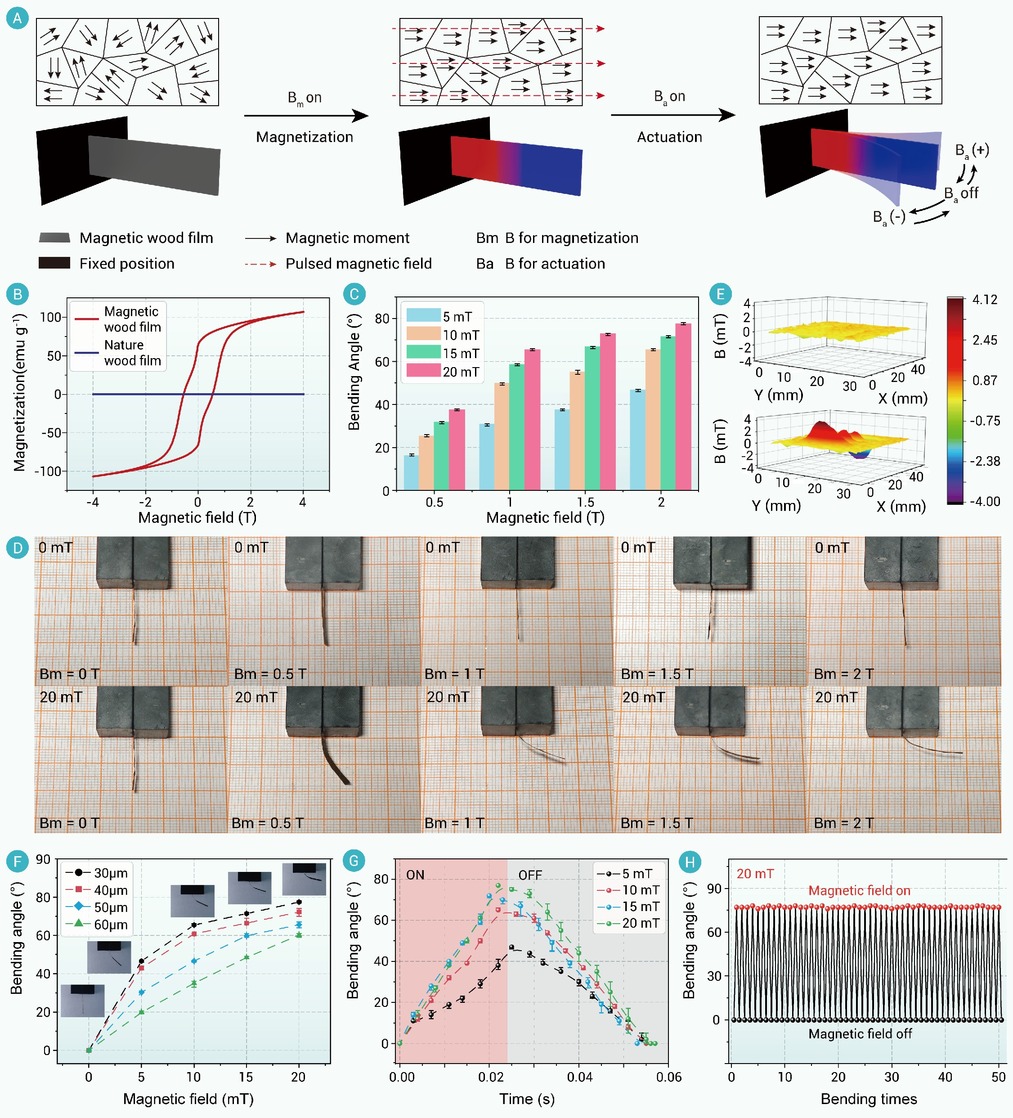
Figure 3.
Magnetism of as-prepared wood samples
-
Figure 4.
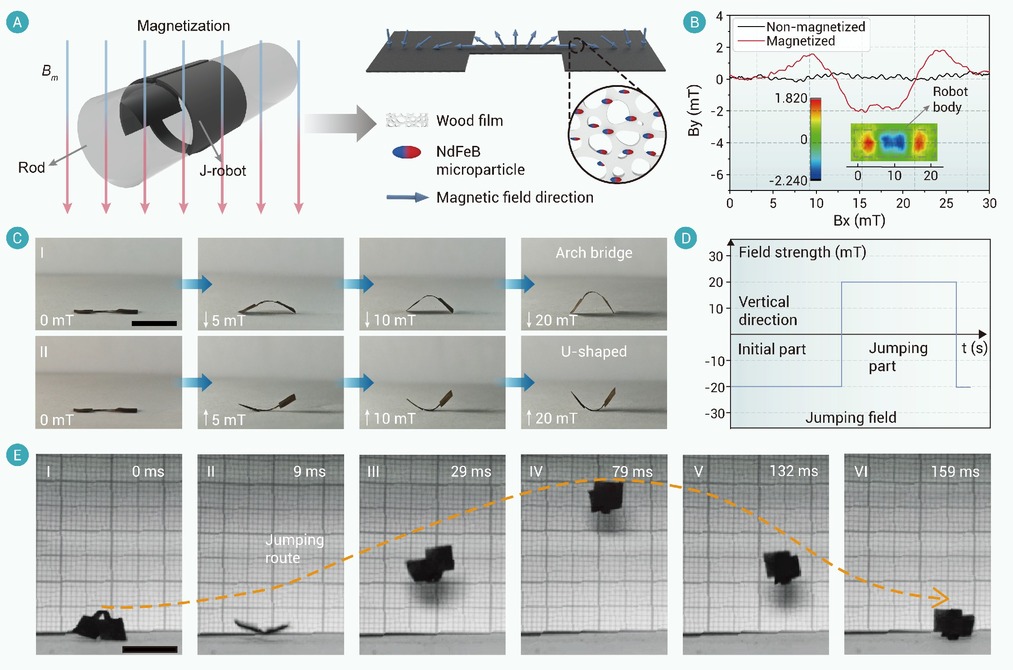
Magnetically controlled shape reconstruction and motion for the J-robot
-
Figure 5.
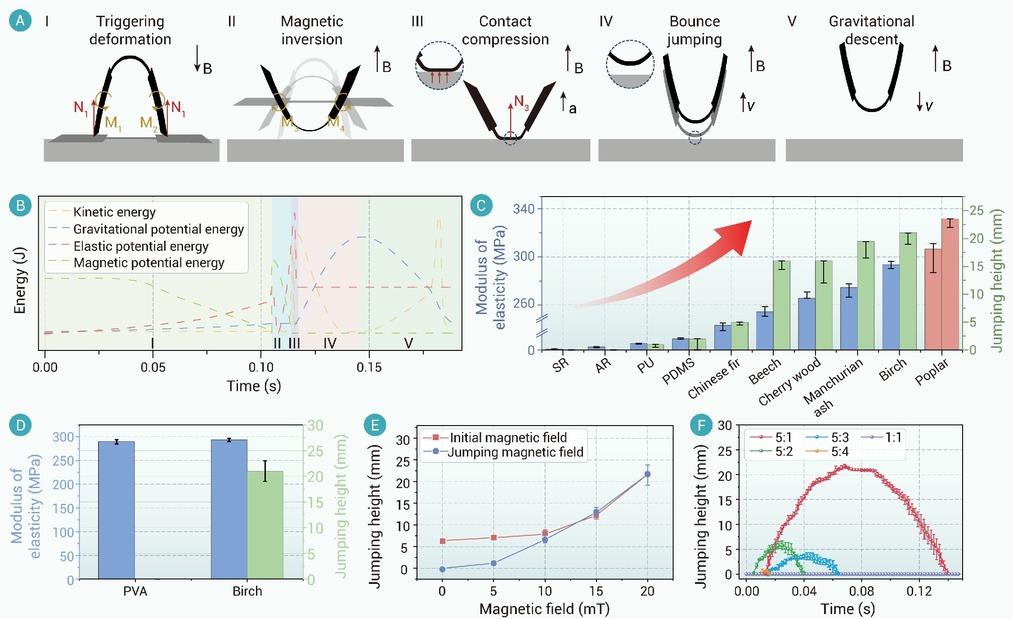
Analysis of J-robot jumping process and factors affecting jumping height
-
Figure 6.
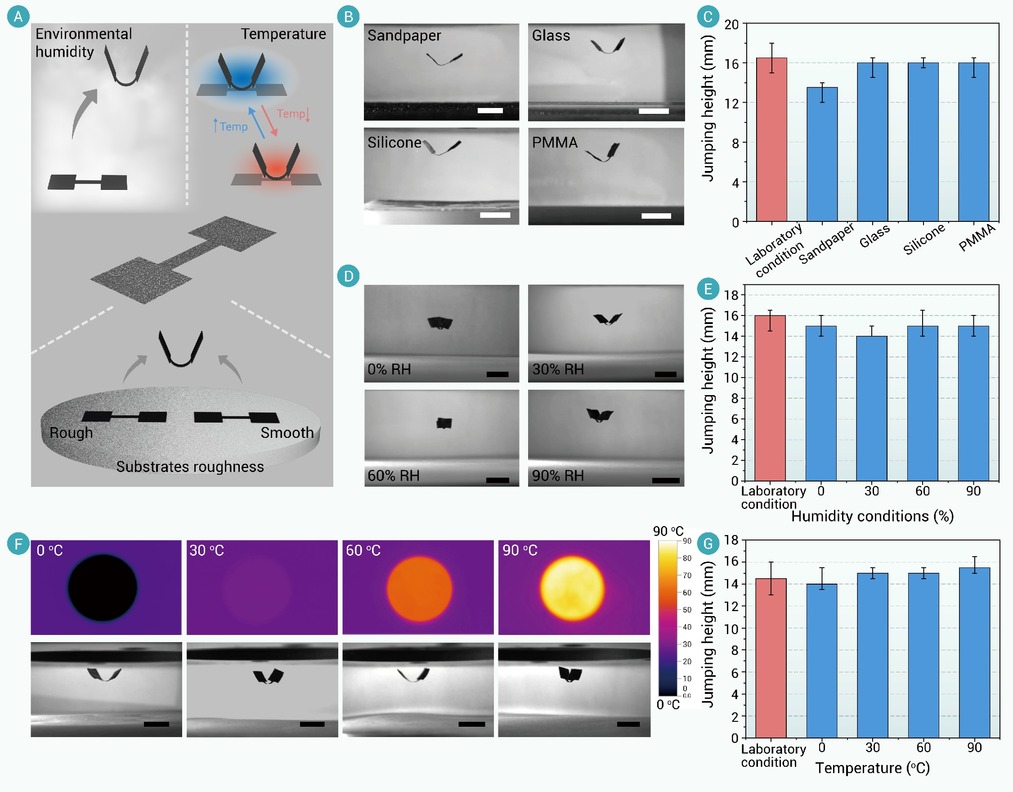
Environmental adaptability of the J-robot
-
Figure 7.
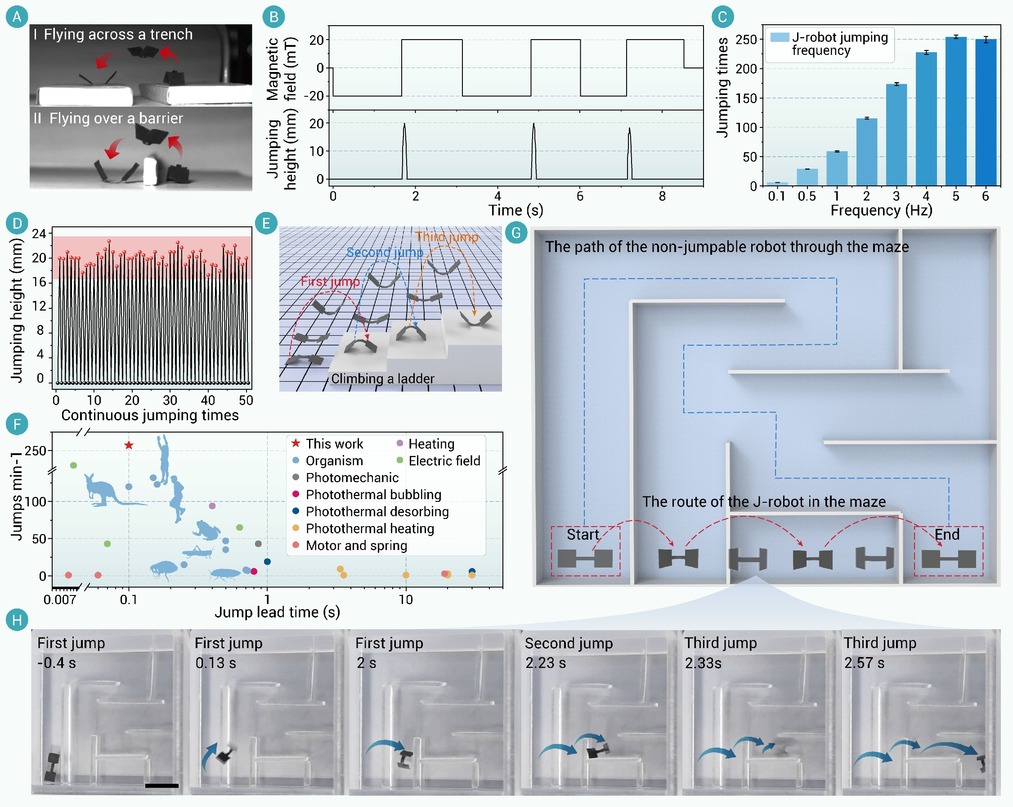
Continuous jumping motion of the J-robot
