
Suppressing antiparallel dipole alignment: A molecular engineering strategy toward sem-organic UV NLO crystals
-
GRAPHICAL ABSTRACT
 DownLoad:
Full size image
DownLoad:
Full size image
-
PUBLIC SUMMARY
-
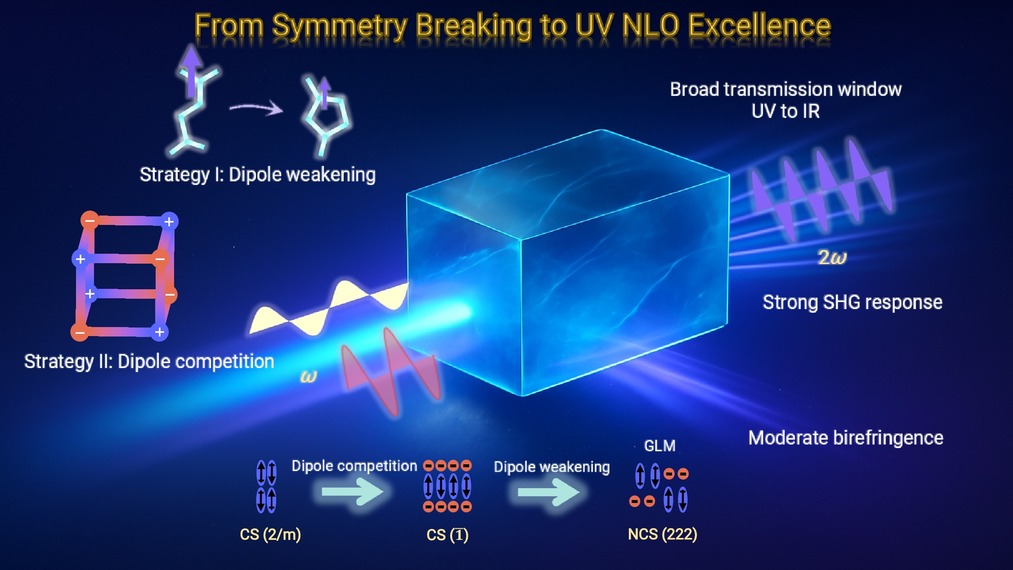
A dual molecular strategy to construct non-centrosymmetric semi-organic nonlinear optical crystals.
Identification of a novel highly efficient nonlinear optical chromophore suitable for the ultraviolet region.
(C3N3OH6)(CH3SO3), an outstanding nonlinear optical crystal, achieves thermal-induced symmetry breaking.
-
-
ABSTRACT
Designing crystalline materials with exceptional nonlinear optical (NLO) performance for all-solid-state lasers is a challenging task. In covalent compounds, organic groups with large molecular dipole moments (μ) tend to form antiparallel dimers, leading to a high probability of crystallization in centrosymmetric (CS) structures. This study proposes a dual molecular engineering strategy, which involves reducing the ground-state dipole moment of functional molecules and introducing counterions for dipole competition, to guide self-assembly and optimize the performance of semi-organic crystals. Applied to the CS compound (C3N3O2H8)(CH3SO3)·H2O (HGM), symmetry breaking occurs through thermally induced structural evolution. The resulting NLO material, (C3N3OH6)(CH3SO3) (GLM), exhibits exceptional solar-blind ultraviolet performance. It demonstrates advantages over the commercial semi-organic NLO crystal LAP in several key aspects, including superior thermal stability, a broader transmission range, a stronger second-harmonic response (2.0 × KDP), and a suitable birefringence (Δn = 0.078@546 nm). First-principles calculations reveal that the π-conjugated (C3N3OH6)+ cation governs its strong optical anisotropy and NLO response. This work establishes a new paradigm for designing high-performance semi-organic NLO crystals.-
Keywords:
- NLO Crystal /
- Dipole Engineering /
- Ultraviolet Region /
- Symmetry Breaking /
- Semi-Organic
-

-
REFERENCES
[1] Chen C., Wang Y., Wu B., et al. (1995). Design and synthesis of an ultraviolet-transparent nonlinear optical crystal Sr2Be2B2O7. Nature 373:322–324. DOI:10.1038/373322a0 [2] Cyranoski D. (2009) Materials science: China's crystal cache. Nature 457:953–955. DOI:10.1038/457953a [3] Dang J., Mei D., Wu Y., et al. (2021). A comprehensive survey on nonlinear optical phosphates: Role of multicoordinate groups. Coord. Chem. Rev. 431:213692. DOI:10.1016/j.ccr.2020.213692 [4] Eaton D. F. (1991). Nonlinear optical materials. Science 253:281−287. DOI:10.1126/science.253.5017.281 [5] Tran T. T., Yu H., Rondinelli J. M., et al. (2016). Deep ultravioletn onlinear optical materials. Chem. Mater. 28:5238-5258. DOI:10.1021/acs.chemmater.6b02366 [6] Wu L., Patankar S., Morimoto T., et al. (2017). Giant anisotropic nonlinear optical response in transition metal monopnictide Weyl semimetals. Nat. Phys. 13:350–355. DOI:10.1038/nphys3969 [7] Savage N. (2006). Ultraviolet lasers. Nat. Photonics 1: 83–85. DOI: 10.1038/nphoton.2006.95 [8] Shao M., Liang F., Yu H., et al. (2020). Pushing periodic-disorder-induced phase matching into the deep-ultraviolet spectral region: Theory and demonstration. Light: Sci. Appl. 9:45. DOI:10.1038/s41377-020-0281-4 [9] Wu Y., Cui C., Wang Z., et al. (2025). Finding a novel borate ferroelectric with random domain structures for deep-UV quasi-phase-matching. Adv. Mater. 33:2505930. DOI:10.1002/adma.202505930 [10] Deng Y. L., Hu C. L., Xu X., et al. (2025). Na[B3IO7(OH)] and Na2[B4IO9](IO3): Explorations of boroiodates with strong second harmonic generation response and large birefringence. J. Am. Chem. Soc. 147:12858–12865. DOI:10.1021/jacs.5c01673 [11] Jin C., Li Y., Kim J. S., et al. (2025). Exceptional second harmonic generation in ultraviolet nonlinear optical oxyfluoroniobate crystals via structural fingerprint optimization of polar chains. Angew. Chem., Int. Ed. 36: e202512618. DOI:10.1002/anie.202512618 [12] Mutailipu M., Zhang M., Wu H., et al. (2018). Ba3Mg3(BO3)3F3 polymorphs with reversible phase transition and high performances as ultraviolet nonlinear optical materials. Nat. Commun. 9:3089. DOI:10.1038/s41467-018-05575-w [13] Mutailipu M., Zhang M., Zhang B., et al. (2018). SrB5O7F3 functionalized with [B5O9F3]6− chromophores: Accelerating the rational design of deep-ultraviolet nonlinear optical materials. Angew. Chem. Int. Ed. 57:6095–6099. DOI:10.1002/anie.201802058 [14] Shi G., Wang Y., Zhang F., et al. (2017). Finding the next deep-ultraviolet nonlinear optical material: NH4B4O6F. J. Am. Chem. Soc. 139:10645–10648. DOI:10.1021/jacs.7b05943 [15] Tran T. T., Koocher N. Z., Rondinelli J. M., et al. (2017). Beryllium-free β-Rb2Al2B2O7 as a possible deep-ultraviolet nonlinear optical material replacement for KBe2BO3F2. Angew. Chem. Int. Ed. 56:2969–2973. DOI:10.1002/anie.201612236 [16] Wang X., Wang Y., Zhang B., et al. (2017). CsB4O6F: A congruent-melting deep-ultraviolet nonlinear optical material by combining superior functional units. Angew. Chem. Int. Ed. 56:14119–14123. DOI:10.1002/anie.201708231 [17] Zhang B., Shi G., Yang Z., et al. (2017). Fluorooxoborates: Beryllium-free deep-ultraviolet nonlinear optical materials without layered growth. Angew. Chem. Int. Ed. 56:3916–3919. DOI:10.1002/anie.201700540 [18] Liang H., Yang Y., Shao L., et al. (2023). Nanoencapsulation-induced second harmonic generation in pillararene-based host–guest complex cocrystals. J. Am. Chem. Soc. 145:2870–2876. DOI:10.1021/jacs.2c10674 [19] Wang Z., Han W., Fu B., et al. (2025). Mechanical twisting-induced enhancement of second-order optical nonlinearity in a flexible molecular crystal. J. Am. Chem. Soc. 147:2766–2775.DOI:10.1021/jacs.4c15519 [20] Curtin D. Y. and Paul I. C. (1981). Chemical consequences of the polar axis in organic solid-state chemistry. Chem. Rev. 81:525–541. DOI:10.1021/cr00046a001 [21] Gavezzotti A. and Simonetta M. (1982). Crystal chemistry in organic solids. Chem. Rev. 82:1–13. DOI:10.1021/cr00047a001 [22] Zyss J., Nicoud, J. F. and Coquillay M. (1984). Chirality and hydrogen bonding in molecular crystals for phase-matched second-harmonic generation: N-(4-nitrophenyl)-(L)-prolinol (NPP). J. Chem. Phys. 81:4160–4167. DOI:10.1063/1.448134 [23] Chen Q. Q., Hu C. L., Chen J., et al. (2021). [o-C5H4NHOH]2[I7O18(OH)]·3H2O: An organic–inorganic hybrid SHG material featuring an [I7O18(OH)] branched polyiodate chain. Angew. Chem. Int. Ed. 60:17426–17429. DOI:10.1002/anie.202106335 [24] Kang Y. and Wu Q. (2024). A review of the relationship between the structure and nonlinear optical properties of organic-inorganic hybrid materials. Coord. Chem. Rev. 498:215458. DOI:10.1016/j.ccr.2023.215458 [25] Kim K., Li Y. and Ok K. M. (2025). Hafnium-based chiral 2D organic–inorganic hybrid metal halides: Engineering polarity and nonlinear optical properties via para-substituent effects. J. Am. Chem. Soc. 147:2880–2888. DOI:10.1021/jacs.4c16985 [26] Li Y., Huang W., Zhou Y., et al. (2023). A high-performance nonlinear optical crystal with a building block containing expanded π-delocalization. Angew. Chem. Int. Ed. 62:e202215145. DOI:10.1002/anie.202215145 [27] Xu G., Feng J., Zhang L., et al. (2026). Local conformational confinement and dipole engineering for phase-matchable solar-blind ultraviolet nonlinear optical crystals. J. Am. Chem. Soc. 148:16515–16522. DOI:10.1021/jacs.6c05196 [28] Mutailipu M., Han J., Li Z., et al. (2023). Achieving the full-wavelength phase-matching for efficient nonlinear optical frequency conversion in C(NH2)3BF4. Nat. Photonics 17:694−701. DOI:10.1038/s41566-023-01228-7 [29] Nagapandiselvi P., Baby C. and Gopalakrishnan R. (2015). Synthesis, growth, structure, and nonlinear optical properties of a semiorganic 2-carboxy pyridinium dihydrogen phosphate single crystal. Opt. Mater. 47:398–405. DOI:10.1016/j.optmat.2015.06.012 [30] Wang Y., Nisbet M. L., Kamp K. R., et al. (2023). Beyond π–π stacking: Understanding inversion symmetry breaking in crystalline racemates. J. Am. Chem. Soc. 145:16879–16888. DOI:10.1021/jacs.3c05380 [31] Wu L., Lin C., Tian H., et al. (2024). Mg(C3O4H2)(H2O)2: A new ultraviolet nonlinear optical material derived from KBe2BO3F2 with high performance and excellent water-resistance. Angew. Chem. Int. Ed. 63:e202315647. DOI:10.1002/anie.202315647 [32] Xu G., Bai X., Yang Z., et al. (2025). π-conjugated cations in phosphates: A pathway to solar-blind UV nonlinear optical crystals with phase-matching. Angew. Chem. Int. Ed. 38:e202510363. DOI:10.1002/anie.202510363 [33] Xu G., Hu C., Li H., et al. (2025). Improving the performance of birefringent crystals by molecular assembly strategy in the solar-blind UV region. Small 21:2504184. DOI:10.1002/smll.202504184 [34] Zhang Z. P., Liu X., Wang R. X., et al. (2024). Remarkable second harmonic generation response in (C5H6NO)+(CH3SO3)−: Unraveling the role of hydrogen bond in thermal driven nonlinear optical switch. Angew. Chem. Int. Ed. 63:e202408551. DOI:DOI:10.1002/anie.202408551 [35] Jiang M. H. and Fang Q. (1999). Organic and semiorganic nonlinear optical materials. Adv. Mater. 11:1147–1151. DOI:3.0.CO;2-H">10.1002/(SICI)1521-4095(199909)11:13<1147::AID-ADMA1147>3.0.CO;2-H [36] Zyss J., Chemla D. S. and Nicoud J. F. (1981). Demonstration of efficient nonlinear optical crystals with vanishing molecular dipole moment: Second-harmonic generation in 3-methyl-4-nitropyridine-1-oxide. J. Chem. Phys. 74:4800–4811. DOI:10.1063/1.441759 [37] Marder S. R., Perry J. W. and Schaefer W. P. (1989). Synthesis of organic salts with large second-order optical nonlinearities. Science 245:626–628. DOI:10.1126/science.245.4918.626 [38] Oudar J. L. and Chemla D. S. (1977). Hyperpolarizabilities of the nitroanilines and their relations to the excited state dipole moment. J. Chem. Phys. 66:2664–2668. DOI:10.1063/1.434213 [39] SAINT, Version 7.60A. (2008). Bruker Analytical X-Ray Instruments, Inc., Madison, WI. [40] Dolomanov O. V., Bourhis L. J., Gildea R. J., et al. (2009). OLEX2: A complete structure solution, refinement and analysis program. J. Appl. Crystallogr. 42:339-341. DOI:10.1107/S0021889808042726 [41] Sheldrick G. M. (2008). A short history of SHELX. Acta Crystallogr. A 64:112−122. DOI:10.1107/S0108767307043930 [42] Kubelka P. and Munk F. Z. (1931). A contribution to the optics of pigments. Technol. Phys. 12:593−603. [43] Tauc J. (1970). Absorption edge and internal electric fields in amorphous semiconductors. Mater. Res. Bull. 5:721−729. DOI:10.1016/0025-5408(70)90112-1 [44] Kurtz S. K. and Perry T. T. (1968). A powder technique for the evaluation of nonlinear optical materials. J. Appl. Phys. 39:3798–3813. DOI:10.1063/1.1656857 [45] Clark S. J. and Segall M. D. (2005) Pickard CJ et al. First principles methods using CASTEP. Z.Kristallogr. 220:567−570. DOI:10.1524/zkri.220.5.567.65075 [46] Kohn W. (1999). Nobel lecture: Electronic structure of matter---wave functions and density functionals. Rev. Mod. Phys. 71:1253−1266. DOI:10.1103/RevModPhys.71.1253 [47] Perdew J. P. and Zunger A. (1981). Self-interaction correction to density-functional approximations for many-electron systems. Phys. Rev. B 23:5048−5079. DOI:10.1103/PhysRevB.23.5048 [48] Rappe A.M., Rabe K. M., Kaxiras E., et al. (1990) Optimized pseudopotentials. Phys. Rev. B 41:1227−1230. DOI:10.1103/PhysRevB.41.1227 [49] Monkhorst H. J. and Pack J. D. (1976). Special points for brillouin-zone integrations. Phys. Rev. B. 13:5188−5192. DOI:10.1103/PhysRevB.13.5188 [50] Frisch M. J., Trucks G., Schlegel H. B., et al. (2009). Gaussian 09 Revision A.1. Gaussian Inc. [51] Stephens P. J., Devlin F. J., Chabalowski C. F., et al. (1994). Ab Initio calculation of vibrational absorption and circular dichroism spectra using density functional force fields. J. Phys. Chem. 98:11623−11627. DOI:10.1021/j100096a001 [52] Hehre W. J., Ditchfield R. and Pople J. A. (1972). Self—consistent molecular orbital methods. XII. Further extensions of Gaussian—Type basis sets for use in molecular orbital studies of organic molecules. J. Chem. Phys. 56:2257−2261. DOI:10.1063/1.1677527 [53] Etter M. C. (1991). Hydrogen bonds as design elements in organic chemistry. J. Phys. Chem. 95:4601–4610. DOI:10.1021/j100165a007 [54] Perdew J. P., Burke K., Ernzerhof M. Perdew, et al. (1998). Perdew, burke, and ernzerhof reply. Phys. Rev. Lett. 80:891–891. DOI:10.1103/PhysRevLett.80.891 [55] Perdew J. P. and Wang Y. (1997). Erratum: Pair-distribution function and its coupling-constant average for the spin-polarized electron gas. Phys. Rev. B 56:7018–7018. DOI:10.1103/PhysRevB.56.7018 [56] Perdew J. P., Burke K. and Ernzerhof M. (1996). Generalized gradient approximation made simple. Phys. Rev. Lett. 77:3865–3868. DOI:10.1103/PhysRevLett.77.3865 [57] Perdew J. P. and Wang Y. (1992). Accurate and simple analytic representation of the electron-gas correlation energy. Phys. Rev. B 45:13244–13249. DOI:10.1103/PhysRevB.45.13244 [58] Lei B. H., Pan S., Yang Z., et al. (2020). Second harmonic generation susceptibilities from symmetry adapted wannier functions. Phys. Rev. Lett. 125:187402. DOI:10.1103/PhysRevLett.125.187402 [59] Lin Z., Wang Z., Chen C., et al. (2003). Mechanism for linear and nonlinear optical effects in crystals of the Sr2Be2B2O7 family. J. Appl. Phys. 93:9717–9723. DOI:10.1063/1.1577816 -
ABOUT THIS ARTICLE
Cite this article:
Xu G., Bai X., Yang Z., et al. (2026). Suppressing antiparallel dipole alignment: A molecular engineering strategy toward sem-organic UV NLO crystals. The Innovation Materials 4:100218. https://doi.org/10.59717/j.xinn-mater.2026.100218
Welcome!
To request copyright permission to republish or share portions of our works, please visit Copyright Clearance Center's (CCC) Marketplace website at marketplace.copyright.com.
Export File
Citation
Xu G., Bai X., Yang Z., et al. (2026). Suppressing antiparallel dipole alignment: A molecular engineering strategy toward sem-organic UV NLO crystals. The Innovation Materials 4:100218. https://doi.org/10.59717/j.xinn-mater.2026.100218

Format
Content
-
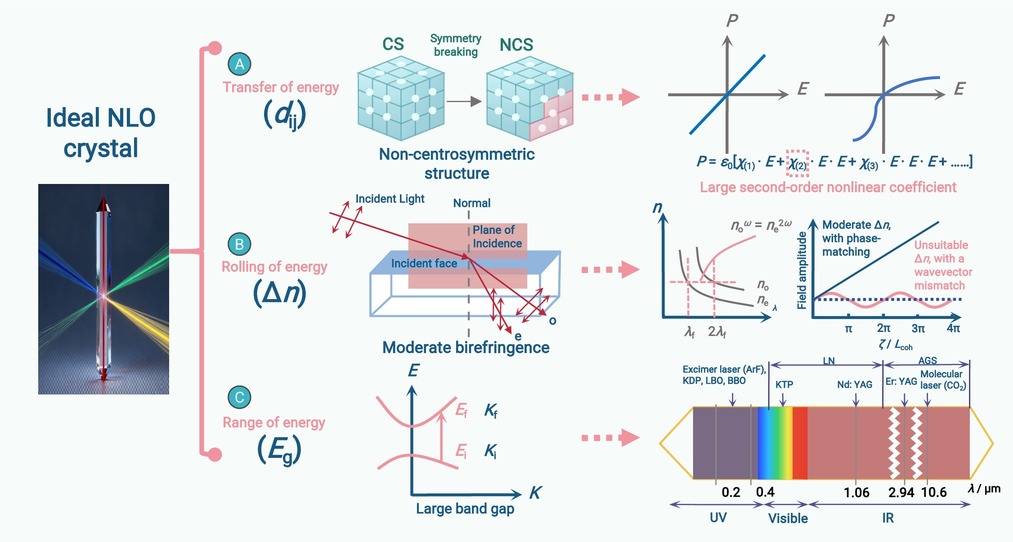
Figure 1.
Key performance factors for ideal NLO optical crystals
-
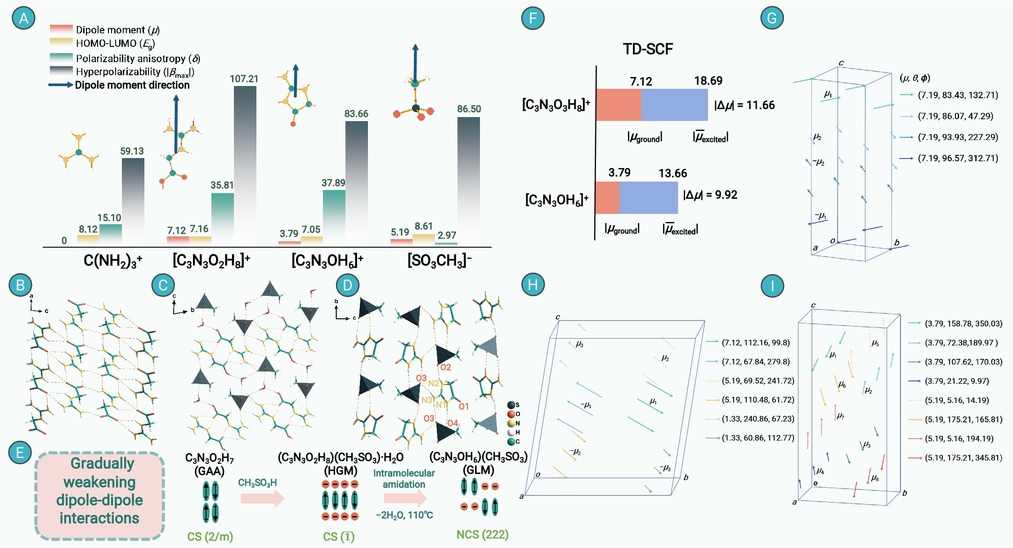
Figure 2.
Optical properties of microscopic groups, crystal structural features, and molecular dipole
-
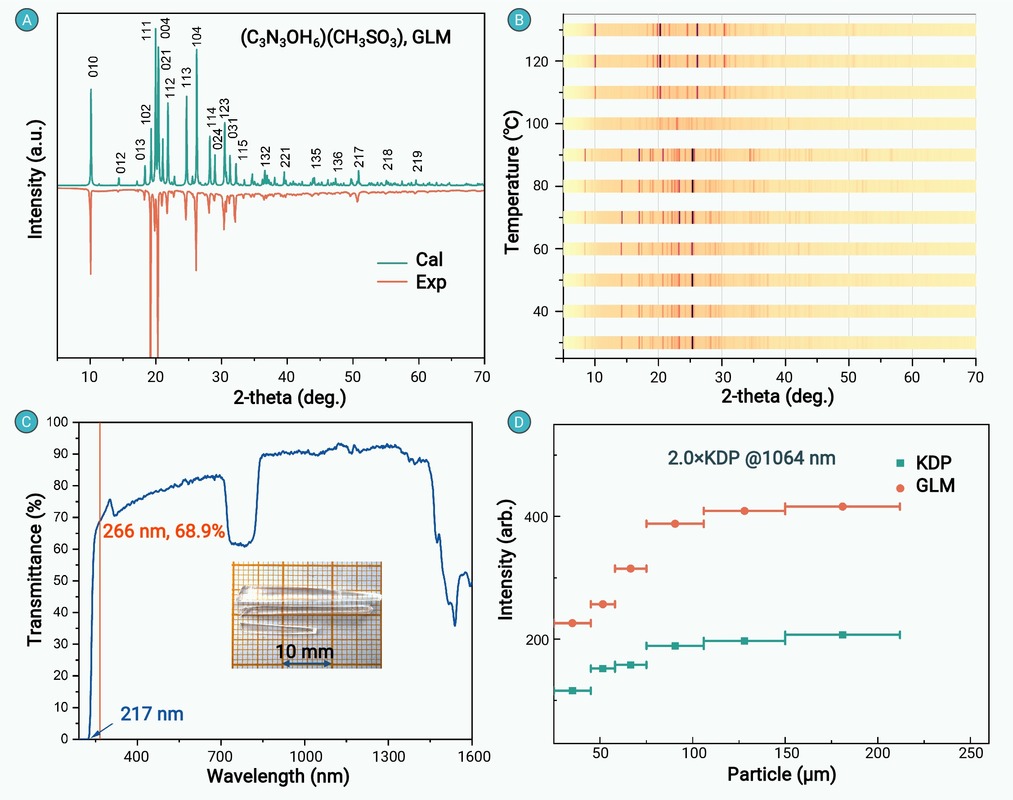
Figure 3.
Some related properties of the GLM crystal
-
Figure 4.
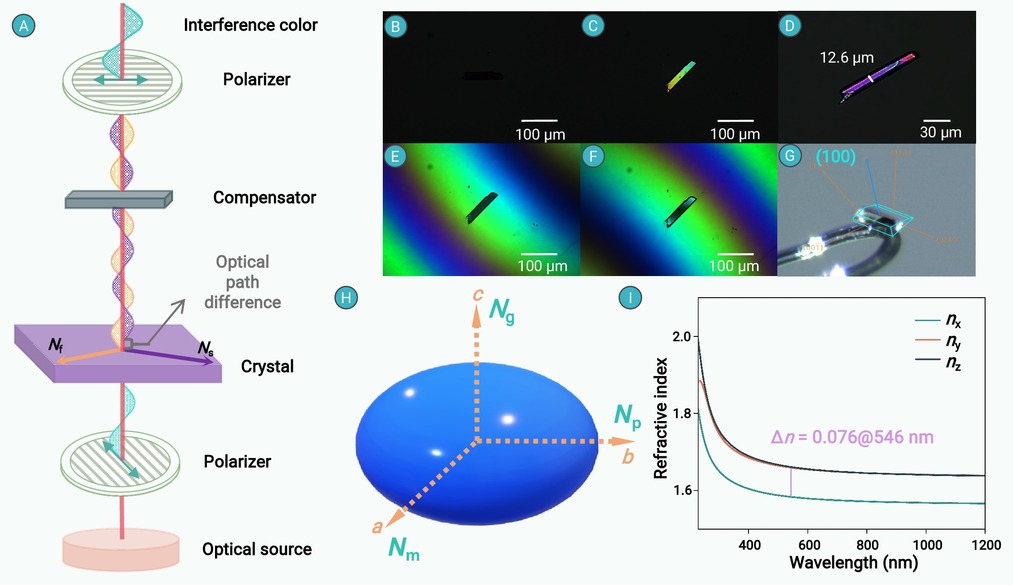
Birefringent properties of GLM
-
Figure 5.
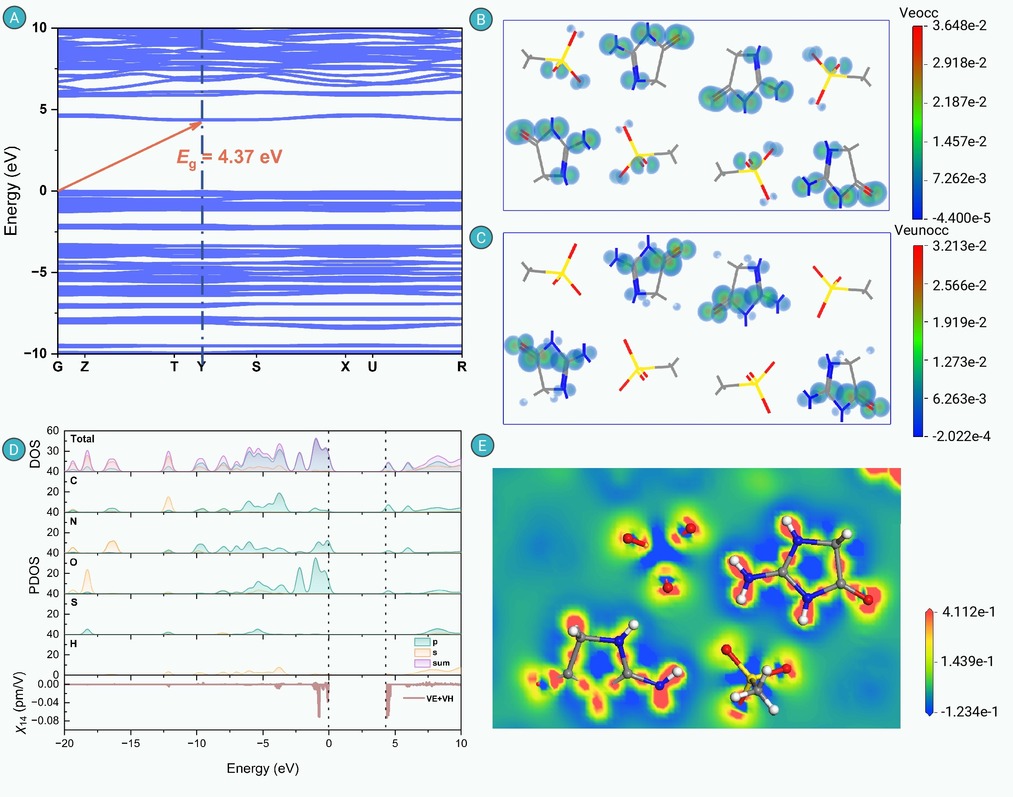
Theoretical calculations of GLM
