
Single-atom catalysts: From atomic-level engineering to application
-
GRAPHICAL ABSTRACT
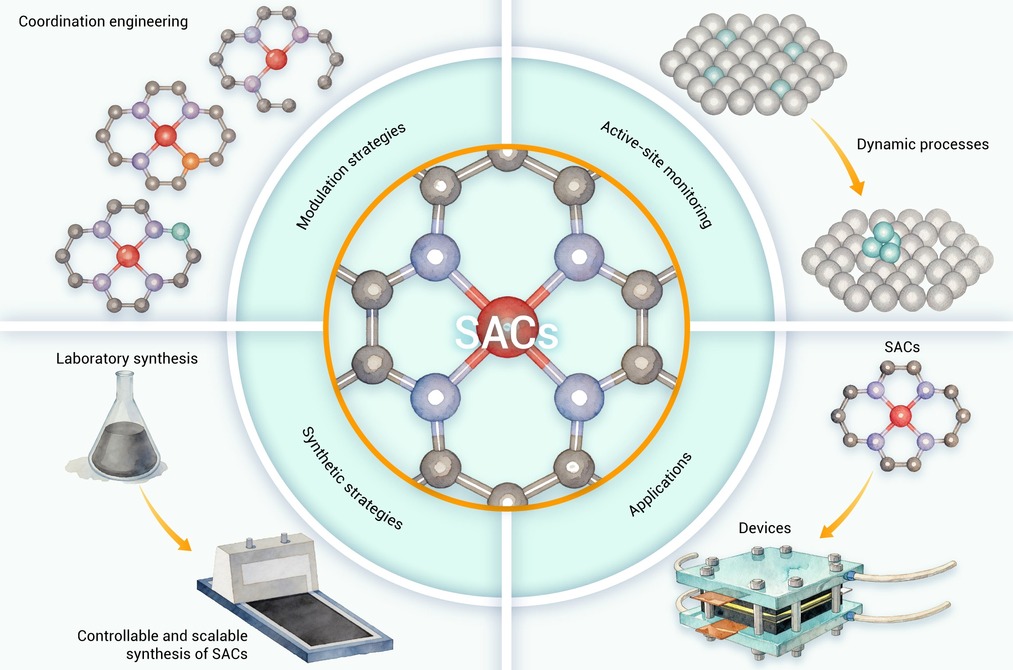
 DownLoad:
Full size image
DownLoad:
Full size image
-
PUBLIC SUMMARY
-
Covering atomic-level modulation and characterization of single-atom catalysts (SACs).
Linking atomic configurations of SACs to catalytic mechanisms and performance metrics.
Addressing challenges in translating SACs from laboratory research to practical device integration.
-
-
ABSTRACT
Single-atom catalysts (SACs), featuring atomically dispersed metal active sites, have recently emerged as a new frontier in catalysis science. By maximizing atom-utilization efficiency and enabling precise modulation of active-site structures, SACs demonstrate broad application potential across diverse important fields including catalysis, energy storage, and biomedicine. Beginning by tracing the evolutionary trajectory of single-atom catalysis, this review expands its discussion to encompass strategies for modulating single-atom active sites, techniques for synthesizing atomically dispersed metals, and advanced characterization methods for atomic-level analysis. Furthermore, this paper systematically reviews recent advances in SACs for energy, environmental, and biological applications, covering cutting-edge processes such as water electrolysis, advanced battery, pollutant degradation and biosensing. A central focus on correlating active-site structures with catalytic mechanisms and performance provides this review with a distinctive perspective. In light of the ongoing challenges associated with the transition from laboratory-scale research to device integration, this article proposes potential solutions and future research directions, offering a theoretical foundation and technical pathway for the rational design of high-performance single-atom catalytic systems. -

-
REFERENCES
[1] Deng D. H., Novoselov K. S., Fu Q., et al. (2016). Catalysis with two-dimensional materials and their heterostructures. Nat. Nanotechnol. 11:218−230. DOI:10.1038/nnano.2015.340 [2] Hagen J. (2015). Industrial catalysis: A practical approach. Wiley-VCH Verlag GmbH, pp:459–462. DOI:10.1002/9783527684625. [3] Kaiser S. K., Chen Z., Akl D. F., et al. (2020). Single-atom catalysts across the periodic table. Chem. Rev. 120:11703−11809. DOI:10.3929/ethz-b-000451273 [4] Liu Y., Tsunoyama H., Akita T., et al. (2011). Aerobic oxidation of cyclohexane catalyzed by size-controlled Au clusters on hydroxyapatite: Size effect in the sub-2 nm regime. ACS Catal. 1:2−6. DOI:10.1021/cs100043j [5] Wang A., Li J. and Zhang T. (2018). Heterogeneous single-atom catalysis. Nat. Rev. Chem. 2:65−81. DOI:10.1038/s41570-018-0010-1 [6] Taylor H. S. (1925). A theory of the catalytic surface. Proc. R. Soc. A 108:105−111. DOI:10.1098/rspa.1925.0061 [7] Arlman E. J. and Cossee P. (1964). Ziegler-Natta catalysis III. Stereospecific polymerization of propene with the catalyst system TiCl3AlEt3. J. Catal. 3:99-104. DOI:10.1016/0021-9517(64)90097-1. [8] Maschmeyer T., Sankar G., Thomas J. M., et al. (1995). Heterogeneous catalysts obtained by grafting metallocene complexes onto mesoporous silica. Nature 378:159−162. DOI:10.1038/378159a0 [9] Qiao B., Wang A., Yang X., et al. (2011). Single-atom catalysis of CO oxidation using Pt1/FeOx. Nat. Chem. 3:634−641. DOI:10.1038/nchem.1095 [10] Fu Q., Saltsburg H. and Flytzani-Stephanopoulos M. (2003). Active nonmetallic Au and Pt species on ceria-based water-gas shift catalysts. Science 301:935−938. DOI:10.1126/science.1085721 [11] Simon F. J. H., Rik M. B., Mhairi H. G., et al. (2007). High-activity, single-site mesoporous Pd/Al2O3 catalysts for selective aerobic oxidation of allylic alcohols. Angew. Chem. Int. Ed. 46:8593−8596. DOI:10.1002/anie.200702534 [12] Kment S., Bakandritsos A., Tantis I., et al. (2024). Single atom catalysts based on earth-abundant metals for energy-related applications. Chem. Rev. 124:11767−11847. DOI:10.1021/acs.chemrev.4c00155 [13] Ding S., Max J. H., Javier P.-R., et al. (2019). Transforming energy with single-atom catalysts. Joule 3:2897−2929. DOI:10.1016/j.joule.2019.09.015 [14] Li W., Guo Z. and Yang J. (2022). Advanced strategies for stabilizing single-atom catalysts for energy storage and conversion. Electrochem. Energy Rev. 5:9. DOI:10.1007/s41918-022-00169-z [15] Wang Y., Wang D. and Li Y. (2021). Rational design of single-atom site electrocatalysts: From theoretical understandings to practical applications. Adv. Mater. 33:2008151. DOI:10.1002/adma.202008151 [16] Zhou T., Liang J., Ye S., et al. (2023). Fundamental, application and opportunities of single atom catalysts for Li-S batteries. Energy Storage Mater. 55:322−355. DOI:10.1016/j.ensm.2022.12.002 [17] Yang X. F., Wang A., Qiao B., et al. (2013). Single-atom catalysts: A new frontier in heterogeneous catalysis. Acc. Chem. Res. 46:1740−1748. DOI:10.1021/ar300361m [18] Jones J., Xiong H., Delariva A. T., et al. (2016). Thermally stable single-atom platinum-on-ceria catalysts via atom trapping. Science 353:150−154. DOI:10.1126/science.aaf8800 [19] Qiao B., Liu J., Wang Y.-G., et al. (2015). Highly efficient catalysis of preferential oxidation of CO in H2-rich stream by gold single-atom catalysts. ACS Catal. 5:6249−6254. DOI:10.1021/acscatal.5b01114 [20] Kunwar D., Zhou S., Delariva A., et al. (2019). Stabilizing high metal loadings of thermally stable platinum single atoms on an industrial catalyst support. ACS Catal. 9:13. DOI:10.1021/acscatal.8b04885 [21] Jeong H., Kwon O., Kim B. S., et al. (2020). Highly durable metal ensemble catalysts with full dispersion for automotive applications beyond single-atom catalysts. Nat. Catal. 3:1−8. DOI:10.1038/s41929-020-0427-z [22] O’Neill B. J., Jackson D. H. K., Lee J., et al. (2015). Catalyst design with atomic layer deposition. ACS Catal. 5:1804−1825. DOI:10.1021/cs501862h [23] Yin P., Yao T., Wu Y., et al. (2016). Single cobalt atoms with precise N‐coordination as superior oxygen reduction reaction catalysts. Angew. Chem. Int. Ed. 128:10958−10963. DOI:10.1002/ange.201604802 [24] Wu B., Chen Z., Wang J., et al. (2025). Universal synthesis strategies for single-atom catalysts toward versatile catalysis at electric interface. Matter 8:102424. DOI:10.1016/j.matt.2025.102424 [25] Urso M., Ju X., Nittoor-Veedu R., et al. (2025). Single atom engineering for electrocatalysis: Fundamentals and applications. ACS Catal. 15:11617−11663. DOI:10.1021/acscatal.4c08027 [26] Kment Š., Bakandritsos A., Tantis I., et al. (2024). Single atom catalysts based on earth-abundant metals for energy-related applications. Chem. Rev. 124:11767−11847. DOI:10.1021/acs.chemrev.4c00155 [27] Fonseca J. L. J. (2021). Single-atom catalysts designed and prepared by the atomic layer deposition technique. ACS Catal. 11:7018−7059. DOI:10.1021/acscatal.1c01200 [28] Sun Y., Silvioli L., Sahraie N. R., et al. (2019). Activity-selectivity trends in the electrochemical production of hydrogen peroxide over single-site metal-nitrogen-carbon catalysts. J. Am. Chem. Soc. 141:12372−12381. DOI:10.1021/jacs.9b05576 [29] Chen R., Chen S., Wang L., et al. (2024). Nanoscale metal particle modified single‐atom catalyst: Synthesis, characterization, and application. Adv. Mater. 36:2304713. DOI:10.1002/adma.202304713 [30] Yasin G., Ali S., Ibraheem S., et al. (2023). Simultaneously engineering the synergistic-effects and coordination-environment of dual-single-atomic iron/cobalt-sites as a bifunctional oxygen electrocatalyst for rechargeable zinc-air batteries. ACS Catal. 13:2313−2325. DOI:10.1021/acscatal.2c05654 [31] Yasin G., Tabish M., Ajmal S., et al. (2026). Single atom horizons for shaping the future of catalysis and sustainability: The next frontiers in energy conversion and storage. Prog. Mater. Sci. 155:101525. DOI:10.1016/j.pmatsci.2025.101525 [32] Tauster S. J., Fung S. C. and Garten R. L. (1978). Strong metal-support interactions. Group 8 noble metals supported on titanium dioxide. J. Am. Chem. Soc. 100:170-175. DOI:10.1021/ja00469a029 [33] Qiao B. T., Jin X., Liang A. D., et al. (2015). Ultrastable single-atom gold catalysts with strong covalent metal-support interaction (CMSI). Nano Res. 8:2913−2924. DOI:10.1007/s12274-015-0796-9 [34] Lin J., Wang A., Qiao B., et al. (2013). Remarkable performance of Ir1/FeOx single-atom catalyst in water gas shift reaction. J. Am. Chem. Soc. 135:15314−15317. DOI:10.1021/ja408574m [35] Kwak J. H., Hu J., Mei D., et al. (2009). Coordinatively unsaturated Al3+ centers as binding sites for active catalyst phases of platinum on γ-Al2O3. Science 325:1670−1673. DOI:10.1126/science.1176745 [36] Wang Y., Su H., He Y., et al. (2020). Advanced electrocatalysts with single-metal-atom active sites. Chem. Rev. 120:12217−12314. DOI:10.1021/acs.chemrev.0c00594 [37] Liang X., Wang D., Zhao Z., et al. (2022). Coordination number dependent catalytic activity of single-atom cobalt catalysts for fenton-like reaction. Adv. Funct. Mater. 32:2203001. DOI:10.1002/adfm.202203001 [38] Rong X., Wang H. J., Lu X. L., et al. (2020). Controlled synthesis of a vacancy-defect single-atom catalyst for boosting CO2 electroreduction. Angew. Chem. Int. Ed. 132:1977−1981. DOI:10.1002/anie.201912458 [39] Lu B., Guo L., Wu F., et al. (2019). Ruthenium atomically dispersed in carbon outperforms platinum toward hydrogen evolution in alkaline media. Nat. Commun. 10:631. DOI:10.1038/s41467-019-08419-3 [40] Qin J., Liu H., Zou P., et al. (2022). Altering ligand fields in single-atom sites through second-shell anion modulation boosts the oxygen reduction reaction. J. Am. Chem. Soc. 144:2197−2207. DOI:10.1021/jacs.1c11331 [41] Liu J. Y. (2016). Catalysis by supported metal single atoms. ACS Catal. 7:34−59. DOI:10.1021/acscatal.6b01534 [42] Li Z. J., Wang D. H., Wu Y. E., et al. (2018). Recent advances in the precise control of isolated single-site catalysts by chemical methods. Natl. Sci. Rev. 5:673−689. DOI:10.1093/nsr/nwy056 [43] Zhu C., Fu S., Shi Q., et al. (2017). Single-atom electrocatalysts. Angew. Chem. Int. Ed. 56:13944−13960. DOI:10.1002/anie.201703864. DOI:10.1002/anie.201703864 [44] Thomas J. M. (2014). The concept, reality and utility of single-site heterogeneous catalysts (SSHCs). Phys. Chem. Chem. Phys. 45:7647−7661. DOI:10.1002/chin.201424291 [45] Xi J., Jung H. S., Xu Y., et al. (2021). Synthesis strategies, catalytic applications, and performance regulation of single‐atom catalysts. Adv. Funct. Mater. 31:2008318. DOI:10.1002/adfm.202008318 [46] Chen Z., Li X., Zhao J., et al. (2023). Stabilizing Pt single atoms through Pt-Se electron bridges on vacancy‐enriched nickel selenide for efficient electrocatalytic hydrogen evolution. Angew. Chem. Int. Ed. 135:e202308686. DOI:10.1002/ange.202308686 [47] Liu P., Zhao Y., Qin R., et al. (2016). Photochemical route for synthesizing atomically dispersed palladium catalysts. Science 352:797−800. DOI:10.1126/science.aaf5251 [48] Nie L., Mei D., Xiong H., et al. (2017). Activation of surface lattice oxygen in single-atom Pt/CeO2 for low-temperature CO oxidation. Science 358:1419−1423. DOI:10.1126/science.aao2109 [49] Wang L., Zhang S., Zhu Y., et al. (2013). Catalysis and in situ studies of Rh1/Co3O4 nanorods in reduction of NO with H2. ACS Catal. 3:1011−1019. DOI:10.1021/cs300816u [50] Lang R., Li T., Matsumura D., et al. (2016). Hydroformylation of olefins by a rhodium single‐atom catalyst with activity comparable to RhCl(PPh3)3. Angew. Chem. Int. Ed. 55:16054−16058. DOI:10.1002/anie.201610872 [51] Li X., Bi W., Zhang L., et al. (2016). Single‐atom Pt as co‐catalyst for enhanced photocatalytic H2 evolution. Adv. Mater. 28:2427−2431. DOI:10.1002/adma.201505281 [52] Wang X., Maeda K., Thomas A., et al. (2009). A metal-free polymeric photocatalyst for hydrogen production from water under visiblelight. Nat. Mater. 8:76−80. DOI:10.1038/nmat2317 [53] Chen Z., Zhang Q., Chen W., et al. (2018). Single‐site AuI catalyst for silane oxidation with water. Adv. Mater. 30:1704720. DOI:10.1002/adma.201704720 [54] Xu H., Xi S., Li J., et al. (2020). Chemical design and synthesis of superior single-atom electrocatalysts via in-situ polymerization. J. Mater. Chem. A 8:17683−17690. DOI:10.1039/D0TA05130F [55] Choi C. H., Kim M., Kwon H. C., et al. (2016). Tuning selectivity of electrochemical reactions by atomically dispersed platinum catalyst. Nat. Commun. 7:10922. DOI:10.1038/ncomms10922 [56] George S. M. (2010). Atomic layer deposition: An overview. Chem. Rev. 110:111−131. DOI:10.1021/cr900056b [57] Gong T., Qin L., Zhang W., et al. (2015). Activated carbon supported palladium nanoparticle catalysts synthesized by atomic layer deposition: Genesis and evolution of nanoparticles and tuning the particle size. J. Phys. Chem. C 119:11544−11556. DOI:10.1021/jp5130102 [58] Sun S., Zhang G., Gauquelin N., et al. (2013). Single-atom catalysis using Pt/graphene achieved through atomic layer deposition. Sci. Rep. 3:65−65. DOI:10.1038/srep01775 [59] He X., Ding Y., Huang Z., et al. (2023). Engineering a self‐grown TiO2/Ti‐MOF heterojunction with selectively anchored high‐density Pt single‐atomic cocatalysts for efficient visible‐light‐driven hydrogen evolution. Angew. Chem. Int. Ed. 135:e202217439. DOI:10.1002/anie.202382561 [60] Yan H., Cheng H., Yi H., et al. (2015). Single-atom Pd1/graphene catalyst achieved by atomic layer deposition: remarkable performance in selective hydrogenation of 1, 3-butadiene. J. Am. Chem. Soc. 137:10484−10487. DOI:10.1021/jacs.5b06485 [61] Zhang L., Banis M. N. and Sun X. (2018). Single-atom catalysts by the atomic layer deposition technique. Natl. Sci. Rev. 5:628−630. DOI:10.1093/nsr/nwy054 [62] Zhou L., Chang X., Zheng W., et al. (2023). Single atom Rh-sensitized SnO2 via atomic layer deposition for efficient formaldehyde detection. Chem. Eng. J. 475:146300. DOI:10.1016/j.cej.2023.146300 [63] Fu W., Wan J., Zhang H., et al. (2022). Photoinduced loading of electron-rich Cu single atoms by moderate coordination for hydrogen evolution. Nat. Commun. 13:5496. DOI:10.1038/s41467-022-33275-z [64] Lee C. W., Lee B.-H., Park S., et al. (2024). Photochemical tuning of dynamic defects for high-performance atomically dispersed catalysts. Nat. Mater. 23:552−559. DOI:10.1038/s41563-024-01799-y [65] Zhang L. H., Han L. L., Liu H. X., et al. (2017). Potential-cycling synthesis of single platinum atoms for efficient hydrogen evolution in neutral media. Angew. Chem. Int. Ed. 56:13694. DOI:10.1002/anie.201706921 [66] Jiang K. Liu B. Y. Luo M., et al. (2019). Single platinum atoms embedded in nanoporous cobalt selenide as electrocatalyst for accelerating hydrogen evolution reaction. Nat. Commun. 10:1743. DOI:10.1038/s41467-019-09765-y [67] Xuan N., Chen J., Shi J., et al. (2019). Single-atom electroplating on two dimensional materials. Chem. Mater. 31:429−435. DOI:10.1021/acs.chemmater.8b03796 [68] Wang D., Li Q., Han C., et al. (2019). Single atom ruthenium based catalyst for enhanced hydrogen evolution. Appl. Catal. B Environ. 249:91−97. DOI:10.1016/j.apcatb.2019.02.059 [69] Wu Y., Wang D., Zhou G., et al. (2014). Sophisticated construction of Au islands on Pt-Ni: An ideal trimetallic nanoframe catalyst. J. Am. Chem. Soc. 136:11594−11597. DOI:10.1021/ja5058532 [70] Wu Y., Wang D. and Li Y. (2016). Understanding of the major reactions in solution synthesis of functional nanomaterials. Sci. China Mater. 59:938−996. DOI:10.1007/s40843-016-5112-0 [71] Liu J., Cao C., Liu X., et al. (2021). Direct observation of metal oxide nanoparticles being transformed into metal single atoms with oxygen-coordinated structure and high-loadings. Angew. Chem. Int. Ed. 60:15248−15253. DOI:10.1002/anie.202102647 [72] Zhang M., Wang Y., Chen W., et al. (2017). Metal (hydr)oxides@polymer core-shell strategy to metal single-atom materials. J. Am. Chem. Soc. 139:10976−10979. DOI:10.1021/jacs.7b05372 [73] Ren Q., Wang H., Lu X. F., et al. (2017). Recent progress on MOF-derived heteroatom-doped carbon-based electrocatalysts for oxygen reduction reaction. Adv. Sci. 5:1700515−1700535. DOI:10.1002/advs.201700515 [74] Marcinkowski M. D., Darby M. T., Liu J., et al. (2018). Pt/Cu single-atom alloys as coke-resistant catalysts for efficient C-H activation. Nat. Chem. 10:325−332. DOI:10.1038/nchem.2915 [75] Kistler J. D., Chotigkrai N., Xu P., et al. (2014). A single-site platinum CO oxidation catalyst in zeolite KLTL: microscopic and spectroscopic determination of the locations of the platinum atoms. Angew. Chem. Int. Ed. 53:8904−8907. DOI:10.1002/ange.201403353 [76] Wang X., Chen W., Zhang L., et al. (2017). Uncoordinated amine groups of metal-organic frameworks to anchor single Ru sites as chemoselective catalysts toward the hydrogenation of quinoline. J. Am. Chem. Soc. 139:9419−9422. DOI:10.1021/jacs.7b01686 [77] He T., Chen S., Ni B., et al. (2018). Zirconium-porphyrin‐based metal-organic framework hollow nanotubes for immobilization of noble‐metal single atoms. Angew. Chem. Int. Ed. 57:3493−3498. DOI:10.1002/anie.201800817 [78] Zhang W., Jiang P., Wang Y., et al. (2014). Bottom-up approach to engineer a molybdenum-doped covalent-organic framework catalyst for selective oxidation reaction. RSC Adv. 4:51544−51547. DOI:10.1039/C4RA09304F [79] Chu Y., Luo E., Wei Y., et al. (2023). Dual single-atom catalyst design to build robust oxygen reduction electrode via free radical scavenging. Chem. Catal. 3:100532. DOI:10.1016/j.checat.2023.100532 [80] Liu Q., Li Y., Zheng L., et al. (2020). Sequential synthesis and active‐site coordination principle of precious metal single‐atom catalysts for oxygen reduction reaction and PEM fuel cells. Adv. Energy Mater. 10:2000689. DOI:10.1002/aenm.202000689 [81] W S. J., Li A., Liu J. C., et al. (2018). Direct observation of noble metal nanoparticles transforming to thermally stable single atoms. Nat. Nanotechnol. 13:856−861. DOI:10.1038/s41565-018-0197-9 [82] Wang H., Wang X., Pan J., et al. (2021). Ball-milling induced debonding of surface atoms from metal bulk for construing high-performance dual-site single-atom catalysts. Angew. Chem. Int. Ed. 133:23338−23342. DOI:10.1002/ange.202109356 [83] Chen H., Zhang Y., He Q., et al. (2020). A facile route to fabricate double atom catalysts with controllable atomic spacing for the r-WGS reaction. J. Mater. Chem. A 8:2364−2368. DOI:10.1039/C9TA13192B [84] He X., Deng Y., Zhang Y., et al. (2020). Mechanochemical kilogram-scale synthesis of noble metal single-atom catalysts. Cell Rep. Phy. Sci. 1:100004. DOI:10.1016/j.xcrp.2019.100004 [85] Ruska E. (1987). The development of the electron microscope and of electron microscopy (Nobel Lecture). Angew. Chem. Int. Ed. 26:595−605. DOI:10.1002/anie.198705953 [86] Ruska E. (1987). The development of the electron microscope and of electron microscopy. Rev. Mod. Phys. 59:627. DOI:10.1103/RevModPhys.59.627 [87] Guo Z., Paciok P., Zandonella R., et al. (2025). Visualizing electrochemical CO2 reduction reaction: Recent progress of in-situ liquid cell transmission electron microscopy. Adv. Funct. Mater. 35:2500915. DOI:10.1002/adfm.202500915 [88] Suenaga K., Sato Y., Liu Z., et al. (2009). Visualizing and identifying single atoms using electron energy-loss spectroscopy with low accelerating voltage. Nat. Chem. 1:415−418. DOI:10.1038/nchem.282 [89] Zhou W., Kapetanakis M. D., Prange M. P., et al. (2009). Direct determination of the chemical bonding of individual impurities in graphene. Phys. Rev. Lett. 109:206803. DOI:10.1103/PhysRevLett.109.206803 [90] Lee J., Zhou W., Pennycook S. J., et al. (2013). Direct visualization of reversible dynamics in a Si6 cluster embedded in a graphene pore. Nat. Commun. 4:1650. DOI:10.1038/ncomms2671 [91] Lee J., Yang Z., Zhou W., et al. (2014). Stabilization of graphene nanopore. Proc. Natl. Acad. Sci. 111:7522−7526. DOI:10.1073/pnas.1400767111 [92] Guo S., Fu J., Zhang P., et al. (2022). Direct growth of single-metal-atom chains. Nat. Synth. 1:245−253. DOI:10.1038/s44160-022-00038-z [93] Egerton R. F. and Watanabe M. (2018). Characterization of single-atom catalysts by EELS and EDX spectroscopy. Ultramicroscopy 193:111−117. DOI:10.1016/j.ultramic.2018.06.013 [94] Gao Z., Li A., Ma D., et al. (2022). Electron energy loss spectroscopy for single atom catalysis. Top. Catal. 65:1609−1619. DOI:10.1007/s11244-022-01577-7 [95] Shan J., Ye C., Jiang Y., et al. (2022). Metal-metal interactions in correlated single-atom catalysts. Sci. Adv. 8:eabo0762. DOI:10.1126/sciadv.abo0762 [96] Zhou W., Lee J., Nanda J., et al. (2012). Atomically localized plasmon enhancement in monolayer graphene. Nat. Nanotechnol. 7:161−165. DOI:10.1038/nnano.2011.252 [97] Ramasse Q. M., Seabourne C. R., Kepaptsoglou D.-M., et al. (2013). Probing the bonding and electronic structure of single atom dopants in graphene with electron energy loss spectroscopy. Nano Lett. 13:4989−4995. DOI:10.1021/nl304187e [98] Hage F. S., Radtke G., Kepaptsoglou D. M., et al. (2020). Single-atom vibrational spectroscopy in the scanning transmission electron microscope. Science 367:1124−1127. DOI: 10.1126/science.aba1136. DOI:10.1126/science.aba1136 [99] Xu M., Bao D.-L., Li A., et al. (2023). Single-atom vibrational spectroscopy with chemical-bonding sensitivity. Nat. Mater. 22:612−618. DOI:10.1038/s41563-023-01500-9 [100] Roccapriore K. M., Torsi R., Robinson J., et al. (2024). Dynamic STEM-EELS for single-atom and defect measurement during electron beam transformations. Sci. adv. 10:eadn5899. DOI:10.1126/sciadv.adn5899 [101] De Groot F. (2001). High-resolution X-ray emission and X-ray absorption spectroscopy. Chem. Rev. 101:1779−1808. DOI:10.1021/cr9900681 [102] Zhang B., Asakura H., Zhang J., et al. (2016). Stabilizing a platinum1 single‐atom catalyst on supported phosphomolybdic acid without compromising hydrogenation activity. Angew. Chem. Int. Ed. 128:8459−8463. DOI:10.1002/anie.201602801 [103] Korshin G. V., Frenkel A. I. and Stern E. A. (1998). EXAFS study of the inner shell structure in copper (II) complexes with humic substances. Environ. Sci. Technol. 32:2699−2705. DOI:10.1021/es980016d [104] Ji B., Gou J., Zheng Y., et al. (2023). Coordination chemistry of large-sized yttrium single-atom catalysts for oxygen reduction reaction. Adv. Mater. 35:2300381. DOI:10.1002/adma.202300381 [105] Zhang L., Yang X., Yuan Q., et al. (2023). Elucidating the structure-stability relationship of Cu single-atom catalysts using operando surface-enhanced infrared absorption spectroscopy. Nat. Commun. 14:8311. DOI:10.1038/s41467-023-44078-1 [106] Chen Y., Li H., Zhao W., et al. (2019). Optimizing reaction paths for methanol synthesis from CO2 hydrogenation via metal-ligand cooperativity. Nat. Commun. 10:1885. DOI:10.1038/s41467-019-09918-z [107] Kim J., Lim T., Hernández-Castillo D., et al. (2025). Identification of Ni-N4 active sites in atomically dispersed Ni catalysts for efficient chlorine evolution reaction. J. Am. Chem. Soc. 147:27664−27675. DOI:10.1021/jacs.5c06097 [108] Li Q., Liu S., Liu J.-C., et al. (2024). Recycling sulfur-poisoned Pd catalysts via thermal atomization for semi-hydrogenation of acetylene. J. Am. Chem. Soc. 147:5615−5623. DOI:10.1021/jacs.4c11305 [109] Ding J., Liu L., Zhang J., et al. (2025). Unraveling dynamic structural evolution of single atom catalyst via in-situ surface-enhanced infrared absorption spectroscopy. J. Am. Chem. Soc. 147:9601−9609. DOI:10.1021/jacs.4c17565 [110] Xu L., Wang X., Hu X., et al. (2025). Artificial-intelligence-assisted design principle for developing high-performance single-atom catalysts. The Innovation 6:100911. DOI:10.1016/j.xinn.2025.100911 [111] Xu L., Lu L., Xu N., et al. (2025). Progressive learning-guided discovery of single-atom metal oxide catalysts for acidic oxygen evolution reaction. Angew. Chem. Int. Ed. 64:e202510965. DOI:10.1002/anie.202510965 [112] Wu L., Guo T. and Li T. (2022). Data-driven high-throughput rational design of double-atom catalysts for oxygen evolution and reduction. Adv. Funct. Mater. 32:2203439. DOI:10.1002/adfm.202203439 [113] Bian Y., Wang Y., Yang Z., et al. (2025). Accelerating the prediction of g-C3N4-supported dual-atom catalysts for photocatalytic CO2 reduction to CO and HCOOH: A machine learning and DFT combined approach. Adv. Energy Mater. 15:e03855. DOI:10.1002/aenm.202503855 [114] Lin G., Guo T., Lin W., et al. (2025). Machine learning accelerated screening advanced single-atom anchored MXenes electrocatalyst for nitrogen fixation. ACS Catal. 15:13534−13548. DOI:10.1021/acscatal.4c06914 [115] Lin X., Wang Y., Chang X., et al. (2023). High-throughput screening of electrocatalysts for nitrogen reduction reactions accelerated by interpretable intrinsic descriptor. Angew. Chem. Int. Ed. 62:e202300122. DOI:10.1002/anie.202300122 [116] Xu H., Cheng D., Cao D., et al. (2024). Revisiting the universal principle for the rational design of single-atom electrocatalysts. Nat. Catal. 7:207−218. DOI:10.1038/s41929-023-01106-z [117] Chen Y., Zheng D. J., Xu Z. J., et al. (2024). Best practices for oxygen electrocatalysis. Nat. Sustain. 7:371−374. DOI:10.1038/s41893-024-01285-y [118] Voiry D., Chhowalla M., Gogotsi Y., et al. (2018). Best practices for reporting electrocatalytic performance of nanomaterials. ACS Nano 12:9635−9638. DOI:10.1021/acsnano.8b07700 [119] Lang R., Du X., Huang Y., et al. (2020). Single-atom catalysts based on the metal-oxide interaction. Chem. Rev. 120:11986−12043. DOI:10.1021/acs.chemrev.0c00797 [120] She Z. W., Kibsgaard J., Dickens C. F., et al. (2017). Combining theory and experiment in electrocatalysis: Insights into materials design. Science 355:eaad4998. DOI:10.1126/science.aad4998 [121] Liu J., Ma Q., Huang Z., et al. (2019). Recent progress in graphene‐based noble‐metal nanocomposites for electrocatalytic applications. Adv. Mater. 31:1800696−1800696. DOI:10.1002/adma.201800696 [122] Wei H., Huang K., Wang D., et al. (2017). Iced photochemical reduction to synthesize atomically dispersed metals by suppressing nanocrystal growth. Nat. Commun. 8:1490. DOI:10.1038/s41467-017-01521-4 [123] Chen W., Pei J., He C. T., et al. (2018). Single tungsten atoms supported on MOF-derived N-doped carbon for robust electrochemical hydrogen evolution. Adv. Mater. 30:1800396. DOI:10.1002/adma.201800396 [124] Cheng N., Stambula S., Wang D., et al. (2016). Platinum single-atom and cluster catalysis of the hydrogen evolution reaction. Nat. Commun. 7:13638. DOI:10.1038/ncomms13638 [125] Ye S., Luo F., Zhang Q., et al. (2019). Highly stable single Pt atomic sites anchored on aniline-stacked graphene for hydrogen evolution reaction. Energy Environ. Sci. 12:1000−1007. DOI:10.1039/C8EE02888E [126] Pan Y., Wang X., Zhang W., et al. (2022). Boosting the performance of single-atom catalysts via external electric field polarization. Nat. Commun. 13:3063. DOI:10.1038/s41467-022-30766-x [127] Guan Y., Feng Y., Wan J., et al. (2018). Ganoderma‐like MoS2/NiS2 with single platinum atoms doping as an efficient and stable hydrogen evolution reaction catalyst. Small 14:1800697. DOI:10.1002/smll.201800697 [128] Wang G., Zhang G., Ke X., et al. (2022). Direct synthesis of stable 1T‐MoS2 doped with Ni single atoms for water splitting in alkaline media. Small 18:2107238. DOI:10.1002/smll.202107238 [129] Deng J., Li H., Xiao J., et al. (2015). Triggering the electrocatalytic hydrogen evolution activity of the inert two-dimensional MoS2 surface via single-atom metal doping. Energy Environ. Sci. 8:1594−1601. DOI:10.1039/c5ee00751h [130] Shi Y., Ma Z.-R., Xiao Y.-Y., et al. (2021). Electronic metal-support interaction modulates single-atom platinum catalysis for hydrogen evolution reaction. Nat. Commun. 12:3021. DOI:10.1038/s41467-021-23306-6 [131] Zhang J., Zhao Y., Guo X., et al. (2018). Single platinum atoms immobilized on an MXene as an efficient catalyst for the hydrogen evolution reaction. Nat. Catal. 1:985−992. DOI:10.1038/s41929-018-0195-1 [132] Ramalingam V., Varadhan P., Fu H. C., et al. (2019). Heteroatom‐mediated interactions between ruthenium single atoms and an MXene support for efficient hydrogen evolution. Adv. Mater. 31:1903841. DOI:10.1002/adma.201903841 [133] Guan S., Yuan Z., Zhuang Z., et al. (2024). Why do single‐atom alloys catalysts outperform both single‐atom catalysts and nanocatalysts on MXene. Angew. Chem. Int. Ed. 136:e202316550. DOI:10.1002/ange.202316550 [134] Jiang H., Yang W., Xu M., et al. (2022). Single atom catalysts in Van der Waals gaps. Nat. Commun. 13:6863. DOI:10.1038/s41467-022-34572-3 [135] Yang R., Mei L., Lin Z. F., et al. (2024). Intercalation in 2D materials and in-situ studies. Nat. Rev. Chem. 8:410−432. DOI:10.1038/s41570-024-00605-2 [136] Liu D., Li X., Chen S., et al. (2019). Atomically dispersed platinum supported on curved carbon supports for efficient electrocatalytic hydrogen evolution. Nat. Energy 4:512−518. DOI:10.1038/s41560-019-0402-6 [137] Zhang R., Li Y., Zhou X., et al. (2023). Single-atomic platinum on fullerene C60 surfaces for accelerated alkaline hydrogen evolution. Nat. Commun. 14:2460. DOI:10.1038/s41467-023-38126-z [138] Subbaraman R., Tripkovic D., Strmcnik D., et al. (2011). Enhancing hydrogen evolution activity in water splitting by tailoring Li+-Ni (OH) 2-Pt interfaces. Science 334:1256−1260. DOI:10.1126/science.1211934 [139] Li J., Ghoshal S., Bates M. K., et al. (2017). Experimental proof of the bifunctional mechanism for the hydrogen oxidation in alkaline media. Angew. Chem. Int. Ed. 56:15594−15598. DOI:10.1002/anie.201708484 [140] Zhu Y., Klingenhof M., Gao C., et al. (2024). Facilitating alkaline hydrogen evolution reaction on the hetero-interfaced Ru/RuO2 through Pt single atoms doping. Nat. Commun. 15:1447. DOI:10.1038/s41467-024-45654-9 [141] Shen S., Li Q., Zhang H., et al. (2025). Negative‐valent platinum stabilized by Pt-Ni electron bridges on oxygen‐deficient NiFe‐LDH for enhanced electrocatalytic hydrogen evolution. Adv. Mater. 37:2500595. DOI:10.1002/adma.202500595 [142] Mu X., Gu X., Dai S., et al. (2022). Breaking the symmetry of single-atom catalysts enables an extremely low energy barrier and high stability for large-current-density water splitting. Energy Environ. Sci. 15:4048−4057. DOI:10.1039/D2EE01337A [143] Zhang J., Liu J., Xi L., et al. (2018). Single-atom Au/NiFe layered double hydroxide electrocatalyst: probing the origin of activity for oxygen evolution reaction. J. Am. Chem. Soc. 140:3876−3879. DOI:10.1021/jacs.8b00752 [144] Song J., Wei C., Huang Z.-F., et al. (2020). A review on fundamentals for designing oxygen evolution electrocatalysts. Chem. Soc. Rev. 49:2196−2214. DOI:10.1039/C9CS00607A [145] Wang X., Yu M. and Feng X. (2023). Electronic structure regulation of noble metal-free materials toward alkaline oxygen electrocatalysis. Escience 3:100141. DOI:10.1016/j.esci.2023.100141 [146] Pedireddy S., Jimenez‐Sandoval R., Ravva M. K., et al. (2021). Harnessing the extracellular electron transfer capability of geobacter sulfurreducens for ambient synthesis of stable bifunctional single‐atom electrocatalyst for water splitting. Adv. Funct. Mater. 31:2010916. DOI:10.1002/adfm.202010916 [147] Li G., Wang Y., Gao N., et al. (2024). Transition metal atom supported on N-terminated diamond (100) surface as an efficient electrocatalyst for oxygen evolution and reduction reactions. Appl. Phys. Lett. 125:242109. DOI:10.1063/5.0242133 [148] Zhao D., Zhuang Z., Cao X., et al. (2020). Atomic site electrocatalysts for water splitting, oxygen reduction and selective oxidation. Chem. Soc. Rev. 49:2215−2264. DOI:10.1039/C9CS00869A [149] Kumar A., Gil‐Sepulcre M., Lee J., et al. (2024). Iridium single‐atom‐ensembles stabilized on Mn‐substituted spinel oxide for durable acidic water electrolysis. Adv. Mater. 36:2401648. DOI:10.1002/adma.202401648 [150] Lee S., Bai L. and Hu X. (2020). Deciphering iron‐dependent activity in oxygen evolution catalyzed by nickel-iron layered double hydroxide. Angew. Chem. Int. Ed. 132:8149−8154. DOI:10.1002/anie.201915803 [151] Dionigi F., Zeng Z., Sinev I., et al. (2020). In-situ structure and catalytic mechanism of NiFe and CoFe layered double hydroxides during oxygen evolution. Nat. Commun. 11:2522. DOI:10.1038/s41467-020-16237-1 [152] Yan Z., Sun H., Chen X., et al. (2018). Anion insertion enhanced electrodeposition of robust metal hydroxide/oxide electrodes for oxygen evolution. Nat. Commun. 9:2373. DOI:10.1038/s41467-018-04788-3 [153] Song F. and Hu X. (2014). Ultrathin cobalt-manganese layered double hydroxide is an efficient oxygen evolution catalyst. J. Am. Chem. Soc 136:16481−16484. DOI:10.1021/ja5096733 [154] Jiang J., Sun F., Zhou S., et al. (2018). Atomic-level insight into super-efficient electrocatalytic oxygen evolution on iron and vanadium co-doped nickel (oxy) hydroxide. Nat. Commun. 9:2885. DOI:10.1038/s41467-018-05341-y [155] Liu Y., Liang X., Gu L., et al. (2018). Corrosion engineering towards efficient oxygen evolution electrodes with stable catalytic activity for over 6000 hours. Nat. Commun. 9:2609. DOI:10.1038/s41467-018-05019-5 [156] Huang Z.-F., Song J., Du Y., et al. (2019). Chemical and structural origin of lattice oxygen oxidation in Co-Zn oxyhydroxide oxygen evolution electrocatalysts. Nat. Energy 4:329−338. DOI:10.1038/s41560-019-0355-9 [157] Gong M., Li Y., Wang H., et al. (2013). An advanced Ni-Fe layered double hydroxide electrocatalyst for water oxidation. J. Am. Chem. Soc. 135:8452−8455. DOI:10.1021/ja4027715 [158] Lu X. and Zhao C. (2015). Electrodeposition of hierarchically structured three-dimensional nickel-iron electrodes for efficient oxygen evolution at high current densities. Nat. Commun. 6:1−7. DOI:10.1038/ncomms7616 [159] Li P., Wang M., Duan X., et al. (2019). Boosting oxygen evolution of single-atomic ruthenium through electronic coupling with cobalt-iron layered double hydroxides. Nat. Commun. 10:1711. DOI:10.1038/s41467-019-09666-0 [160] Zhang Y., Wu C., Jiang H., et al. (2018). Atomic iridium incorporated in cobalt hydroxide for efficient oxygen evolution catalysis in neutral electrolyte. Adv. Mater. 30:1707522. DOI:10.1002/adma.201707522 [161] Zhu Y., Wang J., Koketsu T., et al. (2022). Iridium single atoms incorporated in Co3O4 efficiently catalyze the oxygen evolution in acidic conditions. Nat. Commun. 13:7754. DOI:10.1038/s41467-022-35426-8 [162] Zhai P., Xia M., Wu Y., et al. (2021). Engineering single-atomic ruthenium catalytic sites on defective nickel-iron layered double hydroxide for overall water splitting. Nat. Commun. 12:4587. DOI:10.1038/s41467-021-24828-9 [163] Xiao Z., Wang Y., Huang Y.-C., et al. (2017). Filling the oxygen vacancies in Co3O4 with phosphorus: an ultra-efficient electrocatalyst for overall water splitting. Energy Environ. Sci. 10:2563−2569. DOI:10.1039/C7EE01917C [164] Wang Y., Zhang Y., Liu Z., et al. (2017). Layered double hydroxide nanosheets with multiple vacancies obtained by dry exfoliation as highly efficient oxygen evolution electrocatalysts. Angew. Chem. Int. Ed. 56:5867−5871. DOI:10.1002/anie.201701477 [165] Zhang J., Wu X., Cheong W.-C., et al. (2018). Cation vacancy stabilization of single-atomic-site Pt1/Ni(OH)x catalyst for diboration of alkynes and alkenes. Nat. Commun. 9:1002. DOI:10.1038/s41467-018-03380-z [166] Zhang Z., Feng C., Wang D., et al. (2022). Selectively anchoring single atoms on specific sites of supports for improved oxygen evolution. Nat. Commun. 13:2473. DOI:10.1038/s41467-022-30148-3 [167] Wei J., Tang H., Sheng L., et al. (2024). Site-specific metal-support interaction to switch the activity of Ir single atoms for oxygen evolution reaction. Nat. Commun. 15:559. DOI:10.1038/s41467-024-44815-0 [168] Yan J., Kong L., Ji Y., et al. (2019). Single atom tungsten doped ultrathin α-Ni(OH)2 for enhanced electrocatalytic water oxidation. Nat. Commun. 10:2149. DOI:10.1038/s41467-019-09845-z [169] Liu Y., Zhang S., Jiao C., et al. (2023). Axial phosphate coordination in Co single atoms boosts electrochemical oxygen evolution. Adv. Sci. 10:2206107. DOI:10.1002/advs.202206107 [170] Zhao J., Guo Y., Zhang Z., et al. (2025). Out-of-plane coordination of iridium single atoms with organic molecules and cobalt-iron hydroxides to boost oxygen evolution reaction. Nat. Nanotechnol. 20:57−66. DOI:10.1038/s41565-024-01807-x [171] Zhang T., Jin J., Chen J., et al. (2022). Pinpointing the axial ligand effect on platinum single-atom-catalyst towards efficient alkaline hydrogen evolution reaction. Nat. Commun. 13:6875. DOI:10.1038/s41467-022-34619-5 [172] Li X., Han S.-G., Wu W., et al. (2023). Convergent paired electrosynthesis of dimethyl carbonate from carbon dioxide enabled by designing the superstructure of axial oxygen coordinated nickel single-atom catalysts. Energy Environ. Sci. 16:502−512. DOI:10.1039/D2EE03022E [173] Okamura M., Kondo M., Kuga R., et al. (2016). A pentanuclear iron catalyst designed for water oxidation. Nature 530:465−468. DOI:10.1038/nature16529 [174] Lin C., Li J.-L., Li X., et al. (2021). In-situ reconstructed Ru atom array on α-MnO2 with enhanced performance for acidic water oxidation. Nat. Catal. 4:1012−1023. DOI:10.1038/s41929-021-00703-0 [175] Liu W., Long G., Xiang Z., et al. (2024). Extremely active and robust Ir-Mn dual‐atom electrocatalyst for oxygen evolution reaction by oxygen‐oxygen radical coupling mechanism. Angew. Chem. Int. Ed. 136:e202411014. DOI:10.1002/anie.202411014 [176] Zeng Z., Gan L. Y., Yang H. B., et al. (2021). Orbital coupling of hetero-diatomic nickel-iron site for bifunctional electrocatalysis of CO2 reduction and oxygen evolution. Nat. Commun. 12:4088. DOI:10.1038/s41467-021-24052-5 [177] Liu M., Li N., Cao S., et al. (2022). A “pre‐constrained metal twins” strategy to prepare efficient dual‐metal‐atom catalysts for cooperative oxygen electrocatalysis. Adv. Mater. 34:2107421. DOI:10.1002/adma.202107421 [178] Ma P., Xue J., Li J., et al. (2025). Site-specific synergy in heterogeneous single atoms for efficient oxygen evolution. Nat. Commun. 16:2573. DOI:10.1038/s41467-025-57864-w [179] Chen K.-Y., Huang Y.-X., Jin R.-C., et al. (2023). Single atom catalysts for use in the selective production of hydrogen peroxide via two-electron oxygen reduction reaction: Mechanism, activity, and structure optimization. Appl. Catal. B Environ. 337:122987. DOI:10.1016/j.apcatb.2023.122987 [180] Yang S., Kim J., Tak Y. J., et al. (2016). Single-atom catalyst of platinum supported on titanium nitride for selective electrochemical reactions. Angew. Chem. Int. Ed. 55:2058−2062. DOI:10.1002/anie.201509241 [181] Yang S., Tak Y. J., Kim J., et al. (2017). Support effects in single-atom platinum catalysts for electrochemical oxygen reduction. ACS Catal. 7:1301−1307. DOI:10.1021/acscatal.6b02899 [182] Liu J., Bak J., Roh J., et al. (2021). Reconstructing the coordination environment of platinum single-atom active sites for boosting oxygen reduction reaction. ACS Catal. 11:466−475. DOI:10.1021/acscatal.0c03330 [183] Liu J., Jiao M., Lu L., et al. (2017). High performance platinum single atom electrocatalyst for oxygen reduction reaction. Nat. Commun. 8:15938. DOI:10.1038/ncomms16160 [184] Zhang J., Wang M., Wan T., et al. (2022). Novel (Pt-Ox)-(Co-Oy) nonbonding active structures on defective carbon from oxygen-rich coal tar pitch for efficient HER and ORR. Adv. Mater. 34:2206960. DOI:10.1002/adma.202206960 [185] Lu X. F., Xia B. Y., Zang S. Q., et al. (2020). Metal-organic frameworks based electrocatalysts for the oxygen reduction reaction. Angew. Chem. Int. Ed. 132:4662−4678. DOI:10.1002/anie.201910309 [186] Luo E., Zhang H., Wang X., et al. (2019). Single‐atom Cr-N4 sites designed for durable oxygen reduction catalysis in acid media. Angew. Chem. Int. Ed. 131:12599−12605. DOI:10.1002/anie.201906289 [187] Xiao M., Zhu J., Li G., et al. (2019). A single‐atom iridium heterogeneous catalyst in oxygen reduction reaction. Angew. Chem. Int. Ed. 58:9640−9645. DOI:10.1002/anie.201905241 [188] Xiao M., Gao L., Wang Y., et al. (2019). Engineering energy level of metal center: Ru single-atom site for efficient and durable oxygen reduction catalysis. J. Am. Chem. Soc. 141:19800−19806. DOI:10.1021/jacs.9b09234 [189] Fan C., Gao X., Tang P., et al. (2025). Molten salt‐assisted synthesis of porous precious metal‐based single‐atom catalysts for oxygen reduction reaction. Adv. Sci. 12:2410784. DOI:10.1002/advs.202410784 [190] Liang S., Hao C. and Shi Y. (2015). The power of single‐atom catalysis. ChemCatChem 7:2559−2567. DOI:10.1002/cctc.201500363 [191] Zhu C., Fu S., Shi Q., et al. (2017). Single‐atom electrocatalysts. Angew. Chem. Int. Ed. 56:13944−13960. DOI:10.1002/anie.201703864 [192] He Y., Hwang S., Cullen D. A., et al. (2019). Highly active atomically dispersed CoN4 fuel cell cathode catalysts derived from surfactant-assisted MOFs: carbon-shell confinement strategy. Energy Environ. Sci. 12:250−260. DOI:10.1039/C8EE02694G [193] Shang H., Zhou X., Dong J., et al. (2020). Engineering unsymmetrically coordinated Cu-S1N3 single atom sites with enhanced oxygen reduction activity. Nat. Commun. 11:3049. DOI:10.1038/s41467-020-16848-8 [194] Choi C. H., Choi W. S., Kasian O., et al. (2017). Unraveling the nature of sites active toward hydrogen peroxide reduction in Fe‐N‐C catalysts. Angew. Chem. Int. Ed. 56:8809−8812. DOI:10.1002/anie.201704356 [195] Wang X., Jia Y., Mao X., et al. (2020). Edge‐rich Fe-N4 active sites in defective carbon for oxygen reduction catalysis. Adv. Mater. 32:2000966. DOI:10.1002/adma.202000966 [196] Du M., Chu B., Wang Q., et al. (2024). Dual Fe/I single‐atom electrocatalyst for high‐performance oxygen reduction and wide‐temperature quasi‐solid‐state Zn‐air batteries. Adv. Mater. 36:2412978. DOI:10.1002/adma.202412978 [197] Lei X., Tang Q., Zheng Y., et al. (2023). High-entropy single-atom activated carbon catalysts for sustainable oxygen electrocatalysis. Nat. Sustain. 6:816−826. DOI:10.1038/s41893-023-01101-z [198] Xue Z.-H., Luan D., Zhang H., et al. (2022). Single-atom catalysts for photocatalytic energy conversion. Joule 6:92−133. DOI:10.1016/j.joule.2021.12.011 [199] Shang Y., Xu X., Gao B., et al. (2021). Single-atom catalysis in advanced oxidation processes for environmental remediation. Chem. Soc. Rev. 50:5281−5322. DOI:10.1039/D0CS01032D [200] Pavithra K. G., Jaikumar V., Kumar P. S., et al. (2021). Removal of emerging pollutants from aquatic system using electrochemical treatment and adsorption: Comparison and analysis. Environ. Technol. Innov. 23:101754. DOI:10.1016/j.eti.2021.101754 [201] Min Y., Zhou X., Chen J.-J., et al. (2021). Integrating single-cobalt-site and electric field of boron nitride in dechlorination electrocatalysts by bioinspired design. Nat. Commun. 12:303. DOI:10.1038/s41467-020-20619-w [202] Choi C., Wang X., Kwon S., et al. (2023). Efficient electrocatalytic valorization of chlorinated organic water pollutant to ethylene. Nat. Nanotechnol. 18:160−167. DOI:10.1038/s41565-022-01277-z [203] Lu S., Li X., Zhang G., et al. (2025). Unlocking single-atom induced electronic metal-support interactions in electrocatalytic one-electron water oxidation for wastewater purification. Nat. Commun. 16:4346. DOI:10.1038/s41467-025-59722-1 [204] Zhu G., Fan X., Yu Y., et al. (2024). Regulating the electronic structure of Cu single-atom catalysts toward enhanced electro-Fenton degradation of organic contaminants via 1O2 and •OH. Environ. Sci. Technol. 58:19545−19554. DOI:10.1021/acs.est.4c08704 [205] Wang J., Zhang J., Li Y., et al. (2025). Silver single atoms and nanoparticles on floatable monolithic photocatalysts for synergistic solar water disinfection. Nat. Commun. 16:981. DOI:10.1038/s41467-025-56339-2 [206] Zhu C., Yang M., Jiang B., et al. (2025). Insights into excitonic behavior in single-atom covalent organic frameworks for efficient photo-Fenton-like pollutant degradation. Nat. Commun. 16:790. DOI:10.1038/s41467-025-56103-6 [207] Rana S., Dhiman P., Sharma P., et al. (2026). Recent advances in single-atom-based photo-Fenton catalysts for the degradation of antibiotics, pesticides, and phenols. Appl. Catal. A-Gen. 711:120717. DOI:10.1016/j.apcata.2025.120717 [208] Tian Q., Jiang Y., Duan X., et al. (2025). Low-peroxide-consumption Fenton-like systems: The future of advanced oxidation processes. Water Res. 268:122621. DOI:10.1016/j.watres.2024.122621 [209] Meyerstein D. (2021). Re-examining fenton and fenton-like reactions. Nat. Rev. Chem. 5:595−597. DOI:10.1038/s41570-021-00310-4 [210] Sheng B., Deng C., Li Y., et al. (2022). In situ hydroxylation of a single-atom iron catalyst for preferential 1O2 production from H2O2. ACS Catal. 12:14679−14688. DOI:10.1021/acscatal.2c04484 [211] Fu H., Wei J., Chen G., et al. (2023). Axial coordination tuning Fe single-atom catalysts for boosting H2O2 activation. Appl. Catal. B Environ. 321:122012. DOI:10.1016/j.apcatb.2022.122012 [212] Wu X. and Kim J.-H. (2022). Outlook on single atom catalysts for persulfate-based advanced oxidation. ACS ES&T Eng. 2:1776−1796. DOI:10.1021/acsestengg.2c00187 [213] Yang L., Yang H., Yin S., et al. (2022). Fe single‐atom catalyst for efficient and rapid Fenton‐like degradation of organics and disinfection against bacteria. Small 18:2104941. DOI:10.1002/smll.202104941 [214] Meng Y., Liu Y.-Q., Wang C., et al. (2024). Nanoconfinement steers nonradical pathway transition in single atom fenton-like catalysis for improving oxidant utilization. Nat. Commun. 15:5314. DOI:10.1038/s41467-024-49605-2 [215] Zhu Z.-S., Wang Y., Wang P., et al. (2025). Multidimensional engineering of single-atom cobalt catalysts for ultrafast Fenton-like reactions. Nat. Water 3:211−221. DOI:10.1038/s44221-024-00382-8 [216] Yang J.-C. E., Lin Y., Peng H.-H., et al. (2020). Novel magnetic rod-like Mn-Fe oxycarbide toward peroxymonosulfate activation for efficient oxidation of butyl paraben: Radical oxidation versus singlet oxygenation. Appl. Catal. B Environ. 268:118549. DOI:10.1016/j.apcatb.2019.118549 [217] Jiang N., Xu H., Wang L., et al. (2020). Nonradical oxidation of pollutants with single-atom-Fe(III)-activated persulfate: Fe(V) being the possible intermediate oxidant. Environ. Sci. Technol. 54:14057−14065. DOI:10.1021/acs.est.0c04867 [218] Li D., Zhang S., Li S., et al. (2023). Mechanism of the application of single-atom catalyst-activated PMS/PDS to the degradation of organic pollutants in water environment: A review. J Clean. Prod. 397:136468. DOI:10.1016/j.jclepro.2023.136468 [219] Zuo S., Jin X., Wang X., et al. (2021). Sandwich structure stabilized atomic Fe catalyst for highly efficient Fenton-like reaction at all pH values. Appl. Catal. B. Environ. 282:119551. DOI:10.1016/j.apcatb.2020.119551 [220] Goodenough J. B. and Park K.-S. (2013). The Li-ion rechargeable battery: A perspective. J. Am. Chem. Soc. 135:1167−1176. DOI:10.1021/ja3091438 [221] Palacín M. R. (2009). Recent advances in rechargeable battery materials: A chemist’s perspective. Chem. Soc. Rev. 38:2565−2575. DOI:10.1039/b820555h [222] Liu Y., Zhou G., Liu K., et al. (2017). Design of complex nanomaterials for energy storage: Past success and future opportunity. Acc. Chem. Res. 50:2895−2905. DOI:10.1021/acs.accounts.7b00450 [223] Kment Š., Bakandritsos A., Tantis I., et al. (2024). Single atom catalysts based on earth-abundant metals for energy-related applications. Chem. Rev. 124:11767−11847. DOI:10.1021/acs.chemrev.4c00155 [224] Shah S. S. A., Najam T., Javed M. S., et al. (2022). Recent advances in synthesis and applications of single-atom catalysts for rechargeable batteries. Chem. Rec. 22:e202100280. DOI:10.1002/tcr.202100280 [225] Shah S. S. A., Najam T., Bashir M. S., et al. (2022). Single-atom catalysts for next-generation rechargeable batteries and fuel cells. Energy Stor. Mater. 45:301−322. DOI:10.1016/j.ensm.2021.11.049 [226] Wang Y., Chu F., Zeng J., et al. (2021). Single atom catalysts for fuel cells and rechargeable batteries: Principles, advances, and opportunities. ACS Nano 15:210−239. DOI:10.1021/acsnano.0c08652 [227] Tian H., Song A., Tian H., et al. (2021). Single-atom catalysts for high-energy rechargeable batteries. Chem. Sci. 12:7656−7676. DOI:10.1039/D1SC00716E [228] Lu C., Fang R. and Chen X. (2020). Single-atom catalytic materials for advanced battery systems. Adv. Mater. 32:1906548. DOI:10.1002/adma.201906548 [229] Li H., Wang J., Zhang J., et al. (2024). Prospects of single atom catalysts for dendrite-free alkali metal batteries. Green Chem. 26:10366−10382. DOI:10.1039/D4GC02590C [230] Zhang P., Chen K., Li J., et al. (2023). Bifunctional single atom catalysts for rechargeable zinc-air batteries: from dynamic mechanism to rational design. Adv. Mater. 35:2303243. DOI:10.1002/adma.202303243 [231] Zhou R., Gu S., Guo M., et al. (2024). Progresses and prospects of asymmetrically coordinated single atom catalysts for lithium-sulfur Batteries. Energy Environ. Mater. 7:e12703. DOI:10.1002/eem2.12703 [232] Wang J., Zhang J., Duan S., et al. (2022). Lithium atom surface diffusion and delocalized deposition propelled by atomic metal catalyst toward ultrahigh-capacity dendrite-free lithium anode. Nano Lett. 22:8008−8017. DOI:10.1021/acs.nanolett.2c02611 [233] Lu Z., Wang J., Feng W., et al. (2023). Zinc single-atom-regulated hard carbons for high-rate and low-temperature sodium-ion batteries. Adv. Mater. 35:2211461. DOI:10.1002/adma.202211461 [234] Chen S., Chen J., Liao X., et al. (2022). Enabling low-temperature and high-rate Zn metal batteries by activating Zn nucleation with single-atomic sites. ACS Energy Lett. 7:4028−4035. DOI:10.1021/acsenergylett.2c02042 [235] Lim W.-G., Park C.-Y., Jung H., et al. (2023). Cooperative electronic structure modulator of Fe single-atom electrocatalyst for high energy and long cycle Li–S pouch cell. Adv. Mater. 35:2208999. DOI:10.1002/adma.202208999 [236] Jiang Y., Yu Z., Zhou X., et al. (2023). Single‐atom vanadium catalyst boosting reaction kinetics of polysulfides in Na-S batteries. Adv. Mater. 35:2208873. DOI:10.1002/adma.202208873 [237] Song W., Yang X., Zhang T., et al. (2024). Optimizing potassium polysulfides for high performance potassium-sulfur batteries. Nat. Commun. 15:1005. DOI:10.1038/s41467-024-45405-w [238] Ju S., Yuan C., Zheng J., et al. (2022). Identifying single-atom catalysts for boosted Al-S conversion reactions. Energy Stor. Mater. 52:524−533. DOI:10.1016/j.ensm.2022.08.030 [239] Song L.-N., Zhang W., Wang Y., et al. (2020). Tuning lithium-peroxide formation and decomposition routes with single-atom catalysts for lithium-oxygen batteries. Nat. Commun. 11:2191. DOI:10.1038/s41467-020-15712-z [240] Yuan K., Lützenkirchen-Hecht D., Li L., et al. (2020). Boosting oxygen reduction of single iron active sites via geometric and electronic engineering: Nitrogen and phosphorus dual coordination. J. Am. Chem. Soc. 142:2404−2412. DOI:10.1021/jacs.9b11852 [241] Liu Y., Zhao S., Wang D., et al. (2022). Toward an understanding of the reversible Li-CO2 batteries over metal-N4-functionalized graphene electrocatalysts. ACS Nano 16:1523−1532. DOI: 10.1021/acsnano.1c10007. [242] Gong S., Wang W., Zhang C., et al. (2022). Tuning the metal electronic structure of anchored cobalt phthalocyanine via dual-regulator for efficient CO2 electroreduction and Zn-CO2 batteries. Adv. Funct. Mater. 32:2110649. DOI:10.1002/adfm.202110649 [243] Kang Q., Li Y., Zhuang Z., et al. (2024). Engineering a dynamic solvent-phobic liquid electrolyte interphase for long-life lithium metal batteries. Adv. Mater. 36:2308799. DOI:10.1002/adma.202308799 [244] Zhou G., Zhao S., Wang T., et al. (2020). Theoretical calculation guided design of single-atom catalysts toward fast kinetic and long-life Li-S batteries. Nano Lett. 20:1252−1261. DOI:10.1021/acs.nanolett.9b04719 [245] Xu L., Tang S., Cheng Y., et al. (2018). Interfaces in solid-state lithium batteries. Joule 2:1991−2015. DOI:10.1016/j.joule.2018.07.009 [246] Liu B., Zhang J.-G. and Xu W. (2018). Advancing lithium metal batteries. Joule 2:833−845. DOI:10.1016/j.joule.2018.03.008 [247] Liu Y., Liu Q., Xin L., et al. (2017). Making Li-metal electrodes rechargeable by controlling the dendrite growth direction. Nat. Energy 2:17083. DOI:10.1038/nenergy.2017.83 [248] Zhang C., Xie J., Zhao C., et al. (2023). Regulating the lithium ions’ local coordination environment through designing a COF with single atomic Co site to achieve dendrite-free lithium-metal batteries. Adv. Mater. 35:2304511. DOI:10.1002/adma.202304511 [249] Wang J., Zhang J., Cheng S., et al. (2021). Long-life dendrite-free lithium metal electrode achieved by constructing a single metal atom anchored in a diffusion modulator layer. Nano Lett. 21:3245−3253. DOI:10.1021/acs.nanolett.1c00534 [250] Wang J., Jia L., Zhong J., et al. (2019). Single-atom catalyst boosts electrochemical conversion reactions in batteries. Energy Stor. Mater. 18:246−252. DOI:10.1016/j.ensm.2018.09.006 [251] Gu J., Zhu Q., Shi Y., et al. (2020). Single zinc atoms immobilized on MXene (Ti3C2Clx) layers toward dendrite-free lithium metal anodes. ACS Nano 14:891−898. DOI:10.1021/acsnano.9b08141 [252] Liang Z., Peng C., Shen J., et al. (2023). Lithiophilic single-atom Co on carbon nanosheets synergistically modulates Li deposition enable dendrite-free lithium metal batteries. J. Power Sources 556:232474. DOI:10.1016/j.jpowsour.2022.232474 [253] Wang J., Zhang J., Wu J., et al. (2023). Interfacial “single-atom-in-defects” catalysts accelerating Li+ desolvation kinetics for long-lifespan lithium-metal batteries. Adv. Mater. 35:2302828. DOI:10.1002/adma.202302828 [254] Li H., Zhang H., Wu F., et al. (2022). Sodiophilic current collectors based on MOF-derived nanocomposites for anode-less Na-metal batteries. Adv. Energy Mater. 12:2202293. DOI:10.1002/aenm.202202293 [255] Li Y., Xu P., Mou J., et al. (2021). Single cobalt atoms secorated N-doped carbon polyhedron enabled dendrite-free sodium metal anode. Small Methods 5:2100833. DOI:10.1002/smtd.202100833 [256] Li X., Ye W., Xu P., et al. (2022). An encapsulation-based sodium storage via Zn-single-atom implanted carbon nanotubes. Adv. Mater. 34:2202898. DOI:10.1002/adma.202202898 [257] Yang T., Qian T., Sun Y., et al. (2019). Mega high utilization of sodium metal anodes enabled by single zinc atom sites. Nano Lett. 19:7827−7835. DOI:10.1021/acs.nanolett.9b02833 [258] Liu P. and Mitlin D. (2020). Emerging potassium metal anodes: Perspectives on control of the electrochemical interfaces. Acc. Chem. Res. 53:1161−1175. DOI:10.1021/acs.accounts.0c00099 [259] Zhang D., Ma X., Wu L., et al. (2023). Coupling low-tortuosity carbon matrix with single-atom chemistry enables dendrite-free potassium-metal anode. Adv. Energy Mater. 13:2203277. DOI:10.1002/aenm.202203277 [260] Wang L., Huang W., Guo W., et al. (2022). Sn alloying to inhibit hydrogen evolution of Zn metal anode in rechargeable aqueous batteries. Adv. Funct. Mater. 32:2108533. DOI:10.1002/adfm.202108533. DOI:10.1002/adfm.202108533 [261] Wu M., Zhang Y., Xu L., et al. (2022). A sustainable chitosan-zinc electrolyte for high-rate zinc-metal batteries. Matter 5:3402−3416. DOI:10.1016/j.matt.2022.07.015 [262] Xu J., Li H., Jin Y., et al. (2024). Understanding the electrical mechanisms in aqueous zinc metal batteries: from electrostatic interactions to electric field regulation. Adv. Mater. 36:2309726. DOI:10.1002/adma.202309726 [263] Tao Y., Zuo S. W., Xiao S. H., et al. (2022). Atomically dispersed Cu in zeolitic imidazolate framework nanoflake array for dendrite‐free Zn metal anode. Small 18:2203231. DOI:10.1002/smll.202203231 [264] Li J., Zhang L., Doyle-Davis K., et al. (2020). Recent advances and strategies in the stabilization of single-atom catalysts for electrochemical applications. Carbon Energy 2:488−520. DOI:10.1002/cey2.74 [265] Zhou G., Zhao S., Wang T., et al. (2019). Theoretical calculation guided design of single-atom catalysts toward fast kinetic and long-life Li-S batteries. Nano Lett. 20:1252−1261. DOI:10.1021/acs.nanolett.9b04719 [266] Duan T., Wang L., Ma Z., et al. (2023). Theoretical insights into single‐atom catalysts supported on N‐doped defective graphene for fast reaction redox kinetics in lithium-sulfur batteries. Small 19:2303760. DOI:10.1002/smll.202303760 [267] Zhou R., Ren Y., Li W., et al. (2024). Rare earth single‐atom catalysis for high‐performance Li-S full battery with ultrahigh capacity. Angew. Chem. Int. Ed. 63:e202405417. DOI:10.1002/anie.202405417 [268] Lin Q., Ding B., Chen S., et al. (2020). Atomic layer deposition of single atomic cobalt as a catalytic interlayer for lithium-sulfur batteries. ACS Appl. Energy Mater. 3:11206−11212. DOI:10.1021/acsaem.0c02141 [269] Liu Z., Zhou L., Ge Q., et al. (2018). Atomic iron catalysis of polysulfide conversion in lithium-sulfur batteries. ACS Appl. Mater. Inter. 10:19311−19317. DOI:10.1021/acsami.8b03830 [270] Du Z., Chen X., Hu W., et al. (2019). Cobalt in nitrogen-doped graphene as single-atom catalyst for high-sulfur content lithium-sulfur batteries. J. Am. Chem. Soc. 141:3977−3985. DOI:10.1021/jacs.8b12973 [271] Lim W. G., Park C. Y., Jung H., et al. (2023). Cooperative electronic structure modulator of Fe single‐atom electrocatalyst for high energy and long cycle Li-S pouch cell. Adv. Mater. 35:2208999. DOI:10.1002/adma.202208999 [272] Xie S., Chen X., Wang C., et al. (2022). Role of the metal atom in a carbon‐based single‐atom electrocatalyst for Li-S redox reactions. Small 18:2200395. DOI:10.1002/smll.202200395 [273] Wang P., Zhao D. and Yin L. (2021). Two-dimensional matrices confining metal single atoms with enhanced electrochemical reaction kinetics for energy storage applications. Energy Environ. Sci. 14:1794−1834. DOI:10.1039/D0EE02651D [274] Li Y., Wu J., Zhang B., et al. (2020). Fast conversion and controlled deposition of lithium (poly) sulfides in lithium-sulfur batteries using high-loading cobalt single atoms. Energy Stor. Mater. 30:250−259. DOI:10.1016/j.ensm.2020.05.022 [275] Qiao S., Wang Q., Lei D., et al. (2022). Oxygen vacancy enabled fabrication of dual-atom Mn/Co catalysts for high-performance lithium-sulfur batteries. J. Mater. Chem. A 10:11702−11711. DOI:10.1039/d2ta01107g [276] Yang J.-L., Yang P., Cai D.-Q., et al. (2023). Atomically dispersed Fe-N4 and Ni-N4 independent sites enable bidirectional sulfur redox electrocatalysis. Nano Lett. 23:4000−4007. DOI: 10.1021/acs.nanolett.3c00787. [277] Wang Z., Cheng Y., Wang S., et al. (2023). Promoting polysulfide conversions via cobalt single-atom catalyst for fast and durable lithium-sulfur batteries. Nano Res. 16:9335−9343. DOI:10.1007/s12274-023-5557-6 [278] Gu H., Yue W., Hu J., et al. (2023). Asymmetrically coordinated Cu-N1C2 single‐atom catalyst immobilized on Ti3C2Tx MXene as separator coating for lithium-sulfur batteries. Adv. Energy Mater. 13:2204014. DOI:10.1002/aenm.202204014 [279] Jeong Y. C., Kim J. H., Nam S., et al. (2018). Rational design of nanostructured functional interlayer/separator for advanced Li-S batteries. Adv. Funct. Mater. 28:1707411. DOI:10.1002/adfm.201707411 [280] Li C., Liu R., Xiao Y., et al. (2021). Recent progress of separators in lithium-sulfur batteries. Energy Stor. Mater. 40:439−460. DOI:10.1016/j.ensm.2021.05.034 [281] Fang R., Xu J. and Wang D.-W. (2020). Covalent fixing of sulfur in metal-sulfur batteries. Energy Environ. Sci. 13:432−471. DOI:10.1039/C9EE03408K [282] Zhang E., Hu X., Meng L., et al. (2022). Single-atom yttrium engineering Janus electrode for rechargeable Na-S batteries. J. Am. Chem. Soc. 144:18995−19007. DOI:10.1021/jacs.2c07655 [283] Fang D., Huang S., Xu T., et al. (2023). Low-coordinated Zn-N2 sites as bidirectional atomic catalysis for room-temperature Na-S batteries. ACS Appl. Mater. Inter. 15:26650−26659. DOI:10.1021/acsami.3c02599 [284] Li Z., Chen X., Yao G., et al. (2024). Strengthening d‐p orbital‐hybridization via coordination number regulation of manganese single-atom catalysts toward fast kinetic and long‐life sodium-sulfur batteries. Adv. Funct. Mater. 34:2400859. DOI:10.1002/adfm.202400859 [285] Lei Y., Wu C., Lu X., et al. (2022). Streamline sulfur redox reactions to achieve efficient room‐temperature sodium-sulfur batteries. Angew. Chem. Int. Ed. 134:e202200384. DOI:10.1002/anie.202200384 [286] Liu H., Lai W.-H., Liang Y., et al. (2021). Sustainable S cathodes with synergic electrocatalysis for room-temperature Na-S batteries. J. Mater. Chem. A 9:566−574. DOI:10.1039/D0TA08748C [287] Zhang S., Kong Y., Gu Y., et al. (2024). Strong d-π orbital coupling of Co-C4 atomic sites on graphdiyne boosts potassium-sulfur battery electrocatalysis. J. Am. Chem. Soc. 146:4433−4443. DOI:10.1021/jacs.3c09533 [288] Lu Y., Wang C., Liu Q., et al. (2021). Progress and perspective on rechargeable magnesium-sulfur batteries. Small Methods 5:2001303. DOI:10.1002/smtd.202001303 [289] Zou T., Xu T., Ju S., et al. (2023). Single atom iron as an efficient electrocatalyst for enhanced kinetics in magnesium-sulfur batteries. Chem. Eng. J. 477:147207. DOI:10.1016/j.cej.2023.147207 [290] Hu Z., Xie S., Guo Y., et al. (2022). Isolated Co single atoms in nitrogen-doped graphene for aluminum-sulfur batteries with enhanced kinetic response. J. Energy Chem. 67:354−360. DOI:10.1016/j.jechem.2021.10.010 [291] Guo Y., Hu Z., Wang J., et al. (2020). Rechargeable aluminium-sulfur battery with improved electrochemical performance by cobalt‐containing electrocatalyst. Angew. Chem. Int. Ed. 132:23163−23167. DOI:10.1002/ange.202008481 [292] Wang F., Jiang M., Zhao T., et al. (2022). Atomically dispersed iron active sites promoting reversible redox kinetics and suppressing shuttle effect in aluminum-sulfur batteries. Nano-Micro Lett. 14:169. DOI:10.1007/s40820-022-00915-4 [293] Wang Z., Zheng X., Chen A., et al. (2022). Unraveling the anchoring effect of MXene-supported single atoms as cathodes for aluminum-sulfur batteries. ACS Mater. Lett. 4:1436−1445. DOI:10.1021/acsmaterialslett.2c00306 [294] Wang H.-F., Tang C. and Zhang Q. (2018). A review of precious-metal-free bifunctional oxygen electrocatalysts: Rational design and applications in Zn-air batteries. Adv. Funct. Mater. 28:1803329. DOI:10.1002/adfm.201803329 [295] Fu J., Liang R., Liu G., et al. (2019). Recent progress in electrically rechargeable zinc-air batteries. Adv. Mater. 31:1805230. DOI:10.1002/adma.201805230 [296] Li Y. and Lu J. (2017). Metal-air Batteries: Will they be the future electrochemical energy storage device of choice. ACS Energy Lett. 2:1370−1377. DOI:10.1021/acsenergylett.7b00119 [297] Wang H.-F. and Xu Q. (2019). Materials design for rechargeable metal-air batteries. Matter 1:565−595. DOI:10.1016/j.matt.2019.05.008 [298] Kraytsberg A. and Ein-Eli Y. (2013). The impact of nano-scaled materials on advanced metal-air battery systems. Nano Energy 2:468−480. DOI:10.1016/j.nanoen.2012.11.016 [299] Kwak W.-J., Rosy, Sharon D., et al. (2020). Lithium-oxygen batteries and related systems: Potential, status, and future. Chem. Rev. 120:6626−6683. DOI:10.1021/acs.chemrev.9b00609 [300] Xia C., Kwok C. Y. and Nazar L. F. (2018). A high-energy-density lithium-oxygen battery based on a reversible four-electron conversion to lithium oxide. Science 361:777−781. DOI:10.1126/science.aas9343 [301] Shu C., Wang J., Long J., et al. (2019). Understanding the reaction chemistry during charging in aprotic lithium-oxygen batteries: Existing problems and solutions. Adv. Mater. 31:1804587. DOI:10.1002/adma.201804587 [302] Qiao Y., Jiang K., Deng H., et al. (2019). A high-energy-density and long-life lithium-ion battery via reversible oxide-peroxide conversion. Nat. Catal. 2:1035−1044. DOI:10.1038/s41929-019-0362-z [303] Zhang J., Zhao Z., Xia Z., et al. (2015). A metal-free bifunctional electrocatalyst for oxygen reduction and oxygen evolution reactions. Nat. Nanotechnol. 10:444−452. DOI:10.1038/nnano.2015.48 [304] Huang K., Wan H., Gong Z., et al. (2024). Cobalt single atom-catalyzed formation of LiOH in Li-O2 batteries via the direct 4-electron oxygen reduction pathway. CCS Chem. 6:1−13. DOI:10.31635/ccschem.024.202303747 [305] Wang P., Ren Y., Wang R., et al. (2020). Atomically dispersed cobalt catalyst anchored on nitrogen-doped carbon nanosheets for lithium-oxygen batteries. Nat. Commun. 11:1576. DOI:10.1038/s41467-020-15416-4 [306] Lian Z., Lu Y., Ma S., et al. (2022). Metal atom-doped Co3O4 nanosheets for Li-O2 battery catalyst: Study on the difference of catalytic activity. Chem. Eng. J. 445:136852. DOI:10.1016/j.cej.2022.136852 [307] Sun W., Wang F., Zhang B., et al. (2021). A rechargeable zinc-air battery based on zinc peroxide chemistry. Science 371:46−51. DOI:10.1126/science.abb9554 [308] Yu H., Fisher A., Cheng D., et al. (2016). Cu,N-codoped hierarchical porous carbons as electrocatalysts for oxygen reduction reaction. ACS Appl. Mater. Inter. 8:21431−21439. DOI:10.1021/acsami.6b04189 [309] Zhang Y., Geng H., Wei W., et al. (2019). Challenges and recent progress in the design of advanced electrode materials for rechargeable Mg batteries. Energy Stor. Mater. 20:118−138. DOI:10.1016/j.ensm.2018.11.033 [310] Guan C., Sumboja A., Wu H., et al. (2017). Hollow Co3O4 nanosphere embedded in carbon arrays for stable and flexible solid-state zinc-air batteries. Adv. Mater. 29:1704117. DOI:10.1002/adma.201704117 [311] Chen J., Li H., Fan C., et al. (2020). Dual single-atomic Ni-N4 and Fe-N4 sites constructing Janus hollow graphene for selective oxygen electrocatalysis. Adv. Mater. 32:2003134. DOI:10.1002/adma.202003134 [312] Jose V., Hu H., Edison E., et al. (2021). Modulation of single atomic Co and Fe sites on hollow carbon nanospheres as oxygen electrodes for rechargeable Zn-air batteries. Small Methods 5:2000751. DOI:10.1002/smtd.202000751 [313] Han J., Bao H., Wang J.-Q., et al. (2021). 3D N-doped ordered mesoporous carbon supported single-atom Fe-N-C catalysts with superior performance for oxygen reduction reaction and zinc-air battery. Appl. Catal. B Environ. 280:119411. DOI:10.1016/j.apcatb.2020.119411 [314] Chen P., Zhou T., Xing L., et al. (2017). Atomically dispersed iron-nitrogen species as electrocatalysts for bifunctional oxygen evolution and reduction reactions. Angew. Chem. Int. Ed. 56:610−614. DOI:10.1002/anie.201610119 [315] Chen G., Liu P., Liao Z., et al. (2020). Zinc-mediated template synthesis of Fe-N-C electrocatalysts with densely accessible Fe-Nx active sites for efficient oxygen reduction. Adv. Mater. 32:1907399. DOI:10.1002/adma.201907399 [316] Zhang X., Han X., Jiang Z., et al. (2020). Atomically dispersed hierarchically ordered porous Fe-N-C electrocatalyst for high performance electrocatalytic oxygen reduction in Zn-Air battery. Nano Energy 71:104547. DOI:10.1016/j.nanoen.2020.104547 [317] Yang Y., Yang Y., Pei Z., et al. (2020). Recent progress of carbon-supported single-atom catalysts for energy conversion and storage. Matter 3:1442−1476. DOI:10.1016/j.matt.2020.07.032 [318] Chen Y., Ji S., Zhao S., et al. (2018). Enhanced oxygen reduction with single-atomic-site iron catalysts for a zinc-air battery and hydrogen-air fuel cell. Nat. Commun. 9:5422. DOI:10.1038/s41467-018-07850-2 [319] Han J., Meng X., Lu L., et al. (2019). Single-atom Fe-Nx-C as an efficient electrocatalyst for zinc-air batteries. Adv. Funct. Mater. 29:1808872. DOI:10.1002/adfm.201808872 [320] Pan Y., Liu S., Sun K., et al. (2018). A bimetallic Zn/Fe polyphthalocyanine-derived single-atom Fe-N4 catalytic site: A superior trifunctional catalyst for overall water splitting and Zn-air batteries. Angew. Chem. Int. Ed. 57:8614−8618. DOI:10.1002/ange.201804349 [321] Faegh E., Ng B., Hayman D., et al. (2021). Practical assessment of the performance of aluminium battery technologies. Nat. Energy 6:21−29. DOI:10.1038/s41560-020-00728-y [322] Gelman D., Shvartsev B. and Ein-Eli Y. (2014). Aluminum-air battery based on an ionic liquid electrolyte. J. Mater. Chem. A 2:20237−20242. DOI:10.1039/c4ta04721d [323] Girishkumar G., McCloskey B., Luntz A. C., et al. (2010). Lithium-air battery: Promise and challenges. J. Phys. Chem. Lett. 1:2193−2203. DOI:10.1021/jz1005384 [324] Liu Y., Sun Q., Li W., et al. (2017). A comprehensive review on recent progress in aluminum-air batteries. Green Energy Environ. 2:246−277. DOI:10.1016/j.gee.2017.06.006 [325] He T., Zhang Y., Chen Y., et al. (2019). Single iron atoms stabilized by microporous defects of biomass-derived carbon aerogels as high-performance cathode electrocatalysts for aluminum-air batteries. J. Mater. Chem. A 7:20840−20846. DOI:10.1039/C9TA05981D [326] Takechi K., Shiga T. and Asaoka T. (2011). A Li-O2/CO2 battery. Chem. Commun. 47:3463−3465. DOI:10.1039/C0CC05176D [327] Li S., Dong Y., Zhou J., et al. (2018). Carbon dioxide in the cage: manganese metal–organic frameworks for high performance CO2 electrodes in Li-CO2 batteries. Energy Environ. Sci. 11:1318−1325. DOI:10.1039/C8EE00415C [328] Xie Z., Zhang X., Zhang Z., et al. (2017). Metal-CO2 batteries on the road: CO2 from contamination gas to energy source. Adv. Mater. 29:1605891. DOI:10.1002/adma.201605891 [329] Xing Y., Yang Y., Li D., et al. (2018). Crumpled Ir nanosheets fully covered on porous carbon nanofibers for long-life rechargeable lithium-CO2 batteries. Adv. Mater. 30:1803124. DOI:10.1002/adma.201803124 [330] Qie L., Lin Y., Connell J. W., et al. (2017). Highly rechargeable lithium‐CO2 batteries with a boron‐and nitrogen‐codoped holey‐graphene cathode. Angew. Chem. Int. Ed. 56:6970−6974. DOI:10.1002/anie.201701826 [331] Wei Y.-S., Zhang M., Zou R., et al. (2020). Metal-organic framework-based catalysts with single metal sites. Chem. Rev. 120:12089−12174. DOI:10.1021/acs.chemrev.9b00757 [332] Cheng J., Bai Y., Lian Y., et al. (2022). Homogenizing Li2CO3 nucleation and growth through high-density single-atomic Ru loading toward reversible Li-CO2 reaction. ACS Appl. Mater. Inter. 14:18561−18569. DOI:10.1021/acsami.2c02249 [333] Yang S., Qiao Y., He P., et al. (2017). A reversible lithium-CO2 battery with Ru nanoparticles as a cathode catalyst. Energy Environ. Sci. 10:972−978. DOI:10.1039/C6EE03770D [334] Zhang B.-W., Jiao Y., Chao D.-L., et al. (2019). Targeted synergy between adjacent Co atoms on graphene oxide as an efficient new electrocatalyst for Li-CO2 batteries. Adv. Funct. Mater. 29:1904206. DOI:10.1002/adfm.201904206 [335] Hu C., Gong L., Xiao Y., et al. (2020). High-performance, long-life, rechargeable Li-CO2 batteries based on a 3D holey graphene cathode implanted with single iron atoms. Adv. Mater. 32:1907436. DOI:10.1002/adma.201907436 [336] Zhang Y., Zhong R.-L., Lu M., et al. (2021). Single metal site and versatile transfer channel merged into covalent organic frameworks facilitate high-performance Li-CO2 batteries. ACS Central Sci. 7:175−182. DOI:10.1021/acscentsci.0c01390 [337] Rogge S. M. J., Bavykina A., Hajek J., et al. (2017). Metal-organic and covalent organic frameworks as single-site catalysts. Chem. Soc. Rev. 46:3134−3184. DOI:10.1039/c7cs00033b [338] Zheng W., Yang J., Chen H., et al. (2020). Atomically defined undercoordinated active sites for highly efficient CO2 electroreduction. Adv. Funct. Mater. 30:1907658. DOI:10.1002/adfm.201907658 [339] Wang T., Sang X., Zheng W., et al. (2020). Gas diffusion strategy for inserting atomic iron sites into graphitized carbon supports for unusually high-efficient CO2 electroreduction and high-performance Zn-CO2 batteries. Adv. Mater. 32:2002430. DOI:10.1002/adma.202002430 [340] Chen J., Li Z., Wang X., et al. (2022). Promoting CO2 electroreduction kinetics on atomically dispersed monovalent ZnI sites by rationally engineering proton-feeding centers. Angew. Chem. Int. Ed. 61:e202111683. DOI:10.1002/anie.202111683 [341] Jiao L., Zhu J., Zhang Y., et al. (2021). Non-bonding interaction of neighboring Fe and Ni single-atom pairs on MOF-derived N-doped carbon for enhanced CO2 electroreduction. J. Am. Chem. Soc. 143:19417−19424. DOI:10.1021/jacs.1c08050 [342] Xie X., Xu X., Liang S., et al. (2025). Understanding the iodine electrochemical behaviors in aqueous zinc batteries. J. Energy Chem. 101:402−415. DOI:10.1016/j.jechem.2024.09.049 [343] Kar M. and Pozo-Gonzalo C. (2024). Enhancing the cycle life of zinc–iodine batteries in ionic liquid-based electrolytes. Angew. Chem. Int. Ed. 63:e202405244. DOI:10.1002/ange.202405244 [344] Xiao T., Yang J.-L., Zhang B., et al. (2024). All-round ionic liquids for shuttle-free zinc-iodine battery. Angew. Chem. Int. Ed. 63:e202318470. DOI:10.1002/ange.202318470 [345] Liu T., Wang H., Lei C., et al. (2022). Recognition of the catalytic activities of graphitic N for zinc-iodine batteries. Energy Stor. Mater. 53:544−551. DOI:10.1016/j.ensm.2022.09.028 [346] Ma L., Ying Y., Chen S., et al. (2021). Electrocatalytic iodine reduction reaction enabled by aqueous zinc-iodine battery with improved power and energy densities. Angew. Chem. Int. Ed. 60:3791−3798. DOI:10.1002/ange.202014447 [347] Cui M., Zhao H., Yin D., et al. (2024). Catalytical cobalt phthalocyanine/carbon nanotube cathode for high-performance zinc-iodine batteries. Energy Stor. Mater. 69:103372. DOI:10.1016/j.ensm.2024.103372 [348] Zhu L., Guan X., Fu Y., et al. (2024). Integrated trap-adsorption-catalysis nanoreactor for shuttle-free aqueous zinc-iodide batteries. Adv. Funct. Mater. 34:2409099. DOI:10.1002/adfm.202409099 [349] Xu J., Huang Z., Zhou H., et al. (2024). Holistic optimization strategies for advanced aqueous zinc iodine batteries. Energy Stor. Mater. 72:103596. DOI:10.1016/j.ensm.2024.103596 [350] Yang X., Fan H., Hu F., et al. (2023). Aqueous zinc batteries with ultra-fast redox kinetics and high iodine utilization enabled by iron single atom catalysts. Nano-Micro Lett. 15:126. DOI:10.1007/s40820-023-01093-7 [351] Liu M., Chen Q., Cao X., et al. (2022). Physicochemical confinement effect enables high-performing zinc-iodine batteries. J. Am. Chem. Soc. 144:21683−21691. DOI:10.1021/jacs.2c09445 [352] Ma L., Zhu G., Wang Z., et al. (2023). Long-lasting zinc-iodine batteries with ultrahigh areal capacity and boosted rate capability enabled by nickel single-atom electrocatalysts. Nano Lett. 23:5272−5280. DOI:10.1021/acs.nanolett.3c01310 [353] Qu W., Zhu J., Cao G., et al. (2024). Ni single-atom dual catalytic electrodes for long life and high energy efficiency zinc-iodine batteries. Small 20:2310475. DOI:10.1002/smll.202310475 [354] Lee J., Lee W., Back S., et al. (2024). Activating iodine redox by enabling single-atom coordination to dormant nitrogen sites to realize durable zinc-iodine batteries. EES Catal. 2:276−285. DOI:10.1039/D3EY00228D [355] Hei P., Sai Y., Li W., et al. (2024). Diatomic catalysts for aqueous zinc-iodine batteries: mechanistic insights and design strategies. Angew. Chem. Int. Ed. 63:e202410848. DOI:10.1002/anie.202410848 [356] Simon P. and Gogotsi Y. (2020). Perspectives for electrochemical capacitors and related devices. Nat. Mater. 19:1151−1163. DOI:10.1038/s41563-020-0747-z [357] Shan Q. Y., Guo X. L., Dong F., et al. (2017). Single atom (K/Na) doped graphitic carbon nitride@MnO2 as an efficient electrode material for supercapacitor. Mater. Lett. 202:103−106. DOI:10.1016/j.matlet.2017.05.061 [358] Lu D., Zhang X., Chen H., et al. (2019). A high performance solid-state asymmetric supercapacitor based on Anderson-type polyoxometalate-doped graphene aerogel. Res. Chem. Intermediat. 45:3237−3250. DOI:10.1007/s11164-019-03789-1 [359] Yu F., Xiong X., Zhou L.-Y., et al. (2019). Hierarchical nickel/phosphorus/nitrogen/carbon composites templated by one metal-organic framework as highly efficient supercapacitor electrode materials. J. Mater. Chem. A 7:2875−2883. DOI:10.1039/C8TA11568K [360] Li Z., Wang D., Li H., et al. (2022). Single-atom Zn for boosting supercapacitor performance. Nano Res. 15:1715−1724. DOI:10.1007/s12274-021-3839-4 [361] Wu F., Yu P. and Mao L. (2023). Multi-spatiotemporal probing of neurochemical events by advanced electrochemical sensing methods. Angew. Chem. Int. Ed. 62:e202208872. DOI:10.1002/anie.202208872 [362] Wu Z., Lin D. and Li Y. (2022). Pushing the frontiers: Tools for monitoring neurotransmitters and neuromodulators. Nat. Rev. Neurosci. 23:257−274. DOI:10.1038/s41583-022-00577-6 [363] Wei S., Ma W., Sun M., et al. (2024). Atom-pair engineering of single-atom nanozyme for boosting peroxidase-like activity. Nat. Commun. 15:6888. DOI:10.1038/s41467-024-51022-4 [364] Ma W., Zhao G., Liu R., et al. (2025). Direct quantification of neuroprotective effect of single-atom catalyst on neurochemical transmission by multi-spatiotemporal electrochemistry. Angew. Chem. Int. Ed. 64:e202502163. DOI:10.1002/anie.202502163 [365] Jiao L., Xu W., Wu Y., et al. (2021). Single-atom catalysts boost signal amplification for biosensing. Chem. Soc. Rev. 50:750−765. DOI:10.1039/D0CS00367K [366] Li Z., Tian E., Wang S., et al. (2023). Single-atom catalysts: promotors of highly sensitive and selective sensors. Chem. Soc. Rev. 52:5088−5134. DOI:10.1039/D2CS00191H [367] Hou H., Mao J., Han Y., et al. (2019). Single-atom electrocatalysis: A new approach to in vivo electrochemical biosensing. Sci. China Chem. 62:1720−1724. DOI:10.1007/s11426-019-9605-0 [368] Li M., Wang G., Dai J., et al. (2023). Bioinspired CuZn-N/C single-atom nanozyme with high substrate specificity for selective online monitoring of epinephrine in living brain. Anal. Chem. 95:14365−14374. DOI:10.1021/acs.analchem.3c02739 [369] Xue Y., Ji W., Jiang Y., et al. (2021). Deep learning for voltammetric sensing in a living animal brain. Angew. Chem. Int. Ed. 60:23777−23783. DOI:10.1002/anie.202109170 [370] Wu F., Pan C., He C.-T., et al. (2020). Single-atom Co-N4 electrocatalyst enabling four-electron oxygen reduction with enhanced hydrogen peroxide tolerance for selective sensing. J. Am. Chem. Soc. 142:16861−16867. DOI:10.1021/jacs.0c07790 [371] Gao X., Ma W., Mao J., et al. (2021). A single-atom Cu-N2 catalyst eliminates oxygen interference for electrochemical sensing of hydrogen peroxide in a living animal brain. Chem. Sci. 12:15045−15053. DOI:10.1039/D1SC04755H [372] Gu S., Xu D., Huang J., et al. (2025). Photoelectrochemical biosensor with single atom sites for norepinephrine sensing and brain region synergy in epilepsy. Nat. Commun. 16:4765. DOI:10.1038/s41467-025-60148-y [373] Ma W., Jiang Q., Yu P., et al. (2013). Zeolitic imidazolate framework-based electrochemical biosensor for in vivo electrochemical measurements. Anal. Chem. 85:7550−7557. DOI:10.1021/ac401576u [374] Lei Y., Butler D., Lucking M. C., et al. (2020). Single-atom doping of MoS2 with manganese enables ultrasensitive detection of dopamine: Experimental and computational approach. Sci. Adv. 6:eabc4250. DOI:10.1126/sciadv.abc4250 [375] Li R., Guo W., Zhu Z., et al. (2023). Single-atom indium boosts electrochemical dopamine sensing. Anal. Chem. 95:7195−7201. DOI:10.1021/acs.analchem.2c05679 [376] Gao X., Wei H., Ma W., et al. (2024). Inflammation-free electrochemical in vivo sensing of dopamine with atomic-level engineered antioxidative single-atom catalyst. Nat. Commun. 15:7915. DOI:10.1038/s41467-024-52279-5 [377] Ma W., Mao J., Yang X., et al. (2019). A single-atom Fe-N4 catalytic site mimicking bifunctional antioxidative enzymes for oxidative stress cytoprotection. Chem. Commun. 55:159−162. DOI:10.1039/C8CC08116F [378] Pan C., Wu F., Mao J., et al. (2022). Highly stable and selective sensing of hydrogen sulfide in living mouse brain with NiN4 single-atom catalyst-based galvanic redox potentiometry. J. Am. Chem. Soc. 144:14678−14686. DOI:10.1021/jacs.2c04695 [379] Li L., Zhao Y., Pan C., et al. (2025). In vivo photoelectrochemical analysis. Chemosensors 13:2. DOI:10.3390/chemosensors13010002 [380] Huang J., Gu S., Zhou X., et al. (2025). Aptamer single-molecule dispersion on single-atom anchoring sites for high-selectivity in vivo detection. Chem. Sci. 16:9720−9729. DOI:10.1039/D5SC01852H [381] Jin H., Zhao R., Cui P., et al. (2023). Sabatier phenomenon in hydrogenation reactions induced by single-atom density. J. Am. Chem. Soc. 145:12023−12032. DOI:10.1021/jacs.3c00786 [382] Jin H., Song W. and Cao C. (2023). An overview of metal density effects in single-atom catalysts for thermal catalysis. ACS Catal. 13:15126−15142. DOI:10.1021/acscatal.3c03928 [383] Wang X., Zeng Y., Wang P., et al. (2025). A universal metal ion-targeting coordination strategy for precise synthesis of heteronuclear dual-atom electrocatalysts for oxygen reduction. Angew. Chem. Int. Ed. 64:e202509360. DOI:10.1002/anie.202509360 -
ABOUT THIS ARTICLE
Cite this article:
Fan C., Cui C., Hu J., et al. (2026). Single-atom catalysts: From atomic-level engineering to application. The Innovation Materials 4:100225. https://doi.org/10.59717/j.xinn-mater.2026.100225
Welcome!
To request copyright permission to republish or share portions of our works, please visit Copyright Clearance Center's (CCC) Marketplace website at marketplace.copyright.com.
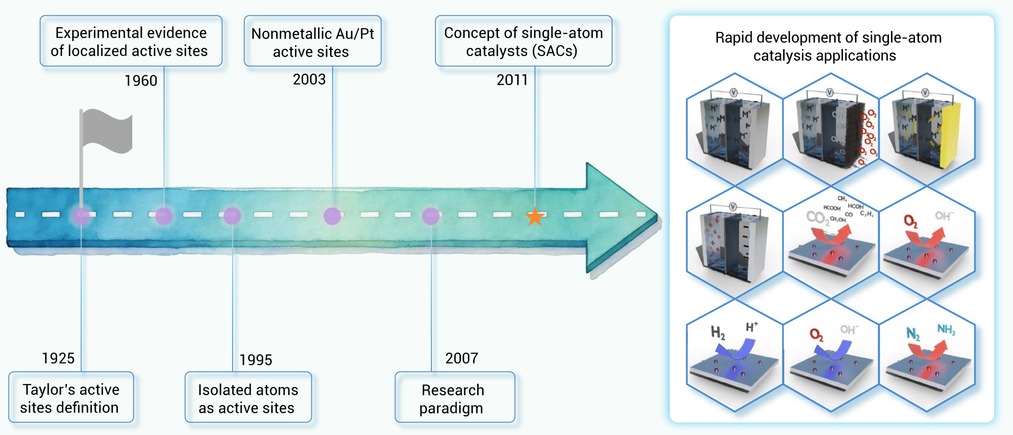
Export File
Citation
Fan C., Cui C., Hu J., et al. (2026). Single-atom catalysts: From atomic-level engineering to application. The Innovation Materials 4:100225. https://doi.org/10.59717/j.xinn-mater.2026.100225

Format
Content
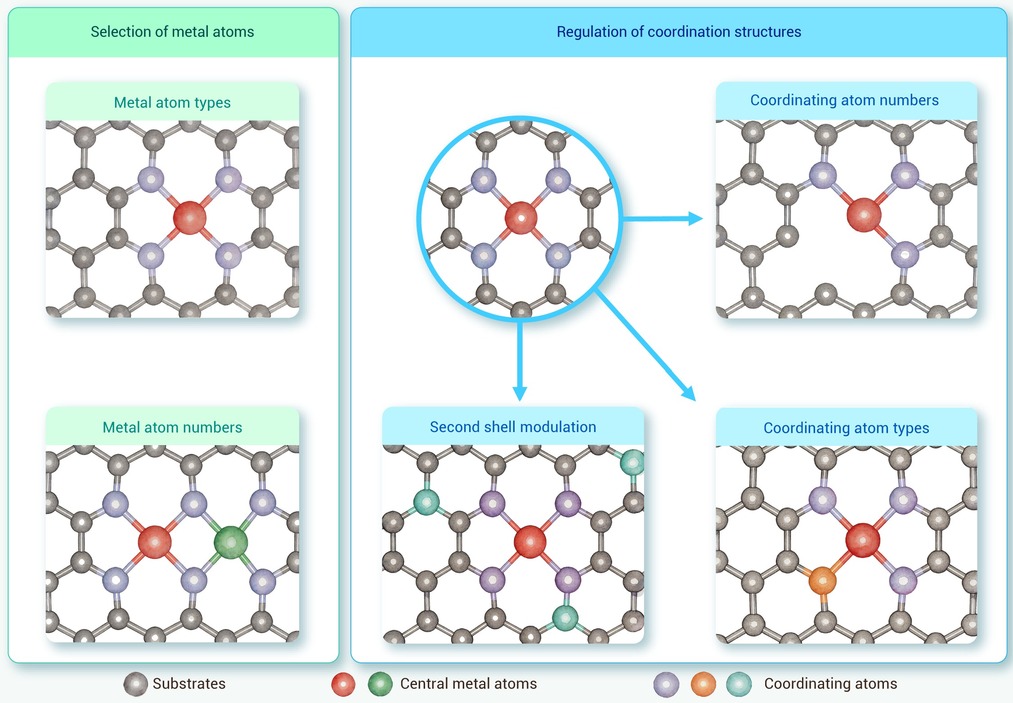
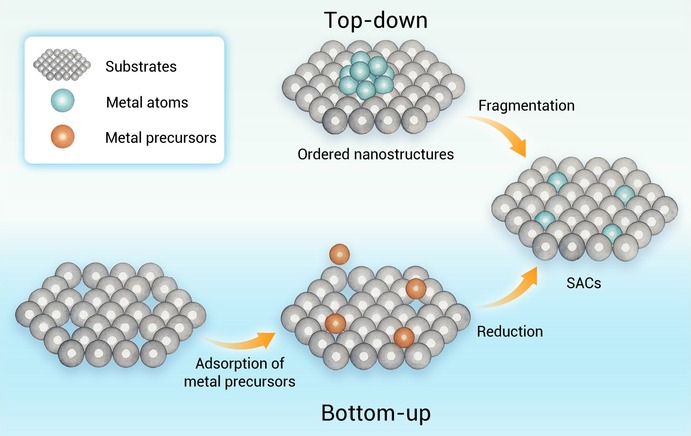
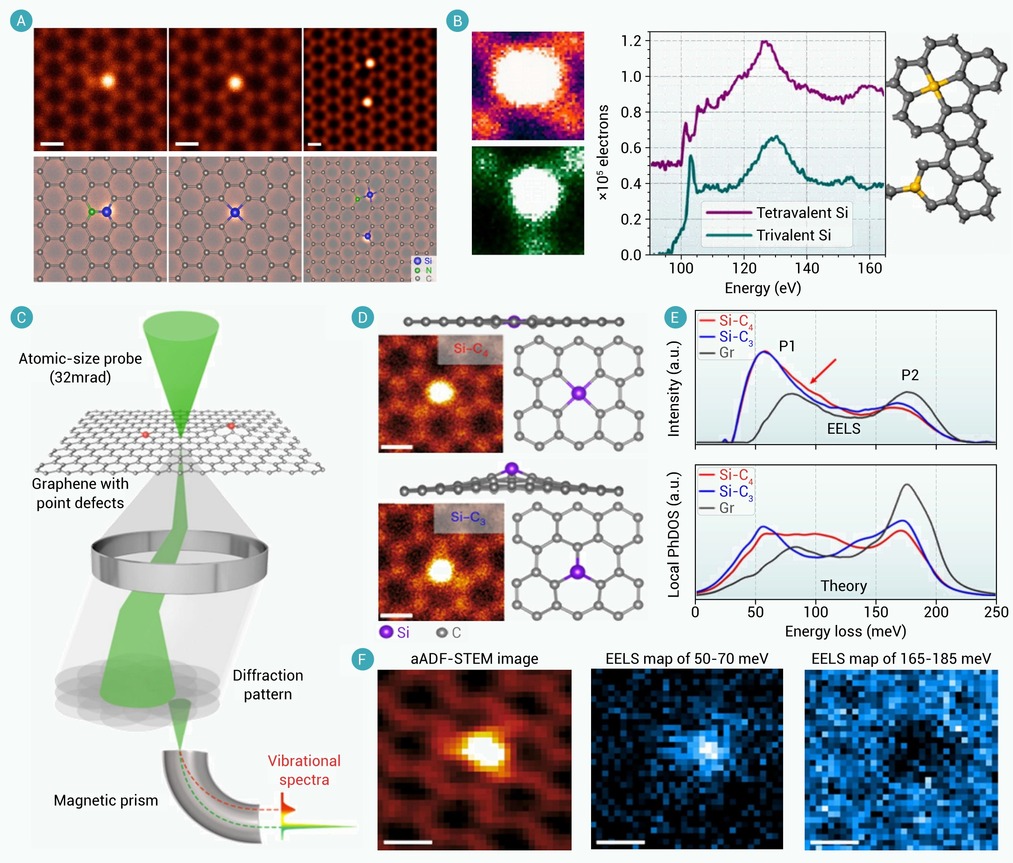
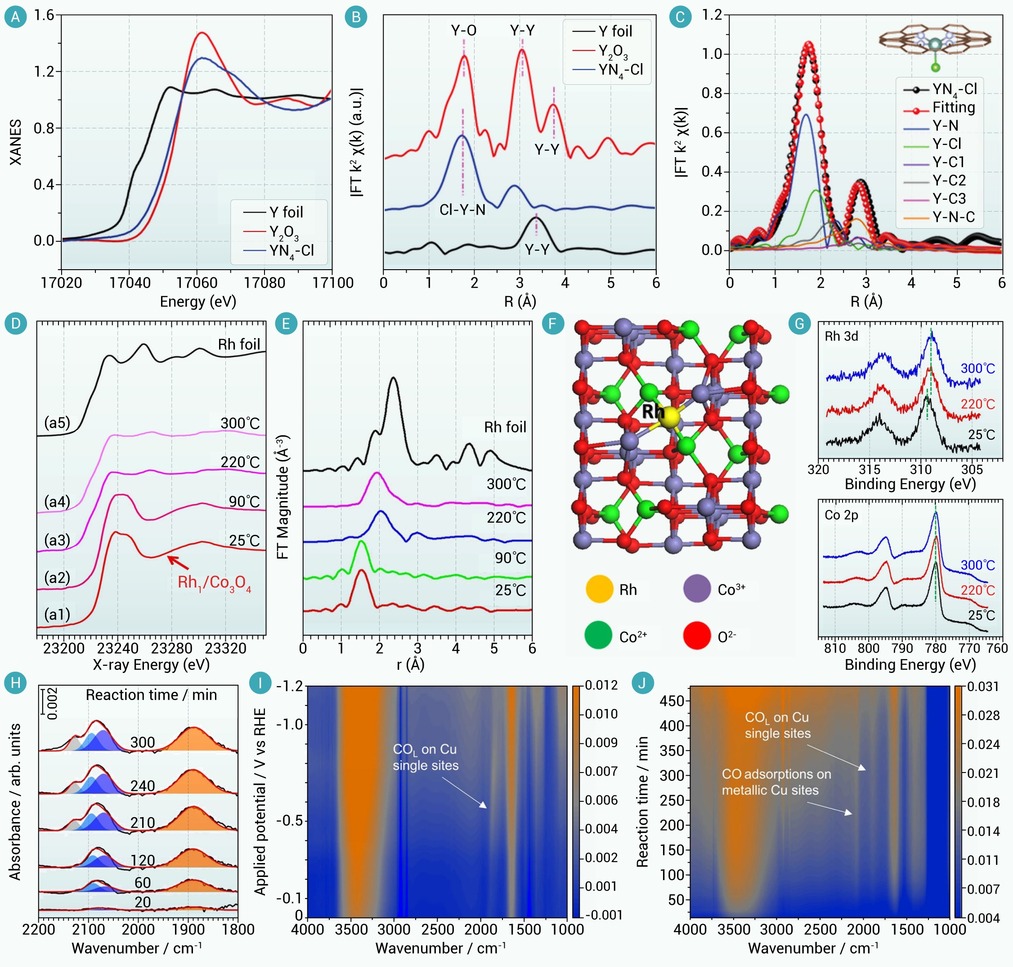
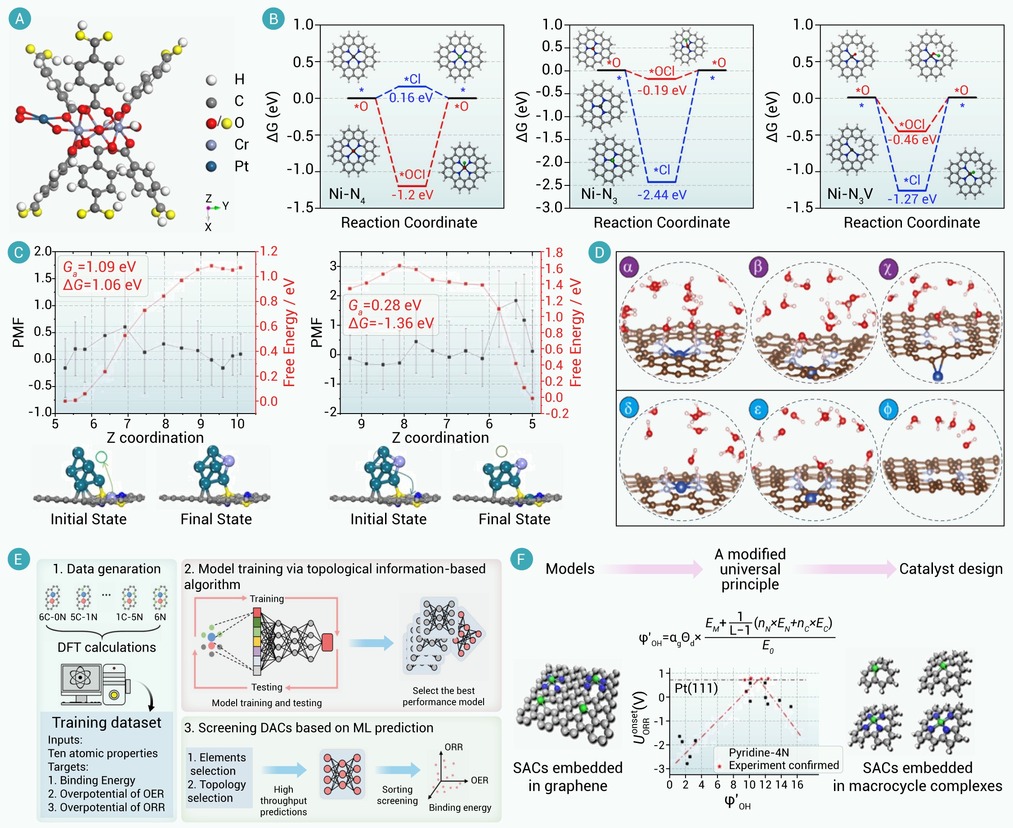
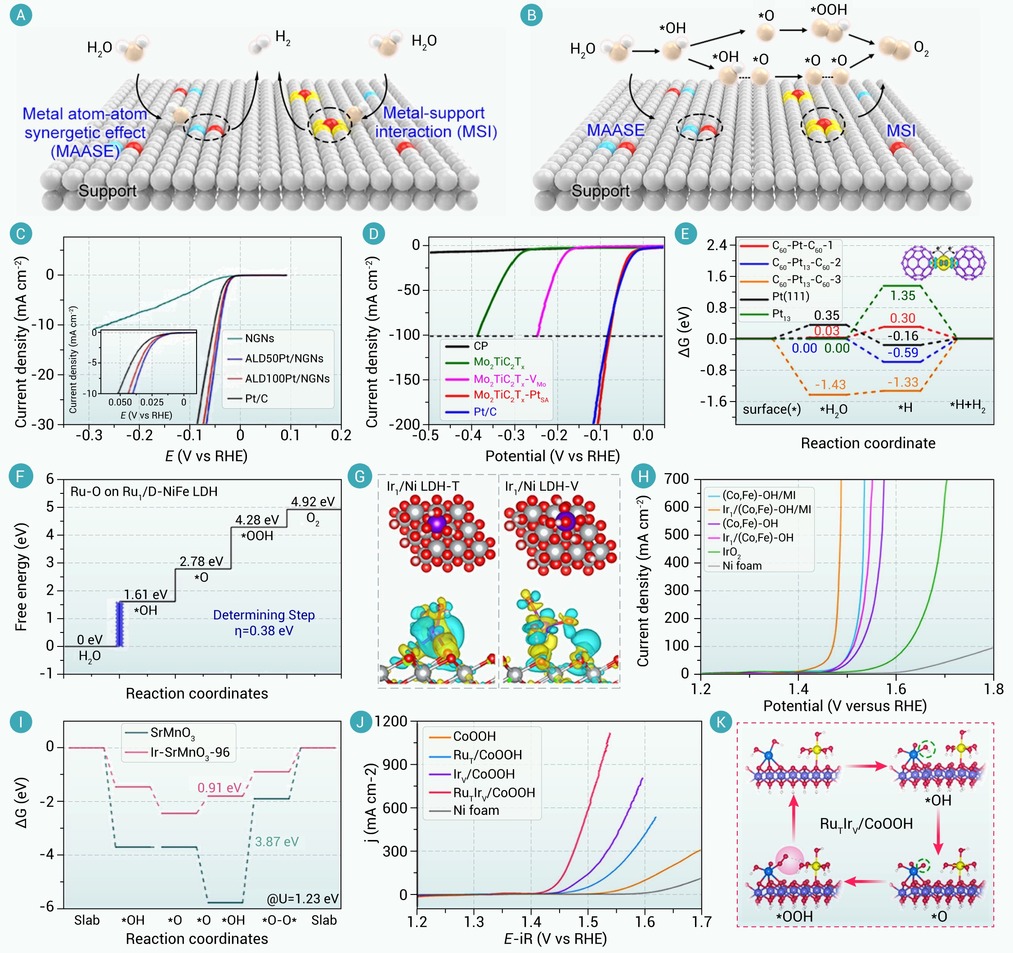
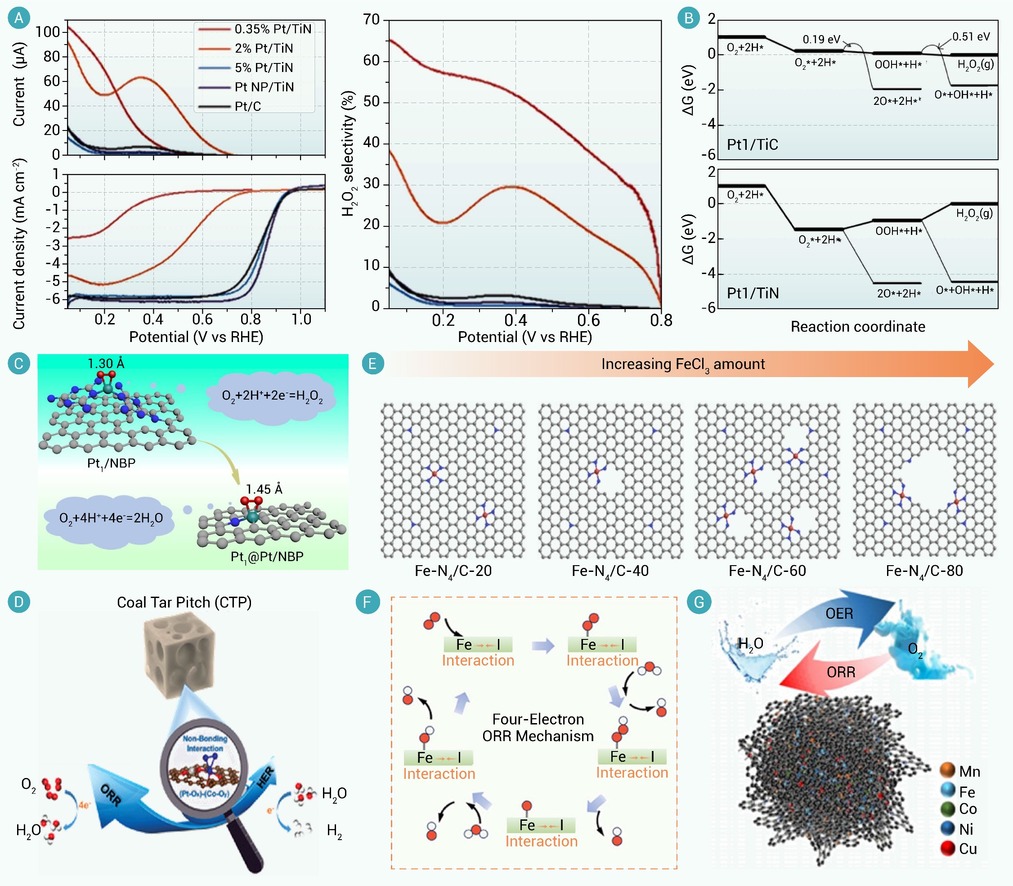
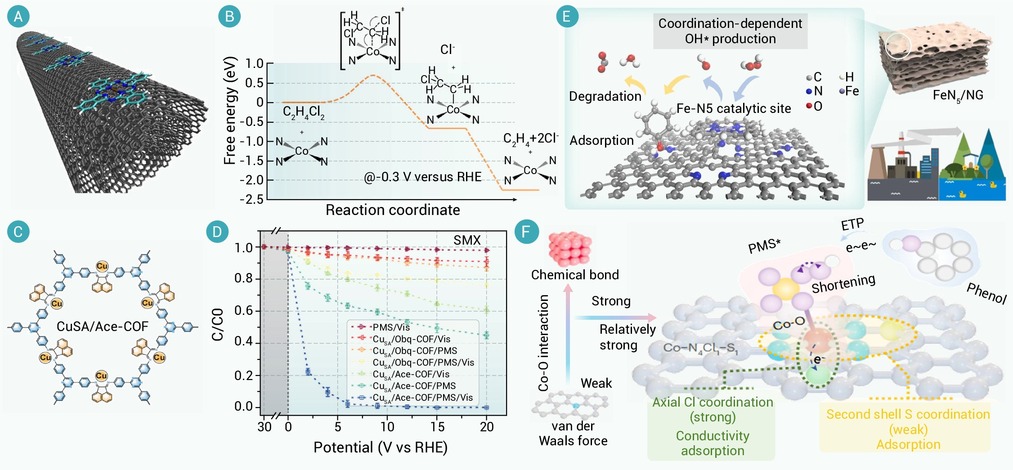
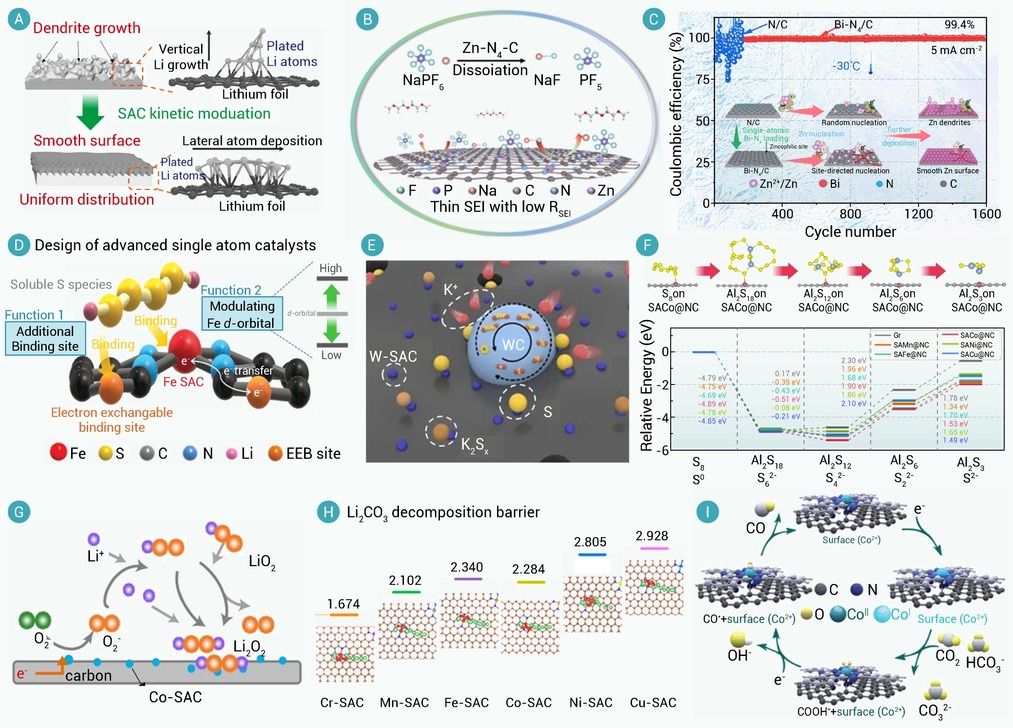
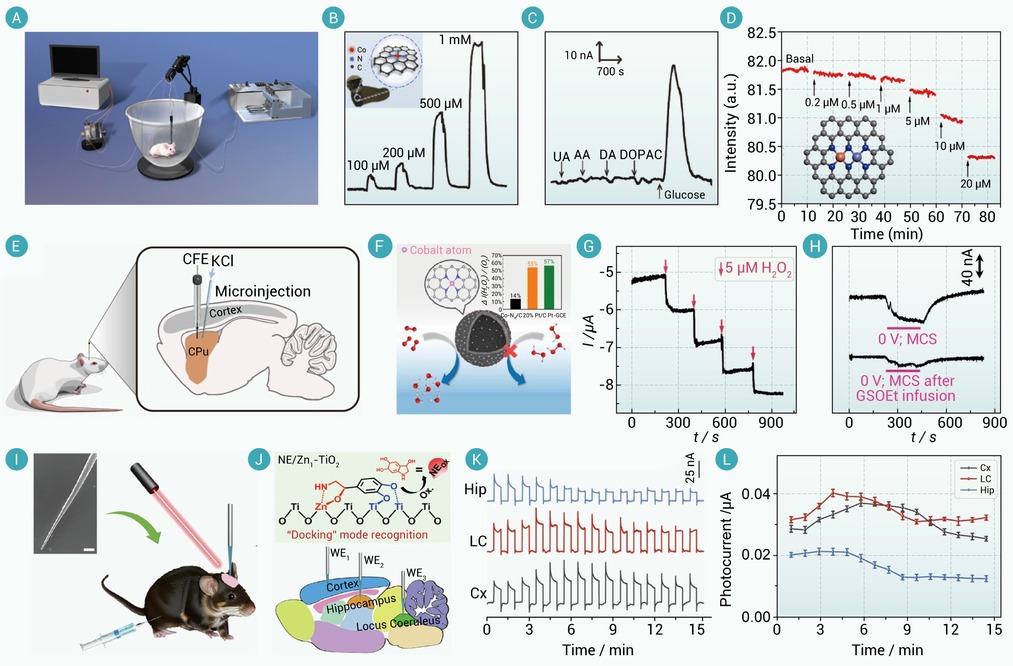
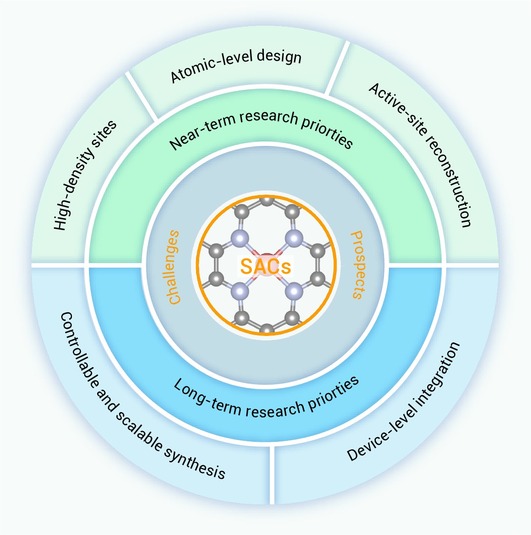
-
Figure 1.
Timeline of the development process of single-atom catalysis.6-11
-
Figure 2.
Schematic summary for the construction strategies of single-atom active sites.
-
Figure 3.
Schematic illustration of the synthetic strategies to SACs.
-
Figure 4.
Visualization of isolated metal atoms
-
Figure 5.
Analysis of coordination environment and electronic properties
-
Figure 6.
Theoretical calculations
-
Figure 7.
SACs in water splitting
-
Figure 8.
The application in ORR
-
Figure 9.
Application of SACs in the degradation of organic pollutants
-
Figure 10.
SACs for advanced battery technologies
-
Figure 11.
In vivo monitoring of neurochemicals with SACs
-
Figure 12.
Schematic illustration of challenges and prospects of SACs.
