
A prospective for TCR-T therapy in solid tumors: Pushing the boundaries of immunotherapy
-
GRAPHICAL ABSTRACT
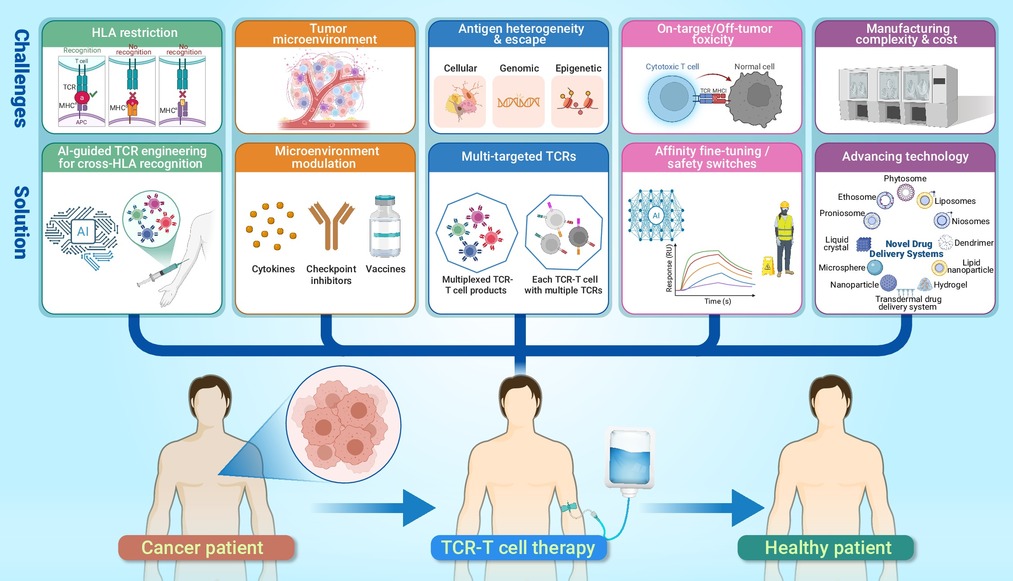
 DownLoad:
Full size image
DownLoad:
Full size image
-
PUBLIC SUMMARY
-
TCR-T (T-cell receptor-engineered T) therapy targets hidden internal cancer proteins as a breakthrough.
The recent FDA approval of afami-cel marks a major milestone for advancing this personalized immunotherapy.
Researchers leverage AI (Artificial Intelligence) and gene editing to overcome complex biological hurdles.
New strategies aim to improve T-cell fitness and persistence within the suppressive tumor microenvironment.
Combining TCR-T with other drugs could revolutionize care for patients with resistant solid malignancies.
-
-
ABSTRACT
T-cell receptor-engineered T (TCR-T) cell therapy stands out as an innovative and promising approach in cancer immunotherapy, particularly for the treatment of solid tumors. This therapy differs from the well-established chimeric antigen receptor (CAR)-T therapy, which has revolutionized the treatment of hematologic malignancies. TCR-T therapy holds a unique edge in its capacity to recognize and target intracellular antigens, thereby broadening the spectrum of potential tumor-specific antigens that can be harnessed for therapeutic purposes. The recent FDA approval of afami-cel for synovial sarcoma marks a significant milestone in the journey of TCR-T therapy. This approval underscores the clinical potential of TCR-T in targeting solid tumors and opens up new avenues for therapeutic interventions. However, the broader clinical translation of TCR-T therapy is constrained by several critical barriers: the inherent requirement for HLA matching, the potent immunosuppressive tumor microenvironment, antigen heterogeneity leading to immune escape, and the risk of fatal on-target/off-tumor toxicities. In this review, we delineate the distinctive mechanistic advantages of TCR-T cells and provide a comprehensive analysis of the biological and technical hurdles encountered in solid tumor treatment. We synthesize findings from recent clinical trials and evaluate emerging optimization strategies, including TCR affinity fine-tuning and combinatorial approaches to modulate the immune landscape. Addressing these challenges is essential to provide a roadmap for enhancing the efficacy and safety of TCR-T therapies, ultimately facilitating their widespread adoption to improve survival outcomes for patients with refractory solid malignancies. -

-
REFERENCES
[1] Siegel R. L., Kratzer T. B., Giaquinto A. N., et al. (2025). Cancer statistics, 2025. CA Cancer J. Clin. 75:10−45. DOI:10.3322/caac.21871 [2] Barker H. E., Paget J. T., Khan A. A., et al. (2015). The tumour microenvironment after radiotherapy: Mechanisms of resistance and recurrence. Nat. Rev. Cancer 15:409−425. DOI:10.1038/nrc3958 [3] Mellman I., Chen D. S., Powles T., et al. (2023). The cancer-immunity cycle: Indication, genotype, and immunotype. Immunity 56:2188−2205. DOI:10.1016/j.immuni.2023.09.011 [4] Chen D. S. and Mellman I. (2017). Elements of cancer immunity and the cancer-immune set point. Nature 541:321−330. DOI:10.1038/nature21349 [5] Patel K. K., Tariveranmoshabad M., Kadu S., et al. (2025). From concept to cure: The evolution of CAR-T cell therapy. Mol. Ther. 33:2123−2140. DOI:10.1016/j.ymthe.2025.03.005 [6] Finck A. V., Blanchard T., Roselle C. P., et al. (2022). Engineered cellular immunotherapies in cancer and beyond. Nat. Med. 28:678−689. DOI:10.1038/s41591-022-01765-8 [7] Brudno J. N., Maus M. V. and Hinrichs C. S. (2024). CAR T cells and T-cell therapies for cancer: A translational science review. JAMA 332:1924−1935. DOI:10.1001/jama.2024.19462 [8] June C. H., O'Connor R. S., Kawalekar O. U., et al. (2018). CAR T cell immunotherapy for human cancer. Science 359:1361−1365. DOI:10.1126/science.aar6711 [9] Baulu E., Gardet C., Chuvin N., et al. (2023). TCR-engineered T cell therapy in solid tumors: State of the art and perspectives. Sci. Adv. 9:eadf3700. DOI:10.1126/sciadv.adf3700 [10] Norberg S. M. and Hinrichs C. S. (2023). Engineered T cell therapy for viral and non-viral epithelial cancers. Cancer Cell 41:58−69. DOI:10.1016/j.ccell.2022.10.016 [11] Posey A. D. Jr., Young R. M. and June C. H. (2024). Future perspectives on engineered T cells for cancer. Trends Cancer 10:687−695. DOI:10.1016/j.trecan.2024.05.007 [12] Klebanoff C. A., Chandran S. S., Baker B. M., et al. (2023). T cell receptor therapeutics: Immunological targeting of the intracellular cancer proteome. Nat. Rev. Drug Discov. 22:996−1017. DOI:10.1038/s41573-023-00809-z [13] Sim M. J. W., Hanada K. I., Stotz Z., et al. (2024). Identification and structural characterization of a mutant KRAS-G12V specific TCR restricted by HLA-A3. Eur. J. Immunol. 54:e2451079. DOI:10.1002/eji.202451079 [14] Lu D., Chen Y., Jiang M., et al. (2023). KRAS G12V neoantigen specific T cell receptor for adoptive T cell therapy against tumors. Nat. Commun. 14:6389. DOI:10.1038/s41467-023-42010-1 [15] Kim S. P., Vale N. R., Zacharakis N., et al. (2022). Adoptive cellular therapy with autologous tumor-infiltrating lymphocytes and T-cell receptor-engineered T cells targeting common p53 neoantigens in human solid tumors. Cancer Immunol. Res. 10:932−946. DOI:10.1158/2326-6066.CIR-22-0040 [16] Salter A. I., Rajan A., Kennedy J. J., et al. (2021). Comparative analysis of TCR and CAR signaling informs CAR designs with superior antigen sensitivity and in vivo function. Sci. Signal. 14. DOI:10.1126/scisignal.abe2606 [17] Xiao Q., McAtee C. K. and Su X. (2022). Phase separation in immune signalling. Nat. Rev. Immunol. 22:188−199. DOI:10.1038/s41577-021-00572-5 [18] Shah K., Al-Haidari A., Sun J., et al. (2021). T cell receptor (TCR) signaling in health and disease. Signal Transduct. Target. Ther. 6:412. DOI:10.1038/s41392-021-00823-w [19] Dembic Z., Haas W., Weiss S., et al. (1986). Transfer of specificity by murine alpha and beta T-cell receptor genes. Nature 320:232−238. DOI:10.1038/320232a0 [20] Rosenberg S. A., Packard B. S., Aebersold P. M., et al. (1988). Use of tumor-infiltrating lymphocytes and interleukin-2 in the immunotherapy of patients with metastatic melanoma. N. Engl. J. Med. 319:1676−1680. DOI:10.1056/NEJM198812223192527 [21] van der Bruggen P., Traversari C., Chomez P., et al. (1991). A gene encoding an antigen recognized by cytolytic T lymphocytes on a human melanoma. Science 254:1643−1647. DOI:10.1126/science.1840703 [22] Kawakami Y., Eliyahu S., Delgado C. H., et al. (1994). Identification of a human melanoma antigen recognized by tumor-infiltrating lymphocytes associated with in vivo tumor rejection. Proc. Natl. Acad. Sci. U. S. A. 91:6458−6462. DOI:10.1073/pnas.91.14.6458 [23] Kawakami Y., Eliyahu S., Delgado C. H., et al. (1994). Cloning of the gene coding for a shared human melanoma antigen recognized by autologous T cells infiltrating into tumor. Proc. Natl. Acad. Sci. U. S. A. 91:3515−3519. DOI:10.1073/pnas.91.9.3515 [24] Morgan R. A., Dudley M. E., Wunderlich J. R., et al. (2006). Cancer regression in patients after transfer of genetically engineered lymphocytes. Science 314:126−129. DOI:10.1126/science.1129003 [25] Rapoport A. P., Stadtmauer E. A., Binder-Scholl G. K., et al. (2015). NY-ESO-1-specific TCR-engineered T cells mediate sustained antigen-specific antitumor effects in myeloma. Nat. Med. 21:914−921. DOI:10.1038/nm.3910 [26] Robbins P. F., Morgan R. A., Feldman S. A., et al. (2011). Tumor regression in patients with metastatic synovial cell sarcoma and melanoma using genetically engineered lymphocytes reactive with NY-ESO-1. J. Clin. Oncol. 29:917−924. DOI:10.1200/JCO.2010.32.2537 [27] Robbins P. F., Kassim S. H., Tran T. L., et al. (2015). A pilot trial using lymphocytes genetically engineered with an NY-ESO-1-reactive T-cell receptor: Long-term follow-up and correlates with response. Clin. Cancer Res. 21:1019−1027. DOI:10.1158/1078-0432.CCR-14-2708 [28] Doran S. L., Stevanovic S., Adhikary S., et al. (2019). T-cell receptor gene therapy for human papillomavirus-associated epithelial cancers: A first-in-human, phase I/II study. J. Clin. Oncol. 37:2759−2768. DOI:10.1200/JCO.18.02424 [29] Smithy J. W., Blouin A., Diamond L. C., et al. (2022). Ensuring equity in the era of HLA-restricted cancer therapeutics. J. Immunother. Cancer 10. DOI:10.1136/jitc-2022-005600 [30] Hu X., Chen Z., Wang Z., et al. (2022). Cancer evolution: Special focus on the immune aspect of cancer. Semin. Cancer Biol. 86:420−435. DOI:10.1016/j.semcancer.2022.05.006 [31] Binnewies M., Roberts E. W., Kersten K., et al. (2018). Understanding the tumor immune microenvironment (TIME) for effective therapy. Nat. Med. 24:541−550. DOI:10.1038/s41591-018-0014-x [32] Anderson A. C., Joller N. and Kuchroo V. K. (2016). Lag-3, Tim-3, and TIGIT: Co-inhibitory receptors with specialized functions in immune regulation. Immunity 44:989−1004. DOI:10.1016/j.immuni.2016.05.001 [33] Quinn III W. J., Jiao J., TeSlaa T., et al. (2020). Lactate limits T cell proliferation via the NAD(H) redox state. Cell Rep. 33:108500. DOI:10.1016/j.celrep.2020.108500 [34] Zhang C., Wang K. and Wang H. (2023). Adenosine in cancer immunotherapy: Taking off on a new plane. Biochim. Biophys. Acta. Rev. Cancer 1878:189005. DOI:10.1016/j.bbcan.2023.189005 [35] Sorrentino C., Hossain F., Rodriguez P. C., et al. (2019). Adenosine A2A receptor stimulation inhibits TCR-induced Notch1 activation in CD8+T-cells. Front. Immunol. 10:162. DOI:10.3389/fimmu.2019.00162 [36] Li S., Zhang Y., Tong H., et al. (2025). Metabolic regulation of immunity in the tumor microenvironment. Cell Rep. 44:116463. DOI:10.1016/j.celrep.2025.116463 [37] Fallarino F., Grohmann U., Vacca C., et al. (2002). T cell apoptosis by tryptophan catabolism. Cell Death Differ. 9:1069−1077. DOI:10.1038/sj.cdd.4401073 [38] Qin R., Zhao C., Wang C. J., et al. (2021). Tryptophan potentiates CD8(+) T cells against cancer cells by TRIP12 tryptophanylation and surface PD-1 downregulation. J. Immunother. Cancer 9. DOI:10.1136/jitc-2021-002840. [39] Ma X., Bi E., Lu Y., et al. (2019). Cholesterol induces CD8(+) T cell exhaustion in the tumor microenvironment. Cell Metab. 30:143-156 e145. DOI:10.1016/j.cmet.2019.04.002 [40] Wang Z. H., Peng W. B., Zhang P., et al. (2021). Lactate in the tumour microenvironment: From immune modulation to therapy. EBioMedicine 73:103627. DOI:10.1016/j.ebiom.2021.103627 [41] Yang W., Liu S., Mao M., et al. (2024). T-cell infiltration and its regulatory mechanisms in cancers: Insights at single-cell resolution. J. Exp. Clin. Cancer Res. 43:38. DOI:10.1186/s13046-024-02960-w [42] Lopez de Rodas M., Villalba-Esparza M., Sanmamed M. F., et al. (2025). Biological and clinical significance of tumour-infiltrating lymphocytes in the era of immunotherapy: A multidimensional approach. Nat. Rev. Clin. Oncol. 22:163−181. DOI:10.1038/s41571-024-00984-x [43] Zhang T., Yu W., Cheng X., et al. (2024). Up-regulated PLA2G10 in cancer impairs T cell infiltration to dampen immunity. Sci. Immunol. 9:eadh2334. DOI:10.1126/sciimmunol.adh2334 [44] Nagy J. A. and Dvorak H. F. (2012). Heterogeneity of the tumor vasculature: The need for new tumor blood vessel type-specific targets. Clin. Exp. Metastasis 29:657−662. DOI:10.1007/s10585-012-9500-6 [45] Sun Y., Chen W., Torphy R. J., et al. (2021). Blockade of the CD93 pathway normalizes tumor vasculature to facilitate drug delivery and immunotherapy. Sci. Transl. Med. 13. DOI:10.1126/scitranslmed.abc8922. [46] Barrow C., Browning J., MacGregor D., et al. (2006). Tumor antigen expression in melanoma varies according to antigen and stage. Clin. Cancer Res. 12:764−771. DOI:10.1158/1078-0432.CCR-05-1544 [47] Kirtane K., Elmariah H., Chung C. H., et al. (2021). Adoptive cellular therapy in solid tumor malignancies: review of the literature and challenges ahead. J. Immunother. Cancer 9. DOI:10.1136/jitc-2021-002723 [48] Nagarsheth N. B., Norberg S. M., Sinkoe A. L., et al. (2021). TCR-engineered T cells targeting E7 for patients with metastatic HPV-associated epithelial cancers. Nat. Med. 27:419−425. DOI:10.1038/s41591-020-01225-1 [49] Hirschhorn D., Budhu S., Kraehenbuehl L., et al. (2023). T cell immunotherapies engage neutrophils to eliminate tumor antigen escape variants. Cell 186:1432-1447 e1417. DOI:10.1016/j.cell.2023.03.007. [50] Rosenthal R., Cadieux E. L., Salgado R., et al. (2019). Neoantigen-directed immune escape in lung cancer evolution. Nature 567:479−485. DOI:10.1038/s41586-019-1032-7 [51] Horn L. A., Fousek K. and Palena C. (2020). Tumor plasticity and resistance to immunotherapy. Trends Cancer 6:432−441. DOI:10.1016/j.trecan.2020.02.001 [52] Shi Z. D., Pang K., Wu Z. X., et al. (2023). Tumor cell plasticity in targeted therapy-induced resistance: Mechanisms and new strategies. Sig. Transduct. Target. Ther. 8:113. DOI:10.1038/s41392-023-01383-x [53] Bear A. S., Nadler R. B., O'Hara M. H., et al. (2024). Natural TCRs targeting KRASG12V display fine specificity and sensitivity to human solid tumors. J. Clin. Invest. 134. DOI:10.1172/JCI175790 [54] Linette G. P., Stadtmauer E. A., Maus M. V., et al. (2013). Cardiovascular toxicity and titin cross-reactivity of affinity-enhanced T cells in myeloma and melanoma. Blood 122:863−871. DOI:10.1182/blood-2013-03-490565 [55] Morgan R. A., Chinnasamy N., Abate-Daga D., et al. (2013). Cancer regression and neurological toxicity following anti-MAGE-A3 TCR gene therapy. J. Immunother. 36:133−151. DOI:10.1097/CJI.0b013e3182829903 [56] van den Berg J. H., Gomez-Eerland R., van de Wiel B., et al. (2015). Case report of a fatal serious adverse event upon administration of T cells transduced with a MART-1-specific T-cell receptor. Mol. Ther. 23:1541−1550. DOI:10.1038/mt.2015.60 [57] Parkhurst M. R., Yang J. C., Langan R. C., et al. (2011). T cells targeting carcinoembryonic antigen can mediate regression of metastatic colorectal cancer but induce severe transient colitis. Mol. Ther. 19:620−626. DOI:10.1038/mt.2010.272 [58] Lan X., Zebley C. C. and Youngblood B. (2023). Cellular and molecular waypoints along the path of T cell exhaustion. Sci. Immunol. 8:eadg3868. DOI:10.1126/sciimmunol.adg3868 [59] Hassan R., Butler M., O'Cearbhaill R. E., et al. (2023). Mesothelin-targeting T cell receptor fusion construct cell therapy in refractory solid tumors: phase 1/2 trial interim results. Nat. Med. 29:2099−2109. DOI:10.1038/s41591-023-02452-y [60] Foy S. P., Jacoby K., Bota D. A., et al. (2023). Non-viral precision T cell receptor replacement for personalized cell therapy. Nature 615:687−696. DOI:10.1038/s41586-022-05531-1 [61] Castiglioni A., Yang Y., Williams K., et al. (2023). Combined PD-L1/TGFbeta blockade allows expansion and differentiation of stem cell-like CD8 T cells in immune excluded tumors. Nat. Commun. 14:4703. DOI:10.1038/s41467-023-40398-4 [62] Yi M., Niu M., Xu L., et al. (2021). Regulation of PD-L1 expression in the tumor microenvironment. J. Hematol. Oncol. 14:10. DOI:10.1186/s13045-020-01027-5 [63] Laine A., Labiad O., Hernandez-Vargas H., et al. (2021). Regulatory T cells promote cancer immune-escape through integrin alphavbeta8-mediated TGF-beta activation. Nat. Commun. 12:6228. DOI:10.1038/s41467-021-26352-2 [64] Saez-Ibanez A. R., Upadhaya S., Partridge T., et al. (2022). Landscape of cancer cell therapies: Trends and real-world data. Nat. Rev. Drug Discov. 21:631−632. DOI:10.1038/d41573-022-00095-1 [65] Golikova E. A., Alshevskaya A. A., Alrhmoun S., et al. (2024). TCR-T cell therapy: Current development approaches, preclinical evaluation, and perspectives on regulatory challenges. J. Transl. Med. 22:897. DOI:10.1186/s12967-024-05703-9 [66] Wang X. and Riviere I. (2016). Clinical manufacturing of CAR T cells: Foundation of a promising therapy. Mol. Ther. Oncolytics 3:16015. DOI:10.1038/mto.2016.15 [67] Johnson L. A., Morgan R. A., Dudley M. E., et al. (2009). Gene therapy with human and mouse T-cell receptors mediates cancer regression and targets normal tissues expressing cognate antigen. Blood 114:535−546. DOI:10.1182/blood-2009-03-211714 [68] Chodon T., Comin-Anduix B., Chmielowski B., et al. (2014). Adoptive transfer of MART-1 T-cell receptor transgenic lymphocytes and dendritic cell vaccination in patients with metastatic melanoma. Clin. Cancer Res. 20:2457−2465. DOI:10.1158/1078-0432.CCR-13-3017 [69] Stadtmauer E. A., Faitg T. H., Lowther D. E., et al. (2019). Long-term safety and activity of NY-ESO-1 SPEAR T cells after autologous stem cell transplant for myeloma. Blood Adv. 3:2022−2034. DOI:10.1182/bloodadvances.2019000194 [70] Nishihori T., Hoffman J. E., Huff A., et al. (2023). Safety and efficacy of letetresgene autoleucel alone or with pembrolizumab for relapsed/refractory multiple myeloma. Blood Adv. 7:1168−1177. DOI:10.1182/bloodadvances.2022008460 [71] D'Angelo S. P., Druta M., Van Tine B. A., et al. (2025). Letetresgene autoleucel in advanced/metastatic myxoid/round cell liposarcoma. J. Clin. Oncol. 43:1777−1788. DOI:10.1200/JCO-24-01466 [72] Nowicki T. S., Deen N. N. A., Peters C. W., et al. (2025). Human cancer-targeted immunity via transgenic hematopoietic stem cell progeny. Nat. Commun. 16:5599. DOI:10.1038/s41467-025-60816-z [73] Pan Q., Weng D., Liu J., et al. (2023). Phase 1 clinical trial to assess safety and efficacy of NY-ESO-1-specific TCR T cells in HLA-A *02:01 patients with advanced soft tissue sarcoma. Cell Rep. Med. 4:101133. DOI:10.1016/j.xcrm.2023.101133 [74] Ishihara M., Kitano S., Kageyama S., et al. (2022). NY-ESO-1-specific redirected T cells with endogenous TCR knockdown mediate tumor response and cytokine release syndrome. J. Immunother. Cancer 10. DOI:10.1136/jitc-2021-003811 [75] Nowicki T. S., Berent-Maoz B., Cheung-Lau G., et al. (2019). A pilot trial of the combination of transgenic NY-ESO-1-reactive adoptive cellular therapy with dendritic cell vaccination with or without Ipilimumab. Clin. Cancer Res. 25:2096−2108. DOI:10.1158/1078-0432.CCR-18-3496 [76] D'Angelo S. P., Melchiori L., Merchant M. S., et al. (2018). Antitumor activity associated with prolonged persistence of adoptively transferred NY-ESO-1 (c259)T cells in synovial sarcoma. Cancer Discov. 8:944−957. DOI:10.1158/2159-8290.CD-17-1417 [77] Zhao Q., Huang J., Luo W., et al. (2025). HBV-Specific TCR-T Cell Therapy Combining mRNA Electroporation and Lentiviral Transduction: Treatment Regimen for Recurrent HBV-Related HCC after Liver Transplantation. Clin. Cancer Res. 31:3886−3896. DOI:10.1158/1078-0432.CCR-25-1245 [78] Yang F., Zheng X., Koh S., et al. (2023). Messenger RNA electroporated hepatitis B virus (HBV) antigen-specific T cell receptor (TCR) redirected T cell therapy is well-tolerated in patients with recurrent HBV-related hepatocellular carcinoma post-liver transplantation: results from a phase I trial. Hepatol. Int. 17:850−859. DOI:10.1007/s12072-023-10524-x [79] Meng F., Zhao J., Tan A. T., et al. (2021). Immunotherapy of HBV-related advanced hepatocellular carcinoma with short-term HBV-specific TCR expressed T cells: Results of dose escalation, phase I trial. Hepatol. Int. 15:1402−1412. DOI:10.1007/s12072-021-10250-2 [80] Ikeda H., Lethe B., Lehmann F., et al. (1997). Characterization of an antigen that is recognized on a melanoma showing partial HLA loss by CTL expressing an NK inhibitory receptor. Immunity 6:199−208. DOI:10.1016/s1074-7613(00)80426-4 [81] Wermke M., Araujo D. M., Chatterjee M., et al. (2025). Autologous T cell therapy for PRAME(+) advanced solid tumors in HLA-A*02(+) patients: A phase 1 trial. Nat. Med. 31:2365−2374. DOI:10.1038/s41591-025-03650-6 [82] Shen Y., Parks J. M. and Smith J. C. (2023). HLA class I supertype classification based on structural similarity. J. Immunol. 210:103−114. DOI:10.4049/jimmunol.2200685 [83] Lin Q., Liu F., Ma Y., et al. (2025). TCR-T cell recognition of an NY-ESO-1 epitope presented by HLA-A2 supertype: Implications for cancer immunotherapy. Vaccines (Basel) 13:898. DOI:10.3390/vaccines13090898 [84] Keam S. J. (2024). Afamitresgene autoleucel: First approval. Mol. Diagn. Ther. 28:861−866. DOI:10.1007/s40291-024-00749-3 [85] Kumar D., Tanwar R., Kamal R., et al. (2025). Tecelra approval: A breakthrough in synovial sarcoma therapy. Curr. Drug Discov. Technol. 22:e15701638357969. DOI:10.2174/0115701638357969250131102049 [86] Karuppiah V., Sangani D., Whaley L., et al. (2024). Broadening alloselectivity of T cell receptors by structure guided engineering. Sci. Rep. 14:26851. DOI:10.1038/s41598-024-75140-7 [87] Nguyen R., Doubrovina E., Mousset C. M., et al. (2024). Cooperative armoring of CAR and TCR T cells by T cell-restricted IL15 and IL21 universally enhances solid tumor efficacy. Clin. Cancer Res. 30:1555−1566. DOI:10.1158/1078-0432.CCR-23-1872 [88] Tokunaga Y., Sasaki T., Goto S., et al. (2022). Enhanced antitumor responses of tumor antigen-specific TCR T cells genetically engineered to produce IL7 and CCL19. Mol. Cancer Ther. 21:138−148. DOI:10.1158/1535-7163.MCT-21-0400 [89] Cieri N., Camisa B., Cocchiarella F., et al. (2013). IL-7 and IL-15 instruct the generation of human memory stem T cells from naive precursors. Blood 121:573−584. DOI:10.1182/blood-2012-05-431718 [90] Li L., Li Q., Yan Z. X., et al. (2022). Transgenic expression of IL-7 regulates CAR-T cell metabolism and enhances in vivo persistence against tumor cells. Sci. Rep. 12:12506. DOI:10.1038/s41598-022-16616-2 [91] Zhao Y., Chen J., Andreatta M., et al. (2024). IL-10-expressing CAR T cells resist dysfunction and mediate durable clearance of solid tumors and metastases. Nat. Biotechnol. 42:1693−1704. DOI:10.1038/s41587-023-02060-8 [92] Hernandez R., Poder J., LaPorte K. M., et al. (2022). Engineering IL-2 for immunotherapy of autoimmunity and cancer. Nat. Rev. Immunol. 22:614−628. DOI:10.1038/s41577-022-00680-w [93] Levin A. M., Bates D. L., Ring A. M., et al. (2012). Exploiting a natural conformational switch to engineer an interleukin-2 'superkine'. Nature 484:529−533. DOI:10.1038/nature10975 [94] Silva D. A., Yu S., Ulge U. Y., et al. (2019). De novo design of potent and selective mimics of IL-2 and IL-15. Nature 565:186−191. DOI:10.1038/s41586-018-0830-7 [95] Aspuria P. J., Vivona S., Bauer M., et al. (2021). An orthogonal IL-2 and IL-2Rbeta system drives persistence and activation of CAR T cells and clearance of bulky lymphoma. Sci. Transl. Med. 13:eabg7565. DOI:10.1126/scitranslmed.abg7565 [96] Sockolosky J. T., Trotta E., Parisi G., et al. (2018). Selective targeting of engineered T cells using orthogonal IL-2 cytokine-receptor complexes. Science 359:1037−1042. DOI:10.1126/science.aar3246 [97] Zhang X., Gao Y., Liao H., et al. (2025). TIM3-blockade synergizes with IL2 in alleviating intra-tumoral CD8(+)T cell exhaustion. Nat. Commun. 16:5130. DOI:10.1038/s41467-025-60463-4 [98] Shan Q., Hu S., Chen X., et al. (2021). Ectopic Tcf1 expression instills a stem-like program in exhausted CD8(+) T cells to enhance viral and tumor immunity. Cell Mol. Immunol. 18:1262−1277. DOI:10.1038/s41423-020-0436-5 [99] Lynn R. C., Weber E. W., Sotillo E., et al. (2019). c-Jun overexpression in CAR T cells induces exhaustion resistance. Nature 576:293−300. DOI:10.1038/s41586-019-1805-z [100] Zhang J., Li J., Hou Y., et al. (2024). Osr2 functions as a biomechanical checkpoint to aggravate CD8(+) T cell exhaustion in tumor. Cell 187:3409-3426 e3424. DOI:10.1016/j.cell.2024.04.023 [101] Bengsch B., Johnson A. L., Kurachi M., et al. (2016). Bioenergetic insufficiencies due to metabolic alterations regulated by the inhibitory receptor PD-1 are an early driver of CD8(+) T cell exhaustion. Immunity 45:358−373. DOI:10.1016/j.immuni.2016.07.008 [102] Yu Y. R., Imrichova H., Wang H., et al. (2020). Disturbed mitochondrial dynamics in CD8(+) TILs reinforce T cell exhaustion. Nat. Immunol. 21:1540−1551. DOI:10.1038/s41590-020-0793-3 [103] Si X., Shao M., Teng X., et al. (2024). Mitochondrial isocitrate dehydrogenase impedes CAR T cell function by restraining antioxidant metabolism and histone acetylation. Cell. Metab. 36:176-192 e110. DOI:10.1016/j.cmet.2023.12.010. [104] Ma K., Cheng H., Wang L., et al. (2025). Succinate preserves CD8(+) T cell fitness to augment antitumor immunity. Immunity 58:2505-2523 e2508. DOI:10.1016/j.immuni.2025.07.017 [105] Qiu Y., Su Y., Xie E., et al. (2025). Mannose metabolism reshapes T cell differentiation to enhance anti-tumor immunity. Cancer Cell 43:103-121 e108. DOI:10.1016/j.ccell.2024.11.003 [106] Zhu M., Han Y., Gu T., et al. (2024). Class I HDAC inhibitors enhance antitumor efficacy and persistence of CAR-T cells by activation of the Wnt pathway. Cell Rep. 43:114065. DOI:10.1016/j.celrep.2024.114065 [107] Porazzi P., Nason S., Yang Z., et al. (2025). EZH1/EZH2 inhibition enhances adoptive T cell immunotherapy against multiple cancer models. Cancer Cell 43:537-551 e537. DOI:10.1016/j.ccell.2025.01.013 [108] Kong W., Dimitri A., Wang W., et al. (2021). BET bromodomain protein inhibition reverses chimeric antigen receptor extinction and reinvigorates exhausted T cells in chronic lymphocytic leukemia. J. Clin. Invest. 131. DOI:10.1172/JCI145459 [109] Ch'ng A. C. W., Lam P., Alassiri M., et al. (2022). Application of phage display for T-cell receptor discovery. Biotechnol. Adv. 54:107870. DOI:10.1016/j.biotechadv.2021.107870 [110] Gunnarsen K. S., Kristinsson S. G., Justesen S., et al. (2013). Chaperone-assisted thermostability engineering of a soluble T cell receptor using phage display. Sci. Rep. 3:1162. DOI:10.1038/srep01162 [111] Smith S. N., Harris D. T. and Kranz D. M. (2015). T cell receptor engineering and analysis using the yeast display platform. Methods Mol. Biol. 1319:95−141. DOI:10.1007/978-1-4939-2748-7_6 [112] Wagner E. K., Qerqez A. N., Stevens C. A., et al. (2019). Human cytomegalovirus-specific T-cell receptor engineered for high affinity and soluble expression using mammalian cell display. J. Biol. Chem. 294:5790−5804. DOI:10.1074/jbc.RA118.007187 [113] Holland C. J., Crean R. M., Pentier J. M., et al. (2020). Specificity of bispecific T cell receptors and antibodies targeting peptide-HLA. J. Clin. Invest. 130:2673−2688. DOI:10.1172/JCI130562 [114] Malecek K., Zhong S., McGary K., et al. (2013). Engineering improved T cell receptors using an alanine-scan guided T cell display selection system. J. Immunol. Methods 392:1−11. DOI:10.1016/j.jim.2013.02.018 [115] Poole A., Karuppiah V., Hartt A., et al. (2022). Therapeutic high affinity T cell receptor targeting a KRAS(G12D) cancer neoantigen. Nat. Commun. 13:5333. DOI:10.1038/s41467-022-32811-1 [116] Bassan D., Gozlan Y. M., Sharbi-Yunger A., et al. (2021). Avidity optimization of a MAGE-A1-specific TCR with somatic hypermutation. Eur. J. Immunol. 51:1505−1518. DOI:10.1002/eji.202049007 [117] Bassan D., Gozlan Y. M., Sharbi-Yunger A., et al. (2019). Optimizing T-cell receptor avidity with somatic hypermutation. Int. J. Cancer 145:2816−2826. DOI:10.1002/ijc.32612 [118] Muhlgrabner V., Peters T., Velasco Cardenas R. M., et al. (2024). TCR/CD3-based synthetic antigen receptors (TCC) convey superior antigen sensitivity combined with high fidelity of activation. Sci. Adv. 10:eadj4632. DOI:10.1126/sciadv.adj4632 [119] Rushdi M. N., Pan V., Li K., et al. (2022). Cooperative binding of T cell receptor and CD4 to peptide-MHC enhances antigen sensitivity. Nat. Commun. 13:7055. DOI:10.1038/s41467-022-34587-w [120] Holler P. D., Chlewicki L. K. and Kranz D. M. (2003). TCRs with high affinity for foreign pMHC show self-reactivity. Nat. Immunol. 4:55−62. DOI:10.1038/ni863 [121] Singhaviranon S., Dempsey J. P., Hagymasi A. T., et al. (2025). Low-avidity T cells drive endogenous tumor immunity in mice and humans. Nat. Immunol. 26:240−251. DOI:10.1038/s41590-024-02044-z [122] Shakiba M., Zumbo P., Espinosa-Carrasco G., et al. (2022). TCR signal strength defines distinct mechanisms of T cell dysfunction and cancer evasion. J. Exp. Med. 219. DOI:10.1084/jem.20201966 [123] Zhao X., Kolawole E. M., Chan W., et al. (2022). Tuning T cell receptor sensitivity through catch bond engineering. Science 376:eabl5282. DOI:10.1126/science.abl5282 [124] Gejman R. S., Jones H. F., Klatt M. G., et al. (2020). Identification of the targets of T-cell receptor therapeutic agents and cells by use of a high-throughput genetic platform. Cancer Immunol. Res. 8:672−684. DOI:10.1158/2326-6066.CIR-19-0745 [125] Bijen H. M., van der Steen D. M., Hagedoorn R. S., et al. (2018). Preclinical strategies to identify off-target toxicity of high-affinity TCRs. Mol. Ther. 26:1206−1214. DOI:10.1016/j.ymthe.2018.02.017 [126] Li X., Yang Q., Xu L., et al. (2025). TCRdesign: An antigen-specific generative language model for de novo design of T-cell receptors. Brief. Bioinform. 26. DOI:10.1093/bib/bbaf691 [127] Seo S. Y. and Rhee J. K. (2025). TCR-epiDiff: Solving dual challenges of TCR generation and binding prediction. Bioinformatics 41:i125−i132. DOI:10.1093/bioinformatics/btaf202 [128] Sidhom J. W., Larman H. B., Pardoll D. M., et al. (2021). DeepTCR is a deep learning framework for revealing sequence concepts within T-cell repertoires. Nat. Commun. 12:1605. DOI:10.1038/s41467-021-21879-w [129] Chao C. C., Chiu Y., Yeung L., et al. (2025). AI/ML-empowered approaches for predicting T Cell-mediated immunity and beyond. Front. Immunol. 16:1651533. DOI:10.3389/fimmu.2025.1651533 [130] Householder K. D., Xiang X., Jude K. M., et al. (2025). De novo design and structure of a peptide-centric TCR mimic binding module. Science 389:375−379. DOI:10.1126/science.adv3813 [131] Johansen K. H., Wolff D. S., Scapolo B., et al. (2025). De novo-designed pMHC binders facilitate T cell-mediated cytotoxicity toward cancer cells. Science 389:380−385. DOI:10.1126/science.adv0422 [132] Liu B., Greenwood N. F., Bonzanini J. E., et al. (2024). Design of high specificity binders for peptide-MHC-I complexes. bioRxiv. bioRxiv:625793. DOI:10.1101/2024.11.28.625793. [133] Vigneron N. (2015). Human tumor antigens and cancer immunotherapy. Biomed. Res. Int. 2015:948501. DOI:10.1155/2015/948501 [134] Coulie P. G., Van den Eynde B. J., van der Bruggen P., et al. (2014). Tumour antigens recognized by T lymphocytes: At the core of cancer immunotherapy. Nat. Rev. Cancer 14:135−146. DOI:10.1038/nrc3670 [135] Ilyas S. and Yang J. C. (2015). Landscape of tumor antigens in T cell immunotherapy. J. Immunol. 195:5117−5122. DOI:10.4049/jimmunol.1501657 [136] Sugiyama H. (2010). WT1 (Wilms' tumor gene 1): Biology and cancer immunotherapy. Jpn. J. Clin. Oncol. 40:377−387. DOI:10.1093/jjco/hyp194 [137] Hong D. S., Van Tine B. A., Biswas S., et al. (2023). Autologous T cell therapy for MAGE-A4(+) solid cancers in HLA-A*02(+) patients: a phase 1 trial. Nat. Med. 29:104−114. DOI:10.1038/s41591-022-02128-z [138] Hong D. S., Butler M. O., Pachynski R. K., et al. (2022). Phase 1 clinical trial evaluating the safety and anti-tumor activity of ADP-A2M10 SPEAR T-cells in patients with MAGE-A10+ head and neck, melanoma, or urothelial tumors. Front. Oncol. 12:818679. DOI:10.3389/fonc.2022.818679 [139] Chinnasamy N., Wargo J. A., Yu Z., et al. (2011). A TCR targeting the HLA-A*0201-restricted epitope of MAGE-A3 recognizes multiple epitopes of the MAGE-A antigen superfamily in several types of cancer. J. Immunol. 186:685−696. DOI:10.4049/jimmunol.1001775 [140] Asano Y., Veatch J., McAfee M., et al. (2024). Tumor regression following engineered polyomavirus-specific T cell therapy in immune checkpoint inhibitor-refractory merkel cell carcinoma. medRxiv. medRxiv:2024.07.01.24309780. DOI:10.1101/2024.07.01.24309780 [141] Xie N., Shen G., Gao W., et al. (2023). Neoantigens: Promising targets for cancer therapy. Signal Transduct. Target. Ther. 8:9. DOI:10.1038/s41392-022-01270-x [142] Schumacher T. N. and Schreiber R. D. (2015). Neoantigens in cancer immunotherapy. Science 348:69−74. DOI:10.1126/science.aaa4971 [143] Pearlman A. H., Hwang M. S., Konig M. F., et al. (2021). Targeting public neoantigens for cancer immunotherapy. Nat. Cancer 2:487−497. DOI:10.1038/s43018-021-00210-y [144] Fuchsl F., Untch J., Kavaka V., et al. (2024). High-resolution profile of neoantigen-specific TCR activation links moderate stimulation to increased resilience of engineered TCR-T cells. Nat. Commun. 15:10520. DOI:10.1038/s41467-024-53911-0 [145] Leidner R., Sanjuan Silva N., Huang H., et al. (2022). Neoantigen T-cell receptor gene therapy in pancreatic cancer. N. Engl. J. Med. 386:2112−2119. DOI:10.1056/NEJMoa2119662 [146] Turajlic S., Litchfield K., Xu H., et al. (2017). Insertion-and-deletion-derived tumour-specific neoantigens and the immunogenic phenotype: A pan-cancer analysis. Lancet Oncol. 18:1009−1021. DOI:10.1016/S1470-2045(17)30516-8 [147] Hansen U. K., Ramskov S., Bjerregaard A. M., et al. (2020). Tumor-infiltrating T cells from clear cell renal cell carcinoma patients recognize neoepitopes derived from point and frameshift mutations. Front. Immunol. 11:373. DOI:10.3389/fimmu.2020.00373 [148] Ely Z. A., Kulstad Z. J., Gunaydin G., et al. (2025). Pancreatic cancer-restricted cryptic antigens are targets for T cell recognition. Science 388:eadk3487. DOI:10.1126/science.adk3487 [149] Jiang Q., Braun D. A., Clauser K. R., et al. (2025). HIF regulates multiple translated endogenous retroviruses: Implications for cancer immunotherapy. Cell 188:1807-1827 e1834. DOI:10.1016/j.cell.2025.01.046 [150] Lu T., Zhang Z., Zhu J., et al. (2021). Deep learning-based prediction of the T cell receptor-antigen binding specificity. Nat. Mach. Intell. 3:864−875. DOI:10.1038/s42256-021-00383-2 [151] Abdo L., Batista-Silva L. R. and Bonamino M. H. (2025). Cost-effective strategies for CAR-T cell therapy manufacturing. Mol. Ther. Oncol. 33:200980. DOI:10.1016/j.omton.2025.200980 [152] Petri K., D'Ippolito E., Kunkele A., et al. (2025). Next-generation T cell immunotherapies engineered with CRISPR base and prime editing: Challenges and opportunities. Nat. Rev. Clin. Oncol. 22:902−923. DOI:10.1038/s41571-025-01072-4 [153] Howe S. J., Mansour M. R., Schwarzwaelder K., et al. (2008). Insertional mutagenesis combined with acquired somatic mutations causes leukemogenesis following gene therapy of SCID-X1 patients. J. Clin. Invest. 118:3143−3150. DOI:10.1172/JCI35798 [154] Shah N. N., Qin H., Yates B., et al. (2019). Clonal expansion of CAR T cells harboring lentivector integration in the CBL gene following anti-CD22 CAR T-cell therapy. Blood Adv. 3:2317−2322. DOI:10.1182/bloodadvances.2019000219 [155] Wang D., Tai P. W. L. and Gao G. (2019). Adeno-associated virus vector as a platform for gene therapy delivery. Nat. Rev. Drug Discov. 18:358−378. DOI:10.1038/s41573-019-0012-9 [156] Parayath N. N., Stephan S. B., Koehne A. L., et al. (2020). In vitro-transcribed antigen receptor mRNA nanocarriers for transient expression in circulating T cells in vivo. Nat. Commun. 11:6080. DOI:10.1038/s41467-020-19486-2 [157] Wang Y., Yang M., Zhang B.-Y., et al. (2025). Leveraging T cell-specific fusogenicity of HIV for in vivo mRNA delivery to produce human CAR-T cells. Cell Biomaterials 1:100011. DOI:10.1016/j.celbio.2025.100011 [158] Hunter T. L., Bao Y., Zhang Y., et al. (2025). In vivo CAR T cell generation to treat cancer and autoimmune disease. Science 388:1311−1317. DOI:10.1126/science.ads8473 [159] Bui T. A., Mei H., Sang R., et al. (2024). Advancements and challenges in developing in vivo CAR T cell therapies for cancer treatment. EBioMedicine 106:105266. DOI:10.1016/j.ebiom.2024.105266 [160] Rezaei R., Esmaeili Gouvarchin Ghaleh H., Farzanehpour M., et al. (2022). Combination therapy with CAR T cells and oncolytic viruses: A new era in cancer immunotherapy. Cancer Gene. Ther. 29:647−660. DOI:10.1038/s41417-021-00359-9 [161] Kageyama S., Ikeda H., Miyahara Y., et al. (2015). Adoptive transfer of MAGE-A4 T-cell receptor gene-transduced lymphocytes in patients with recurrent esophageal cancer. Clin. Cancer Res. 21:2268−2277. DOI:10.1158/1078-0432.CCR-14-1559 [162] Hong D., Clarke J., Johanns T., et al. (2020). 379 Initial safety, efficacy, and product attributes from the SURPASS trial with ADP-A2M4CD8, a SPEAR T-cell therapy incorporating an affinity optimized TCR targeting MAGE-A4 and a CD8α co-receptor. J. Immunothe. Cancer 8:A1-A559. DOI:10.1136/jitc-2020-SITC2020.0379 [163] He K., Hong D. S., Ke D., et al. (2023). Durable control of metastases in an HLA-A2+ patient with refractory melanoma after low-dose radiotherapy in combination with MAGE-A4 T cell therapy: A case report. Melanoma Res. 33:332−337. DOI:10.1097/CMR.0000000000000869 [164] D'Angelo S. P., Araujo D. M., Abdul Razak A. R., et al. (2024). Afamitresgene autoleucel for advanced synovial sarcoma and myxoid round cell liposarcoma (SPEARHEAD-1): An international, open-label, phase 2 trial. Lancet 403:1460−1471. DOI:10.1016/S0140-6736(24)00319-2 [165] Lu Y. C., Parker L. L., Lu T., et al. (2017). Treatment of patients with metastatic cancer using a major histocompatibility complex class II-restricted T-cell receptor targeting the cancer germline antigen MAGE-A3. J. Clin. Oncol. 35:3322−3329. DOI:10.1200/JCO.2017.74.5463 [166] Blumenschein G. R., Devarakonda S., Johnson M., et al. (2022). Phase I clinical trial evaluating the safety and efficacy of ADP-A2M10 SPEAR T cells in patients with MAGE-A10(+) advanced non-small cell lung cancer. J. Immunother. Cancer 10:e003581. DOI:10.1136/jitc-2021-003581 [167] Wermke M., Holderried T. A. W., Luke J. J., et al. (2024). First-in-human dose escalation trial to evaluate the clinical safety and efficacy of an anti-MAGEA1 autologous TCR-transgenic T cell therapy in relapsed and refractory solid tumors. J. Immunother. Cancer 12. DOI:10.1136/jitc-2023-008668 [168] Meyer T., Finn R. S., Borad M., et al. (2026). Phase I trial of ADP-A2AFP TCR T-cell therapy in patients with advanced hepatocellular or gastric hepatoid carcinoma. J. Hepatol. 84:113−121. DOI:10.1016/j.jhep.2025.07.033 [169] Parkhurst M. R., Joo J., Riley J. P., et al. (2009). Characterization of genetically modified T-cell receptors that recognize the CEA:691-699 peptide in the context of HLA-A2.1 on human colorectal cancer cells. Clin. Cancer Res. 15:169-180. DOI:10.1158/1078-0432.CCR-08-1638 [170] Chapuis A. G., Egan D. N., Bar M., et al. (2019). T cell receptor gene therapy targeting WT1 prevents acute myeloid leukemia relapse post-transplant. Nat. Med. 25:1064−1072. DOI:10.1038/s41591-019-0472-9 [171] Morgan R. A., Yang J. C., Kitano M., et al. (2010). Case report of a serious adverse event following the administration of T cells transduced with a chimeric antigen receptor recognizing ERBB2. Mol. Ther. 18:843−851. DOI:10.1038/mt.2010.24 [172] Alsalloum A., Shevchenko J. A. and Sennikov S. (2024). NY-ESO-1 antigen: A promising frontier in cancer immunotherapy. Clin. Transl. Med. 14:e70020. DOI:10.1002/ctm2.70020 [173] Sang M., Lian Y., Zhou X., et al. (2011). MAGE-A family: Attractive targets for cancer immunotherapy. Vaccine 29:8496−8500. DOI:10.1016/j.vaccine.2011.09.014 [174] de Martel C., Georges D., Bray F., et al. (2020). Global burden of cancer attributable to infections in 2018: A worldwide incidence analysis. Lancet Glob. Health 8:e180−e190. DOI:10.1016/S2214-109X(19)30488-7 [175] Nam Y., Gomez K., Reynier J. B., et al. (2025). Genomic landscape of virus-associated cancers. Nat. Commun. 16:5887. DOI:10.1038/s41467-025-60836-9 [176] Riaz N., Havel J. J., Makarov V., et al. (2017). Tumor and microenvironment evolution during immunotherapy with Nivolumab. Cell 171:934−949.e916. DOI:10.1016/j.cell.2017.09.028 [177] Ott P. A., Hu Z., Keskin D. B., et al. (2017). An immunogenic personal neoantigen vaccine for patients with melanoma. Nature 547:217−221. DOI:10.1038/nature22991 -
ABOUT THIS ARTICLE
Cite this article:
Wang S., Zhang T. and Xiao Q. (2026). A prospective for TCR-T therapy in solid tumors: Pushing the boundaries of immunotherapy. The Innovation Medicine 4:100212. https://doi.org/10.59717/j.xinn-med.2026.100212
Welcome!
To request copyright permission to republish or share portions of our works, please visit Copyright Clearance Center's (CCC) Marketplace website at marketplace.copyright.com.
Export File
Citation
Wang S., Zhang T. and Xiao Q. (2026). A prospective for TCR-T therapy in solid tumors: Pushing the boundaries of immunotherapy. The Innovation Medicine 4:100212. https://doi.org/10.59717/j.xinn-med.2026.100212

Format
Content
-
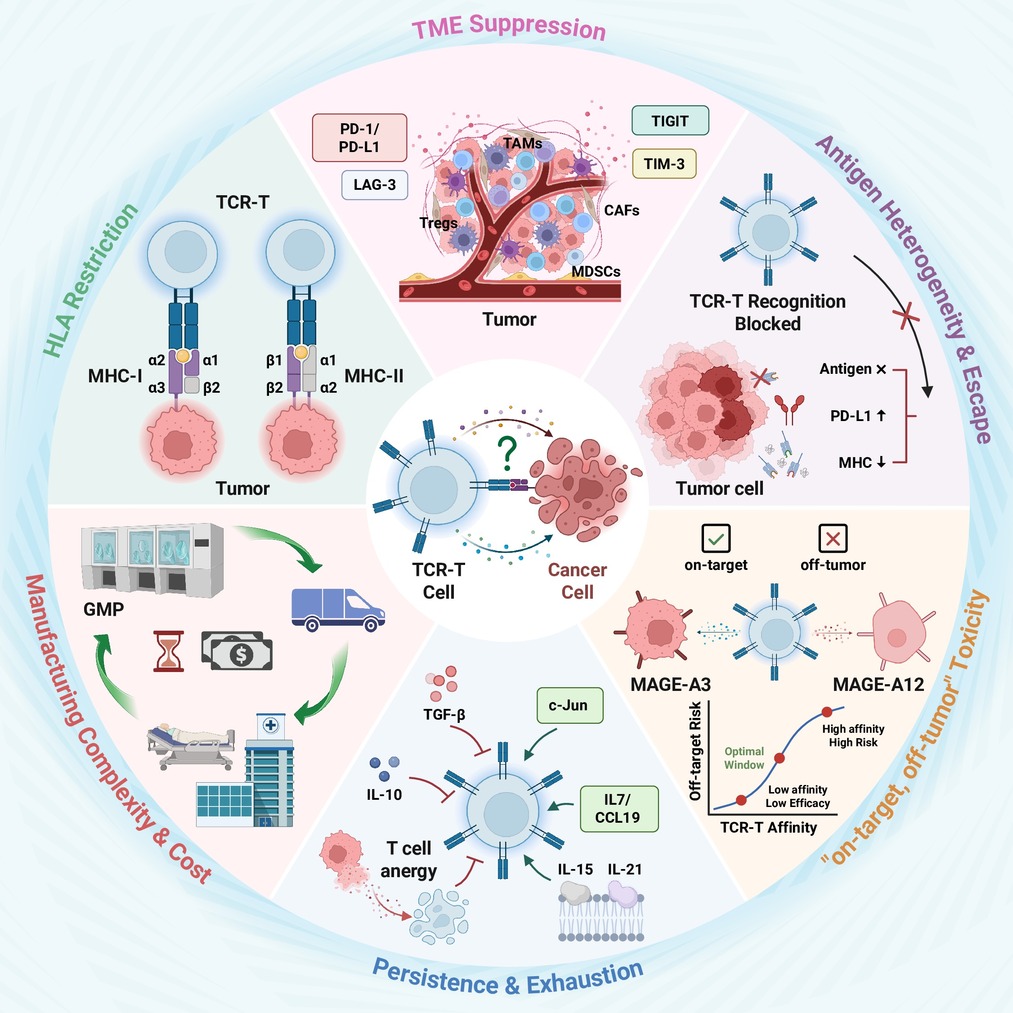
Figure 1.
Roadblocks in TCR-T cell therapy
-
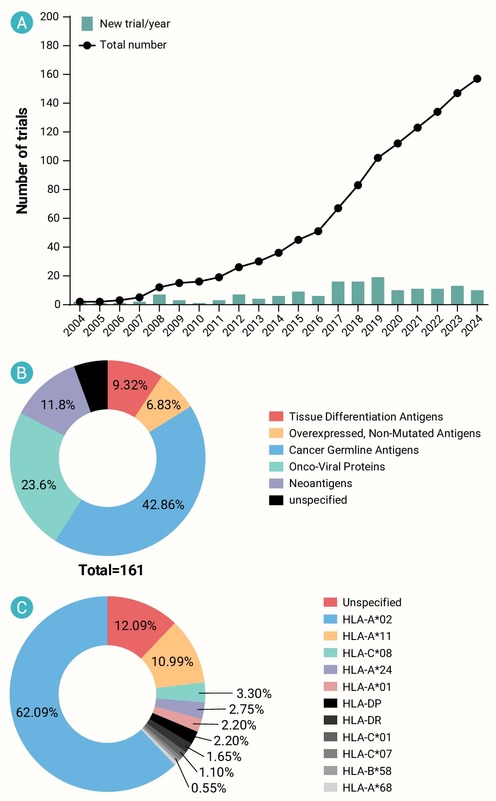
Figure 2.
An analysis of trends in TCR-T trials registered on clinicaltrials.gov
-
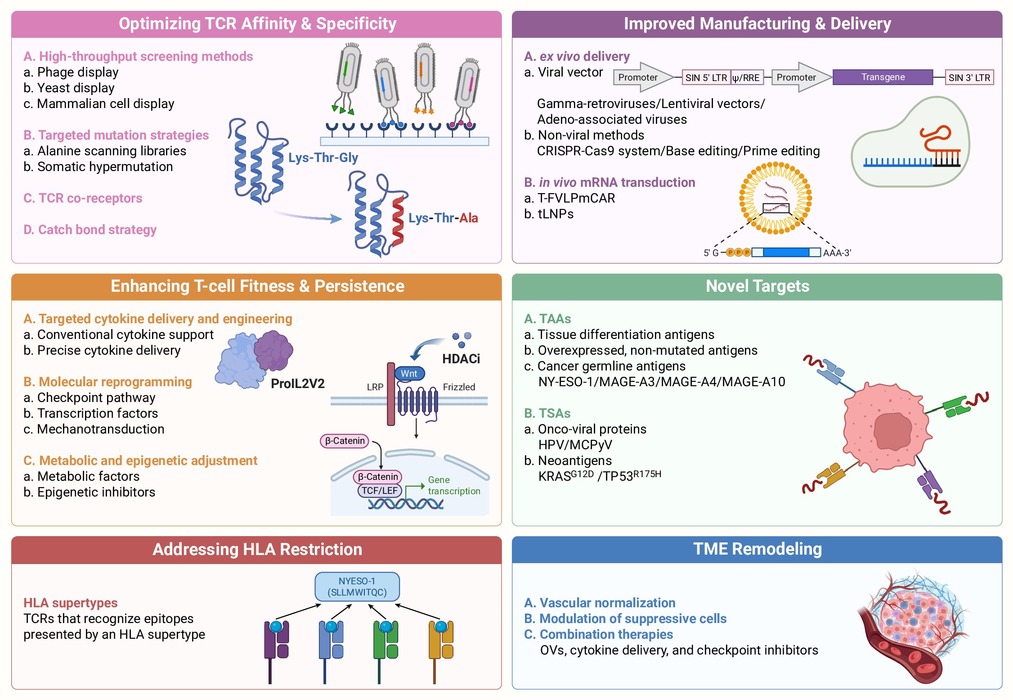
Figure 3.
Emerging strategies to enhance the safety, efficacy, and durability of TCR-T cell therapy
