
-
GRAPHICAL ABSTRACT
 DownLoad:
Full size image
DownLoad:
Full size image
-
PUBLIC SUMMARY
-
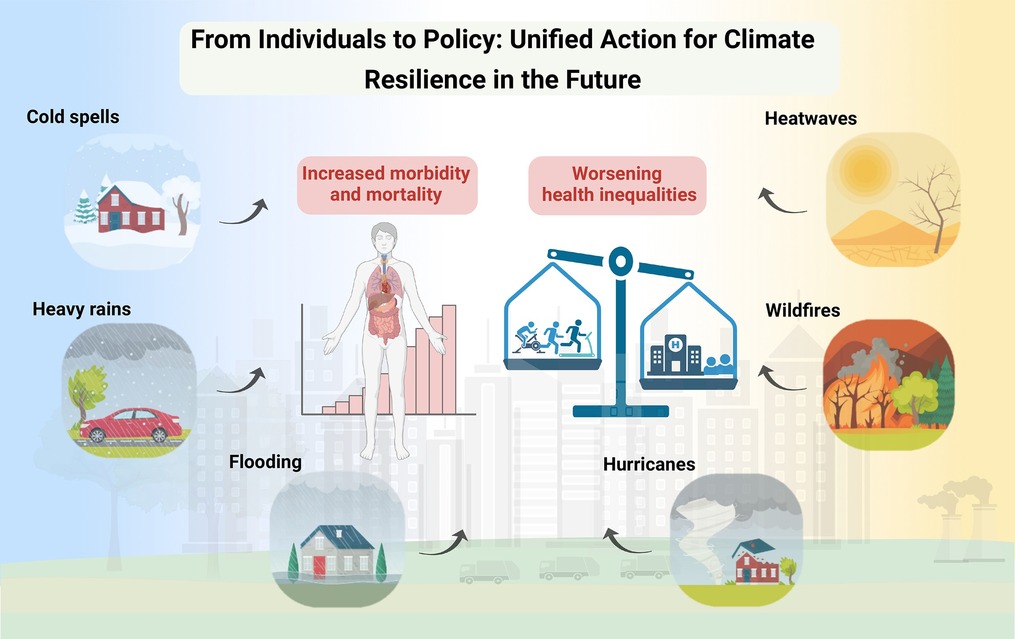
Climate change is increasing environmental extremes, posing growing risks to human health.
Extreme weather affects health in many ways; heart, lung and mental illnesses are well-studied examples.
Health adaptation to climate extremes works best when actions from individuals to public policy are connected.
Future research should guide fair adaptation and build climate resilient health systems.
-
-
ABSTRACT
In the context of climate change, extreme environmental events are becoming increasingly frequent and severe, profoundly affecting human health and creating a vicious cycle of mutual reinforcement. This review examines evolving trends in climate change–related extreme events and compound exposures, such as heatwaves, cold spells, heavy rainfall, floods, and hurricanes, and summarizes their impacts on major health outcomes, including respiratory, cardiovascular, cerebrovascular, infectious, and kidney diseases, as well as mental health and adverse birth outcomes. It further outlines interventions and future directions for adaptation, planning, and resilience across six levels: individual, interpersonal, community, institutional, environmental, and public policy. Despite growing research in this area, substantial knowledge gaps remain, including the scarcity of evidence from low- and middle-income countries, methodological inconsistencies, limited investigation of compound events, and insufficient attention to morbidity and adaptation effectiveness. Future research should employ harmonized, long-term, and multi-regional approaches to more accurately quantify health burdens and enhance global resilience to climate change. -

-
REFERENCES
[1] Lee H., Calvin K., Dasgupta D., et al. (2023). IPCC, 2023: Climate change 2023: Synthesis report, summary for policymakers. Contribution of working groups i, II and III to the sixth assessment report of the intergovernmental panel on climate change [core writing team, h. Lee and j. Romero (eds.)]. IPCC, geneva, Switzerland. [2] World Health Organization. (2023, October 12). Climate change and health [Fact sheet]. https://www.who.int/news-room/fact-sheets/detail/climate-change-and-health. [3] Romanello M., Walawender M., Hsu S.-C., et al. (2024). The 2024 report of the <em>Lancet</em> Countdown on health and climate change: facing record-breaking threats from delayed action. The Lancet 404:1847−1896. DOI:10.1016/S0140-6736(24)01822-1 [4] Xu R., Ye T., Huang W., et al. (2024). Global, regional, and national mortality burden attributable to air pollution from landscape fires: a health impact assessment study. The Lancet 404:2447−2459. DOI:10.1016/S0140-6736(24)02251-7 [5] Zhao Q., Yu P., Mahendran R., et al. (2022). Global climate change and human health: Pathways and possible solutions. Eco-Environment & Health 1:53−62. [6] Chu B., Marwaha K., Sanvictores T., et al. (2024). Physiology, stress reaction. In StatPearls [Internet], (StatPearls Publishing). [7] Chen K., Lu Y. and Krumholz H. M. (2025). Wildfires, Compound Extreme Events, Climate Change, and Cardiovascular Health. American College of Cardiology Foundation Washington DC. [8] IPCC Glossary. [9] Barriopedro D., Fischer E. M., Luterbacher J., et al. (2011). The hot summer of 2010: redrawing the temperature record map of Europe. Science 332:220−224. DOI:10.1126/science.1201224 [10] Bouchama A. (2004). The 2003 European heat wave. Intensive Care Med 30:1−3. DOI:10.1007/s00134-003-2062-y [11] Wehner M., Stone D., Krishnan H., et al. (2016). 16. THE DEADLY COMBINATION OF HEAT AND HUMIDITY IN INDIA AND PAKISTAN IN SUMMER 2015. Bulletin of the American Meteorological Society 97:S81-S86. [12] Zhang Y., Beggs P. J., McGushin A., et al. (2020). The 2020 special report of the MJA-Lancet Countdown on health and climate change: lessons learnt from Australia's "Black Summer". Med J Aust 213:490−492.e410. DOI:10.5694/mja2.50869 [13] Perkins-Kirkpatrick S. E. and Lewis S. C. (2020). Increasing trends in regional heatwaves. Nat Commun 11:3357. DOI:10.1038/s41467-020-16970-7 [14] Weather and Climate Extreme Events in a Changing Climate. (2023). In Climate Change 2021 – The Physical Science Basis: Working Group I Contribution to the Sixth Assessment Report of the Intergovernmental Panel on Climate Change, C. Intergovernmental Panel on Climate, ed. (Cambridge University Press), pp. 1513-1766. DOI: 10.1017/9781009157896.013. [15] Miralles D. G., Teuling A. J., van Heerwaarden C. C., et al. (2014). Mega-heatwave temperatures due to combined soil desiccation and atmospheric heat accumulation. Nature Geoscience 7:345−349. DOI:10.1038/ngeo2141 [16] Ramamurthy P. and Bou‐Zeid E. (2017). Heatwaves and urban heat islands: A comparative analysis of multiple cities. Journal of Geophysical Research: Atmospheres 122:168−178. DOI:10.1002/2016jd025357 [17] Coumou D., Robinson A. and Rahmstorf S. (2013). Global increase in record-breaking monthly-mean temperatures. Climatic Change 118:771−782. DOI:10.1007/s10584-012-0668-1 [18] Diffenbaugh N. S., Singh D., Mankin J. S., et al. (2017). Quantifying the influence of global warming on unprecedented extreme climate events. Proc. Natl. Acad. Sci. U. S. A. 114:4881−4886. DOI:10.1073/pnas.1618082114 [19] Mora C., Dousset B., Caldwell I. R., et al. (2017). Global risk of deadly heat. Nature Climate Change 7:501−506. DOI:10.1038/nclimate3322 [20] Ryti N. R., Guo Y. and Jaakkola J. J. (2016). Global Association of Cold Spells and Adverse Health Effects: A Systematic Review and Meta-Analysis. Environ Health Perspect 124:12−22. DOI:10.1289/ehp.1408104 [21] Lee W. V. (2013). Historical global analysis of occurrences and human casualty of extreme temperature events (ETEs). Natural Hazards 70:1453−1505. DOI:10.1007/s11069-013-0884-7 [22] La Sorte F. A., Johnston A. and Ault T. R. (2021). Global trends in the frequency and duration of temperature extremes. Climatic Change 166. DOI:10.1007/s10584-021-03094-0. [23] Ye Y., Qian C., Dai A., et al. (2025). Attribution of a record-breaking cold event in the historically warmest year of 2023 and assessing future risks. npj Climate and Atmospheric Science 8. DOI:10.1038/s41612-024-00886-w. [24] Lee W., Choi H. M., Lee J. Y., et al. (2018). Temporal changes in mortality impacts of heat wave and cold spell in Korea and Japan. Environ Int 116:136−146. DOI:10.1016/j.envint.2018.04.017 [25] Cohen J., Agel L., Barlow M., et al. (2021). Linking Arctic variability and change with extreme winter weather in the United States. Science 373:1116−1121. DOI:10.1126/science.abi9167 [26] Zhang S., Zeng G., Chen C., et al. (2025). Mechanisms behind consecutive extreme cold spells in Eurasia: insights from 2023 and historical analysis. Climate Dynamics 63. DOI:10.1007/s00382-025-07639-2. [27] He C., Yin P., Liu Z., et al. (2023). Projections of excess deaths related to cold spells under climate and population change scenarios: A nationwide time series modeling study. Environ Int 178:108034. DOI:10.1016/j.envint.2023.108034 [28] Westra S., Fowler H. J., Evans J. P., et al. (2014). Future changes to the intensity and frequency of short‐duration extreme rainfall. Reviews of Geophysics 52:522−555. [29] Ham Y.-G., Kim J.-H., Min S.-K., et al. (2023). Anthropogenic fingerprints in daily precipitation revealed by deep learning. Nature 622:301−307. [30] Ayat H., Evans J. P., Sherwood S. C., et al. (2022). Intensification of subhourly heavy rainfall. Science 378:655−659. [31] Tabari H. (2020). Climate change impact on flood and extreme precipitation increases with water availability. Sci Rep-Uk 10:13768. DOI:10.1038/s41598-020-70816-2 [32] Shan K., Lin Y., Chu P.-S., et al. (2023). Seasonal advance of intense tropical cyclones in a warming climate. Nature 623:83−89. [33] Wang G., Wu L., Mei W., et al. (2022). Ocean currents show global intensification of weak tropical cyclones. Nature 611:496−500. [34] Jing R., Heft-Neal S., Chavas D. R., et al. (2024). Global population profile of tropical cyclone exposure from 2002 to 2019. Nature 626:549−554. [35] Rentschler J., Salhab M. and Jafino B. A. (2022). Flood exposure and poverty in 188 countries. Nature communications 13:3527. [36] Kim H. and Villarini G. (2024). Higher emissions scenarios lead to more extreme flooding in the United States. Nature communications 15:237. [37] Weise D. R. and Wright C. S. (2014). Wildland fire emissions, carbon and climate: characterizing wildland fuels. Forest Ecology and Management 317:26−40. [38] Jolly W. M., Cochrane M. A., Freeborn P. H., et al. (2015). Climate-induced variations in global wildfire danger from 1979 to 2013. Nature communications 6:7537. [39] Johnston F. H., Williamson G., Borchers-Arriagada N., et al. (2024). Climate Change, Landscape Fires, and Human Health: A Global Perspective. Annu Rev Public Health 45:295−314. DOI:10.1146/annurev-publhealth-060222-034131 [40] Balch J. K., Abatzoglou J. T., Joseph M. B., et al. (2022). Warming weakens the night-time barrier to global fire. Nature 602:442−448. DOI:10.1038/s41586-021-04325-1 [41] Hantson S., Hamilton D. S. and Burton C. (2024). Changing fire regimes: Ecosystem impacts in a shifting climate. One Earth 7:942−945. DOI:10.1016/j.oneear.2024.05.021 [42] Teymoor Seydi S., Abatzoglou J. T., Jones M. W., et al. (2025). Increasing global human exposure to wildland fires despite declining burned area. Science 389:826−829. DOI:10.1126/science.adu6408 [43] Xu R., Ye T., Yue X., et al. (2023). Global population exposure to landscape fire air pollution from 2000 to 2019. Nature 621:521−529. DOI:10.1038/s41586-023-06398-6 [44] Zscheischler J., Martius O., Westra S., et al. (2020). A typology of compound weather and climate events. Nature reviews earth & environment 1:333−347. [45] Ridder N. N., Pitman A. J., Westra S., et al. (2020). Global hotspots for the occurrence of compound events. Nature communications 11:5956. [46] Bevacqua E., Suarez-Gutierrez L., Jézéquel A., et al. (2023). Advancing research on compound weather and climate events via large ensemble model simulations. Nature Communications 14:2145. [47] Zscheischler J., Westra S., Van Den Hurk B. J., et al. (2018). Future climate risk from compound events. Nature climate change 8:469−477. [48] Ghanbari M., Arabi M., Georgescu M., et al. (2023). The role of climate change and urban development on compound dry-hot extremes across US cities. Nature communications 14:3509. [49] Gori A., Lin N. and Xi D. (2020). Tropical cyclone compound flood hazard assessment: From investigating drivers to quantifying extreme water levels. Earth's Future 8:e2020EF001660. [50] Bo M., Mercalli L., Pognant F., et al. (2020). Urban air pollution, climate change and wildfires: The case study of an extended forest fire episode in northern Italy favoured by drought and warm weather conditions. Energy Reports 6:781−786. [51] Lin M., Horowitz L. W., Xie Y., et al. (2020). Vegetation feedbacks during drought exacerbate ozone air pollution extremes in Europe. Nature Climate Change 10:444−451. [52] Meehl G. A., Tebaldi C., Tilmes S., et al. (2018). Future heat waves and surface ozone. Environmental Research Letters 13:064004. [53] Yu W., Ye T., Zhang Y., et al. (2023). Global estimates of daily ambient fine particulate matter concentrations and unequal spatiotemporal distribution of population exposure: a machine learning modelling study. Lancet Planet Health 7:e209−e218. DOI:10.1016/S2542-5196(23)00008-6 [54] Liu Q., Chen G., Sheng L., et al. (2022). Rapid reappearance of air pollution after cold air outbreaks in North China. Atmospheric Chemistry and Physics Discussions 2022:1−29. [55] Kossin J. P. (2018). A global slowdown of tropical-cyclone translation speed. Nature 558:104−107. [56] Hao Z., Hao F., Singh V. P., et al. (2018). Changes in the severity of compound drought and hot extremes over global land areas. Environmental Research Letters 13:124022. [57] Schoennagel T., Balch J. K., Brenkert-Smith H., et al. (2017). Adapt to more wildfire in western North American forests as climate changes. Proc Natl Acad Sci U S A 114:4582−4590. DOI:10.1073/pnas.1617464114 [58] Huang Y., Wang P., Yang Z., et al. (2024). Spatiotemporal characteristics and influencing factors for joint events of air pollution wave and cold wave in China. Environ Int 184:108475. DOI:10.1016/j.envint.2024.108475 [59] Ban J., Lu K., Wang Q., et al. (2022). Climate change will amplify the inequitable exposure to compound heatwave and ozone pollution. One Earth 5:677−686. [60] Ridder N., Ukkola A., Pitman A., et al. (2022). Increased occurrence of high impact compound events under climate change. Npj Climate and Atmospheric Science 5:3. [61] Matthews T., Wilby R. L. and Murphy C. (2019). An emerging tropical cyclone–deadly heat compound hazard. Nature Climate Change 9:602−606. [62] Mirsaeidi M., Motahari H., Taghizadeh Khamesi M., et al. (2016). Climate Change and Respiratory Infections. Annals of the American Thoracic Society 13:1223−1230. DOI:10.1513/AnnalsATS.201511-729PS [63] Tong M., Wondmagegn B., Xiang J., et al. (2022). Hospitalization Costs of Respiratory Diseases Attributable to Temperature in Australia and Projections for Future Costs in the 2030s and 2050s under Climate Change. International Journal of Environmental Research and Public Health 19:9706. DOI:10.3390/ijerph19159706 [64] Lakhoo D. P., Blake H. A., Chersich M. F., et al. (2022). The Effect of High and Low Ambient Temperature on Infant Health: A Systematic Review. International Journal of Environmental Research and Public Health 19:9109. DOI:10.3390/ijerph19159109 [65] Hu Y., Cheng J., Liu S., et al. (2022). Evaluation of climate change adaptation measures for childhood asthma: A systematic review of epidemiological evidence. Science of The Total Environment 839:156291. DOI:10.1016/j.scitotenv.2022.156291 [66] Yuan L., Madaniyazi L., Vicedo-Cabrera A. M., et al. (2024). Non-optimal temperature-attributable mortality and morbidity burden by cause, age and sex under climate and population change scenarios: a nationwide modelling study in Japan. The Lancet Regional Health - Western Pacific 52. DOI:10.1016/j.lanwpc.2024.101214. [67] Ban J., Lu K., Liu Y., et al. (2024). Projecting future excess deaths associated with extreme precipitation events in China under changing climate: an integrated modelling study. The Lancet Planetary Health 8:e723−e733. DOI:10.1016/s2542-5196(24)00202-x [68] Chen C., Warrington J. A., Dominici F., et al. (2021). Temporal variation in association between short-term exposure to fine particulate matter and hospitalisations in older adults in the USA: a long-term time-series analysis of the US Medicare dataset. The Lancet Planetary Health 5:e534−e541. DOI:10.1016/s2542-5196(21)00168-6 [69] Fang Y., Mauzerall D. L., Liu J., et al. (2013). Impacts of 21st century climate change on global air pollution-related premature mortality. Climatic Change 121:239−253. DOI:10.1007/s10584-013-0847-8 [70] Wang Q., Wang J., Zhou J., et al. (2019). Estimation of PM2·5-associated disease burden in China in 2020 and 2030 using population and air quality scenarios: a modelling study. The Lancet Planetary Health 3:e71−e80. DOI:10.1016/s2542-5196(18)30277-8 [71] Berman J. D., Ebisu K., Peng R. D., et al. (2017). Drought and the risk of hospital admissions and mortality in older adults in western USA from 2000 to 2013: a retrospective study. The Lancet Planetary Health 1:e17−e25. DOI:10.1016/s2542-5196(17)30002-5 [72] Mahsin M. D., Cabaj J. and Saini V. (2022). Respiratory and cardiovascular condition-related physician visits associated with wildfire smoke exposure in Calgary, Canada, in 2015: a population-based study. International Journal of Epidemiology 51:166−178. DOI:10.1093/ije/dyab206 [73] Lo Y. T. E., Mitchell D. M. and Gasparrini A. (2024). Compound mortality impacts from extreme temperatures and the COVID-19 pandemic. Nature Communications 15. DOI:10.1038/s41467-024-48207-2. [74] Tsao C. W., Aday A. W., Almarzooq Z. I., et al. (2022). Heart Disease and Stroke Statistics-2022 Update: A Report From the American Heart Association. Circulation 145:e153−e639. DOI:10.1161/cir.0000000000001052 [75] Khraishah H., Alahmad B., Ostergard R. L., Jr., et al. (2022). Climate change and cardiovascular disease: implications for global health. Nat Rev Cardiol 19:798−812. DOI:10.1038/s41569-022-00720-x [76] Alahmad B., Khraishah H., Althalji K., et al. (2023). Connections Between Air Pollution, Climate Change, and Cardiovascular Health. Can J Cardiol 39:1182−1190. DOI:10.1016/j.cjca.2023.03.025 [77] Desai Y., Khraishah H. and Alahmad B. (2023). Heat and the Heart. Yale J Biol Med 96:197−203. DOI:10.59249/hgal4894 [78] Kazi D. S., Katznelson E., Liu C. L., et al. (2024). Climate Change and Cardiovascular Health: A Systematic Review. JAMA Cardiol 9:748−757. DOI:10.1001/jamacardio.2024.1321 [79] Gasparrini A., Armstrong B., Kovats S., et al. (2012). The effect of high temperatures on cause-specific mortality in England and Wales. Occup Environ Med 69:56−61. DOI:10.1136/oem.2010.059782 [80] Alahmad B., Khraishah H., Shakarchi A. F., et al. (2020). Cardiovascular Mortality and Exposure to Heat in an Inherently Hot Region: Implications for Climate Change. Circulation 141:1271−1273. DOI:10.1161/circulationaha.119.044860 [81] Hundessa S., Huang W., Zhao Q., et al. (2024). Global and Regional Cardiovascular Mortality Attributable to Nonoptimal Temperatures Over Time. J Am Coll Cardiol 83:2276−2287. DOI:10.1016/j.jacc.2024.03.425 [82] Alahmad B., Khraishah H., Royé D., et al. (2023). Associations Between Extreme Temperatures and Cardiovascular Cause-Specific Mortality: Results From 27 Countries. Circulation 147:35−46. DOI:10.1161/circulationaha.122.061832 [83] Xu Z., FitzGerald G., Guo Y., et al. (2016). Impact of heatwave on mortality under different heatwave definitions: a systematic review and meta-analysis. Environment international 89:193−203. [84] Cold exposure and winter mortality from ischaemic heart disease, cerebrovascular disease, respiratory disease, and all causes in warm and cold regions of Europe. The Eurowinter Group. (1997). Lancet 349:1341-1346. [85] Chen R., Yin P., Wang L., et al. (2018). Association between ambient temperature and mortality risk and burden: time series study in 272 main Chinese cities. Bmj 363:k4306. DOI:10.1136/bmj.k4306 [86] Thurston G. D., Ahn J., Cromar K. R., et al. (2016). Ambient Particulate Matter Air Pollution Exposure and Mortality in the NIH-AARP Diet and Health Cohort. Environ Health Perspect 124:484−490. DOI:10.1289/ehp.1509676 [87] Mustafic H., Jabre P., Caussin C., et al. (2012). Main air pollutants and myocardial infarction: a systematic review and meta-analysis. Jama 307:713−721. DOI:10.1001/jama.2012.126 [88] Alexeeff S. E., Liao N. S., Liu X., et al. (2021). Long-Term PM(2.5) Exposure and Risks of Ischemic Heart Disease and Stroke Events: Review and Meta-Analysis. J Am Heart Assoc 10:e016890. DOI:10.1161/jaha.120.016890. [89] Shah A. S., Langrish J. P., Nair H., et al. (2013). Global association of air pollution and heart failure: a systematic review and meta-analysis. Lancet 382:1039−1048. DOI:10.1016/s0140-6736(13)60898-3 [90] Wang M., Zhou T., Song Y., et al. (2021). Joint exposure to various ambient air pollutants and incident heart failure: a prospective analysis in UK Biobank. Eur Heart J 42:1582−1591. DOI:10.1093/eurheartj/ehaa1031 [91] Chen K., Wolf K., Breitner S., et al. (2018). Two-way effect modifications of air pollution and air temperature on total natural and cardiovascular mortality in eight European urban areas. Environ Int 116:186−196. DOI:10.1016/j.envint.2018.04.021 [92] Anenberg S. C., Haines S., Wang E., et al. (2020). Synergistic health effects of air pollution, temperature, and pollen exposure: a systematic review of epidemiological evidence. Environ Health 19:130. DOI:10.1186/s12940-020-00681-z [93] Rahman M. M., McConnell R., Schlaerth H., et al. (2022). The Effects of Coexposure to Extremes of Heat and Particulate Air Pollution on Mortality in California: Implications for Climate Change. Am J Respir Crit Care Med 206:1117−1127. DOI:10.1164/rccm.202204-0657OC [94] Rai M., Stafoggia M., de'Donato F., et al. (2023). Heat-related cardiorespiratory mortality: Effect modification by air pollution across 482 cities from 24 countries. Environ Int 174:107825. DOI:10.1016/j.envint.2023.107825 [95] Morgado M. E., Jiang C., Zambrana J., et al. (2021). Climate change, extreme events, and increased risk of salmonellosis: foodborne diseases active surveillance network (FoodNet), 2004-2014. Environmental Health 20:105. DOI:10.1186/s12940-021-00787-y [96] Anikeeva O., Hansen A., Varghese B., et al. (2024). The impact of increasing temperatures due to climate change on infectious diseases. BMJ 387:e079343. DOI:10.1136/bmj-2024-079343 [97] Chua P. L. C., Ng C. F. S., Tobias A., et al. (2022). Associations between ambient temperature and enteric infections by pathogen: a systematic review and meta-analysis. The Lancet Planetary Health 6:e202−e218. DOI:10.1016/S2542-5196(22)00003-1 [98] Wang Z., Pei S., Cui H., et al. (2024). Zoonotic spillover and extreme weather events drive the global outbreaks of airborne viral emerging infectious diseases. J Med Virol 96:e29737. DOI:10.1002/jmv.29737 [99] Manchal N., Young M. K., Castellanos M. E., et al. (2024). A systematic review and meta-analysis of ambient temperature and precipitation with infections from five food-borne bacterial pathogens. Epidemiol Infect 152:e98. DOI:10.1017/s0950268824000839 [100] Damtew Y. T., Tong M., Varghese B. M., et al. (2023). Effects of high temperatures and heatwaves on dengue fever: a systematic review and meta-analysis. EBioMedicine 91:104582. DOI:10.1016/j.ebiom.2023.104582 [101] Phung D., Nguyen H. X., Thi Nguyen H. L., et al. (2018). The effects of socioecological factors on variation of communicable diseases: A multiple-disease study at the national scale of Vietnam. PLoS One 13:e0193246−e0193246. DOI:10.1371/journal.pone.0193246 [102] Delrieu M., Martinet J. P., O'Connor O., et al. (2023). Temperature and transmission of chikungunya, dengue, and Zika viruses: A systematic review of experimental studies on Aedes aegypti and Aedes albopictus. Curr Res Parasitol Vector Borne Dis 4:100139. DOI:10.1016/j.crpvbd.2023.100139 [103] Islam M. A., Hasan M. N., Tiwari A., et al. (2023). Correlation of Dengue and Meteorological Factors in Bangladesh: A Public Health Concern. Int J Environ Res Public Health 20. DOI:10.3390/ijerph20065152. [104] Kulkarni M. A., Duguay C. and Ost K. (2022). Charting the evidence for climate change impacts on the global spread of malaria and dengue and adaptive responses: a scoping review of reviews. Globalization and Health 18:1. DOI:10.1186/s12992-021-00793-2 [105] Sugeno M., Kawazu E. C., Kim H., et al. (2023). Association between environmental factors and dengue incidence in Lao People’s Democratic Republic: a nationwide time-series study. BMC Public Health 23:2348. DOI:10.1186/s12889-023-17277-0 [106] Farooq Z., Sjödin H., Semenza J. C., et al. (2023). European projections of West Nile virus transmission under climate change scenarios. One Health 16:100509. DOI:10.1016/j.onehlt.2023.100509 [107] Feng J., Cao D., Zheng D., et al. (2023). Cold spells linked with respiratory disease hospitalization, length of hospital stay, and hospital expenses: Exploring cumulative and harvesting effects. Sci Total Environ 863:160726. DOI:10.1016/j.scitotenv.2022.160726 [108] Wu J., Wu Y., Wu Y., et al. (2024). The impact of heat waves and cold spells on pneumonia risk: A nationwide study. Environmental Research 245:117958. DOI:10.1016/j.envres.2023.117958 [109] Wang P., Zhang X., Hashizume M., et al. (2021). A systematic review on lagged associations in climate–health studies. International Journal of Epidemiology 50:1199−1212. DOI:10.1093/ije/dyaa286 [110] Suk J. E., Vaughan E. C., Cook R. G., et al. (2020). Natural disasters and infectious disease in Europe: a literature review to identify cascading risk pathways. European Journal of Public Health 30:928−935. DOI:10.1093/eurpub/ckz111 [111] Harder-Lauridsen N. M., Kuhn K. G., Erichsen A. C., et al. (2013). Gastrointestinal illness among triathletes swimming in non-polluted versus polluted seawater affected by heavy rainfall, Denmark, 2010-2011. PLoS One 8:e78371. DOI:10.1371/journal.pone.0078371 [112] Yazdi M. S., Ardalan M. A., Hosseini M., et al. (2024). Infectious Diarrhea Risks as a Public Health Emergency in Floods; a Systematic Review and Meta-Analysis. Arch Acad Emerg Med 12:e46. DOI:10.22037/aaem.v12i1.2284 [113] Phung D. T., Warren J. L., Chu C. M., et al. (2021). Relationship between flood severity and risk of hospitalisation in the Mekong River Delta of Vietnam. Occup Environ Med 78:676−678. DOI:10.1136/oemed-2021-107768 [114] Chadsuthi S., Chalvet-Monfray K., Wiratsudakul A., et al. (2021). The effects of flooding and weather conditions on leptospirosis transmission in Thailand. Scientific Reports 11:1486. DOI:10.1038/s41598-020-79546-x [115] van Loenhout J. A. F., Gil Cuesta J., Abello J. E., et al. (2018). The impact of Typhoon Haiyan on admissions in two hospitals in Eastern Visayas, Philippines. PLoS One 13:e0191516. DOI:10.1371/journal.pone.0191516 [116] Parks R. M., Anderson G. B., Nethery R. C., et al. (2021). Tropical cyclone exposure is associated with increased hospitalization rates in older adults. Nature Communications 12:1545. DOI:10.1038/s41467-021-21777-1 [117] Zheng J., Han W., Jiang B., et al. (2017). Infectious Diseases and Tropical Cyclones in Southeast China. Int J Environ Res Public Health 14. DOI:10.3390/ijerph14050494. [118] Li C., Zhao Q., Zhao Z., et al. (2021). The association between tropical cyclones and dengue fever in the Pearl River Delta, China during 2013-2018: A time-stratified case-crossover study. PLoS Negl Trop Dis 15:e0009776. DOI:10.1371/journal.pntd.0009776 [119] Li C., Zhao Z., Yan Y., et al. (2022). Short-term effects of tropical cyclones on the incidence of dengue: a time-series study in Guangzhou, China. Parasit Vectors 15:358. DOI:10.1186/s13071-022-05486-2 [120] Kim S., Shin Y., Kim H., et al. (2013). Impacts of typhoon and heavy rain disasters on mortality and infectious diarrhea hospitalization in South Korea. Int J Environ Health Res 23:365−376. DOI:10.1080/09603123.2012.733940 [121] Shultz J. M., Shepherd J. M., Kelman I., et al. (2018). Mitigating tropical cyclone risks and health consequences: urgencies and innovations. The Lancet Planetary Health 2:e103−e104. DOI:10.1016/S2542-5196(18)30021-4 [122] Ridder N. N., Ukkola A. M., Pitman A. J., et al. (2022). Increased occurrence of high impact compound events under climate change. npj Climate and Atmospheric Science 5:3. DOI:10.1038/s41612-021-00224-4 [123] Graham D. J., Bierkens M. F. P. and van Vliet M. T. H. (2024). Impacts of droughts and heatwaves on river water quality worldwide. Journal of Hydrology 629:130590. DOI:10.1016/j.jhydrol.2023.130590 [124] Calim Costa M., Marengo J. A., Alves L. M., et al. (2024). Multiscale analysis of drought, heatwaves, and compound events in the Brazilian Pantanal in 2019–2021. Theoretical Appl. Climatol. 155:661−677. DOI:10.1007/s00704-023-04655-2 [125] Erickson T. B., Brooks J., Nilles E. J., et al. (2019). Environmental health effects attributed to toxic and infectious agents following hurricanes, cyclones, flash floods and major hydrometeorological events. Journal of Toxicology and Environmental Health, Part B 22:157−171. DOI:10.1080/10937404.2019.1654422 [126] Patwary M. M., Bardhan M., Haque M. A., et al. (2024). Impact of extreme weather events on mental health in South and Southeast Asia: A two decades of systematic review of observational studies. Environmental Research 250. 118436,DOI:10.1016/j.envres.2024.118436. [127] Cianconi P., Betrò S. and Janiri L. (2020). The impact of climate change on mental health: a systematic descriptive review. Frontiers in psychiatry 11:490206. [128] Barbani S. M. (2025). The indirect consequences of climate change and extreme environmental events on mental health: a literature review. Journal of Public Health. DOI:10.1007/s10389-025-02513-1. [129] Nori-Sarma A., Sun S., Sun Y., et al. (2022). Association Between Ambient Heat and Risk of Emergency Department Visits for Mental Health Among US Adults, 2010 to 2019. JAMA Psychiatry 79:341−349. DOI:10.1001/jamapsychiatry.2021.4369 [130] Fischer S., Ranacher P., Sticher X., et al. (2025). Cold season air temperature as predictor of psychological well-being and mental health. Scientific Reports 15:17611. DOI:10.1038/s41598-025-02486-x [131] Munro A., Kovats R. S., Rubin G. J., et al. (2017). Effect of evacuation and displacement on the association between flooding and mental health outcomes: a cross-sectional analysis of UK survey data. The Lancet Planetary Health 1:e134−e141. DOI:10.1016/S2542-5196(17)30047-5 [132] Ruggiero K. J., Gros K., McCauley J. L., et al. (2012). Mental Health Outcomes Among Adults in Galveston and Chambers Counties After Hurricane Ike. Disaster Medicine and Public Health Preparedness 6:26−32. DOI:10.1001/dmp.2012.7 [133] Raymond C., Horton R. M., Zscheischler J., et al. (2020). Understanding and managing connected extreme events. Nature Climate Change 10:611−621. DOI:10.1038/s41558-020-0790-4 [134] Mitchell A., Maheen H. and Bowen K. (2024). Mental health impacts from repeated climate disasters: an Australian longitudinal analysis. The Lancet Regional Health – Western Pacific 47. DOI:10.1016/j.lanwpc.2024.101087. [135] Dodgen D., Donato D., Kelly N., et al. (2016). Mental health and well-being. In (US Global Change Research Program). [136] Lieberman-Cribbin W., Liu B., Schneider S., et al. (2017). Self-Reported and FEMA Flood Exposure Assessment after Hurricane Sandy: Association with Mental Health Outcomes. Plos One 12. e0170965,DOI:10.1371/journal.pone.0170965. [137] White A. R. (2024). The firestorm within: A narrative review of extreme heat and wildfire smoke effects on brain health. Science of the Total Environment 922. 171239,DOI:10.1016/j.scitotenv.2024.171239. [138] He Y. Y., Zhang X. L., Gao J. J., et al. (2022). The impact of cold spells on schizophrenia admissions and the synergistic effect with the air quality index. Environmental Research 212. 113243,DOI:10.1016/j.envres.2022.113243. [139] Deglon M., Dalvie M. A. and Abrams A. (2023). The impact of extreme weather events on mental health in Africa: A scoping review of the evidence. Science of the Total Environment 881. 163420,DOI:10.1016/j.scitotenv.2023.163420. [140] Adeyeri O. E., Zhou W., Ndehedehe C. E., et al. (2024). Global vegetation, moisture, thermal and climate interactions intensify compound extreme events. Science of the Total Environment 912. 169261,DOI:10.1016/j.scitotenv.2023.169261. [141] Ebi K. L., Vanos J., Baldwin J. W., et al. (2021). Extreme Weather and Climate Change: Population Health and Health System Implications. In Annual Review of Public Health, Vol 42, 2021, J.E. Fielding, ed. pp. 293-315. 10.1146/annurev-publhealth-012420-105026. [142] AghaKouchak A., Chiang F., Huning L. S., et al. (2020). Climate Extremes and Compound Hazards in a Warming World. In Annual Review of Earth and Planetary Sciences, Vol 48, 2020, R. Jeanloz, and K.H. Freeman, eds. pp. 519-548. 10.1146/annurev-earth-071719-055228. [143] Soares P. M. M., Careto J. A. M. and Lima D. C. A. (2024). Future extreme and compound events in Angola: CORDEX-Africa regional climate modelling projections. Weather and Climate Extremes 45. 100691,DOI:10.1016/j.wace.2024.100691. [144] Chan H. W., Lin L., Tam K. P., et al. (2024). From negative feelings to impairments: A longitudinal study on the development of climate change anxiety. Journal of Anxiety Disorders 107. 102917,DOI:10.1016/j.janxdis.2024.102917. [145] Hickman C., Marks E., Pihkala P., et al. (2021). Climate anxiety in children and young people and their beliefs about government responses to climate change: a global survey. The Lancet Planetary Health 5:e863−e873. DOI:10.1016/S2542-5196(21)00278-3 [146] Cunsolo A. and Ellis N. R. (2018). Ecological grief as a mental health response to climate change-related loss. Nature Climate Change 8:275−281. DOI:10.1038/s41558-018-0092-2 [147] Heinz A. and Brandt L. (2024). Climate change and mental health: direct, indirect, and intersectional effects. Lancet Regional Health-Europe 43. 100969,DOI:10.1016/j.lanepe.2024.100969. [148] Delaney S. W., Stegmuller A., Mork D., et al. (2025). Extreme Heat and Hospitalization Among Older Persons With Alzheimer Disease and Related Dementias. JAMA Intern Med 185:412−421. DOI:10.1001/jamainternmed.2024.7719 [149] Louis S., Carlson A. K., Suresh A., et al. (2023). Impacts of Climate Change and Air Pollution on Neurologic Health, Disease, and Practice: A Scoping Review. Neurology 100:474−483. DOI:10.1212/WNL.0000000000201630 [150] Elser H., Frankland T. B., Chen C., et al. (2025). Wildfire Smoke Exposure and Incident Dementia. JAMA Neurol 82:40−48. DOI:10.1001/jamaneurol.2024.4058 [151] Bongioanni P., Del Carratore R., Corbianco S., et al. (2021). Climate change and neurodegenerative diseases. Environ Res 201:111511. DOI:10.1016/j.envres.2021.111511 [152] Bello A. K., Okpechi I. G., Levin A., et al. (2024). An update on the global disparities in kidney disease burden and care across world countries and regions. The Lancet Global Health 12:e382−e395. DOI:10.1016/s2214-109x(23)00570-3 [153] Jager K. J., Kovesdy C., Langham R., et al. (2019). A single number for advocacy and communication-worldwide more than 850 million individuals have kidney diseases. Kidney Int 96:1048−1050. DOI:10.1016/j.kint.2019.07.012 [154] Liu J., Varghese B. M., Hansen A., et al. (2021). Hot weather as a risk factor for kidney disease outcomes: A systematic review and meta-analysis of epidemiological evidence. Science of The Total Environment 801:149806. DOI:10.1016/j.scitotenv.2021.149806 [155] Wang F.-L., Wang W.-Z., Zhang F.-F., et al. (2023). Heat exposure and hospitalizations for chronic kidney disease in China: a nationwide time series study in 261 major Chinese cities. Military Med Res 10. DOI:10.1186/s40779-023-00478-4 [156] Lu P., Xia G., Tong S., et al. (2021). Ambient temperature and hospitalizations for acute kidney injury in Queensland, Australia, 1995–2016. Environ. Res. Lett. 16:075007. DOI:10.1088/1748-9326/ac0c44 [157] Pacheco-Zenteno F., Glaser J., Jakobsson K., et al. (2021). The Prevention of Occupational Heat Stress in Sugarcane Workers in Nicaragua-An Interpretative Phenomenological Analysis. Front Public Health 9:713711. DOI:10.3389/fpubh.2021.713711 [158] Hansson E., Glaser J., Weiss I., et al. (2025). Rest, shade, hydration and hygiene for the prevention of kidney injuries and inflammation in a Nicaraguan sugarcane worker cohort. Occup Environ Med 82:270−277. DOI:10.1136/oemed-2025-110128 [159] Hansson E., Glaser J., Weiss I., et al. (2019). Workload and cross-harvest kidney injury in a Nicaraguan sugarcane worker cohort. Occup Environ Med 76:818−826. DOI:10.1136/oemed-2019-105986 [160] Kim K.-N., Shin M.-K., Lim Y.-H., et al. (2023). Associations of cold exposure with hospital admission and mortality due to acute kidney injury: A nationwide time-series study in Korea. Science of The Total Environment 863:160960. DOI:10.1016/j.scitotenv.2022.160960 [161] Guo M., Qi J., He G., et al. (2025). The current and future temperature-related mortality burden of cause-specific kidney diseases: A national case-crossover study in China. Environmental Research 279:121696. DOI:10.1016/j.envres.2025.121696 [162] Barraclough K. A., Blashki G. A., Holt S. G., et al. (2017). Climate change and kidney disease—threats and opportunities. Kidney International 92:526−530. DOI:10.1016/j.kint.2017.03.047 [163] Jha V. and Parameswaran S. (2013). Community-acquired acute kidney injury in tropical countries. Nature Reviews Nephrology 9:278−290. DOI:10.1038/nrneph.2013.36 [164] Anderson A. H., Cohen A. J., Kutner N. G., et al. (2009). Missed dialysis sessions and hospitalization in hemodialysis patients after Hurricane Katrina. Kidney International 75:1202−1208. DOI:10.1038/ki.2009.5 [165] Ma Y., Zang E., Liu Y., et al. (2024). Long-term exposure to wildland fire smoke PM2.5 and mortality in the contiguous United States. Proc. Natl. Acad. Sci. U.S.A. 121. DOI:10.1073/pnas.2403960121. [166] Xu W., Jia L., Lin Y., et al. (2024). Association of air pollution and risk of chronic kidney disease: A systematic review and meta-analysis. Journal of Biochemical and Molecular Toxicology 38:e23610. DOI:10.1002/jbt.23610 [167] Min J., Kang D.-H., Kang C., et al. (2024). Fluctuating risk of acute kidney injury-related mortality for four weeks after exposure to air pollution: A multi-country time-series study in 6 countries. Environment International 183:108367. DOI:10.1016/j.envint.2023.108367 [168] Chu L., Chen K., Yang Z., et al. (2024). A unified framework for assessing interaction effects among environmental exposures in epidemiologic studies: A case study on temperature, air pollution, and kidney-related conditions in New York state. Environmental Research 248:118324. DOI:10.1016/j.envres.2024.118324 [169] Wu J., Ye Q., Fang L., et al. (2022). Short-term association of NO2 with hospital visits for chronic kidney disease and effect modification by temperature in Hefei, China: A time series study. Ecotoxicology and Environmental Safety 237:113505. DOI:10.1016/j.ecoenv.2022.113505 [170] Blencowe H., Krasevec J., de Onis M., et al. (2019). National, regional, and worldwide estimates of low birthweight in 2015, with trends from 2000: a systematic analysis. Lancet Glob Health 7:e849−e860. DOI:10.1016/s2214-109x(18)30565-5 [171] Chawanpaiboon S., Vogel J. P., Moller A. B., et al. (2019). Global, regional, and national estimates of levels of preterm birth in 2014: a systematic review and modelling analysis. Lancet Glob Health 7:e37−e46. DOI:10.1016/s2214-109x(18)30451-0 [172] Ludvigsson J. F., Lu D., Hammarström L., et al. (2018). Small for gestational age and risk of childhood mortality: A Swedish population study. PLoS medicine 15:e1002717. [173] Ha S. (2022). The Changing Climate and Pregnancy Health. Curr Environ Health Rep 9:263−275. DOI:10.1007/s40572-022-00345-9 [174] Chacón-Montalván E. A., Taylor B. M., Cunha M. G., et al. (2021). Rainfall variability and adverse birth outcomes in Amazonia. Nature Sustainability 4:583−594. [175] Chersich M. F., Pham M. D., Areal A., et al. (2020). Associations between high temperatures in pregnancy and risk of preterm birth, low birth weight, and stillbirths: systematic review and meta-analysis. Bmj 371:m3811. DOI:10.1136/bmj.m3811 [176] Wang J., Tong S., Williams G., et al. (2019). Exposure to heat wave during pregnancy and adverse birth outcomes: an exploration of susceptible windows. Epidemiology 30:S115−S121. [177] Li X., Ma J., Cheng Y., et al. (2023). The relationship between extreme ambient temperature and small for gestational age: A cohort study of 1,436,480 singleton term births in China. Environ Res 232:116412. DOI:10.1016/j.envres.2023.116412 [178] Ruan T., Yue Y., Lu W., et al. (2023). Association between low ambient temperature during pregnancy and adverse birth outcomes: A systematic review and meta-analysis. Chinese Medical Journal 136:2307−2315. [179] Wang S., Zhang L., Wang G., et al. (2023). More intense and longer torrential rain and flood events during the recent past decade in Eurasia. Water Resources Research 59:e2022WR033314. [180] Chiang F., Mazdiyasni O. and AghaKouchak A. (2021). Evidence of anthropogenic impacts on global drought frequency, duration, and intensity. Nat Commun 12:2754. DOI:10.1038/s41467-021-22314-w [181] Hochard J., Li Y. and Abashidze N. (2022). Associations of hurricane exposure and forecasting with impaired birth outcomes. Nat Commun 13:6746. DOI:10.1038/s41467-022-33865-x [182] Harville E. W., Pan K., Beitsch L., et al. (2023). Hurricane Michael and adverse birth outcomes in the Florida panhandle: analysis of vital statistics data. Disaster medicine and public health preparedness 17:e94. [183] Partash N., Naghipour B., Rahmani S. H., et al. (2022). The impact of flood on pregnancy outcomes: A review article. Taiwan J Obstet Gynecol 61:10−14. DOI:10.1016/j.tjog.2021.11.005 [184] Nasir M. (2021). Prenatal exposure to shocks and early-life health: Impact of terrorism and flood on birth outcomes in Pakistan. Defence and Peace Economics 32:572−587. [185] Yang Z., Huang W., McKenzie J. E., et al. (2024). The association of adverse birth outcomes with flood exposure before and during pregnancy in Australia: a cohort study. Lancet Planet Health 8:e554−e563. DOI:10.1016/s2542-5196(24)00142-6 [186] Soma-Pillay P., Nelson-Piercy C., Tolppanen H., et al. (2016). Physiological changes in pregnancy: review articles. Cardiovascular journal of Africa 27:89−94. [187] Tong M. X., Wondmagegn B. Y., Xiang J., et al. (2021). Emergency department visits and associated healthcare costs attributable to increasing temperature in the context of climate change in Perth, Western Australia, 2012–2019. Environmental Research Letters 16:065011. [188] Smith A. B. (2023). NOAA National Centers for Environmental Information (NCEI) US Billion-Dollar Weather and Climate Disasters. NOAA National Centers for Environmental Information (NCEI), https://www. ncei. noaa. gov/access/billions/(last accessed: 30 June 2024). [189] Johnston F. H., Borchers-Arriagada N., Morgan G. G., et al. (2021). Unprecedented health costs of smoke-related PM2. 5 from the 2019–20 Australian megafires. Nature Sustainability 4:42-47. [190] Fahr P., Cohen F., Schiff J., et al. (2025). Quantifying the health-care burden of temperature in the National Health Service in England: an economic analysis of resource use and costs. The Lancet Planetary Health 9. DOI:10.1016/j.lanplh.2025.101373. [191] World Health Organization. Climate change and health. WHO; 2023 Oct 12 [cited 2026-Jan-05]. Available from: https://www.who.int/health-topics/climate-change#tab=tab_1. [192] Wight D., Wimbush E., Jepson R., et al. (2016). Six steps in quality intervention development (6SQuID). J Epidemiol Community Health 70:520−525. DOI:10.1136/jech-2015-205952 [193] Guo Y., Gasparrini A., Li S., et al. (2018). Quantifying excess deaths related to heatwaves under climate change scenarios: A multicountry time series modelling study. PLoS Med 15:e1002629. DOI:10.1371/journal.pmed.1002629 [194] Adger W. N., Barnett J., Brown K., et al. (2013). Cultural dimensions of climate change impacts and adaptation. Nature climate change 3:112−117. [195] Jones L. (2011). Social barriers to adaptation. Overcoming barriers to climate change adaptation implementation in southern Africa:41-60. [196] Women’s Protection Technical Working Group. Women’s Protection Assesments: Post Cyclone Nargis, Myanmar. 2010. [197] La Greca A. M., Burdette E. T. and Brodar K. E. (2023). Climate change and extreme weather disasters: evacuation stress is associated with youths' somatic complaints. Front Psychol 14:1196419. DOI:10.3389/fpsyg.2023.1196419 [198] Fuller L. (2023). How Should Organizations and Clinicians Help Marginalized Patients Manage Loneliness as a Harm of Climate Change. AMA J Ethics 25:E802−808. DOI:10.1001/amajethics.2023.802 [199] Dai J., Cao X., Han Y., et al. (2023). The Innovation Medicine: An international journal of medical science. The Innovation Medicine 1:100001. DOI:10.59717/j.xinn-med.2023.100001 [200] Xu R., Yu P., Liu Y., et al. (2023). Climate change, environmental extremes, and human health in Australia: challenges, adaptation strategies, and policy gaps. The Lancet Regional Health – Western Pacific 40. DOI:10.1016/j.lanwpc.2023.100936. [201] Melbourne C. o. (2025). Cooling Our City. https://www.melbourne.vic.gov.au/cooling-our-city. [202] Water M. (2025). Urban Cooling. https://www.melbournewater.com.au/water-and-environment/climate-change/urban-cooling. [203] Jamei E., Thirunavukkarasu G., Chau H.-W., et al. (2023). Investigating the Cooling Effect of a Green Roof in Melbourne. Building and Environment 246:110965. DOI:10.1016/j.buildenv.2023.110965 [204] Bangladesh Red Crescent S. Cyclone Preparedness Programme (CPP). https://bdrcs.org/cyclone-preparedness-programm-cpp/. [205] Howard A., Rawsthorne M. and Sampson D. K., M. (2020). Supporting community led approaches to disaster preparedness: learnings from three pilot locations. Evaluation of the Get Ready Disaster Resilient: Future Ready pilots for the Foundation for Rural & Regional Renewal and Resilience NSW University of Sydney University of Newcastle. [206] Rimba A. B., Setiawati M. D., Sambah A. B., et al. (2017). Physical Flood Vulnerability Mapping Applying Geospatial Techniques in Okazaki City, Aichi Prefecture, Japan. Urban Science 1:7. DOI:10.3390/urbansci1010007 [207] Oguchi T. (2023). Contribution of Geography and Geospatial Technology to Cope with Hazards and Risks: Implications of GIS Development in Japan. In Research Directions, Challenges and Achievements of Modern Geography, (Springer). [208] World B. (2024). Maharashtra Project on Climate Resilient Agriculture (P160408): Implementation Status & Results Report. World Bank. [209] Government of M. and World B. (2023). Project on Climate Resilient Agriculture (PoCRA) in Maharashtra: Project Implementation Plan. Government of Maharashtra & World Bank. [210] Troxler T. G., Clement A. C., Arditi-Rocha Y., et al. (2021). A System for Resilience Learning: Developing a Community-Driven, Multi-Sector Research Approach for Greater Preparedness and Resilience to Long-Term Climate Stressors and Extreme Events in the Miami Metropolitan Region. J. of Extr. Even. 08:2150019. DOI:10.1142/S2345737621500196 [211] Lee J. K. W. (2024). SS51-01 Project HeatSafe and the Southeast Asia Heat Health Node – Augmenting Human Health, Safety and Productivity in the Boiling Tropics. Supplement_1 ed. [212] Nielsen S. (2024). Hospital heat recovery - Madrid, Spain. https://www.euroheat.org/dhc/knowledge-hub/1-4-hospital-heat-recovery-spain-madrid-in-operation. [213] Al Thani M. B. H. (2023). The Role of Public Health in Heat Stress and Related Illnesses. International Conference on Occupational Heat Stress: Implementation of Practices, Sharing of Experiences. Ministry of Public Health (MOPH), State of Qatar. [214] Global Facility for Disaster R. and Recovery (2024). Learning from Disaster Simulation Drills in Japan. World Bank / GfDRR. [215] Wu H., Nie R., Zeng X., et al. (2024). Review of advanced emergency evacuation procedures in hospital buildings: comprehensive analysis and insights. Frontiers in Built Environment Volume 10 - 2024. DOI:10.3389/fbuil.2024.1381813. [216] Ruiz-Luna A., Martínez-Peralta C., Eichler P. P. B., et al. (2021). Comparing vulnerability and institutional capacities in three Latin American coastal localities in response to extreme rainfall events. J Coast Conserv 25:22. DOI:10.1007/s11852-020-00790-4 [217] Osborne N. J., Amoatey P., Selvey L., et al. (2024). Temporal Changes in Temperature-Related Mortality in Relation to the Establishment of the Heat-Health Alert System in Victoria, Australia. International Journal of Biometeorology 68:1637−1647. DOI:10.1007/s00484-024-02691-9 [218] Preamble United Nations Framework Convention on Climate Change, New York, 9 May 1992, in force 21 March 1994. International Legal Materials (31:1992. [219] NAP Central. (2024, June 4). NAP tracking tool. Retrieved from https://napcentral.org/nap-tracking-tool. [220] Green Climate Fund. (n.d.). About GCF. Retrieved [10/10/2025], from https://www.greenclimate.fund/about. [221] Lamperti F., Bosetti V., Roventini A., et al. (2021). Three green financial policies to address climate risks. Journal of Financial Stability 54:100875. DOI:10.1016/j.jfs.2021.100875 [222] Hamilton I., Kennard H., McGushin A., et al. (2021). The public health implications of the Paris Agreement: a modelling study. The Lancet Planetary Health 5:e74−e83. DOI:10.1016/S2542-5196(20)30249-7 [223] Organization W. H. (2021). COP29 special report on climate change and health: Health is the argument for climate action. Retrieved on December 21:2023. [224] Yang B.-Y., Zhao T., Hu L.-X., et al. (2021). Greenspace and human health: An umbrella review. The Innovation 2. DOI:10.1016/j.xinn.2021.100164. [225] Barboza E. P., Cirach M., Khomenko S., et al. (2021). Green space and mortality in European cities: a health impact assessment study. The Lancet Planetary Health 5:e718−e730. DOI:10.1016/S2542-5196(21)00229-1 [226] Lackey N. Q., Tysor D. A., McNay G. D., et al. (2021). Mental health benefits of nature-based recreation: a systematic review. Annals of Leisure Research 24:379−393. DOI:10.1080/11745398.2019.1655459 [227] Astell-Burt T., Hartig T., Putra I. G. N. E., et al. (2022). Green space and loneliness: A systematic review with theoretical and methodological guidance for future research. Science of The Total Environment 847:157521. DOI:10.1016/j.scitotenv.2022.157521 [228] Astell-Burt T., Walsan R., Davis W., et al. (2023). What types of green space disrupt a lonelygenic environment. A cohort study. Social Psychiatry and Psychiatric Epidemiology 58:745−755. DOI:10.1007/s00127-022-02381-0 [229] Francis L. F. M. and Jensen M. B. (2017). Benefits of green roofs: A systematic review of the evidence for three ecosystem services. Urban Forestry & Urban Greening 28:167−176. DOI:10.1016/j.ufug.2017.10.015 [230] Manso M., Teotónio I., Silva C. M., et al. (2021). Green roof and green wall benefits and costs: A review of the quantitative evidence. Renewable and Sustainable Energy Reviews 135:110111. DOI:10.1016/j.rser.2020.110111 [231] Huang J., Pan X., Guo X., et al. (2018). Health impact of China's Air Pollution Prevention and Control Action Plan: an analysis of national air quality monitoring and mortality data. The Lancet Planetary Health 2:e313−e323. DOI:10.1016/S2542-5196(18)30141-4 [232] Feng Y., Ning M., Lei Y., et al. (2019). Defending blue sky in China: Effectiveness of the “Air Pollution Prevention and Control Action Plan” on air quality improvements from 2013 to 2017. Journal of Environmental Management 252:109603. DOI:10.1016/j.jenvman.2019.109603 [233] Cui L., Zhou J., Peng X., et al. (2020). Analyses of air pollution control measures and co-benefits in the heavily air-polluted Jinan city of China, 2013–2017. Scientific Reports 10:5423. DOI:10.1038/s41598-020-62475-0 [234] Lowe M., Adlakha D., Sallis J. F., et al. (2022). City planning policies to support health and sustainability: an international comparison of policy indicators for 25 cities. The Lancet Global Health 10:e882−e894. DOI:10.1016/S2214-109X(22)00069-9 [235] Ebi K. L., Capon A., Berry P., et al. (2021). Hot weather and heat extremes: health risks. The Lancet 398:698−708. DOI:10.1016/S0140-6736(21)01208-3 [236] Liu J., Varghese B. M., Hansen A., et al. (2022). Heat exposure and cardiovascular health outcomes: a systematic review and meta-analysis. The Lancet Planetary Health 6:e484−e495. DOI:10.1016/S2542-5196(22)00117-6 [237] World Health Organization. (2024, April 9). Global call for plans that consider the health impacts of extreme heat. Retrieved [21/11/2024], from https://www.who.int/news-room/articles-detail/global-call-for-plans-that-consider-the-health-impacts-of-extreme-heat. [238] Ministère des Solidarités et de la Santé. (2017). Plan national canicule 2017 [PDF]. Retrieved from https://sante.gouv.fr/IMG/pdf/pnc_actualise_2017.pdf. [239] Dwyer I. J., Barry S. J. E., Megiddo I., et al. (2022). Evaluations of heat action plans for reducing the health impacts of extreme heat: methodological developments (2012–2021) and remaining challenges. International Journal of Biometeorology 66:1915−1927. DOI:10.1007/s00484-022-02326-x [240] Jay O., Capon A., Berry P., et al. (2021). Reducing the health effects of hot weather and heat extremes: from personal cooling strategies to green cities. The Lancet 398:709−724. DOI:10.1016/S0140-6736(21)01209-5 [241] Mizdrak A., Tatah L., Mueller N., et al. (2023). Assessing the health impacts of changes in active transport: An updated systematic review. Journal of Transport & Health 33:101702. DOI:10.1016/j.jth.2023.101702 [242] Younkin S. G., Fremont H. C. and Patz J. A. (2021). The Health-Oriented Transportation Model: Estimating the health benefits of active transportation. Journal of Transport & Health 22:101103. DOI:10.1016/j.jth.2021.101103 [243] Xia T., Nitschke M., Zhang Y., et al. (2015). Traffic-related air pollution and health co-benefits of alternative transport in Adelaide, South Australia. Environment International 74:281−290. DOI:10.1016/j.envint.2014.10.004 [244] Farzaneh H., de Oliveira J. A. P., McLellan B., et al. (2019). Towards a low emission transport system: evaluating the public health and environmental benefits. Energies 12:3747. [245] Nguyen Y.-L. T., Nghiem T.-D., Le A.-T., et al. (2021). Emission characterization and co-benefits of bus rapid transit: A case study in Hanoi, Vietnam. Atmospheric Pollution Research 12:101148. DOI:10.1016/j.apr.2021.101148 [246] Kwan S. C., Tainio M., Woodcock J., et al. (2017). The carbon savings and health co-benefits from the introduction of mass rapid transit system in Greater Kuala Lumpur, Malaysia. Journal of Transport & Health 6:187−200. DOI:10.1016/j.jth.2017.06.006 [247] Hess J. J., Ranadive N., Boyer C., et al. (2020). Guidelines for Modeling and Reporting Health Effects of Climate Change Mitigation Actions. Environmental Health Perspectives 128:115001. DOI. DOI:10.1289/EHP6745 [248] Lenzen M., Malik A., Li M., et al. (2020). The environmental footprint of health care: a global assessment. The Lancet Planetary Health 4:e271−e279. DOI:10.1016/S2542-5196(20)30121-2 [249] Health Care Without Harm. (2019, September). Health Care’s Climate Footprint [PDF]. Retrieved from https://global.noharm.org/sites/default/files/documents-files/5961/HealthCaresClimateFootprint_092319.pdf. [250] World Health Organization. (2023, November 9). WHO unveils framework for climate resilient and low carbon health systems. Retrieved from https://www.who.int/news/item/09-11-2023-who-unveils-framework-for-climate-resilient-and-low-carbon-health-systems. [251] NHS England. (2022, July). Delivering a ‘Net Zero’ National Health Service [PDF]. Retrieved from https://www.england.nhs.uk/greenernhs/wp-content/uploads/sites/51/2022/07/B1728-delivering-a-net-zero-nhs-july-2022.pdf. [252] Tennison I., Roschnik S., Ashby B., et al. (2021). Health care's response to climate change: a carbon footprint assessment of the NHS in England. The Lancet Planetary Health 5:e84−e92. DOI:10.1016/S2542-5196(20)30271-0 [253] Dulal H. B. (2017). Making cities resilient to climate change: identifying “win–win” interventions. Local Environment 22:106−125. DOI:10.1080/13549839.2016.1168790 [254] Cohen B., Cowie A., Babiker M., et al. (2021). Co-benefits and trade-offs of climate change mitigation actions and the Sustainable Development Goals. Sustainable Production and Consumption 26:805−813. DOI:10.1016/j.spc.2020.12.034 [255] Sharifi A. (2021). Co-benefits and synergies between urban climate change mitigation and adaptation measures: A literature review. Sci Total Environ 750:141642. DOI:10.1016/j.scitotenv.2020.141642 [256] Haines A., McMichael A. J., Smith K. R., et al. (2009). Public health benefits of strategies to reduce greenhouse-gas emissions: overview and implications for policy makers. The Lancet 374:2104−2114. DOI:10.1016/S0140-6736(09)61759-1 [257] Karlsson M., Alfredsson E. and Westling N. (2020). Climate policy co-benefits: a review. Climate Policy 20:292−316. DOI:10.1080/14693062.2020.1724070 [258] Whitmee S., Green R., Belesova K., et al. (2024). Pathways to a healthy net-zero future: report of the Lancet Pathfinder Commission. The Lancet 403:67−110. DOI:10.1016/S0140-6736(23)02466-2 [259] Hao Z. (2022). Compound events and associated impacts in China. iScience 25:104689. DOI:10.1016/j.isci.2022.104689 -
ABOUT THIS ARTICLE
Cite this article:
Yu P., Liu Y., Xing Y., et al. (2026). Climate change, environmental extremes, and human health. The Innovation Medicine 4:100235. https://doi.org/10.59717/j.xinn-med.2026.100235
Welcome!
To request copyright permission to republish or share portions of our works, please visit Copyright Clearance Center's (CCC) Marketplace website at marketplace.copyright.com.
Export File
Citation
Yu P., Liu Y., Xing Y., et al. (2026). Climate change, environmental extremes, and human health. The Innovation Medicine 4:100235. https://doi.org/10.59717/j.xinn-med.2026.100235

Format
Content
-
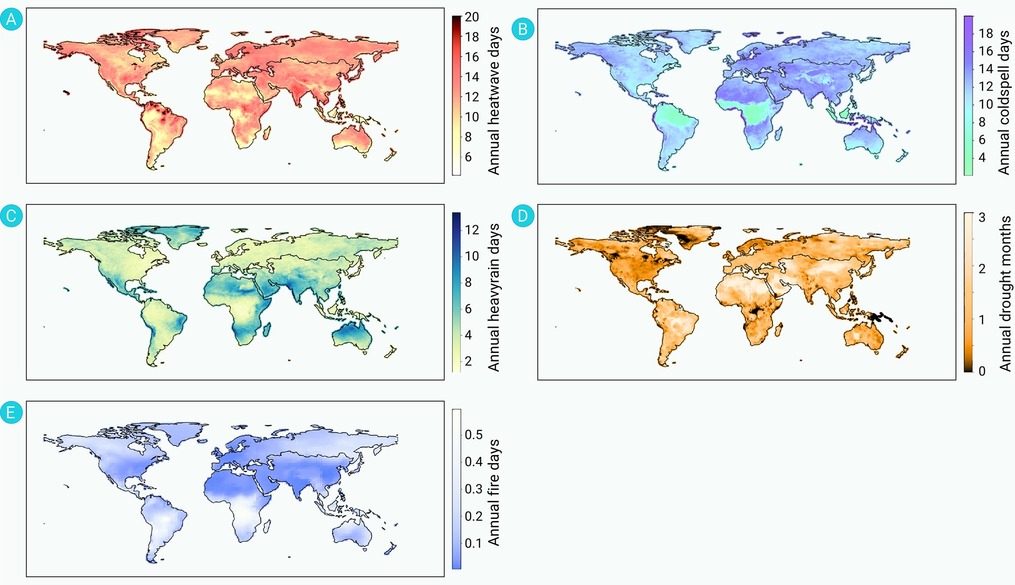
Figure 1.
Annual days of heat waves, cold spells, heavy rains, droughts, wildfires.
-
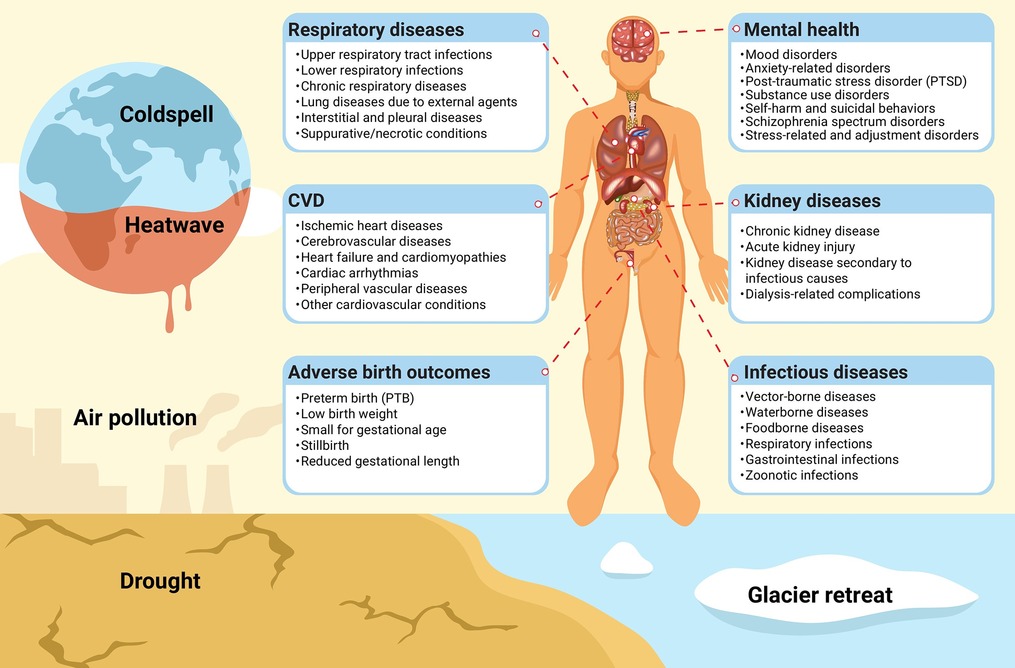
Figure 2.
Overview of health outcomes impacted by climate change related environmental extremes.
