
Electrolyte architecture as the unifying design principle for hybrid solid polymer electrolytes
-
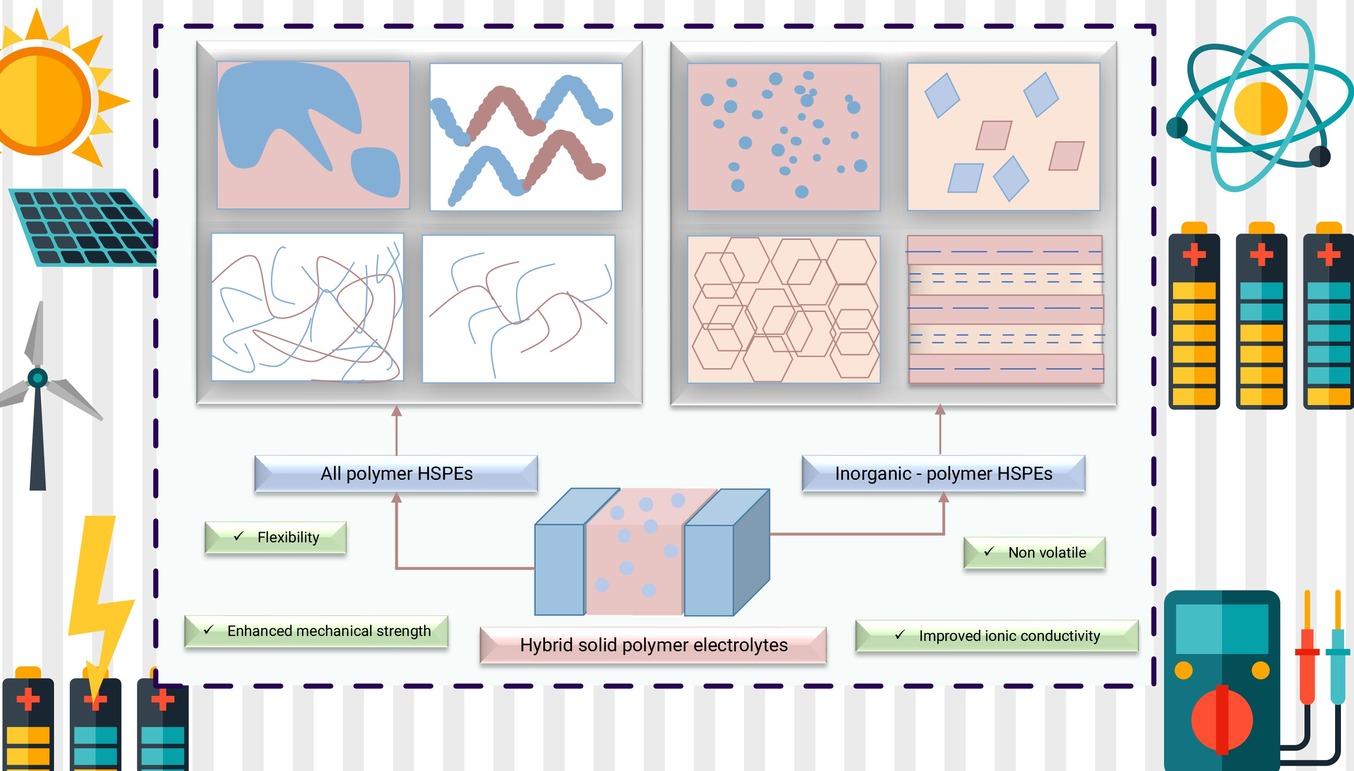
GRAPHICAL ABSTRACT
 DownLoad:
Full size image
DownLoad:
Full size image
-
PUBLIC SUMMARY
-
Hybrid solid polymer electrolytes (HSPEs) balance mechanical, processing and conductive properties, vital for high-performance solid-state lithium batteries.
An architecture-centered classification divides HSPEs into phase-engineered polymer and polymer-inorganic network-engineered structural systems.
Ion conduction of two HSPE categories is controlled by phase compatibility or ceramic network connectivity/tortuosity respectively.
This structural classification clarifies structure-transport-performance relations beyond simple material-based sorting.
Multiscale design and data-driven screening are promising routes to safe, high-energy-density solid-state batteries with optimized HSPEs.
-
-
ABSTRACT
Hybrid solid polymer electrolytes (HSPEs) are central to advancing solid-state lithium batteries, offering a balance of mechanical integrity, processability, and ionic conductivity. This review introduces an architecture-based classification that unifies diverse HSPE designs by explicitly linking structural motifs to ion transport pathways. Two principal paradigms are defined: phase-engineered polymer architectures, encompassing miscible and immiscible blends, block copolymers, graft copolymers, and interpenetrating polymer networks, where phase continuity and interfacial compatibility govern transport; and network engineered polymer–inorganic architectures, including particulate composites, percolated one and two dimensional frameworks, continuous three-dimensional ceramic scaffolds, and layered or graded laminates, where network tortuosity and connectivity shape conduction. By framing HSPEs through architectural principles rather than material categories, this perspective establishes a clear structure–transport–performance relationship. Emerging directions in multiscale design and data-driven discovery are highlighted as pathways to safe, high-energy solid-state batteries. This architectural lens provides rational guidelines for bridging fundamental ionic with the stringent requirements of next-generation energy storage. -

-
REFERENCES
[1] Antony J.S., Gallant A., Gomez P.L., et al. (2025). Solid-state lithium batteries: Advances, challenges, and future perspectives. Batteries 11:90. DOI:10.3390/batteries11030090 [2] Kaviani S. (2025). Covalent organic framework-based solid polymer electrolytes for metal-ion batteries: pioneering the future of DFT, MD, and ML techniques. Energy Storage Mater. DOI:10.1016/j.ensm.2025.104671. [3] Sand S.C., Rupp J.L.M., Yildiz B. (2025). A critical review on Li-ion transport, chemistry and structure of ceramic–polymer composite electrolytes for solid state batteries. Chem. Soc. Rev. 54:178−200. DOI:10.1039/d4cs00214h [4] Li Z., Fu J., Zhou X., et al. (2023). Ionic Conduction in Polymer-Based Solid Electrolytes. Adv. Sci. 10. DOI:10.1002/advs.202201718. [5] Shamsieva A., Evseev A., Kaviani S., et al. (2025). DFT analysis of furan-based covalent organic framework as electrode materials for lithium and calcium ion batteries. Comput. Theor. Chem. DOI:10.1016/j.comptc.2025.115445. [6] Yu X., Chen R., Gan L., et al. (2023). Battery safety: From lithium-ion to solid-state batteries. Engineering 21:9−14. DOI:10.1016/j.eng.2022.08.011 [7] Zhao Q., Stalin S., Zhao C.-Z., et al. (2020). Designing solid-state electrolytes for safe, energy-dense batteries. Nat. Rev. Mater. 5:229−252. DOI:10.1038/s41578-019-0165-5 [8] Nzereogu P.U., Oyesanya A., Ogba S.N., et al. (2025). Solid-State lithium-ion battery electrolytes: Revolutionizing energy density and safety. Hybrid Adv. 8. DOI:10.1016/j.hybadv.2024.100339. [9] Li M., Wang C., Davey K., et al. (2023). Recent progress in electrolyte design for advanced lithium metal batteries. SmartMat 4:e1185. DOI:10.1002/smm2.1185 [10] Li Y., Qin Y., Zhao J., et al. (2022). Boosting the ion mobility in solid polymer electrolytes using hollow polymer nanospheres as an additive. ACS Appl. Mater. Interfaces 14:18360−18372. DOI:10.1021/acsami.2c00244 [11] Liang H., Wang L., Wang A., et al. (2023). Tailoring practically accessible polymer/inorganic composite electrolytes for all-solid-state lithium metal batteries: a review. Nano-Micro Lett. 15:42. DOI:10.1007/s40820-022-00996-1 [12] Muzakir M., Manickavasakam K., Cheng E.J., et al. (2025). Inorganic solid electrolytes for all-solid-state lithium/sodium-ion batteries: recent developments and applications. J. Mater. Chem. A 13:73−135. DOI:10.1039/d4ta06117a [13] Yan S., Yim C.-H., Pankov V., et al. (2021). Perovskite solid-state electrolytes for lithium metal batteries. Batteries 7:75. DOI:10.3390/batteries7040075 [14] Kaviani S., Shamsieva A., Piyanzina I., et al. (2025). Enhanced anodic performance of CTF0 monolayer for Li-ion batteries through F and Si co-doping: A DFT insight. Colloids Surf. A 705:135752. DOI:10.1016/j.colsurfa.2024.135752 [15] Pan K., Zhang L., Qian W., et al. (2020). A flexible ceramic/polymer hybrid solid electrolyte for solid-state lithium metal batteries. Adv. Mater. 32:2000399. DOI:10.1002/adma.202000399 [16] Hu Y., Xie X., Li W., et al. (2023). Recent progress of polymer electrolytes for solid-state lithium batteries. ACS Sustain. Chem. Eng. 11:1253−1277. DOI:10.1021/acssuschemeng.2c05879 [17] Dixit M.B., Zaman W., Bootwala Y., et al. (2019). Scalable manufacturing of hybrid solid electrolytes with interface control. ACS Appl. Mater. Interfaces 11:45087−45097. DOI:10.1021/acsami.9b15463 [18] Halizan M.Z.M., Kasri M.A., Maliaman N.N., et al. (2025). Integration of solid polymer electrolyte into an efficient and environmentally friendly electrochemical approach in lithium-ion batteries recycling. J. Energy Storage 131:117491. DOI:10.1016/j.est.2025.117491 [19] Blatt M.P., Hallinan D.T. (2021). Polymer blend electrolytes for batteries and beyond. Ind. Eng. Chem. Res. 60:17303−17327. DOI:10.1021/acs.iecr.1c02938 [20] Wang T., Zhong L., Xiao M., et al. (2023). Block copolymer electrolytes for lithium metal batteries: Strategies to boost both ionic conductivity and mechanical strength. Prog. Polym. Sci. 146:101743. DOI:10.1016/j.progpolymsci.2023.101743 [21] Zeng X., Liu X., Zhu H., et al. (2024). Advanced crosslinked solid polymer electrolytes: molecular architecture, strategies, and future perspectives. Adv. Energy Mater. 14:2402671. DOI:10.1002/aenm.202402671 [22] Meng N., Zhu X., Lian F. (2022). Particles in composite polymer electrolyte for solid-state lithium batteries: A review. Particuology 60:14−36. DOI:10.1016/j.partic.2021.11.003 [23] Yang X., Liu J., Pei N., et al. (2023). The critical role of fillers in composite polymer electrolytes for lithium battery. Nano-Micro Lett. 15:74. DOI:10.1007/s40820-023-01051-3 [24] Liao W., Liu C. (2021). Structural Design of Composite Polymer Electrolytes for Solid-state Lithium Metal Batteries. ChemNanoMat 7:1177−1187. DOI:10.1002/cnma.202100382 [25] Tian L., Kim J.-W., Kim D.-W. (2024). Solid hybrid electrolytes based on conductive oxides and polymer electrolytes for all-solid-lithium batteries. Mater. Chem. Front. 8:455−484. DOI:10.1039/D3QM00736G [26] Fu J., Li Z., Zhou X., et al. (2022). Ion transport in composite polymer electrolytes. Mater. Adv. 3:3809−3819. DOI:10.1039/D2MA00215A [27] Su Y., Xu F., Zhang X., et al. (2023). Rational design of high-performance PEO/ceramic composite solid electrolytes for lithium metal batteries. Nano-Micro Lett. 15:82. DOI:10.1007/s40820-023-01055-z [28] Kaviani S. (2025). Molecular dynamics and machine learning framework for predicting ion transport and mechanical properties of ionic liquid@ polyvinylidene fluoride gel polymer electrolyte. J. Ind. Eng. Chem. DOI:10.1016/j.jiec.2025.11.034. [29] Gao K.W., Loo W.S., Snyder R.L., et al. (2020). Miscible Polyether/Poly (ether–acetal) Electrolyte Blends. Macromolecules 53:5728−5739. DOI:10.1021/acs.macrom.0c01211 [30] Li S., Jiang K., Wang J., et al. (2019). Molecular brush with dense PEG side chains: design of a well-defined polymer electrolyte for lithium-ion batteries. Macromolecules 52:7234−7243. DOI:10.1021/acs.macrom.9b01641 [31] Caradant L., Verdier N., Foran G., et al. (2021). Extrusion of polymer blend electrolytes for solid-state lithium batteries: a study of polar functional groups. ACS Appl. Polym. Mater. 3:6694−6704. DOI:10.1021/acsapm.1c01393 [32] Seiffert S. (2020). Polymer thermodynamics. In: Physical Chemistry of Polymers, De Gruyter, pp:89–128. DOI:10.1515/9783110672817-004. [33] Tsuchida E., Ohno H., Tsunemi K., et al. (1983). Lithium ionic conduction in poly (methacrylic acid)-poly (ethylene oxide) complex containing lithium perchlorate. Solid State Ion. 11:227−233. DOI:10.1016/0167-2738(83)90028-0 [34] Sengwa R., Dhatarwal P., Choudhary S. (2014). Role of preparation methods on the structural and dielectric properties of plasticized polymer blend electrolytes: correlation between ionic conductivity and dielectric parameters. Electrochim. Acta 142:359−370. DOI:10.1016/j.electacta.2014.06.135 [35] Zhu L., Li J., Jia Y., et al. (2020). Toward high performance solid-state lithium-ion battery with a promising PEO/PPC blend solid polymer electrolyte. Int. J. Energy Res. 44:10168−10178. DOI:10.1002/er.5396 [36] Zainal N.F.A., Lai S.A., Chan C.H. (2020). Melt rheological behavior and morphology of poly (ethylene oxide)/natural rubber-graft-poly (methyl methacrylate) blends. Polymers 12:724. DOI:10.3390/polym12030724 [37] Galluzzo M.D., Loo W.S., Wang A.A., et al. (2020). Measurement of three transport coefficients and the thermodynamic factor in block copolymer electrolytes with different morphologies. J. Phys. Chem. B 124:921−935. DOI:10.1021/acs.jpcb.9b11066 [38] Swann J.M., Topham P.D. (2010). Design and application of nanoscale actuators using block-copolymers. Polymers 2:454−469. DOI:10.3390/polym2020454 [39] Butzelaar A.J., Röring P., Hoffmann M., et al. (2021). Advanced block copolymer design for polymer electrolytes: prospects of microphase separation. Macromolecules 54:11101−11112. DOI:10.1021/acs.macrom.1c02147 [40] Bergfelt A., Hernández G., Mogensen R., et al. (2020). Mechanically robust yet highly conductive diblock copolymer solid polymer electrolyte for ambient temperature battery applications. ACS Appl. Polym. Mater. 2:939−948. DOI:10.1021/acsapm.9b01142 [41] He Y., Liu N., Kohl P.A. (2021). Difunctional block copolymer with ion solvating and crosslinking sites as solid polymer electrolyte for lithium batteries. J. Power Sources 481:228832. DOI:10.1016/j.jpowsour.2020.228832 [42] Butzelaar A.J., Roring P., Mach T.P., et al. (2021). Styrene-based poly (ethylene oxide) side-chain block copolymers as solid polymer electrolytes for high-voltage lithium-metal batteries. ACS Appl. Mater. Interfaces 13:39257−39270. DOI:10.1021/acsami.1c08841 [43] More S.S., Khupse N.D., Ambekar J.D., et al. (2022). Ionic liquid-supported interpenetrating polymer network flexible solid electrolytes for lithium-ion batteries. Energy Fuels 36:4999−5008. DOI:10.1021/acs.energyfuels.2c01942 [44] Lipatov Y., Semenovich G. (1999). The interrelation between the kinetics of the IPN formation at the interface with solid and surface segregation. Polymer 40:6485−6492. DOI:10.1016/S0032-3861(98)00848-9 [45] Kailas Kumar R., Duggal H., Samantaray P.K. (2026). Emerging Macromolecular Approaches to Pore Engineering and Interfacial Control Using Interpenetrating Polymer Networks. Macromol. Rapid Commun. 47:e00627. DOI:10.1002/marc.202500627 [46] Ha H.-J., Kil E.-H., Kwon Y.H., et al. (2012). UV-curable semi-interpenetrating polymer network-integrated, highly bendable plastic crystal composite electrolytes for shape-conformable all-solid-state lithium ion batteries. Energy Environ. Sci. 5:6491−6499. DOI:10.1039/C2EE03025J [47] Suk J., Lee Y.H., Kim D.W. (2016). Semi-interpenetrating solid polymer electrolyte based on thiol-ene cross-linker for all-solid-state lithium batteries. J. Power Sources 334:154−161. DOI:10.1016/j.jpowsour.2016.09.072 [48] Zheng Y., Li X., Li C.Y. (2020). A novel de-coupling solid polymer electrolyte via semi-interpenetrating network for lithium metal battery. Energy Storage Mater. 29:42−51. DOI:10.1016/j.ensm.2020.01.004 [49] Homann G., Stolz L., Neuhaus K., et al. (2020). Effective optimization of high voltage solid-state lithium batteries by using poly (ethylene oxide)-based polymer electrolyte with semi-interpenetrating network. Adv. Funct. Mater. 30:2006289. DOI:10.1002/adfm.202006289 [50] Zheng Y., Li X., Fullerton W.R., et al. (2021). Interpenetrating network-based hybrid solid and gel electrolytes for high voltage lithium metal batteries. ACS Appl. Energy Mater. 4:5639−5648. DOI:10.1021/acsaem.1c00451 [51] Rong Z., Sun Y., Zhao Q., et al. (2022). UV-Cured Semi-Interpenetrating polymer networks of solid electrolytes for rechargeable lithium metal batteries. Chem. Eng. J. 437:135329. DOI:10.1016/j.cej.2022.135329 [52] Zeng G., Dai S., Chen X., et al. (2024). Solid-State Graft Polymer Electrolytes with Conductive Backbones and Side Chains for Lithium Batteries. Macromolecules 57:1258−1265. DOI:10.26434/chemrxiv-2023-3fkt9 [53] Meng N., Lian F., Cui G. (2021). Macromolecular design of lithium conductive polymer as electrolyte for solid-state lithium batteries. Small 17:2005762. DOI:10.1002/smll.2005762 [54] Ji X., Cao M., Fu X., et al. (2020). Efficient room-temperature solid-state lithium ion conductors enabled by mixed-graft block copolymer architectures. Giant 3:100027. DOI:10.1016/j.giant.2020.100027 [55] Higa M., Fujino Y., Koumoto T., et al. (2005). All solid-state polymer electrolytes prepared from a hyper-branched graft polymer using atom transfer radical polymerization. Electrochim. Acta 50:3832−3837. DOI:10.1016/j.electacta.2005.02.042 [56] Gami P., Das A.K., Vasavan H.N., et al. (2025). PVDF-HFP/PVP-based Miscible Blend Electrolyte for Fast-Charging Lithium Metal Batteries. Electrochim. Acta DOI:10.1016/j.electacta.2025.146840. [57] Mei X., Huang Y., Chen S., et al. (2023). Improving Ion Conductivity in Polymer Blend Electrolytes by Tuning Microdynamics and Interfaces. ACS Appl. Polym. Mater. 5:9225−9235. DOI:10.1021/acsapm.3c01658 [58] Guo K., Wang J., Shi Z., et al. (2023). One-Step In Situ Polymerization: A Facile Design Strategy for Block Copolymer Electrolytes. Angew. Chem. Int. Ed. 62:e202213606. DOI:10.1002/anie.202213606 [59] Song Y.-W., Lee H., Park S.-J., et al. (2023). Advancing Particle Dispersion/Interface Design in Composite Solid Electrolytes for Solid-State Batteries. J. Phys. Chem. C 127:18291−18300. DOI:10.1021/acs.jpcc.3c03889 [60] Otani K., Yano T., Akizuki K., et al. (2025). Quantitative Study of Solid Electrolyte Particle Dispersion and Compression Processes in All-Solid-State Batteries Using DEM. Electrochem. 93:063009. DOI:10.5796/electrochemistry.25-71025 [61] Chen X., Qiu S., Jian Z., et al. (2025). Designing a self-extinguishing system in a composite electrolyte for highly safe solid-state lithium metal batteries. ACS Nano 19:19297−19309. DOI:10.1021/acsnano.5c01991 [62] Lü H., Chen X., Sun Q., et al. (2024). Uniform garnet nanoparticle dispersion in composite polymer electrolytes. Acta Phys.-Chim. Sin. 40:2305016. DOI:10.3866/PKU.WHXB202405016 [63] Ho N.X., Dien P.T., Viet C.D., et al. (2025). Silane-assisted dispersion of TiO2 nanoparticles into PEO matrix as ultra-stable composite polymer electrolytes for solid-state lithium batteries. J. Power Sources 647:237205. DOI:10.1016/j.jpowsour.2025.237205 [64] Ramkumar B., Aravindan V., Ramasamy H., et al. (2022). Ternary metal oxide filled PEO-based polymer electrolyte for solid-state lithium metal battery: The role of filler particle size. Solid State Sci. 132:106958. DOI:10.1016/j.solidstatesciences.2022.106958 [65] Utomo N.W., Hong S., Sinha R., et al. (2024). Solid-state polymer-particle hybrid electrolytes. Sci. Adv. 10:eado4719. DOI:10.1126/sciadv.ado4719 [66] Lian H., Liao X., Zhang Y., et al. (2026). Interfacial Molecular Welding via Passivation-Triggered Fluoropolymerization: Boosting Li+ Conduction and Stabilizing Dual Electrode Interfaces. Adv. Funct. Mater. DOI:10.1002/adfm.202523355. [67] Ding W.-Q., Lv F., Xu N., et al. (2021). Polyethylene oxide-based solid-state composite polymer electrolytes for rechargeable lithium batteries. ACS Appl. Energy Mater. 4:4581−4601. DOI:10.1021/acsaem.1c00216 [68] Sheng O., Jin C., Luo J., et al. (2018). Mg2B2O5 nanowire enabled multifunctional solid-state electrolytes with high ionic conductivity, excellent mechanical properties, and flame-retardant performance. Nano Lett. 18:3104−3112. DOI:10.1021/acs.nanolett.8b01267 [69] Song S., Wu Y., Tang W., et al. (2019). Composite solid polymer electrolyte with garnet nanosheets in poly (ethylene oxide). ACS Sustain. Chem. Eng. 7:7163−7170. DOI:10.1021/acssuschemeng.9b00143 [70] Zhang D., Meng X., Hou W., et al. (2023). Solid polymer electrolytes: Ion conduction mechanisms and enhancement strategies. Nano Res. Energy 2:e9120050. DOI:10.26599/NRE.2023.9120050 [71] Liu X., Xiao Z., Peng H., et al. (2022). Rational Design of LLZO/Polymer Solid Electrolytes for Solid-State Batteries. Chem.–Asian J. 17:e202200929. DOI:10.1002/asia.202200929 [72] Li X., Wang J. (2020). One-dimensional and two-dimensional synergized nanostructures for high-performing energy storage and conversion. InfoMat 2:3−32. DOI:10.1002/inf2.12004 [73] Wang Z., Li Y., Huang S., et al. (2020). PVD customized 2D porous amorphous silicon nanoflakes percolated with carbon nanotubes for high areal capacity lithium ion batteries. J. Mater. Chem. A 8:4836−4843. DOI:10.1039/c9ta12923e [74] Sahore R., Armstrong B.L., Tang X., et al. (2023). Role of Scaffold Architecture and Excess Surface Polymer Layers in a 3D-Interconnected Ceramic/Polymer Composite Electrolyte. Adv. Energy Mater. 13:2203663. DOI:10.1002/aenm.202203663 [75] Li S., Zhang S.Q., Shen L., et al. (2020). Progress and perspective of ceramic/polymer composite solid electrolytes for lithium batteries. Adv. Sci. 7:1903088. DOI:10.1002/advs.201903088 [76] He K.Q., Liao X.G., Lian H.J., et al. (2025). Endowing rapid Na+ conduction by architecture design of Na3Zr2Si2PO12 in composite electrolytes for ultralong lifespan quasi-solid-state sodium metal batteries. Rare Met. 44:3795−3805. DOI:10.1007/s12598-024-03213-7 [77] Chen Q., Ouyang C., Liang Y., et al. (2024). Composite polymer electrolyte with vertically aligned garnet scaffolds for quasi solid-state lithium batteries. Energy Storage Mater. 69:103418. DOI:10.1016/j.ensm.2024.103418 [78] Wang R., Dong Q., Wang C., et al. (2021). High-temperature ultrafast sintering: exploiting a new kinetic region to fabricate porous solid-state electrolyte scaffolds. Adv. Mater. 33:2100726. DOI:10.1002/adma.202100726 [79] Wei B., Li Y., Lin W., et al. (2024). A wrapped and infiltrated~ 20-μm-thick 3D ceramic framework composite enables fast Li+ diffusion and interfacial compatibility for lithium-metal batteries. Compos. Part B Eng. 272:111192. DOI:10.1016/j.compositesb.2024.111192 [80] Song S., Qin X., Ruan Y., et al. (2020). Enhanced performance of solid-state lithium-air batteries with continuous 3D garnet network added composite polymer electrolyte. J. Power Sources 461:228146. DOI:10.1016/j.jpowsour.2020.228146 [81] Duan H., Yin Y.-X., Shi Y., et al. (2018). Dendrite-free Li-metal battery enabled by a thin asymmetric solid electrolyte with engineered layers. J. Am. Chem. Soc. 140:82−85. DOI:10.1021/jacs.7b10864 [82] Yu X., Li J., Manthiram A. (2020). Rational design of a laminated dual-polymer/polymer–ceramic composite electrolyte for high-voltage all-solid-state lithium batteries. ACS Mater. Lett. 2:317−324. DOI:10.1021/acsmaterialslett.9b00535 [83] Li A., Liao X., Zhang H., et al. (2020). Nacre-inspired composite electrolytes for load-bearing solid-state lithium-metal batteries. Adv. Mater. 32:1905517. DOI:10.1002/adma.201905517 [84] Zhang N., Wu S., Zheng H., et al. (2023). Recent progress of multilayer polymer electrolytes for lithium batteries. Energy Mater. DOI:10.20517/energymater.2022.64. [85] Yuan Y., Wang B., Xue K., et al. (2023). High-voltage solid-state lithium metal batteries with stable anodic and cathodic interfaces by a laminated solid polymer electrolyte. ACS Appl. Mater. Interfaces 15:17144−17151. DOI:10.1021/acsami.2c23058 [86] Li B., Su Q., Yu L., et al. (2021). Ultrathin, flexible, and sandwiched structure composite polymer electrolyte membrane for solid-state lithium batteries. J. Membr. Sci. 618:118734. DOI:10.1016/j.memsci.2020.118734 [87] Tian L., Liu Y., Su Z., et al. (2021). A lithiated organic nanofiber-reinforced composite polymer electrolyte enabling Li-ion conduction highways for solid-state lithium metal batteries. J. Mater. Chem. A 9:23882−23890. DOI:10.1039/D1TA06269G [88] Fu Y., Chen Y., Yu X., et al. (2022). Fiber metal laminated structural batteries with multifunctional solid polymer electrolytes. Compos. Sci. Technol. 230:109731. DOI:10.1016/j.compscitech.2022.109731 [89] Sun J., Gargitter V., Pei S., et al. (2020). Mechanical and electrochemical performance of hybrid laminated structural composites with carbon fiber/solid electrolyte supercapacitor interleaves. Compos. Sci. Technol. 196:108234. DOI:10.1016/j.compscitech.2020.108234 [90] Yu X., Xue L., Goodenough J.B., et al. (2021). Ambient-temperature all-solid-state sodium batteries with a laminated composite electrolyte. Adv. Funct. Mater. 31:2002144. DOI:10.1002/adfm.202002144 [91] Didwal P.N., Singhbabu Y., Verma R., et al. (2021). An advanced solid polymer electrolyte composed of poly (propylene carbonate) and mesoporous silica nanoparticles for all-solid-state lithium-ion batteries. Energy Storage Mater. 37:476−490. DOI:10.1016/j.ensm.2021.03.026 [92] Zhang Y., Wang X., Feng W., et al. (2019). The effects of the size and content of BaTiO3 nanoparticles on solid polymer electrolytes for all-solid-state lithium-ion batteries. J. Solid State Electrochem. 23:749−758. DOI:10.1007/s10008-018-04175-4 [93] Raj A., Grignard B., Bourguignon M., et al. (2025). Composite Polymer Electrolytes Based on Silicon Dioxide Nanoparticles for Lithium Metal Batteries. Macromol. Chem. Phys. 226:e00242. DOI:10.1002/macp.202500242 [94] Yang T., Zheng J., Cheng Q., et al. (2017). Composite polymer electrolytes with Li7La3Zr2O12 garnet-type nanowires as ceramic fillers: mechanism of conductivity enhancement and role of doping and morphology. ACS Appl. Mater. Interfaces 9:21773−21780. DOI:10.1021/acsami.7b05622 [95] Li Y., Zhang W., Dou Q., et al. (2019). Li7La3Zr2O12 ceramic nanofiber-incorporated composite polymer electrolytes for lithium metal batteries. J. Mater. Chem. A 7:3391−3398. DOI:10.1039/C8TA11449H [96] Liu W., Liu N., Sun J., et al. (2015). Ionic conductivity enhancement of polymer electrolytes with ceramic nanowire fillers. Nano Lett. 15:2740−2745. DOI:10.1021/acs.nanolett.5b00600 [97] Liu W., Lee S.W., Lin D., et al. (2017). Enhancing ionic conductivity in composite polymer electrolytes with well-aligned ceramic nanowires. Nat. Energy 2:1−7. DOI:10.1038/nenergy.2017.112 [98] Zhai H., Xu P., Ning M., et al. (2017). A flexible solid composite electrolyte with vertically aligned and connected ion-conducting nanoparticles for lithium batteries. Nano Lett. 17:3182−3187. DOI:10.1021/acs.nanolett.7b00715 [99] Zheng X., Wei J., Lin W., et al. (2022). Bridging Li7La3Zr2O12 nanofibers with Poly (ethylene oxide) by coordination bonds to enhance the cycling stability of all-solid-state lithium metal batteries. ACS Appl. Mater. Interfaces 14:5346−5354. DOI:10.1021/acsami.1c21131 [100] Wang J., Guo S., Li Z., et al. (2022). Highly conductive thin composite solid electrolyte with vertical Li7La3Zr2O12 sheet arrays for high-energy-density all-solid-state lithium battery. Chem. Eng. J. 450:137994. DOI:10.1016/j.cej.2022.137994 [101] Zhao Y., Yan J., Cai W., et al. (2019). Elastic and well-aligned ceramic LLZO nanofiber based electrolytes for solid-state lithium batteries. Energy Storage Mater. 23:306−313. DOI:10.1016/j.ensm.2019.02.016 [102] Feng T., Hu Y., Xu L., et al. (2022). Improving the cyclability of solid polymer electrolyte with porous V2O5 nanotube filler. Mater. Today Energy 28:101062. DOI:10.1016/j.mtener.2022.101062 [103] Li Y., Sun Z., Liu D., et al. (2020). A composite solid polymer electrolyte incorporating MnO 2 nanosheets with reinforced mechanical properties and electrochemical stability for lithium metal batteries. J. Mater. Chem. A 8:2021−2032. DOI:10.1039/c9ta11542k [104] Ao X., Wang X., Tan J., et al. (2021). Nanocomposite with fast Li+ conducting percolation network: Solid polymer electrolyte with Li+ non-conducting filler. Nano Energy 79:105475. DOI:10.1016/j.nanoen.2020.105475 [105] Guo S., Kou W., Wu W., et al. (2022). Thin laminar inorganic solid electrolyte with high ionic conductance towards high-performance all-solid-state lithium battery. Chem. Eng. J. 427:131948. DOI:10.1016/j.cej.2021.131948 [106] Cheng J., Hou G., Chen Q., et al. (2022). Sheet-like garnet structure design for upgrading PEO-based electrolyte. Chem. Eng. J. 429:132343. DOI:10.1016/j.cej.2021.132343 [107] Bae J., Li Y., Zhang J., et al. (2018). A 3D nanostructured hydrogel-framework-derived high-performance composite polymer lithium-ion electrolyte. Angew. Chem. Int. Ed. 57:2096−2100. DOI:10.1002/anie.201710841 [108] Zekoll S., Marriner-Edwards C., Hekselman A.O., et al. (2018). Hybrid electrolytes with 3D bicontinuous ordered ceramic and polymer microchannels for all-solid-state batteries. Energy Environ. Sci. 11:185−201. DOI:10.1039/C7EE02723K [109] Pan P., Zhang M., Cheng Z., et al. (2022). Garnet ceramic fabric-reinforced flexible composite solid electrolyte derived from silk template for safe and long-term stable All-Solid-State lithium metal batteries. Energy Storage Mater. 47:279−287. DOI:10.1016/j.ensm.2022.01.047 [110] Wang G., Liu H., Liang Y., et al. (2022). Composite polymer electrolyte with three-dimensional ion transport channels constructed by NaCl template for solid-state lithium metal batteries. Energy Storage Mater. 45:1212−1219. DOI:10.1016/j.ensm.2022.01.039 [111] Tian L.W., Kim J.W., Hong S.-B., et al. (2022). All-solid-state lithium batteries featuring hybrid electrolytes based on Li7La3Zr2O12 framework and full-concentration gradient Ni-rich NCM cathode. Chem. Eng. J. 450:138043. DOI:10.1016/j.cej.2022.138043 [112] Bae J., Li Y., Zhao F., et al. (2018). Designing 3D nanostructured garnet frameworks for enhancing ionic conductivity and flexibility in composite polymer electrolytes for lithium batteries. Energy Storage Mater. 15:46−52. DOI:10.1016/j.ensm.2018.01.005 [113] Liu S., Zhao Y., Li X., et al. (2021). Solid-state lithium metal batteries with extended cycling enabled by dynamic adaptive solid-state interfaces. Adv. Mater. 33:2008084. DOI:10.1002/adma.2008084 -
ABOUT THIS ARTICLE
Cite this article:
Gimhani A., Muzakir M., Wang S., et al. (2026). Electrolyte architecture as the unifying design principle for hybrid solid polymer electrolytes. The Innovation Energy 3:100168. https://doi.org/10.59717/j.xinn-energy.2026.100168
Welcome!
To request copyright permission to republish or share portions of our works, please visit Copyright Clearance Center's (CCC) Marketplace website at marketplace.copyright.com.
Export File
Citation
Gimhani A., Muzakir M., Wang S., et al. (2026). Electrolyte architecture as the unifying design principle for hybrid solid polymer electrolytes. The Innovation Energy 3:100168. https://doi.org/10.59717/j.xinn-energy.2026.100168

Format
Content
-
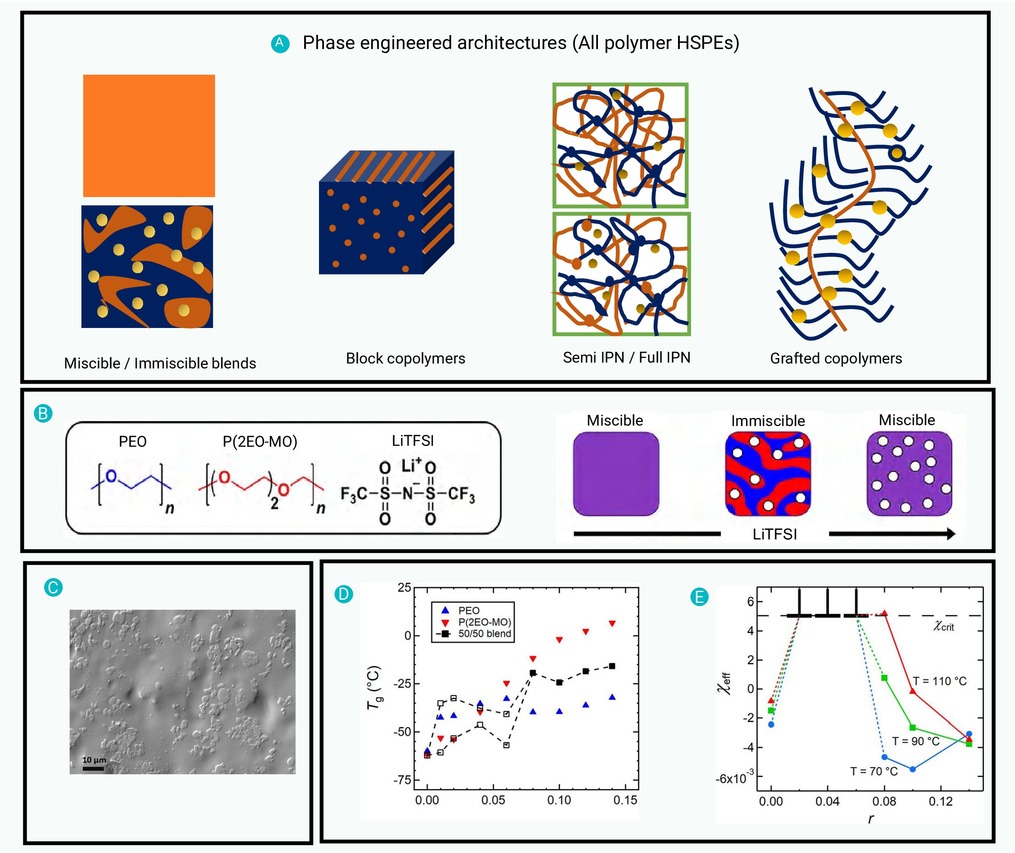
Figure 1.
(A) Phase engineered polymer architecture. Redrawn and modified from Ref.29,21,30. (B) Effect of LiTFSI addition to PEO/P(2EO-MO) blend. Reproduced with permission from Ref.29. Copyright © 2020, American Chemical Society. SEM micrographs of (C) Immiscible blend SPE (50/50 vol% PPC/PVA and 24.5 wt.% LiTFSI salt). Reproduced with permission from Ref.31. Copyright © 2021 American Chemical Society. (D) Tg as a function of salt concentration, r, for each conventional polymer electrolyte system (solid blue triangles for PEO (Mn = 100 kg mol–1) and solid red triangles for P(2EO-MO) (Mn = 55.2 kg mol–1)) and the polymer blend electrolyte. (E) Effective Flory Huggins interaction parameter, χeff, for the dPEO/P(2EO-MO)/LiTFSI (P(2EO -MO) Mn = 26.7 kg mol–1) blends as a function of salt concentration, r, at three different temperatures: 70 °C (blue circles), 90 ºC (green squares), and 110 °C (red triangles). Reproduced with permission from Ref.29. Copyright © 2020, American Chemical Society.
-
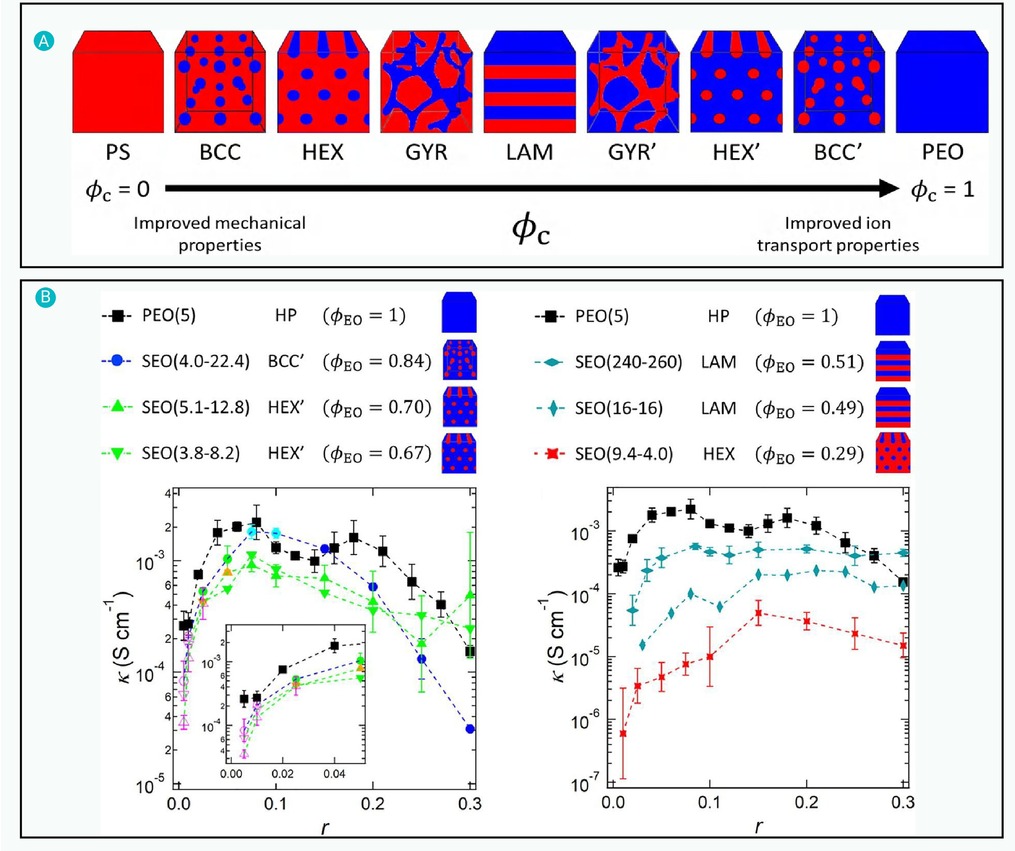
Figure 2.
(A) Block copolymer (BCP) morphologies as a function of conducting phase volume fraction, ϕc, PS depicted in red and PEO with LiTFSI depicted in blue. (B) Conductivity, κ, of PEO and various SEO electrolytes as a function of r, the molar ratio of lithium ions to ether oxygens for the polymers listed in the figure, where k vs r for PEO and BCP electrolytes with 3d conducting morphologies and k vs r for PEO and BCP electrolytes with 2d and 1d conducting morphologies. Reproduced with permission from Ref.37. Copyright © 2020 American Chemical Society.
-
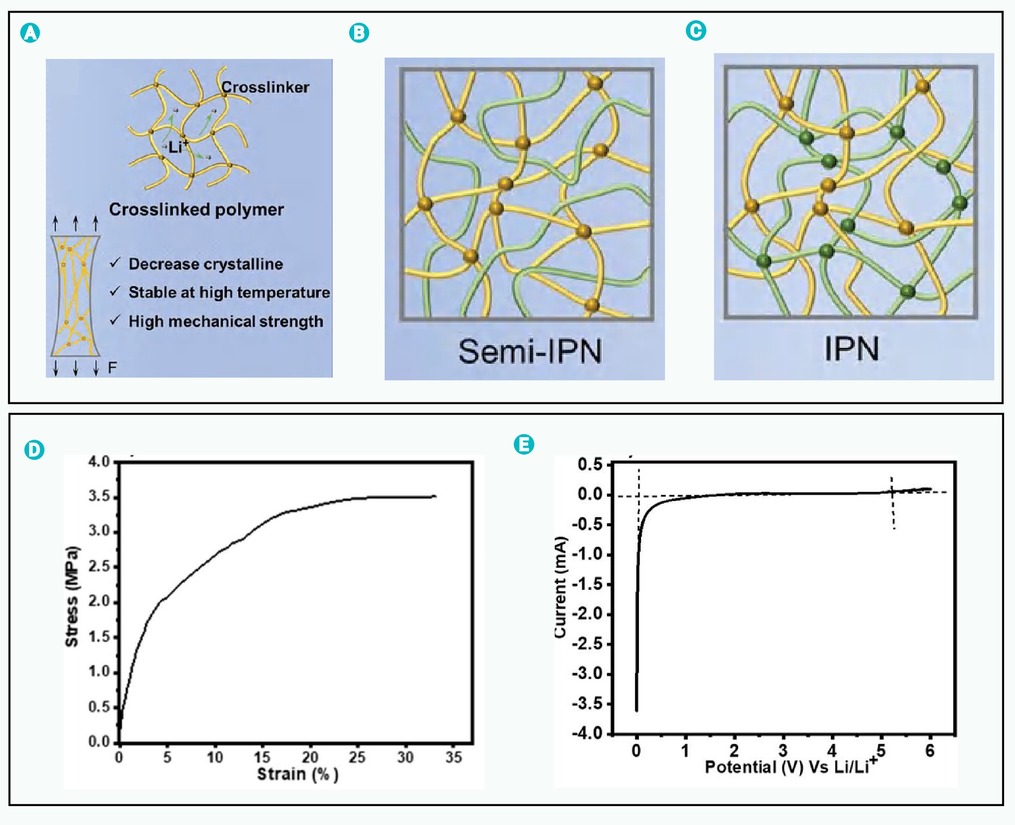
Figure 3.
(A) Schematic illustration for ion transport and characteristics of crosslinked polymer. Schematic illustration of the network structure of (B) Semi Interpenetrating Network (Semi IPN) and (C) Interpenetrating Network (IPN). Reproduced with permission from Ref.21. Copyright © 2024 Wiley-VCH GmbH. (D) Stress vs strain curve for the IPN electrolyte membrane. (E) LSV curve of Li/IPN membrane/SS cell at scan rate of 0.1 mV s-1.Reproduced with permission from Ref.43. Copyright © 2022, American Chemical Society.
-
Figure 4.
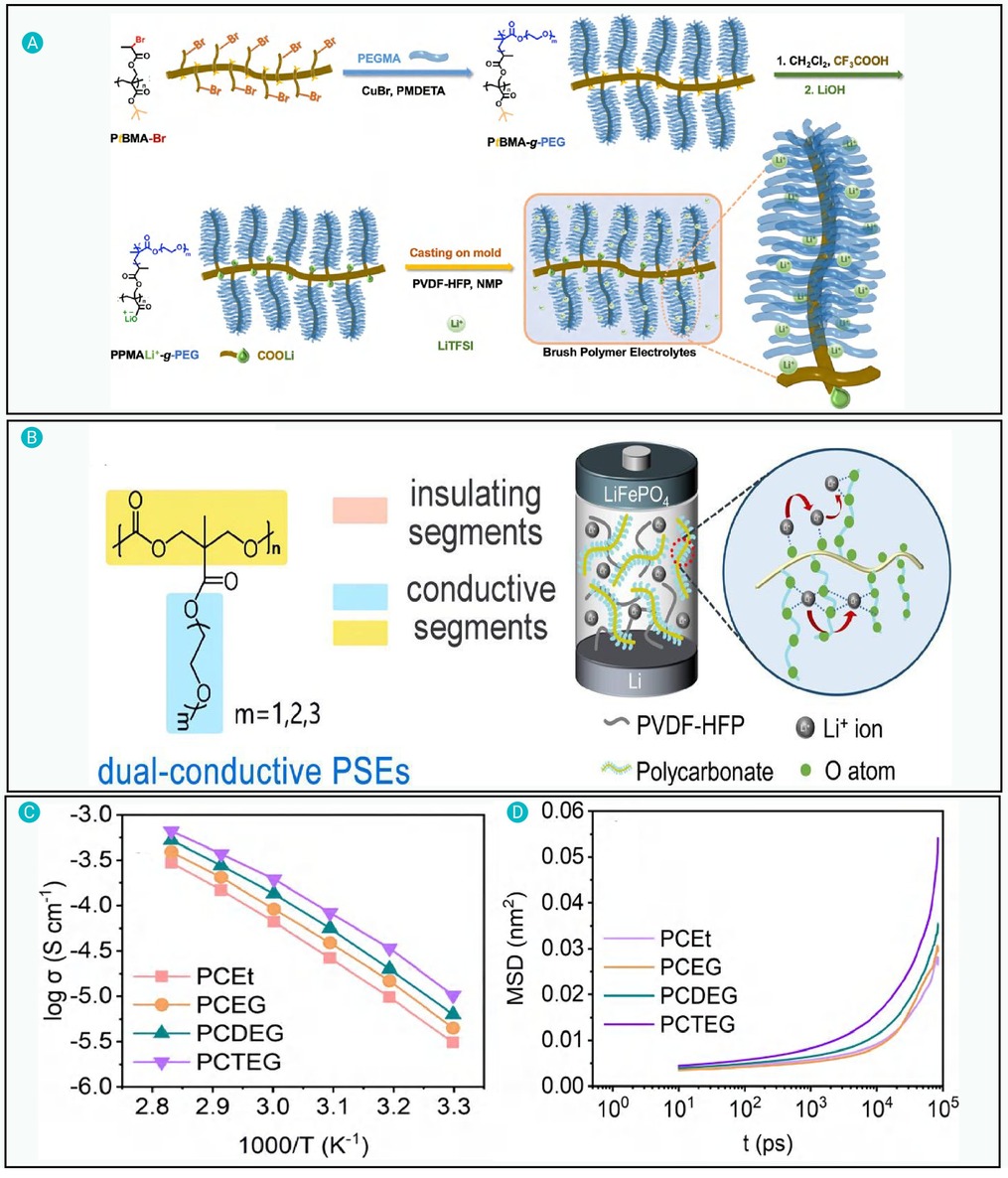
(A) Synthetic route of molecular brush PPMALi-g-PEG. Reproduced with permission from Ref.30. Copyright © 2019, American Chemical Society. (B) Brush copolymers with PC backbones and PEO side chains, and both are ion conductive (C) σ of PC/LiTFSI polymer electrolytes as a function of temperature (D) mean squared displacement (MSD) of lithium ions. Reproduced with permission from Ref.52. Copyright © 2024, American Chemical Society.
-
Figure 5.
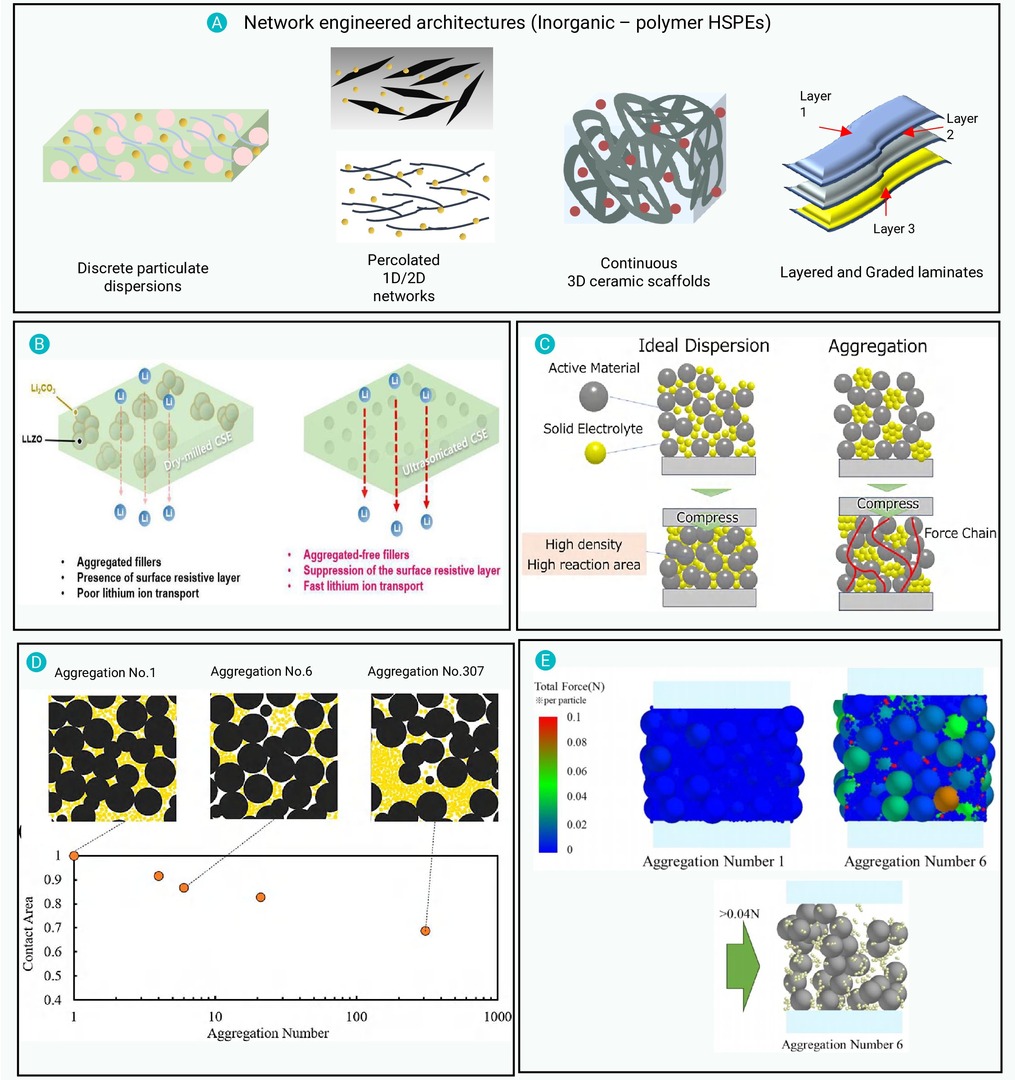
(A) Network engineered polymer architectures. (B) Schematic of HSPE with aggregated particles and aggregated-free particles. Reproduced with permission from Ref.59. Copyright © 2023, American Chemical Society. (C) Schematic of ideal and aggregation mechanism during compression. (D) Cross sectional images of the electrode for aggregation numbers of 1, 6, and 307 and the Relationship between reaction area and aggregation number. The black particles represent the active material particles, and the yellow particles represent single particle of the solid electrolyte. Reaction area was normalized to the ideal dispersed state as 1. (E) Stress distributions for aggregation numbers 1 and 6, respectively, represented by a color map of the total force on each particle and only the particles with an aggregation number of 6 that were subjected to a force greater than 0.04 N. Reproduced with permission from Ref.60. Copyright © 2025, The Author(s). Published by ECSJ.
-
Figure 6.
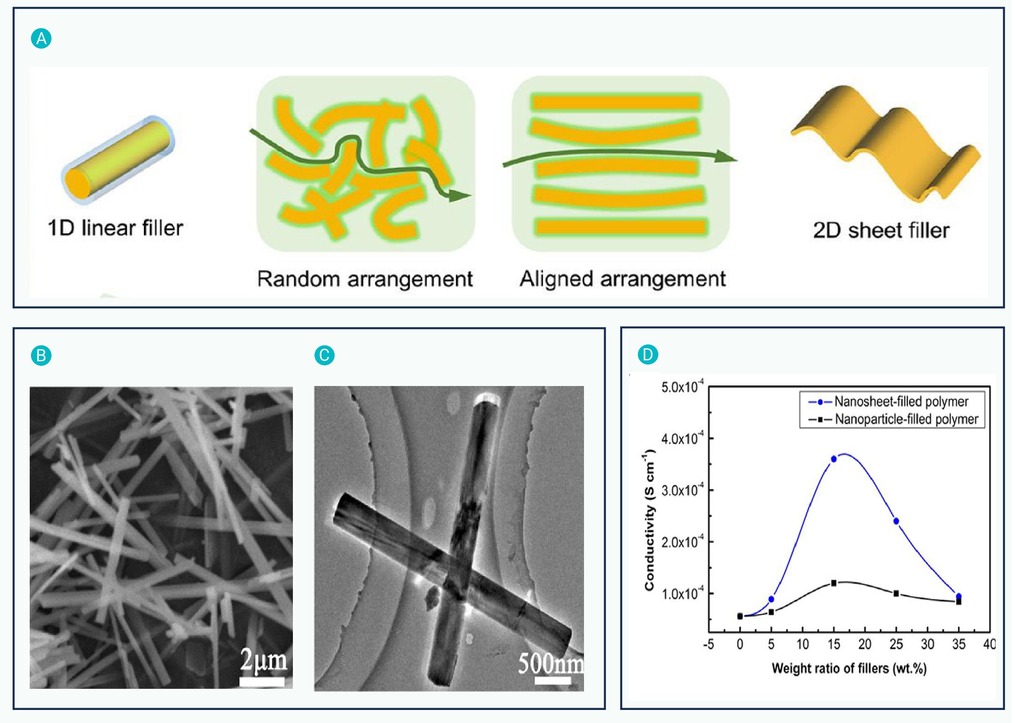
(A) Schematic diagram of the transportation path of Li ions in the PEO based composite polymer electrolyte with 1D, 2D filler morphologies. Reproduced with permission from Ref.67. Copyright © 2021, American Chemical Society. Characterization of the Mg2B2O5 nanowires (B) SEM image and (C) TEM image. Reproduced with permission from Ref.68. Copyright © 2018, American Chemical Society. (D) Conductivity comparison of the composite electrolytes filled with garnet nanosheets and nanoparticles. Reproduced with permission from Ref.69. Copyright © 2019, American Chemical Society.
-
Figure 7.
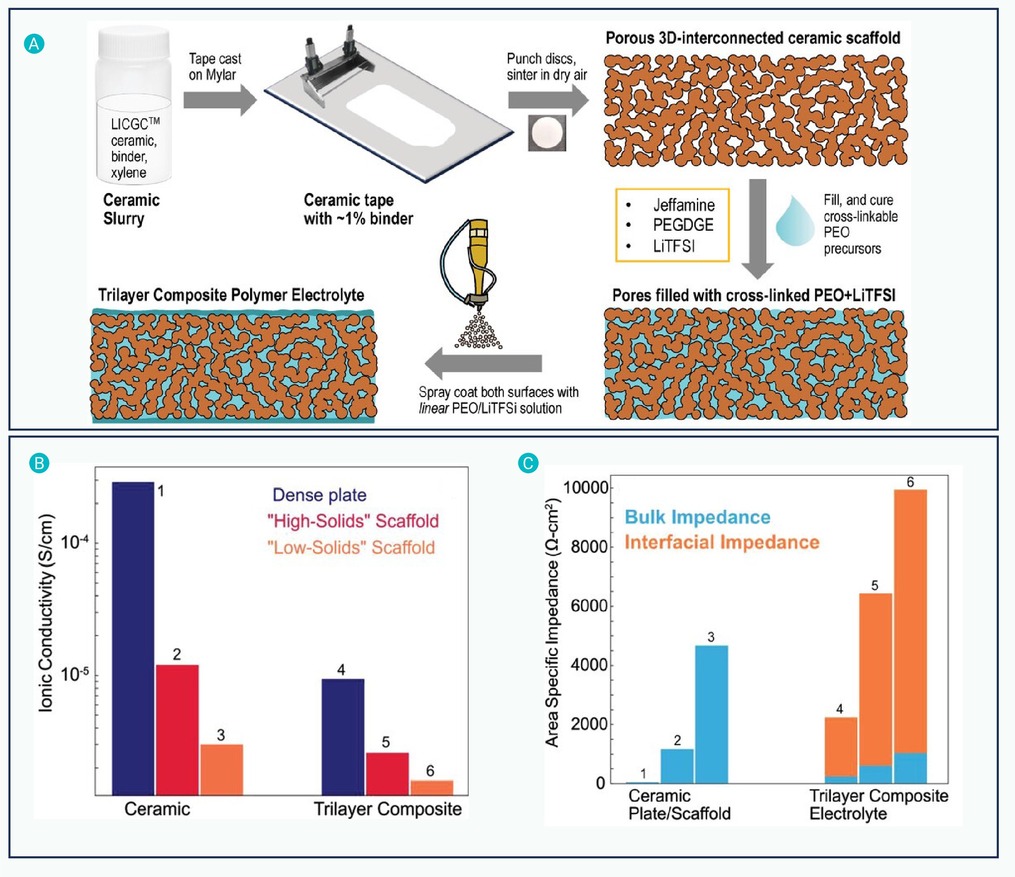
(A) Schematic of Tri layer HSPE with porous LICGC (Li1+x+yAlxTi2−xSiyP3−yO12) scaffold (B) Bar chart comparing the RT ionic conductivities of the three types of bare ceramic scaffolds (dense ceramic, “high-solids” scaffold, and “low-solids” scaffold) with 0%, 48%, and 52% porosity, respectively, and their corresponding Trilayer HSPEs (C) Bar chart comparing the area specific bulk and interfacial impedance at RT of the six samples (numbered 1–6). Reproduced with permission from Ref.74. Copyright © 2023 Wiley-VCH GmbH.
-
Figure 8.
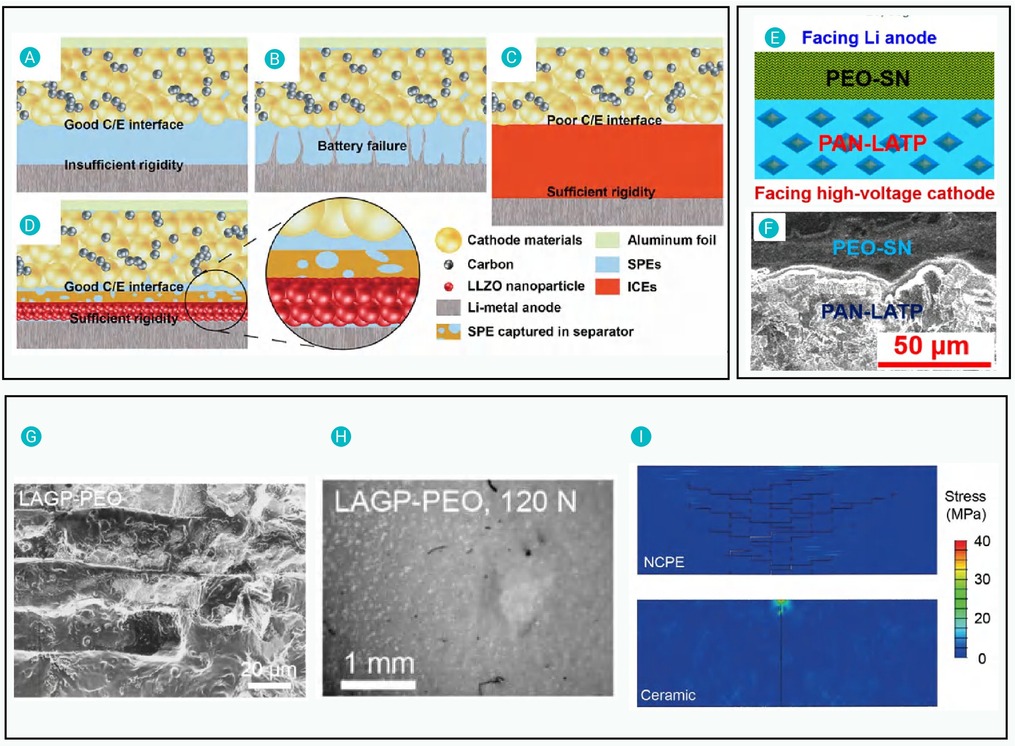
Schematic of solid-state Li battery with ((A) and (B)) conventional SPEs, (C) Inorganic composite electrolyte (ICE) and (D) Multi-layered HSPE. Reproduced with permission from Ref.81. Copyright © 2018, American Chemical Society. (E) The PEO-SN / PAN-LATP HSPE(I)Schematic of the laminated dual polymer/polymer-ceramic HSPEs. (F) Cross section SEM image of the PEO-SN-LiTFSI/PAN-LATP-LiTFSI HSPE. Reproduced with permission from Ref.82. Copyright © 2020, American Chemical Society. The nacre like LAGP–PEO HSPE (G) Cross sectional SEM images of Hot pressed LAGP–PEO HSPE film showing the staggered microstructure (H) Vickers indentation of nacre like LAGP–PEO HSPE film using loads of 120 N (I) Nonlinear finite element simulations of tortuous crack propagation through interfacial polymer failure in an HSPE film and a straight crack in a pure ceramic film under the same force. Reproduced with permission from Ref.83. Copyright © 2019, WILEY-VCH Verlag GmbH & Co. KGaA, Weinheim.
