
Bi-level Optimization of Residential Community Energy Systems: Space Heating and DHW Loads under Multi-Energy Pricing
-
GRAPHICAL ABSTRACT
 DownLoad:
Full size image
DownLoad:
Full size image
-
PUBLIC SUMMARY
-
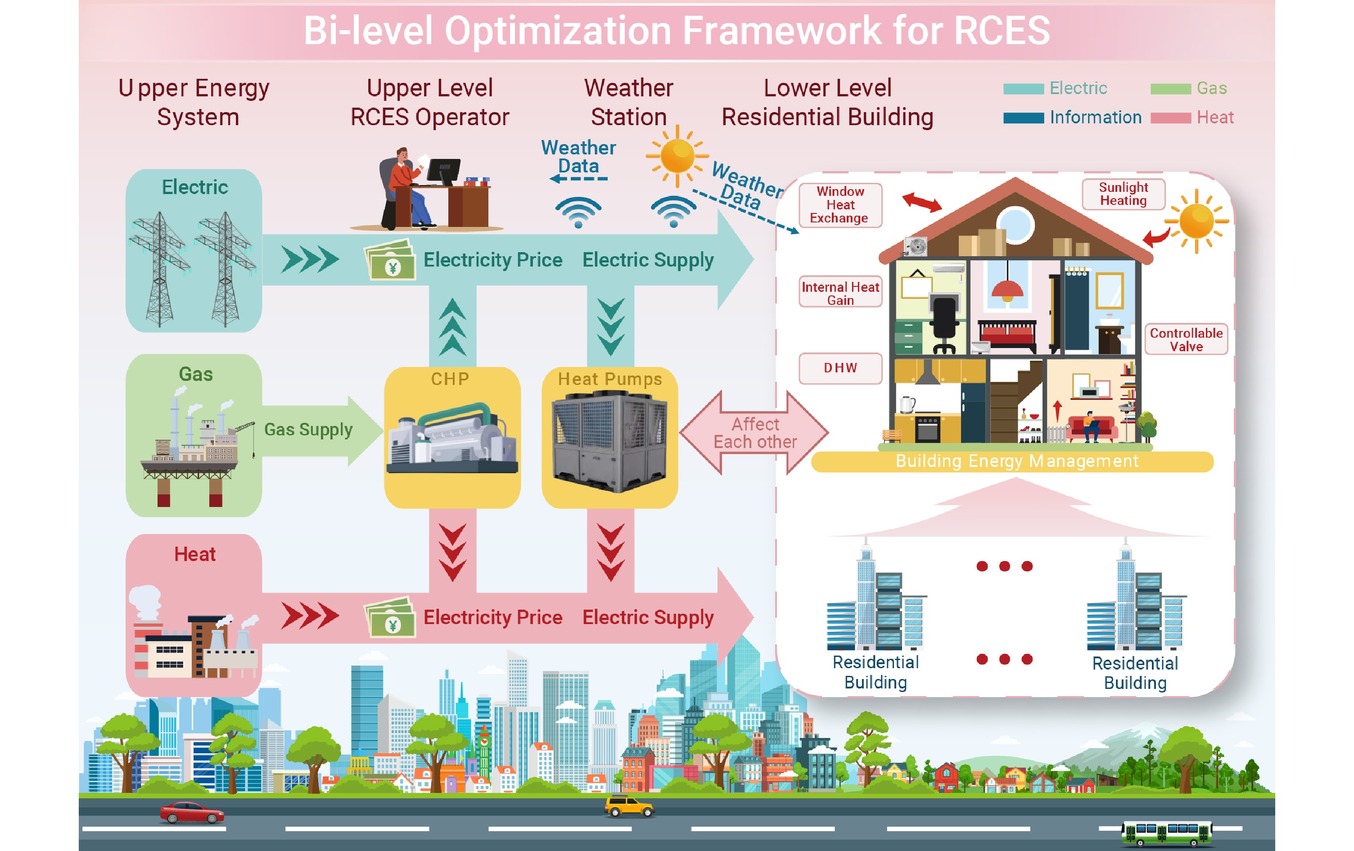
Developed a hierarchical optimization approach for RCES managing space heating and DHW under multi-energy pricing.
Upper-level model optimizes electricity/heat supply and pricing to maximize the RCES operator's economic returns.
Lower-level model controls radiators and electric water heaters to adjust load profiles for cost reduction.
Solved the bi-level problem using KKT conditions and strong duality, transforming it into a tractable MILP model.
Case studies show effective supply-demand flexibility coordination, boosting operator profits and reducing consumer costs.
-
-
ABSTRACT
Focusing on thermal demands including space heating and domestic hot water (DHW), this study develops a hierarchical optimization approach for residential community energy systems (RCES) operating under a multi-energy pricing mechanism. In the upper-level model, the RCES operator utilizes various energy conversion devices to jointly schedule electricity/heat supply and set retail multi-energy prices, aiming to achieve optimal economic returns. Conversely, the lower-level problem explicitly models controllable assets like radiators and electric water heaters, ensuring consumers can satisfy their thermal comfort and water usage needs. Guided by the operator’s price signals, residents act as followers to adjust their load profiles, thereby minimizing expenses and realizing integrated demand response (IDR). To solve this bi-level problem, the lower-level constraints are transformed using Karush-Kuhn-Tucker (KKT) conditions and strong duality theory, converting the original model into a tractable single-level mixed-integer linear programming (MILP) formulation. Case studies on a typical RCES indicate that accurately modeling controllable loads facilitates effective IDR. Furthermore, the framework successfully coordinates flexibility on both the supply and demand sides. The results confirm that this strategy yields a win-win outcome, simultaneously boosting the operator’s profits and reducing the energy expenditures of residential consumers. -

-
REFERENCES
[1] International Energy Agency (2022). Climate resilience for energy security (IEA). [2] International Energy Agency (2021). Net zero by 2050: A roadmap for the global energy sector (IEA). [3] Palensky P. and Dietrich D. (2011). Demand side management: Demand response, intelligent energy systems, and smart loads. IEEE Trans. Ind. Inform. 7:381−388. DOI:10.1109/tii.2011.2158841 [4] Qi T., Hui H. and Song Y. (2025). Exploring the feasible regulation region of building HVAC systems within hygro-thermal comfort. IEEE Trans. Smart Grid 16:2926−2939. DOI:10.1109/tsg.2025.3569074 [5] International Energy Agency (2023). Buildings – energy system (IEA). [6] Kauko H., Delgado B.M., Backe S., et al. (2025). Reducing electricity demand and enhancing heat supply flexibility through energy efficiency and district heating. Energy 322:135310. DOI:10.1016/j.energy.2025.135310 [7] Thonipara A., Runst P., Ochsner C., et al. (2019). Energy efficiency of residential buildings in the European Union – An exploratory analysis of cross-country consumption patterns. Energy Policy 129:1156−1167. DOI:10.1016/j.enpol.2019.03.003 [8] Biéron M., Le Dréau J. and Haas B. (2025). Development of a GHG-based control strategy for a fleet of hybrid heat pumps to decarbonize space heating and domestic hot water. Appl. Energy 378:124751. DOI:10.1016/j.apenergy.2024.124751 [9] Qi T., Hui H., Feng W., et al. (2025). Flexible resource endowment of urban buildings considering climate diversity in China. Carbon Neutrality 4. DOI:10.1007/s43979-025-00136-9. [10] Paterakis N.G., Erdinç O. and Catalão J.P.S. (2017). An overview of demand response: Key elements and international experience. Renew. Sustain. Energy Rev. 69:871−891. DOI:10.1016/j.rser.2016.11.167 [11] Haider H.T., See O.H. and Elmenreich W. (2016). A review of residential demand response of smart grid. Renew. Sustain. Energy Rev. 59:166−178. DOI:10.1016/j.rser.2016.01.016 [12] European Commission (2023). Energy system integration (European Commission). [13] European Commission (2019). The European Green Deal (European Commission). [14] Wang J., Zhong H., Ma Z., et al. (2017). Review and prospect of integrated demand response in the multi-energy system. Appl. Energy 202:772−782. DOI:10.1016/j.apenergy.2017.05.150 [15] Gao H., Zhao Y., He S., et al. (2022). Demand response management of community integrated energy system: A multi-energy retail package perspective. Appl. Energy 330:120278. DOI:10.1016/j.apenergy.2022.120278 [16] Li G. and Du Y. (2018). Performance investigation and economic benefits of new control strategies for heat pump-gas fired water heater hybrid system. Appl. Energy 232:101−118. DOI:10.1016/j.apenergy.2018.09.065 [17] Lu Y., Yu X., Jin X., et al. (2020). Bi-level optimization framework for buildings to heating grid integration in integrated community energy systems. IEEE Trans. Sustain. Energy 12:860−873. DOI:10.1109/tste.2020.3023251 [18] Jia H., Liang S., Jin X., et al. (2025). Bi-level optimization of a low-carbon industrial park with an air source heat pump array considering the cold island effect: A real case from China. Energy 324:135804. DOI:10.1016/j.energy.2025.135804 [19] Yao L., Teo J.C. and Wang C.H. (2023). Resident-centric distributed community energy management system. IEEE Trans. Sustain. Energy 14:849−863. DOI:10.1109/tste.2022.3227160 [20] Mendes G., Ioakimidis C. and Ferrão P. (2011). On the planning and analysis of integrated community energy systems: A review and survey of available tools. Renew. Sustain. Energy Rev. 15:4836−4854. DOI:10.1016/j.rser.2011.07.067 [21] Brum M., Erickson P., Jenkins B., et al. (2015). A comparative study of district and individual energy systems providing electrical-based heating, cooling, and domestic hot water to a low-energy use residential community. Energy Build. 92:306−312. DOI:10.1016/j.enbuild.2015.01.045 [22] Baligen Talihati, Tao S., Fu S., et al. (2024). Energy storage sharing in residential communities with controllable loads for enhanced operational efficiency and profitability. Appl. Energy 373:123880. DOI:10.1016/j.apenergy.2024.123880 [23] Mota B., Faria P. and Vale Z. (2024). Energy cost optimization through load shifting in a photovoltaic energy-sharing household community. Renew. Energy 221:119812. DOI:10.1016/j.renene.2023.119812 [24] Roshani A.S., Assareh E., Ershadi A., et al. (2024). Optimization of a hybrid renewable energy system for off-grid residential communities using numerical simulation, response surface methodology, and life cycle assessment. Renew. Energy:121425. DOI:10.1016/j.renene.2024.121425. [25] Gjorgievski V.Z., Velkovski B., Markovski B., et al. (2024). Energy community demand-side flexibility: Energy storage and electricity tariff synergies. Energy 313:134078. DOI:10.1016/j.energy.2024.134078 [26] O’Connell N., Pinson P., Madsen H., et al. (2014). Benefits and challenges of electrical demand response: A critical review. Renew. Sustain. Energy Rev. 39:686−699. DOI:10.1016/j.rser.2014.07.098 [27] Kakkar R., Agrawal S. and Tanwar S. (2024). A systematic survey on demand response management schemes for electric vehicles. Renew. Sustain. Energy Rev. 203:114748. DOI:10.1016/j.rser.2024.114748 [28] Shen M. and Chen J. (2022). Optimization of peak-valley pricing policy based on a residential electricity demand model. J. Clean. Prod.:134761. DOI:10.1016/j.jclepro.2022.134761. [29] Huang W., Zhang N., Kang C., et al. (2019). From demand response to integrated demand response: Review and prospect of research and application. Prot. Control Mod. Power Syst. 4. DOI:10.1186/s41601-019-0126-4. [30] Bian Y., Xie L., Ma L., et al. (2025). A novel two-stage energy sharing model for data center cluster considering integrated demand response of multiple loads. Appl. Energy 384:125454. DOI:10.1016/j.apenergy.2025.125454 [31] Chen J.C., Qi B., Rong Z.K., et al. (2021). Multi-energy coordinated microgrid scheduling with integrated demand response for flexibility improvement. Energy 217:119387. DOI:10.1016/j.energy.2020.119387 [32] Frison L., Gölzhäuser S., Dampfhoffer M., et al. (2025). Evaluation of AI-driven adaptive control algorithms for optimizing heat pump efficiency in building heating and hot water supply: First practical insights. J. Phys. Conf. Ser. 3140:052014. DOI:10.1088/1742-6596/3140/5/052014 [33] Chakraborty S., Ellis M.J. and Narayanan V. (2025). Air-to-air multi-function heat pumps for combined space conditioning and domestic water heating. Energy Rep. 14:3536−3546. DOI:10.1016/j.egyr.2025.10.033 [34] Abrami G., Pistocchini L., Famiglietti J., et al. (2026). Thermodynamic analysis of propane-based zeotropic mixtures in space heating and domestic hot water heat pumps. Appl. Therm. Eng.:129972. DOI:10.1016/j.applthermaleng.2026.129972. [35] Lachhwani K. and Dwivedi A. (2017). Bi-level and multi-level programming problems: Taxonomy of literature review and research issues. Arch. Comput. Methods Eng. 25:847−877. DOI:10.1007/s11831-017-9216-5 [36] Liu J. and Li J. (2015). A bi-level energy-saving dispatch in smart grid considering interaction between generation and load. IEEE Trans. Smart Grid 6:1443−1452. DOI:10.1109/tsg.2014.2386780 [37] Ye Y., Papadaskalopoulos D., Kazempour J., et al. (2020). Incorporating non-convex operating characteristics into bi-level optimization electricity market models. IEEE Trans. Power Syst. 35:163−176. DOI:10.1109/tpwrs.2019.2925317 [38] Kardakos E.G., Simoglou C.K. and Bakirtzis A.G. (2016). Optimal offering strategy of a virtual power plant: A stochastic bi-level approach. IEEE Trans. Smart Grid. DOI:10.1109/tsg.2015.2419714. [39] Wang D., Hu Q., Jia H., et al. (2019). Integrated demand response in district electricity-heating network considering double auction retail energy market based on demand-side energy stations. Appl. Energy 248:656−678. DOI:10.1016/j.apenergy.2019.04.050 [40] Jin X., Wu Q. and Jia H. (2020). Local flexibility markets: Literature review on concepts, models and clearing methods. Appl. Energy 261:114387. DOI:10.1016/j.apenergy.2019.114387 [41] Karimi H., Jadid S. and Saboori H. (2019). Multi-objective bi-level optimisation to design real-time pricing for demand response programs in retail markets. IET Gener. Transm. Distrib. 13:1287−1296. DOI:10.1049/iet-gtd.2018.6123 [42] Lin W., Jin X., Mu Y., et al. (2018). A two-stage multi-objective scheduling method for integrated community energy system. Appl. Energy 216:428−441. DOI:10.1016/j.apenergy.2018.01.007 [43] Wang D., Zhi Y., Jia H., et al. (2019). Optimal scheduling strategy of district integrated heat and power system with wind power and multiple energy stations considering thermal inertia of buildings under different heating regulation modes. Appl. Energy 240:341−358. DOI:10.1016/j.apenergy.2019.01.199 [44] Jiang T., Li Z., Jin X., et al. (2018). Flexible operation of active distribution network using integrated smart buildings with heating, ventilation and air-conditioning systems. Appl. Energy 226:181−196. DOI:10.1016/j.apenergy.2018.05.091 [45] Li Y., Feng C., Wen F., et al. (2018). Energy pricing and management of park energy internet containing electric vehicles and power-to-gas. Autom. Electr. Power Syst. 42:192–196 (in Chinese). [46] Chen J., Zhang W., Zhang Y., et al. (2018). Day-ahead scheduling of distribution level integrated electricity and natural gas system based on fast-ADMM with restart algorithm. IEEE Access 6:17557−17569. DOI:10.1109/access.2018.2818756 [47] Razmara M., Maasoumy M., Shahbakhti M., et al. (2015). Optimal exergy control of building HVAC system. Appl. Energy 156:555−565. DOI:10.1016/j.apenergy.2015.07.051 [48] Feng J., Ding Y. and Wang H.J. (2012). EnergyPlus energy simulation software and its application tools. Build. Energy Effic. [49] Wu J. and Xu G. (2003). Major Chinese cities’ solar radiant intensities in winter. J. Harbin Inst. Technol. 35:1236−1239. [50] Analysis of energy flow optimization in regional electricity-gas-heat integrated energy system considering operational constraints. -
ABOUT THIS ARTICLE
Cite this article:
Liang S., Jin X., Jia H., et al. (2026). Bi-level Optimization of Residential Community Energy Systems: Space Heating and DHW Loads under Multi-Energy Pricing. Energy Use 2:100036. https://doi.org/10.59717/ipj.energy-use.2026.100036
Welcome!
To request copyright permission to republish or share portions of our works, please visit Copyright Clearance Center's (CCC) Marketplace website at marketplace.copyright.com.
Export File
Citation
Liang S., Jin X., Jia H., et al. (2026). Bi-level Optimization of Residential Community Energy Systems: Space Heating and DHW Loads under Multi-Energy Pricing. Energy Use 2:100036. https://doi.org/10.59717/ipj.energy-use.2026.100036

Format
Content
-
Figure 1.
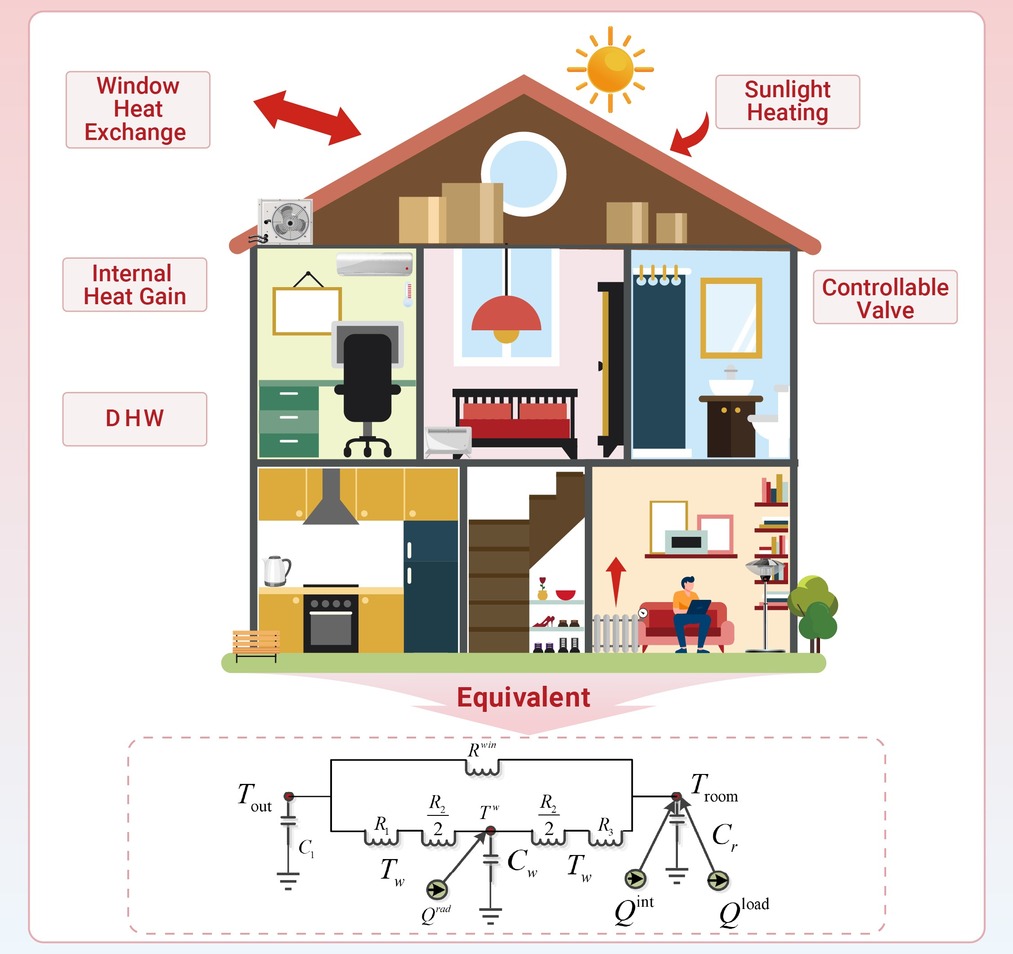
Schematic diagram of the RC model of one zone.
-
Figure 2.
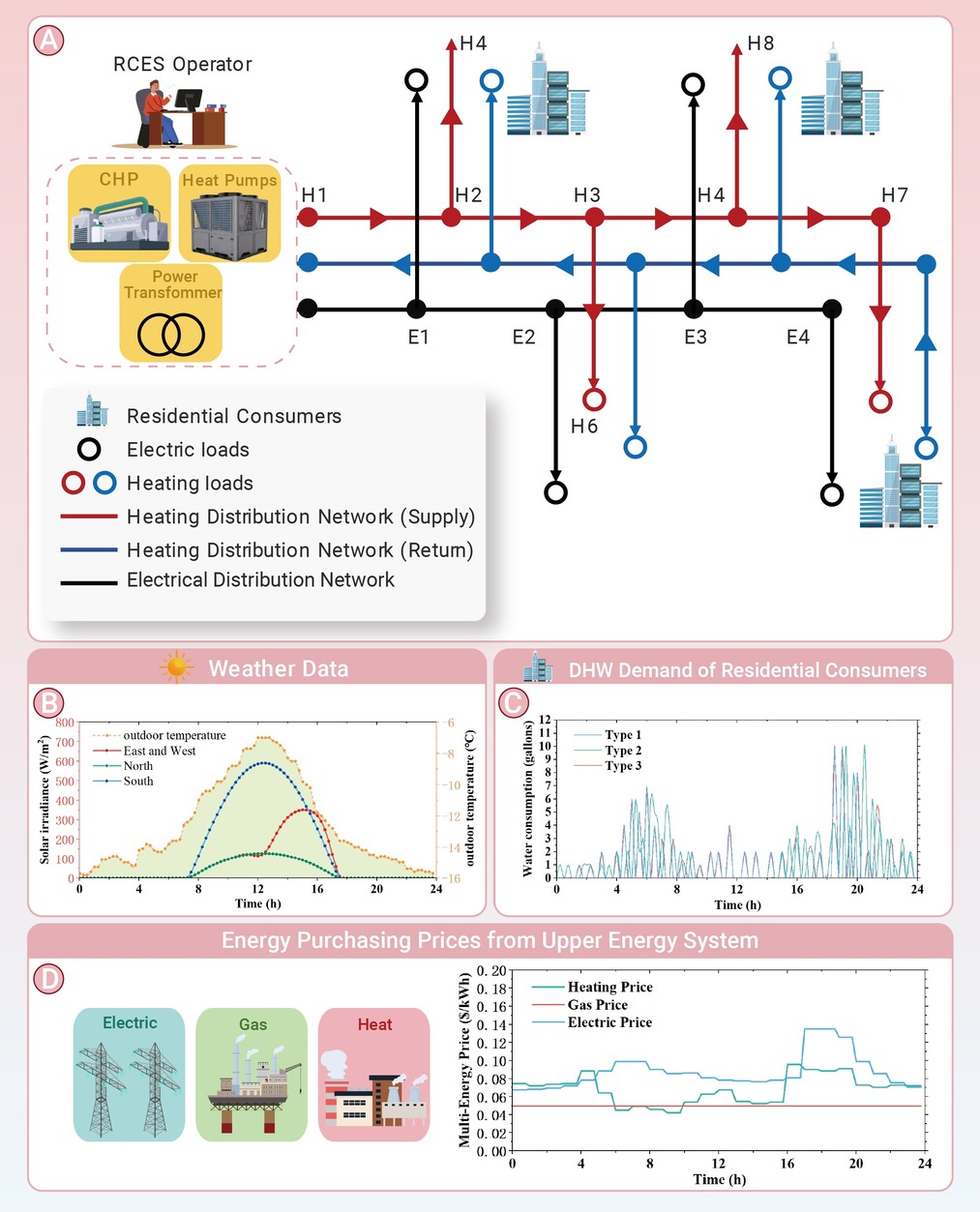
Case setting for network, weather, DHW demand and multi-energy prices.
-
Figure 3.
Case setting for network, weather, DHW demand and multi-energy prices.
-
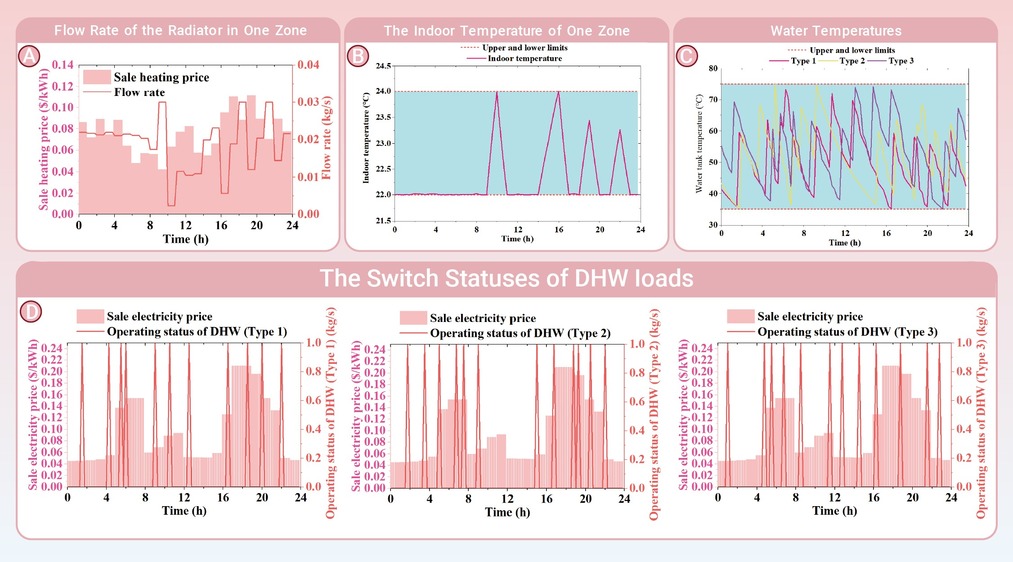
Figure 4.
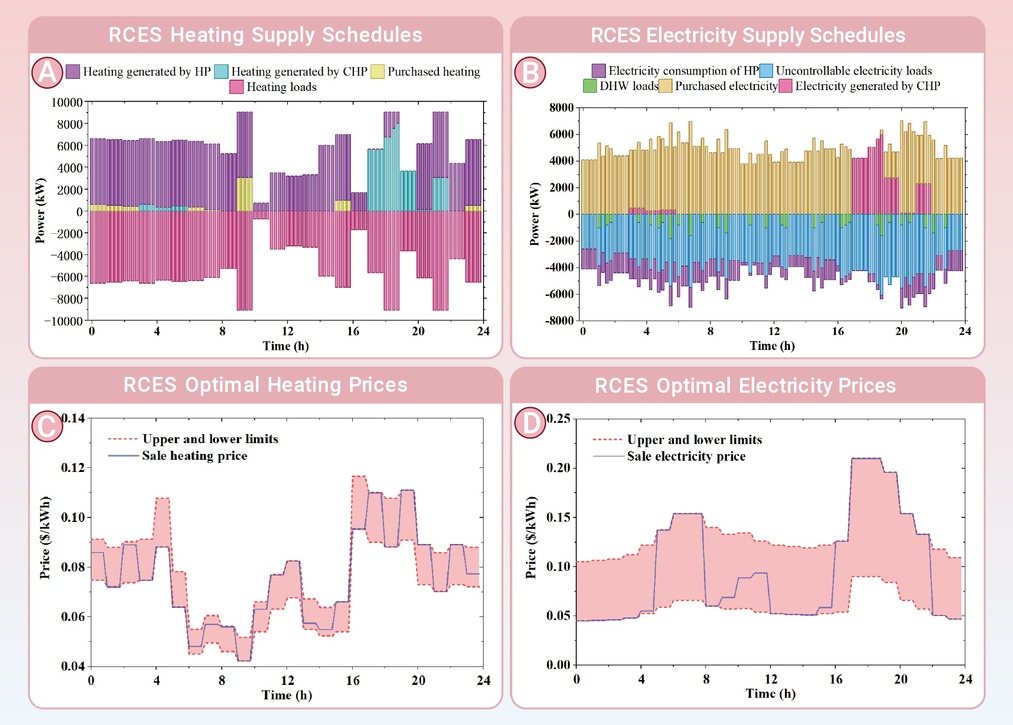
Results of residential consumers.
-
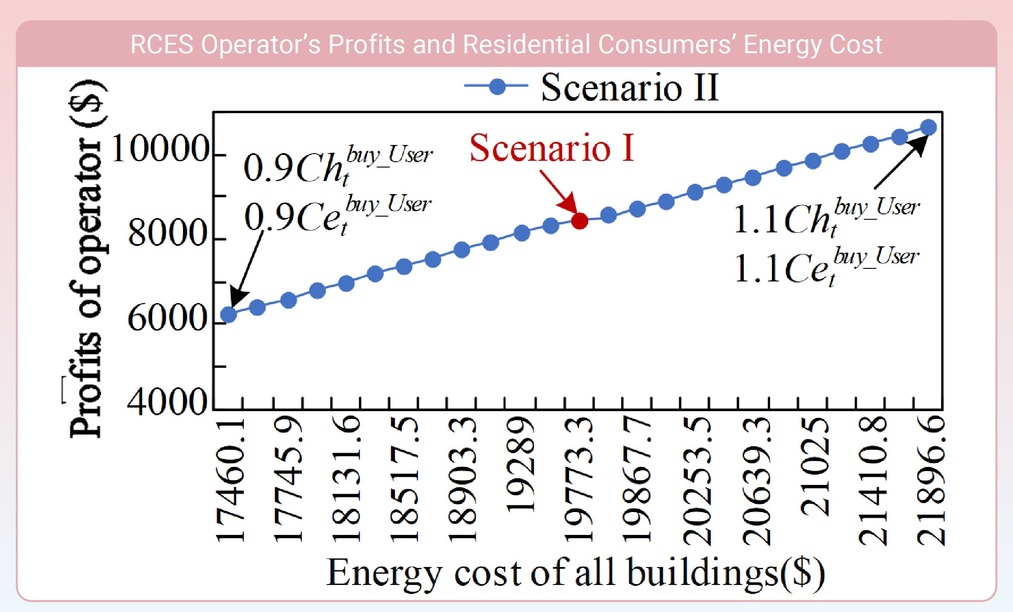
Figure 5.
RCES operator’s profits and residential consumers’ energy cost in scenario I and scenario II.